
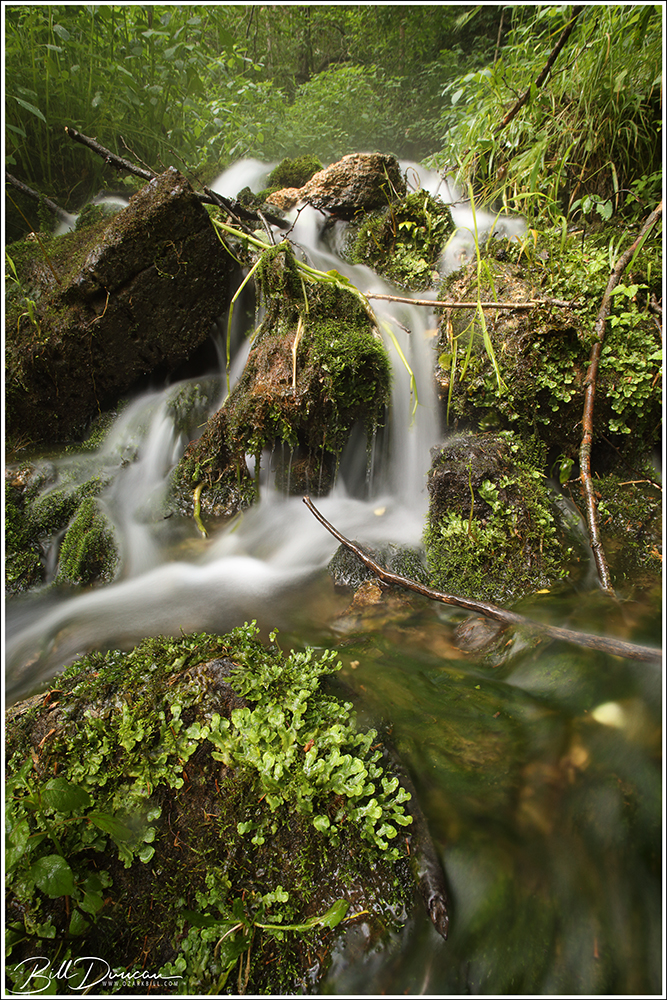
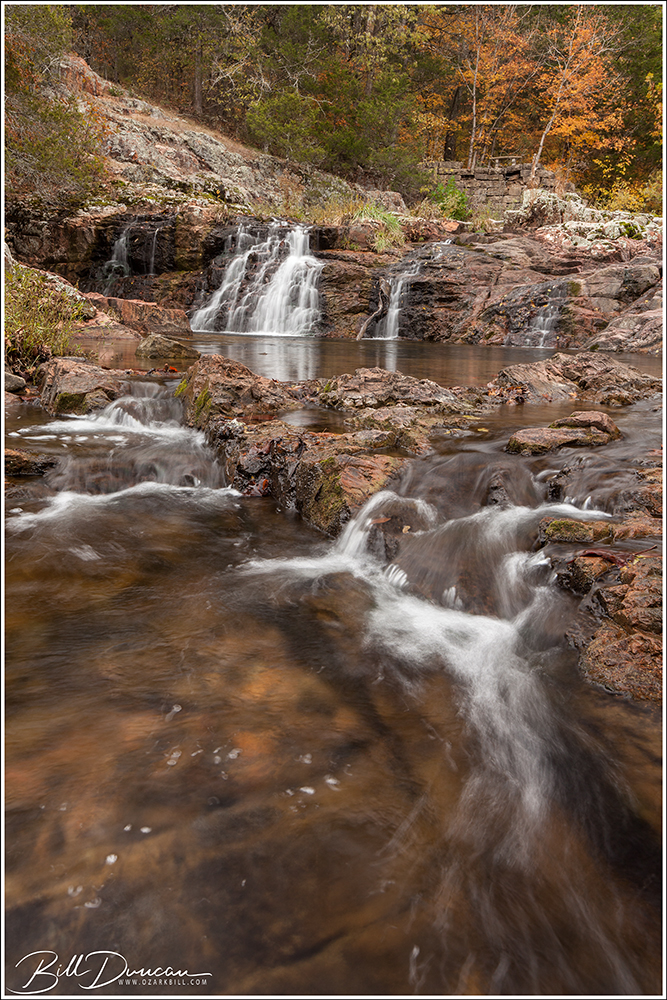
Tonight I am sharing a few from Turner’s Mill Spring taken back in early June.

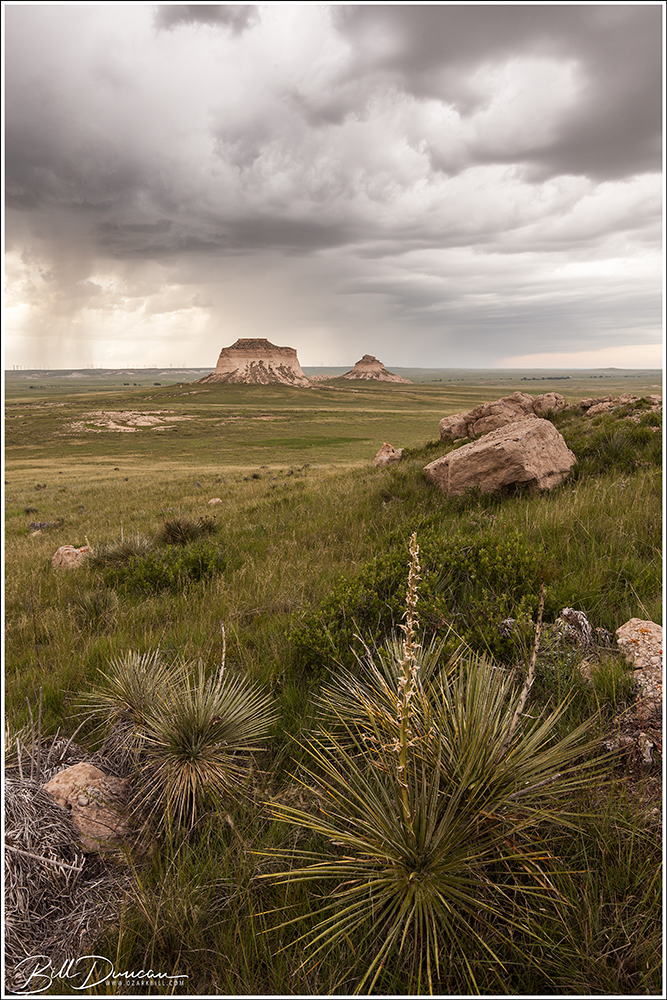
"What a thousand acres of Silphiums looked like when they tickled the bellies of the buffalo is a question never again to be answered, and perhaps not even asked." -Aldo Leopold
Tonight I am sharing a few from Turner’s Mill Spring taken back in early June.
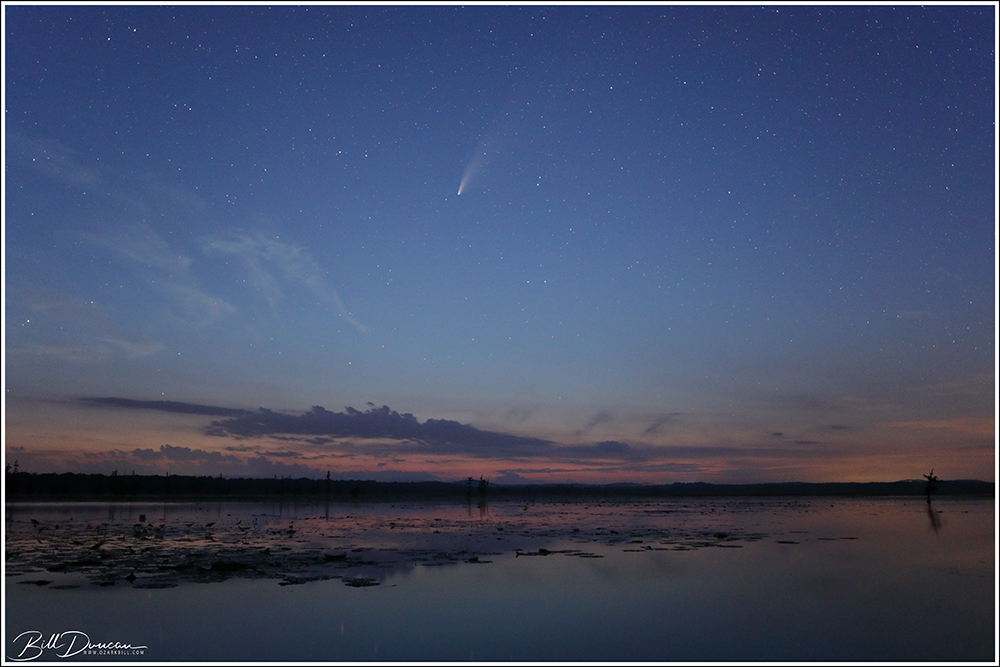
The NEOWISE Comet, whose actual name is C/2020 F3, was a pleasant surprise for the astronomical community who await such events as a newly discovered comet. First discovered in late March, the comet grew steadily brighter, eventually becoming the brightest comet to be seen in the northern hemisphere since Comet Hale-Bopp in 1997. According to the experts, this comet had an orbital period of about 4,400 years prior to making its latest trip through the inner solar system. It will now be another 6,700 years before beings on earth will be able to see it again.
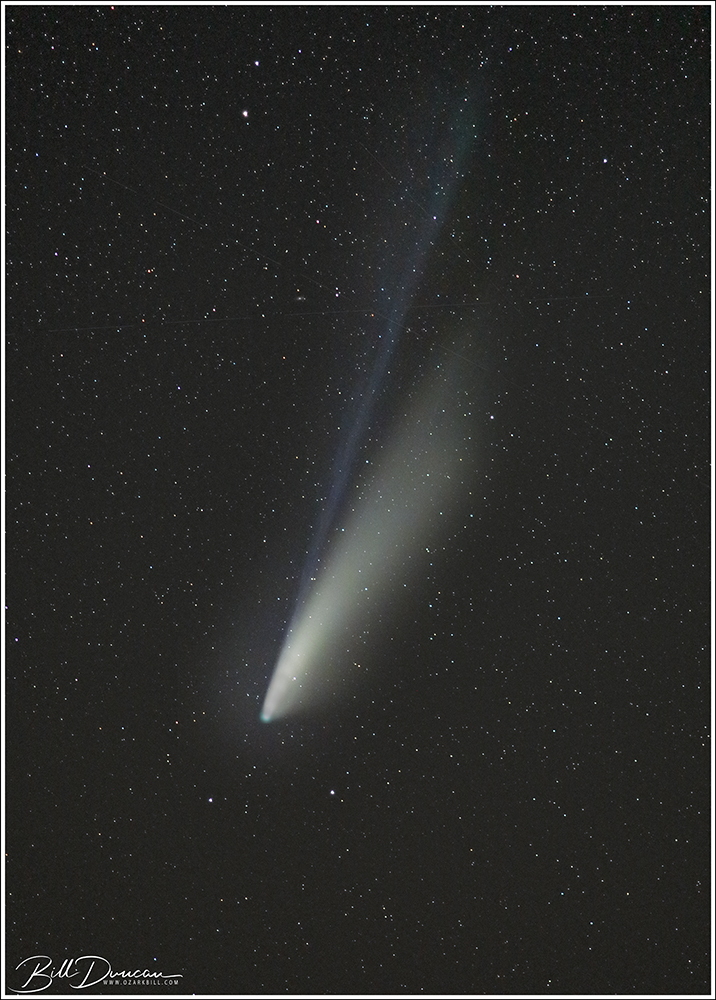
I have long had a very strong interest in astronomy and astrophotography and the current pandemic has allowed me to do quite a bit of studying on both topics. Hopefully soon I can get the practice in this area that I desperately need. Although it has some issues, I was relatively pleased at capturing the closeup of the comet pictured above.
Although I had a star-tracking mount that would have been perfect for this situation, I had not yet used it so I did not make this the first time. This image was “untracked” using a full-frame camera and a 200 mm lens. It is comprised of 20 “light” images (the actual photos of the comet) taken at 3.2 seconds per exposure. The aperture was f/2.8 and the ISO/gain was 6400. I combined these images with 10 “dark” frames for noise reduction purposes.
The processing here could be better and I might give it another try sometime. But, both tails of the comet are visible and I think the background stars came out alright as well.
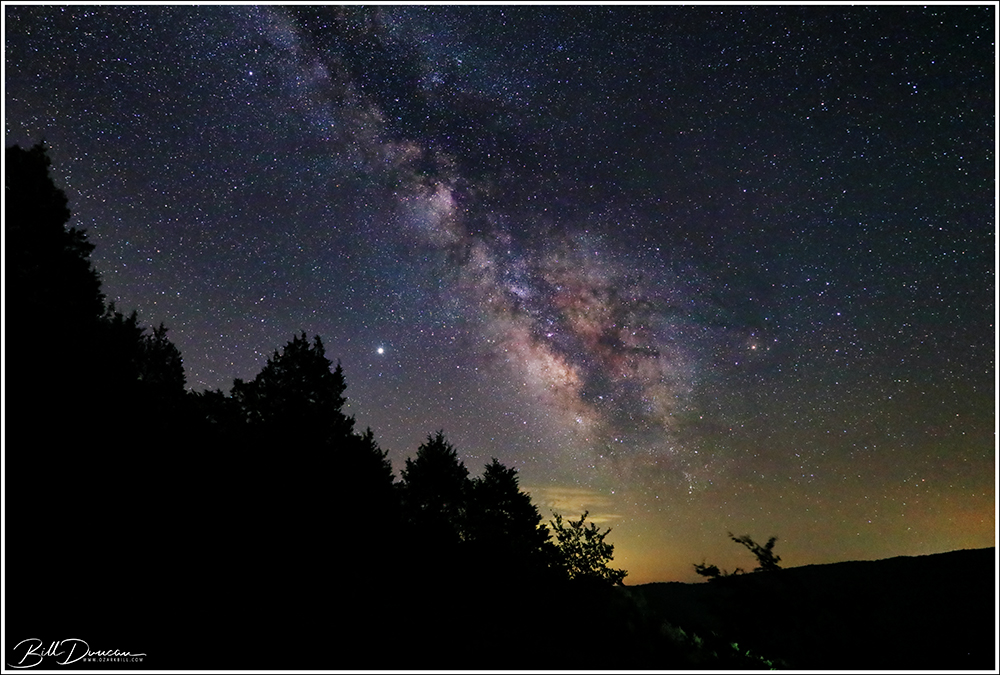
After awhile the comet began to dive towards the horizon with the remnant glow from twilight. I happened to show up at Lee’s Bluff on the same night as accomplished Missouri nightscape photographer, Dan Zarlenga, and so we both turned our tripods around to the south and found this lovely scene. Here, the Milky Way has recently risen above a nice foreground of trees. Again, I wish I would have been a bit more prepared with a plan, but I guess this isn’t too bad.
-OZB
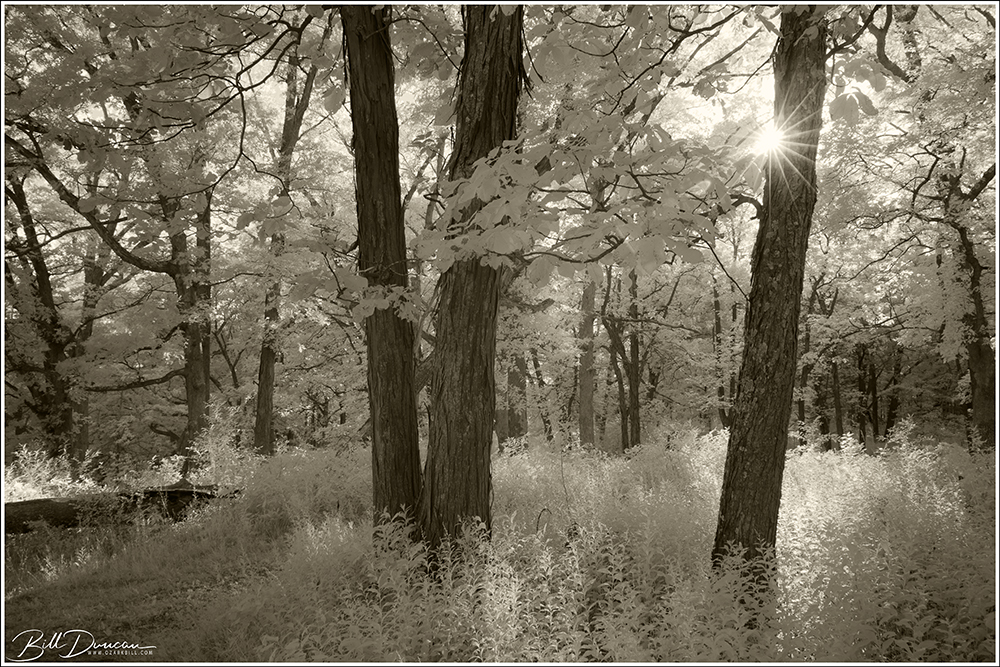
I have had some opportunity lately to try for infrared landscapes with my converted Canon 5D mkii. There is still so much I want to try with this, but between summer laziness and a lack of time and opportunity, I get by with what I can. The image above was taken in an Illinois woodland.
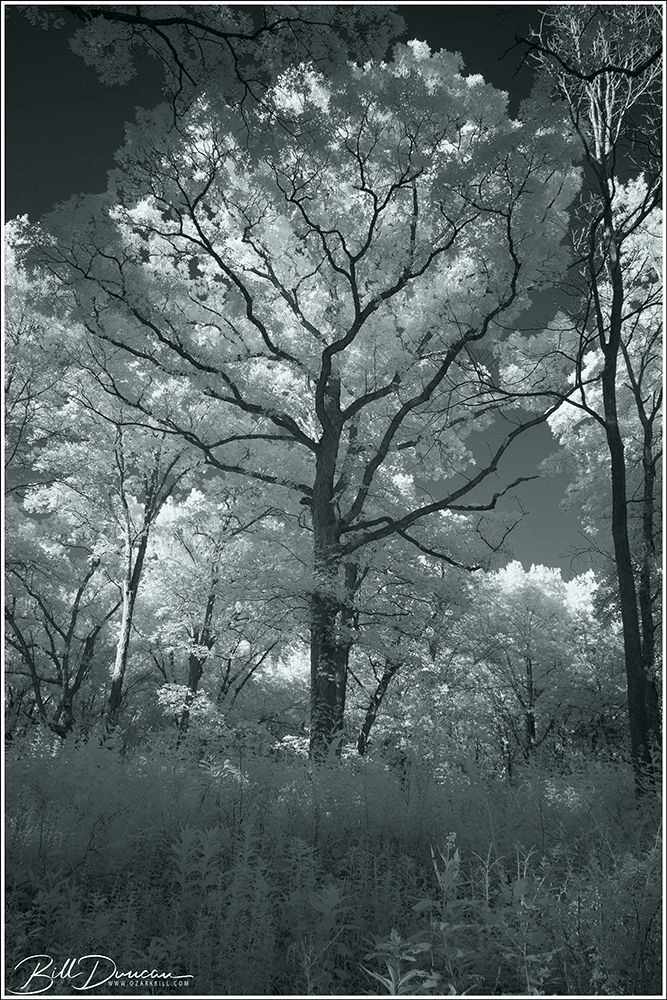
I found this white oak in the same woodland and it screamed for the IR treatment. I’m still getting the hang of processing the images from the “supercolor IR conversion” of this camera. Although the basics are simple, I find the plethora of options one has in processing these files to be a bit intimidating. I’m trying to go a little more on the subtle side with these, but there’s a fine line between just enough and too much.
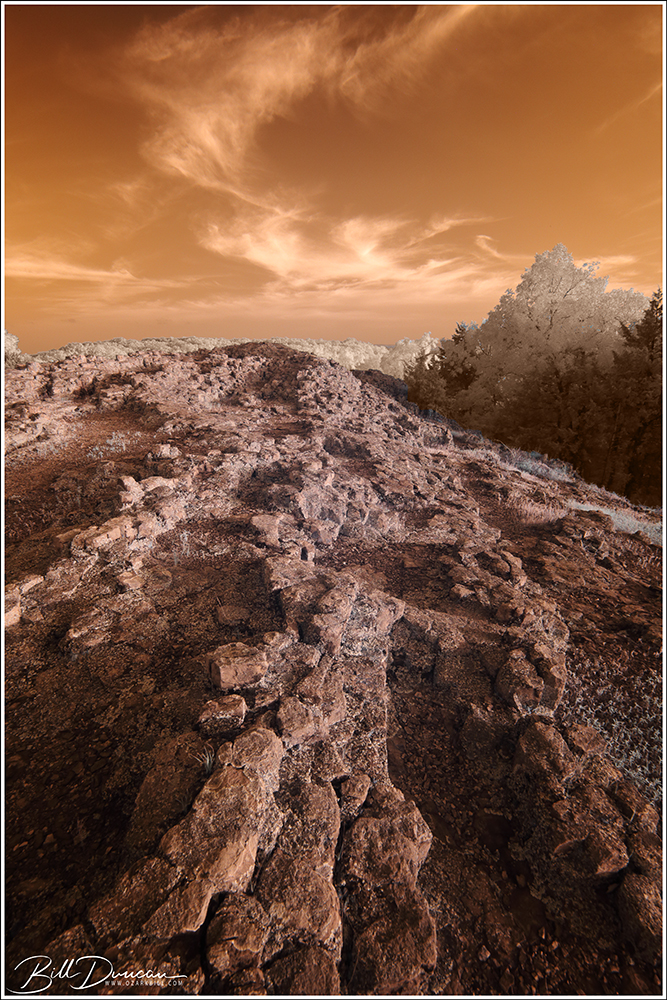
These final three images were taken at Hughes Mountain C.A. – a place that I find begs for the infrared photographic treatment. These were taken on one of the evenings of potential for extra color from the Sahara sandstorms. There was nothing extra for the sunset due to these storms other than increased haze, but the high clouds made for interesting skies in IR.
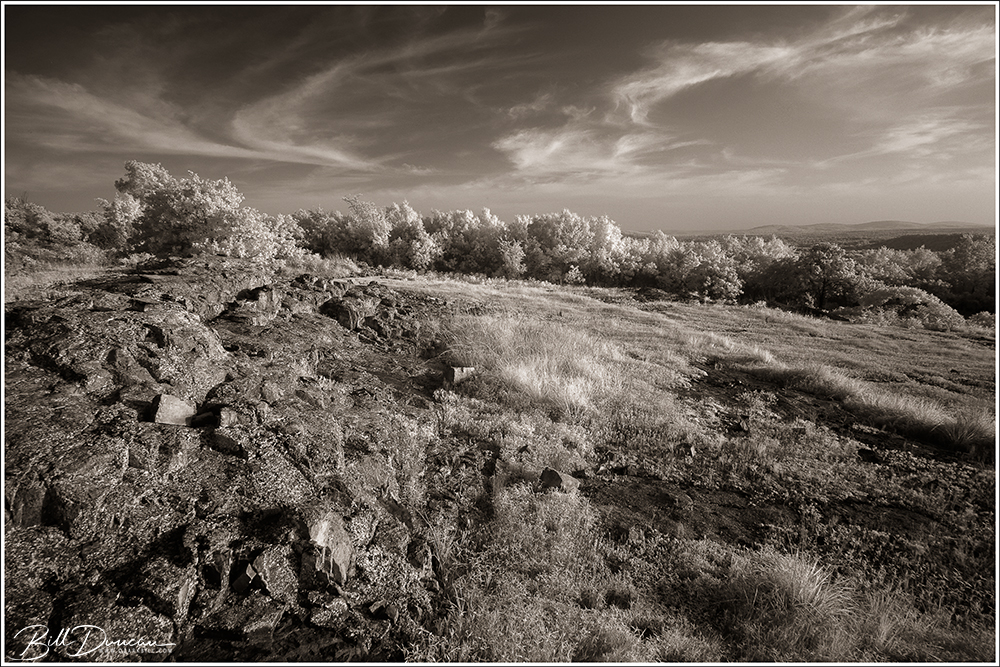
Finding green plants in the glade areas is important in getting the contrasts for an IR image. This hasn’t been a very wet summer but there was some green still left among the rocks. Optimally, it would be best to try in late spring to early summer to get this setting just right.
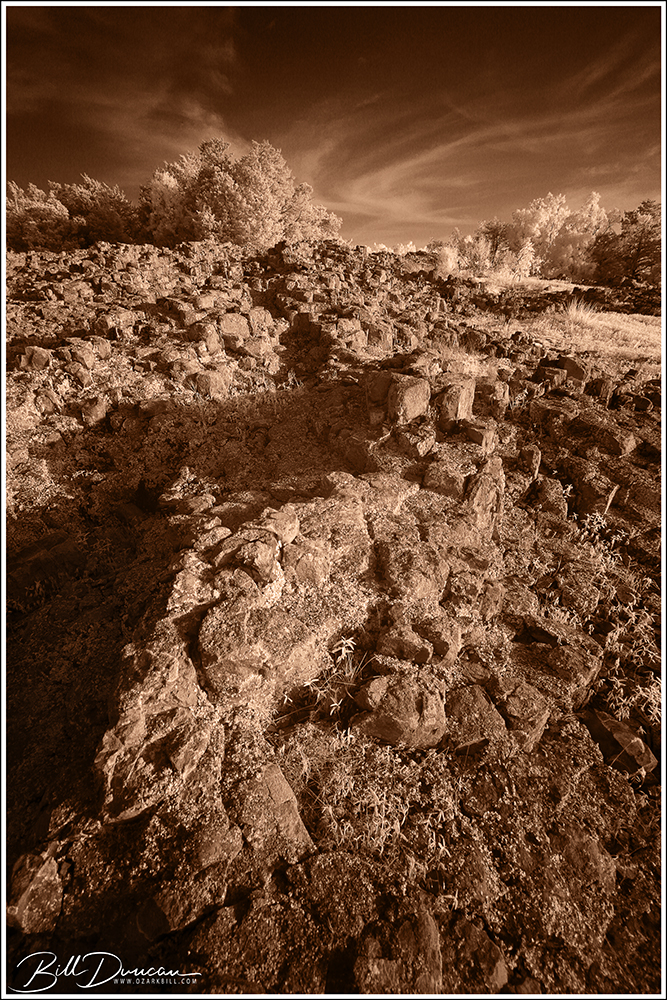
So these were some of my first serious attempts at IR landscapes with the newly converted camera. If you have any suggestions for improvement, particularly in the processing area, I would be grateful to listen.
-OZB
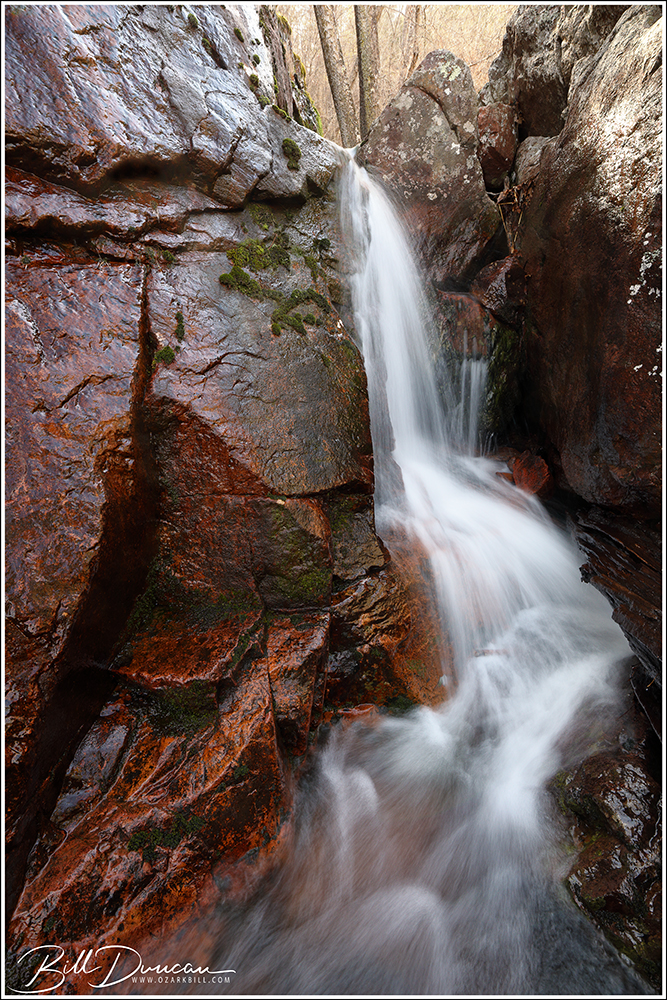
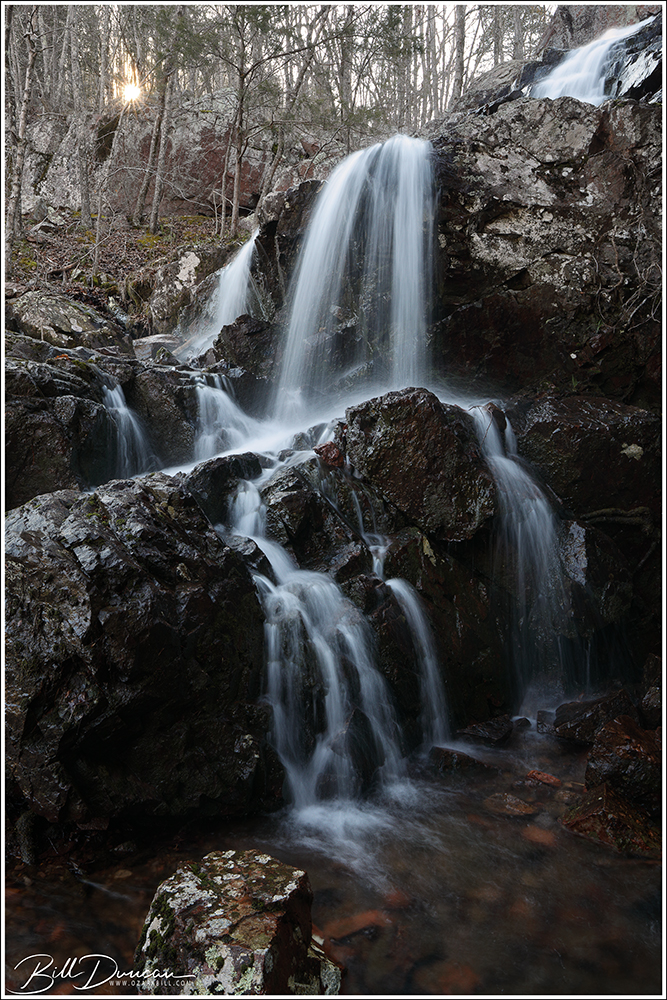
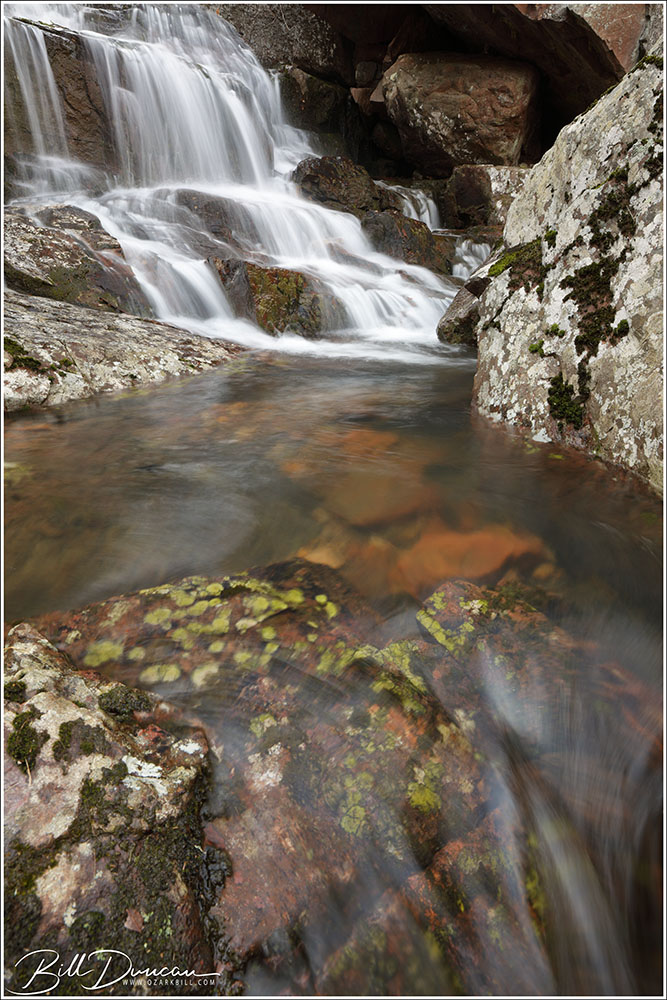
I’ve posted images of the cascades on Black Mountain before. After some good rains, Casey and I visited this past March with hopes of making it to the top. This is not an easy hike, but Casey had not yet seen most of the cascades. This was our intention, but it was quickly realized that the overcast afternoon we were promised was not going to be. So, we utilized the few clouds remaining to the best of our ability and climbed high enough to find some falls hidden behind canyon walls that blocked the harsh afternoon sun.
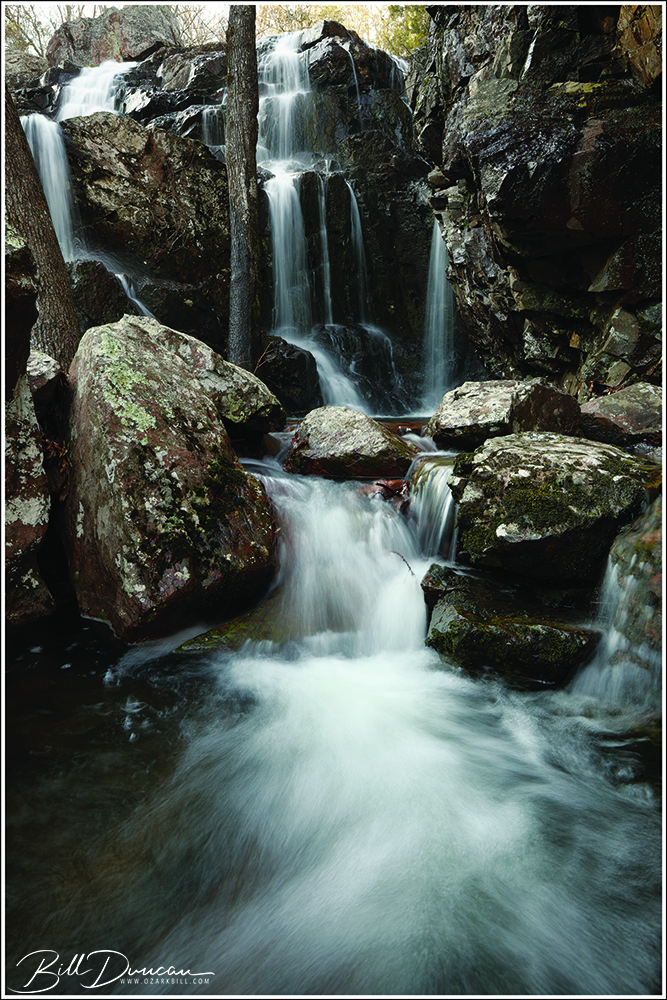
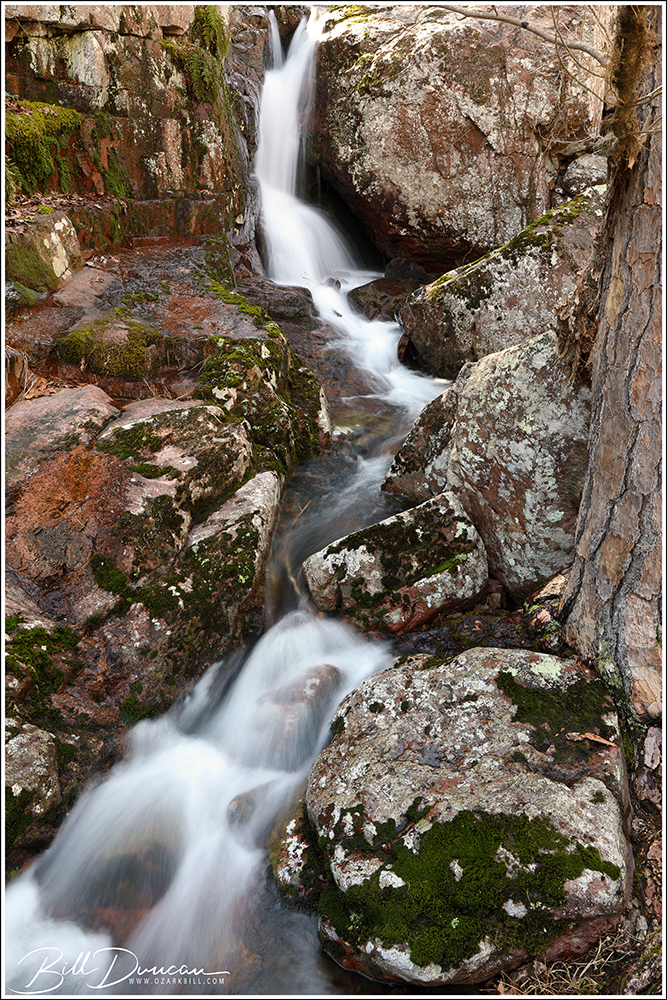
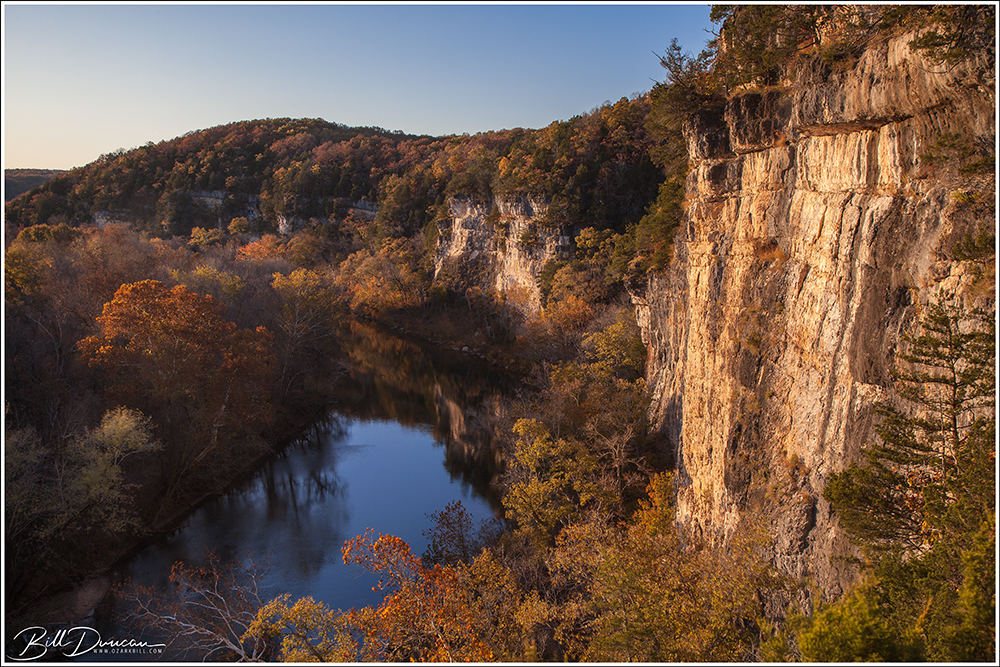
I had a great time introducing some photographer friends of mine to one of my favorite places in the state, Vilander Bluff. With the largest bluffs on the Meramec River, to get the type of view seen here requires a little bit of effort. Dave and I put in some work in finding this new-to-me perspective that was well worth the bit of effort and risk. Next time we’ll need to bring climbing ropes…
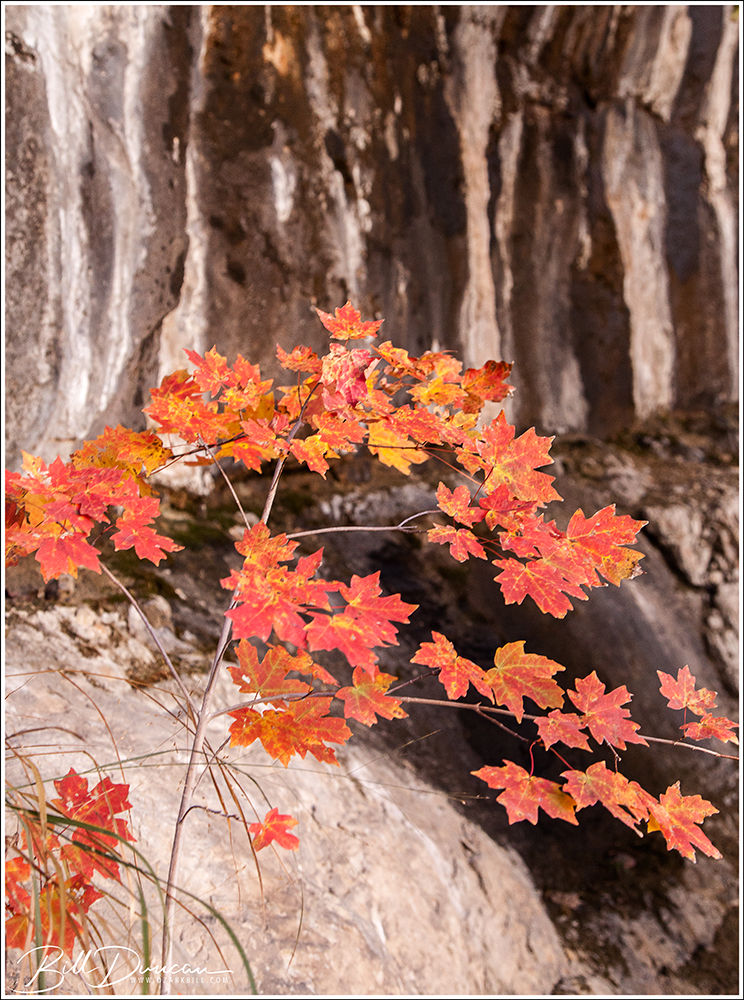
Many thanks to Casey Galvin tracking this one down and to the property owners allowing us access.






 A Thousand Acres of Silphiums