Myrmecochory – Seed dispersing ants!

An Aphaenogaster rudis ant shown in the act of myrmecochory – here dispersing the seed of the forest understory forb, Sanguinaria canadensis (bloodroot).

Myrmecochory is a term that comes from Greek, created from “myrmeco” – of or pertaining to ants, and “chory” – plant dispersal. It is one of approximately seven plant “dispersal syndromes” classified by ecologists, is found in approximately 5% of the angiosperms and occurs in numerous ecosystems around the world.

Showing the extreme relative strength of the ants, this Aphaenogaster rudis is moving a diaspore that must be several times its own weight.

Mutualism is thought to be the basis for this dispersal syndrome. Although this is not necessarily crystal clear, the ants are attracted to the eliasome – the fleshy structure attached to the seed that is a rich source of lipids, amino acids and other nutrients. The ants typically will move the diaspore (eliasome + seed) back to their nests. Dispersal distances vary, but are generally not great – most often 2 meters or less. However, for small forbs this distance is often adequate for moving these propagules outside the range of competition of the parent plant.

Two Aphaenogaster rudis ants attempting to move this Sanguinaria canadensis (bloodroot) diaspore. This was not seen very often and shortly after this image was taken, one ant gave up its pursuit.

Distance dispersal is not the only selective advantage that plants gain from this mutualistic relationship. When the ants have moved the seeds to their nests, they remove the eliasome to feed their young and typically dispose of the seeds in their midden heaps or eject them from the nest. Seeds that are moved to midden heaps or other such locations benefit in multiple ways. First, they are placed in microenvironments that are conducive for germination and early growth. They are protected from heat of fire that could destroy the seeds and benefit from not being accessible to birds and other seed predators. This is referred to as ‘directed dispersal.’ Some studies have shown that the removal of the eliasome may promote germination, similar to the process of seed being removed from their fleshy fruit as it is passed through the gut of a vertebrate.

I rarely had to wait more than 15 minutes before the first Aphaenogaster rudis foraging scout found the pile of diaspores I placed on the ground. Mere minutes after that it was advertised across the colony and other workers showed up to carry the spoils back to their nest.

Their is typically no specialization of particular ants dispersing a particular plant species, with almost any ant species being ready to take advantage of a free meal. The possible exception being that larger diaspores must be dispersed by larger ant species.

Using one of nature’s great predators to disperse your seeds can be risky business. As seen here, the testa (seed coat) of this Sanguinaria canadensis (bloodroot) as well as most myrmecochorous plants is hard and smooth to avoid the bite that ants can deliver.
When a Camponotus pennsylvanicus ant finds a diaspore, the photographer must act quick. They don’t need much time to haul it away!

My hope was to photograph myrmecochory across a variety of species this year. I was fortunate to find success with Sanguinaria canadensis but had no luck in my attempts with Dicentra cucullaria (dutchman’s breeches). I tried hard for trillium species as well but discovered the plants I was waiting for mature fruits for weeks were being harvested most likely by SNR staff. I will be trying for these again in the future and hope to photograph prairie species as well.

A freshly fallen Stylophorum diphyllum (celandine poppy) fruit with diaspores waiting for the ants to disperse them. Note the different testa pattern and eliasome structure compared to Sanguinaria canadensis.

The fruits of Stylophorum diphyllum (celandine poppy), I discovered, had a much smaller window of ripening. I had to check at least every two days or  I would miss the opportunity of a large fruit full of diaspores.

The ubiquitous Aphaenogaster rudis is a key disperser of Stylophorum diphyllum (celandine poppy).
As with many mutualistic relationships, cheaters are known in myrmecochory. Too small to properly move and disperse a diaspore of this size, this Nylanderia faisonensis is seen eating the eliasome on the spot. This was not a very common observation and it is doubtful that this would ultimately hurt the plant species.

See below for my attempts at filming myrmecochory. This was definitely challenging. I had troubles predicting the ants’ behavior, especially while under the bright, continuous lighting needed for high-magnification photography such as this. Something else to try and improve upon next year.

I’d like to thank James Trager for his assistance with ant species identification.

-OZB

I finally collected them all!

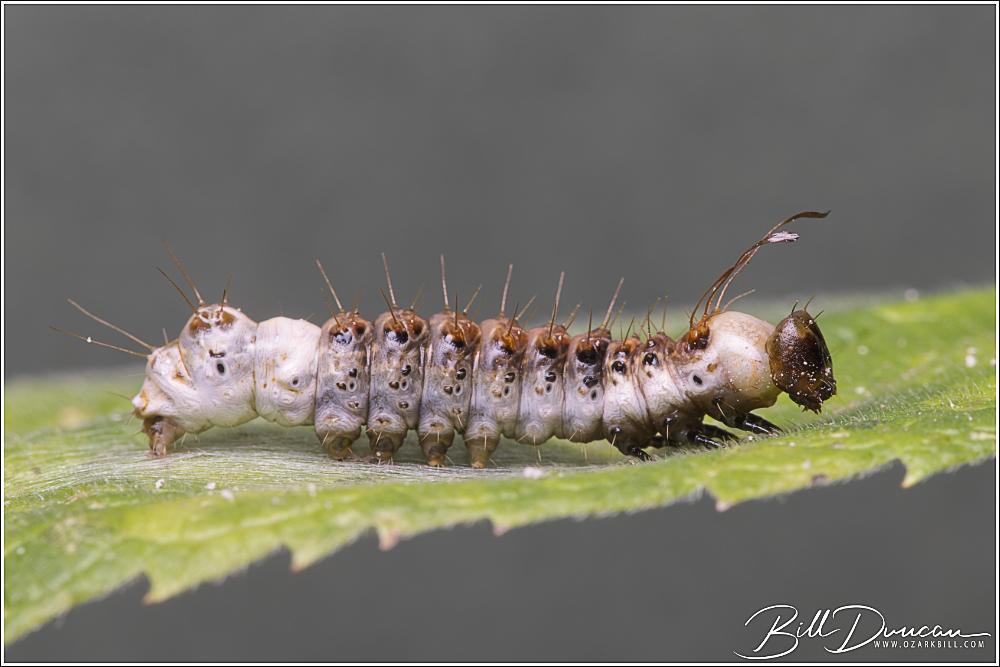
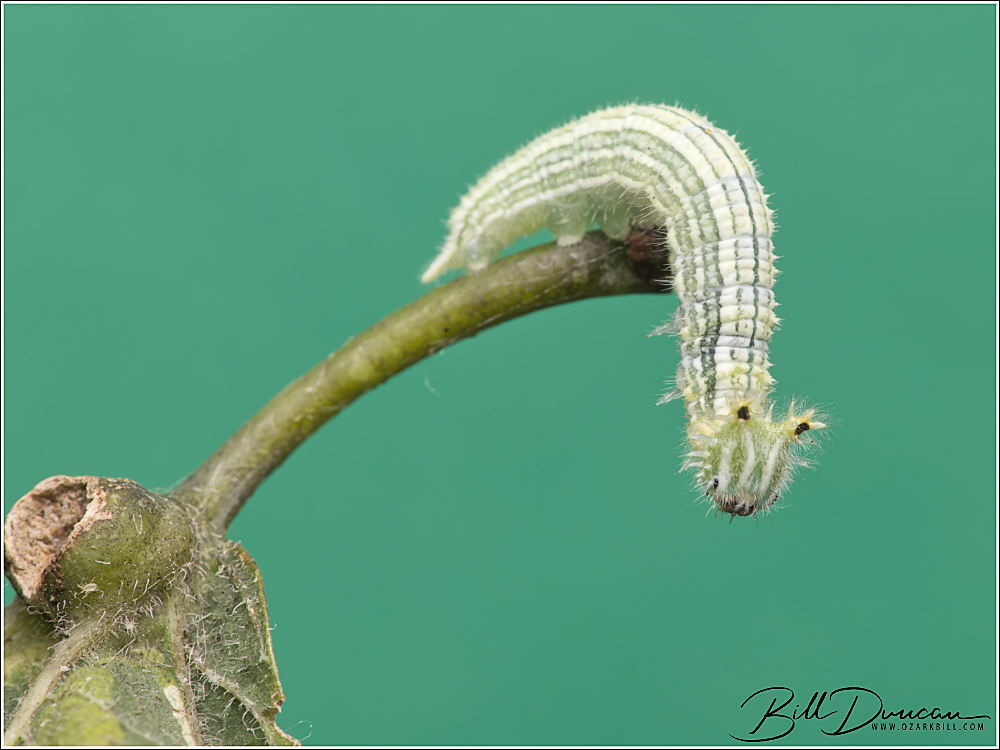
Spun Glass Slug Moth (Isochaetes beutenmuelleri). This animal is likely not in its last instar and should have even larger arms before its ultimate diapause.

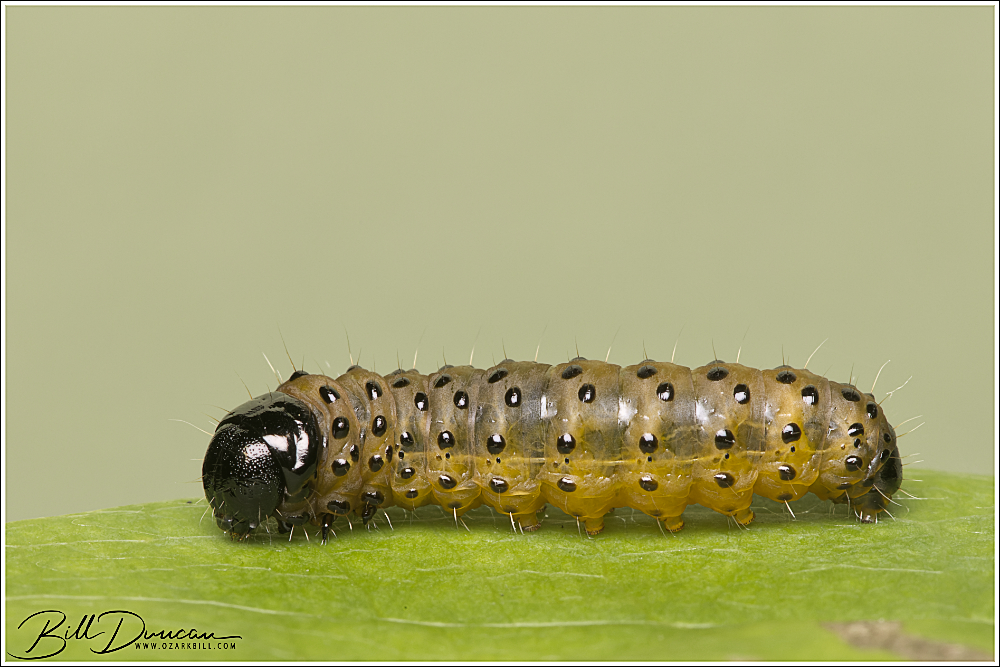
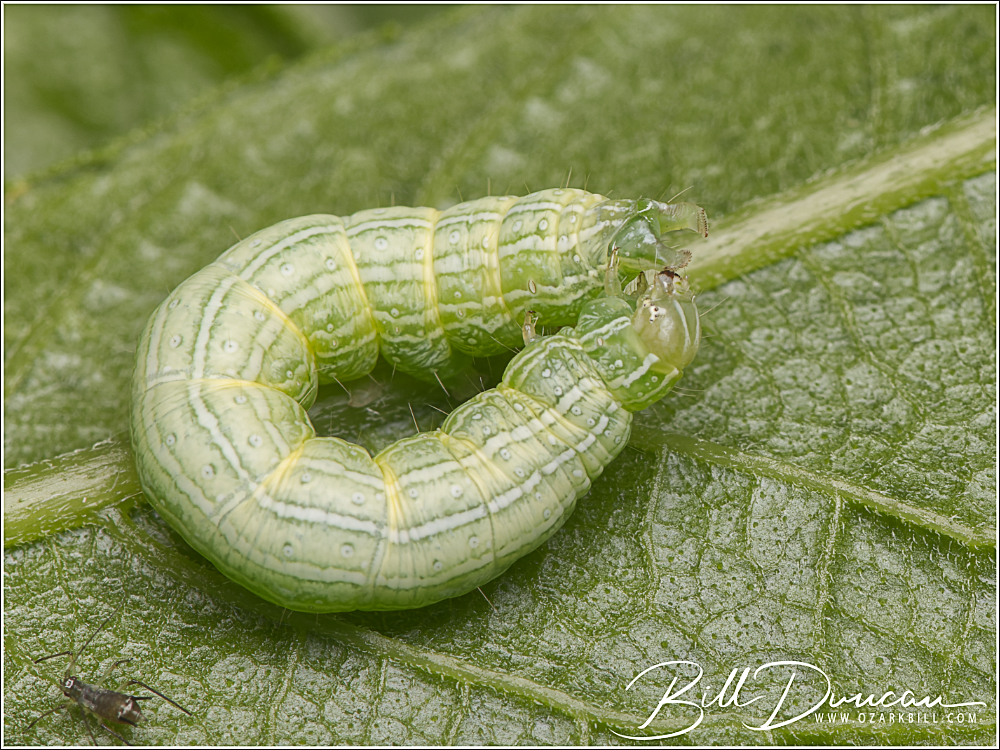
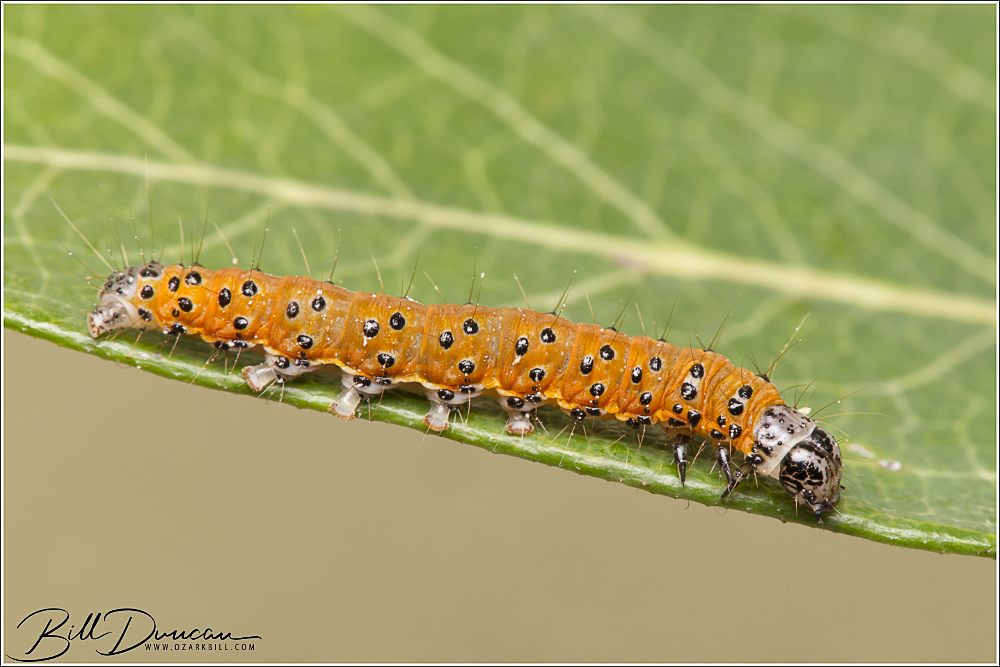
Maybe I owe those of generation Y and the Millennials a bit of a silent apology. I too have been on a mission to ‘collecting them all.’ In my case, however, I think the objects of my search are far more brilliant, fascinating and mysterious than anything in the Pokemon universe could ever dream of being. For about the past four years, I have been occupied in late August to late September with finding all the slug moth caterpillars that can be found, or at least expected, in the state of Missouri.

Spun Glass Slug Moth (Isochaetes beutenmuelleri). This species, like most of the limacodids, are generalist feeders. The slug moths can be found on virtually any species of woody plant in Missouri.

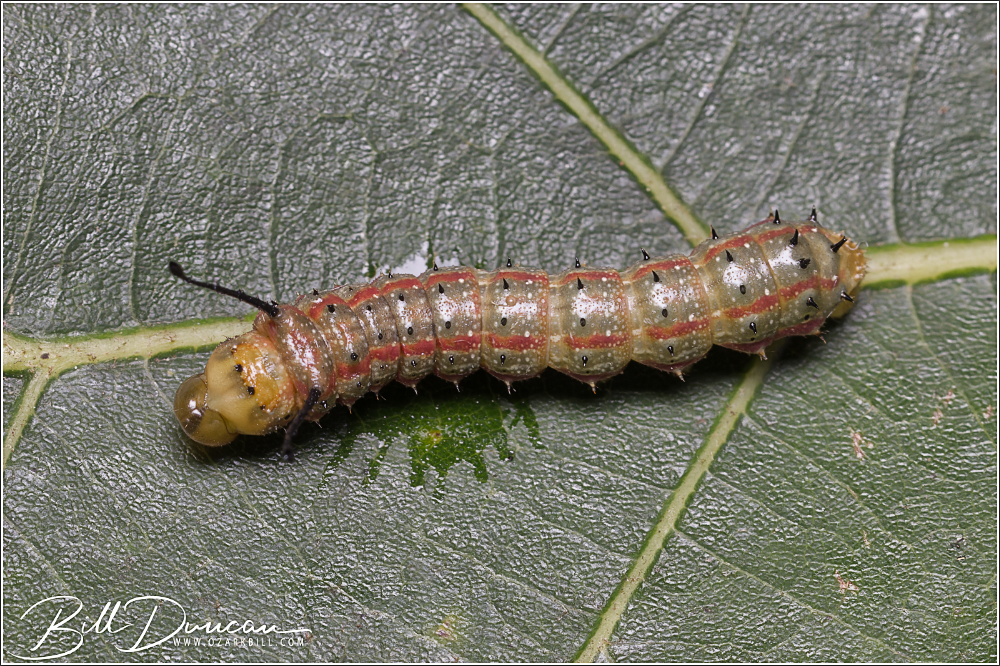
Many thanks to Kyran Leeker for pointing me to a couple of hot spots she had found that contained some of the last species of slug moth caterpillar I needed to find and photograph – the spun glass slug moth, or Beutenmueller’s slug moth (Isochaetes beutenmuelleri). After hearing this, Sarah and I hit these locations soon after. My radar for these creatures was definitely in need of a re-calibration. I did not find a single slug moth caterpillar but Sarah found three, including this I. beutenmuelleri and two smaller parasa (Parasa chloris) – a species I had found before, but only had photographed with my cell phone. This was an exciting day indeed!

Spun Glass Slug Moth (Isochaetes beutenmuelleri). Sometime during late September to mid-October this little one will spin a cocoon and overwinter. In the spring it will then pupate into a non-feeding adult moth.

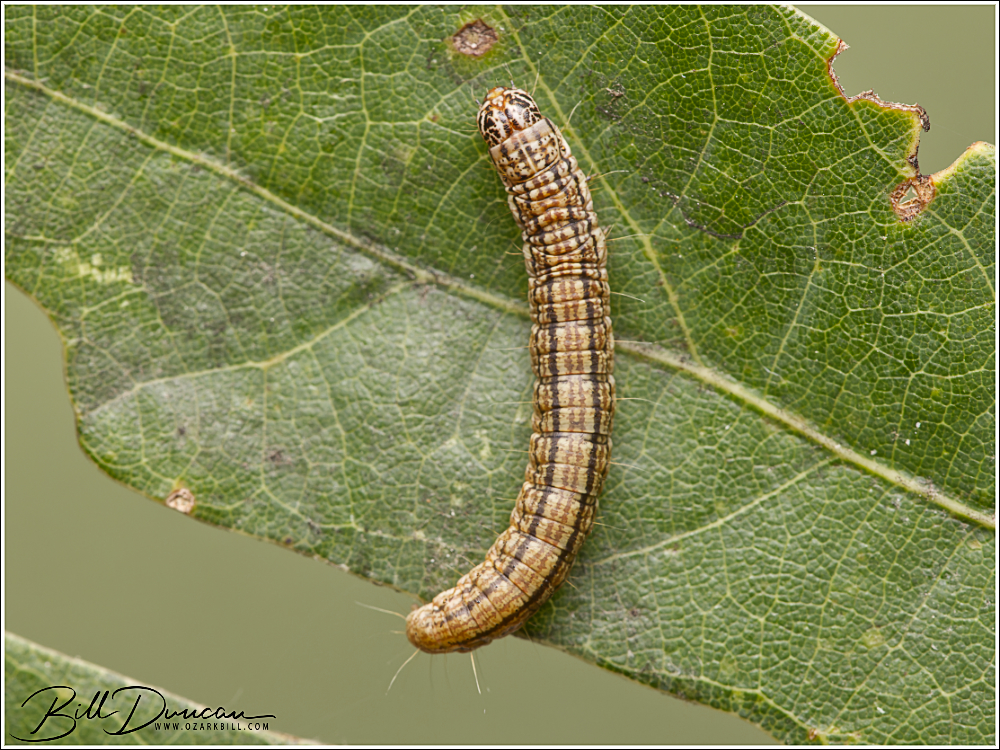
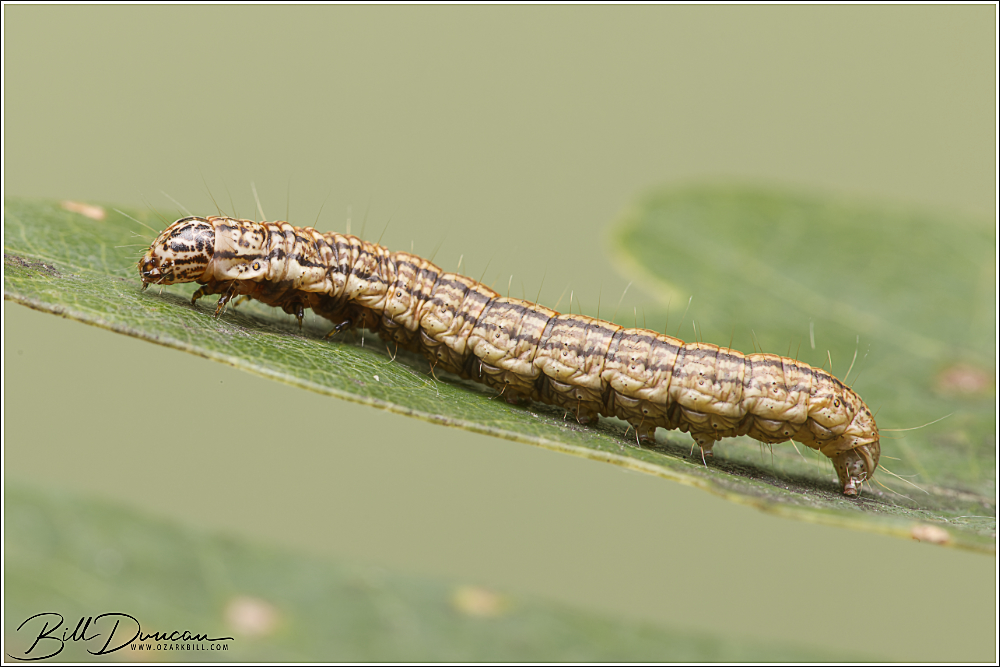
Although not as colorful or spiny as some of its more flamboyant relatives, the smaller parasa (Parasa chloris) is quite an interesting slug moth in its own right. Individuals can vary a lot in their patterns and are warmly toned with tans, oranges and pinks. I can’t get enough of looking at these guys.

Smaller parasa (Parasa chloris). Each of its humps is equipped with a few barbs that can inject an annoying, but not dangerous venom.
Smaller parasa (Parasa chloris) with wood grain or marble-like pattern.
Smaller parasa (Parasa chloris) with its head out of its protective hood.

Sarah found the following poor creature. Although you can’t help but feel sorry for it, I was glad to capture this natural history story. This little one was gregariously parasitized by approximately 15 braconid wasps, likely from the Microgastrinae subfamily.

Smaller parasa (Parasa chloris) parasitized by braconid wasps. Note the multiple stages of wasp development, from larvae that have completed their cocoons, to those still at work spinning their webs to larvae just emerging from their host. Their is no chance for the survival of this caterpillar.

These wasps were definitely in the process of preparing for their next stage of life. I have come across lots of caterpillars in the past that were parasitized by wasps like this, but always after the larvae had emerged and spun their cocoons  and often after the wasps had cut the tops off and exited. This was very special indeed, finding them in this process. This was taking place much quicker than I had anticipated. It was plain to see the movement of the wasps and observe their progress. I had to take some video to capture this. I have sped the footage up by 1.5X to better showcase this activity.

Before I finish, I couldn’t help but think of one of my favorite Darwin quotes. Watching this footage a few times, I couldn’t help but agree with his reasoning.

In a letter to his friend and botanist, Asa Gray, Darwin wrote…

With respect to the theological view of the question: This is always painful to me. I am bewildered. I had no intention to write atheistically, but I own that I cannot see as plainly as others do, and as I should wish to do, evidence of design and beneficence on all sides of us. There seems to me too much misery in the world. I cannot persuade myself that a beneficent and omnipotent God would have designedly created the Ichneumonidae with the express intention of their feeding within the living bodies of caterpillars …”
-Charles Darwin

The interesting and important Spring Beauty (Claytonia virginica)

Spring Beauty (Claytonia virginica)

Until this spring, I assumed that spring ephemerals, like Claytonia virginica (spring beauty) and others that begin flowering in early spring, did not provide much sustenance for early season pollinators. For no reason in particular, I assumed that most of these plants preferred selfing versus providing the resources to attract insect pollinators.

After taking a closer look at the blankets of C. virginica that lie on the slopes of Beckemeier Conservation Area near our house, my eyes were opened. I found pollinators everywhere on multiple trips during this long and cool spring. Unfortunately many species were so quick that they eluded me and my camera. However, I managed to nab a few of the more cooperative and with some help of those smart folks at BugGuide.Net, I got as close to the right identifications as I could.

Andrena erigenidae, the spring beauty bee

Have you heard of oligolecty? Until doing this research, I had not either. Oligolectic is a term that describes certain bees species that have specialized preference to pollen from only specific plant groups – plants from a small group of genera, a single genus, or in this case, one single species.

Andrena erigenidae reaching for its nectar reward

The spring beauty bee (Andrena erigenidae) is a mining bee (Andrenidae) that feeds exclusively on the pollen and nectar of C. virginica. In fact, the larvae of this species cannot grow optimally on any other pollen source. So, it may not come as a surprise that this was the most common bee I found foraging on the fields of spring beauty.

Andrena erigenidae female with pollen-laden legs

These mining bees will take the pollen during a flight run that may last up to more than an hour and then bring it back to their self-constructed nursery hole in the ground. There they will turn the pollen into cakes and lay a single egg on each. This will be all the material needed for an individual larvae to develop into an adult.

Andrena erigenidae making another stop

The next pollinator is a bee from the same genus, Adrena. This is a huge genus, comprised of more than 450 species in the U.S. Most often they are impossible to identify to species without having the bee in-hand and available for close inspection.

A beautiful Andrena bee

This beautiful and hairy ginger was considerably larger than the previous Andrena. I estimate this bee was about two-thirds the size of the domesticated honeybee.

Mining bee (Andrena sp.)

I’m not sure if this individual was a male, or if it was only interested in getting nectar, but I never saw this species actively collecting pollen from C. virginica.

Mining bee (Andrena sp.)

The long tongue on this one will allow for it to collect nectar from a larger variety of flowers, while the hairs on this bee definitely help it meet its pollinator status.

Mining bee (Andrena sp.)

I found a couple cuckoo bees foraging amoung the C. virginica as well. This “nomad cuckoo” pictured below is a cleptoparasite, meaning the female will lay its egg inside the nest of a different host species. The cleptoparisitc larvae will hatch first and will often kill the eggs or larvae of its host and then use the pollen provisions the host mother left to complete its development. This particular genus, the Nomada, is known to primarily use species in the above discussed Andrena genus as its host.

Cuckoo bee (Nomada sp.) nectaring on spring beauty

The cuckoo wasp, like this metalic green beauty in the Chrysididae family are also cleptoparasites that likely will use Adrena bees as hosts.

Cuckoo wasp (Chrysididae) on spring beauty

Bees and wasps were not the only pollinators I found on spring beauty. I also found a couple species of ants (not pictured because they never stand still long enough) and a couple of dipteran species, like this tachinid fly.

Tachinid fly (Gonia sp.) on spring beauty

I now want to introduce what was probably the most interesting thing I learned about spring beauty this year. Having been able to work on Asian Soybean Rust for a couple years during my career, I have since been very interested in the complex life-cycles of plant rusts. I suppose due to the dense population of C. virginica at this location and the cool and wet spring we have had, I found that many plants were infected with spring beauty plant rust (Puccinia mariae-wilsoniae). With just taking a cursory estimation of the hillsides, I think that as many as 50% of this population was infected with this rust. When I took the succeeding photo ( I so wish I had taken more and better photos of this), little did I know that my investigation would take me into a complex relationship that not only involved this plant host and rust relationship, but would also involve slugs (yes slugs) and the very pollinators that enticed me to bend the knee in the first place.

Spring beauty plant rust (Puccinia mariae-wilsoniae) aecia (a type of spore forming legion) on the abaxial (lower) leaf surface of spring beauty (Claytonia virginica)

I am sure that anyone who has taken the time to appreciate spring beauty more than during one season and/or place has noticed the variability in flower parts coloration.  The majority of what is to follow here comes from an intriguing bit of work by Frank Frey (2004). C. virginica can vary from almost completely white to being mostly colored with pink to mauve to crimson stripes and other floral parts. Frank describes that plants that with higher levels of theses reddish pigments are preferred by pollinators and therefore, “…floral redness was associated with higher percentage fruit set.”  Well then, this should beg the question, if this is the case why are there still plenty of individuals and populations of the less-fecund whitish pigmented flowers? Shouldn’t selection have taken care of this by now?

Here is where the slugs and rust comes into the story. These two, surprisingly, affect opposing selective forces on the coloration of C. virginica flowers. Plants with more white-colored flowers hold up better against predation by slugs due to the anti-herbivore properties of the flavonol pigments that produce the white coloration in these plants. In addition, for reasons that are not completely understood, the rust pathogen does better at infecting and propagating new spores on plants with redder-colored flowers. This was eye-opening for me to learn that something besides pollinator preference was manifesting a selective force on floral morphologies.

This is a highly simplified summary of the story this paper holds. I highly encourage you to check it out for yourself by following the link below.

An aberrant spring beauty flower. Typical spring beauty flowers have five petals. This plant may be infected by virus or have a genetic mutation that caused the increase in petal numbers seen here.

I love the never ending stories that can be learned from a single, common and seemingly simple spring ephemeral wildflower. I’m sure that spring beauty still has a number of stories to tell. I wish I had taken more photos of the rust and I will try and see if I can find plants with telia, the next form of spore-producing legion by this rust. It occurs later in the lifecycle of the plant. I just hope I’m not too late to get it this season.

Thanks for the visit!

-OZB

Citations

Frey, Frank M. 2004. Opposing natural selection from herbivores and pathogens may maintain floral-color variation in Claytonia virginica (Portulacaceae). Evolution, 58: 2426-2437.

Fork-tailed Bush Katydid

Scudderia furcata on Sumac (Rhus sp.) fruit
Camera settings: f/11, 1/25 sec., ISO-640, 234 mm focal length equivalent.

I was so glad to get this guy identified. Thanks goes to the folks on BugGuide. I had a pretty decent field guide, but still couldn’t get to the species. It turns out this species is known for having populations that are predominantly pink, red, or brown in color, which is unusual in the katydid family. Casey and I found three individuals that were this color in a sand prairie/savanna in southeastern Missouri last September.

Scudderia furcata
Camera settings: f/14, 1/100 sec., ISO-640, 234 mm focal length equivalent.


Hummingbird Clearwing

Camera settings: f/7.1, 1/1600 sec., ISO-640, 520mm focal length equivalent.

From a WGNSS Nature Photography Group outing from last July at Shaw Nature Reserve, here are some images of a Hummingbird Clearwing (Hemaris thysbe) as it foraged among blooming Garden Phlox (Phlox paniculata).

Camera settings: f/8, 1/1250 sec., ISO-640, 520mm focal length equivalent.

Observations on phenology and pollination of Triphora trianthophora (three-bird orchid) made during the summer of 2019

This post is a modified article that was originally published in the Webster Groves Nature Study Society’s journal, Nature Notes (January, 2020, Vol. 92, No. 1).

Finding the orchid, Triphora trianthophora (three-bird orchid, nodding pogonia), during open bloom can be somewhat of a chore, particularly among us weekend warriors. Casey Galvin and I were both intrigued about the possibility of getting photographs of this diminutive and gorgeous orchid since learning of their discovery at Babler State Park by the WGNSS Botany Group led by Nels Holmberg, John Oliver and others in 2018. The following descriptions and photographs are anecdotal and were not collected using rigorous scientific methodology.

Phenology

There are several reasons it is challenging to find this extremely ephemeral plant in bloom. First, being partially saprophytic, the plants exhibit periodic dormancy and may not send up above-ground shoots every year, persisting instead as subterranean tubers for extended periods (Homoya, 1992). Even when they do produce stems and leaves, there is no guarantee the plants will flower in a given year. Additionally, when they do flower, any one bloom is open for only a few hours during a single day.

Exhibiting a phenomenon known as thermoperiodicity, a group or population of these plants are synchronized to open mature buds on the same day. This first wave of synchronous blooming is reportedly induced by a drop in minimum daily temperature of at least three degrees over two or more consecutive days. Following another 48-hour period, all mature buds within the population will then open on the same day (Luer 1975). Being skeptically minded, this was something I wanted to observe for myself.

Beginning in late July, Casey and I began monitoring the easier to get to population at Babler State Park. The first wave of synchronous flowering occurred on August 3rd. We unfortunately missed this but know the exact date because of visits on days immediately before and after this date. Looking into historical temperatures collected from the closest publicly-available weather station (Babler Park Estates – KMOBALLW37) revealed the initial blooming date fit the required temperature pattern perfectly (see attached figure). I continued monitoring and collecting flowering data and observed two more large flushes of synchronized blooms along with three days interspersed where only 3–10 stems/plants opened flowers. For subsequent synchronized days, I did not observe a coinciding drop in temperature as described above. I assume that the trigger for the initial bloom works to synchronize the population and subsequent larger bloom days are consequently synchronized due to all plants ‘running ahead’ at the same rate. However, there could potentially be some other unknown environmental triggers that are playing a hand here.

The first synchronous bloom occurred on August 3rd, approximately 48 hours following a four-day drop of approximately seven degrees in minimum daily temperature. Data collected from https://www.wunderground.com/ accessed on 12/06/2019.
No longer “nodding”. Triphora trianthophora flowers open towards the sky en masse on just the right day. Photo by Bill Duncan.
Arrive a day too late and this will be what you find. Photo by Casey Galvin.
Much like the flowers, these developing pendulous seed capsules will become erect at maturity. Photo by Bill Duncan.

Pollination

Halictid bees have been reported to be the primary pollinator for this species (Luer 1975). I had this in mind as I observed and began taking photographs while visiting on a large bloom day but doubted I would be fortunate enough to observe or photograph a potential pollinator visit. However, patience allowed me to do just that. I first observed visits by small flies and Bombus impatiens. Although Williams (1994) reported that Bombus have acted as pollinators of this species, I did not observe any of these visitors with attached pollinia during the 10-15 flowers I watched them visit. Eventually, I observed three different Halictid bees as they visited multiple flowers and observed these were heavily attached with pollinia. As described by Williams (1994), seed capsule production (successful pollination) is a relatively rare event in this species. Nevertheless, this was a treat to observe and photograph.

Nectar thieving flies and developing buds can be seen along with an open flower. Photo by Casey Galvin.
Like a hand to a glove… This halictid bee (Augochlora pura) does not yet realize the burden it will be asked to take in exchange for sweet nectar. Photo by Bill Duncan.
Removing itself along with attached pollinium requires some gymnastic effort. Photo by Bill Duncan.
If you had to make this bee anymore attractive? Augochlora pura with attached colorful Triphora trianthophora pollinium. Photo by Bill Duncan.
Bees in the genus Bombus have been described as active pollinators of Triphora trianthophora. I watched several B. impatiens each visit multiple flowers and observed no attached pollinia. Photo by Bill Duncan.

REFERENCES

Homoya, M.A. Orchids of Indiana. Indiana University Press, Indianapolis, Indiana, USA.

Luer, C.A. 1975. The Native Orchids of the United States and Canada. New York Botanical Garden, Bronx, New York, USA.

Williams, S.A. 1994. Observations on reproduction in Triphora trianthophora. Rhodora 96:30-43.

Tragidion coquus – Second Time!

Tragidion coquus female photographed at Hughes Mountain Natural Area, Sep. 28, 2019.
f/18, 1/30 sec., ISO-400, 234 mm focal length equivalent

For the second year in a row, a special beetle that has been described by our own Ted MacRae as “one of the rarest and most beautiful species of longhorned beetle to occur in Missouri” was found during the joint field trip of the WGNSS Entomology and Nature Photography groups at Hughes Mountain Natural Area. Tragidion coquus, purported to be spider wasp mimics, mine in dead oak branches and can be found in flight between June and November.  I wasn’t happy with my photos of last year’s specimen (also a female), so I was thrilled to be able to take the time and set her on some foliage with fall colors. It was an almost disaster as she was able to take flight before we were finished. But, having the quick reflexes of a Marvel superhero, I was able to catch her out of the air with a quick grab with just a slight kink in her antennae in consequence.

Tragidion coquus female photographed at Hughes Mountain Natural Area, Sep. 28, 2019. f/14, 1/60 sec., ISO-400, 234 mm focal length equivalent


Golden Tortoise Beetle

Charidotella sexpunctata (Chrysomelidae)
f/18, 1/30 sec., ISO-640, 234 mm focal length equivalent

This golden tortoise beetle (not golden during this photo shoot) was found during an insect survey that some WGNSS members participated in at the Litzsinger Road Ecology Center.

Charidotella sexpunctata (Chrysomelidae) f/18, 1/30 sec., ISO-640, 234 mm focal length equivalent

Big Sand Tiger Beetle (Cincindela formosa generosa)

Big Sand Tiger Beetle, Sand Prairie Conservation Area, Scott County, MO.
f/16, 1/160 sec., ISO-640, 234 mm focal length equivalent.

Big Sand Tiger Beetle, Sand Prairie Conservation Area, Scott County, MO.
f/16, 1/160 sec., ISO-640, 234 mm focal length equivalent.

Big Sand Tiger Beetle, Sand Prairie Conservation Area, Scott County, MO.
f/16, 1/160 sec., ISO-640, 234 mm focal length equivalent.

Dashing Blue Dashers

Blue Dasher (Pachydiplax longipennis) – f/8, 1/160 sec., ISO-200, 520 mm focal length equivalent

Blue Dasher (Pachydiplax longipennis) – f/8, 1/200 sec., ISO-160, 520 mm focal length equivalent

Blue Dasher (Pachydiplax longipennis) – f/8, 1/160 sec., ISO-200, 520 mm focal length equivalent

Blue Dasher (Pachydiplax longipennis) – f/11, 1/160 sec., ISO-320, 520 mm focal length equivalent