"What a thousand acres of Silphiums looked like when they tickled the bellies of the buffalo is a question never again to be answered, and perhaps not even asked." -Aldo Leopold
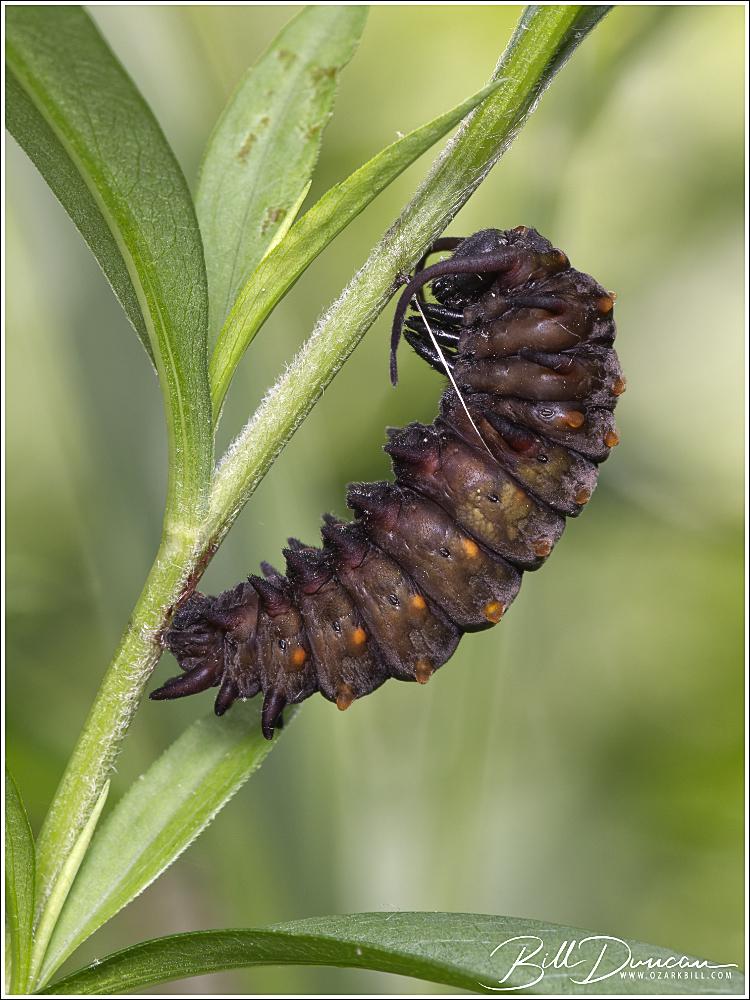
In late June I went out for an evening caterpillar hunt at Young Conservation Area. I was in for a real treat. The pipevine swallowtail (Battus philenor) caterpillars were on the move! Along with several dozen smaller instars munching away on the pipevine draped above my head along the trail, I also encountered close to two dozen final instar cats that were in various states. I found quite a few crossing the trails, some that were prepupal and also a few chrysalises that were attached to various plant species ranging from one to a few feet above the ground.
A pipevine swallowtail (Battus philenor) caterpillar setting up to pupate on a stem of Chasmanthium latifolium.
Sometimes it seemed they picked poor locations to pupate, like this one that chose the dangling petiole of a dehisced leaf.
A prepupal cat that has anchored to support itself in its upcoming metamorphosis.
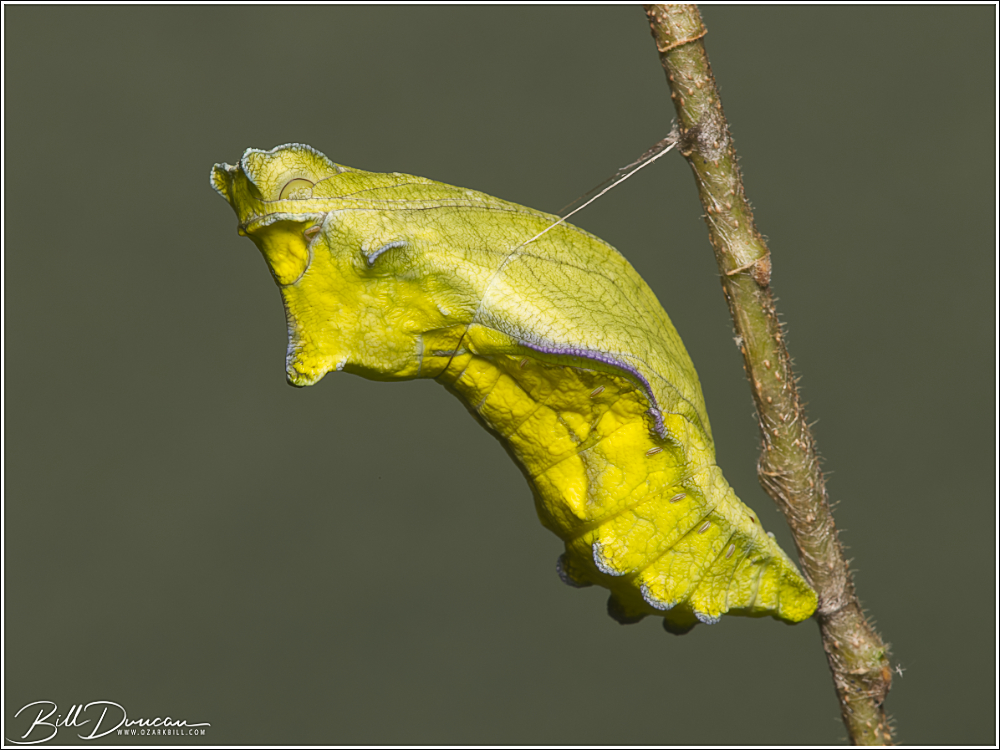
And finally, a recently finished chrysalis of the pipevine swallowtail (Battus philenor). In 10 – 20 days the adult butterfly will emerge.
Friends and I had a couple of really fun blacklighting sessions at Engelmann Woods Natural Area in June and July. Neither evening was as great as it could be but each was definitely worth the time and mosquito bites. Here are just a few of the fascinating arthropods that came to visit.
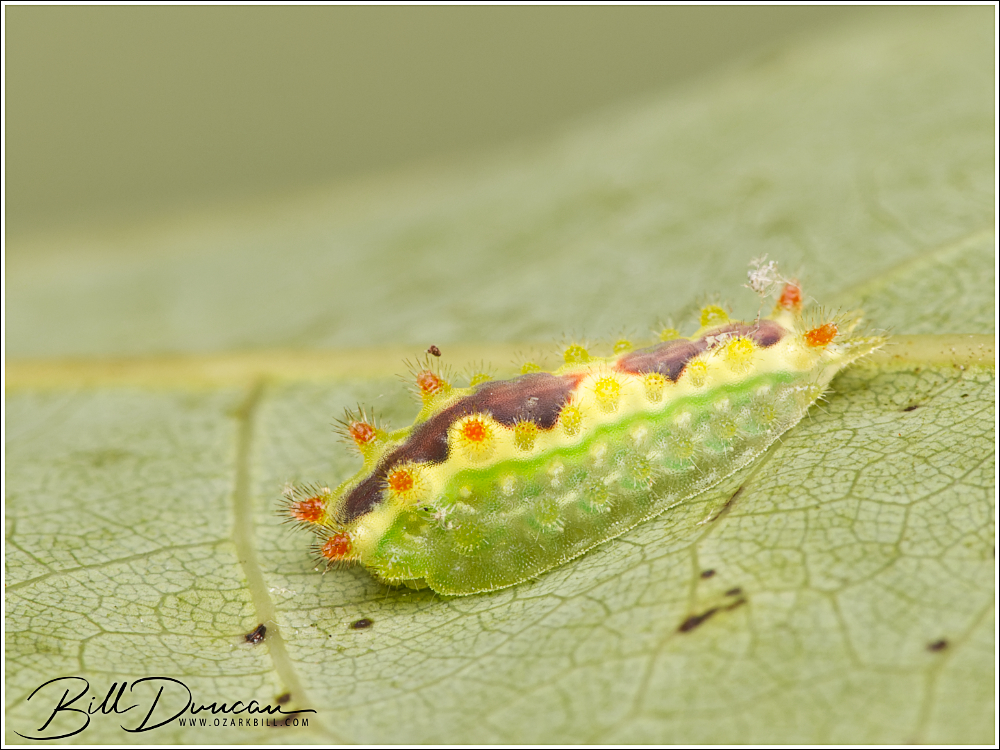
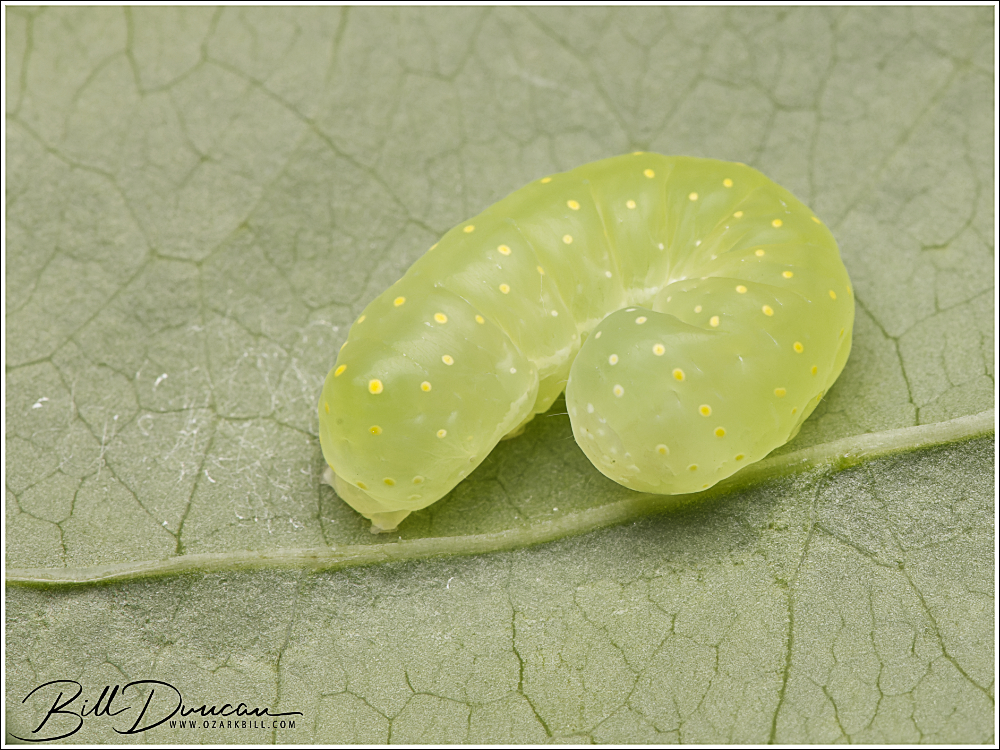
Slug moths (Family Limacodidae) are often the first to arrive at the sheets. We found a couple of adults and I was quite surprised to find a pretty late-stage purple crested slug (Adoneta spinuloides) larvae in late June. Typically, any slug moth cats are very small if you can find any at all in early summer.
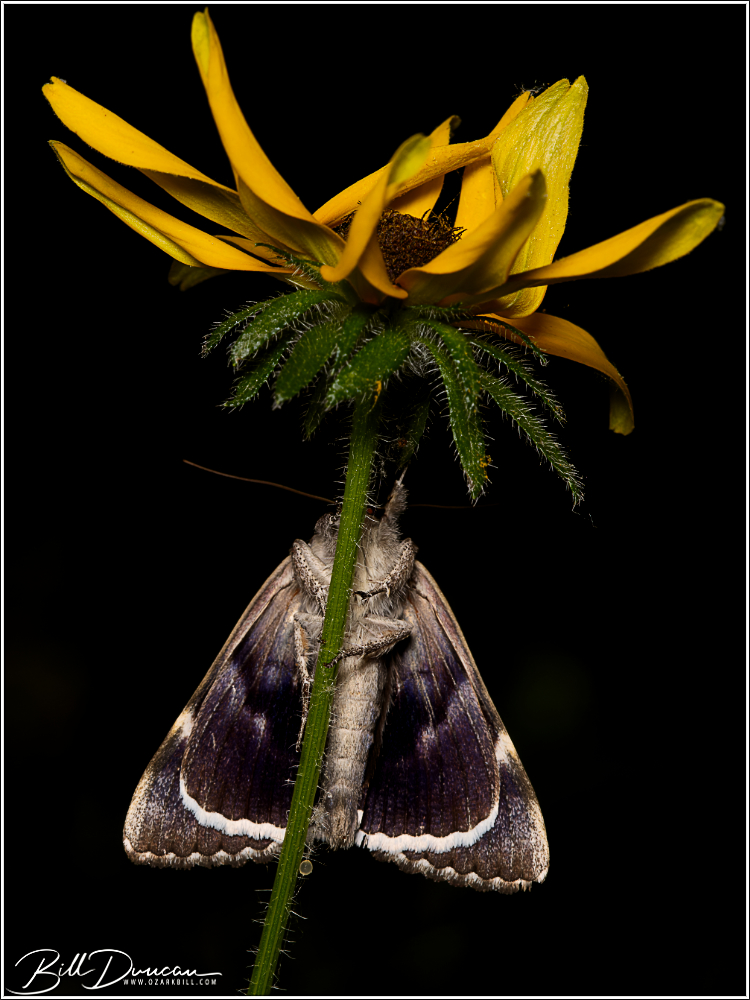
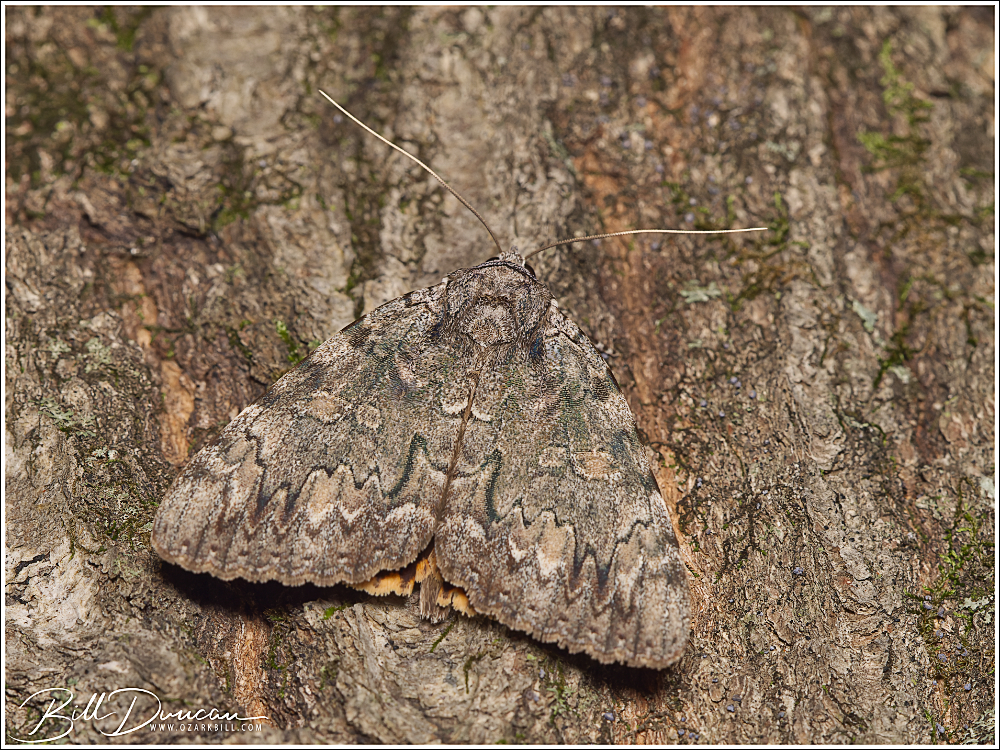
We had very nice diversity in underwing moths (Eribidae Catocala sp.). I believe we had identified six different species over the two nights. Here are a few of these.
We had only a single sphinx moth that would settle down for some photo opportunities. This is the common but still interesting Virginia creeper sphinx (Darapsa myron).
Darapsa myron (Virginia creeper sphinx)
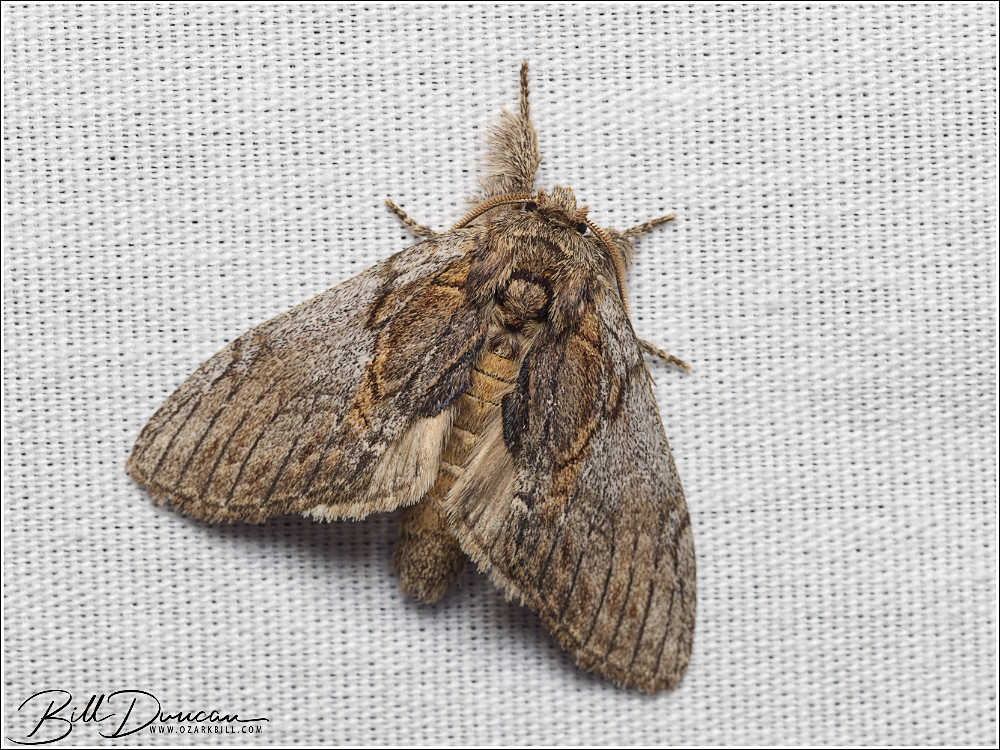
Probably my favorite find from these two nights was this Euerythra phasma (red-tailed specter) in the Family Erebidae.
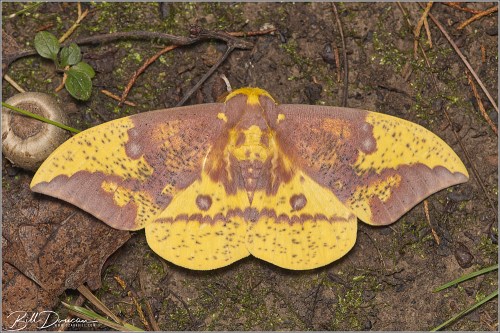
Of course, it really isn’t a blacklighting night without at least a couple of Saturniids. One of the highlights of our July night was having five imperial moths (Eacles imperialis) all show up at once shortly after I fired up the big metal halide bulb.
Eacles imperialis (imperial moth)
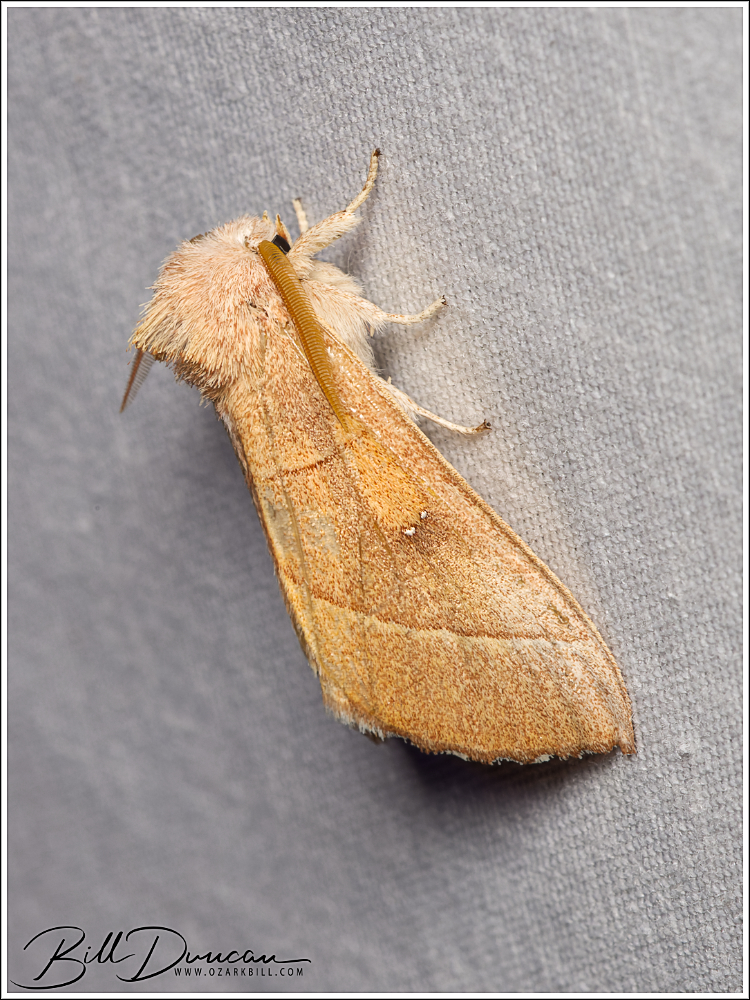
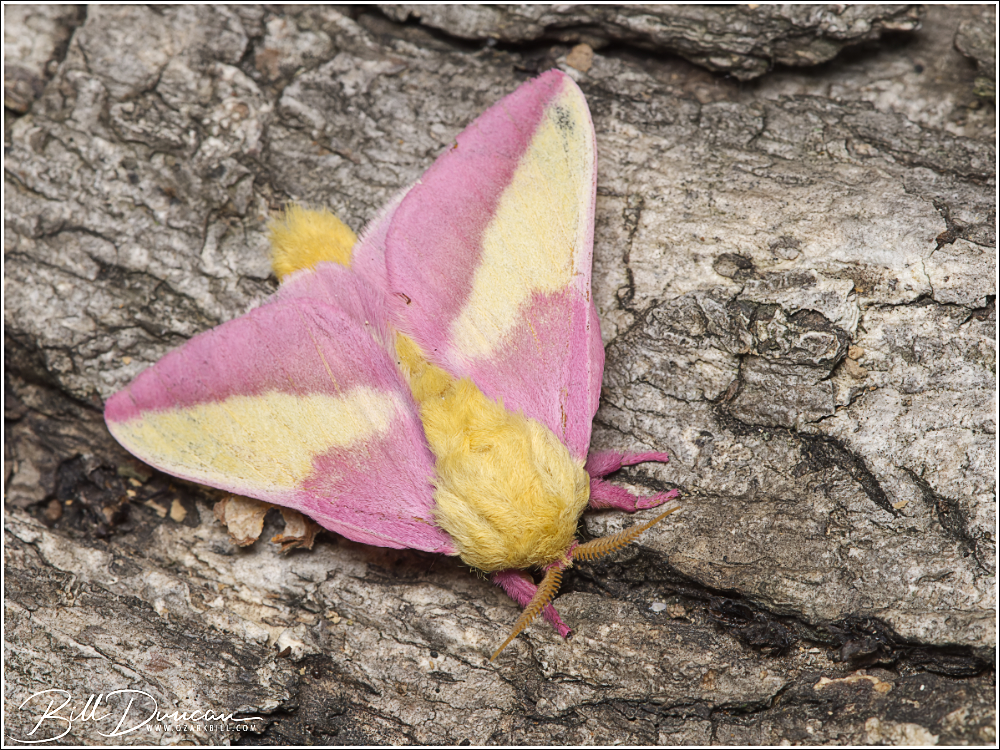
Dryocampa rubicunda (rosy maple moth)Dryocampa rubicunda (rosy maple moth)
I’ll wrap up the moths with a couple of colorful little one.
Pantographa limata (basswood leafroller) F. Crambidae
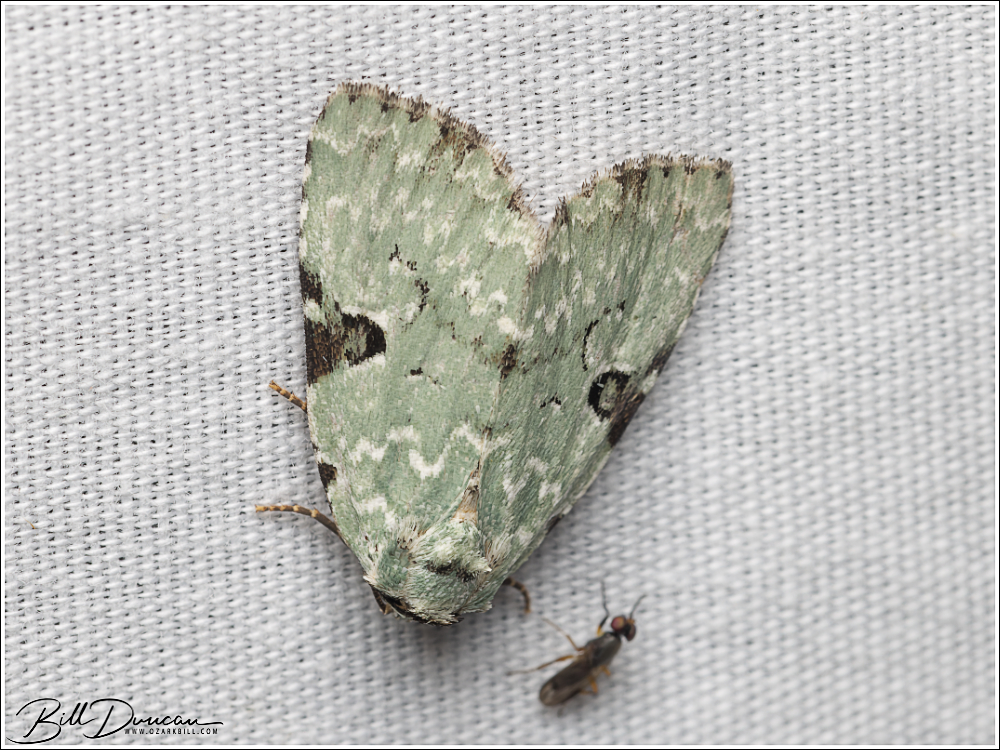
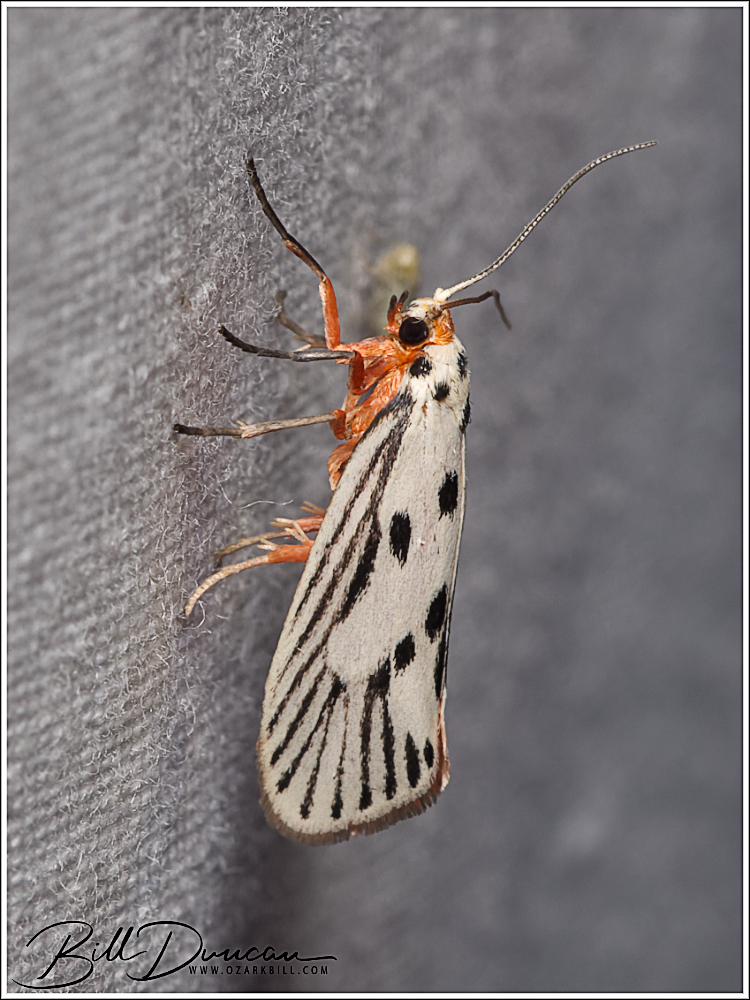
Lactura pupula (bumelia leafworm moth) F. Lacturidae
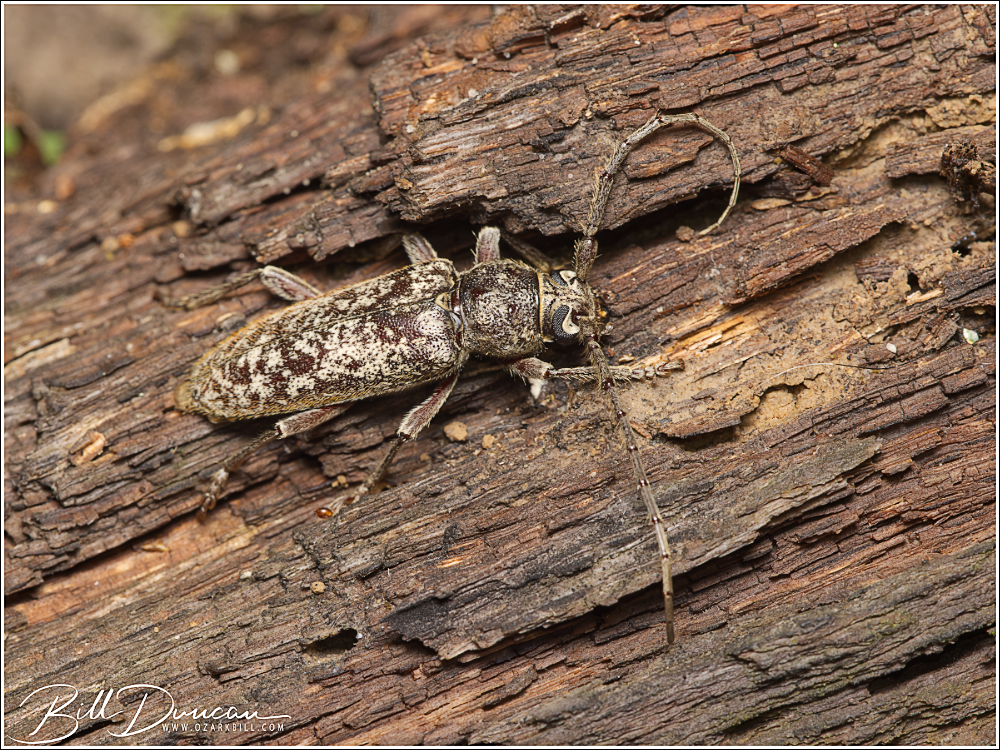
Of course we find other types of insects that are drawn to our lights, including these three species of Cerambycid beetles.
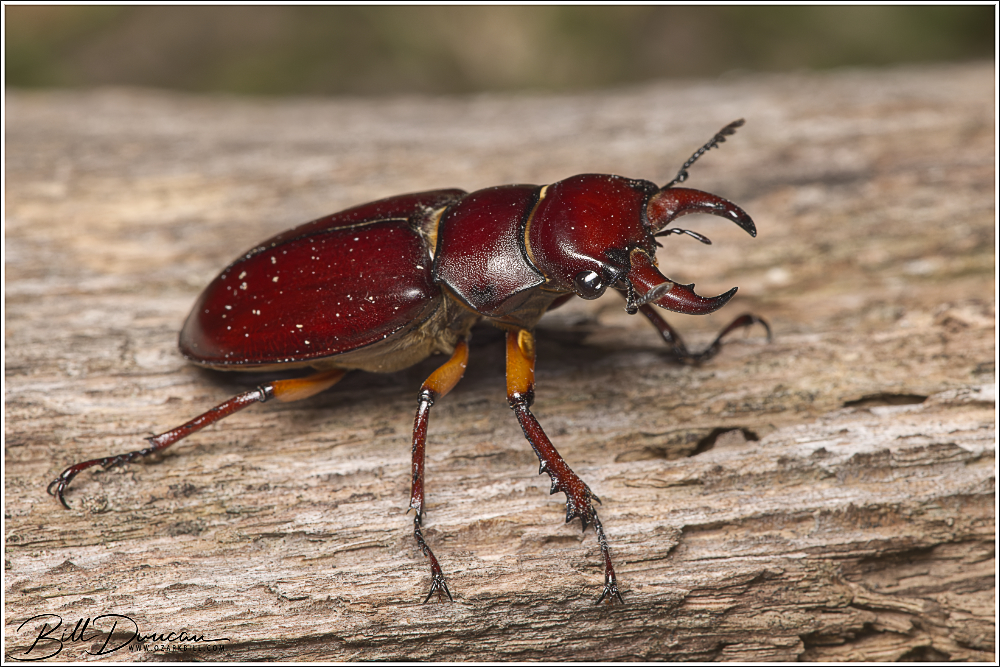
Thankfully this stag beetle wasn’t too serious about biting us.
Lucanus capreolus
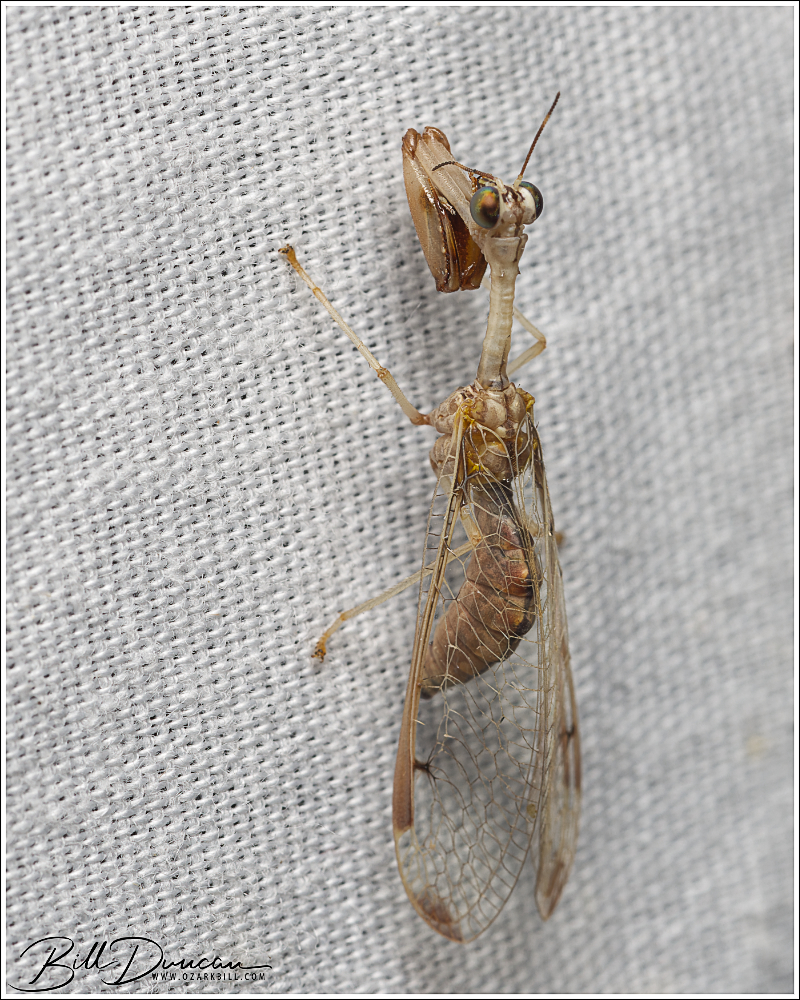
We found three species of mantid flies (Mantispidae). Unfortunately, I neglected to photograph the rarest of these.
Dicromantispa interruptaZeugomantispa minuta
This wraps up most of the first couple of blacklighting sessions of the season. I hope to get a few more in before the season is over. Thanks for visiting.
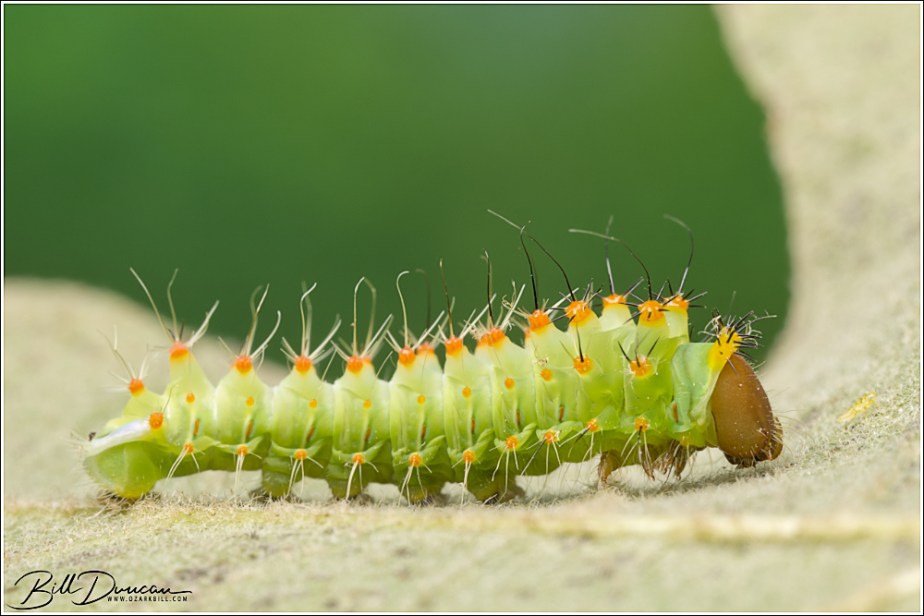
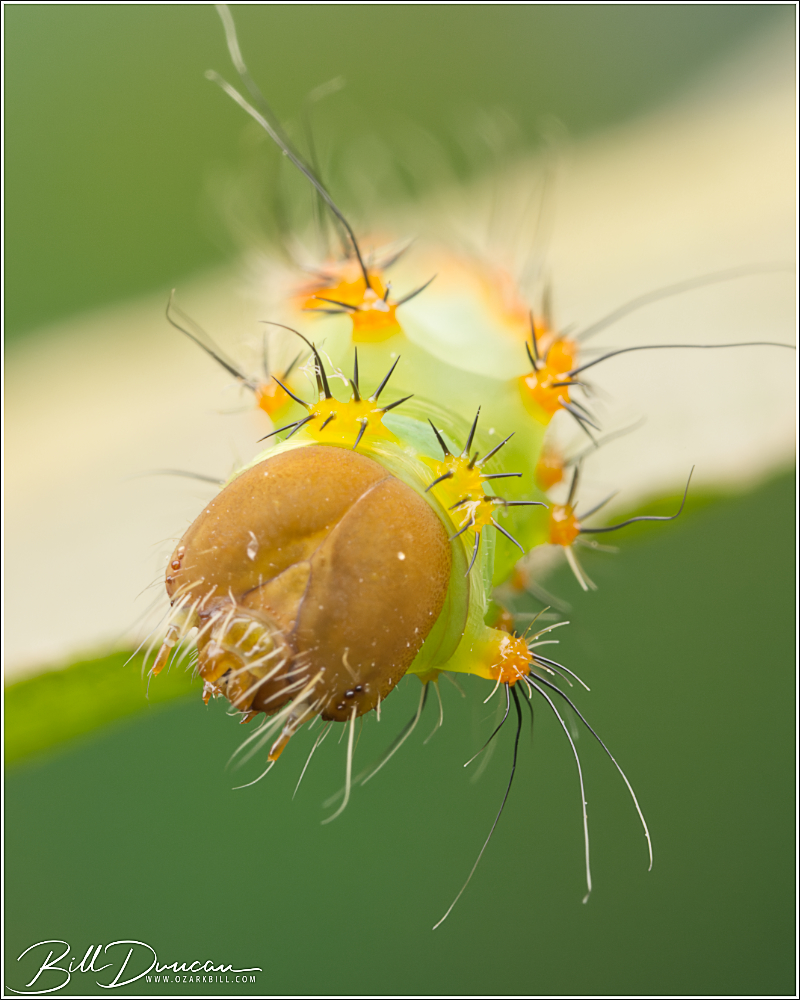
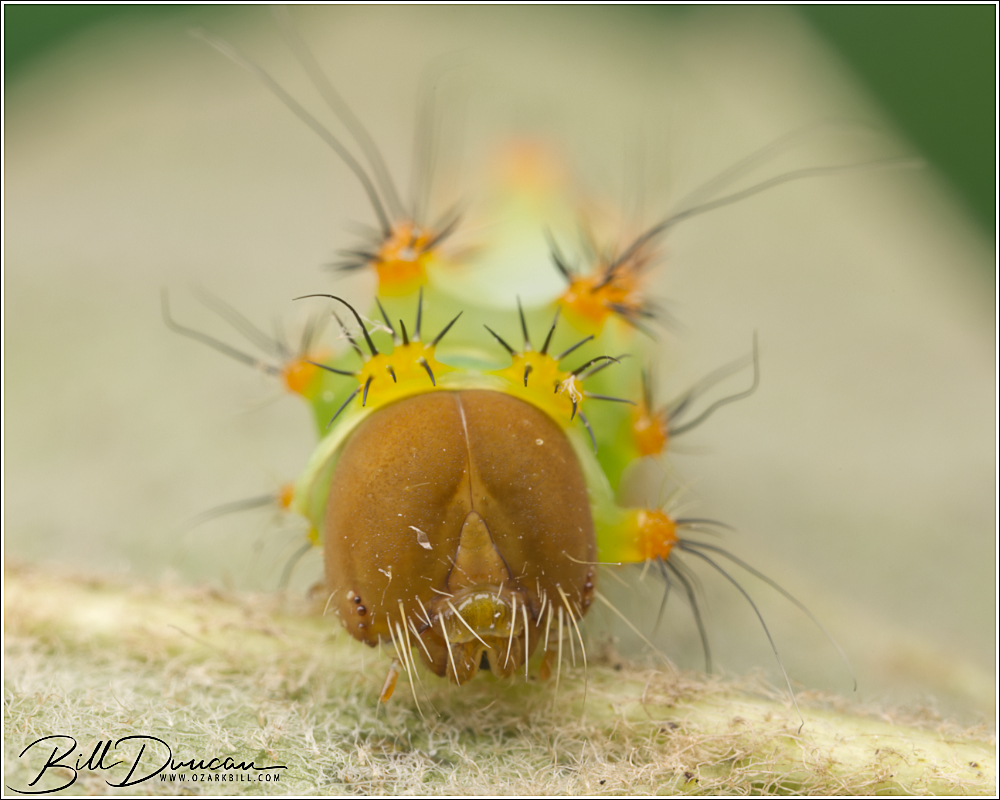
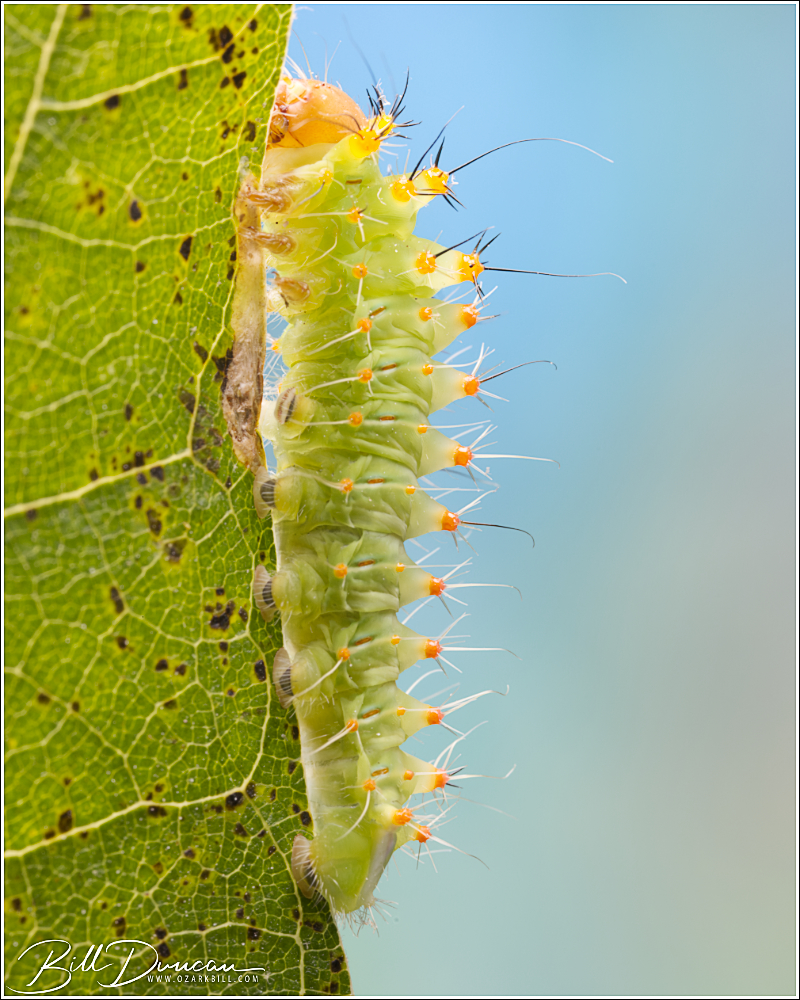
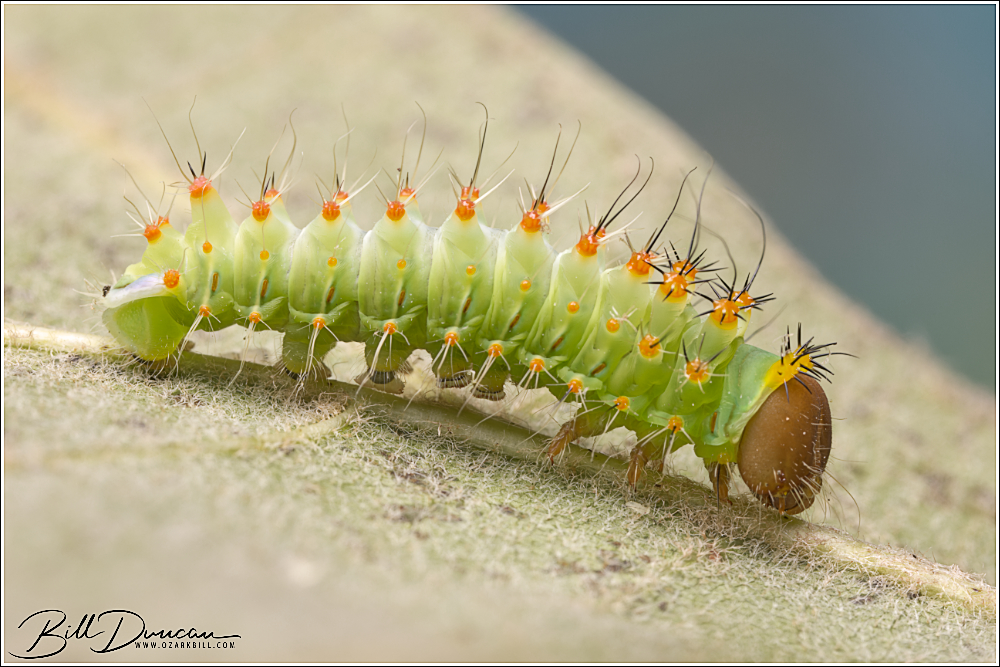
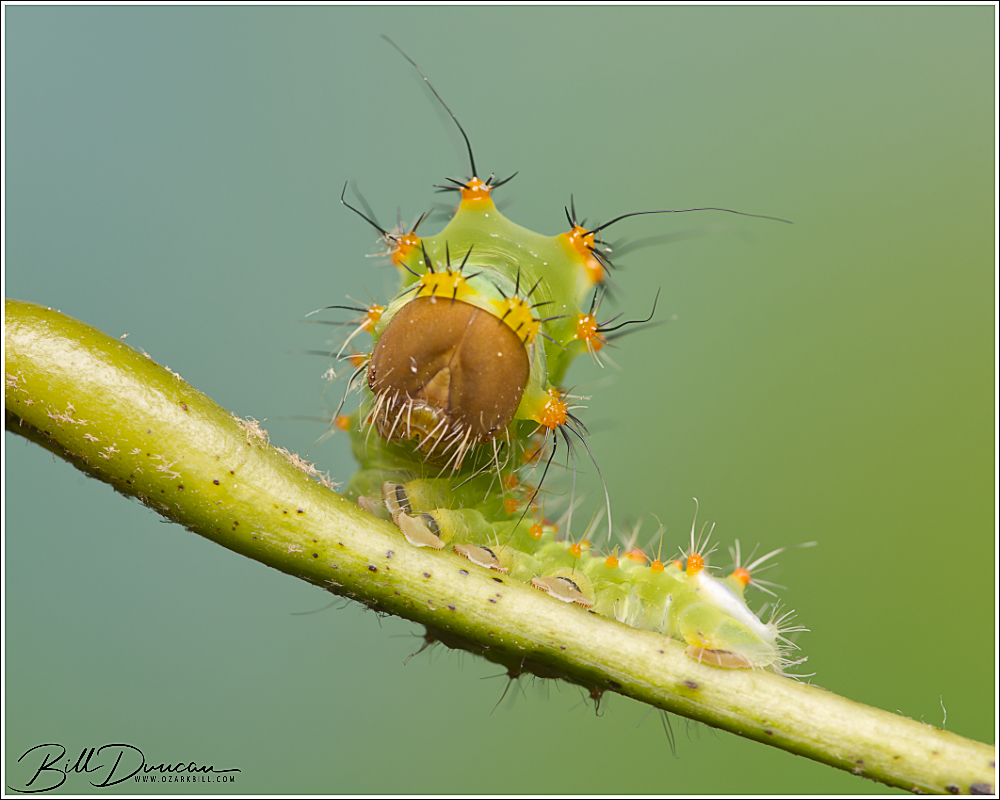
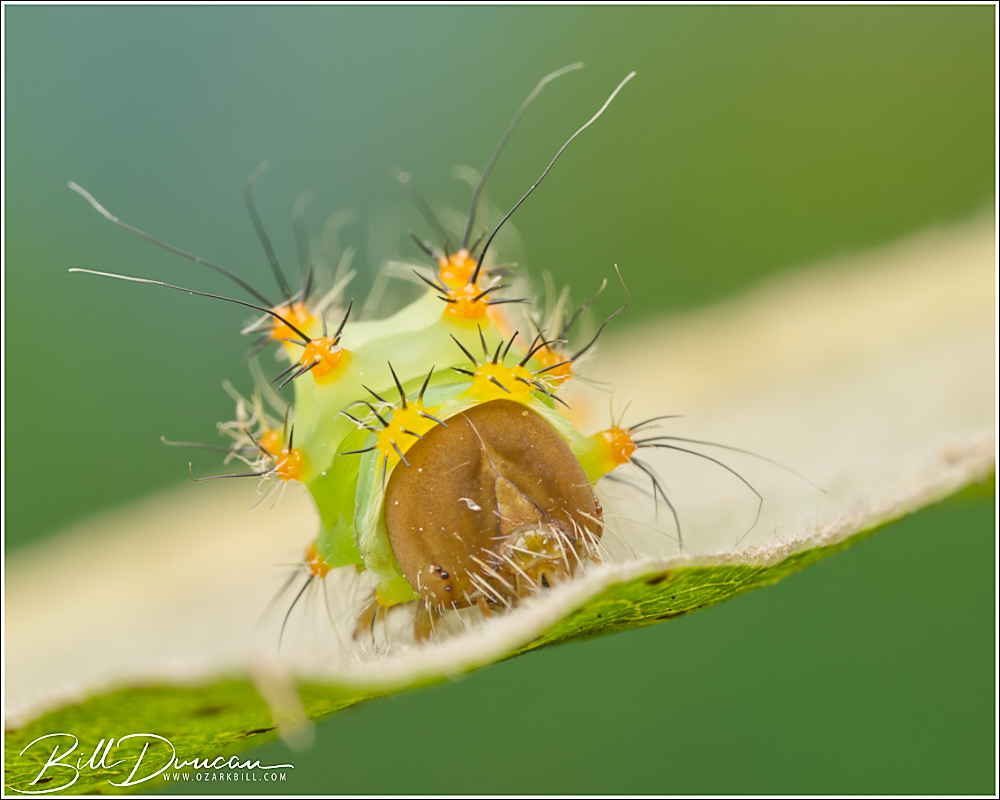
A couple of friends and I went to visit some sand and gravel hill prairies in central Illinois yesterday. Although it is a delight to visit those places and their unique floral communities, we didn’t find a lot to make us pull out the cameras. We took a short break from walking through the prairies in near perfect weather for an August day and did a little cat hunting in the nearby Sand Ridge State Forest. Along with some hungry mosquitos we happened across this cute little one feeding on a species of red oak. This is the silk moth Antheraea polyphemus. This species is among the largest caterpillars to be found in our area, but this guy was pretty tiny. I believe this is a 2nd instar.
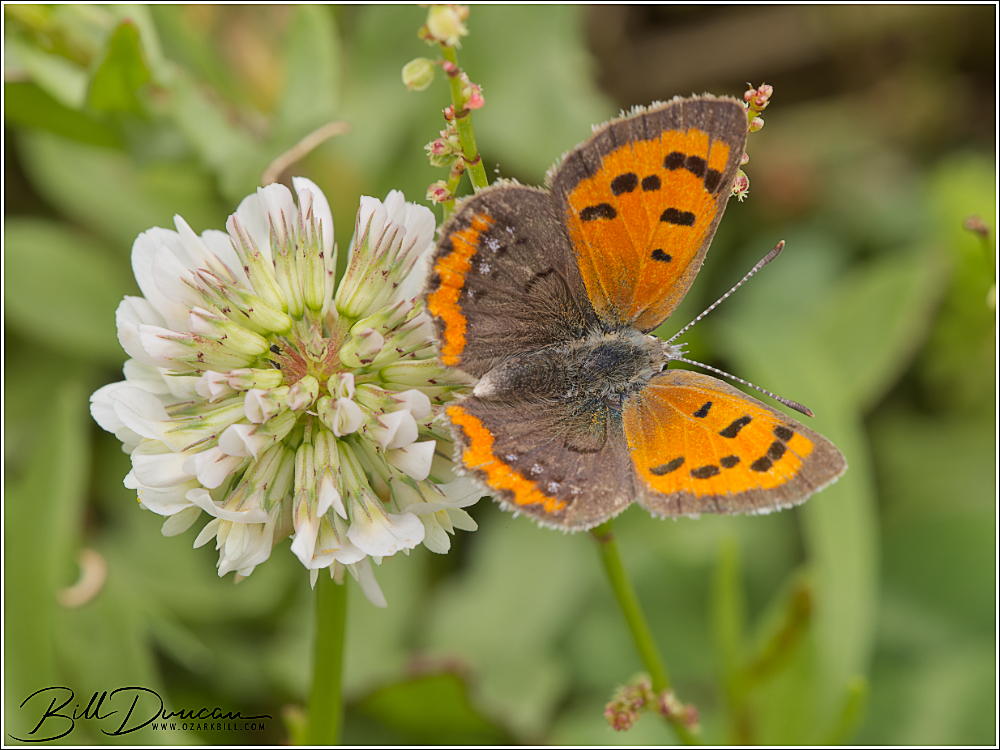
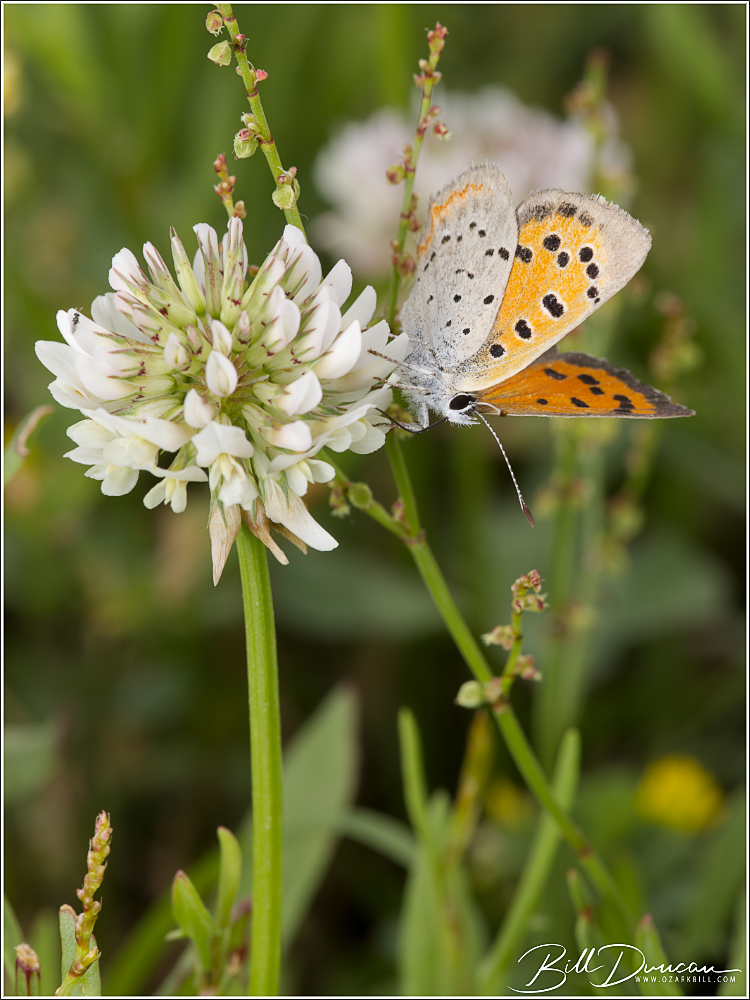
How about an adult Lep today. I’ve shared images before of the bronze copper (Lycaena hyllus), a larger and arguably more attractive Lycaenid in the same genus as today’s featured butterfly. The American copper (Lycaena phlaeas #4251) is seemingly harder to find in Missouri. In early June, Casey led the WGNSS Nature Photography Group to a known patch in Green County where we were lucky enough to find a few.
American copper (Lycaena phlaeas)
American copper is a rather unfortunate name for Lycaena phlaeas. Among the most widespread of any butterfly species, it is found across central and northern North America as well as across Eurasia and in mountainous regions in northern Africa.
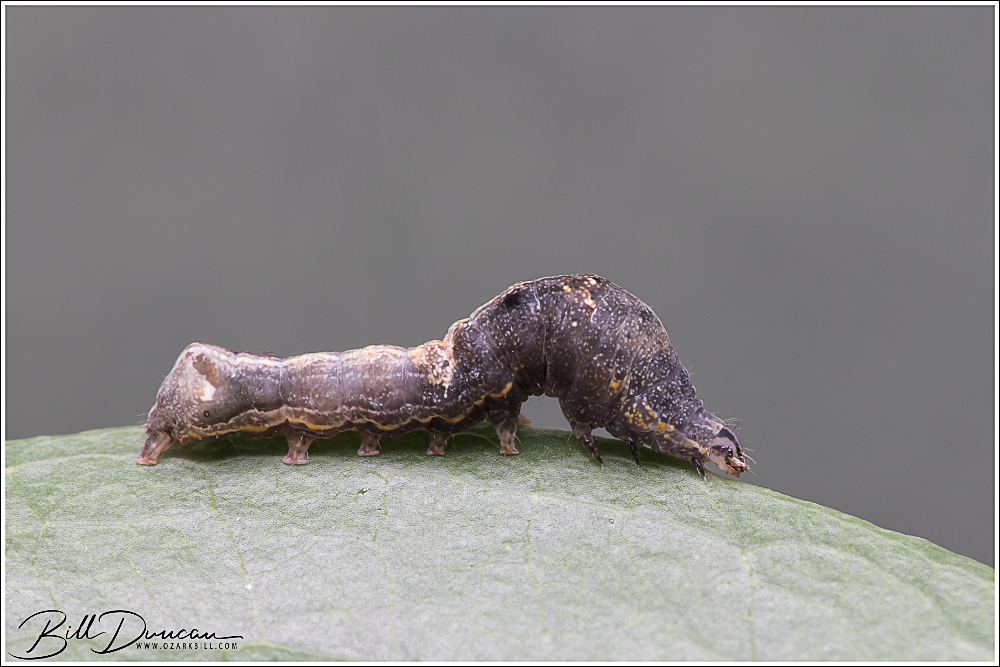
Today’s cat is the variegated midget (Elaphria versicolor #9678) in the Noctuidae Family. This species seems to be very polyphagous. Most literature suggests they prefer conifers but many have been found on deciduous perennials and even forb species. They also appear to be somewhat carnivorous, with reports of eating other caterpillars. The individual pictured here was found during July feeding on greenbrier (Smilax sp.) at Huzzah Conservation Area in Crawford County, MO.
Today’s cat is the tephra tussock moth (Dasychira tephra) in the Family Erebidae. This one was found feeding on hickory (Carya sp.) in July at Meramec State Park in Franklin County, MO. This guys has somehow lost the long dorsal lash on the eighth abdominal segment – a feature that is key in identification. All other characteristics seem to match. This species seems to prefer oaks but can be found on a variety of deciduous woody species. Members of Dasychira exhibit variable patterns and coloration and seem to vary geographically.
I got out early this morning and visited one of my favorite caterpillar hunting grounds – Cuivre River State Park in Lincoln County, MO. The pecker gnats were bad around sunrise but they would get to unbearable by lunch time, along with some nice heat and humidity. It was a typical mid-summer outing – rather slow. However, I always seem to find enough to keep me interested.
Apoda y-inversum
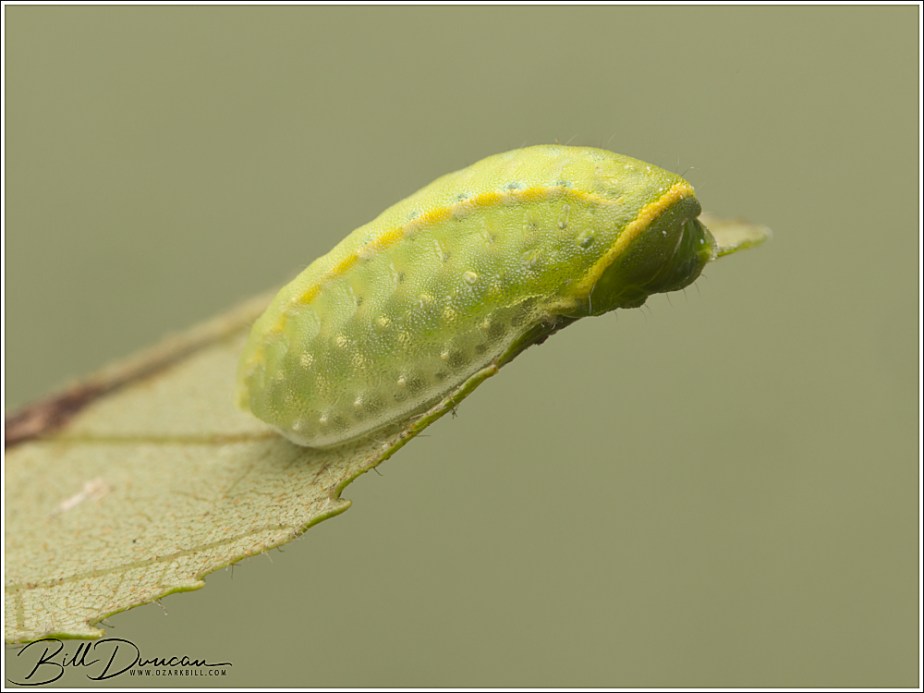
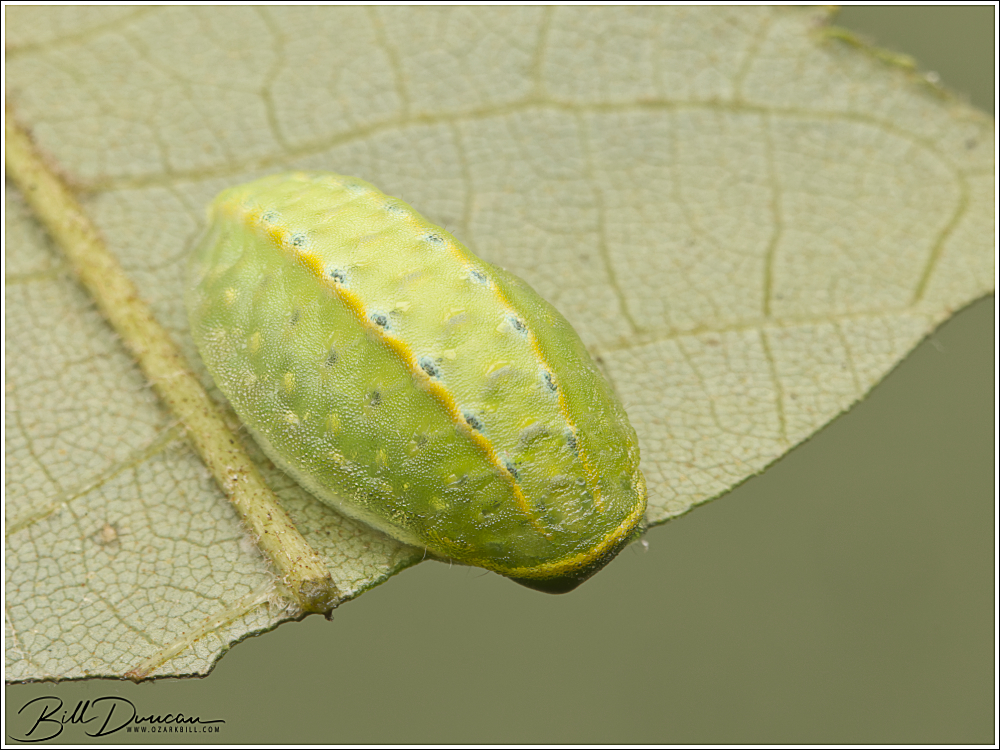
Along with a couple of new species, I was pleased to find two specimens of the yellow-collared slug (Apoda y-inversum #4667). A member of my favorite Family – the Limacodidae, the adult moth of this species is known by the name of the inverted-Y slug moth. Both of these cats were found on different leaves of the same hickory sapling. I don’t find these guys every season, so this was a nice find indeed.
Two cats on the same tree!
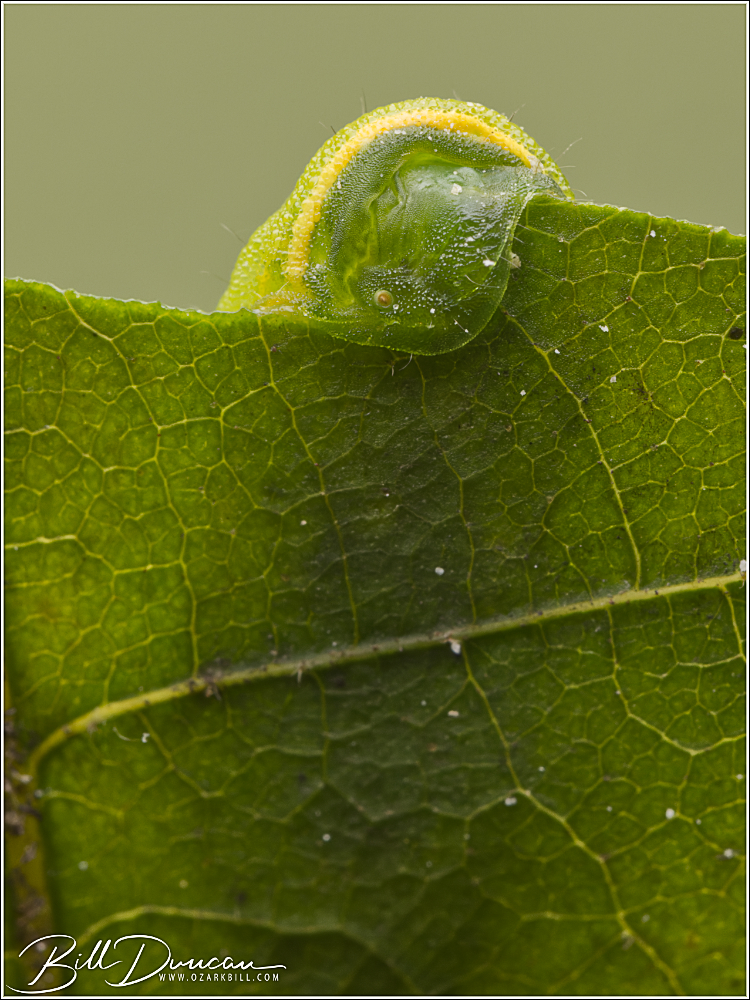
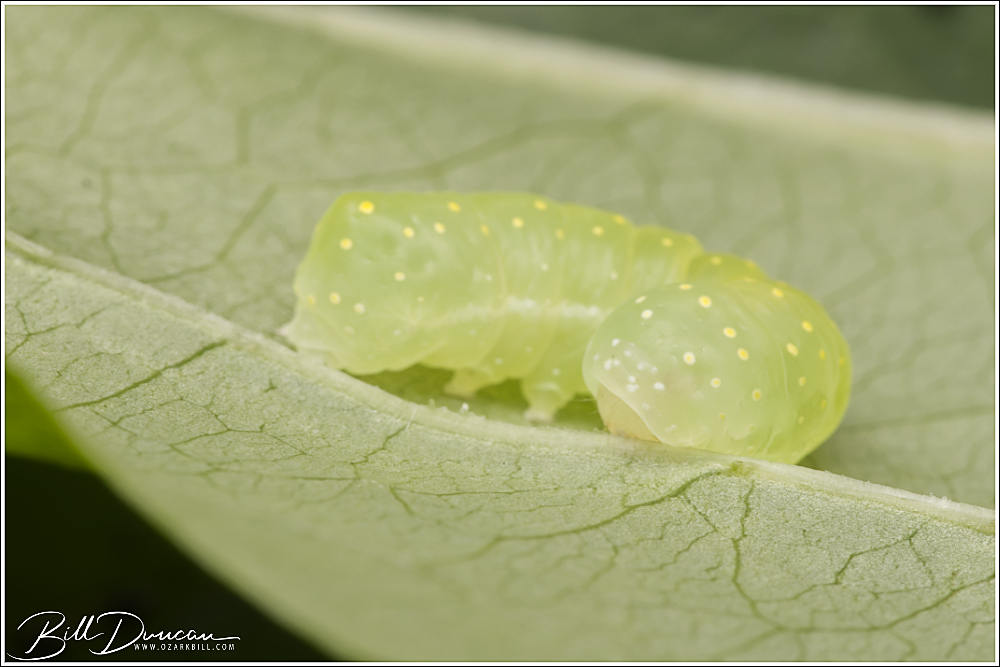
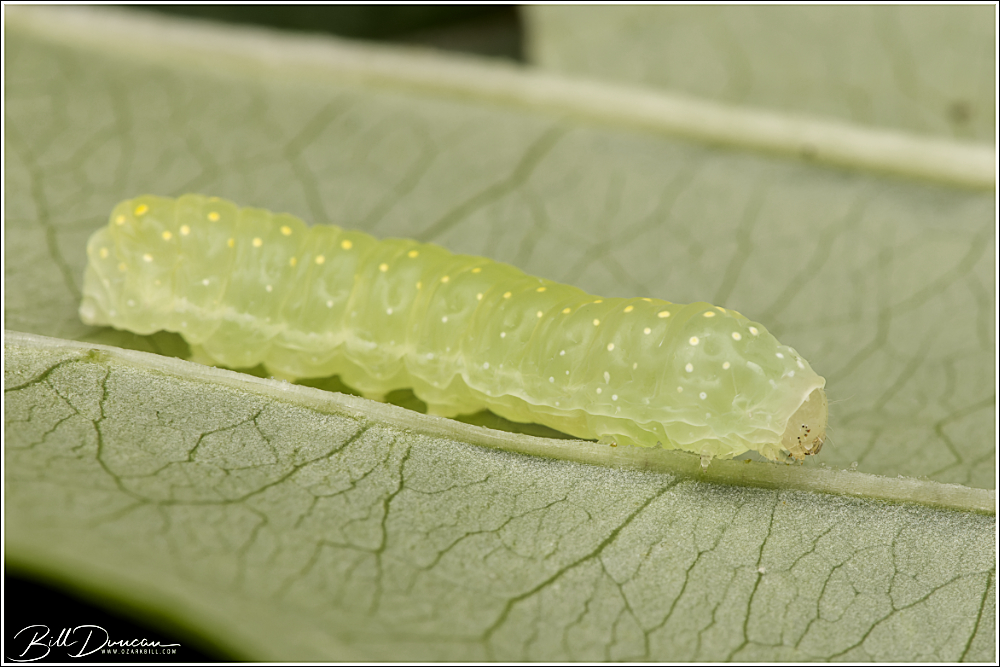
Slug moth caterpillars are standouts in the lepidopteran world in more ways than one. In these photos I hoped to showcase their peculiar way of shielding their heads by keeping it retracted in their thorax. Even during feeding, they keep their head covered by a fleshy extension of the first thoracic segment. Seeing their true heads extended, especially in this species is quite a rare sight. I guess the one who briefly did show its face for me today was getting a little curious about what I was doing to the leaf it was feeding on as I manipulated the leaf in the clamp to get the angles I was looking for.
A look at the fleshy thoracic segment that covers the caterpillar’s head. It will drape this covering over the leaf margin, allowing it to eat without exposing its head.
A closer look of a feeding Apoda y-inversum. Notice the typical straight-edge feeding pattern that the Limacodidae are known for.
A partial look at the exposed head capsule of Apoda y-inversum.
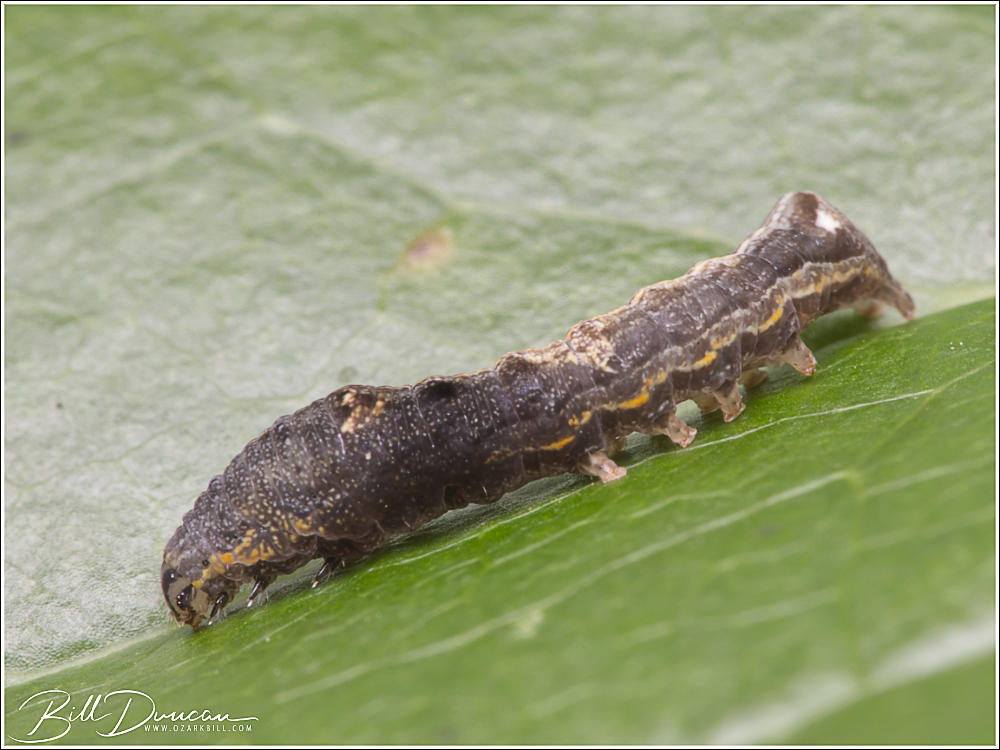
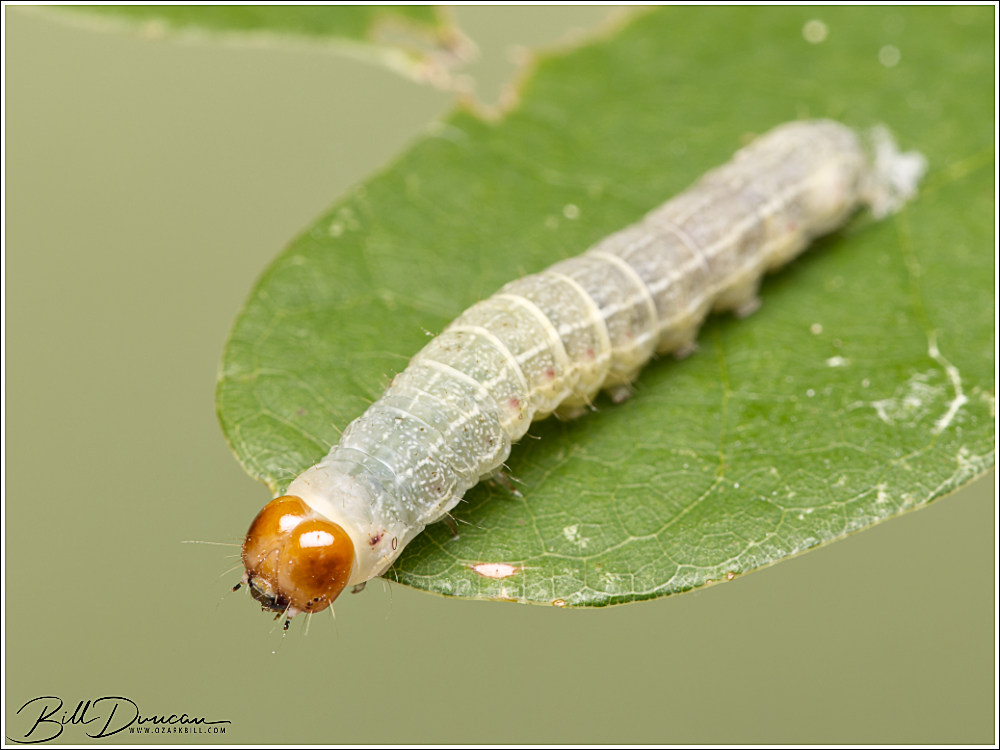
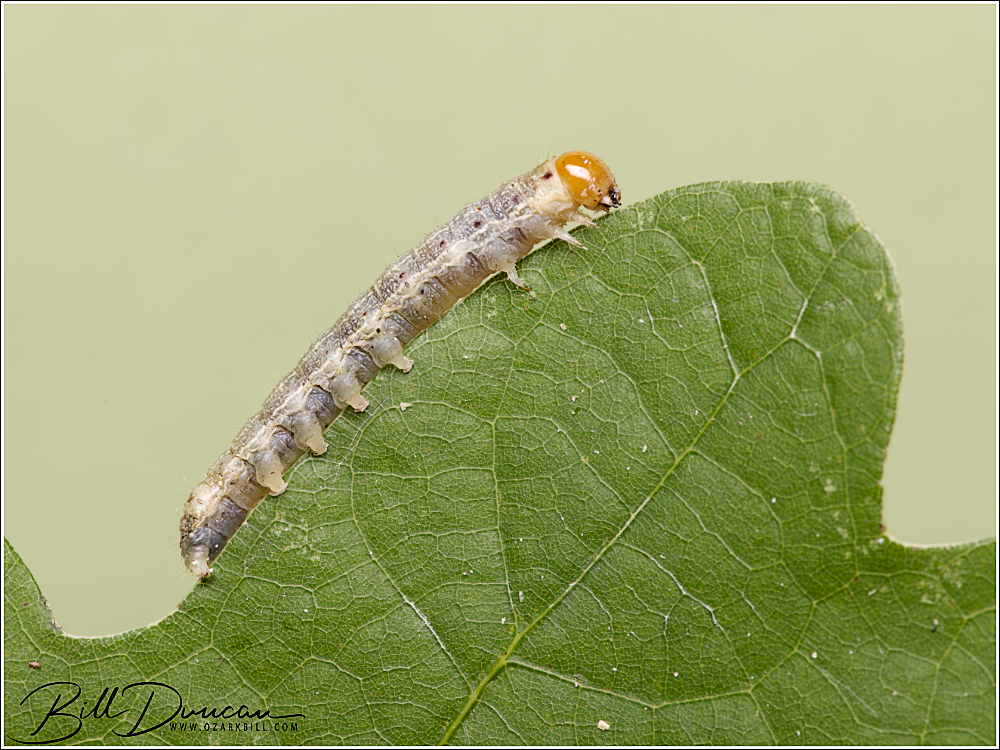
Today’s caterpillar resides in the very diverse Family Noctuidae. The confused woodgrain (Morrisonia confusa #10521) is a generalist, feeding on a wide variety of dicotyledonous plants. The two I am featuring here were found on white oak (Quercus alba) at Huzzah Conservation Area in Phelps County, MO.
Morrisonia confusaMorrisonia confusa
The confused woodgrain, named because of the wing pattering of the adult, has only a single brood each year. The larvae can be found from June through October. This long development in the larval stage is common in polyphagous species. This is assumedly due to the wide variety of secondary phytochemicals that the larvae and their gut flora must be able to contend with. It is also assumed that specialist species generally develop quicker due to being in sync with just one or a few specific hosts.
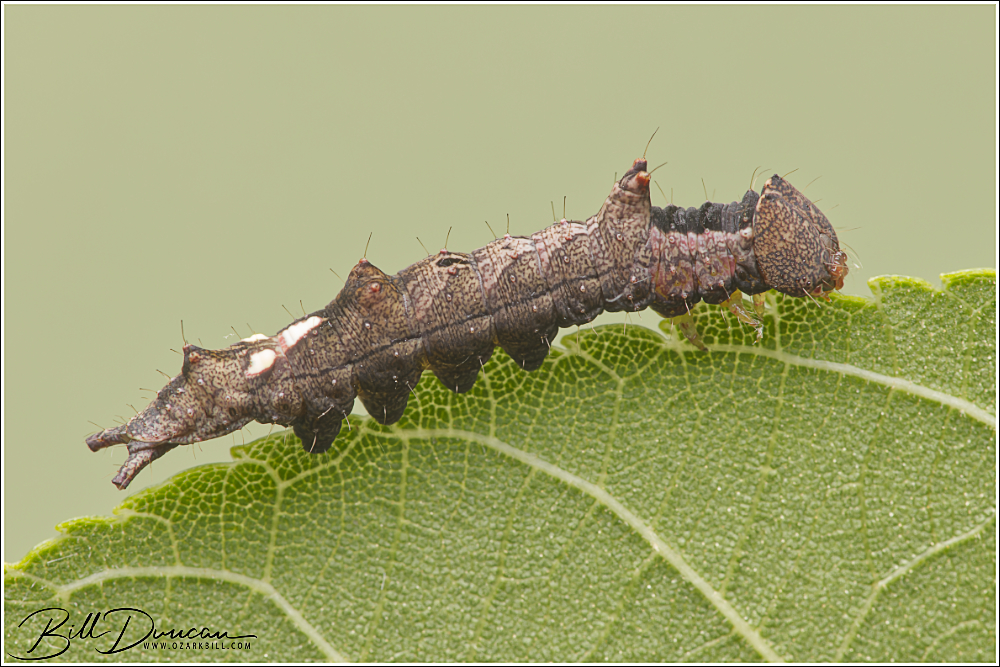
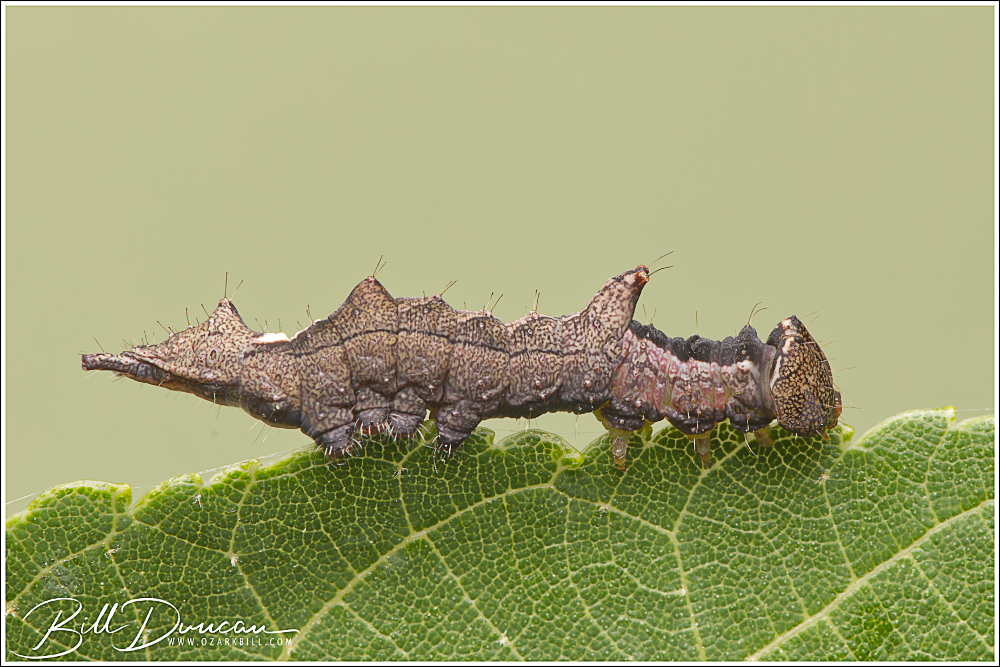
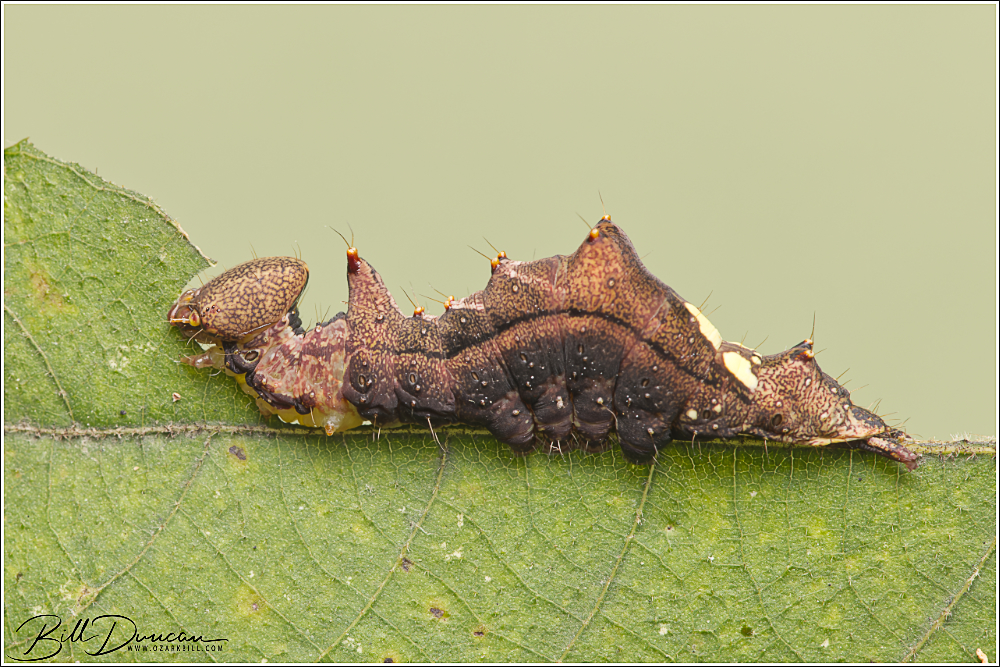
Tonight we have a common, but fantastic member of the Notodontidae Family. The black-blotched schizura (Schizura leptinoides #8011) is most often found on hickory and walnut, but can be found on other woody plants as well. The two cats I found this season were both found on low hickory branches.
Schizura leptinoidesSchizura leptinoides
The protuberances and warts found along the length of its body come in handy as it mimics damaged and senescent portions of the leaf blade as they feed openly, taking the place of the leaf tissue that they consume.
Today’s caterpillar is one of a few amazing Noctuids that specialize on greenbrier (Smilax sp.). As fantastic as the larval stage of Phosphila miselioides (Hodges #9619) is, the adult is even better and I hope to find it one day.
Phosphila miselioides in its typical body position when disturbed.