
From a WGNSS Nature Photography Group outing from last July at Shaw Nature Reserve, here are some images of a Hummingbird Clearwing (Hemaris thysbe) as it foraged among blooming Garden Phlox (Phlox paniculata).


"What a thousand acres of Silphiums looked like when they tickled the bellies of the buffalo is a question never again to be answered, and perhaps not even asked." -Aldo Leopold
From a WGNSS Nature Photography Group outing from last July at Shaw Nature Reserve, here are some images of a Hummingbird Clearwing (Hemaris thysbe) as it foraged among blooming Garden Phlox (Phlox paniculata).
This post is a modified article that was originally published in the Webster Groves Nature Study Society’s journal, Nature Notes (January, 2020, Vol. 92, No. 1).
Finding the orchid, Triphora trianthophora (three-bird orchid, nodding pogonia), during open bloom can be somewhat of a chore, particularly among us weekend warriors. Casey Galvin and I were both intrigued about the possibility of getting photographs of this diminutive and gorgeous orchid since learning of their discovery at Babler State Park by the WGNSS Botany Group led by Nels Holmberg, John Oliver and others in 2018. The following descriptions and photographs are anecdotal and were not collected using rigorous scientific methodology.
Phenology
There are several reasons it is challenging to find this extremely ephemeral plant in bloom. First, being partially saprophytic, the plants exhibit periodic dormancy and may not send up above-ground shoots every year, persisting instead as subterranean tubers for extended periods (Homoya, 1992). Even when they do produce stems and leaves, there is no guarantee the plants will flower in a given year. Additionally, when they do flower, any one bloom is open for only a few hours during a single day.
Exhibiting a phenomenon known as thermoperiodicity, a group or population of these plants are synchronized to open mature buds on the same day. This first wave of synchronous blooming is reportedly induced by a drop in minimum daily temperature of at least three degrees over two or more consecutive days. Following another 48-hour period, all mature buds within the population will then open on the same day (Luer 1975). Being skeptically minded, this was something I wanted to observe for myself.
Beginning in late July, Casey and I began monitoring the easier to get to population at Babler State Park. The first wave of synchronous flowering occurred on August 3rd. We unfortunately missed this but know the exact date because of visits on days immediately before and after this date. Looking into historical temperatures collected from the closest publicly-available weather station (Babler Park Estates – KMOBALLW37) revealed the initial blooming date fit the required temperature pattern perfectly (see attached figure). I continued monitoring and collecting flowering data and observed two more large flushes of synchronized blooms along with three days interspersed where only 3–10 stems/plants opened flowers. For subsequent synchronized days, I did not observe a coinciding drop in temperature as described above. I assume that the trigger for the initial bloom works to synchronize the population and subsequent larger bloom days are consequently synchronized due to all plants ‘running ahead’ at the same rate. However, there could potentially be some other unknown environmental triggers that are playing a hand here.


Pollination
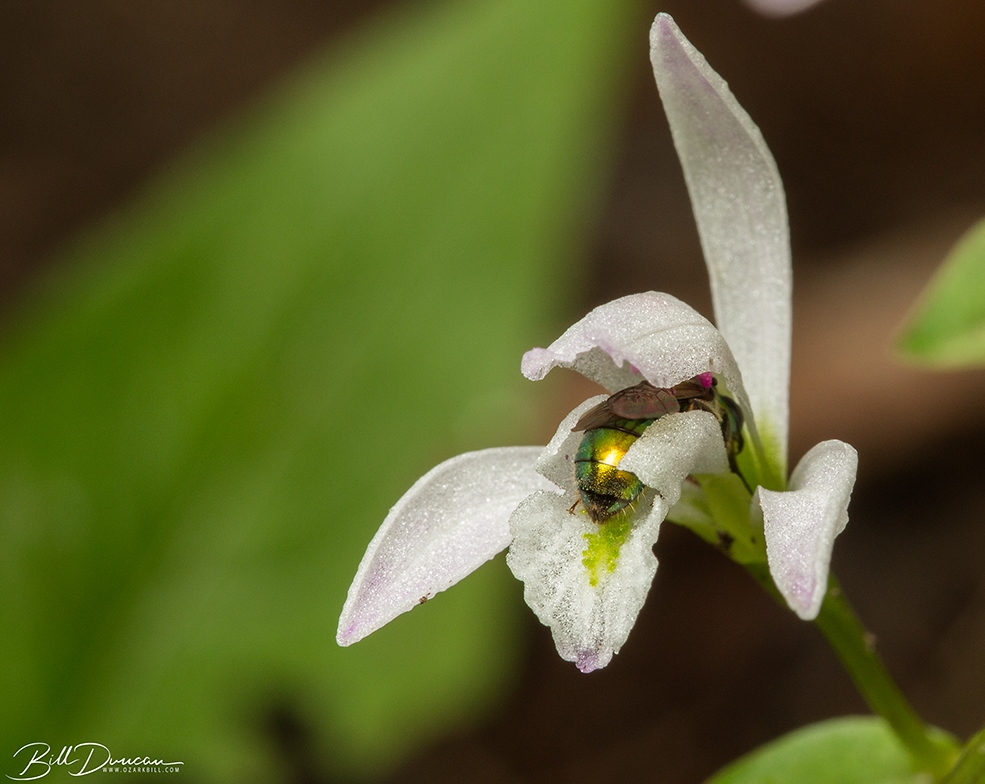
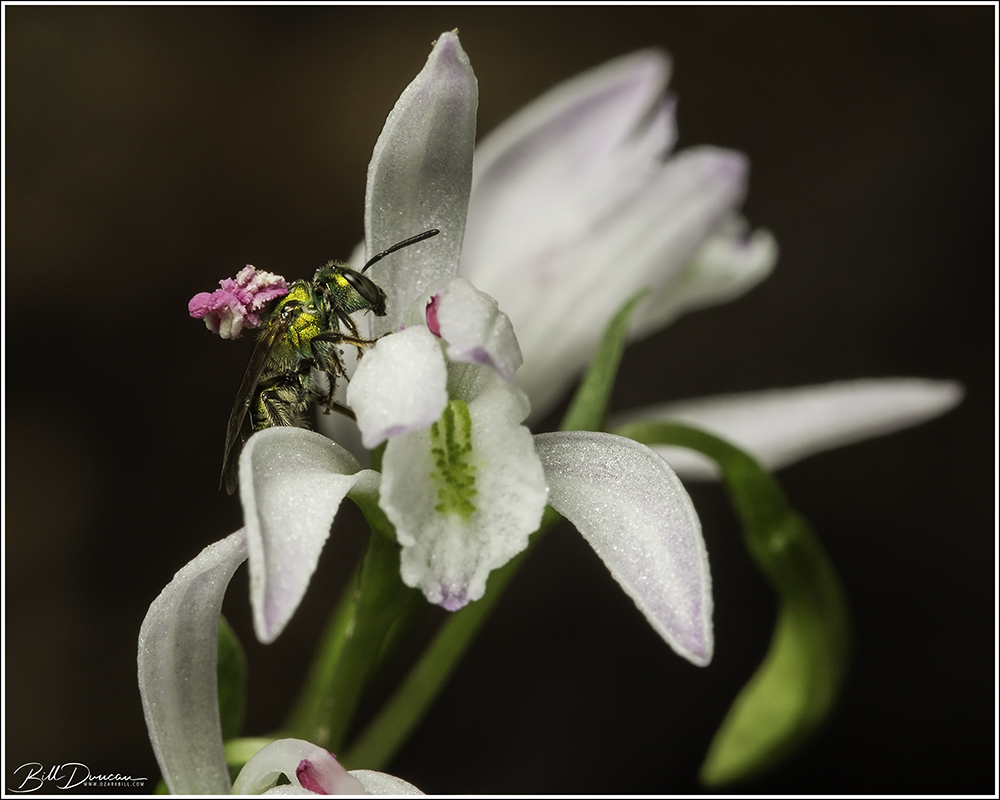
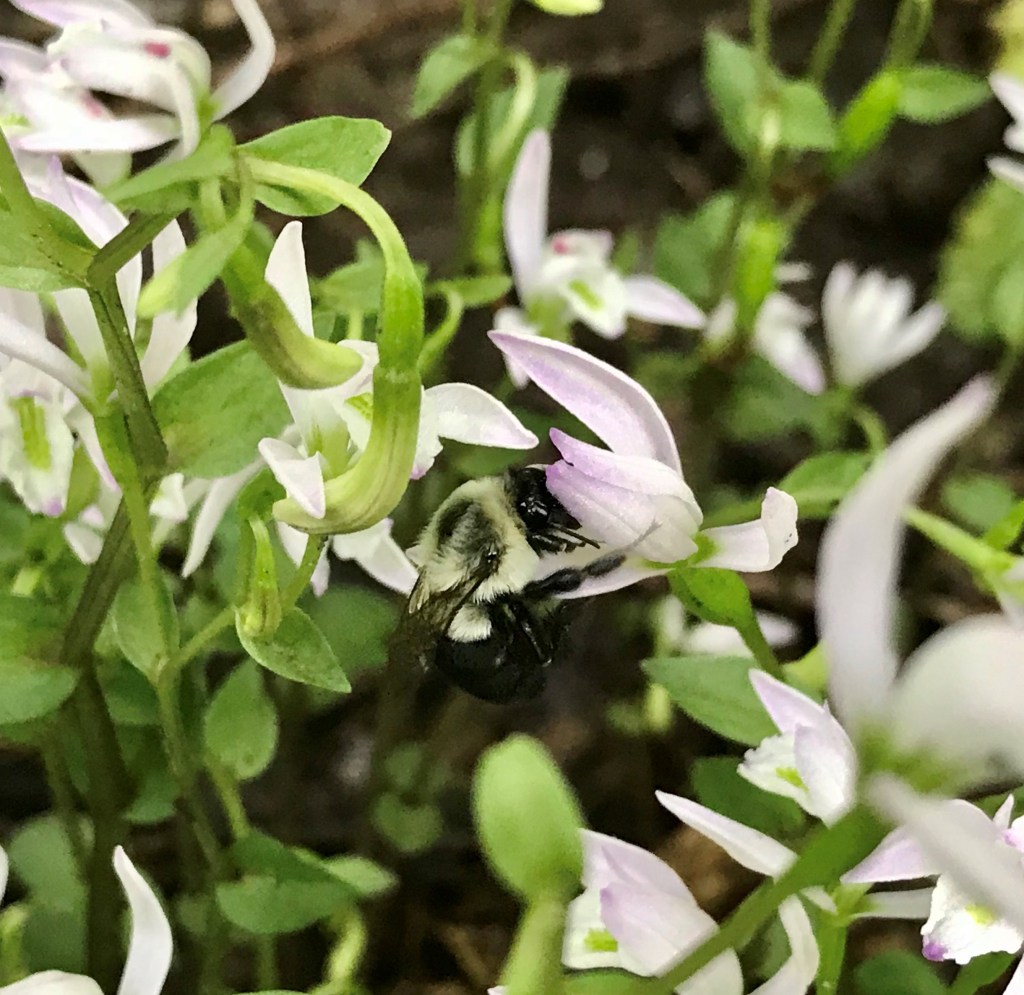
Halictid bees have been reported to be the primary pollinator for this species (Luer 1975). I had this in mind as I observed and began taking photographs while visiting on a large bloom day but doubted I would be fortunate enough to observe or photograph a potential pollinator visit. However, patience allowed me to do just that. I first observed visits by small flies and Bombus impatiens. Although Williams (1994) reported that Bombus have acted as pollinators of this species, I did not observe any of these visitors with attached pollinia during the 10-15 flowers I watched them visit. Eventually, I observed three different Halictid bees as they visited multiple flowers and observed these were heavily attached with pollinia. As described by Williams (1994), seed capsule production (successful pollination) is a relatively rare event in this species. Nevertheless, this was a treat to observe and photograph.



REFERENCES
Homoya, M.A. Orchids of Indiana. Indiana University Press, Indianapolis, Indiana, USA.
Luer, C.A. 1975. The Native Orchids of the United States and Canada. New York Botanical Garden, Bronx, New York, USA.
Williams, S.A. 1994. Observations on reproduction in Triphora trianthophora. Rhodora 96:30-43.

f/18, 1/30 sec., ISO-400, 234 mm focal length equivalent
For the second year in a row, a special beetle that has been described by our own Ted MacRae as “one of the rarest and most beautiful species of longhorned beetle to occur in Missouri” was found during the joint field trip of the WGNSS Entomology and Nature Photography groups at Hughes Mountain Natural Area. Tragidion coquus, purported to be spider wasp mimics, mine in dead oak branches and can be found in flight between June and November. I wasn’t happy with my photos of last year’s specimen (also a female), so I was thrilled to be able to take the time and set her on some foliage with fall colors. It was an almost disaster as she was able to take flight before we were finished. But, having the quick reflexes of a Marvel superhero, I was able to catch her out of the air with a quick grab with just a slight kink in her antennae in consequence.
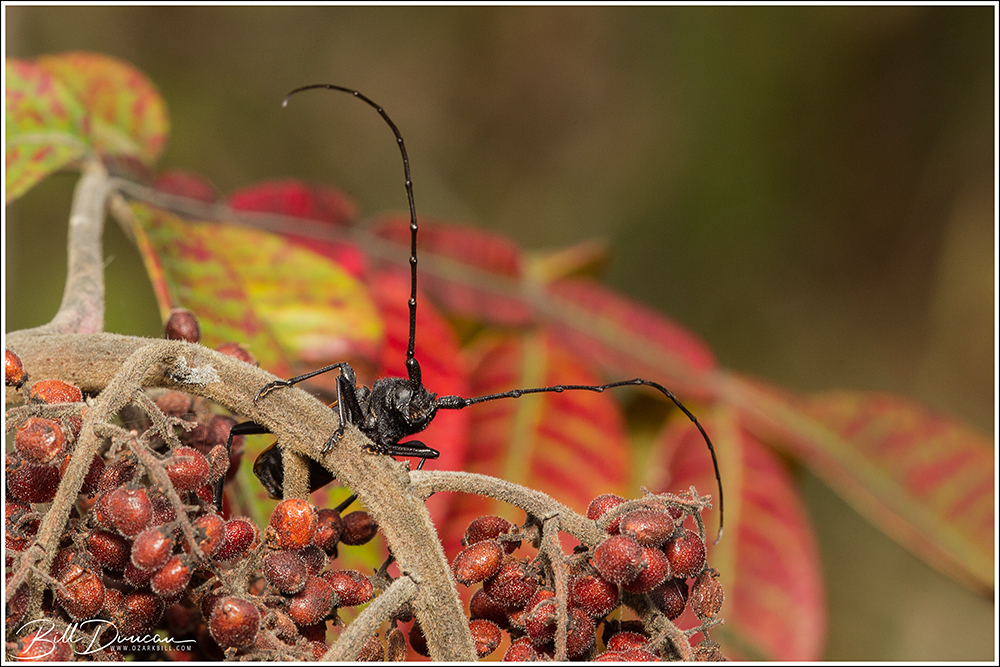

f/18, 1/30 sec., ISO-640, 234 mm focal length equivalent
This golden tortoise beetle (not golden during this photo shoot) was found during an insect survey that some WGNSS members participated in at the Litzsinger Road Ecology Center.


f/16, 1/160 sec., ISO-640, 234 mm focal length equivalent.

f/16, 1/160 sec., ISO-640, 234 mm focal length equivalent.
f/16, 1/160 sec., ISO-640, 234 mm focal length equivalent.


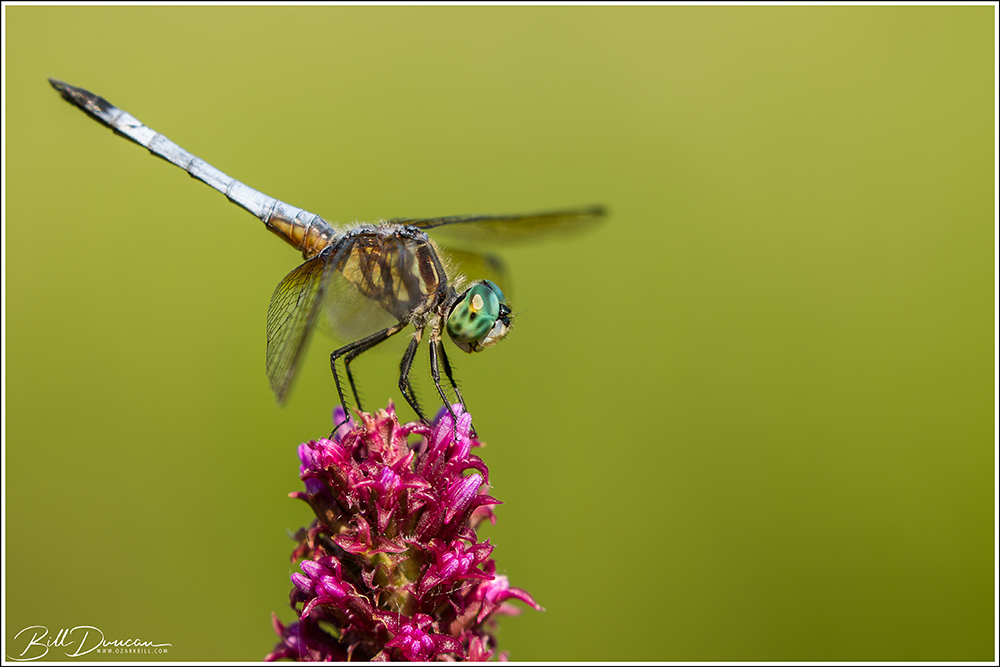


These special butterflies, endangered or threatened across much of their small range, have their stronghold in the state of Missouri. These images were taken in St. Francis Co., MO.


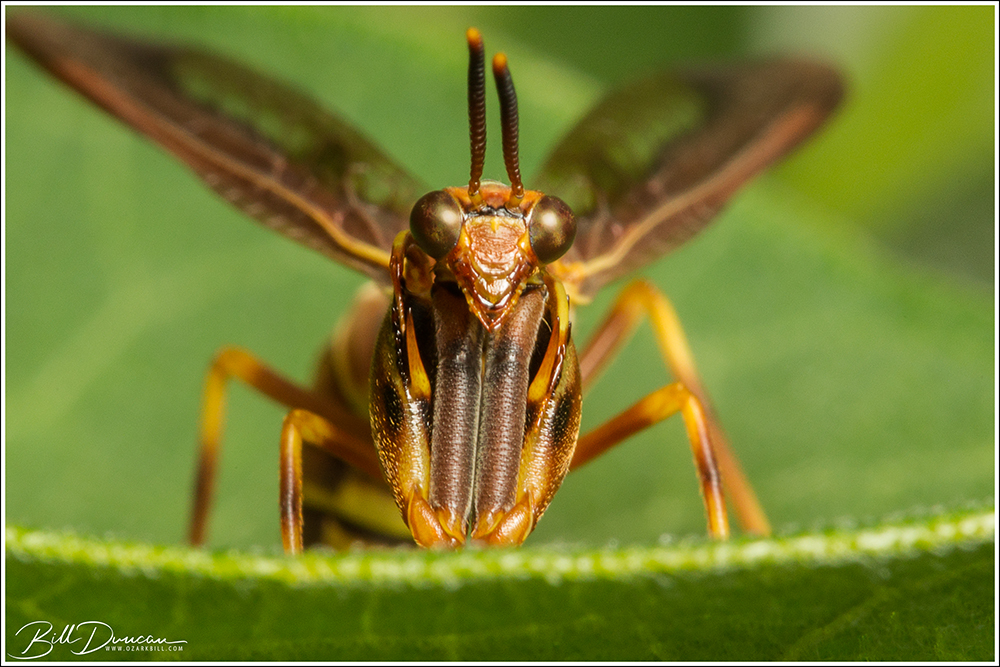
That’s right, this special one visited my home garden one afternoon and allowed me to grab some shots. The mantidfly are categorized in the order Neuroptera along with the lacewings.
Probably obvious, this species is believed to mimic the paper wasps (Polistes) as a potential deterrent to predation. Without a close glance, it would be easy to mistake this species for a wasp with the potential to deliver a nasty sting.
As if their appearance wasn’t crazy enough, larvae of the Mantispinae, the subfamily this species belongs to, feed by paristizing spiders and their eggs!
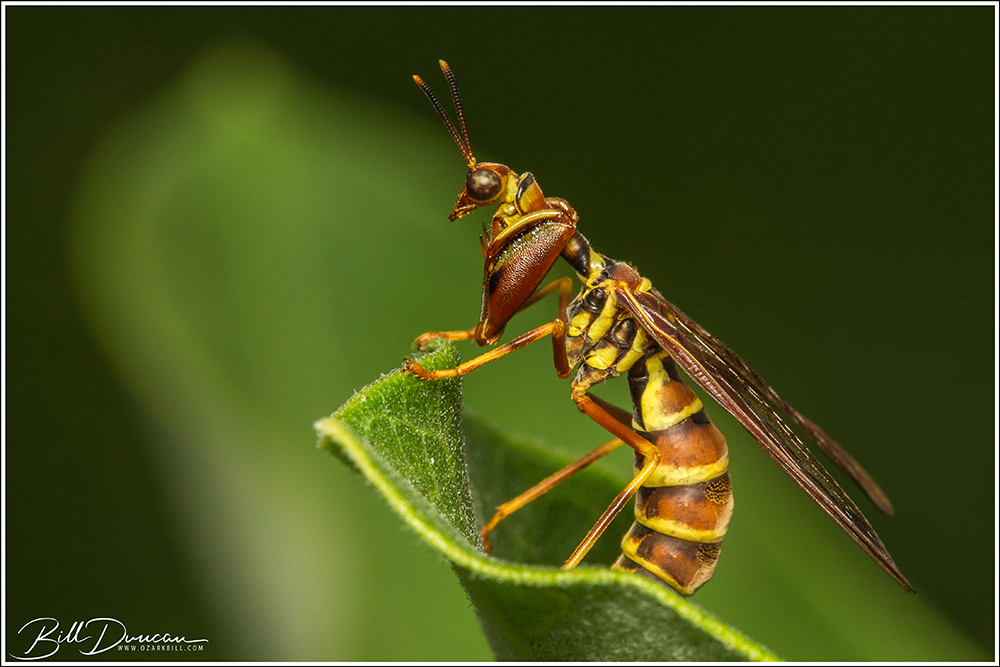
-OZB
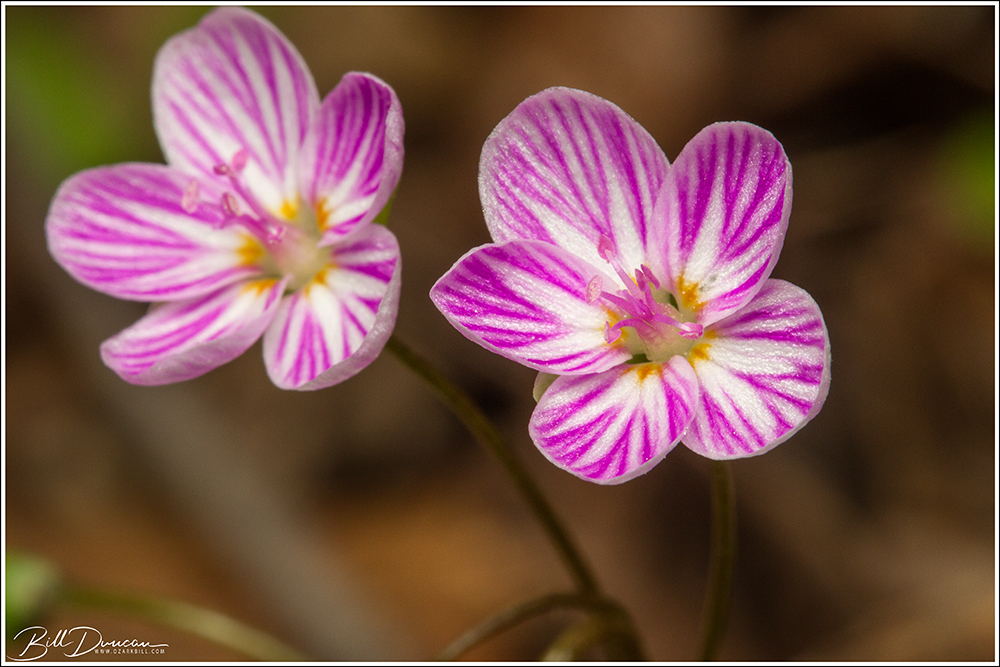
These images were taken during a trip with Ted MacRae and Chris Brown this past April at Tingler Prairie Conservation Area in Howell County, MO. The first shows an exceptionally colored spring beauty (Claytonia virginica) in peak bloom.
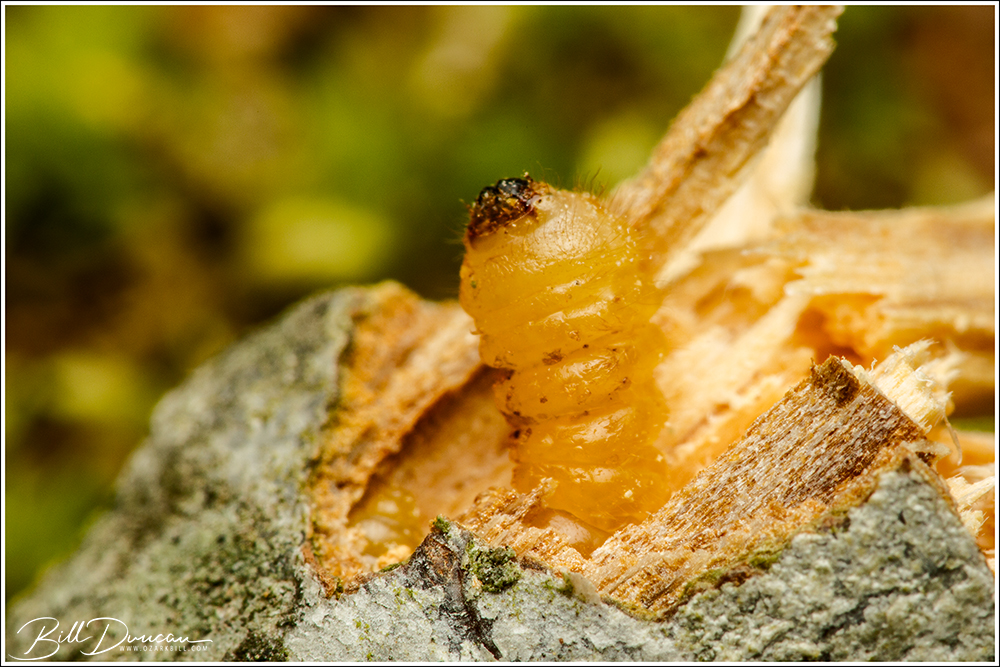
This beetle larvae was something I had read about for years. Ted found several oak twigs that the mother beetles prune to serve as safe nurseries for their developing offspring as they rest on the forest floor. Ted delicately opened up the gallery to expose its occupant so we could take some photos.

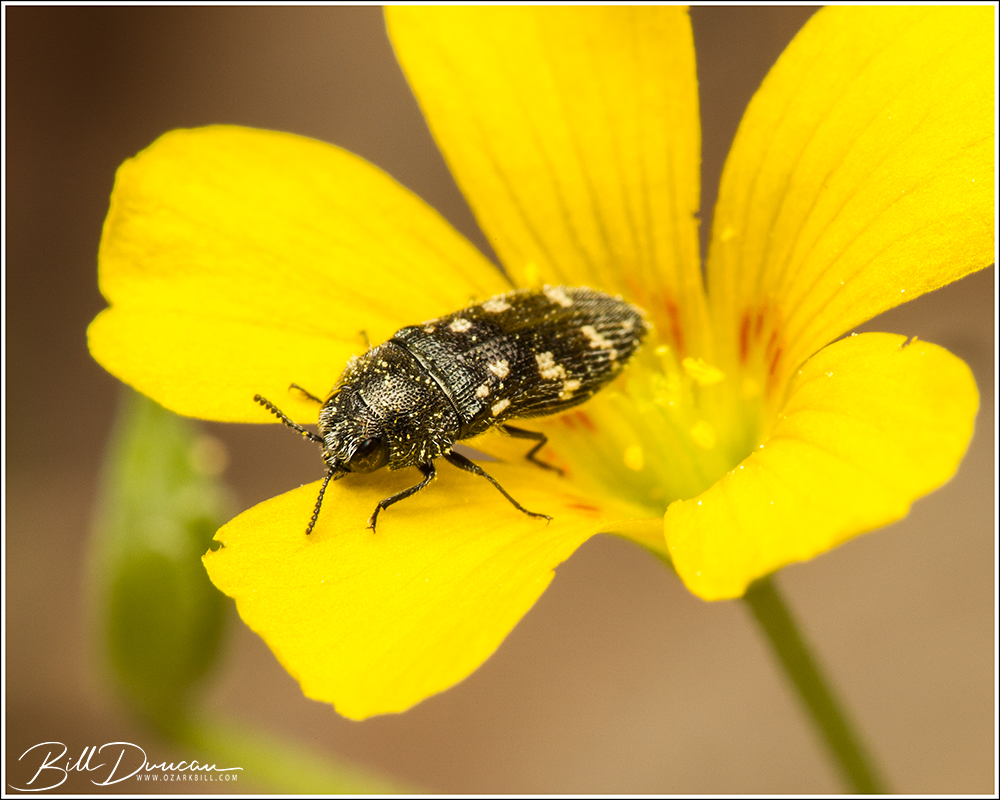
These Buprestid beetles were gorgeous as they foraged in the wood sorrel. Once in a while, they would stand still long enough to let us photograph them.
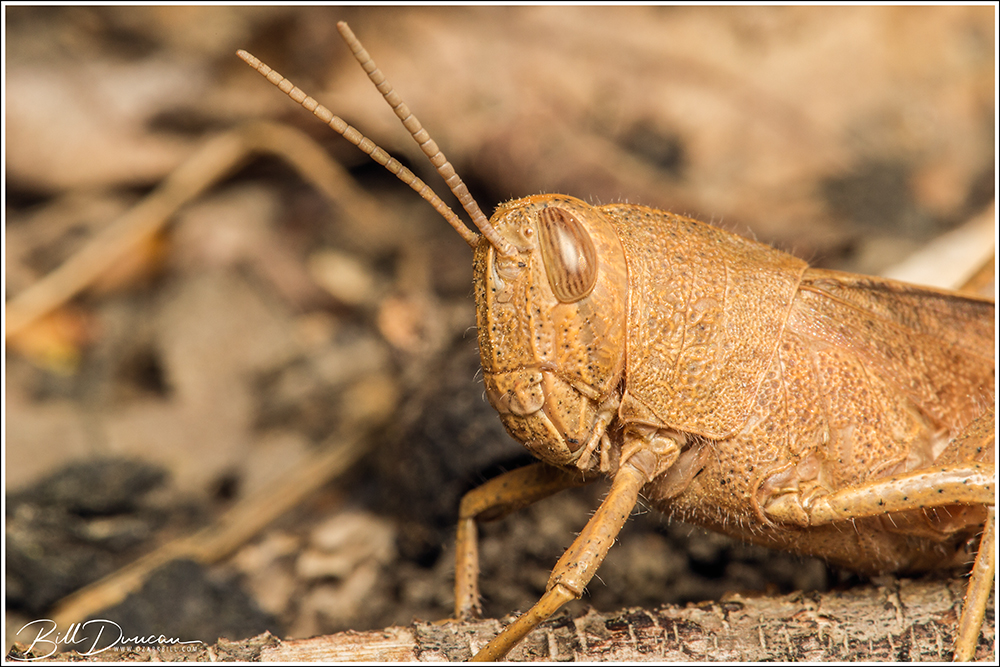
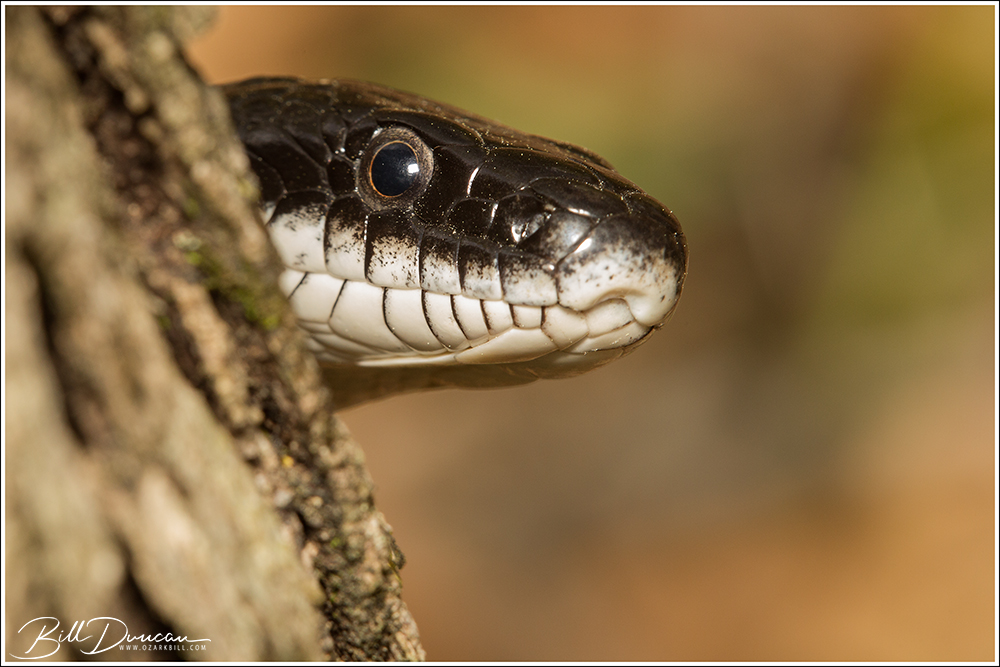
Finally, we found this black rat snake as it attempted to climb a tree near the trail. Maybe caught a whiff of something higher up?
-OZB
 A Thousand Acres of Silphiums