"What a thousand acres of Silphiums looked like when they tickled the bellies of the buffalo is a question never again to be answered, and perhaps not even asked." -Aldo Leopold
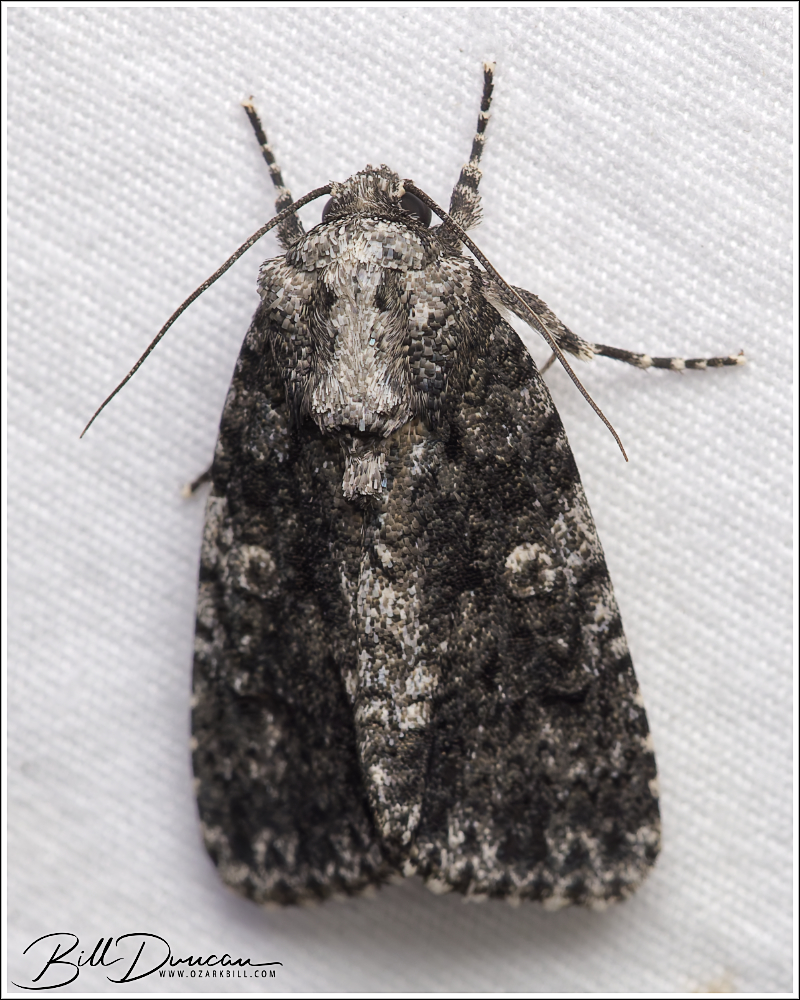
Greater Oak Dagger Moth Acronicta lobeliae fam. Noctuidae (Hodges#9238) Host plant: Found on white oak (Quercus alba) Date found: 09, Aug, 2025 Location found: Cuivre River State Park, Lincoln County, MO Notes: Our second largest dagger moth species, the erroneously named A. lobeliae is a specialist feeder on oaks.
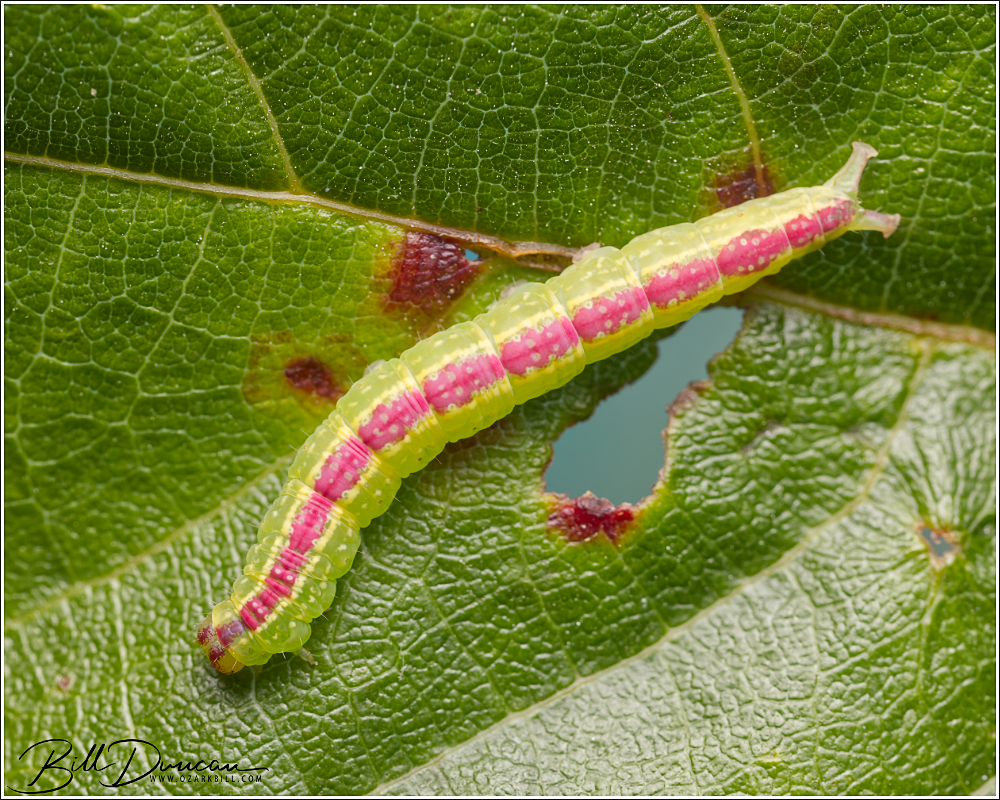
Lost Owlet Ledaea perditalis fam. Erebidae (Hodges#8491) Host plant: Found on buttonbush (Cephalanthus occidentalis) Date found: 09, Aug, 2025 Location found: BK Leach Conservation Area, Lincoln County, MO Notes: I found quite a few of these caterpillars while looking through buttonbush hoping to find Harrisimemna trisignata. I struck out on finding my target species, but was happy to find this one that I had not known about before. Of the three dozen or so individuals I came across, only a few of the largest, which I assume to be the ultimate instar, showed this bright fuchsia middorsal longitudinal band. All others were smaller and were plain green in color with no obvious lines or bands. I have noticed a propensity for buttonbush to show anthocyanin coloration in aging leaves as well as in galls produced by gall mites (Aceria cephalanthi). I suppose this coloration in the caterpillar could be something of a cryptic coloration to help blend into the leaves of a late-season buttonbush?
Giant Leopard Moth Hypercompe scribonia fam. Erebidae (Hodges#8146) Host plant: Found on herbaceous plant species (sp not recorded) Date found: 05, Jul, 2025 Location found: Logger’s Lake Recreation Area, Shannon County, MO Notes: Early instar. Later instars look much different.
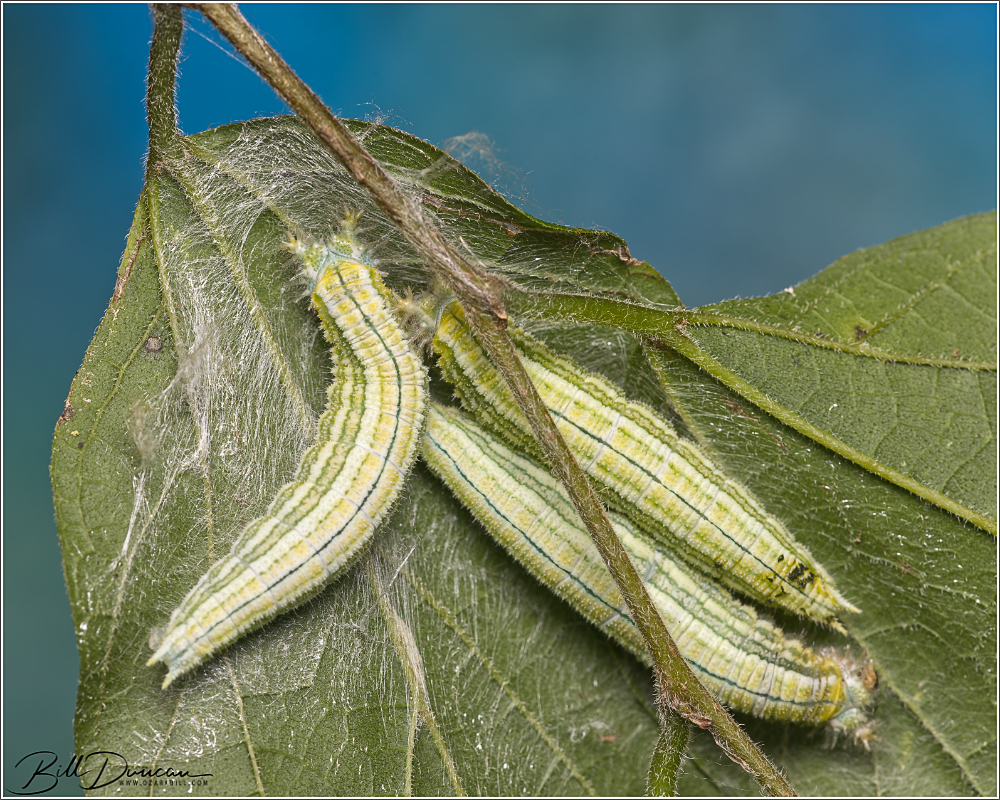
Tawny Emperor Asterocampa clyton fam. Nymphalidae (Hodges#4562.1) Host plant: Found on hackberry (Celtis occidentalis) Date found: 09, Aug, 2025 Location found: BK Leach Conservation Area, Lincoln County, MO Notes: Hackberry emperor (A. celtis) do not communally feed or house together in late instars as pictured here.
In late July, Chris Brown and I enjoyed a night of blacklighting at Engelmann Woods Natural Area in Franklin County, MO. Coincidentally, this was exactly one year to the day from a blacklighting session I had here in 2024. I have also done this during July in previous years at this same location. It is interesting seeing the patterns of the same moth species as well as others that might not have shown up to the sheet on previous occasions.
Here are a few insects that I thought I would share here.
Eudryas gata (beautiful wood nymph)
We found at least four Eudryas gata (beautiful wood nymph) resting on vegetation nearby the lighted sheet. I feel this species is perfectly named. Although the adult form is technically a bird-dropping mimic, it is still beautiful along with the caterpillar.
Marathyssa inficita (dark marathyssa). This is a bizarre little moth that is often attracted to our lights. This species caterpillar hosts on sumac (Rhus sp.) and poison ivy (Toxicodendron radicans).
Tarache aprica (exposed bird dropping moth)
Tarache aprica (exposed bird dropping moth) is a small but striking member of the Noctuidae family. The caterpillar, which I have yet to find, is also a bird dropping mimic.
Acronicta afflicta (afflicted dagger moth) fam. Noctuidae, hosts on oaks
It’s always a pleasure to find a fresh Dryocampa rubicunda (rosy maple moth)
Nadata gibbosa (white-dotted prominent)
Nadata gibbosa, the white-dotted prominent is a common Notodontid. We frequently find their caterpillars during our hunts on oak trees.
Plagodis alcoolaria (Hollow-spotted Plagodis)
Datana sp.
I have discovered that members of the Datana genus can be difficult to narrow down to species in both adult and larval forms. This moth pictured above exhibits patterns that could match D. contracta, major, and drexelii. Perhaps having this specimen collected and in-hand, the species could be determined, but not with this single photo.
Harrisimemna trisignata (Harris’s three-spot)
The find of the night for me was two beautiful Harrisimemna trisignata (Harris’s three-spot) moths. I have seen the adults before but never managed to get a good photograph. This is probably number one on my caterpillar list to find one day.
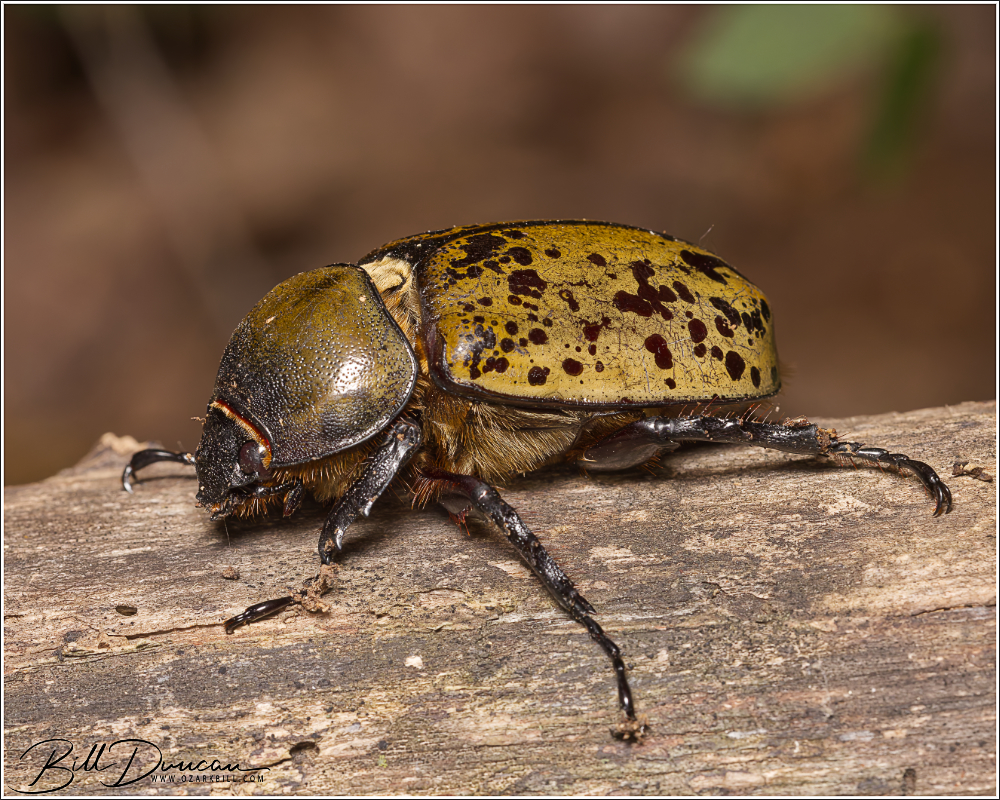
Dynastes tityus (eastern Hercules beetle)
I believe this is the forth Dynastes tityus I’ve come across and they have all been females. Maybe next time, I hold on to a female in a cage to see if she can attract a male for me.
Eacles imperialis (imperial moth)
It seems that Eacles imperialis are now a sure thing at a blacklighting event at Engelmann Woods. Usually around midnight, you can expect at least a couple to visit.
That’s all from this night. I’m looking forward to a blacklighting session with the WGNSS group this coming weekend. It should be great and I will plan on sharing what we find here.
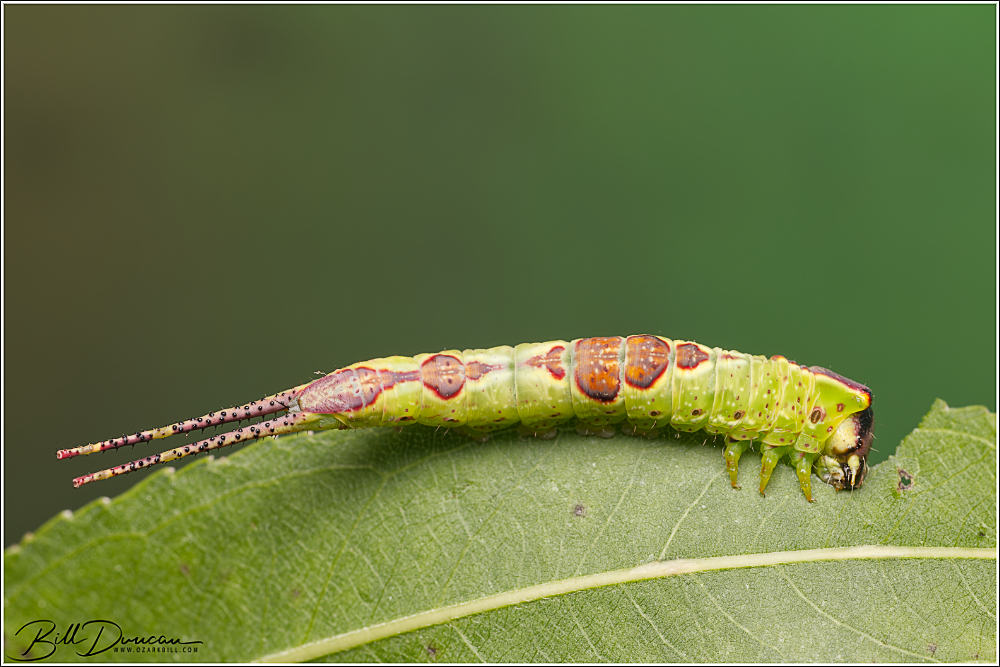
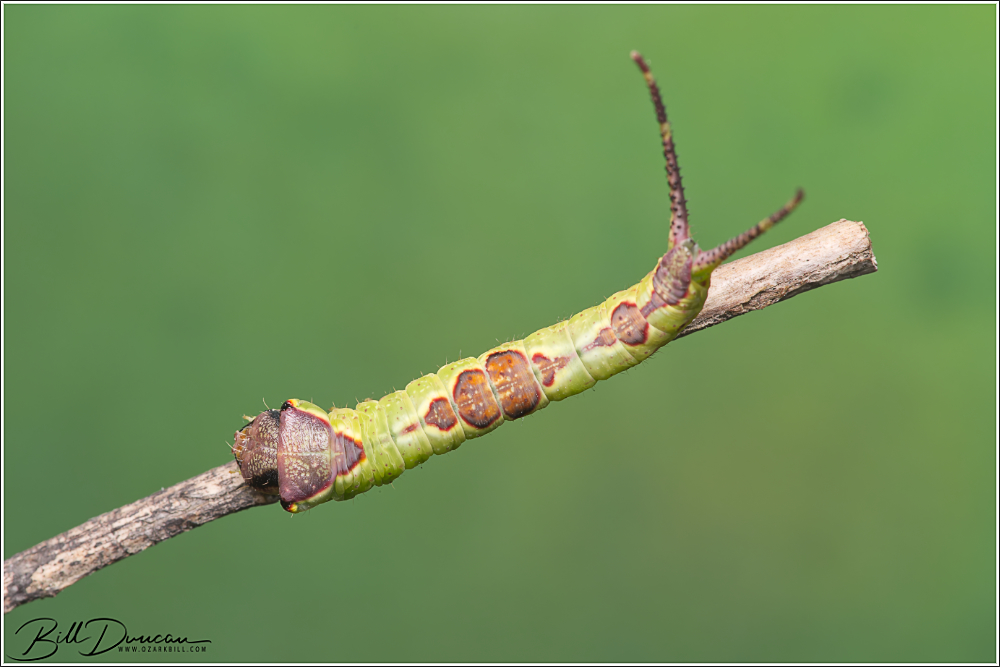
Gray Furcula Furcula cinerea fam. Notodontidae (Hodges#7937) Host plant: Found on black willow (Salix nigra) Date found: 09, Aug, 2025 Location found: BK Leach Conservation Area, Lincoln County, MO Notes: Dark eyespots on first thoracic segment give this caterpillar the look of a potential snake.
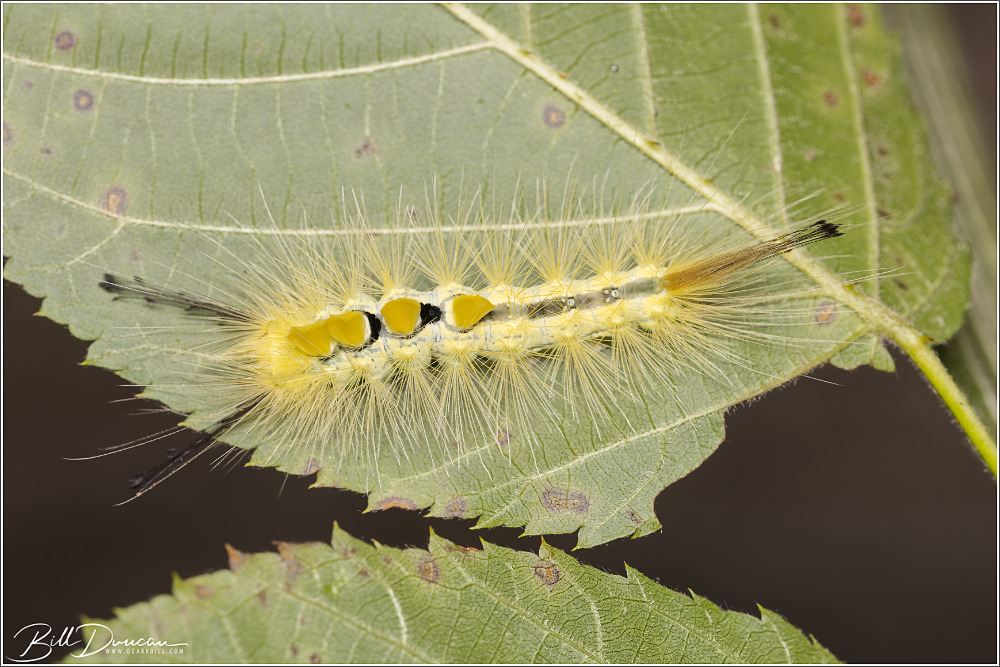
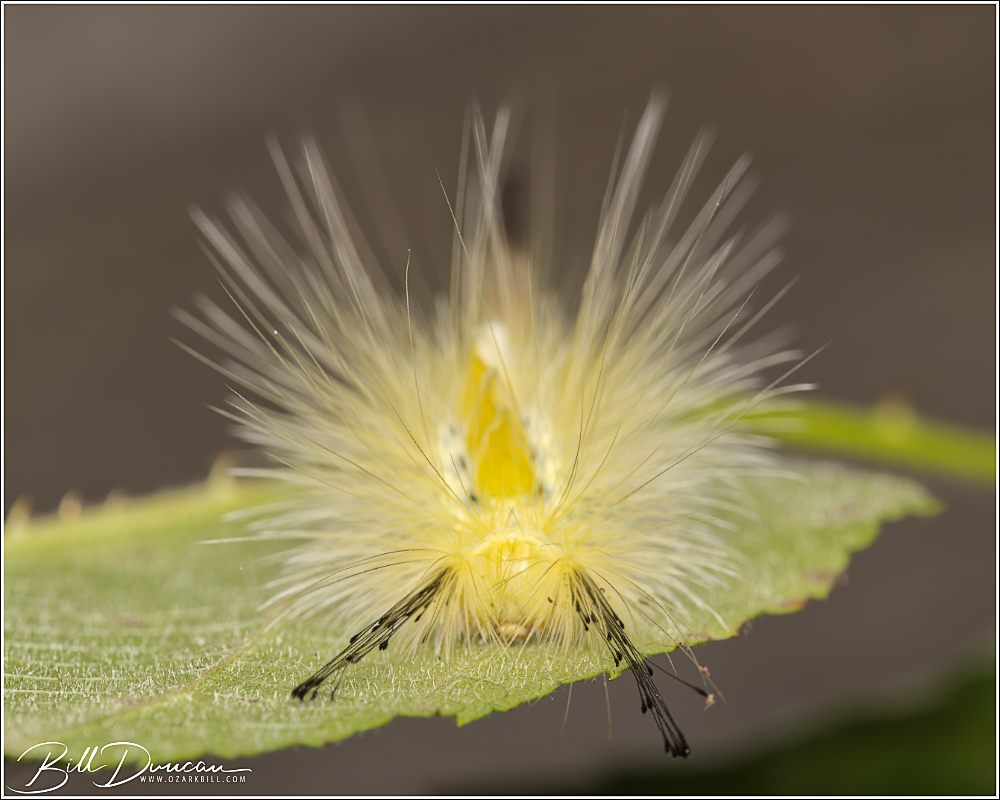
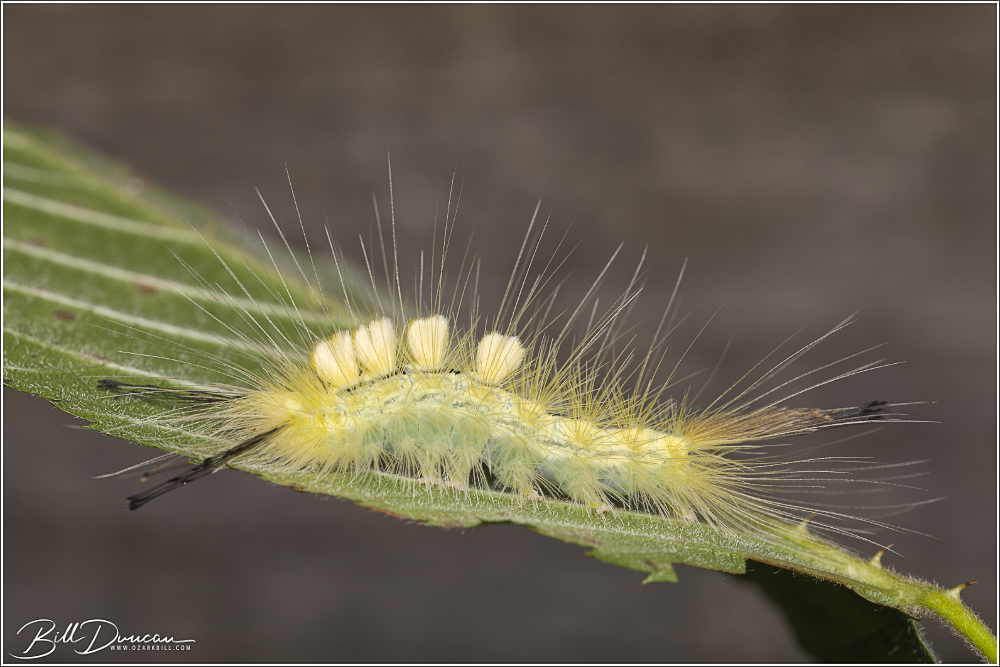
Definite Tussock Moth Orgyia definita fam. Erebidae (Hodges#8314) Host plant: Found on common blackberry (Rubus allegheniensis) Date found: 09, Aug, 2025 Location found: Cuivre River State Park, Lincoln County, MO Notes: Found in dense populations east of the Mississippi River, this species has only a handful of records in Missouri databases such as iNaturalist and butterfliesandmoths.org. I realize that I had seen this caterpillar before, but being the amateur that I am, I though I was looking at a lightly colored or recently molted Orgyia leucostigma.
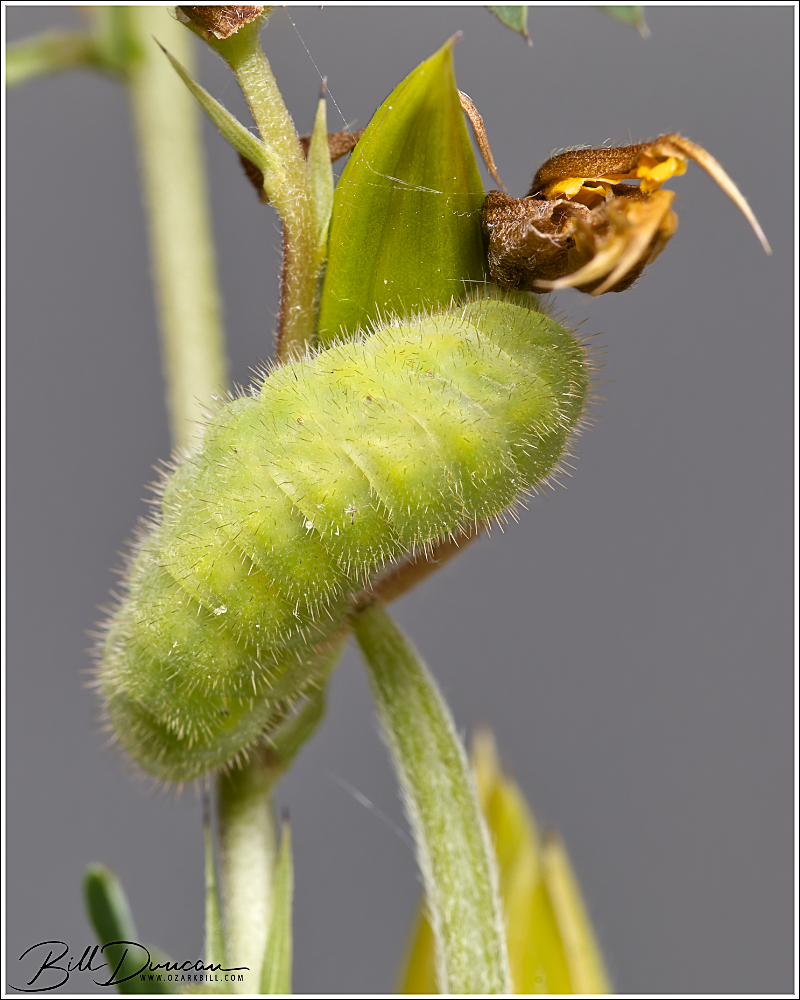
Gray Hairstreak Strymon melinus fam. Lycaenidae (Hodges#4336) Host plant: Found on partridge pea (Chamaecrista fasciculata) Date found: 07, Aug, 2025 Location found: Backyard prairie patch, St. Louis County, MO Notes: After years of searching for a hairstreak caterpillar, I found 11 of these guys in one evening while searching the backyard prairie with a UV flashlight. Plant partridge pea!
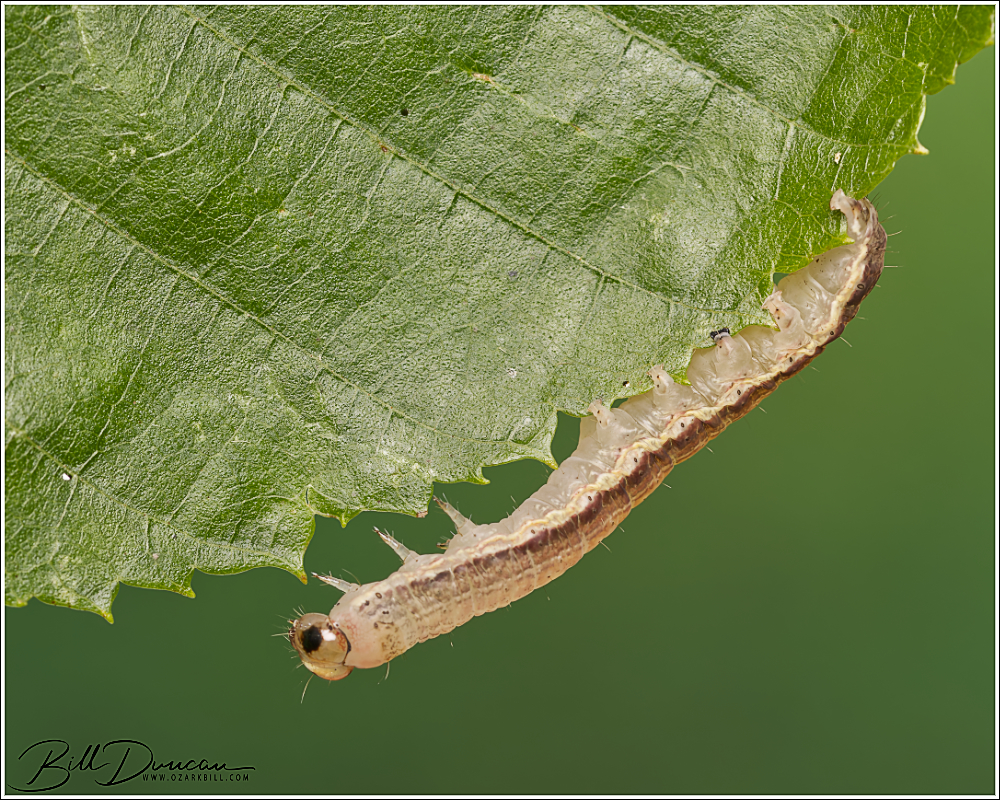
Fluid Arches Morrisonia latex fam. Noctuidae (Hodges#10291) Host plant: Found on hop hornbeam (Ostryavirginiana) Dates found: 05, Jul, 2025 Locations Found: Logger’s Lake Recreation Area, Shannon County, MO Notes: This is a very polyphagous species and can be found on almost any native woody plant.
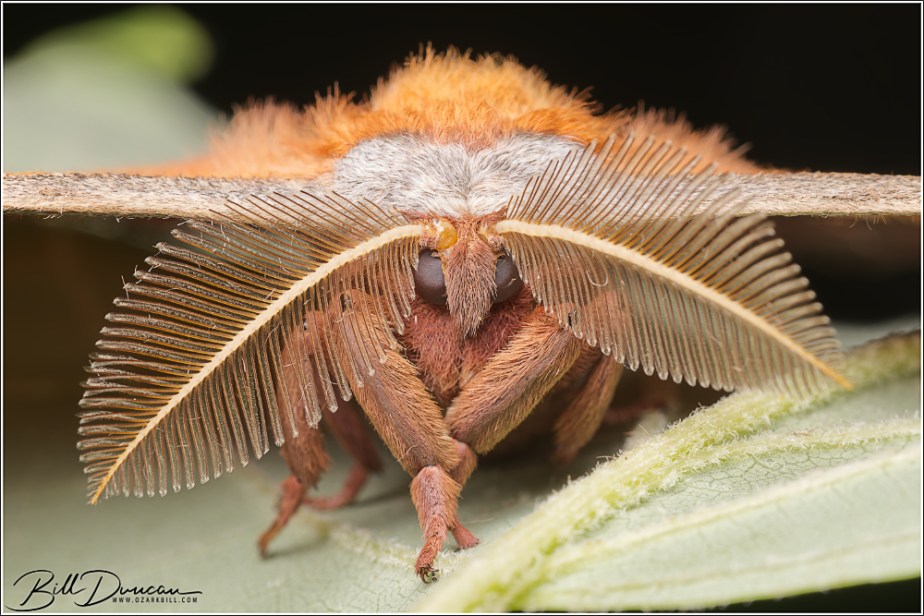
Last month the WGNSS Nature Photography Group took a side trip back to one of our favorite places – the Roston Native Butterfly House in Springfield, MO. Among other fantastic native leps on display were adult and larval forms of Hyalophora cecropia, or the Cecropia Moth. Named after the legendary King Cecrops of Athens, H. cecropia is the largest moth native to North America. Thanks again to the Roston Butterfly House and to the great volunteers who staff the facility and put up with a bunch of old dudes with cameras.
















 A Thousand Acres of Silphiums