"What a thousand acres of Silphiums looked like when they tickled the bellies of the buffalo is a question never again to be answered, and perhaps not even asked." -Aldo Leopold
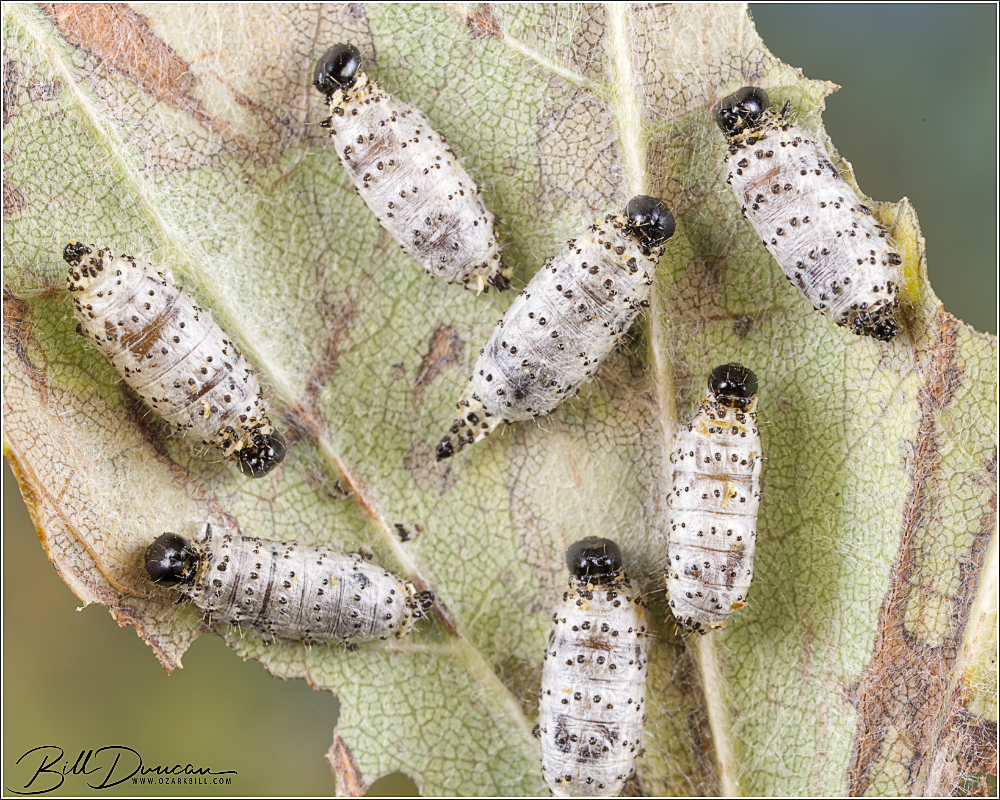
During a caterpillar hunt in mid-September at Don Robinson State Park, I came across a redbud leaf with a number of mummified Oedemasia concinna (red-humped caterpillar moth) caterpillars. These cats all appeared to be dead and were wrapped in what looks like their own silk. After close inspection, I could not find any exit holes that the potential parasitoid would have made. So, I collected the leaf and the baker’s dozen of these hosts and took them home to hopefully rear the parasitoids.
Parasitized Oedemasia concinna (red-humped caterpillar). This species is gregarious as early instars.
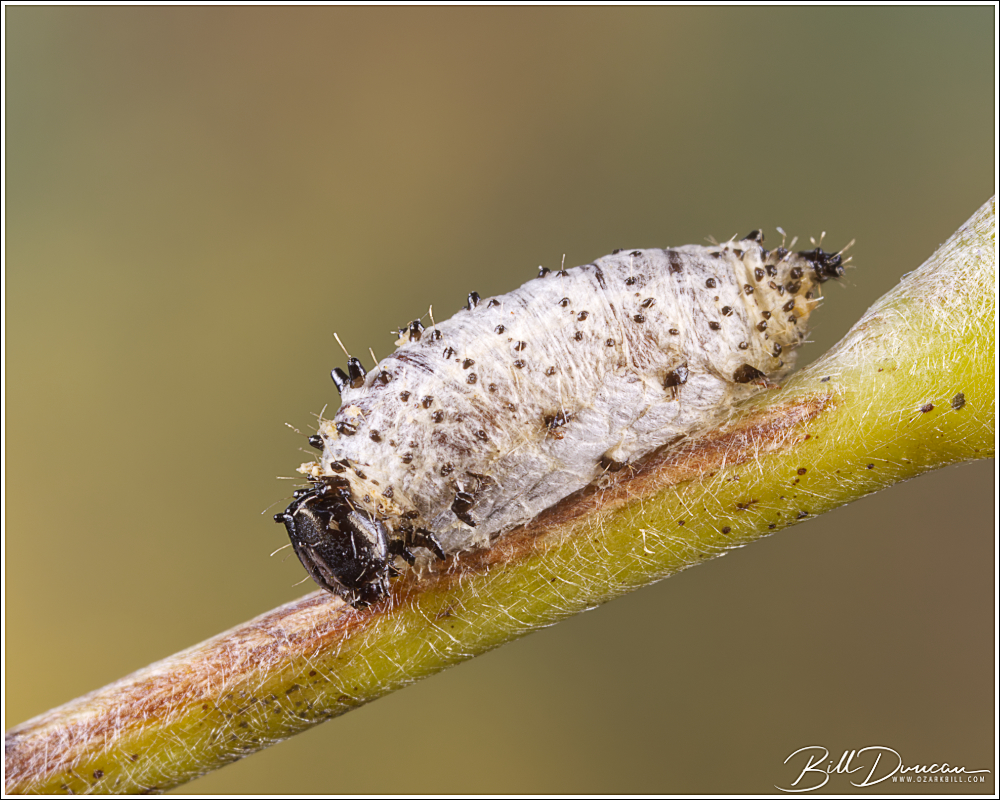
A closeup of one of the unfortunate caterpillars.
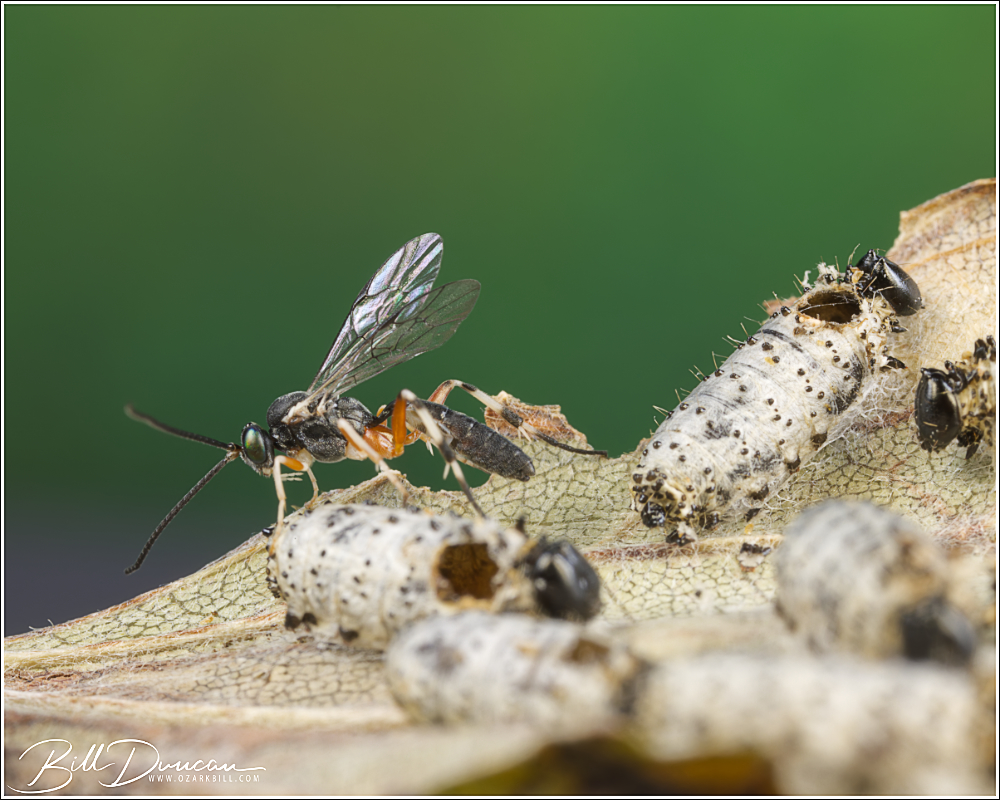
About three days later I checked the container that held these guys. To my surprise every single parasitoid had emerged from their hosts. In this case, the natural enemy is the Ichneumonid parasitoid, Hyposoter fugitivus. In the following images you can see the tiny wasps that have emerged from the even tinier caterpillars.
The ichneumonid wasp Hyposoter fugitivus recently emerged from its host, Oedemasia concinna.The ichneumonid wasp Hyposoter fugitivus recently emerged from its host, Oedemasia concinna.
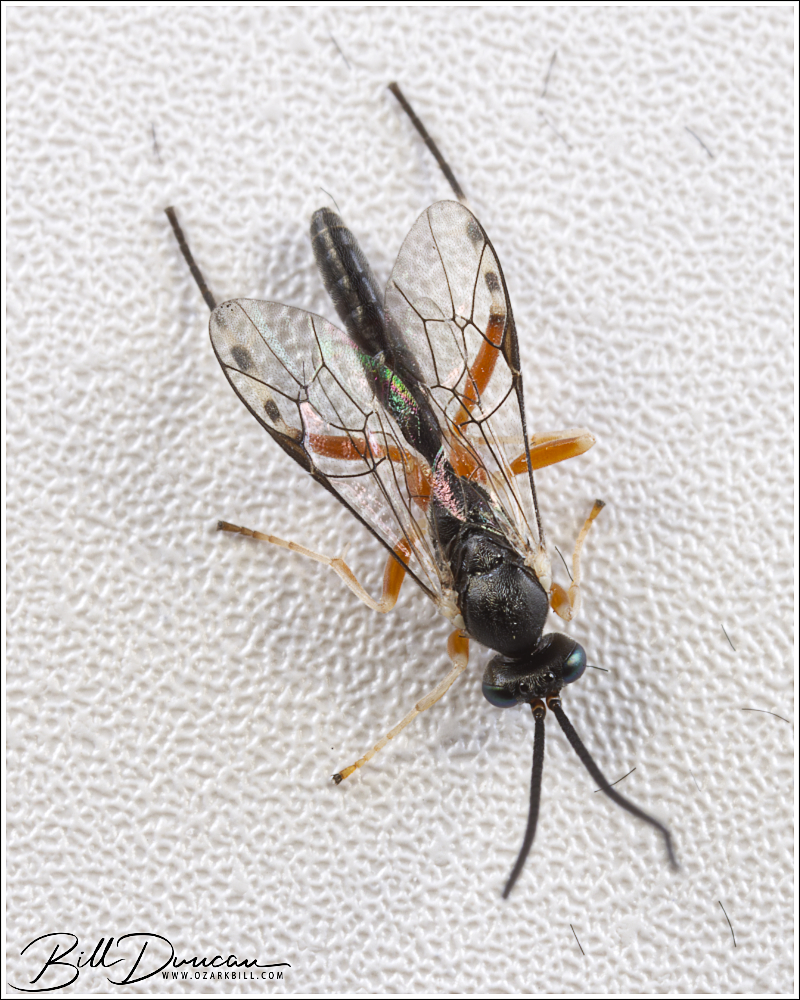
Here are some closeups of the wasps.
Finally, a photo of the gorgeous caterpillar they may have become if not for these natural enemies…
Oedemasia concinna (red-humped caterpillar) found at Tyson Research Center, St. Louis County, MO.
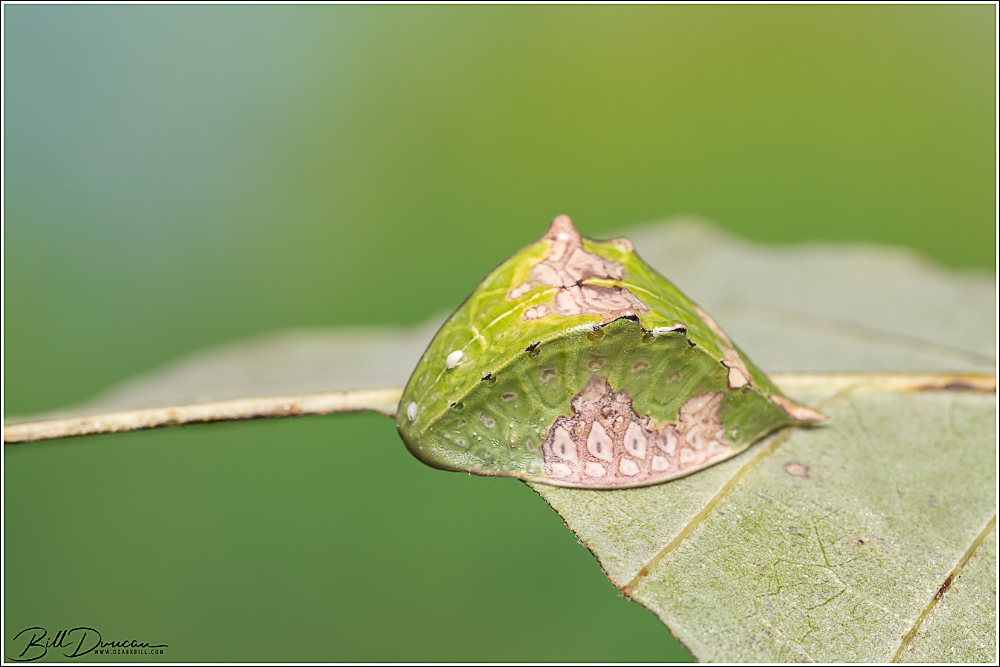
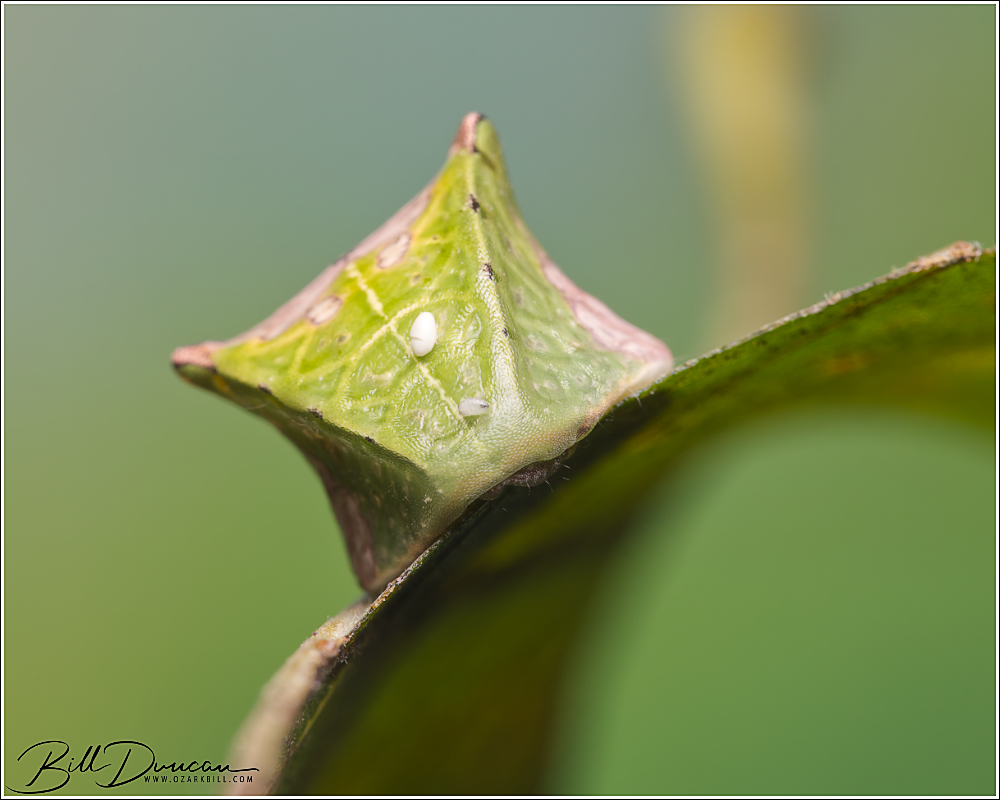
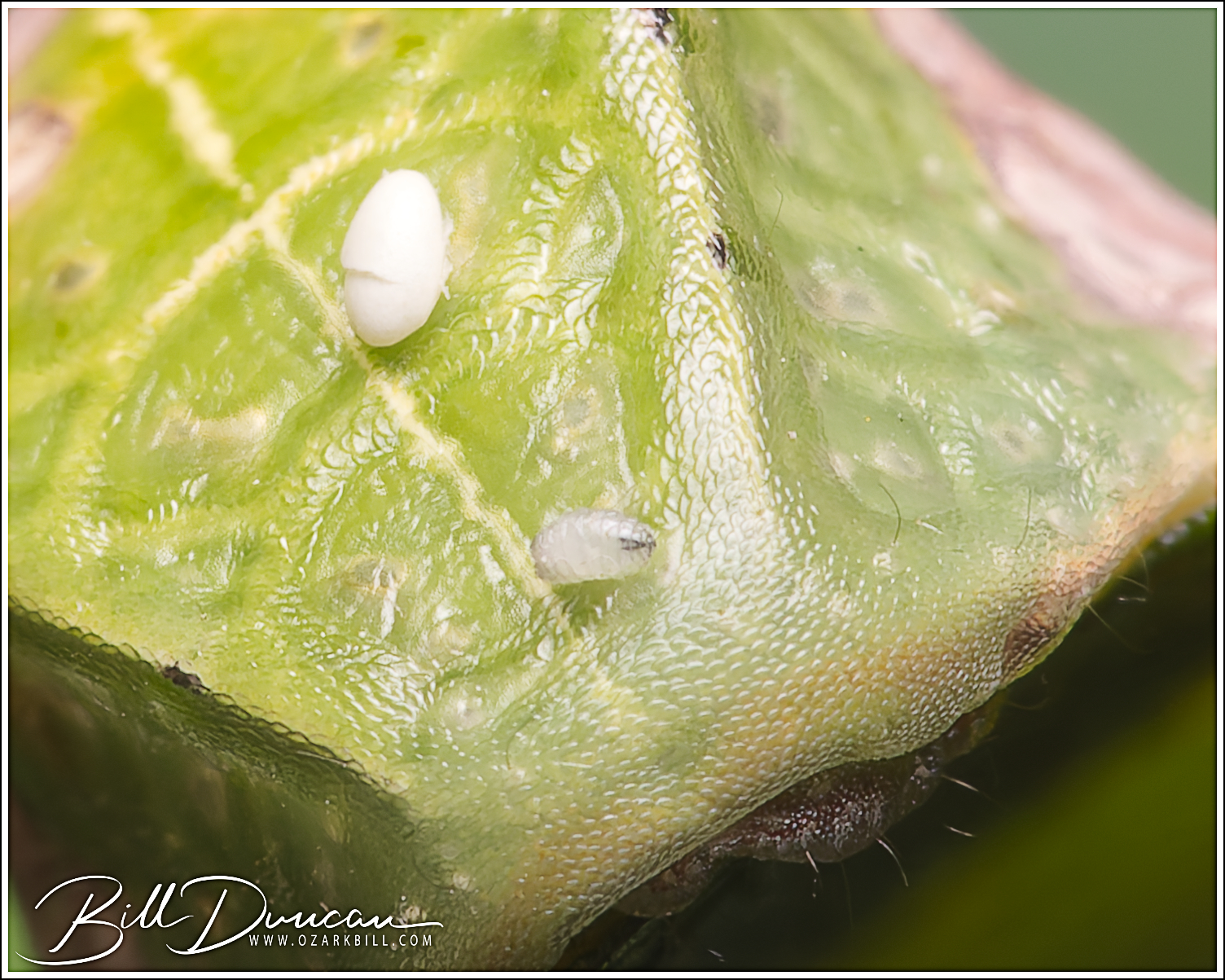
Skiff Moth Prolimacodes badia fam. Limacodidae (Hodges#4671) Host plant(s): Found on chinquapin oak (Quercus muehlenbergii) Date(s) and location(s): 31 August, 2025 – Tyson Research Center, St. Louis County, MO Notes: This poor cat is host to a tachinid fly larvae. A closeup image is included showing the egg as well as the larvae that has pierced the skin of the caterpillar in order to breath.
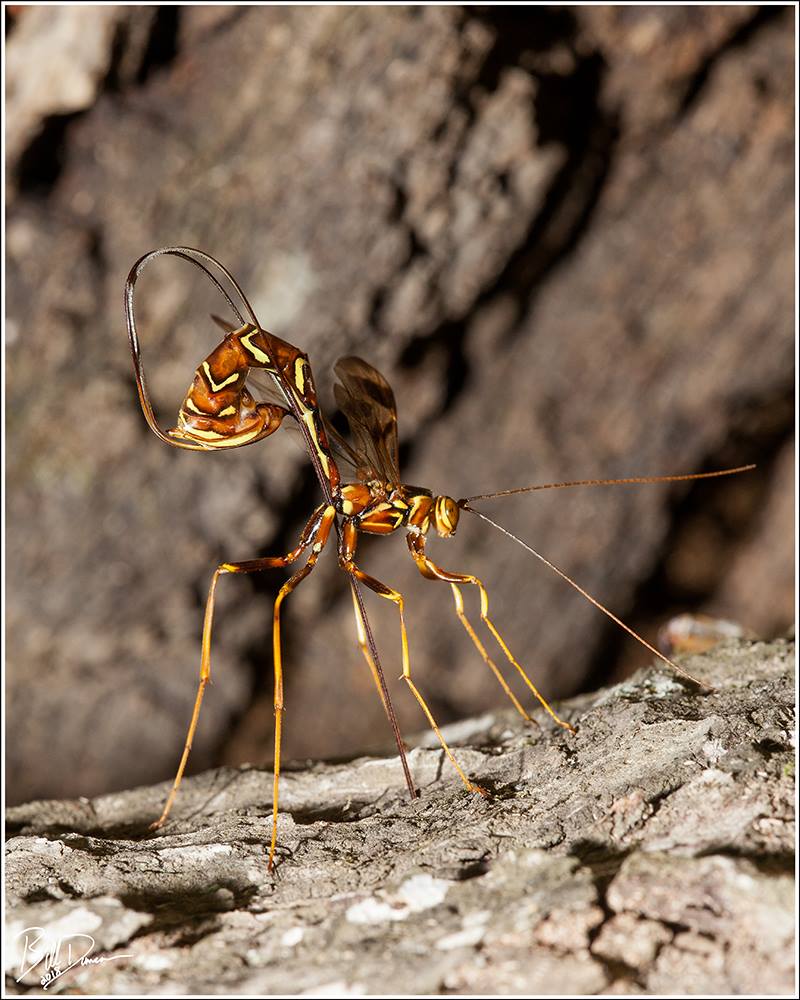
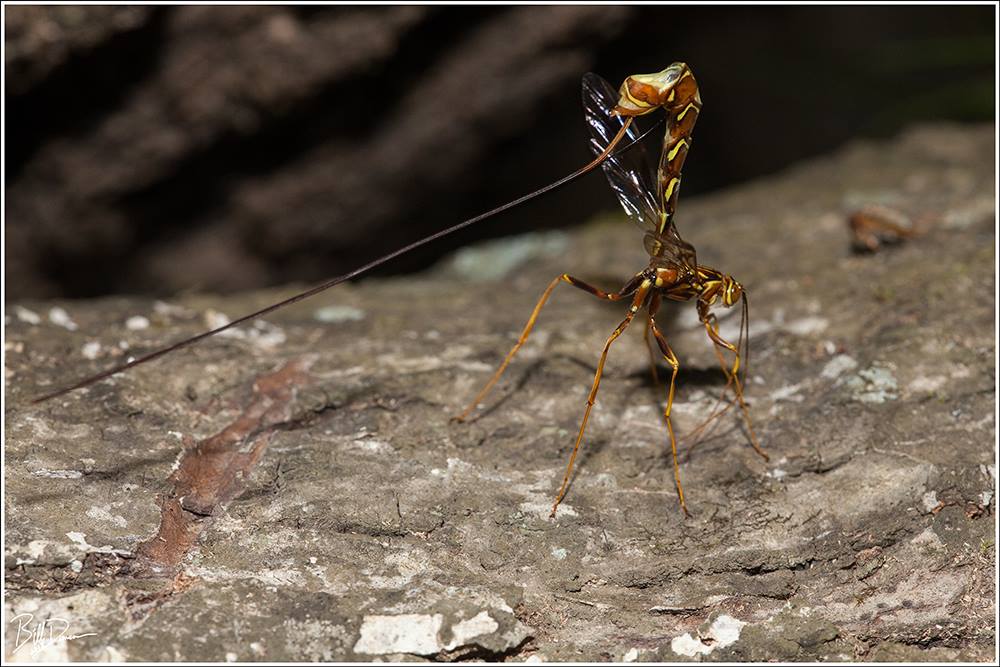
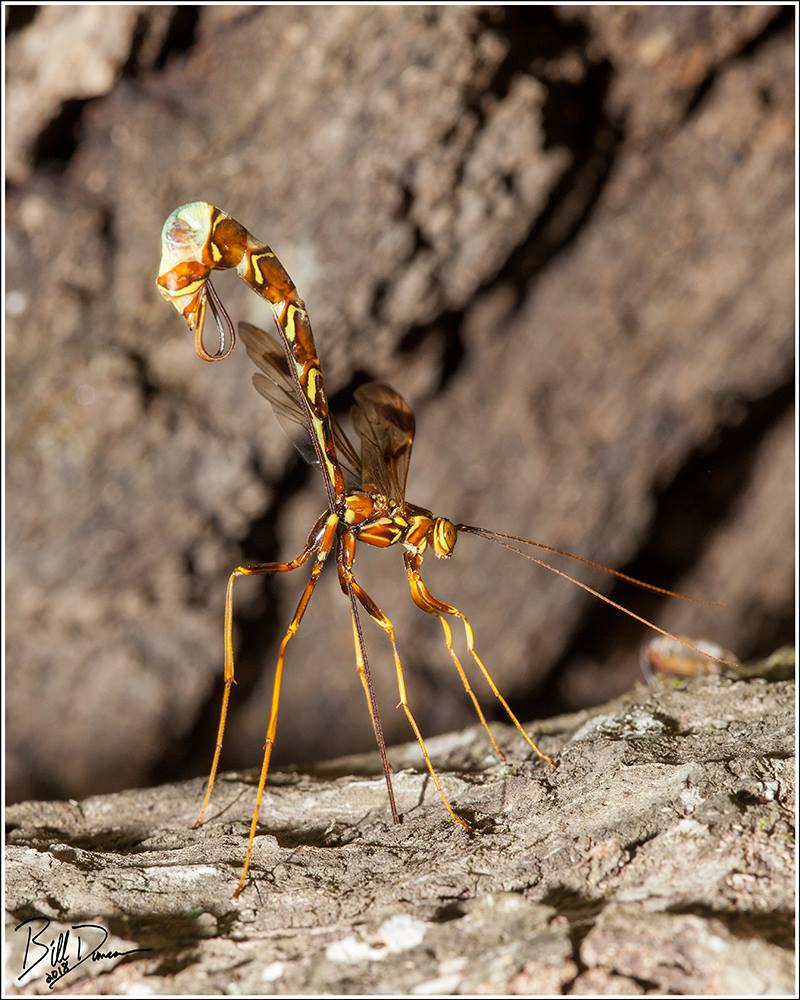
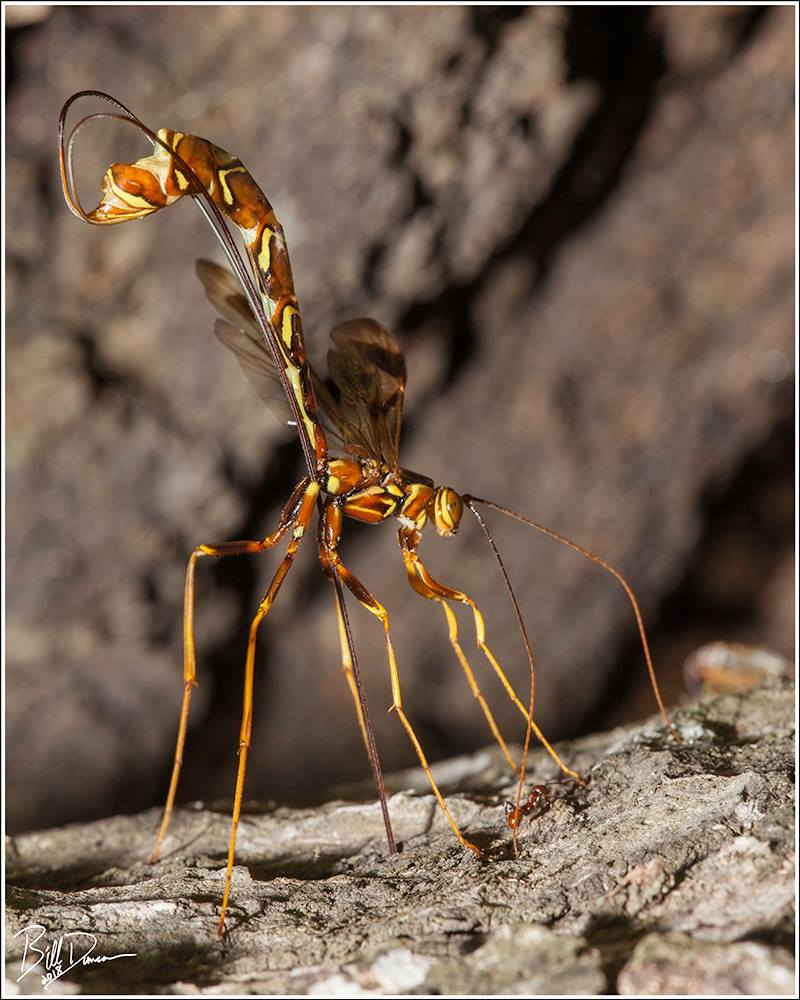
Here’s another set from the bowels of Facebook that I neglected to put on the blog for some reason. These were taken in 2018 at Pickle Springs Natural Area where Casey and I found this fantastic insect.
The long-tailed giant ichneumonid (Megarhyssa macrurus) is our region’s largest ichneumonid wasp. This species is a parasitoid and its sole host is the pigeon horntail (Tremex columba, fam. Symphyta) that bores tunnels into decaying hardwood species. The long-tailed giant ichneumonid uses its keen senses to find the host and then uses its long ovipositor to drill into the tunnel where it lays an egg and injects venom to paralyze the horntail. This species does not sting.
Today I am showcasing an example of biological pest control that I came across in my own neighborhood in late April of this year. The image below shows a bronzed cutworm moth larvae (Nephelodes minians) in the Family Noctuidae that has been parasitized by a Braconid wasp in the genus Cotesia. This is a very species-rich genus of parasitoids, but there is a fair chance of this species being C. marginiventris. Thanks very much to Alex Soohoo-Hui for his assistance in narrowing down the identification of this minute wasp.
A deceased bronzed cutworm (Nephelodes minians) caterpillar in the final stages of hosting its parasitoid Braconid brood.
The bronzed cutworm is a very common moth that feeds on various grasses, including crops like maize and other cereals as well as turf grasses. I consistently find these cats or their chrysalis whenever I dig a new hole in the yard.
When I found and collected these animals, the last couple of wasp larvae were finishing up spinning their cocoons.
After the wasp deposits her eggs on the host, the wasp larvae feed on the caterpillar internally, being careful not to do much damage to vital organs. The host will never survive, but the parasitoids must ensure that it stays alive long enough for the brood to reach maturity. Often, the caterpillar will still be alive when the wasp larvae emerge and begin to spin their cocoons and will defend itself and its parasites from potential predators.
Three cocoons showing the doors that the adult wasps chewed their way out of.
In this case, the caterpillar seemed dead. I collected it and took it home with hopes of rearing out the tiny wasps to photograph and identify. In about four days, I came home to find 15-20 adult wasps had emerged.
The adult wasps are extremely tiny, measuring 2-3 mm. In order to have a chance at getting photographs, I placed their enclosure into the refrigerator for a minute or two. The wasps in the accompanying images might appear dead, but they perked up within a couple of minutes. After getting my photographs, I released the brood into my backyard to continue their pest control services.
A Braconid wasp in the genus Cotesia, potentially C. marginiventris.
A couple more looks at this diminutive but effective parasitoid.







 A Thousand Acres of Silphiums