A Warm Winter’s Day in the St. Francois

With forecasted highs near 60F, there was no question what I would be doing this past Saturday.  The only problem was where to take a hike!  Being mid-January and a warm, sunny day, I knew that Lower Rock Creek would not disappoint.  As expected, the Ozark Witch Hazel was in full bloom and beautifully fragrant.  The sky was completely clear and the lighting harsh for much photography of the many water features the area has to offer, but of course I had to try.  Ultimately I just tried to enjoy the hike and experience the wilderness that life continually rips from my fingertips.  There were a good number of ice formations still left on north-facing canyon walls and this particular patch was beginning to melt, releasing its maker into a mirror-like pool that ultimately fell down this drop and married with the rest of the stream.  I looked for ways to get closer to these formations but could not find a safe passage.
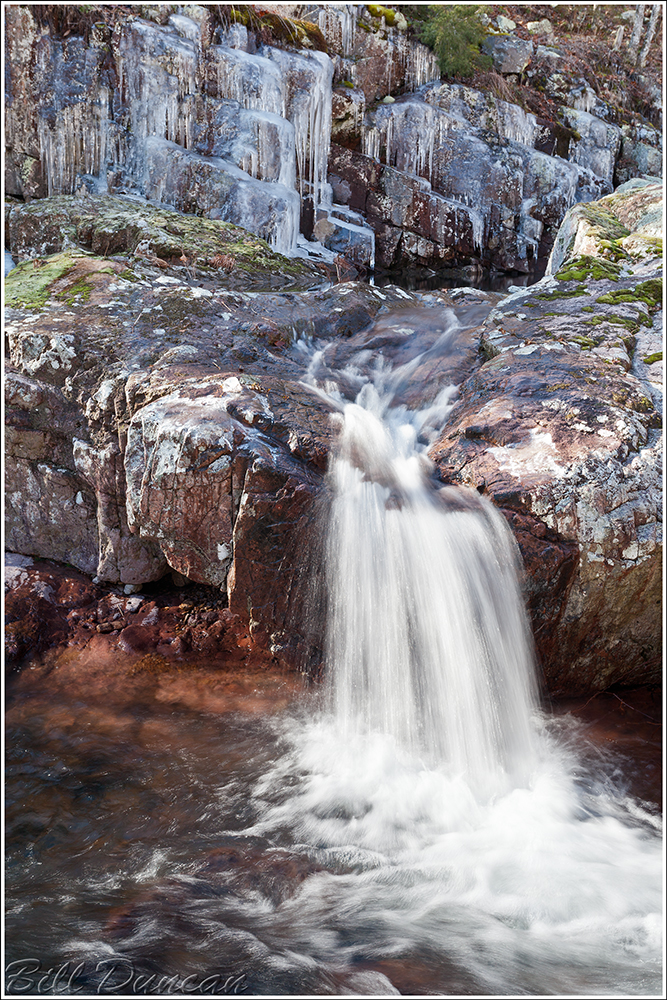
IMG_2548

Technical details: Canon EOS 5D Mark II camera, EF17-40mm f/4L USM @ 40mm, ISO 200,  f/11, manual blend of two exposures

On the way upstream, I stayed off the trail as much as possible; I preferred following the creek bed although wet and icy rocks often made this a challenge.  A couple of times near bends I was forced to go up and over a ridge because of lack of good foot or handholds above the creek.  After about three hours of rock hopping with my 30lb pack, fatigue started to creep in and I twisted my ankle bad enough to cause a minor sprain/strain.  This was very close to this wonderful swimming hole, so I pulled my boot and sock off and dunked my foot into this spring-fed water… for about 30 seconds.

 IMG_2551

 Technical details: Canon EOS 5D Mark II camera, EF17-40mm f/4L USM @ 25mm, ISO 100,  f/11, manual blend of two exposures

 On the way back downstream I followed the trail most of the way, shedding layers as the temperature rose over 5oF.  Along the route I was fortunate to spot a coupling couple of Eastern Garter Snakes.  These light-bodied snakes, much like grasshoppers and Morning Cloak Butterflies, will often wake up and see what’s happening on a warm winter day.  And usually, the males have something other than food in mind.  As can be seen in this image, the female was about two thirds larger than her mate.  Following a successful copulation, the female can store sperm until closer to the warmer months, and many snake species can and do copulate several times and will actively select sperm of her choosing.  I tried my best not to disturb this pair too much.  They were rather laid back and didn’t seem to be alarmed, even when I lowered the diffuser mere inches from them.  When I left the male was still busily making his intentions known, while she kept her eye and tongue focused in my direction.

IMG_2597

Technical details: Canon EOS 5D Mark II camera, EF100mm f/2.8L Macro IS USM, ISO 400,  f/11, 1/40 sec

 After having some lunch at the car I tried my best at finding the John James Audubon Trail that I have been wanting to visit for a while.  After some fruitless searching I was unable to find a single trail-head, placard, sign or blaze marker that I was confident in.  Unless I hear otherwise I will consider this a defunct trail.  So I decided to visit the Castor River Shut-ins and spend the remainder of the daylight hopping around on even more rocks.  The lighting was still rather poor and I had little inspiration for finding a composition so I experimented a bit, focusing on the effect of minute changes in exposure time on capturing the movement of flowing waters.
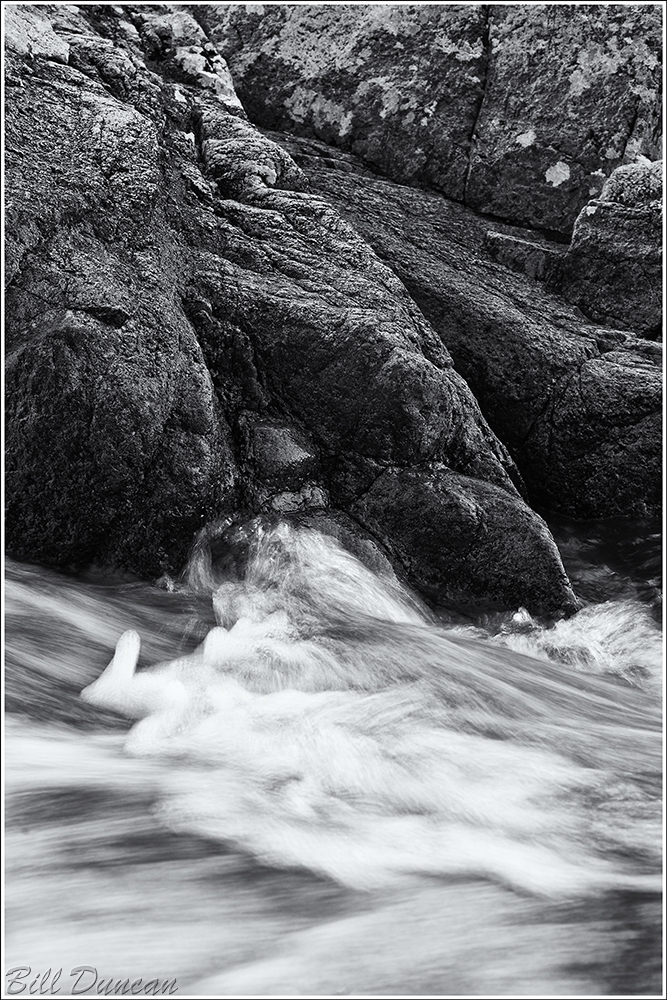
IMG_2651

 Technical details: Canon EOS 5D Mark II camera, EF24-105mm f/4L IS USM @ 60mm, ISO 320,  f/7.1, 1/13 sec

IMG_2789

Technical details: Canon EOS 5D Mark II camera, EF24-105mm f/4L IS USM @ 80mm, ISO 400,  f/6.3, 1/40 sec
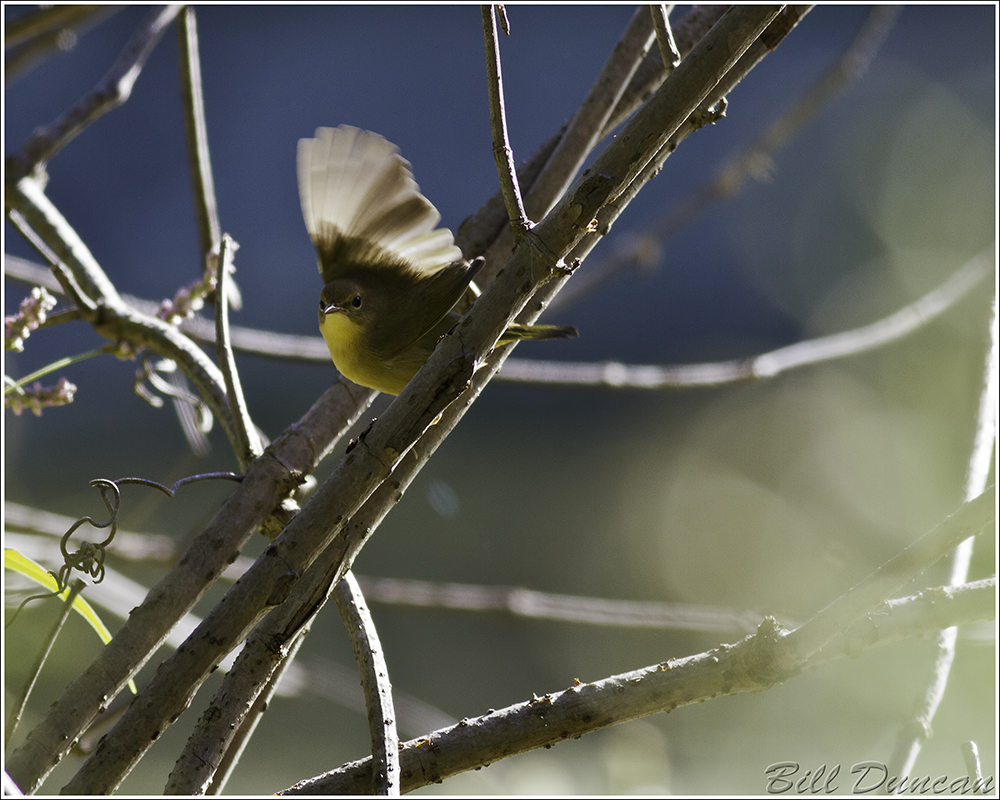
Three Fuzzballs

“No important change in ethics was ever accomplished without an internal change in our intellectual emphasis, loyalties, affection, and convictions.  The proof that conservation has not yet touched these foundations of conduct lies in the fact that philosophy and religion have not yet heard of it.  In our attempt to make conservation easy, we have made it trivial.”

-Aldo Leopold-

IMG_7754

Technical details: Canon EOS 7D camera,  EF400mm f/5.6L USM lens, ISO 400,  f/6.3, 1/160 sec

Mondays Are For The Birds – Black-throated Green Warbler

The BTGW nests primarily in conifers such as white pines, spruce and hemlocks in Canada’s boreal forests.  Did you know…?  A major source of wood pulp for the paper and tissue industry are the trees that are harvested from the boreal forests of the world.  There are two easy things we can all do to limit our burden on these resources.

1) Recycle: Recycling is quite easy in much of the country and has a significant role in limiting the need for virgin wood pulp.  Also consider purchasing products made from recycled paper products.

2) Limit use of unnecessary paper products: A horrible player here are solicitous catalogs and junk-mail.  There are ways we can drastically reduce the pounds of this we receive in a year’s time.  https://www.catalogchoice.org/  The disposable paper towels and other sanitary wipes are other industries that use significant percentages of wood pulp.  There are many ways we can reduce usage of these products as well.

Yes, wood pulp is a renewable resource, and yes, humans are part of planet and will always be users of these resources.  However, what many do not realize is that replanting trees is not the same as replanting natural habitat.  Many bird species, including several wood warblers will only nest in specific, old-growth trees.  These habitats have taken hundreds of thousands of years to develop the complex interactions of this original, world wide web.  Planting a monoculture of cultivars developed to best meet the needs of man comes nowhere close to replacing the splendid diversity or wilderness aspects of these places hold.

“The only conclusion I have reached is that I love all trees, but I am in love with pines.”

-Aldo Leopold-

IMG_6189

“Black-throated Green Warbler, September 2012”

Technical details: Canon EOS 7D camera,  EF400mm f/5.6L USM lens, ISO 640,  f/5.6, 1/640 sec

Missouri’s Conservation Ethic

Did you know?  The Missouri program of The Nature Conservancy has protected nearly 150,000 acres of critically important natural habitat?  Their science-based approach to choosing important and biologically diverse habitats combined with their ability to work with private individuals, governments, corporations and a variety of other organizations has enabled them to protect forests/woodlands, savannahs/prairies and freshwater habitats across our great state.  Their annual update was released recently and in it are a few photographs I donated for it’s use.  Please have a read to see what The Nature Conservancy has been up to in Missouri this past year.  And please, do give some thought of making a charitable donation for your new-years plans.

IMG_2391 color

Technical details: Canon EOS 5D Mark II camera, EF17-40mm f/4L USM @ 40mm, ISO 100,  f/14, 1/10 sec

Snow in SEMO!?!?

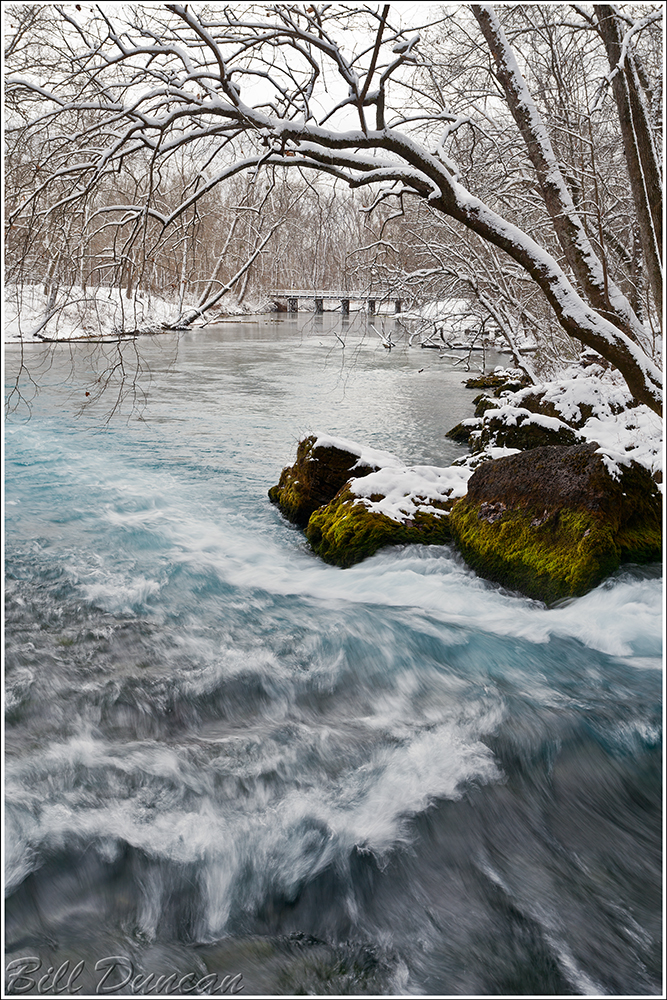
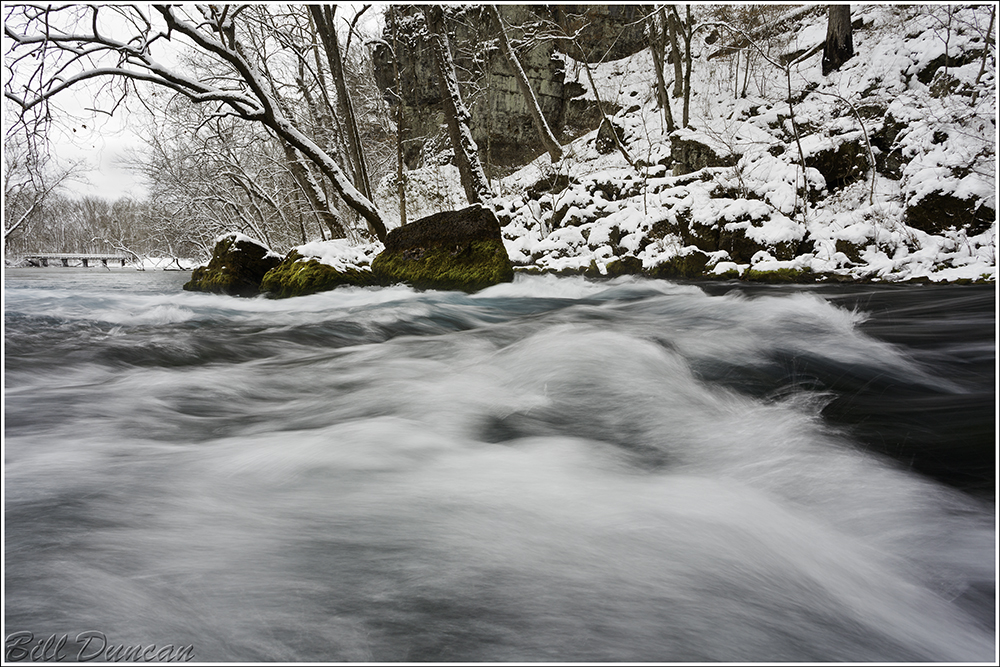
The forecast suggested the day in which I had been waiting for years might finally be here.  Finally, the combination of snow in the big-spring country of south-eastern Missouri Ozark region, a vehicle that can move through these hilly, un-plowed roads and a day off to enjoy myself in them.  I was also fortunate to have a friend who was just as excited about it as I was!  I told Steve I’d pick him up from his place and we would visit Big Spring and whatever other places we desired and had the daylight to enjoy.  This is the second winter season I have owned my current 4WD vehicle, but considering our winter last year, this was really the first time I’ve gotten to drive it under snow and icy conditions.  It definitely lived up to my expectations.  Remembering one must still drive slow and anticipate braking (as the three 4WD vehicles in the ditch that I passed demonstrated) we took our time and arrived at Big Spring State Park with a minimum of butt-clenching.  It was definitely worth the drive!  My photos do not begin to capture the beauty and peacefulness of our surroundings.

IMG_2353

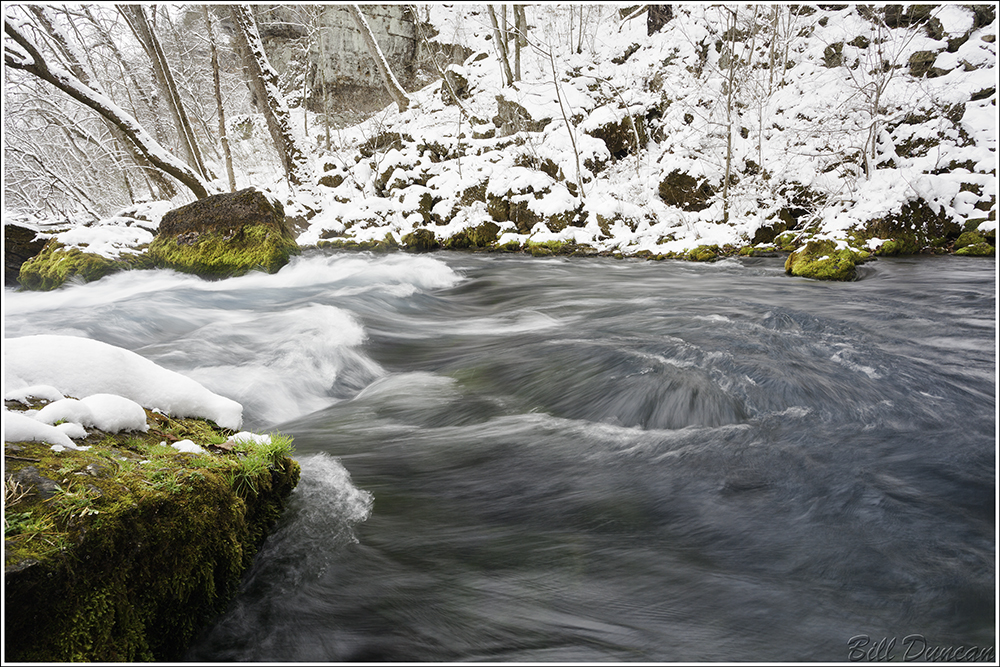
“Ozark Whitewater″
Technical details: Canon EOS 5D Mark II camera, EF17-40mm f/4L USM @ 19mm, ISO 100,  f/13, 1/10 sec

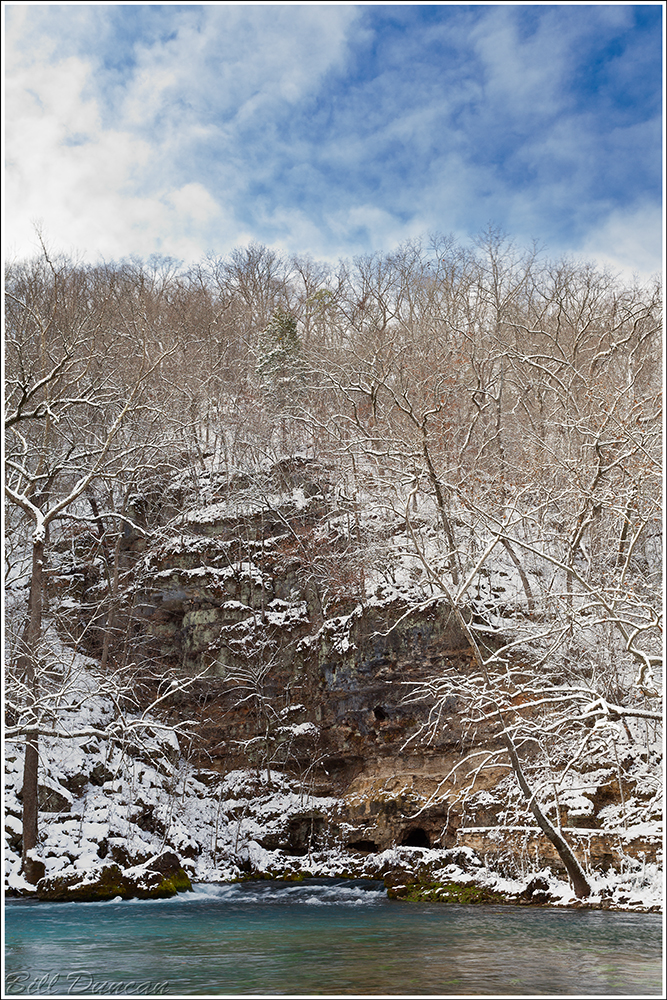
Nothing can beat a day spent during or after a snow at a place such as this.  Although definitely slower and quieter during this “blue season”, life was still obvious in surrounding us.  Mosses and lichen were wet and vibrant, and the bright green watercress contrasted nicely with the deep blues and sharp turquoise of the spring effluent.  A first for my eyes was the conspicuous in-this-season mistletoe bunches that are evergreen and apparently still robbing their Sycamore hosts even during the “dead of winter”.  I imagine I have observed these plants in the past, but assumed they were dead leaves potentially put together by a squirrel.  And the birds!  The birds were very abundant immediately surrounding the spring.  Nothing beats being able to observe a Bald Eagle and a Belted Kingfisher simultaneously without having to turn your head.  The photo below shows the geology that is not as visible in the green months.

IMG_2420 & 23

“Big Spring, Winter 2012″
Technical details: Canon EOS 5D Mark II camera, EF17-40mm f/4L USM @ 36mm, ISO 100,  f/11, 1/60 sec

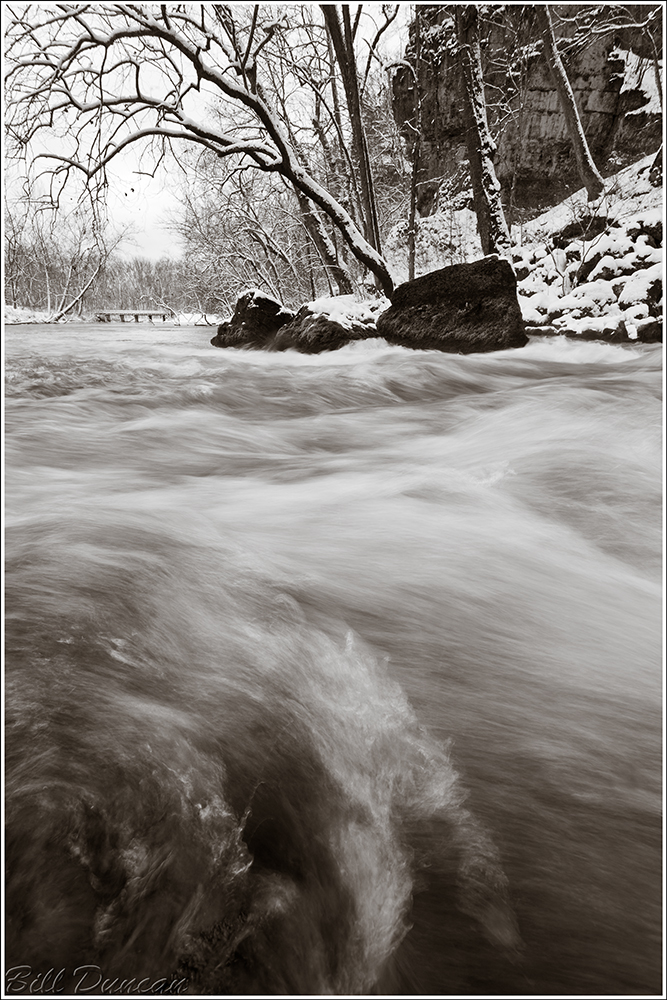
Every slight change in viewing angle resulted in noticeable changes in color of different sections of the spring’s effluent.  I don’t believe I have ever seen so many shades of blue in one place at one time.  I converted the image below to black and white, then toned as a “duotone” by bringing a selenium tone to the shadows.  I hoped to focus attention on the textures in the water and the heights these waves reached.

IMG_2361-duotone

“Exhalation″
Technical details: Canon EOS 5D Mark II camera, EF17-40mm f/4L USM @ 17mm, ISO 100,  f/14, 1/8 sec

After getting a satisfactory but still much too short experience at Big Spring, we left what unmarred snow was remaining and headed to the next spot I was eager to see with a cap of snow, Falling Spring.

IMG_2455

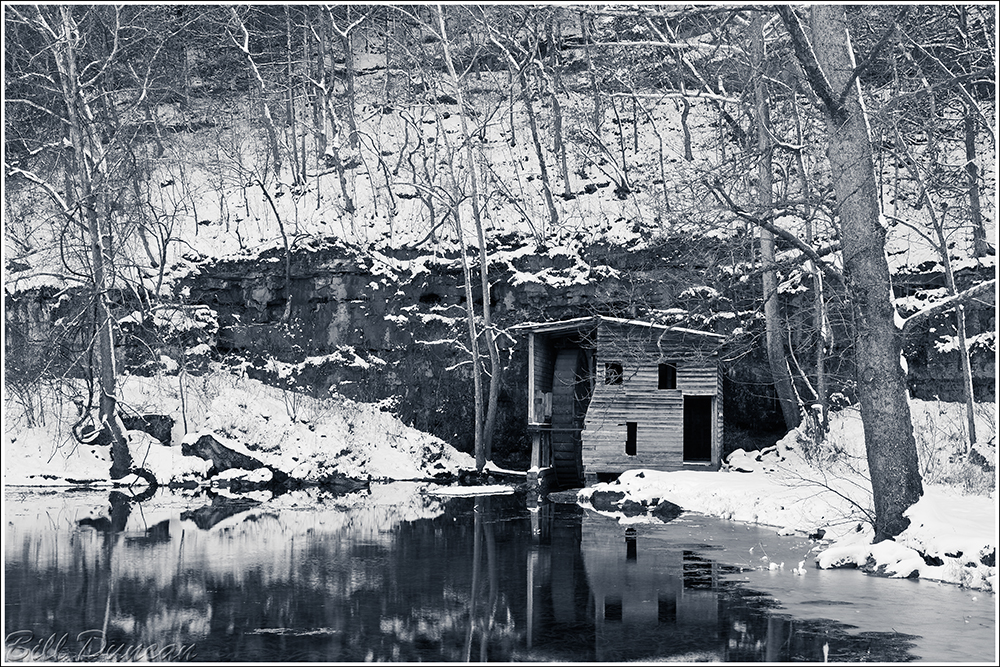
“Falling Spring Mill-house, Winter 2012″
 Technical details: Canon EOS 5D Mark II camera, EF24-105mm f/4L IS USM @ 40mm, ISO 100,  f/11, 0.4 sec

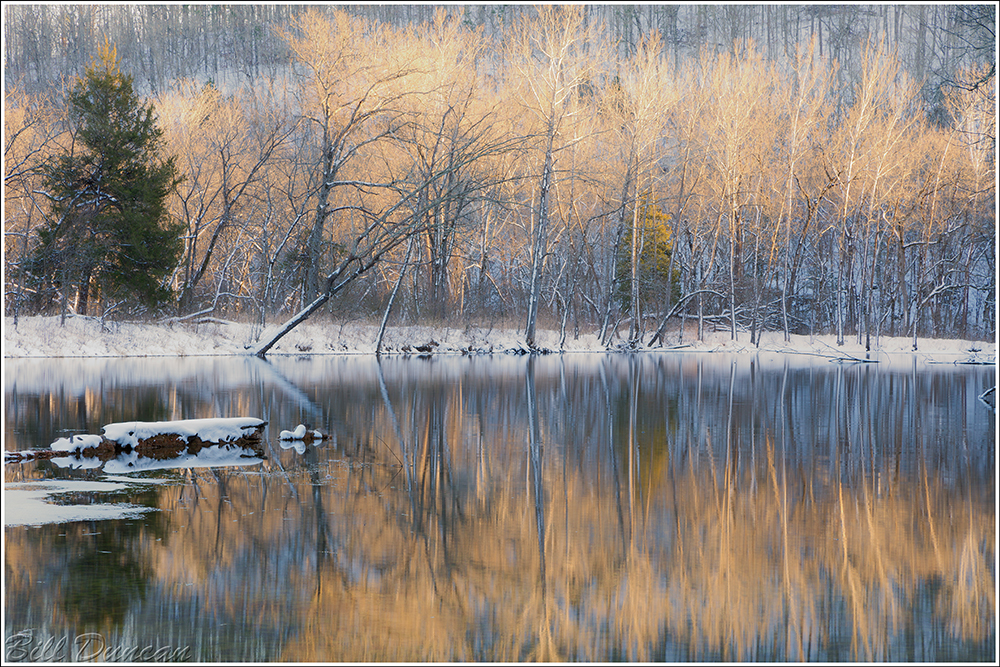
It always brightens my spirit to see that this delicate structure still stands and in relatively little disabuse.  The spring’s discharge was light on this day, but the noise of the water falling the ~20 feet to the pool below was enough to drown almost every other sound.  A nice point of visiting in the winter was being able to trek around the beaver pond a bit.  Steve discovered the beaver den with obvious “trails” moving outward from it in the water.  The picture below was taken facing away from the spring and shows the fiery warmth of the late-day sun that was cut by the height of the hill.  I love the contrasts provided by the bare Sycamore branches and the reflections from the beaver pond.  A stunning view indeed!

IMG_2467

“Holding the Sun″
 Technical details: Canon EOS 5D Mark II camera, EF24-105mm f/4L IS USM @ 85mm, ISO 100,  f/14, 0.6 sec

Seeing what can be found on a day like this and how few people were out to make these experiences ensures that I will definitely be down here to capture more scenes like these.

Cold Origin of Life?

Fire and Ice

by Robert Frost

Some say the world will end in fire,
Some say in ice.
From what I’ve tasted of desire
I hold with those who favor fire.
But if it had to perish twice,
I think I know enough of hate
To say that for destruction ice
Is also great
And would suffice.

Will the world ultimately end in fire or ice, desire or hate?  I don’t know, but a multitude of fascinating theories exist for the origin of life on earth.  I’ve recently read an interesting theory that suggests ice-cold conditions were more conducive for the origin of the first complicated molecules.  Although cold temperatures are a detriment to most life on earth, several potential problems are alleviated by this as well.  An interesting read if you like.  Pictured below is the main boil of water that is released from Big Spring located in the Missouri Ozarks

IMG_2366

“Cold Origins″
Technical details: Canon EOS 5D Mark II camera, EF17-40mm f/4L USM @ 19mm, ISO 100,  f/14, 1/6 sec

The Marvellous Gasteromycetes

No worries.  Although the biology, terminology and classification behind the fungi is a course of study that is as beautiful as any human language, I will not try to fill this post with all that specialized nomenclature, especially since I am a novice at it myself!  This particular group of fungi are polyphyletic (similar or convergent in nature, but no recent common ancestor) and have been grouped together based on their habit of passive spore dispersal.  While most other fungi have mechanisms that forcibly discharge their spores, in this collection of orders the spores are passively dropped and released by rain drops, wind, insects and other animals.  These fungi go by the names of earth stars, puffballs, and earth balls.  The palate-pleasing truffles and the oh-so fascinating bird’s-nest fungi are also included in this grouping.  The phallic (order Phallales) stinkhorns spores are spread by flies and other insects that are attracted to the rotten smells they exude.  The bizarre jelly and “ear” fungi are also placed in this group.  Finally, the economically important rusts (Uredinales) and smuts (Ustilaginales) also fall in this category, often finding conditions in our modern monocultures perfect and in little time can cause severe declines in yields of cereals and legumes.

The photo here shows the “Acorn Puffball” (Disciseda sp.).  In nature, the spores are forced through the ostiole (opening) when struck by rain drops or falling leaves or other matter.  Often they may separate from their base and roll across the landscape ejecting spores as they move along.  In this photo I used a small twig to push on the side of one of the fruiting bodies that discharged the cloud of spores I hope is apparent.  This took some time and patience to get just right.  I did not have any artificial light source, so reflectors and trial and error with exposure settings had to suffice.  These guys are most often found in dry habitats like desserts, dry grasslands, pastures and dry woodlands.

IMG_2030

“Acorn Puffball, Autumn 2012″
Technical details: Canon EOS 5D Mark II camera, EF100mm f/2.8L Macro IS USM, ISO 400,  f/13, 1/6 sec

Black & White

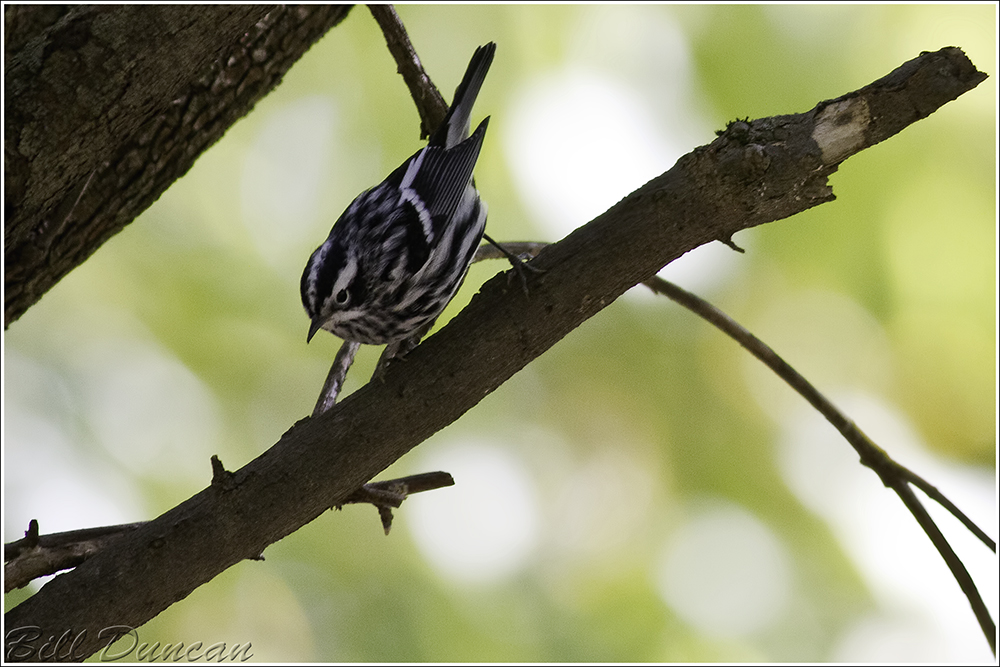
I have been coming to a realization lately that although it is nice to try and continue to know, understand and discover ourselves, it may be of detriment to actually try and define ourselves.  We as humans love the definition.  It puts a nice bow on the subject at hand and we can then go on to define the next potentially scary or perplexing item.  However, if we hang a much to determinate definition on ourselves then it doesn’t leave too much room for change or growth.  By definition we become somewhat of a fixed, static entity.  As fond as I am of Tolkein’s Middle Earth stories, I am becoming less and less engaged in stories of black and white, good or evil.  As time goes on I am finding myself far more interested in stories with characters of the in-between.  One recent example is the A Song of Ice and Fire series by George Martin, but there are other better ones.  Any suggestions?

IMG_6965

“Black and White Warbler, Autumn 2012”

Technical details: Canon EOS 7D camera,  EF400mm f/5.6L USM lens, ISO 800,  f/5.6, 1/200 sec