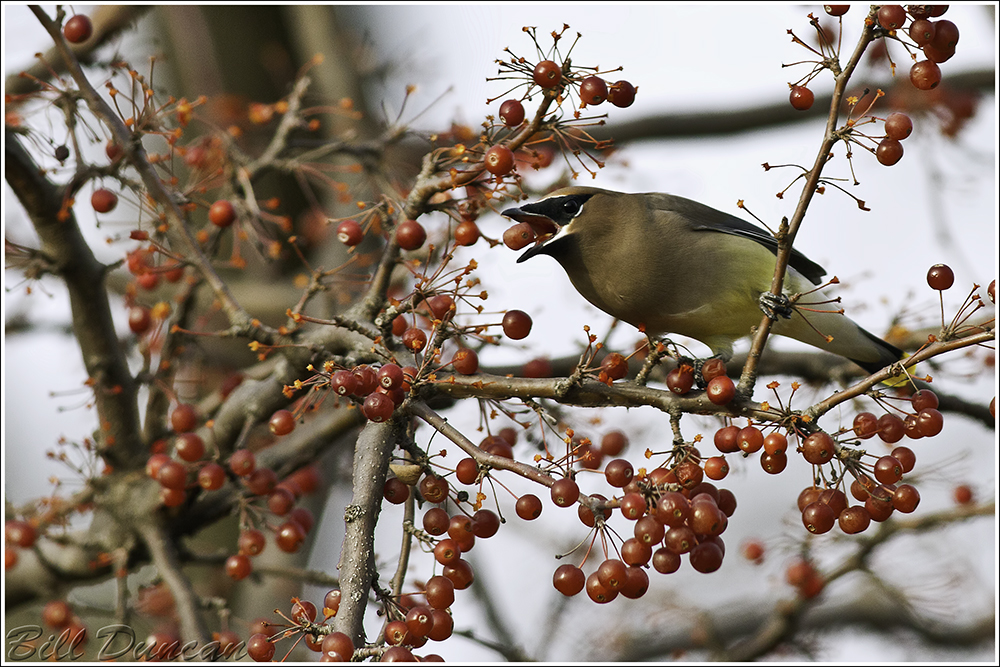
Swoop of a Hawk

“The outstanding characteristic of perception is that it entails no consumption and no dilution of any resources.  The swoop of a hawk, for example, is perceived by one as the drama of evolution.  To another it is only a threat to the full frying-pan.  The drama may thrill a hundred successive witnesses; the threat only one – for he responds with a shotgun.”

-Aldo Leopold-

IMG_7992

“Red-tailed Hawk”

Technical details: Canon EOS 7D camera, EF500mm f/4.5L USM lens, ISO 640,  f/8, 1/1000 sec

Tennessee

“That thing called ‘nature study’, despite the shiver it brings to the spine of the elect, constitutes the first embryonic groping of the mass-mind toward perception.”

-Aldo Leopold-

IMG_6794

“Tennessee Warbler – Autumn Migration 2012”

Technical details: Canon EOS 7D camera,  EF400mm f/5.6L USM lens, ISO 500,  f/5.6, 1/640 sec

Currently I Dream…

“The trophy-recreationist has peculiarities that contribute in subtle ways to his own undoing.  To enjoy he must possess, invade, appropriate.  Hence the wilderness that he cannot personally see has no value to him.  Hence the universal assumption that an unused hinterland is rendering no purpose to society.  To those devoid of imagination, a blank space on a map is a useless waste; to others, the most valuable part.  (Is my share in Alaska worthless to me because I will never go there?  Do I need a road to show me the arctic prairies, the goose pastures of the Yuckon, the Kodiak bear, the sheep meadows behind McKinley?)”

-Aldo Leopold-

IMG_1645

“Currently I Dream…″
Technical details: Canon EOS 5D Mark II camera, EF70-200mm f/4L IS USM @ 165mm, ISO 100,  f/13, 1.3 sec

Look for it…

“All this you surely will see, and much more, if you are prepared to see it, -if you look for it.  Otherwise, regular and universal as this phenomenon is, whether you stand on the hill-top or in the hollow, you will think for threescore years and ten that all the wood is, at this season, sear and brown.  Objects are concealed from our view, not so much because they are out of the course of our visual ray as because we do not bring our minds and eyes to bear on them; for there is no power to see in the eye itself, any more than in any other jelly.  We do not realize how far and widely, or how near and narrowly, we are to look.  The greater part of the phenomena of Nature are for this reason concealed from us all our lives.”

-Henry David Thoreau-

IMG_1883

“More Painted Leaves″
Technical details: Canon EOS 5D Mark II camera, EF24-105mm f/4L IS USM @ 75mm, ISO 100,  f/11, 1/13 sec

Painted Leaves

“October is the month of painted leaves.  Their rich glow now flashes around the world.  As fruit and leaves and the day itself acquire a bright tint just before they fall, so the year near its setting.  October is its sunset sky; November the later twilight.”

-Henry David Thoreau-

More and more I’m beginning to appreciate HDT’s recurring theme of matching the development and maturity of flowers, fruits and even leaves and shoots of plants together as analogous cycles in nature.  This is an idea he writes about in several pieces.  In the passage above, he takes it a step further and shows the similarities the course of seasons within the year has with the progression of a single day.  Simple, but I like it.  The colors and changes so dramatic in spring and fall are like those of sunrise/sunset.  The high sun and heat of the day are so like a long, hot temperate summer, while winter is of course equated to night.  Of course, this metaphor only makes sense in the temperate zones of our planet, but I like it.

IMG_1855

“Painted Leaves″
Technical details: Canon EOS 5D Mark II camera, EF24-105mm f/4L IS USM @ 100mm, ISO 100,  f/13, 1/10 sec

Chestnut-sided Warbler

“To him who seeks in the woods and mountains only those things obtainable from travel or golf, the present situation is tolerable.  But to him who seeks something more, recreation has become a self-destructive process of seeking but never quite finding, a major frustration of mechanized society.”

-Aldo Leopold-

IMG_4011

“Chestnut-sided Warbler”

Technical details: Canon EOS 7D camera,  EF400mm f/5.6L USM lens, ISO 640,  f/5.6, 1/1000 sec

One Grand Palimpsest

“When a page is written over but once it may be easily read; but if it be written over and over with characters of every size and style, it soon becomes unreadable, although not a single confused meaningless mark or thought may concur among all the written characters to mar its perfection.  Our limited powers are similarly perplexed and overtaxed in reading the inexhaustible pages of nature, for they are written over and over uncountable times, written in characters of every size and colour, sentences composed of sentences, every part of a character a sentence.  There is not a fragment in nature, for every relative fragment of one thing is a full harmonious unit in itself.  All together form the one grand palimpsest of the world.”

-John Muir-

IMG_1648 - 49

“One Grand Palimpsest″
Technical details: Canon EOS 5D Mark II camera, EF24-105mm f/4L IS USM @ 45mm, ISO 100,  f/14, manual blend of two exposures

Crop or not to Crop?

This post is likely only to interest photographers, particularly wildlife photographers, if even them.  So, if you are not in this category go ahead and have a look at this mediocre photograph of an absolutely stunning bird – the Cedar Waxwing – having fun with its food (what I believe are the berries of the green hawthorn).  Go ahead, I assure you.  You will not care a bit about what I’m about to ramble on about.

I’m always confused when trolling around the nature photography forums, as I sometimes do, when I see a photographer presenting their work proudly claim that “this image has not been cropped in any way.”  So what?  I could close this by simply saying that a viewer of a photograph doesn’t give a damn what you did to make the final image.  Nor should they!  The end product-the photograph, should stand by itself and tell the story you are attempting to relate.  End of story.

But, to take this a bit further.  To try and understand why someone should take pride in such an “accomplishment”, I will try and dig through this a bit.  What these folks are saying is that the bird or other creature is presented exactly as they were in the viewfinder of the camera at time of exposure.  One reason they take pride in this is that they were able to accomplish the final composition “in camera” and did not “recompose” in post-processing.  Okay, there may be something to be said for this, but I do not find it all that motivating.  I think boasts like this, as well as the fact that some can do it, says a couple of potential things about the person making the image.  One: they are likely able to afford long glass.  In the majority of cases they need a very long focal length to accomplish a final non-cropped image.  Or, two: they likely got too close to the animal being photographed.  Don’t get me wrong.  I think anyone who spends a considerable amount of time photographing wildlife – particularly birds, will get too close, or at least wonder if they are putting too much stress on their subject.  I know I have.  Having explored this a bit, I do not see a reason for the prideful boasts.

These same types will then exclaim that any photographer who must crop an image in post to make the final composition of a centralized subject (gasp!!) must then present it as a cropped image when exhibiting that photograph.  Once again, the concept of the photograph as the ultimate piece of the process makes me beg the question, why?  I think we are fortunate to live in this era of high-resolution.  Those of us who can’t or won’t afford to spend for the super-tele, super-fast glass now have the opportunity to make a worthwhile image by cropping as much as 75% of the captured image!  Of all the bird photos I have made, I estimate that I cropped 98% in post.  I typically shoot the bird using the center positioned AF point to maximize proper exposure and get the subject as sharp as possible.  I will then crop as the final action in my post work flow.  Usually, this is the first time I think about composition.  In the field tracking a wild bird you simply must grab the shot when the animal presents itself.  You cannot ask if it would please sit on the horizontal branch in the open with the bright red berries while showing us a particular side.  Well, I guess you can if you are one to use bait to draw in your subject, but that’s a subject of a different post…

Please forgive my boring rambling.  And please, do let me know if you have a dissenting opinion.  I would love to hear any other reasoning behind this line of thinking.
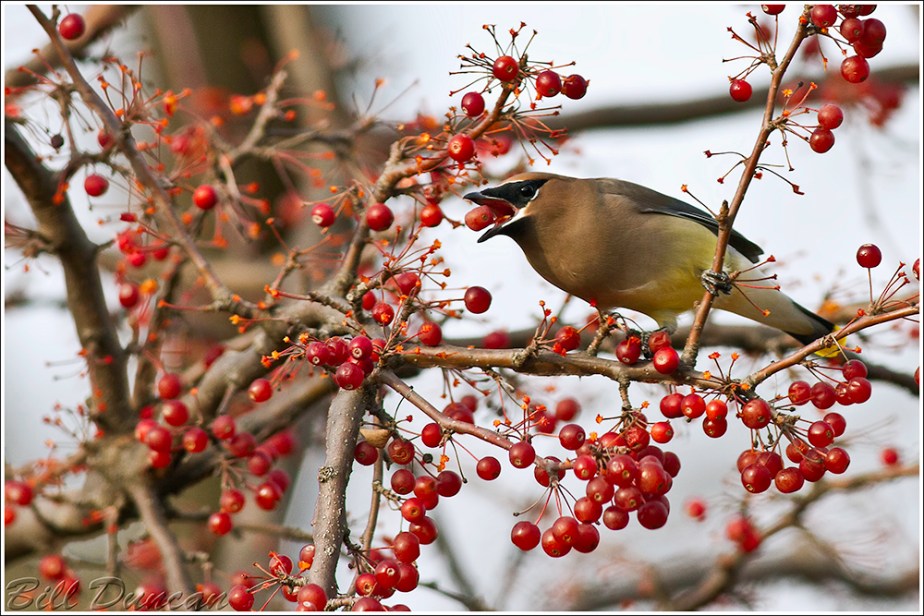
IMG_9434

“You Are What You Eat”

Technical details: Canon EOS 7D camera, EF500mm f/4.5L USM lens, ISO 640,  f/5.6, 1/1600 sec
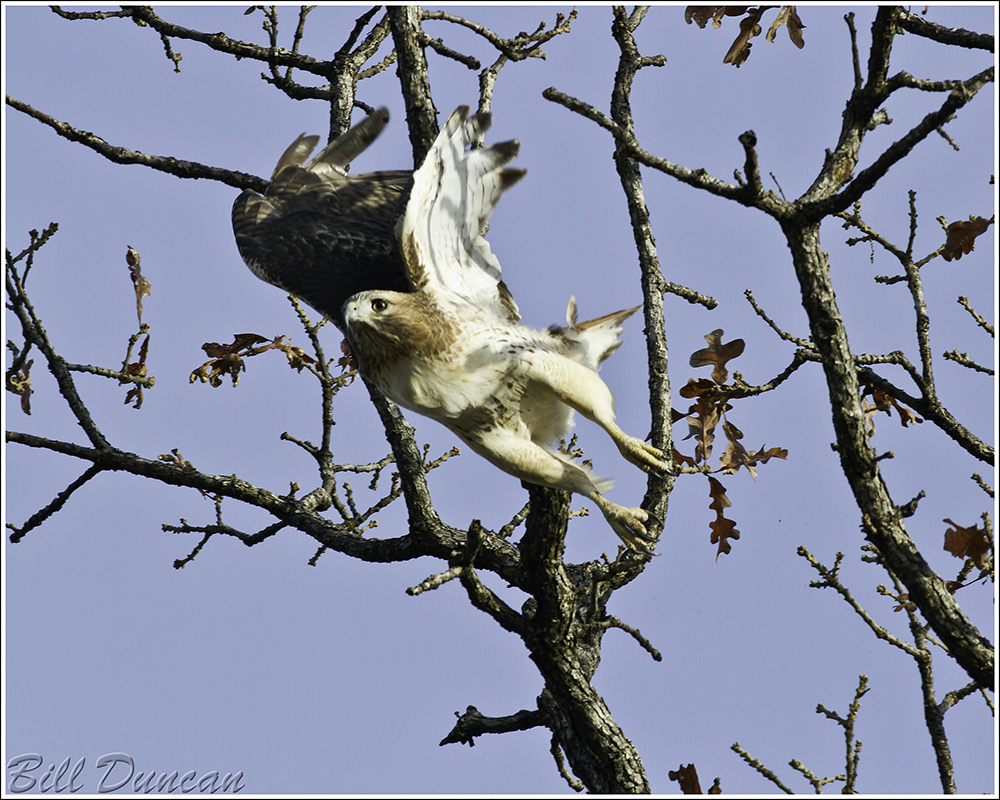
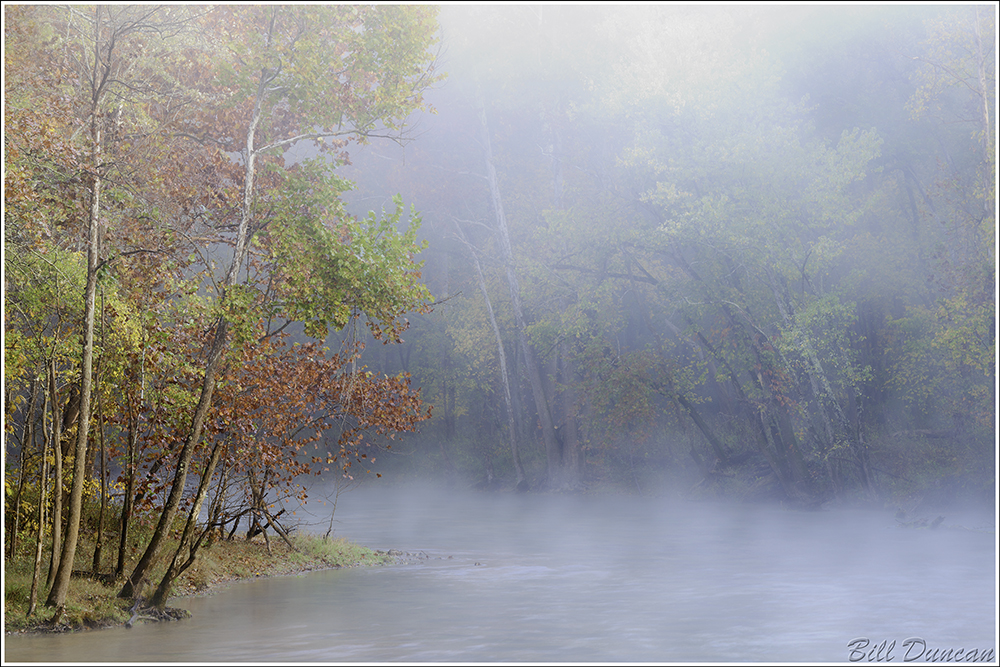
A Foggy Day in the Missouri Ozarks

“Probably if our lives were more conformed to nature, we should not need to defend ourselves against her heats and colds, but find her our constant nurse and friend, as do plants and quadrupeds.”

-Henry David Thoreau-

Fog

“Fog″
Technical details: Canon EOS 5D Mark II camera, EF70-200mm f/4L IS USM @ 200mm, ISO 100,  f/14, 1/8 sec

Black-throated Green

“The world, we are told, was made especially for man – a presumption not supported by all the facts.  A numerous class of men are painfully astonished whenever they find anything, living or dead, in all God’s universe, which they cannot eat or render in some way what they call useful to themselves.”

-John Muir-

“Black-throated Green Warbler”

Technical details: Canon EOS 7D camera,  EF400mm f/5.6L USM lens, ISO 640,  f/5.6, 1/250 sec