"What a thousand acres of Silphiums looked like when they tickled the bellies of the buffalo is a question never again to be answered, and perhaps not even asked." -Aldo Leopold
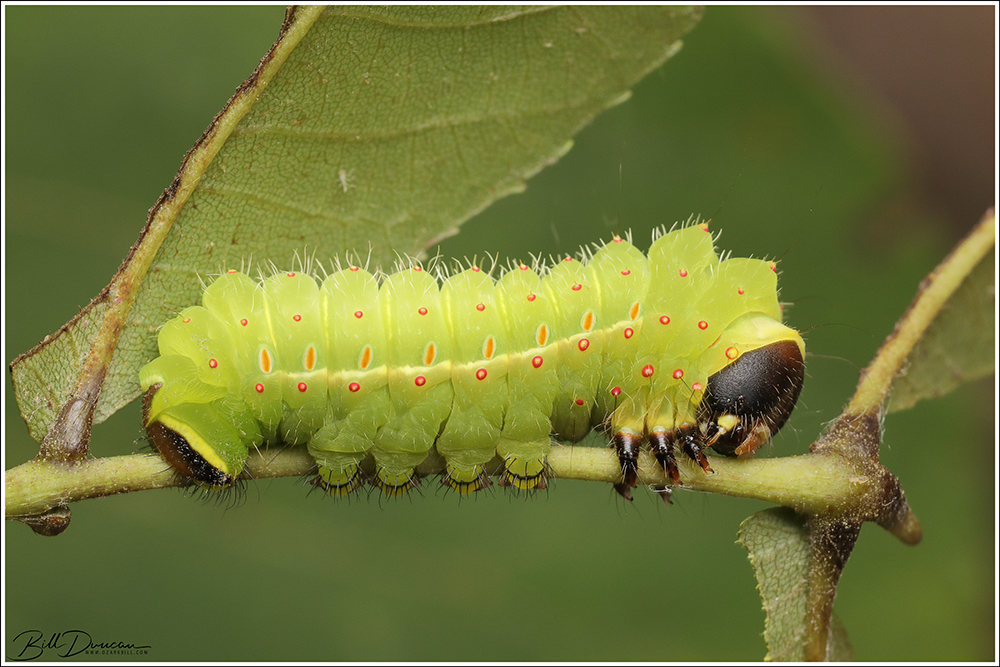
I typically don’t have very much luck finding caterpillars of the giant silk moths from the Saturnidae family. This past season was a little more successful. I found three polyphemus moth (Antheraea polyphemus) caterpillars and Sarah found the above luna moth caterpillar during our birthday hunting trip in mid-September. Larvae of these two species look very similar, but there are a few easy characteristics than can be used to distinguish between the two.
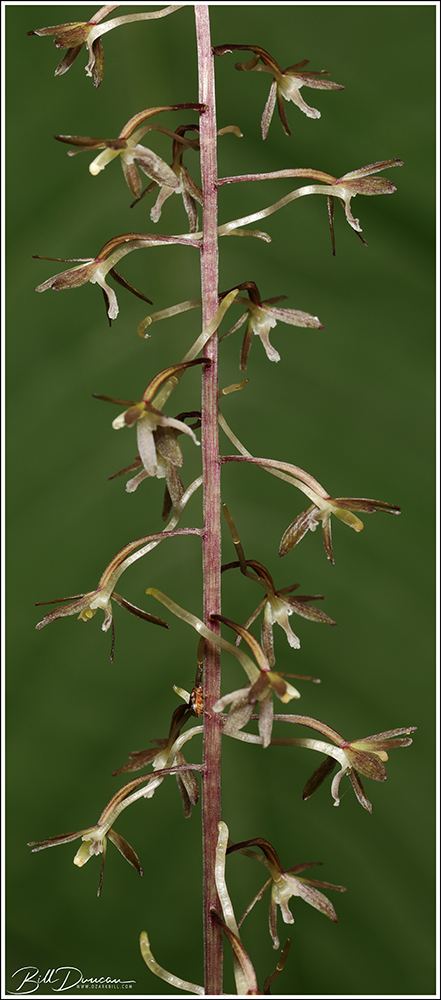
Spiranthes ovalis var. erostellata (oval ladies ‘-tresses)
Spiranthesovalis var. erostellata can be very difficult to find. Usually growing in groups of ones and twos, it is a small plant that prefers shadier locations that get dappled sunlight. I want to thank John Oliver for all his assistance getting me on this and a number of other Spiranthes species this year.
This species of ladies’-tresses is known for its graceful and diminutive flowers. Casey and I found only a couple of plants, each with flowers rather less developed than hoped for. I’m not sure if we were a day or two early, or if this might be all to expect from this population. We found these plants alongside trails at Babler State Park in mid-September.
Spiranthes ovalis var. erostellata (oval ladies ‘-tresses) The flowering stem can be seen here at the same time as its basal leaf.
A rare open flower of Corallorhiza odontorhiza (autumn coralroot). Most plants of this species produce cleistogamous flowers that do not open, thus facilitating self-pollination.
Casey and I found three separate populations of Corallorhiza odontorhiza in early to mid September this year, each population consisting of just a few bunches of plants. Most plants of this species found in Missouri are cleistogamous, containing flowers that never open and thus forcing the plant to self-pollinate. This might account for the rather dull colors and patterns on flowers of this species when compared to its vernal-blooming relative, C. wisteriana. Of the three locations, we found only one bunch of plants, located in St. Louis County, that contained open (chasmogamous) flowers and these were slightly more showy than I expected them to be.
Chasmogamous flowers of Corallorhiza odontorhiza with obvious swollen ovaries.
Like C. wisteriana, this species is myco-heterotrophic, parasitizing mycorrhizal fungi to obtain carbon and other necessary nutrients. Consequently, this species never produces leaves. Both Corallorhiza species are found scattered throughout Missouri and can be found in a variety of habitats, but seem to prefer open woodlands on xeric to mesic soils.
Corallorhiza odontorhiza. These are cleistogamous flowering stems that Casey and I monitored from just after emergence. The flowers never opened and ovaries began to swell prior to the flowering stems reaching their full height.
Tipularia discolor, the cranefly orchid so-called due to the appearance of the flowers to a hovering group of crane flies.
Tipulariadiscolor, or the ‘cranefly orchid,’ was first collected in Missouri in 1988 and new discoveries across the Midwest in recent decades suggest it is actively expanding its range. Similar to the puttyroot orchid (Aplectrum hyemale), this orchid blooms in the summer without the presence of any leaves. Leaves emerge in autumn and are usually completely withered by May. Both the common and genus names come from the apparent resemblance of the open flowers to that of crane flies in the genus Tipula. Moths in the family Noctuidae are the primary pollinators and use their proboscises to collect nectar from the long nectar spurs of the flowers.
This is the only species in the genus to be found in the Americas. Casey and I found these plants in Stoddard County on August 1st of this year.
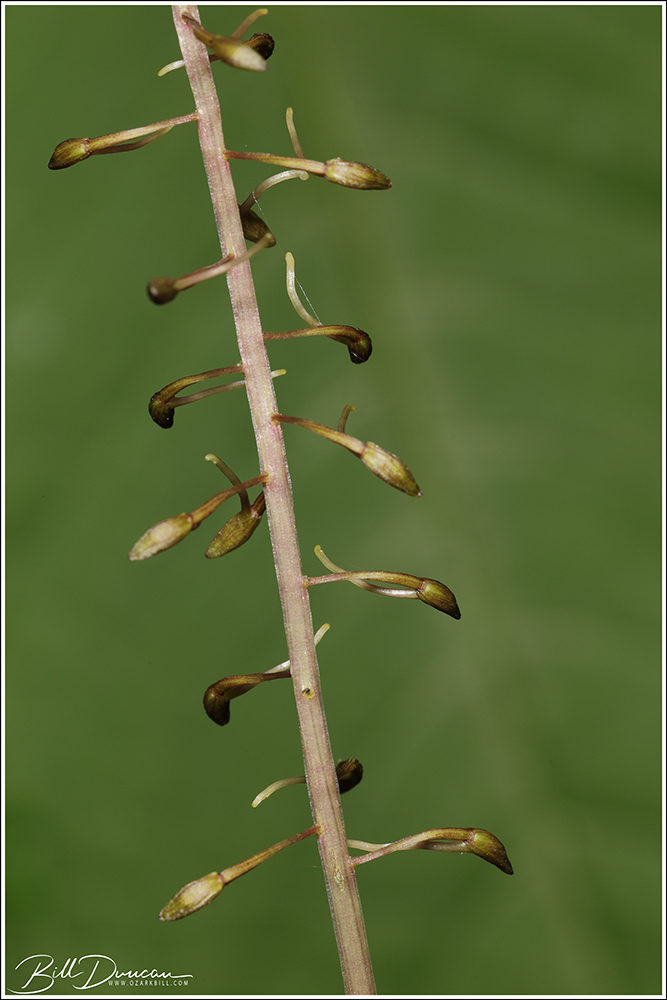
Tipularia discolor blooms in tight bud. The nectar spurs are easy to discern at this stage of development.
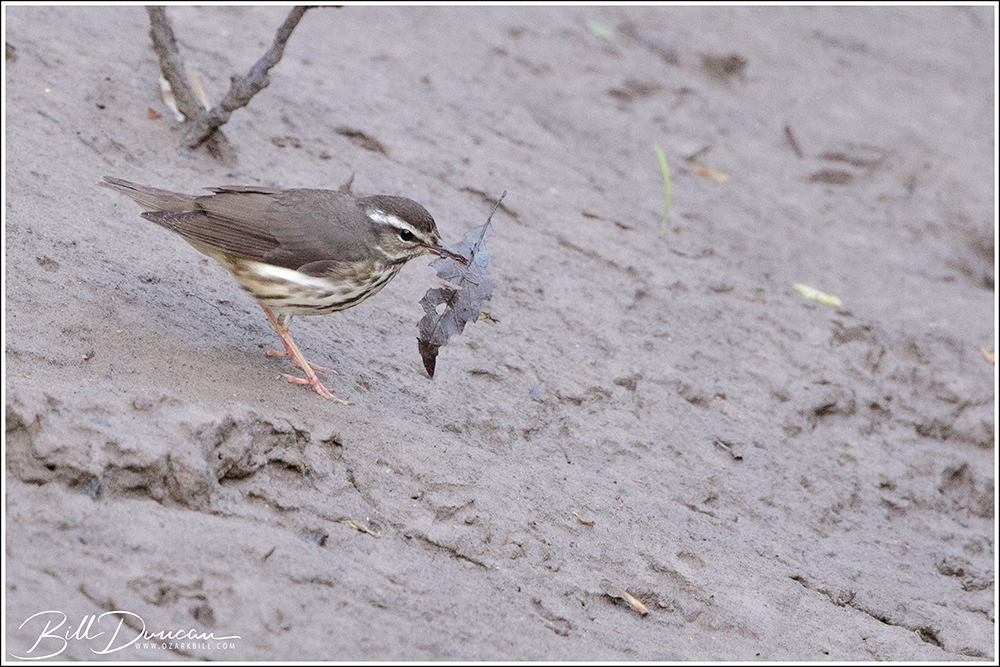
As usual, I am woefully behind on processing images this year, probably worse than usual actually. I’ve also not put much work into birds this year, a general trend over the past few years. Too much I’m interested in and not enough time. Anyway, here is some avian miscellany from 2020 so far.
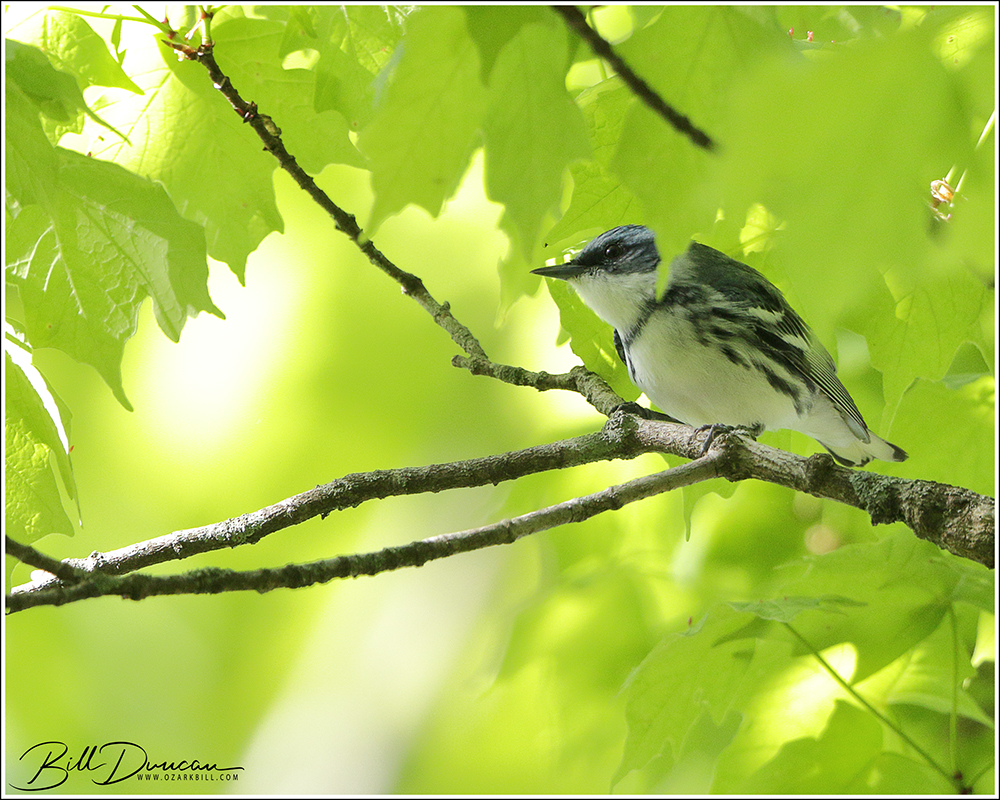
Cerulean Warbler photographed at Weldon Spring C.A.
My quest is to get the perfect Cerulean Warbler shot. These are not it, but getting closer. Better luck next year.
Cerulean Warbler photographed at Weldon Spring C.A.Cerulean Warbler photographed at Weldon Spring C.A.
This pair of Blue-grey Gnatcatchers were also photographed this spring at Weldon Spring Conservation Area.
I was happy to fins this Hairy Woodpecker nest this past spring, but, unfortunately, the parents never got used to my presence so I didn’t spend much time here.
Hairy Woodpecker bringing food to nest, Beckemeier Conservation Area
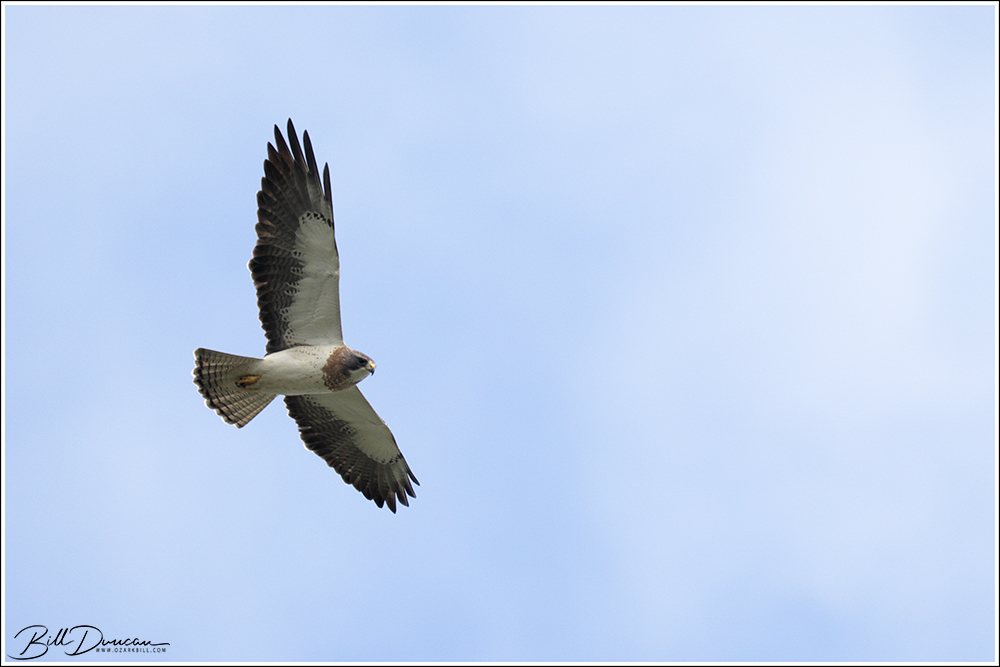
Back in April, Casey and I visited a hotspot for the small population of Swainson’s Hawks in Greene County. These hawks are rare in Missouri and nesting pairs are limited to the southwestern portion of the state.
Swainson’s Hawk
While waiting for more interesting subjects, Killdeer can sometimes get close enough to make it worthwhile. This one was strutting in some pretty good light.
Killdeer, RMBS
Finally, this Red-winged Blackbird was captured establishing his territory outside the Audubon Center in early spring.
Platanthera clavellata (club-spur orchid), Stoddard County, MO.
The habitat this featured orchid was found was quite interesting – a wet, fen-like area with many pea-gravel rivulets to walk down. All this was set under a thick overstory that allowed little light on the cloudy day Casey and I visited. Often forced to hunch as we searched for other plants, lighting for photography was challenging, but we got what we came for.
As you can see below, this is a dainty and sweet orchid that has a large primary leaf and a secondary, bract-like leaf.
Platanthera clavellata (club-spur orchid), Stoddard County, MO.
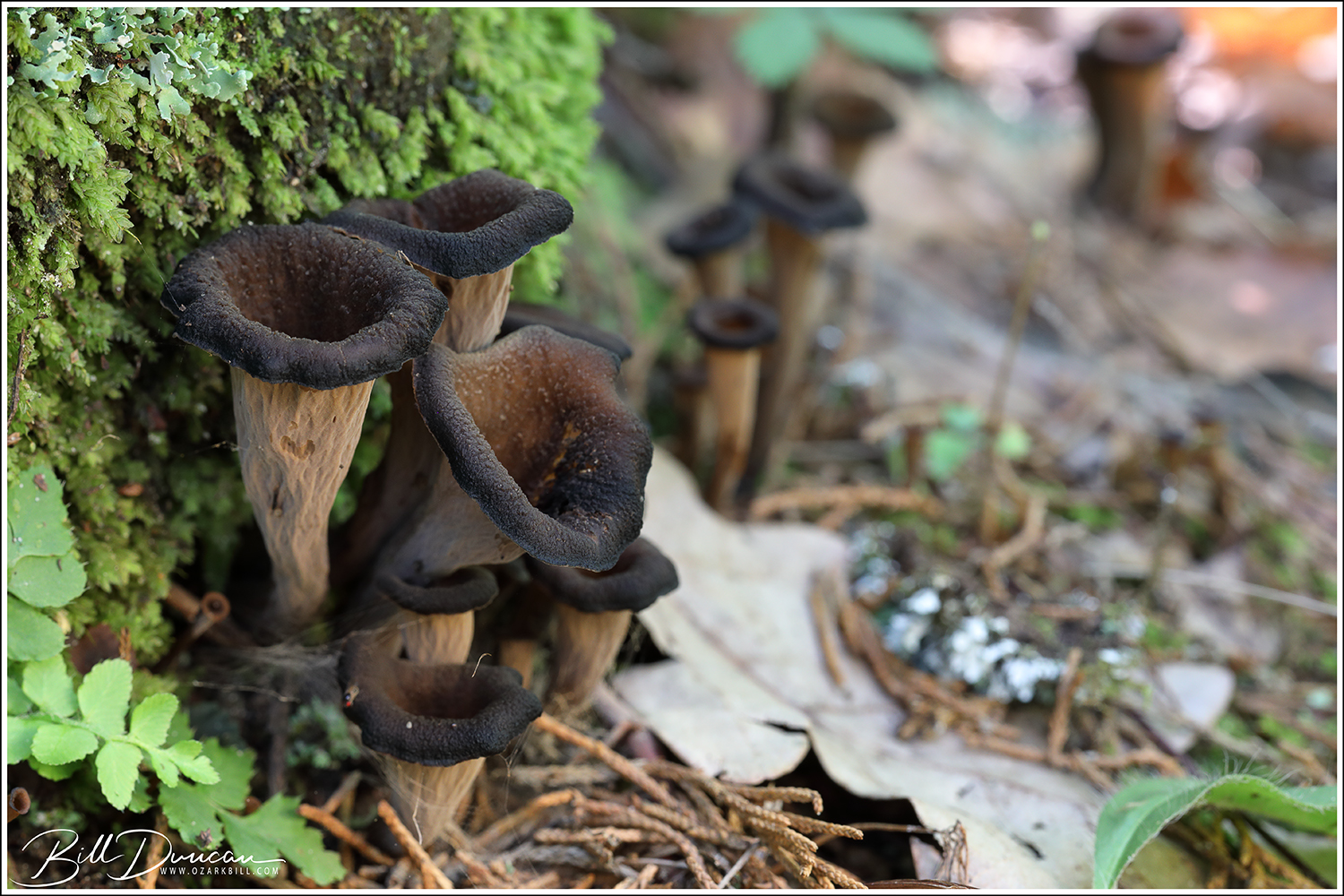
Craterellus cornucopioides has a number of common names including horn of plenty, black chanterelle (they are in the same family as the well known chanterelles), and trumpet of the dead.
After looking for a few years, I finally found a patch of black trumpets this year in Jefferson County, MO. They are reported to be one of the finest wild mushrooms and I agree – they (I picked and ate the ones pictured here) are definitely in my top three!
Monarda punctata (spotted beebalm) found at Sand Ridge State Forest, IL.
Today I’m sharing a couple of plants that Casey introduced me to that have a preference for growing in dry, sandy places. The first is a monarda that I did not know existed and has since become my favorite of the beebalms for certain.
Monarda punctata (spotted beebalm) found at Sand Ridge State Forest, IL.
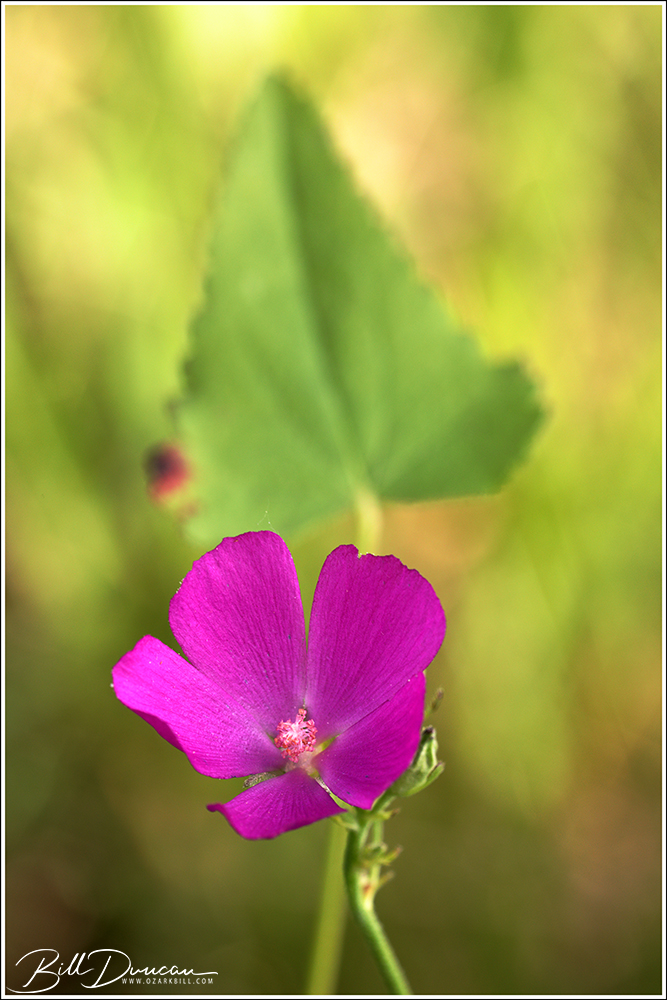
Next up is Callirhoe triangulata, the clustered poppymallow. This supremely saturated flower strongly prefers, dry sandy soils. A stunner of a plant! We looked for compositions that allowed us to feature not only the flower, but the triangular-shaped leaf as well, which is indicative of this species. This species is very rare to possibly extirpated in Missouri.
Callirhoe triangulata (clustered poppymallow)
We found this equally striking Rufous-banded Crambid moth (Mimoschinia rufofascialis) on an open flower. This moth uses these mallows as a host plant, feeding on the immature seeds. I’m not sure, but I doubt the adults feed; this one was likely just using the flower for shelter.
Callirhoe triangulata (clustered poppymallow) with adult Mimoschinia rufofascialis (Rufous-banded Crambid)
Black Skimmer, Pea Island National Wildlife Refuge, N.C., USA.
Going to the archives to try and wrap up 2019, I want to share a few more birds taken in eastern North Carolina.
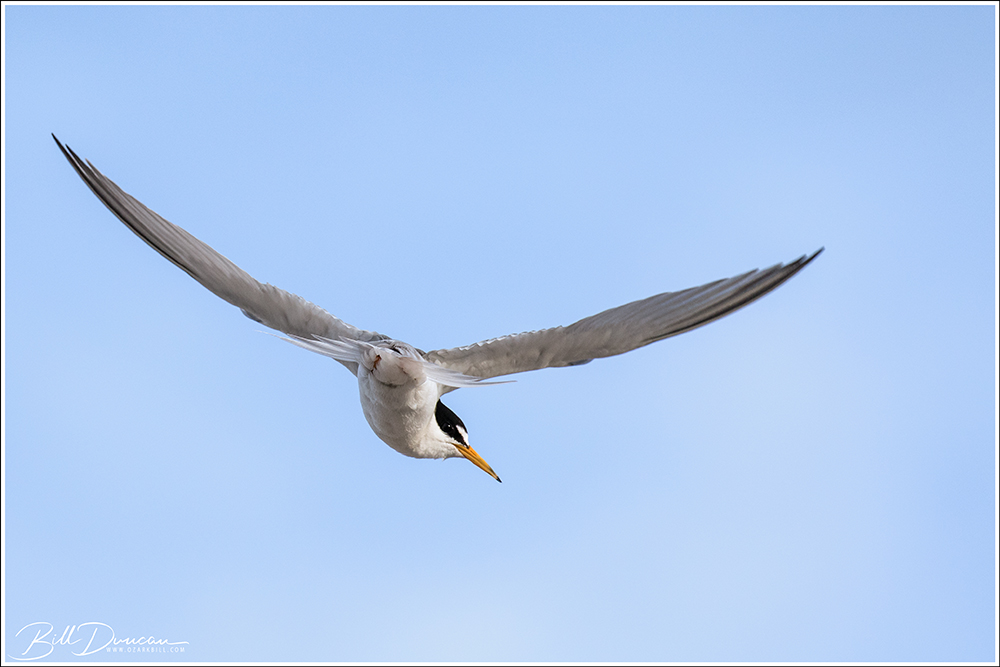
Least Tern, Pea Island National Wildlife Refuge, N.C., USA.
For me, the highlight of visiting Pea Island National Wildlife Refuge was visiting the Least Tern nesting colony. They put up a barricade to make sure you do not get to close to the nests and chicks, but it soon became obvious that the birds do a pretty good job at dissuading anyone from getting too close.
Least Tern dive-bombing the photographer. Pea Island National Wildlife Refuge, N.C., USA.
It was terrifying watching these birds react defensively, strafing and defecating until I moved back to a point they felt comfortable with. I remember I still had some of their ammunition on my camera body for at least six months before finally cleaning it off.
Least Tern, Pea Island National Wildlife Refuge, N.C., USA.
Least Tern with fish, Pea Island National Wildlife Refuge, N.C., USA.
You have to look really close towards the center of their nesting arena to spot the chicks – the reason for their territorial behaviors.
Can you spot the Least Tern chick? Pea Island National Wildlife Refuge, N.C., USA.
During a walk along the interior, marsh portion of the refuge, this beautiful Common Tern flew by.
Common Tern, Pea Island National Wildlife Refuge, N.C., USA.
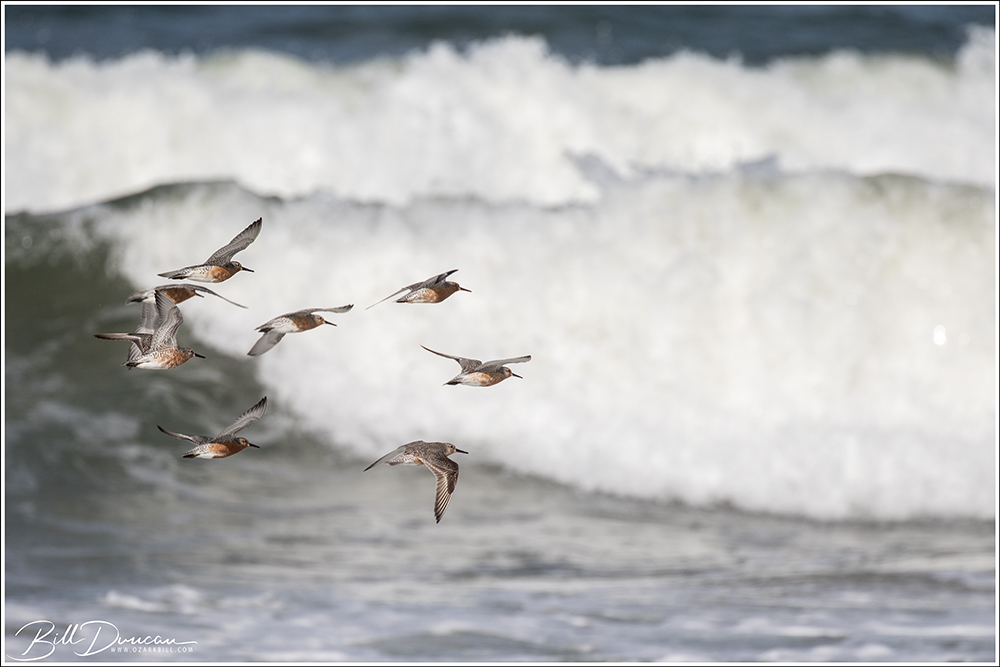
A real treat were my first looks and photographs of Red Knot.
Red Knot, Pea Island National Wildlife Refuge, N.C., USA.
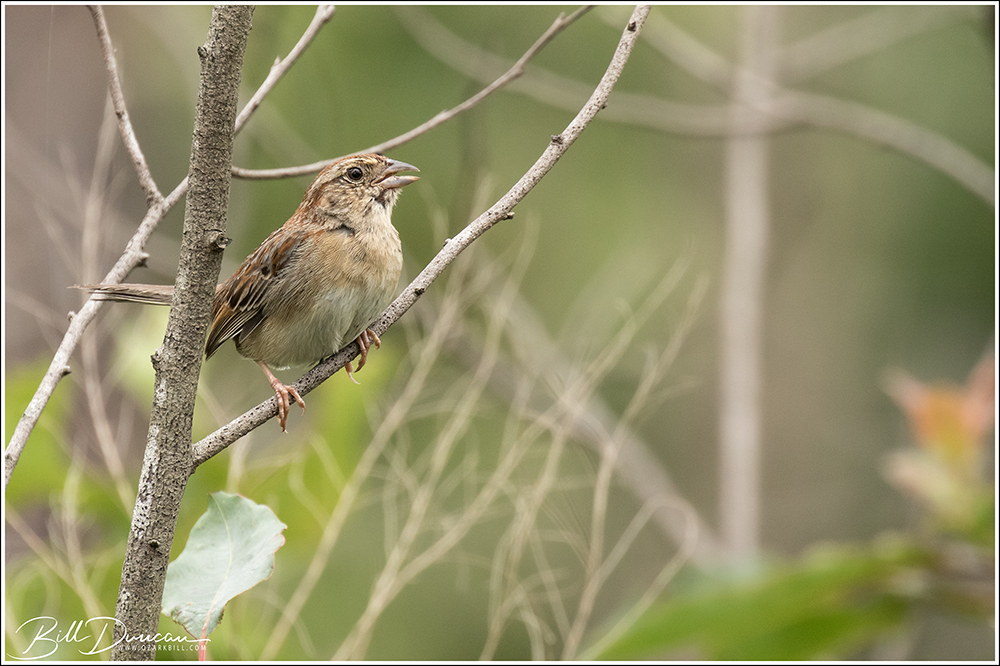
During the same trip, I was fortunate to visit a nice longleaf pine forest habitat at TNC’s Calloway Forest Preserve in Hoke County, NC. Here, along with the Red-cockaded Woodpecker, I got to find one of my southern favorites, the Bachman’s Sparrow.
Bachman’s Sparrow, Calloway Forest Nature Preserve, NC., USA.
Red-cockaded Woodpecker, Calloway Forest Nature Preserve, NC., USA.
From the few short trips I’ve been, North Carolina seems to be quite a place for birds and nature.
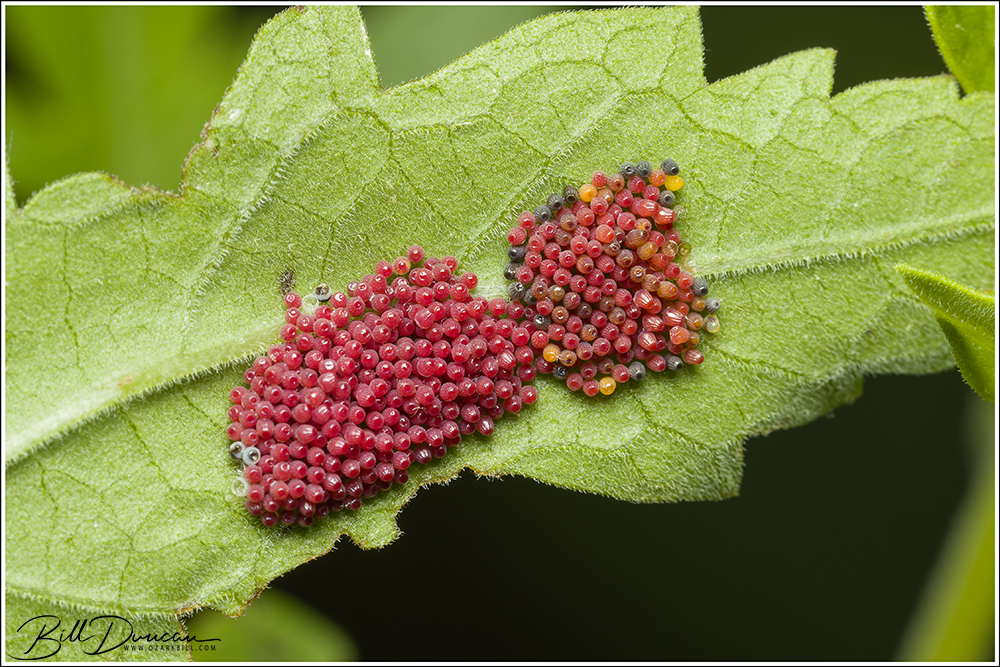
June 2023 Update In June of 2023, Casey, Pete, Miguel and I headed back to the same location in hopes of finding and photographing the adults of this species. Unfortunately, we were likely too late and could not find a single adult in flight. However, we looked over the site, looking closely at the Pedicularis canadensis to see if we might find females laying eggs. We had no luck with this and found no eggs nor larvae. Pete’s botanical eye did find a single Aureolaria grandiflora, where he found an egg mass. On closer inspection, I concluded that these were definitely butterfly eggs. A quick Google search confirmed that these were indeed checkerspot eggs! Now I need to photograph the beautiful adults and the absolutely stunning chrysalis of this species in order to capture every life stage of this fantastic creature.
Thinking on this further, on what has been described of this species (read more below), this makes perfect sense. We were not likely to find larvae on P. canadensis, nor find the females depositing eggs. Eggs are typically deposited on A. grandiflora, whereupon the larvae feed until the end of the season, moving on to finish this stage in the spring where the feed on P. canadensis.
Egg mass of Euphydryas phaeton ozarkae found on Aureolaria grandiflora
End of June 2023 update.
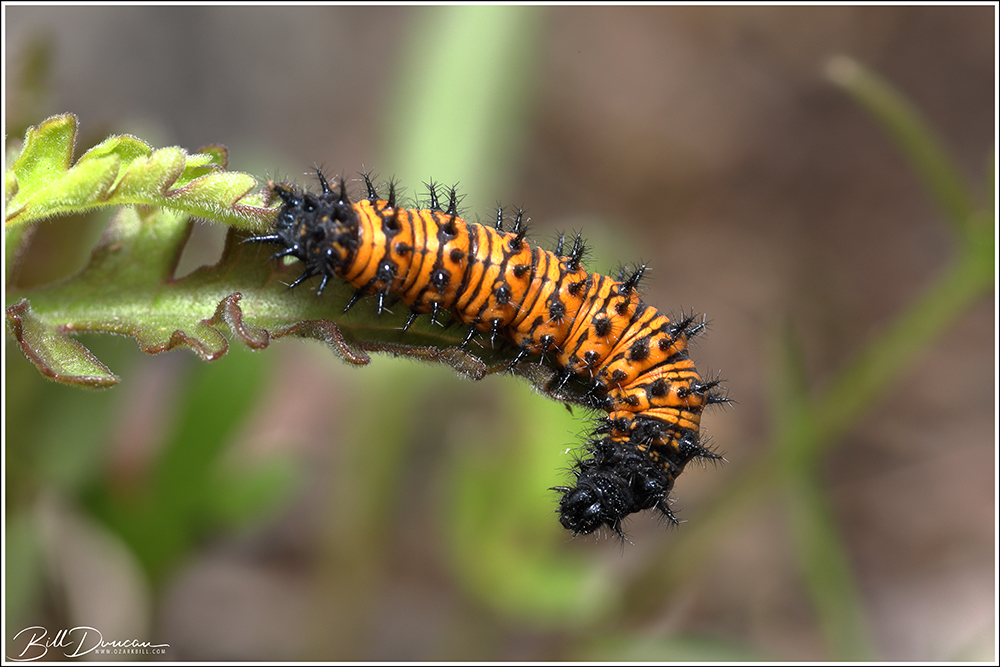
The Ozark Baltimore Checkerspot (Euphydryas phaeton ozarkae)
Early April, 2020, Casey and I head to the southwest corner of the state looking for multiple subjects. Our primary target of this trip was to check for caterpillars of a rare subspecies of the Baltimore Checkerspot (Euphydryas phaeton ozarkae). This subspecies occurs primarily in the Arkansas Ozarks, but can be found in extreme southern Missouri.
Does Euphydryas phaeton ozarkea deserve subspecies status?
The main distinction that separates this purported subspecies is habitat and host plant preference. The primary habitat for E. phaeton phaeton is marshy wetlands, while E. phaeton ozarkeaprefers oak woodlands. The primary host plant for E. phaeton phaeton are the turtleheads (Chelone sp.) while E. phaeton ozarkea primarily uses false foxglove (Aureolaria grandiflora). These animals will overwinter as caterpillars and then will often find new host plant species the following year – as shown in these photographs, they are using lousewort (Pedicularis canadensis). They will then pupate in May to June of their second year.
The Ozark Baltimore Checkerspot (Euphydryas phaeton ozarkae)
Browsing the literature, there seems to be some who question the legitimacy of the subspecific status of of E. phaeton ozarkae. Is this simply a case of an opportunistic generalist finding new ways to make a living in varying habitats, or is there a concrete genetic distinction between these two? From what I’ve been able to tell, there does not seem to be a consensus. If you are aware of any newer literature that might shed light here, please let me know.


















 A Thousand Acres of Silphiums