Big Spring Handles Big Waters

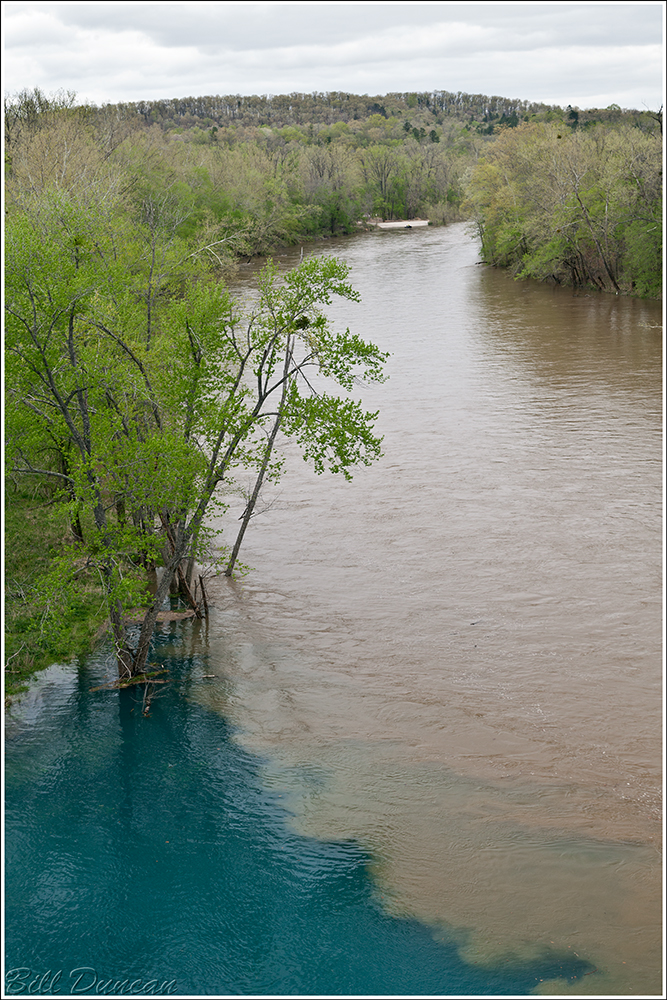
Sarah’s and my recent trip to Big Spring country provided us with lots of different looks that only the Ozarks in spring can provide.  On our second day the region was subjected to a strong storm front that dumped nearly five inches of rain in about a 12 hour period.  Although that limited the time spent outside cabin or vehicle, it did bring some learning opportunities.  I have often wondered with what speed and “precision” these large Ozark springs and their karst systems reacted to new rainfall in their watershed.  Would a deluge such as this become immediately apparent in the relative rate of discharge at Big Spring?  Or would the dynamics take a longer period of time?  My prediction would have been that the system would take up some considerable slack and act like a sponge.  That the effluent from the spring would rise eventually, but not as quickly as the rains came.  I turned out to be wrong.  During the first 12-18 hours, the increase of discharge from the spring seemed to keep pace with the rate of rise in the Current River.  This photo was taken at mid-morning the day after the rains.  Here the spring’s aquamarine  waters are flowing into the already mud-laden flood waters of the Current.  I estimate the waters were about two to three feet above normal at this time.
IMG_3938

“Confluence Contradiction″

Technical details: Canon EOS 5D Mark II camera, EF24-105mm f/4L IS USM @ 58mm, ISO 320,  f/10, 1/25 sec

The next morning the scene looked quite different.  It looked to me the Current had gained enough water to rise over the shallow points of land this far into the effluent channel.  Water was everywhere, completely covering the lower section of the Chubb trail, completely covering the dock and railings surrounding it, and blocking access to the spring accept by the main road.  Even with the extra water the boil from the spring was still quite noticeable.
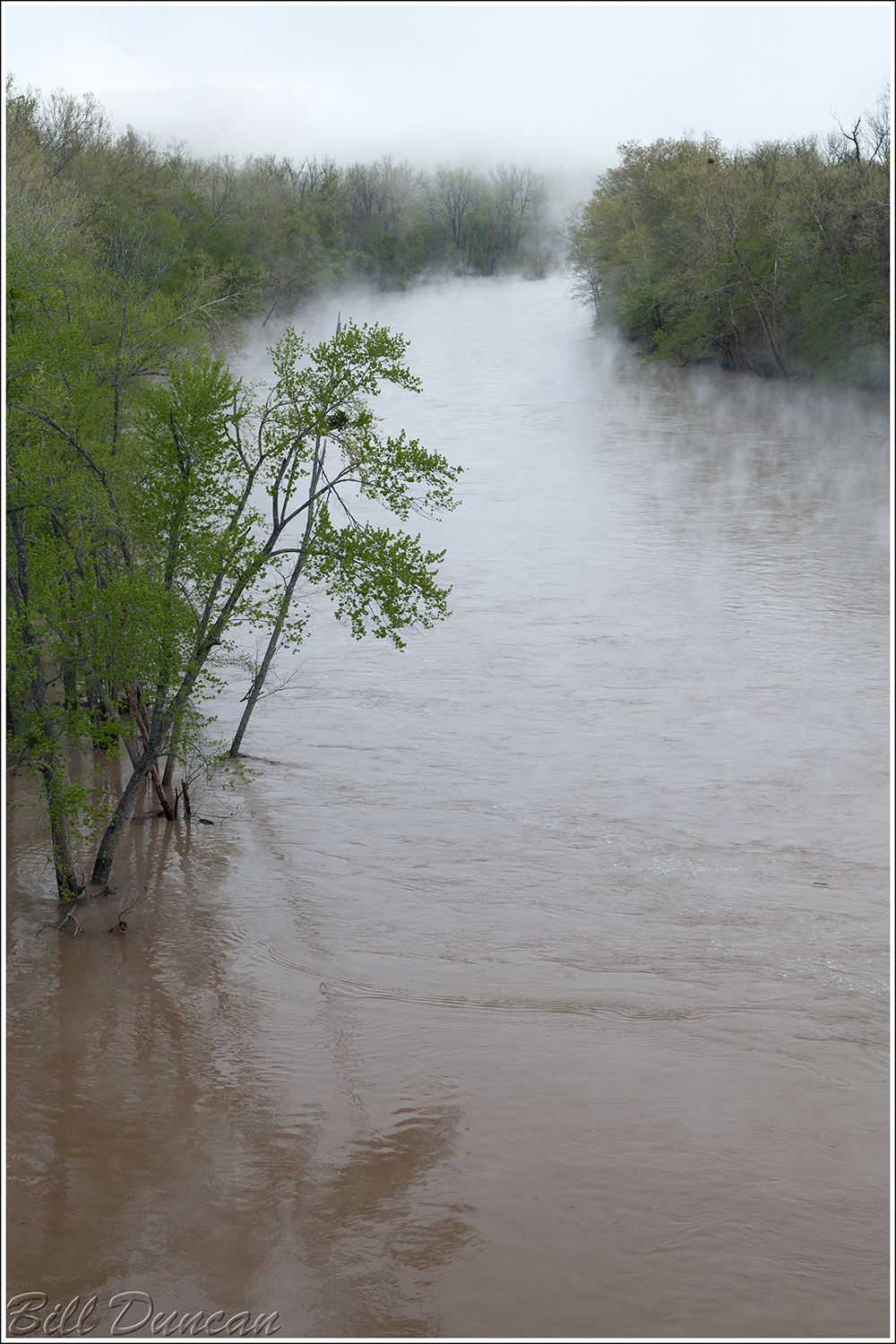
IMG_3978

“Current Rising″

Technical details: Canon EOS 5D Mark II camera, EF24-105mm f/4L IS USM @ 65mm, ISO 640,  f/9, 1/20 sec

This scene is always one of my favorites.  This tree’s load of mistletoe is easily seen.  Thanks for pointing this out to me, Steve!
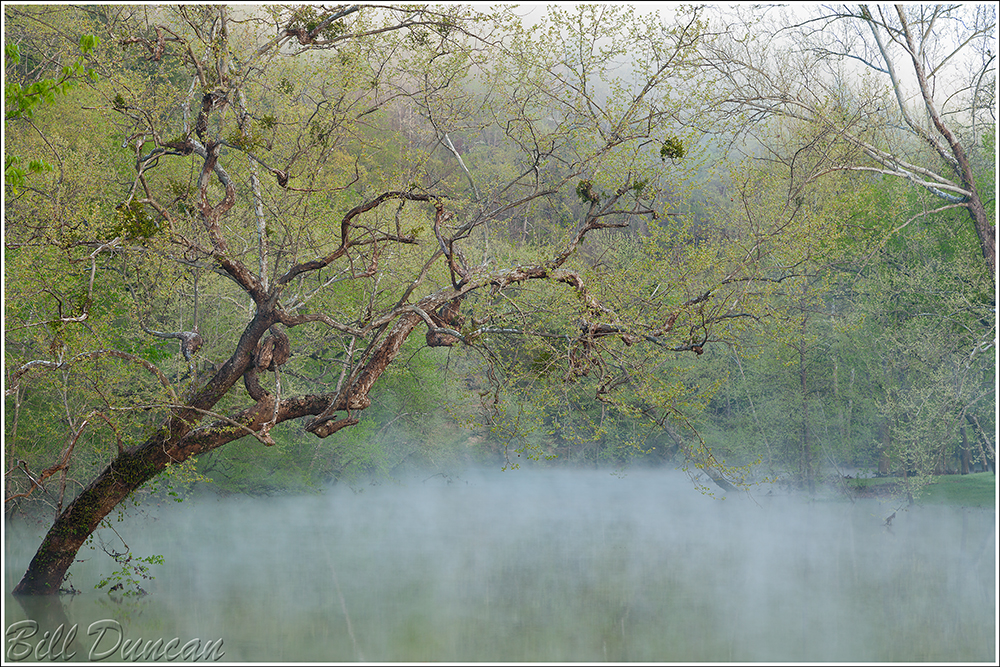
IMG_4010

“ ‘Planely’ Flooded ″

Technical details: Canon EOS 5D Mark II camera, EF24-105mm f/4L IS USM @ 75mm, ISO 100,  f/10, 0.4 sec

Since the spring had lost a good deal of its potential for interesting compositions, I played a bit with some macro work.  Here is that symbol of Missouri’s Natural Area System, the Jack-in-the-Pulpit, taken within the Big Spring Natural Area.
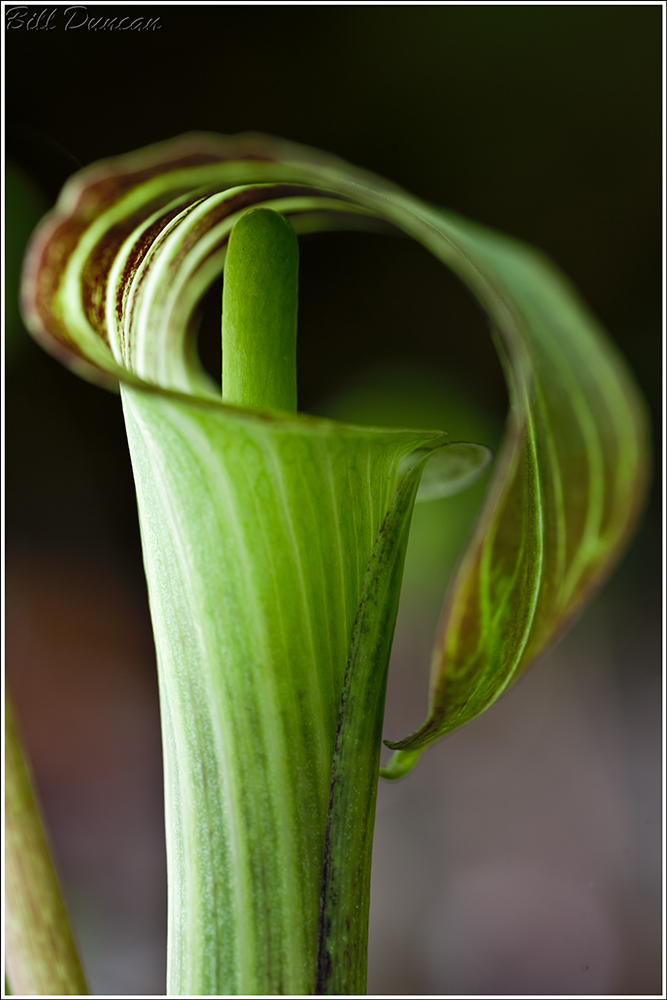
IMG_4055

“Jack in the Pulpit″

Technical details: Canon EOS 5D Mark II camera, EF100mm f/2.8L Macro IS USM, ISO 160,  f/5, 1/8 sec

Bill & Steve’s Excellent Adventure, or On Quest to find an Overland Route to Jam Up Cave

I had read about and viewed photos of Jam Up Cave along the Jacks Fork River for a number of years.  Every source I could find made specific mention that the only way was by boat along the river.  The case being that I am still most comfortable and knowledgeable on my lug-soled boots, I figured it would be a while before I got a chance to see it.  Then, in one of the recent cover stories from the MDC’s Conservationist, Brett Dufur highlighted the Upper Jacks Fork and mentioned Jam Up Cave that lies at the confluence of Jam Up Creek and the Jacks Fork.  This prompted my friend Steve and his father to find an overland route via the Jacks Fork Natural Area.  Within a few days of their visit Steve graciously showed me the way.  I have marked what I believe was our general route to the cave from a small pullout.  County Rd OO 491 can be accessed off of OO north of Hwy 60 just east of the town of Mountain View.

Jam Up Cave Route

The hike was not too long, but it deserves highest marks in terms of the difficulty of the terrain.  We bushwhacked our way mostly along ridge tops but enjoyed the burn of moving up near 500 vertical feet.  I had my first look at the end of Jam Up Creek, a losing stream that vanishes underground among boulders and rubble of the karst topography that dominates this watershed.  We then entered the rear of the cavern where we were treated to views like these.  Can you find Steve in this one?

IMG_3419

“The Grand Perspective″

Technical details: Canon EOS 5D Mark II camera, Sigma 15mm f/2.8 EX DG, ISO 400,  f/8, manual blend of three exposures

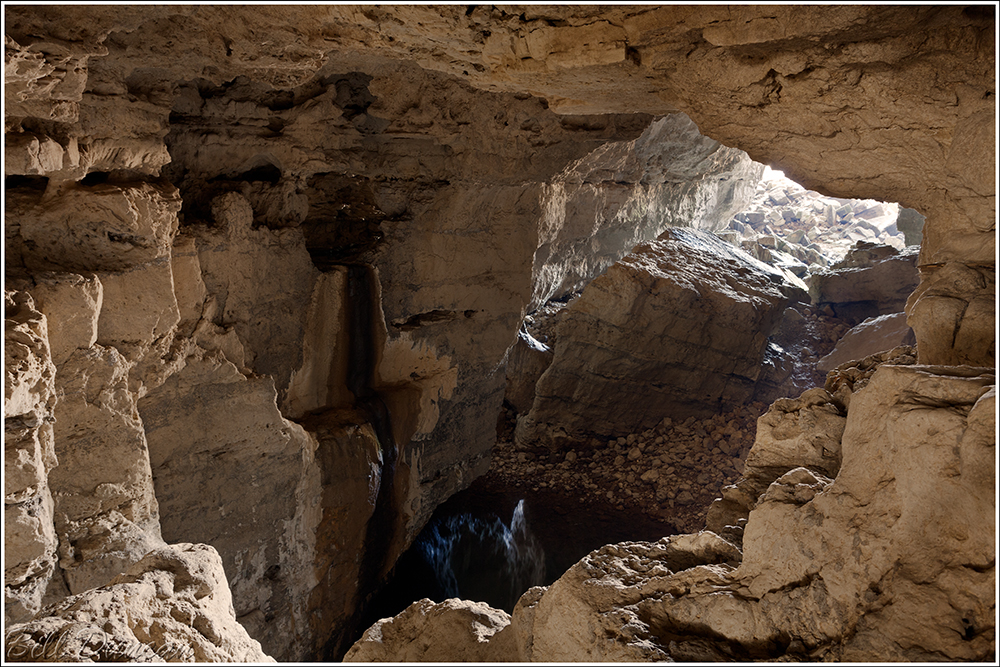
This next one is a bit deeper into the cave looking towards the front entrance across the forbidden pool.  The drop from this side to the pool would have been near 30-40 feet.  From both sides of the pool, impressive looks can be had of an underground waterfall.  Try as I might, I could not find an interesting way to make a photograph of it.  Did we find Smeagol?  We’ll never tell.

IMG_3449

“The Forbidden Pool″

Technical details: Canon EOS 5D Mark II camera, EF17-40mm f/4L USM @ 25mm, ISO 320,  f/11, manual blend of three exposures

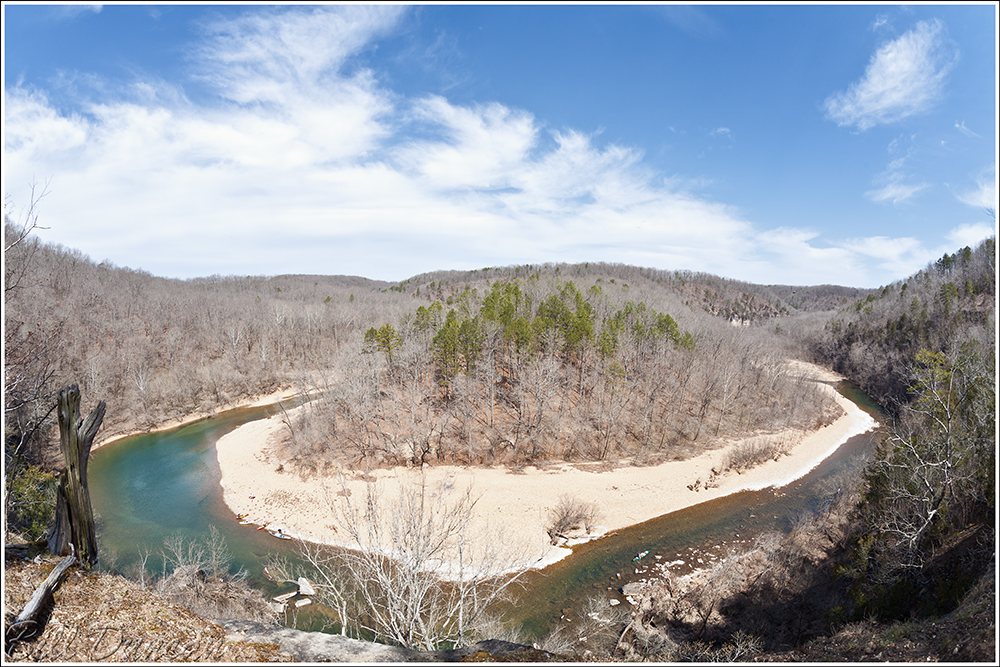
From here we made the climb out of the cave and up to the top of the bluff that offers great views of the Jacks Fork as it bends its way around the bluffs.  The ancient cedars attached to the edge of the bluffs were quite impressive and are not easily forgotten.

IMG_3363

“Jacks Fork Lookout″

Technical details: Canon EOS 5D Mark II camera, Sigma 15mm f/2.8 EX DG, ISO 100,  f/11, 1/100 sec

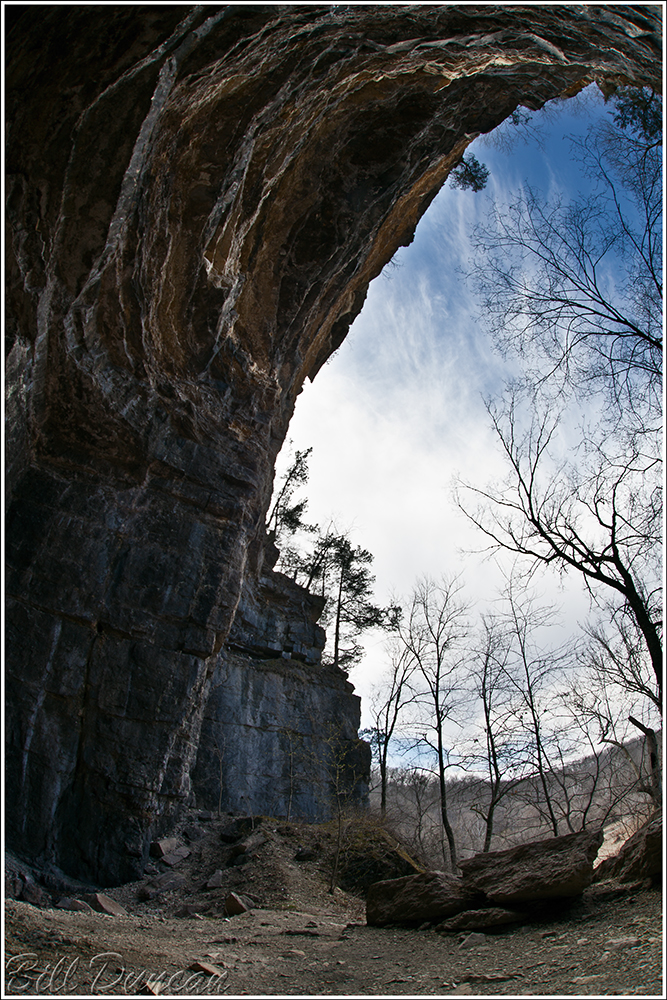
The “front door” of Jam Up Cave is this cavernous maw, the roof of which stands at over 100 feet high and nearly as wide.  This opening funnels into a much narrower tunnel that leads through a rubble field for ~500 feet to the other side of the forbidden pool that I discussed above.  This is a classic karst feature of the Missouri Ozarks and should rank up there with Grand Gulf, HaHa Tonka, the classic Ozark Springs and Devil’s Well.

IMG_3500

“Cavernous Maw″

Technical details: Canon EOS 5D Mark II camera, Sigma 15mm f/2.8 EX DG, ISO 100,  f/11, manual blend of three exposures

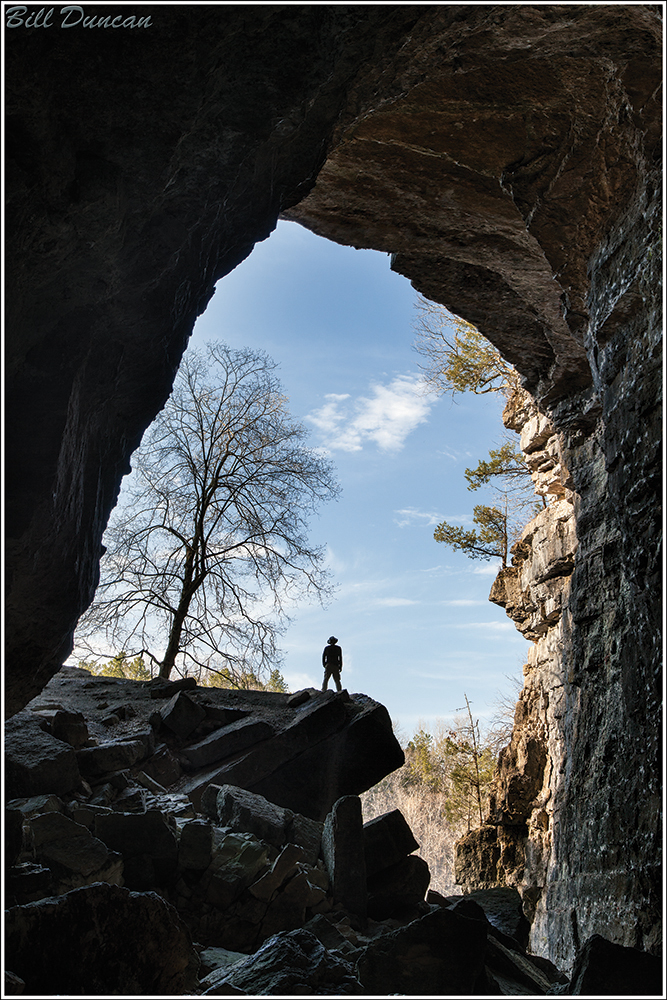
On the way out of the cavern we saw this impressive site and decided to give it a bit more sense of perspective by putting a certain pathetic creature into the scene.

IMG_3648

“Jam Up″

Technical details: Canon EOS 5D Mark II camera, EF24-105mm f/4L IS USM @ 47mm, ISO 160,  f/11, manual blend of three exposures

A Very Vernal Venture

Happy Sunday everyone.  Don’t get too excited, Monday is just around the corner… 😉

Compared to the past several years, spring was a bit tardy coming around.  However, on the trails of the northern Missouri Ozarks, she showed in full splendor this weekend.  I started off yesterday morning wanting to visit a few places in the Steelville/Salem area and first stopped at Red-Bluff recreation Area along the Huzzah Creek.  I hiked the trail and listened to the Parula, Yellow-throated Warblers and Black and White Warblers as they advertized their newly forming territories.  I checked out the bluff and looked in vain for the Davidson Natural Bridge nearby.  If anyone has any information to pass on concerning how to find this feature, I’d appreciate it.

From there I headed to Zahorsky Woods, an approximately 50 acre, high-quality wooded lot owned by TNC.  I was having some trouble finding the trailhead I was looking for when a friendly man named Bob stopped and helped me out.  He explained he was one of the owners of the neighboring Wildwood Spring Lodge, and invited me to park on his property and use the trailheads not only to Zahorsky Woods, but to the trail network that runs on his property.  He gave me a quick description and directions to some interesting features, including Steelville Natural Bridge that sets nearby the Meramec River.  Thanks Bob!  The views from the bluffs on both of these properties were very nice and the flood plain within Zohorsky was full of ephemeral wildflowers and other interesting things to see.

My next stop was Sutton Bluff, which rests along the Black River.  Very birdy and a nice hike.  The view from the top leaved a bit to be desired due to the fact that the very nice campgrounds filled most of the valley!  It should be quite a site from below during autumn, however.

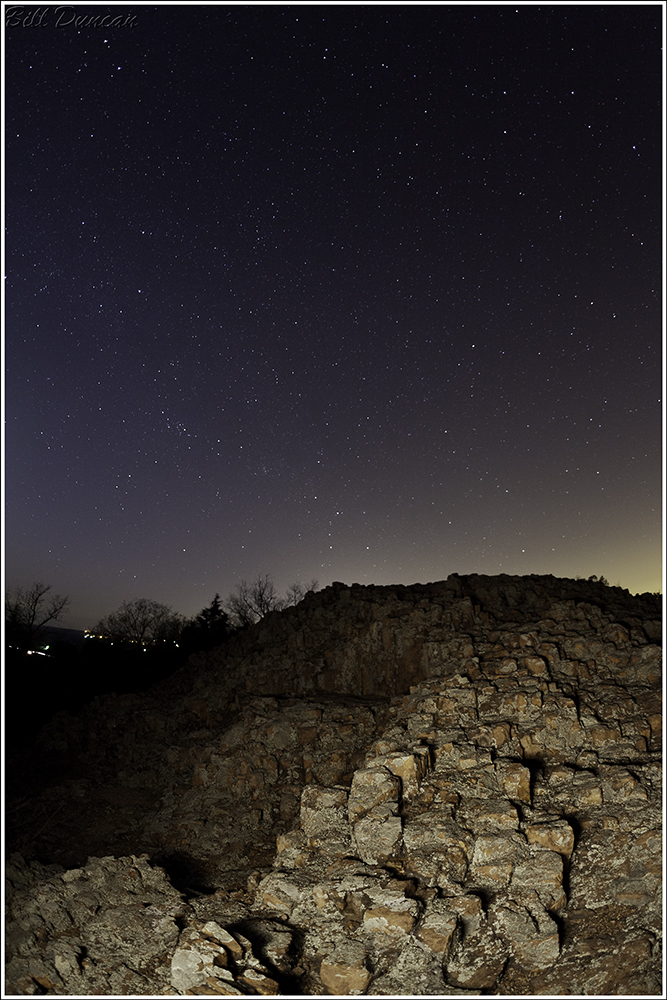
Photos from these location will follow in the near future.  My final stop was to Hughes Mountain near Ironton for a sunset and attempts at some “nightscapes”.  Steve joined me after his long shift at the hospital and kept me company on top of this windy Ozark peak.  The image below is probably my best from what I attempted last night.  Not terrible for my first serious attempt, but far from perfect.  Being reared and still residing in the big city, every time I can see a night’s sky like this is extremely special for me.  I can’t imagine what it would be like to see this on any clear night.  I can’t wait to try this some more!

You can find my, hopefully exhaustive, list of wildflowers in bloom and bird list below the picture.  I am still waiting to find a Brown Creeper in 2014.. 😦

Please enjoy your spring.  Like childhood, they do not last long enough.

IMG_3756

“Sky Envy″

Technical details: Canon EOS 5D Mark II camera, Sigma 15mm f/2.8 EX DG, ISO 640,  f/3.2, 30 sec


Wildflowers

White

·         Cutleaf Toothwort (on the backside of their season)

·         Harbinger of Spring (almost done)

·         Spring Beauty (in the spectacular peak of their season)

·         Pussytoes

·         Rue Anemone (in their peak.  Is there anything more precious than a bunch of these buds immediately before opening?  )

·         False Rue Anemone (near the peak)

·         Bloodroot (only a few remaining)

·         Dutchman’s Breeches (getting a nice start)

·         White Dogtooth Violet

·         Long-leaved Bluets

·         Leavenworthia

·         Saxifrage

·         Pale Violet

Yellow

·         Hoary Puccoon

·         Large Bellwort

·         Celandine Poppy

·         Yellow Violet

·         Buttercup (Ranunculus)

Red/Orange/Pink

·         Indian Paintbrush

Blue/Purple

·         Bluebells

·         Round-lobed Hepatica

·         Blue Phlox

·         Bird’s Foot Violet

·         Johnny Jump Up

·         Blue Violet


Birds

·         Canada Goose

·         Wood Duck

·         Mallard

·         Great-Blue Heron

·         Turkey Vulture

·         Red-tailed Hawk

·         Red-shouldered Hawk

·         Broad-winged Hawk

·         Cooper’s Hawk

·         Sharp-shinned Hawk

·         American Kestral

·         Barred Owl

·         Whip-poor-will

·         American Woodcock

·         Belted Kingfisher

·         Red-headed Woodpecker

·         Downey Woodpecker

·         Hairy Woodpecker

·         Pileated Woodpecker

·         Red-bellied Woodpecker

·         Northern Flicker

·         Eastern Pheobe

·         Great-crested Flycatcher

·         Eastern Kingbird

·         White-eyed Vireo

·         Yellow-throated Vireo

·         Red-eyed Vireo

·         Bell’s Vireo

·         Blue Jay

·         American Crow

·         Fish Crow

·         Tree Swallow

·         Bank Swallow

·         Carolina Chickadee

·         Tufted Titmouse

·         White-breasted Nuthatch

·         Carolina Wren

·         Ruby-crowned Kinglet

·         Golden-crowned Kinglet

·         Blue-grey Gnatcatcher

·         Eastern Bluebird

·         Mourning Dove

·         Hermit Thrush

·         American Robin

·         Northern Mockingbird

·         Brown Thrasher

·         Grey Catbird

·         European Starling

·         Northern Parula

·         Chestnut-sided Warbler

·         Yellow-rumped Warbler

·         Yellow-throated Warbler

·         Pine Warbler

·         Black and White Warbler

·         Louisiana Waterthrush

·         Ovenbird

·         Worm-eating Warbler

·         Kentucky Warbler

·         Eastern Towhee

·         Chipping Sparrow

·         Dark-eyed Junco

·         Song Sparrow

·         Swamp Sparrow

·         Field Sparrow

·         White-throated Sparrow

·         Northern Cardinal

·         Red-winged Blackbird

·         Common Grackle

The Halcyon Days

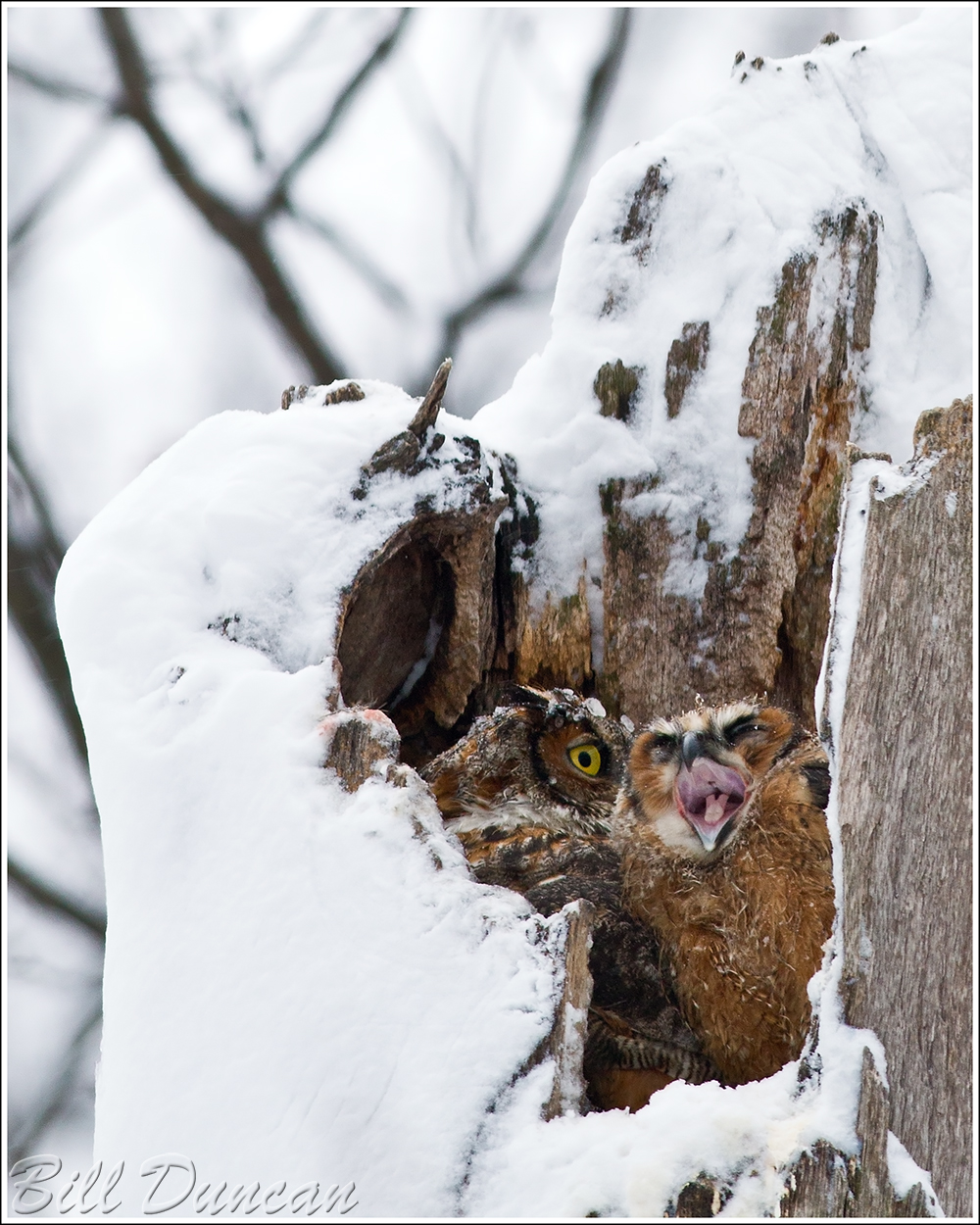
It’s surprising how often these guys take to yawning.  The poor things spend the first couple months or so stuck in the nest, so what else do they have to do?  I’m sure this time for them lasts forever, just like those endless days of summer youth do for us.  Do they reminisce as they move on through the years of those days spent packed in a tube with their siblings?

IMG_2130

“The Great Yawn”
Technical details: Canon EOS 7D camera, EF500mm f/4.5L USM lens, ISO 800,  f/5.6, 1/100 sec

A New Day

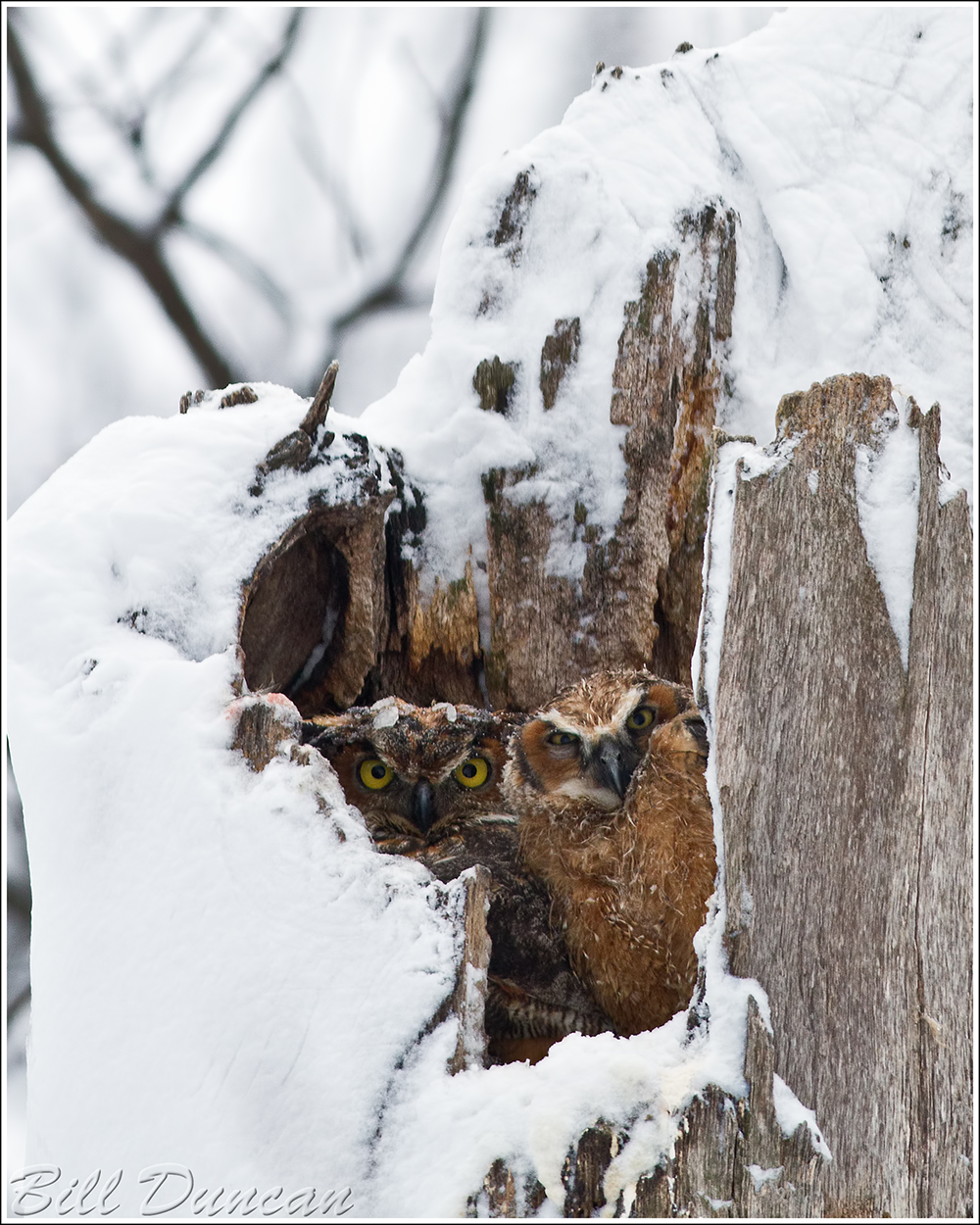
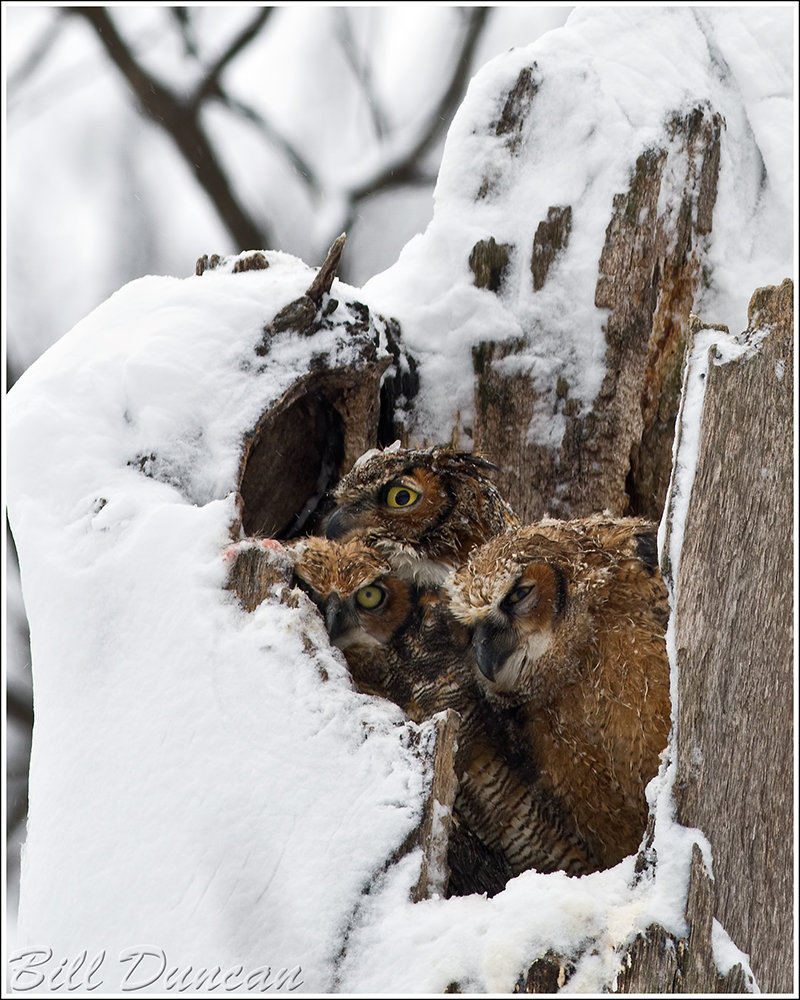
This one was taken near first light the morning after our near 24 hour long snow event a few weeks back.  Mom seemed to have stayed the night in the nest, presumably helping to keep the chicks warm and out of the snow.  The family seemed pretty miserable, but all three chicks made it through.  In this one, mom is in behind two of the chicks that are visible.

IMG_2239

“End of a Miserable Night”
Technical details: Canon EOS 7D camera, EF500mm f/4.5L USM lens, ISO 400,  f/7.1, 1/200 sec


Mondays are for the Birds – Great-horned Owl Nest

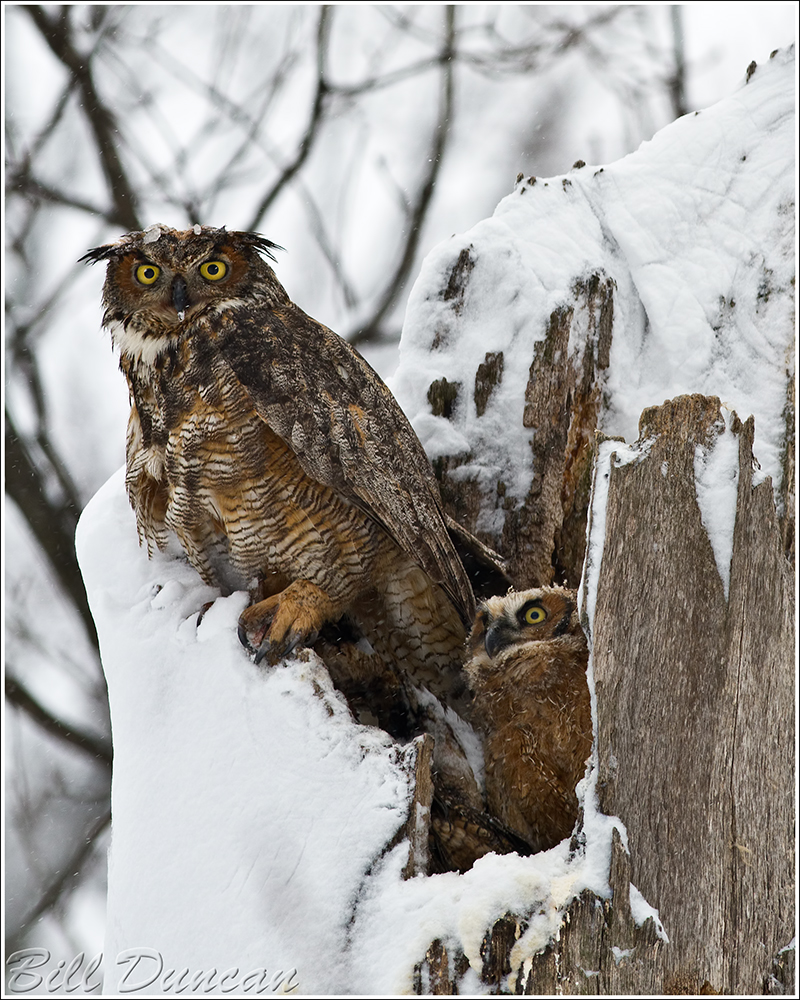
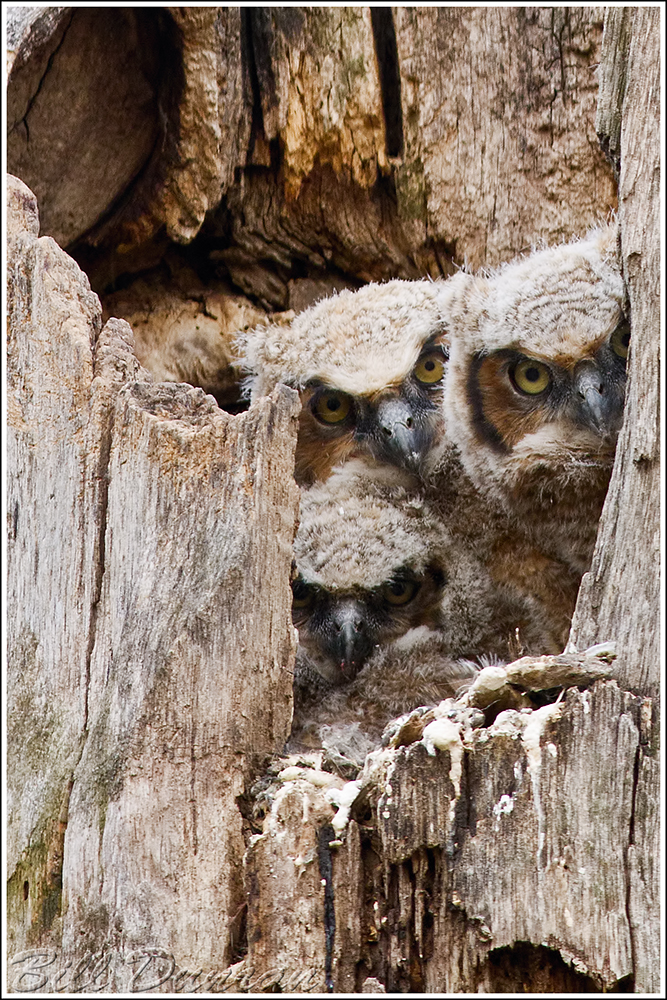
This image was taken of a GHOW nest this year that was located in a park not too far from my house.  The owlets have recently left the nest, but will be dependent on mom until near the end of this summer.  This pair of “Cat-Owls” have used this cavity in this snag for their nest site for at least the past three years.  I will be sharing more images taken from the nest over the next week or so.

IMG_1653

“Three Owlets”
Technical details: Canon EOS 7D camera, EF500mm f/4.5L USM lens, ISO 640,  f/6.3, 1/160 sec

Mondays are for the Birds – Red-tailed Hawk

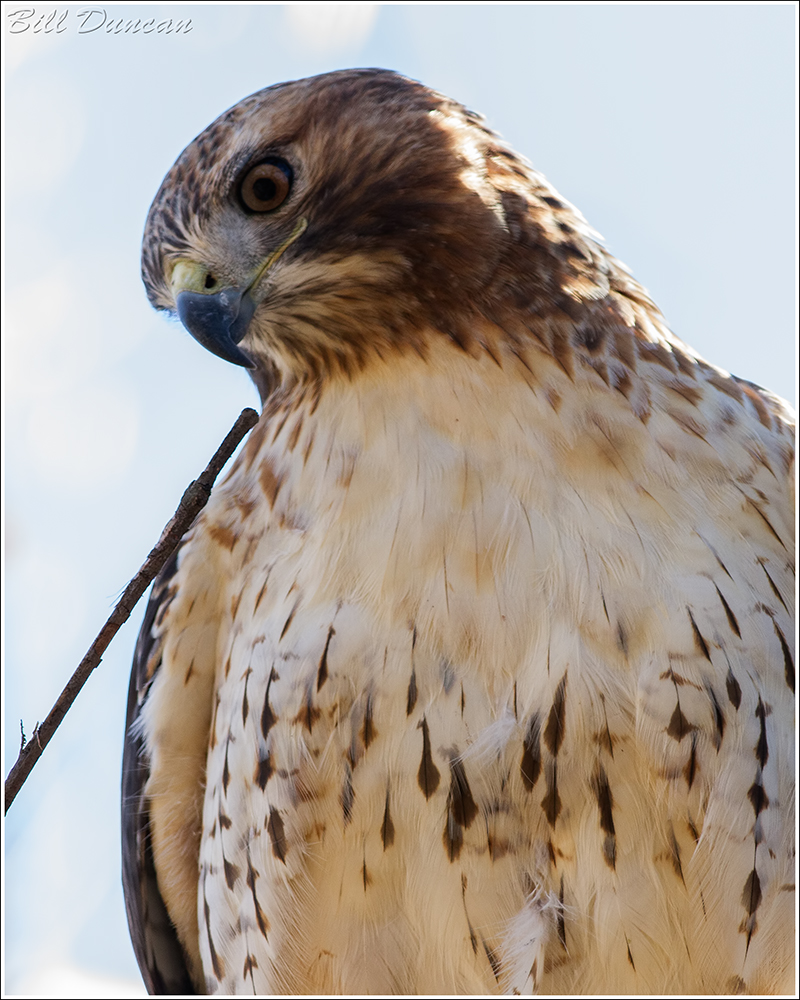
Today’s photo is one of the Red-tailed Hawks that make a home in St. Louis’ Carondelet Park.  This is indeed, a wild bird.  Of course Sarah was with me on a Sunday when we arrived here looking to photograph some of the Crossbills that visited us this year.  While keeping my eyes peeled on the hemlocks for the Crossbills, I heard Sarah whisper, “Do yourself a favor and slowly look up”.  I did and found this hawk perched ~15″ from me!  Even once it discovered I was there it did not flush immediately but stayed and looked around a while.

Oh yeah, the MO chapter of The Nature Conservancy has prepared a slide show containing some of my bird photographs along with some pathetic creature.  Please feel free to have a look by clicking: Missouri Birds: Images From Bill Duncan

IMG_8175

“Happy Birds!”

Technical details: Canon EOS 7D camera, EF500mm f/4.5L USM lens, ISO 640,  f/5.6, 1/320 sec

“It is delightful to observe the assembling of these feathered people from the woods and reedy isles; herons white as wave tops, or blue as the sky, winnowing the warm air on wide quite wing; pelicans coming with baskets to fill, and the multitude of smaller sailers of the air, swift as swallows, gracefully taking their places at Nature’s family table for their daily bread.  Happy birds!”

-John Muir-