Eastern Gamma Grass

Eastern Gamma Grass
Eastern Gama Grass

Today I am sharing a few photos of Eastern Gama Grass (Tripsacum dactyloides), an interesting plant that grows in abundance at Shaw Nature Reserve.  This warm-season grass has a C4 metabolism and can grow in a wide variety of habitats.  Due to its use as a forage crop, man has introduced this perennial plant across the Americas.  Gama Grass is a distant relative of maize, separating approximately 60,000 years ago.  The inflorescence of the plant can be seen above.  Whereas maize has its male and female flowers borne on separate spikes, Gama Grass carries its flowers on separate sections of the same terminal spikes.  You can see the exposed anthers towards the upper 75% of the spike, while the developing seed are located in the lighter green sections nearest the stem.  The photograph below shows a closeup of the exposed stigmas, waiting for the wind-borne pollen.
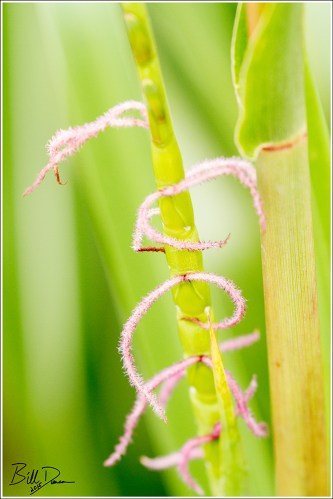
Gama Grass Stigma
Gama Grass Stigma

In the final image, you can see a grape vine using a Gama Grass spike for its support.

Architects
Architects

-OZB

A Few Skimmers

Blue Dasher Male
Blue Dasher Male

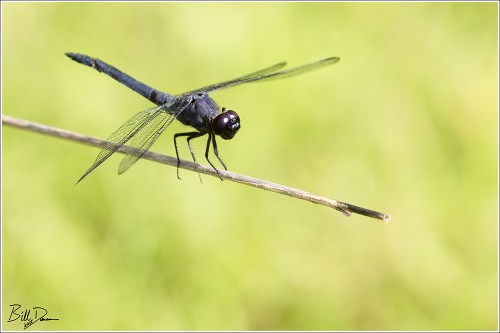
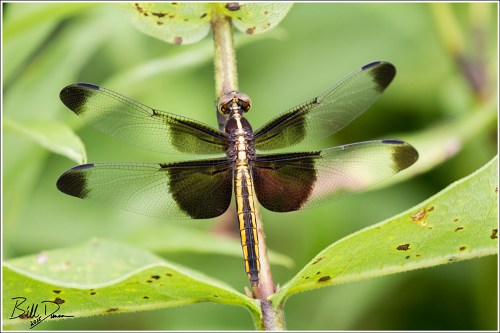
The skimmers (Family Libellulidae) are the largest family of the Odonata and contain some of the most widely known and conspicuous dragonflies.

Slaty Skimmer Male
Slaty Skimmer Male

Much like a flycatcher within the world of birds, the skimmers typically sit and wait on a perch and fly to catch an insect.

Widow Skimmer Female

These photographs were taken at a small pond at Shaw Nature Reserve this summer.

Widow Skimmer Male
Widow Skimmer Male

-OZB

Announcing Art at the Shaw Nature Reserve Show & Sale 2015!

Poster

It is about that time of year.  I am again excited to announce that OZB will be presenting his work (~100 unique prints, specialty enlargements, calendars, greeting cards and more will be available) at Art at the Shaw Nature Reserve 10th Annual Show & Sale to be held the weekend of November 7th and 8th.  There will be more than 20 artists, providing art in a wide variety of mediums, including one particularly pathetic photographer… 😉   Here are directions to the show…

Map

I hope to see you there!

-OZB

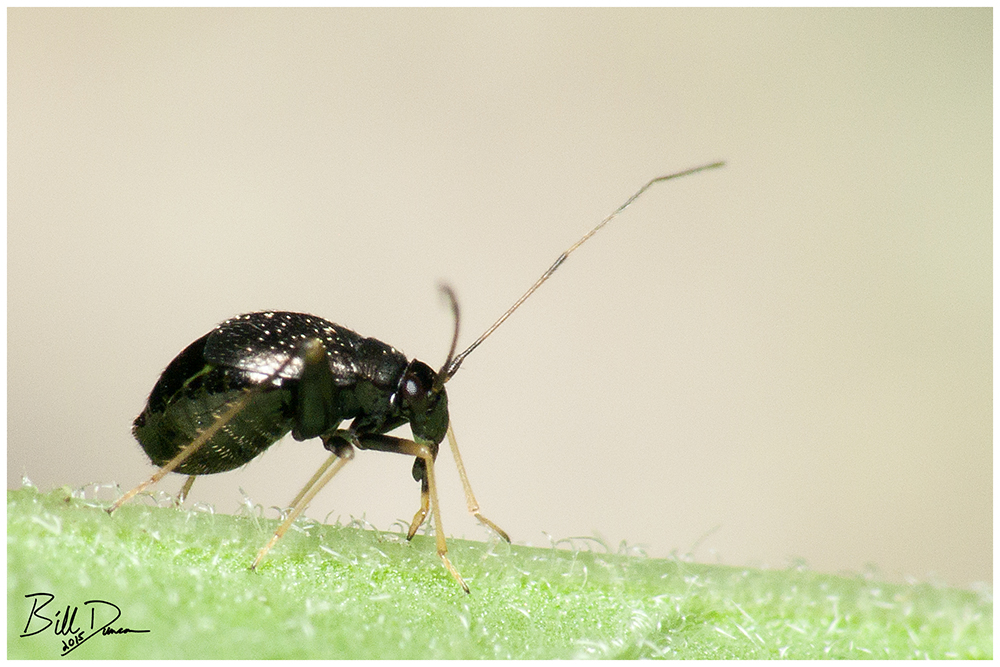
Garden Fleahopper

Garden Fleahopper
Garden Fleahopper

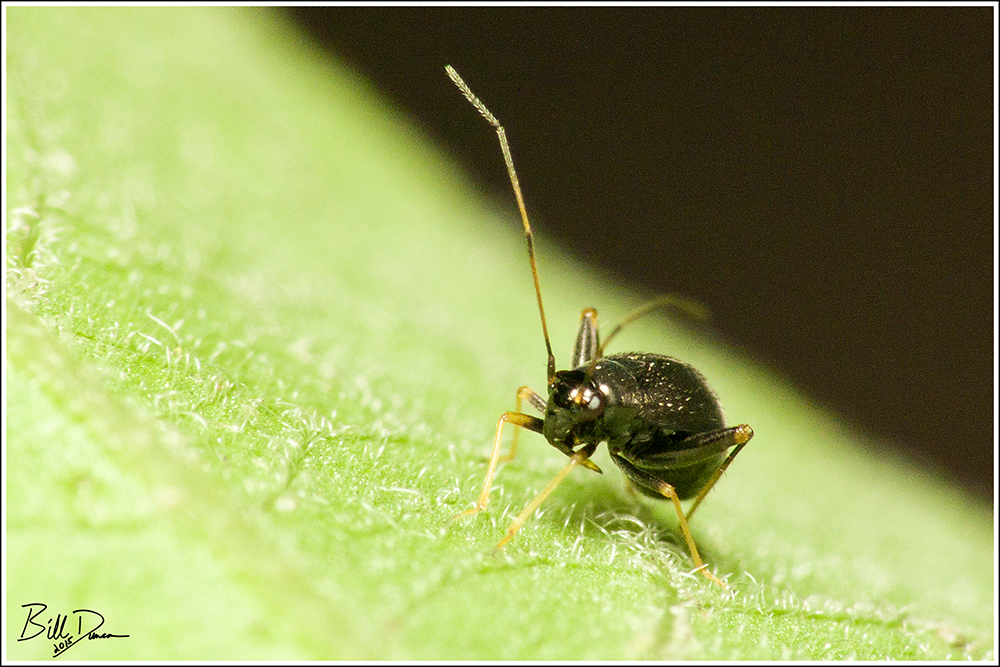
These tiny ones are ubiquitous in a number of habitats and host plants, reach 1-2 mm in length as adults and are pests to a number of agricultural crops.  This brachypterous (short-winged) female was photographed on a Maypop vine (Passiflora incarnata) at Shaw Nature Reserve in the northern Ozarks of Missouri.

Garden Fleahopper
Garden Fleahopper

American Goldfinch

American Goldfinch
American Goldfinch

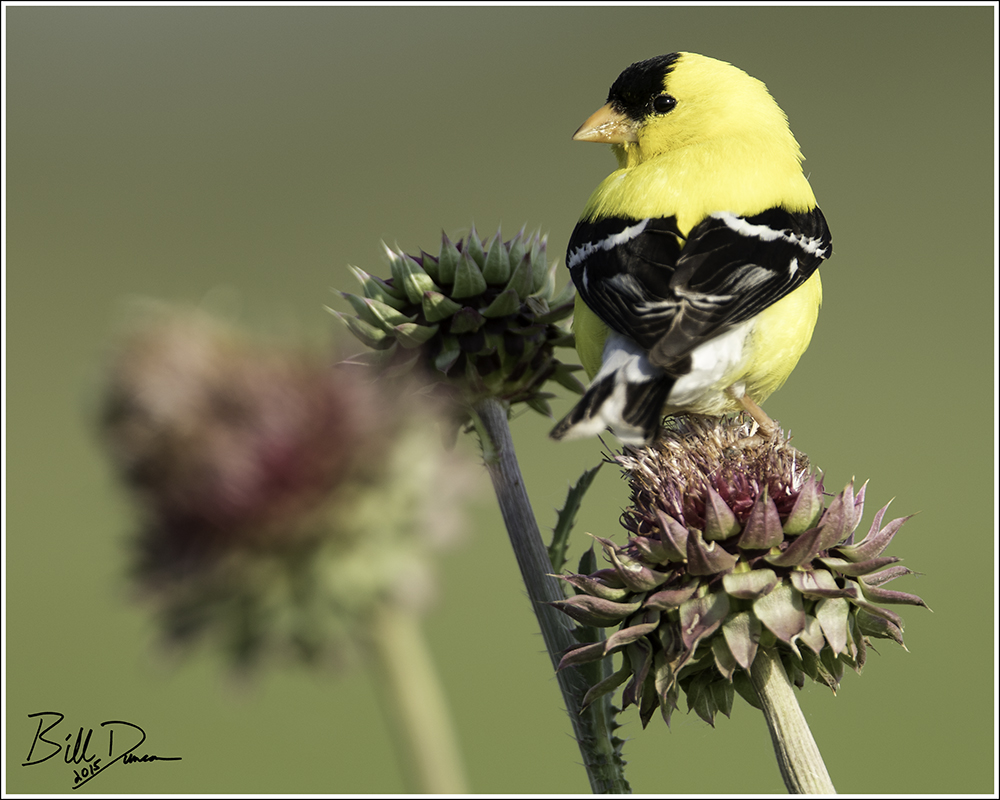
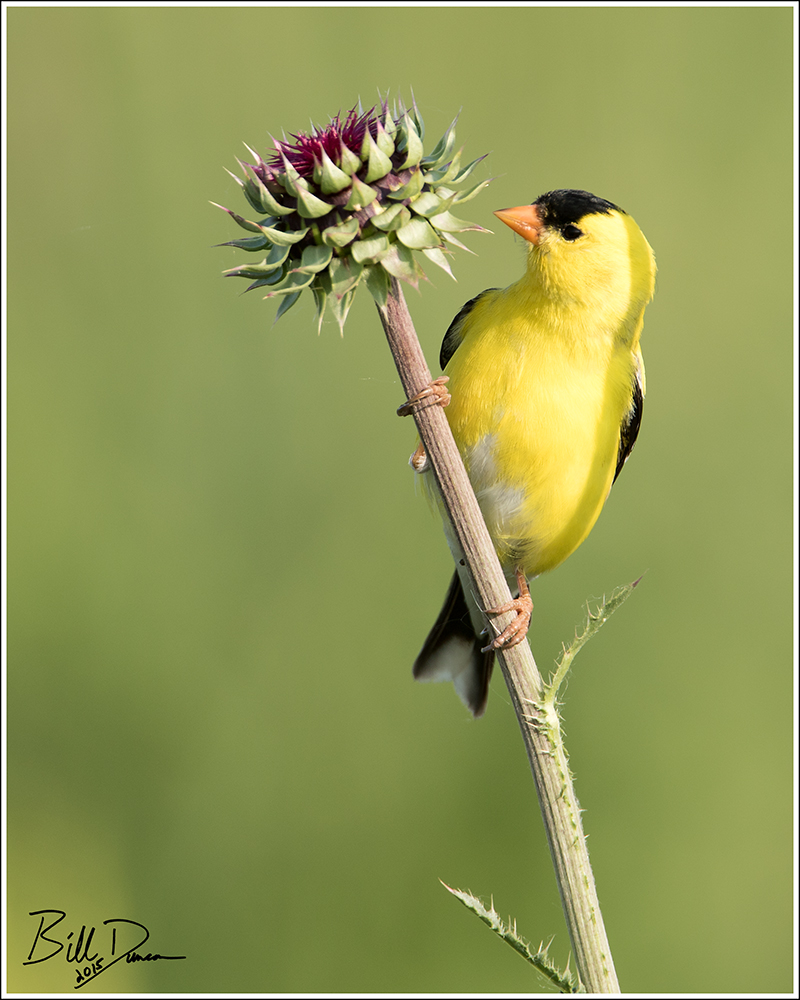
The Goldfinch have really taken a liking to the Silphium in my garden this year.  Every time I’m out there I observe at least a couple picking the seeds.  The two images of this post show them with their more famous plant source, the thistle, taken this summer at RMBS.

American Goldfinch
American Goldfinch

-OZB

Monarch Eclosion

I finally found a monarch caterpillar on one of my plants after a 3-4 year absence.  Knowing the poor success rate when I had them in the yard in previous years, I decided to try my hand at rearing this one inside.  I read a little on proper practices online and had received some advice from someone I work with (thanks Tim!) and watched as the little one put on the weight at the expense of my common milkweed I harvested from the garden.  Unfortunately the idea for a time lapse project came too late and .  I wasn’t prepared and wasn’t knowledgeable enough about the metamorphosis process.  I tried my best.  I made several mistakes and will hopefully remember these next time.  I also had a couple of equipment failures that caused me to miss a couple of gaps many hours in length.  Tim and his family have successfully reared and released a good number of monarchs this year and tag them for hopeful data points on the migratory routes (just like in birds).  He had an extra tag and I tagged the little female prior to her release.  Hopefully she will make it the ~1800 miles from central Missouri to central Mexico where she will overwinter before heading back north again next spring.

Even with the problems, I kind of like the outcome.  I can’t wait to try again… 😉

You Can Take the Pec Out of the Tundra…

Pectoral Sandpiper
Pectoral Sandpiper

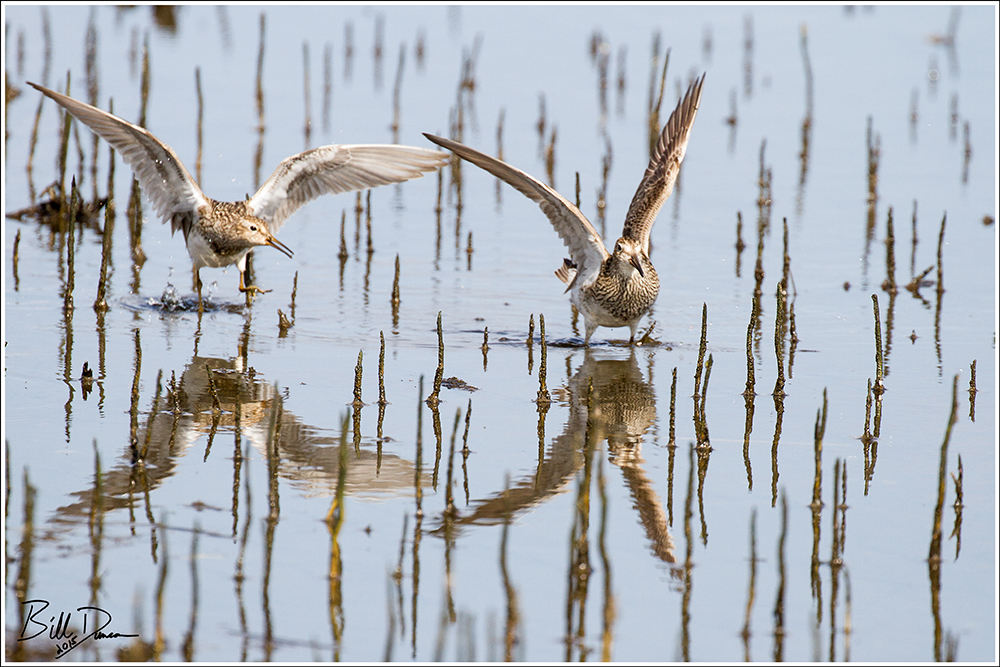
But you can’t take the tundra out of the Pec.

Pectoral Sandpipers
FIGHT!!

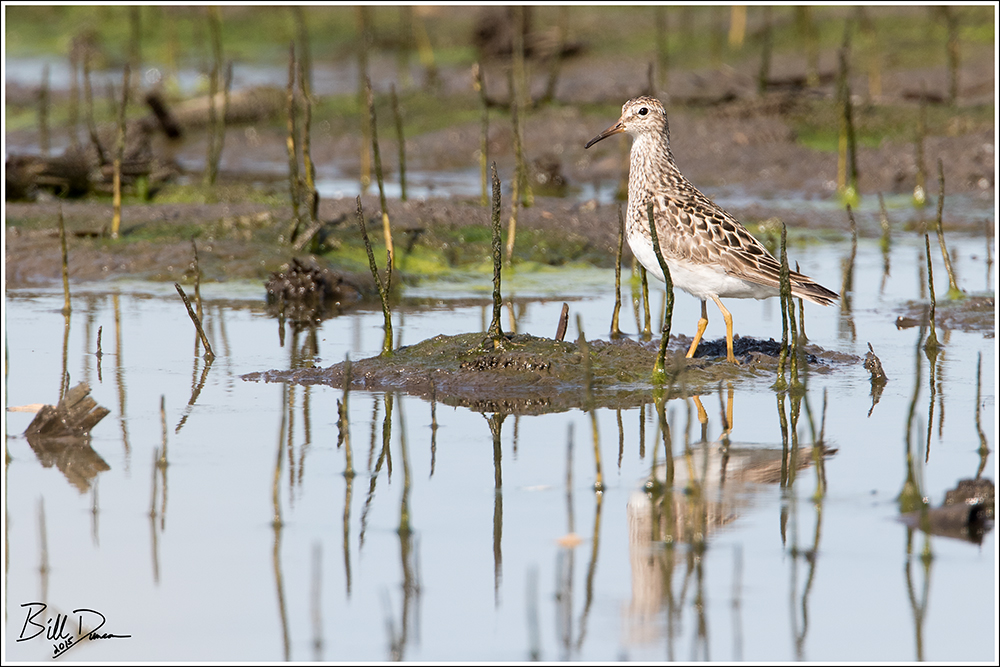
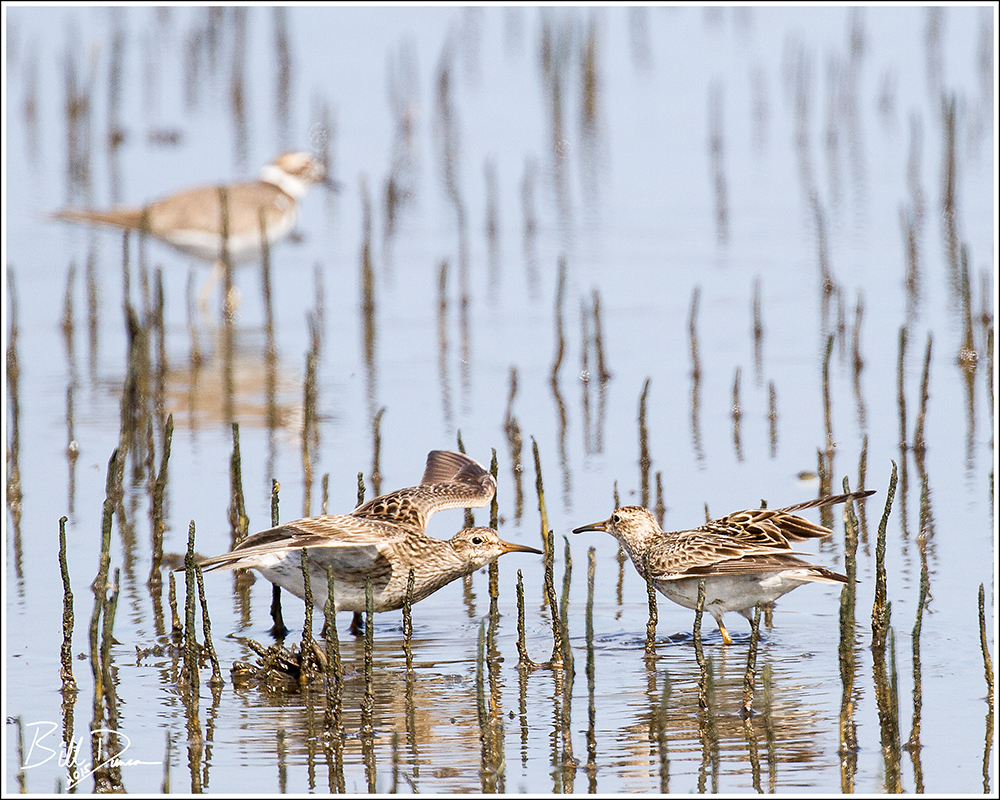
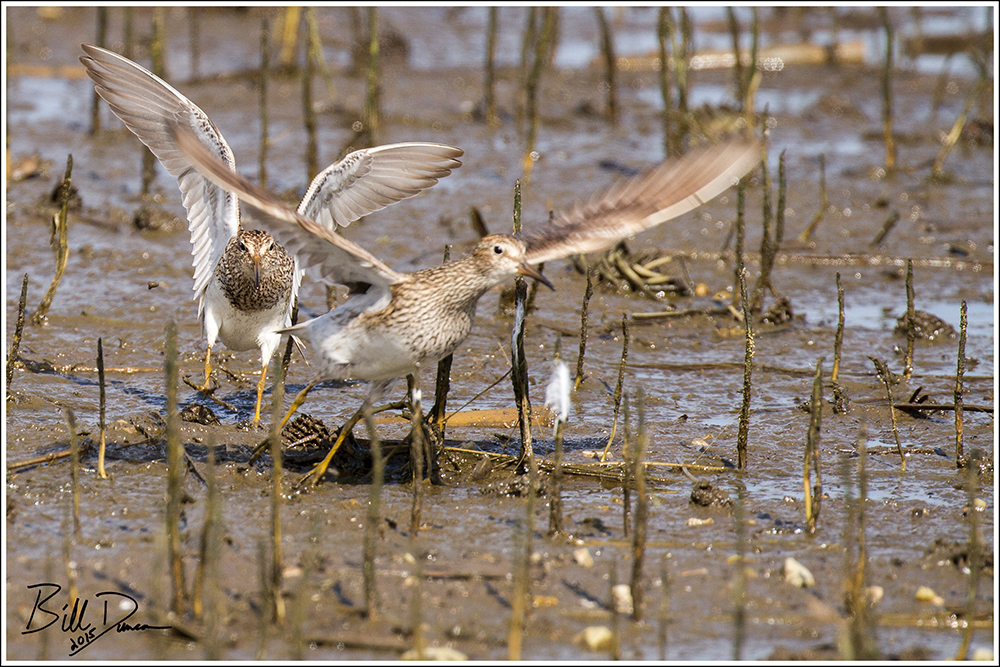
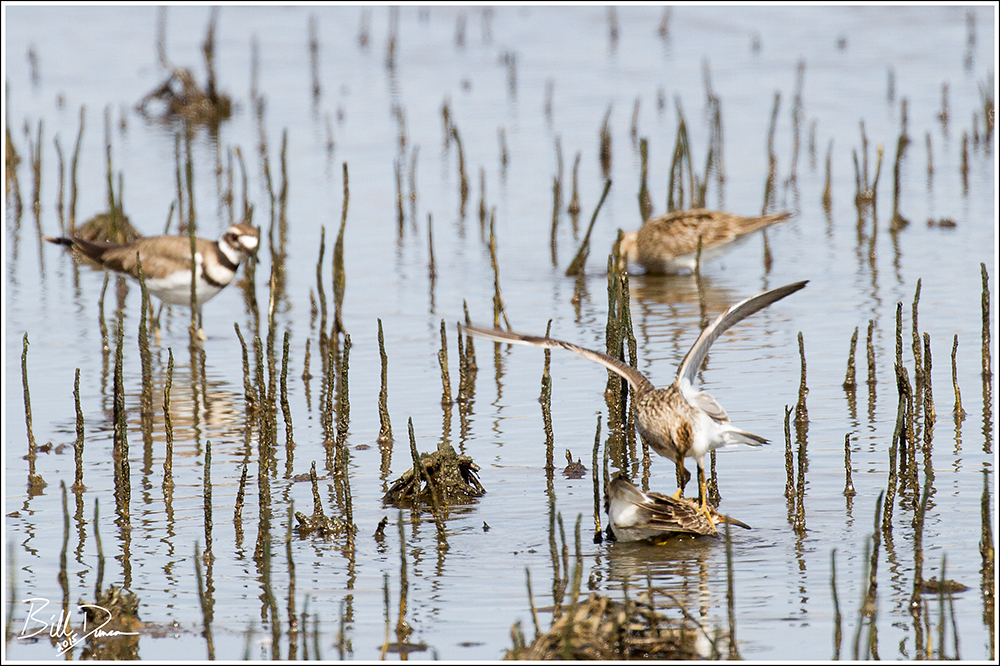
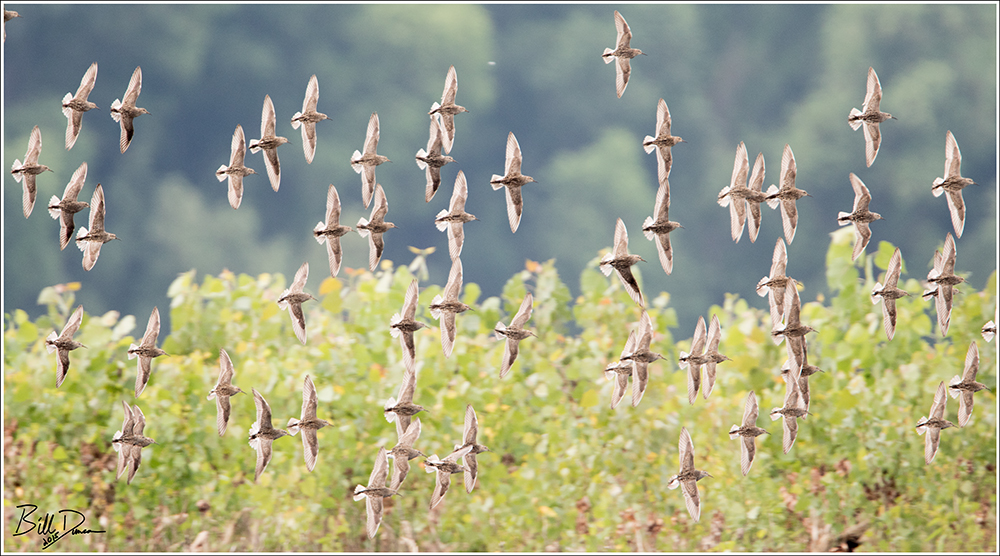
On the first day of August I found myself sitting next to one of the larger field puddles in the RMBS area watching the groups of migrating Pectoral Sandpipers.  These guys were probably less than a week or two outside of their nesting grounds on the arctic tundra and their hormones were still raging.  I was pretty surprised by their level of territoriality on their migratory route.  Maybe this is how they behave year-round, but I have not been able to confirm this in any source I can find.

The Chase is On
The Chase is On!!
The Chase Continues
The Chase Continues!!
Pectoral Pounce!!
Pectoral Pounce!!
A Peck of Pecs
A Peck of Pecs