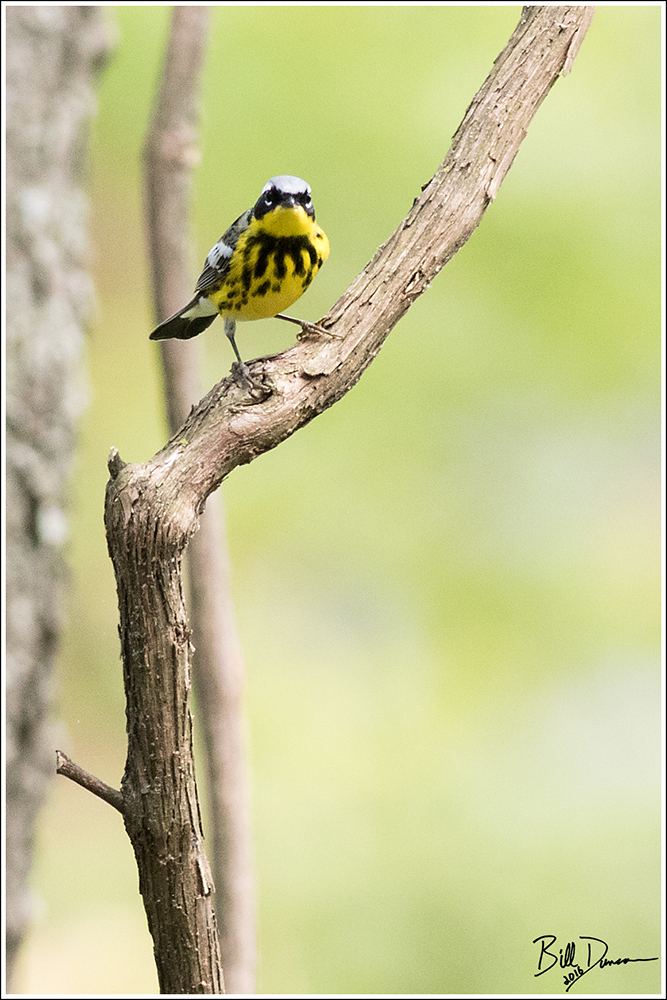
Species #282 – Veery

Veery, Tower Grove Park, St. Louis Missouri

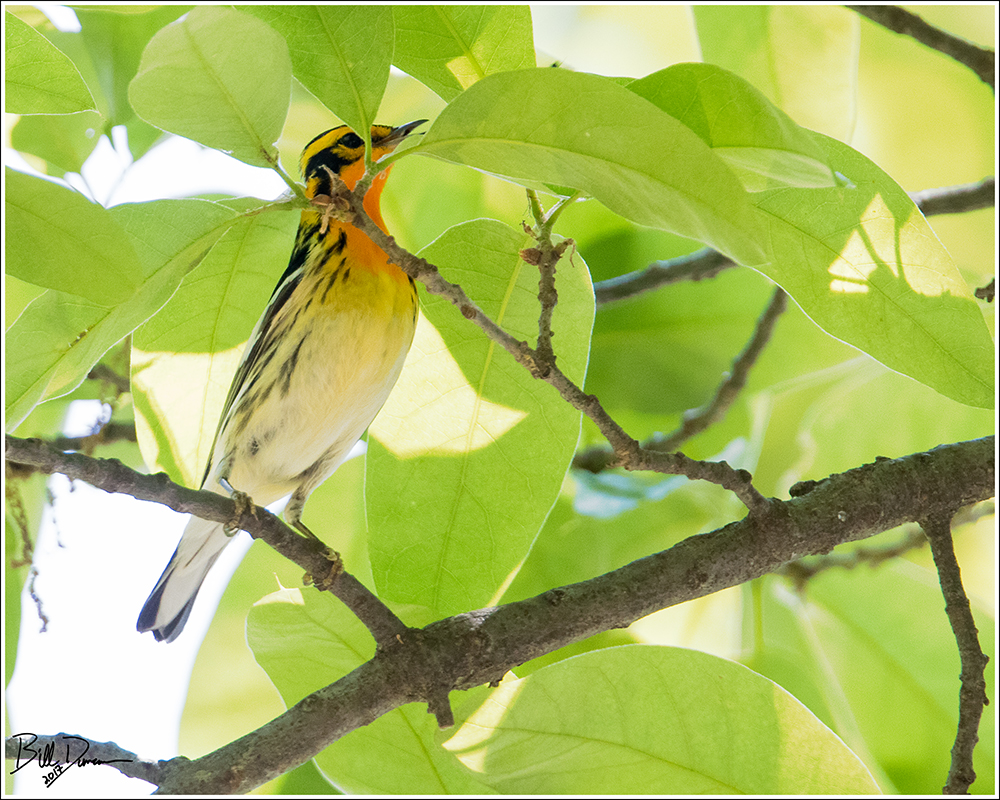
Miguel Acosta and I decided, along with many other birders and bird photographers, to head to Tower Grove Park to check out the latest migrant action.  Although the migrant songbirds were overall pretty disappointing, the morning was surely not a bust for me as I was able to photograph my 282nd species in Missouri and contiguous states – the Veery.

Veer!

This guy’s polyphonic vocalizations have been among my favorite of bird songs for a long time.  On the rare occasion these guys sound off during migration, the songs come from a deep thicket and I rarely get to lay eyes on the songster.  The beauty of migrant traps like Tower Grove and Carondelet Park in the heart of the city is being able to get great looks at these northern nesters.

Veery

-OZB

Pollinators of Spicebush

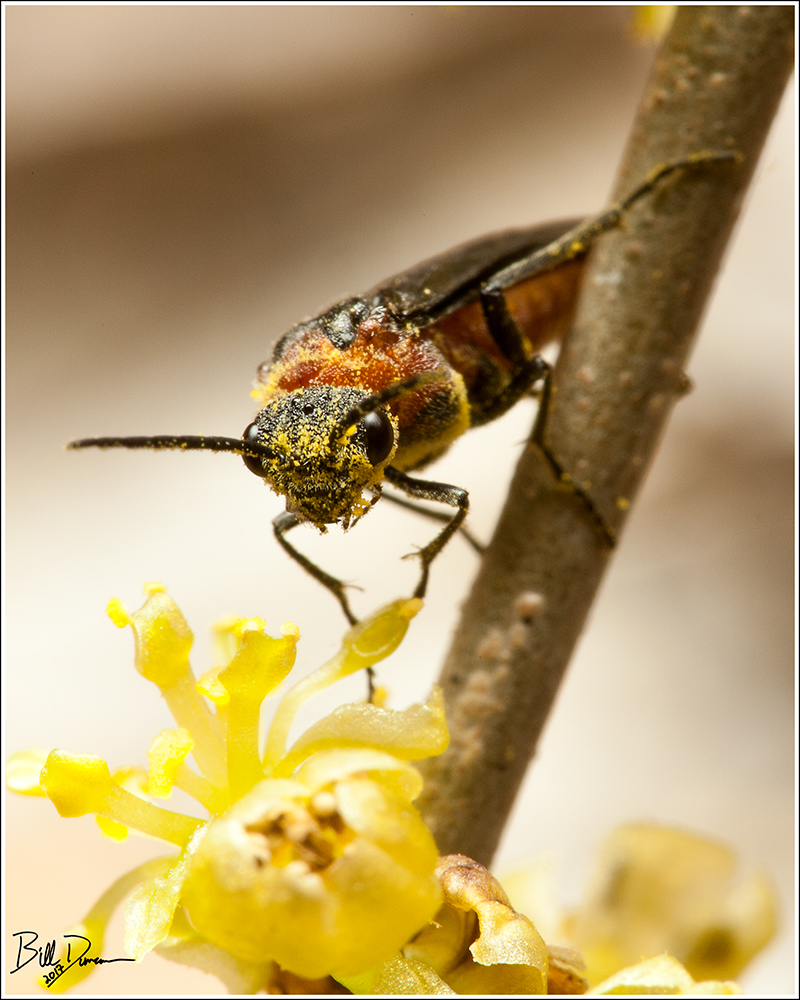
Sawfly – Tenthredinidae – Dolerus neoagcistus

With some extra nature time last week, I hit the trails at Shaw Nature Reserve hoping to get some shots of Claytonia virginica (spring beauty) being visited by its pollinators – particularly the small solitary Halactid bees.  The problem I had on this day is that these bees don’t typically like to be very active on cloudy, grey days.  There were a few flies visiting the spring ephemerals, but they were much to flighty to bother with.  So, I decided to give some attention to the Lindera benzoin (spicebush) that were blooming in abundance along the river bottom trails.  My goal then became to document the pollinators that visit this early-blooming bush.

Sawfly – Tenthredinidae – Dolerus neoagcistus

One of the more obvious of these pollinators that I found was this sawfly.  This is my best guess on identification.  This sawfly was quite small and by the looks of it, is quite an efficient pollinator.

Sawfly – Tenthredinidae – Dolerus neoagcistus

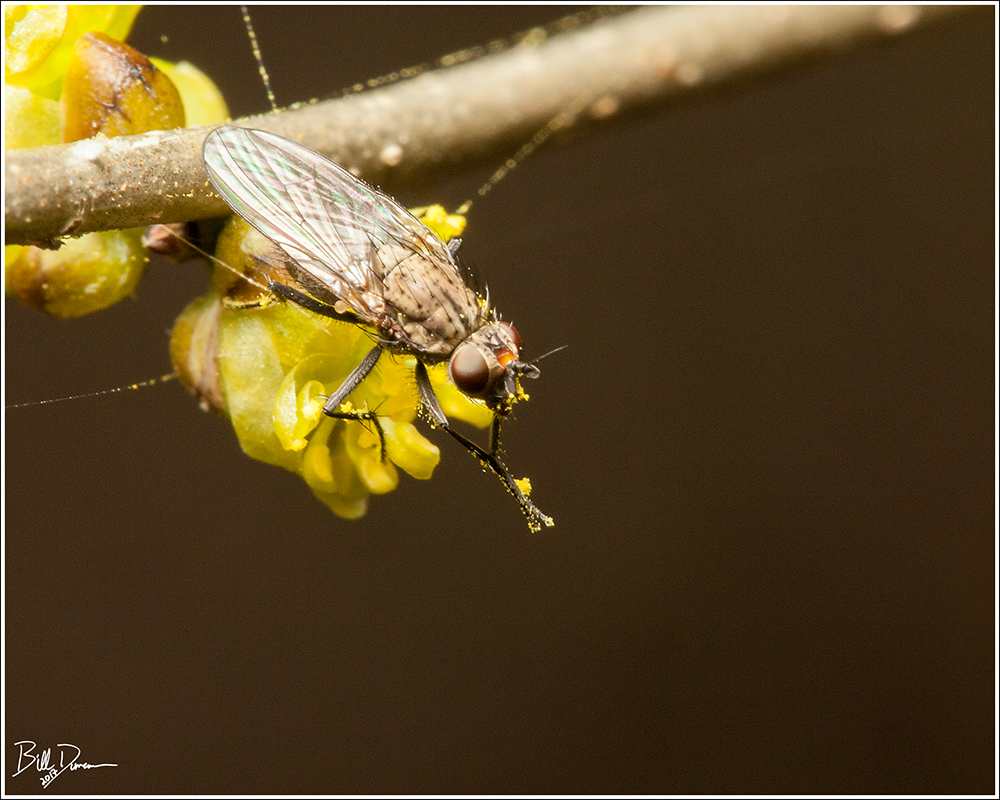
Probably the most abundant pollinator I came across were these Tachinid flies (again, flies are difficult and I could be wrong).

Tachinid Fly?

The hair-like setae that probably serve to aid the fly in responding to changing air pressures also serve as nice holders to move pollen from flower to flower.

Tachinid Fly?

I also found a number of multicolored asian lady beetles (Harmonia axyridis).  Typically predators of aphids, these beetles are also known to feed on pollen.  This is what I figure was going on in the image below.  Since there are probably few aphids to be found during the early spring, with few leaves being available, pollen is the next best protein source.  I suppose there could be aphids to be found hiding within the flowers, but did not inspect closely enough.

Multicolored Asian Lady Beetle – Coccinellidae – Harmonia axyridis

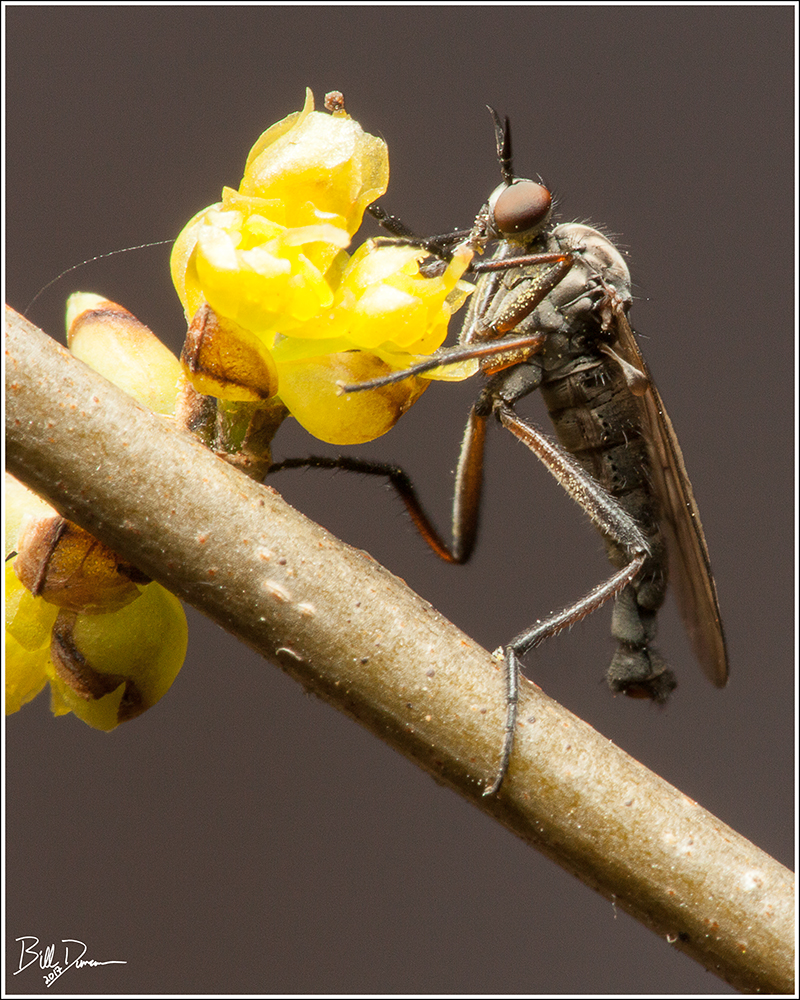
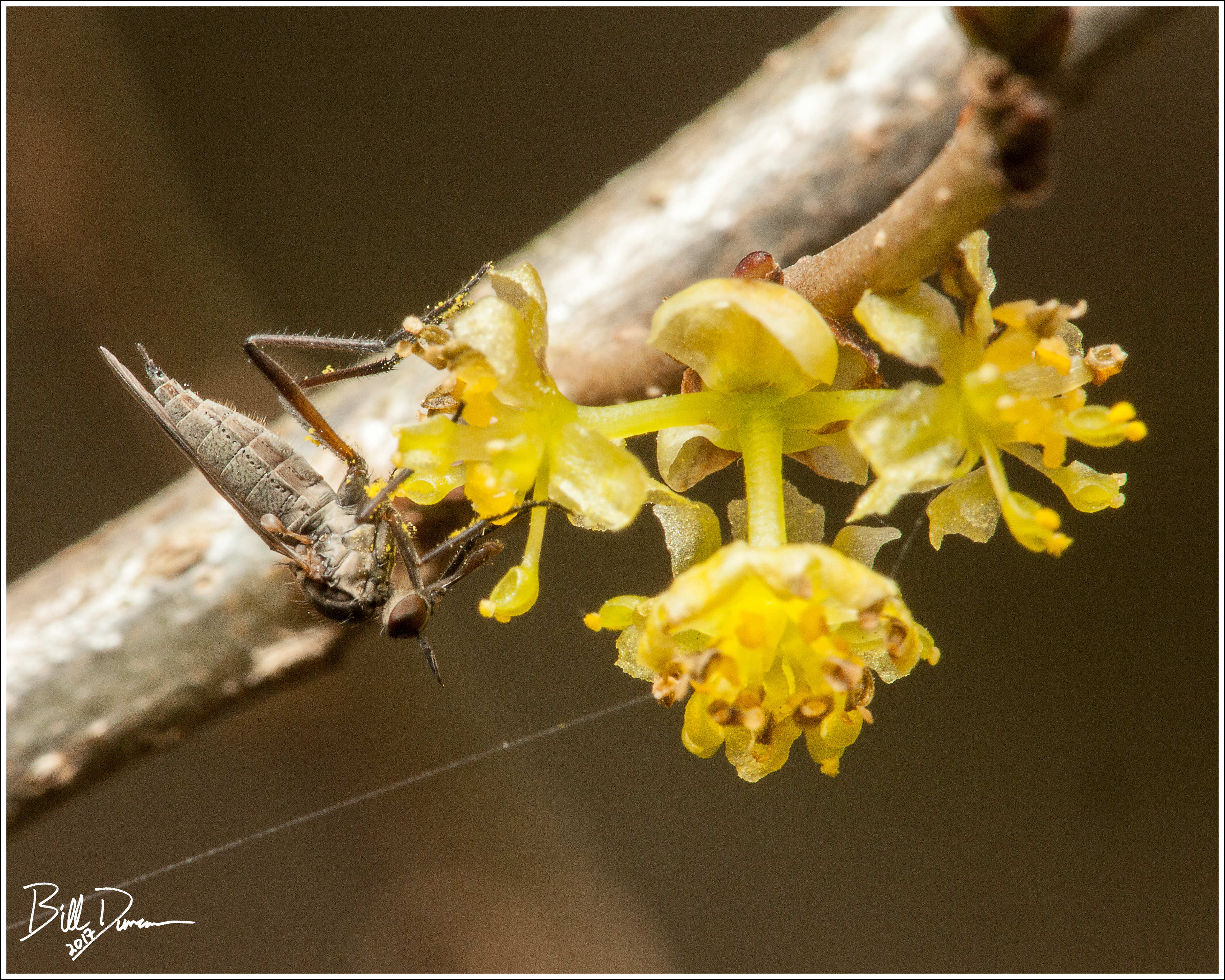
Probably my favorite find of the day were several flies of the family Empididae.  These are fascinating flies that are primarily predatory, but a few taxa will visit flowers to feed on nectar or pollen.

Dagger fly – Empididae – Empis or Hilara genus

Within this family are at least a few where the females will not hunt themselves, instead relying on a “nuptial gift” of a prey item from a male.  Males of some species will wrap their gift in a silk wrapper.  In these taxa the sex roles will often be reversed – the females courting the males to get these gifts and the opportunity to mate.  In at least one species, the females will inflate themselves grossly with air to give herself the appearance of being bound with eggs and fecund, to trick the male into thinking she is a prime candidate to provide his gift and have the opportunity to mate with.

Dagger fly – Empididae – Empis or Hilara genus

At least one species has taken this system a step further.  The males no longer provide a prey wrapped in its decorative covering, but simply provide the silken covering, or balloon, giving them the name “balloon flies”.  The photo below provides a good look at the dagger-like moth parts that give these guys another of their common names.  Another overlooked beneficial fly.  Not only do these guys prey on mosquitoes and other potential pest insect species, but their larvae are also predatory, feeding on insects in the soil and leaf litter.

Dagger fly – Empididae – Empis or Hilara genus

I’ll leave you with one final image.  This one isn’t a pollinator of the spicebush, but potentially feeds on its leaves in summer.  What I believe this to be is a (Camptonotus carolinensis) Carolina leaf roller that was parasitized by one of the “zombie fungi”, potentially Cordyceps sometime last summer or early fall.  This poor cricket was infected with this fungi that took control of its “mind”, forcing it it to climb high up on a branch of the spicebush.  Once there, the fungi used the cricket’s resources to fruit and spread its spores from this higher location in order to reinfect others.

Zombie Cricket

Until next time…
-OZB


How I Spent Superb Owl Sunday

For the first time since junior high I did not watch a single down or minute of the NFL this season and I couldn’t be happier for it.  Rape my town three times, NFL – shame on you.  I’ve been pleased to get those precious free minutes back for my Sundays, several of which I found I could spend not dreading the upcoming workweek.

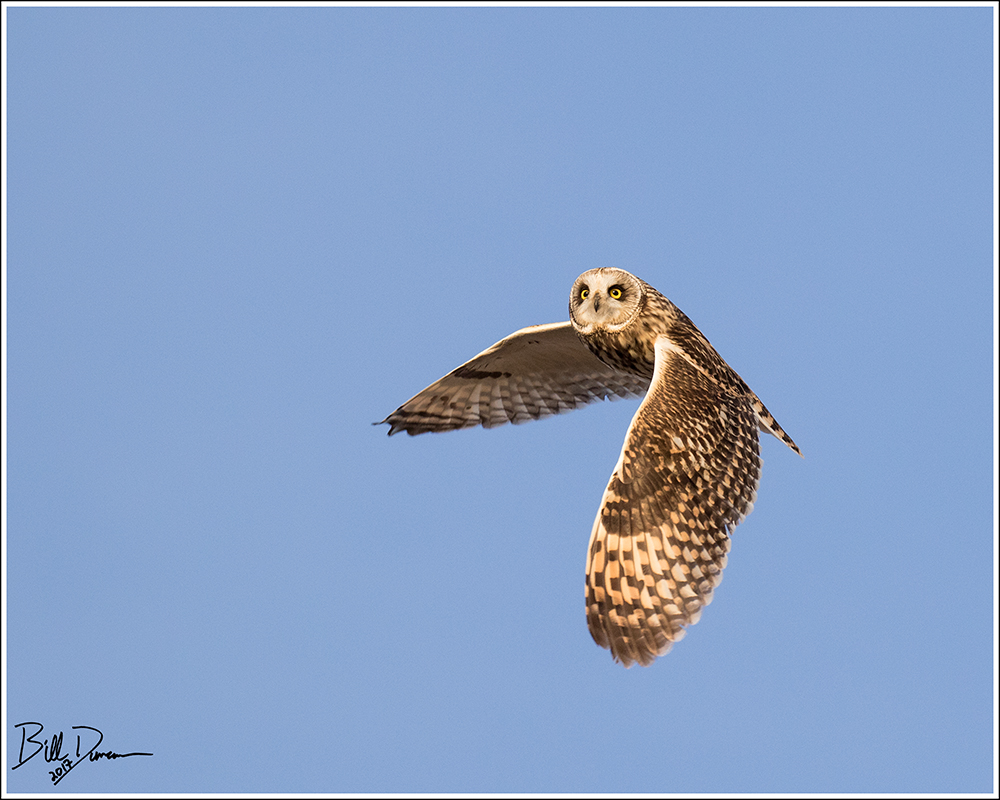
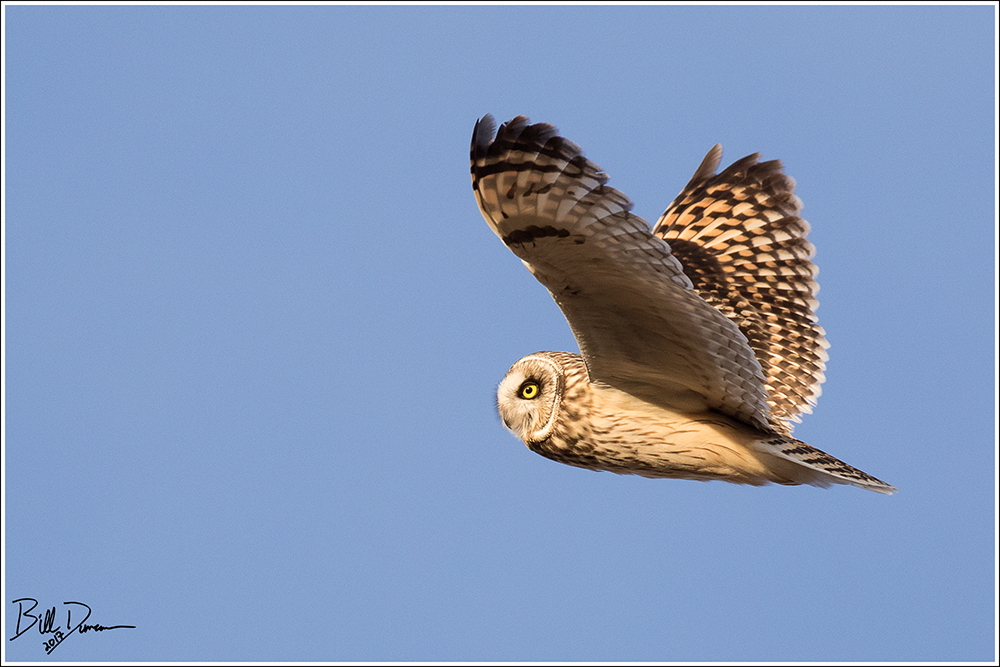
Short-eared Owl
Short-eared Owl

When the forecast showed a near perfect meteorological condition for shooting the Short-eared Owls of BK Leach, I figured this could be promising.  While most other naked apes with functioning vision would be in front of the picture box and ingesting mass quantities of wings and beer, I would enjoy the warm and lightly breezy evening in my own kind of chair with friends of a different sort.

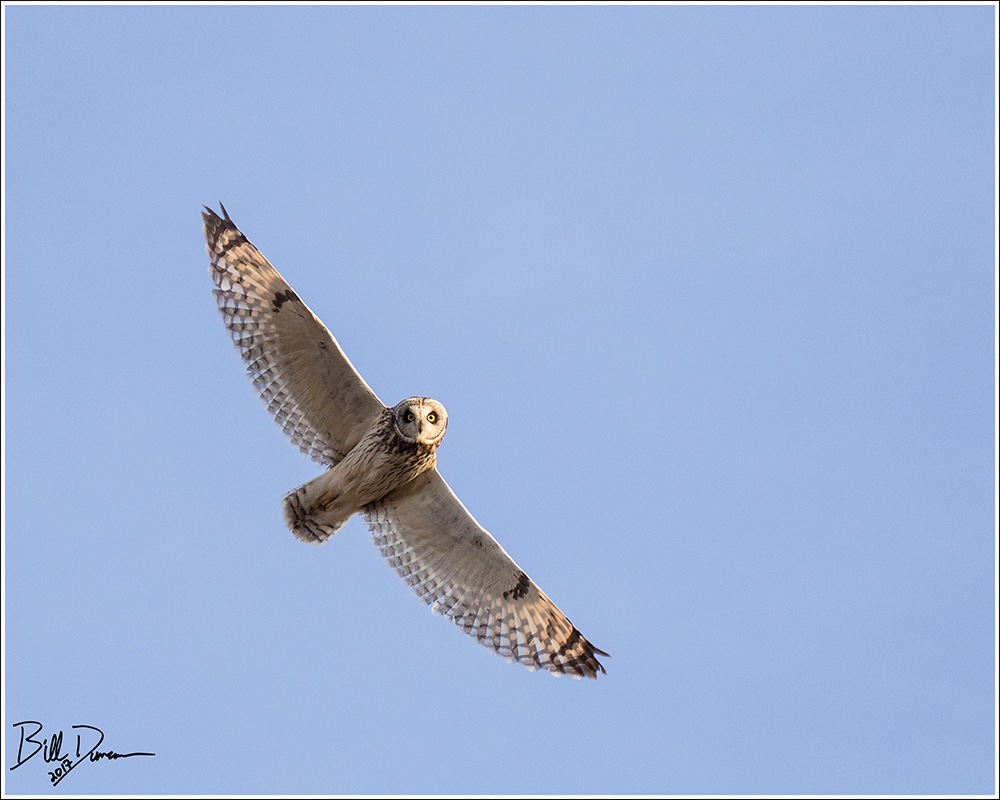
Short-eared Owl
Short-eared Owl

Of course there is never a sure thing.  Often, when I have expected the best due to light and temperature, the owls don’t show where I set myself.  On this particular day, all conditions came together and I had a super time.

Short-eared Owl
Short-eared Owl

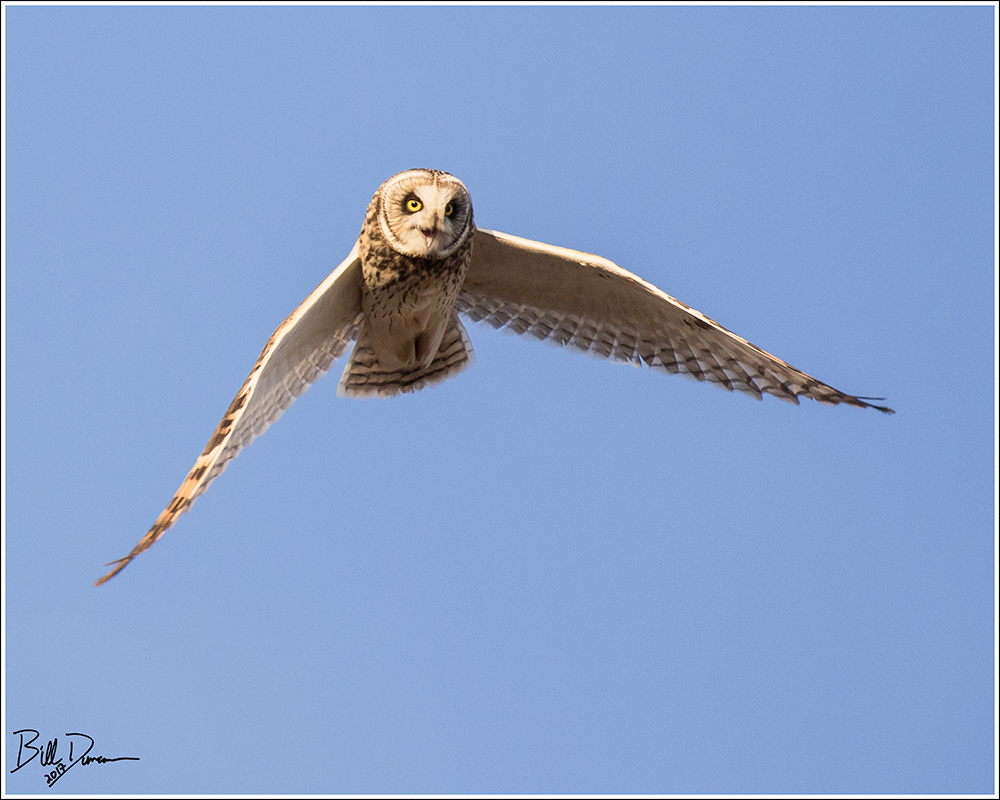
I want to give huge thanks for my lovely and talented wife, Sarah, for the special help she gave me this season in getting my best to date SEOW in flight shots.

Short-eared Owl
Short-eared Owl

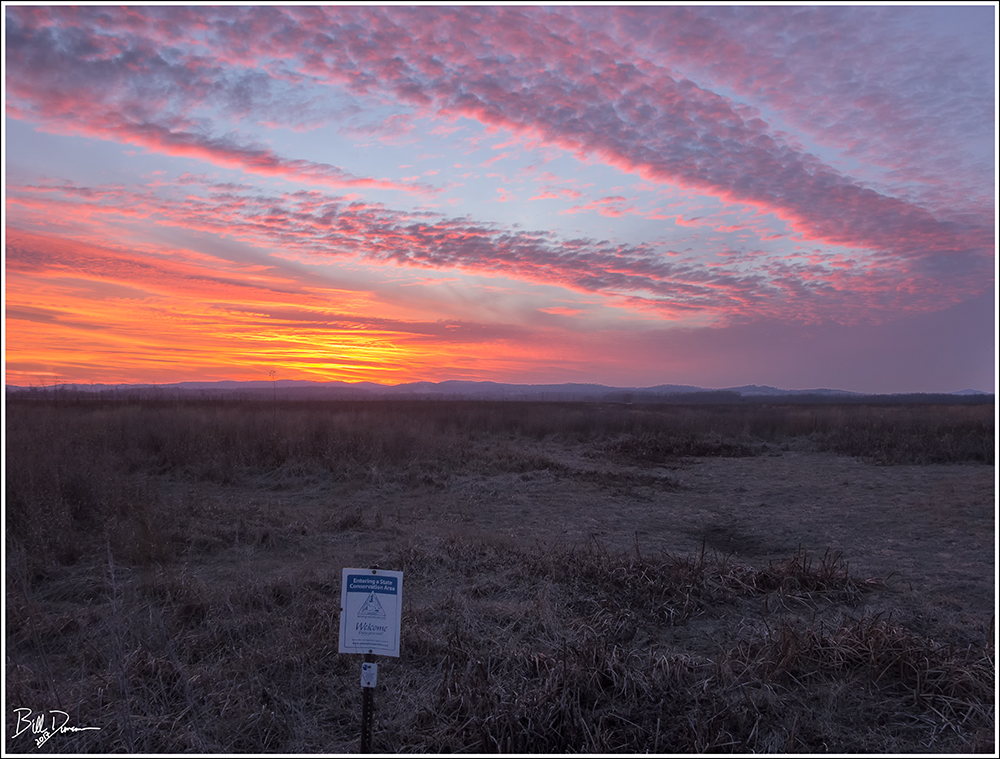
A perfect day ended in the perfect way – with a great sunset on the Lincoln Hills.

Sunset on the Lincoln Hills

Until next time…
-OZB

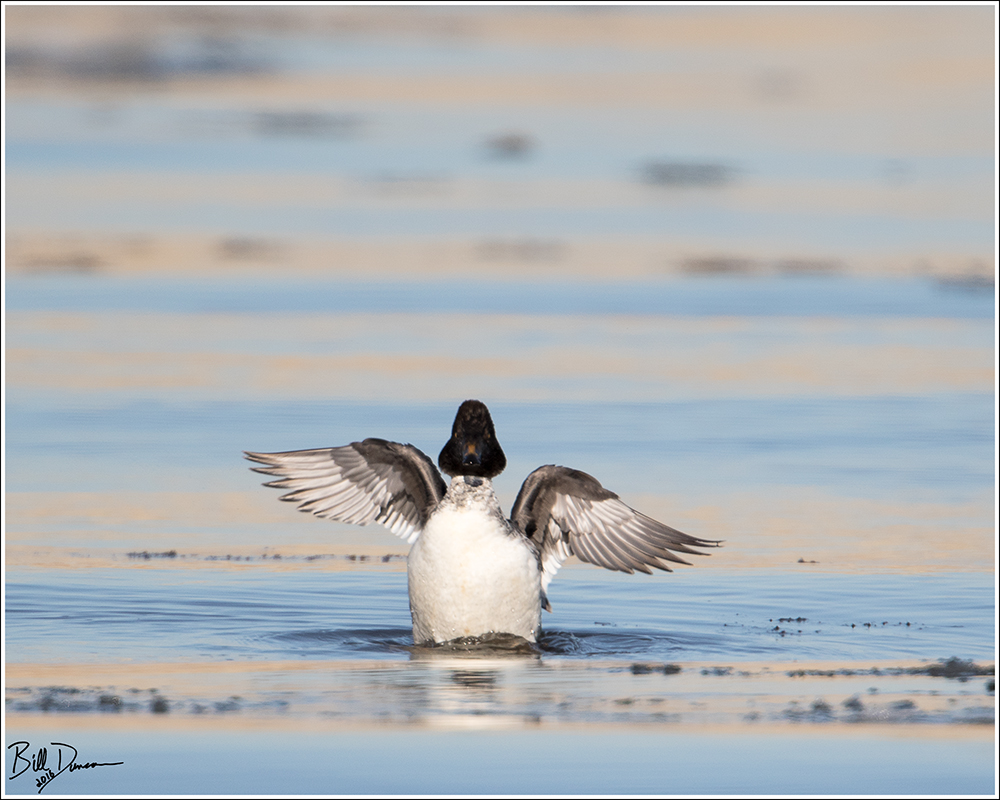
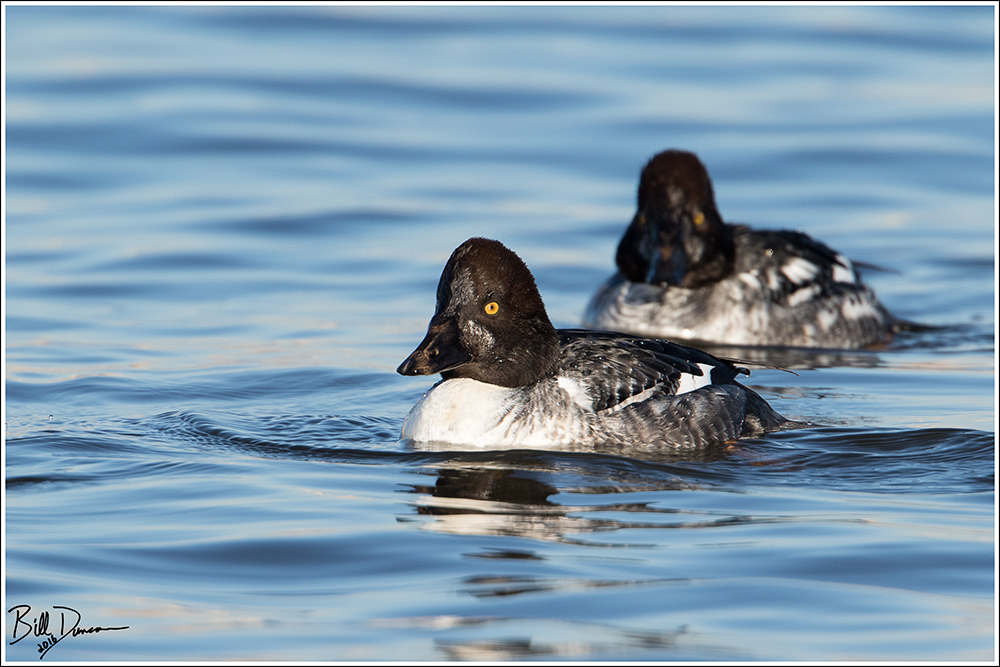
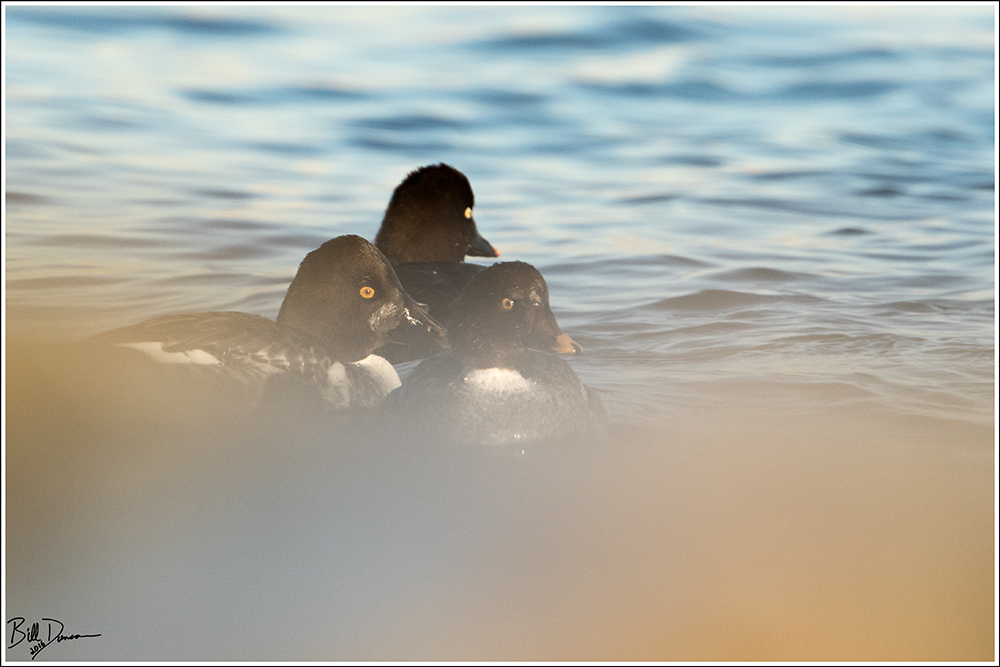
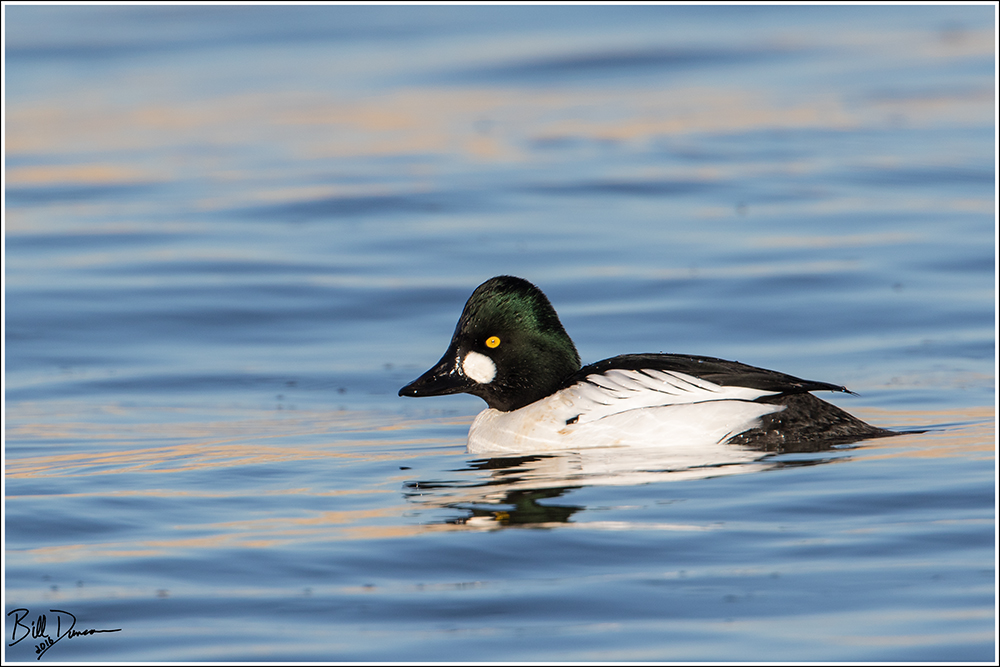
The Goldeneye

6a1a5708
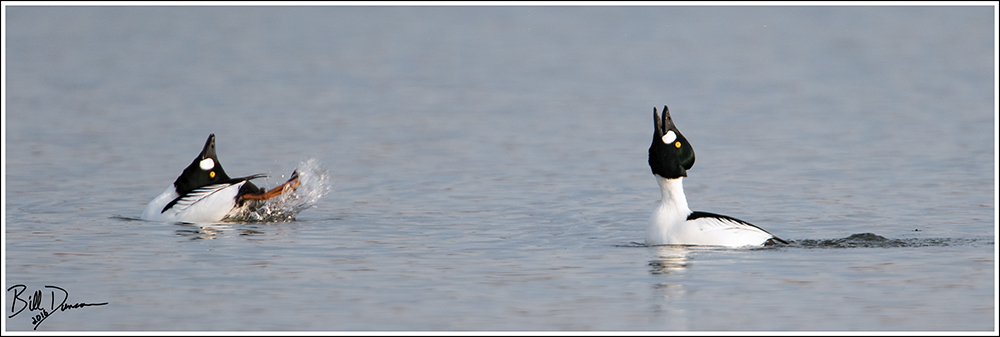
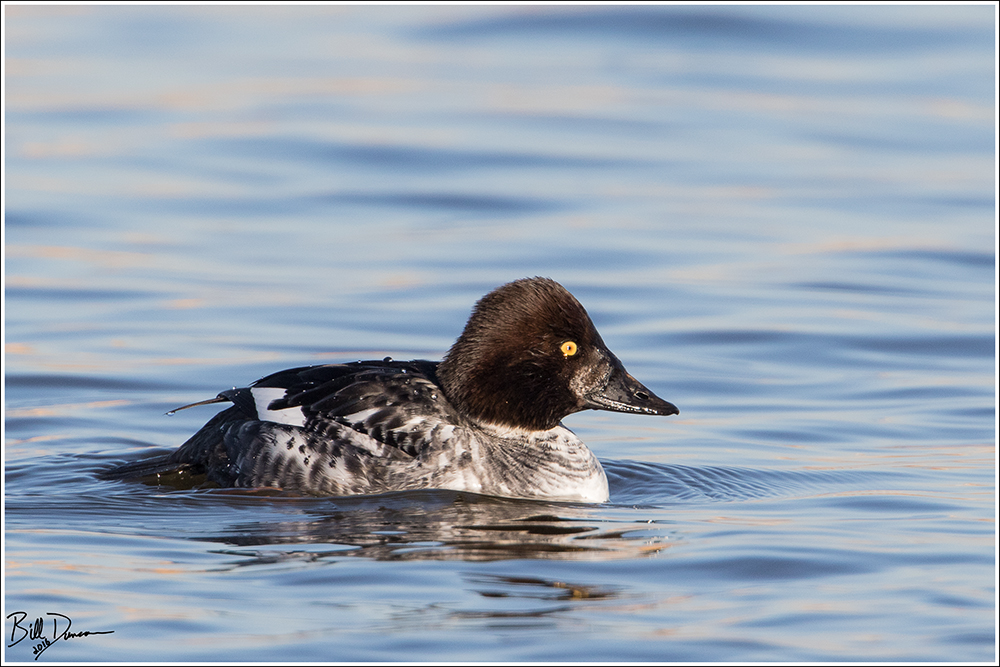
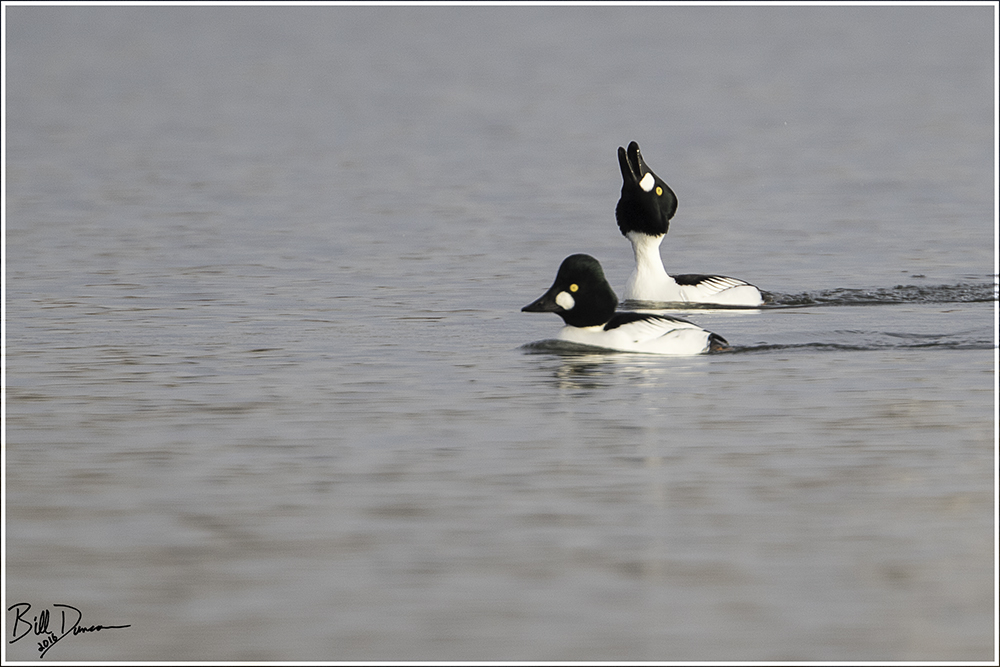
Common Goldeneye, Riverlands Migratory Bird Sanctuary, St. Charles County, MO

Just a few of my favorite Goldeneye shots from RMBS this season.

6a1a6687
Common Goldeneye, Riverlands Migratory Bird Sanctuary, St. Charles County, MO


6a1a6575
Common Goldeneye, Riverlands Migratory Bird Sanctuary, St. Charles County, MO


6a1a6754
Common Goldeneye, Riverlands Migratory Bird Sanctuary, St. Charles County, MO


6a1a6636
Common Goldeneye, Riverlands Migratory Bird Sanctuary, St. Charles County, MO


6a1a6824
Common Goldeneye, Riverlands Migratory Bird Sanctuary, St. Charles County, MO


6a1a6626
Common Goldeneye, Riverlands Migratory Bird Sanctuary, St. Charles County, MO

Until next time…
-OZB

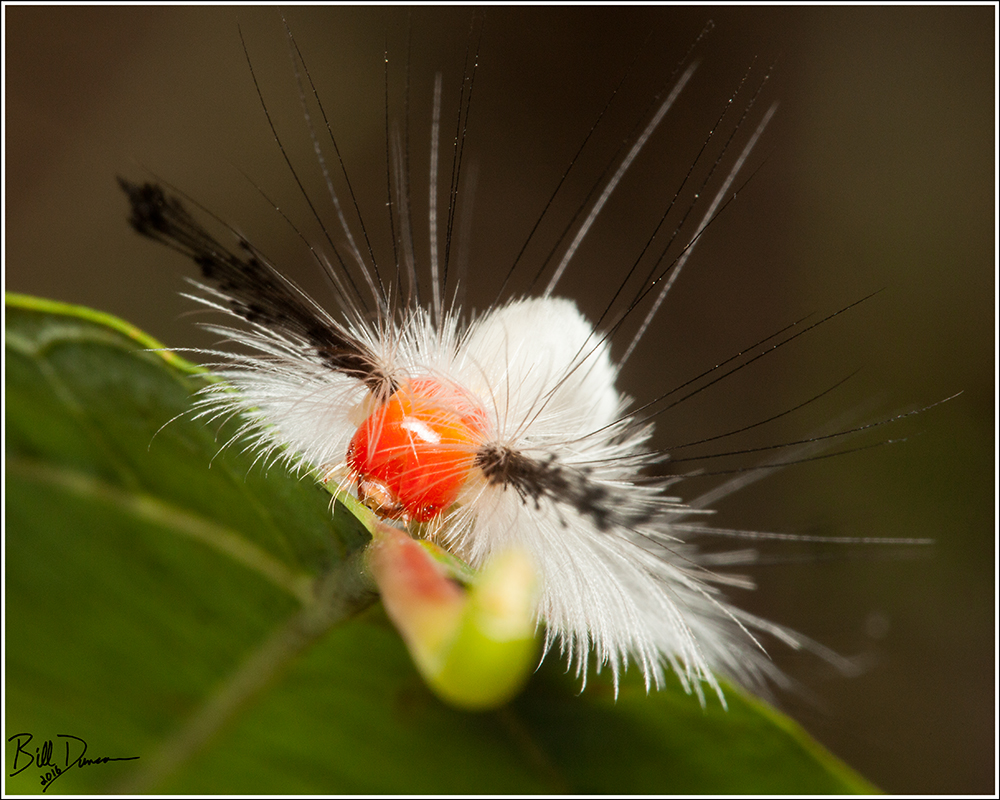
White-marked Tussock Moth

white-marked-tussock-moth-lymantriidae-orgyia-leucostigma-8316-img_8542
White-marked Tussock Moth, Ste. Genevieve County, MO

This gorgeous redhead is the White-marked Tussock Moth (Lymantriidae – Orgyia leucostigma – 8316).  I was amazed at how abundant they were and routinely found on the underside of leaves on woody plants this summer.  Most folks have never seen one!

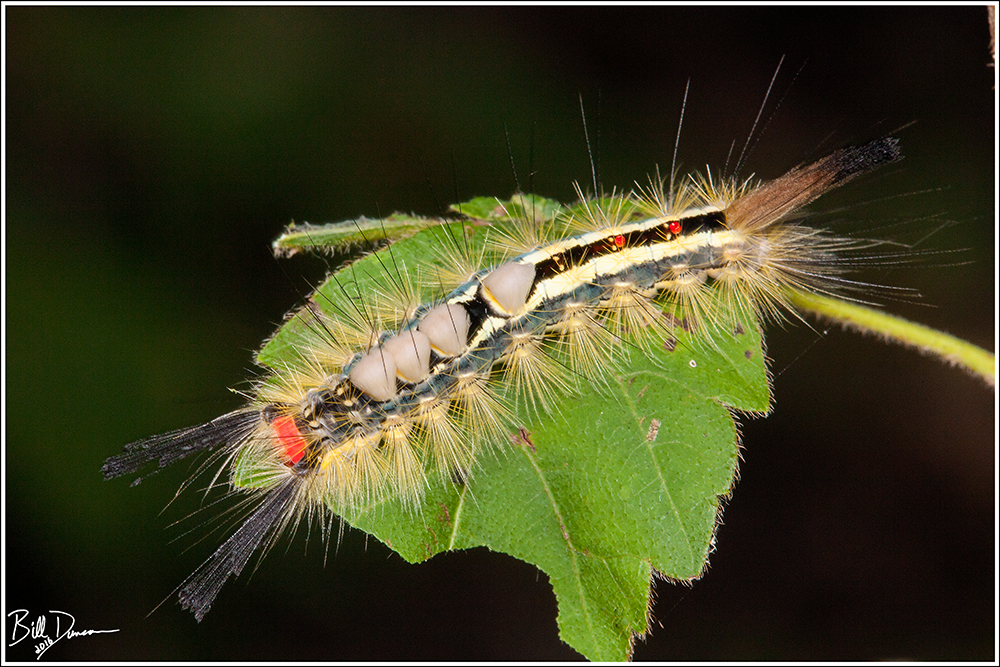
white-marked-tussock-moth-lymantriidae-orgyia-leucostigma-8316-img_8990
White-marked Tussock Moth, Cuivre River SP, Lincoln County, MO

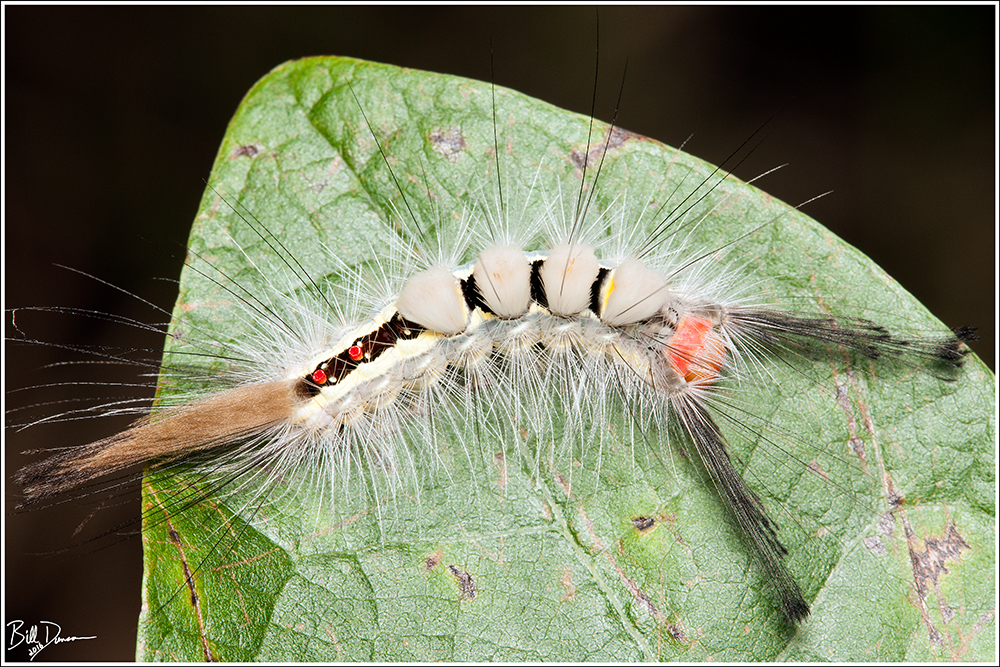
Besides their striking colors and patterns, these moths have toxin-filled hairs that can cause irritation, especially to areas of sensitive skin.  I have not yet photographed an adult, but I was interested to hear that the females of this species are nearly wingless and cannot fly.

white-marked-tussock-moth-lymantriidae-orgyia-leucostigma-8316-img_8532
White-marked Tussock Moth, Ste. Genevieve County, MO

Until next time…
-OZB

Location Spotlight – Little St. Francis River Pinnacles

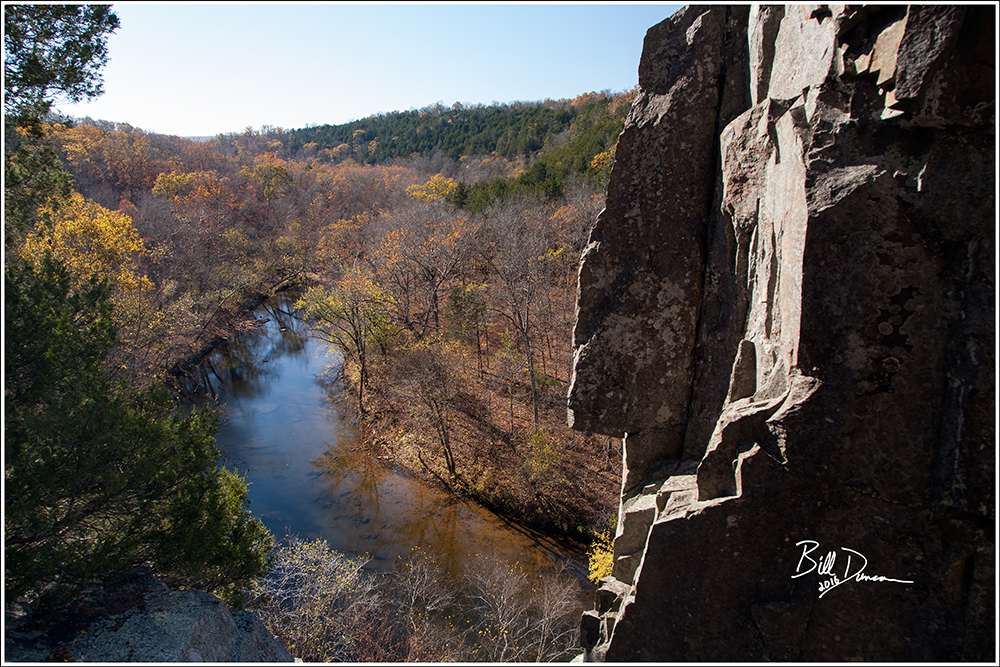
Missouri's Palisades? Little St. Francis River Pinnacles - Madison County, MO
Little St. Francis River Pinnacles – Madison County, MO

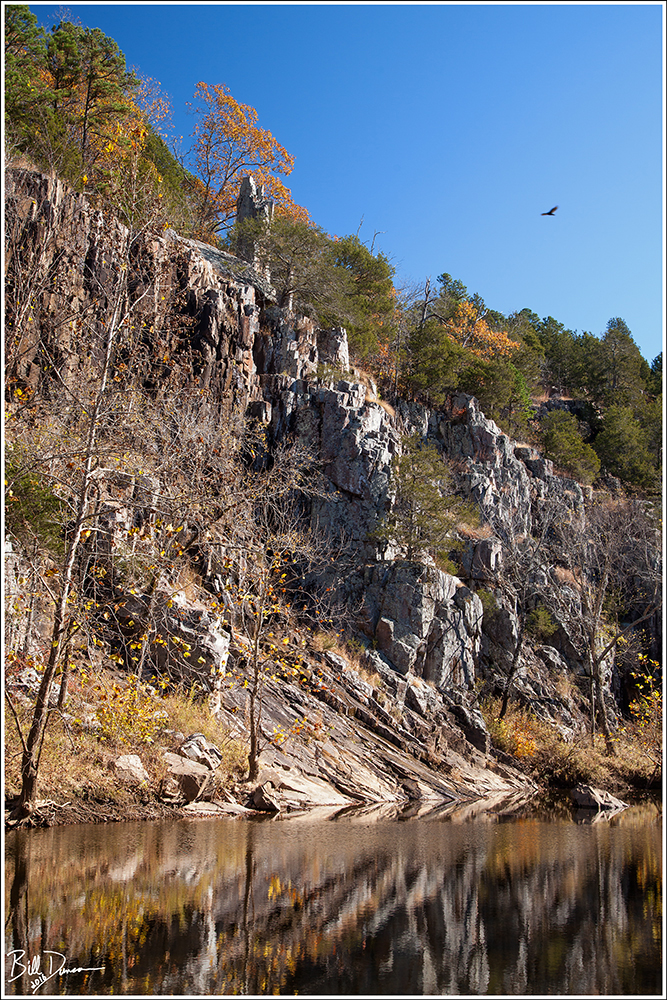
“The Pinnacles are not easy to reach but a visit to the site is worth a considerable amount of time and effort.  Differential weathering of vertically fractured pink porphyry created a sheer bluff cresting a hundred feet above the bed of the Little St. Francis River.  Individual columns rising as monoliths above the bluff are responsible for the name, but the bluff per se is even more spectacular than the pinnacles.  The site could be compared to the Palisades of the Hudson and merits photography but defies the lazy or poor planner.”

Thomas R. Beveridge
Geologic Wonders and Curiosities of Missouri

img_9174
Missouri’s Pallisades? – Little St. Francis River Pinnacles – Madison County, MO

Eight different pinnacles are listed in the Legacy that Dr. Beveridge left this state.  This particular pinnacles, along with associated geological features, is located in the St. Francois Mountains, just a stone’s throw away from a number of other classic destinations of this area.  Steve and I had been discussing our potential route for this excursion for quite some time.  We had tried once for an overland route but could not find or did not wish to aproach the private property owners and so decided that a water route was the best option for us.  This past November, with leaves being mostly fallen and temperatures being much warmer than average, was the perfect opportunity to try out our designed route.

This destination lies on a stretch of the Little St. Francis River (LSF) approximately 1.5 – 2.0 miles upstream from its confluence with the St. Francis River.  We knew that water levels were on the low side but we were completely uncertain what this would mean for traveling upstream into the LSF.  Would there be any navigable water at all?  If not, would it be possible to navigate within its bed by foot?  Facing the possibility of failure, we decided to give it a shot.  We loaded the canoe onto the powerful, symmetrical all wheel drive Subaru Forester and hit the road.

25320508709_f42914f285_o
Love. It’s what makes a boxer a boxer…


We dropped off Steve’s truck at our takeout –  the Cedar Bottom Creek bridge and put into the St. Francis at Silver Mines Recreation Area.  With the sun directly in our eyes (as almost always seems to be the case), it was a pleasant and short paddle downstream to its confluence with the LSF.  See the following map for the highlighted route that we took that day.

stfrancis

Arriving at the confluence, our spirits were lifted.  We were forced to push a little to get over a sandbar, but the route upstream was slow and just deep enough to allow for paddling most of the way.  We portaged a few times, but we expected worse.

Steve Emptying his Boots
Steve emptying his boots

After taking in the initial views of the bluffs, we were naturally drawn to see the pinnacles themselves up close.  A quick lung-burning climb and we were there.

img_9108
Ozark Monolith – Little St. Francis River Pinnacles – Madison County, MO

Although not the tallest of these spires, this monolith was the more picturesque.  I have other photography plans in mind for this guy if I can ever visit again.  See below to see Steve in the frame for scale.

30654606050_f4b9e3c408_o
Monolithic – Little St. Francis River Pinnacles – Madison County, MO

The views from atop the bluff were quite nice.  The primary hill that faces south was Tin Mill Mountain and Pine Mountain lies to the north.  Here is an example of the rhyolite porphyry that composes the majority of this bluff.

img_9171
Rhyolite Porphyry Bluff – Little St. Francis River Pinnacles – Madison County, MO

This place reminded us a lot of Lee’s Bluff, which was not surprising due to how close these locations are to one another.  However, the pinnacles here brought a bit more visual interest.  Here Steve poses with a small, but likely ancient cedar, clutched within a crack that is probably older than the human species.

img_9127
Little St. Francis River Pinnacles – Madison County, MO

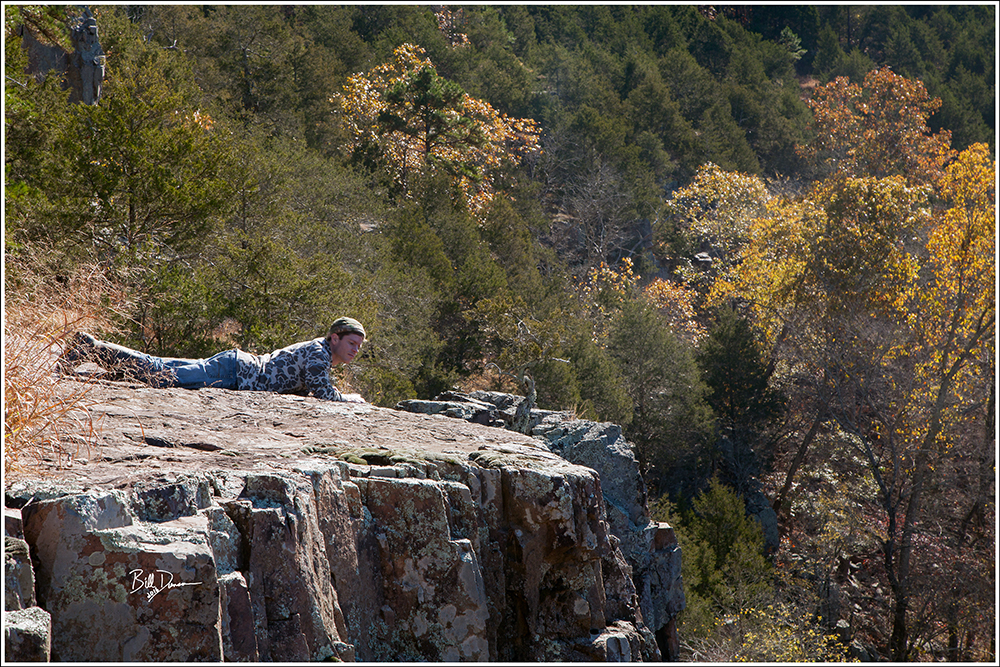
To conclude, here I captured Steve doing a belly crawl to the edge of the bluff.  As I say so often, I long for another visit here.  It seems the LSF has several other features to share.  I hope we can one day float the entire ~15 miles with a couple or more feet of water.  There are apparently a couple of stretches of shut-ins that shouldn’t be missed.

img_9166
Little St. Francis River Pinnacles – Madison County, MO

Until next time…
-OZB


Copyright Law for the Nature Photographer

I’m sure that anyone who has spent time viewing photographs in an online setting has seen them – those watermarks or scripts that contain the ©, often accompanied with text notifying the viewer that the photographer or graphic artist owns the copyright to that image.  But, did you know that this is completely unnecessary?

Many photographers place elaborate and beautifully designed watermarks across their images.  There is nothing wrong with this, especially for those photographers who are interested in building their brand, e.g., wedding or portrait photographers.  But I often find the watermarks are often more interesting or compelling than the images they emboss.  It is my opinion that collectors of nature photographs are more interested in the final product, rather than in a name.  Besides, if one makes a name for oneself, the photograph need simply be signed to identify the artist.

I have “signed” my photographs with generic text or my watermark for years, just as an artist would make their mark or signature when finishing a painting.  I am turned off by the idea of marking a hard worked for photograph with a sign of commerce, especially if it was unnecessary in protecting my rights to my work.  What I am sharing in the remainder of this post is mostly from what I remember from an Intellectual Property class I took during my Master’s program along with some light research to make sure there have been no significant changes.

Did you know that the instant you take/make a photograph your image has copyright protection that you own?  That’s all there is to it.  There is nothing else you need do to have that protection.  As the owner of the copyright you are provided certain rights that can be found here: U.S. Copyright Act at 17 U.S.C. 106.

Many of you have probably heard of ‘registering a copyright’.  If a photographer does not register their copyright with the Library of Congress prior to an infringement of the copyright, then the photographer can only cause two things: 1) cease and desist of the infringement, and 2) recover only actual damages caused by the infringement.  “Actual damages” equates to what you would normally be paid (fair market value) for an image that subject in the specific infringement.  If, like many nature photographers, you don’t sell your works, then the best you can hope for is for the infringement to be stopped.  You will likely not receive payment.

Taking the step to register your copyright with the LoC will allow the photographer to collect statutory damages in the event of an infringement.  Depending on the circumstances, e.g., the willfulness of the infringing party, statutes allow for the collection of between $750 and $150,000.  One must still prove that they attempted to protect their copyrighted work, but there have been more than a few artists that have made a living by simply collecting these settlements of their infringed upon registered copyright.

I registered my copyright to a few hundred photos a few years back.  There is a small fee and some work involved, but I remember it being a relatively painless process.  I have not continued to do so because I feel I take reasonable steps to keep my work protected, e.g., not posting image files online with anything larger than 1000 pixels on the longest edge, and that I know there are many greater photographers that potential infringers will target.  See below for an example of a Certificate of Registration.

copyright-reg

I believe I submitted 500-1000 images on a single CD-ROM (the standard method at the time).  I recommend downsizing the files, which can be quite small and still be identifiable.  I can’t remember the specifics, but they were somewhere around 50-100 pixels on the longest edge.  You can easily do this in a batch process.

There is nothing necessarily wrong with adding that copyright symbol to your image and I realize there are some advantages in having it there.  However, I wanted to make sure those of you reading this know that this is an unnecessary attachment to your well crafted visual property.

That’s about it for the bare basics of copyright protection for the nature photographer.  There are other details if one delves more deeply.  Rules change a bit once you leave this country, but copyright protection can be found in most area of the globe.  If you have any questions that were not covered here or would like to offer a different viewpoint, please let me know by using the comments section of this post.

Until next time
-OZB
In the Land of the Blind the One-eyed Man is King

Hooded Mergansers - Riverlands Migratory Bird Sanctuary - St. Charles Co, MO
Hooded Mergansers First Year Males – Riverlands Migratory Bird Sanctuary – St. Charles Co, MO

The one-eyed man referred to in the title of this post is, of course, the photographer with a telephoto lens sticking out of a well-placed blind.  Yes, we are all aware of and use to good effect the mobile blind – our warm vehicles.  However, shooting from a car in a place like RMBS leaves a bit to be desired.

6a1a5722
Common Goldeneye – Riverlands Migratory Bird Sanctuary – St. Charles Co, MO

From a car, the angle at which the birds are photographed will always be at the same downwards angle that in my opinion is less desirable than being close to eye level, which sitting low in a a portable ‘bag’ style blind can afford.

6a1a5316
Hooded Merganser Hen – Riverlands Migratory Bird Sanctuary – St. Charles Co, MO

Although I have owned such a blind for a few years, I have only recently given it some real use with friend and fellow like-minded nature photographer, Miguel Acosta.  All of the images from this post were made in our first attempts at this and even with limited light and opportunities, I can already see the potential in using this technique for improving photography of waterfowl.

6a1a5377
Hooded Merganser Big Boys – Riverlands Migratory Bird Sanctuary – St. Charles Co, MO

Getting an eye-level perspective yields more benefits than just a resting duck.  Catching birds taking to flight from the water’s surface from this angle makes for a more powerful image than from above.

6a1a5598
Lift Off! – Riverlands Migratory Bird Sanctuary – St. Charles Co, MO

I’m really glad we tried this out.  It is something I’ve been wishing to do for quite some time and I guess it just makes sense that this is the way to do it.  Now I just need to think of places and opportunities to try more.

6a1a5820
Trumpeter Swans – Riverlands Migratory Bird Sanctuary – St. Charles Co, MO

Until next time.
-OZB

Yellow + Birds

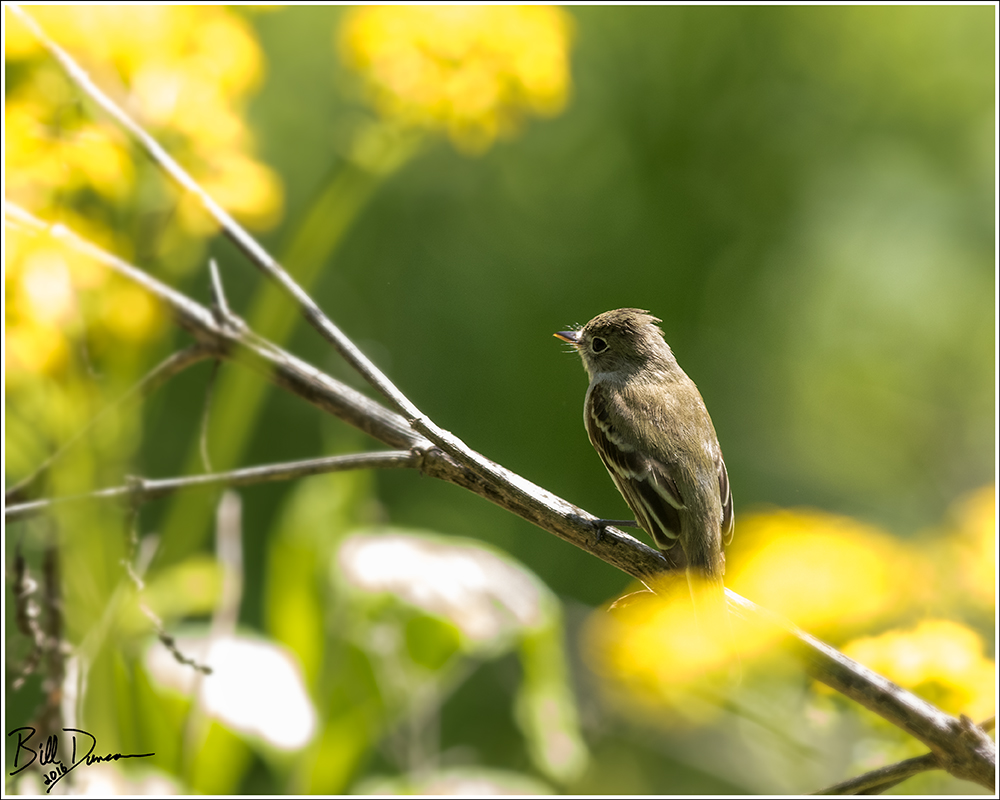
least-flycatcher-tyrannidae-empidonax-minimus-520a1134
Least Flycatcher – Tyrannidae – Empidonax minimus – Wild Acres Park, St. Louis County, MO.

I happened to notice that I had a few in the queue that featured the color yellow.  In most of them the yellow is featured on the bird, but in the one above the yellow is of a flowering plant, perhaps yellow rocket (Barbarea vulgaris), in the foreground and background.

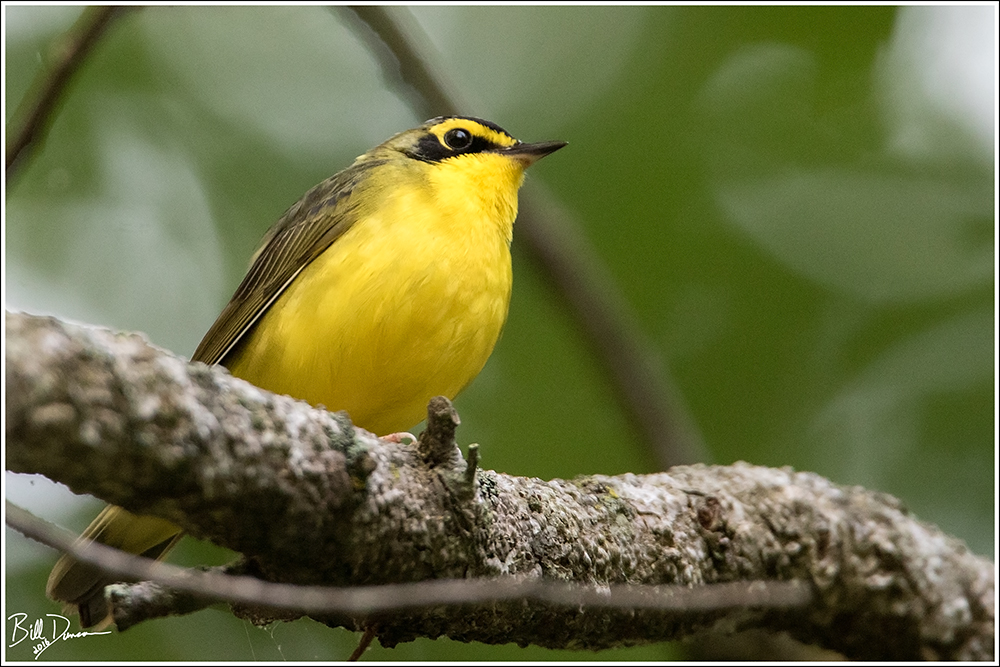
kentucky-warbler-parulidae-oporornis-formosus-6a1a2298
Kentucky Warbler – Parulidae – Oporornis formosus, Greer Spring Recreation Area, Oregon County, MO.


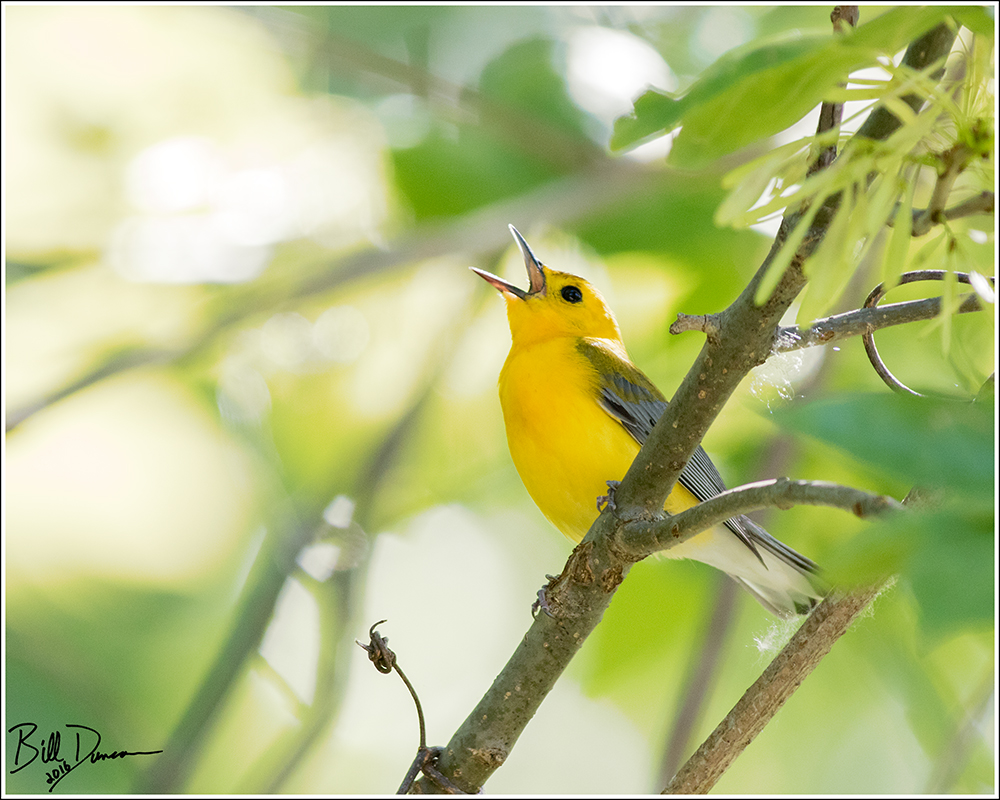
Prothonotary Warbler - Parulidae - Protonotaria citrea
Prothonotary Warbler – Parulidae – Protonotaria citrea – Little Creve Coeur Lake Marsh, St. Louis County, MO.


magnolia-warbler-parulidae-dendroica-magnolia-520a0922
Magnolia Warbler – Parulidae – Dendroica magnolia – Wild Acres Park, St. Louis County, MO.


-OZB

Meet the Slugs – Monkey Slug Caterpillar Moth

Monkey Slug - Limacodidae - Phobetron pithecium (4677) - Horseshoe Bend Natural Area, Texas County, MO
Monkey Slug – Limacodidae – Phobetron pithecium (4677) – Horseshoe Bend Natural Area, Texas County, MO

The final and perhaps most stunning of the slug moth caterpillars that we were able to find this past summer was the Monkey Slug, or “Hag Moth” caterpillar.  This particular one was first noticed by Sarah on the upper side of a dogwood leaf during a visit to Horseshoe Bend Natural Area near Houston MO.  We went on to find two in this particular tree.

monkey-slug-limacodidae-phobetron-pithecium-4677-img_8896
Monkey Slug – Limacodidae – Phobetron pithecium (4677) – Horseshoe Bend Natural Area, Texas County, MO

A leading thought on why these guys look the way they do is to mimic the shed exoskeleton of a tarantula.

monkey-slug-limacodidae-phobetron-pithecium-4677-img_8968
Monkey Slug – Limacodidae – Phobetron pithecium (4677) – Cuivre River State Park, Lincoln County, MO