"What a thousand acres of Silphiums looked like when they tickled the bellies of the buffalo is a question never again to be answered, and perhaps not even asked." -Aldo Leopold
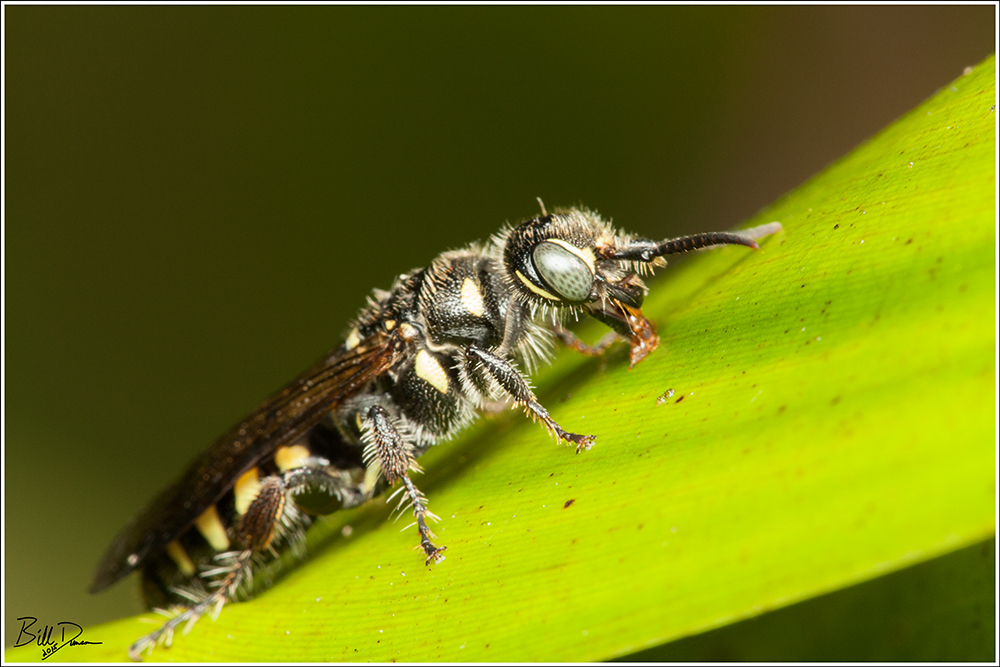
I was thrilled when I took my camera inside from shooting in my wildflower garden on a past summer day and identified this hymenopteran as a Bee Wolf. Philanthus gibbosus (Family Crabonidae) is what I am calling this one. Bee Wolves get their name from doing what you expect, feeding primarily on bees. These solitary wasps will load their brood chambers with pretty much any bee or wasp smaller than themselves that they can catch as a provision for a single egg they deposit prior to sealing the chamber shut. Some taxa have specific bees they prefer to catch and this can aid in identification. This poor thing was quite beaten up as you can see in the photograph below. Missing a few legs, it probably escaped a bird or larger insect, and was not happy to have me and my camera in its face. In the photo above I captured it doing a rapid vibration of its wings, something I read that these guys are known for doing as a communication. I can’t imagine what she may have been trying to tell me…
Bee Wolf
I believe the insect below to also be a species of Bee Wolf, but have not yet been able to put a name with this one. I photographed this one having a drink in a wet area of Shaw Nature Reserve early one morning.
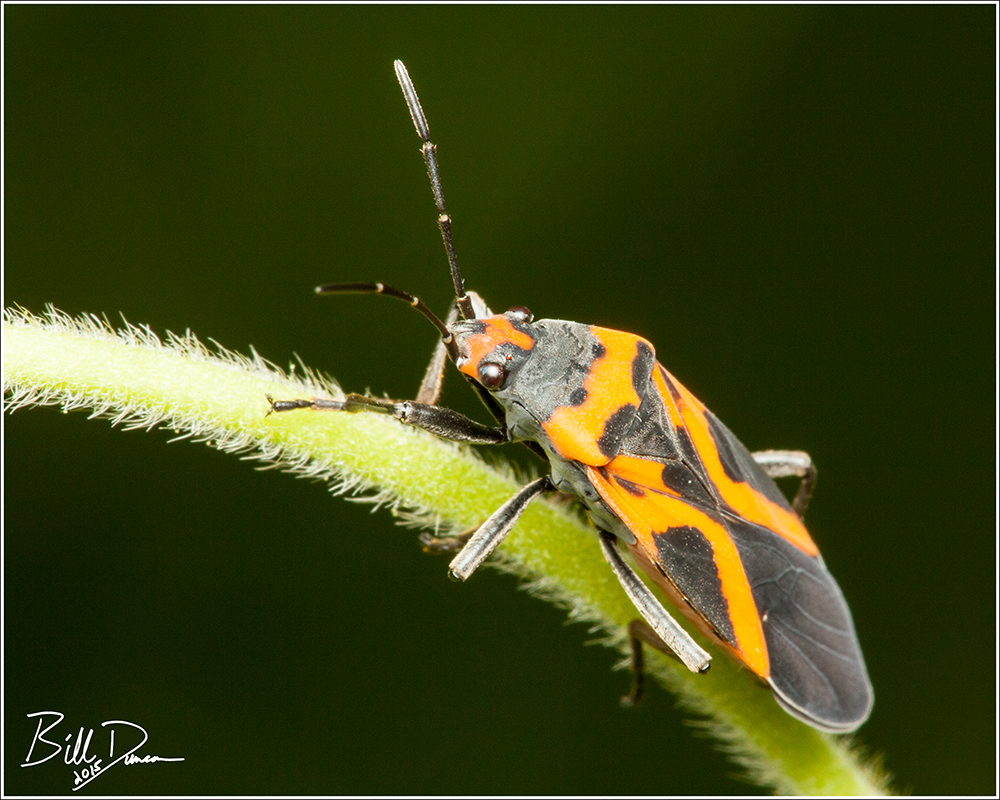
The False Milkweed Bug (Lygaeus turcicus) is a seed bug that, although quite similar in appearance to the Small Milkweed Bug (Lygaeus kalmii), is not strongly associated with milkweed.
False Milkweed Bug
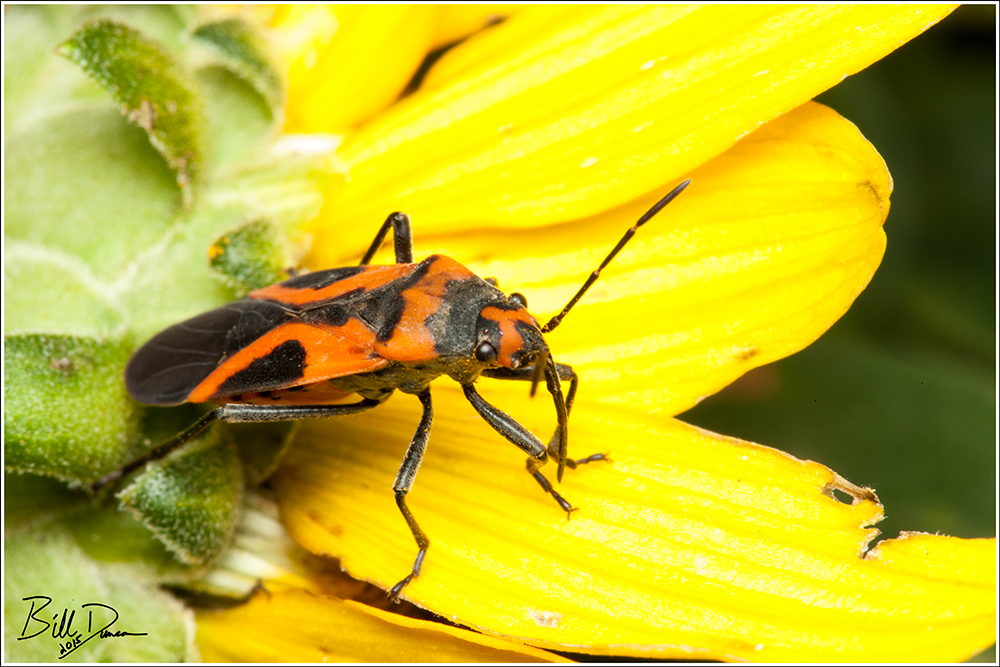
As can be seen in the photograph above, the False Milkweed Bug is most often found feeding on yellow composites (Family Asteraceae). These bugs were all photographed at Shaw Nature Reserve on what seems to be this insect species’ favorite food plant, the False Sunflower (Heliopsis helianthoides).
False Milkweed Bug
There are several members of the Lygaeidae family that are aposematically colored and found in North American prairies. As mentioned, it seems that the False Milkweed Bug does not typically utilize milkweeds. The Small Milkweed Bug feeds on milkweeds as well as other plant taxa. The Large Milkweed Bug feeds exclusively on milkweed. There is obviously a great case of Mullerian mimicry (distasteful organisms appearing similar to one another to benefit from a an easily identified color or body type) going on here, but it gets pretty complicated.
What has happened to the False Milkweed Bug? Is this a case of a species that once fed primarily on milkweed and developed aposematic coloration but has since switched food preference? Or, is this a case of a palatable species mimicking (Batesian mimicry this time) the aposematic coloration of a truly noxious species? Thinking about this, it is easy to see the selective advantages that could result from either possibility.
First, a little background…
Some insects that feed on milkweed benefit by concentrating chemicals called cardiac glycosides that are toxic irritants to vertebrate predators. Cardiac glycosides are an irritant to vertebrate herbivores (livestock) and vertebrates that feed on insects that feed on milkweed and store these compounds in their tissues. However, they are not a significant problem for insects that feed on milkweeds – they simply pass through their guts (insects that store these specific toxins, for example the monarch, must have biochemical changes to avoid toxic effects). The milkweed’s primary defense against the seed bugs and other herbivorous insects is the milky sap that gets forcefully pumped from any mechanical damage that is inflicted on the plant. For this reason the milkweed is a pain for an insect to feed on.
For a seed bug, with its piercing-sucking mouth parts, feeding on the gummy sap of a milkweed is a significant hurdle. Assuming the False Milkweed Bug once fed from milkweed primarily and gave it up would be a significant advantage. Keeping the aposematic coloration, which would allow it to gain the benefit from its vile-tasting, similarly colored cousins, still feeding on milkweed, would be advantageous as well. With my brief observations, the False Milkweed Bug still behaves conspicuously – feeding and doing everything else it does out in the open, suggesting that the aposematic coloration is still working in this mimic-model system, whatever the source history ultimately may be.
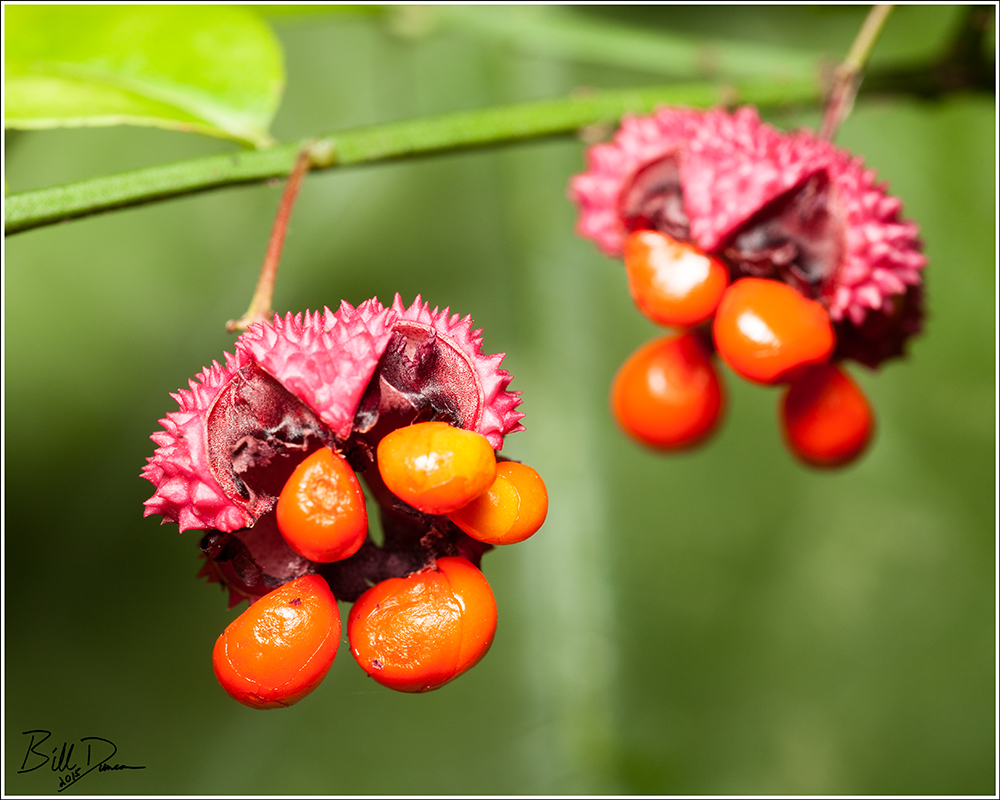
The Strawberry Bush is a rather new one for me. Steve and I found these plants, with freshly opened fruit capsules along the St. Francis River within Millstream Gardens CA this autumn. Rare due to loss of preferred habitat, this plant prefers moist, sandy soils along stream banks. Along with the St. Francois Mountain region, this plant also grows in extreme south-eastern Missouri.
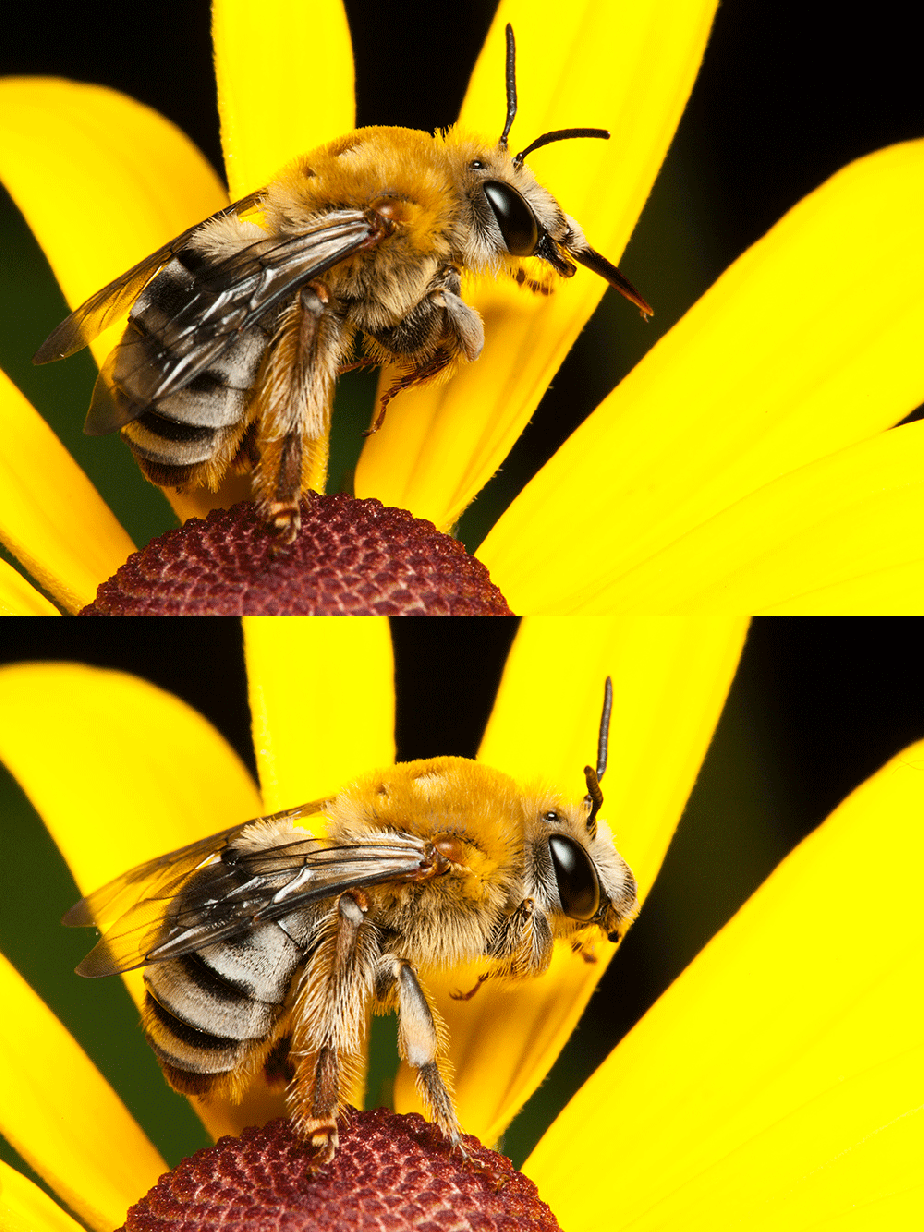
Tonight I thought I’d share a male Long-horned Bee. These guys are very tricksy in getting a photograph as they never seem to stop moving. I haven’t been able to find them resting early in the day yet.
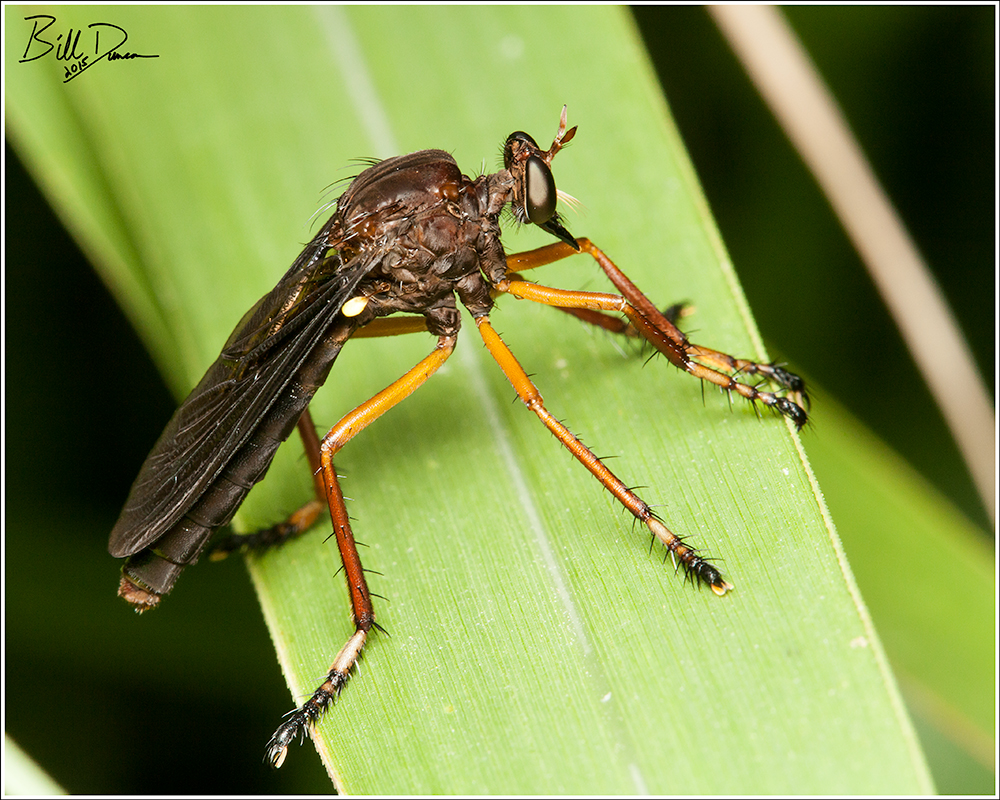
In keeping with the flies, I thought I would share this photo of a Robberfly (Asilidae – Dioctriinae – Dioctria sp.) that we found and photographed at Shaw Nature Reserve this summer.
Tonight’s post all share a theme of the challenges of being a pollinator on prairie wildflowers. The first photo above shows a lovely-colored, ambush predator known as a Crab Spider. Crab Spiders do not spin webs, but lay in wait, often on a flower for a pollinator to visit.
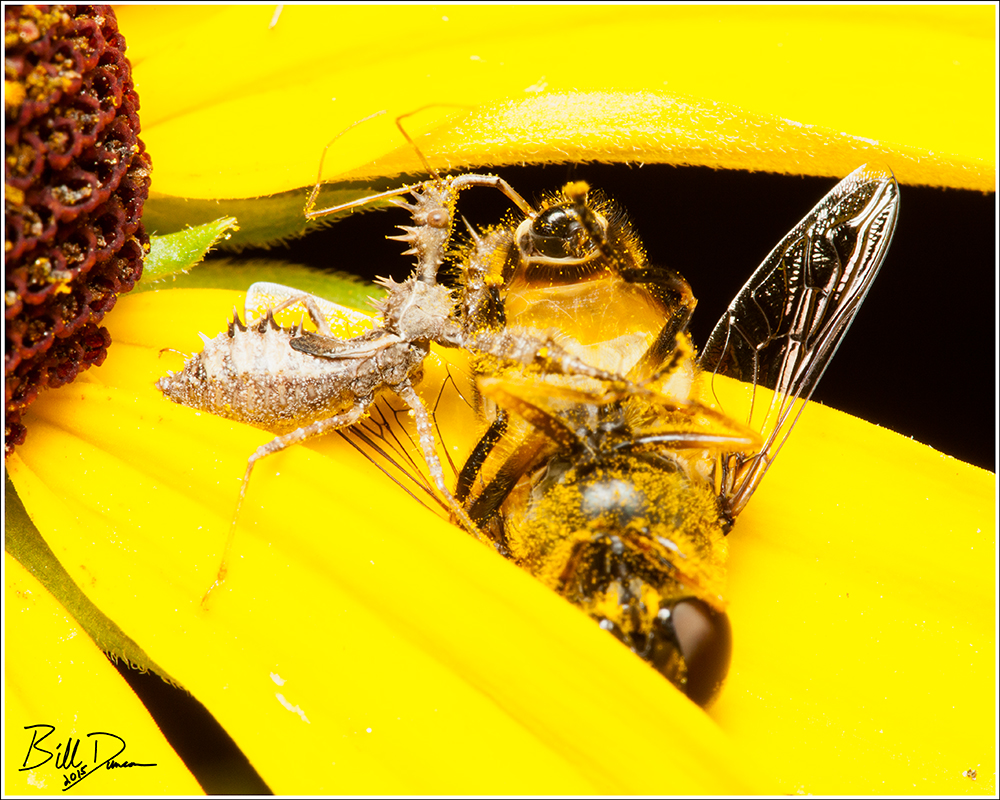
Attacked!
This Assassin Bug has captured a syrphid fly and is having himself a meal.
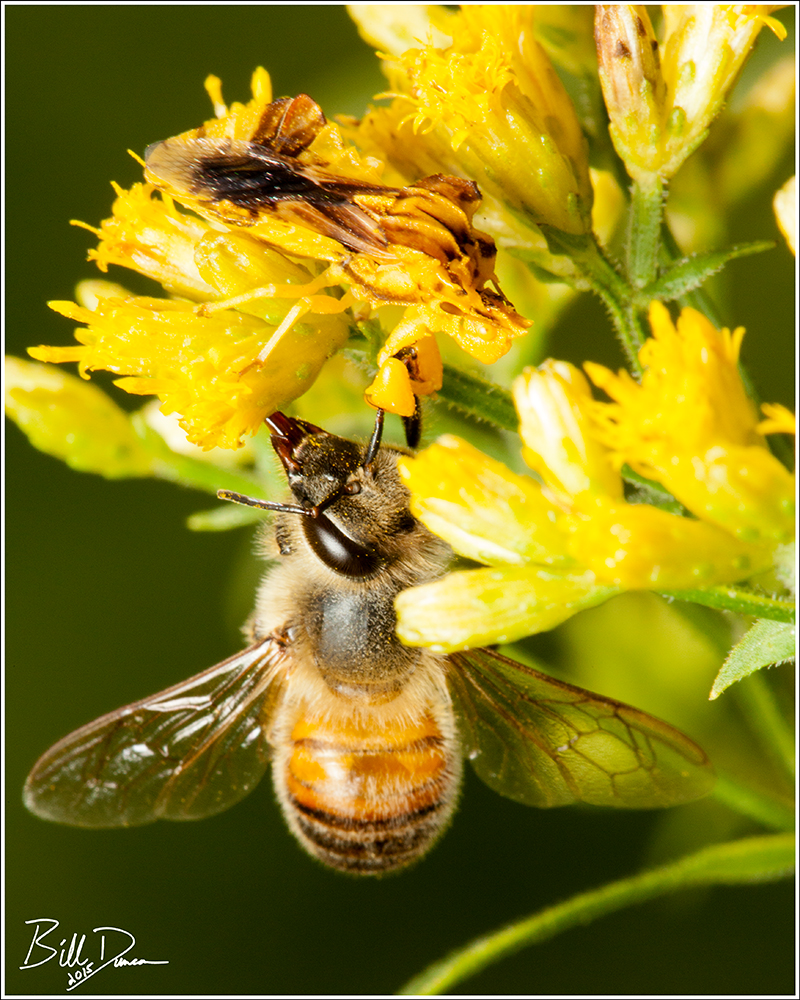
Ambushed!
In the image above, this goldenrod flower came to life to ambush a Honeybee. I find that Honeybees are the most often caught in traps like this. Native bees seem to be constantly on the move and much more defensive, most likely due to the fact that they are solitary and there would be nobody to care for the brood if they were more care free like the honeybees.
Ambush Bug
The creature is actually called an Ambush Bug. What an interesting face this one has! I can imagine the potential conversation.
Robberfly
Finally, this gigantic Robberfly is finishing off some small prey.










 A Thousand Acres of Silphiums