Caterpillars of 2023 – The Noctuidae

Here are a few of the members of the Noctuidae family of moth caterpillars we found in 2023. Commonly know as “owlet moths,” this is a very diverse clade that is still continuing to be revised and divided. Until recently, this was the largest lepidopteran family. A number of economically important members are found in this family, such as armyworm and cutworm species.

American Dagger Moth (Acronicta americana) Noctuidae, Hodges#9200
Rarely a day on the hunt goes by without finding one or more of these little beauties. This guy was not perturbed at all by us stopping to watch. It continued to chow on the leaf as I photographed it.

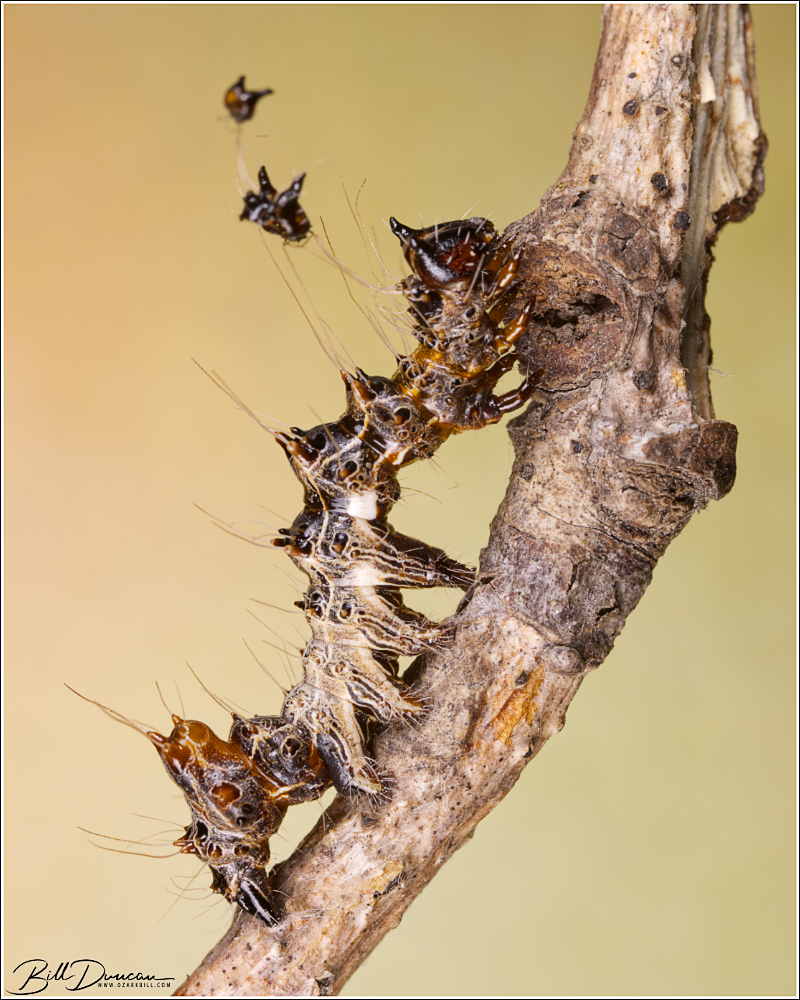
Two-spotted Oak Punkie (Meganola phylla) Noctuidae, Hodges#8983.1
Found on Quercus alba (white oak).

Eclipsed Oak Dagger (Acronicta increta) Noctuidae, Hodges#9249
Not that I keep great records but I am pretty certain that this one is by far the most abundant caterpillar we come across while looking on oaks. I probably find five of these to one of other species on oaks. There are a few similar species. The second one may be a different species of Acronicta.

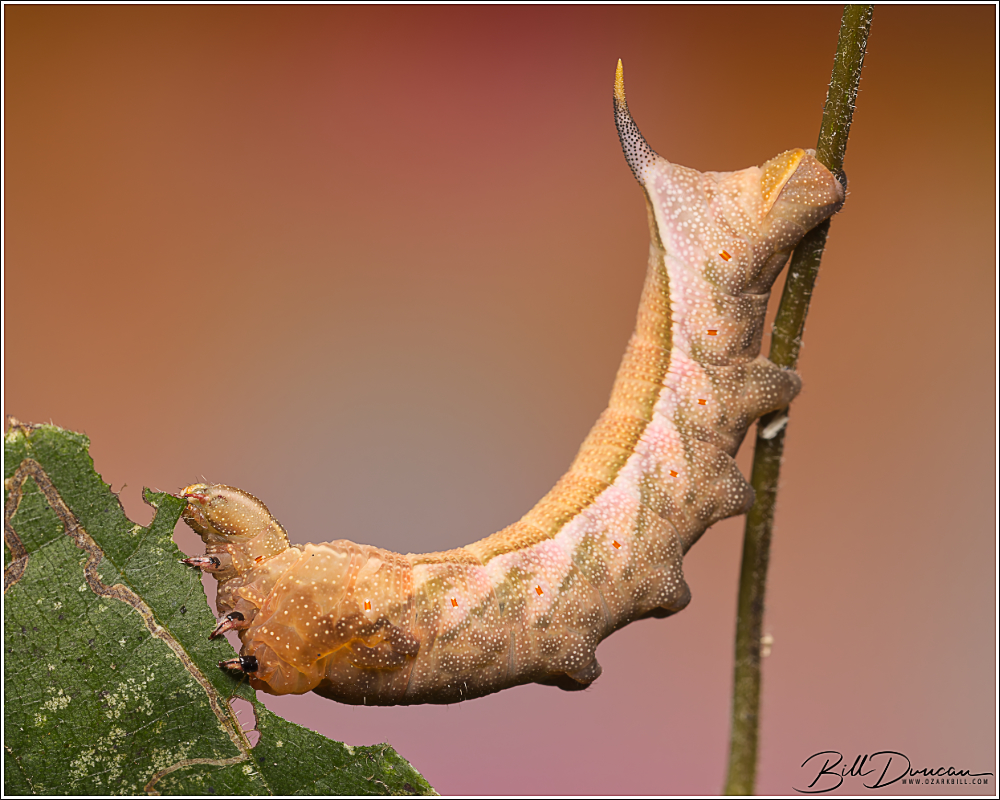
Noctuidae (Acronicta sp.)
This is what I get for not taking photos of some of these from multiple angles. Not even the experts on iNaturalist could get this guy to species using this one image. It was a gorgeous and large caterpillar.

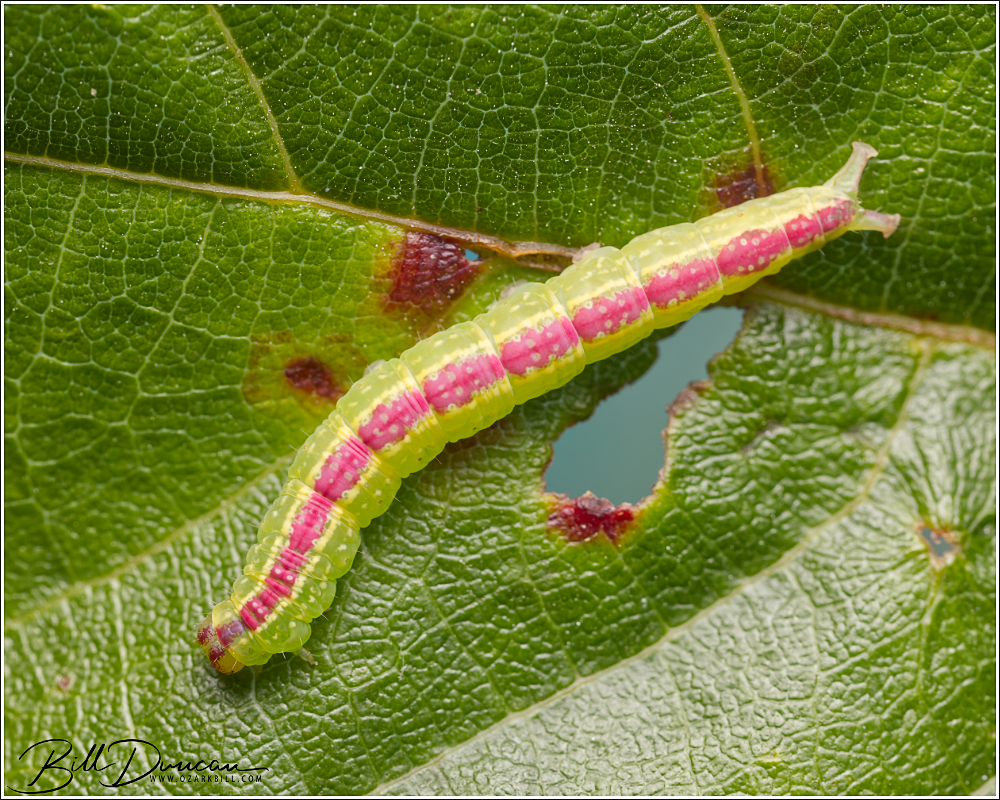
Gold Moth (Basilodes pepita) Noctuidae, Hodges#9781
Finally – I am sharing a cat that does not feed on woody plants. Also, a rare case of a moth that is gorgeous in both adult and larval forms. Unfortunately, this was a pretty early instar and does not show the bright and contrasting colors of older caterpillars. The gold moth feeds exclusively on Verbina species (wingstems, crownbeards).

Have a good one!
-OZB

Black-lighting night – August 2023

I got a whole one night of black-lighting in this season, when Miguel and I headed to Engelmann Woods Natural Area in Franklin County, Mo in early August. For only a few hours in a single night, our results were pretty fun. Here are some of what I have gotten around to processing so far.

Clouded Underwing (Catocala nebulosa) Erebidae, Hodges#8796
This one wouldn’t open up his wings to show the pink tones that are hiding on the dorsal side of its hind wings. Nonetheless, the pattern and warm tones make this a very handsome species. Now I just need to find the beautiful larvae!

Clouded Underwing (Catocala nebulosa)

Owlfly (Ululodes sp.) Ascalaphidae
These guys show up to the lights from time to time and it’s always a nice treat to find them.

Eastern Hercules Beetle (Dynastes tityus) Scarabaeidae
It’s a party when one of these shows up. This is the third individual I’ve been able to find and they were all females. I want to find a male badly!

Heitzman’s Dagger Moth (Acronicta heitzmani) Noctuidae, Hodges#9241.1
Not only is this a very attractive dagger moth (a group I’m becoming much more interested in), but is a really special species for Missouri and a real privilege to find and photograph. Missouri is a stronghold in the range of this species and the type specimen was collected at Truman State Park. It was named for the late lepidopterist, Richard Heitzman – author of the “Butterflies and Moths of Missouri” books published by the MDC. To my knowledge, the larvae of this species has yet to be found or photographed.

Heitzman’s Dagger Moth (Acronicta heitzmani)

Small engrailed (Ectropis crepuscularia) Geometridae. Hodges#6597
We also found some time to do a little caterpillar hunting. The larvae of this Geometrid are known by the name of saddleback looper. This one was found on persimmon (Diospyros virginiana).

Small engrailed (Ectropis crepuscularia)

Skiff moth (Prolimacodes badia) Limacodidae, Hodges#4671
Limacodid, or “slug” moths are known to be some of the first and most abundant moths attracted to lights and I always feel a bit guilty to see them trapped against the sheets while black-lighting. Even on the slowest evenings, you can usually count on a skiff moth or several to make an appearance.

Skiff moth (Prolimacodes badia)

These are the highlights from black-lighting in 2023. I hope to get out for this a few more times next year.

Thanks for visiting!
OZB

Osmia taurus – Taurus Mason Bee

Casey and I found these mason bees in mid April this year at Hughes Mountain N.A. I had no clue what these were but was intrigued to “discover” a new-for-me bee so early in the season. Unfortunately, I was to find out it is yet another introduced species. Apparently these were first found in Maryland in the 1970’s and have spread west since then.

A Lizard Beetle

The Languria bicolor (Erotylidae) is placed in the tribe Languriini (lizard beetles). Larvae of lizard beetles develop within the stems of plants and adults feed on the tissues and pollen of the same or nearby plants. This individual was found in July 2021 at the Beaumont Scout Reservation, St. Louis County, Missouri.

Swamp Metalmark (Calephelis muticum) – Larvae

I previously shared photos of adult of swamp metalmark (Calephelis muticum). This spring, after a couple or three years of looking for them on their host plant, Cirsium muticum (swamp thistle), I finally found the caterpillar of this vulnerable species of conservation concern.

A swamp metalmark (Calephelis muticum) caught shortly after depositing some frass created from its host plant, Cirsium muticum (swamp thistle).

Tachinus fimbriatus (crab-like rove beetle)

Tachinus fimbriatus – who decomposes the decomposers?

This Tachinus fimbriatus, a member of the rove beetle family, Staphylinidae, was found and photographed in September, 2020 at Babler State Park in St. Louis Co, MO. Some consider the Staphylinidae the largest family of animals in North America with close to 5,000 species described in more than 500 genera. Most rove beetles are carnivorous and feed primarily upon invertebrates. However, many feed on decaying vegetation, especially as larvae. This adorable beetle is believed to feed primarily on rotting mushrooms.

Tachinus fimbriatus – a potential pet for the tiny home?

2020 Insect Wrap-up

This hag moth, or monkey slug caterpillar (Phobetron pithecium) was found on a pawpaw along the Meramec River at Shaw Nature Reserve in early September.

As it seems I say every year, I did not find the time to go out looking for insects as much as I had hoped for in 2020. Here are a few of my favorites from this past season. As always, please correct any inaccurate species identifications if you are in the know. I try my best, but can always be wrong. Thanks.

This punctured tiger beetle (Cicindelidia punctulata) provided quite a lighting challenge for Casey and me.

We found this crane fly in late April. It makes a nice compliment to the early oak leaf.

I tried capturing this greater bee fly (Bombylius major) in mid-air, but failed in that attempt. A portrait shot would have to suffice.

This monarch caterpillar was found feasting on the leaves of swamp milkweed that was in a planter near the SNR visitor’s center.

Sarah and I found this hanging thief robberfly (Diogmites sp.) feeding on a German wasp (Vespula germanica) on the side of our house in July.

While looking for cats at Weldon Spring CA one evening, I was thrilled to find this saddled prominent (Heterocampa guttivitta) that had been parasitized by braconid wasps. This particular species of parasitoid changes the chemistry of the host’s brain so that after the was larvae emerge the caterpillar spins its own silk around the developing pupae and stands guard over them. When touched, the caterpillar thrashes and hisses, guarding them until it starves.

One of my favorite cats to find is Apatelodes torrefacta (spotted apatelodes). They can be found in yellow, or this white form. One day I’ll have to track down an adult to photograph.

A White-blotched Heterocampa (Heterocampa umbrata) shows off its incredible camouflage that allows it to eat as it becomes one with the leaf.

A waved sphinx (Ceratomia undulosa) that has been parasitized by numerous braconid wasps.

In September, I found this nice specimen of a fungus in the Cordycipitaceae family that had attacked a spider. This is most likely Gibelulla leiopus, an obligate parasitic fungus that preys on spiders with an almost worldwide distribution.

Of course I did a little slug moth caterpillar hunting this season. Here I photographed this crowned-slug (Isa textula) catterpillar by using the flash behind the leaf, showing the delicate patterns of the insect.

The highly variable stinging rose slug (Parasa indetermina) is always a welcome find.

The same species pictured above, here showing its bright red underbelly.

I found this spiney oak slug (Euclea delphinii) by searching the undersides of oak leaves at Babler State Park in mid-September.

The skiff moth (Prolimacodes badia) cats are highly variable, ranging from nearly a complete uniform green to being more decorated like this individual.

Here is the same individual as above, showing more of its interesting “senescent leaf” patterning.

A very common site while looking for slug moth cats, this Nasan’s slug moth (Natada nasoni) caterpillar has the egg of a tachinid fly on it. Most likely a death sentence for the caterpillar if the egg does hatch and the parasitoid larvae invades its host.

Only my second find of this species, this inverted-y slug (Apoda y-inversum) was found at Weldon Spring CA in mid-September.

Thanks for the visit and wishing you a great 2021 filled with more insects!
-OZB

I’ll take this “Booby” Prize Anytime!

Great Blue Skimmer (Libellula vibrans) found at Sand Pond Conservation Area in Ripley County, MO.

A few weeks ago Ev, Yvonne, Dave and I traveled south to try and find the first state record of the Brown Booby that was on the Current River just outside of Doniphan. Unfortunately, we were a day late and missed the bird. However, through the patient and educated eyes of Yvonne, we found several insects that made the trip worthwhile.

A head-on look at a Great Blue Skimmer (Libellula vibrans)

One of these that I was able to get some photos of was this striking great blue skimmer (Libellula vibrans). This is one of the largest of the skimmers and while not necessarily rare, it isn’t one you’ll come across very often in the St. Louis area.

The Gemmed Satyr (Cyllopsis gemma)

We made a stop in Carter County before heading home to look for orchids. The orchids were a no-show, but Yvonne found her target species of the day – this gemmed satyr (Cyllopsis gemma) that we all had nice looks and photo opportunities with.

Although we missed out on our prized Booby, I’d say the Booby Prizes were well worth our time.

-OZB

Dashing Blue Dashers

Blue Dasher (Pachydiplax longipennis) – f/8, 1/160 sec., ISO-200, 520 mm focal length equivalent

Blue Dasher (Pachydiplax longipennis) – f/8, 1/200 sec., ISO-160, 520 mm focal length equivalent

Blue Dasher (Pachydiplax longipennis) – f/8, 1/160 sec., ISO-200, 520 mm focal length equivalent

Blue Dasher (Pachydiplax longipennis) – f/11, 1/160 sec., ISO-320, 520 mm focal length equivalent

Wide Angle Macro Photography?

Eastern Carpenter Bee
(Xylocopa virginica) on Blue Sage (Salvia azurea)

The WGNSS Photography Nature Group met at Cuivre River State Park on Saturday the 2nd in hopes to find members of Limacodidae (slug moths). Perplexing to me, we struck out in the same time and place I found them in numbers and diversity a year ago.

It was still a good time. We found a number of other macro subjects and explored a couple of new places. I also got to give a first spin to my new lens. A wide-angle macro – the Laowa 15mm f/4 Wide Angle Macro. A rather new lens design and one with a pretty steep learning curve, these photos are really just practice. With time and strategy, I think I can get better at this.

Two areas to focus on in improving with this lens:

1) Getting a better handle on exposing for the environment (background) while getting the right amount of light from the flash to properly expose the foreground macro subject. I think this should be easier to predict with practice. I’m not at all sure that I can ever get it on a first try.
2) Figuring out how much dof is just right. Sometimes getting more detail in the background will be desirable. Other times, it is best to blur it out to bring focus on the primary subject.

This is a funnel web or grass spider (Agelenopsis spp.) that we found protecting her egg sack on the leaf of poison ivy (Toxicodendron radicans). She will likely guard the eggs here until the winter takes her.

Grass Spider – Agelenopsis spp.

One of the nice finds of the day was this Black-waved Flannel Moth (Megalopygidae – Lagoa crispata (4644)). One of the key features of this lens is being able to focus close enough to the primary subject for macro-level detail while capturing so much more in the subject’s environment. In this case, I tried to give the perspective of what it may be like for the bug when being discovered by entomologists or nature photographers. Pictured left to right are WGNSS members Rich Thoma, Dave Seidensticker and Casey Galvin.

Black-waved Flannel Moth – Megalopygidae – Lagoa crispata (4644)

After the group disbanded at Cuivre River SP, Miguel Acosta and I decided to visit and explore Little Lost Creek Conservation Area near Warrenton. We hiked about 6 miles and I camped there the following evening. I took a quick photo hike in the morning and found these two Brown Stink Bugs (Pentatomidae – Euschistus servus) in copulation. They didn’t like that lens being so close and kept moving to the opposite side of the boneset (Eupatorium) blooms.

Brown Stink Bug – Pentatomidae – Euschistus servus