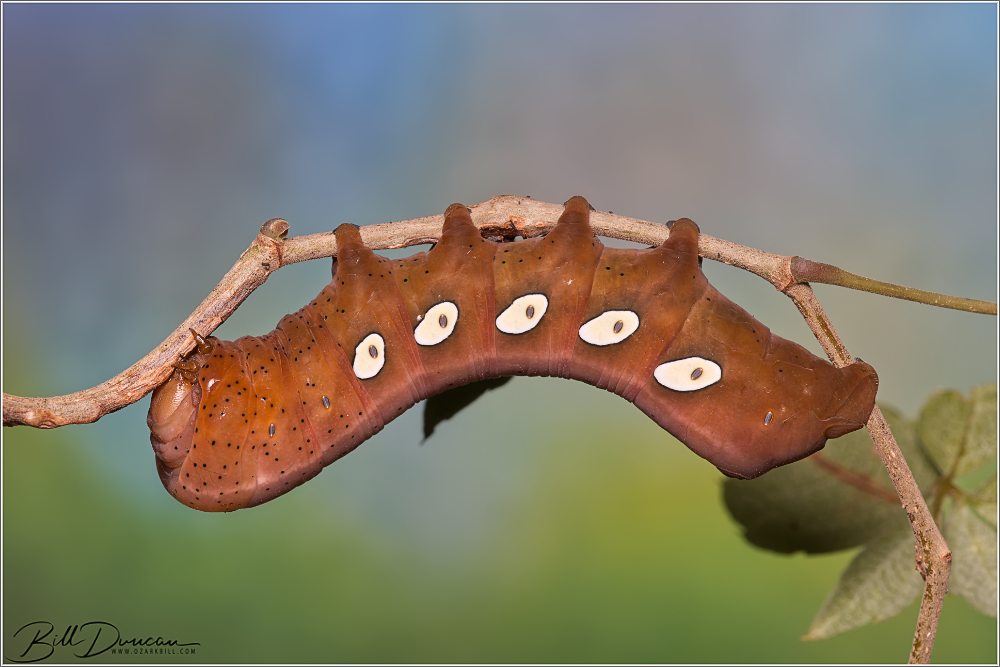
2024 Caterpillar Season – Pawpaw Sphinx

Today’s caterpillar is from another monotypic genus in the family Sphingidae. The pawpaw sphinx (Dolba hyloeus) hosts not only on pawpaw (Asimina triloba), but also on hollies-Ilex and blueberries-Vaccinium. This animal was found on A. triloba in early August at Babler State Park in St. Louis County, MO.

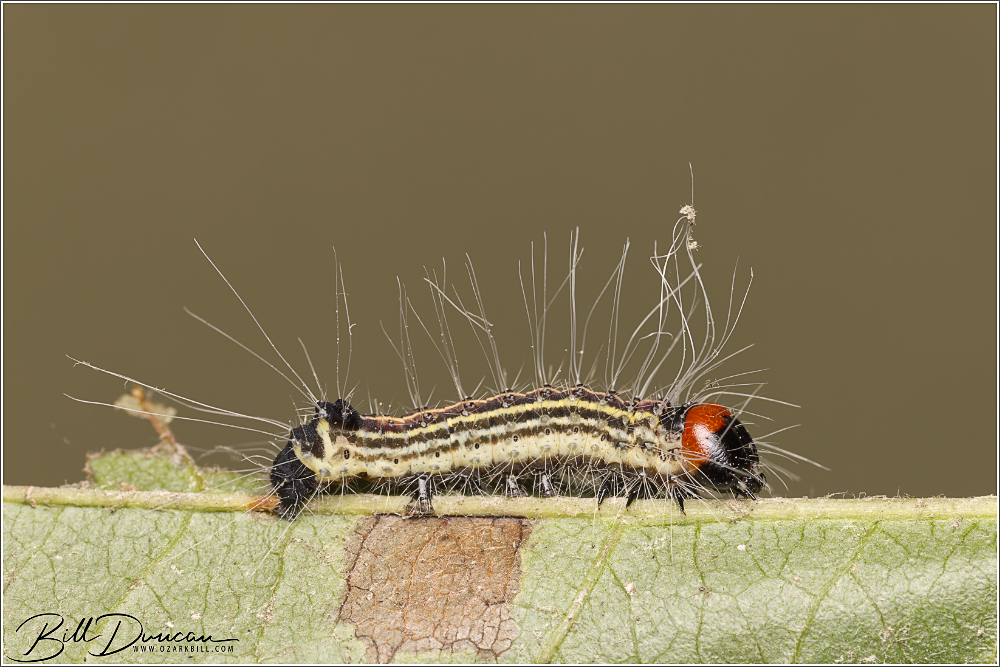
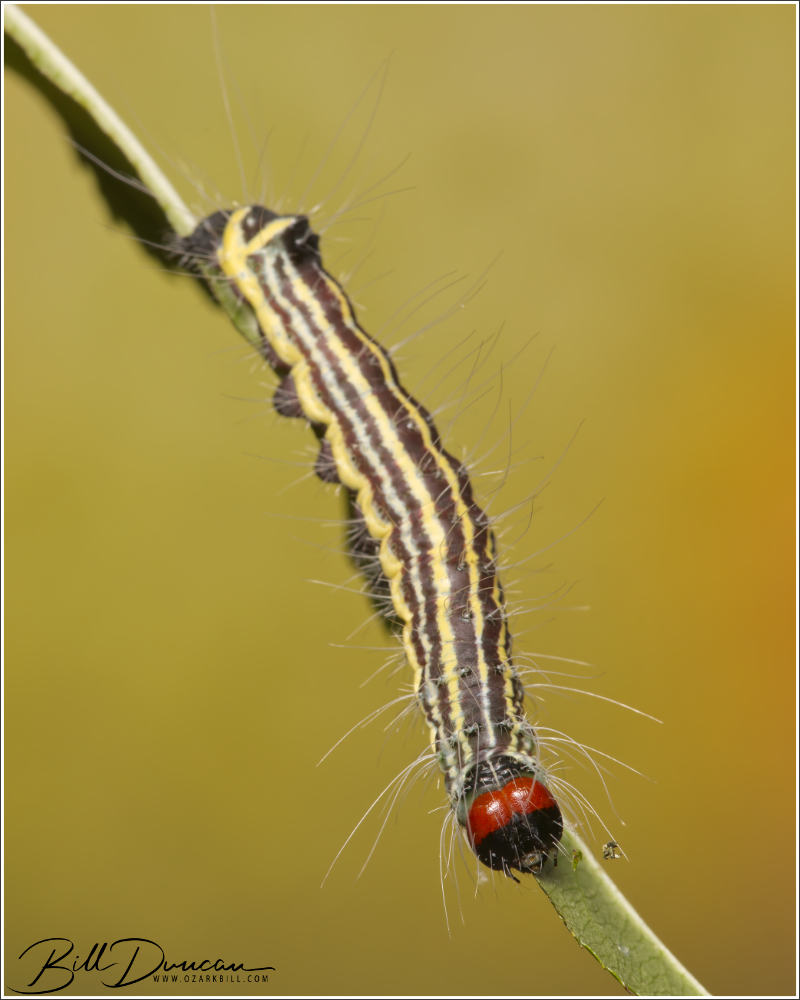
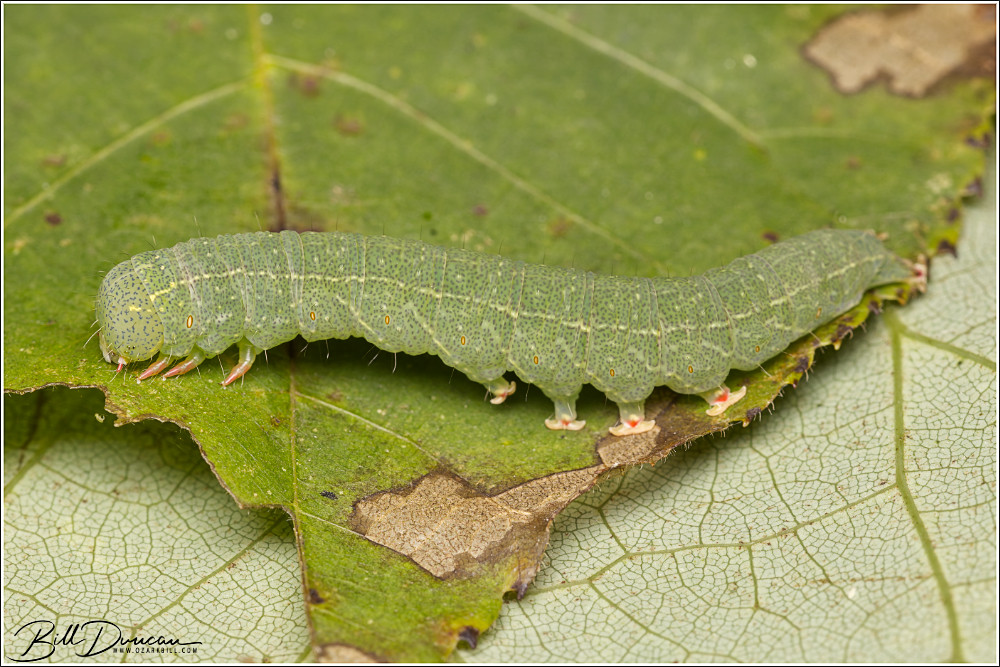
2024 Caterpillar Season – Duskywing

Today’s caterpillar is a little confusing in a a couple of ways. This individual is either Erynnis juvenalis (Juvenal’s duskywing) or E. horatius (Horace’s duskywing). Both species look pretty much identical as larva and both use several oak species as host plants. I’m no expert but it seems that these are best identified to species in their adult form.

Which dusky you be?

The second confusing thing is that I found this individual while beat-sheeting a small ash tree (Fraxinus sp.) in mid-July at Onondaga Cave State Park in Crawford County, MO. From my understanding, both species are obligate oak feeders. This might mean it had fallen from a higher oak and landed in the ash tree, or it might be pre-pupal and looking for a place to pupate. Most often Caterpillars move from their host plants to pupate in a neighboring tree or plant.

Juvenal or Horace?

If you have any thoughts or tips on how I might discern this guy to species with just a couple of simple photos and the information I supplied, please let me know.

2024 Caterpillar Season – Walnut Sphinx Moth

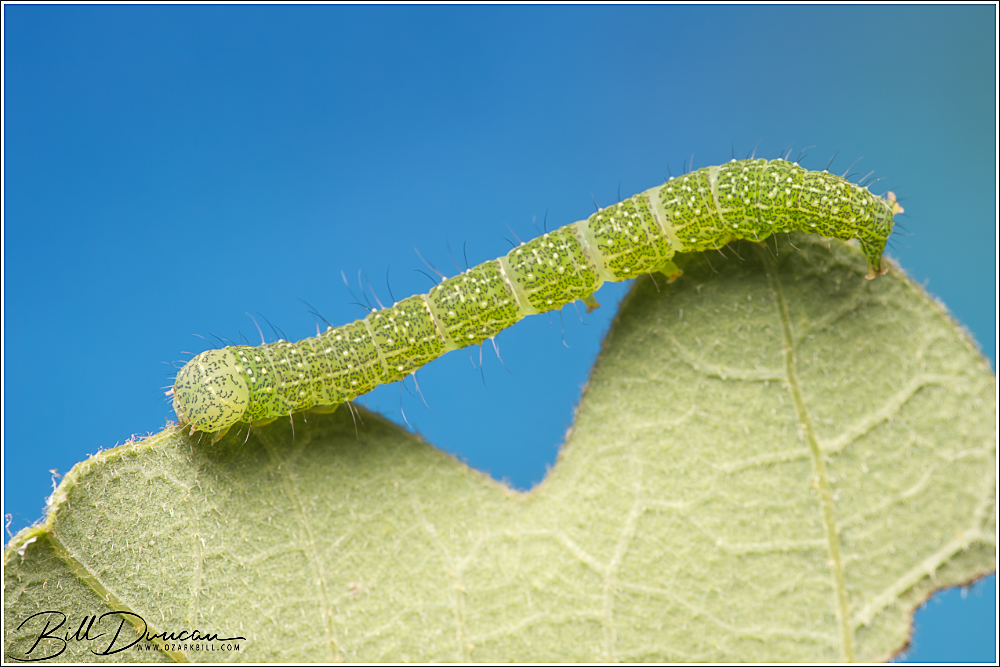
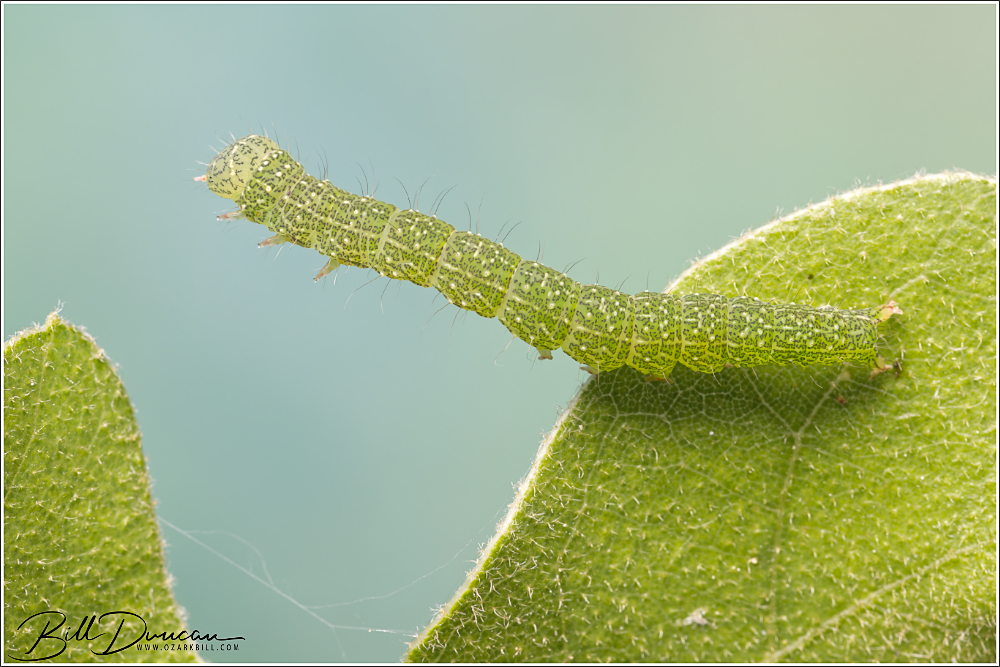
For tonight’s caterpillar, I am featuring the Sphingidae family member, Amorpha juglandis – the walnut sphinx moth. This is the only species in the monotypic genus, Amorpha, a name that is shared with a plant genus that holds our leadplant (Amorpha canescens) and false indigo bush (A. fruticosa). This name comes from the Greek – amorphos- meaning formless or mishappen. This describes the lack of wing and keel petals of the corolla of these beans. For the moth, I am not completely certain, but it may have to do with the unique shape and placement of the rear wings when this moth is at rest. This species is very easily identified in both larval and adult forms.

First up are a couple of early instar brood mates that I found on the same walnut tree in mid-July at Kaintuck Hollow in Phelps County, MO.

Next up is an older cat found at Schoolcraft Prairie in Washington County, MO in mid-August. Caterpillars of this species at this stage are infamous for its defensive displays when harassed, including emitting a high-pitched squeak, thrashing and biting. Unfortunately, this one was pretty chill, so I could not show this off to the folks I was with.

Amorpha juglandis – the walnut sphinx moth

Finally, on the same night we photographed the caterpillar pictured immediately above, an adult male moth was attracted to our blacklight setup. This was my first looks at the adult form of this species.

An adult Amorpha juglandis

2024 Caterpillar Season – Dogbane Saucrobotys Moth

Tonight’s caterpillar is a member of the Crambidae family – Saucrobotys futilalis, or the “dogbane saucrobotys moth.” The host for this species is the namesake dogbane (Apocynum species) and they can also feed on milkweeds (Asclepias species). I found these pretty easy to find in mid to late July at Don Robinson State Park by simply looking for their web nests within dogbane plants. There were usually several cats within each nest and a little beating of the plants could get quite a few tumbling out.

Saucrobotys futilalis (dogbane saucrobotys moth)

I find the Latin binomial for this one to be pretty entertaining. Saucro, coming from the Greek for graceful, pretty and beauty, along with botys, the genus to which this moth was originally ascribed. While, on the other hand, the specific futilalis seems to come from the Latin futilis, meaning brittle, vain, or worthless. Taxonomic nomenclature can be confusing and is often steeped in history (this species was described in 1863), but I find this grouping to be pretty entertaining.

Saucrobotys futilalis (dogbane saucrobotys moth)

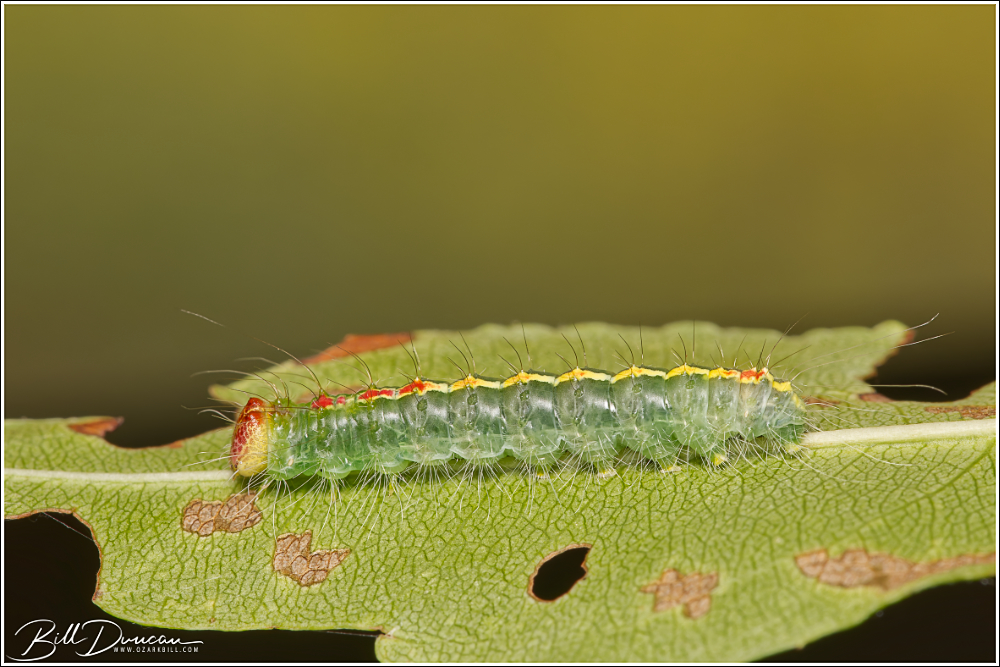
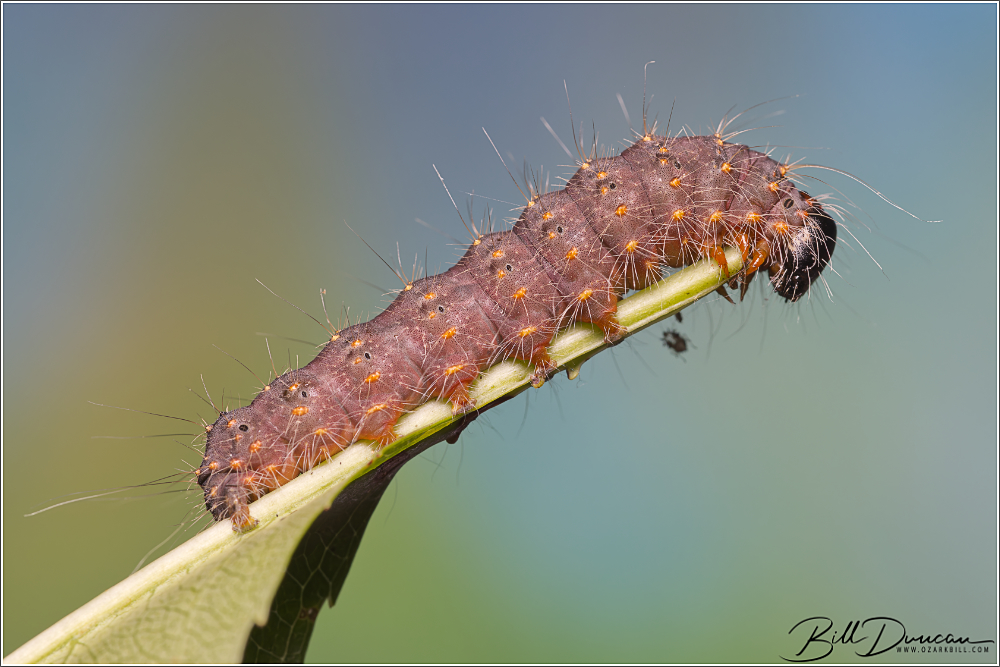
2024 Caterpillar Season – Double-humped Pococera Moth

Today’s cat is in the Pyralidae family. It is most likely Pococera expandens (double-humped pococera moth), but with at least 27 species in this genus and many of which that feed on oak, upon which this one was found, other species could be an option. This guy was photographed in early July during a WGNSS Nature Photography field trip at Prairie Garden Trust in Calloway County, MO.

Biological Pest Control

Today I am showcasing an example of biological pest control that I came across in my own neighborhood in late April of this year. The image below shows a bronzed cutworm moth larvae (Nephelodes minians) in the Family Noctuidae that has been parasitized by a Braconid wasp in the genus Cotesia. This is a very species-rich genus of parasitoids, but there is a fair chance of this species being C. marginiventris. Thanks very much to Alex Soohoo-Hui for his assistance in narrowing down the identification of this minute wasp.

A deceased bronzed cutworm (Nephelodes minians) caterpillar in the final stages of hosting its parasitoid Braconid brood.

The bronzed cutworm is a very common moth that feeds on various grasses, including crops like maize and other cereals as well as turf grasses. I consistently find these cats or their chrysalis whenever I dig a new hole in the yard.

When I found and collected these animals, the last couple of wasp larvae were finishing up spinning their cocoons.

After the wasp deposits her eggs on the host, the wasp larvae feed on the caterpillar internally, being careful not to do much damage to vital organs. The host will never survive, but the parasitoids must ensure that it stays alive long enough for the brood to reach maturity. Often, the caterpillar will still be alive when the wasp larvae emerge and begin to spin their cocoons and will defend itself and its parasites from potential predators.

Three cocoons showing the doors that the adult wasps chewed their way out of.

In this case, the caterpillar seemed dead. I collected it and took it home with hopes of rearing out the tiny wasps to photograph and identify. In about four days, I came home to find 15-20 adult wasps had emerged.

The adult wasps are extremely tiny, measuring 2-3 mm. In order to have a chance at getting photographs, I placed their enclosure into the refrigerator for a minute or two. The wasps in the accompanying images might appear dead, but they perked up within a couple of minutes. After getting my photographs, I released the brood into my backyard to continue their pest control services.

A Braconid wasp in the genus Cotesia, potentially C. marginiventris.

A couple more looks at this diminutive but effective parasitoid.

Arthropod Miscellany – 2023

A few miscellaneous arthropods from 2023.

Tetraopes tetrophthalmus (red milkweed beetles) photographed in June of 2023. Location not recorded.
A sawfly (F. Cimbicidae), Abia sp., photographed at Hughes Mountain Natural Area in early April.
(Antaeotricha schlaegeri) Schlaeger’s fruitworm moth (F. Oecophoridae) photographed at Meramec State Park in May.
Giant Walking Stick (Megaphasma denticrus) photographed on a WGNSS trip in September at Pickle Springs Natural Area.
This salticid female Phidippus clarus (brilliant jumping spider), was photographed at Horn’s Prairie Grove LWR in July.
A Mecaphesa asperata, F. Thomisidae, crab spider feasting on a native bee at Paintbrush Prairie Conservation Area in June.

WGNSS Goes to the Sophia M. Sachs Butterfly House

In February, the Webster Groves nature Study Society’s Nature Photography Group headed to the Sophia M. Sachs Butterfly House in Chesterfield. We paid for after-hours access and were delighted with the opportunities presented to us. Many thanks to Casey Galvin, group leader for the Nature Photography Group, for organizing this visit, and to Chris Hartley from the Butterfly House for being a lovely host. Chris patiently dealt with our needs, requests and questions, while wrangling our subjects for us. He and the Butterfly House provided us a wonderful experience of photographing some remarkable arthropods from around the world. Here are some of my favorite photos from the evening.

Hercules Beetle (Dynastes hercules) F. Scarabidae. The hercules beetle, found in the neotropics, is the longest extant beetle species in the world.

Rainbow Stag Beetle
(Phalacrognathus muelleri) F. Lucanidae. This beetle is found in northern Australia and New Guinea. The mites that can be seen on this beetle do no harm to it. They tag along to pick up a free meal from their sloppy host.

Flamboyant Flower Beetle (Eudicella gralli) F. Scarabaeidae. Found in tropical Africa, this beetle is a sure stunner.

Spiny Stick Insect
(Eurycantha calcaratta) F. Lonchodidae. These giant phasmids are endemic to humid rainforests in Australasia.

Curly-haired Tarantula (Tiltocatl albopilosum) F. Theraphosidae. This handsome spider is native to Central America.

That’s all from this outing. Interested in joining in one one of these WGNSS outings? Feel free to contact me or check us out at http://www.wgnss.org to learn more.

-OZB

A Trio of Hoppers

Here are a few handsome Orthopterans from the 2023 season.

Syrbula admirabilis, is known by the common name – admirable grasshopper. Photographed at Horn Prairie Grove LWR.
Orchelimum nigripes, the black-legged meadow katydid prefers wetland habitats. This individual was found at Marais Temps Clair C.A. in St. Charles County, MO.
This American bird grasshopper (Schistocerca americana) was also photographed at Marais Temps Clair C.A. in St. Charles County, MO.

Caterpillars of 2023 – The Rest

Today I’m finishing up with the remaining cats of late summer and autumn hunting trips of 2023 from an assortment of families.

Walnut Sphinx Moth (Amorpha juglandis) Sphingidae, Hodges#7287
These are among my favorites. Not only are they quite handsome when viewed up close, but they are one of the few caterpillars with a voice! Be prepared if you handle or otherwise disturb them; they will let out a surprising squeak when they feel threatened.

Walnut Sphinx Moth (Amorpha juglandis)

Curve-lined Angle (Diagrammia continuata) Geometridae, Hodges#6362
Casey and I observed that the juniper hairstreaks (Callophrys gryneus) had a bumper year this year while hiking in glades early in the season. We thought this might be the year to finally find the fantastic larvae of this species. We spent several hours beat-sheeting the red cedars in these areas in late summer and early fall. No luck in finding that species, but we did find another inconspicuous cat that uses this plant as its host. You can probably see that, like the hairstreak, the caterpillars of this moth species would be next to impossible to find without the use of a beat-sheet.

Curve-lined Angle (Diagrammia continuata)

Undescribed Flower Moth (Schinia nr-jaguarina) Noctuidae, Hodges#11132.01
I shared photos of this yet to be described species before. These are photos of the cats we found at a new location, Horn’s Prairie Grove LWR, in central Illinois.

Red-lined Panopoda (Panopoda rufimargo) Erebidae, Hodges#8587
An interesting cat we found while beet-sheeting a hickory thicket on a friend’s property in St. Francois County.

Red-lined Panopoda (Panopoda rufimargo)

Pipevine Swallowtail (Battus philenor) Papilionoidea
Conspicuous and distasteful due to the absorbed secondary chemicals of their pipevine host, it seems like we always find these guys in low-light situations, making the use of supplemental light a necessity.

Pipevine Swallowtail (Battus philenor)

Giant Swallowtail (Papilio cresphontes) Papilionoidea
My favorite swallowtail species. It was a real treat finding this final instar cat back in September.