"What a thousand acres of Silphiums looked like when they tickled the bellies of the buffalo is a question never again to be answered, and perhaps not even asked." -Aldo Leopold
Hitched Arches Melanchra adjuncta fam. Noctuidae Host plant: Found on unrecorded herbaceous plant. Dates found: 21, Sep, 2024 Locations Found: Meramec State Park, Franklin County, MO Notes: Both larvae and adult forms are stunning. Sarah impressively found this cat walking along trail. Its positioning and camouflage, making it look like crinkled senescing vegetation, was so effective it took me quite a while to find it even with Sarah pointing directly at it.
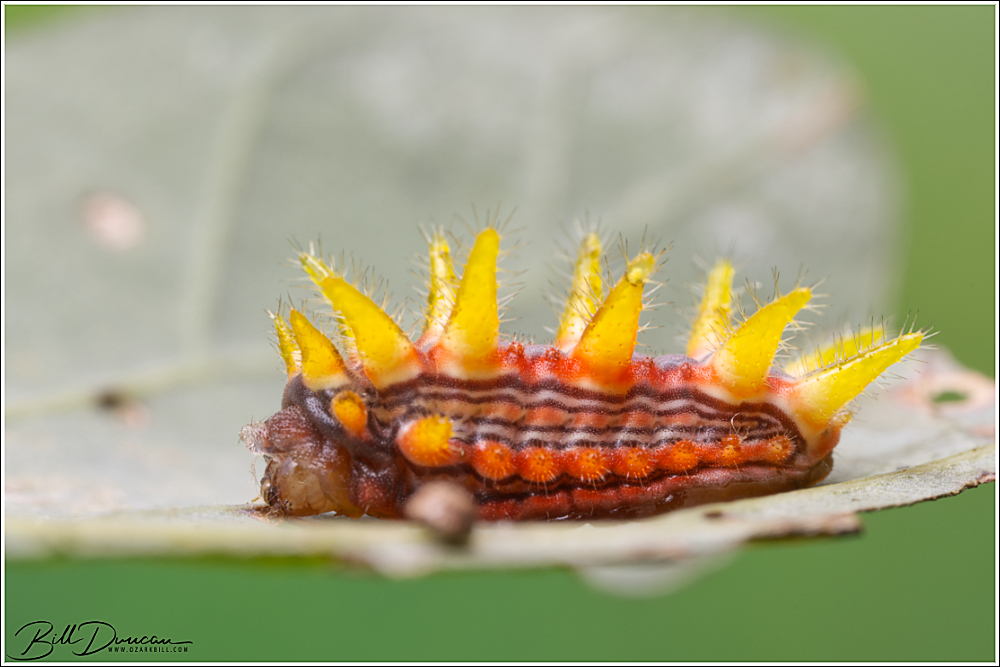
Stinging Rose Caterpillar Moth Parasa indetermina fam. Limacodidae Host plant: Nearly any native woody plant in the area Dates found: 17, Aug, 2024; 14, Sep, 2024 Locations Found: Kaintuck Hollow, Phelps County, MO; Schoolcraft Prairie, Washington County, MO Notes: Stings from this species are relatively minor, reminiscent of that received from wood nettle.
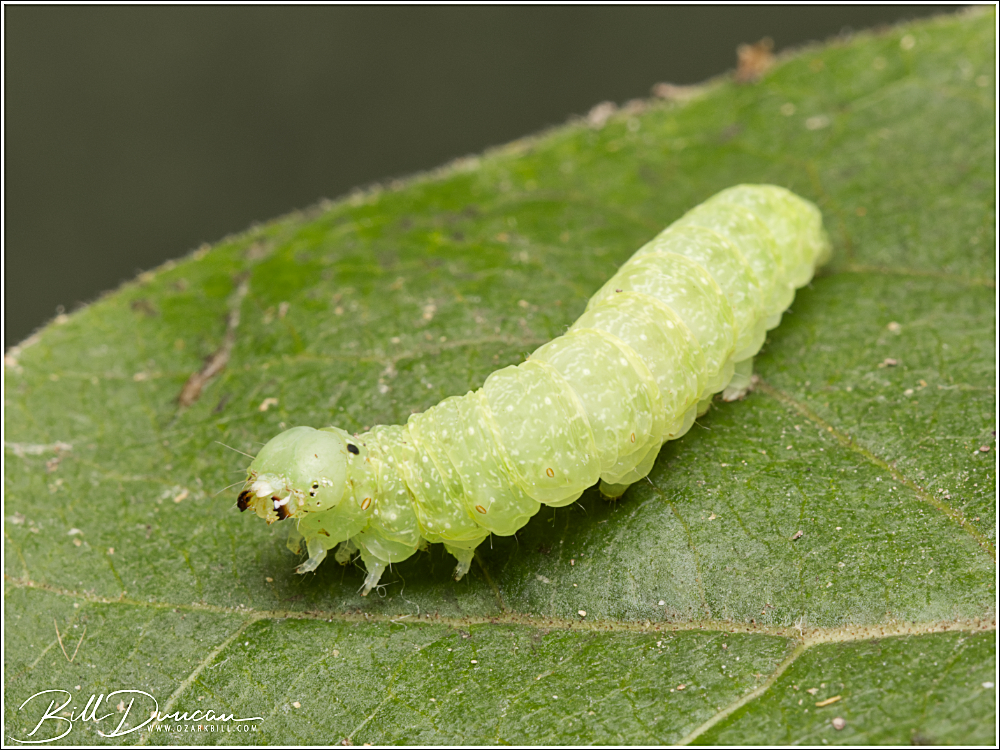
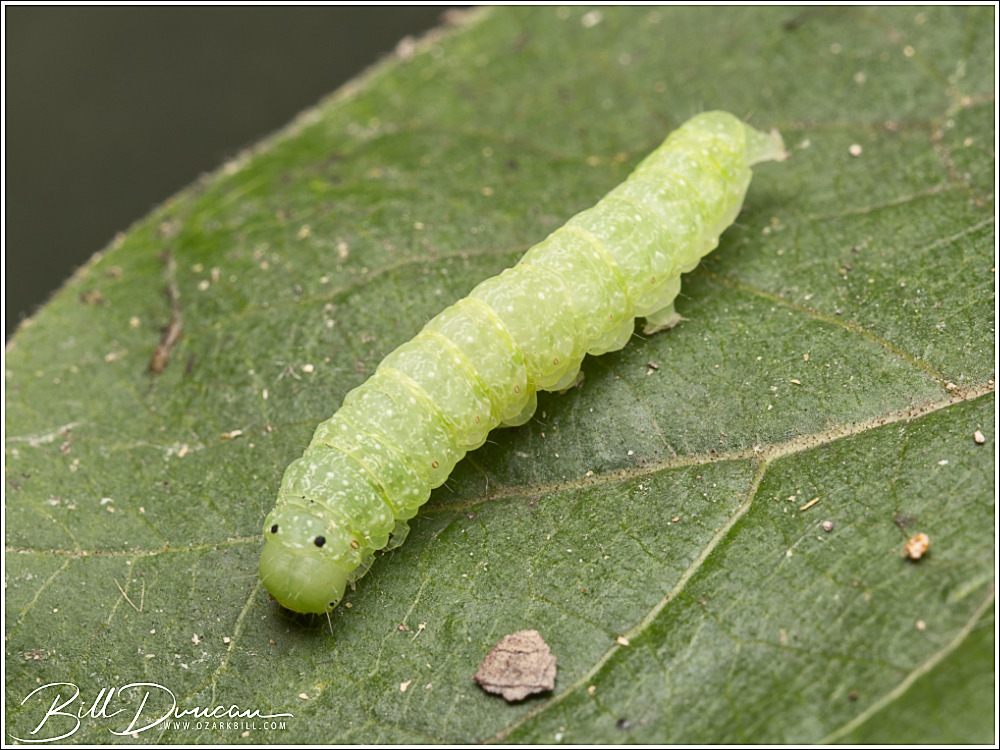
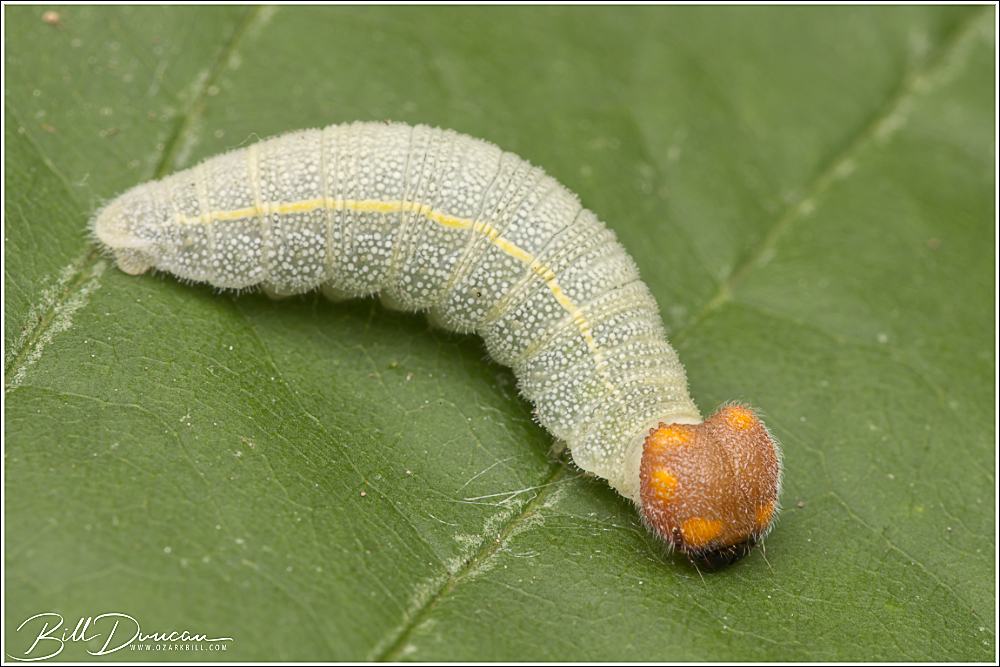
Red-fringed Emerald Nemoria bistriaria fam. Geometridae Host plant: Found on white oak (Quercus alba) Date found: 7, Sep, 2024 Locations Found: Kaintuck Hollow, Phelps County, MO Notes: Although some reports suggest other host plants are used, it is likely that this species specializes on white oak.
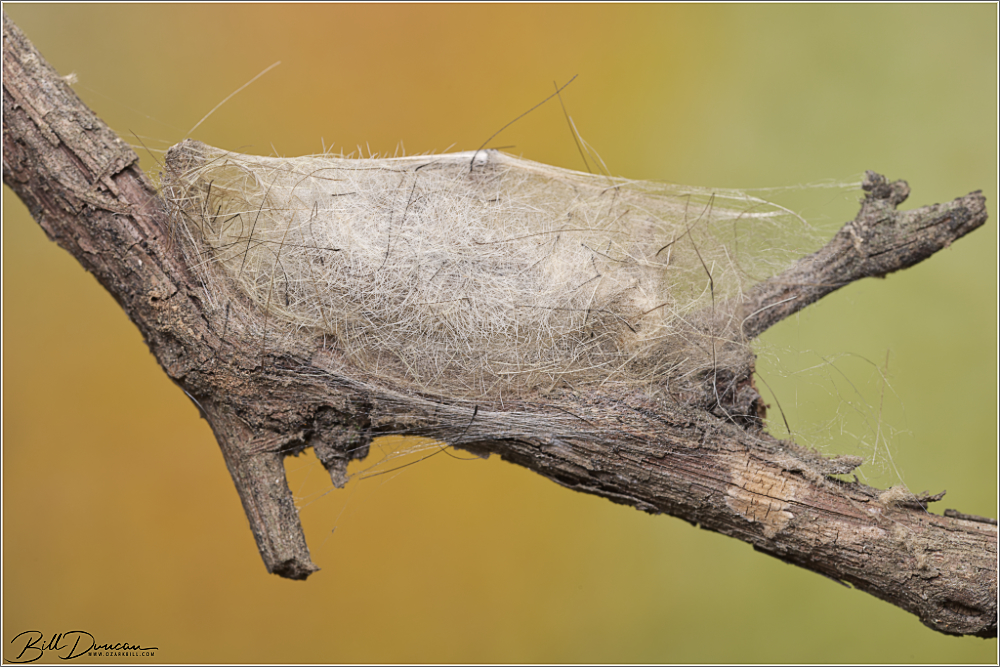
This post is related to the rearing work I shared previously of the Orgyia leucostigma (white-marked tussock moth). During a caterpillar hunting outing with Sarah, I found what was obviously a cocoon of a tussock moth. I can’t say for certain it belonged to O. leucostigma, but it is likely. So, I photographed it in the field and brought it home, keeping it separate from the O. leucostigma cocoons that I was rearing that were collected from my yard. As time went on and the other cocoons I was rearing began producing moths, I figured something was going to be different with the one pictured below.
A tussock moth (Orgyia sp.) cocoon collected on 21, Sep, 2024 at Onondaga Cave State Park. Note the long setae from the tussock moth caterpillar that are incorporated into their cocoons
Checking the container on 6-October, I found this beautiful Orgichneumon calcatorius, an Ichneumonid wasp with a Holarctic range that is a parasitoid of moths in the Orgyia and Dasychira genera. After taking a few photos, I let it go in the backyard. After emerging, females of the species mate and then overwinter as adults utilizing crevices in tree bark. In the spring and summer of the following year, they look for new caterpillars to insert their eggs.
A newly emerged Orgichneumon calcatorius with the pupa and cocoon that hosted it in the background.
A closeup look of the brilliantly patterned Orgichneumon calcatorius
Small Necklace Moth Hypsoropha hormos fam. Erebidae Host plant: Found on persimmon (Diospyros virginiana) Date found: 3, Aug, 2024 Locations Found: Cuivre River State Park, St. Louis County, MO Notes: Described by one of the fathers of entomology, German lepidopterist, Jacob Hübner.
This autumn I was fortunate to have this really interesting experience with a common but fascinating moth species. I invite you to read about it and see the photography.
New documented host plant (Nymphaeaceae) and life history documentation for the highly polyphagous moth, Orgyia leucostigma (Lepidoptera: Erebidae), in eastern Missouri.
Orgyia leucostigma Smith, 1797 is a moth species in the family Erebidae that is found throughout eastern North America and is known to be extremely polyphagous. Commonly known as the white-marked tussock moth, O. leucostigma has been recorded using 166 plant species in 55 families as hosts, mostly consisting of deciduous plants, but coniferous and herbaceous plants have also been recorded (Robinson et al. 2023).
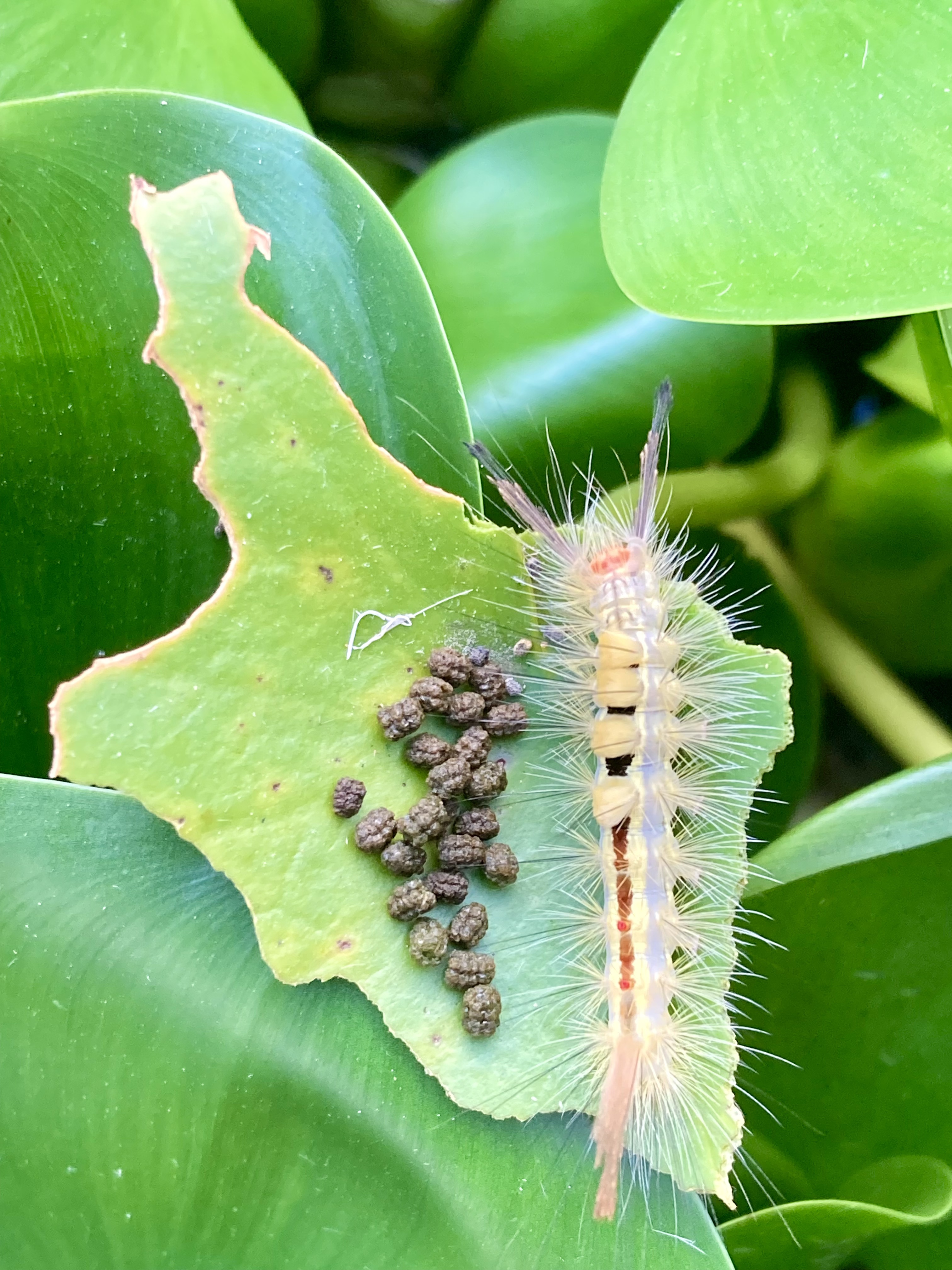
Larvae of Orgyia leucostigma feeding on Nymphaea odorata.
In early September 2024, I observed six mid- to late-instar larvae of O. leucostigma, each feeding on the leaves of Nymphaea odorata (Nymphaeaceae) that were growing in a small artificial “pond” in my St. Louis County, MO suburban yard. Unfortunately, these insects consumed every available leaf of N. odorata in the pond before they could pupate. The only other species in the pond available to them was the exotic Pontederia crassipes (water hyacinth), which they did not readily consume. I was able to locate and remove five final-instar larvae from the remnants of the original host leaves and placed them in an outdoor cage where they successfully switched to feeding on leaves of Quercus muehlenbergii and Q. imbricaria (both Fagaceae). Within seven days, all five larvae built cocoons to pupate within.
Larvae of Orgyia leucostigma running out of leaf. Leaves of exotic Pontederia crassipes (water hyacinth) seen surrounding hostplant leaf.
To my knowledge, this is the first documentation of a nymphaeaceous host plant for O. leucostigma, which expands the host range of this already highly polyphagous species by another family. Unfortunately, the caterpillars did not reach pupation feeding on N. odorata alone, so the ability of O. leucostigma to reach adulthood on this host cannot be confirmed yet. However, the fact that five larvae of O. leucostigma were able to reach the final larval instar feeding solely on N. odorata makes this highly likely.
Larvae of Orgyia leucostigma finishing its larval stage on leaves of Quercus imbricaria (shingle oak).
Life history of Orgyia leucostigma The lifecycle of O. leucostigma begins as an egg, typically laid in masses by the adult female. Eggs are laid in late summer or early fall on tree bark, branches, or other surfaces. A single female can lay anywhere between 100 to 600 eggs. These eggs are small, round, and white to pale yellow in color, and are coated in a protective frothy substance produced by the female to safeguard them from predators and environmental factors.
Two of five cocoons of Orgyia leucostigma that were raised primarily on the leaves of Nymphaea odorata.
Lepidopterans use a variety of strategies in overwintering. In the case of O. leucostigma, the eggs remain dormant over the winter, entering a state of diapause, a period of suspended development that allows them to withstand harsh winter conditions. They hatch in the spring when the weather warms, typically around late April or early May, coinciding with the budding of trees that will serve as food for the larvae.
One of five Orgyia leucostigma females that eclosed in late September and early October.
After hatching, the larvae emerge as small, hairy caterpillars. This larval stage is perhaps the most recognizable and distinctive phase of O. leucostigma. The caterpillars are known for their colorful and tufted appearance, with a series of tufts (or tussocks) of hair along their backs and two long black “pencils” of hair protruding from both the front and back ends. The body is primarily yellow or cream-colored, with a pattern of red and black markings.
One of approximately two-dozen male Orgyia leucostigma that were attracted to our screen porch, presumably by the pheromones released by the females.
As discussed above, the larvae feed on a wide variety of trees and shrubs, including both deciduous and coniferous species. In our area, oak, maple, and willow, are among the most common hosts. The larvae are voracious feeders and can cause significant defoliation when present in large numbers, which can lead to tree stress, although healthy trees typically recover without long-term damage.
The males found the stationary Orgyia leucostigma females once placed in their enclosure.
Once the larva has reached its final instar, it will spin a cocoon in a sheltered location, often on the trunk or branches of trees, beneath loose bark, or on the sides of buildings. The cocoon is made from silk and incorporates most of the caterpillar’s own urticating body hairs, offering added protection from predators.
Inside the cocoon, the caterpillar transforms into a pupa, a resting stage during which the most dramatic metamorphosis occurs. The pupal stage typically lasts 10-14 days, during which time the organism undergoes a complete transformation from a larva into an adult moth.
Upon completion of the pupal stage, the adult moth emerges. The adult form of O. leucostigma exhibits strong sexual dimorphism. The males are small, grayish-brown moths with a wingspan of about 25-35 mm. They have feathered antennae that they use to detect pheromones released by females from a considerable distance.
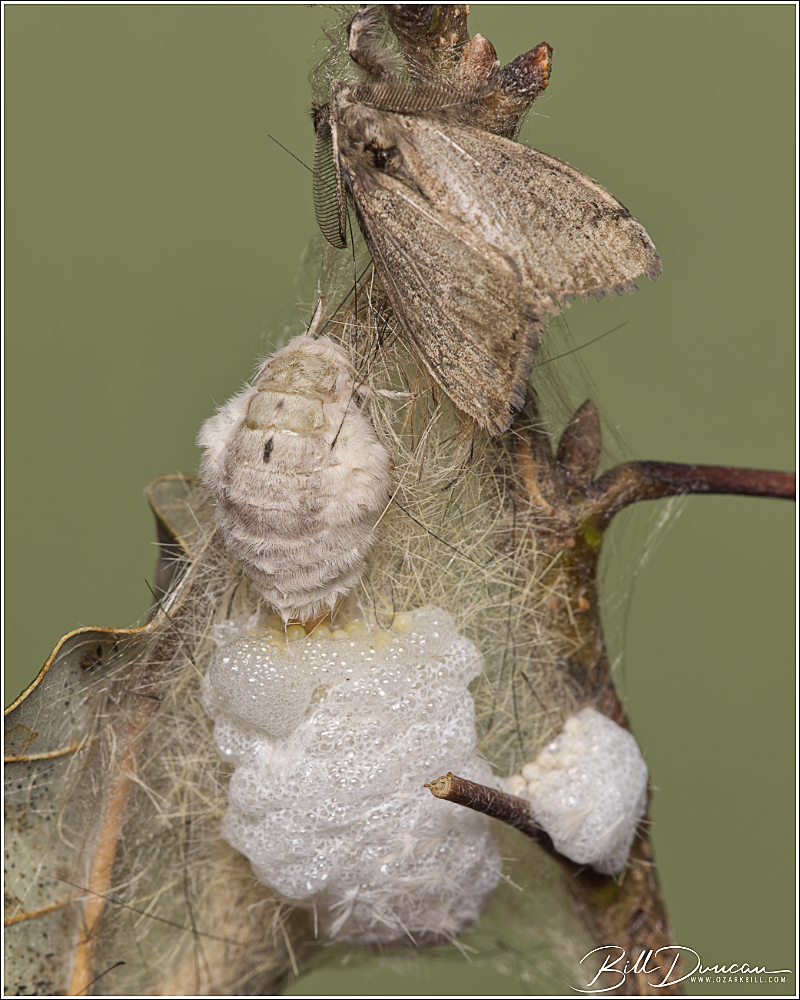
Within minutes of a presumed successful copulation, a female Orgyia leucostigma begins oviposition, forming a large foam-encapsulated egg mass.
In contrast, the females are wingless and remain on or near their cocoons after emerging. They are larger than the males and have a plump, cylindrical body covered with dense hairs. Since they are flightless, females rely on releasing pheromones to attract males for mating. After mating, the female lays eggs near the cocoon, starting the cycle again. The female typically dies shortly after laying her eggs, while the male lives a few days longer in search of other mates.
Due to the stationary habit of the females, it is fascinating that all dispersal is dependent on the larvae in this species. To do this efficiently, early-instar larvae will often “balloon,” letting out an amount of silk to catch the wind, thus allowing them to move to new areas much quicker than by crawling. This dispersal mechanism is also practiced by many spiders.
A worn male Orgyia leucostigma rests nearby as the female continues to oviposition.
In this specific case, all five of the pupa that I reared produced female adults and each of these eclosed exactly 10 days after cocoons/pupa were formed. At dawn of each morning following the females emergence, I walked the outside perimeter of our screened porch wherein the screened moth enclosure was contained. Each morning I found up to six male adult O. leucostigma that I captured and placed in the enclosure containing the females.
The extent of the egg masses of Orgyia leucostigma was astounding. The females were mostly eggs!
Mating appeared to be very brief and within minutes of contact by a male, each female began ovipositing. It was quite shocking observing the differences in size of the females before and after their egg masses where completed. See photos below that I attempted to document these changes.
A nearly completed Orgyia leucostigma egg mass along with her larger and older sister and a potential mate.
While observing and photographing these activities, I happened to notice that a jumping spider (F. Salticidae) was attacking one of the females prior to her ovipositing. The spider must have come from the oak branches that I placed in the enclosure to finish rearing the caterpillars. I took enough time to take a few photos of this and then removed the spider with a pair of forceps. I noticed a drop of hemolymph on the back of the female after removing the spider. However, the female did not seem too bothered by this and created her egg mass within a couple of hours of this incident.
A female Orgyia leucostigma that was attacked by a jumping spider (fam. Salticidae) that must have been hiding within the oak branches. The spider was removed and although it is likely the moth received a wound, she later completed ovipositioning.
Caterpillars of this species are often found during my caterpillar hunts. Sometimes they are so plentiful as to be annoying when hoping for rarer quarry. I had read about the stationary eggbound females of this species but had little hope of ever actually seeing one in person. I very much enjoyed documenting these activities and I will try my best at overwintering these egg masses to fruition.
Literature Cited
Robinson, G. S., P. R. Ackery, I. Kitching, G. W Beccaloni and L. M. Hernández (2023). HOSTS (from HOSTS – a Database of the World’s Lepidopteran Hostplants) [Data set resource]. Natural History Museum. Available from https://data.nhm.ac.uk/dataset/hosts/resource/877f387a-36a3-486c-a0c1-b8d5fb69f85a (last accessed 16 Sep 2024).
Today I am featuring a guest post by my friend, Casey Galvin, who has spent ample time and efforts photographing rare skippers in recent years. Enjoy!
Butterflies through time have been written about more than any other insect. Their beauty and life cycle are a thing of wonder. Who doesn’t enjoy watching their flight on gossamer wings? Or, the idea to metamorphose from a crawling caterpillar into something that is not only colorful, but to be able to leisurely flutter? No wonder philosophers, artist and poets can’t stop from being in their thrall.
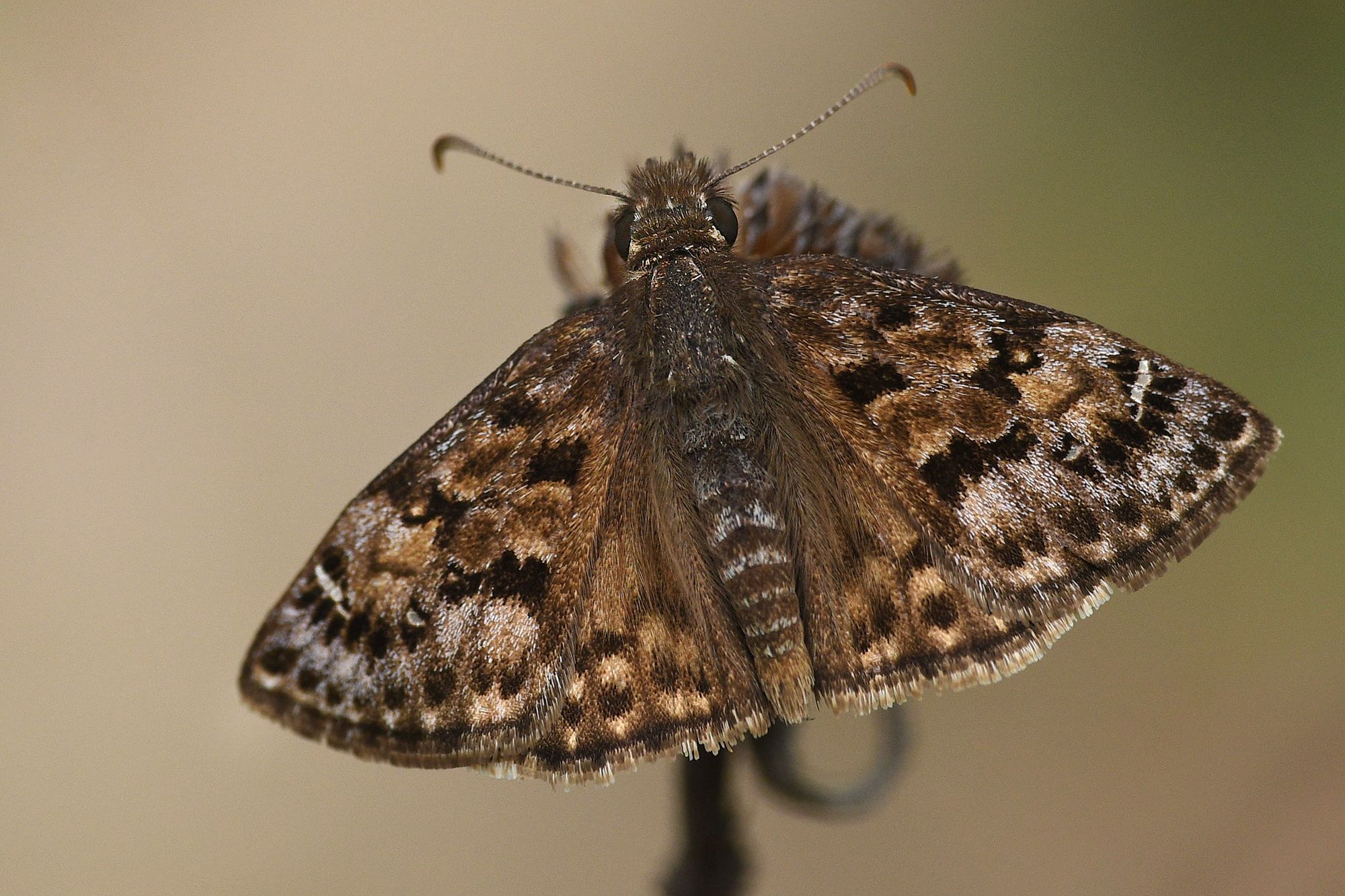
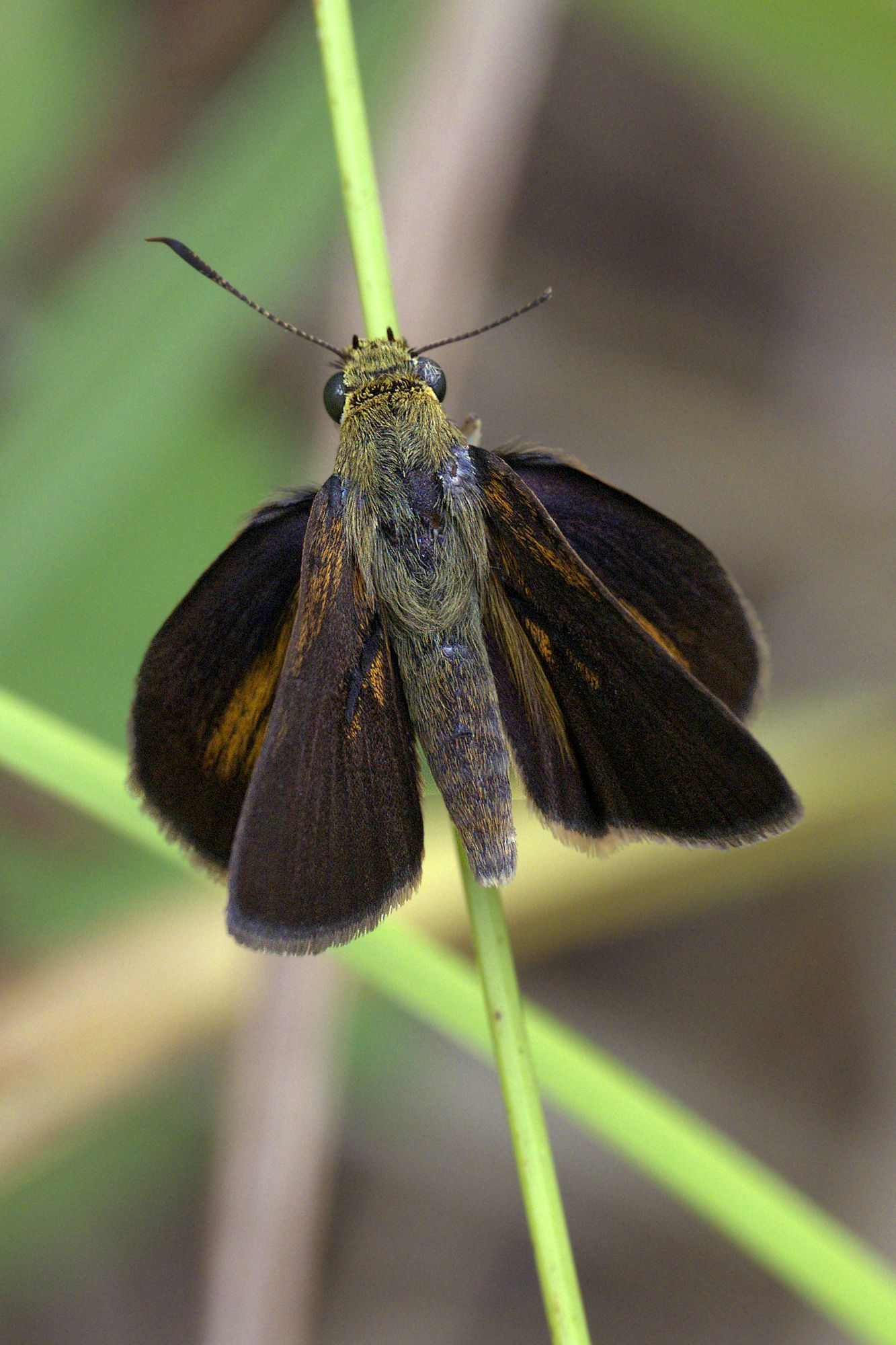
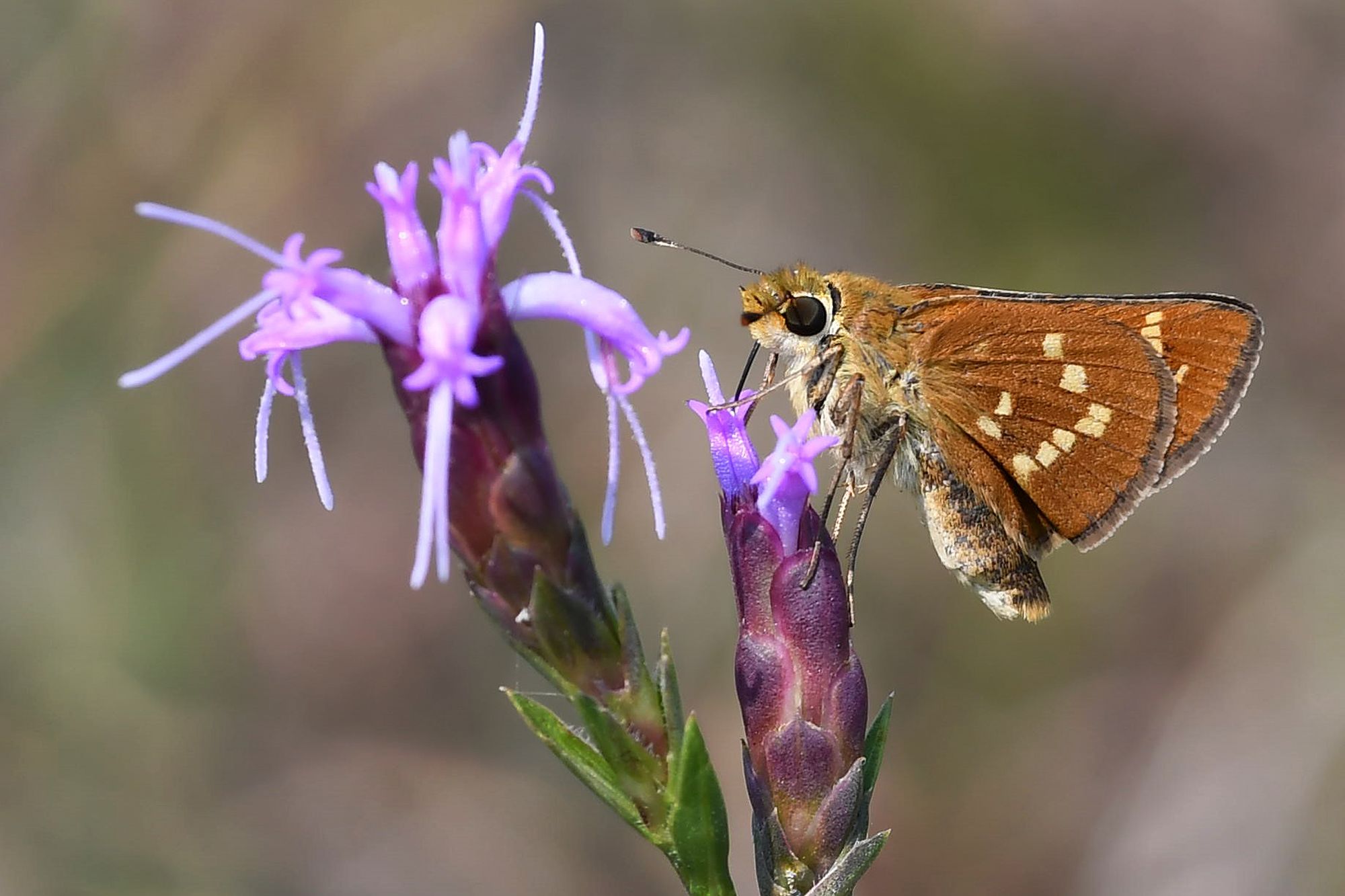
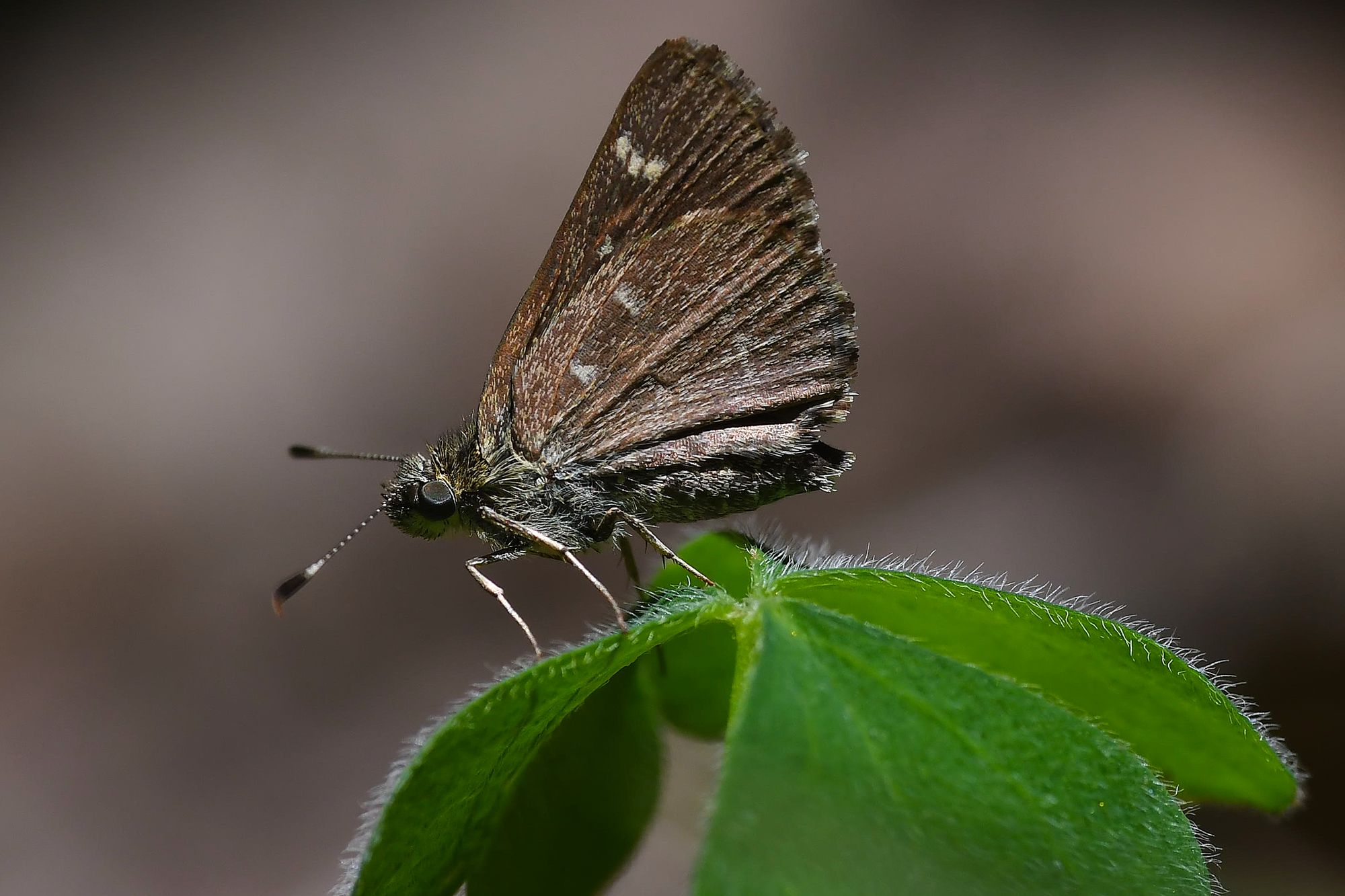
A spreadwing skipper that was once widely found, the mottled duskywing (Erynnis martialis) is now known from local and isolated populations. A species of concern in many states.
Unfortunately, not all members of the order Lepidoptera are given their just attention. Skippers, those brown moth-looking butterflies, which never seem to sit still and dart quickly from here to yon, are usually given a passing notice at best. Yes, they go through the same life cycle as other butterflies, egg to larva to pupa and then adult. They also serve the same important ecological functions that the rest of the order does. But it is hard for many to see their beauty in any of this when they look so small and often seem so drably colored.
Then there are those lucky enough to look closer and try to appreciate these creatures, opening up opportunities for exploration and adventure in finding and understanding this unique family – the Hesperiidae. If you would like to be in the latter group there are a few things to consider to help in this endeavor.
Duke’s skipper (Euphyes dukesi)
Skippers in the U.S.A. can be broken into three subfamilies within the family Hesperiidea. These are the Pyrginae (spreadwings skippers), Hesperiinae (Grass skippers) and the Heteropterinae (skipperlings). The first two groups have hooks at the terminal end of their antennae, whereas the skipperlings do not.
And now to the challenges which I call the three phonetic “F’s”. Finding them, Photographing them and then Figuring out what you have.
Dion skipper (Euphyes dion)
Finding them. A key component of finding any living subject is to know their lifestyle. For many insects finding the host plant that the larval stage feeds on is critical. Without the host plant finding the adult can be difficult. The adult females need to lay her eggs on or near the host plant to allow the life cycle to begin. Knowing the flight time for adults is also important. Many of the most frequently seen skippers have two or more generations or broods (known as “polyvoltine”) within a single growing season. Others might have only one generation, or “univoltine,” making for short yearly adults periods. Rarer species usually have fewer annual flight periods.
Assuming you have found your subject, You are now ready to try and photograph them. Like many insects, skippers are part of the food chain and are aware of their surroundings. Quick movements, casting your shadow across them, or disturbing the platform they are resting, feeding or searching for a mate on may cause them to flush, thus foiling your chances. To be successful, making yourself as small or low to the ground as possible helps tremendously. Walking on your knees or even crawling to get as close to the subject as possible is not out of the question. Also, paying attention to where your shadow is cast is important, as this sudden change may indicate a potential predator. Be aware of the platform the animal is on and how your movements might affect the platform helps in approaching the insect. Does this work all the time? No, but with patience and practice will come success.
The wild indigo duskywing (Erynnis baptisiae) uses wild indigo (Baptisia spp.) as hosts
Once in a close enough position, try your best to align the plane of focus of your camera’s sensor with that of the butterfly, making sure the subject’s eye is the sharpest part of the image. Try to take as many images of the subject as possible, and make sure to document the sides of both fore and hind wings in the closed (ventral) and open (dorsal) positions, if possible, looking for scale patterns. This will help tremendously in the next process.
For my skipper photography, I use a Nikon D500 attached to a Sigma 180mm f2.8 macro lens. My ISO is typically set to 400 and I use Aperture Priority mode, with my f stop set at f6.3-11 and with autofocus turned on. I will change to fully manual mode and change my ISO and f stop occasionally when necessary. I will also switch off my autofocus if I need to. I carry a flash, but rarely use it, preferring natural lighting. With this photography I usually hand hold my camera.
With the loss of prairie, the Ottoe skipper has disappeared from most states in which it was once found
Once you have accomplished your goals in the field of collecting as many great images as possible, you are now ready to head home and figure out what you might have. This is often the most challenging phase of this process.
How they hold their wings is the first way to know which group a skipper belongs to. When they land, the spreadwings group usually put both sets of wings in a flat plane. The grass skipper group normally keep their wings closed, but can also put one set flat and the other perpendicular to the flat wings giving them a fighter jet look. These butterflies can also flatten the wings like the spreadwing group and usually do this when they are trying to warm themselves in the morning sun before flying. Skipperlings usually spread their wings at a 45 degree angle at rest or keep them closed.
The location where subject was found, local plants (hopefully the host you were looking for) and the time of year will definitely help in identification. Scale patterns will certainly be needed also. It might take some time looking at reference books and online resources to get an identification. Several skippers may have nearly identical patterns. Looking at the details matter in this step.
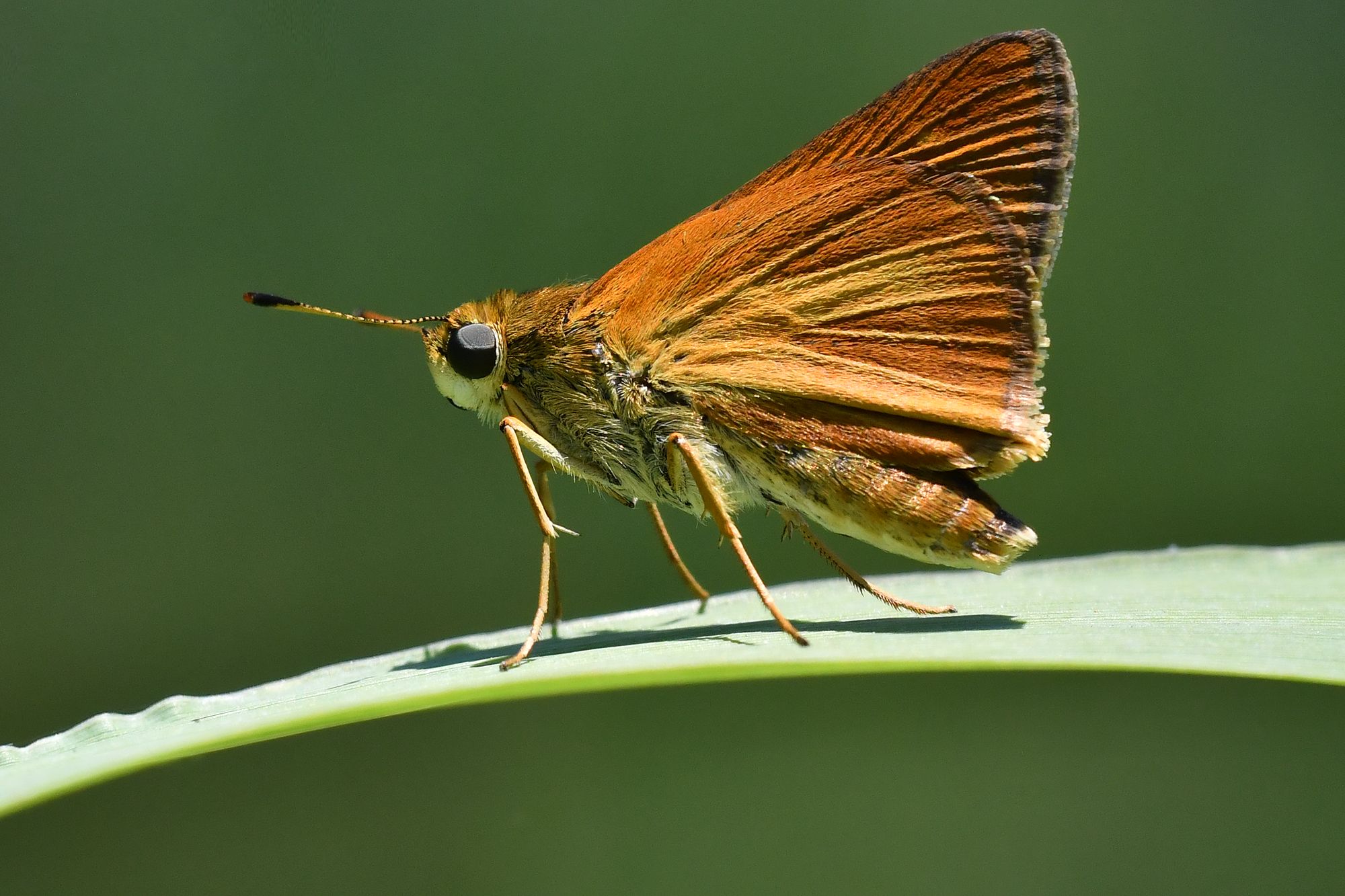
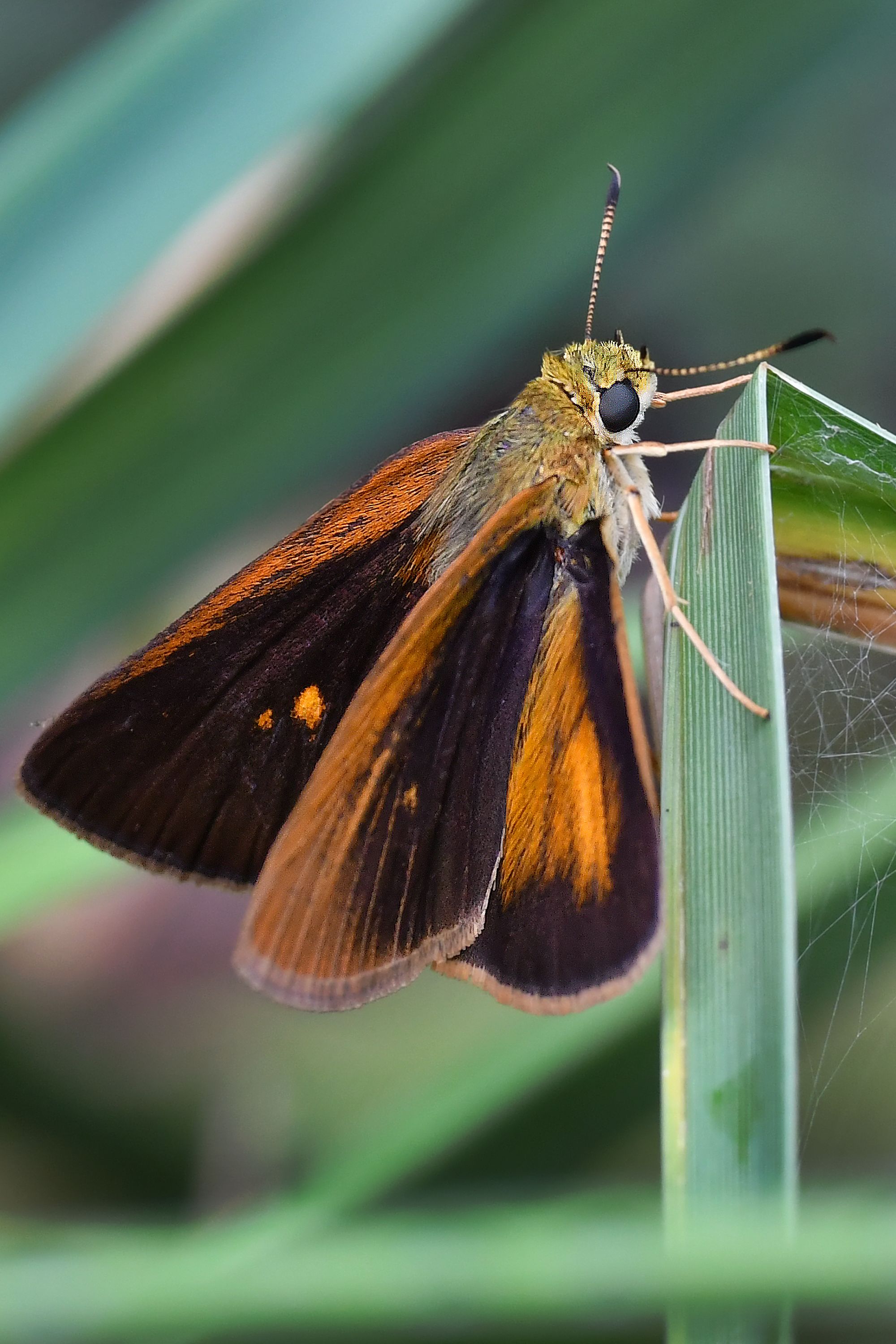
One of the more colorful skippers, Leonard’s skippers prefer grasslands. Still widespread but losing populations with habitat loss.
If you are still stumped after using reference guides and online resources, you might consider taking the next step of seeking help. Web sites like iNaturalist and Butterflies and Moths of North America allow you to create an account and then upload your photographs to have experts in the field help with identifying the subject.
With practice and experience, all the above methods help to make this less stressful and increases your chances for success. Making new acquaintances also becomes rewarding. Many photographers choose new projects in order to improve upon existing or make new skills. This is the latest one I have chosen.
Many of my natural history friends had just two question when I took on this subject. Why? Or really Skippers?
Here are my some of my reasons: Many of the skipper species are not looked for at all. In many cases, there is little information on whether or not a species may still be found at historical location records. Grass skippers, in particular, seem to be disappearing widely, especially ones that have only one or two broods per year. Secondly, I personally like grasslands, tallgrass prairie in particular. This biome and its skipper inhabitants have pretty much disappeared from North America along with the rest of its flora and fauna. To find some parts of it still among us is rewarding. Finally, I like to travel and explore. Even returning to well-known haunts, allows me to look at these sites from a different perspective.
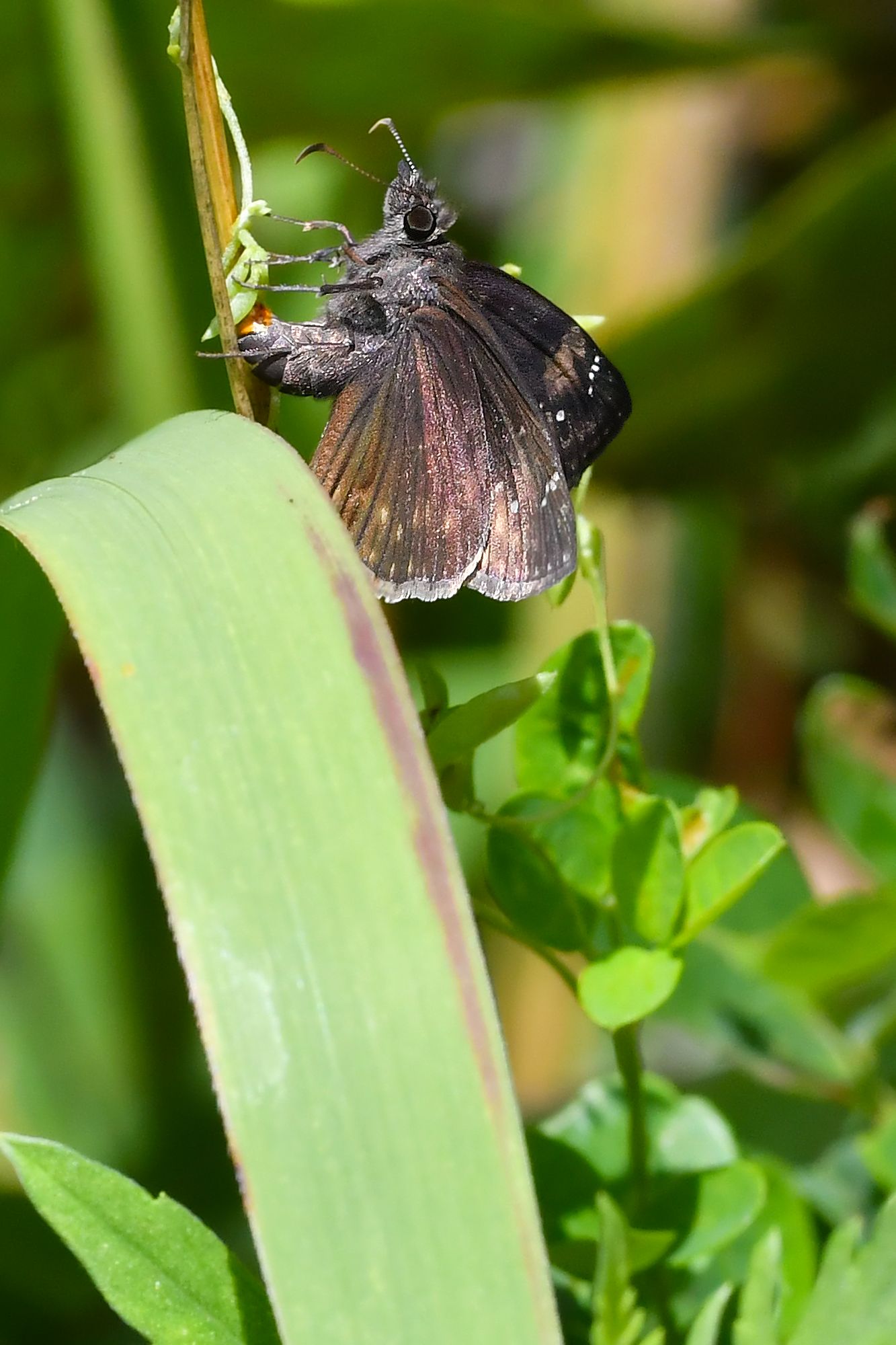
Linda’s roadside skipper (Amblyscirtes linda) is a species of conservation concern in every state that still contains populations.
There is still a small group of scientist and enthusiasts that want to keep these wonderful creatures around. We would like others to join our tribe. Why not become one also?
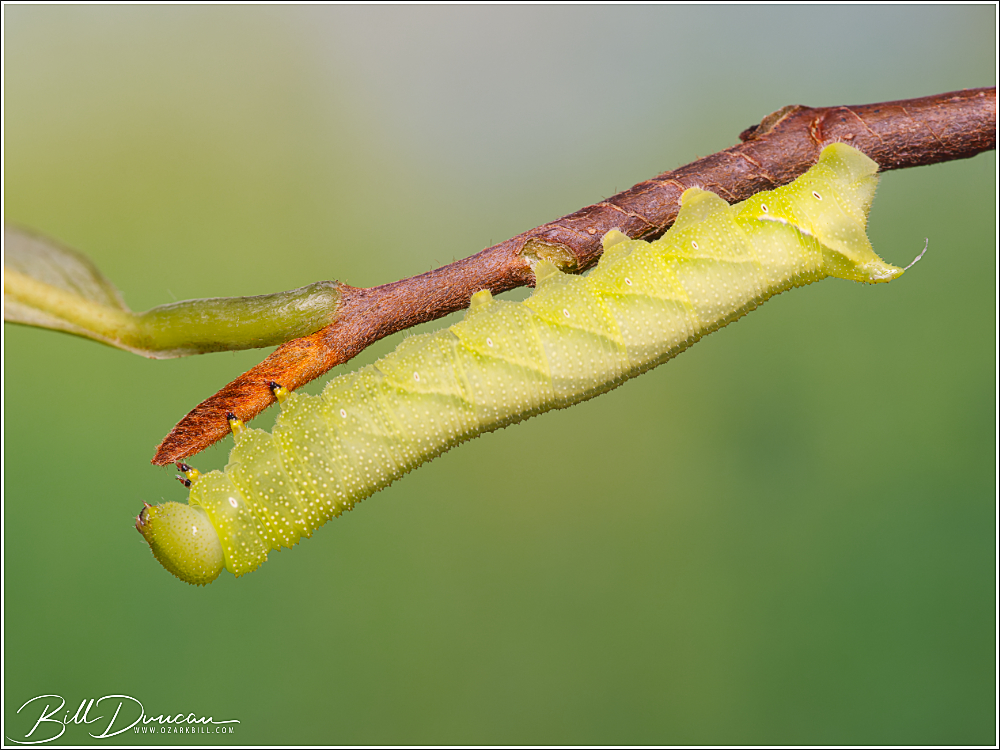
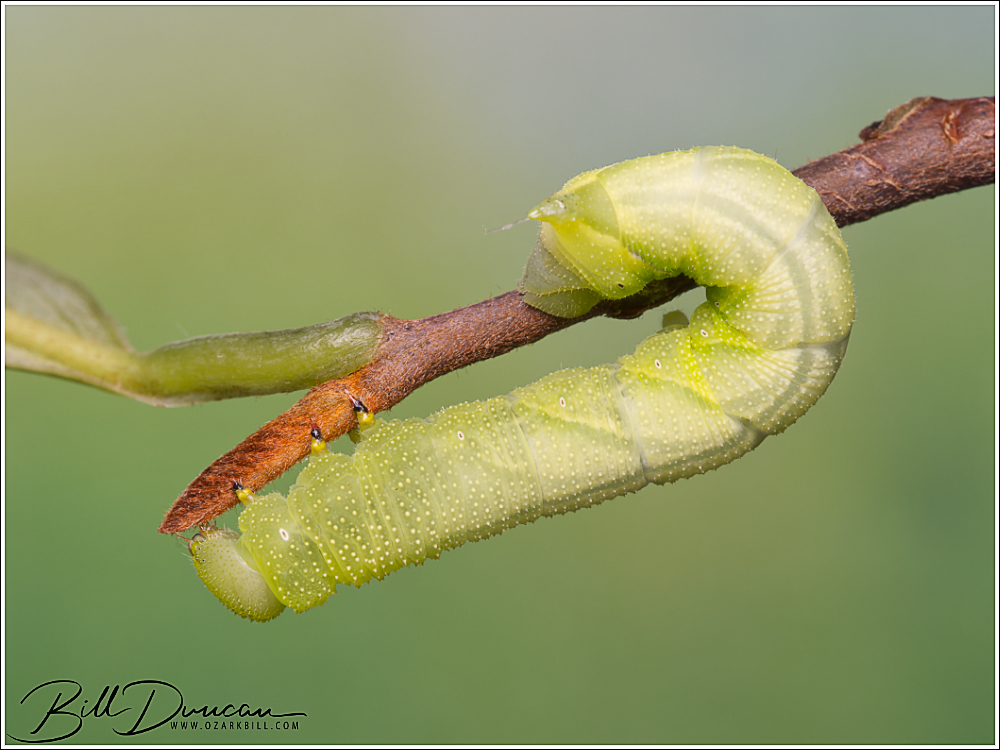
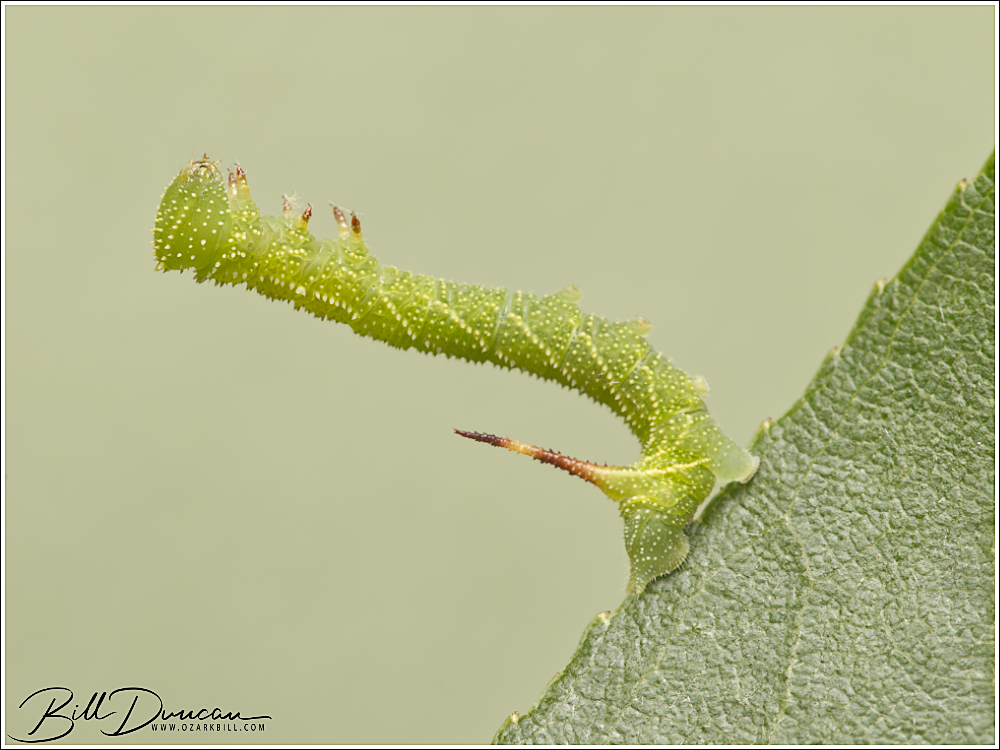
Today’s caterpillar is from another monotypic genus in the family Sphingidae. The pawpaw sphinx (Dolba hyloeus) hosts not only on pawpaw (Asimina triloba), but also on hollies-Ilex and blueberries-Vaccinium. This animal was found on A. triloba in early August at Babler State Park in St. Louis County, MO.
Today’s caterpillar is a little confusing in a a couple of ways. This individual is either Erynnis juvenalis (Juvenal’s duskywing) or E. horatius (Horace’s duskywing). Both species look pretty much identical as larva and both use several oak species as host plants. I’m no expert but it seems that these are best identified to species in their adult form.
Which dusky you be?
The second confusing thing is that I found this individual while beat-sheeting a small ash tree (Fraxinus sp.) in mid-July at Onondaga Cave State Park in Crawford County, MO. From my understanding, both species are obligate oak feeders. This might mean it had fallen from a higher oak and landed in the ash tree, or it might be pre-pupal and looking for a place to pupate. Most often Caterpillars move from their host plants to pupate in a neighboring tree or plant.
Juvenal or Horace?
If you have any thoughts or tips on how I might discern this guy to species with just a couple of simple photos and the information I supplied, please let me know.
For tonight’s caterpillar, I am featuring the Sphingidae family member, Amorpha juglandis – the walnut sphinx moth. This is the only species in the monotypic genus, Amorpha, a name that is shared with a plant genus that holds our leadplant (Amorpha canescens) and false indigo bush (A. fruticosa). This name comes from the Greek – amorphos- meaning formless or mishappen. This describes the lack of wing and keel petals of the corolla of these beans. For the moth, I am not completely certain, but it may have to do with the unique shape and placement of the rear wings when this moth is at rest. This species is very easily identified in both larval and adult forms.
First up are a couple of early instar brood mates that I found on the same walnut tree in mid-July at Kaintuck Hollow in Phelps County, MO.
Next up is an older cat found at Schoolcraft Prairie in Washington County, MO in mid-August. Caterpillars of this species at this stage are infamous for its defensive displays when harassed, including emitting a high-pitched squeak, thrashing and biting. Unfortunately, this one was pretty chill, so I could not show this off to the folks I was with.
Amorpha juglandis – the walnut sphinx moth
Finally, on the same night we photographed the caterpillar pictured immediately above, an adult male moth was attracted to our blacklight setup. This was my first looks at the adult form of this species.




















 A Thousand Acres of Silphiums