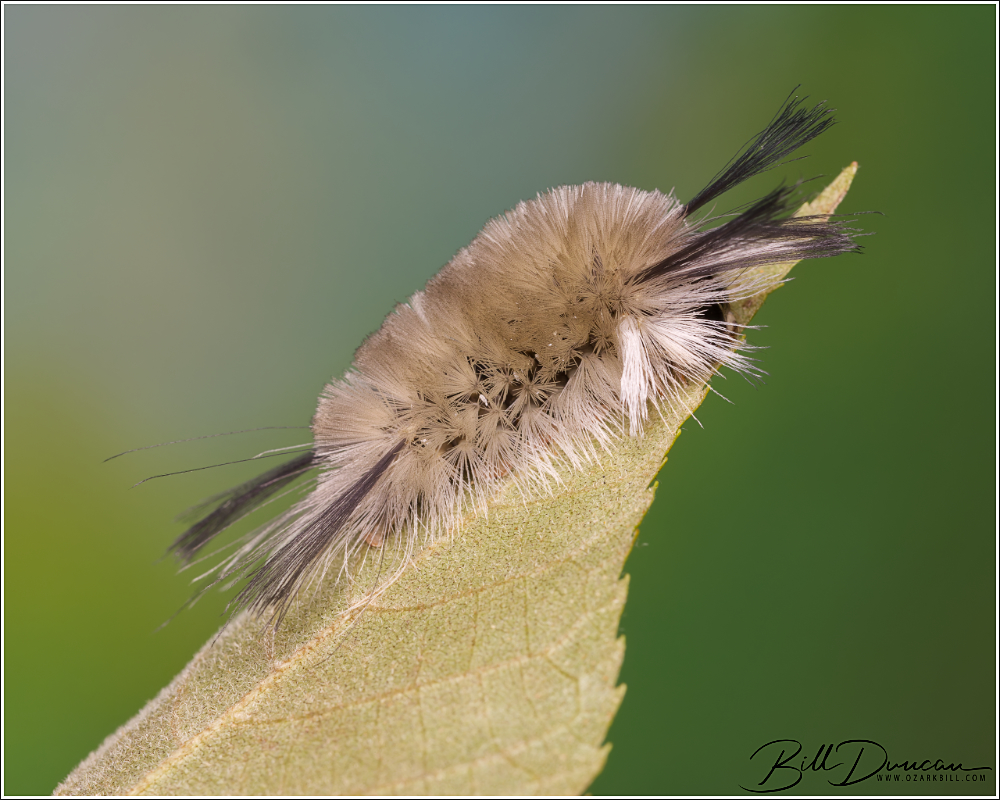
2025 Caterpillar Season – Salt Marsh Moth

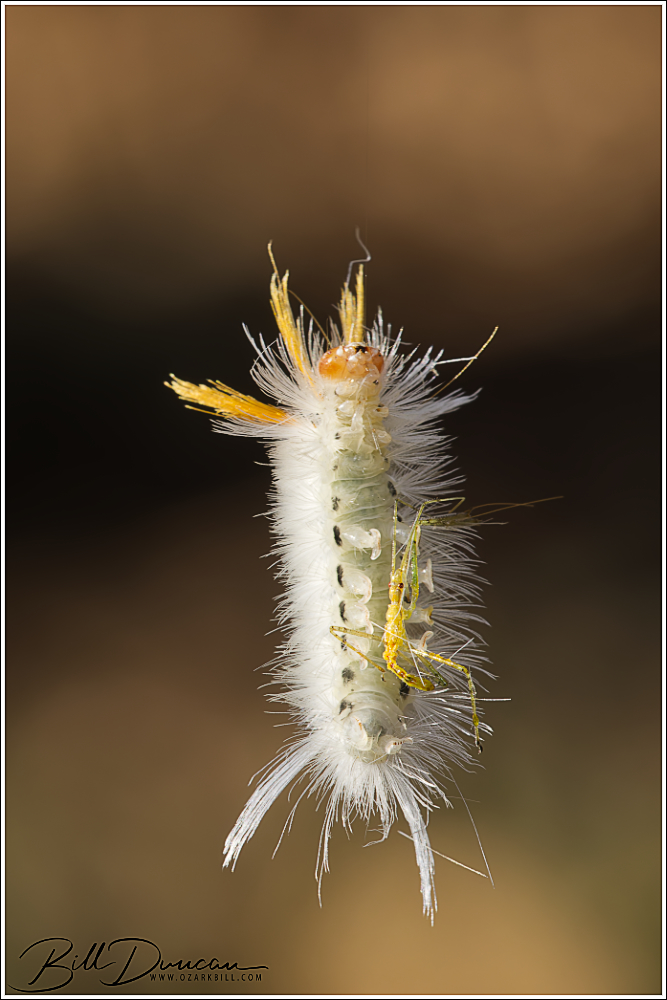
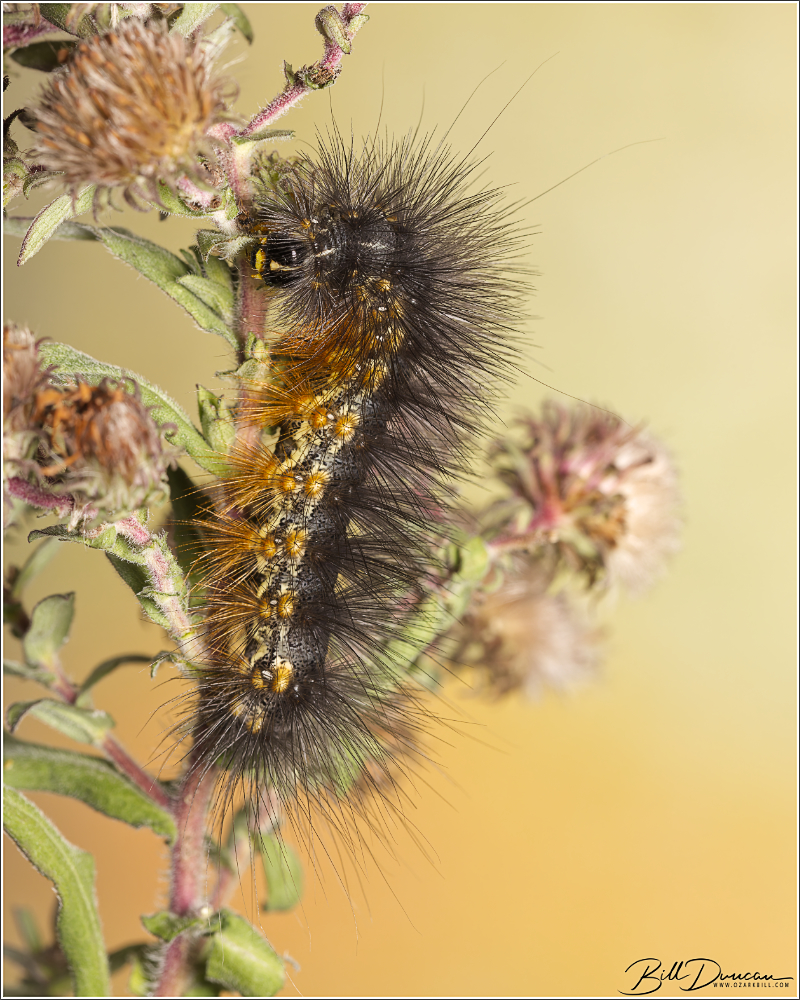
Salt Marsh Moth
Estigmene acrea fam. Erebidae (Hodges#8131)
Host plant: Found on New England aster (Symphyotrichum novae-angliae)
Date found: 11 November, 2025
Location found: Weldon Spring Interpretive Center, St. Louis County, MO
Notes: Feeds on a wide variety of herbaceous plants.

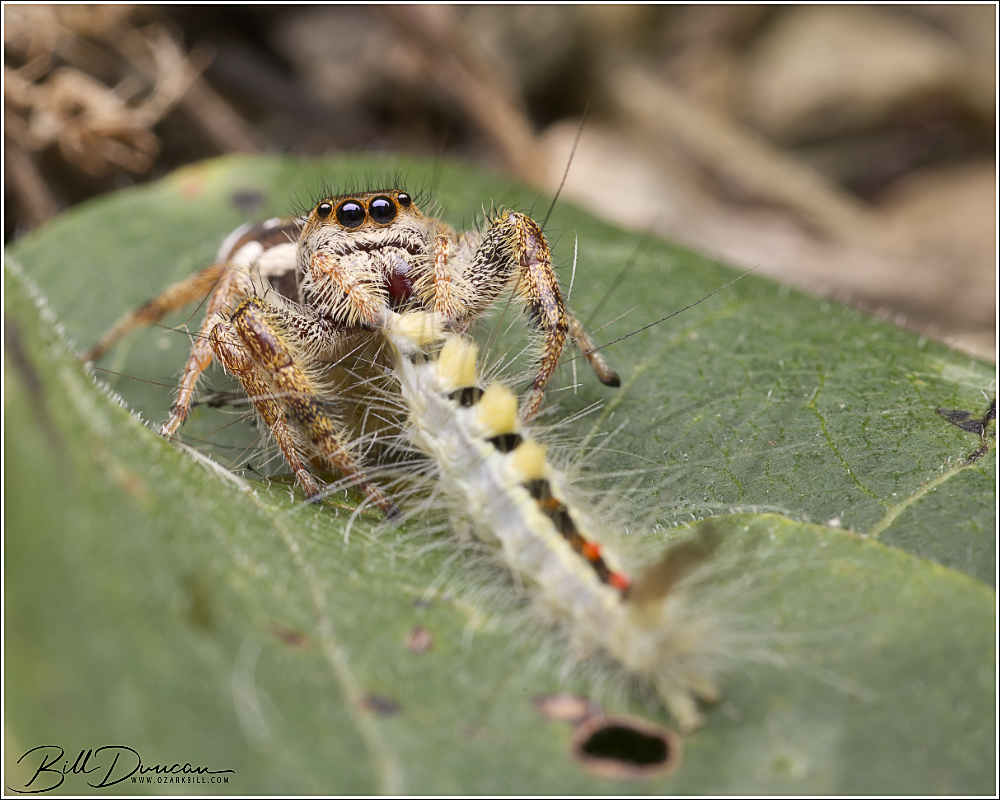
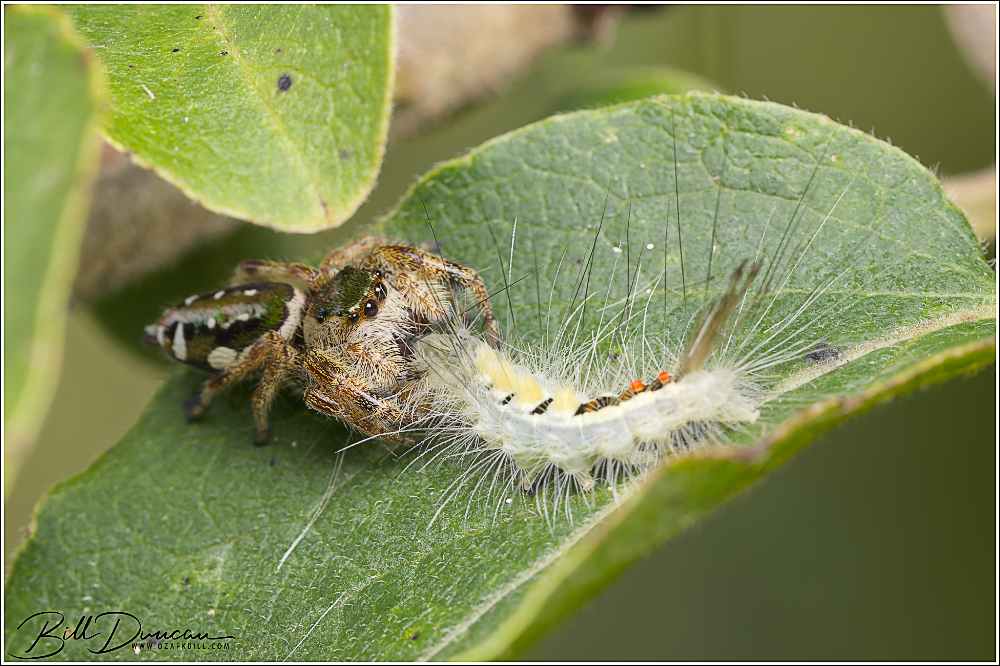
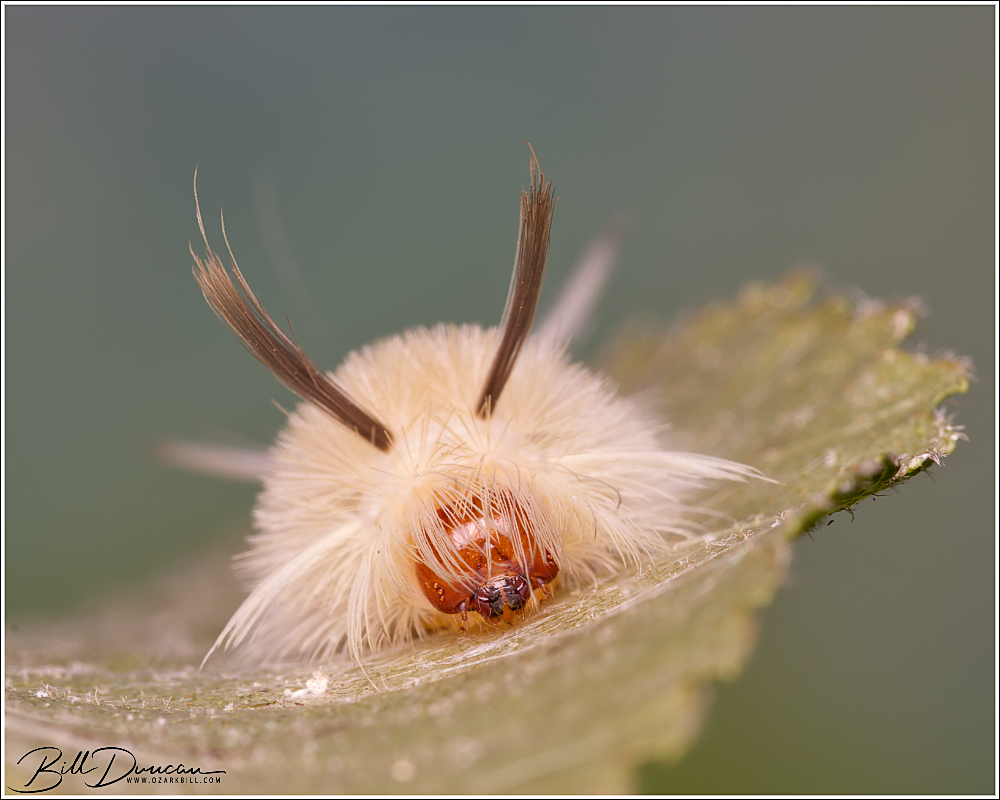
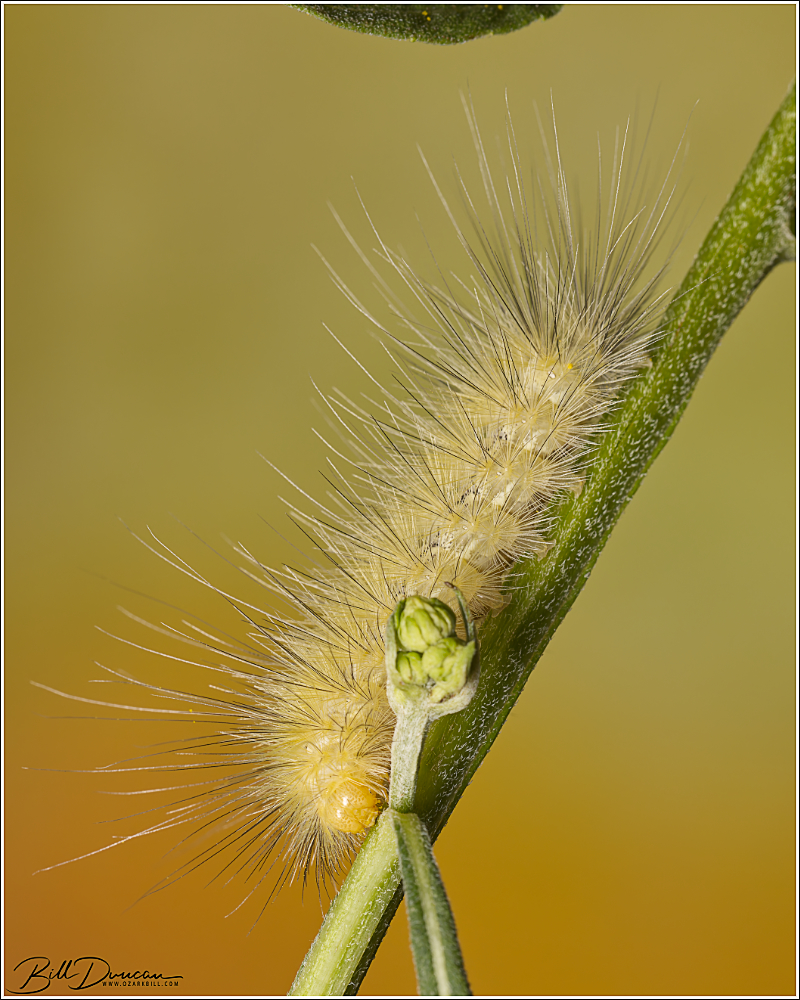
2025 Caterpillar Season – Virginian Tiger Moth

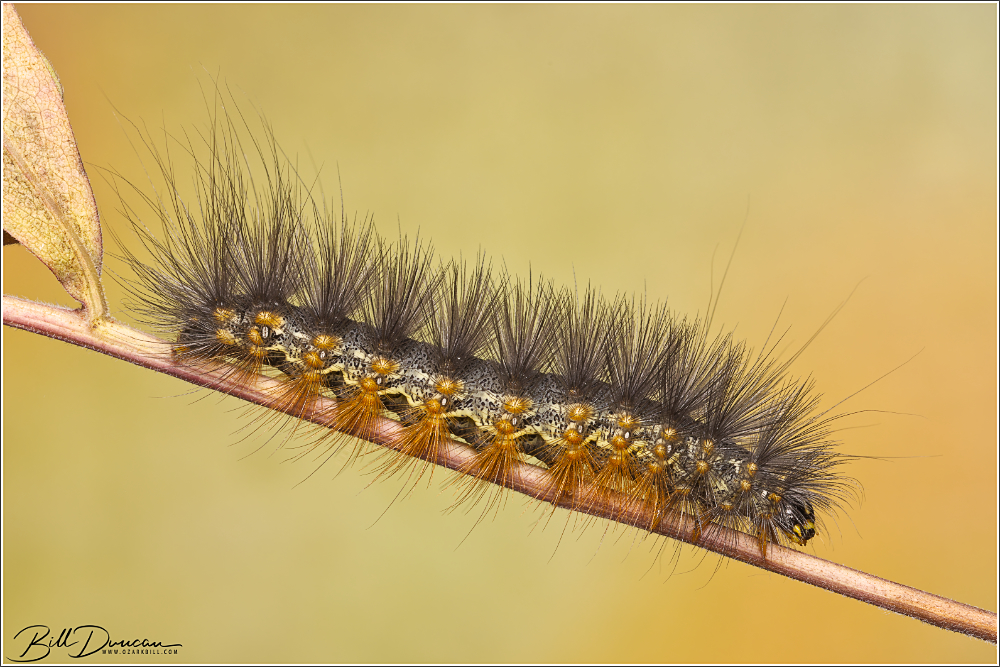
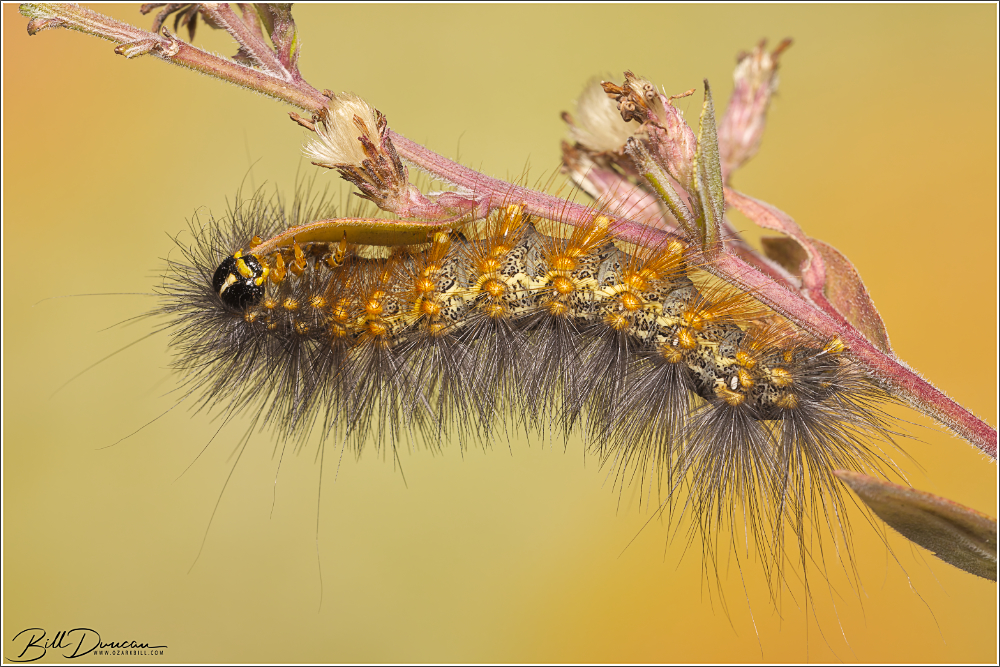
Virginian Tiger Moth
Spilosoma virginica fam. Erebidae (Hodges#8137)
Host plant(s): Found on wingstem (Verbesina alternifolia), swamp white oak (Quercus bicolor) and black willow (Silax nigra)
Date(s) and location(s): 13 September, 2025 – Tyson Research Center, St. Louis County, MO; 17-September, 2025 – Little Creve Coeur Ecological Area
Notes: Also referred to as the yellow wooly bear, this species is highly polyphagous.

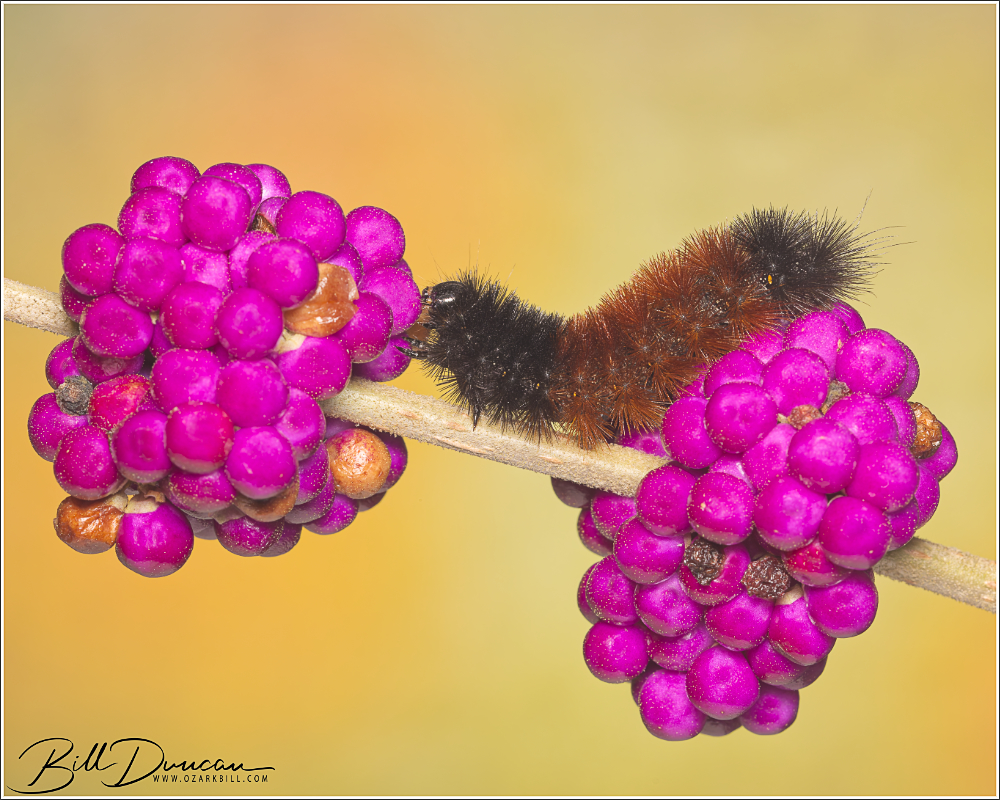
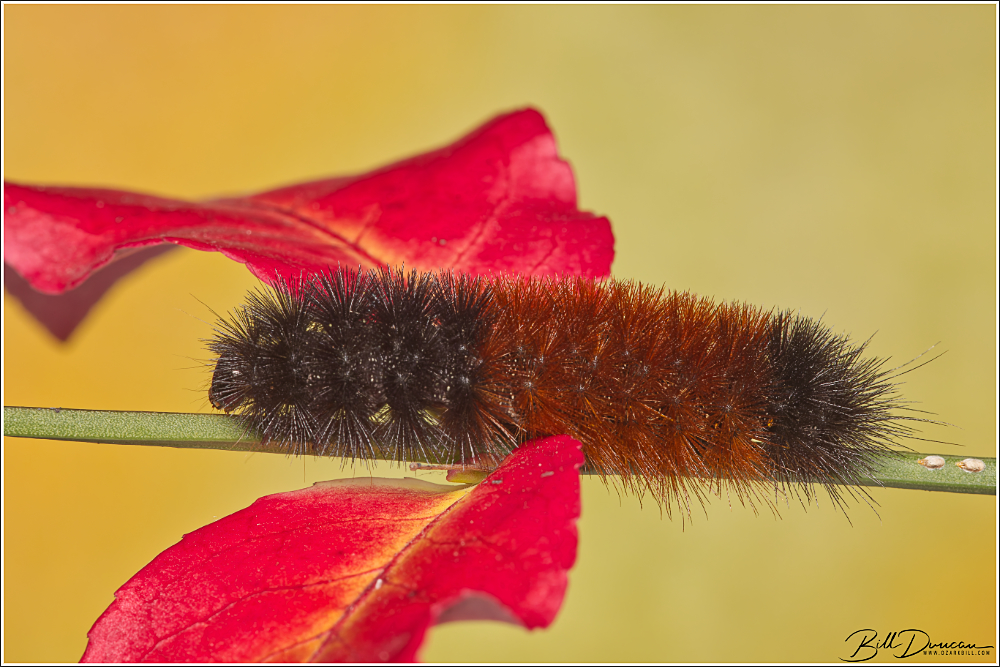
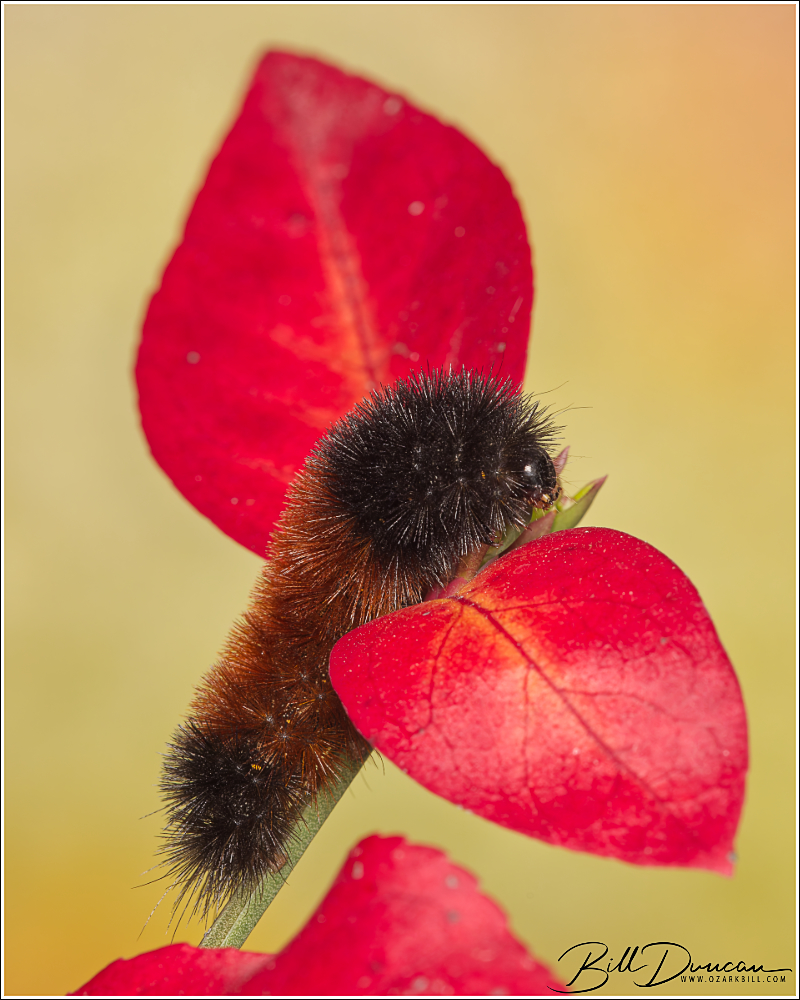
2025 Caterpillar Season – Wooly Bear

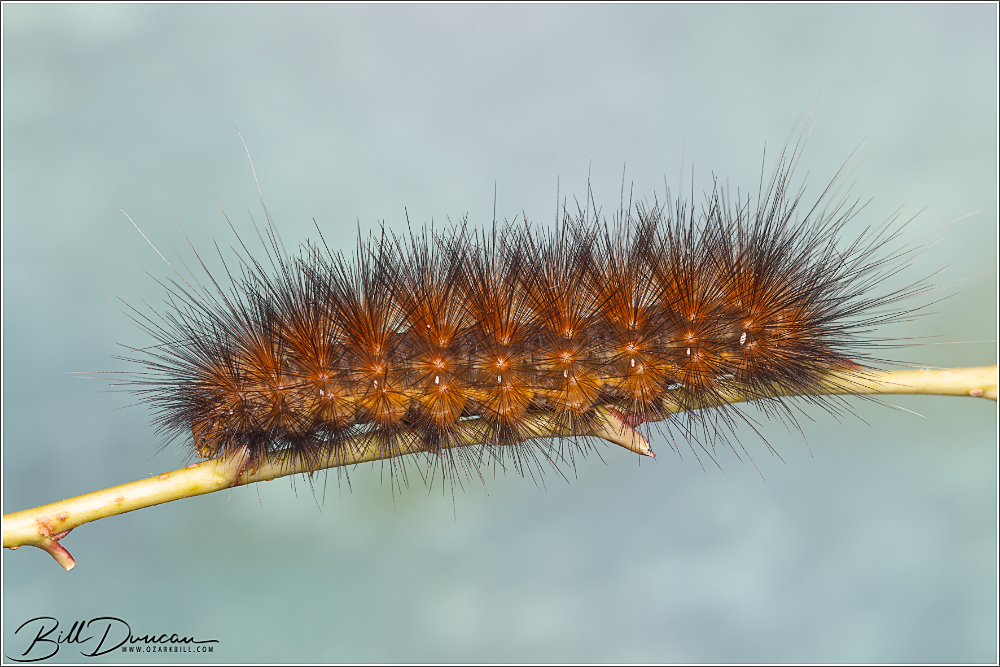
Wooly Bear
Pyrrharctia isabella fam. Erebidae (Hodges#8129)
Host plant(s): Found wandering
Date(s) and location(s): 08 November, 2025 – Riverlands Migratory Bird Sanctuary, St. Charles County, MO
Notes: Perhaps the most widely known caterpillar by the general public, the wooly bear is known as the Isabella tiger moth in its adult form. The caterpillars are often found crossing paths and roads during autumn, for reasons not fully understood. This species is highly polyphagous, eating a variety of trees, forbs and grasses. I chose some season-appropriate plants (Callicarpa americana & Euonymus americanus) from the backyard to photograph this caterpillar exploring.

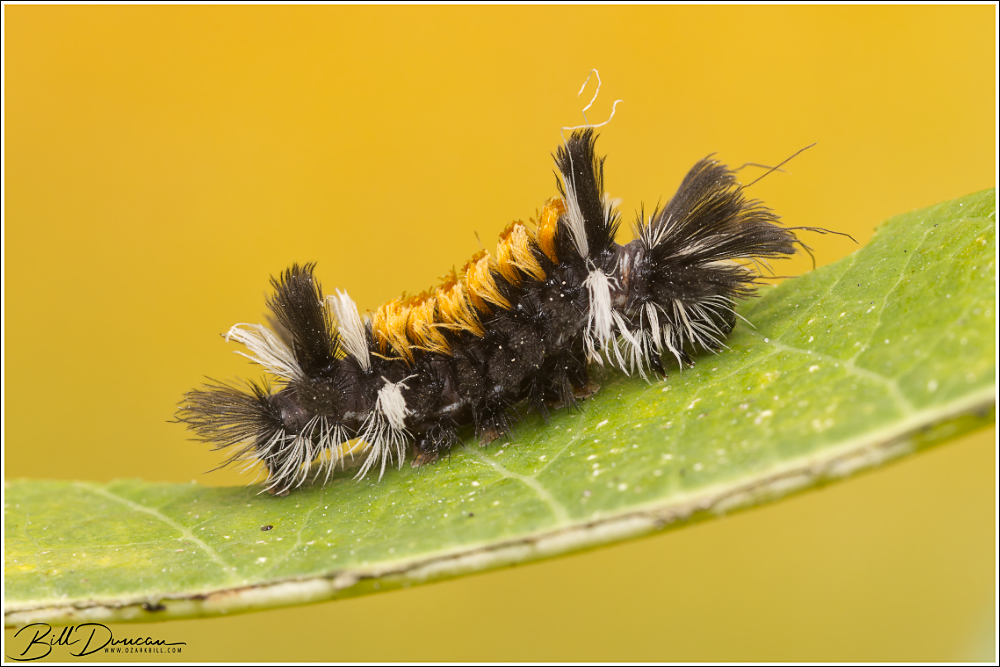
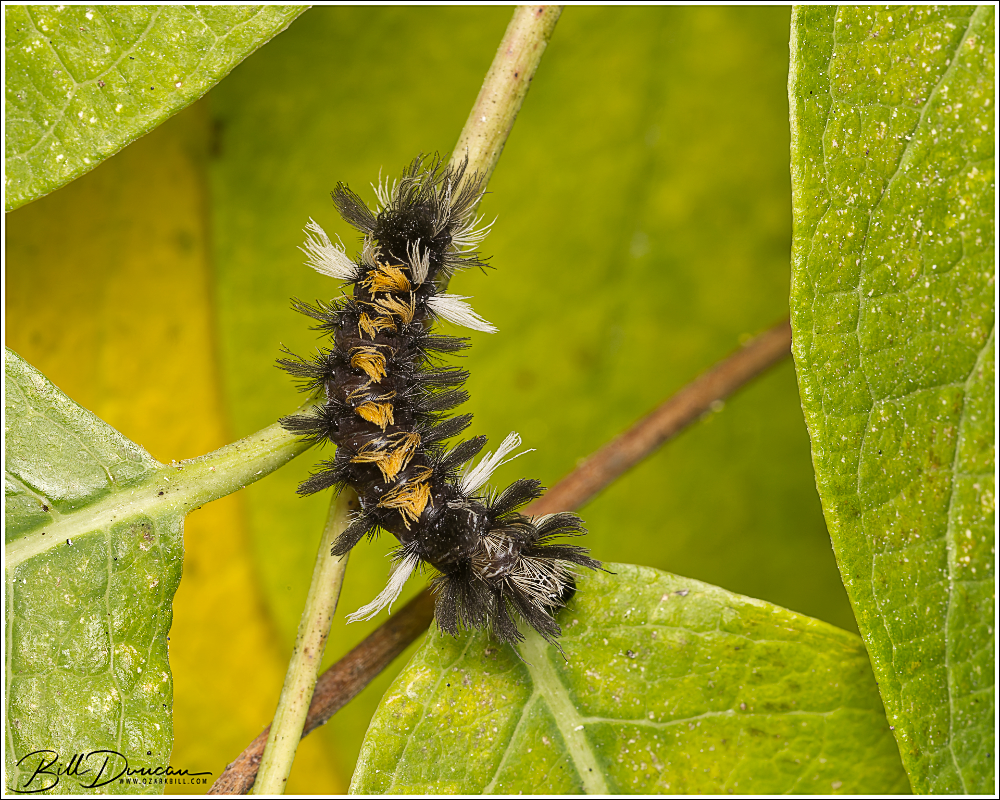
2025 Caterpillar Season – Milkweed Tussock Moth

Milkweed Tussock Moth
Euchaetes egle fam. Erebidae (Hodges#8238)
Host plant(s): Found on dogbane (Apocynum cannabinum)
Date(s) and location(s): 30 August, 2025 – Tyson Research Center, St. Louis County, MO

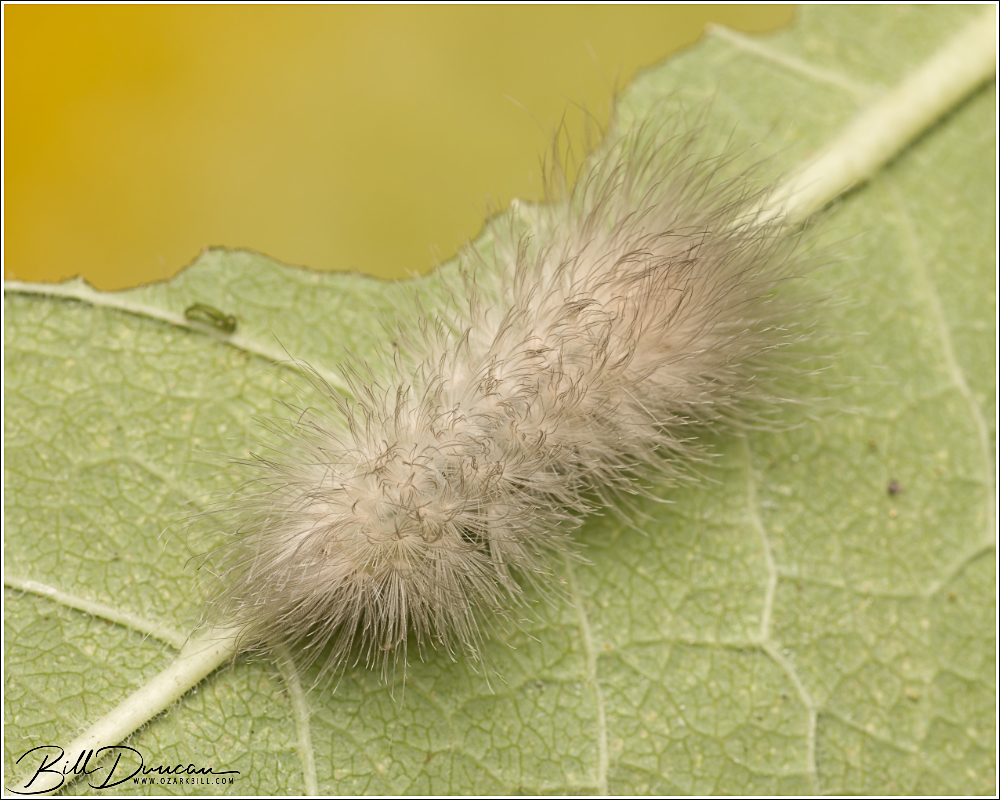
2025 Caterpillar Season – Delicate Cycnia

Delicate Cycnia Moth
Cycnia tenera fam. Erebidae (Hodges#8230)
Host plant(s): Found on dogbane (Apocynum cannabinum)
Date(s) and location(s): 30 August, 2025 – Tyson Research Center, St. Louis County
Notes: This species is a specialist on dogbane and milkweed (Apocynaceae). Adult moths have been observed to produce clicking sounds during flight in response to receiving echolocation signals from bats. It has been shown that these clicking responses led to a lower rate of predation from bats. This may be due to an aposematic warning signal due to the accumulation of cardenolides and cardiac glycoside from their larval host plants, or the clicking noise response may be interfering with the bats echolocation during the hunt.

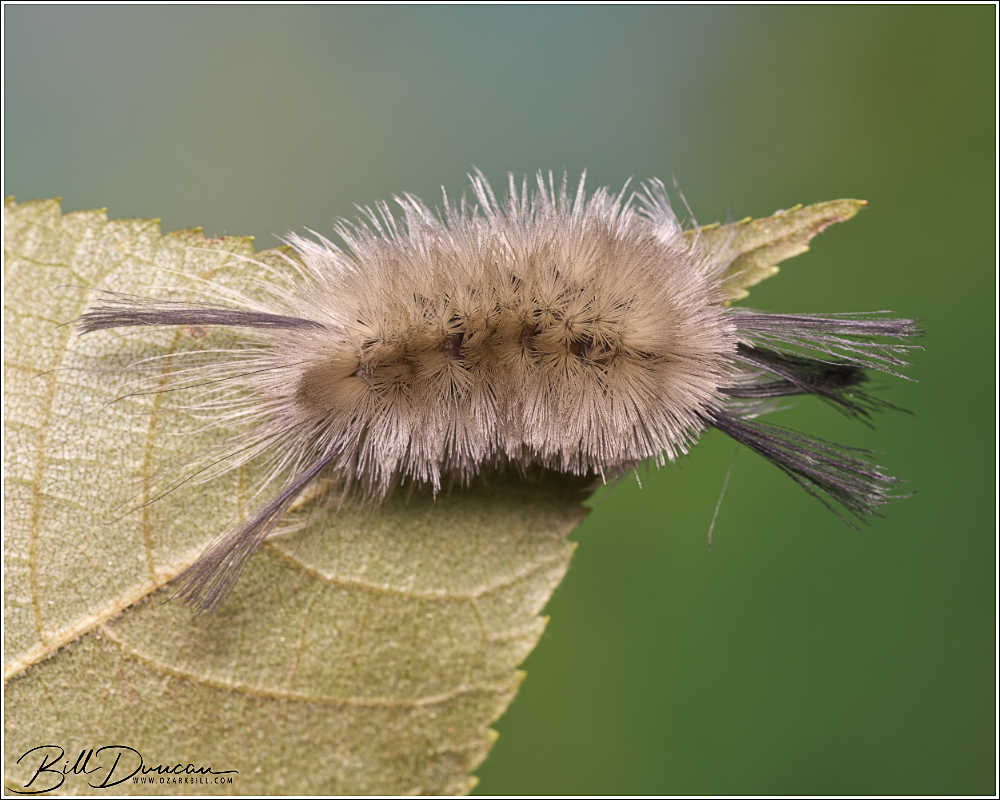
2025 Caterpillar Season – Banded Tussock Moth

Banded Tussock Moth
Halysidota tessellaris fam. Erebidae (Hodges#8203)
Host plant(s): Three individuals found at this date and location, all found on hickory (Carya sp.)
Date(s) and location(s): 23 Aug, 2025 – Tyson Research Center, St. Louis County, MO
Notes: A very common and highly polyphagous species. The attractive adults are usually found during blacklighting nights.

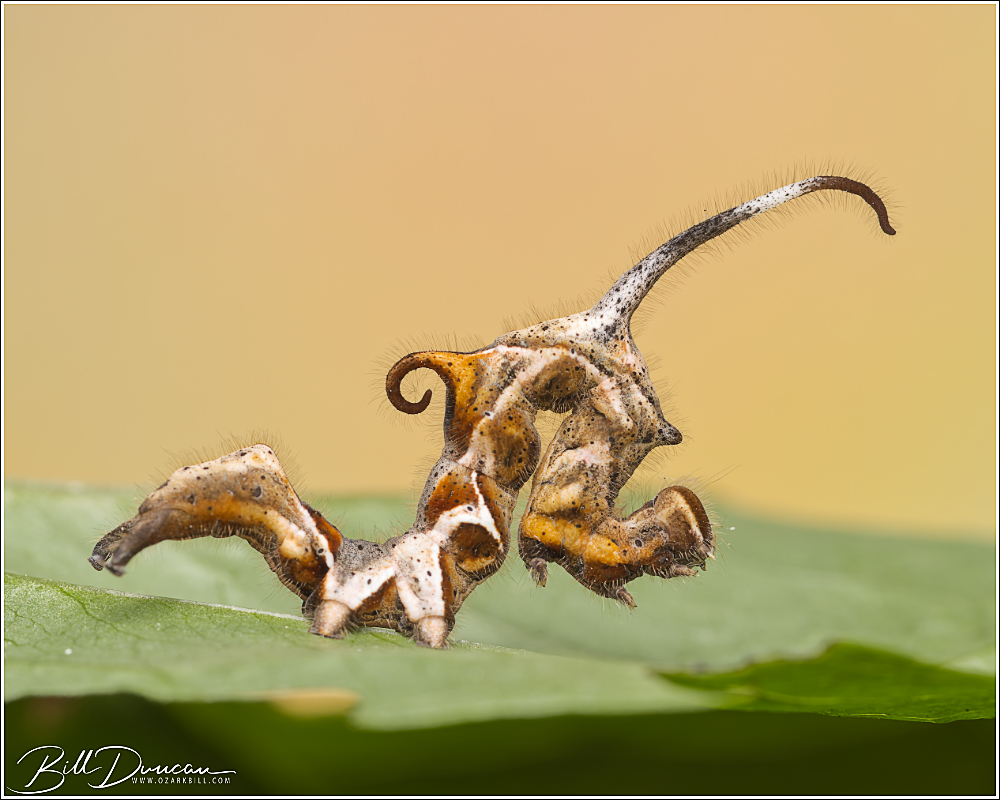
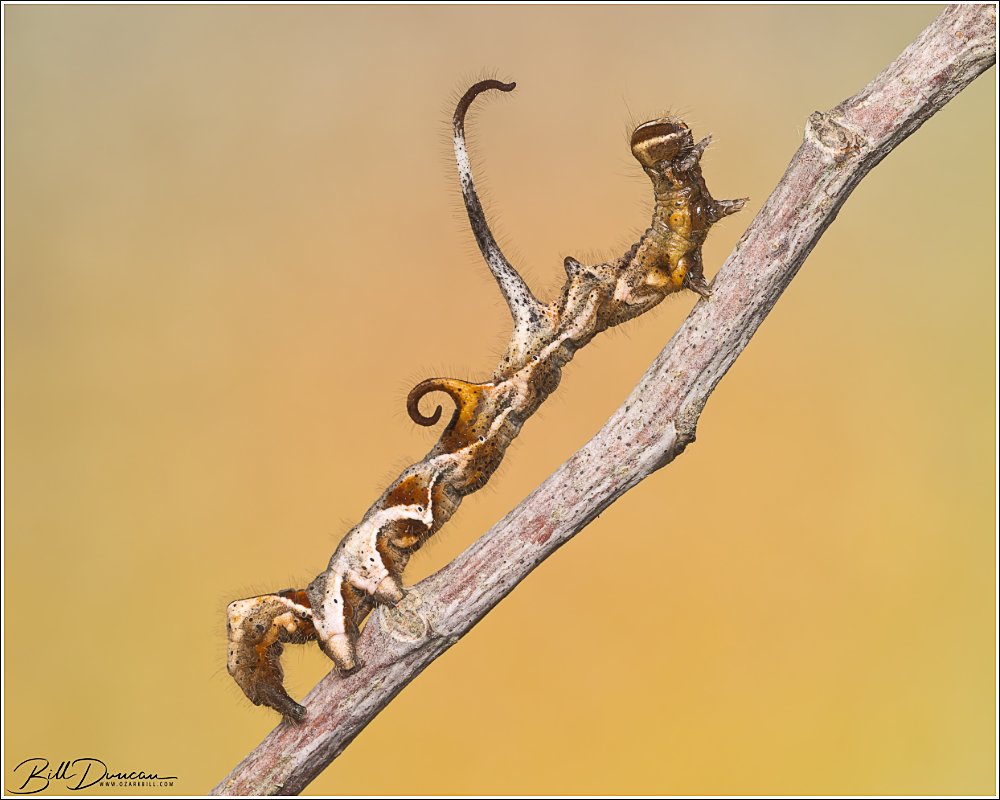
2025 Caterpillar Season – Curve-lined Owlet

Curve-lined Owlet
Phyprosopus callitrichoides fam. Erebidae (Hodges#8525)
Host plant(s): Found on greenbrier (Smilax sp.)
Date(s) and location(s): 15 Sep, 2025 – Creve Coeur Lake Park, St. Louis County, MO
Notes: My favorite caterpillar species and one that I have not had the pleasure to find in over nine years! In all of the high-quality habitats I visit in Missouri during the late summer, I take the time to carefully investigate any greenbrier that I happen to find, always on the lookout for this magnificent creature. Imagine my surprise to find one in St. Louis County! Looking like it could have been the creation of Dr. Seuss or Tim Burton, this cat looks and behaves as though it might be a dead leaf or portion of a tendril of its greenbrier host. When disturbed, it will sway back and forth as if being simply a piece of detritus moving with the wind.

These guys are often found in brood groups. I made every effort to find others nearby but found none. I did find two large wolf spider nests very close (within inches) to the vegetation where I found this cat. Could this be why I found none of its siblings?
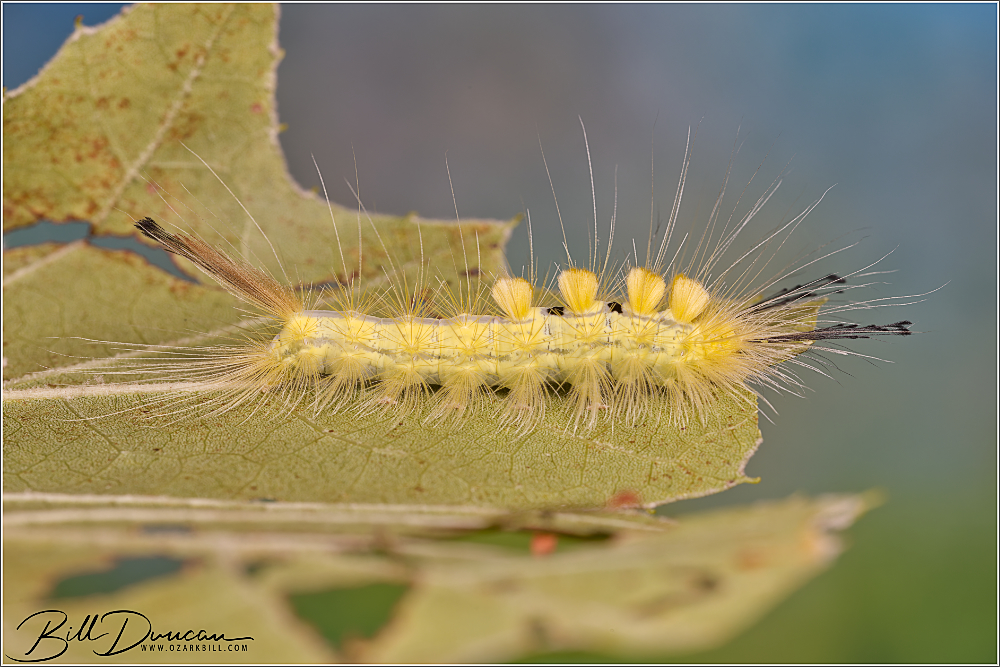
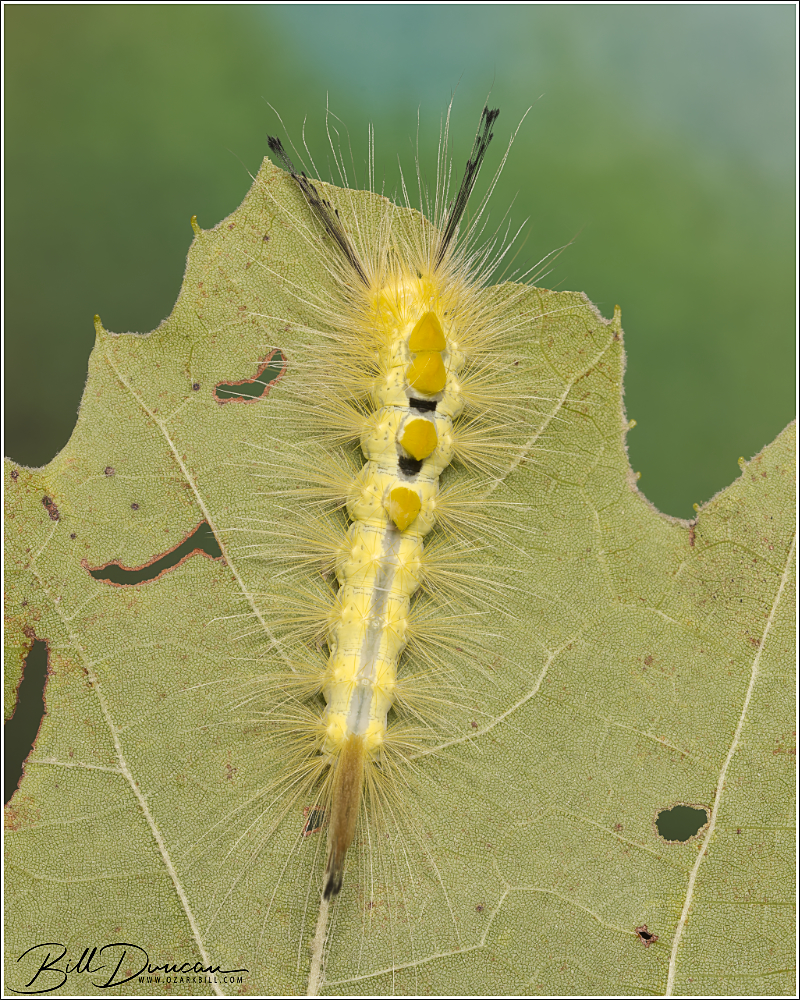
2025 Caterpillar Season – Brown Panopoda

Brown Panopoda
Panopoda carneicosta fam. Erebidae (Hodges#8588)
Host plant: Found on hickory (Carya sp.)
Date found: 09 & 16, Aug, 2025
Location found: BK Leach Conservation Area, Lincoln County, MO; Council Bluff Lake, Iron County, MO
Notes: With information I have, there appears to be no easy methods to discern between larvae of Panopoda carneicosta and P. rufimargo (red-lined panopoda). However, there is suppose to be distinct differences in host preferences, with P. carneicosta showing strong preferences for hickory and other members of Juglandaceae, while P. rufimardo reportedly feed on oak and beech (Fagaceae). My identification is based on the host plants on which the cats were found.

2025 Caterpillar Season – Small Necklace Moth

Small Necklace Moth
Hypsoropha hormos fam. Erebidae (Hodges#8528)
Host plant: eastern persimmon (Diospyros virginiana)
Date found: 02 & 09, Aug, 2025
Location found: Trail of Tears State Park, Cape Girardeau County & BK Leach Conservation Area, Lincoln County, MO
Notes: Both common and specific names (hormos – Greek for ‘a chain’) refer to the necklace-like pattern of dots across the postmedial line of the adult moth.

Hypsoropha hormos found at Trail of Tears State Park on 2-Aug-25
Hypsoropha hormos found at BK Leach C.A. on 9-Aug-25

2025 Caterpillar Season – Definite Tussock Moth

Definite Tussock Moth
Orgyia definita fam. Erebidae (Hodges#8314)
Host plant: Found on common blackberry (Rubus allegheniensis)
Date found: 09, Aug, 2025
Location found: Cuivre River State Park, Lincoln County, MO
Notes: Found in dense populations east of the Mississippi River, this species has only a handful of records in Missouri databases such as iNaturalist and butterfliesandmoths.org. I realize that I had seen this caterpillar before, but being the amateur that I am, I though I was looking at a lightly colored or recently molted Orgyia leucostigma.