"What a thousand acres of Silphiums looked like when they tickled the bellies of the buffalo is a question never again to be answered, and perhaps not even asked." -Aldo Leopold
Splendid Radcliffe’s Dagger Acronicta superansradcliffei fam. Noctuidae (Hodges#9226) Host plant: black cherry (Prunus serotina) Date found: ~09, Aug, 2025 Location found: Cuivre River State Park, Lincoln County, MO Notes: Edit 2/Jan/2026. Science is learning and correcting our mistakes when possible. There have been no confirmed collections of A. superans in MO per Heitzman’s catalogue. The larva of A. superans looks quite similar to the penultimate instar of A. radcliffei, which I now believe this larvae should be labeled as. The primary differences are that A. superans will have black snowflaking on the head, whereas A. radcliffei will have this patterning in red. Another potential option is A. hasta, but I think less likely. All three are cherry/rose specialists. That said, it would not be out of the question for A. superans to be found in Missouri. If any who may have found this post has reason to disagree with my determination, I’d appreciate hearing from you.
Greater Oak Dagger Moth Acronicta lobeliae fam. Noctuidae (Hodges#9238) Host plant: Found on white oak (Quercus alba) Date found: 09, Aug, 2025 Location found: Cuivre River State Park, Lincoln County, MO Notes: Our second largest dagger moth species, the erroneously named A. lobeliae is a specialist feeder on oaks.
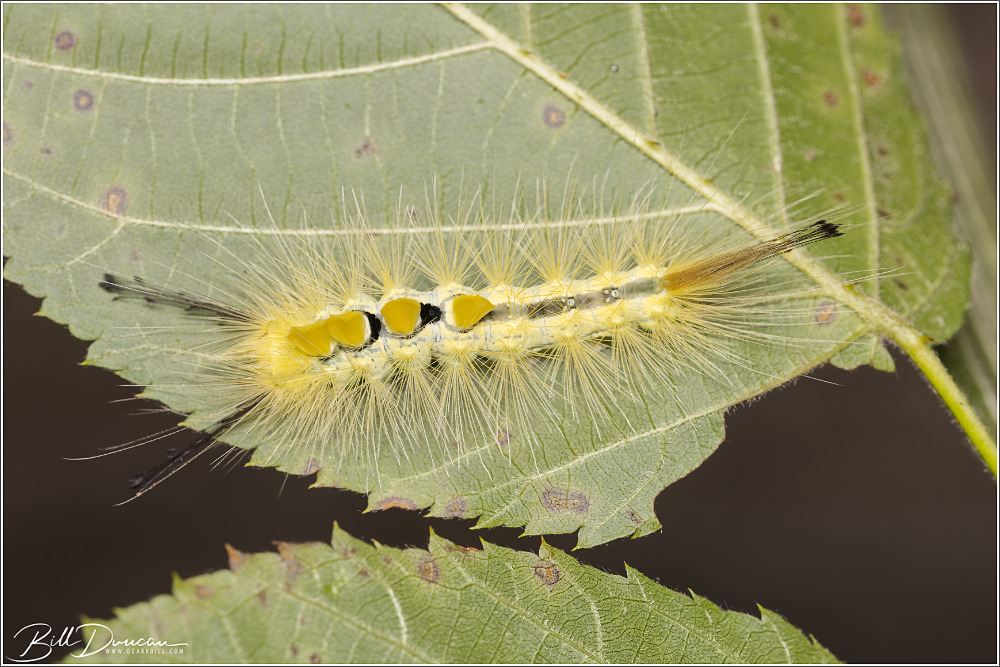
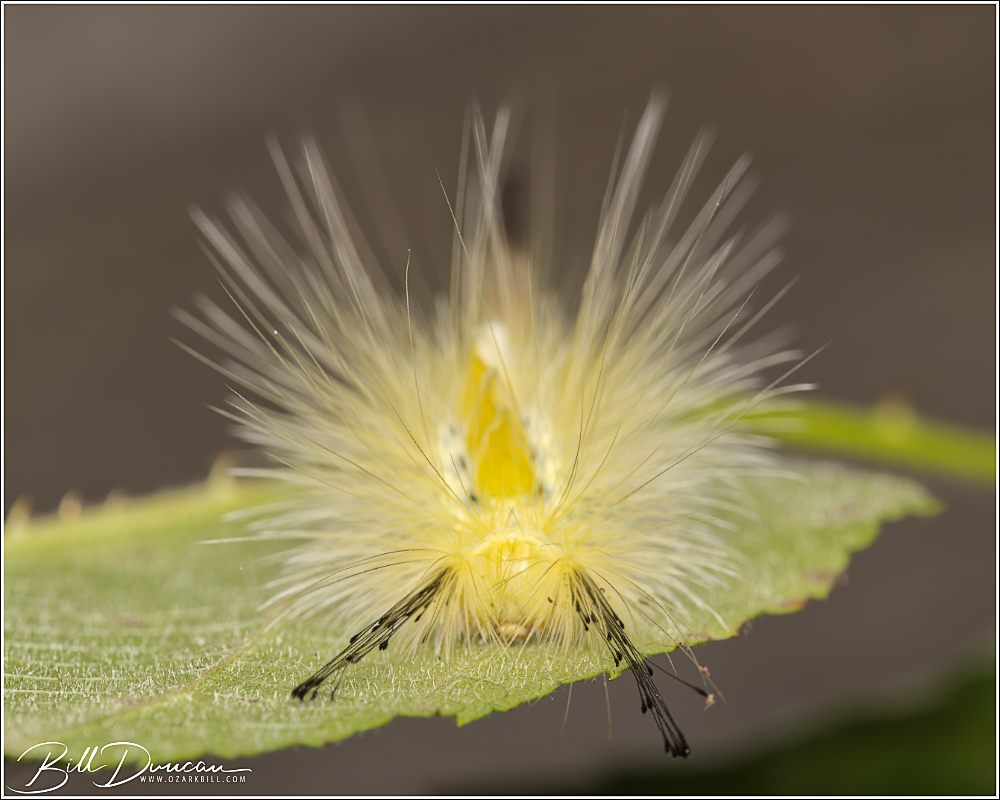
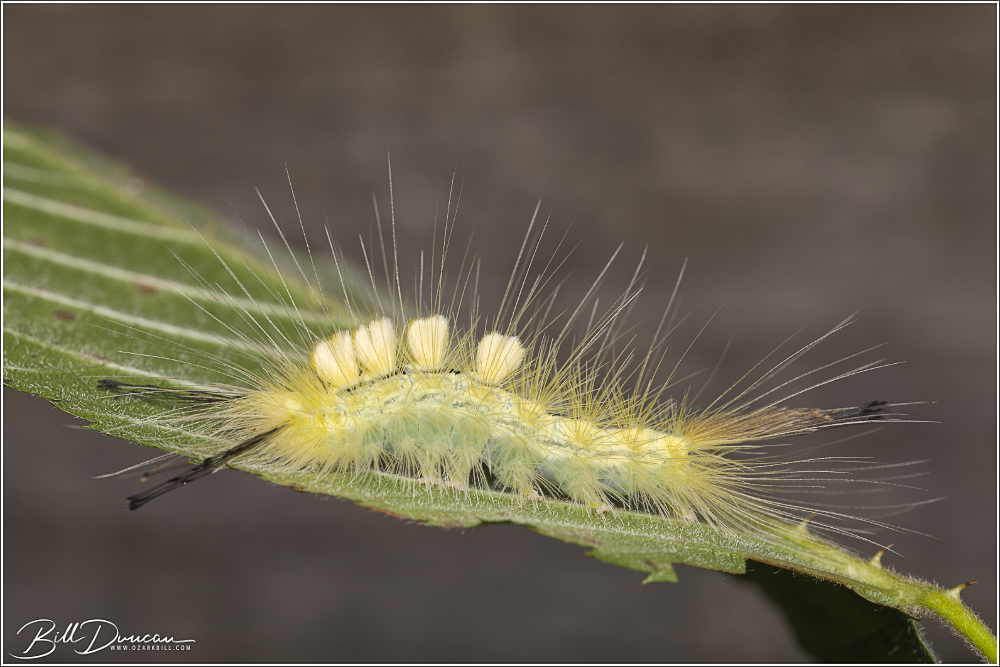
Definite Tussock Moth Orgyia definita fam. Erebidae (Hodges#8314) Host plant: Found on common blackberry (Rubus allegheniensis) Date found: 09, Aug, 2025 Location found: Cuivre River State Park, Lincoln County, MO Notes: Found in dense populations east of the Mississippi River, this species has only a handful of records in Missouri databases such as iNaturalist and butterfliesandmoths.org. I realize that I had seen this caterpillar before, but being the amateur that I am, I though I was looking at a lightly colored or recently molted Orgyia leucostigma.
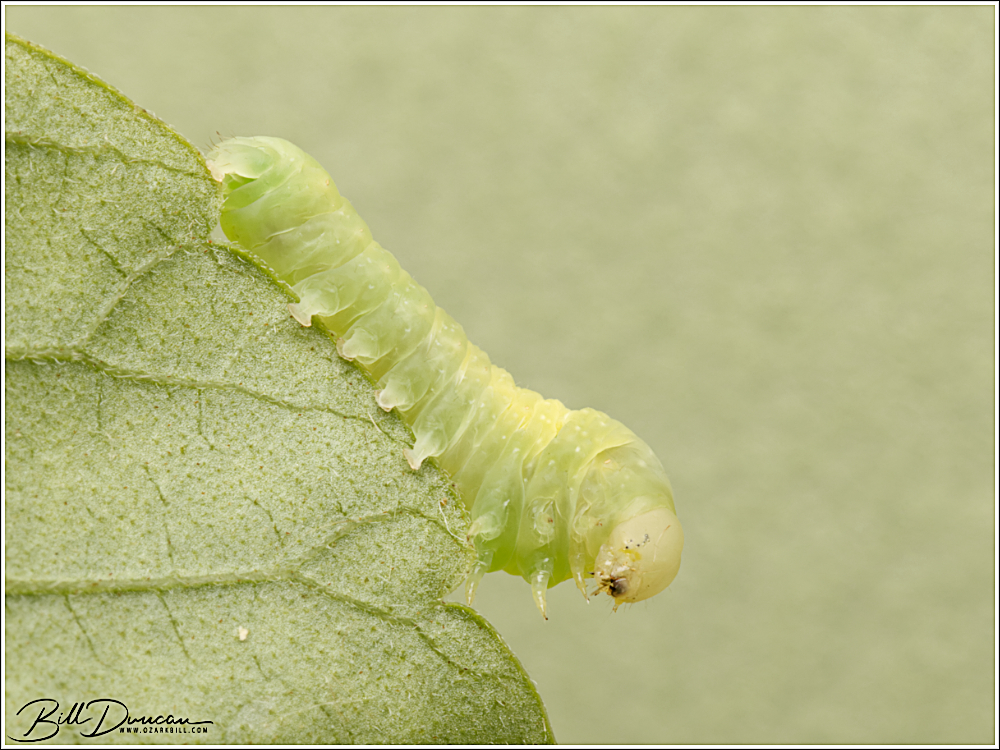
Tonight’s caterpillar comes from the Euteliidae family. Marathyssa inficita, or the dark marathyssa is much more interesting looking as an adult moth. This species hosts almost solely on sumac (Rhus sp.). This one was found in early August at Cuivre River State Park on winged sumac (Rhus copallinum).
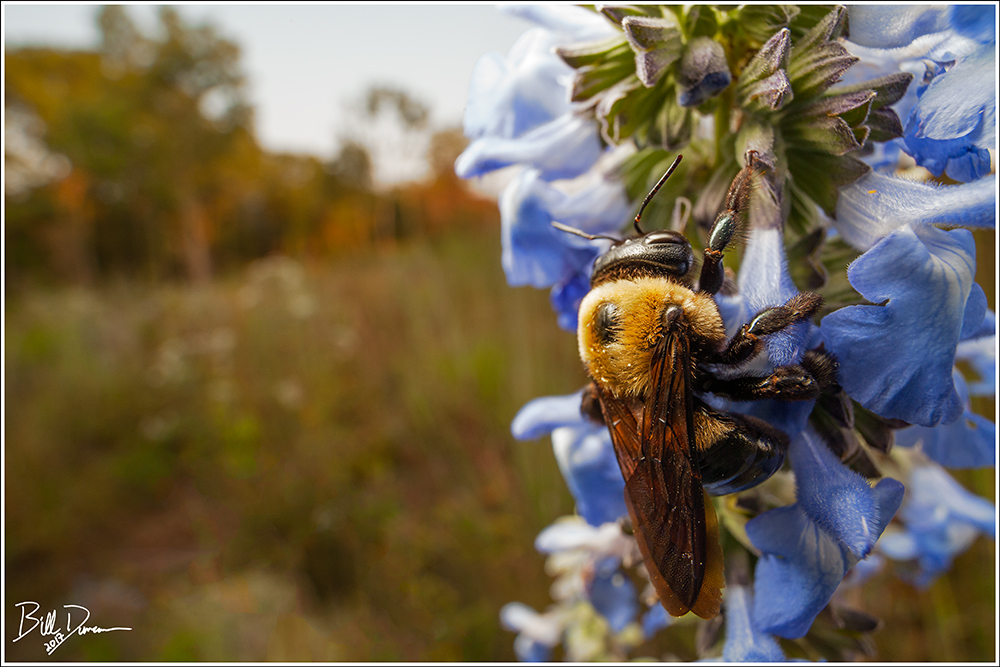
Eastern Carpenter Bee (Xylocopa virginica) on Blue Sage (Salvia azurea)
The WGNSS Photography Nature Group met at Cuivre River State Park on Saturday the 2nd in hopes to find members of Limacodidae (slug moths). Perplexing to me, we struck out in the same time and place I found them in numbers and diversity a year ago.
It was still a good time. We found a number of other macro subjects and explored a couple of new places. I also got to give a first spin to my new lens. A wide-angle macro – the Laowa 15mm f/4 Wide Angle Macro. A rather new lens design and one with a pretty steep learning curve, these photos are really just practice. With time and strategy, I think I can get better at this.
Two areas to focus on in improving with this lens:
1) Getting a better handle on exposing for the environment (background) while getting the right amount of light from the flash to properly expose the foreground macro subject. I think this should be easier to predict with practice. I’m not at all sure that I can ever get it on a first try.
2) Figuring out how much dof is just right. Sometimes getting more detail in the background will be desirable. Other times, it is best to blur it out to bring focus on the primary subject.
This is a funnel web or grass spider (Agelenopsis spp.) that we found protecting her egg sack on the leaf of poison ivy (Toxicodendron radicans). She will likely guard the eggs here until the winter takes her.
Grass Spider – Agelenopsis spp.
One of the nice finds of the day was this Black-waved Flannel Moth (Megalopygidae – Lagoa crispata (4644)). One of the key features of this lens is being able to focus close enough to the primary subject for macro-level detail while capturing so much more in the subject’s environment. In this case, I tried to give the perspective of what it may be like for the bug when being discovered by entomologists or nature photographers. Pictured left to right are WGNSS members Rich Thoma, Dave Seidensticker and Casey Galvin.
After the group disbanded at Cuivre River SP, Miguel Acosta and I decided to visit and explore Little Lost Creek Conservation Area near Warrenton. We hiked about 6 miles and I camped there the following evening. I took a quick photo hike in the morning and found these two Brown Stink Bugs (Pentatomidae – Euschistus servus) in copulation. They didn’t like that lens being so close and kept moving to the opposite side of the boneset (Eupatorium) blooms.
Brown Stink Bug – Pentatomidae – Euschistus servus
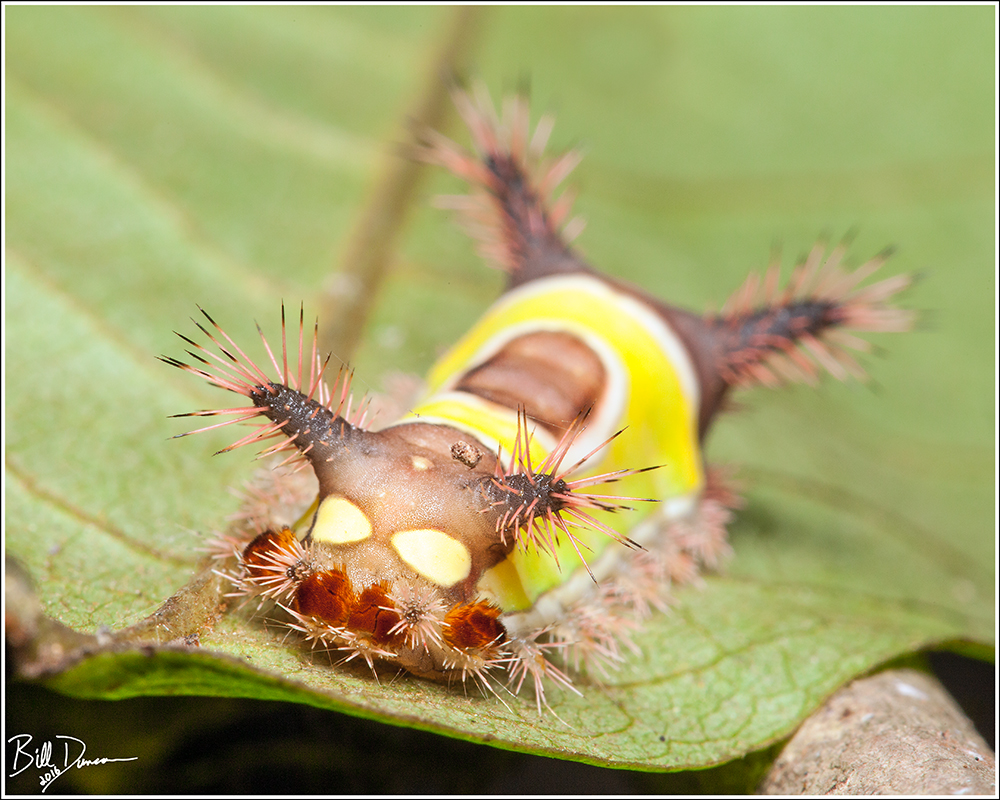
Saddleback Caterpillar (Acharia stimulea) photographed at Millstream Garden Conservation Area in late August, 2016.
We were quite fortunate during our first summer of hunting for “slug” caterpillars – members of the moth family Limacodidae who get their name from their absence of prolegs, which are replaced by a sucker that enables them to move quite similarly to a true slug. We (Sarah, Steve and I) were fortunate because we were able to locate and photograph ten species of slugs. I had read about these fascinating animals before, but never realized how abundant and diverse they actually were in the Missouri Ozarks. Yes, a good amount of work and patience is necessary to find them – I don’t want to tally up the hours, but it was time well spent outdoors.
I’ve decided to begin sharing these images with a species that is probably most well known of those who have heard of the slugs – the aptly named saddleback caterpillar. As can be seen in the image below, the saddleback wears a green saddle, bordered with white. Also apparent in these images are the urticating (stinging) hairs that are concentrated along fleshy nobs located at both ends of the caterpillar. These spines are found on a number, but not all of the caterpillars in this family and are capable of delivering a painful sting that is quite similar to that of the stinging nettle plant.
Saddleback Caterpillar (Acharia stimulea) photographed at Cuivre River State Park in mid August, 2016.
The image below shows the ocellus, or eyespots, which are actually on the posterior end of the animal.
Saddleback Caterpillar – Posterior (Acharia stimulea) photographed at Cuivre River State Park in mid August, 2016.
Finally, the anterior end – the animal’s head is nicely hidden under a few fleshy folds that are armed with spiny protuberances.
Saddleback Caterpillar – Posterior (Acharia stimulea) photographed at Cuivre River State Park in mid August, 2016.
I look forward to sharing more examples of this fascinating group of Missouri slugs in the near future.
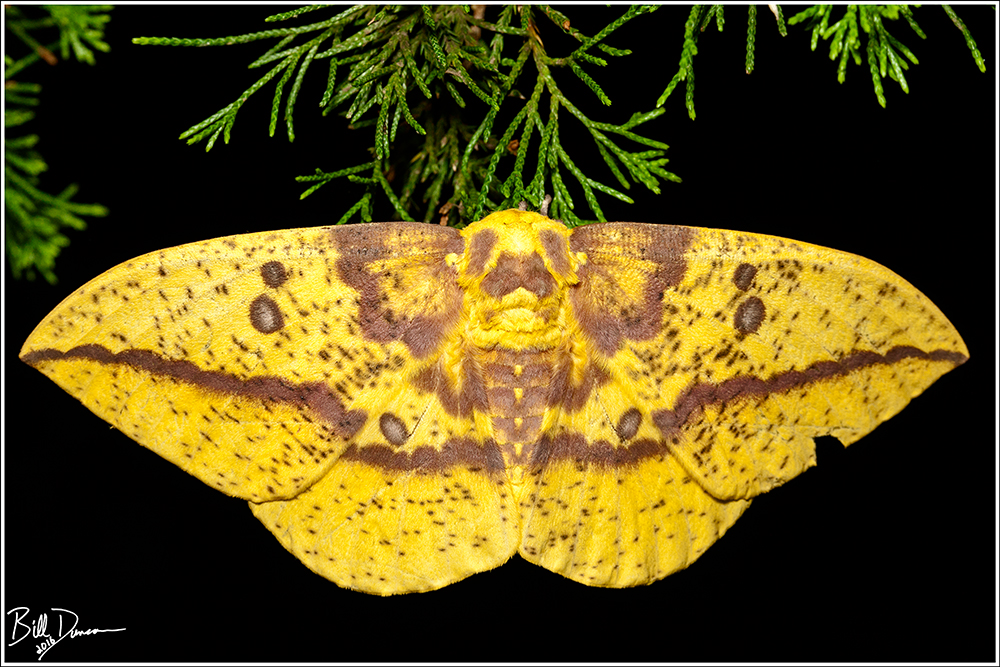
Belonging to the family of moths called Saturniidae, the Imperial Moth can reach up to six inches. Many members of this family are large-bodied and short-lived as adults – typically living only one or two weeks and not feeding in this stage. This female was attracted to lights during a national moth week event at Cuivre River State Park on July 31, 2016.
Imperial Moth – Saturniidae – Eacles imperialis, photographed at Cuivre River SP during national moth week.








 A Thousand Acres of Silphiums