Black-throated Green

“The world, we are told, was made especially for man – a presumption not supported by all the facts.  A numerous class of men are painfully astonished whenever they find anything, living or dead, in all God’s universe, which they cannot eat or render in some way what they call useful to themselves.”

-John Muir-

“Black-throated Green Warbler”

Technical details: Canon EOS 7D camera,  EF400mm f/5.6L USM lens, ISO 640,  f/5.6, 1/250 sec

Barred Owl

“On no subject are our ideas more warped and pitiable than on death.  Instead of the sympathy, the friendly union, of life and death so apparent in Nature, we are taught that death is an accident, a deplorable punishment for the oldest sin, the arch-enemy of life, etc.  Town children, especially, are steeped in this death orthodoxy, for the natural beauties of death are seldom seen or taught in towns.”

-John Muir-

“Barred Owl”

Technical details: Canon EOS 7D camera,  EF400mm f/5.6L USM lens, ISO 1000,  f/5.6, 1/250 sec

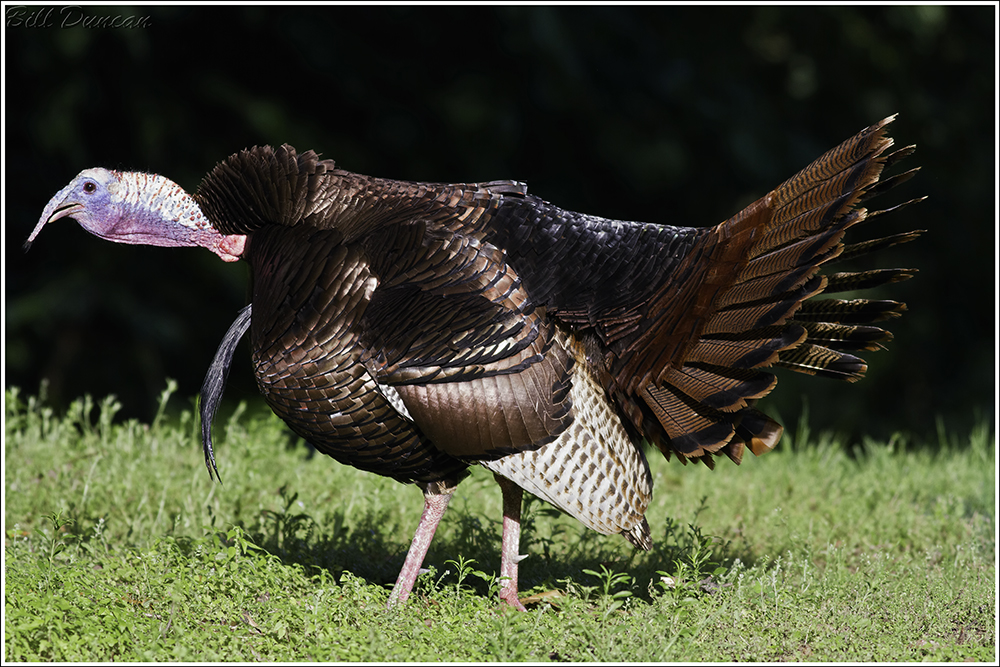
Hug A Turkey Day

So, the president pardoned two turkeys today, named “Gobble” and “Gobble” apparently.  Who writes this stuff?  The country slaughters near 60 million birds and sparing these two is supposed to make it all okay?  Don’t get me wrong, next to chicken and salmon, turkey flesh is one of my favorite animal protein sources.  What I am suggesting is that the Wednesday before Thanksgiving should be designated as another national holiday in which everyone who plans on eating turkey on that special Thursday must find and hug one first.  Think about it.  The amount of calories spent in this endeavor should just about equal that which will be ingested by the glutton.  I’m not sure which of my favorite ideas for a new national holiday will catch on first, this one or my idea for a national “punch a weatherman in the face” day.  Happy Thanksgiving.

Anyway, did you know…?

-During the 1930’s the Wild Turkey population was estimated to be less than 30,000 birds.  Through hunting regulations and habitat management there are now between 5-10 million birds in this country.

“Wild Turkey!”

Technical details: Canon EOS 7D camera,  EF400mm f/5.6L USM lens, ISO 400,  f/5.6, 1/800 sec

Mondays Are For The Birds – Golden Crowned Kinglet

“”In short, they who have not attended particularly to this subject are but little aware to what an extent quadrupeds and birds are employed, especially in the fall, in collecting, and so disseminating and planting, the seeds of trees.”

-Henry David Thoreau-

“Golden-crowned Kinglet”

Technical details: Canon EOS 7D camera,  EF400mm f/5.6L USM lens, ISO 640,  f/5.6, 1/250 sec

Mondays Are For The Birds – Scarlet Tanager

I have a challenge for myself that I have not yet built up the courage to try.  I want to one day go into a wooded lot and only feed on insects or other invertebrates I find in the trees, shrubs and forest floor.  Have you ever watched an insect-eating song bird closely as the scavenge about for bugs?  It is truly amazing how often they are able to find and capture prey items.  Often they seem to pick them out nowhere, gulp them down and continue on the hunt.  The photo below pictures a southern-bound, female Scarlet Tanager as it eats a larvae of some kind that it just pulled from inside a small branch.

“Autumn Scarlet Tanager”

Technical details: Canon EOS 7D camera,  EF400mm f/5.6L USM lens, ISO 800,  f/5.6, 1/320 sec

Mondays Are For The Birds – Red-Eyed Vireo

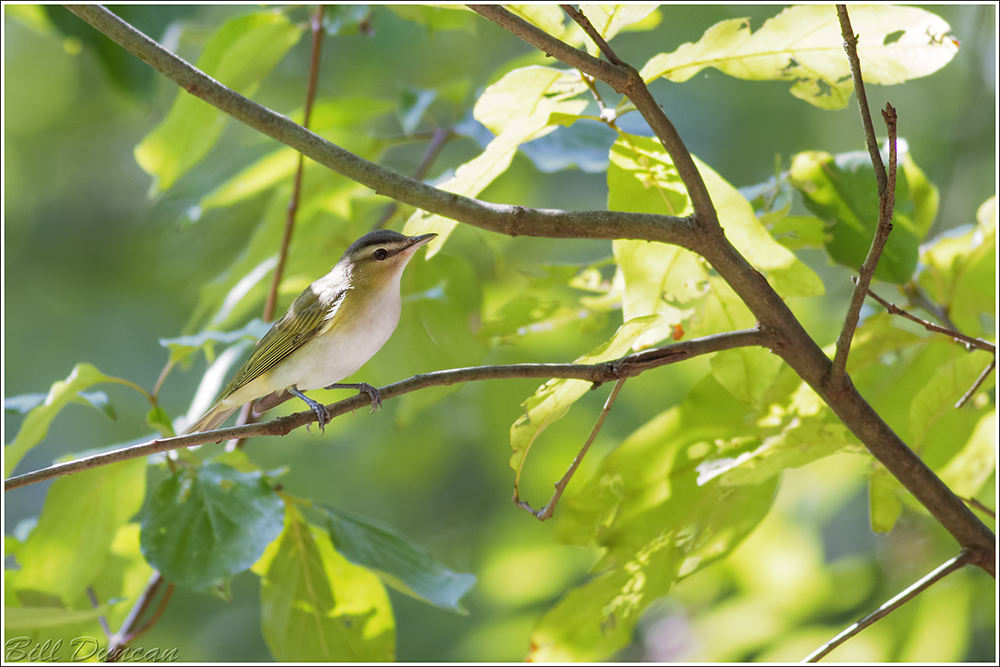
Hello again.  Today I am starting a new blog series that I am calling “Mondays Are For The Birds” and today’s first spotlight bird is this Red-eyed Vireo.  For anyone fool-hardy enough to do some summer hiking in the deciduous woodlands and forests of the Missouri Ozarks, the Red-eyed Vireo shouldn’t be new to you.  When almost all other songbirds have given up claims to their nesting grounds and quit vocalizing for the season, the REVI is just warming up.  In the middle of a sweltering summer’s day one will still hear the questions this guy’s song seems to ask. “Who are you, who am I, Here I am, Look at me, In this tree!”

This photo was taken recently during the fall migration.  This species along with other vireos and warblers will eat primarily caterpillars and other arthropods during spring migration and throughout the summer breeding season, but in fall will switch to a diet primarily consisting of berries, such as those found on the wild grape.

Thanks for visiting today.  I hope you like the photo and I hope you had the best possible Monday.

“Red-Eyed Vireo”

Technical details: Canon EOS 7D camera,  EF400mm f/5.6L USM lens, ISO 800,  f/5.6, 1/250 sec

King’s Realm

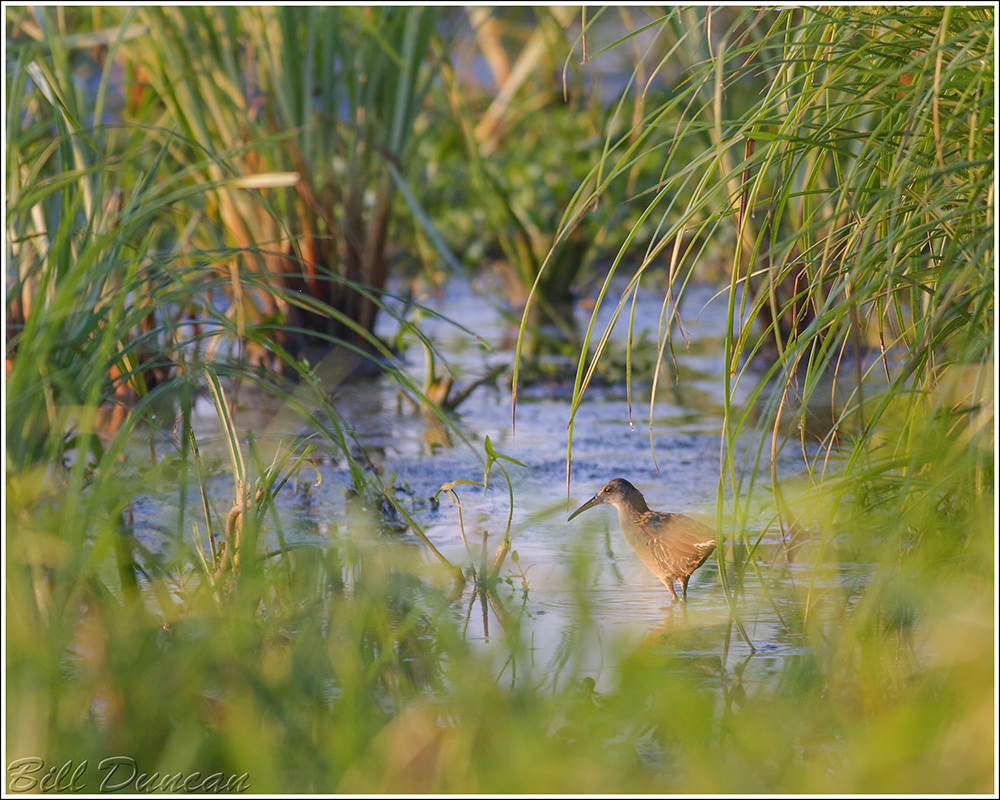
In the field, the brief views I was fortunate enough to get suggested to me this was a Virginia Rail.  The Virginia is only about half the size of the King and this obvious difference should usually make the identification quite easy.  Unfortunately my brief, distant and mostly obscured view of this bird did not allow me to get a good estimate on the bird’s size.  Once back home with the photo and field guides open I began to doubt my original ID call.  I listed as many reasons to feel KIRA as VIRA.  I quickly realized I needed help and rushed the photo and my thoughts to the three wise men of the birding community I knew would love the challenge.  The single photo was less than the smoking gun I was hoping it was.  All three agreed it was most-likely a King Rail, but there is still room for doubt.  Although a photo of a Virginia Rail would have added a new species to my bird-photo-life-list it always makes me happy to find and watch a bird of conservation concern, as is the King.

You can see in this “bird in habitat” photo just the sort of habitat that rails and other waders need.  Rails love to be in water about up to their knees with plenty of vegetation to use for cover.  Most shorebirds like the mud, while larger waterfowl, obviously like a little more water.  Heron Pond at RMBS is being managed to provide the habitat these groups of birds need.  Check out a few images of young KIRA I took a while ago.

“King Rail”

Technical details: Canon EOS 7D camera,  EF400mm f/5.6L USM lens, ISO 640,  f/5.6, 1/400 sec