"What a thousand acres of Silphiums looked like when they tickled the bellies of the buffalo is a question never again to be answered, and perhaps not even asked." -Aldo Leopold
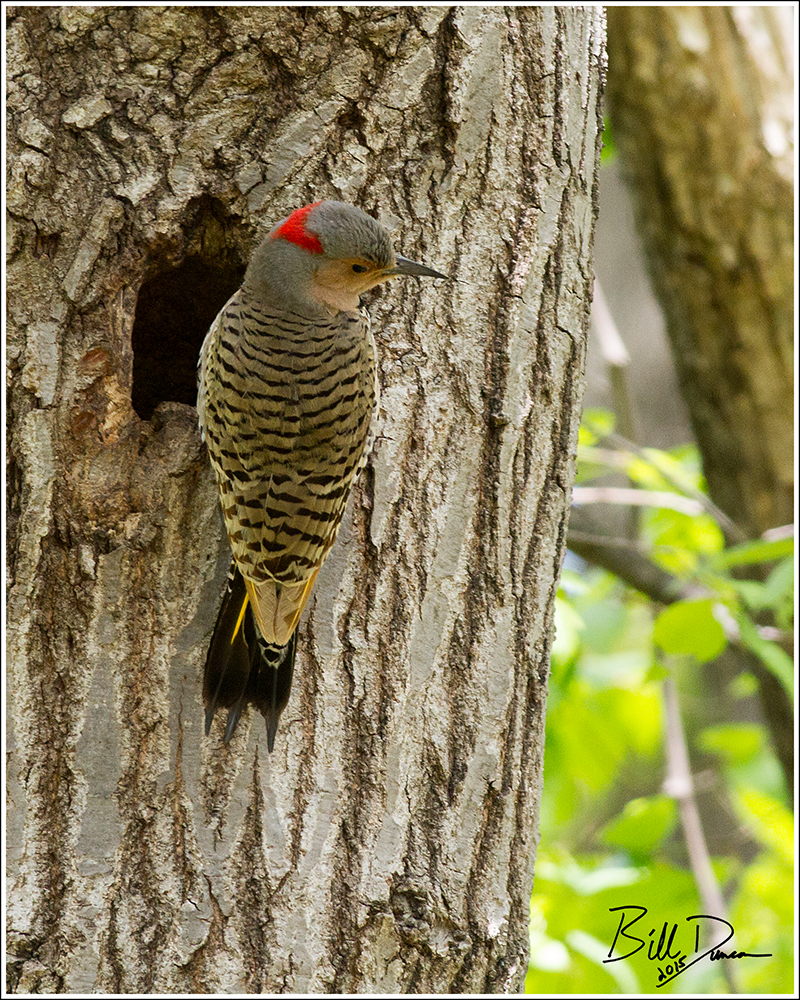
Earlier this spring I watched with anticipation as a pair of Flickers inspected a potential nest cavity in a wood lot where I work. I watched over several mornings as they came and went and made a ruckus. Here, the male admires the view from the front door.
Northern Flicker – Female
The female is pictured above, inspecting the potential nest sight.
No Thanks!
But alas, for whatever reason, the pair decided this wasn’t the spot for them this year. Ah well.
Most of the waterfowl had long since migrated north by the time Steve and I visited Quivira in May, but we were able to find a few. We encountered a few Eared Grebe and with the winds as high as they were, the waves were impressive in such shallow bodies of water.
Eared Grebe – Winter
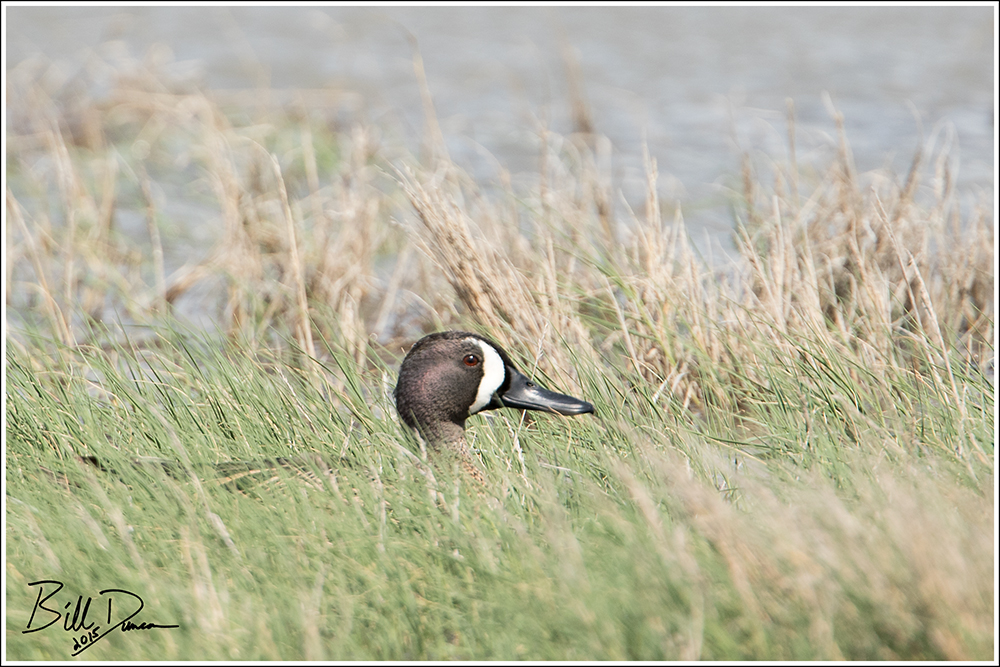
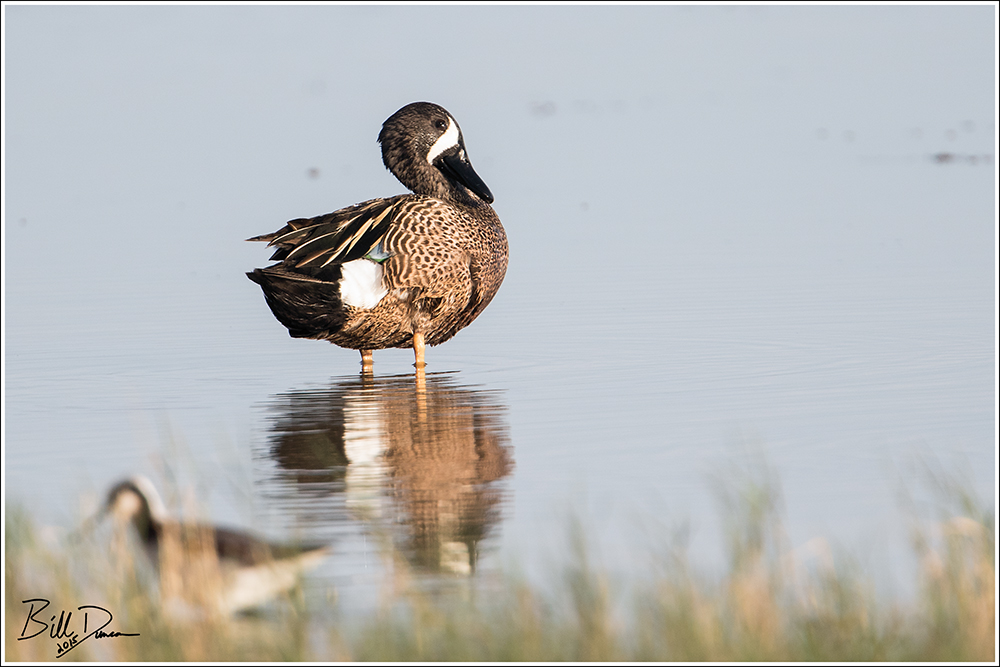
Blue-winged Teal were the most abundant of the waterfowl.
Blue-Winged TealBlue-winged Teal
Finally, we watched this gorgeous pair of Canada Geese in golden hour light. They seemed more appropriate here than in any other setting I had ever seen them before.
I found myself on the second day a little further from Ponce, where I visited what has been described as the most important habitat in the Caribbean for migratory and resident shorebirds – the Salt Flats of Cabo Rojo NWR.
Cabo Rojo Trails
The refuge was first established in 1974, when it was comprised of a patch of subtropical dry forest near the coast in the southwestern tip of the island. This patch of nearly 600 acres was gifted to the US Fish and Wildlife Services by the CIA, of course. Unfortunately, this initial plot of land and the nice looking visitor’s center that is run by the USFWS is closed on Sundays, the day of my visit. Within the tall wire fence, the forest and savanna habitat looked very inviting. Immediately upon exiting the car to deposit some used coffee I watched as a pair of striking Puerto Rican Woodpeckers flew directly over me to land in a tree, bathed in the light of the golden hour, just on the other side of the fence. Of course they would not stay put while I put the camera together.
Subtropical Dry Forest
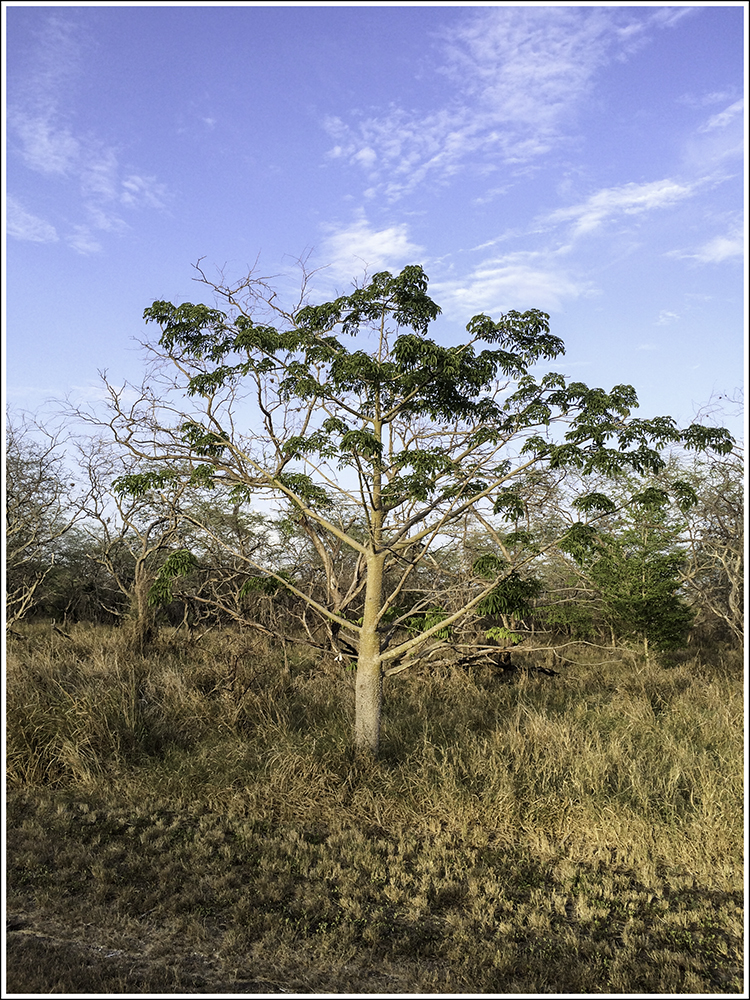
Subtropical Dry Forest is characterized by low annual rainfall (~30-35″ annually), high temperatures of over 100 F and plants adapted to such climatic conditions. Within such habitat plants normally achieve heights of 15″ on average. Plants are further adapted to these hot, xeric conditions by having small, waxy leaves – often shaped into thorns to dissuade herbivores.
Cactus
Several cactus where found throughout the refuge. The photo above captures not only cactus, but a dry-adapted lichen, known as tropical mistletoe, that was quite common as well.
The Salt Flats
In 1999, approximately 1300 acres of salt flats were added to the refuge. These salt flats are very important for overwintering shorebirds, but I was a bit late for this as the majority of these birds were already headed north to the arctic tundra. However, I was able to find a few straggling migrants as well as nesting species – including several endemics of Puerto Rico.
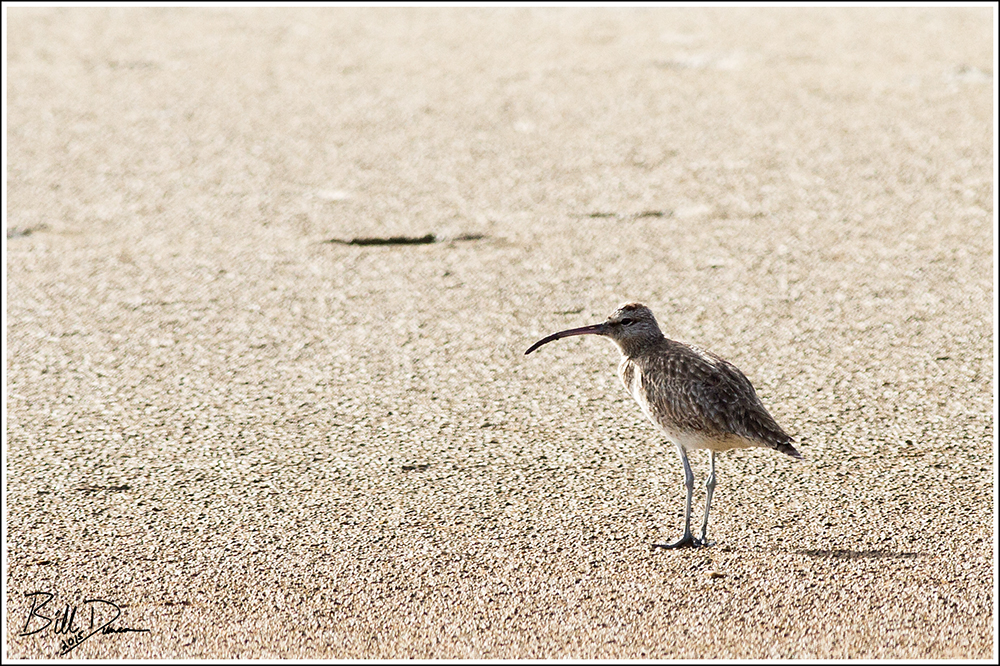
WhimbrelWhimbrel
The Salt Flats are considered Important Bird Areas by Birdlife International and the Western Hemisphere Shorebird Reserve Network. This area serves as important nesting grounds for the Black-necked Stilt, Antillean Nighthawk, Least Tern and both Wilson’s and Snowy Plovers, among others.
Snowy Plover
This refuge is also important habitat for the federally endangered Yellow-shouldered Blackbird. This author considers himself fortunate to find one bird, but was crushed by not being able to get a photograph. 😦
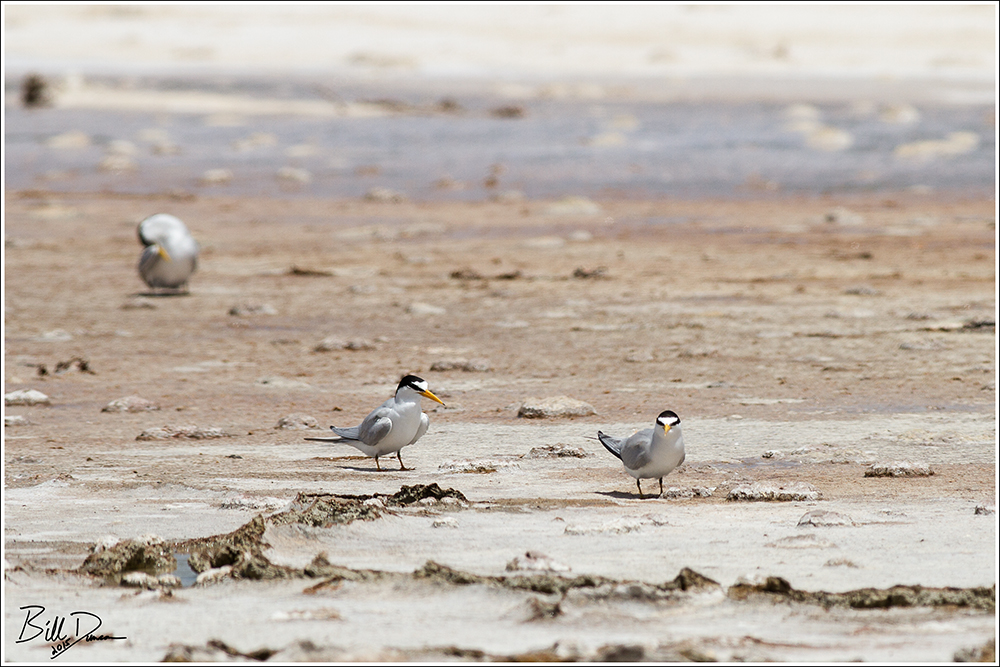
Least TernLeast Tern
One plant that I encountered over most of my travels on this corner of the island was very common within Cabo Rojo – Wild Cotton (Gossypium hirsutum). This wild relative of cultivated cotton is perennial in nature and adapted for salty, sandy soils.
Wild Cotton
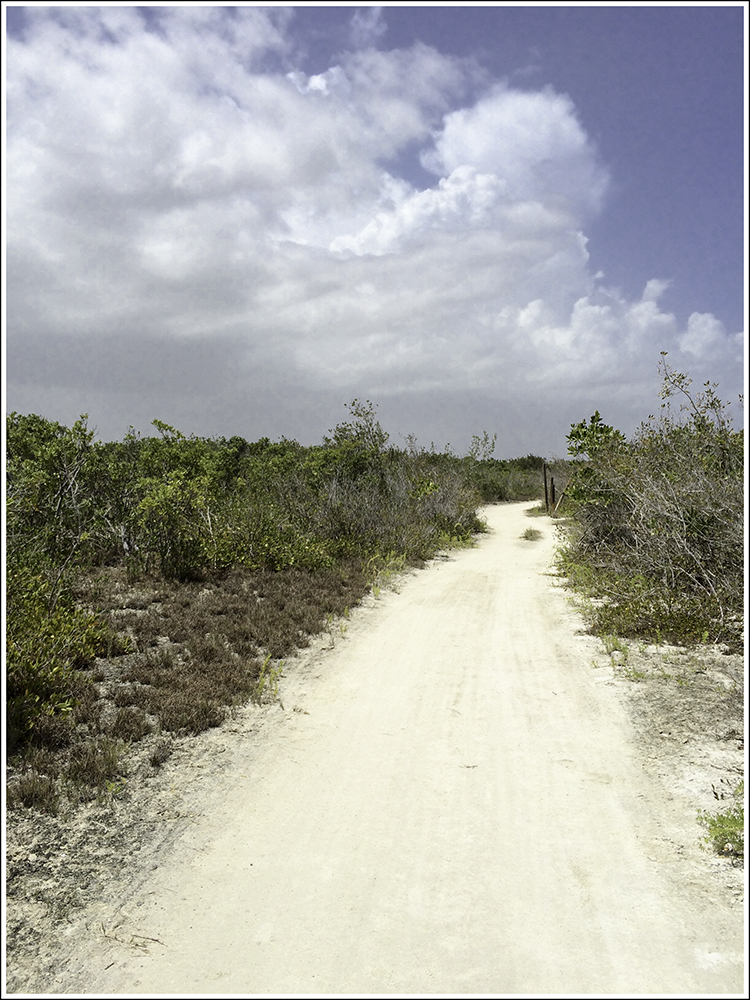
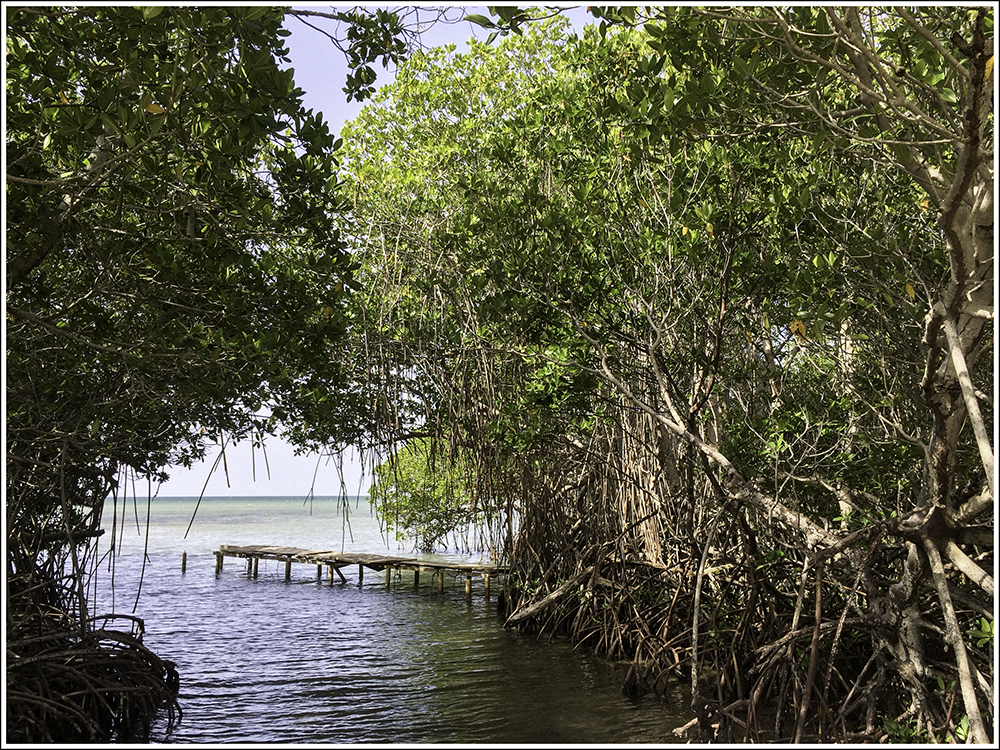
There is quite a length of trails throughout the salt flats and the native islanders used these for recreation activities like running and bike riding as well as means to get to different beaches around this section of coast. Near the area where I parked was some very attractive mangrove groves that attracted the Yellow Warbler.
Mangrove Pier
Four species of mangrove are commonly found on the island: Red, Black, White and Button. Tide lines and preference/tolerance of submerged roots is the primary reason behind how the different species are composed along Puerto Rico’s coastlines.
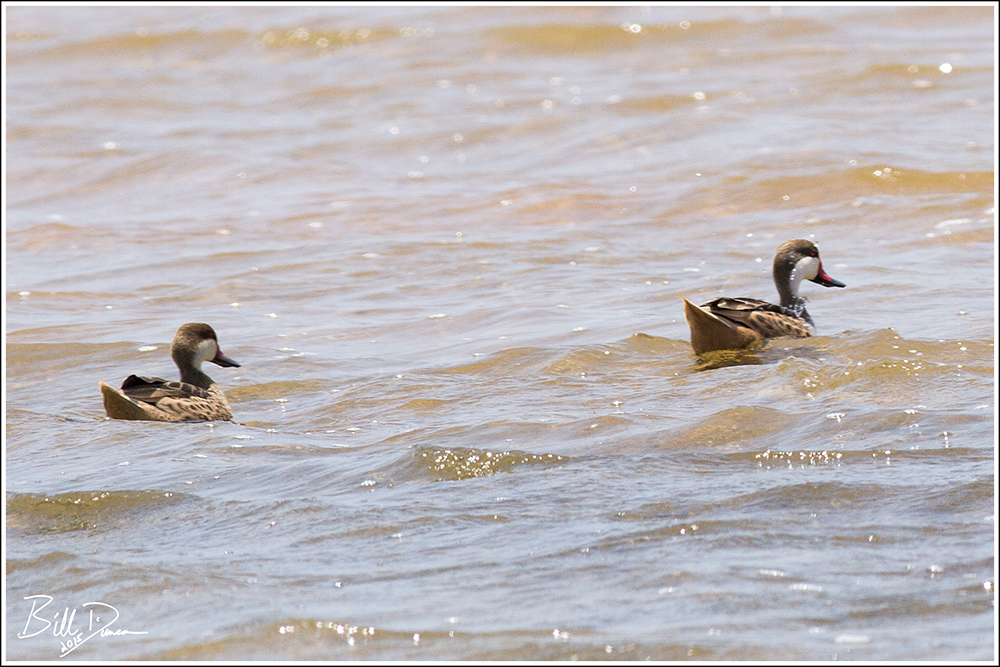
White-cheeked Pintail
With only approximately 500 pairs known on the island, I was quite fortunate to find and photograph these White-cheeked Pintail.
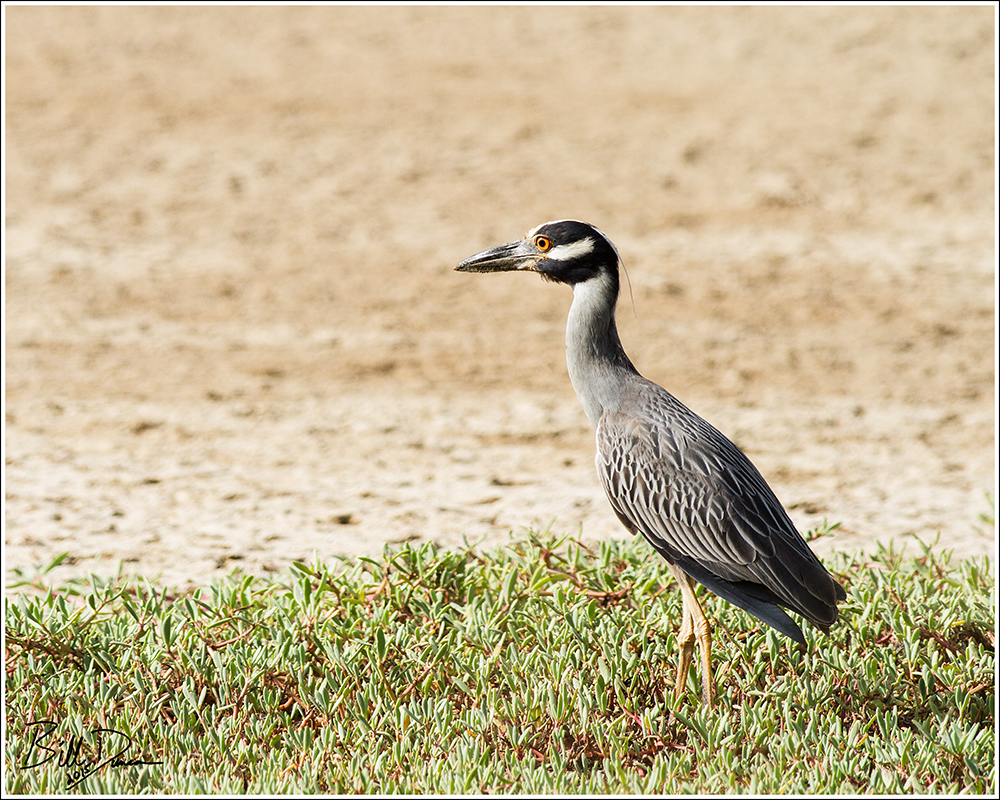
Smooth-billed AniCaribbean ElaeniaYellow-crowned Night Heron
Towards one end of the salt flats were some of the workings that produced the salt for non-food purposes. I could not determine if the works were still in production, or if it was left mainly for show.
Salt Production
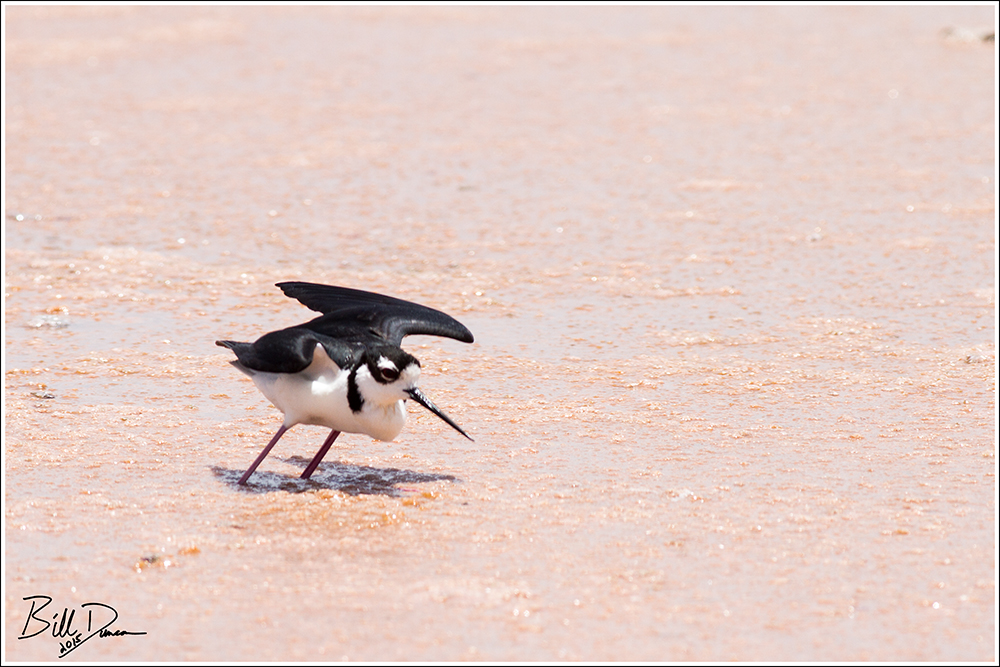
I observed only the Black-necked Stilt utilizing this area, as the next two images suggest, they are quite tolerant of the saline conditions.
Black-necked StiltBlack-necked Stilt
I never found a nest or chicks, but the way these guys were harassing me during this part of my hike, I would be surprised if there was not some sort of nesting activity going on nearby.
Black-necked Stilt
So, that was Cabo Rojo. I would love to visit during a weekday when the dry forest/savanna section is open and when the few narrow roads that wind through this narrow bottleneck are not clogged with vacationing islanders.
Next time, I will recap the last day of my visit where I ventured a bit north in latitude to visit the Tolkienesque mountain rainforest known as the Elfin Woods of Maricao State Forest.
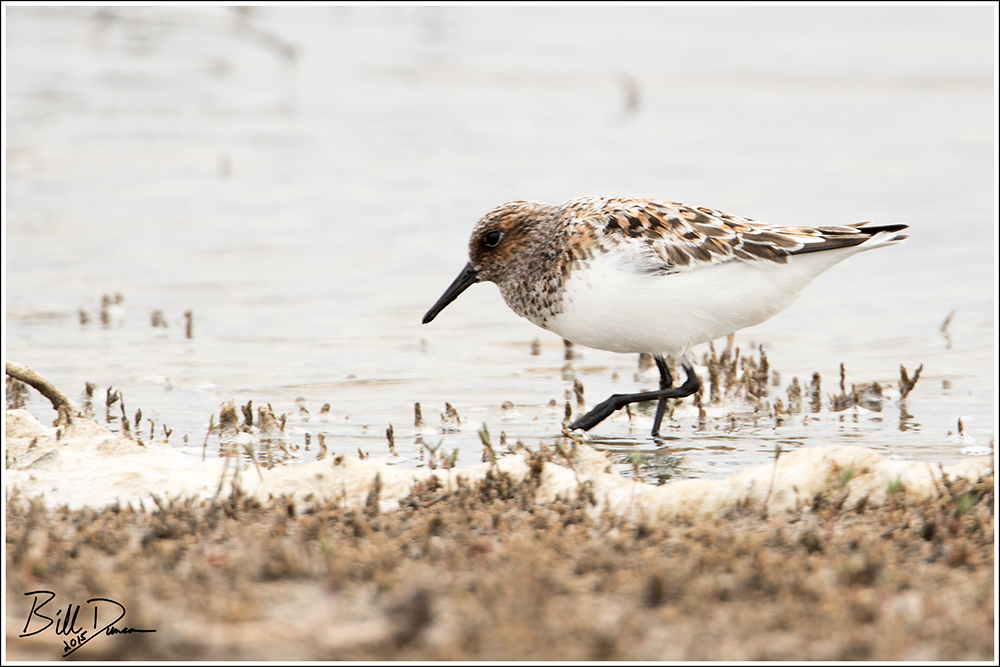
A medium sized, markedly-colored Calidris sandpiper, the Sanderling is one of the most highly traveled migrant birds on the planet. Breeding only in the far north arctic, some Sanderlings will winter as far south as Cape Horn of South America. Individuals in breeding plumage are easily identified with close enough inspection by looking for the rusty-gravel coloration. Winter and juvenile forms are contrasty black and white. All birds lack a back toe, which are typically found on shorebirds.
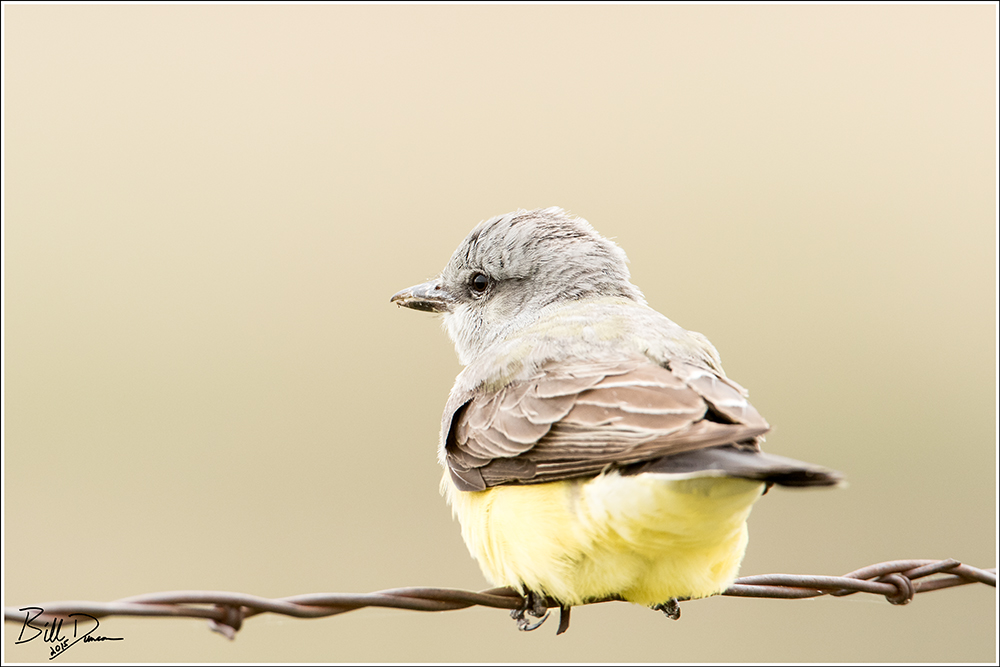
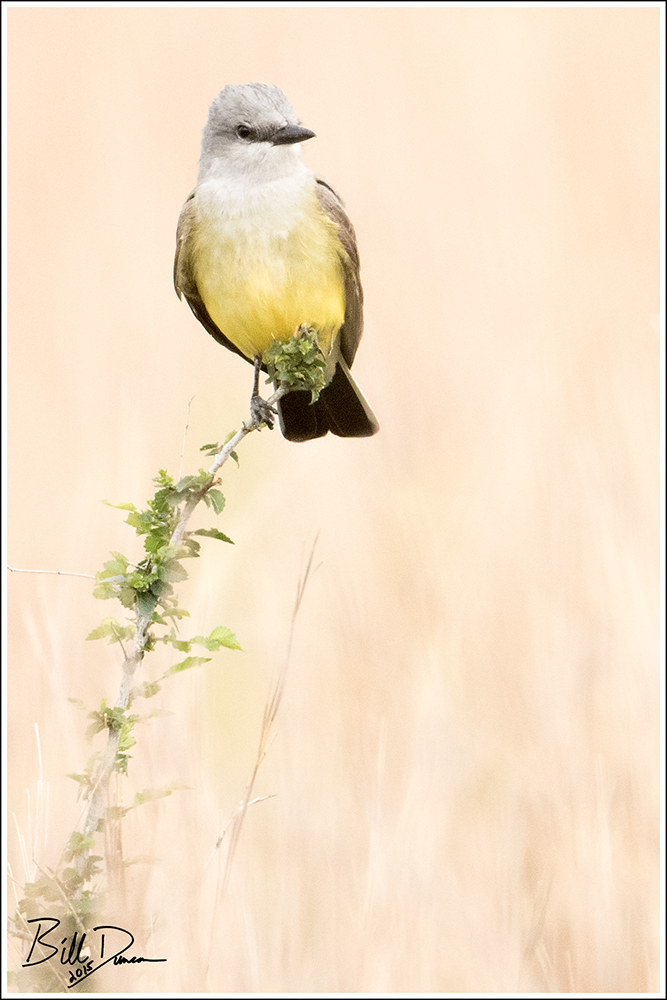
Much like the Meadowlarks, Steve and I observed an abundance of both Eastern and Western Kingbirds. We were surprised by the close proximity of the assumed territories. The typical super-aggression shown by the Eastern Kingbirds did not seem to be delivered to either the Westerns or conspecifics.
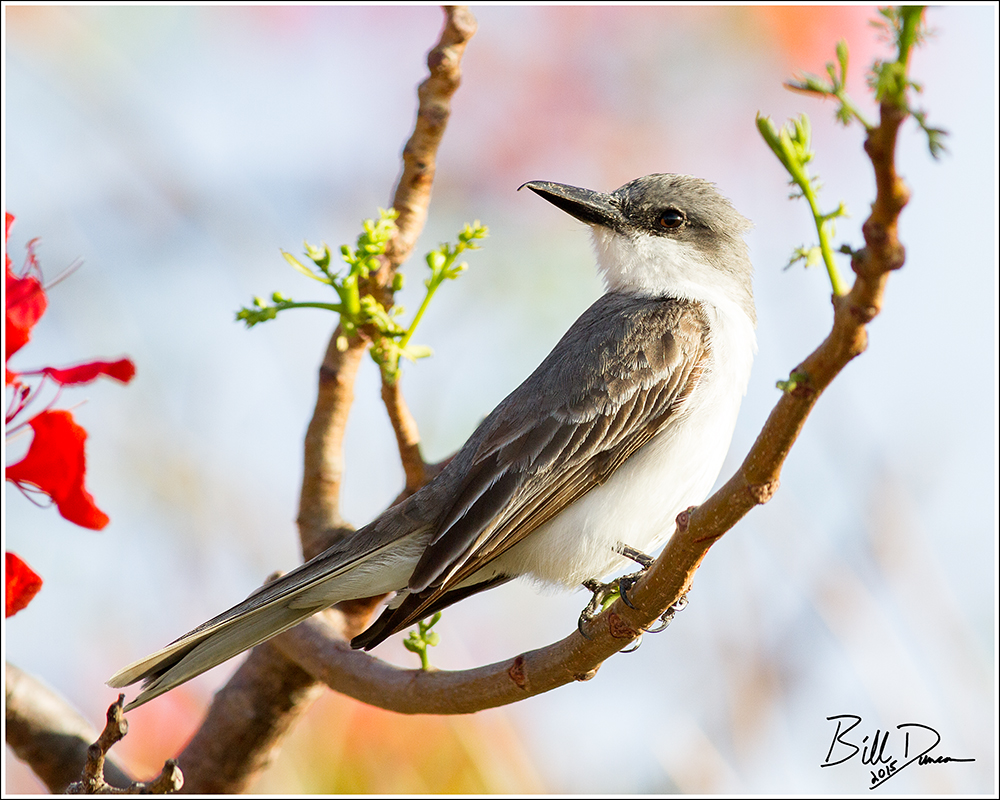
The Grey Kingbird is found at lower elevations throughout the Caribbean as well as coastal Florida. Typical Kingbird behavior, these guys fear nothing and take charge of whatever territory they call their own. I found these birds at most places I visited on the island, but the ones around the hotel were so bold, I tended to watch my back lest they use that hooked beak on me…
Many thanks to Connie and Jo Alwood who turned me on to this Virginia Rail they were watching this spring at BK Leach Conservation Area. The midday light was poor for photography, but the bird was cooperative as it hunted among the cattails. A couple of weeks later Sarah and I made a visit to BK Leach and found even more great rail habitat. We were able to watch three more Virginia Rails and of course I left the camera at home…
Please have a look at Jo Alwood’s YouTube Channel. I find it to be a treasure of Missouri wildlife documentary that ranks up there with the likes of Charles and Elizabeth Schwartz and Marty Stouffer.
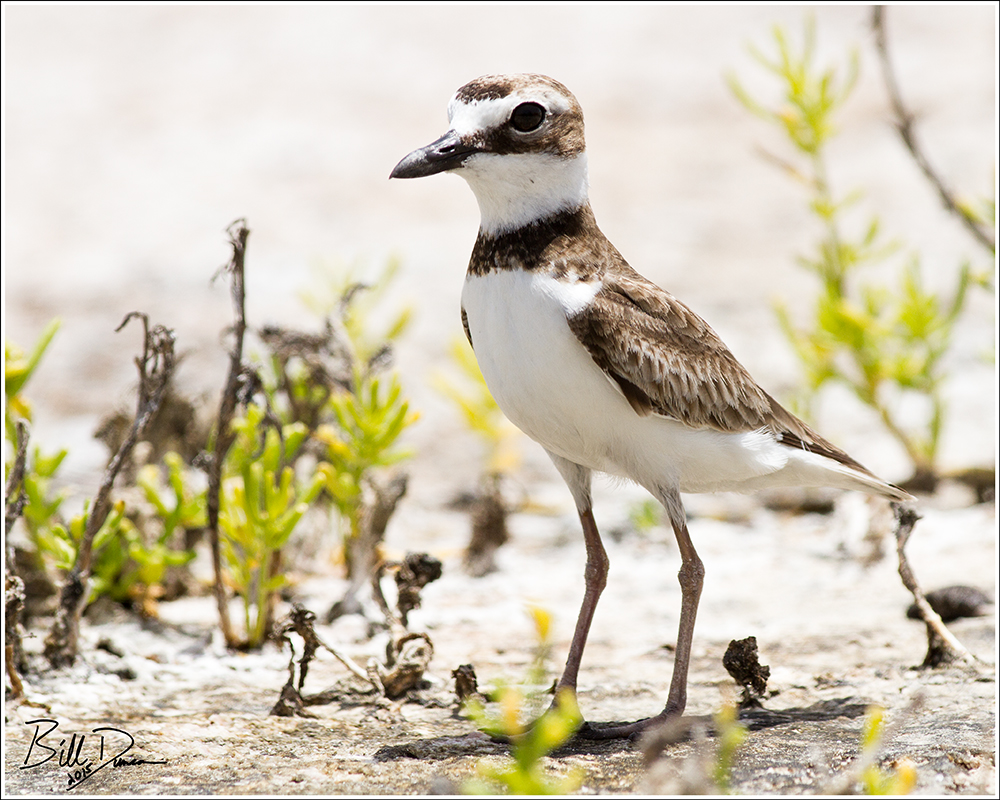
One has to love a plover. These birds are often the only obvious sign of life in some pretty rough places. Adorable little fluff balls, Snowy Plovers can be found on salt flats and beaches on the pacific and gulf coasts as well as deep into the Caribbean. There are also populations that nest inland, such as the ones we encountered in central Kansas. I was quite fortunate to find these birds on salt flats in Kansas as well as Puerto Rico within a month apart… 🙂
Snowy Plover
Steve and I encountered somewhere in the neighborhood of 3-5 active nests during our early May visit to Quivira. Unfortunately, no chicks decided to hatch while we were there. It was difficult to leave without seeing the little chicks.
Snowy Plover
Most populations of Snowy Plover are doing well, relative to other Plover species. This inland nesting population is the only population that does any real migrating, coastal populations typically stick to one area of coast.
Snowy Plover
The little guy above is hiking through some of the salt tolerant vegetation that dominate these salt flat habitats.
Snowy Plover
Steve and I were tickled by the ability of these birds to live and work in constant 30-40 mph winds. Facing into the wind, the bird on its nest pictured above documents just that. We noted that when the parents left the nest, the eggs were placed such that they did not budge in the wind, although I am sure they lose heat quickly in such circumstances. Another one of my favorites… 😉
Talk about the place to eat. I had a great time watching these birds preening and carrying on over the mangrove patches at a fantastic Mediterranean style restaurant named Santorini Ocean Lounge Restaurant. Parts Greek, Spanish and Puerto Rican, seafood is the reason to dine here. Add the views of the Caribbean Sea, potential for birds, English menus and servers and craft beer, and there is no reason to eat anywhere else in the area near the Holiday Inn in Ponce.
Less social than the American White Pelican, the Brown Pelican usually hunts alone and frequently dives for its food. The American White is considered accidental as far south as Puerto Rico, but the Brown is quite common across southern shorelines. This bird kept eyeing my seafood paella.




















 A Thousand Acres of Silphiums