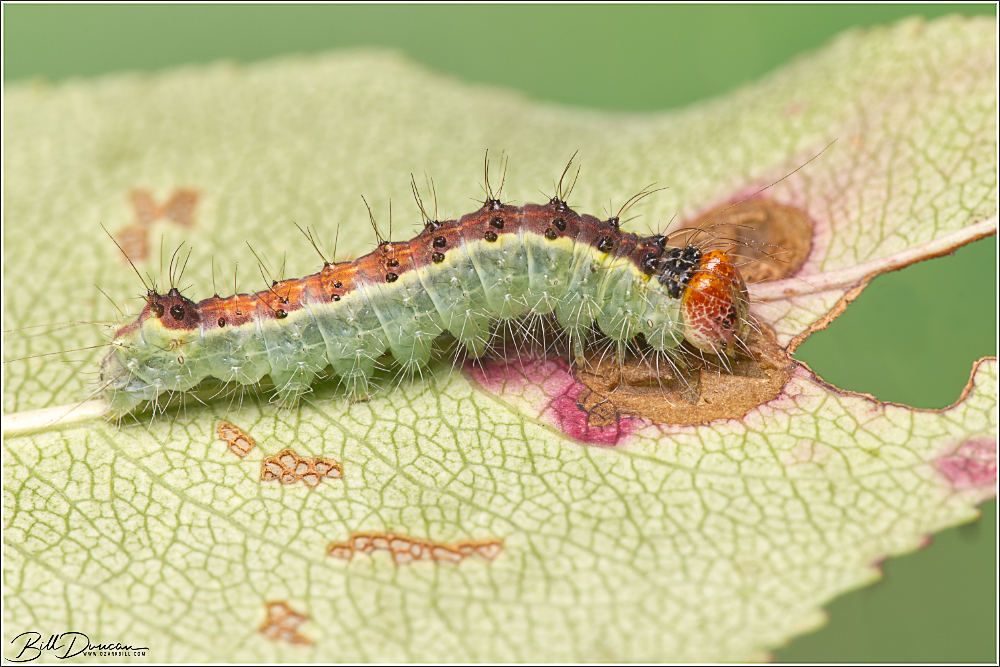
Radcliffe’s Dagger
Acronicta radcliffei fam. Noctuidae (Hodges#9209)
Host plant: black cherry (Prunus serotina)
Date found: 16, 25, Aug, 2025
Location found: Cuivre River State Park, Lincoln County, MO; Council Bluff Lake, Iron County, MO
Notes: The final instar pictured here is dramatically different than earlier instars.
Tag: Acronicta radcliffei
2025 Caterpillar Season – Radcliffe’s Dagger
Splendid Radcliffe’s Dagger
Acronicta superans radcliffei fam. Noctuidae (Hodges#9226)
Host plant: black cherry (Prunus serotina)
Date found: ~09, Aug, 2025
Location found: Cuivre River State Park, Lincoln County, MO
Notes: Edit 2/Jan/2026. Science is learning and correcting our mistakes when possible. There have been no confirmed collections of A. superans in MO per Heitzman’s catalogue. The larva of A. superans looks quite similar to the penultimate instar of A. radcliffei, which I now believe this larvae should be labeled as. The primary differences are that A. superans will have black snowflaking on the head, whereas A. radcliffei will have this patterning in red. Another potential option is A. hasta, but I think less likely. All three are cherry/rose specialists. That said, it would not be out of the question for A. superans to be found in Missouri. If any who may have found this post has reason to disagree with my determination, I’d appreciate hearing from you.

2024 Caterpillar Season – Radcliffe’s Dagger
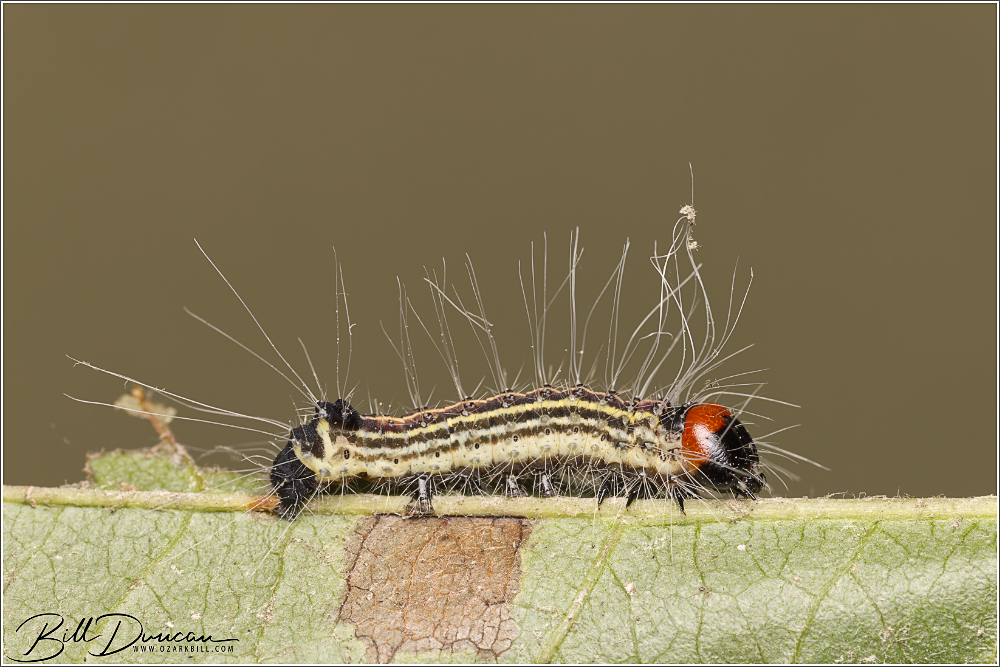
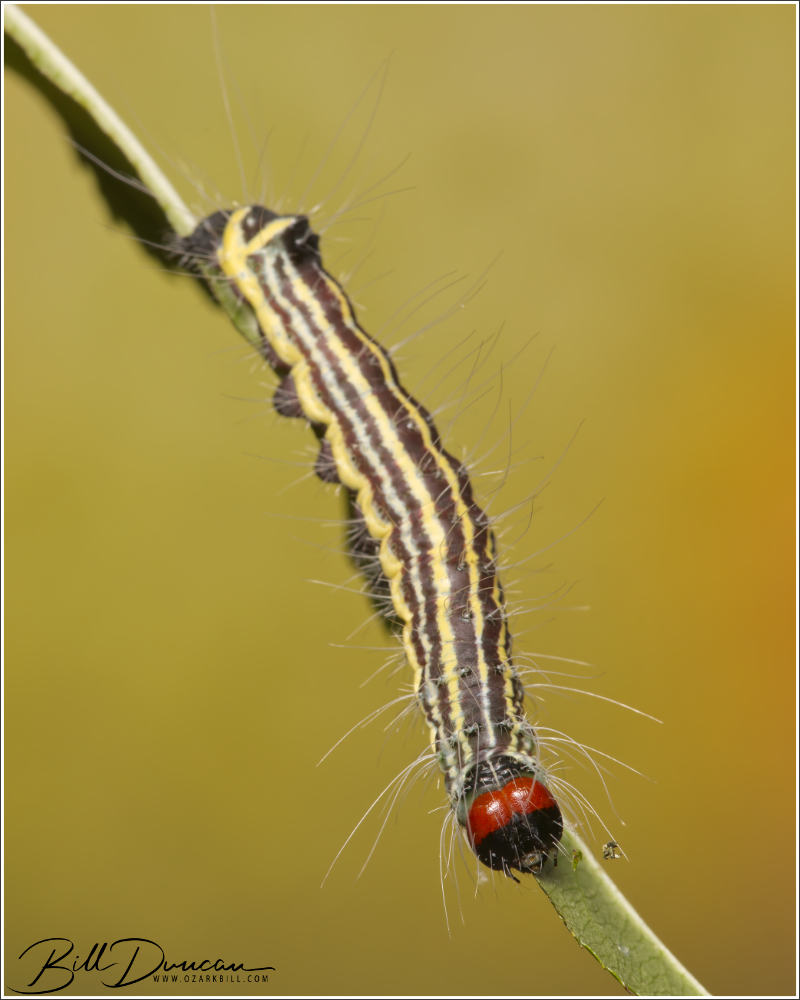
Splendid Dagger Radcliffe’s Dagger
Acronicta superans raddcliffei fam. Noctuidae
Host plant: Not recorded
Dates found: 17, Aug, 2024
Locations Found: Schoolcraft Prairie, Washington County, MO
Notes: Edit – 2/Jan/2026. Science is learning and correcting our mistakes when possible. There have been no confirmed collections of A. superans in MO per Heitzman’s catalogue. The larva of A. superans looks quite similar to the penultimate instar of A. radcliffei, which I now believe this larvae should be labeled as. The primary differences are that A. superans will have black snowflaking on the head, whereas A. radcliffei will have this patterning in red. Another potential option is A. hasta, but I think less likely. All three are cherry/rose specialists. That said, it would not be out of the question for A. superans to be found in Missouri. If any who may have found this post has reason to disagree with my determination, I’d appreciate hearing from you.