"What a thousand acres of Silphiums looked like when they tickled the bellies of the buffalo is a question never again to be answered, and perhaps not even asked." -Aldo Leopold
I was busy for several weeks this summer observing and photographing a Ruby-throated Hummingbird and her nest. I collected a lot of behavioral data and took way too many photos and video. Here is part one of what will likely be a three to four part video that summarizes the experience.
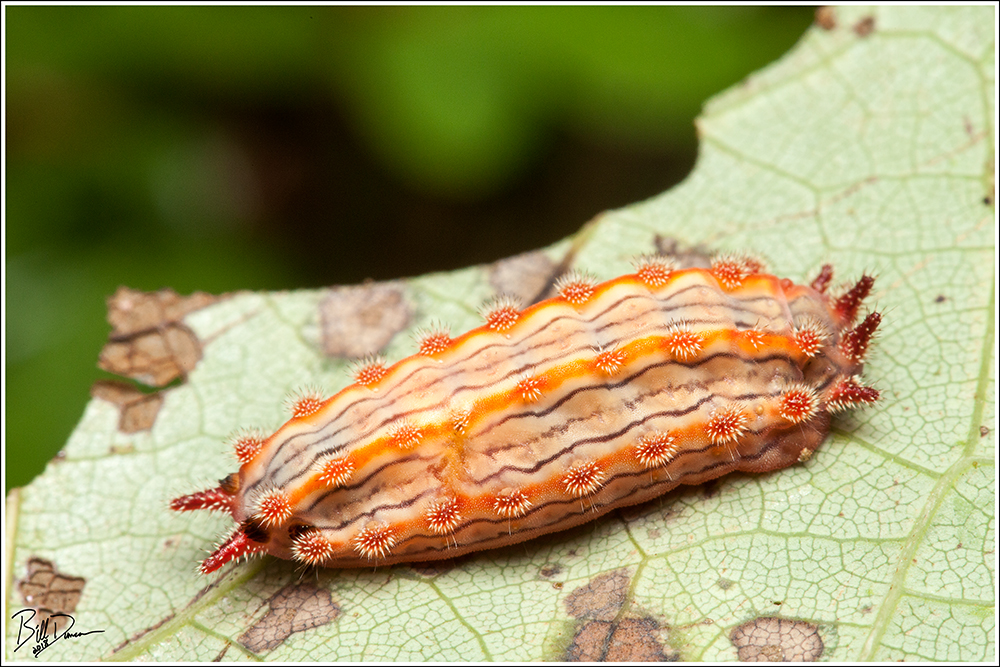
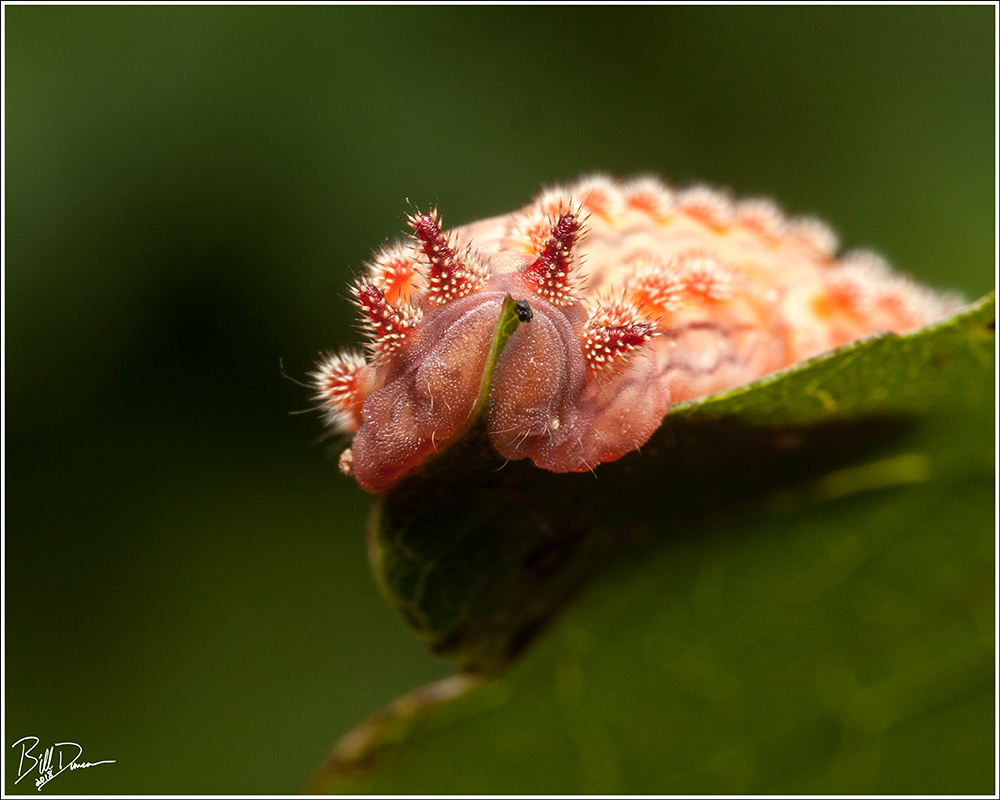
The WGNSS Nature Photography Group met on September 1, 2018 at Don Robinson State Park in Jefferson County, MO, with the goal of finding slug moth caterpillars and whatever other macro subjects of interest we could find. Overall, I think we had good fortune on this hot and muggy, late-summer day, finding quite a few interesting caterpillars. The slug moth caterpillars were a little scarce, but we did find a little something extra special – the pin-striped vermilion slug moth (Monoleuca semifascia) (Hodges # 4691). In four summers of looking for slug cats, this is the first one I have seen. It is a southern species and I assumed it would need to be found in the south-western part of our state where the open barren woodlands and savanna type environments this species prefers are more common.
Slug cats can be found on virtually any species of woody plant in the state. Although oaks and hickories seem to be the preferred host plants, this animal was found on an eastern redbud (Cercis canadensis).
One of the penalties of an ecological education is that one lives alone in a world of wounds. Much of the damage inflicted on land is quite invisible to laymen. An ecologist must either harden his shell and make believe that the consequences of science are none of his business, or he must be the doctor who sees the marks of death in a community that believes itself well and does not want to be told otherwise.
Aldo Leopold
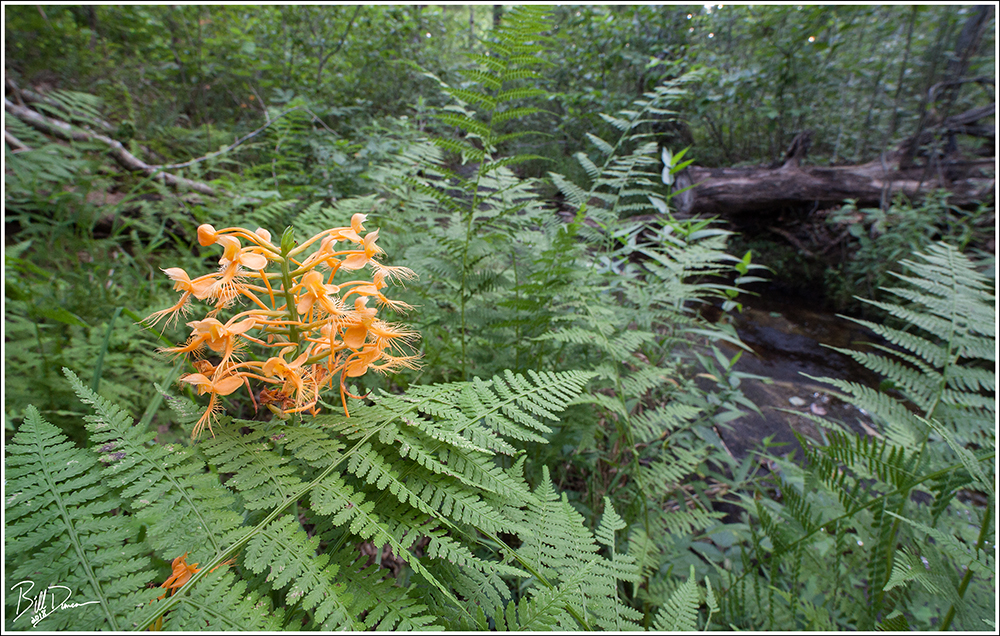
Yellow-fringed Orchid (Platanthera ciliaris)
With the help of a friend, over the last few weeks I’ve been able to get a good start at finding and photographing as many of the 35 +/- orchids that can be found in Missouri. The yellow-fringed orchid (Platanthera ciliaris) is known from only a handful of threatened locations in the state. I was really thankful to be shown these in full bloom where they reside in acidic seeps in St. Francois County.
I had seen rattlesnake plantain (Goodyera pubescens) before, as its wonderful evergreen leaves stand out during winter hikes. This was the first time I’ve seen them in bloom. Photographed in Ste. Genevieve County.
Not the greatest photo of the greatest specimen, but this seemed to be the absolute last grass pink orchid (Calopogon tuberosus) to be found in bloom for the season at this location in St. Francois County.
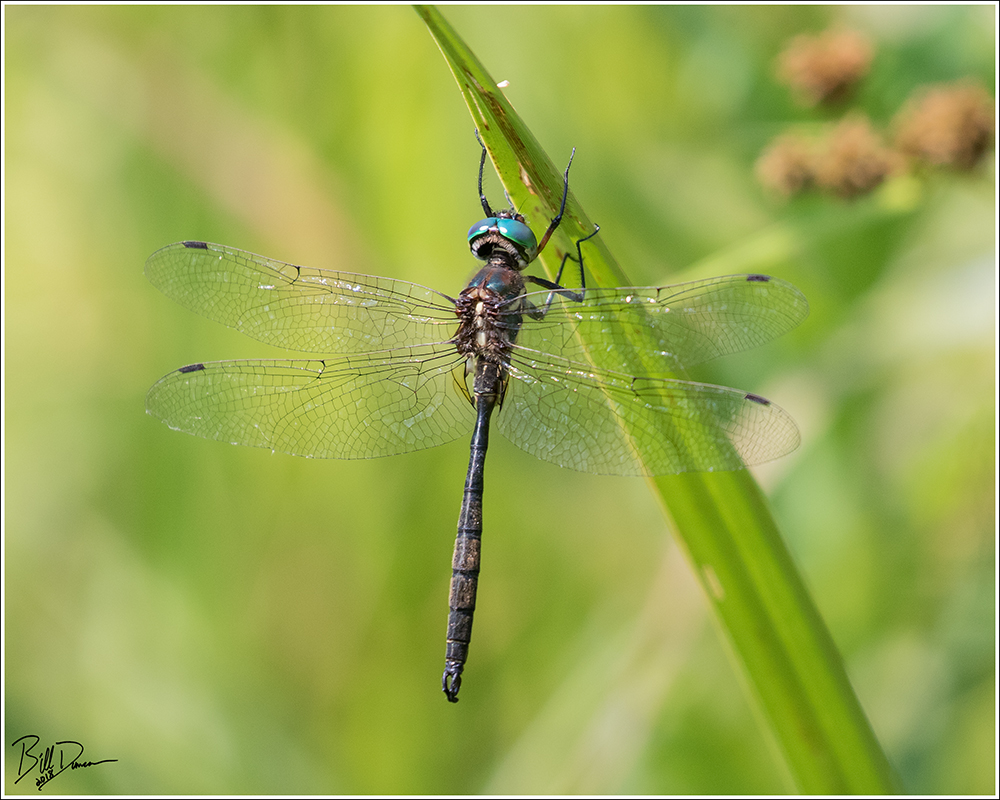
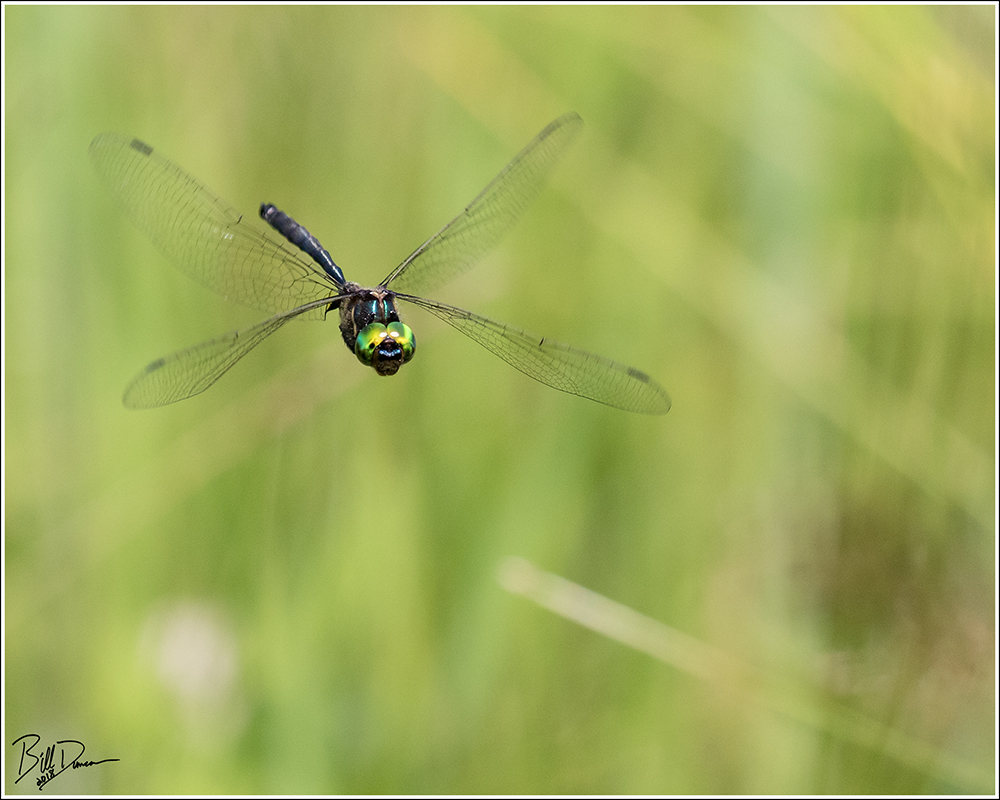
Ever since I heard that a number of newly identified populations had been discovered in Missouri, I have been wanting to find the Hine’s Emerald Dragonfly (Somatochlora hineana). I’ve gone a time or two on my own in previous years, but without specific knowledge on the where’s and when’s to find the flying adults. On June 16th, 2018, the Webster Groves Nature Study Society’s (WGNSS) Nature Photography Group headed to what might be the largest population of this species in the state. Thanks to WGNSS member and photographer, Casey Galvin, we were allowed access to a privately held farm in Dent County, MO that holds this population.
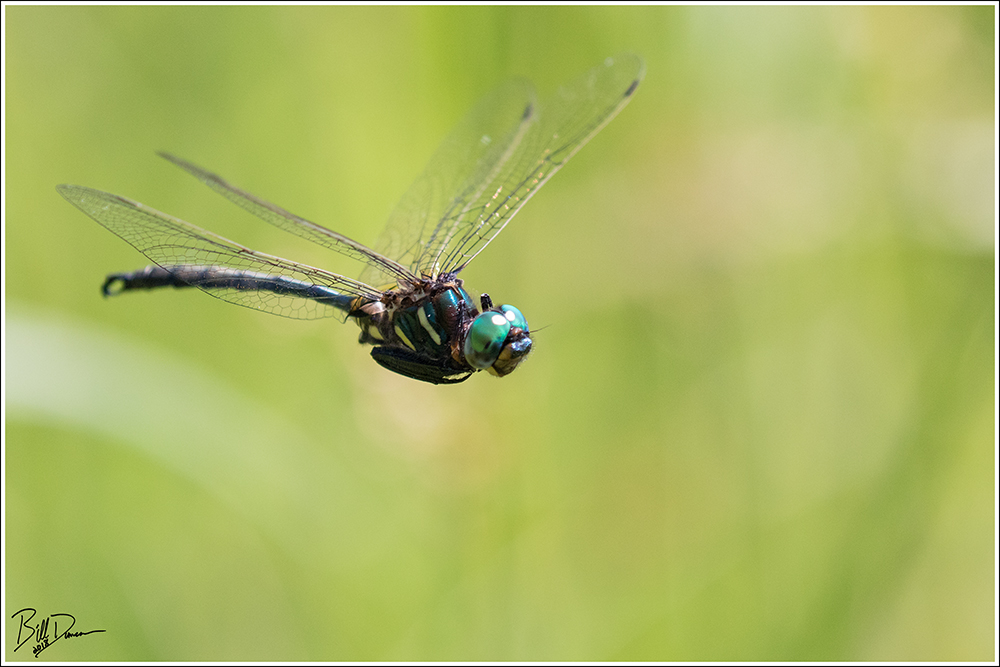
So, what is a Hine’s Emerald Dragonfly and what distinguishes them from the other 24 or so species in the Stomatochlora genus, or the “striped emeralds”? The above photo shows these distinguishing characteristics. Beyond the obvious emerald green eyes that all of the striped emeralds possess is the pair of yellow thoracic stripes on the sides of this species. Another and more diagnostic is the particulars of the genitalia. Using a good field guide will easily allow you to come to a species.
Hine’s Emerald Dragonfly – Finally at rest
Currently on the endangered species list, S. hineana was thought extinct as late as the mid 1900’s. Current populations of this species are now known from the states of Illinois, Wisconsin, Michigan and Missouri. Current population estimates indicate that there are approximately 30,000 individuals in the world. About 20,000 of these are believed to be in the species stronghold of Door County, WI. Like many of the striped emeralds, S. hineana has specific habitat requirements. The preferred habitat for this species is fens and sedge meadows overlying dolomite bedrock. Habitat loss, pesticide use and changes in ground water are identified risk factors affecting the Hine’s Emerald.
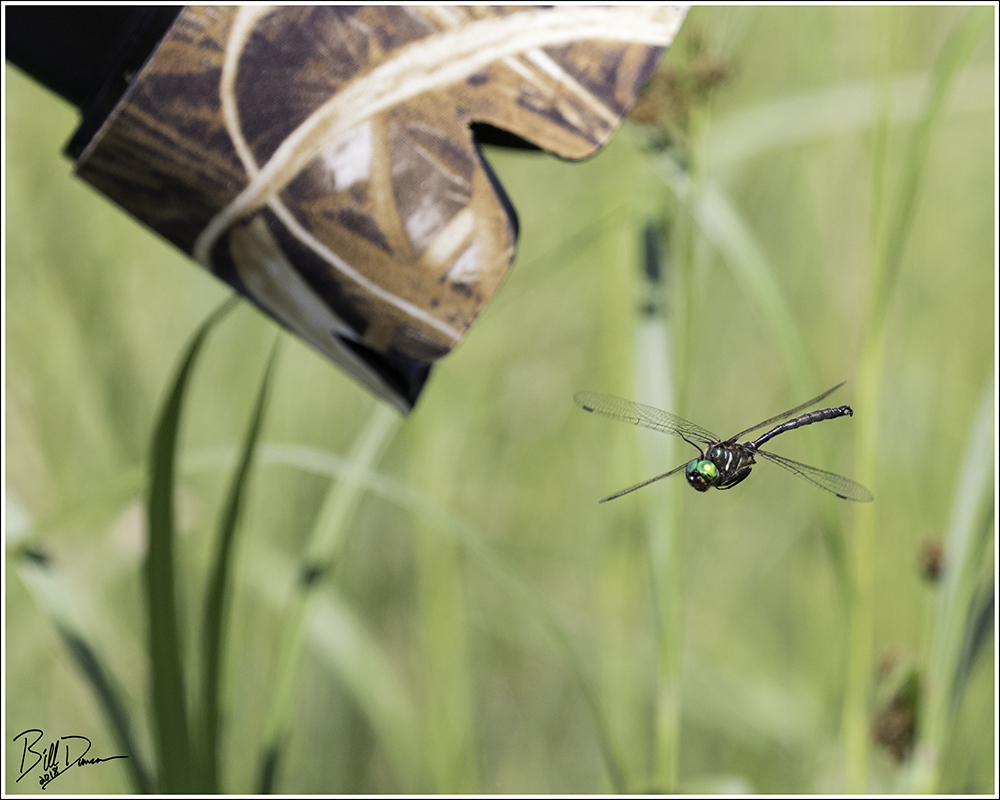
Hine’s Emerald Dragonfly – A photographer’s potential nightmare
Like many dragonflies, S. hineana is a sun-lover, active in the early parts of a June morning before things get too hot and he finds a hidden perch. Until then the males are airborne, patrolling their territory in the hopes of finding a female or a male to chase away. The photographer need be patient and wait for the opportunity when the insect stops to hover in the same general place. This is the split-second opportunity that you wait for. The problem is that autofocus is of little to no help. I primarily used manual focus on the in-flight shots.
Hine’s Emerald Dragonfly – A worthy pursuit
There were plenty of opportunities for the patient photographer and observer. Often, an individual would fly so close to the lens we were sure it would use it as a perch. At these distances any movement by the dragonfly would throw it completely out of focus, so the photographer is looking for the sweet spot – close enough to be large in the frame, but far enough to enable tracking.
Hine’s Emerald Dragonfly – A rare gem
It was such a thrill to finally be able to meet these guys. With this location and up to 20 others, it is nice to know that Missouri is home to such a rare gem. Hopefully it will remain so.
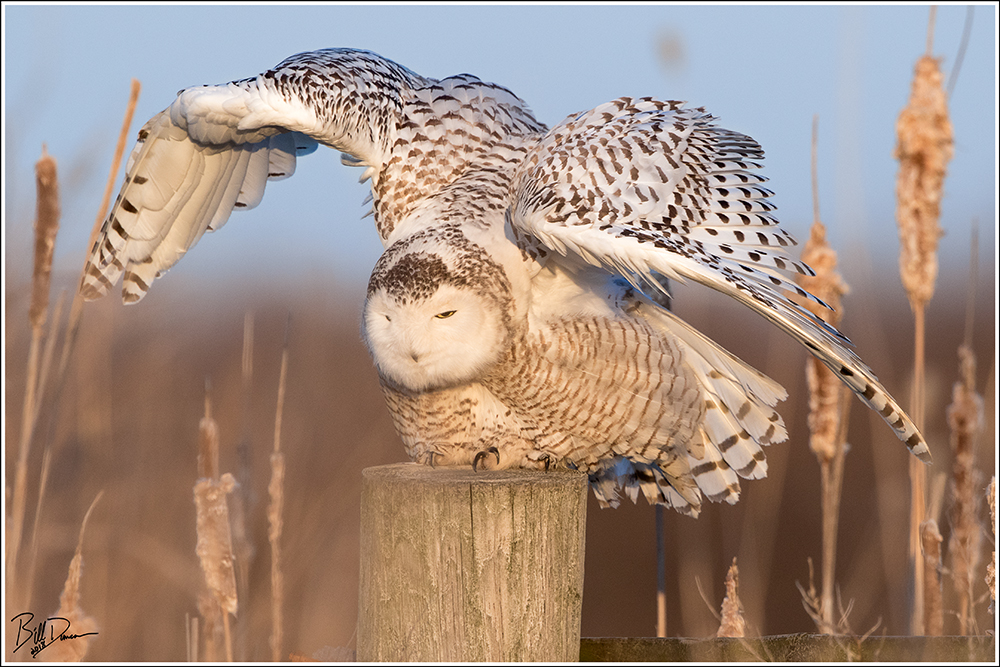
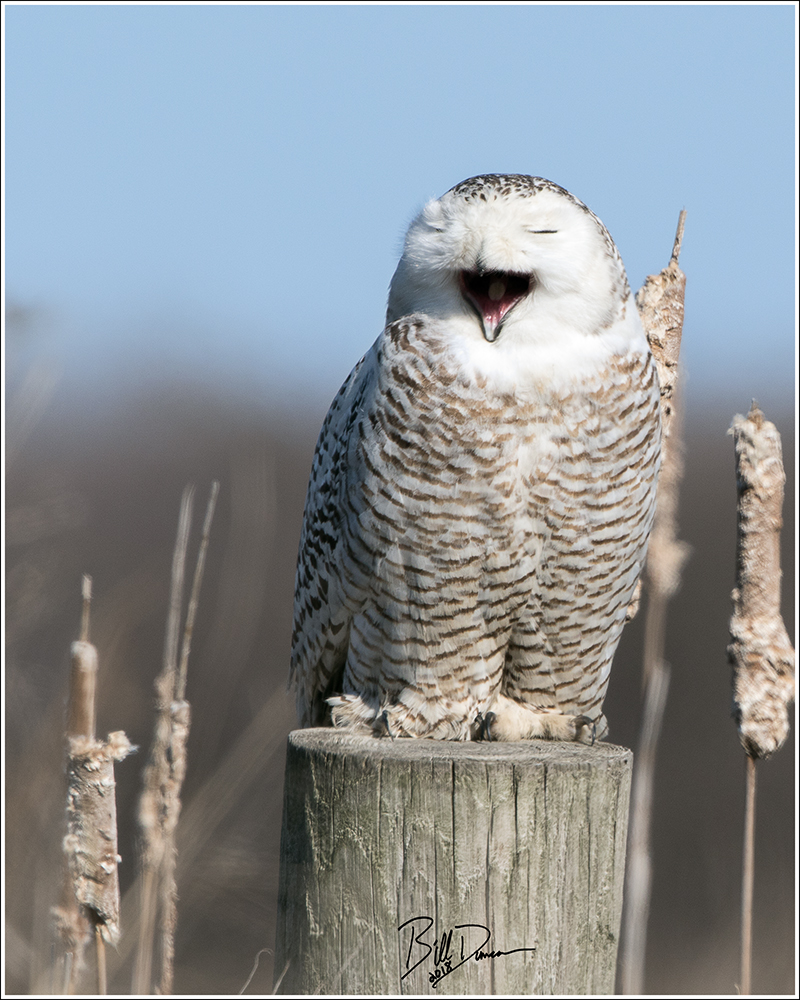
A huge thank you to Danny Brown, without whom I most likely would have stayed at zero Snowy Owls for the great Snowy irruption of the 2017/2018 winter. Because of travel and just poor luck, I had missed out on finding the Snowy Owls that had salted the state this winter and would never have imagined that we would have another chance a week into April. But, since the weather to date suggests little of spring, I suppose we should have not been too surprised.
Snowy Stretch
The birding on Saturday was seemingly great everywhere and Steve, I and others were having good luck finding interesting species at RMBS when we received the messages from our phones about Danny’s find. I think Steve and I would have been satisfied with our usual views from a football’s field or two away, but were ecstatic to find the bird perched at an optimal viewing distance, resting after a nice meal that others had documented earlier in the day.
Snowy Yawn
We left the bird still on its perch shortly after sunset. On the way out of the conservation area we had a Short-eared Owl and American Bittern flyovers. Thanks again, Danny.
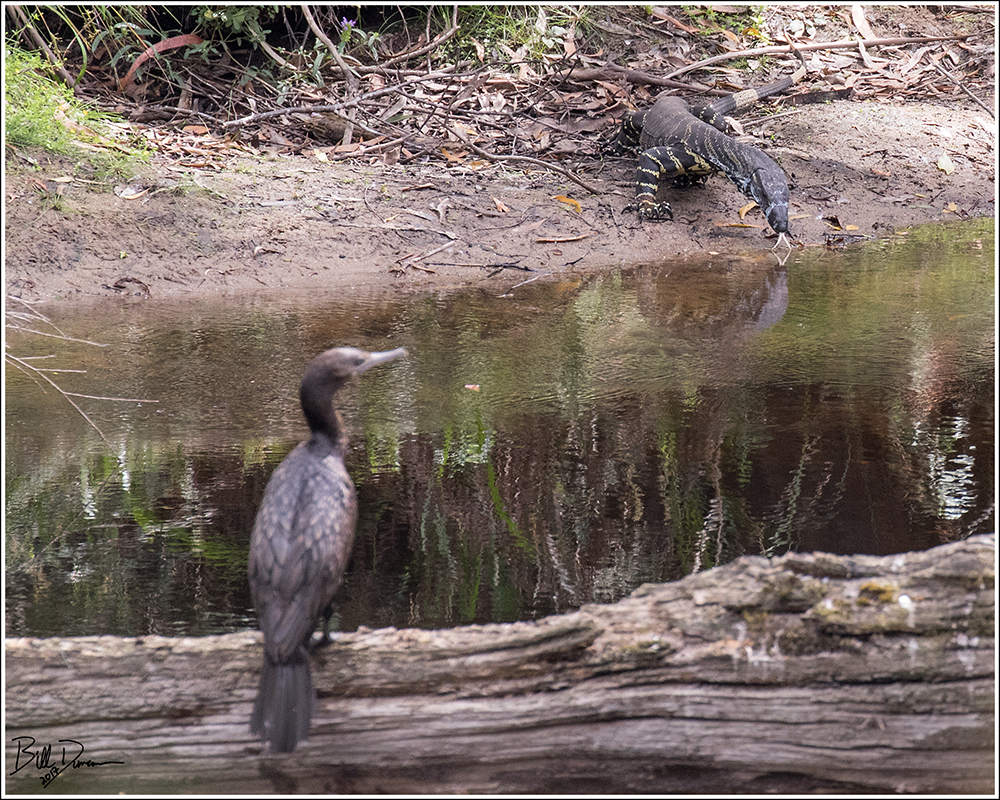
Being a herper from days long ago I was certainly aware of the potential for finding special squamates in the land of spectacular and dangerous reptiles. But, with little time in the right habitats, I did not get my hopes up for finding much. As Collin and I were making our way south, we stopped at a bridge that crossed a stream that drained the tropical rainforest we were driving through into the Tasman Sea. As I watched and photographed a cooperative Little Black Cormorant, I picked up some motion on the other side of the stream.
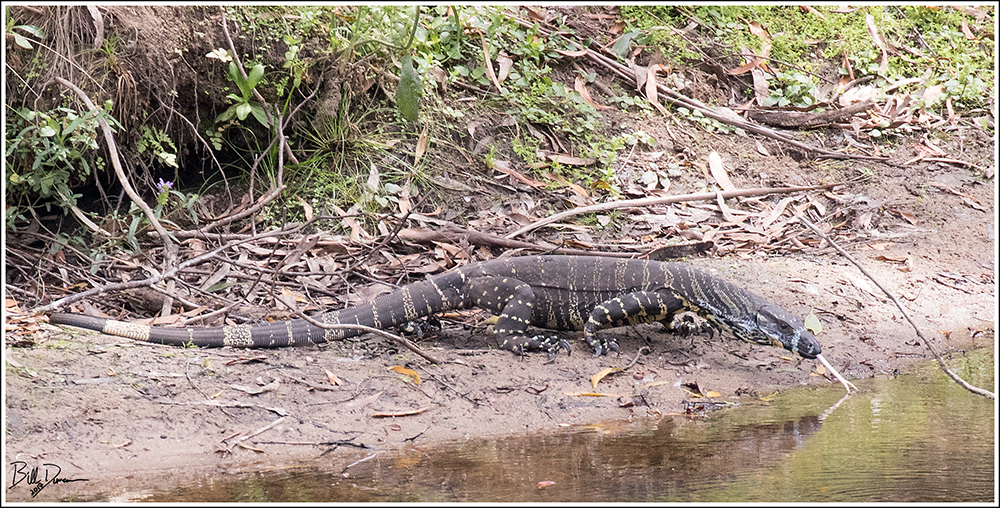
Lace Monitor
Out of the vegetation lumbered this huge varanid, a lace monitor! The lace monitor is the second largest monitor in Australia and this individual was a full-sized adult. I estimate its size at 4.5 – 5.5 feet in length.
Lace Monitor (Varanus varius)
I’m sure the monitor could have made a nice meal of the cormorants, but none of the few birds that were within viewing distance appeared to be too concerned. The lizard took a small drink and then continued downstream before being lost in the vegetation. What a treat!
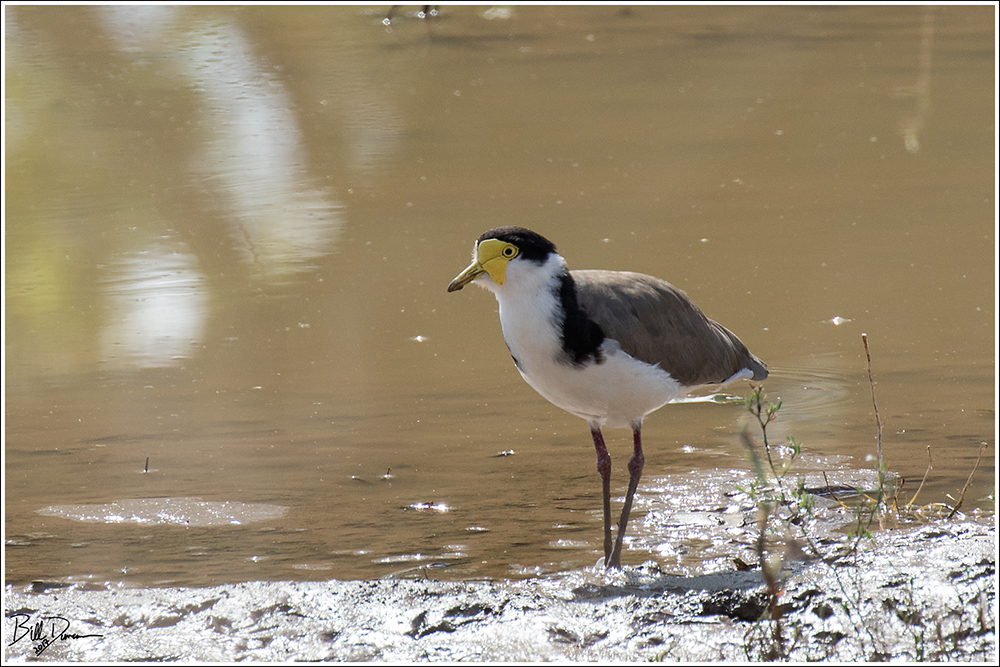
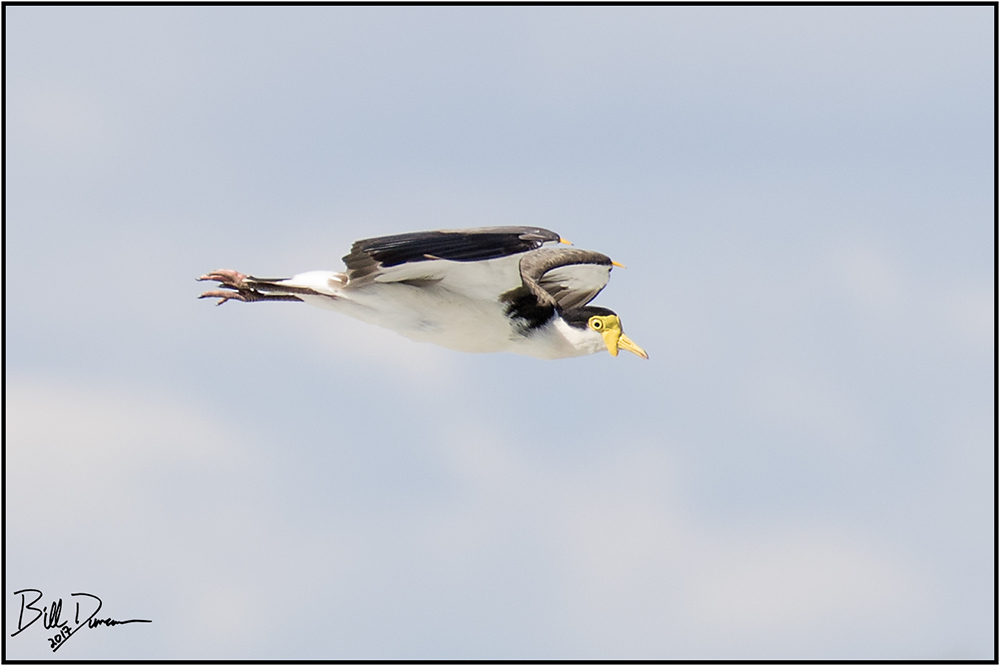
I had come across Lapwing species in Brazil. These are pretty interesting birds – often colorful, loud, large and not too off-put by human activity. They are classified in the family Charadriidae that includes the plovers and they always remind me of our Killdeer. Most birds in this group use alarm calls and maybe injury feigning to protect themselves and their nests and offspring. These guys have similar tools, but look closely at the next image. Can you see their special weapons?
Masked Lapwing
Yes, these guys pack a little something extra in those wings. Also known as the Spur-winged Plover, the Masked Lapwing uses those spurs in territorial conflicts with one another as well as against potential predators that may be after their nests and developing chicks. Humans have been known to be struck by these not-so helpless birds.








 A Thousand Acres of Silphiums