
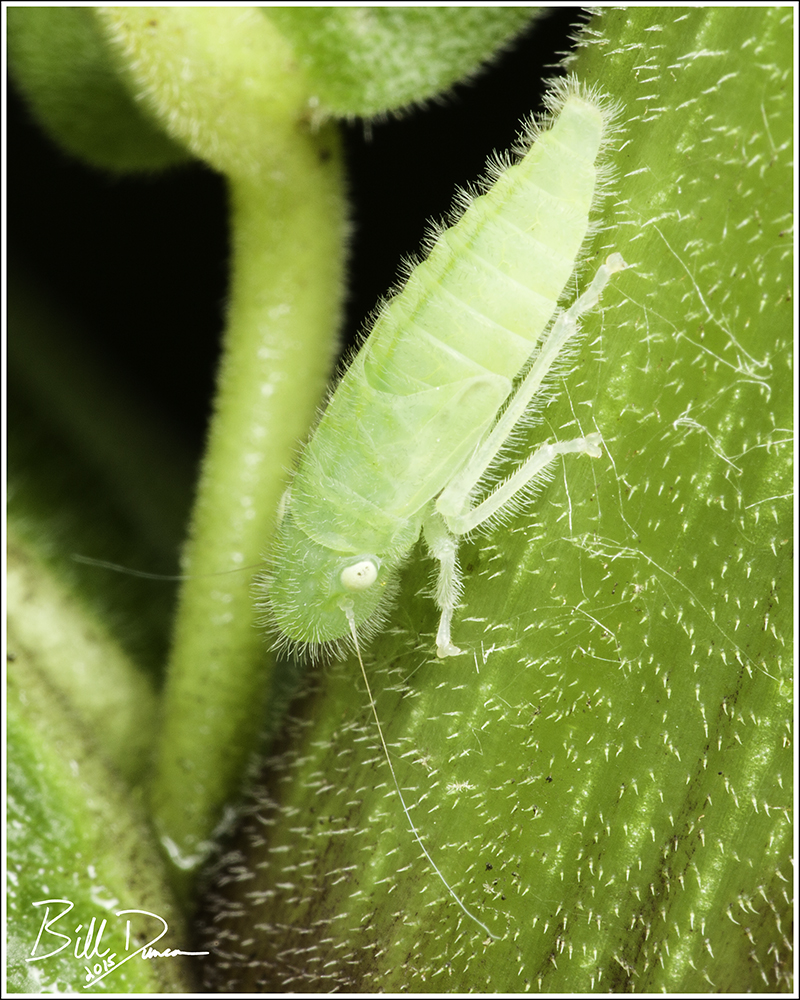
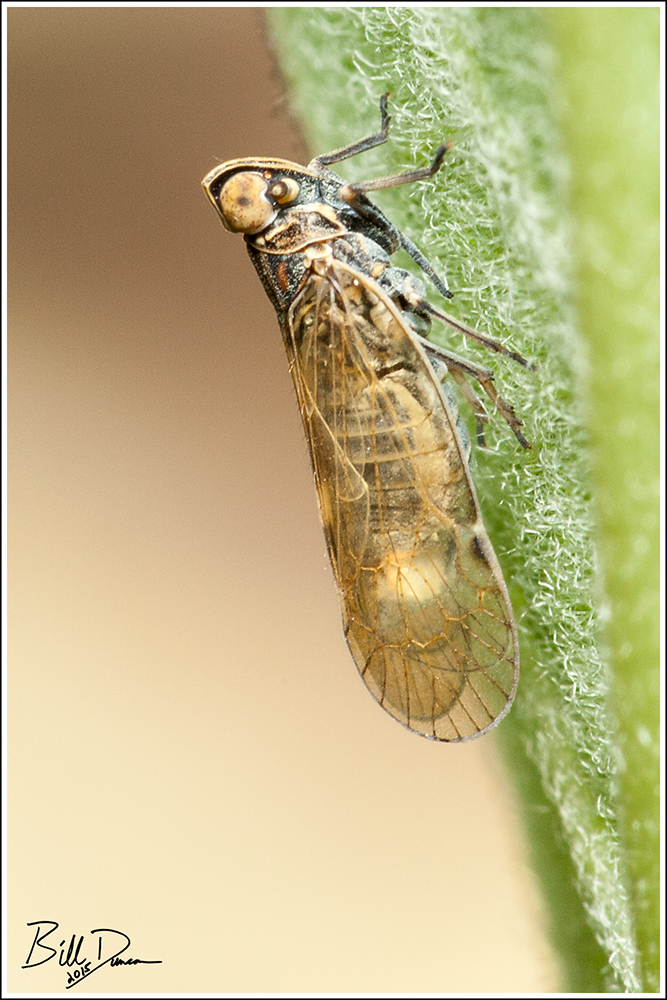
Just a few planthoppers/leafhoppers to share.


-OZB
"What a thousand acres of Silphiums looked like when they tickled the bellies of the buffalo is a question never again to be answered, and perhaps not even asked." -Aldo Leopold
Just a few planthoppers/leafhoppers to share.
-OZB
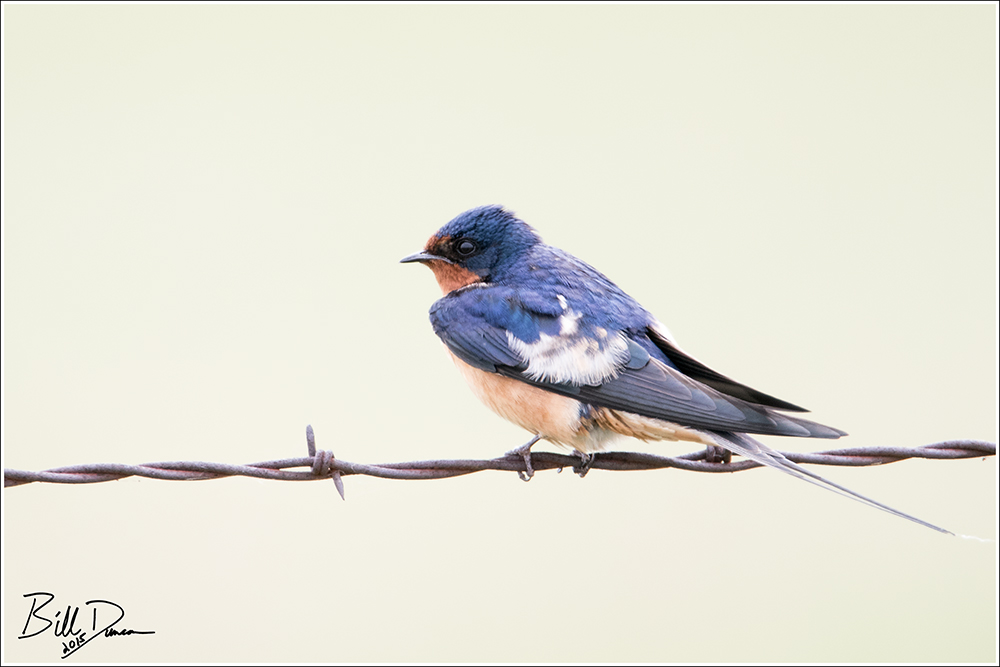
This warm season, including this spring at Quivira, I finally took some time to get to know the Swallows a little better, not only in visual description, but in song, behavior and flight. Other than their beauty, I find the Barn Swallows to be the most gracefully designed and beautiful fliers of their kind. With their long, forked tail and sleek and slender wings, I am sure they could beat any other swallow in a dogfight. It’s a simple pleasure to watch them swoop down, mere inches above a field to catch an insect on the wing, to then see them rise a few hundred feet while banking and rolling. Their varied and constant chatter ranks among my favorites as well.
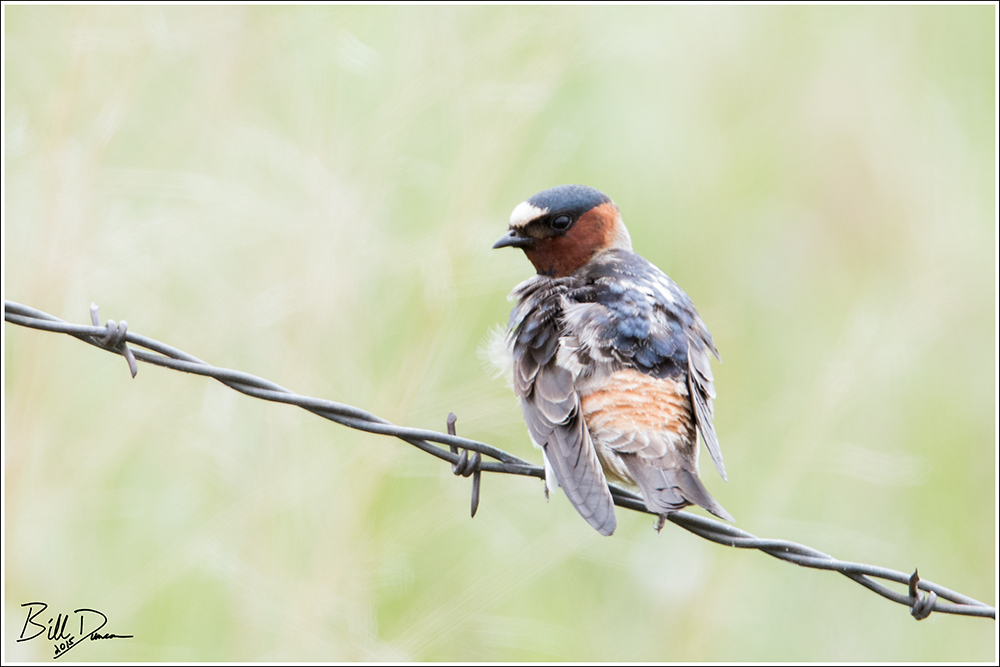
Pete Dunne most appropriately describes the Cliff Swallow as a “…husky crop-tailed Barn Swallow wearing a miner’s lamp.” Another gorgeous swallow, this species is very communal and will often nest in the hundreds or thousands together, making gourd-shaped nests out of mud. The image below shows a few birds collecting mud on the banks of a stream that runs through Quivira.

-OZB

The mimicry that insects exhibit can be astounding. Walking around Shaw Nature Reserve this summer, I noticed quite a fresh and disgusting looking bird dropping on a small bush near the trail. Something made me take a closer glance and I discovered it wasn’t a poop at all, but a caterpillar. The caterpillar was an early instar of the Giant Swallowtail Butterfly (Family Papilionidae). These caterpillars feed on member of the citrus family, the Rutacea, and this individual was found on a small hop bush. Youngsters like this one will most often be found directly on the surface of a leaf (as poops are most likely to be found), while older stages are likely to be found on leaf petioles or slender branches. In citrus production areas of the south, these guys have the nickname “Orange Dogs” due to their dietary needs. They can be considered a pest in such situations. Unfortunately, I forgot that, if harassed these guys will evert a pair of bright red structures called osmeterium. The function of these organs appears to be defensive in multiple ways. Often brightly colored, they can look quite like the forked tongue of a snake, and go along with other morphological adaptations in some members of the swallowtails in making them appear like a snake. In addition, numerous chemical compounds can be released with the osmeterium that have been shown to repel ants and other potential insect predators.

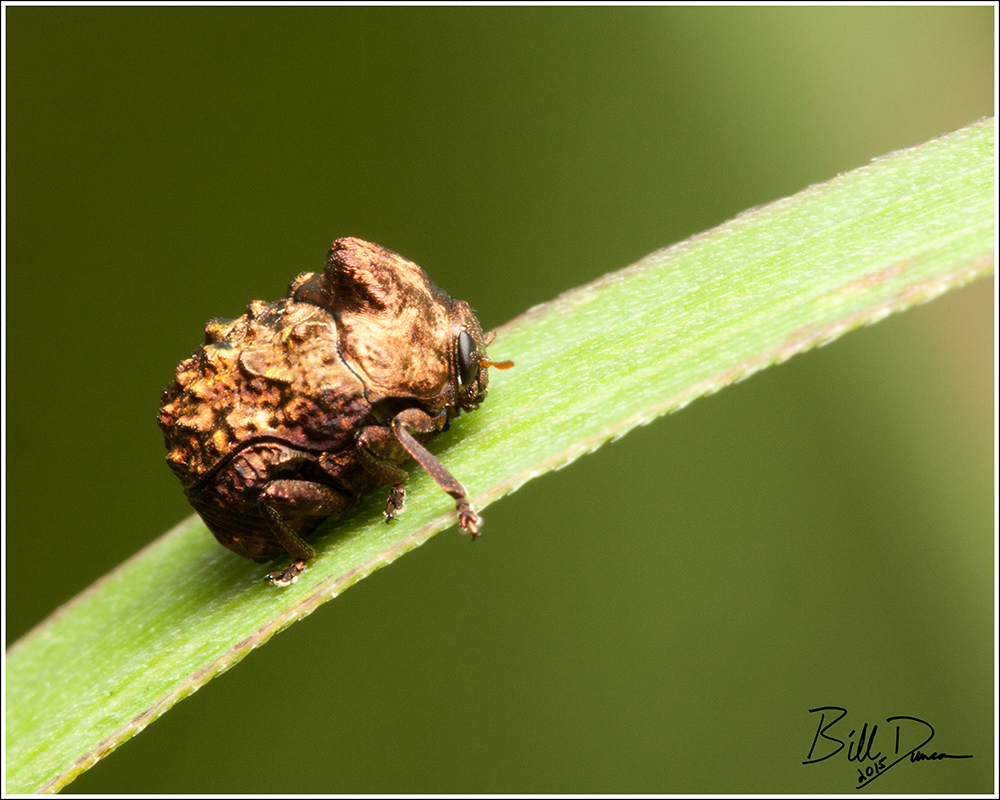
Moving from bird droppings to the droppings of a caterpillar we come to this fascinating creature that is most often found on raspberry bushes. A member of the diverse family of beetles – the Chrysomelidae, this Warty Leaf Beetle (Pacybrachis nigricornis), will tuck in its appendages and drop, looking exactly like a caterpillar’s droppings, or “frass” (anyone remember the action figures from the 80s, the Rock Lords?).
-OZB
References

Tonight I am sharing a few miscellaneous shorebirds. First up to bat is a shorebird that isn’t much of a shorebird at all – the Upland Sandpiper. So named due to its preference for higher and drier habitat, the Upland Sandpiper can be found in fields and meadows. Look for it on a typically elevated perch and find it by its haunting song.
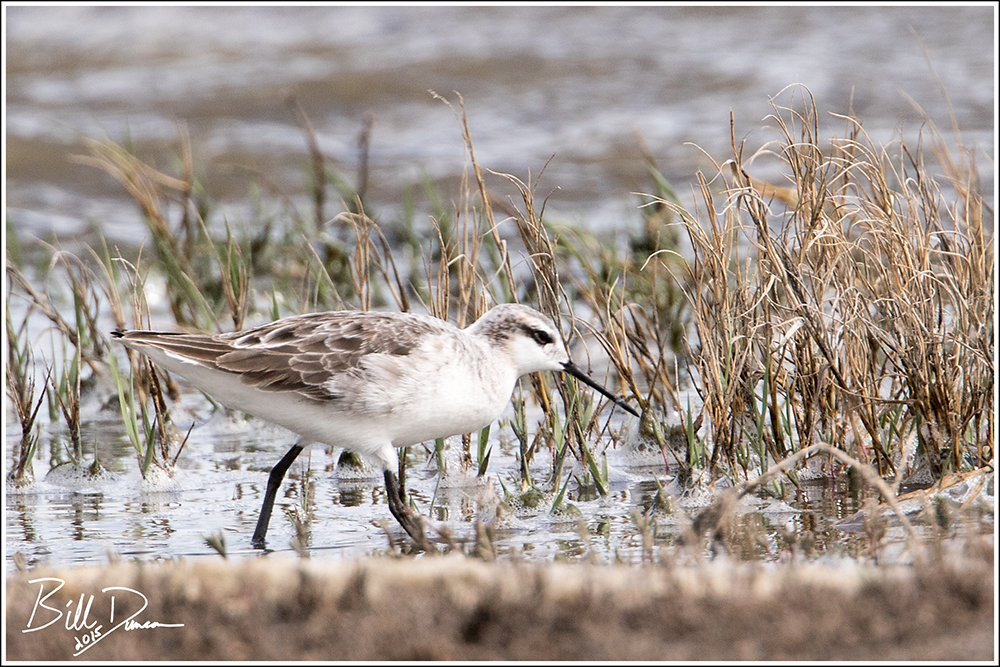
With a ratio of what must have been close to 1000:1, the Wilson’s Phalarope greatly outnumbers any other Phalarope. However, Steve and I were still able to find and ID a couple of Red-necked Phalarope in winter plumage, as pictured above.
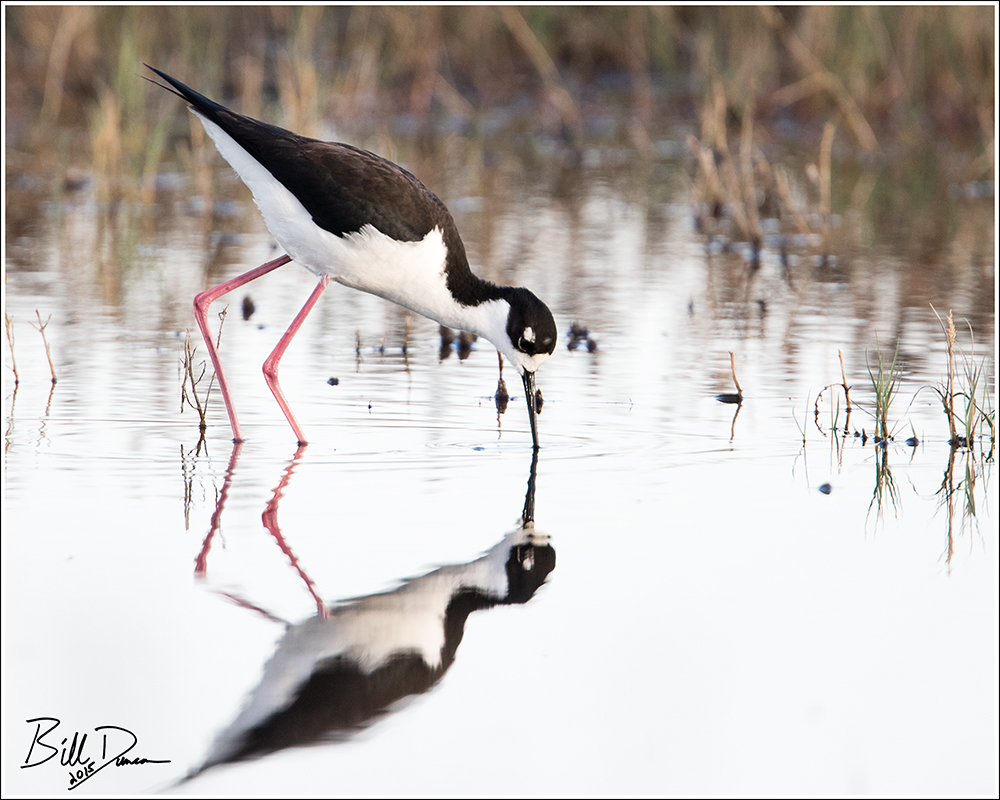
A true wetland favorite, the Black-necked Stilt is as pleasing to watch for its behavior as it is a piece of natural art.

As stout and cute as a Bulldog puppy, Willets are always a site for sore eyes.

On our last evening and during our very few hours of decent, golden hour light Steve and watched a number of Willets and Avocets feeding in the shallows near the road.
-OZB

Earlier this spring I watched with anticipation as a pair of Flickers inspected a potential nest cavity in a wood lot where I work. I watched over several mornings as they came and went and made a ruckus. Here, the male admires the view from the front door.
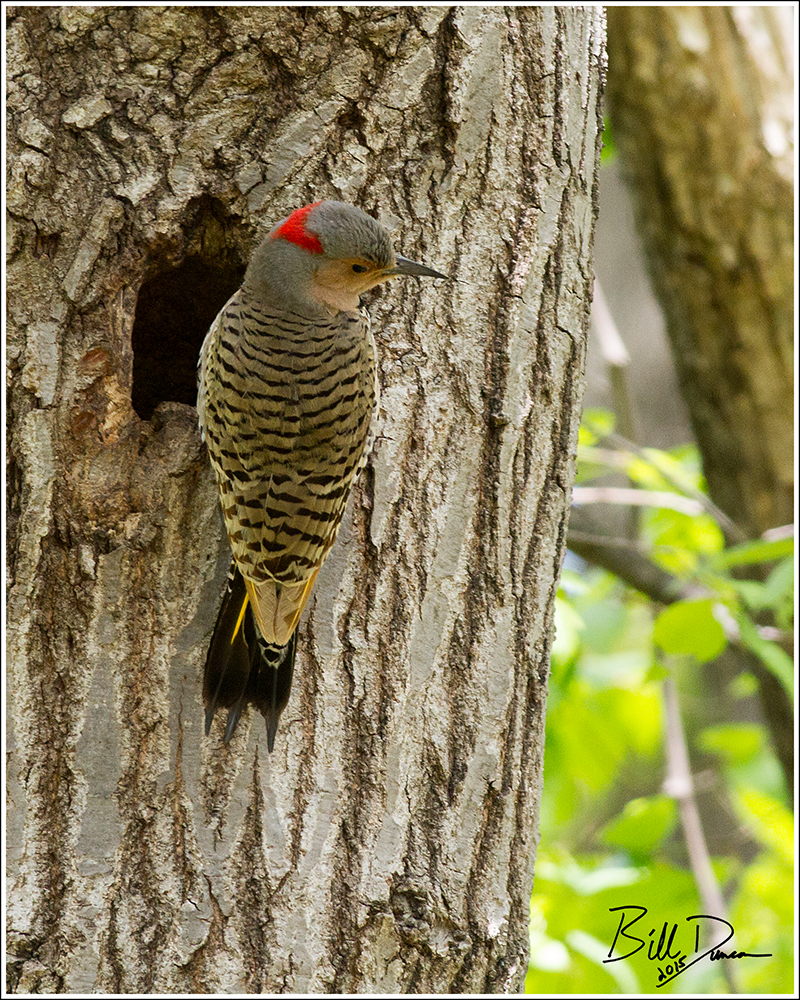
The female is pictured above, inspecting the potential nest sight.

But alas, for whatever reason, the pair decided this wasn’t the spot for them this year. Ah well.
-OZB
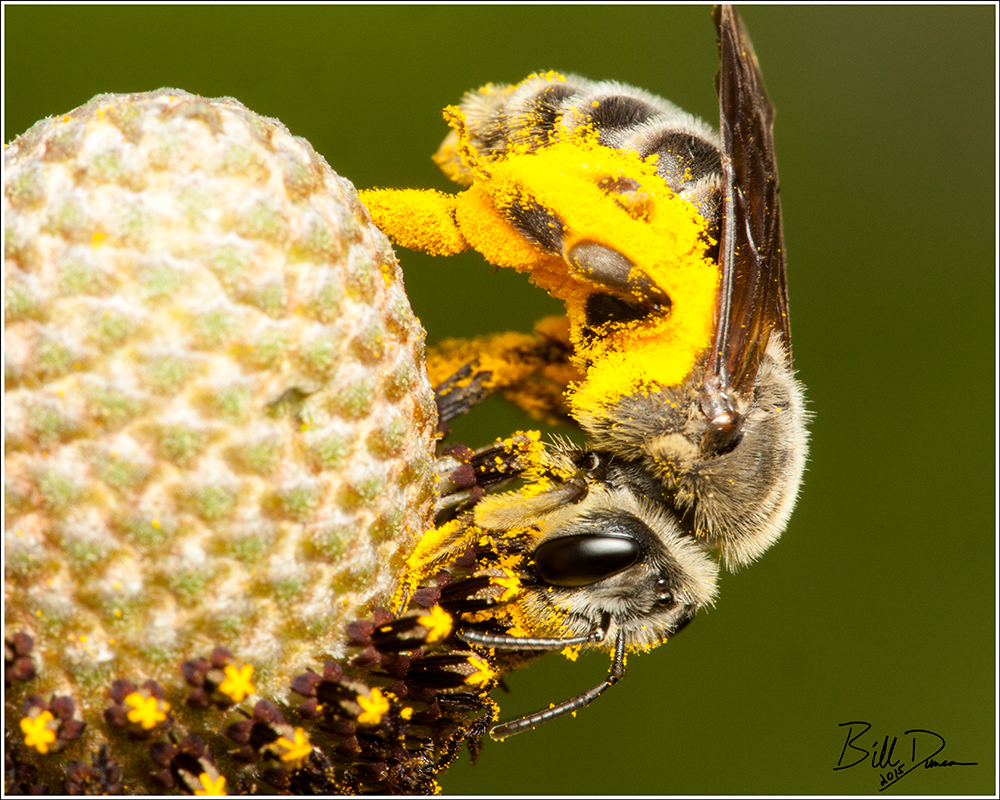
Tonight we have a couple of native bees photographed this summer at Shaw’s Nature Reserve. I may very well be incorrect, but I believe the bee pictured above is a Mining bee in the family Andrenidae. I would love to know how much pollen is taken away in a season by these guys.

The final two photos show a sweat bee (Halactidae). These are quite challenging to photograph, but worth the effort.

-OZB

With unique coloration and behavior, the Ruddy Turnstone is a shorebird that does not take a second guess to identify. The photograph above captures this conspicuous behavior for which these birds have earned their name. They do turn anything that they can – looking for any type of small invertebrate that may be hiding underneath. Anything includes dead fish or other animals, shells or trash washed up on a beach.

These guys typically migrate along the coasts and finding them in the interior is not that common. Although we missed out on finding any Buff-breasted Sandpipers during this visit, we were glad to have the opportunity to watch these guys in action.

-OZB

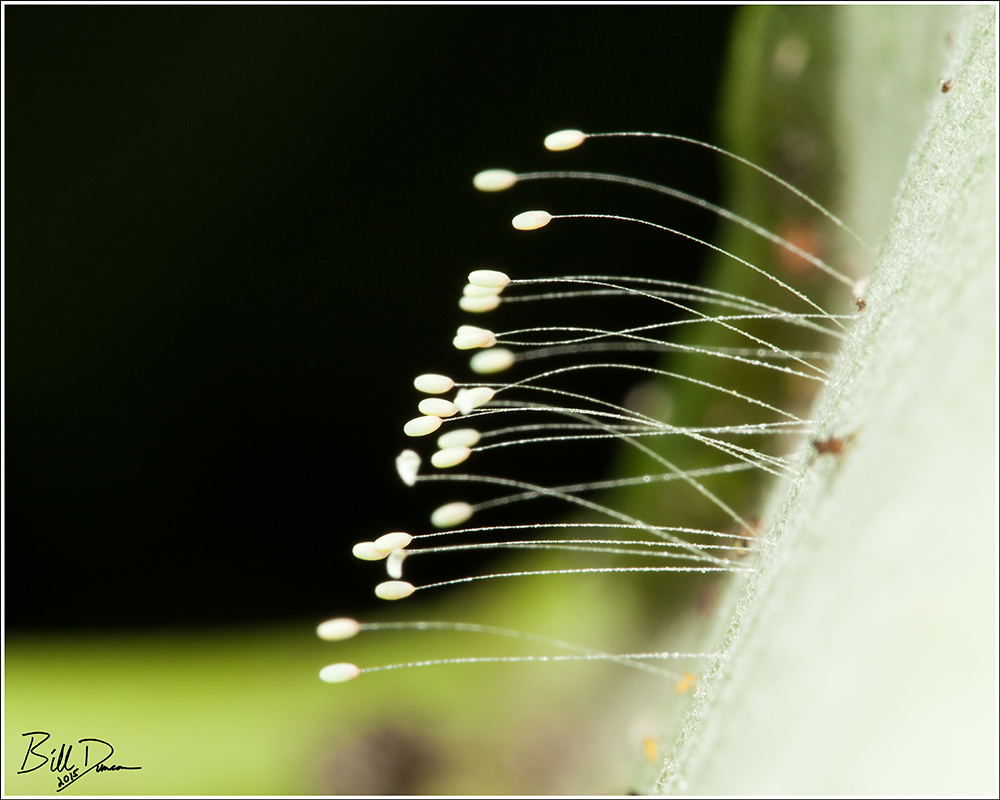
The Lacewing (order Neuroptera, roughly translated to “nerve-wings”) insects are important predators of economic pests. Lacewing larvae are voracious predators that prey upon soft-bodied arthropods such as aphids, scale and whitefly. I have not yet been able to photograph one of these killer larvae yet, and that may be due to their tendency to cover themselves in pieces of trash (including parts of their victims) they find in their environment as camouflage. Another interesting bit of information about these insects is how their eggs are deposited. The photograph below shows the eggs deposited on long thread-like stalks, which have been hypothesized to be deterrents to not only predation, but cannibalism as the larvae hatch and immediately begin to look for something to eat.
OZB

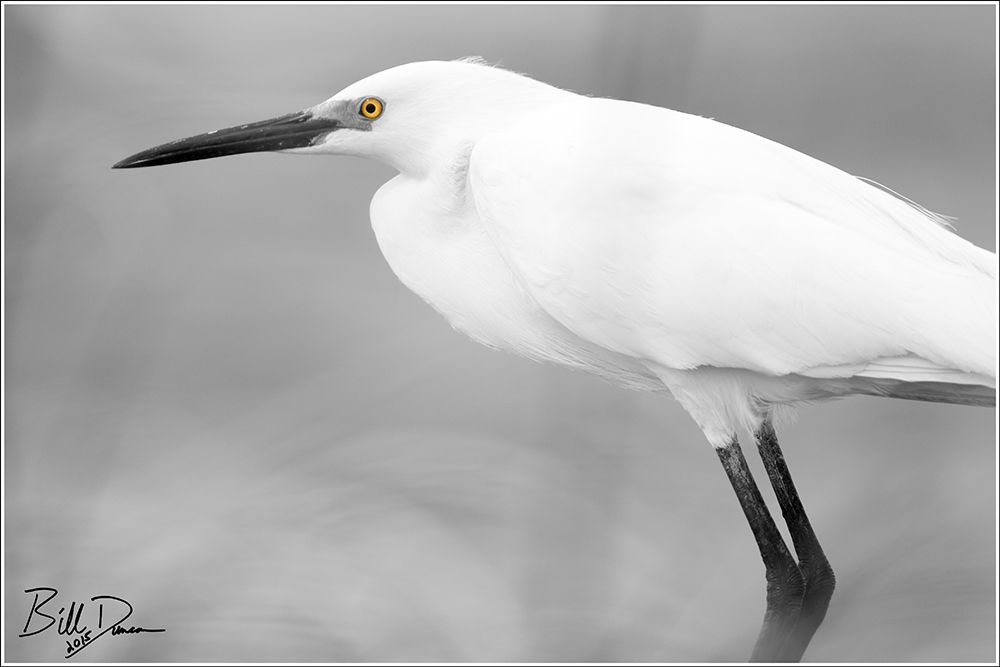
This Great Egret is in full breeding plumage and has acquired the green mask that are indicative of adult birds. This one has also sustained an injury to its bill, perhaps from an aggressive encounter with another male?
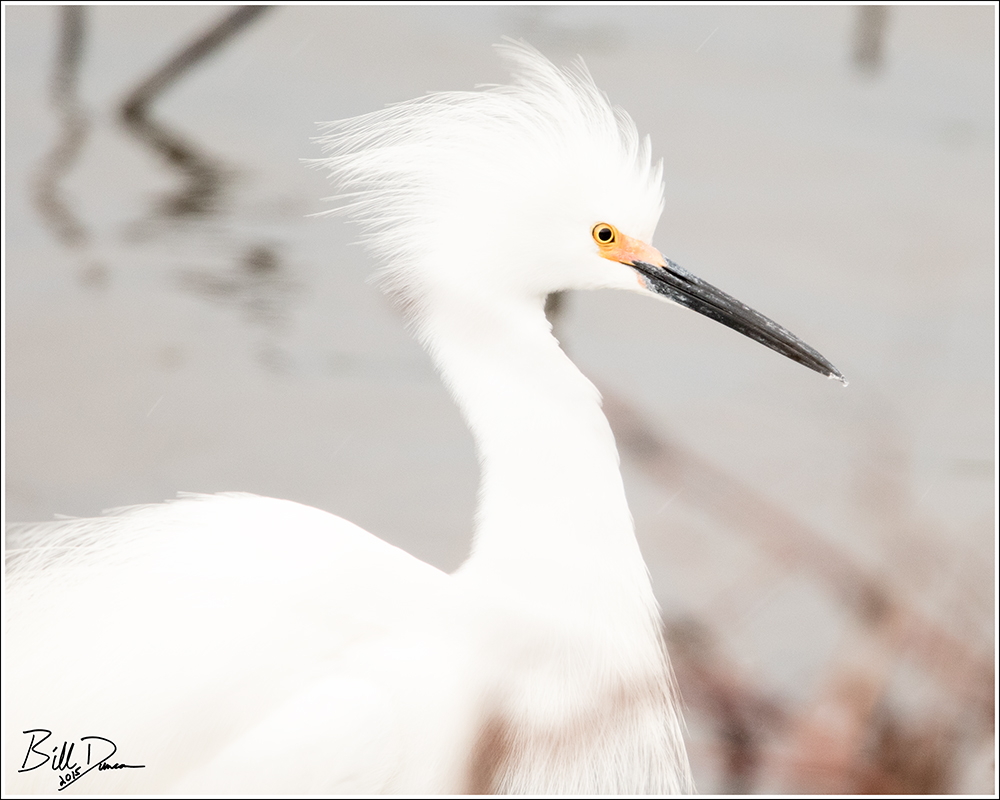
What is more striking than a Snowy Egret?
Finally, I realized I haven’t included too much in terms of habitat shots of Quivira. Here is a pano of one of the more productive sections of the reserve. It’s a pity to think of how much of this habitat has been lost on this continent. How many care or even know?

OZB…

The Redbud Bruchid (Gibbobruchis mimus), as its name suggests, is one of those perfect examples of insect-plant specialization. The larvae of this species will only grow on the seeds of Redbud trees and perhaps on those of a relative or two.

Being extremely small (2.5 – 3 mm), these cute guys are quite the challenge to photograph. Adults feed on plant tissues (flower petals, pollen, nectar, etc…) and I typically have seen them feeding on my Echinacea flowers.

The guy above can be seen creating or adding to a hole in a flower petal. I much prefer them to the exotic invasive Japanese Beetles that tend to leave nothing behind.

The Bruchids are a subfamily or “tribe” found within the quite large family – the Chrysomelidae, known as “Leaf Beetles”.

If you know the size of an individual blossom of the Common Milkweed (Asclepias syriaca), the image above will give you a good idea on just how small these little guys are.
Thanks for stopping by.
OZB
 A Thousand Acres of Silphiums