
These special butterflies, endangered or threatened across much of their small range, have their stronghold in the state of Missouri. These images were taken in St. Francis Co., MO.


"What a thousand acres of Silphiums looked like when they tickled the bellies of the buffalo is a question never again to be answered, and perhaps not even asked." -Aldo Leopold
These special butterflies, endangered or threatened across much of their small range, have their stronghold in the state of Missouri. These images were taken in St. Francis Co., MO.

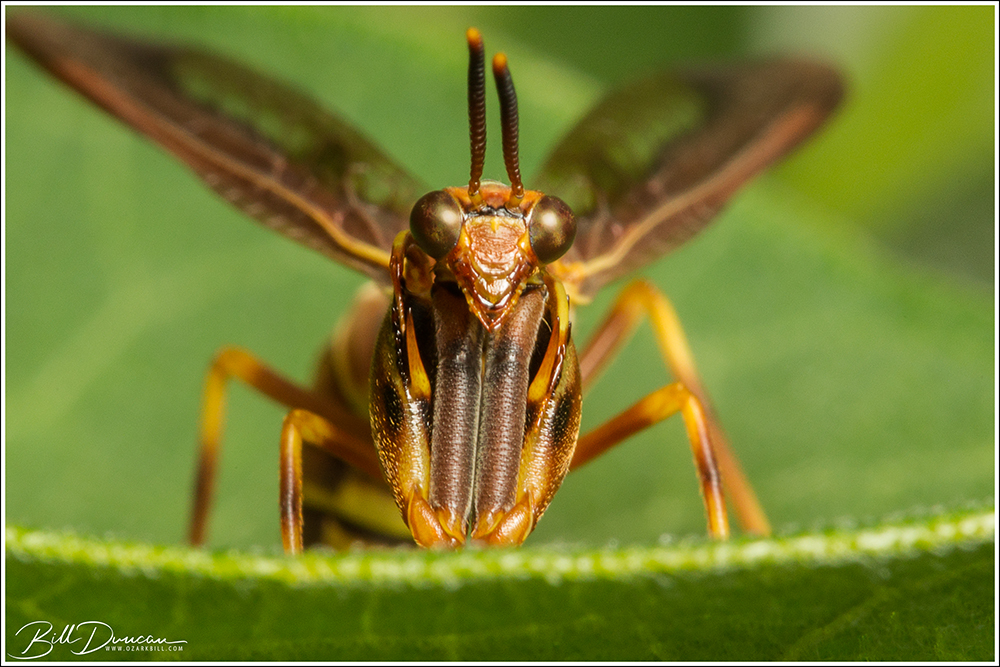
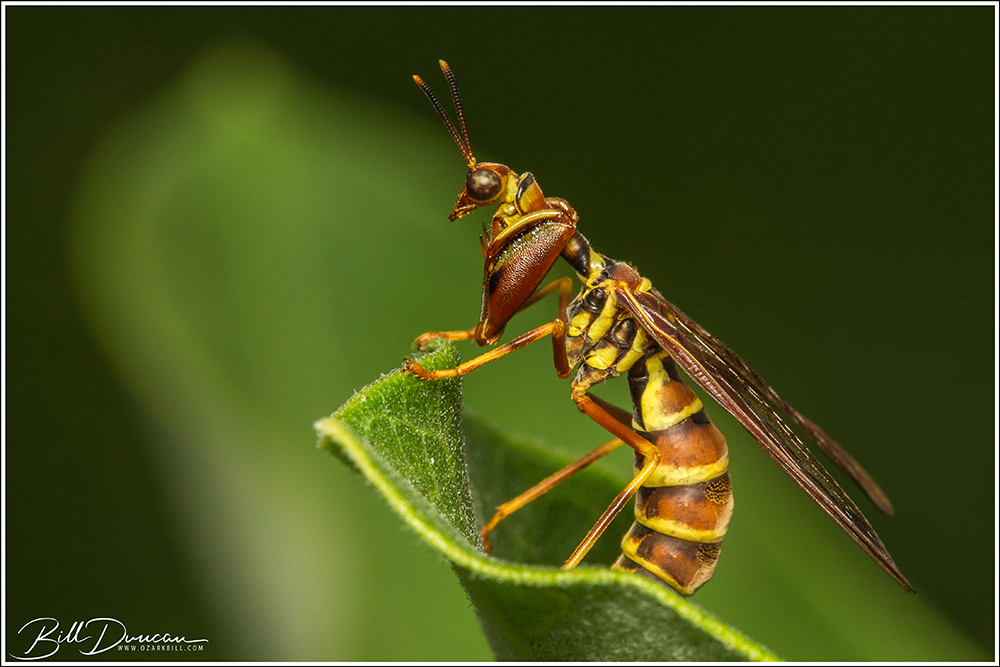
That’s right, this special one visited my home garden one afternoon and allowed me to grab some shots. The mantidfly are categorized in the order Neuroptera along with the lacewings.
Probably obvious, this species is believed to mimic the paper wasps (Polistes) as a potential deterrent to predation. Without a close glance, it would be easy to mistake this species for a wasp with the potential to deliver a nasty sting.
As if their appearance wasn’t crazy enough, larvae of the Mantispinae, the subfamily this species belongs to, feed by paristizing spiders and their eggs!
-OZB

These photos were taken on a WGNSS Nature Photography Group field trip into the St. Francois Mountains in early June, 2019.

Along with a couple of female eastern collared lizards, we found quite a few other herps of interest.

These lizards are really great photographic subjects. They are relatively easy to photograph, allowing for watching while they bask in the sunlight of a clear day without much manipulation or interference necessary.
It’s been quite some time since I’ve shared a blog post. This has primarily been due to being in a residence move that is seemingly never going to end. But, I have been finding time here and there to make new images and even get some post-processing done. I have switched themes in this blog, picking a theme that should allow me to create a “portfolio” page to showcase my stronger photos. Unfortunately, I haven’t been able to figure out how to do this in WordPress. So I have not gotten far in this endeavor.
My goal is to post more frequently, just to share photos. There may not be a lot of accompanying text, but will depend on the subjects, my amount of free-time and my mood.

The images in this post were taken back in April of 2019 during a WGNSS Nature Photo Group outing to Dunn Ranch Prairie. This visit was close to the end of the lekking period and was the latest date that the MDC was keeping the blind open. This was different than our previous visit when we visited in the earlier part of the season and had pros and cons associated.

Visiting the lek later in the season created better chances for better light (clear skies) and warmer weather. However, what we didn’t expect was that the females typically choose the dominant males to copulate with in the earlier days of the season and will often be nesting come the later days of the lekking season. This is what we had found during this visit. We did not see a single hen during this visit.

Because there were no hens to compete for, the males had no heart for the competition. We had very few opportunities to photograph the action we had witnessed during our first visit to the lek two years prior.
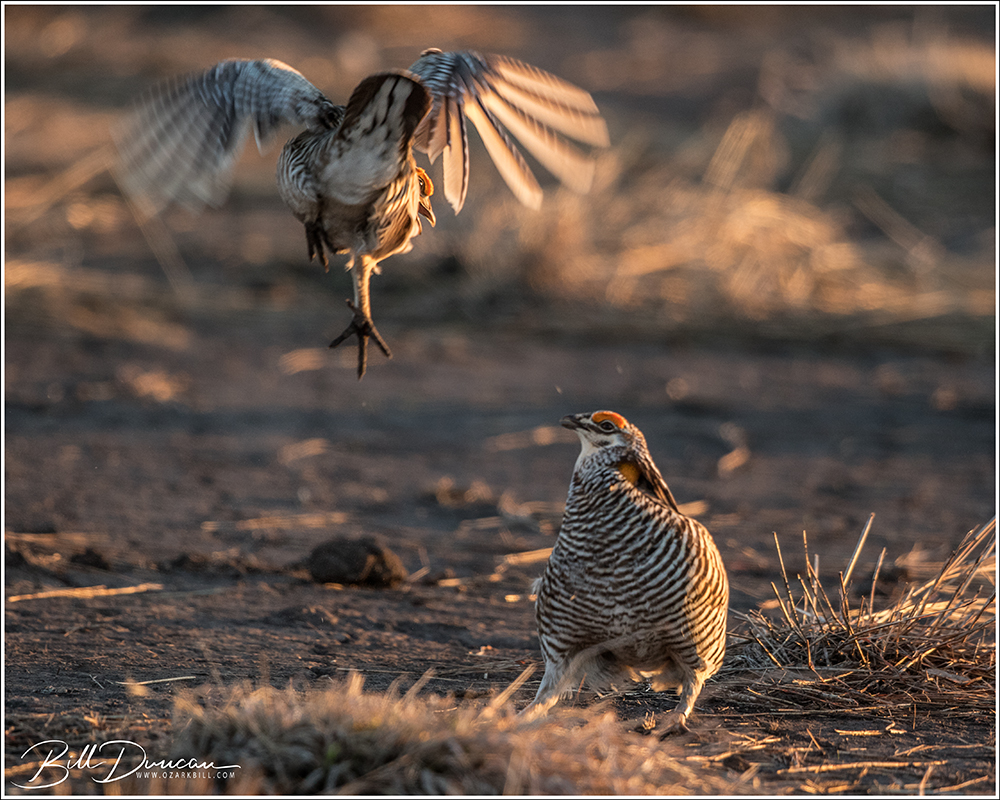
The light, however, was spectacular – we had no reason to complain and we all made memorable portrait style photos of these birds booming, dancing and cackling.

Never a disappointment, hopefully this Missouri population somehow continues to hang on so that WGNSS members can continue to enjoy this spectacle in Missouri.

-OZB

In December, 2018 the WGNSS Nature Photography Group met at Riverlands Migratory Bird Sanctuary with hopes of making some memorable images of our giant white residents that spend their winters here. Trumpeter and Tundra Swans will spend their evenings at roost in the bodies of water at RMBS and will then typically leave to forage in surrounding agricultural fields, picking up the wasted grain from harvest.
A good strategy for placing yourself in the most appropriate position for making photographs of these birds is to pay attention to the direction of the sun. If the birds are found in Ellis Bay during the golden hours of morning light (during winter in St. Louis, this can be up to three hours after sunrise), then getting close to the shore with the sun behind you can produce some satisfactory results. Try getting closer to the ground and shooting the birds from a low angle. This will give your photographs an eye-to-eye perspective that is a much more intimate view into the birds’ world. Shooting at low angles will also tend to provide a more pleasing, out-of-focus background to your subject that will cause the bird to appear to be larger than life. We photographed both species of swan as they lounged in Ellis Bay for the first couple hours of the morning. Can you pick which is the Tundra and which is the Trumpeter Swan in these first two images?

We then moved on to another place within the refuge that the Swans can often be found on winter mornings. At Heron Pond, these birds are typically too far away from the observation areas to get closeup photographs while roosting. However, the patient photographer on the ready can often be rewarded by standing and waiting around. During this morning, the Swans were a tad tardy in lifting out of Heron Pond, so our group was in the right place at the right time. Getting proper positioning with the angle of the sun is a bit more difficult here in the morning but is still critical. We placed ourselves in the best places available on this busy morning and took advantage of the swans as they left the pond, which often flew right over our heads.
Photographing these mostly bright-white birds on a bright sunny day is not necessarily simple. While on the ground or the waters of the bay, it is common to have the camera’s light meter expose for the darker and more prominent background. This will often lead to the white feathers of the birds being overexposed. Remember to check the histogram of your camera and use the “blinkies” while reviewing your images to ensure you are not clipping your whites. If this is the case, make the proper adjustments to your exposure. Saving your whites may result in your blacks and shadows being bunched up at the other end of the histogram. Since the big white bird is your subject of concern, this should be nothing to worry about.

Changing directions and the angle of sunlight are challenging for proper exposure. Get as close as you can in the field – much can be recovered in post-processing.
Shooting these large birds in flight presents a different set of challenges. Although these birds move relatively slower than most other birds during flight, the photographer will still want a relatively fast shutter speed. This is particularly true the closer you are to your subject. I recommend no slower than 1/1000 of a second. Start at this setting and increase shutter speed if you notice blurring or softness to your image due to subject movement. As these birds get closer during flight, they will naturally fill more of your frame, thereby increasing the number of pixels seeing the bright white values. This can often lead to a case of the camera’s meter overcompensating, thereby causing an underexposed image. In this case, the birds may come out looking grey instead of white and the black colorations of their feet and faces will be much too dark and lack sufficient details.
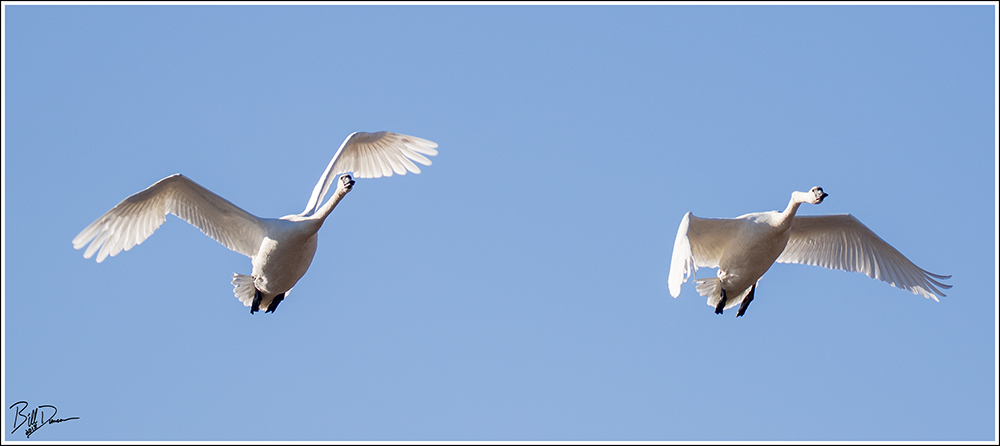
In the above image, a swan can be seen with a significantly crooked neck. I typically see one or two birds with this condition every season. I do not know how it affects the birds or what their ultimate fates may be.
In the case of constant sunny skies, fully manual exposure settings are most called for. Here I will present a good starting point for setting the exposure for capturing swans in flight. Shutter speed – As I mentioned earlier, start with a minimum of 1/1000 sec. This may likely be too slow to capture a sharp image, depending on what position the bird’s wings were captured. Often, shutter speeds of up to 1/2500 sec or higher might be necessary. Aperture – This will depend on how close you are to the swan. Remember, these are large birds and when shooting at a profile there is a lot of distance from wingtip to wingtip. If the bird is significantly close, or if you have multiple birds in the frame, you will be unlikely to capture the entire subject(s) in critical focus if shooting wide open. I recommend no wider than ƒ/5.6 – you may need to stop down significantly smaller. However, always remember that getting the animal’s eye in sharp focus is critical. Many images will work fine if other parts of the bird are not in critical focus. ISO – Remembering that photography is a compromise, shooting at a fast shutter speed and smaller apertures might require that a higher ISO value be needed to obtain the proper exposure. Several latest digital camera models have a useful “auto ISO” setting. I know, technically this is not fully manual, but ISO does not necessarily have the input it once did. Know the highest ISO setting for your camera that you are comfortable with and don’t be afraid to shoot there. This will vary by camera model and by the photographer’s taste.
Here is a photo of “crooked neck” as it flew directly over my head. In cases like this a telephoto-zoom lens is really beneficial for capturing birds in flight.

The majority of this material was originally published in Nature Notes (The Journal of the Webster Groves Nature Study Society) February 2019, Vol. 91, No. 2.
-OZB
An excellent post by Miguel Acosta using photos he captured at my backyard feeders.

A big thanks to the Duncan’s for inviting me to their home, to photography winter songbirds at their bird feeder.
A cold winter day is perfect for curling up by your living room or you can stock your bird feeder, get your camera, a turkey chair and check out the activity at the feeder.
Here’s a quick rundown of the most common backyard birds, I saw while spending an afternoon at my friend’s bird feeder.

House finch – love Nyjer seed, often mistakenly called thistle seed. Offer it in tube feeders or net bags, and watch these colorful birds swoop in for a visit.
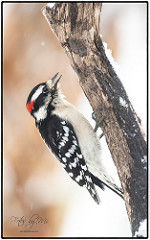
Woodpeckers – In the winter, beef suet is an energy-rich substitute for the insect fare that downy, hairy, and red-bellied woodpeckers feed on during the summer. Other bird species such as jays will also eat suet, but it’s…
View original post 225 more words

The WGNSS Natural History Photo Group had a fun field trip in January, when we headed north up the Mississippi to the riverside town of Clarksville. Here at lock and dam #24, we were fortunate to be alongside ~75 eagles of various ages that took turns in catching the stunned shad that is their primary winter food source along the great river. We arrived early in the morning and made a day of it, experiencing wide shifts in weather from grey and snowy to partly sunny skies. I’m not an expert in aging these eagles, but I believe the bird picture above is a subadult II, which means it is 2.5 – 3 years old. In this photo you can see several retained juvenile secondaries on each wing.
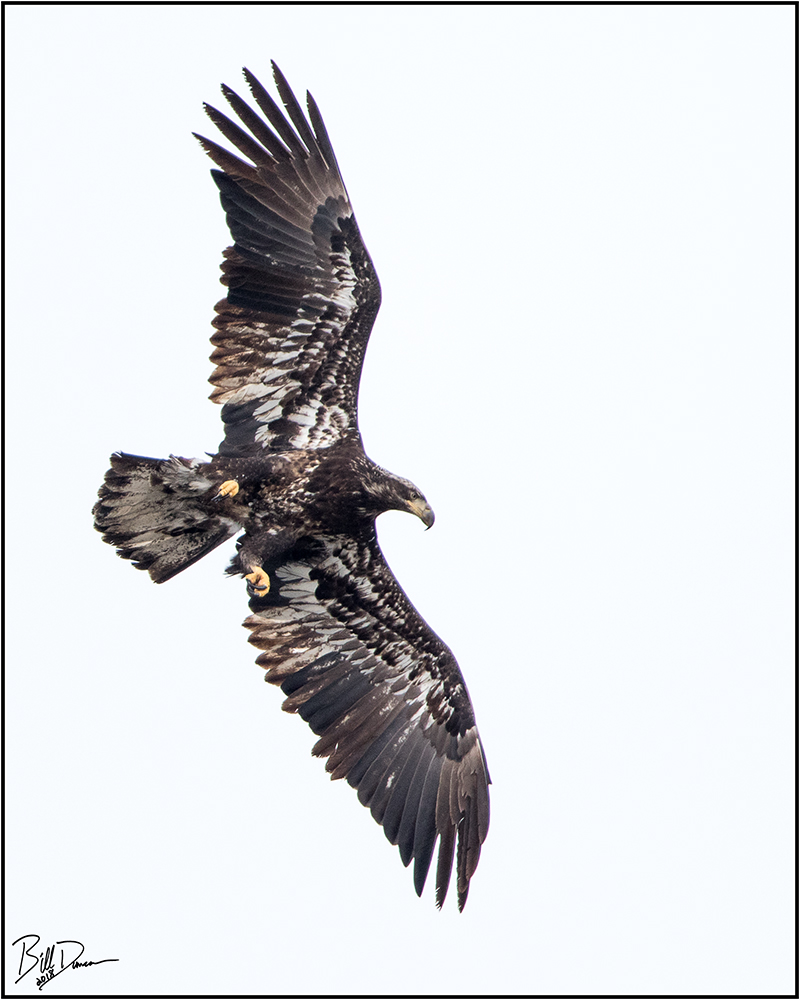
The long and pointed secondaries make me think this bird is probably a year younger than the bird in the previous photo. I would guess this bird is 1.5 – 2 years old. The temperatures on this day were cold, but not too severe. We arrived with the car’s thermometer reading 16°F. There was a light wind most of the day, but not nearly as bad as there could have been.

With patience, there were some opportunities to capture a bird’s profile as it came to pick up a poor stunned fish.

The majority of prey captured in this way is small enough to be eaten immediately on the wing in a single “bite”. Sometimes, however, the bird is forced to retreat with its groceries and eat in seclusion.
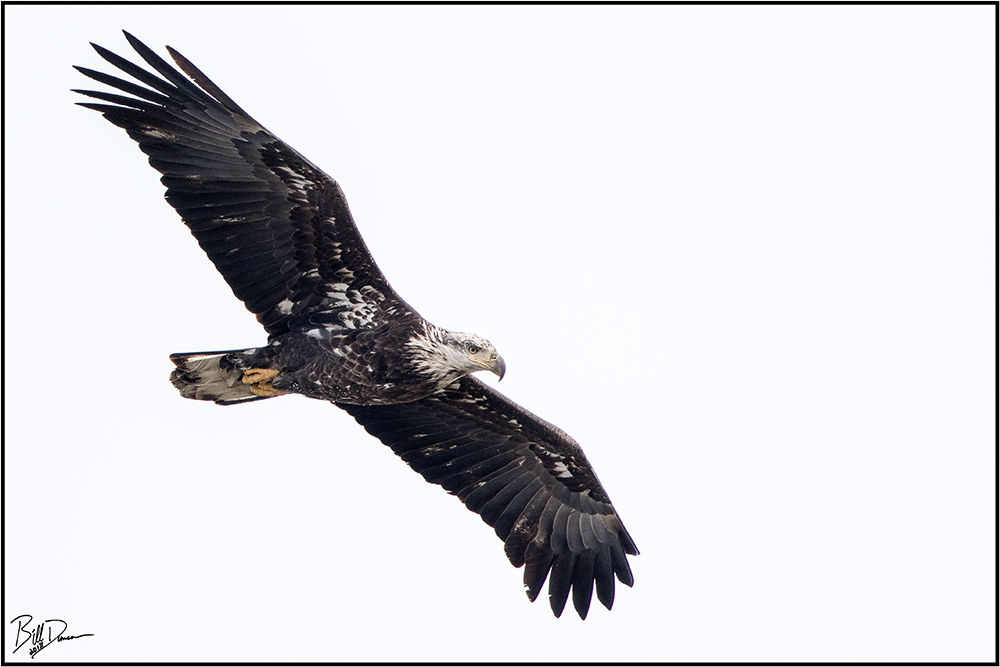
The bird pictured above is much closer to looking like an adult bird, showing the mostly white head and tail. I estimate this bird as being 3.5 to 4 years old.

I noticed this in previous years, that it seems like the juveniles spend more time fishing than the adults. In the photo above, you can see a juvenile with an already full crop is pulling another fish from the river.
This is just a few I have processed so far. We have something in the works that may produce something much more in terms of eagle photography. Until next time.
-OZB
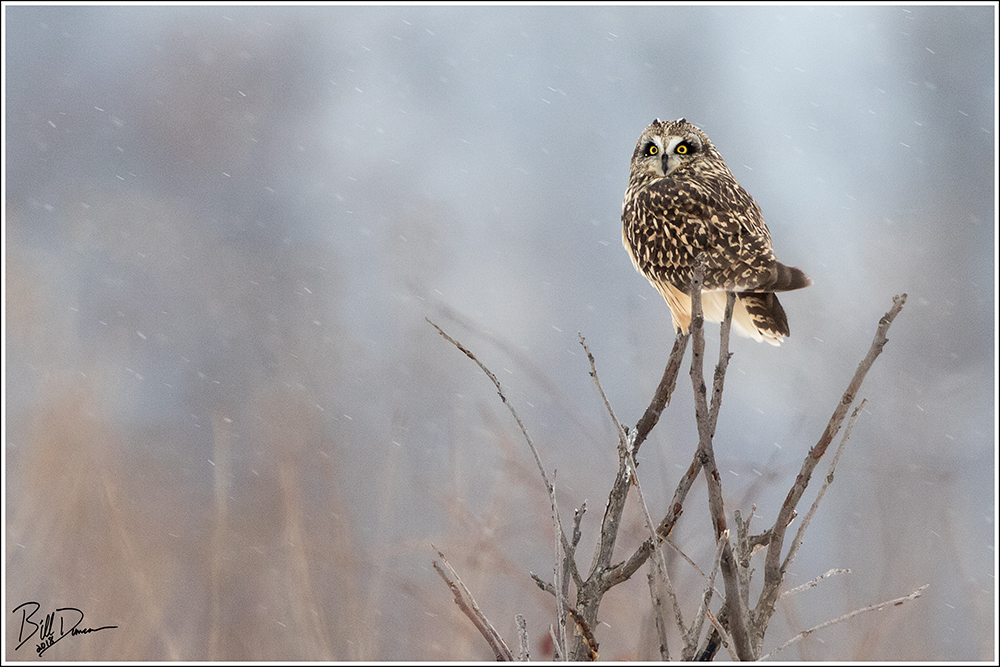
I don’t usually like to discuss gear on this blog, but once in a while I think there are some things new or interesting enough to talk about, particularly when I think they may be critical for producing the best possible results. I have been wanting to test and compare the 2 latest Canon teleconverters (Canon Extender EF 1.4X III, Canon Extender EF 2X III) in a head to head test for sometime and this past weekend found me with an opportunity to do so. To be clear, this was not the optimal situation to make this test. The light was poor and the subject was probably too far away and not covering enough pixels to make a relevant comparison. But, I thought I’d give it a try.
These tests were setup as equally, but not scientifically, as possible. For these first two images, I processed as normal and tried my best to be equal in all capture and processing steps. I cropped to make the bird approximately the same size in both images, so obviously, the photo made with the 1.4X tc was enlarged more than the one made with the 2X tc. I then resized each to make them 1000 pixels on the horizontal. The purpose here was to see if there is a discernible difference in sharpness and image quality between the two. The 2X tc often gets poor reviews, but just as often gets raves by those who claim to know what they’re doing. Many claim that the better results are made by using a 1.4X tc, or native lens and cropping in post to obtain better results than those obtained by using the 2X tc for an optical zoom.
Open the two images above in separate tabs to see a roughly equal comparison. In my opinion, I was pretty pleased with the results of the 2X tc in sub-optimal conditions. Both photos are fine for sharing on the web, although the IQ would limit print size. Like I said, the conditions were poor and the bird at a great distance. However, I think I would give a slight edge to the photo made with the 2X converter. This edge might just as well be due to differences in how I processed or with changing conditions within the few minutes between captured images.
Let’s look next at the “100% crops” of both photos. This simply means that these photos were both cropped at the same dimensions (4″ x 6″) and not resized. These examples were NOT sharpened.
Again, with this comparison, I find the two very close. Either one would work well enough, but if your goal was to maximize print/display size, I would probably go with the 2X tc. I guess this has surprised me a bit. I was expecting that, under these sub-optimal conditions, the 2x tc would fall behind the supposedly sharper combination of the 500mm + 1.4X tc.
What do you think? Did I make any major blunders in my comparison or analysis? Please let me know. I do hope to make this comparison again under perfect light and optimally placed subject sometime in the future.
Thanks for stopping by and reading this far!
-OZB

A few of us headed up to Montrose Harbor on the north side of Chicago yesterday in search of a rare and late shorebird visitor. There has been a Piping Plover that has intermittently been using the beaches here since October. We visited following approximately four straight days that the bird was sighted and the weather forecast was great for this time of year. Unfortunately, the bird was a no-show for us on this day. Since the Lincoln Park Zoo was almost directly across the street, we checked to see if they had a Piping Plover in their collection. This is the female bird in winter plumage pictured above.
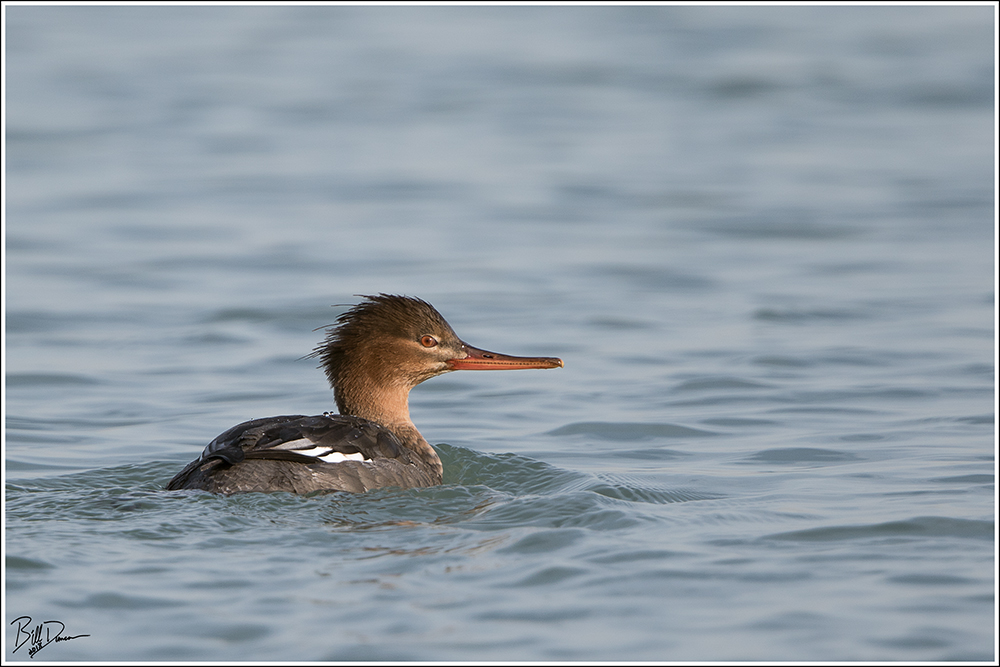
The harbor held a decent number of waterfowl that we were able to get close enough for some shots. See below.


-OZB


