Mondays Are For The Birds – Great Black-backed Gull

I know it’s not Monday, but it is the first day back after a nice holiday break.  Same thing, or even worse…

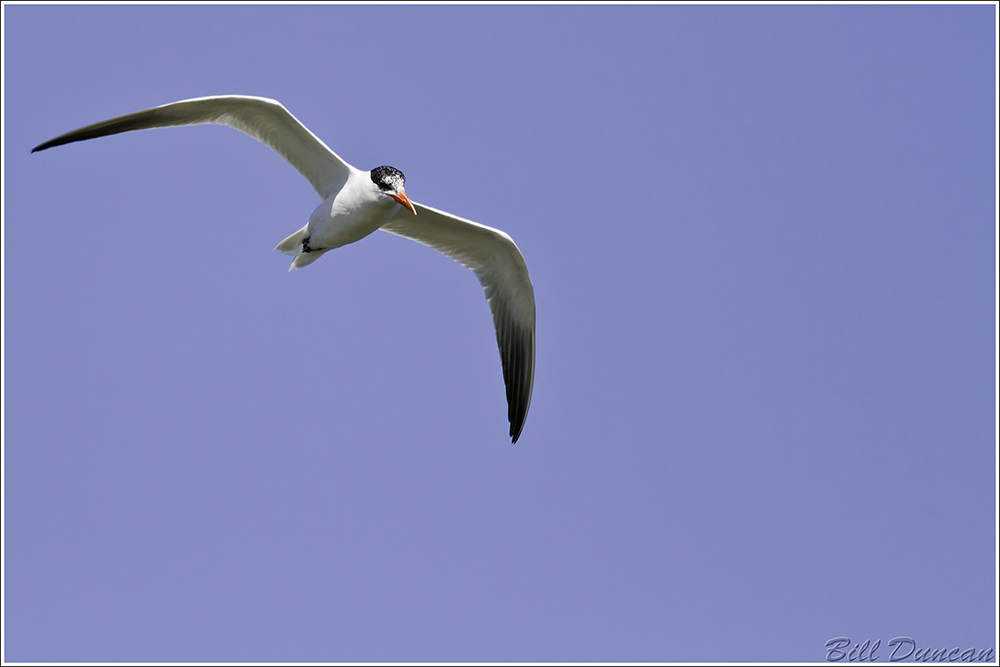
This GBBG was spotted this past September during the local Audubon Society’s pelagic seabird trip to Carlyle Lake.  The species is the largest gull found on the North American continent.  They will eat any protein source they can find, including carrion and prey upon anything they can overpower, including smaller birds.  This striking guy is a first-year bird and this species will not breed until their forth year.  Interesting is the differences in behavior among these often difficult to distinguish gulls.  This guy almost always flew solo and higher than the flocks of Ring-billed that constantly followed the boats.

  IMG_4402

“Great-Black-backed Gull, Autumn 2012”

Technical details: Canon EOS 7D camera,  EF400mm f/5.6L USM lens, ISO 640,  f/5.6, 1/1250 sec

Mondays Are For The Birds – Golden Crowned Kinglet

“”In short, they who have not attended particularly to this subject are but little aware to what an extent quadrupeds and birds are employed, especially in the fall, in collecting, and so disseminating and planting, the seeds of trees.”

-Henry David Thoreau-

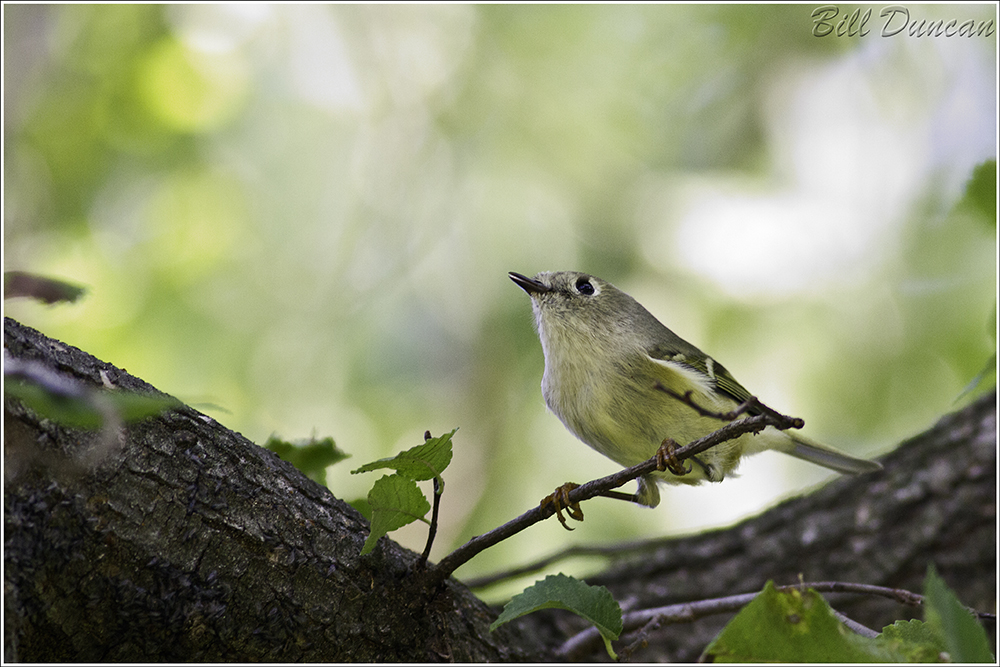
“Golden-crowned Kinglet”

Technical details: Canon EOS 7D camera,  EF400mm f/5.6L USM lens, ISO 640,  f/5.6, 1/250 sec

Mondays Are For The Birds – Scarlet Tanager

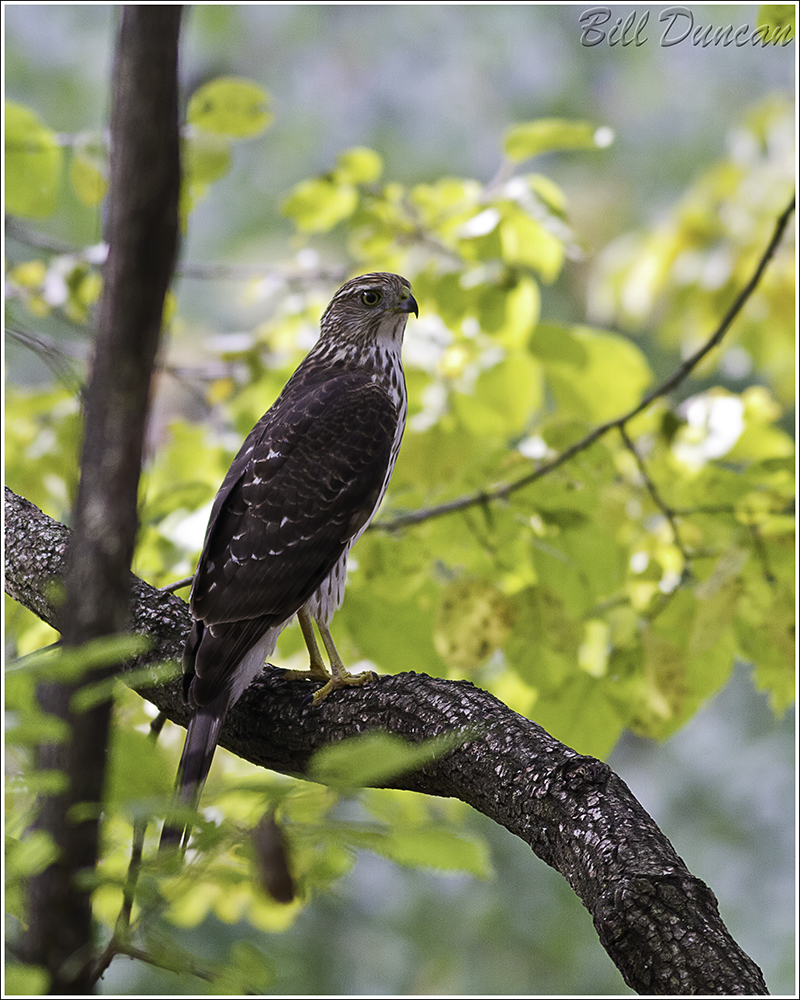
I have a challenge for myself that I have not yet built up the courage to try.  I want to one day go into a wooded lot and only feed on insects or other invertebrates I find in the trees, shrubs and forest floor.  Have you ever watched an insect-eating song bird closely as the scavenge about for bugs?  It is truly amazing how often they are able to find and capture prey items.  Often they seem to pick them out nowhere, gulp them down and continue on the hunt.  The photo below pictures a southern-bound, female Scarlet Tanager as it eats a larvae of some kind that it just pulled from inside a small branch.

“Autumn Scarlet Tanager”

Technical details: Canon EOS 7D camera,  EF400mm f/5.6L USM lens, ISO 800,  f/5.6, 1/320 sec

Mondays Are For The Birds – Red-shouldered Hawks

Although I still have quite a few images from this year’s nest in my “to process” list, this one may be my favorite pic for the year.  In this image the smallest chick, who was always the last to be fed, is looking up at mom and seeming to wonder where her share of the latest kill was.  Mom is taking a break after tearing apart and passing out the meat.  She has a look around before taking again to the wind to find more.  While watching the nest I was always excited to see this small one be able to swallow down a large piece of meat and I was always prompted to send the camera’s mirror flapping.

“Hungry Eyes”

Technical details: Canon EOS 7D camera,  EF400mm f/5.6L USM lens, ISO 400,  f/6.3, 1/160 sec

Mondays Are For The Birds – American Redstart

It is late summer/early autumn and the warblers and other songbirds are moving en masse south to their tropical wintering grounds.  Bring your binoculars to one of several wooded lots in the St. Louis metropolitan area this time of year and you’re almost sure to find one of the birds pictured here, the American Redstart.  I am calling this particular bird a mature female, although it is possible this may be an immature female or first year male.  Females and young males have yellow where adult males are always dressed for Halloween in reddish orange and dark browns.  This observation has prompted many a birder to call these guys the “American Yellowstart” .

This is one of the easiest warblers for new birders to identify, not only for its flashy coloration and pattern but for its particular behaviors as well.  These guys will usually position their wings low and drooped when sitting still and almost always are fanning their flashy tail feathers.  These birds are quite active and display a lot of “flycatching” behavior and will actually hover-preen.  Watching them hunt is a treat and as they catch flying insects you can literally hear these little guys snapping their beaks shut.  They can be quite responsive to pishing.

As mentioned above, this bird is heading south where it will over winter somewhere between northern Mexico and northern South America.  It has an extremely large breeding range, nesting anywhere between the gulf states and Alaska where it can find deciduous or mixed deciduous/coniferous forests.  These guys will also readily nest in secondary woodlands and forests, making them one of the few species who has not been altogether troubled by logging.

I wish this guy the best in her/his long journey south.  I am getting quite addicted to shooting these guys just when they are heading out.  I’m already looking forward to the spring.

“American Yellowstart”

Technical details: Canon EOS 7D camera,  EF400mm f/5.6L USM lens, ISO 640,  f/5.6, 1/100 sec

Mondays Are For The Birds – Red-shouldered Hawks

Monday greetings, human.  Another great day at work instead of taking pictures of birds.  I heard the migratory songbird fallout was quite nice around the St. Louis area today.  Good thing I was at work.  One or two days a week being able to do what I want just doesn’t seem to be enough anymore.  I will have a week’s vacation coming up next month, but that seems a long way off.

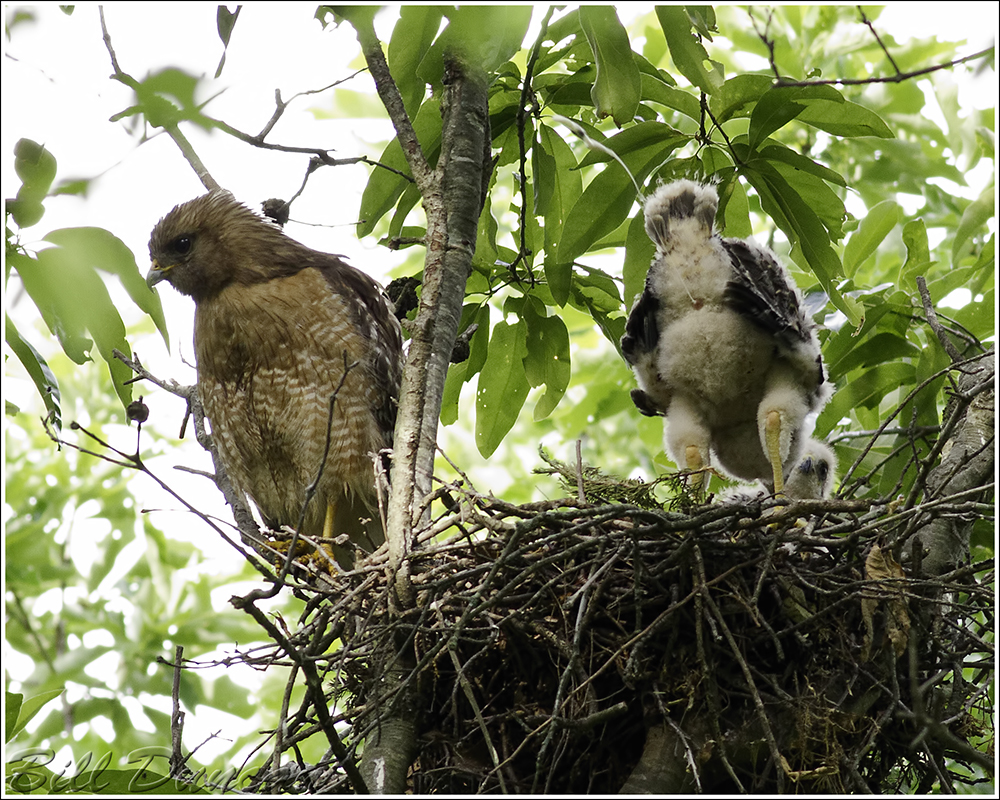
Anyway, I’m finally getting around to processing some photos of the Red-shouldered Hawk nest I photographed over several weeks this past May.  Here, this little one is showing off one of those innate behaviors.  I’m sure those of you with human babies wish they could do something like this a lot earlier than they do.  Have a great week.

“Red-shouldered Hawk Nest”

Technical details: Canon EOS 7D camera,  EF400mm f/5.6L USM lens, ISO 640,  f/6.3, 1/250 sec