"What a thousand acres of Silphiums looked like when they tickled the bellies of the buffalo is a question never again to be answered, and perhaps not even asked." -Aldo Leopold
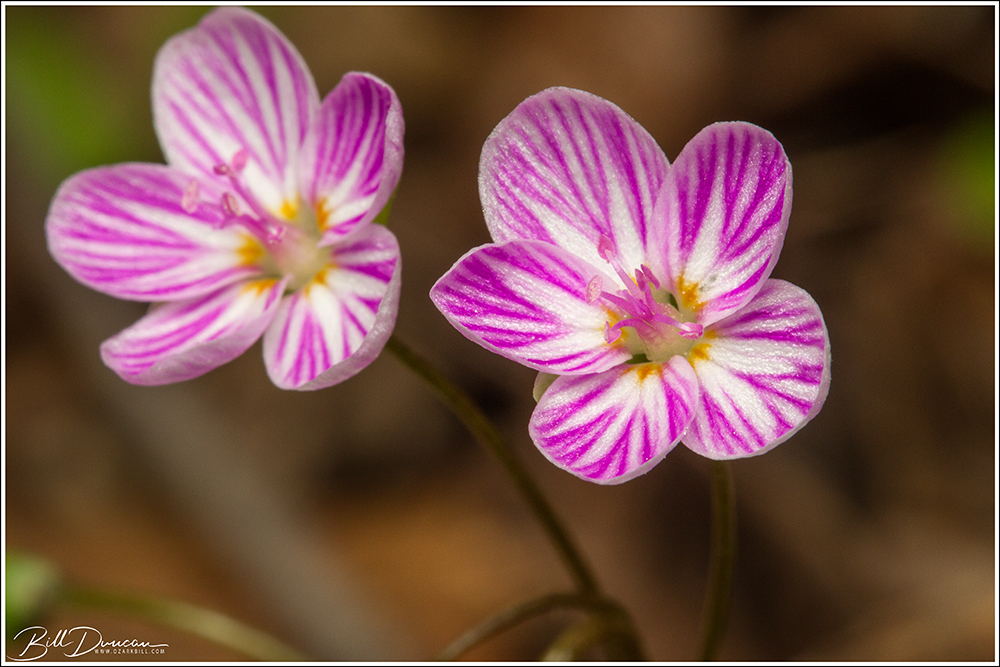
These images were taken during a trip with Ted MacRae and Chris Brown this past April at Tingler Prairie Conservation Area in Howell County, MO. The first shows an exceptionally colored spring beauty (Claytonia virginica) in peak bloom.
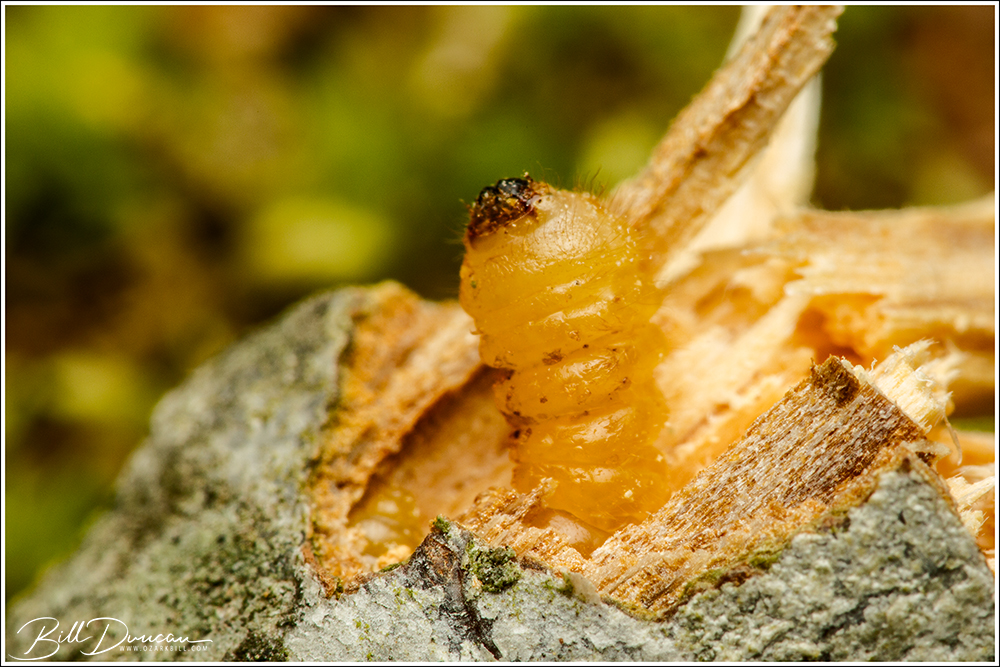
Elaphidionoides villosus (oak twig pruner)
This beetle larvae was something I had read about for years. Ted found several oak twigs that the mother beetles prune to serve as safe nurseries for their developing offspring as they rest on the forest floor. Ted delicately opened up the gallery to expose its occupant so we could take some photos.
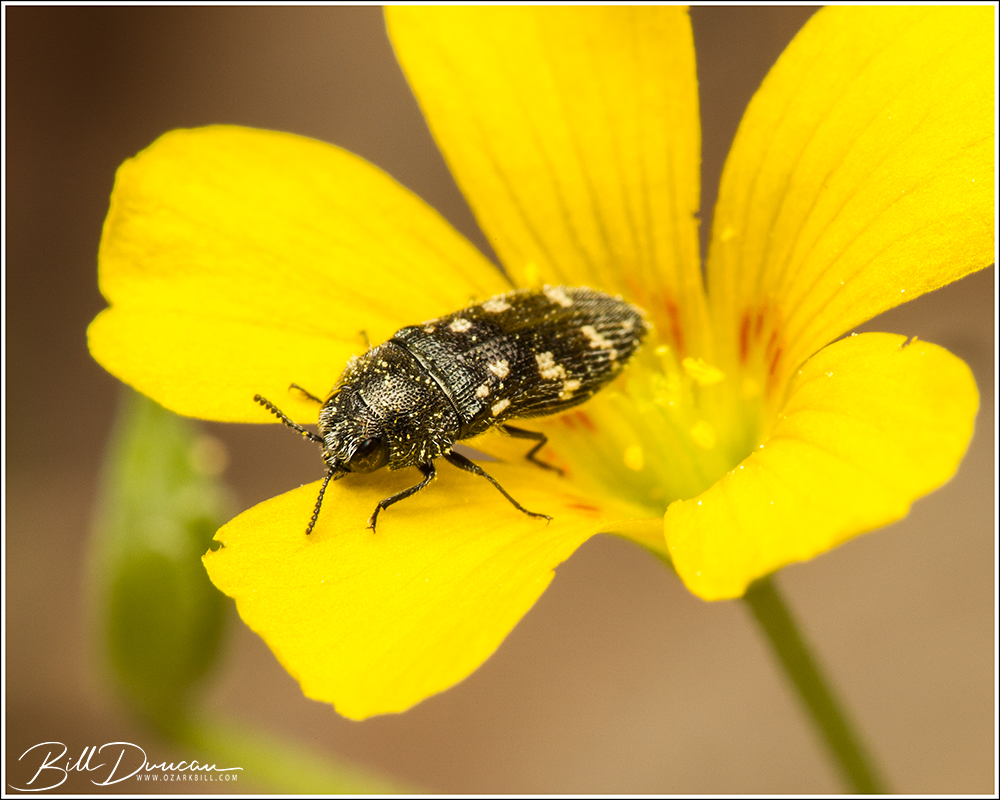
These Buprestid beetles were gorgeous as they foraged in the wood sorrel. Once in a while, they would stand still long enough to let us photograph them.
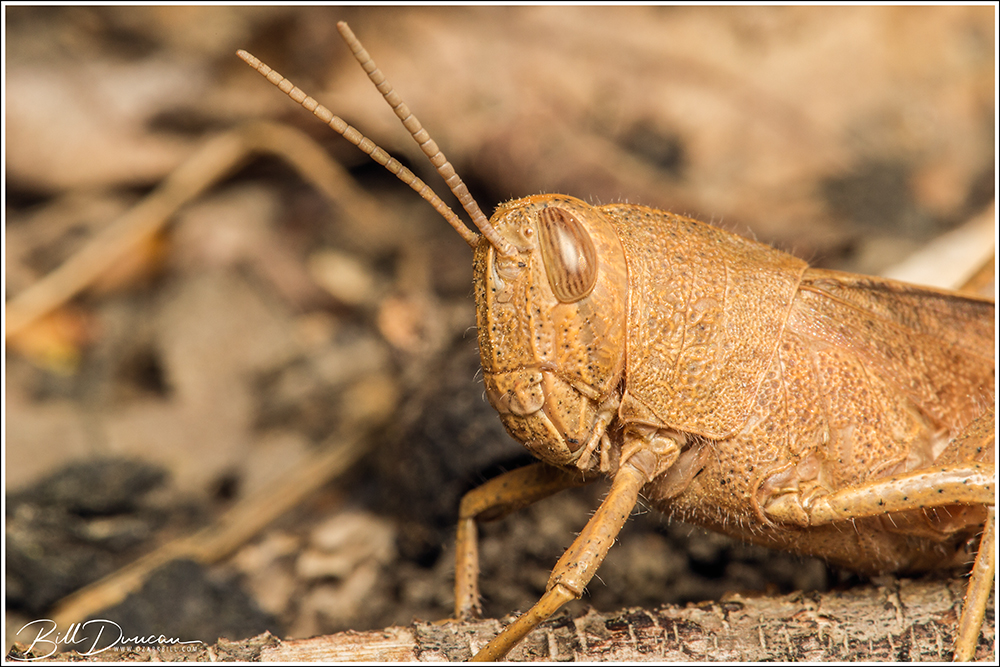
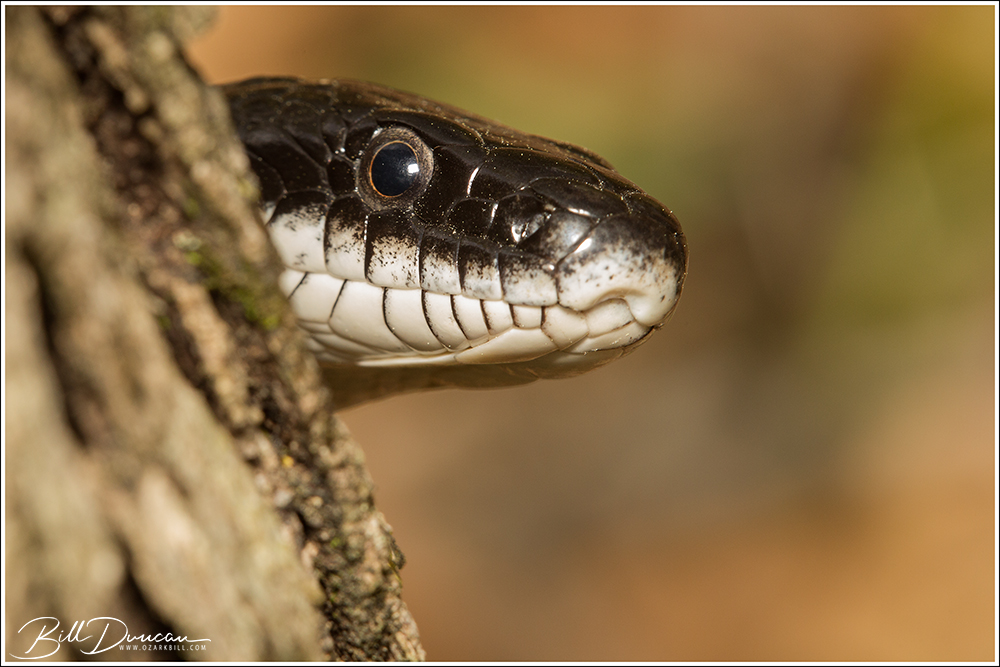
Arphia sulphurea ??Black Rat Snake (Pantherophis obsoletus)
Finally, we found this black rat snake as it attempted to climb a tree near the trail. Maybe caught a whiff of something higher up?
Passiflora incarnata (passionflower, maypops) Image composed of a focus stack of 27 exposures.
Recently, I’ve taken the plunge and given some serious efforts into focus stacking in macro photography. This method allows the photographer to increase the depth of field in a scene by combining multiple exposures, each focused on a separate plane of focus. Afterwards, the different exposures are combined using powerful processing software on the computer. This particular image was built from 27 photos all taken at an aperture of f/8.
I will definitely miss our yard full of native plants when we make our change in residence, including the passionflowers. Maybe I’ll get to harvest this year’s crop of fruit one more time to make my own juice.
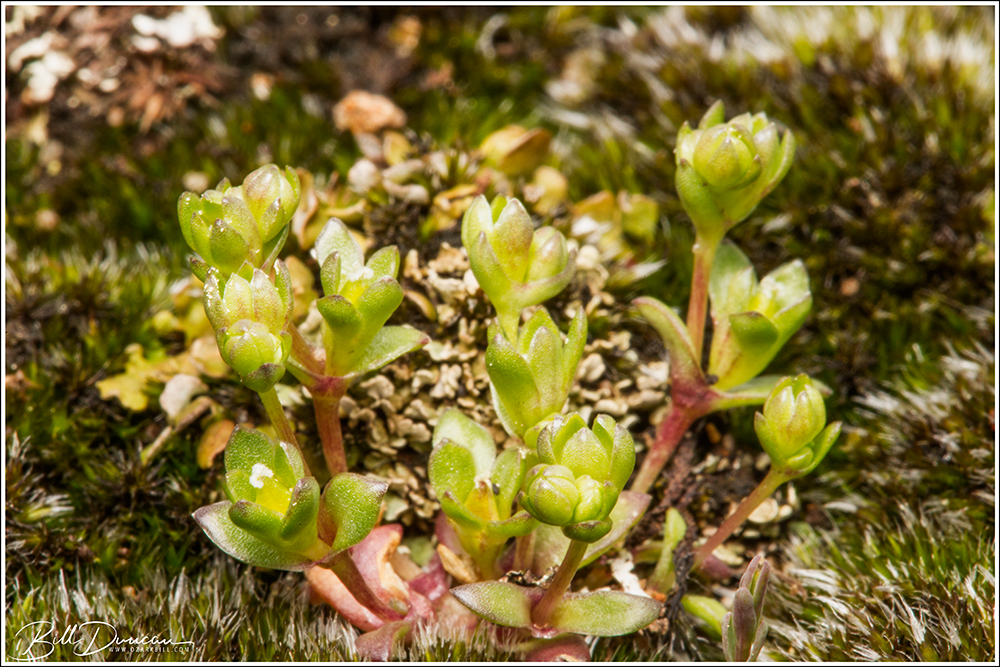
The WGNSS Nature Photography Group headed west early on a lovely day in early April with hopes of finding one of Missouri’s rarest plants – Geocarpon minimum, commonly referred to as tinytim, or earth-fruit. Geocarpon minimum (C=10) is a plant in a monotypic genus known for its diminutive size and rare status. It is listed as federally threatened and as endangered by the state of Missouri. The primary reason for its relative scarcity is its habitat needs; G. minimum requires sandstone glade habitats in Missouri as well as saline “slick spots” where it typically occurs in Arkansas, Louisiana and Texas. A fine balance must be the goal for managers of these areas. Competition and shading by native or exotic competitors is the primary limiting factor of this species and therefore, continuous disturbance is necessary for its continued success.
Geocarpon minimum “tinytim”
This plant’s life cycle is short, lasting only 3-6 weeks. Our objective was finding these plants in flower, but there were no guarantees we would find them flowering, or find them at all. Our first and primary hope for finding these plants was at Bona (pronounced Bonnie) Glade Natural Area. Here, our botany leaders, Casey Galvin, John Oliver, and Steve Turner showed us the microhabitat in which to find the plants and were able to point at the first few plants we found. With search images in mind, the group spread out and found the plants throughout the area. Better yet, we found the population in the early stages of flowering! As you can see in the accompanying photos, these are perfect subjects for the macro/micro lens.
In case you wondered how this species earned its name
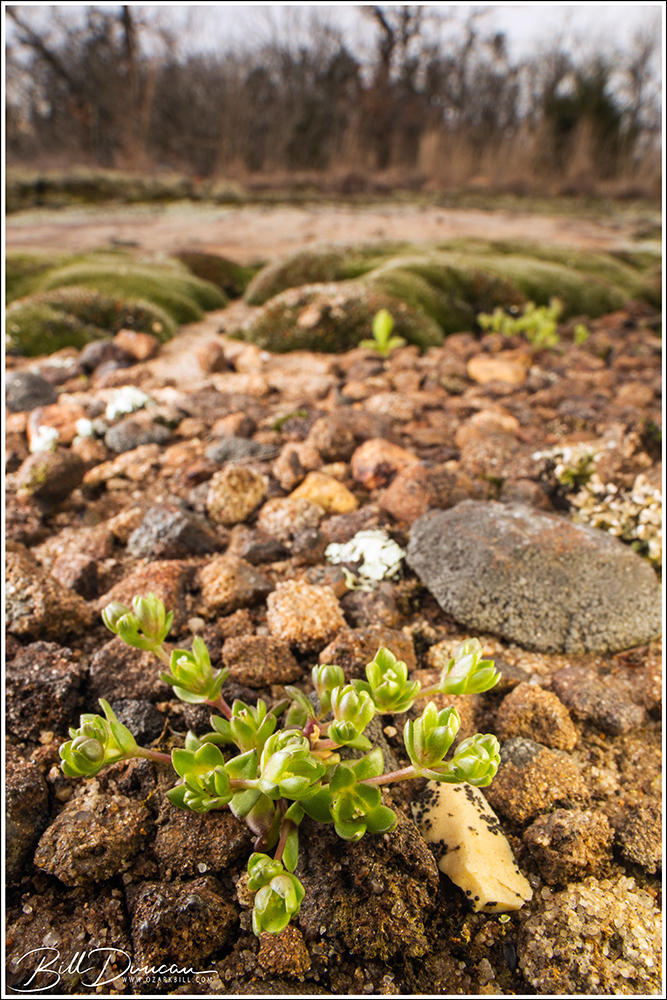
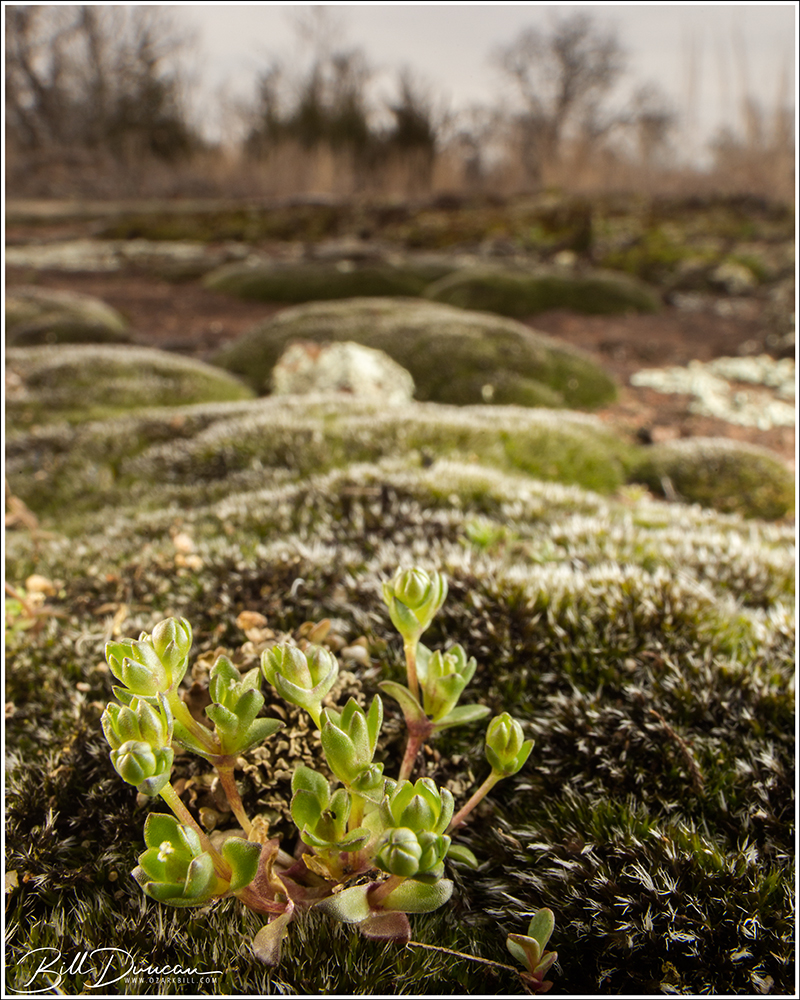
After grabbing a late lunch together, a few of us decided to return to Bona Glade. Ted MacRae and I were unsatisfied with earlier images we had taken with our Laowa 15 mm macro lens and we were eager to improve the photos using this specialty lens that, when used successfully, can showcase the plant within its specific habitat.
Geocarpon minimum growing from rock/sand substrate
We photographed the plant on the couple of substrates that we found it on and in the various stages of its development.
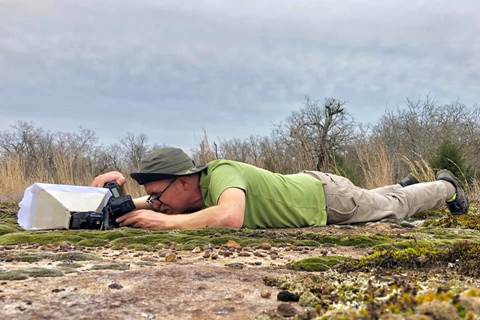
Geocarpon minimum growing from moss substrateOzark Bill getting low to meet Geocarpon at “eye level”. Photo by Ted MacRae
Finding and photographing this plant was a long-held goal of mine. It was a very special day spent with friends and newfound acquaintances. I am thankful for those who helped us find this plant and spent time with us. Hopefully future WGNSS members will continue to find tinytim in its Missouri homes for decades to come.
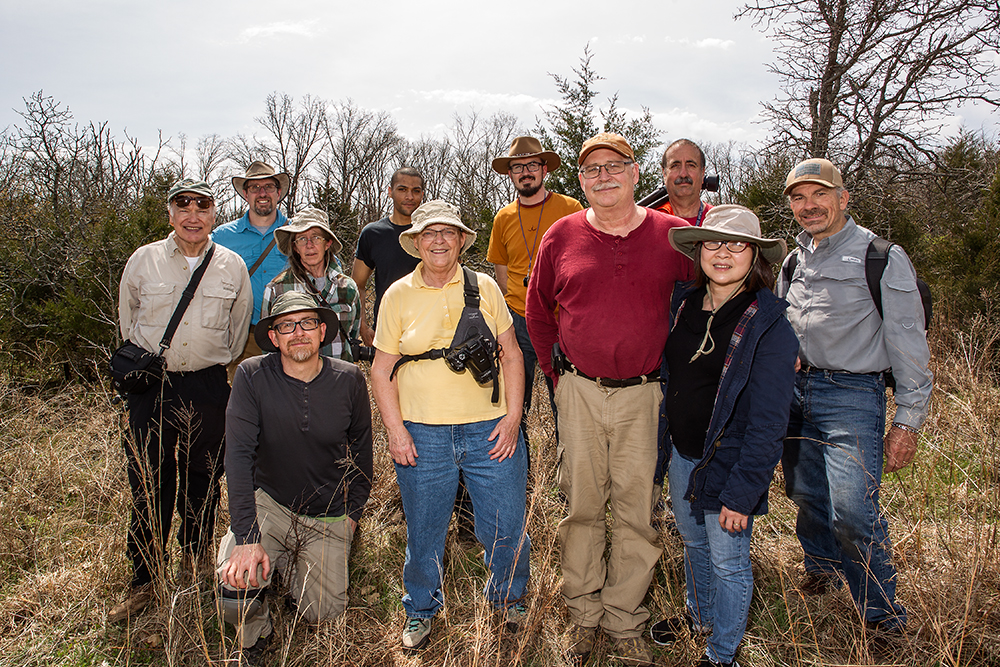
Tinytim hunters. From back row starting on left: John Oliver, David Seidensticker, Deb Tyler, Adam Rembert, James Faupel, Steve Turner, Front row starting on left: Bill Duncan, Evelyn Luecke, Casey Galvin, Anh do Galvin, Ted MacRae.
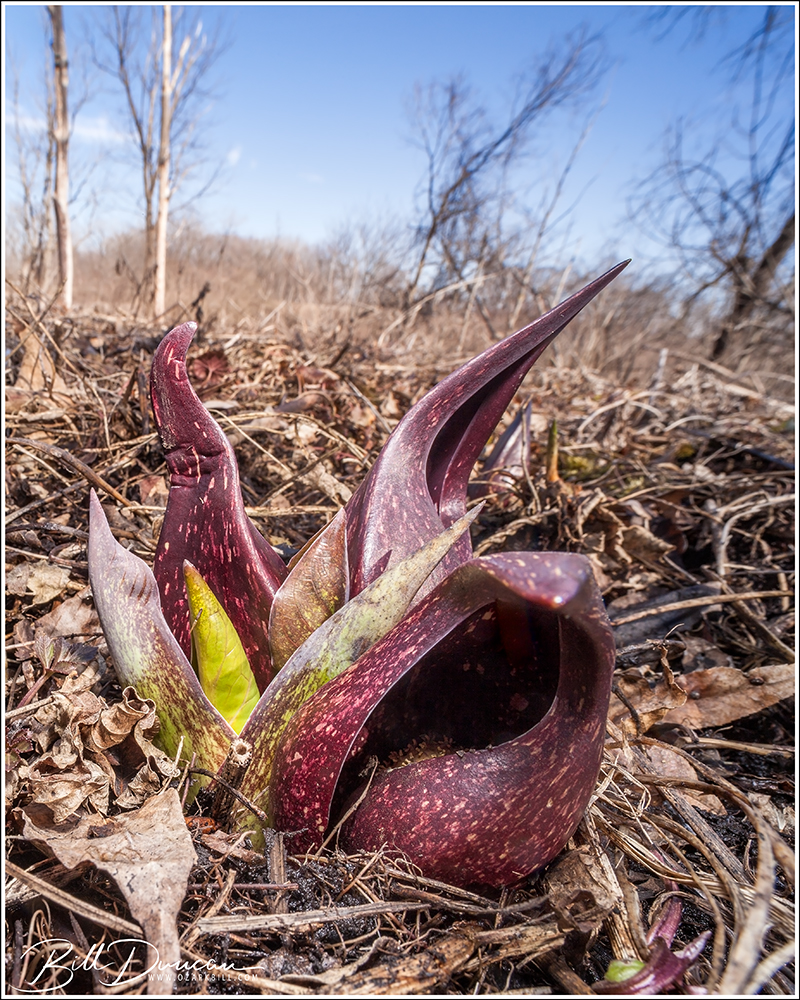
Eastern skunk cabbage (Symplocarpus foetidus) in bloom at Bennett’s Terraqueous Garden (Peoria County, IL)
Many thanks to Casey Galvin who turned me on to the closest places to find and photograph a plant species that had been a target of mine for some time now. Eastern skunk cabbage (Symplocarpus foetidus) is a fascinating plant that is typically found in eastern North America and the upper midwest. The nearest populations to St. Louis that I am aware of are near Peoria, Illinois, which is about a three hour drive from my front door.
These are one of several early blooming plants that start the spring botanical season. These members of the Araceae family, known as the aroids, bloom from February through April. Like several plants in this family, this species produces odors reminiscent of rotting meet in order to attract pollinators that are predominantly dipterans (flies), hymenopterans (bees) and other, more terrestrial arthropods. I did not find the odor too overpowering and I also thought I picked up a slightly sweet, syrupy smell.
Eastern skunk cabbage (S. foetidus) in its seep-spring habitat at Miller-Anderson Woods Nature Preserve (Bureau/Putnam counties, IL)
Another remarkable aspect to this species pollination biology is that the spadex and surrounding tissues are thermogenic – meaning they produce their own heat. This thermogenesis, produced via enzymatic reactions not too dissimilar to the reactions that occur in mammals, may serve to assist the inflorescence and leaves of the plant to break through frozen grounds. It also likely serves as to further the ploy that the plant is a rotting carcass, hopefully attracting flies and other insects interested in such things.
A honeybee (Apis mellifera) visiting the inflorescence of an eastern skunk cabbage (S. foetidus)
Other than a few very small flies and a couple of small native bees, the only pollinator I found during my visit was the honey bee. These were quite abundant.
Spathe and associated carpels of eastern skunk cabbage (S. foetidus)
To show the moisture associated with the seep habitat I was in, here is a skunk cabbage spathe surrounded by snakeskin liverwort (Conocephalum salebrosum).
That’s all I have for now. Most of the information in this post and much more can be found in the following source:
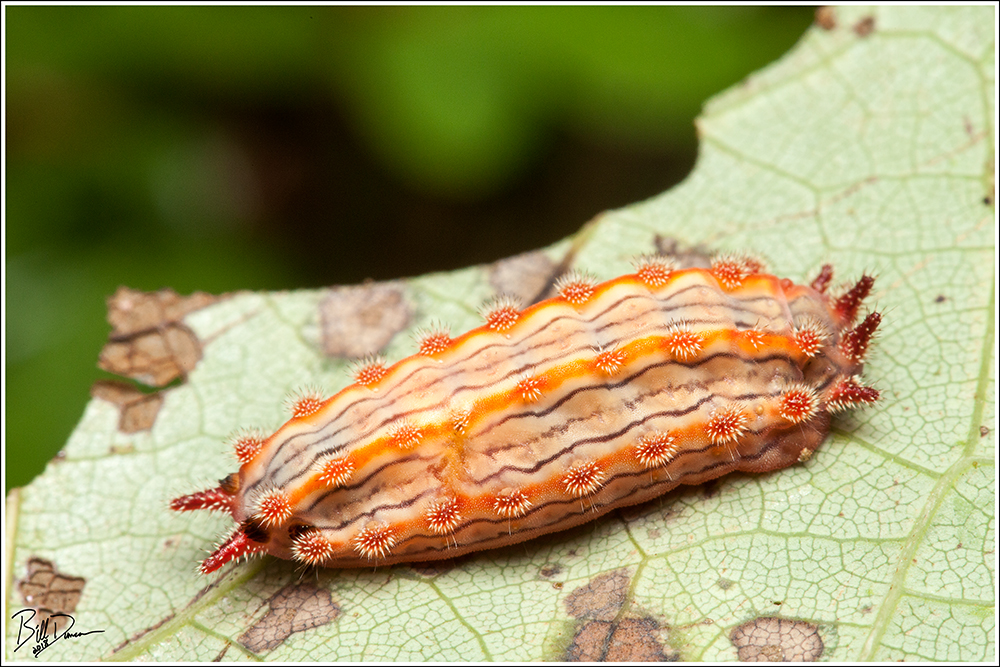
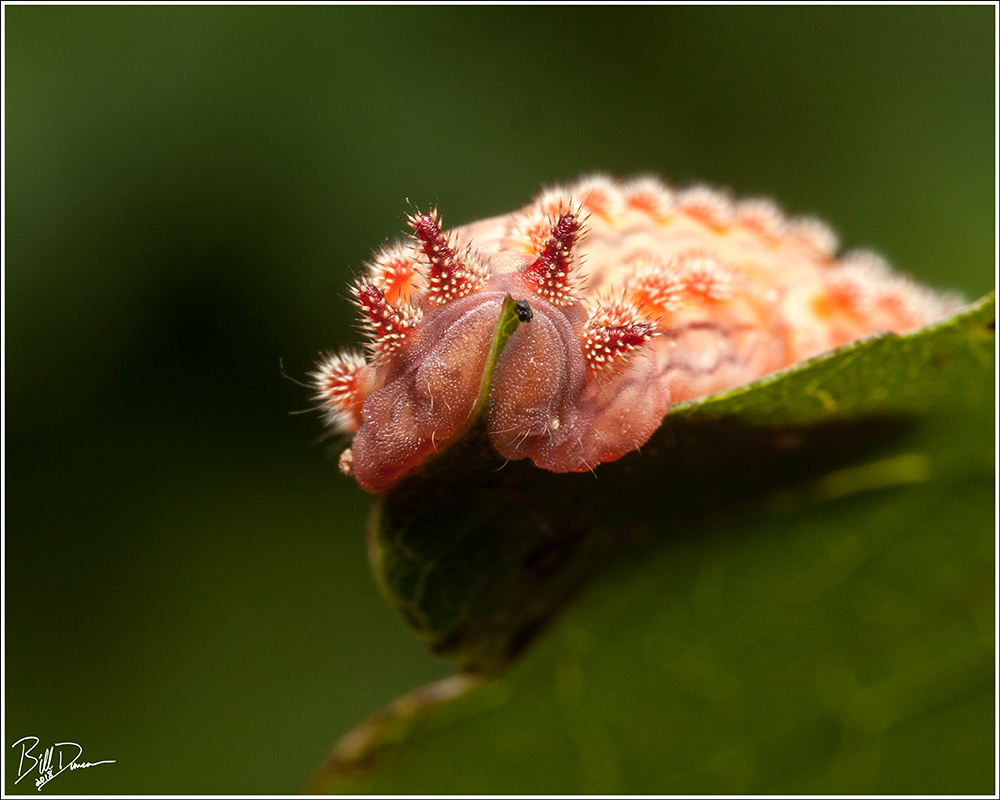
The WGNSS Nature Photography Group met on September 1, 2018 at Don Robinson State Park in Jefferson County, MO, with the goal of finding slug moth caterpillars and whatever other macro subjects of interest we could find. Overall, I think we had good fortune on this hot and muggy, late-summer day, finding quite a few interesting caterpillars. The slug moth caterpillars were a little scarce, but we did find a little something extra special – the pin-striped vermilion slug moth (Monoleuca semifascia) (Hodges # 4691). In four summers of looking for slug cats, this is the first one I have seen. It is a southern species and I assumed it would need to be found in the south-western part of our state where the open barren woodlands and savanna type environments this species prefers are more common.
Slug cats can be found on virtually any species of woody plant in the state. Although oaks and hickories seem to be the preferred host plants, this animal was found on an eastern redbud (Cercis canadensis).
One of the penalties of an ecological education is that one lives alone in a world of wounds. Much of the damage inflicted on land is quite invisible to laymen. An ecologist must either harden his shell and make believe that the consequences of science are none of his business, or he must be the doctor who sees the marks of death in a community that believes itself well and does not want to be told otherwise.
Aldo Leopold
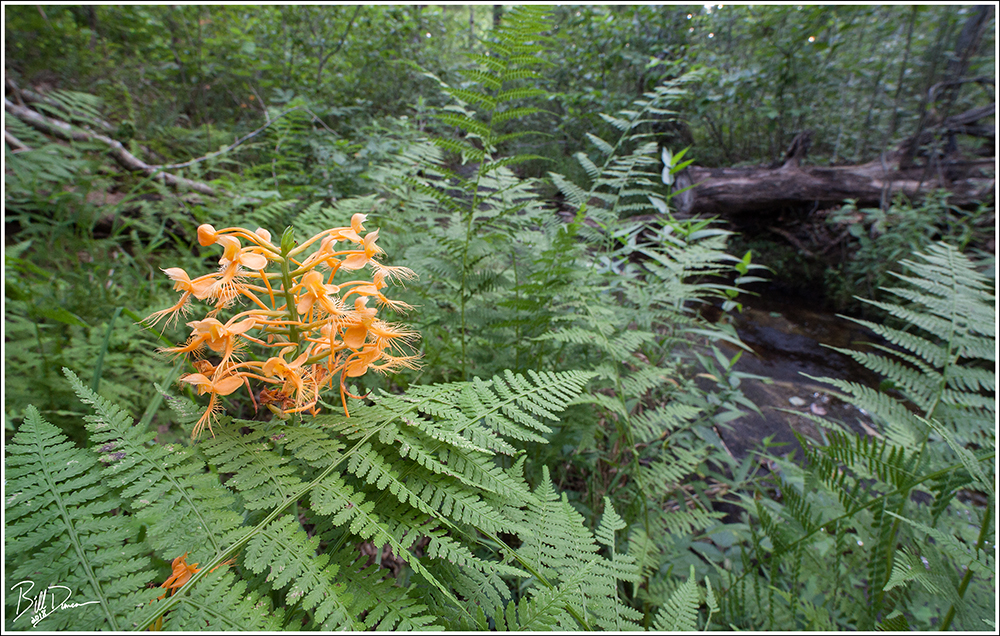
Yellow-fringed Orchid (Platanthera ciliaris)
With the help of a friend, over the last few weeks I’ve been able to get a good start at finding and photographing as many of the 35 +/- orchids that can be found in Missouri. The yellow-fringed orchid (Platanthera ciliaris) is known from only a handful of threatened locations in the state. I was really thankful to be shown these in full bloom where they reside in acidic seeps in St. Francois County.
I had seen rattlesnake plantain (Goodyera pubescens) before, as its wonderful evergreen leaves stand out during winter hikes. This was the first time I’ve seen them in bloom. Photographed in Ste. Genevieve County.
Not the greatest photo of the greatest specimen, but this seemed to be the absolute last grass pink orchid (Calopogon tuberosus) to be found in bloom for the season at this location in St. Francois County.
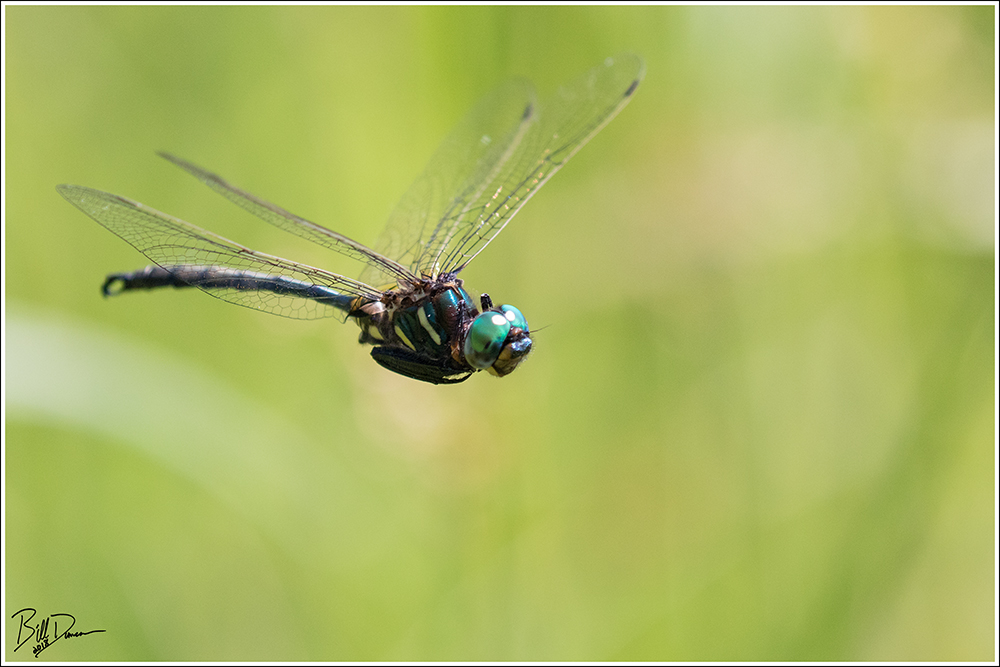
Ever since I heard that a number of newly identified populations had been discovered in Missouri, I have been wanting to find the Hine’s Emerald Dragonfly (Somatochlora hineana). I’ve gone a time or two on my own in previous years, but without specific knowledge on the where’s and when’s to find the flying adults. On June 16th, 2018, the Webster Groves Nature Study Society’s (WGNSS) Nature Photography Group headed to what might be the largest population of this species in the state. Thanks to WGNSS member and photographer, Casey Galvin, we were allowed access to a privately held farm in Dent County, MO that holds this population.
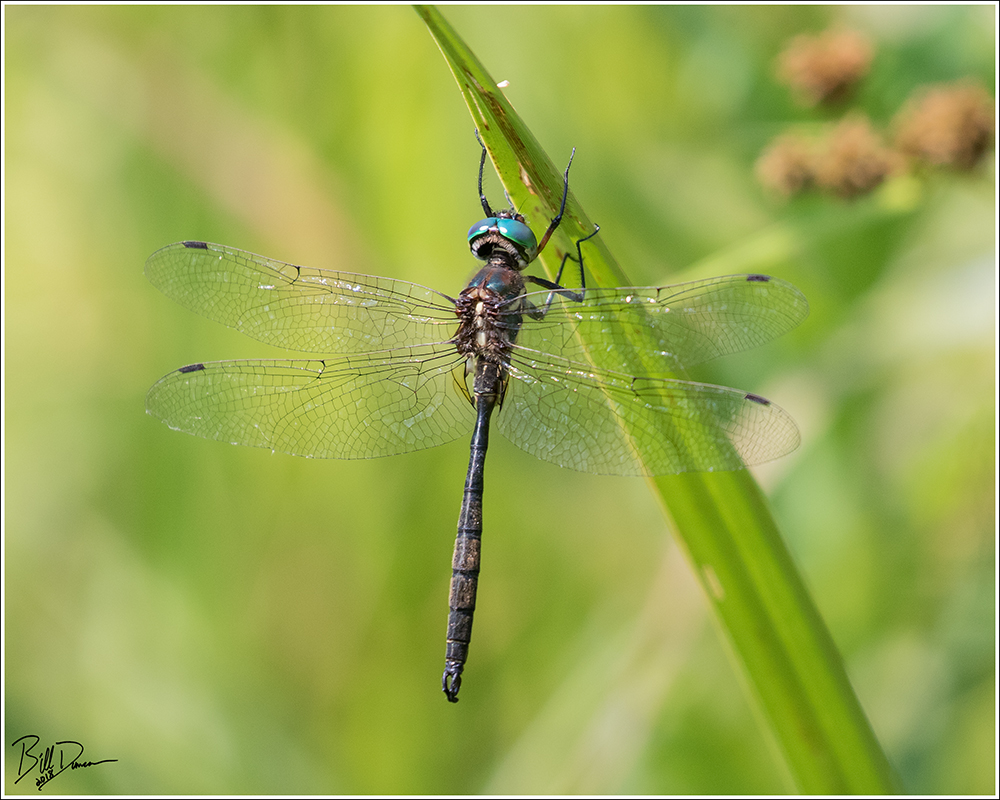
So, what is a Hine’s Emerald Dragonfly and what distinguishes them from the other 24 or so species in the Stomatochlora genus, or the “striped emeralds”? The above photo shows these distinguishing characteristics. Beyond the obvious emerald green eyes that all of the striped emeralds possess is the pair of yellow thoracic stripes on the sides of this species. Another and more diagnostic is the particulars of the genitalia. Using a good field guide will easily allow you to come to a species.
Hine’s Emerald Dragonfly – Finally at rest
Currently on the endangered species list, S. hineana was thought extinct as late as the mid 1900’s. Current populations of this species are now known from the states of Illinois, Wisconsin, Michigan and Missouri. Current population estimates indicate that there are approximately 30,000 individuals in the world. About 20,000 of these are believed to be in the species stronghold of Door County, WI. Like many of the striped emeralds, S. hineana has specific habitat requirements. The preferred habitat for this species is fens and sedge meadows overlying dolomite bedrock. Habitat loss, pesticide use and changes in ground water are identified risk factors affecting the Hine’s Emerald.
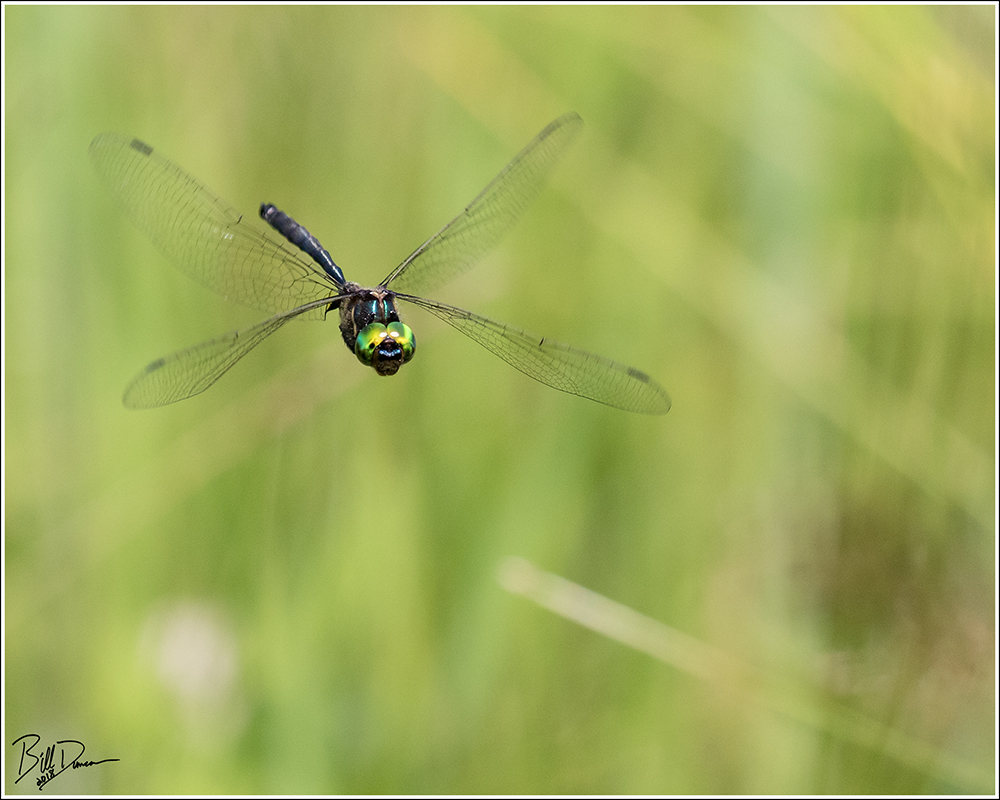
Hine’s Emerald Dragonfly – A photographer’s potential nightmare
Like many dragonflies, S. hineana is a sun-lover, active in the early parts of a June morning before things get too hot and he finds a hidden perch. Until then the males are airborne, patrolling their territory in the hopes of finding a female or a male to chase away. The photographer need be patient and wait for the opportunity when the insect stops to hover in the same general place. This is the split-second opportunity that you wait for. The problem is that autofocus is of little to no help. I primarily used manual focus on the in-flight shots.
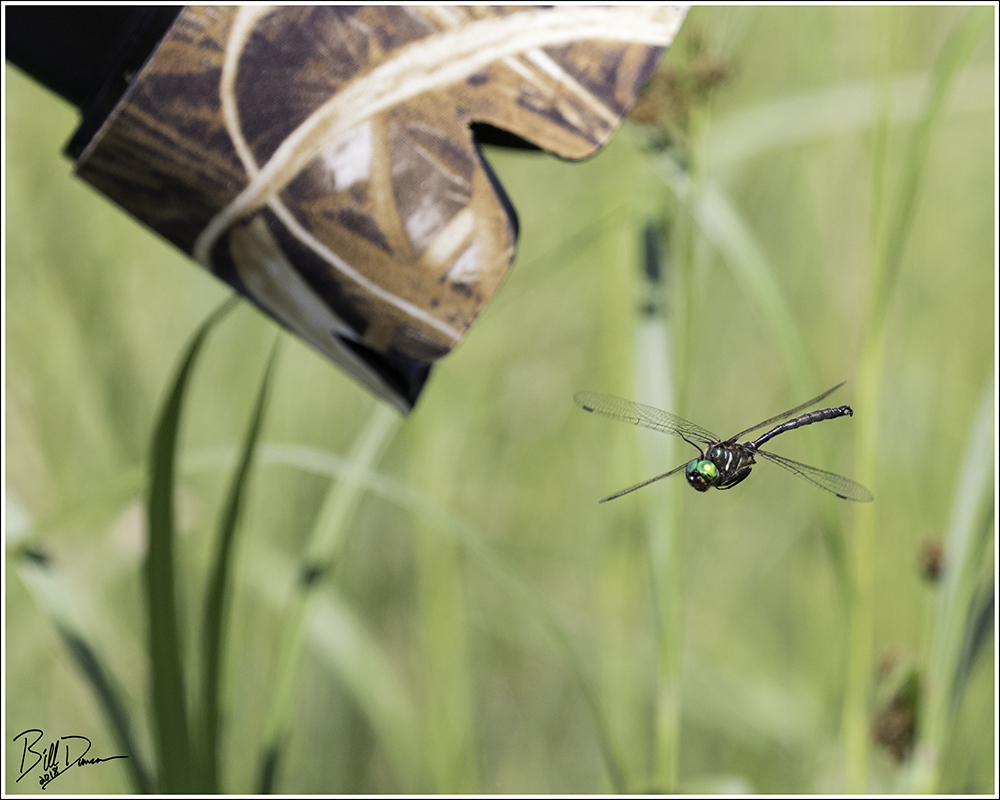
Hine’s Emerald Dragonfly – A worthy pursuit
There were plenty of opportunities for the patient photographer and observer. Often, an individual would fly so close to the lens we were sure it would use it as a perch. At these distances any movement by the dragonfly would throw it completely out of focus, so the photographer is looking for the sweet spot – close enough to be large in the frame, but far enough to enable tracking.
Hine’s Emerald Dragonfly – A rare gem
It was such a thrill to finally be able to meet these guys. With this location and up to 20 others, it is nice to know that Missouri is home to such a rare gem. Hopefully it will remain so.
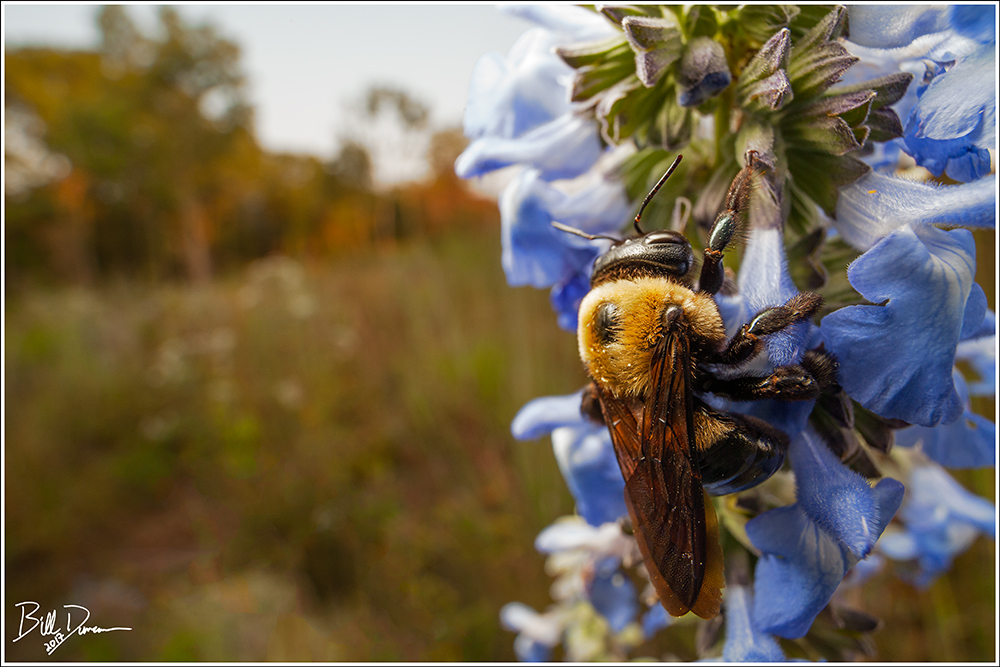
Eastern Carpenter Bee (Xylocopa virginica) on Blue Sage (Salvia azurea)
The WGNSS Photography Nature Group met at Cuivre River State Park on Saturday the 2nd in hopes to find members of Limacodidae (slug moths). Perplexing to me, we struck out in the same time and place I found them in numbers and diversity a year ago.
It was still a good time. We found a number of other macro subjects and explored a couple of new places. I also got to give a first spin to my new lens. A wide-angle macro – the Laowa 15mm f/4 Wide Angle Macro. A rather new lens design and one with a pretty steep learning curve, these photos are really just practice. With time and strategy, I think I can get better at this.
Two areas to focus on in improving with this lens:
1) Getting a better handle on exposing for the environment (background) while getting the right amount of light from the flash to properly expose the foreground macro subject. I think this should be easier to predict with practice. I’m not at all sure that I can ever get it on a first try.
2) Figuring out how much dof is just right. Sometimes getting more detail in the background will be desirable. Other times, it is best to blur it out to bring focus on the primary subject.
This is a funnel web or grass spider (Agelenopsis spp.) that we found protecting her egg sack on the leaf of poison ivy (Toxicodendron radicans). She will likely guard the eggs here until the winter takes her.
Grass Spider – Agelenopsis spp.
One of the nice finds of the day was this Black-waved Flannel Moth (Megalopygidae – Lagoa crispata (4644)). One of the key features of this lens is being able to focus close enough to the primary subject for macro-level detail while capturing so much more in the subject’s environment. In this case, I tried to give the perspective of what it may be like for the bug when being discovered by entomologists or nature photographers. Pictured left to right are WGNSS members Rich Thoma, Dave Seidensticker and Casey Galvin.
After the group disbanded at Cuivre River SP, Miguel Acosta and I decided to visit and explore Little Lost Creek Conservation Area near Warrenton. We hiked about 6 miles and I camped there the following evening. I took a quick photo hike in the morning and found these two Brown Stink Bugs (Pentatomidae – Euschistus servus) in copulation. They didn’t like that lens being so close and kept moving to the opposite side of the boneset (Eupatorium) blooms.
Brown Stink Bug – Pentatomidae – Euschistus servus
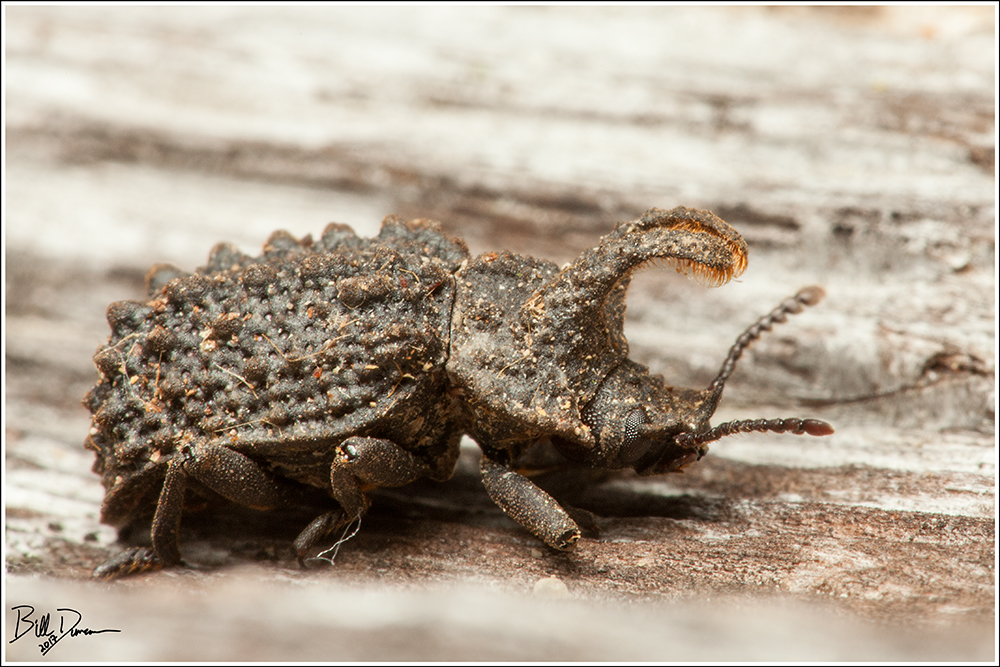
Here is one of the interesting visitors I had to my black lights at Hawn State Park this summer. Bolitotherus cornutus, or horned fungus beetle is in the darkling beetle family, Tenebrionidae. I wish I knew of their preference for polypore fungi as larvae and adults so that I could have photographed them on more suitable substrate.













 A Thousand Acres of Silphiums