"What a thousand acres of Silphiums looked like when they tickled the bellies of the buffalo is a question never again to be answered, and perhaps not even asked." -Aldo Leopold
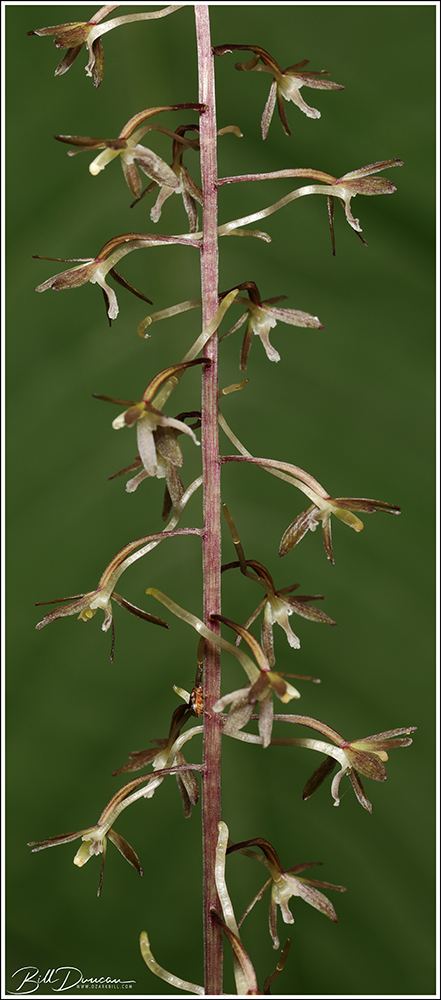
Tipularia discolor, the cranefly orchid so-called due to the appearance of the flowers to a hovering group of crane flies.
Tipulariadiscolor, or the ‘cranefly orchid,’ was first collected in Missouri in 1988 and new discoveries across the Midwest in recent decades suggest it is actively expanding its range. Similar to the puttyroot orchid (Aplectrum hyemale), this orchid blooms in the summer without the presence of any leaves. Leaves emerge in autumn and are usually completely withered by May. Both the common and genus names come from the apparent resemblance of the open flowers to that of crane flies in the genus Tipula. Moths in the family Noctuidae are the primary pollinators and use their proboscises to collect nectar from the long nectar spurs of the flowers.
This is the only species in the genus to be found in the Americas. Casey and I found these plants in Stoddard County on August 1st of this year.
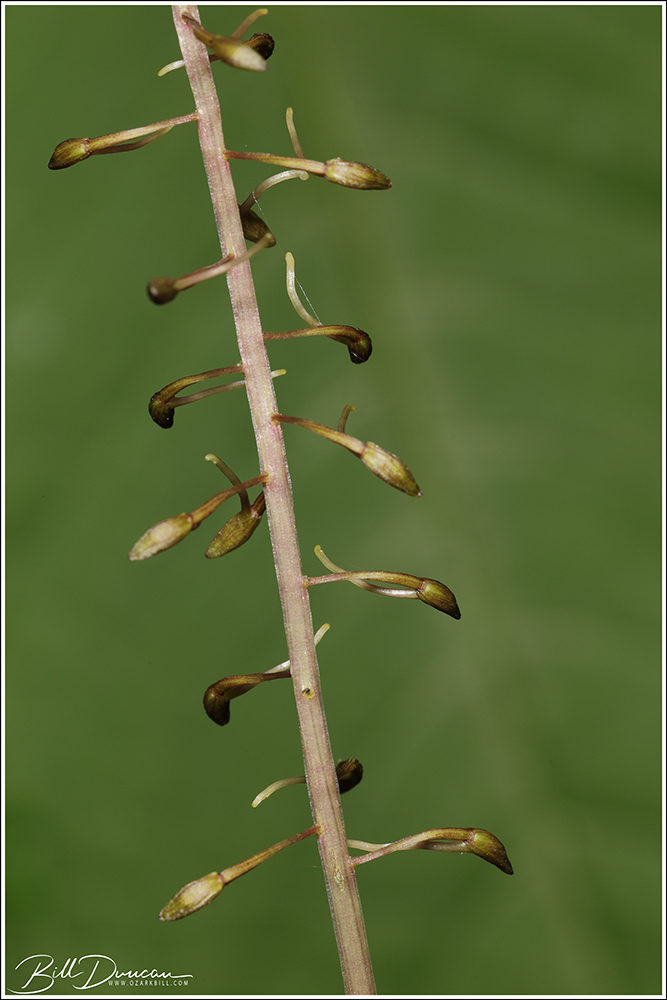
Tipularia discolor blooms in tight bud. The nectar spurs are easy to discern at this stage of development.
Platanthera clavellata (club-spur orchid), Stoddard County, MO.
The habitat this featured orchid was found was quite interesting – a wet, fen-like area with many pea-gravel rivulets to walk down. All this was set under a thick overstory that allowed little light on the cloudy day Casey and I visited. Often forced to hunch as we searched for other plants, lighting for photography was challenging, but we got what we came for.
As you can see below, this is a dainty and sweet orchid that has a large primary leaf and a secondary, bract-like leaf.
Platanthera clavellata (club-spur orchid), Stoddard County, MO.
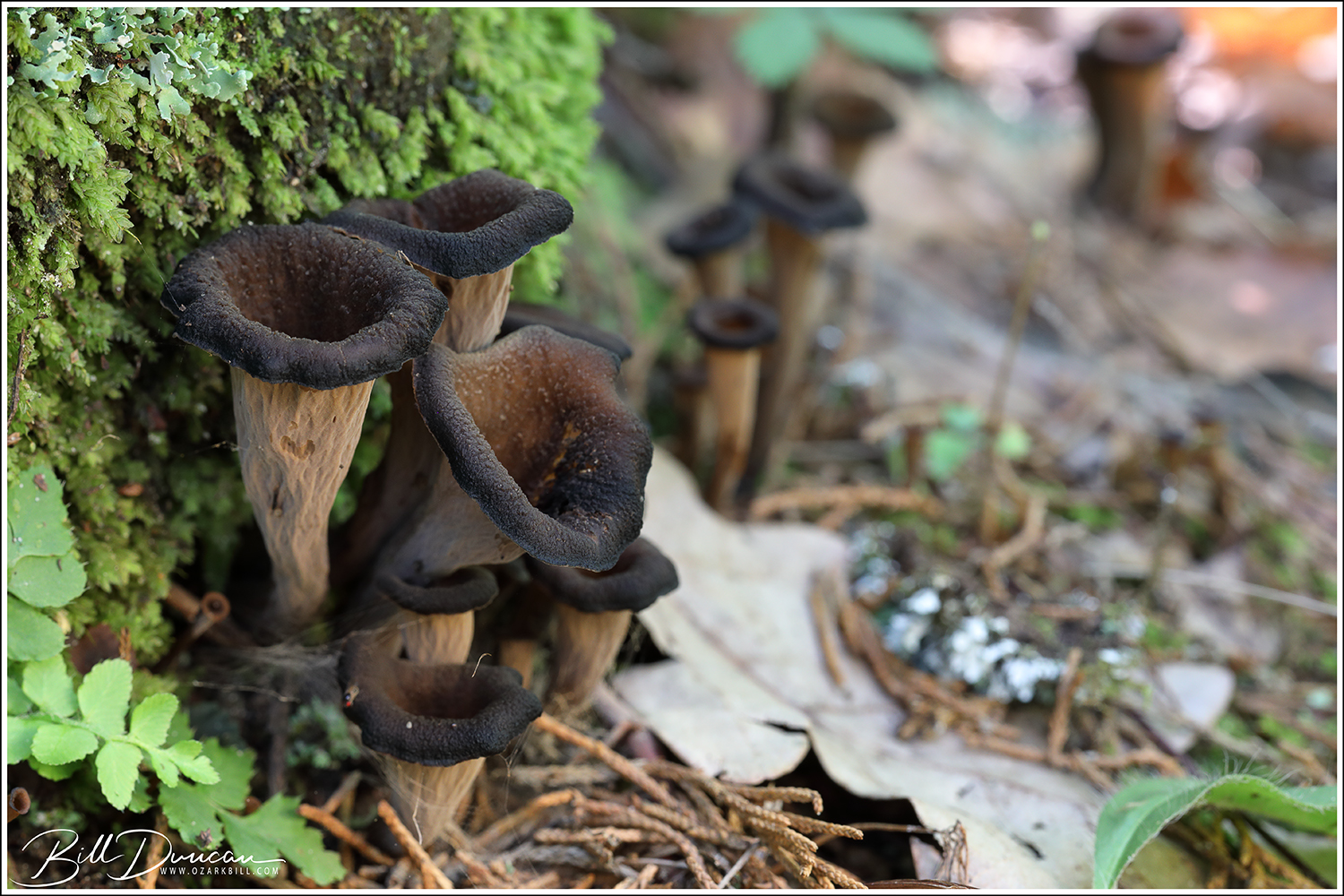
Craterellus cornucopioides has a number of common names including horn of plenty, black chanterelle (they are in the same family as the well known chanterelles), and trumpet of the dead.
After looking for a few years, I finally found a patch of black trumpets this year in Jefferson County, MO. They are reported to be one of the finest wild mushrooms and I agree – they (I picked and ate the ones pictured here) are definitely in my top three!
Monarda punctata (spotted beebalm) found at Sand Ridge State Forest, IL.
Today I’m sharing a couple of plants that Casey introduced me to that have a preference for growing in dry, sandy places. The first is a monarda that I did not know existed and has since become my favorite of the beebalms for certain.
Monarda punctata (spotted beebalm) found at Sand Ridge State Forest, IL.
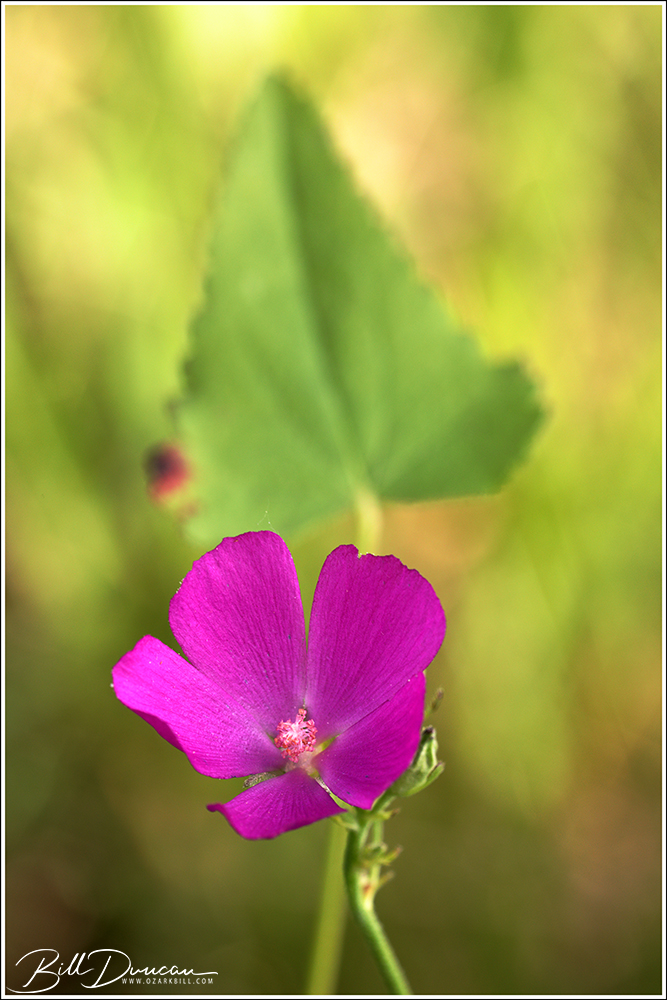
Next up is Callirhoe triangulata, the clustered poppymallow. This supremely saturated flower strongly prefers, dry sandy soils. A stunner of a plant! We looked for compositions that allowed us to feature not only the flower, but the triangular-shaped leaf as well, which is indicative of this species. This species is very rare to possibly extirpated in Missouri.
Callirhoe triangulata (clustered poppymallow)
We found this equally striking Rufous-banded Crambid moth (Mimoschinia rufofascialis) on an open flower. This moth uses these mallows as a host plant, feeding on the immature seeds. I’m not sure, but I doubt the adults feed; this one was likely just using the flower for shelter.
Callirhoe triangulata (clustered poppymallow) with adult Mimoschinia rufofascialis (Rufous-banded Crambid)
Great Blue Skimmer (Libellula vibrans) found at Sand Pond Conservation Area in Ripley County, MO.
A few weeks ago Ev, Yvonne, Dave and I traveled south to try and find the first state record of the Brown Booby that was on the Current River just outside of Doniphan. Unfortunately, we were a day late and missed the bird. However, through the patient and educated eyes of Yvonne, we found several insects that made the trip worthwhile.
A head-on look at a Great Blue Skimmer (Libellula vibrans)
One of these that I was able to get some photos of was this striking great blue skimmer (Libellula vibrans). This is one of the largest of the skimmers and while not necessarily rare, it isn’t one you’ll come across very often in the St. Louis area.
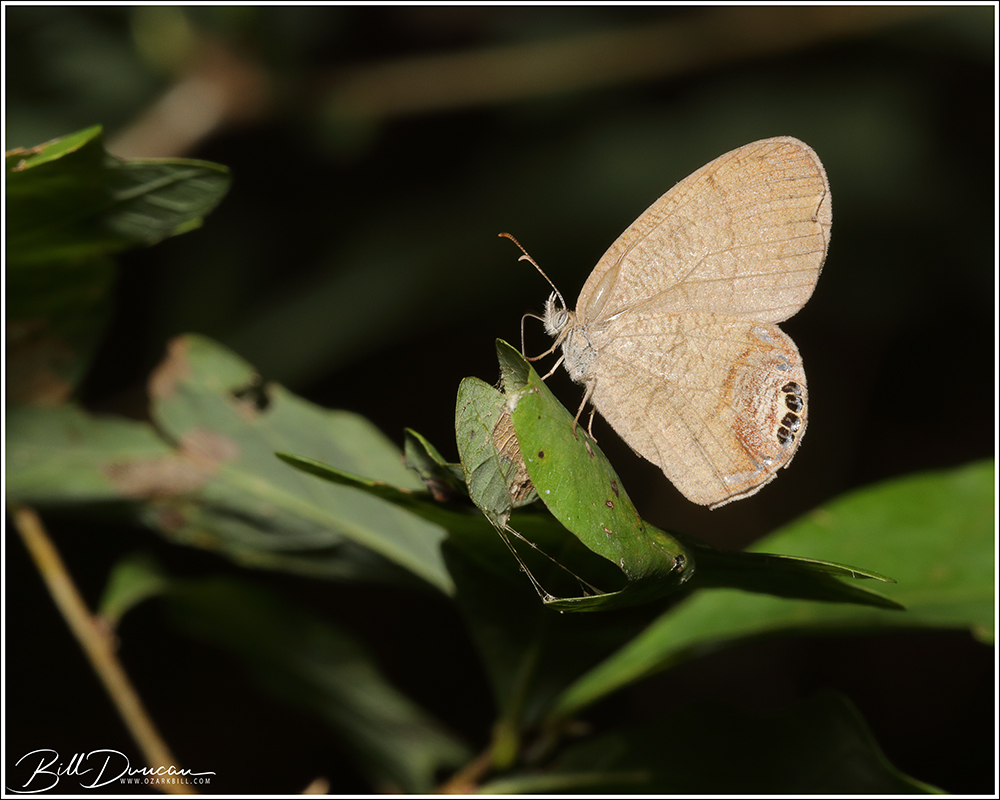
The Gemmed Satyr (Cyllopsis gemma)
We made a stop in Carter County before heading home to look for orchids. The orchids were a no-show, but Yvonne found her target species of the day – this gemmed satyr (Cyllopsis gemma) that we all had nice looks and photo opportunities with.
Although we missed out on our prized Booby, I’d say the Booby Prizes were well worth our time.
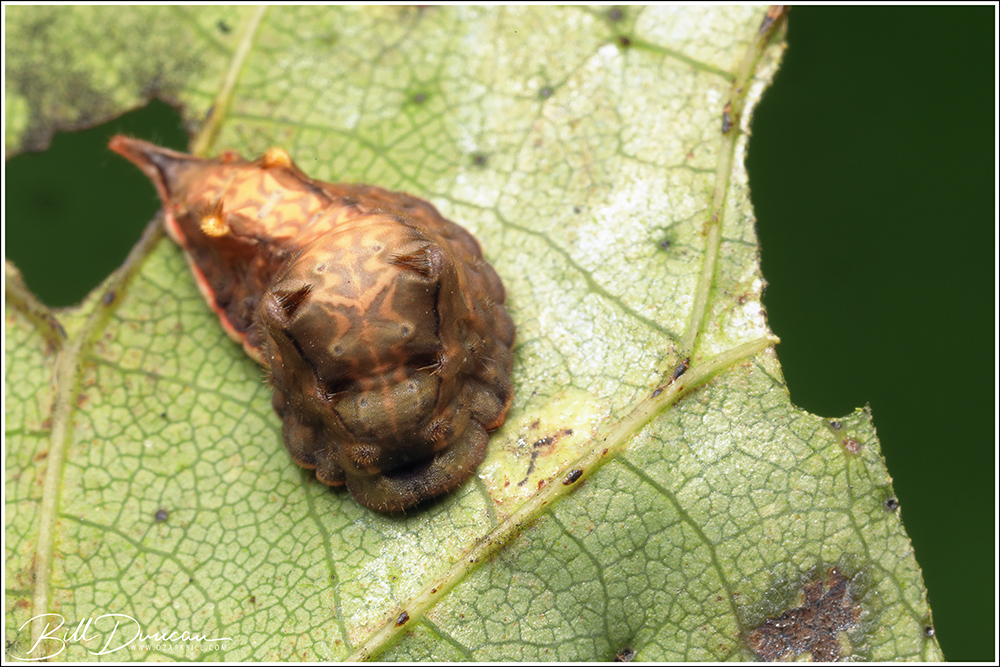
Spun Glass Slug Moth (Isochaetes beutenmuelleri). This animal is likely not in its last instar and should have even larger arms before its ultimate diapause.
Maybe I owe those of generation Y and the Millennials a bit of a silent apology. I too have been on a mission to ‘collecting them all.’ In my case, however, I think the objects of my search are far more brilliant, fascinating and mysterious than anything in the Pokemon universe could ever dream of being. For about the past four years, I have been occupied in late August to late September with finding all the slug moth caterpillars that can be found, or at least expected, in the state of Missouri.
Spun Glass Slug Moth (Isochaetes beutenmuelleri). This species, like most of the limacodids, are generalist feeders. The slug moths can be found on virtually any species of woody plant in Missouri.
Many thanks to Kyran Leeker for pointing me to a couple of hot spots she had found that contained some of the last species of slug moth caterpillar I needed to find and photograph – the spun glass slug moth, or Beutenmueller’s slug moth (Isochaetes beutenmuelleri). After hearing this, Sarah and I hit these locations soon after. My radar for these creatures was definitely in need of a re-calibration. I did not find a single slug moth caterpillar but Sarah found three, including this I. beutenmuelleri and two smaller parasa (Parasa chloris) – a species I had found before, but only had photographed with my cell phone. This was an exciting day indeed!
Spun Glass Slug Moth (Isochaetes beutenmuelleri). Sometime during late September to mid-October this little one will spin a cocoon and overwinter. In the spring it will then pupate into a non-feeding adult moth.
Although not as colorful or spiny as some of its more flamboyant relatives, the smaller parasa (Parasa chloris) is quite an interesting slug moth in its own right. Individuals can vary a lot in their patterns and are warmly toned with tans, oranges and pinks. I can’t get enough of looking at these guys.
Smaller parasa (Parasa chloris). Each of its humps is equipped with a few barbs that can inject an annoying, but not dangerous venom.Smaller parasa (Parasa chloris) with wood grain or marble-like pattern.Smaller parasa (Parasa chloris) with its head out of its protective hood.
Sarah found the following poor creature. Although you can’t help but feel sorry for it, I was glad to capture this natural history story. This little one was gregariously parasitized by approximately 15 braconid wasps, likely from the Microgastrinae subfamily.
Smaller parasa (Parasa chloris) parasitized by braconid wasps. Note the multiple stages of wasp development, from larvae that have completed their cocoons, to those still at work spinning their webs to larvae just emerging from their host. Their is no chance for the survival of this caterpillar.
These wasps were definitely in the process of preparing for their next stage of life. I have come across lots of caterpillars in the past that were parasitized by wasps like this, but always after the larvae had emerged and spun their cocoons and often after the wasps had cut the tops off and exited. This was very special indeed, finding them in this process. This was taking place much quicker than I had anticipated. It was plain to see the movement of the wasps and observe their progress. I had to take some video to capture this. I have sped the footage up by 1.5X to better showcase this activity.
Before I finish, I couldn’t help but think of one of my favorite Darwin quotes. Watching this footage a few times, I couldn’t help but agree with his reasoning.
In a letter to his friend and botanist, Asa Gray, Darwin wrote…
“With respect to the theological view of the question: This is always painful to me. I am bewildered. I had no intention to write atheistically, but I own that I cannot see as plainly as others do, and as I should wish to do, evidence of design and beneficence on all sides of us. There seems to me too much misery in the world. I cannot persuade myself that a beneficent and omnipotent God would have designedly created the Ichneumonidae with the express intention of their feeding within the living bodies of caterpillars …” -Charles Darwin
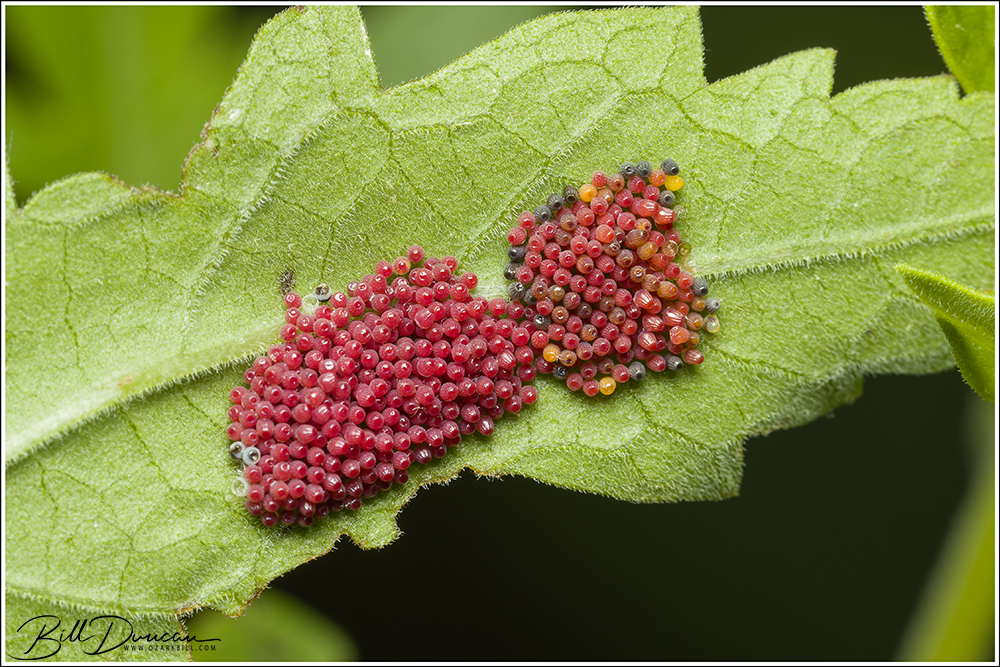
June 2023 Update In June of 2023, Casey, Pete, Miguel and I headed back to the same location in hopes of finding and photographing the adults of this species. Unfortunately, we were likely too late and could not find a single adult in flight. However, we looked over the site, looking closely at the Pedicularis canadensis to see if we might find females laying eggs. We had no luck with this and found no eggs nor larvae. Pete’s botanical eye did find a single Aureolaria grandiflora, where he found an egg mass. On closer inspection, I concluded that these were definitely butterfly eggs. A quick Google search confirmed that these were indeed checkerspot eggs! Now I need to photograph the beautiful adults and the absolutely stunning chrysalis of this species in order to capture every life stage of this fantastic creature.
Thinking on this further, on what has been described of this species (read more below), this makes perfect sense. We were not likely to find larvae on P. canadensis, nor find the females depositing eggs. Eggs are typically deposited on A. grandiflora, whereupon the larvae feed until the end of the season, moving on to finish this stage in the spring where the feed on P. canadensis.
Egg mass of Euphydryas phaeton ozarkae found on Aureolaria grandiflora
End of June 2023 update.
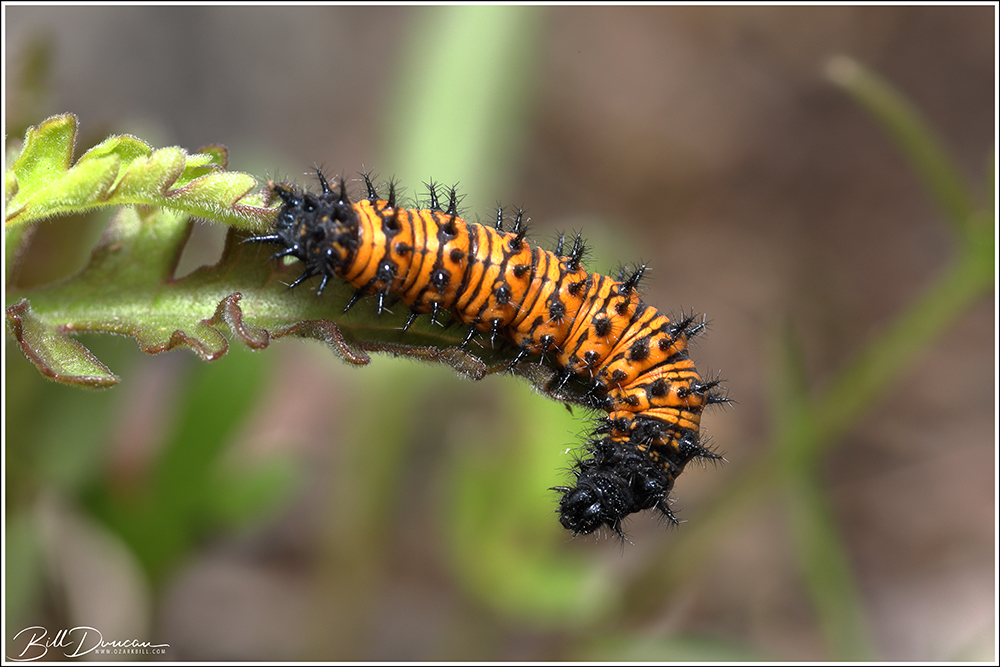
The Ozark Baltimore Checkerspot (Euphydryas phaeton ozarkae)
Early April, 2020, Casey and I head to the southwest corner of the state looking for multiple subjects. Our primary target of this trip was to check for caterpillars of a rare subspecies of the Baltimore Checkerspot (Euphydryas phaeton ozarkae). This subspecies occurs primarily in the Arkansas Ozarks, but can be found in extreme southern Missouri.
Does Euphydryas phaeton ozarkea deserve subspecies status?
The main distinction that separates this purported subspecies is habitat and host plant preference. The primary habitat for E. phaeton phaeton is marshy wetlands, while E. phaeton ozarkeaprefers oak woodlands. The primary host plant for E. phaeton phaeton are the turtleheads (Chelone sp.) while E. phaeton ozarkea primarily uses false foxglove (Aureolaria grandiflora). These animals will overwinter as caterpillars and then will often find new host plant species the following year – as shown in these photographs, they are using lousewort (Pedicularis canadensis). They will then pupate in May to June of their second year.
The Ozark Baltimore Checkerspot (Euphydryas phaeton ozarkae)
Browsing the literature, there seems to be some who question the legitimacy of the subspecific status of of E. phaeton ozarkae. Is this simply a case of an opportunistic generalist finding new ways to make a living in varying habitats, or is there a concrete genetic distinction between these two? From what I’ve been able to tell, there does not seem to be a consensus. If you are aware of any newer literature that might shed light here, please let me know.
A bumblebee (Bombus sp.) barges its way into a Dutchman’s breeches (Dicentra cucullaria) flower for a nectar reward. Photographed at Beckemeier Conservation Area.
Just a few that I’ve processed that I wanted to share from this past spring.
A closeup of a fresh Prairie Trillium (Trillium recurvatum recurvatum) flower. Photographed at Beckemeier Conservation Area.
Did you know…? Trilliums are a favored spring food by white-tailed deer. An overabundance of deer, as is found across most of the eastern United States forests, can have detrimental impacts to trillium populations. In some regions these plants and many other plant species are extirpated from certain forests except within deer exclusion fences.
The enchanting Miami Mist (Phacelia purshii). Photographed at Englemann Woods Natural Area.
One of the first wildflowers that really caught my attention. Miami mist can often be found in large colonies. Unless you stop to take a close look, it may not be obvious what you are missing.
You have to be tiny to service the flowers of cutleaf toothwort (Dentaria laciniata), a task for which these diminutive sweat bees (Lasioglossum sp.) are perfect for. Photographed at Beckemeier Conservation Area.
Celandine poppy (Stylophorum diphyllum) photographed at Englemann Woods Natural Area.
I thought that celandine poppies were pretty common after visiting the large beds at Shaw Nature Reserve’s wildflower garden. I have now come to understand that they are generally pretty hard to find in Missouri forests. The name celandine comes from the Greek word for ‘swallow’, referring to the plant’s early blooming with the first arrival of the birds in spring.
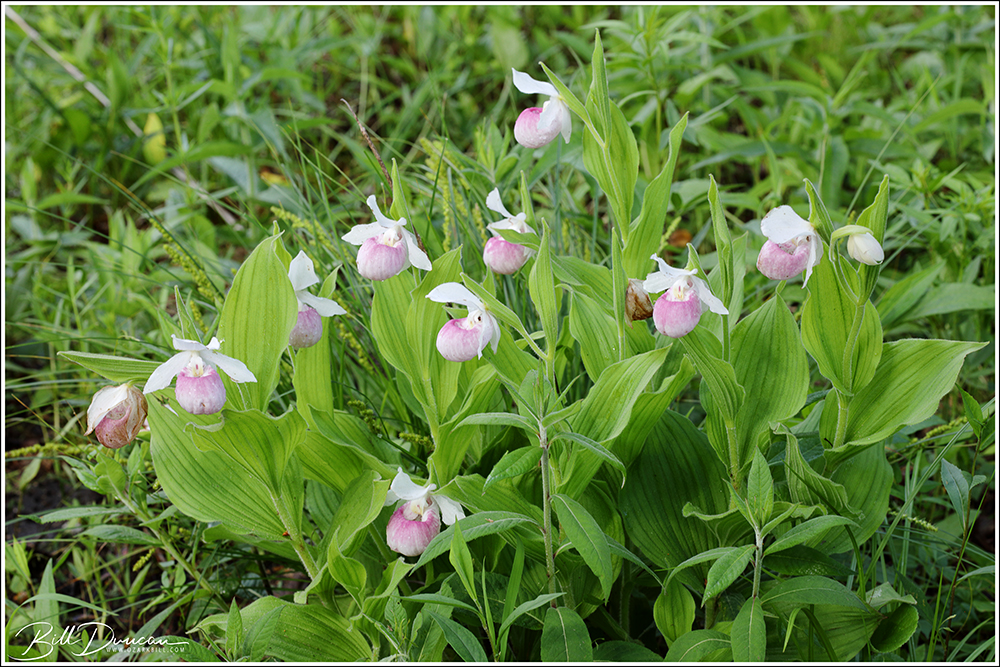
I was thrilled to be able to photograph this stunner of an orchid this past spring. Thanks to Casey Galvin who turned me on to this tiny population in Shannon County, MO.
A small cluster of Cypripedium reginae in bloom.
The Showy Lady’s Slipper is currently ranked as S2/S3 in Missouri, meaning this species is imperiled/vulnerable. We carefully tread around these guys and hide their specific locations as this is a species that may still be poached for horticulture purposes.
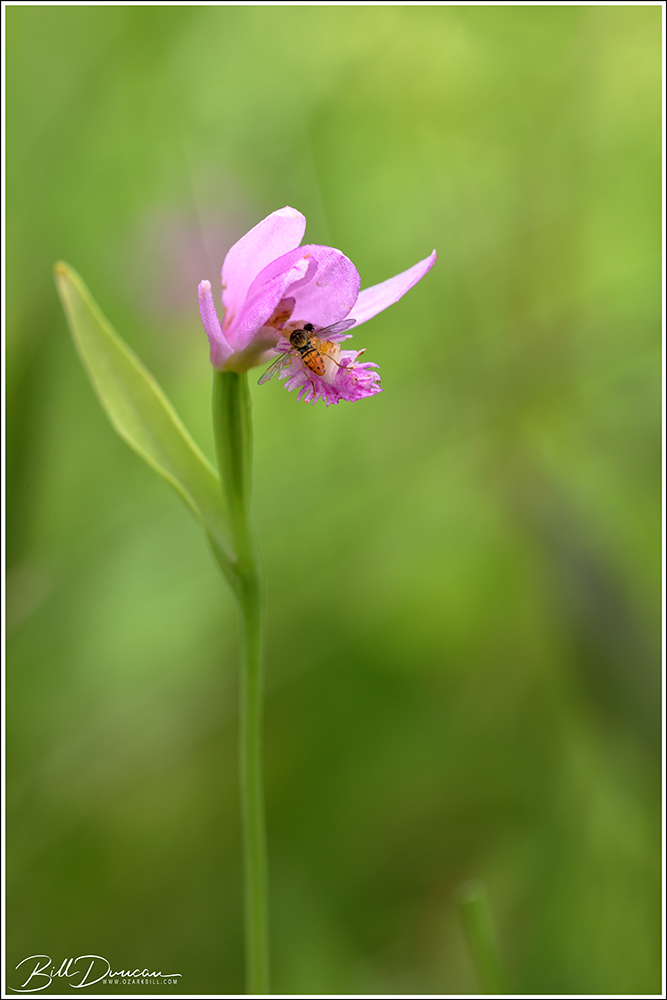
Pogonia ophioglossoides (Rose Pogonia or Snakemouth Orchid)
Today I am sharing some photos of plants in bloom taken in a fen in Shannon County, MO. These plants were blooming in June and the combination of high temps, direct sunlight and high humidity made for challenging conditions to photograph indeed. The first subject is Pogonia ophioglossoides, the snakemouth orchid or rose pogonia. These were blooming in abundance at the fen but finding one in the peak of its beauty was the challenge.
Pogonia ophioglossoides is pollinated primarily by bees and other insects like syrphid flies pictured here.
As fantastic as it was, I found being in these fens to be quite stressful. First of all, you are typically forced to work in dangerous heat indexes. My friend, David Seidensticker and I made a visit to these fens during our birthday weekend and dreaded leaving the sanctuary of what little shade we could find and use as a base of our operations. If you visit these locations in the summer, be prepared by drinking as much water as you can before you get there and bring plenty of water with you. You really need to constantly drink as you are sweating profusely, losing water at nearly the same rate you can take it in.
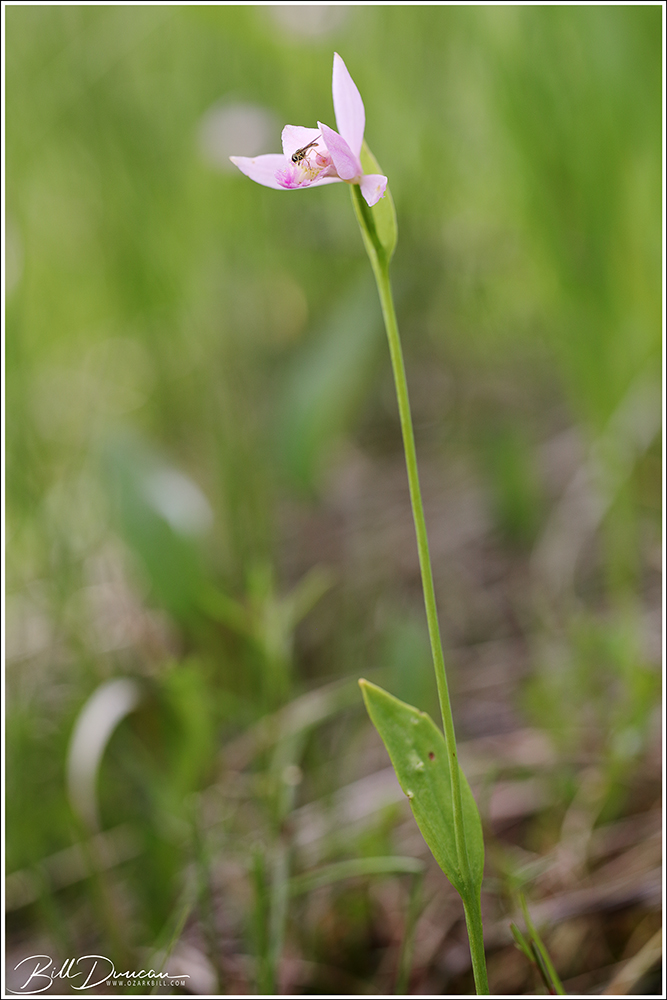
Pogonia ophioglossoides prefers life on the marly edges of our fens.
In addition to the off-the-chart heat index values, one must carefully select every footstep. This is not only due to the rare plants in bloom, but also because of the soil substrate that forms the base of these endangered fen ecosystems. These fens are comprised of two primary soil substrate types, marly soils and peat soils.
Pogonia ophioglossoides. The snake mouth orchid gets its name from the similarity of its foliage to that of the adder’s-tongue ferns (Ophioglossum).
Marly soils are composed mostly of carbonates such as calcite and calcium or magnesium carbonate that precipitate out of ground water. These soils take thousands of years to develop and the typically high levels of magnesium create conditions that only the best adapted floras can survive.
Spiranthes lucida, or Shining Ladies Tresses, is the only spring-blooming Spiranthes found in Missouri.
Peat soils are comprised of partially decomposed plant materials that also build up over thousands of years. These soils can typically support more plant species and heavier vegetation loads. Care must be taken to avoid walking much on these soils as our footsteps will not only disturb the plants growing here, but will also act to compress the soil, expelling the gasses trapped and water-logging the root environments.
The best places to walk in these fen types are on the rivulets that run within these fens. Continuously flowing waters have moved most of the soils from these areas to leave a pea-gravel type substrate with gently moving water on top. Plants will still grow within these areas but finding a safe place to put your foot is typically pretty easy.
Spiranthes lucida dislikes competition, but enjoys disturbances in soil.
We found Spiranthes lucida growing at the edges of shallow peat soils next to these rivulets within the fen. Likely the easiest Spiranthes to identify in the state, this is the only Spiranthes species that blooms in spring, has a yellow lip and has an easy to identify growth habit with broad basal leaves that are present when the orchid is in bloom.
Calopogon tuberosus – the Grass Pink Orchid.
Calopogon tuberosus was just beginning to bloom in early June. This orchid is famous for its non-resupinate flowers, meaning that the flowers are not turned 180 degrees, as they are in most orchids. The lip of the flower is found on the upper side of the flower. This species also does not produce nectar or pollen as rewards for would-be pollinators, but uses visual subterfuge to entice insects to land. I found it interesting that Homoya, 1993, suggests that the reason C. tuberosa exists in space and flowering time with P. ophioglossoides (see above) is that the later does provide ample nectar rewards, thereby increasing the chances that a pollinator might land on the similarly colored C. tuberosa flowers.
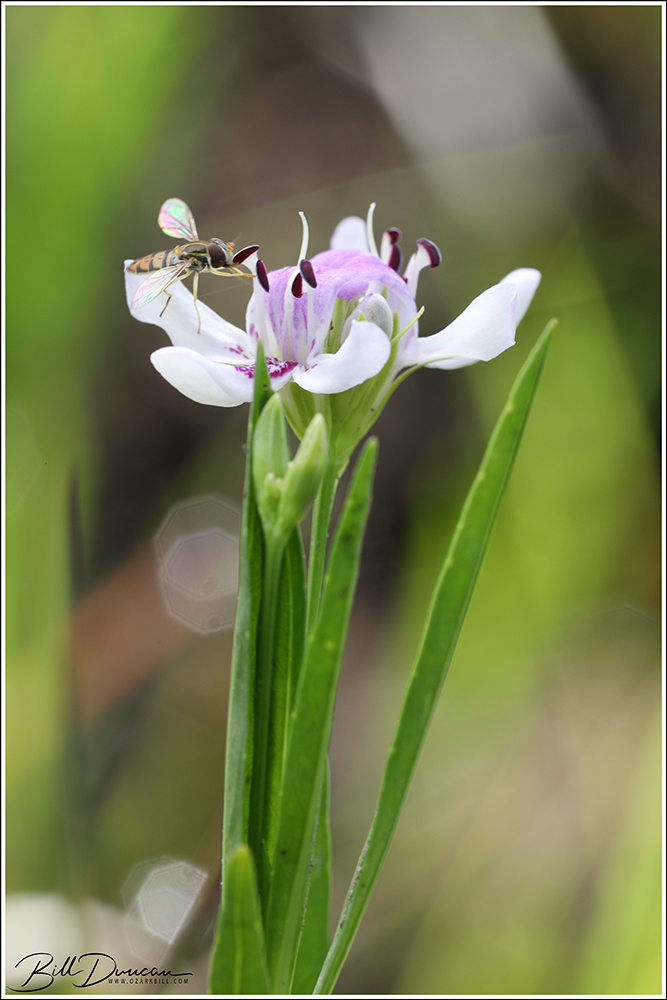
Justicia americana, American Water Willow
Justicia americana is a gorgeous member of the Acanthaceae family that we found growing in early June. These plants were most likely to be found growing alone or in small groups along the gravel bottoms of the rivulets within the fen. They, like all of the plants shown here, are not strictly linked to fens per se, but fens do make a nice home for them.
This has just been a small look inside these glorious fens. I hope to continue visiting at other times of year to see other plants in bloom.
Thanks for the visit. -OZB
REFERENCES
Much of the information from the above was taken from the following sources. I do recommend them both for learning more about the orchids that can be found in fens and anywhere in Missouri.
Homoya, M.A. Orchids of Indiana. Indiana University Press, Indianapolis, Indiana, USA. 1993.
Summers, Bill. Missouir Orchids. Missouri Department of Conservation Natural History Series, No. 1. 1981.

















 A Thousand Acres of Silphiums