Location Spotlight: Bryant Creek Watershed

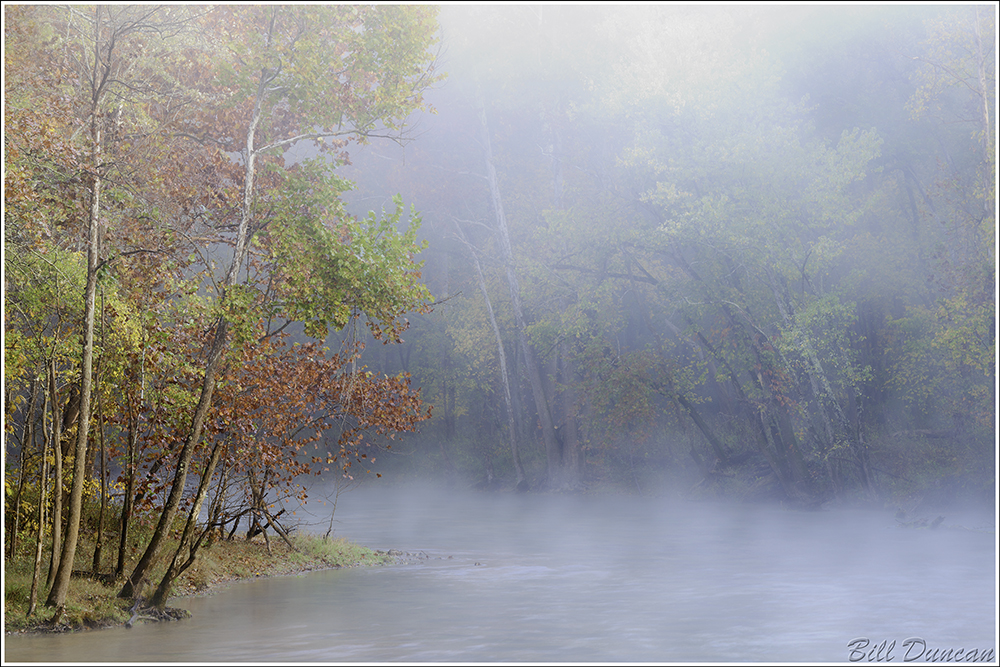
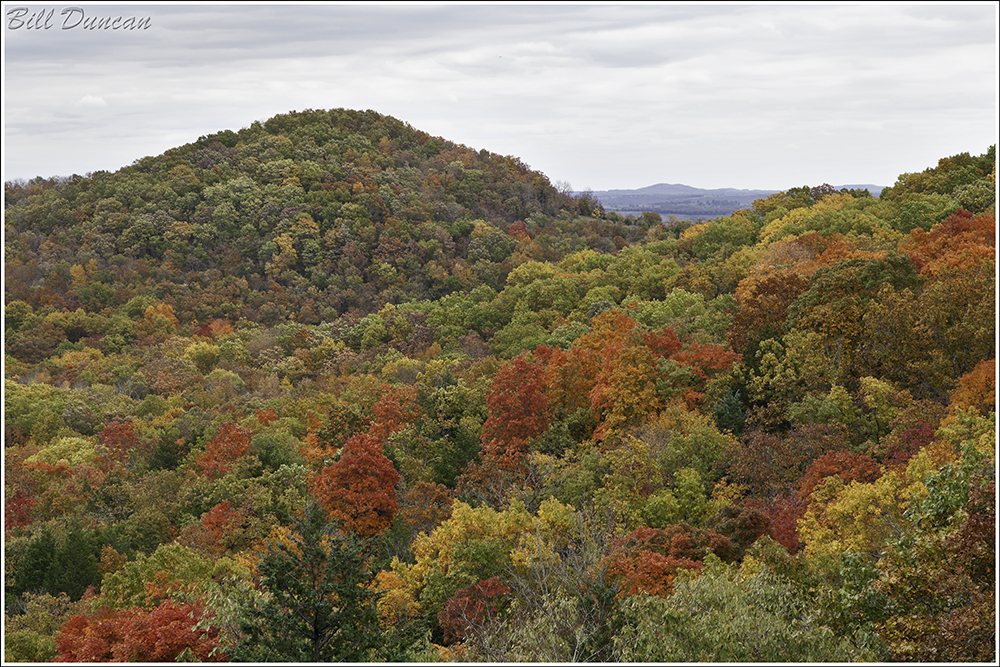
Located in the south-central Missouri Ozarks, Bryant Creek drains approximately 600 square miles, nearly half of which is comprised of high quality pine and deciduous timberland.  As is much of this part of Missouri, the remainder of this geography has been clear cut for use as cattle ground.  Bryant Creek is a fascinating little waterway and makes a great companion to the North Fork of the White River, its nearby companion to which it ultimately feeds.  I have not seen nearly enough of Bryant Creek or this section of the White River.  Both Ozark streams provide homes for river otters and the critically endangered Ozark Hellbender population.  Considered a losing stream, Bryant Creek is robbed of its limited water supply by the karst topography and several sections are often dry.  Reversely, major flash floods can be a threat during heavy rains and this stream is often sought out by lovers of white water.  During our autumn vacation, this view was along the roadside not too far from Hodgson Mill.

IMG_1836

“Bryant Creek, Autumn 2012″
Technical details: Canon EOS 5D Mark II camera, EF17-40mm f/4L USM @ 24mm, ISO 100,  f/11, 1/4 sec

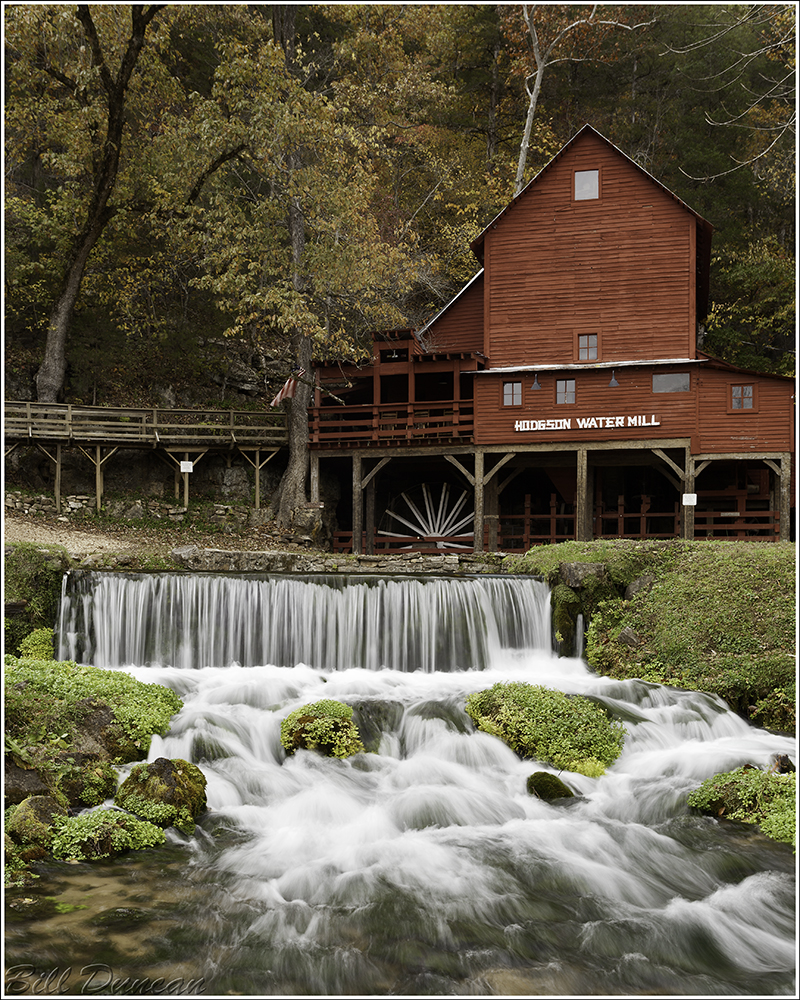
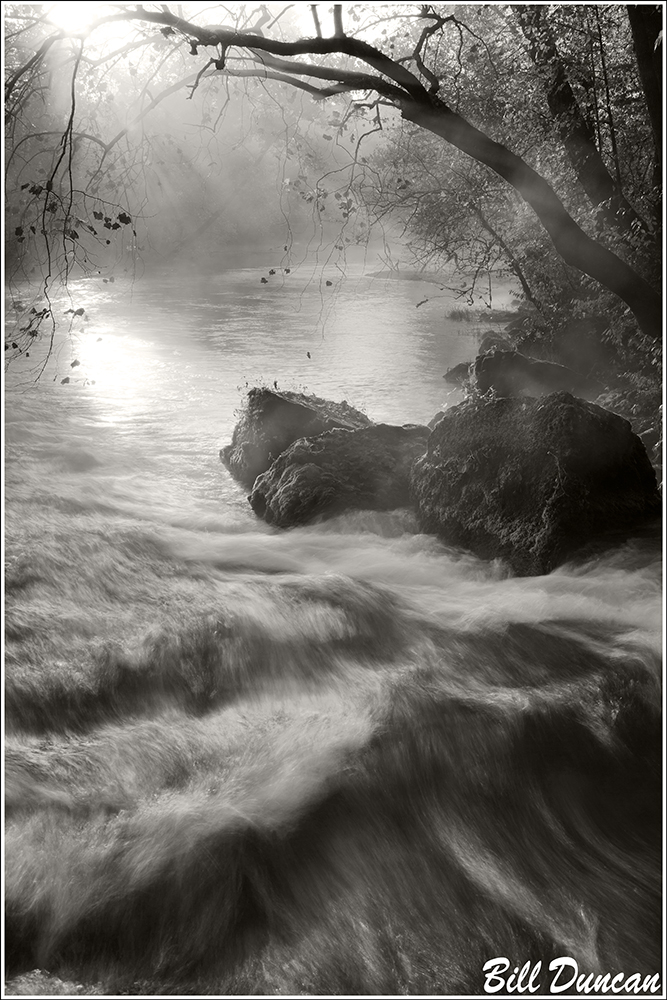
One of the major sources of water into Bryant Creek and later, the North Fork comes from the discharge of the Hodgson Spring.  Listed in the top 20 most productive Missouri springs, this spring powered the restored grist mill pictured here.  Although no longer a working mill, its likeness is still used to sell stone ground, whole grain flours under the name Hodgson Mill.

IMG_1832

“Hodgson Water Mill – Autumn 2012 II″
Technical details: Canon EOS 5D Mark II camera, EF17-40mm f/4L USM @ 33mm, ISO 100,  f/11, 1/4 sec

So this is Arkansas?

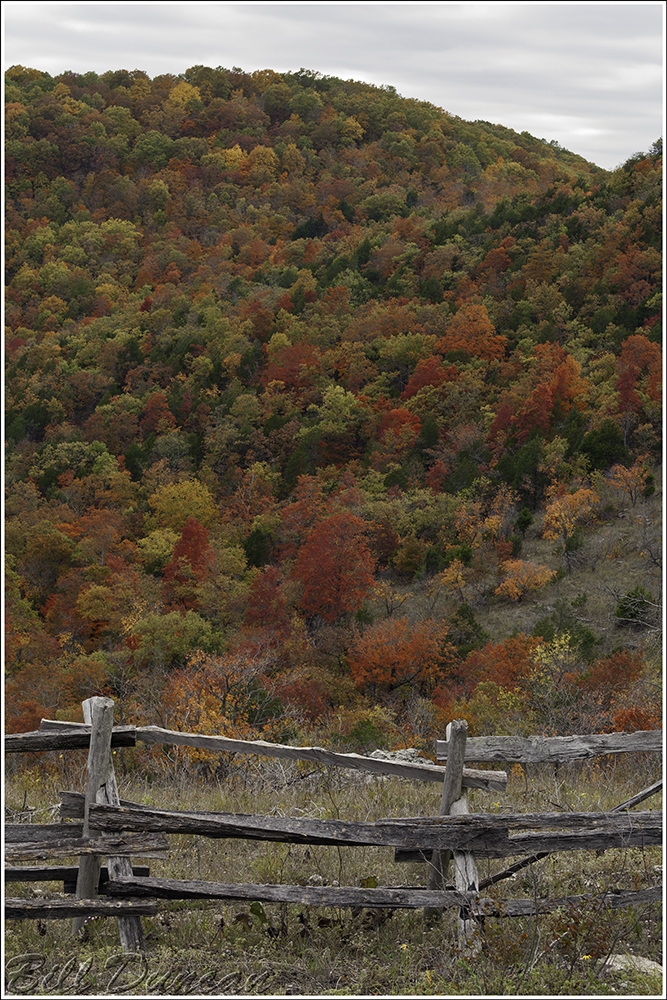
Along the Glade Top Trail looking southward at what I believe are the northern hills of the Boston Mountains.  I look forward to exploring more of Arkansas one day.

IMG_1866

“View of Boston Mountains, Autumn 2012″
Technical details: Canon EOS 5D Mark II camera, EF24-105mm f/4L IS USM @ 105mm, ISO 100,  f/11, 1/15 sec

The Nature Photographer Does Not “Sleep-in”

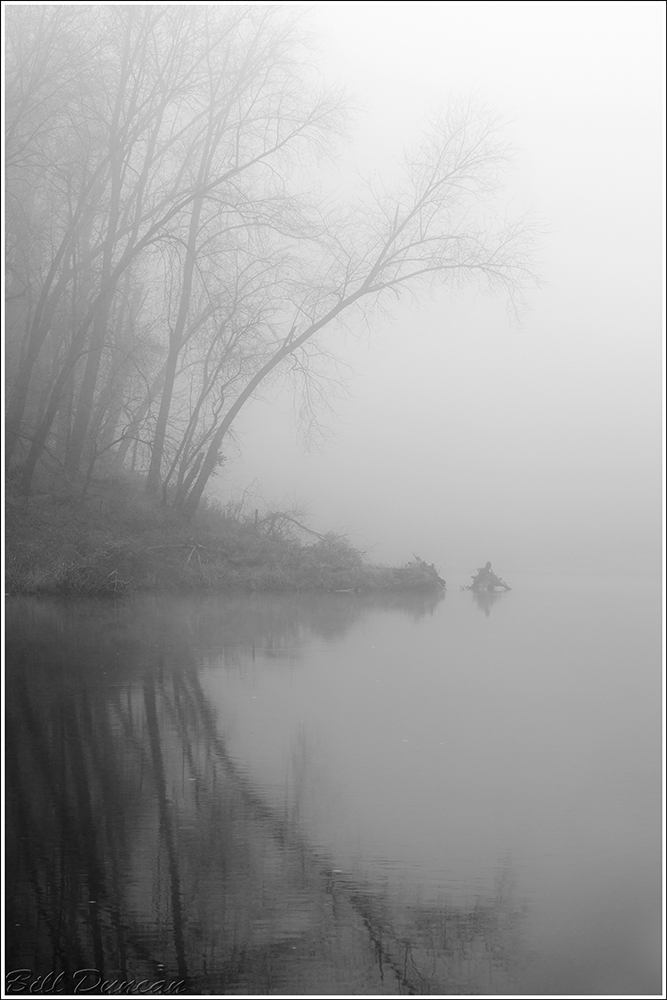
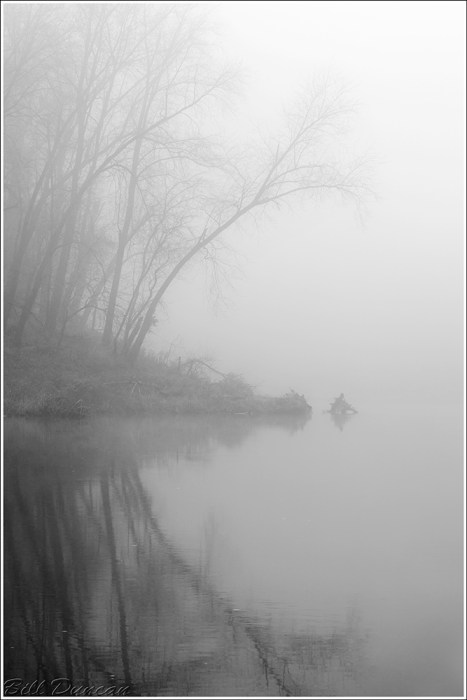
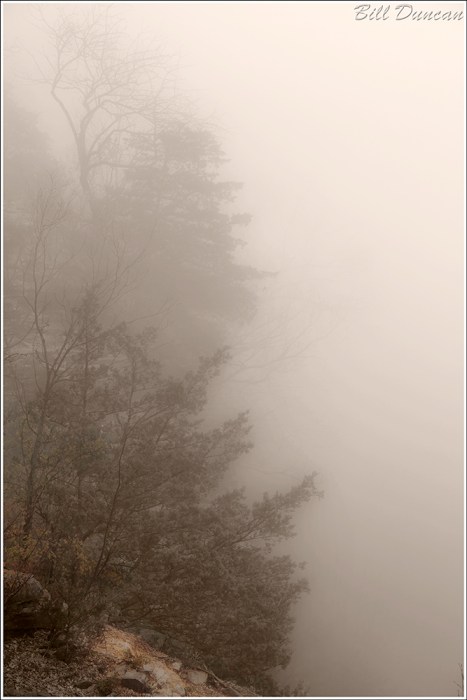
It’s the day before Thanksgiving.  I was fortunate again to be able to have most of the week off of work.  This day I decided I would allow myself the uncommon treat of “sleeping in” and catching up on some rest, allow myself some down time.  I rarely do this and I think it helps to “turn off” every now and then to help slow down, to say, it is OK to not be productive.  So that was the plan, and I even stayed up pretty late.  Then, just a scant few hours after I shut my eyes, I hear a voice, far off.  Eventually I realize it was Sarah trying to convey some sort of message.  I believe she had to repeat herself no fewer than four times before I comprehended – “The weather guy is saying this may likely be one of the foggiest days in St. Louis history.”  She knows I am a sucker for a foggy day.  Because we live so far from many of the great nature scenes, more often than not, I cannot get to a destination before the typical morning ephemeration has burned down.  Figuring this would likely be the case on this particular morning, I almost said forget it, and went back to sleep.  But, as Sarah knew, I would definitely have kicked myself repeatedly if I at least did not get out and try.  If nothing else, the least I would get is a nice hike on a beautiful morning.  I chose the relatively close Castlewood State Park.  Sarah and I had recently tackled a particularly scenic trail with bluff views along the Meramec River, and I knew that a thick fog could be used well for a dramatic composition.  Here are a few images I’ve had the opportunity to process so far.  My “immortal thanks” to Sarah for waking me and to Mr. Whitman for his lines that follow.
IMG_2249

“Retrospection″
Technical details: Canon EOS 5D Mark II camera, EF70-200mm f/4L IS USM @ 116mm, ISO 100,  f/14, 1/10 sec

To think of time – of all that retrospection,

To think of today, and the ages continued henceforward.

Have you guess’d you yourself would not continue?

Have you dreaded these earth beetles?

Have you fear’d the future would be nothing to you?
IMG_2228

“The Beginningless Past″
Technical details: Canon EOS 5D Mark II camera, EF70-200mm f/4L IS USM @ 135mm, ISO 100,  f/13, 1/8 sec

Is today nothing? is the beginningless past nothing?

If the future is nothing they are just as surely nothing.

To think that the sun rose in the east – that men and women were flexible, real, alive – that everything was alive,

To think that you and I did not see, feel, think, nor bear our part,

To think that we are now here and bear our part.

Not a day passes, not a minute or second without an accouchement,

Not a day passes, not a minute or second without a corpse.
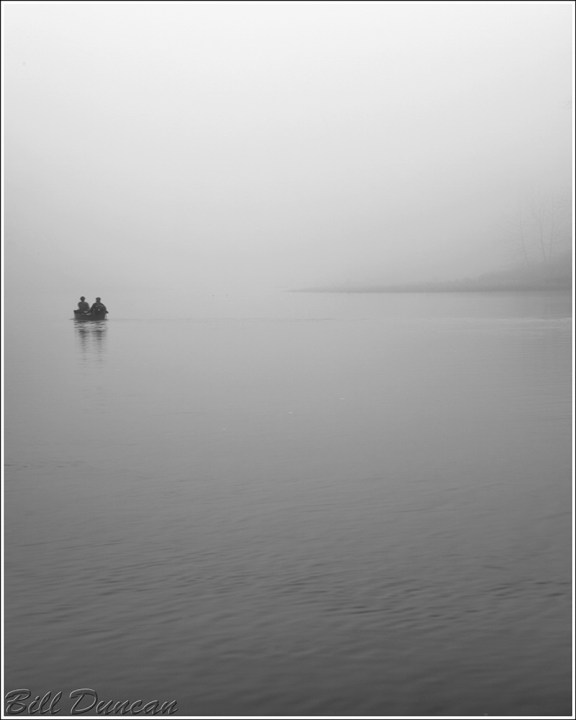
IMG_2269

“To Think of Time″
Technical details: Canon EOS 5D Mark II camera, EF24-105mm f/4L IS USM @ 105mm, ISO 100,  f/14, 1/8 sec

To think the thought of death merged in the thought of materials,

To think of all these wonders of city and country, and others taking great interest in them, and we taking no interest in them.

To think how eager we are in building our houses,

To think others shall be just as eager, and we quite indifferent.

Slow-moving and black lines creep over the whole earth – they never cease – they are the burial lines,

He that was President was buried, and he that is now President shall surely be buried.
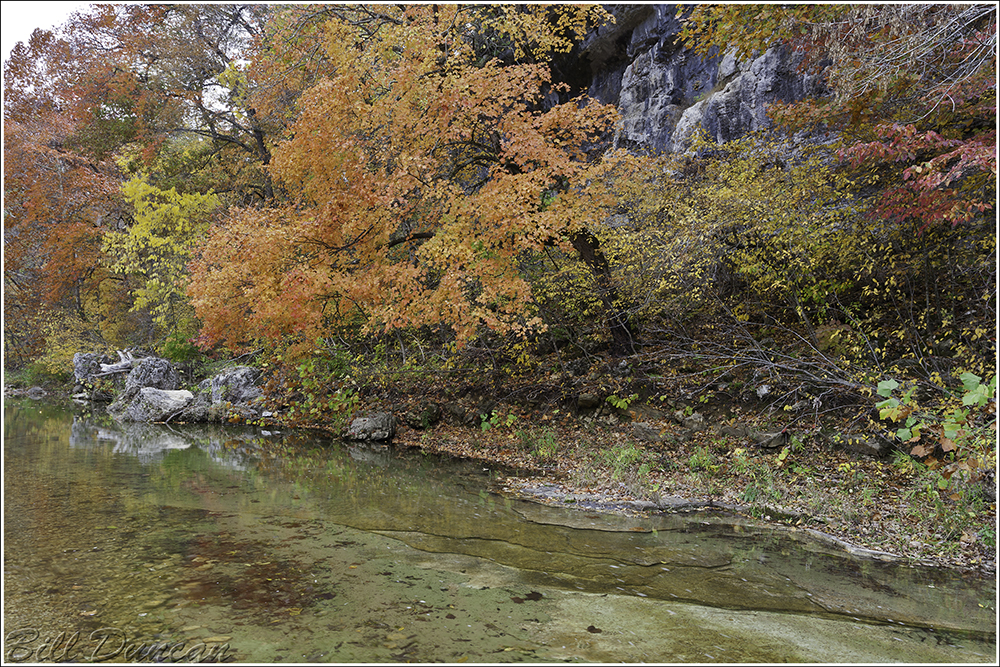
Currently I Dream…

“The trophy-recreationist has peculiarities that contribute in subtle ways to his own undoing.  To enjoy he must possess, invade, appropriate.  Hence the wilderness that he cannot personally see has no value to him.  Hence the universal assumption that an unused hinterland is rendering no purpose to society.  To those devoid of imagination, a blank space on a map is a useless waste; to others, the most valuable part.  (Is my share in Alaska worthless to me because I will never go there?  Do I need a road to show me the arctic prairies, the goose pastures of the Yuckon, the Kodiak bear, the sheep meadows behind McKinley?)”

-Aldo Leopold-

IMG_1645

“Currently I Dream…″
Technical details: Canon EOS 5D Mark II camera, EF70-200mm f/4L IS USM @ 165mm, ISO 100,  f/13, 1.3 sec

Look for it…

“All this you surely will see, and much more, if you are prepared to see it, -if you look for it.  Otherwise, regular and universal as this phenomenon is, whether you stand on the hill-top or in the hollow, you will think for threescore years and ten that all the wood is, at this season, sear and brown.  Objects are concealed from our view, not so much because they are out of the course of our visual ray as because we do not bring our minds and eyes to bear on them; for there is no power to see in the eye itself, any more than in any other jelly.  We do not realize how far and widely, or how near and narrowly, we are to look.  The greater part of the phenomena of Nature are for this reason concealed from us all our lives.”

-Henry David Thoreau-

IMG_1883

“More Painted Leaves″
Technical details: Canon EOS 5D Mark II camera, EF24-105mm f/4L IS USM @ 75mm, ISO 100,  f/11, 1/13 sec

Painted Leaves

“October is the month of painted leaves.  Their rich glow now flashes around the world.  As fruit and leaves and the day itself acquire a bright tint just before they fall, so the year near its setting.  October is its sunset sky; November the later twilight.”

-Henry David Thoreau-

More and more I’m beginning to appreciate HDT’s recurring theme of matching the development and maturity of flowers, fruits and even leaves and shoots of plants together as analogous cycles in nature.  This is an idea he writes about in several pieces.  In the passage above, he takes it a step further and shows the similarities the course of seasons within the year has with the progression of a single day.  Simple, but I like it.  The colors and changes so dramatic in spring and fall are like those of sunrise/sunset.  The high sun and heat of the day are so like a long, hot temperate summer, while winter is of course equated to night.  Of course, this metaphor only makes sense in the temperate zones of our planet, but I like it.

IMG_1855

“Painted Leaves″
Technical details: Canon EOS 5D Mark II camera, EF24-105mm f/4L IS USM @ 100mm, ISO 100,  f/13, 1/10 sec

One Grand Palimpsest

“When a page is written over but once it may be easily read; but if it be written over and over with characters of every size and style, it soon becomes unreadable, although not a single confused meaningless mark or thought may concur among all the written characters to mar its perfection.  Our limited powers are similarly perplexed and overtaxed in reading the inexhaustible pages of nature, for they are written over and over uncountable times, written in characters of every size and colour, sentences composed of sentences, every part of a character a sentence.  There is not a fragment in nature, for every relative fragment of one thing is a full harmonious unit in itself.  All together form the one grand palimpsest of the world.”

-John Muir-

IMG_1648 - 49

“One Grand Palimpsest″
Technical details: Canon EOS 5D Mark II camera, EF24-105mm f/4L IS USM @ 45mm, ISO 100,  f/14, manual blend of two exposures

A Foggy Day in the Missouri Ozarks

“Probably if our lives were more conformed to nature, we should not need to defend ourselves against her heats and colds, but find her our constant nurse and friend, as do plants and quadrupeds.”

-Henry David Thoreau-

Fog

“Fog″
Technical details: Canon EOS 5D Mark II camera, EF70-200mm f/4L IS USM @ 200mm, ISO 100,  f/14, 1/8 sec

October’s Warmth

“We love to see any redness in the vegetation of the temperate zone. It is the color of colors. This plant speaks to our blood. It asks a bright sun on it to make it show to best advantage, and it must be seen at this season of the year.”

-Henry David Thoreau-

“October’s Warmth″
Technical details: Canon EOS 5D Mark II camera, EF70-200mm f/4L IS USM @ 135mm, ISO 160,  f/16, 10 sec