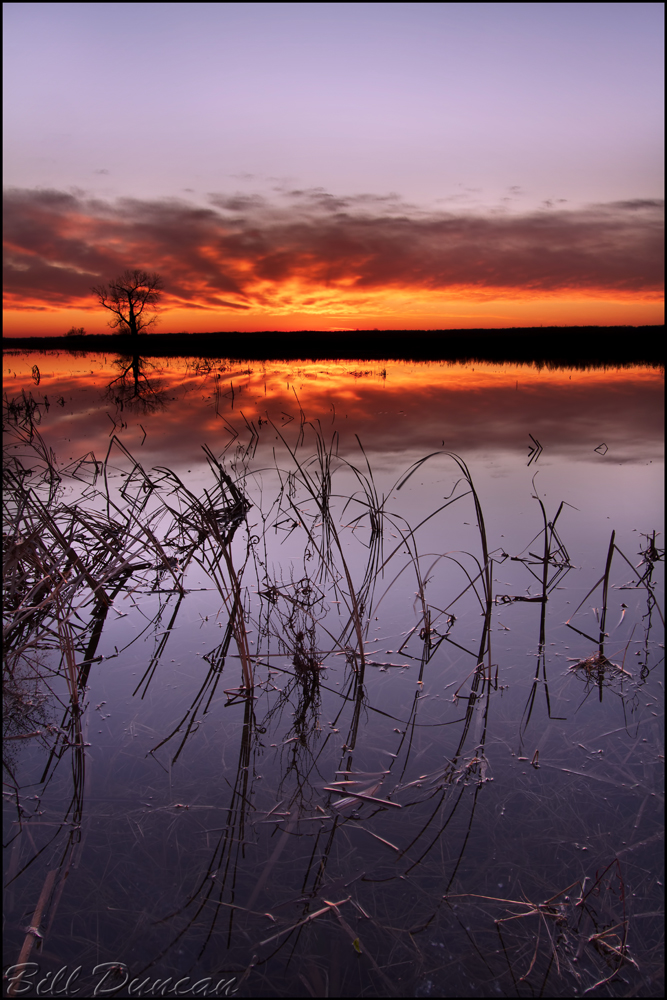
Location Spotlight: Rock Between Two Soft Places

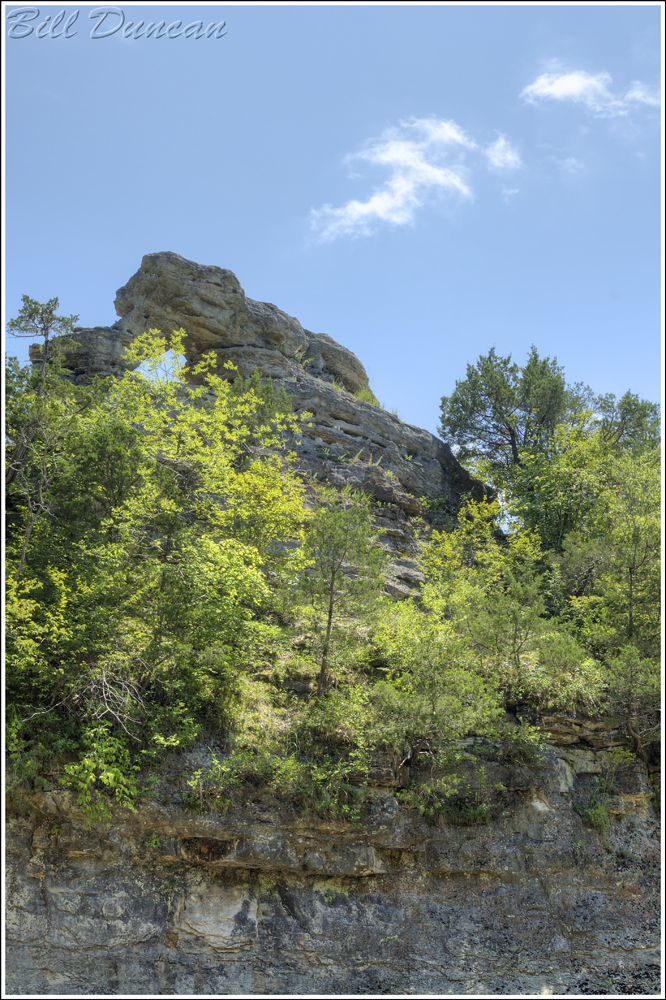
The Pinnacles, also known as “Boone County Pinnacles Youth Park” is a Missouri State Designated Natural Area located approximately 12 miles north of Columbia.  The geologic structures know as The Pinnacles formed between two parallel Ozark streams, Silver Fork and Rocky Fork.  These streams running closer and closer to one another have formed this erosional structure (senile ridge) that is approximately 75′ high and 1000′ in length.
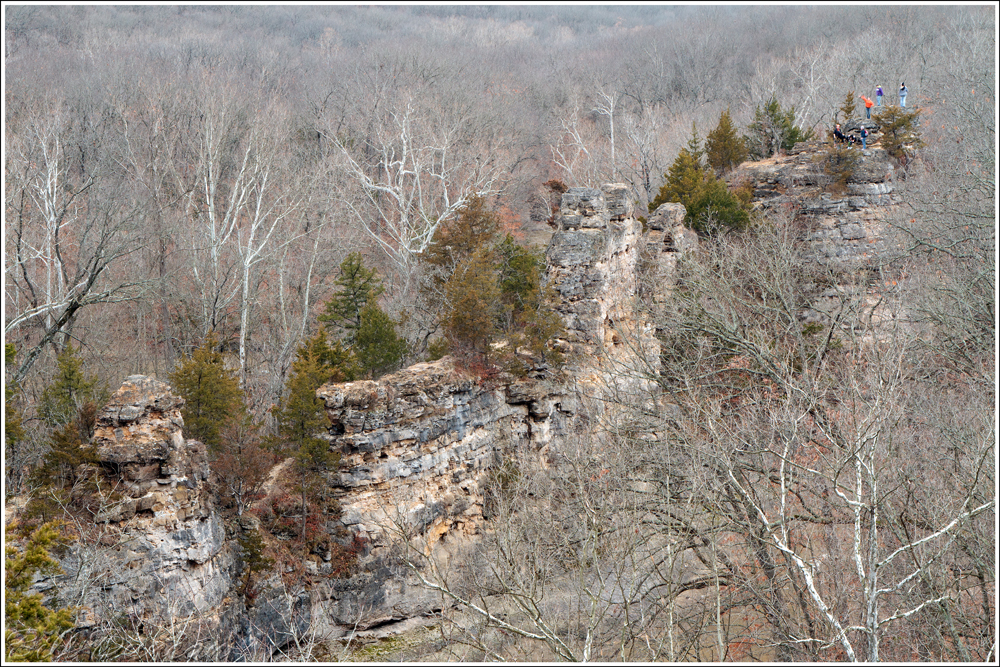
Technical details: Canon EOS 7D camera, EF24-105mm f/4L IS USM lens @ 60mm, ISO 160,  f/13, 1/4 sec

The Pinnacles are composed primarily of Burlington Limestone, with a small amount of sandstone to act as a “cement” in some places.  This fact was the inspiration of the title of this post.  These two streams are quite quickly, in a geological perspective, eroding this separation between them.  Limestones are very easily eroded by forces of weather and flowing water.  On this visit I easily found fossil crinoids in the rock, a feature Burlington limestone is known for.

Technical details: Canon EOS 7D camera, EF24-105mm f/4L IS USM lens @ 24mm, ISO 160,  f/18, 1/4 sec

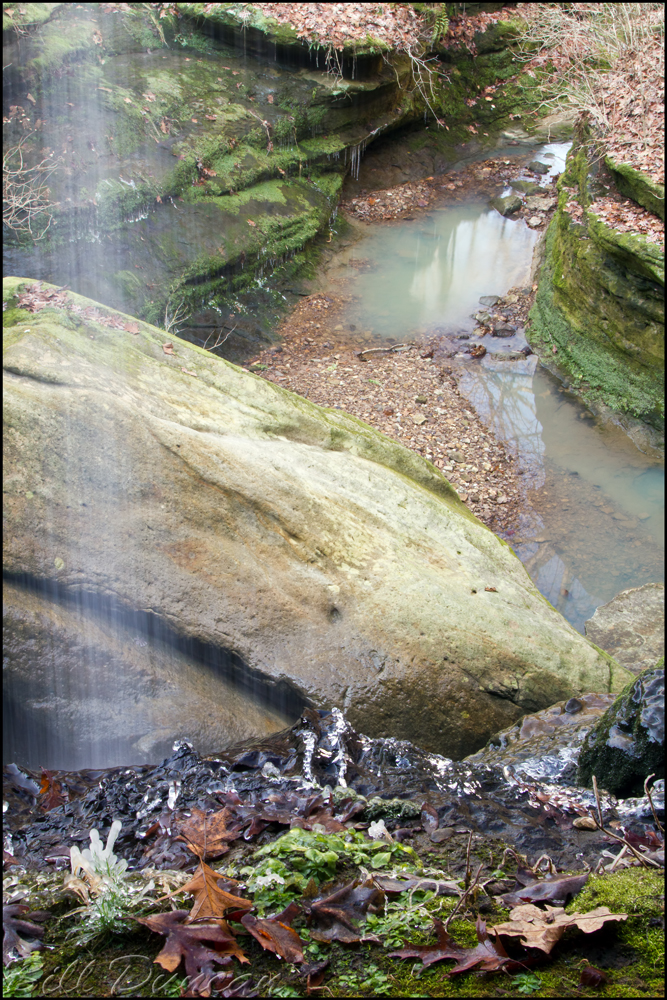
The most recent time I visited here the weather was quite poor.  During one of the sporadic sleet and freezing rain showers I took shelter under one of the windows, or natural arches, that erosion has carved in the rock.  While I was waiting out the weather I was able to take a close look at the composing rock.  The amount of cracks and other signs of erosion was eye-opening.  While I was sitting there, bits and pieces of rock were literally falling off the overhanging arch and landing around me.  It takes little imagination to realize the effects that changing mid-western seasons along with ebbing flows of the streams are having on this feature.  Geologists reckon this rock feature has only a couple thousand years left, so if you plan on visiting, do it soon!
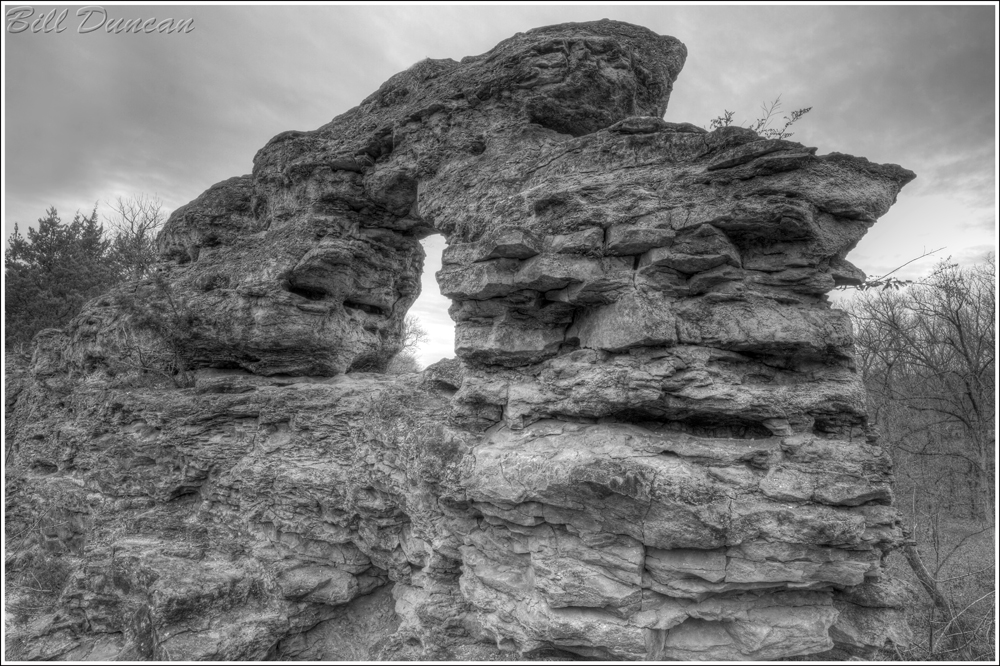
Technical details: Canon EOS 7D camera, EFS10-22mm f/3.5-4.5L IS USM lens @ 13mm, ISO 160,  f/16, HDR blend of two images

If you do plan on visiting and bushwhacking your way across the stream and up onto the rocks, take care!  There are numerous spots that one wrong step could potentially be your last.  On top of the risks of being swept away by high water in crossing the stream and falling from the top of one these spires, there is the usual risk associated with the Northern Missouri Ozarks – private property.  Apparently one side of this site is bounded by a stretch of property owned by a particularly cranky old man.  I was warned by a regular visitor to stay clear of that side of the park as he will not hesitate to accost hikers that stray too far.  Unfortunately one of the two shallow spots I have found to cross the stream is located in what seems to be his property.
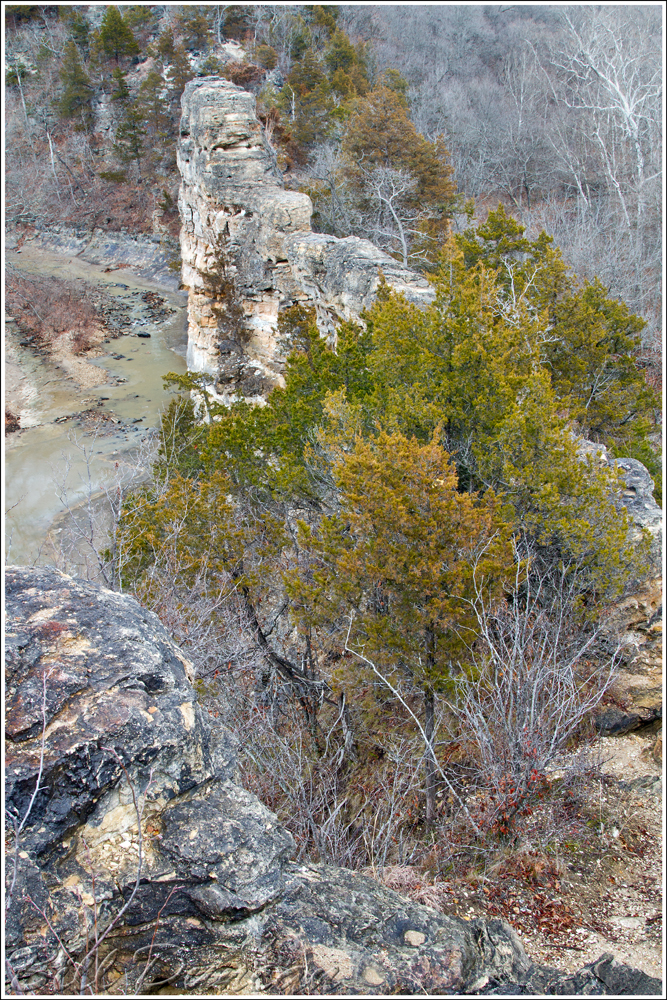
Technical details: Canon EOS 7D camera, EF24-105mm f/4L IS USM lens @ 28mm, ISO 160,  f/16, 1/2 sec

The eastern red cedar, which is really a juniper, loves limestone.  This species is a long-lived pioneer invader that will be one of the first trees to grow in a disturbed area or any area that other species find undesirable.  Because it will grow in crevices along bluffs and shallow, rocky soils that often lack resources needed to grow quick and large, small trees can often be over 600 years old.  In fact, the oldest documented individual of this species was recorded in Missouri and was found to be 795 years old!  This species is currently taking over much of Missouri’s knob-top glades found throughout the Ozarks.  Cedar is not tolerant of fire and the suppression of natural and man-made fires on modern private land as well as public lands such as the Mark Twain National Forest is allowing cedars to take hold in these habitats where they were historically controlled.  But, this is a subject for another post.
Technical details: Canon EOS 50D camera, EF17-40mm f/4L IS USM lens @ 28mm, ISO 100,  f/16, HDR blend of four images

Just a stone’s throw south of The Pinnacles is a “shelving rock” style of shut-in (not pictured).  This feature was formed by erosional forces of Silver Fork as the creek runs dead-on into limestone bedrock and is forced to make a sharp left turn.  This shelter is 40′ deep, 10′ high and 125′ long.  Although it looks like the shelter is often flooded during high waters, I am sure this was used by pre-Colombian man.

The Pinnacles is another destination for the landscape photographer in the Missouri Ozarks that offers a diversity of photo ops depending on time of day, weather and the season.  It is also a high quality biological habitat even though it is so close to a a major metropolitan area.  With luck and continued proper management this location will continue to be a place visitors can come to appreciate the geologic and natural features that the Missouri Ozarks offers and once offered in much greater abundance.

Much of the information used in this post was found in “Geologic Wonders and Curiosities of Missouri” by Thomas R. Beveredge.  This is a highly prized book in my collection.  I only wish someone would update and revise with GPS coordinates!


Location Spotlight: Johnson’s Shut-Ins State Park

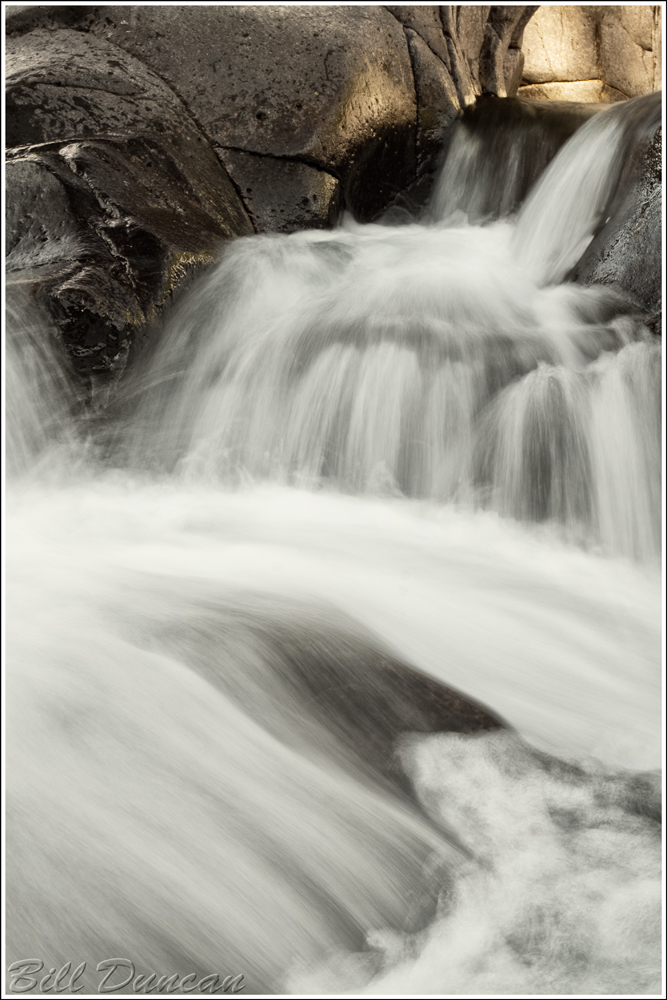
Located near Graniteville in Reynolds Co, MO Johnson’s Shut-Ins is one of the largest and pleasingly aesthetic shut-ins found in the state.  This is another spot found in the geologically intriguing St. Francois Mountains of the Missouri Ozarks.  Formed by one of the meandering forks of the Black River, cascades, chutes and potholes have been formed in Taumsauk rhyolite, the ~1.5 billion year old rock that makes up the majority of this spectacular geologic feature.  This rhyolite, which is a cousin to granite, is extremely hard and resistant to wear, so the water acts mostly upon joints or fractures in the rock and carves these areas down smooth to form the Ozark’s recreational fun zone that many people enjoy today.

Technical details: Canon EOS 50D camera, EF17-40mm f/4L USM lens @ 17mm, ISO 100,  f/16, 0.6 sec

Unfortunately, this park was irreversibly changed following the December 2005 disaster when a wall of the Ameren UE hydroelectric reservoir failed and a resulting 1.3 billion gallons of water ravaged the Johnson’s Shut-In SP and surrounding area.  This water rushed down the hillsides in less than 12 minutes.

Technical details: Canon EOS 50D camera, EF70-200mm f/2.8L USM @ 105mm, ISO 100,  f/13, 2 sec

A true example of an anthropogenic induced disaster upon nature, the water scoured everything in its path down the Profit Mountain slopes to clean bedrock.  This resulted in the loss of near pristine habitat that made up several officially designated Natural Areas, but has given geologists an interesting, uninterrupted view of the granites, rhyolites, sandstones and dolomites that are the primary rocks of the St. Francis Mountains.

Technical details: Canon EOS 50D camera, EF17-40mm f/4L USM @ 17mm, ISO 100,  f/16, 1/8 sec

Do a web search to view images immediately following the disaster and you can see it is amazing that the area was able to be cleaned up and facilities rebuilt to the current state that they are about six years later.  There is a boulder field near the current entrance to the State Park.  I was told by a Park official those boulders weigh in the neighborhood of three to 30 tons a piece and that none of them are close to the same place they had been prior to the disaster.

Technical details: Canon EOS 50D camera, EF17-40mm f/4L USM @ 38mm, ISO 100,  f/16, 0.3 sec

I’ve seen some amazing photographs taken before the reservoir collapse contrasting the shut-ins against maple trees in brilliant autumn foliage.  It seems most of the maples around this spot are gone and there hasn’t been a very good autumn show here in the four or so years I’ve been interested in nature photography.  This is a real shame.  However, when I think about these types of disasters, whether man-made or natural I try and put it into a geological or biological perspective.  In these perspectives this type of disaster is a temporary change or setback.  In the equivalent moment of a breath of the earth this type of activity will be erased from the landscape and nothing but the slightest evidence or mere suggestion of this event shall be evident.

Of course, with the continuing onslaught of the human landscape, these events, multiplied over small number of generations are leading to devastating changes to the biosphere and are adding up to what looks to be one of the six largest extinction events in history.  Considering the primary purpose of this reservoir is to provide extra power to the St. Louis Metropolis, it makes me wonder how long civilization will continue to take and take from the commons without giving serious consideration to the important things.

Technical details: Canon EOS 50D camera, EF17-40mm f/4L USM @ 17mm, ISO 100,  f/18, 1/4 sec

Do I have to say this is a location I will be visiting for as long as I’m able?

Limitless Composition

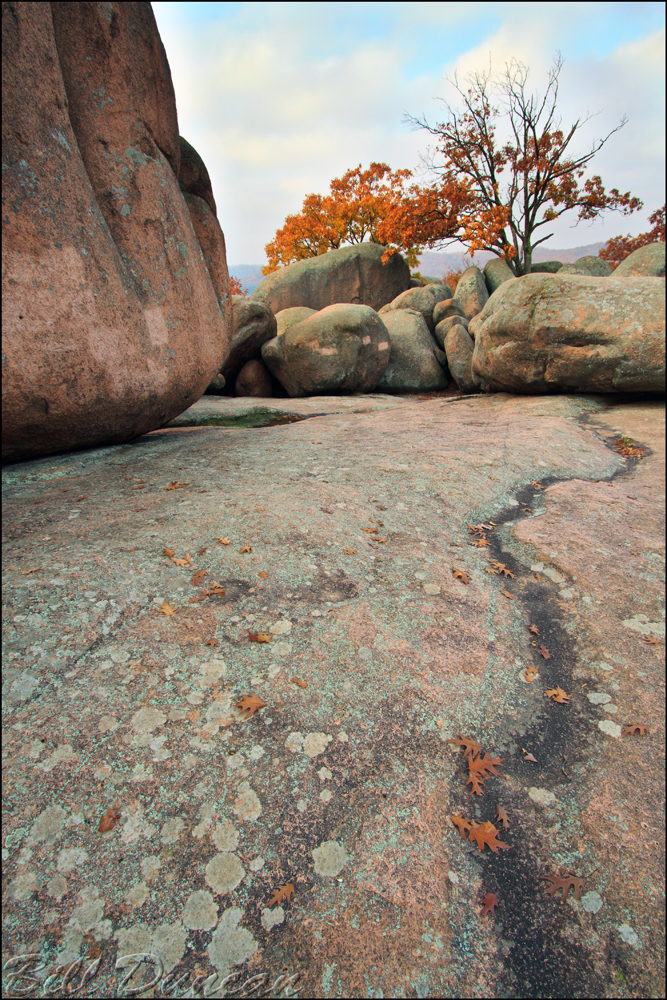
I’ve been paying a lot more attention to Elephant Rocks State Park lately.  I am seeing there is a never ending supply of potential terrific photographic compositions (not that the one below is one of these).  Add all the potential compositions with all the variables that light can bring to this place and throw in the different seasons and potentials for weather and you wind up with a place I should be visiting at least once a week!  I need to find out how to make this happen.  😉

This image was obviously taken with a wide focal length and is a composite of a couple different exposures so that I could keep some detail in this amazing autumn sky.  Some oak leaves contribute with lichen and the natural texture of the rocks for some foreground interest, and a dark lead-in line is present created by what I believe is a path water has drained off this shelf for who knows how many years?

While visiting one of my favorite places in the St. Francois Mountains, Lower Rock Creek Wilderness, I met a father and son visiting the Ozarks for the first time from Wisconsin.  I was able to give them suggestions for other places to see during their short visit, Elephant Rocks being one of them.  Needless to say they thought this location was fascinating and them, I and many others finished the day by watching a spectacular sunset amongst the boulders.

Technical details: Canon EOS 7D camera, EF-S10-22mm f/3.5-4.5 USM lens @ 11mm, ISO 100,  f/16, 1/15 sec

Winter’s Bone

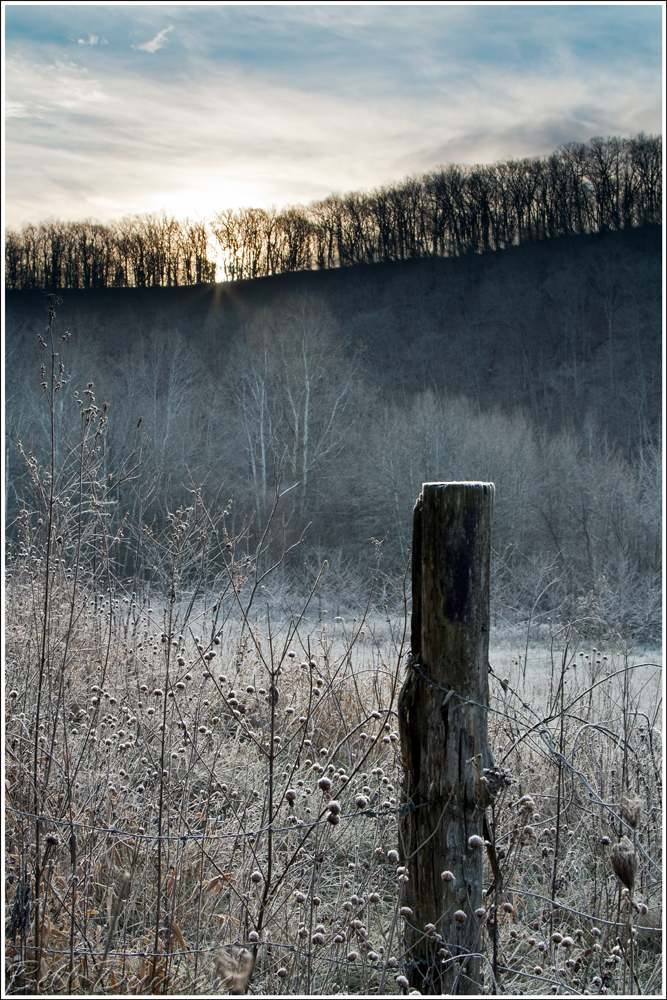
I found this spot on a recent scouting trip in Warren County over the holiday break.  When I was driving on the higher main roads the outside thermometer on my all-wheel drive all the time Subaru Forester read 33 degrees.  When I reached this spot down near the bottom of the holler, it read 16 F.  This was probably the coldest weather I experienced in this so-called winter we are having.  I saw the frost-touched post, barbed-wire and vegetation with the forested hill and the sun rising beyond that and of course I had an opportunity to try my new graduated ND filters.  If you’ve ever tried to do intricate photography or any other kind of work in such temperatures then you know how challenging this can be.  Overall, this trip yielded some interesting images even though I discovered my main sought after location looks to be surrounded by private property and I did not press my luck in getting there.

Technical details: Canon EOS 7D camera, EF24-105mm f/4L IS USM lens @ 35mm, ISO 100,  f/14, 1/10 sec

“The sky lay dark and low so a hawk circling overhead floated in and out of clouds.  The wind heaved and knocked the hood from her head.  That hawk was riding the heaving wind looking to kill something, rip it bloody, chew the tasty parts, let the bones drop”

-Daniel Woodrell

“Winter’s Bone”

Stone Mill Spring

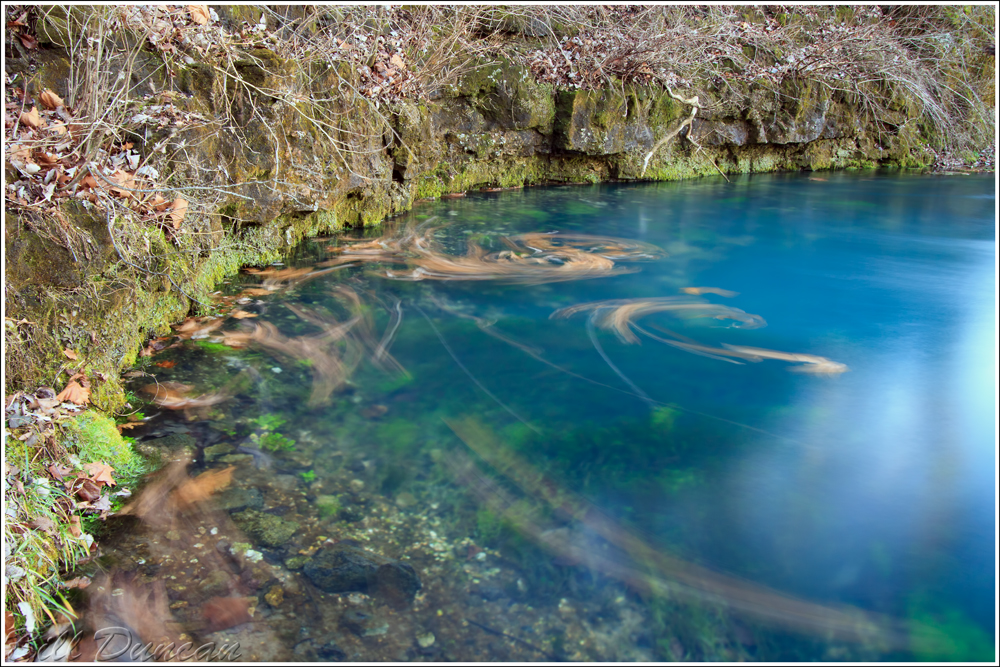
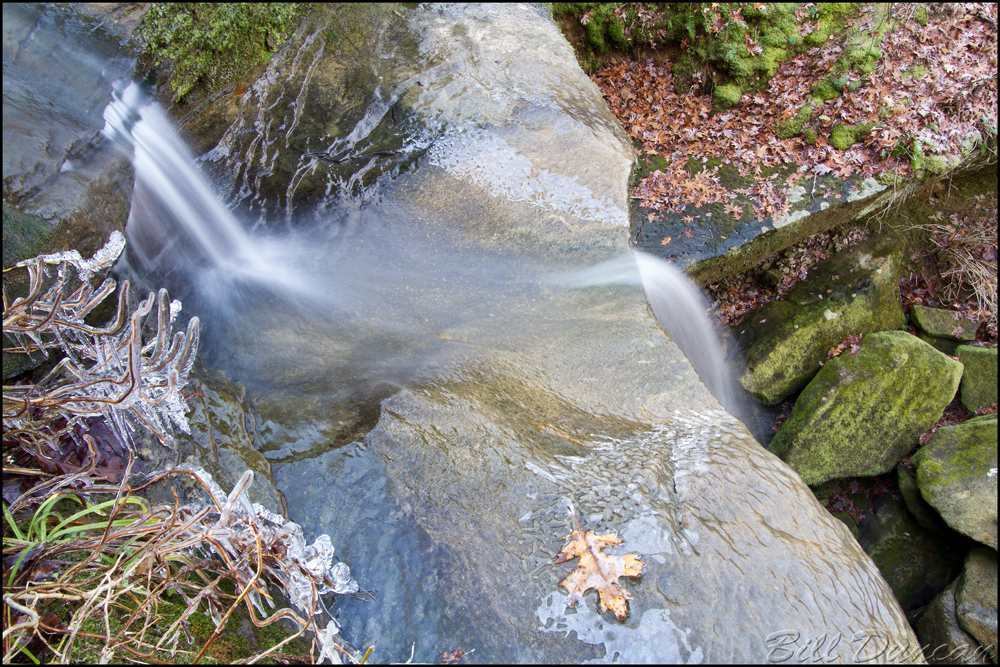
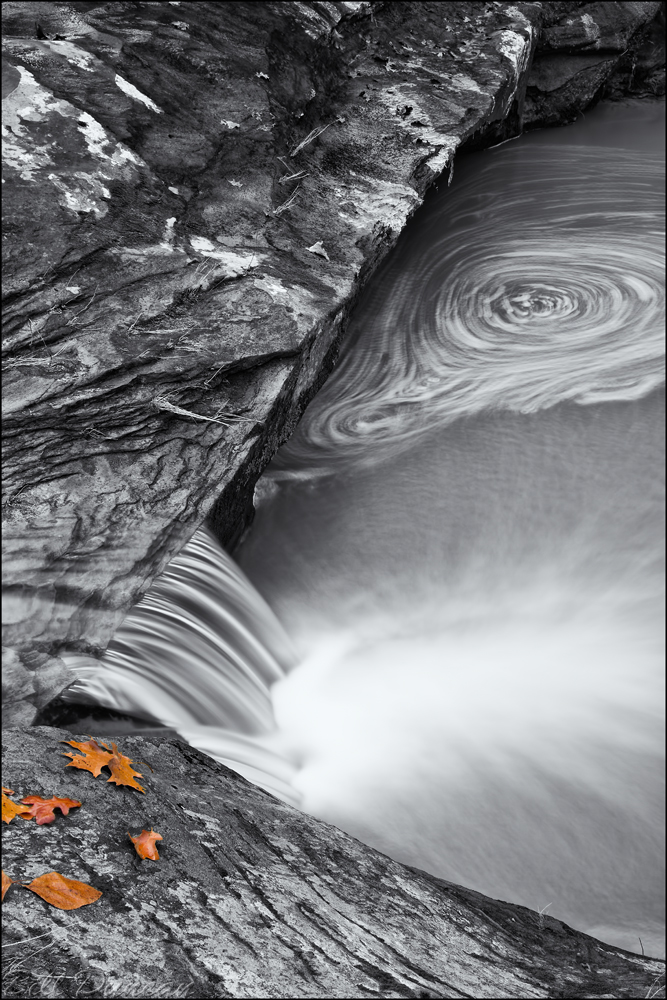
Making more of a scouting and hiking trip across the northern Ozarks I visited Stone Mill Spring inside Fort Leonard Wood in Pulaski County this week.  This spring feeds into the Big Piney River and like many Ozark springs comes out of the base of a steep rock wall.  On this visit the wind and currents from the spring were moving fallen oak leaves across the surface of the pool.  I took advantage of this by setting the camera with a long shutter speed to bring some sense of movement to the image.  I believe this spot may be worth a spring time visit in the future.

Technical details: Canon EOS 7D camera, EF-S10-22mm f/3.5-4.5 USM lens @ 17mm, ISO 160,  f/14, 13 sec

Location Spotlight: Piney Creek Ravine Nature Preserve – Part One

In the north-western region of the Shawnee National Forest of Illinois lies one of my latest finds.  Located south-east of Chester, Illinois (birthplace of Popeye the Sailor) Piney Creek Nature Preserve will undoubtedly provide plenty of opportunities for me to spend my time during any season of the year.  This place is special due to the geological and biological wonders it hides amidst the seemingly endless seas of corn and soybeans that pack every flat place Illinois has to offer.

Technical details: Canon EOS 7D camera, EF-S10-22mm f/3.5-4.5 USM lens @ 18mm, ISO 160,  f/14, 1.6 sec

Unlike the tall bluffs and hills of the Shawnee region further to the south, this spot was subjected to recent glacial activity and the ravine was partly created by glacial melt-waters eating away at the sandstone – the primary rock of Southern Illinois.  The vegetation found here is more similar to that seen in the Missouri Ozarks to the West than that of the Shawnee region to the South-east.  This is one of only a few places in Illinois the short-leaf pine can be found naturally.

Technical details: Canon EOS 7D camera, EF24-105mm f/4L IS USM lens @ 32mm, ISO 320,  f/20, 1.3 sec

I have not yet been here during the growing season but it looks and sounds to be a very high-quality natural site.  I’m sure this will be a place for finding spring time ephemerals as well as summer wildflowers; however, the geology is the star of this attraction.  I’ve hiked this ~two-mile trail twice and I’m not even close to understanding the path of the streams and the contours of the canyon walls, or how many waterfalls can be found here.

Technical details: Canon EOS 7D camera, EF24-105mm f/4L IS USM lens @ 28mm, ISO 100,  f/11, 1/4 sec

The hike is wonderful, although caution must be taken.  Hiking up and down the and along the rim of the canyon provides amazing views of this natural amphitheater in winter.  Going bushwhacking to obtain better viewpoints of the geological, biological and archeological (petroglyphs and pictographs from 500-1550 Common Era are located at this preserve) subjects can be risky.  Similar to the nearby “Little Grand Canyon” there are plenty of ways to get yourself seriously injured or killed in this ravine.  Boots equipped with extra traction devices (i.e. crampons) are recommended for hiking in sub-freezing temperatures and felt-bottomed footwear is definitely useful when walking over the biology-covered slick rocks of the stream floor.

Technical details: Canon EOS 7D camera, EF24-105mm f/4L IS USM lens @ 28mm, ISO 100,  f/14, 6 sec

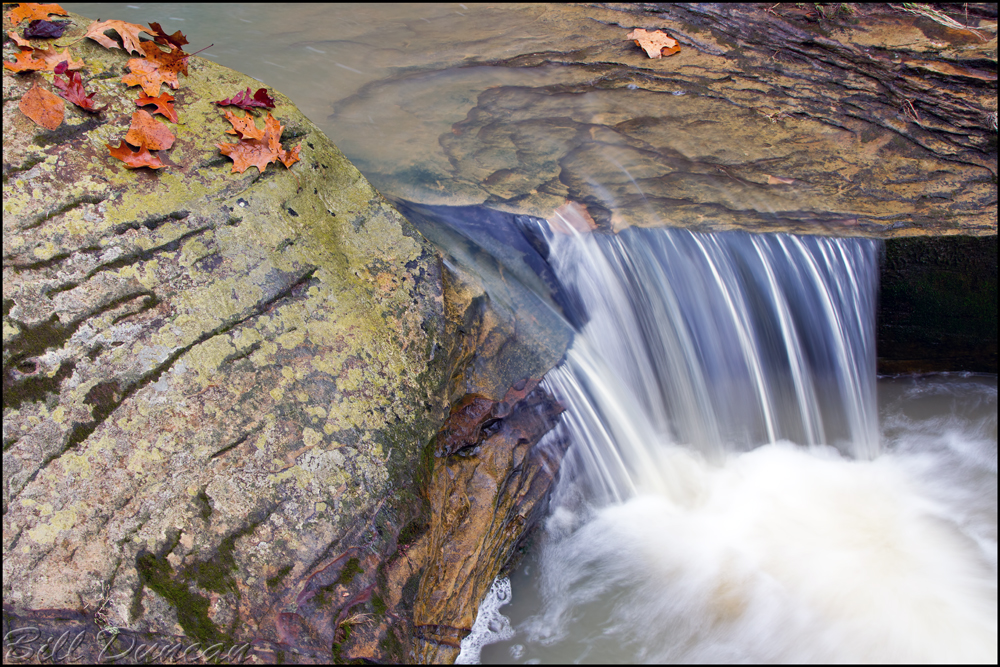
I was fortunate to be able to visit this spot about a week or two later.  This second visit was after a period of rain for about 24 hours followed by a brief-lasting snow.  The extra water and the freshly fallen snow (I arrived just when the snow stopped) made this place look entirely new and different.

Piney Creek Ravine is relatively close (1.5 hour drive) and I definitely look forward to many more trips here and to the other beautiful locations that the Shawnee National Forest in Southern Illinois has to offer.

I just hope nobody figures out how to grow corn in a ravine like this.  😉

Ozark Dynamism

Elephant Rocks is one of my favorite locations in the Missouri Ozarks to visit and make photographs.  I don’t think it’s a big surprise that this would be true for many nature lovers/photographers.  I love the fact that one can make good photographs here any season of the year and almost any time of day.  If you face the right direction you can find good light on a good composition on almost every visit, not just in the narrow window of the “golden hour”.  However, if you can get there with perfect light and an interesting sky the outcome can be better than good.  My favorite time to visit is early in the day.  This is not only for the better light, but for the fact that I have had the place entirely to myself for a couple or more hours on several occasions.

I was fortunate to find an interesting sky on this visit.  I found that converting this one to B&W really played the dynamic sky against the interesting texture of the boulders below.  Inscribed on one of the rocks you can see the name of one of the many quarry workers who harvested the granite species of rocks from the surrounding area.

Technical details: Canon EOS 50D camera, EF-S10-22mm f/3.5-4.5 USM lens @ 10mm, ISO 100,  f/16, 1/15 sec

Finding A Sunset

Columbia Bottom Conservation area, where this image was taken, and Riverlands Migratory Bird Sanctuary across the river are famous for the birds and other wildlife they support.  I have enjoyed birding these places, located at the confluence of North America’s two greatest rivers- the Missouri and the Mississippi, for more than five years now.  But, there is another reason I love being able to visit these locations.  These are two of the closest places near St. Louis to see open skies, open skies without hills, trees, building or too many power lines and utility poles.  I love shooting sunsets here because of the amount of sky that can be captured.  True, I did not cover much sky in this image.  This was due to the limited clouds in tonight’s sky.  If there were more clouds throughout the sky I would have loved to have let the sky cover two thirds or more of the frame.


It always saddens me when I’m driving to or from work and see one of the many spectacular sunsets or sunrises from the car and know I can’t be out in nature trying to experience that moment and capture it in a lasting image.


Technical details: Canon EOS 7D camera, EF-S10-22mm f/3.5-4.5 USM lens @ 16mm, ISO 100,  f/16, manual-HDR (7-images)

Alluvial Furnace

This image was taken on a chilly October morning as I was driving to make my first visit to Tower Rock Natural Area in Perry County near Altenburg, Missouri.  I am always looking for a nice composition I can capture that features fog or mist.  This rarely happens because it takes so long to drive from the city to a pleasing spot like this where fog may form.

Technical details: Canon EOS 50D camera, EF-S10-22mm f/3.5-4.5 USM lens @ 19mm, ISO 100,  f/14, 1/80 sec