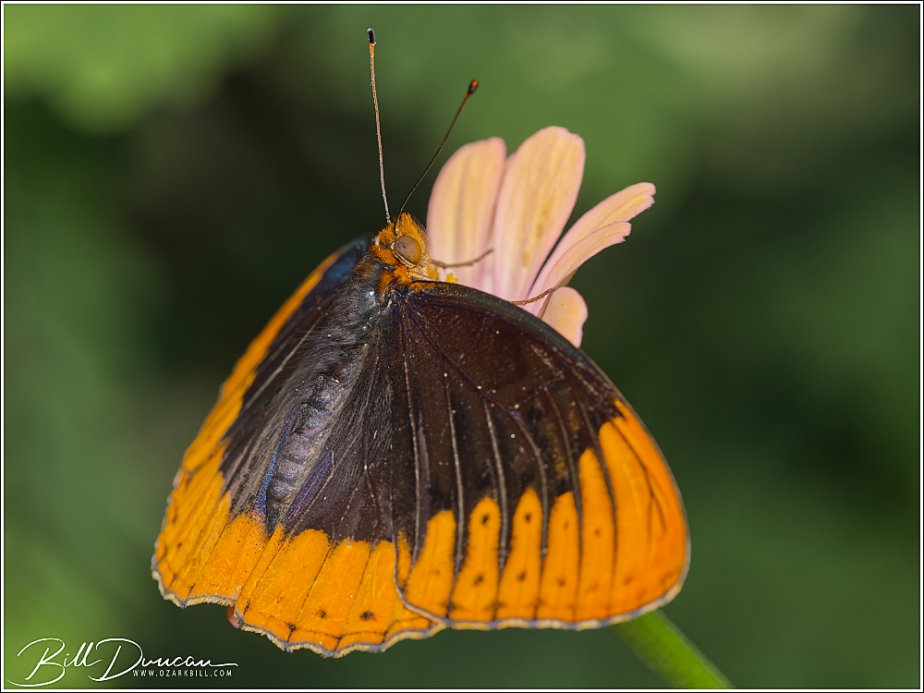
"What a thousand acres of Silphiums looked like when they tickled the bellies of the buffalo is a question never again to be answered, and perhaps not even asked." -Aldo Leopold
I’ll admit it, I will typically put members of the Geometridae right back on the plants that I found them on without taking any photos. The “inchworms” or “loopers” are typically very small and difficult to get a good photograph of. Additionally, species in this family tend to exhibit a great deal of variability in colors and patterns. To make matters even worse, members of this family tend to be polyphagous, or generalists when it comes to their host plants. These factors can make it quite difficult to accurately identify the specimens to species level when working only with photographs. However, this is a very important family when it comes to available biomass to birds and other predators in the spring and early summer.
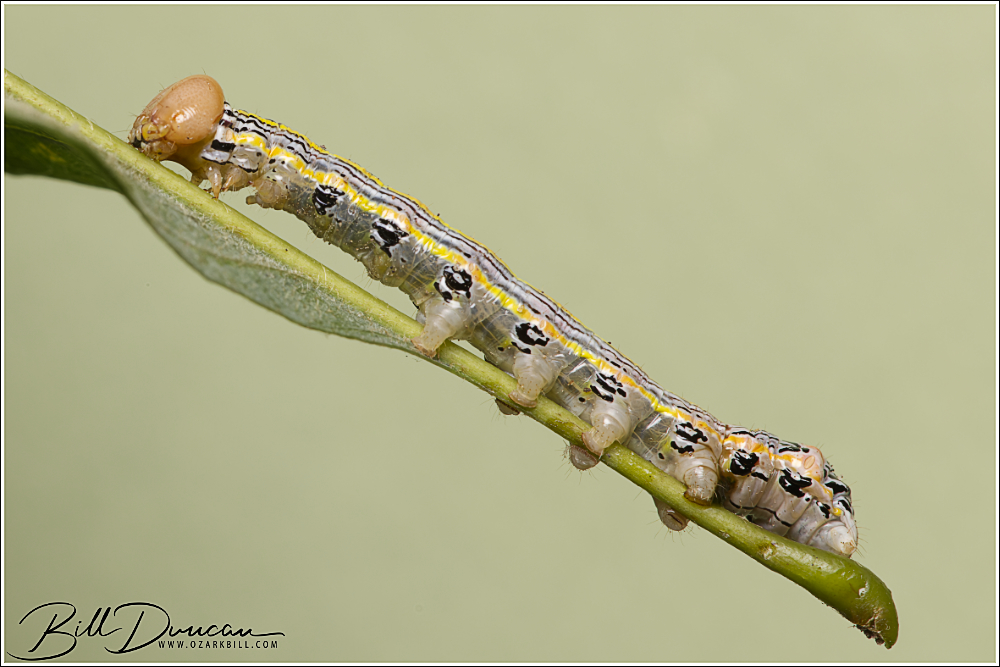
Tulip-tree Beauty (Epimecis hortaria – 6599)
I tend to be a big fan of common names given to moths, but I feel this one misses the mark. This season, I found the tulip-tree beauty (Epimecis hortaria – 6599) on sassafras, pawpaw and flowering dogwood. Why they chose this name for such a generalist species is beyond me. However, I guess it definitely is a beauty.
Tulip-tree Beauty (Epimecis hortaria – 6599)
This species is known to have a good deal of variability in the color and patterns they exhibit, but the half dozen or so I found all looked like the one pictured in this post. Maybe this variability is region specific, or I just had bad luck? It is a relatively easy species of inchworm to identify due to its unusual body proportion, making it look as though it might brag about how much it can bench 😉
Tulip-tree Beauty (Epimecis hortaria – 6599)
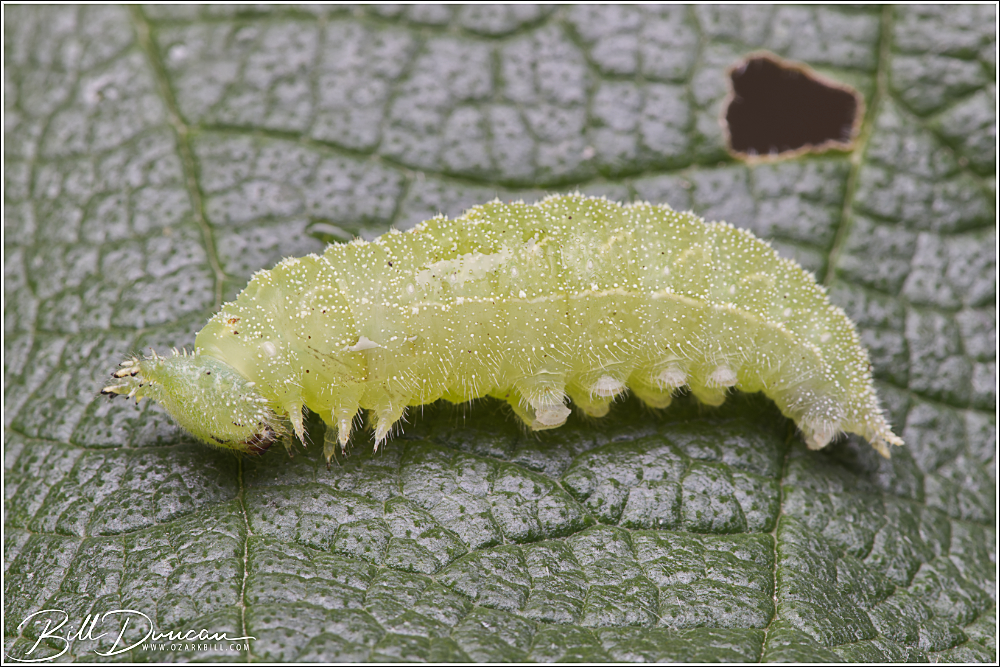
This poor guy has fallen prey to an external parasitoid wasp (Euplectrus sp.) larvae and, unfortunately, will not make it to its adult stage.
Two caterpillar species today, each commonly found on the native grapes (Vitis sp.) in Missouri. First up is the Noctuid species Alypia octomaculata (eight-spotted forester moth). These guys are stunning as both larvae and adults.
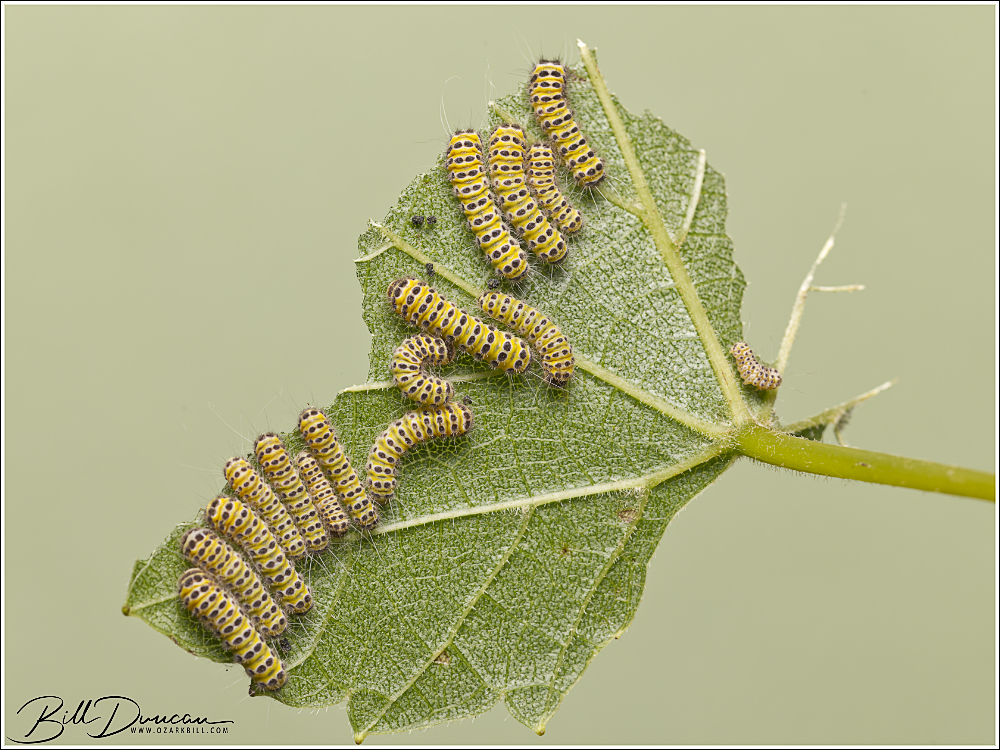
Next up is the grapeleaf skeletonizer moth (Harrisina americana) in the Family Zygaenidae. Both H. americana and the eight-spotted forester moth, pictured above can be found visiting flowers during the day. This species is gregarious and are often seen lined up side by side.
Today’s caterpillar is one of two species of Notodontid in the genus Symmerista. This is one of those frustrating cases of two species being so similar that confirming an identification is near impossible. Most of the literature suggests that the caterpillars of S. canicosta (red-humped oakworm) and S. albifrons (white-headed prominent) are indistinguishable as larvae and are so similar as adults that the only way to distinguish the two is by dissecting the genitalia. Both species are found in Missouri and both feed on the same host plants – beech, chestnut and oaks (any members of the Fagaceae). These are common and attractive cats that are gregarious in early instars but go solo when they get to this stage.
Found at Young Conservation area on 30, June, 2024.
For the past month or so I’ve been hitting the trails hard, trying my best to find caterpillars in the early to mid season. As expected, this has been tougher than the late season for me. My success rate in finding interesting and new species has been lower than I would like, but good thing the one strength I feel I truly possess in this life is pertinacity.
Usually by the late season cat hunts, hackberry trees (Celtis sp.) have all but dropped their leaves or look as though they should. Once I started beating branches of hackberries this summer, I found that the two species of Asterocampa (Nymphalidae) found in Missouri were quite easily found. Not only are the hackberry butterfly adults beautiful, but I find the caterpillars to be extremely cute as I hope you can agree with the photos below of the hackberry emperor (Asterocampa celtis).
Here’s an old one from the Facebook archives that somehow never managed to be put on the blog. This is the caterpillar of the curved-line owlet moth (Phyprosopus callitrichoides Hodges #8525), a fantastic member of the Noctuidae and one of several “grail species” that caterpillar hunters are on the lookout for from mid-summer to early fall. This one was found on August 20, 2016 at St. Francois State Park. I have not found another of these since, but I am hopeful that I might find one this year. Wherever I visit, I am looking closely at catbriers (Smilax sp.), which are there sole hosts.
A fantastical organism that is worthy of a place in a Tim Burton film – the curved-line owlet (Phyprosopus callitrichoides Hodges #8525).
I know it has something wise to say, if only I could understand…
The Zebra Swallowtail Butterfly (Eurytides marcellus) is a captivating and distinctive species known for its striking appearance and fascinating life cycle. Native to North America, this butterfly is easily recognized by its elongated wings adorned with black and white stripes, resembling the pattern of a zebra. Its elegance is not just limited to its appearance but extends to its behaviors, ecological interactions, and adaptations.
A copulating pair of Zebra Swallowtail (Eurytides marcellus) found at Washington State Park in Washington County, Missouri.
The life cycle of the Zebra Swallowtail Butterfly comprises four stages: egg, larva (caterpillar), pupa (chrysalis), and adult. The cycle begins when a female lays eggs singly on the leaves of the pawpaw tree (Asimina spp.), the primary host plant for this species. The eggs hatch into caterpillars, which are initially green and mimic the appearance of the pawpaw leaves. As they grow, the caterpillars undergo several molts, during which their coloration may change to include yellow and black bands.
Late instar caterpillar of the Zebra Swallowtail (Eurytides marcellus) found at Myron and Sonya Glassberg Family Conservation Area in Jefferson County, Missouri.
Pawpaws contain toxic secondary chemicals called acetogenins that the developing swallowtail caterpillars sequester and which persist in the tissues and wings of adults, providing effective protection against most predators.
Brown form of the Zebra Swallowtail (Eurytides marcellus) chrysalis found at Meramec State Park in Franklin County, Missouri.
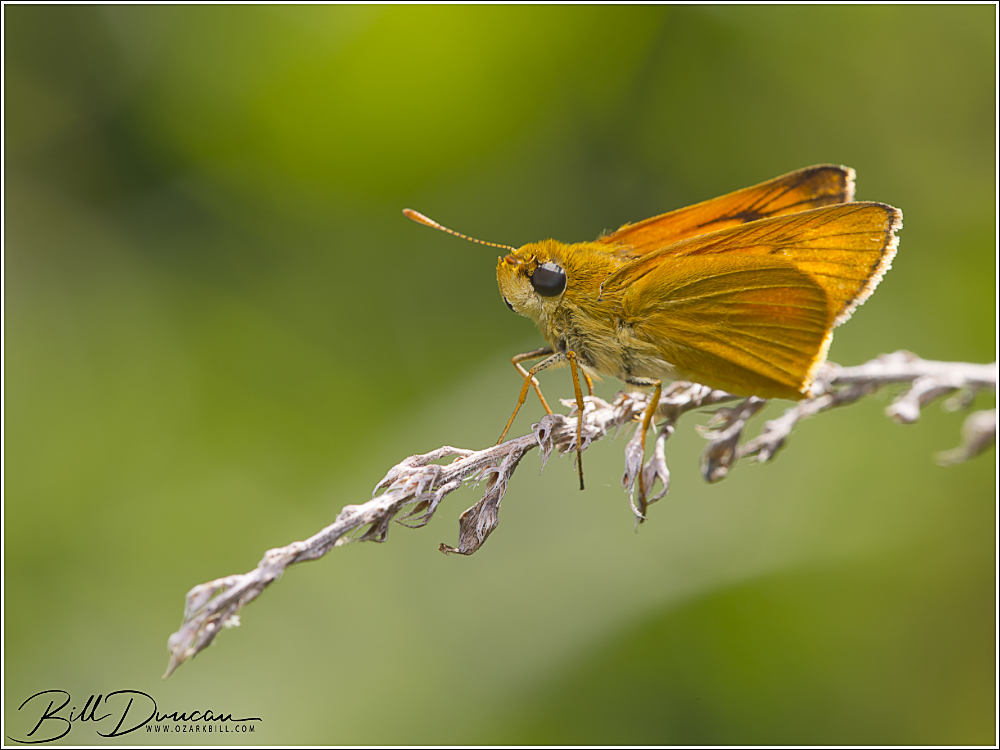
The fellas and I spent a few hours this spring hunting for a few butterflies in Phelps and Franklin Counties. We finally had some success locating the rare golden-banded skipper after numerous attempts over the past two or three seasons. We were hunting in the right place, but not in the exact right spot. Thanks to our friends who shared the location of their original find.
The Golden-banded Skipper (Telegonus cellus)
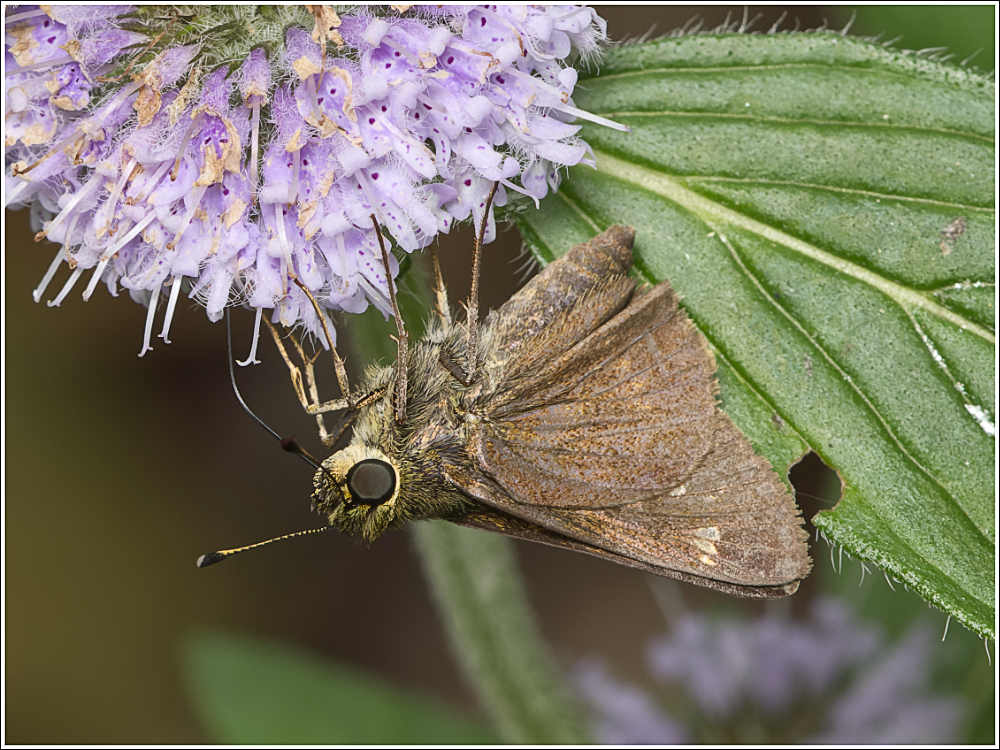
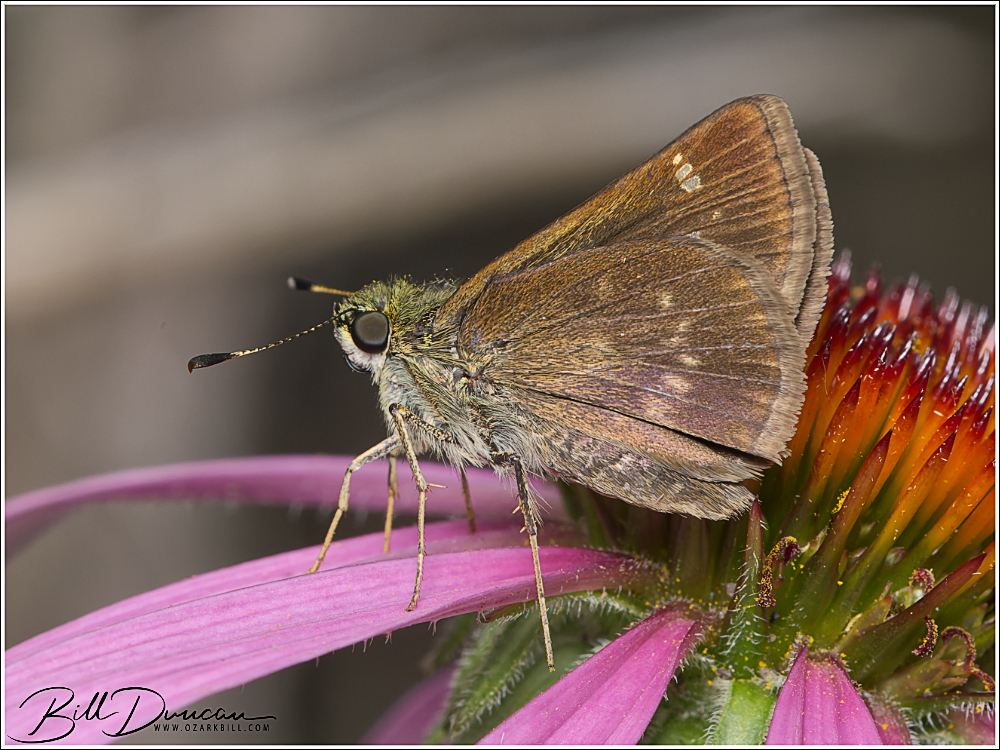
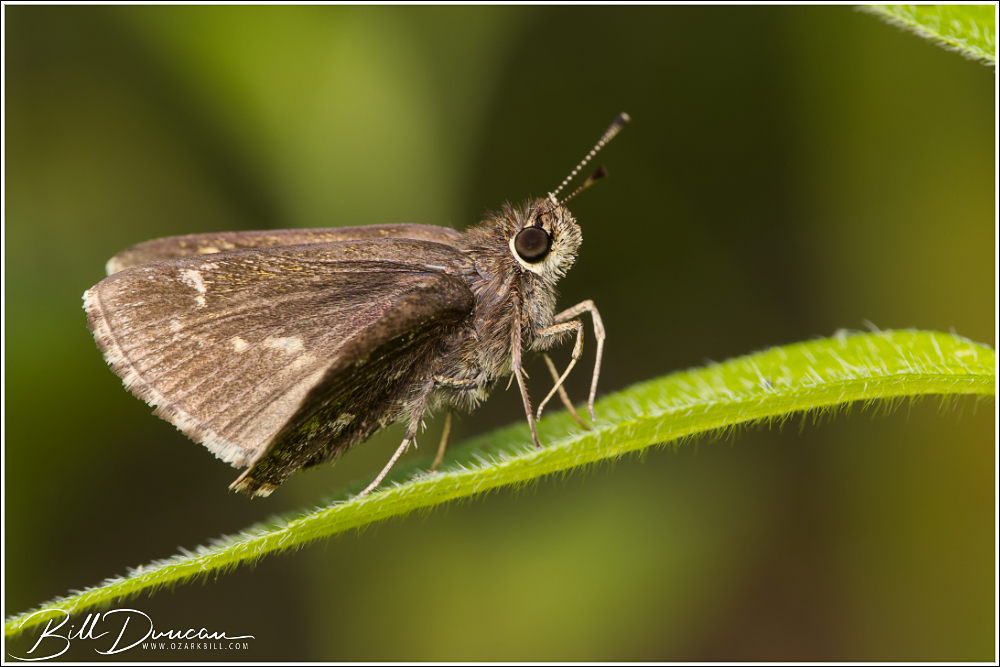
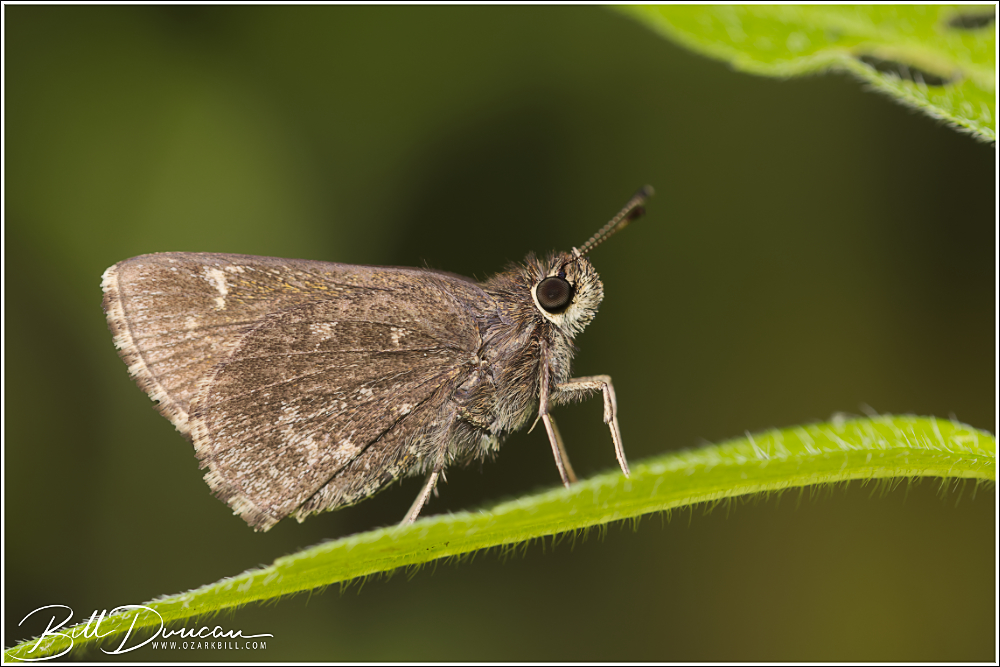
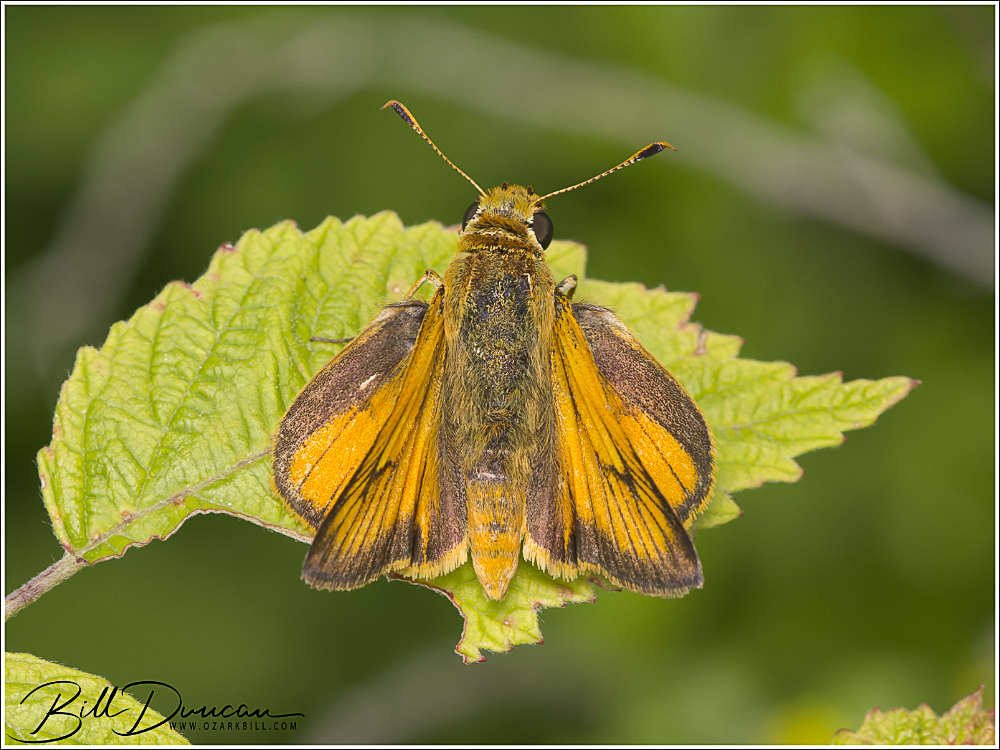
In order to find and identify the rare skipper butterflies (Hesperiidae), one must first find and take lots of photos of the more common species. There are so many skippers that look very similar to each other and even with taking photos, I found it to be a painful chore to come to the correct identification on many of these. Many thanks to CA Ivy from Butterflies and Moths of North America for helping me get the proper IDs on the following.
Little Glassy Wing (Pompeius verna)
Northern Cloudywing (Thorybes pylades)
Bell’s Roadside-Skipper (Amblyscirtes belli)
Delaware Skipper (Anatrytone logan)
Least Skipper (Ancyloxypha numitor)
Zabulon Skipper (Poanes zabulon)
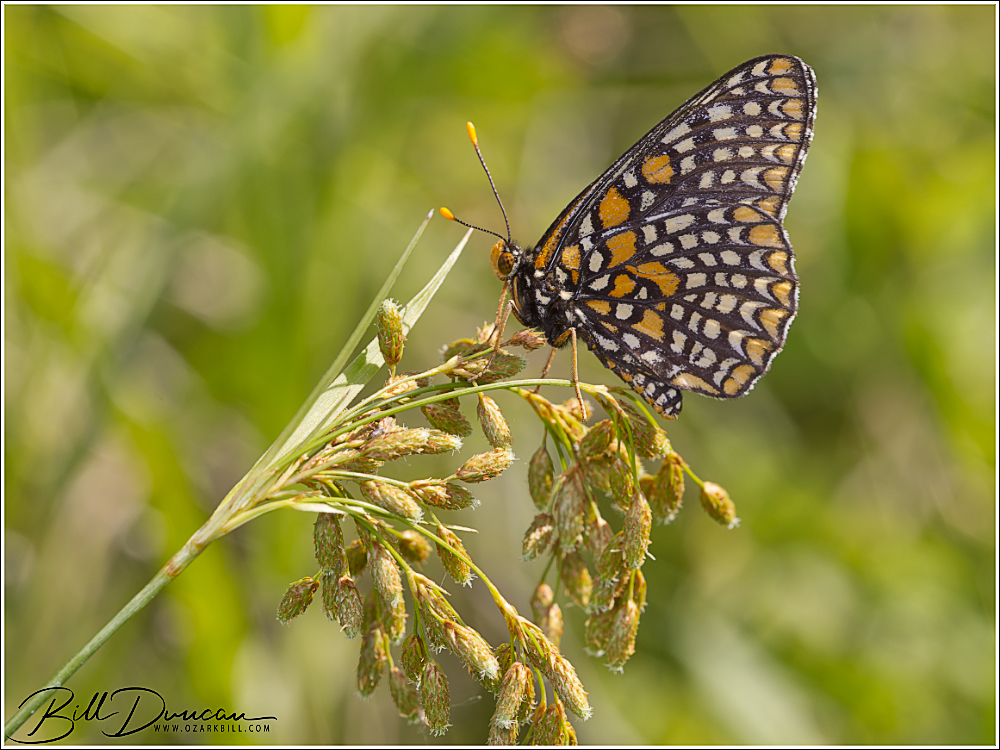
We found other leps besides skippers, including quite a few of the Ozark Baltimore Checkerspot (Euphydryas phaeton ozarkae).
It was so nice to see something with these colors and patterns that wasn’t a dang Pearl Crescent. This one is the Silvery Checkerspot (Chlosyne nycteis).
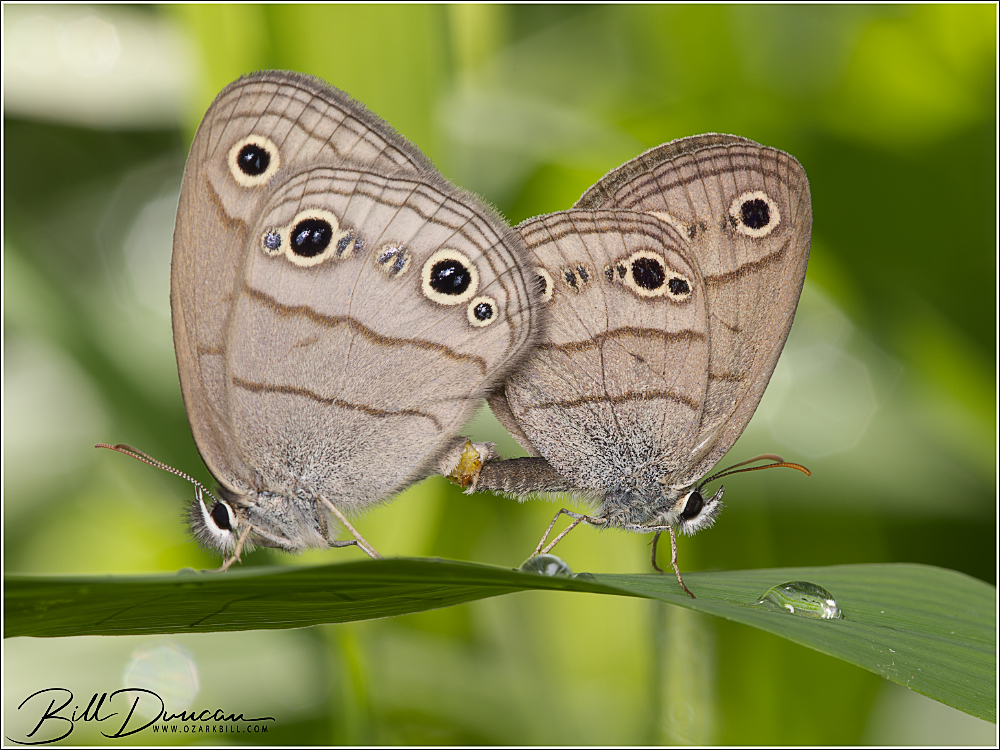
I’ve struggled for years to get a photo of the Little Wood-Satyr (Megisto cymela). I finally found the trick to get them to stay put for a few seconds… 😉
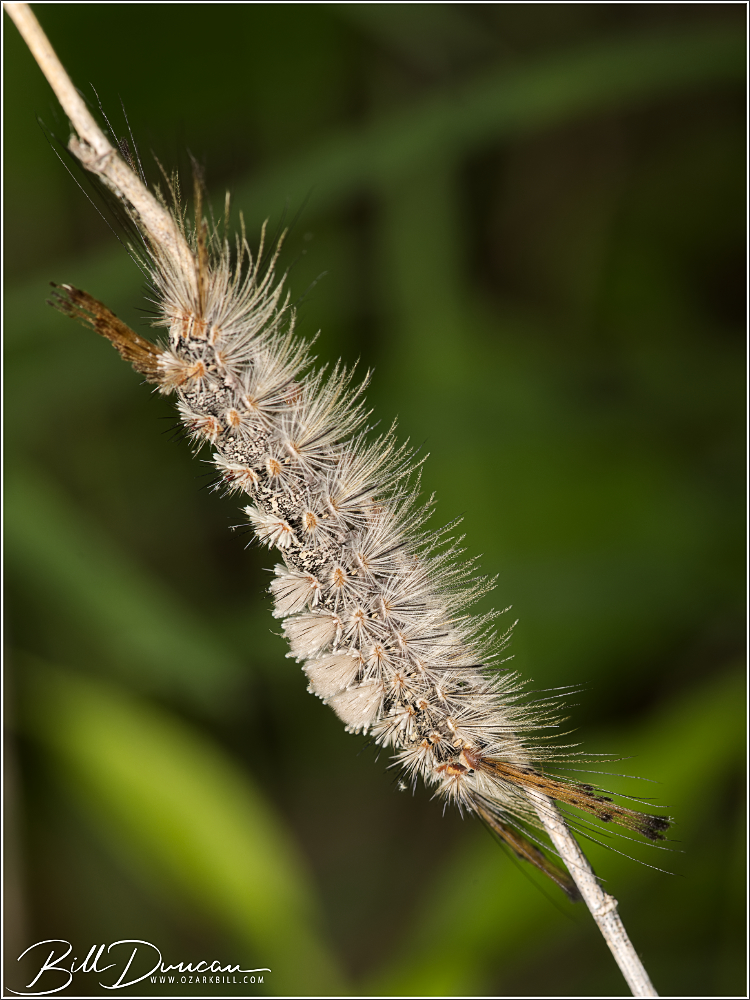
Casey and I stumbled across this first for me – a gorgeous Tephra Tussock Moth (Dasychira tephra) caterpillar.
Not another lep, but we had a few of this fantastic species – the Saw-combed Fishfly (Nigronia serricornis) associated with a fen and creek we were searching in.
It has been suggested that we might be seeing a very good moth and butterfly season this year due to birds and other predators filing up and raising their young on the Brood XIX periodical cicadas. From my anecdotal experiences, this seems to be true. Hopefully I can find more caterpillars over the summer if this continues to be the case.
Early this month the WGNSS Nature Photography Group traveled to the southwest part of the state. Our primary destination, the Roston Native Butterfly House, is a real treasure that I never get tired of visiting.
Officially considered as an accidental species in Missouri, the Dianna fritillary (Speyeria diana) has a strong population in the mountains of northwest Arkansas.
The Roston Native Butterfly House was established to create a haven for local butterfly species and to educate the public about their ecological significance. Its history is rooted in conservation efforts and the desire to preserve native butterfly populations threatened by habitat loss and environmental changes.
Another fritillary, the great spangled (Speyeria cybele)
This native butterfly house, located within the Springfield Botanical Garden, was created and named in honor of Dr. Bill Roston, an MD of the small town of Forsyth, MO who had an avid interest in conservation and pollinators. Today this lovely location is curated by Dr. Chris Barnhart and his wife Deborah.
A couple individuals at slightly different stages of pupation. These are the larvae of the viceroy (Limenitis archippus) which resemble bird droppings.
Pictured above is a caterpillar of the silver-sided skipper (Epargyreus clarus).
The Barnharts and their staff of volunteers do an incredible job of rearing several native butterfly species and maintain a nice population of their required host plants within the house. The Barnharts welcome several thousand visitors each year and do an excellent job in educating the visitors on the life histories and conservation stories of the butterflies they raise. Chris and Deborah always eagerly support our small group visits and often go out of their way to help us get the photographs of the butterflies and caterpillars we are after.
The Roston Native Butterfly House is a great place to see many of the swallowtail species found in our region, like this newly emerged giant swallowtail (Papilio cresphontes).
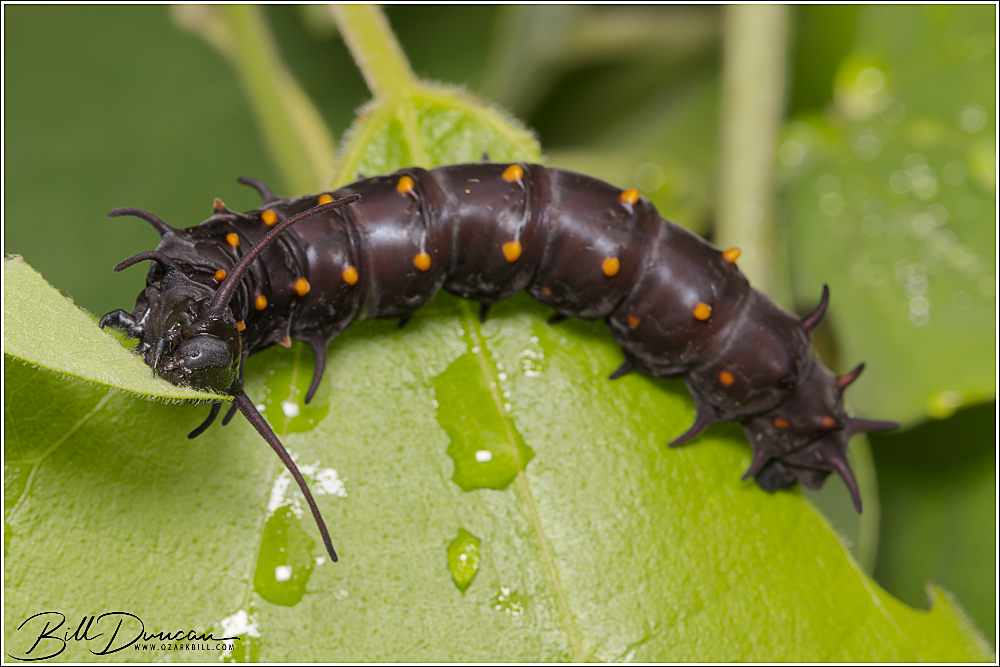
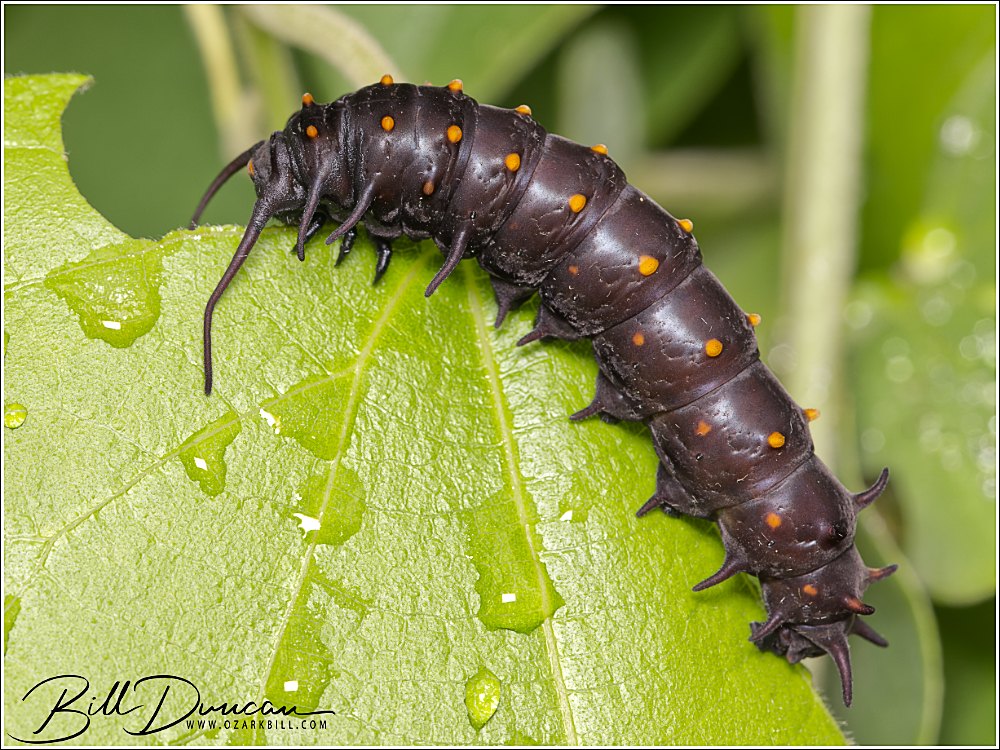
Here are a couple of shots of the incredible larvae of the pipevine swallowtail (Papilio troilus). These cats are typically very conspicuous feeders, relying on their aposematic coloration to warn predators of their poisonous disposition.
Native to Florida, Cuba and the Bahamas, the Atala butterfly is an excellent example of a specialist. The Atala (Eumae atala) feed only on the coontie cycad (Zamia integrifolia). You might notice that this member of the Lycinidae (hairstreaks) family also shows aposematic coloration in both larval and adult forms. This is to warn predators of the neurotoxic secondary plant compound – cycasin, that they ingest from their cycad hosts and carry with them for their entire lives.
Related to the common hairstreak butterflies seen in our own backyards, the Atala butterfly is a tropical representative of this family native to Florida.
The Barnharts go to great lengths to rear the Atala butterflies. They bring back larvae from cycad farms (that really don’t want them) in Florida and must make sure they raise and overwinter enough cycad plants for them to raise the cats to their adult forms.
Nothing against the typical butterfly houses that tend to showcase tropical species from around the world, but I would sure like to see more strictly native butterfly houses like the Roston Native Butterfly House. As I hope my photographs show, not only are the natives spectacular, but showcasing them in this type of setting helps to educate its visitors on the species they might see in their own neighborhoods or while out on the trails.
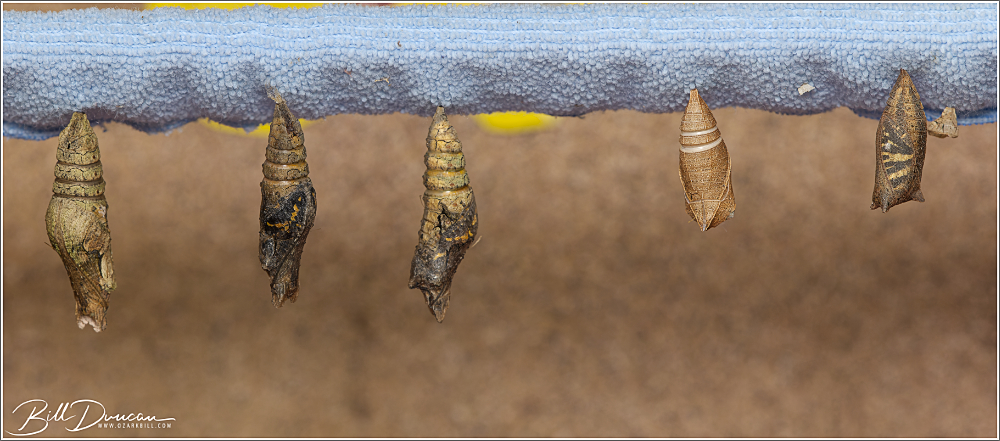
Chrysalises of the various native butterflies can usually be observed when visiting the Roston Native Butterfly House in Springfield, MO.
A great big thank you to Chris and Deborah for always being gracious hosts. We are looking forward to more visits.
Today I am showcasing an example of biological pest control that I came across in my own neighborhood in late April of this year. The image below shows a bronzed cutworm moth larvae (Nephelodes minians) in the Family Noctuidae that has been parasitized by a Braconid wasp in the genus Cotesia. This is a very species-rich genus of parasitoids, but there is a fair chance of this species being C. marginiventris. Thanks very much to Alex Soohoo-Hui for his assistance in narrowing down the identification of this minute wasp.
A deceased bronzed cutworm (Nephelodes minians) caterpillar in the final stages of hosting its parasitoid Braconid brood.
The bronzed cutworm is a very common moth that feeds on various grasses, including crops like maize and other cereals as well as turf grasses. I consistently find these cats or their chrysalis whenever I dig a new hole in the yard.
When I found and collected these animals, the last couple of wasp larvae were finishing up spinning their cocoons.
After the wasp deposits her eggs on the host, the wasp larvae feed on the caterpillar internally, being careful not to do much damage to vital organs. The host will never survive, but the parasitoids must ensure that it stays alive long enough for the brood to reach maturity. Often, the caterpillar will still be alive when the wasp larvae emerge and begin to spin their cocoons and will defend itself and its parasites from potential predators.
Three cocoons showing the doors that the adult wasps chewed their way out of.
In this case, the caterpillar seemed dead. I collected it and took it home with hopes of rearing out the tiny wasps to photograph and identify. In about four days, I came home to find 15-20 adult wasps had emerged.
The adult wasps are extremely tiny, measuring 2-3 mm. In order to have a chance at getting photographs, I placed their enclosure into the refrigerator for a minute or two. The wasps in the accompanying images might appear dead, but they perked up within a couple of minutes. After getting my photographs, I released the brood into my backyard to continue their pest control services.
A Braconid wasp in the genus Cotesia, potentially C. marginiventris.
A couple more looks at this diminutive but effective parasitoid.