"What a thousand acres of Silphiums looked like when they tickled the bellies of the buffalo is a question never again to be answered, and perhaps not even asked." -Aldo Leopold
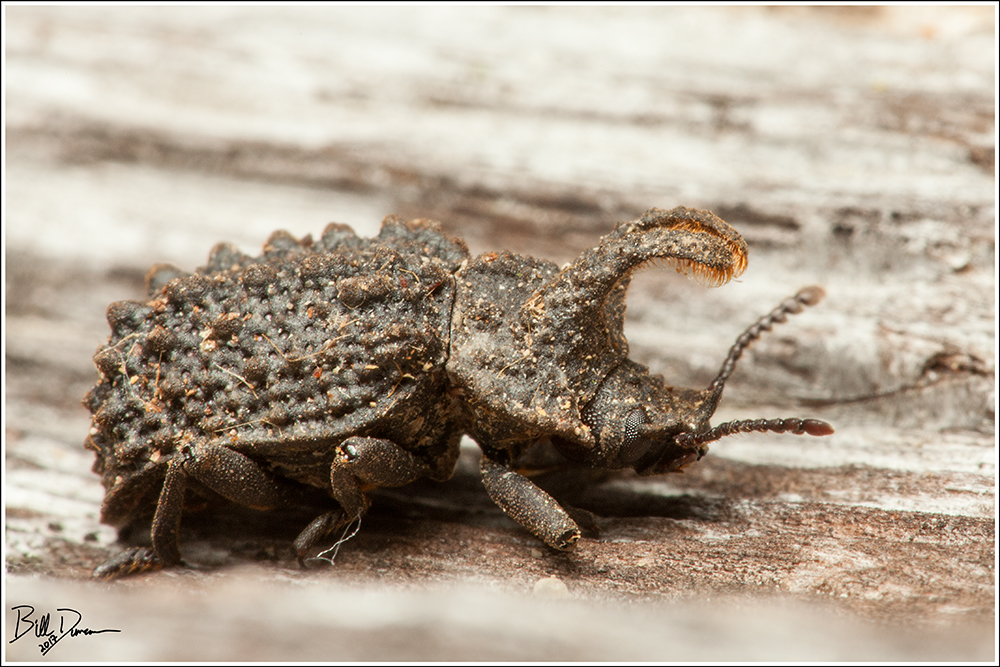
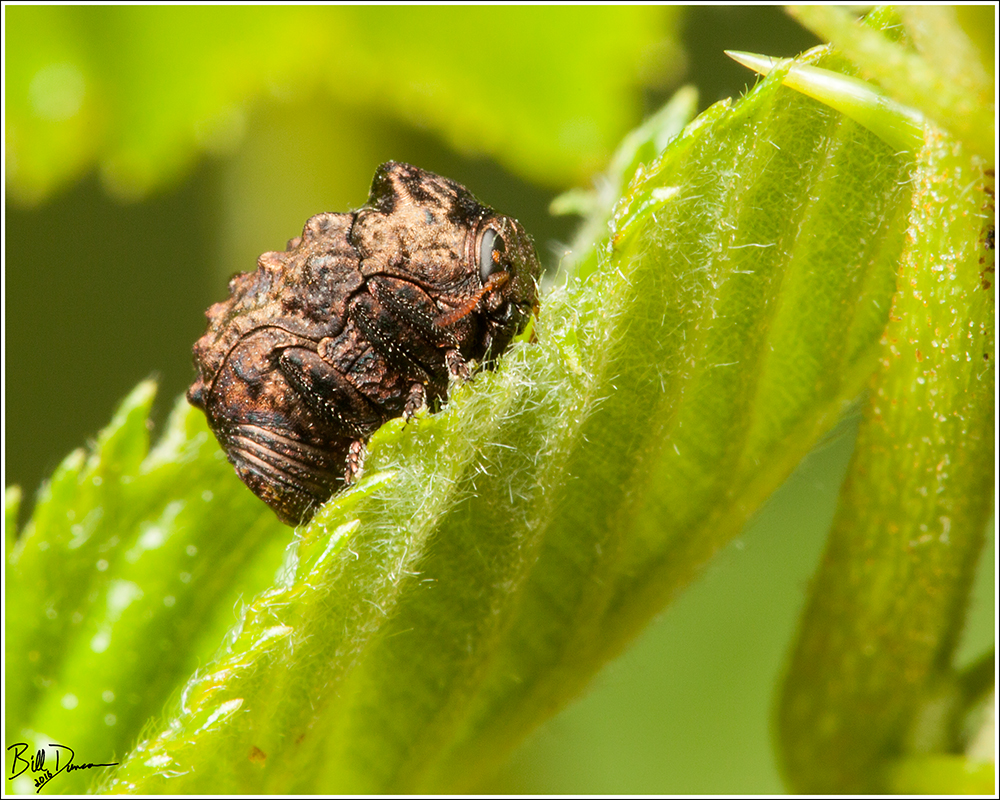
Here is one of the interesting visitors I had to my black lights at Hawn State Park this summer. Bolitotherus cornutus, or horned fungus beetle is in the darkling beetle family, Tenebrionidae. I wish I knew of their preference for polypore fungi as larvae and adults so that I could have photographed them on more suitable substrate.
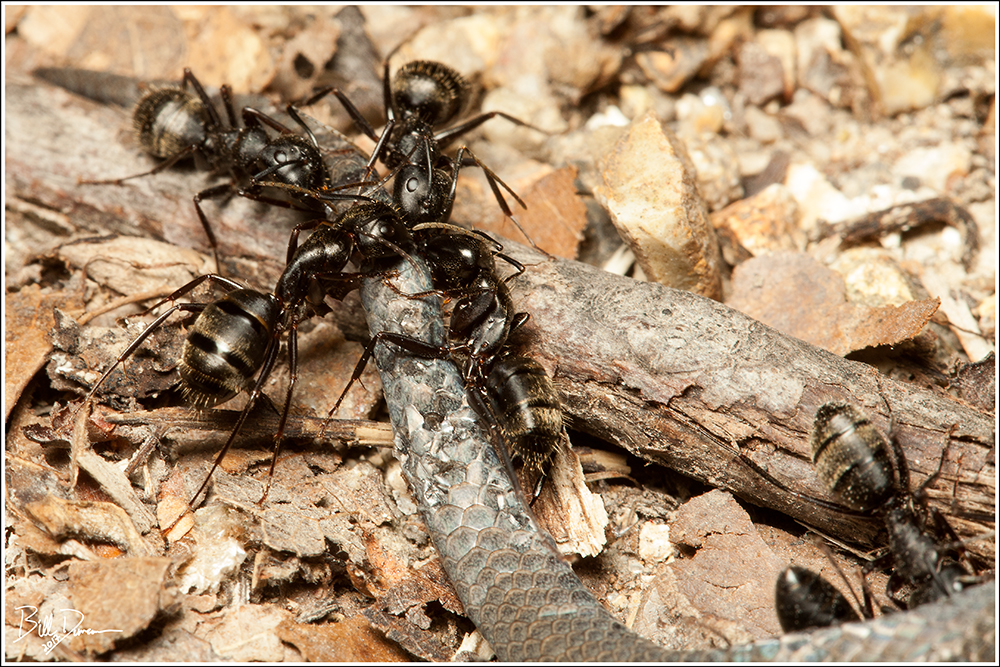
Black Carpenter Ants Feasting On Ring-necked Snake
This series was taken on the joint outing of the WGNSS Entomology and Nature Photography Groups at Council Bluff Lake. Here we have eastern black carpenter ants (Camponotus pennsylvanicus) feeding on a freshly dead ring-necked snake (Diadophis punctatus).
Black Carpenter Ants Feasting On Ring-necked SnakeBlack Carpenter Ants Feasting On Ring-necked Snake
With some extra nature time last week, I hit the trails at Shaw Nature Reserve hoping to get some shots of Claytonia virginica (spring beauty) being visited by its pollinators – particularly the small solitary Halactid bees. The problem I had on this day is that these bees don’t typically like to be very active on cloudy, grey days. There were a few flies visiting the spring ephemerals, but they were much to flighty to bother with. So, I decided to give some attention to the Linderabenzoin (spicebush) that were blooming in abundance along the river bottom trails. My goal then became to document the pollinators that visit this early-blooming bush.
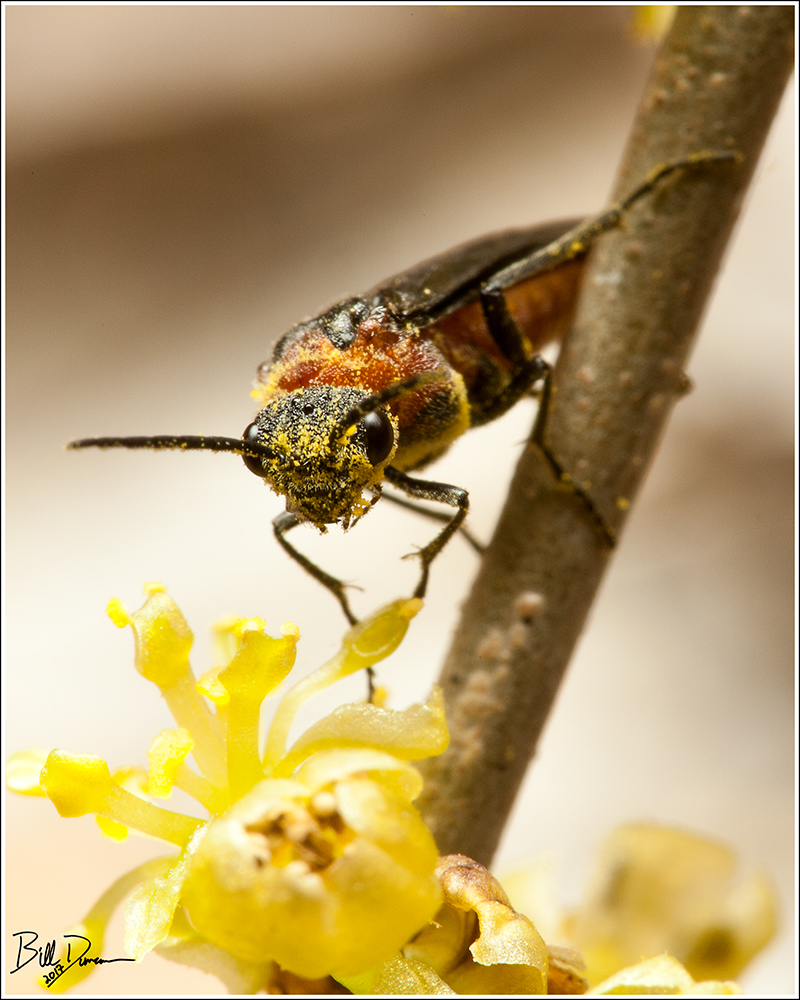
Sawfly – Tenthredinidae – Dolerus neoagcistus
One of the more obvious of these pollinators that I found was this sawfly. This is my best guess on identification. This sawfly was quite small and by the looks of it, is quite an efficient pollinator.
Sawfly – Tenthredinidae – Dolerus neoagcistus
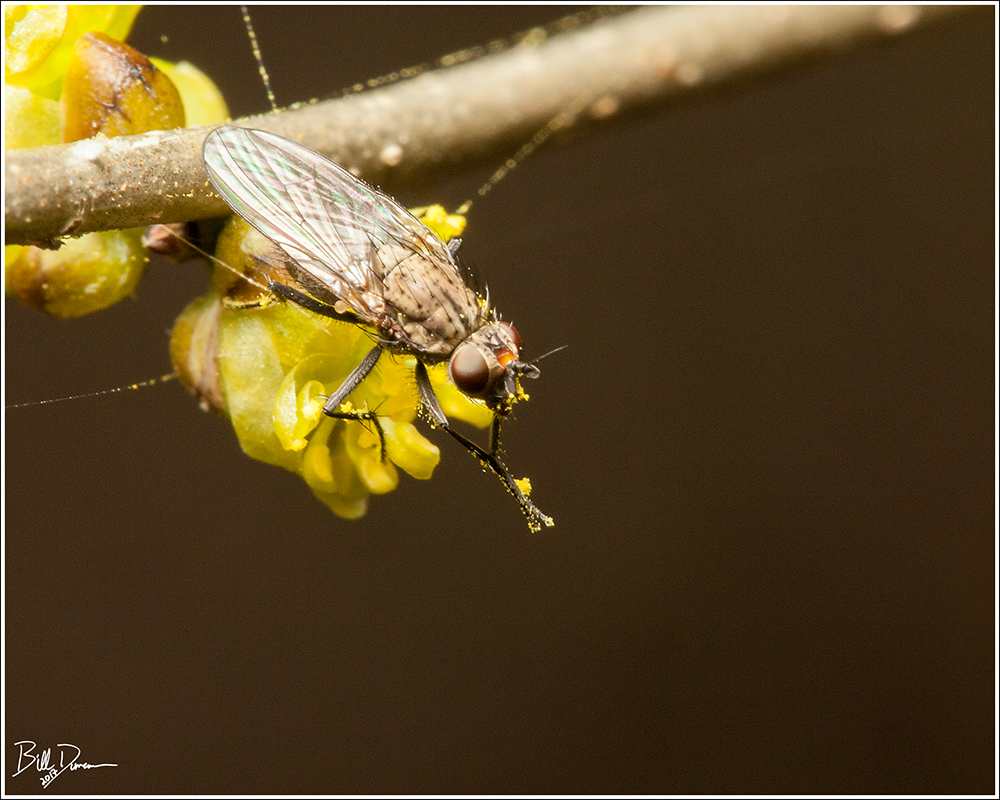
Probably the most abundant pollinator I came across were these Tachinid flies (again, flies are difficult and I could be wrong).
Tachinid Fly?
The hair-like setae that probably serve to aid the fly in responding to changing air pressures also serve as nice holders to move pollen from flower to flower.
Tachinid Fly?
I also found a number of multicolored asian lady beetles (Harmonia axyridis). Typically predators of aphids, these beetles are also known to feed on pollen. This is what I figure was going on in the image below. Since there are probably few aphids to be found during the early spring, with few leaves being available, pollen is the next best protein source. I suppose there could be aphids to be found hiding within the flowers, but did not inspect closely enough.
Multicolored Asian Lady Beetle – Coccinellidae – Harmonia axyridis
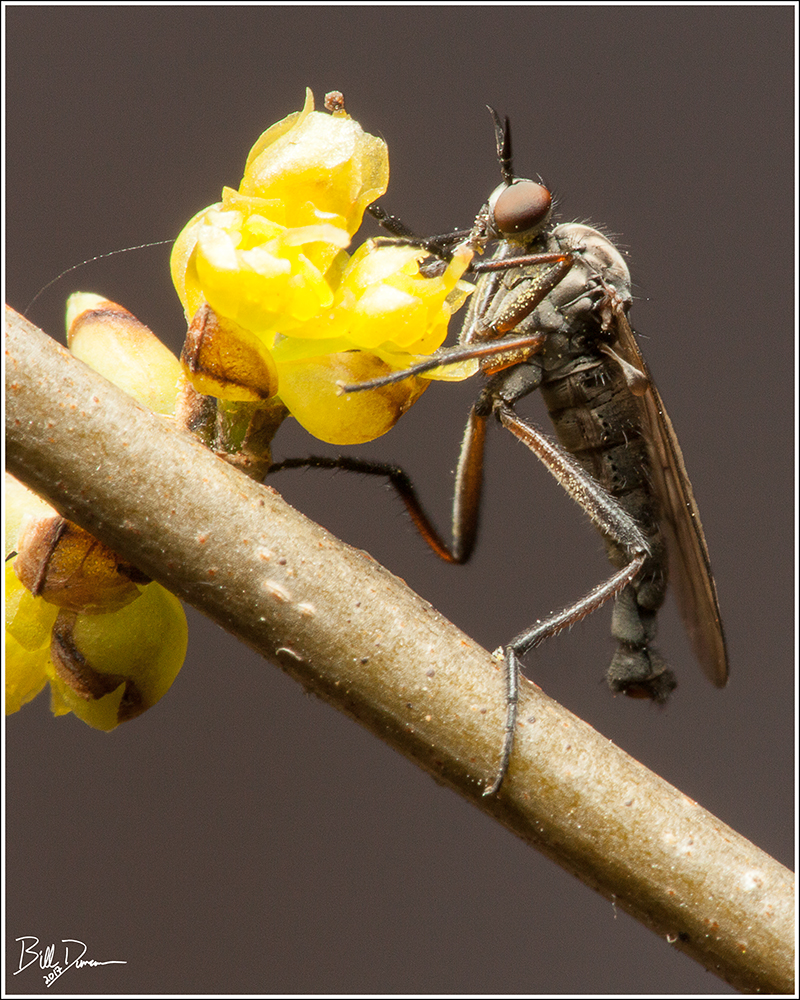
Probably my favorite find of the day were several flies of the family Empididae. These are fascinating flies that are primarily predatory, but a few taxa will visit flowers to feed on nectar or pollen.
Dagger fly – Empididae – Empis or Hilara genus
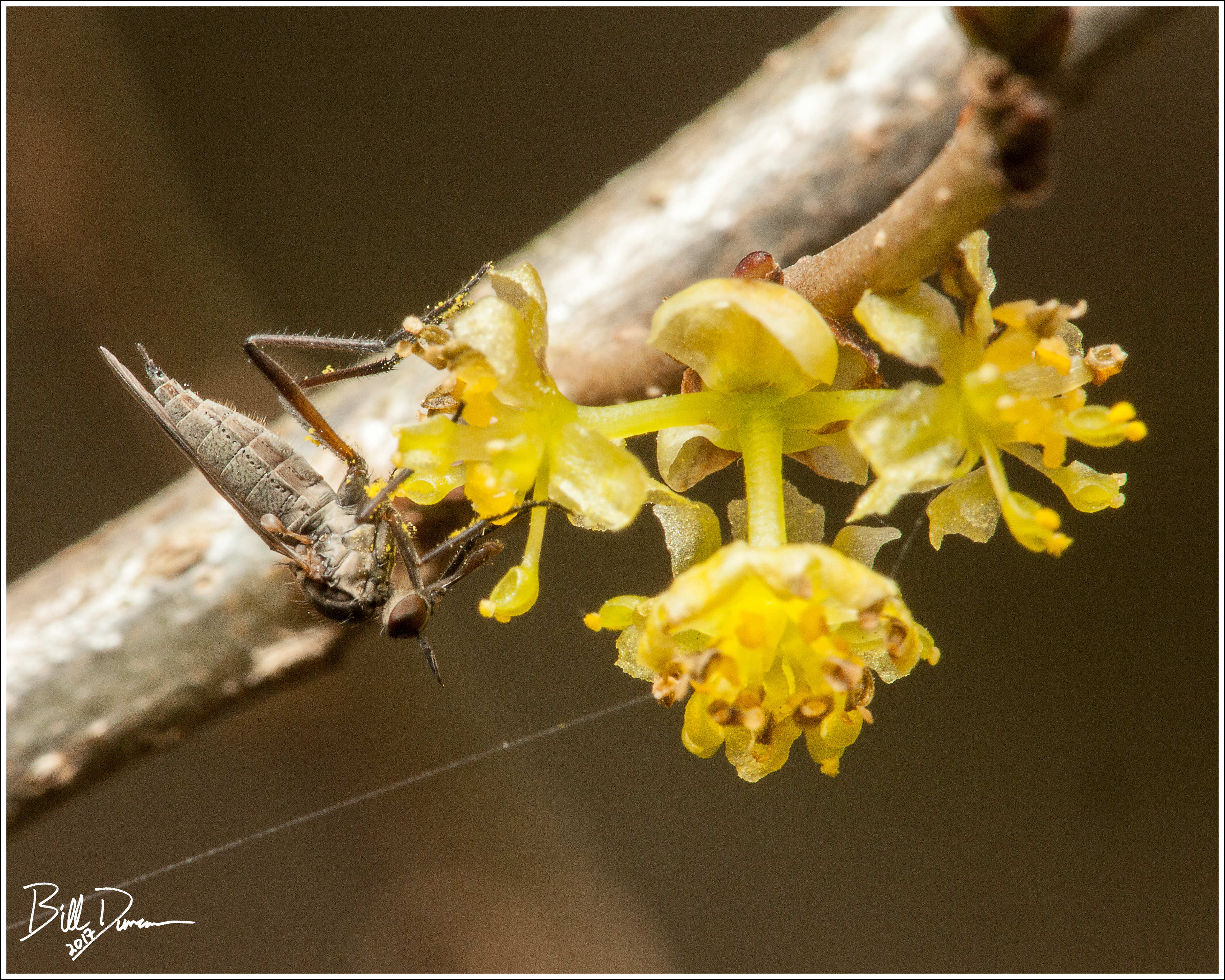
Within this family are at least a few where the females will not hunt themselves, instead relying on a “nuptial gift” of a prey item from a male. Males of some species will wrap their gift in a silk wrapper. In these taxa the sex roles will often be reversed – the females courting the males to get these gifts and the opportunity to mate. In at least one species, the females will inflate themselves grossly with air to give herself the appearance of being bound with eggs and fecund, to trick the male into thinking she is a prime candidate to provide his gift and have the opportunity to mate with.
Dagger fly – Empididae – Empis or Hilara genus
At least one species has taken this system a step further. The males no longer provide a prey wrapped in its decorative covering, but simply provide the silken covering, or balloon, giving them the name “balloon flies”. The photo below provides a good look at the dagger-like moth parts that give these guys another of their common names. Another overlooked beneficial fly. Not only do these guys prey on mosquitoes and other potential pest insect species, but their larvae are also predatory, feeding on insects in the soil and leaf litter.
Dagger fly – Empididae – Empis or Hilara genus
I’ll leave you with one final image. This one isn’t a pollinator of the spicebush, but potentially feeds on its leaves in summer. What I believe this to be is a (Camptonotus carolinensis) Carolina leaf roller that was parasitized by one of the “zombie fungi”, potentially Cordyceps sometime last summer or early fall. This poor cricket was infected with this fungi that took control of its “mind”, forcing it it to climb high up on a branch of the spicebush. Once there, the fungi used the cricket’s resources to fruit and spread its spores from this higher location in order to reinfect others.
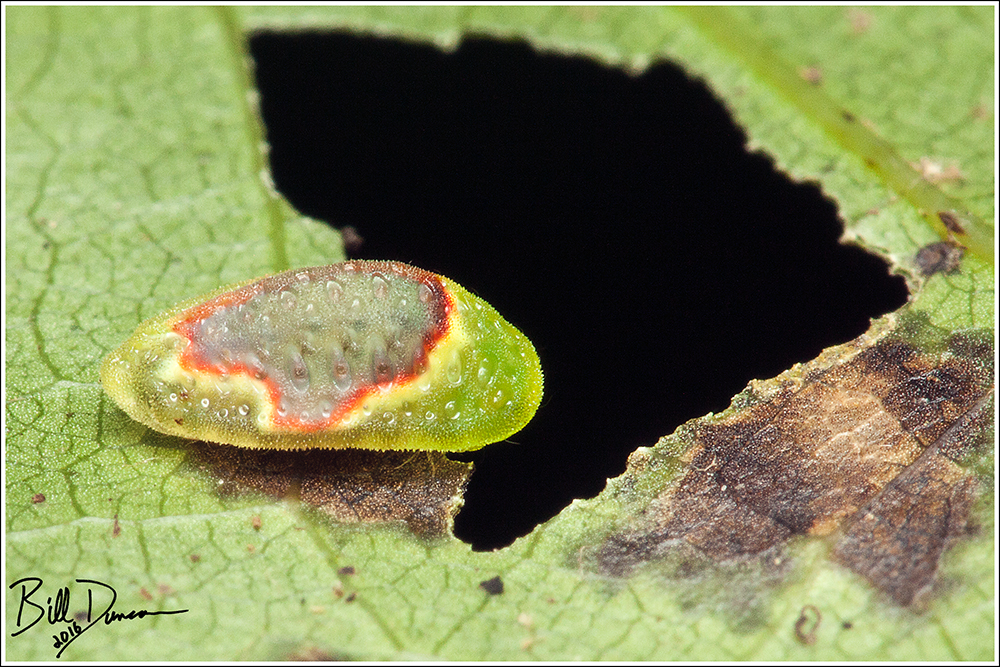
The next slug to make your acquaintance is the Red-crossed Button Slug. This species is quite similar to one or two others as both larvae and adult, but given that most lists I have seen from Missouri list this one and not the others, I am pretty confident in this ID. This species lacks the stinging, protective hairs, going instead with a more camouflage approach of looking like a bit of leaf blight as it passes over leaves of oaks, hickories and quite a few other known woody, deciduous host plants.
On a trail of silk – Red-crossed Button Slug – Limacodidae – Tortricidia-pallida (4653), Hickory Canyon Natural Area
The image above gives a glimpse into how the slugs get around – on a substance described as liquid silk. See the winding trails?
Even their frass is distinctive – Red-crossed Button Slug – Limacodidae – Tortricidia-pallida (4653), Hickory Canyon Natural Area
Here I caught one in the act. From what I’ve read, slugs leave distinctively shaped (indented) frass that is different from that of other caterpillars. I didn’t pause long enough to investigate.
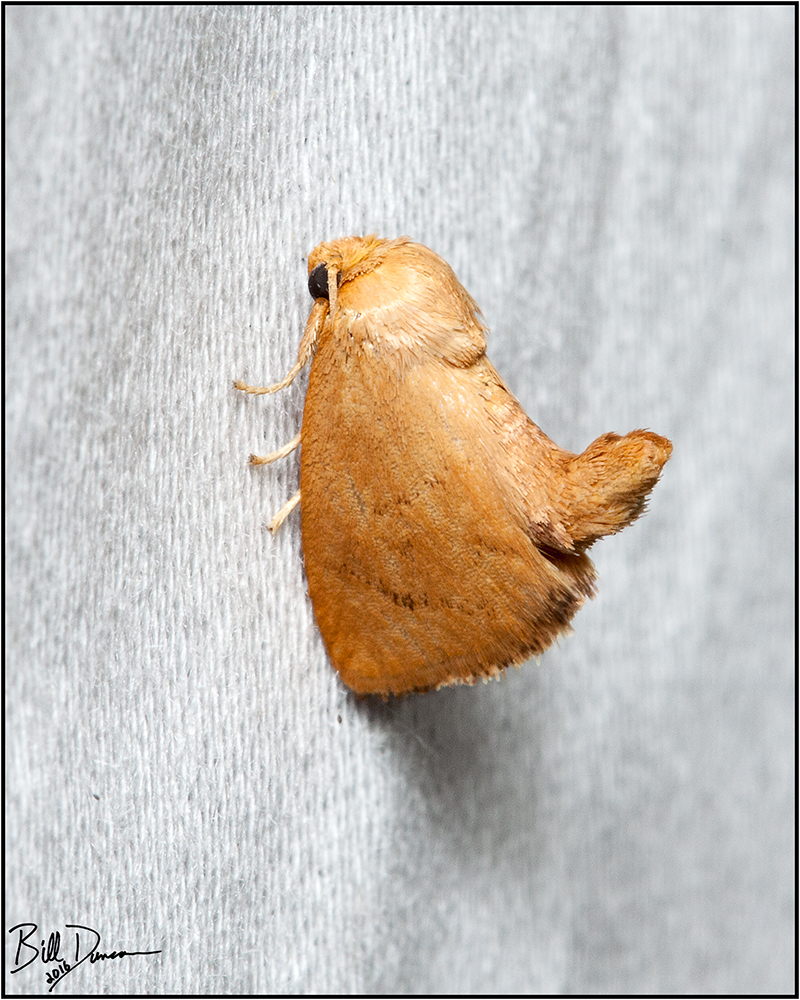
The slug moth – Red-crossed Button Slug – Limacodidae – Tortricidia-pallida (4653), Hickory Canyon Natural Area
Finally, the adult slug moth is pictured above. Slug moths are strongly attracted to lights and, from what I have read, are often some of the first species to show up when setting up a light and sheet/trap. I have a theory that this may be why I find many less slug caterpillars the closer I look near St. Louis. Although I found very similar habitats with the same composition and numbers of sapling oaks and hickories (the favored host plants), the closer I came to the city the number of slug caterpillars dropped significantly. Perhaps the city lights are sucking in the adults before they are able to reproduce? Probably a too simplistic idea, but it is a trend I noticed. It could just as well be due to fragmented habitat and overall less habitat available the closer one gets to the city.
…comes the newest in reality based, sustainable living instructional programming: Corruption Construction!
In a previous post I wrote a bit about the Warty Leaf Beetle (Neochlamisus gibbosus), a member of the Cryptocephalinae subfamily. Fascinating due to the fact that the adult form seems to be a perfect mimic of caterpillar frass, this species is much more interesting than I had imagined.
This species is highly, if not solely, associated with blackberry as a host plant. While watching these guys and looking for other insects on these plants I kept noticing gall-like structures, usually on the undersides of the leaves.
Paying closer attention, I noticed that these structures were not galls, nor were they attached directly to the plant tissue – they moved. On closer inspection, I could sometimes see the legs of the creature that resided within the house.
I had to crack one open to see if I could get an idea of what sort of organism built and resided within. As you can see in the photograph below, the animal appeared to be a beetle larvae.
Warty Leaf Beetle – Chrysomelidae – Neochlamisus gibbosus. Larvae exposed from within its scatological residence. Photographed at Shaw Nature Reserve, MO.
It took me a while to put it together, but eventually I confirmed that the larvae belonged to the same species as the adult beetles that I observed all over the blackberries. My next question was, on what materials did the larvae use to build its shelter? Usually, an insect will use detritus or perhaps fresh plant tissue that it processes to make a protective enclosure like this. These guys do it a bit differently.
It starts with mom. As she oviposits, she encases each egg with a layer of her own feces and some rectal secretions. As the larvae hatches and grows, it continues to expand its home by building with its own feces to accommodate its increasing bulk. Here is a photo of an adult and larvae close together.
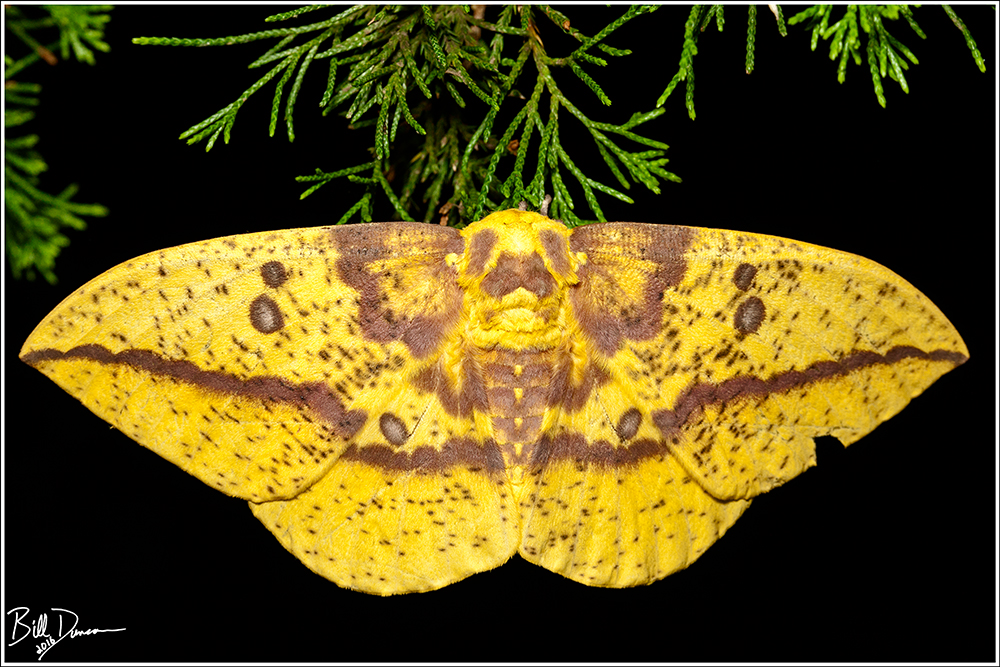
Belonging to the family of moths called Saturniidae, the Imperial Moth can reach up to six inches. Many members of this family are large-bodied and short-lived as adults – typically living only one or two weeks and not feeding in this stage. This female was attracted to lights during a national moth week event at Cuivre River State Park on July 31, 2016.
Imperial Moth – Saturniidae – Eacles imperialis, photographed at Cuivre River SP during national moth week.
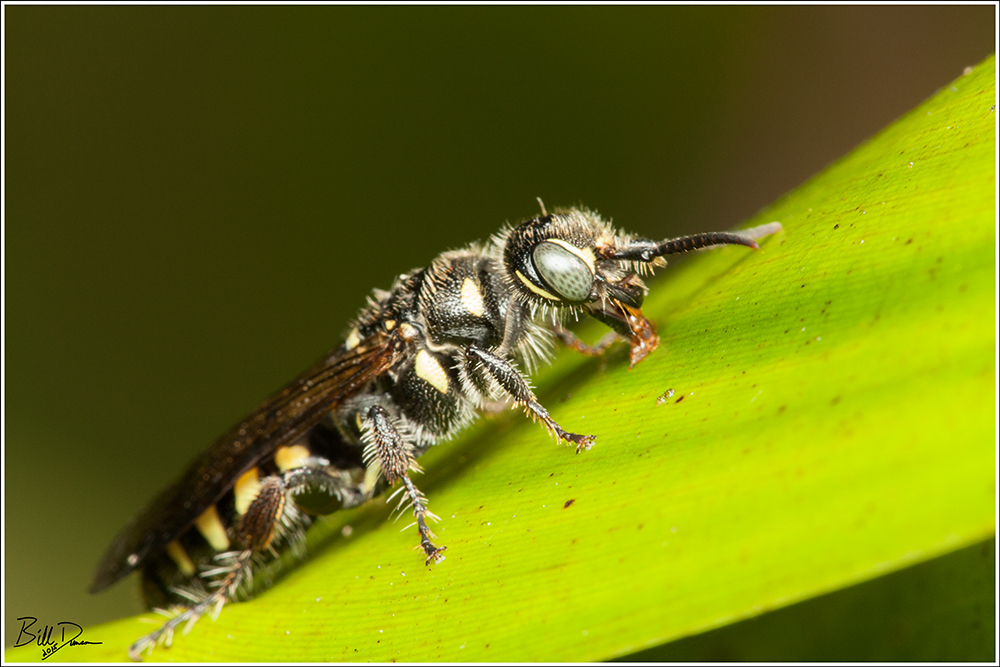
I was thrilled when I took my camera inside from shooting in my wildflower garden on a past summer day and identified this hymenopteran as a Bee Wolf. Philanthus gibbosus (Family Crabonidae) is what I am calling this one. Bee Wolves get their name from doing what you expect, feeding primarily on bees. These solitary wasps will load their brood chambers with pretty much any bee or wasp smaller than themselves that they can catch as a provision for a single egg they deposit prior to sealing the chamber shut. Some taxa have specific bees they prefer to catch and this can aid in identification. This poor thing was quite beaten up as you can see in the photograph below. Missing a few legs, it probably escaped a bird or larger insect, and was not happy to have me and my camera in its face. In the photo above I captured it doing a rapid vibration of its wings, something I read that these guys are known for doing as a communication. I can’t imagine what she may have been trying to tell me…
Bee Wolf
I believe the insect below to also be a species of Bee Wolf, but have not yet been able to put a name with this one. I photographed this one having a drink in a wet area of Shaw Nature Reserve early one morning.
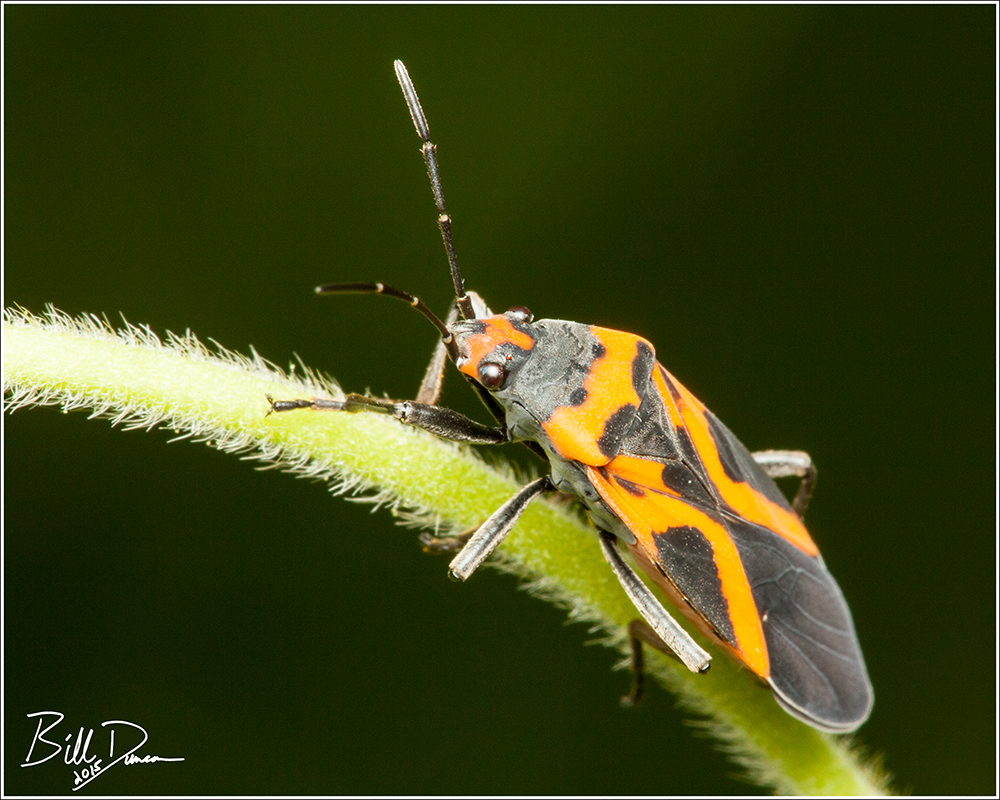
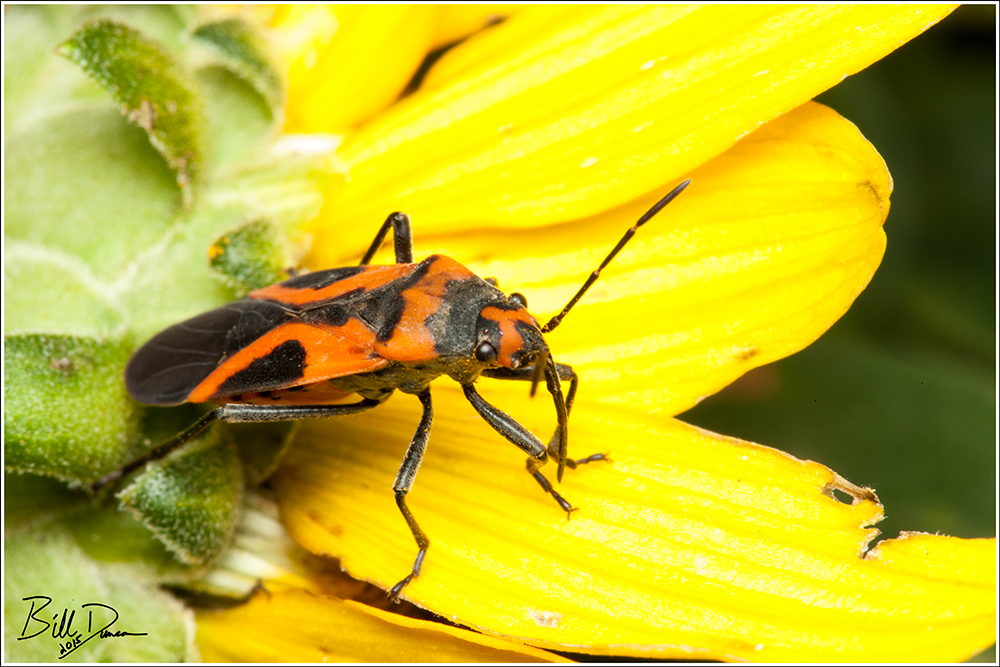
The False Milkweed Bug (Lygaeus turcicus) is a seed bug that, although quite similar in appearance to the Small Milkweed Bug (Lygaeus kalmii), is not strongly associated with milkweed.
False Milkweed Bug
As can be seen in the photograph above, the False Milkweed Bug is most often found feeding on yellow composites (Family Asteraceae). These bugs were all photographed at Shaw Nature Reserve on what seems to be this insect species’ favorite food plant, the False Sunflower (Heliopsis helianthoides).
False Milkweed Bug
There are several members of the Lygaeidae family that are aposematically colored and found in North American prairies. As mentioned, it seems that the False Milkweed Bug does not typically utilize milkweeds. The Small Milkweed Bug feeds on milkweeds as well as other plant taxa. The Large Milkweed Bug feeds exclusively on milkweed. There is obviously a great case of Mullerian mimicry (distasteful organisms appearing similar to one another to benefit from a an easily identified color or body type) going on here, but it gets pretty complicated.
What has happened to the False Milkweed Bug? Is this a case of a species that once fed primarily on milkweed and developed aposematic coloration but has since switched food preference? Or, is this a case of a palatable species mimicking (Batesian mimicry this time) the aposematic coloration of a truly noxious species? Thinking about this, it is easy to see the selective advantages that could result from either possibility.
First, a little background…
Some insects that feed on milkweed benefit by concentrating chemicals called cardiac glycosides that are toxic irritants to vertebrate predators. Cardiac glycosides are an irritant to vertebrate herbivores (livestock) and vertebrates that feed on insects that feed on milkweed and store these compounds in their tissues. However, they are not a significant problem for insects that feed on milkweeds – they simply pass through their guts (insects that store these specific toxins, for example the monarch, must have biochemical changes to avoid toxic effects). The milkweed’s primary defense against the seed bugs and other herbivorous insects is the milky sap that gets forcefully pumped from any mechanical damage that is inflicted on the plant. For this reason the milkweed is a pain for an insect to feed on.
For a seed bug, with its piercing-sucking mouth parts, feeding on the gummy sap of a milkweed is a significant hurdle. Assuming the False Milkweed Bug once fed from milkweed primarily and gave it up would be a significant advantage. Keeping the aposematic coloration, which would allow it to gain the benefit from its vile-tasting, similarly colored cousins, still feeding on milkweed, would be advantageous as well. With my brief observations, the False Milkweed Bug still behaves conspicuously – feeding and doing everything else it does out in the open, suggesting that the aposematic coloration is still working in this mimic-model system, whatever the source history ultimately may be.
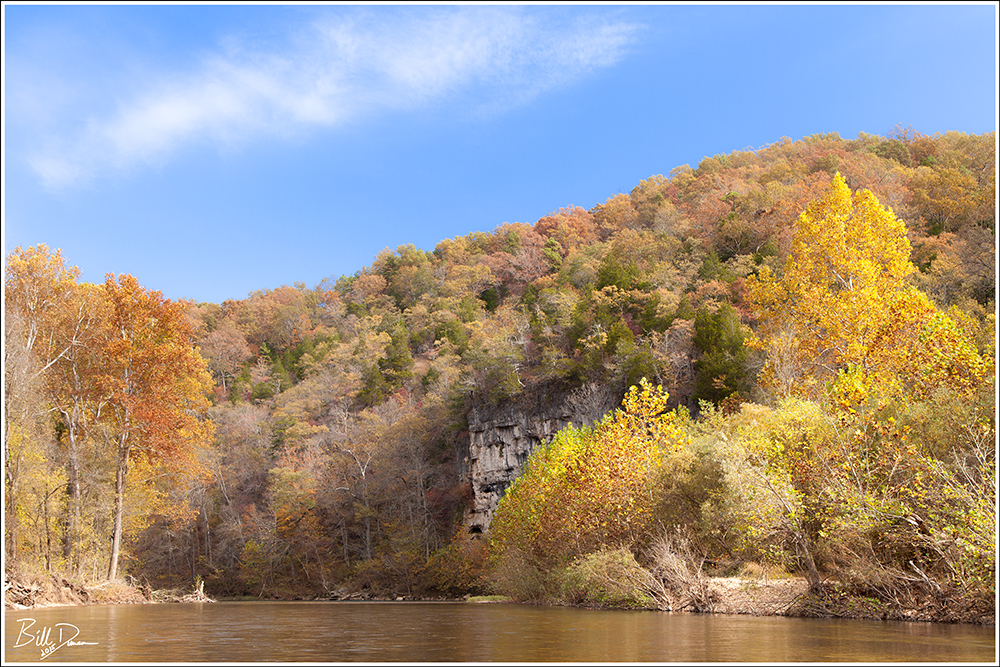
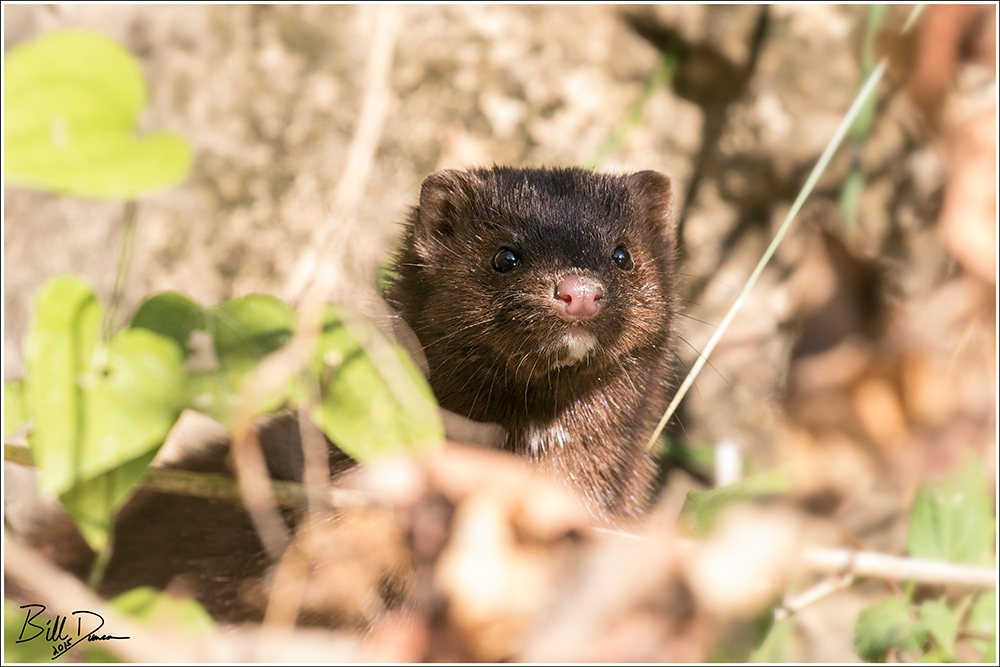
I’m finally ready to share a few more images from a float down the upper third or so of the Current River that Steve and I had the great fortune to experience this past October. We started at navigable mile 8.0 at Cedar Grove Access and pulled out three days later at mile 51, the confluence of the Current and that other, oh-so desirable, Ozark stream – the Jacks Fork. If one floats slow and quiet, the opportunity to see wildlife is very high in this National Park (Ozark National Scenic Riverways N.P.). I’v shared a couple of images of these guys previously. I believe we found 8-9 Mink during the first day of this float. It was enjoyable watching them busily hunt along the stream banks, mostly oblivious to our presence. As usual, Steve did a great job in keeping us quiet and pointed in the optimal direction for capturing some images.
American Mink
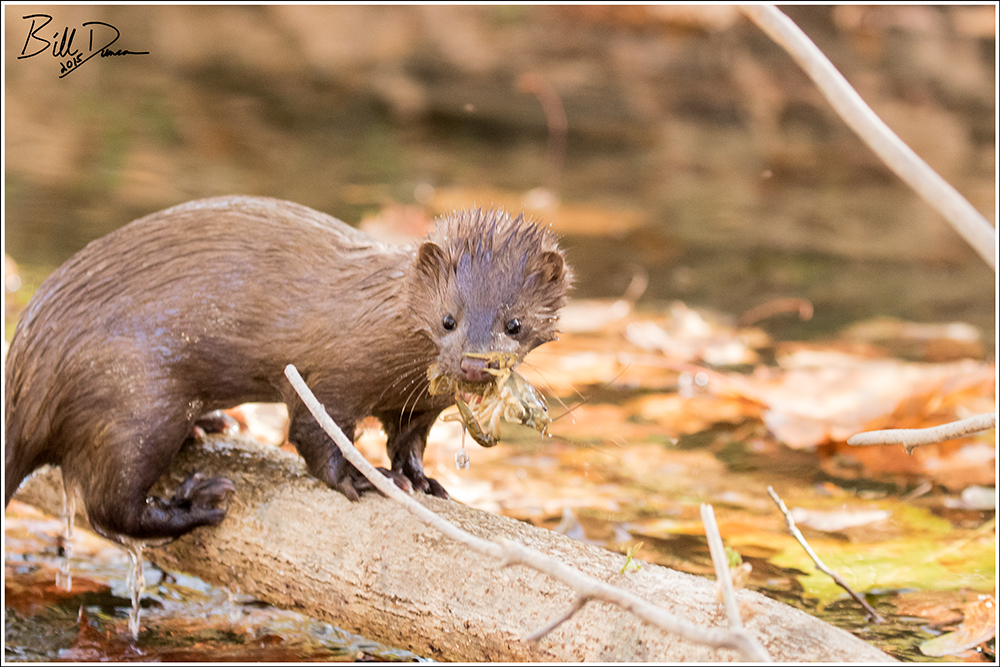
It was quite a challenge to keep up with these guys as they fished. This one below had caught a nice-sized crayfish and barely slowed to stop and enjoy his snack.
Ozark Lobster!
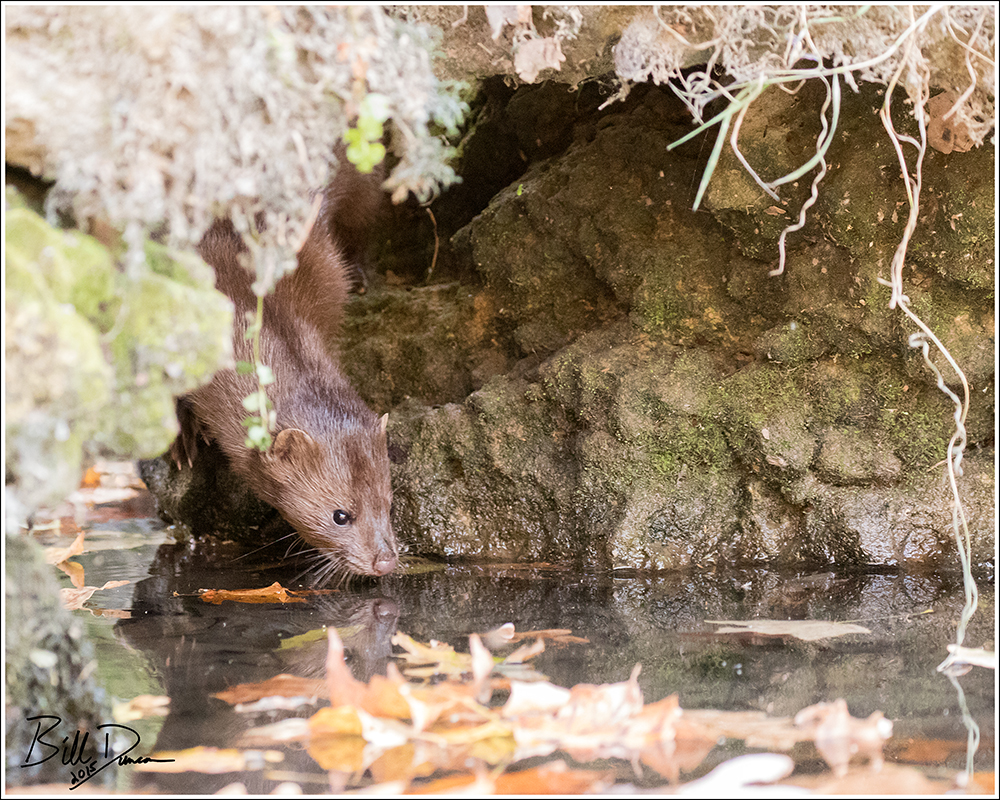
Here is a photo of one investigating the water prior to dipping back in.
Testing the Water
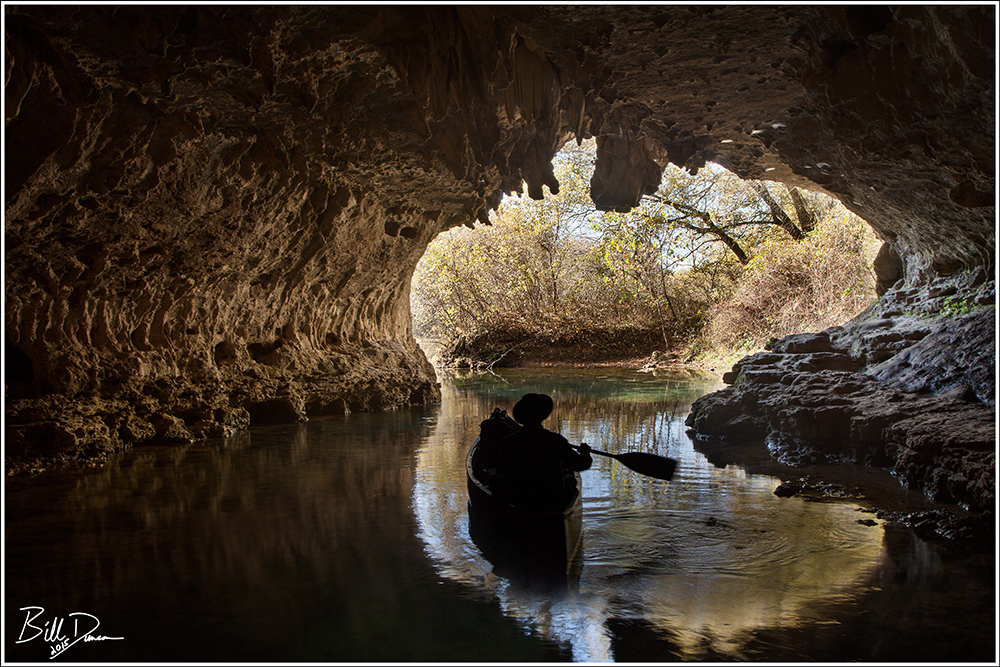
Not only does a float down the Current allow for great observations of wildlife, but many geological features are most easily seen by being on the river as well. Cave Spring can now be accessed via a nice newer trail, but it is much nicer accessing it by boat. The endpoint of a vast and interesting karst drainage system, Cave Spring rises from the back of a short cave. At the rear of this cave one can guide a boat over the vertical conduit of the spring, which is ~155 feet deep! What an eerie sensation it is to shine your light down and still see no more than a fraction of the length of the conduit shaft. In the image below, I am on a dry exposed shelf adjacent to the spring’s outlet and Steve is guiding the canoe towards the river.
Cave Spring
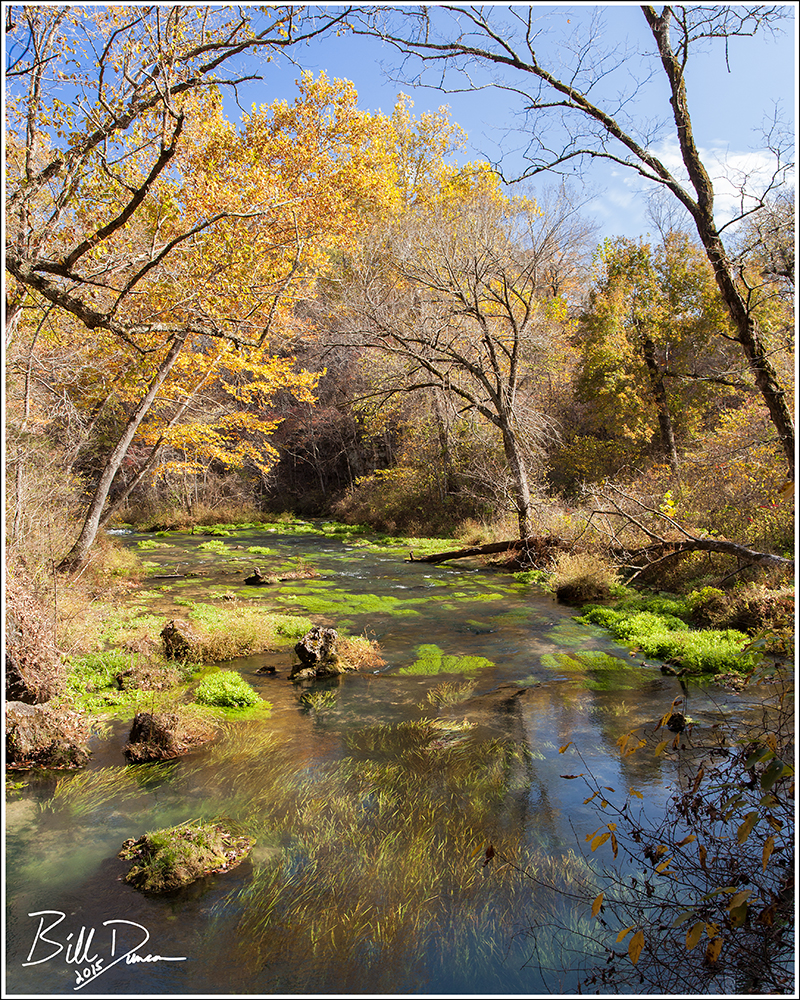
Pultite is a spring found on this upper stretch of the Current River that is surrounded on all sides except the river by private property. This means that one must boat or wade/swim to visit it. At only ~ 1/10 the output of Big Spring, Pultite is still quite a good-sized spring with and average daily output of ~ 25 million gallons. The effluent channel on this one is quite attractive and I hope to visit more often.
Pultite Channel
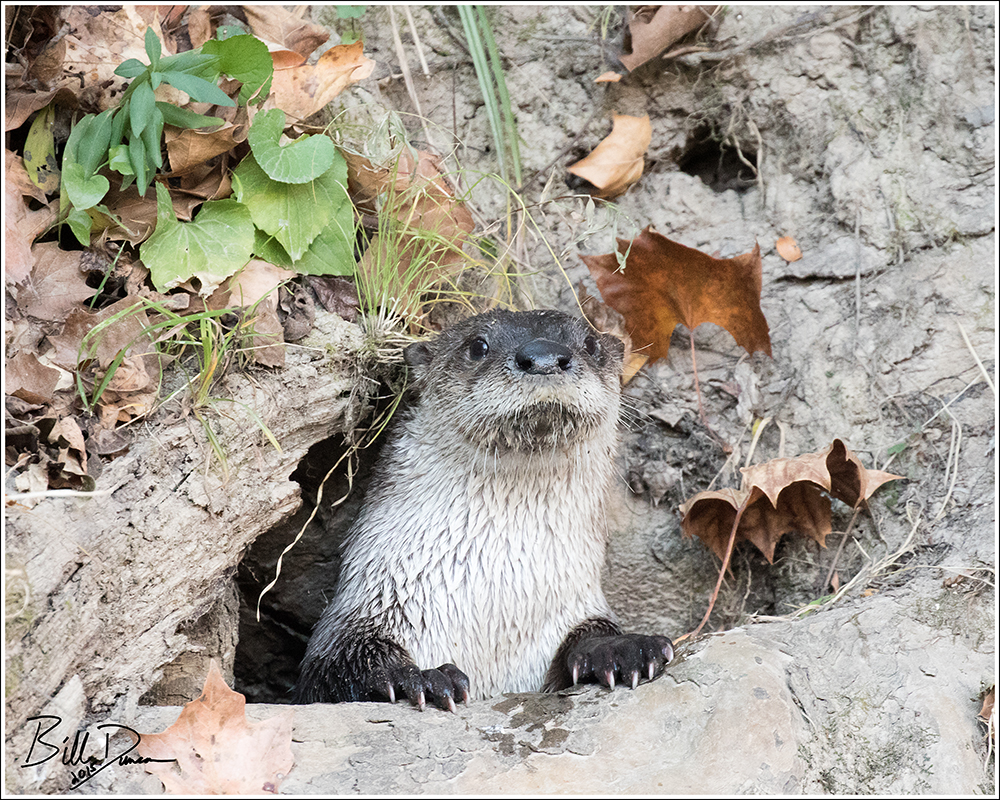
If day one was for the Mink, day two was our River Otter day. We had no Mink, but 5 or 6 of these large weasels were spotted.
North American River Otter
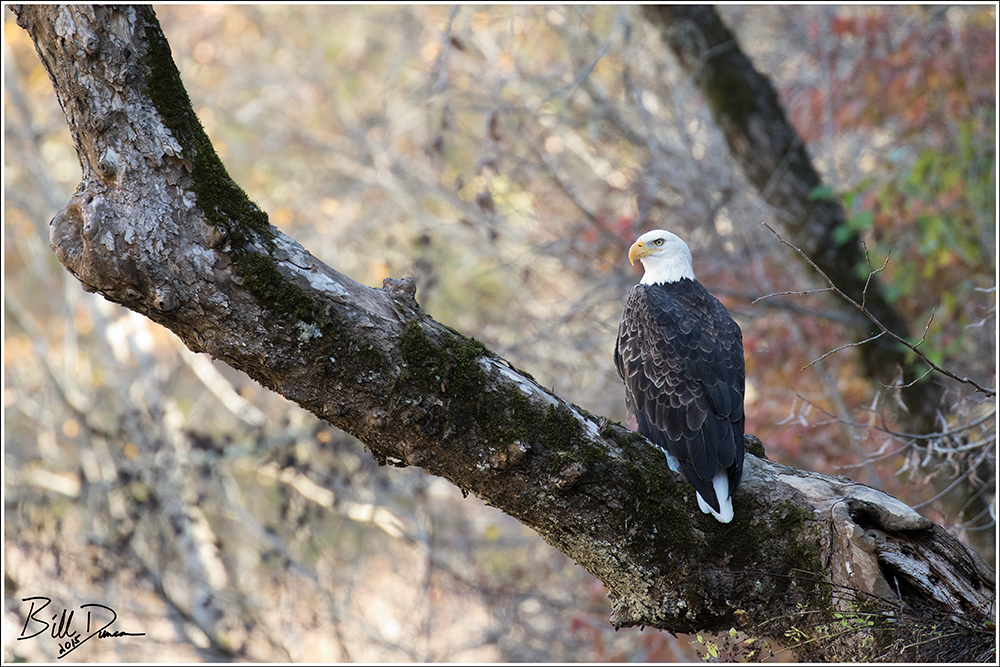
Not to forget the birds! These days, a trip to nearly any permanent Missouri water source will likely bring an encounter with a Bald Eagle. Observing these guys in the Ozarks will never get old to me.
Bald Eagle
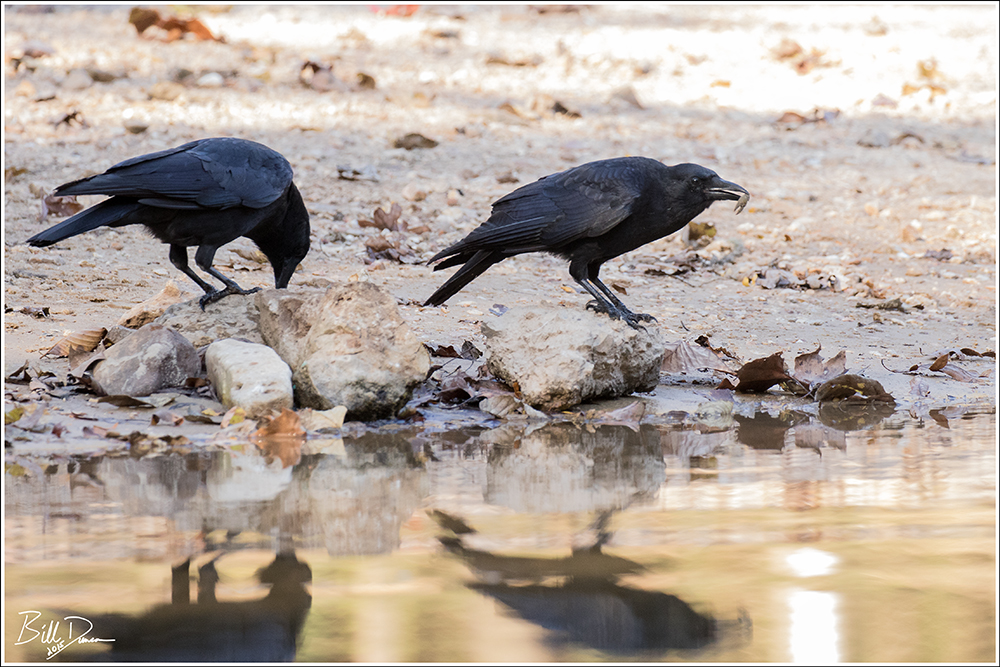
Another constant companion on these floats are the Fish Crows, here pictured finishing up a little Ozark lobster.
Fish Crow
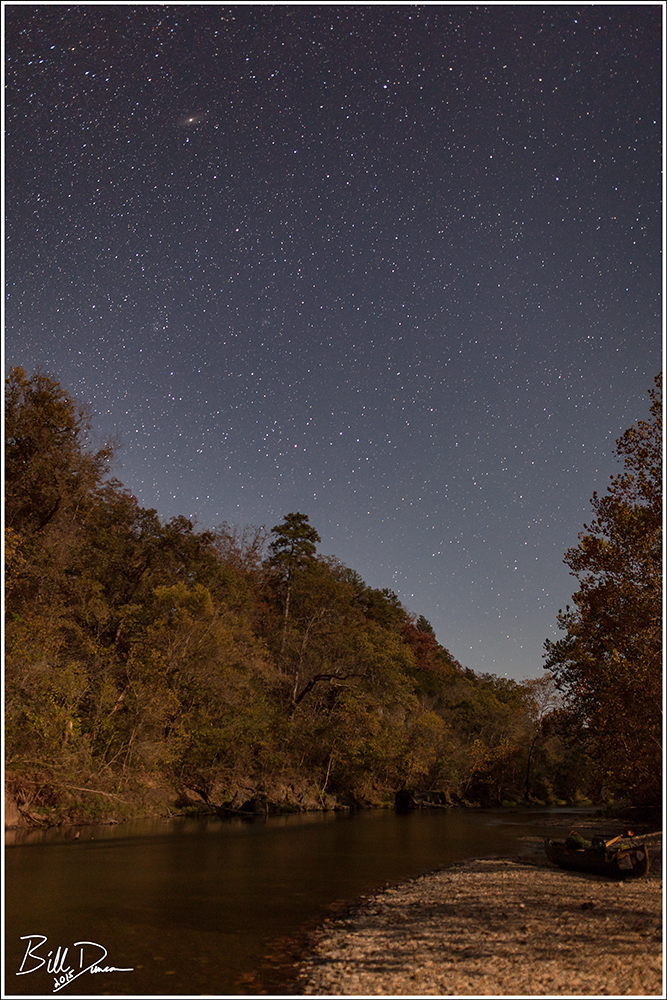
We were fortunate in having mostly clear and dry skies on this trip, which allowed us to throw our bags directly on whatever gravel bar that struck our fancy and sleep directly underneath the stars. A morning fire was necessary – not only to burn the dew off of our sleeping bags, but of course, for the river-water French-press coffee. Dark skies on these streams afford great opportunities for astrophotography. My only wish for this trip is that I was a little more tolerant of the cold, tiredness and laziness that limited my patience for getting better nightscape images… 😉
Nightscape on the Upper Current
I will be posting more images of this trip on my Flickr account in the near future. Thanks for visiting and I hope to post again in the near future.















 A Thousand Acres of Silphiums