Return of the Illinois Chorus Frog!

During this past weekend the WGNSS Nature Photography group met up with our friend Dr. Rick Essner from SIUE to see and photograph one of our favorite subjects, the Illinois chorus frog (Pseudacris illinoensis) . I first wrote about these wonderful little guys a couple of years ago when Rick helped a few of us see them for the first time.

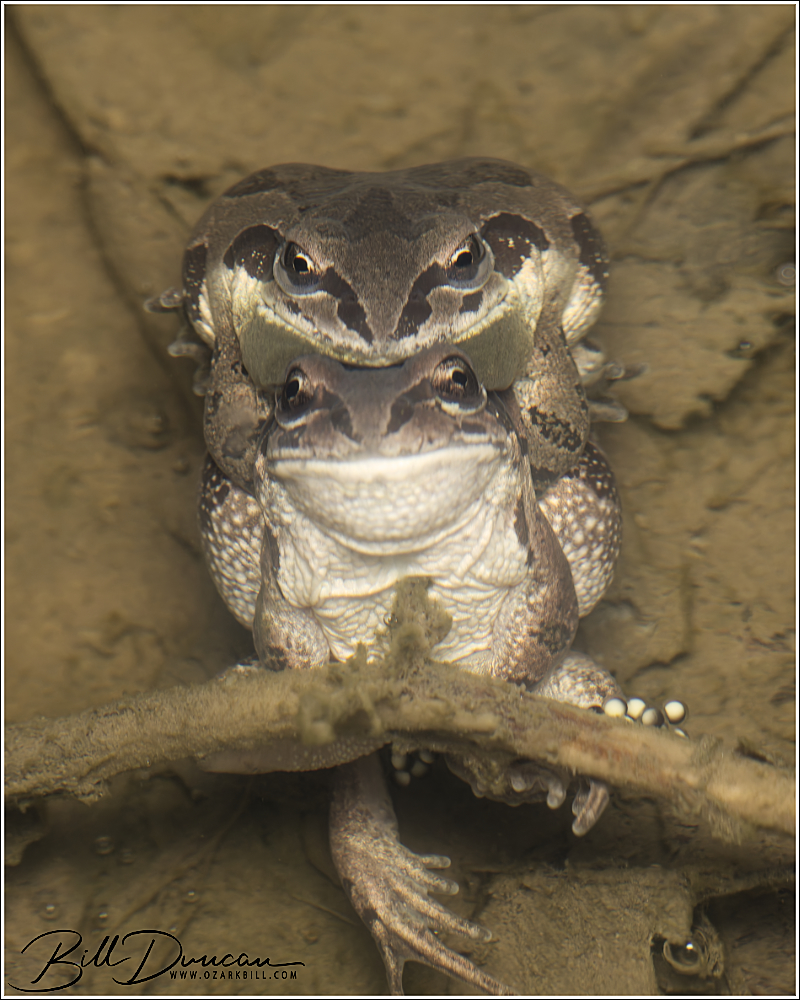
This year’s visit was perfectly timed for my primary photography goal, which was to photograph this species during amplexus. Our first stop was at a sand-prairie habitat where the frogs use small plastic basins that are set into the ground in order to keep the standing water these frogs need to deposit eggs and the resulting tadpoles need for their development. In addition to these artificial basins, the land mangers at this and a nearby sand prairie tract have recently installed larger ponds with liners to retain water long enough to see the frogs through their development cycle without the need to worry about egg-predating fish. These ponds were only installed this winter, however, and cover-providing vegetation and structures in the water are not yet established. We only found a couple of frogs at these locations but hopefully these new ponds will support a strong breeding population in years to come.

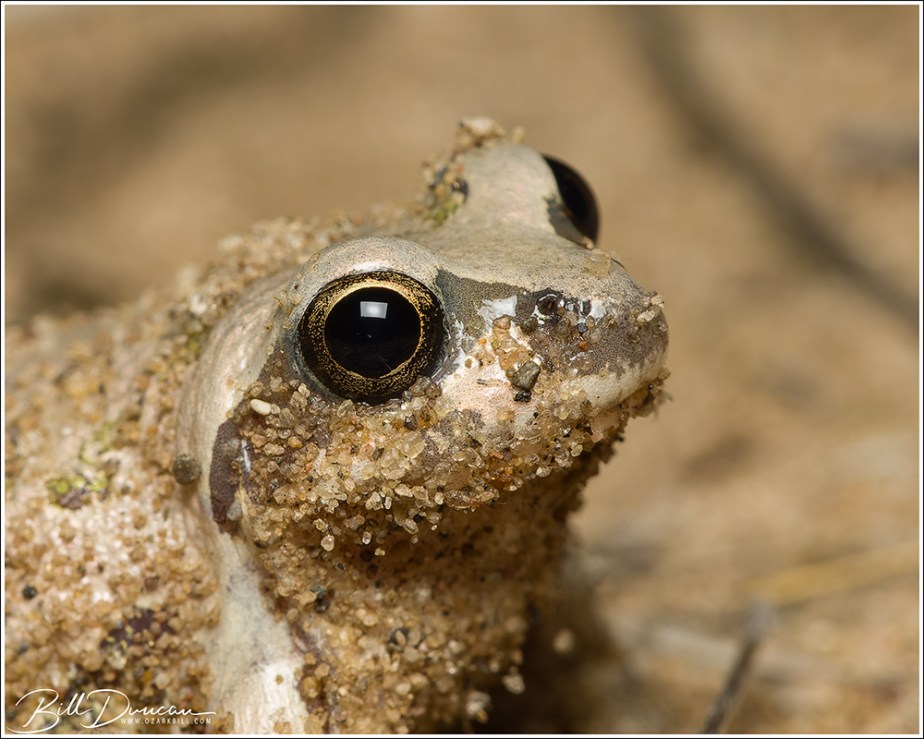
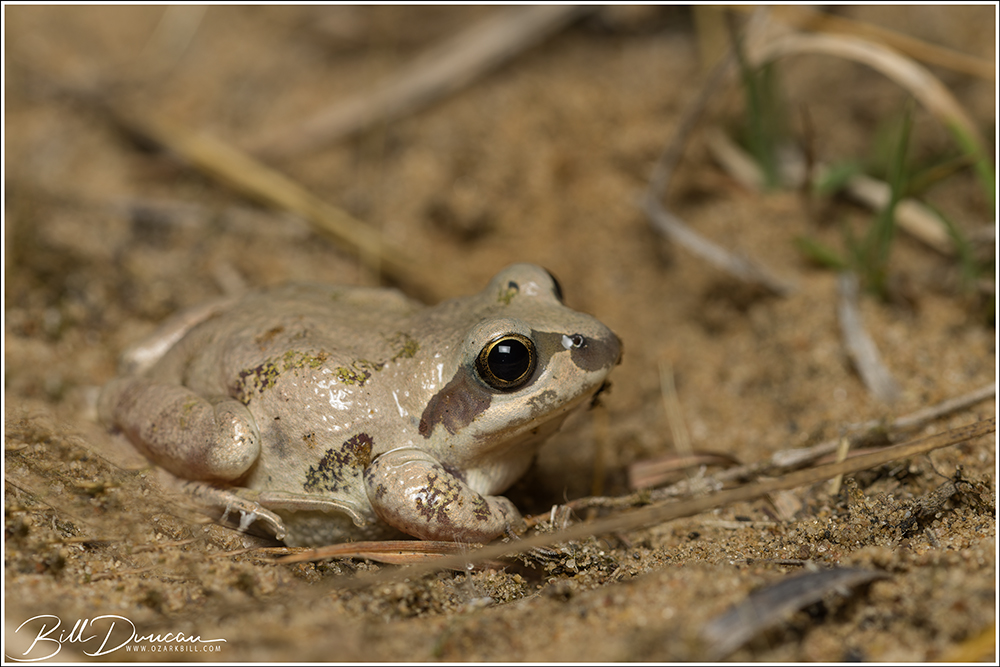
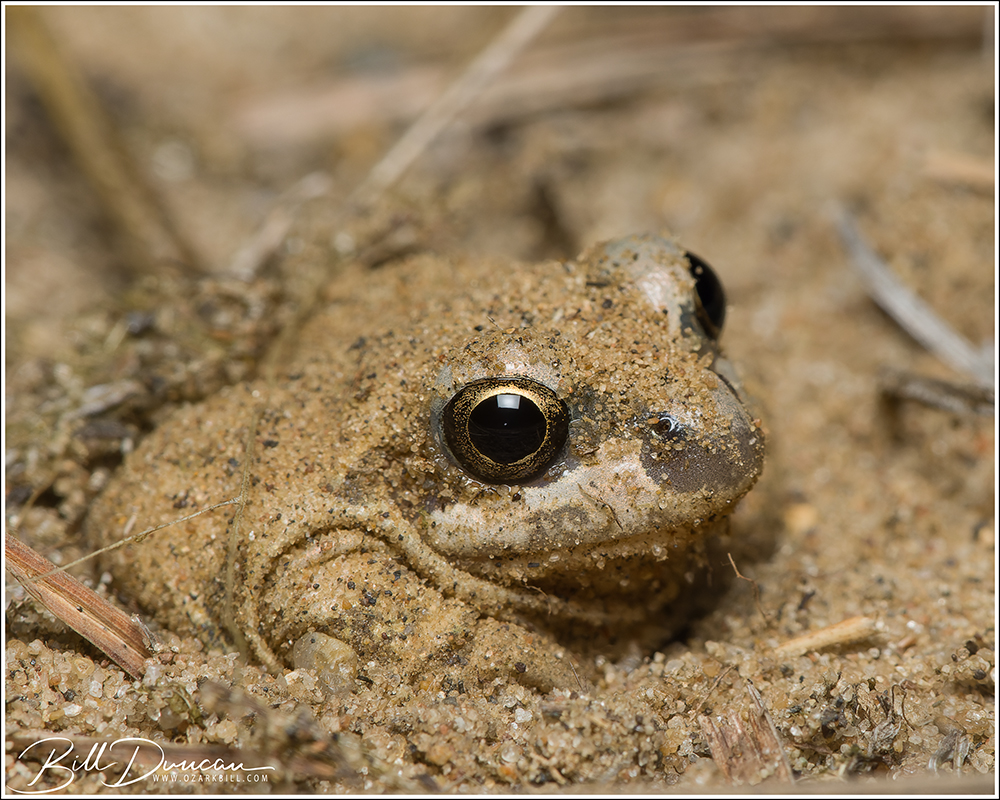
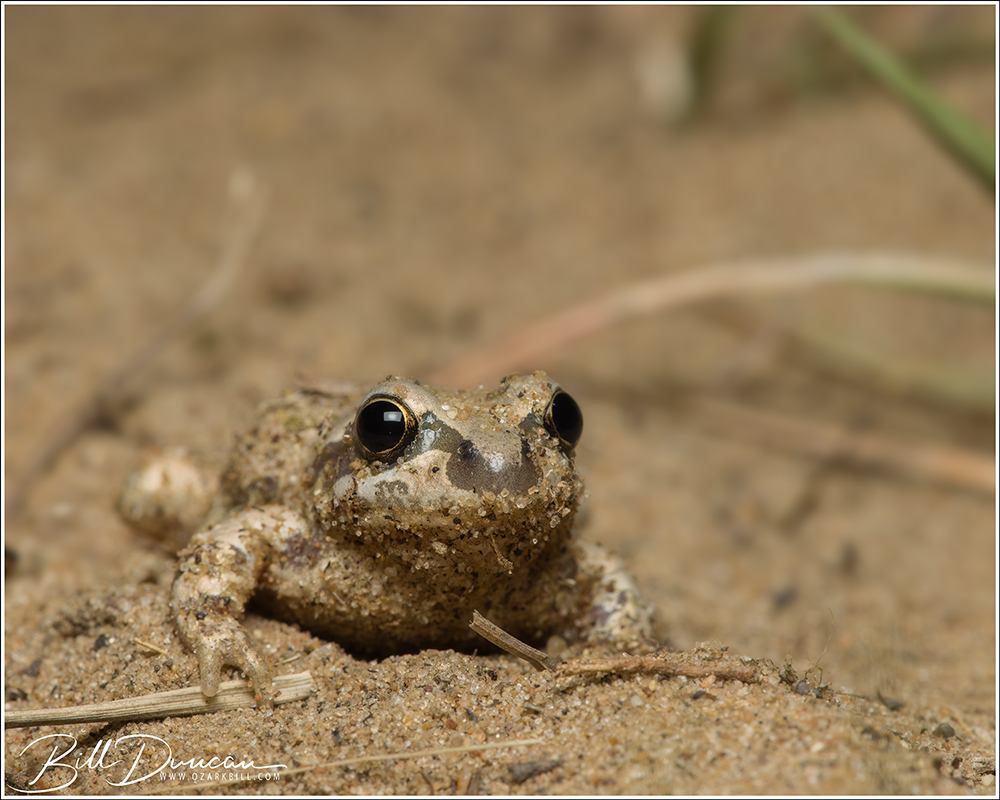
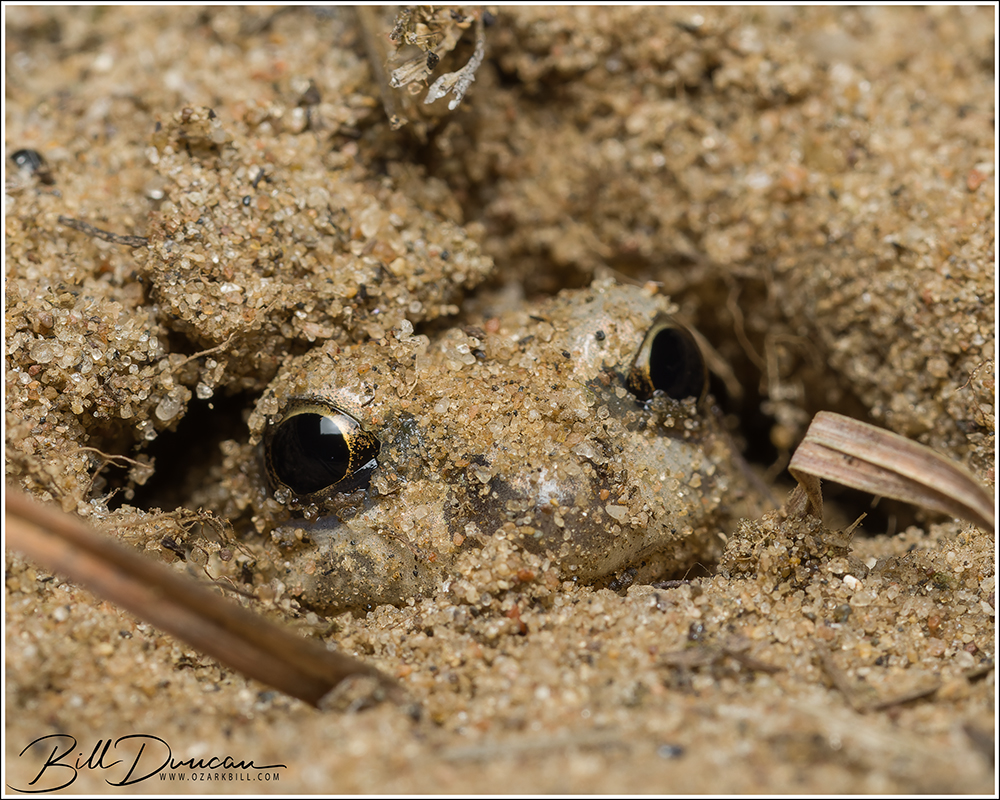
An Illinois chorus frog hunkering in the sandy bank of one of the new future breeding ponds.
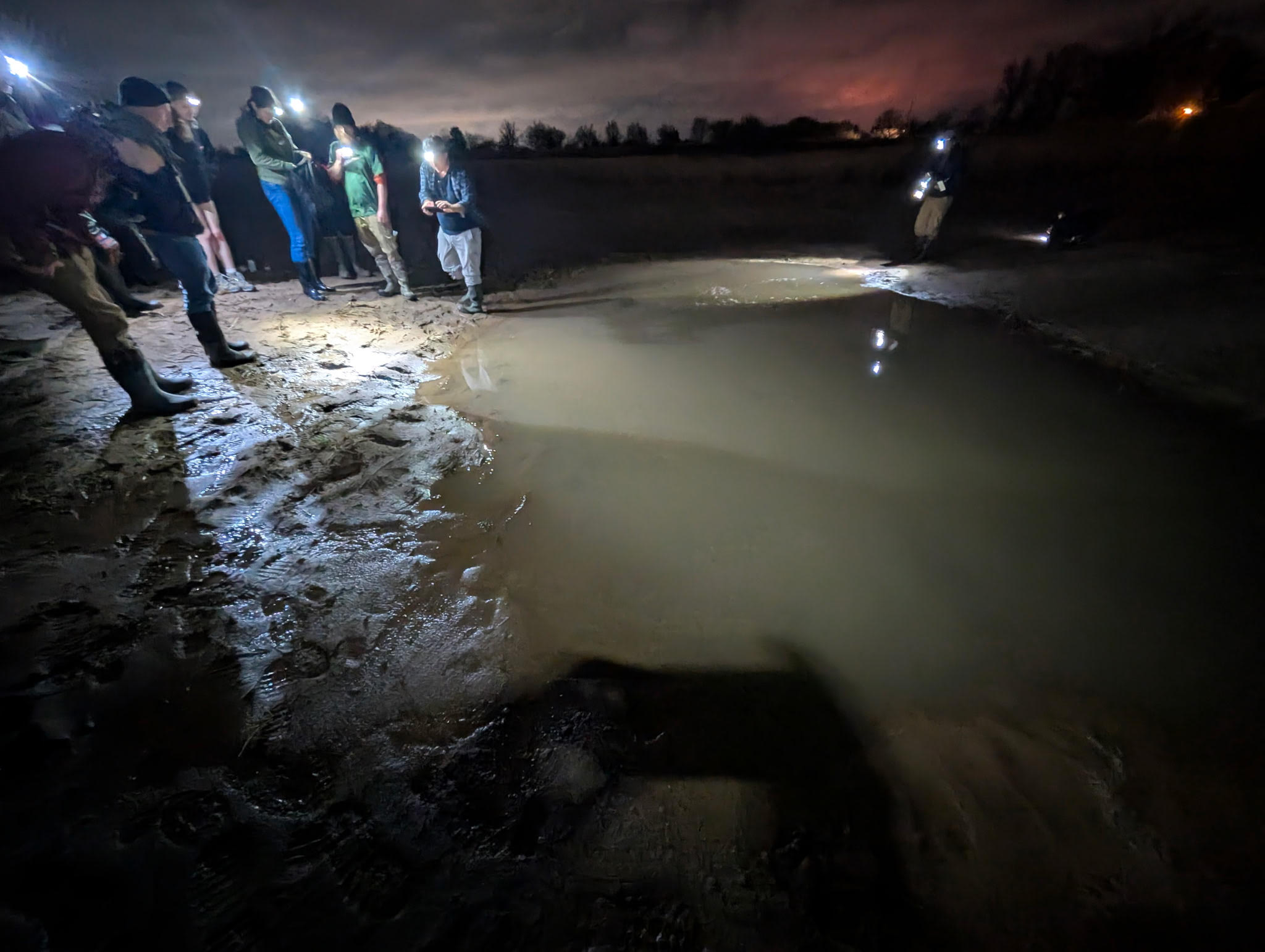
Rick Essner, his students and WGNSS photographers standing on the banks of one of the new breeding ponds within the sand prairie habitat. Photo by Miguel Acosta.
WGNSS members and frog paparazzi, Casey, Dave and Miguel photograph a frog while a student collects measurement data on another.

Getting photographs was not the primary reason Rick and his students were out on this fantastic evening. The biologists at SIUE are using mark-recapture techniques to study population demography and spatial activity, as well as the frog’s feeding behavior, locomotor behavior, and diet. It was fascinating to watch the students insert the smallest available PIT (Passive Integrated Transponders) tags in order to identify individual frogs in order to monitor their growth, movement and other characteristics over time.

A student uses calipers to take the frog’s snout-vent length measurement
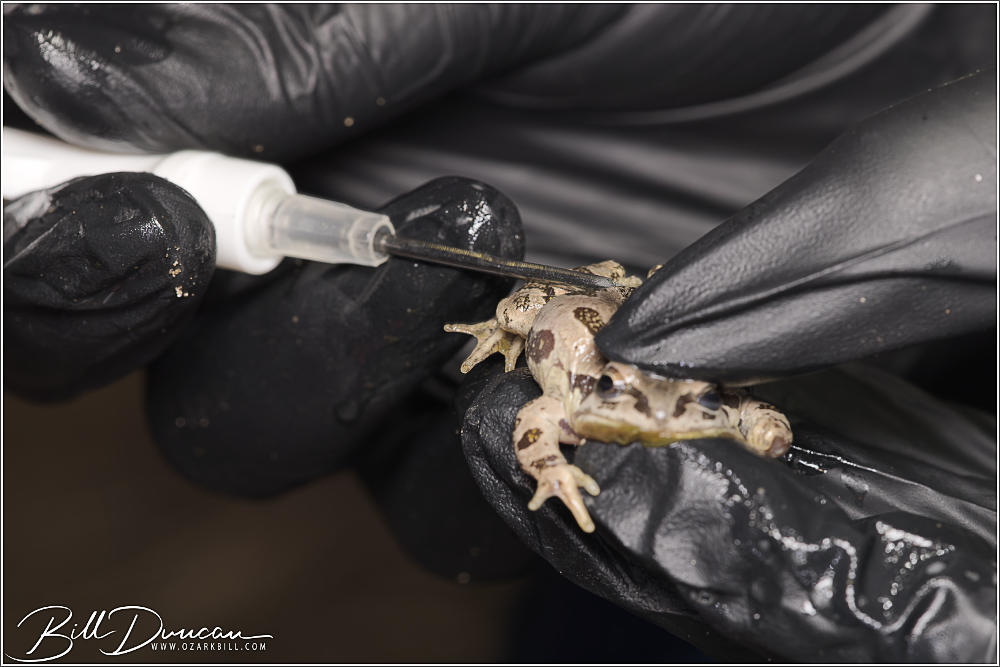
A student prepares to insert the PIT subcutaneously into the frog. Following the insertion, the puncture in the skin is sealed with Vetbond.
After the PIT has been inserted, the student checks that the identification from the transponder can be read and recorded. The frog now has an identity!

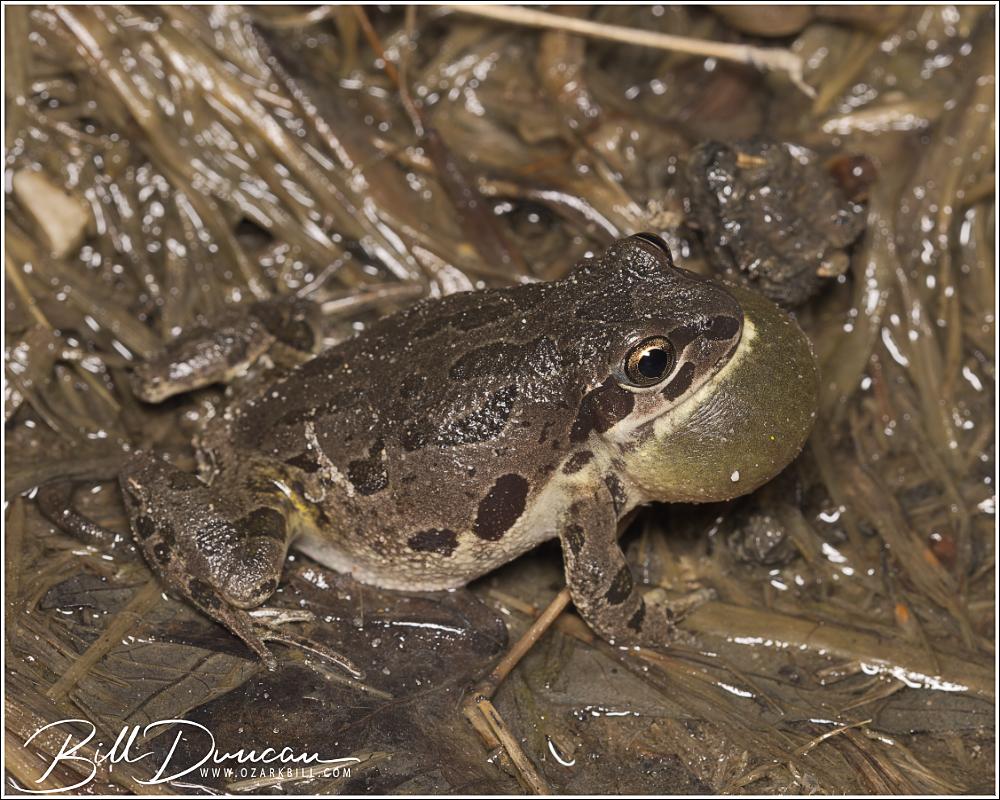
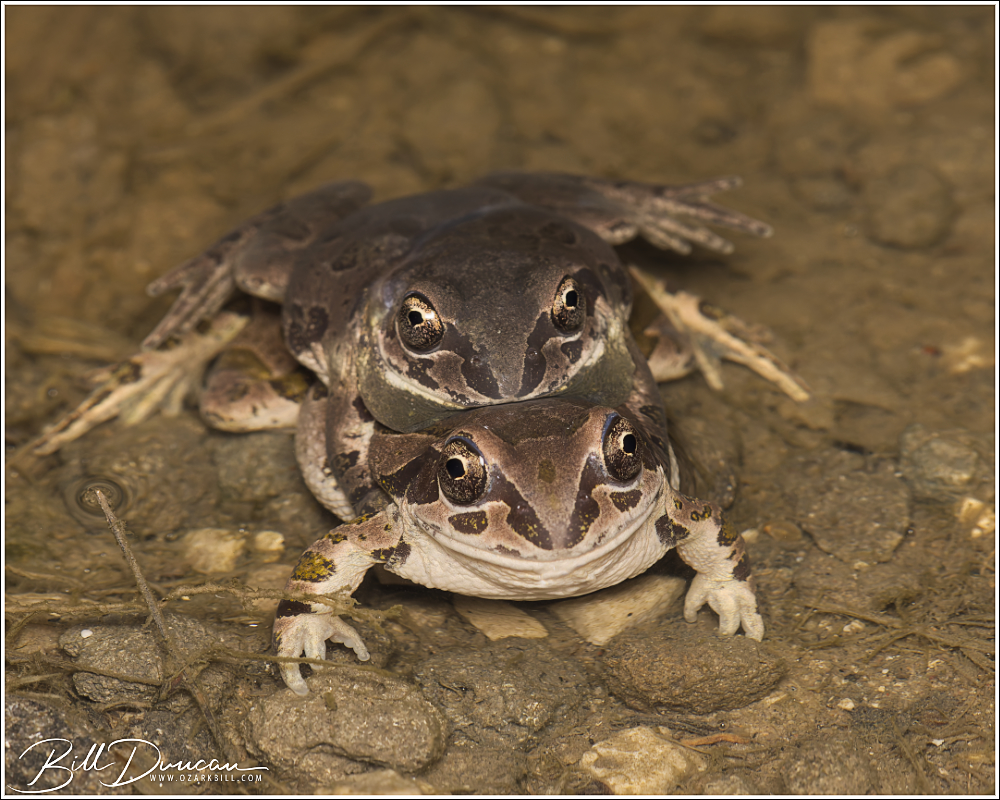
After finding a few frogs in the sand prairie, we followed Rick and his students to other potential locations that might contain breeding frogs. We found what we were looking for in a location that was somewhat unfortunate but definitely contained what the frogs were looking for. At a drainage ditch between a small blacktop road and an agricultural field we found a group that I estimated to be between 25 and 50 Illinois chorus frogs along with quite a few American toads (Anaxyrus americanus). Here we easily photographed pairs in amplexus and struggled to photograph calling male Illinois chorus frogs.
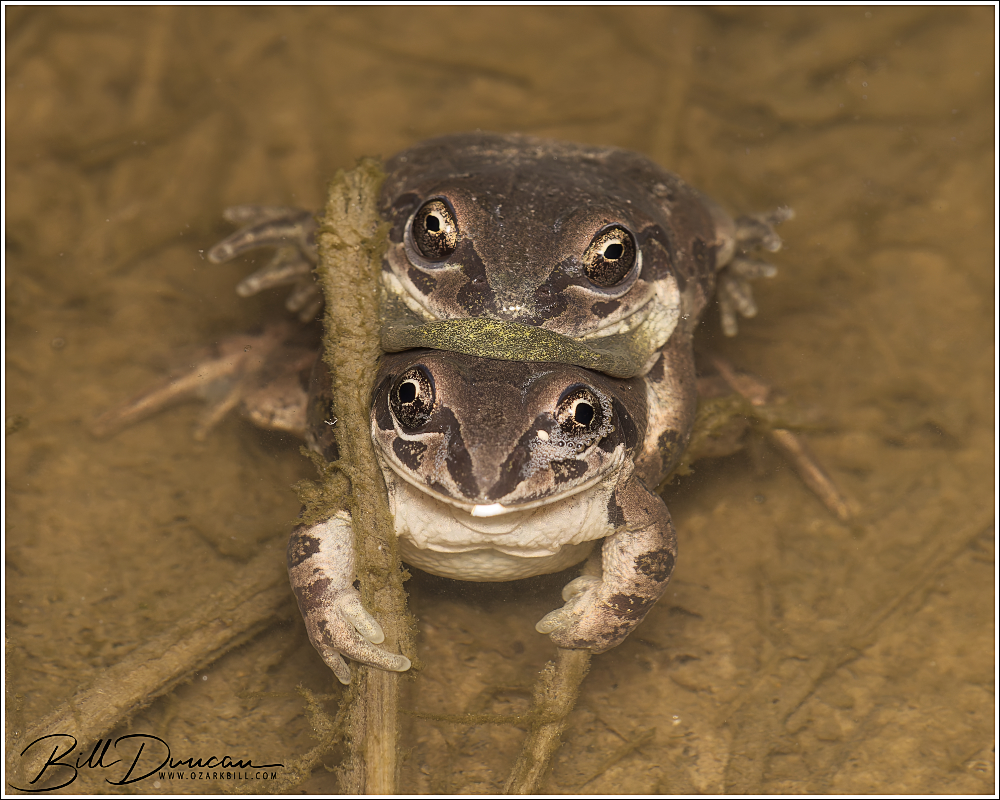
In order to photograph the frogs with inflated vocal sacs during their vocalizations, we first needed to find the solo males that were vocalizing. This was the first challenge. The unpaired males seemed to have a high preference for vocalizing under the cover of the short vegetation along the banks of the ditch. This made finding them quite a difficulty. Additionally, as anyone who might have the experience of attempting to find vocalizing frogs will know, they exhibit what could be called a ventriloquist effect. As the observer hones into the location where the frog must be calling from, it is simply impossible to find. This effect is hypothesized to be an adaptation to predation avoidance. A stationary frog, vocalizing at incredible decibels, could be seen as ringing the dinner bell for predators with the ability to use auditory cues to track their prey. This may help with predator avoidance, but then how does the female find her chosen mate with the sweetest voice?

Finding the vocalizing males was just half the battle. In order to photograph these guys at night, we must shine a light in order to focus on them. More times than not, as soon as I trained my focusing light on to one of them, they would quit calling. It would then take quite a while for them to get started again after sitting still with the lights out. It took me quite a few attempts to get the few successful images I was fortunate to get.
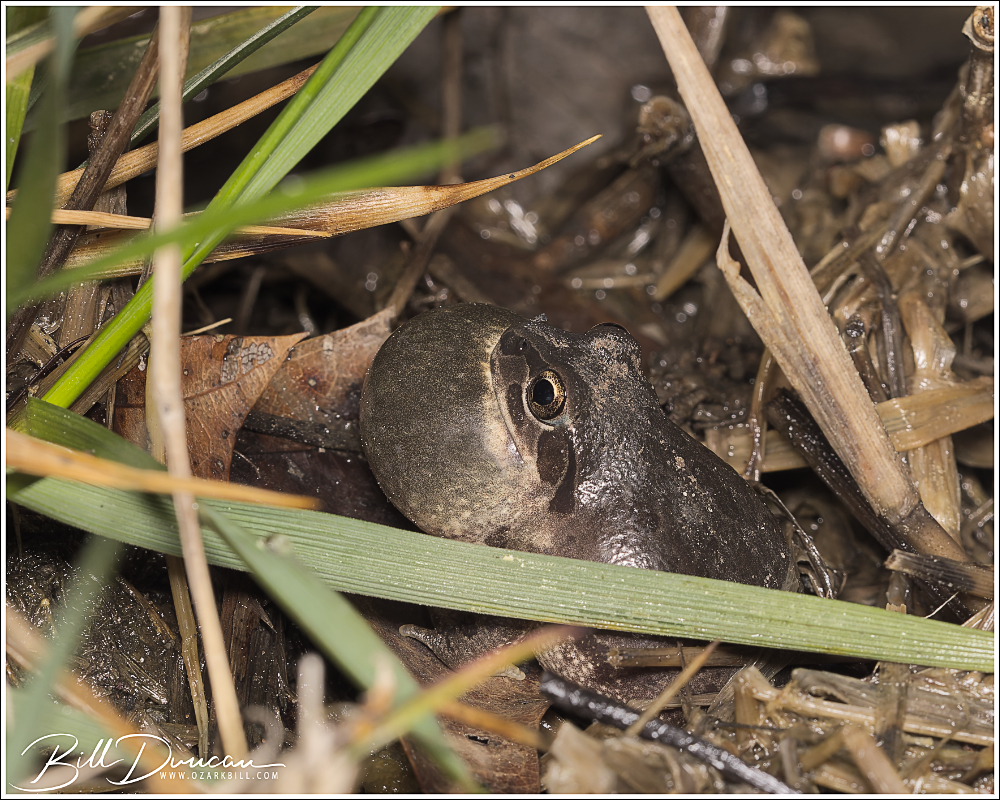
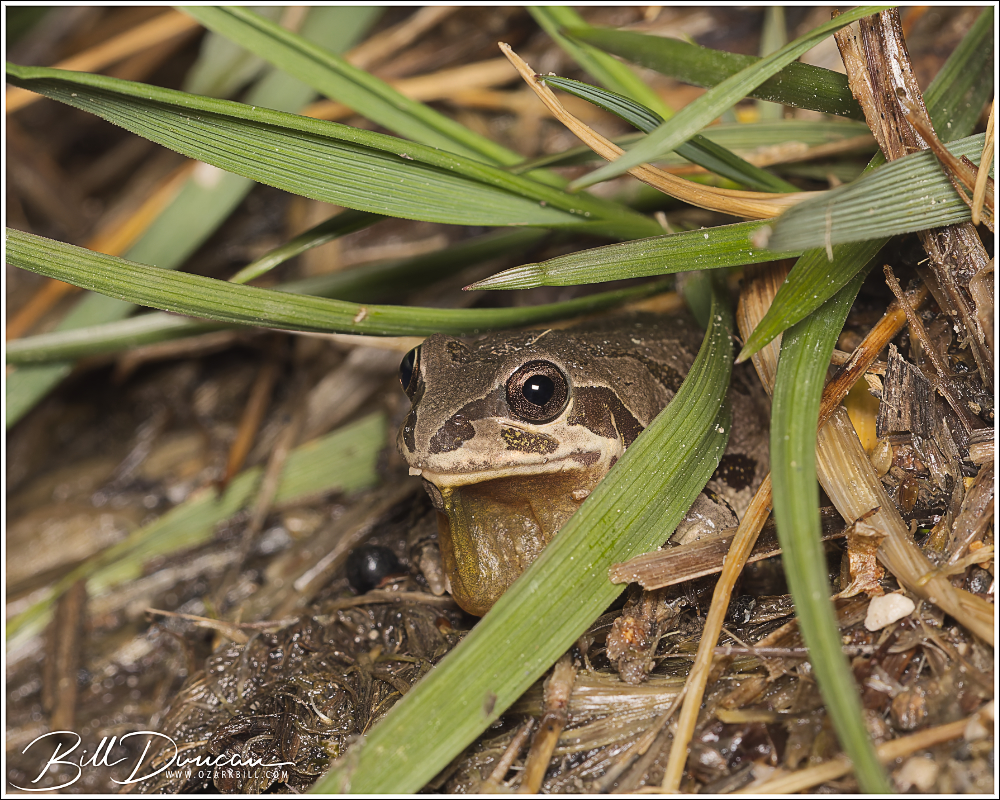
When male frogs are in a perfect situation such as this, they are eager for ANY opportunity. If it moves and in any way matches their search pattern – namely, any other frog, they are known to grab and hold on, whether that be a conspecific female or male, or sometimes something even more, shall we say, less evolutionarily appropriate…

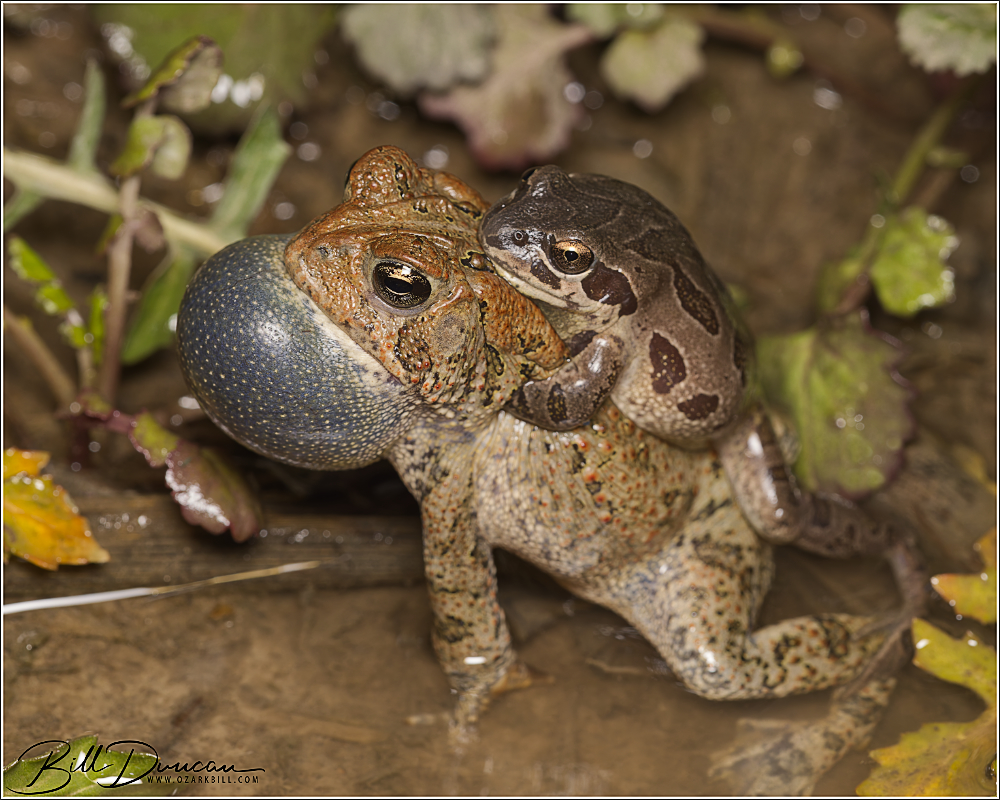
This Illinois chorus frog was so randy that this American toad looked ripe for the picking!
On top of this interspecies attempt, the toad turned out to be a male!

That’s all I have to share from this wonderful evening. I’m happy to see that researchers at SIUE are studying this threatened species and that the land managers are making strong attempts at improving breeding habitats for this wonderful species.

Thanks for the visit!

WGNSS Hits the Glades

Back in early May of this year, a small group from the WGNSS Nature Photography Group headed out to visit some glades in Washington County, Missouri. Being a relatively wet and cool spring, we expected the glades to be lush and full of blooming wildflowers. These specialized blooming plants and their associated pollinators were our planned primary targets for this beautiful Saturday.

Unfortunately for us, the timing of our visit did not seem to be optimal. We found very few plants in bloom and even fewer interesting butterflies and skippers that we were hoping to find. However, I noticed something about this particular glade that Casey had steered us into. Looking around, I noticed that there was very little sign that foot traffic or rock tipping had occurred recently – something that plagues the more popular glades in Missouri.

Normally, I loathe the thought of rock-tipping – the process of lifting rocks in sunny natural areas in order to find reptiles, amphibians and arthropods. As I alluded to above, this activity can be highly over-practiced and is often accompanied by people harassing or collecting the animals found. In large and popular glades, the signs of rock tipping can be abundantly clear. Just look for large flat rocks that have obviously been moved and are no longer in close contact with their underlying soil substrate. In this case, because we were on the lookout for improvised subjects and the fact that this area has not seen much pressure from others, we decided to carefully tip a few to see what we might find.

Little did I know what a treat we were in for. With tipping over just a few stones, we were able to find close to 20 prairie ring-neck snakes (Diadophis punctatus arnyi), including one albino! The prairie ring-neck is a small, slender snake native to prairies and other grasslands in the central United States.

An albino prairie ring-neck snake (Diadophis punctatus arnyi)

These snakes can reach up to 14 inches in length, but seem much smaller due to their slender build. This species primarily feeds on small invertebrates such as earthworms, slugs, and insects, but may also consume small amphibians and other reptiles. The prairie ring-neck snake is considered an opisthoglyphous colubrid, meaning they possess small fangs in the rear of their mouths along with a very mild venom. They are completely harmless to humans as they will very rarely attempt to bite, relying instead on a foul-smelling musk that they emit along with exposing their orange and red warning colors on their undersides in order to dissuade predators. On rare reports of bites to humans, the reaction has been described as a mild discomfort or stinging sensation, akin to a nettle sting or a sting from a sweat bee.

A typically colored prairie ring-neck snake

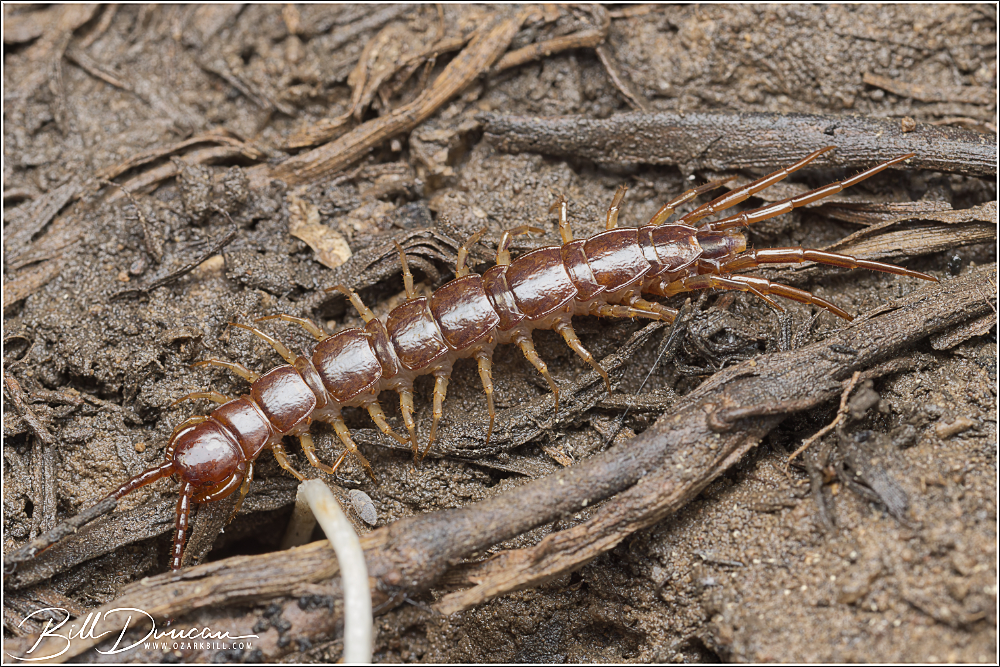
Rock tipping can also yield a number of interesting invertebrates. Although we did not find any tarantulas or black widows that can be found in this manner, we did find Missouri’s only scorpion and a common centipede.

The striped bark scorpion (Centruroides vittatus)
The rock centipede (Lithobius forficatus)

When we were done with our subjects we made sure they all found their way back safely underneath their rock dwellings.

-OZB

Eastern Copperhead

To continue with the Halloween week theme, tonight I am presenting an image that represents something that nearly became a horror story. Not that I am considering any of these spiders, snakes or any native creatures I photograph to be scary at all. It just happens that I have several of these “spooky” critters lined up in the photo queue at the right time, so to speak.

This nearly became a horror story for me because I was literally one step away from standing on this snake. Casey and I were walking the the Lost Valley Trail at Weldon Spring Conservation Area in St. Charles County, looking for late season caterpillars. On the way back to the car, not far from the parking lot, I just happened to catch the outline of this snake lying across my path before taking a step that would have put my sandal-clad foot down right on top of it.

It tuned out to be a really chill snake, allowing us to photograph it where it laid. I tried to coax it into a coiled position with a stick but it instantly retreated into a burrow underneath some leaf litter just off the trail.

As I mention frequently, I absolutely love this area. It is so rich and diverse. It has beautiful hills and forest structure and lies a mere thirty minutes from our house.

Illinois Chorus Frog!

Miguel and I were offered a very special treat back in April when our new friends and gracious hosts, Rick and Jill, offered to show us a very unique and amazing animal, the Illinois chorus frog (Pseudacris illinoensis). The Illinois chorus frog is a species of study for Rick and his students, who are hard at work trying to document the life history and ecological details of this species of conservation concern. Existing in only a handful of counties scattered across Illinois, Missouri and Arkansas, this frog is classified as G3, meaning it is vulnerable to extinction. The primary forces causing the decline of this species is land development, primarily from agriculture.

Illinois chorus frog (Pseudacris illinoensis)

The Illinois chorus frog requires sandy wetlands. These types of areas are being lost due to drainage efforts for agriculture. The scattered remnants of these habitats are increasingly becoming isolated, likely limiting geneflow between pocketed populations.

Illinois chorus frog (Pseudacris illinoensis) attempting to back itself under the sand

The natural history of this species is incredible. Due to the quick draining nature of their preferred sandy habitat, these frogs spend 90% of their lives below ground. Their breeding season typically begins in February, where they take advantage of water from icy thaws and early spring rains to breed in ephemeral pools. By May, the frogs have buried themselves in underground tunnels that they dig with muscular forearms. Unlike most other frog species that spend large amounts of time in subterranean environments, the Illinois chorus frog is known to feed, eating worms and small invertebrates.

Illinois chorus frog (Pseudacris illinoensis). Here you can see the muscular forearms that these frogs need to burrow underground tunnels where they spend the majority of their lives.

Organizations like the University of Illinois, Illinois Department of Natural Resources and the Heartland Conservancy are doing a lot of work in a number of places to discover more about their ecological needs and protecting and managing habitat these frogs need.

Illinois chorus frog (Pseudacris illinoensis)

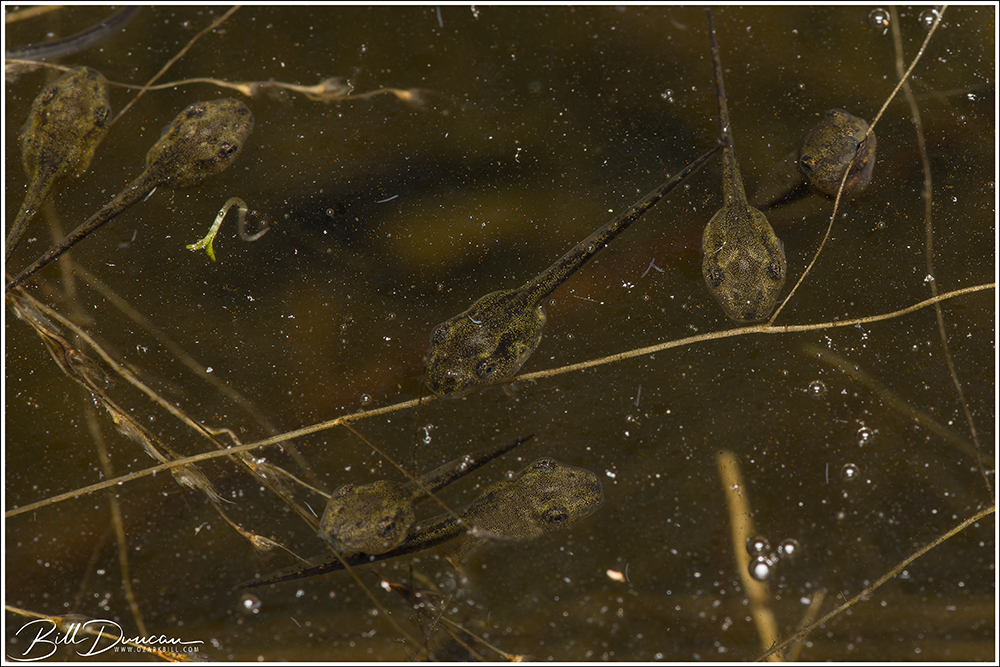
Another great thing Rick and Jill showed us were Illinois chorus frog tadpoles that were in artificial breeding “ponds” that were setup for them. As the hundreds of tadpoles we saw suggest, they were doing really well here.

Illinois chorus frog (Pseudacris illinoensis) tadpoles

I’m still excited about being able to see and photograph these wonderful frogs and hope to visit them again during an early spring.

OZB

WGNSS Nature Photo Group Travels to Snake Road

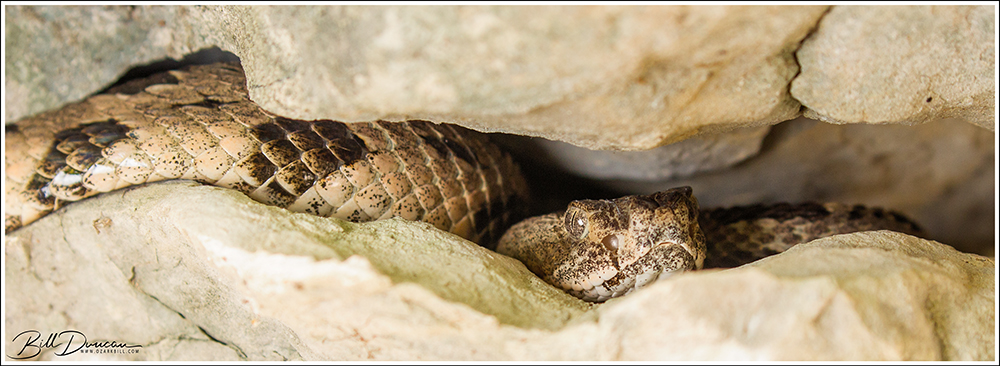
Timber Rattlesnake feeling safe. f/7.1, 1/60 sec., ISO-640, 205 mm focal length equivalent.

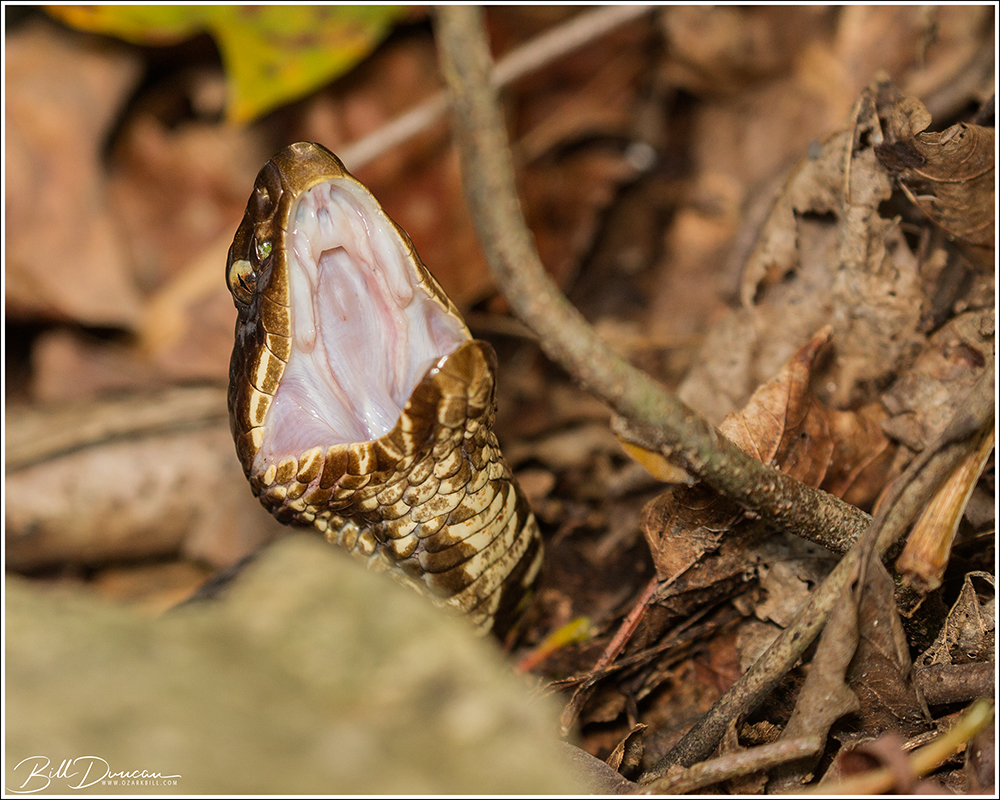
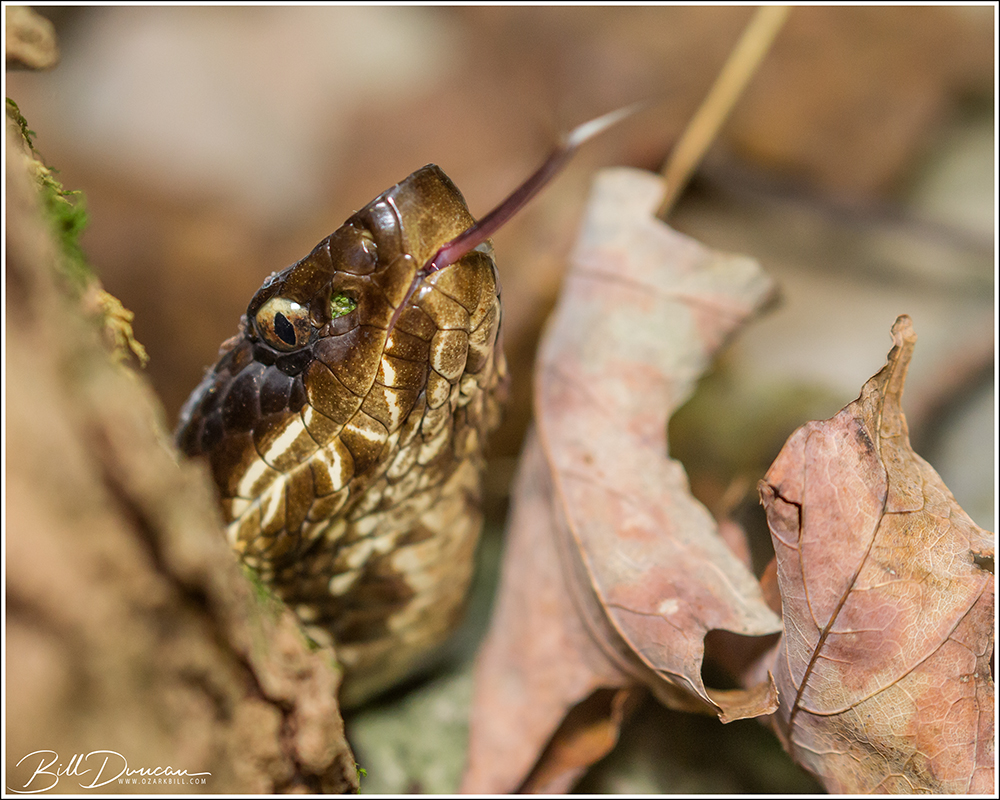
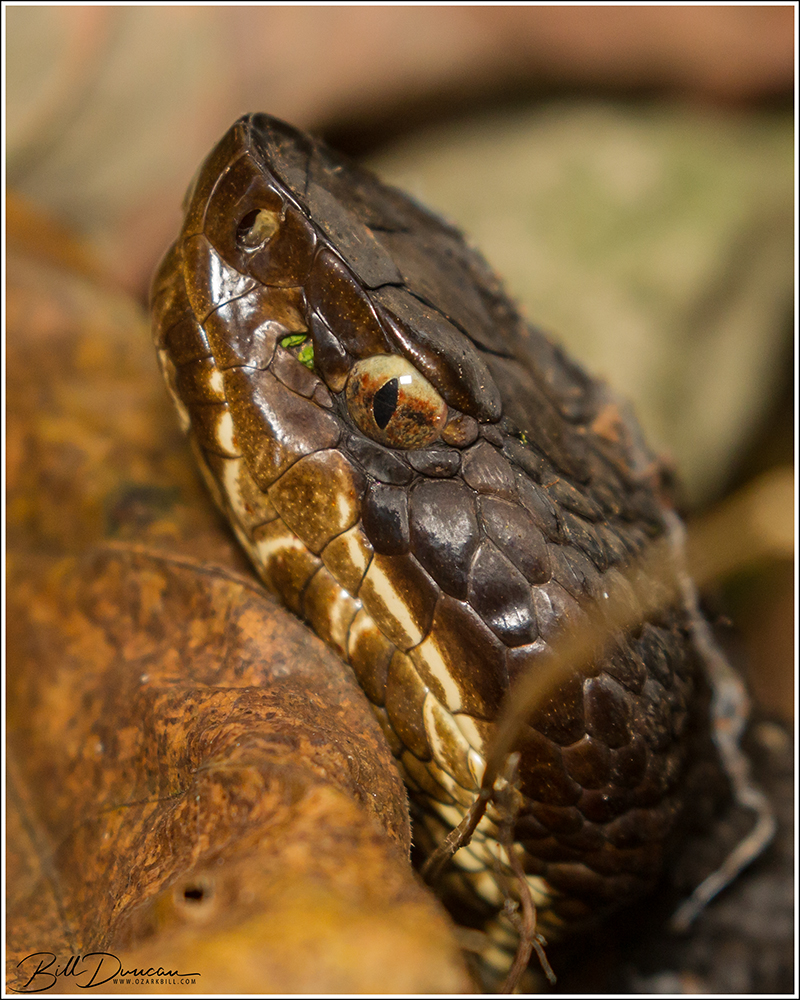
Cottonmouth letting its freak flag fly. f/5, 1/160 sec., ISO-640, 322 mm focal length equivalent.

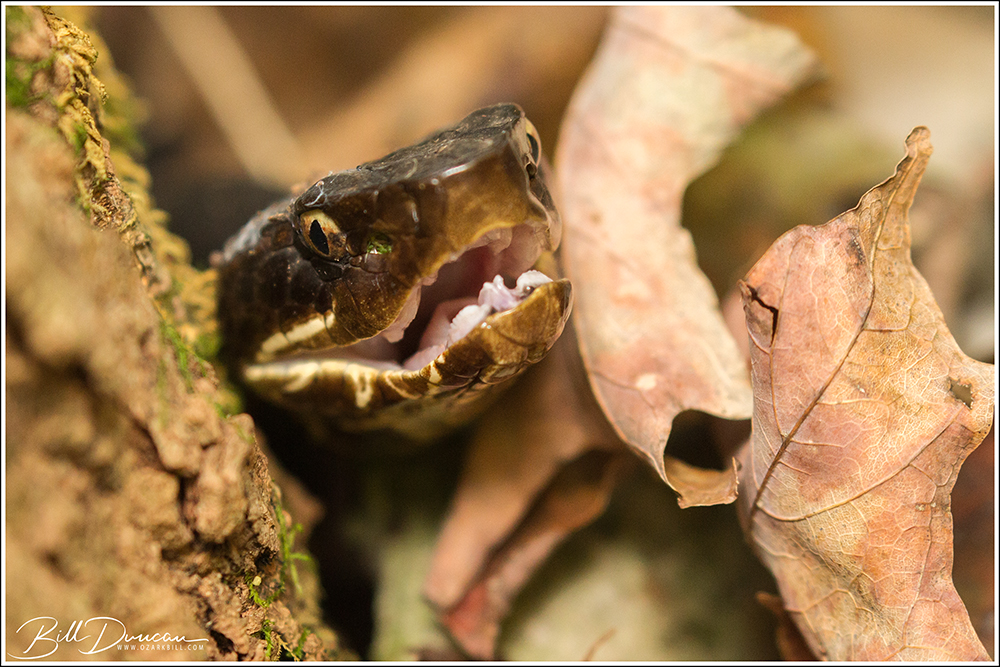
Missing Muppet? f/5. 1/125 sec., ISO-1600, 342 mm focal length equivalent.

Cottonmouth found at Larue Road. f/5, 1/125 sec., ISO-1600, 342 mm focal length equivalent.

Cottonmouth closeup. f/7.1, 1/100 sec., ISO-1600, 520 mm focal length equivalent.

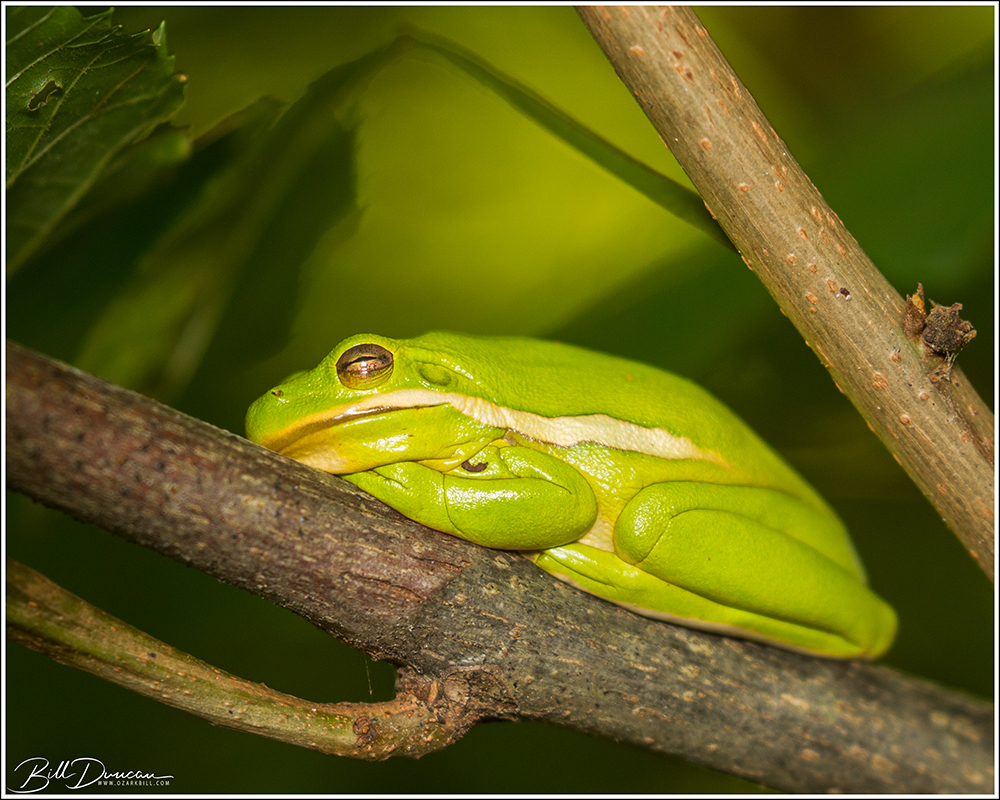
Green Treefrog. f/5.6, 1/200 sec., ISO-640, 520 mm focal length equivalent.

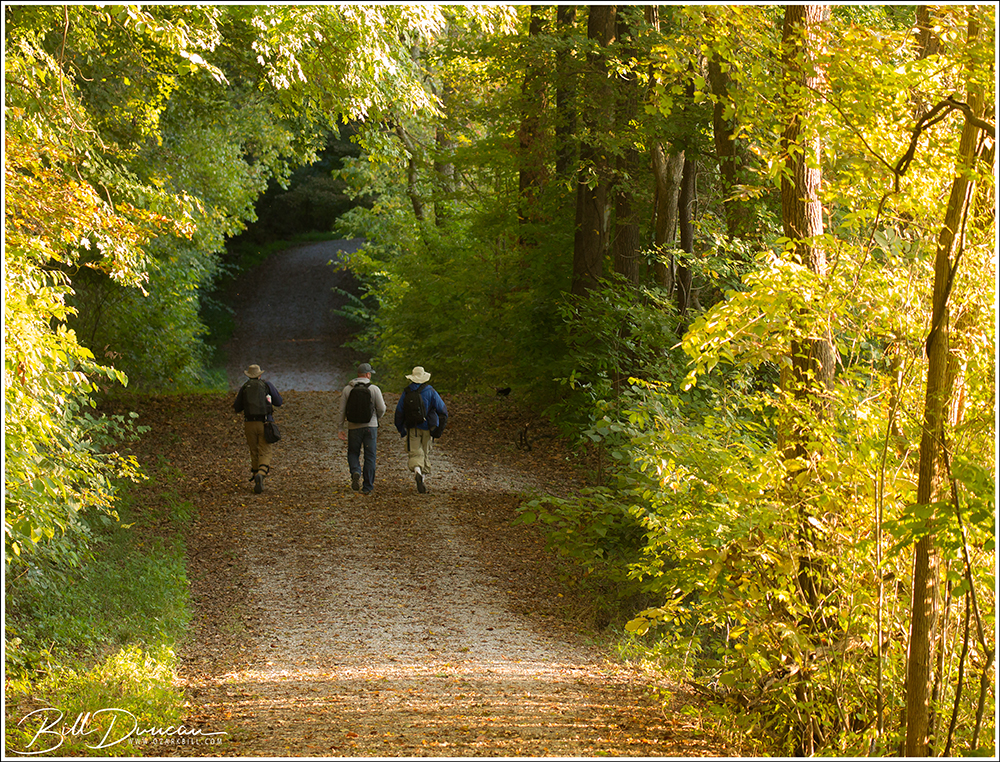
Larue “Snake” Road, Autumn 2019. f/5, 1/100 sec., ISO-1250, 213 mm focal length equivalent.

Eastern Collared Lizard

Eastern Collared Lizard – female. 520 mm focal length equivalent, f/11, 1/160 sec. ISO-200

These photos were taken on a WGNSS Nature Photography Group field trip into the St. Francois Mountains in early June, 2019.

Eastern Collared Lizard – female. 520 mm focal length equivalent, f/8, 1/200 sec. ISO-160

Along with a couple of female eastern collared lizards, we found quite a few other herps of interest.

Eastern Collared Lizard – female. 406 mm focal length equivalent, f/6.3, 1/320 sec. ISO-200

These lizards are really great photographic subjects. They are relatively easy to photograph, allowing for watching while they bask in the sunlight of a clear day without much manipulation or interference necessary.

Tingler Prairie Conservation Area

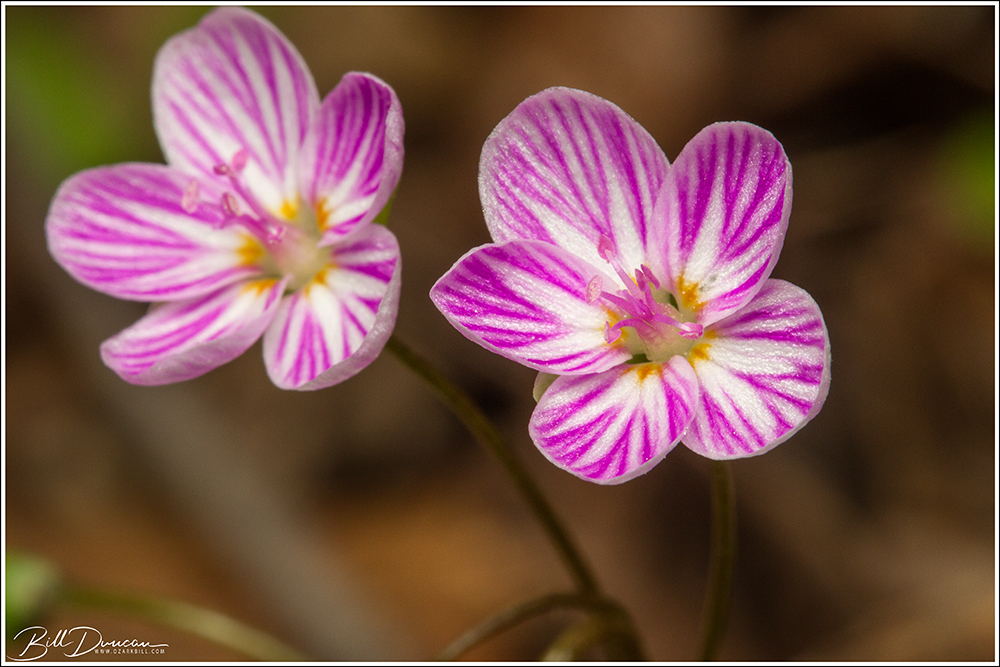
Claytonia virginica – Spring Beauty

These images were taken during a trip with Ted MacRae and Chris Brown this past April at Tingler Prairie Conservation Area in Howell County, MO. The first shows an exceptionally colored spring beauty (Claytonia virginica) in peak bloom.

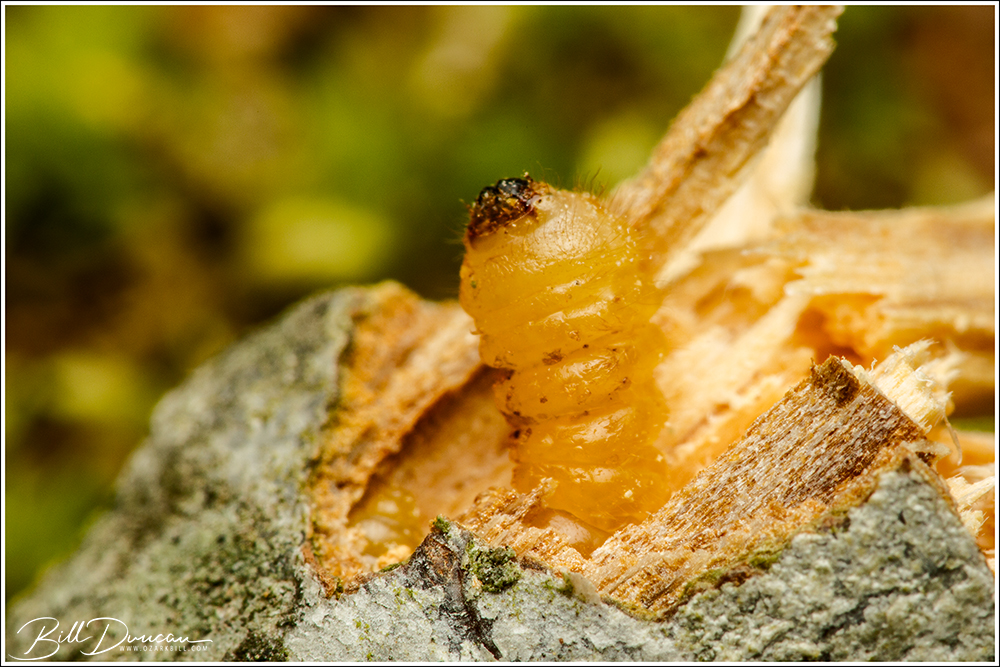
Elaphidionoides villosus (oak twig pruner)

This beetle larvae was something I had read about for years. Ted found several oak twigs that the mother beetles prune to serve as safe nurseries for their developing offspring as they rest on the forest floor. Ted delicately opened up the gallery to expose its occupant so we could take some photos.

Metallic Dung Beetle (Canthon viridis)

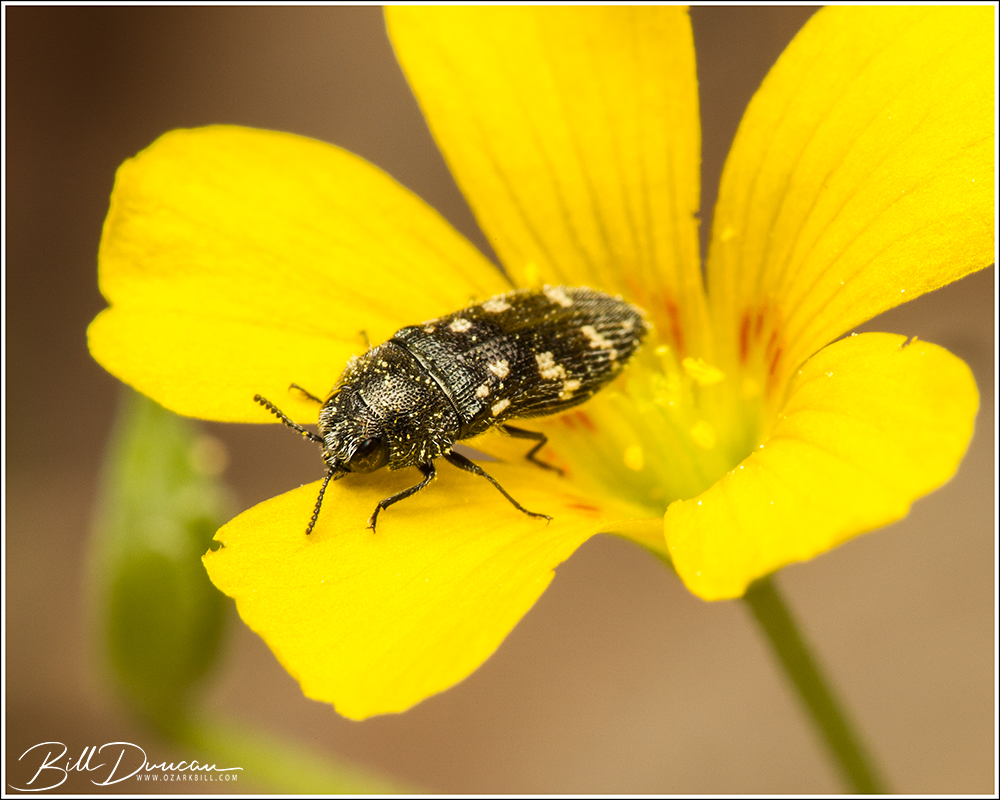
Buprestidae – Acmaeodera sp.

These Buprestid beetles were gorgeous as they foraged in the wood sorrel. Once in a while, they would stand still long enough to let us photograph them.

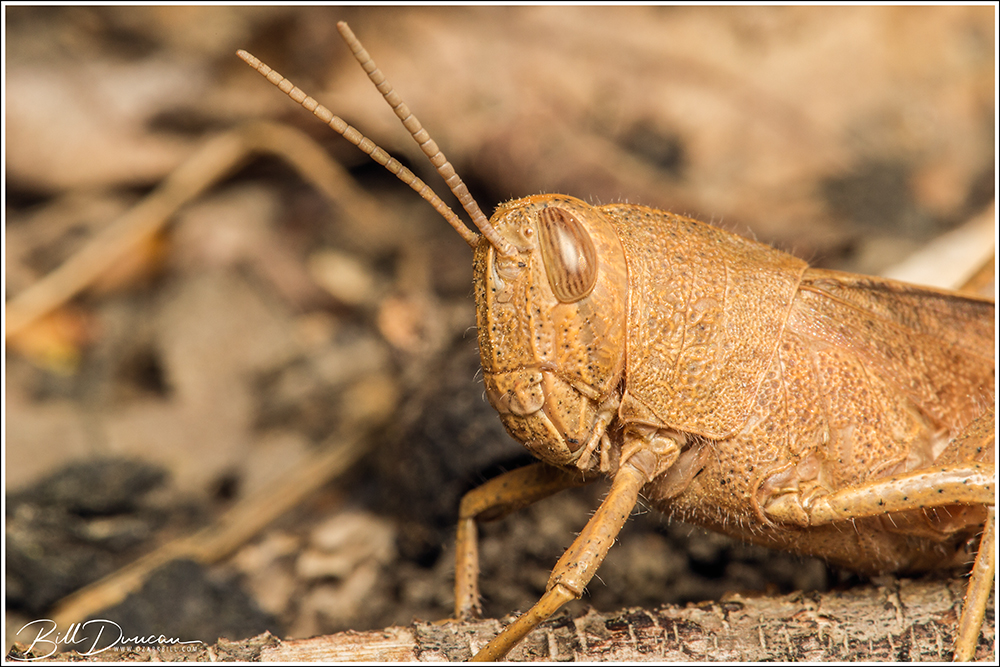
Arphia sulphurea ??

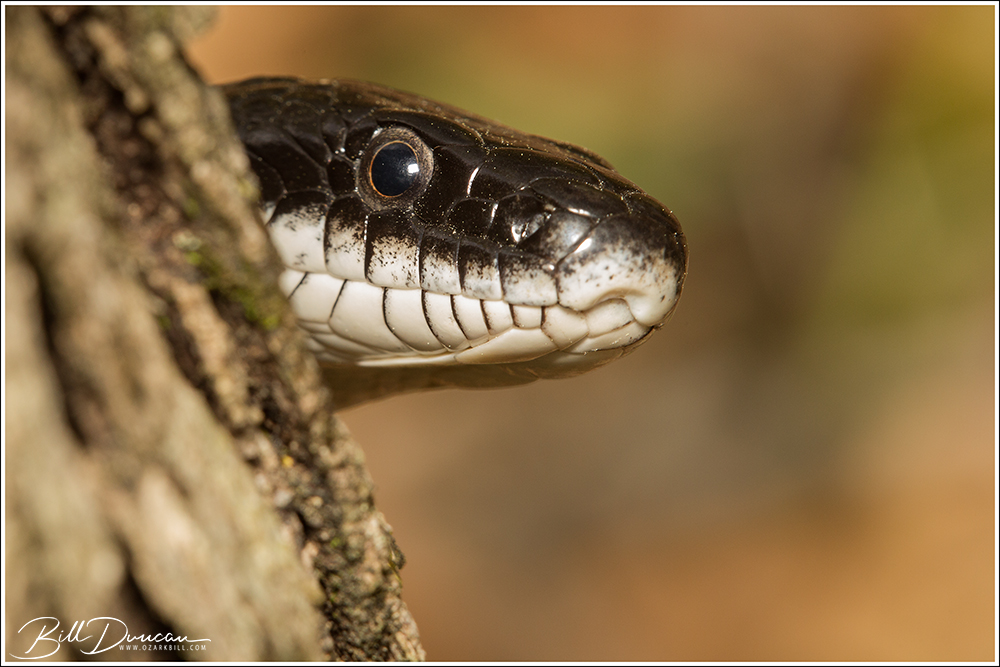
Black Rat Snake (Pantherophis obsoletus)

Finally, we found this black rat snake as it attempted to climb a tree near the trail. Maybe caught a whiff of something higher up?

-OZB

Location Spotlight – Return to Mingo NWR and Wilderness

Mingo - Monopoly Marsh
Mingo – Monopoly Marsh

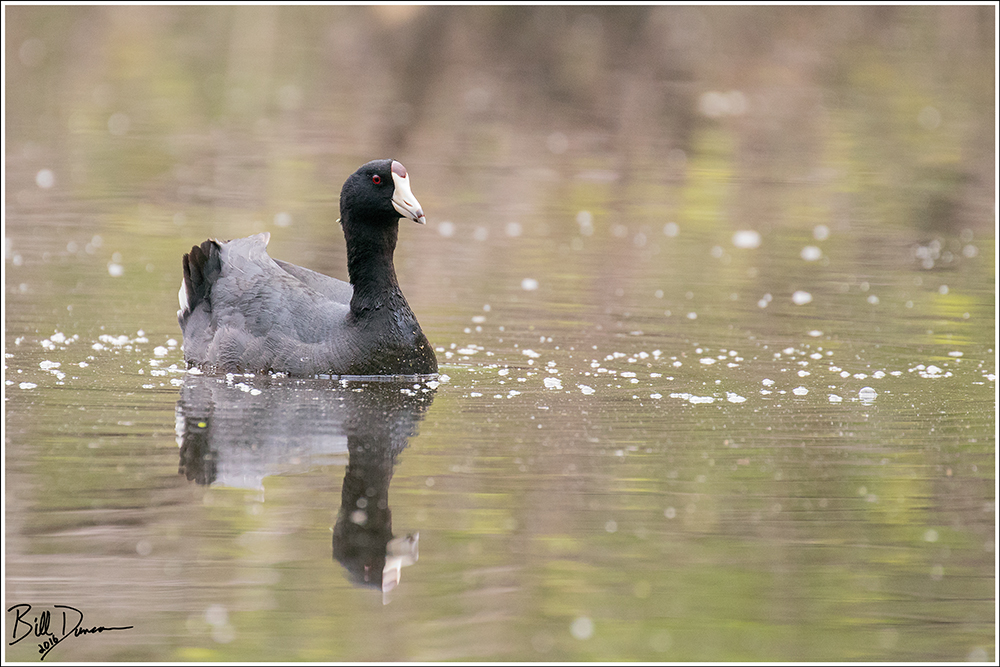
Way back in April, Steve and I grabbed the canoe and took another adventure into Mingo.  We believe we were a bit too early in a long spring to catch a lot of wildlife activity, but we did catch a few sites worth remembering.  For instance, this single Coot allowed us to get pretty close as we were just getting inside Monopoly Marsh.

American Coot - Mingo Wilderness
American Coot – Mingo Wilderness

Along with water-loving avifauna, certain reptiles can usually be a sure thing to find at Mingo.  I heard the expected usual whimpering from the back of the canoe as I attempted to get a steady shot of this Cottonmouth that was trying to absorb some sun on this cool April morning. 😉

cottonmouth-520a9462
American Coot – Mingo Wilderness

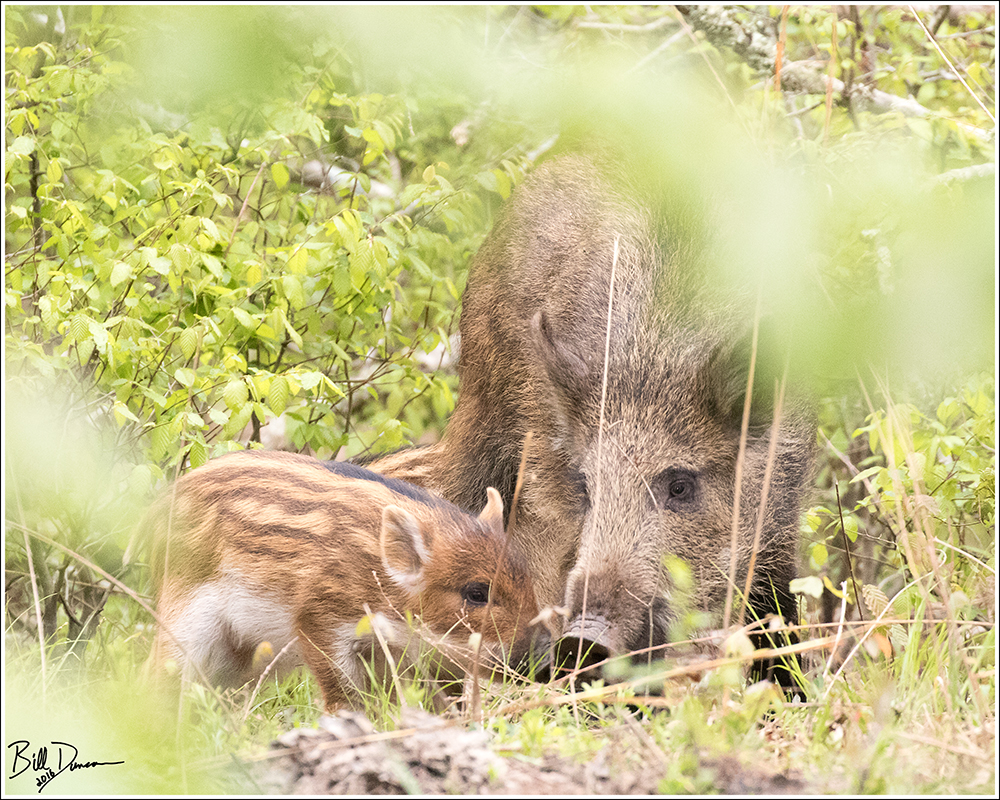
One of the more destructive and unfortunate of invasive species to be found in Missouri, the Feral Hog has a strong foothold at Mingo.  Polluting water, destroying vegetation, negatively altering natural communities and competing with native wildlife for acorns and other food sources are the major examples of the damages caused by this invasive.  The Missouri Department of Conservation has recently announced new policy that should make significant improvements in reducing the numbers of Feral Hogs in the Missouri Ozarks.

520a9259
Not as Cute as they Seem! – Feral Hogs, Mingo Wilderness

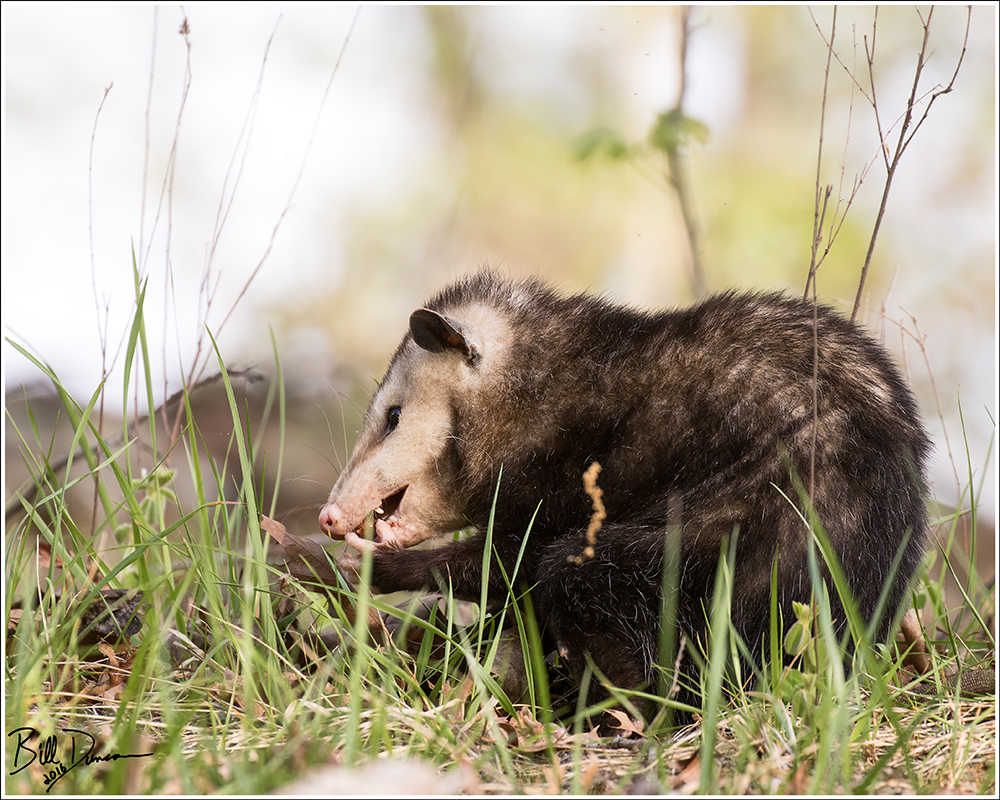
Finally, we have one of the expected and desired of Mingo’s mammals – the Virginia Opossum.  This nicely colored possum didn’t mind that Steve and I watch as it had a mid-day snack.

Virginia Opossum - Mingo NWR
Virginia Opossum – Mingo NWR

-OZB

Shooting Birds on the “Snake Road”?

Being almost solely interested in “herps” (reptiles and amphibians) for a couple decades of my life, a place in southern Illinois known as LaRue Road, or more legendarily – “Snake Road”, has long been on my list of favorites to visit.  Years ago, before becoming interested in the reptiles with wings and feathers, I barely took notice that this location was swarming with all sorts of life.  Upon becoming a more rounded nature enthusiast, I have since discovered this simple road is located within a special zone of multiple habitats.  Whether it be herps, birds, plants, insects, etc., this is a special area of biodiversity that is celebrated by those lovers of life who are fortunate enough to have found it.

So enough with the flowery description.  What makes this area so special?  LaRue Rd. is located on the western edge of the Shawnee National Forest; this particular portion of the forest is called the LaRue Pine Hills.  Where the flood plains of the Mississippi and Big Muddy Rivers meet these hills, bluffs of up to 200 feet have formed.  At the base of these bluffs, the rivers have helped form some very special swamp and marshy habitats.  Between the mixed hardwood-pine forests and the wetlands lies – Snake Road.  Okay, so what of that?  Well, this explains the moniker.  Twice a year, snakes move en mass – from the hills to the swamps in spring, and vice versa in autumn to find a high, dry and safe place to overwinter.  To do so, they must cross a gravel road.

Anyway, snakes were not even the quarry in mind when Steve and I decided to take the journey.  Being so late in the season and relatively late in the day, I didn’t give credit to any dreams of finding a legless squamate.  Our goal was to find and grab an exceptional photograph of a Prothonotary Warbler.  I’m not sure of the latter, but we were sure able to find them!

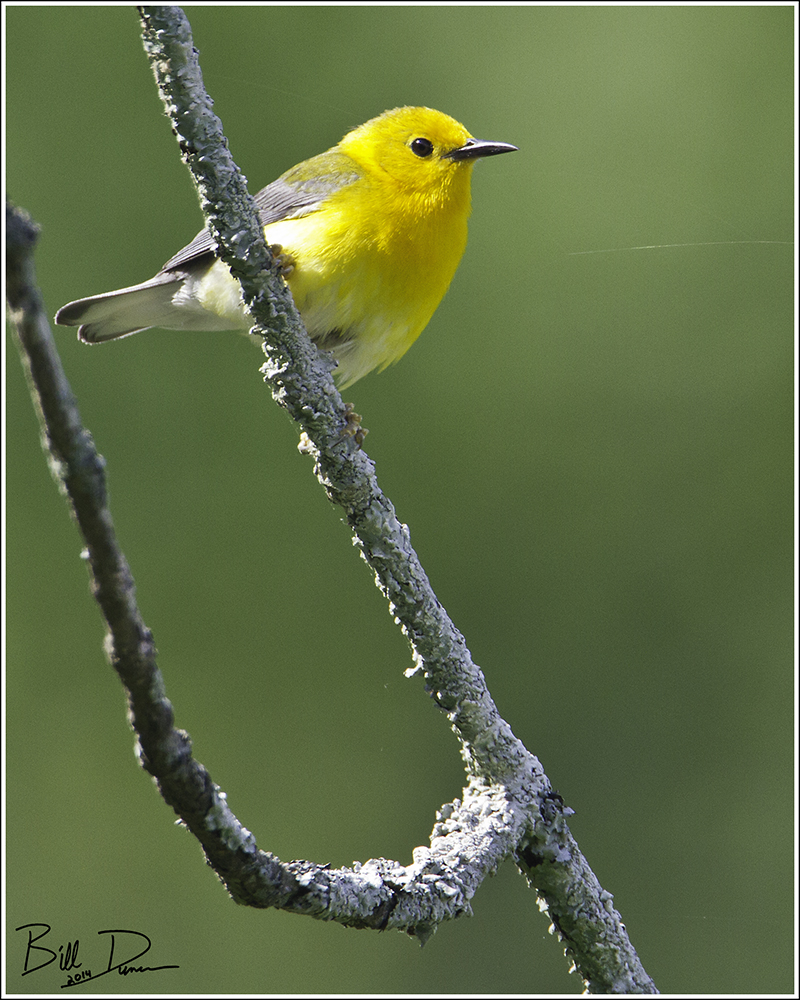
Prothonotary Warbler

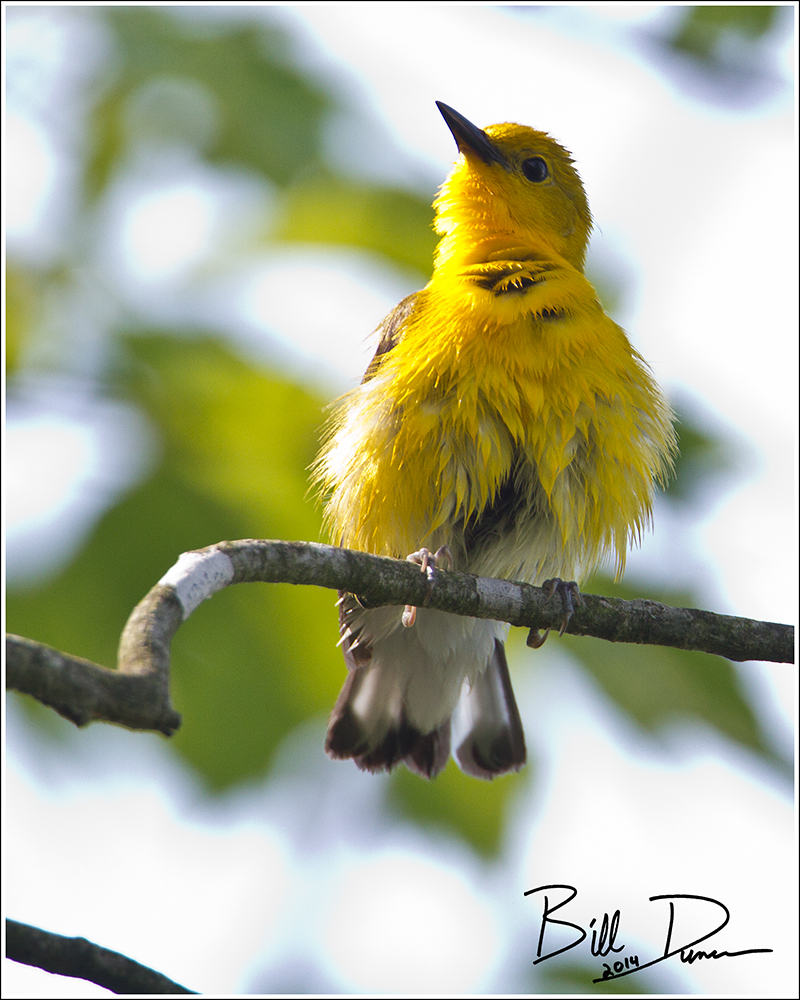
A slightly shallower depression in the road often afforded mostly unbroken looks into the marsh, and opportunities to find these ancient clerics soaking up the sunlight that gives them their spectacular color.  Once finding a male, a little bit of playback brought out more and more, coming to get a look at the particularly pathetic naked apes.  This guy did a bit of preening following a bath.

Prothonotary Warbler

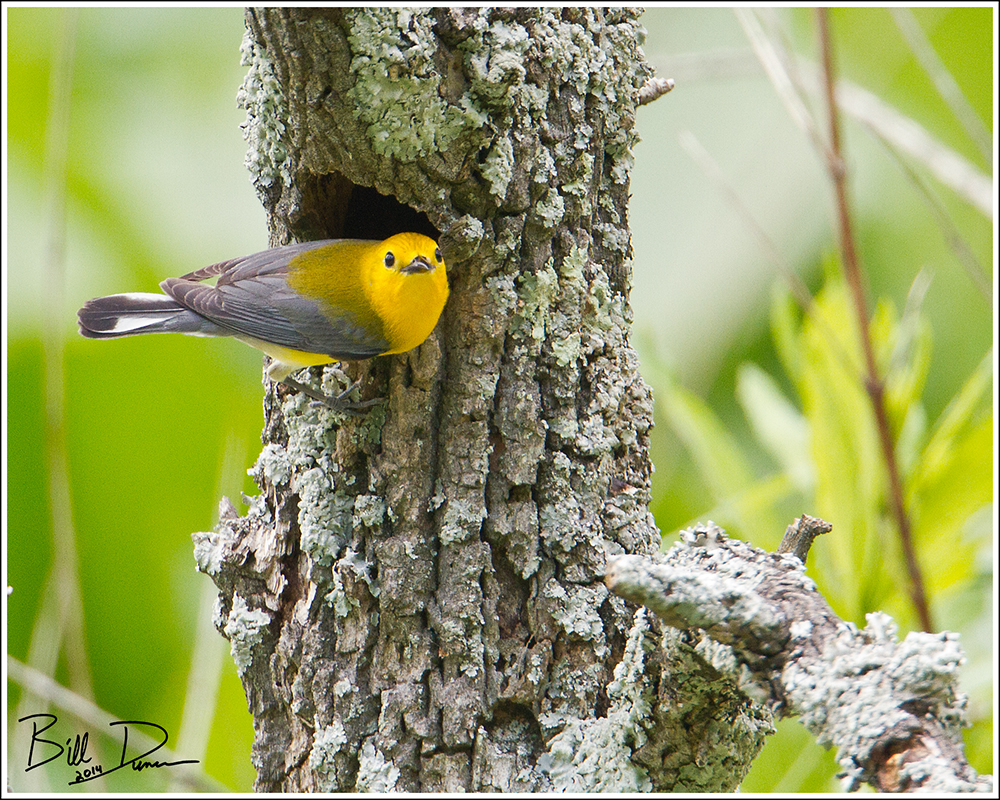
Getting great looks at several of these spectacular animals was more than we could ask.  Walking a bit farther we were fortunate to find an active nest!
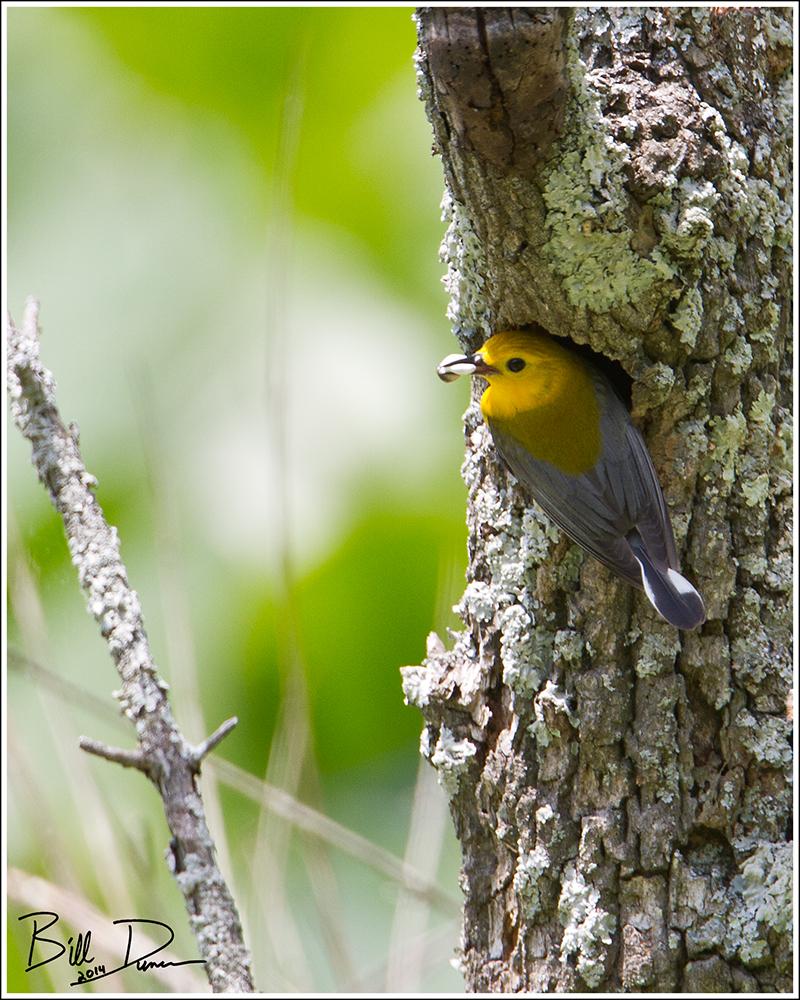
Prothonotary Warbler at Nest

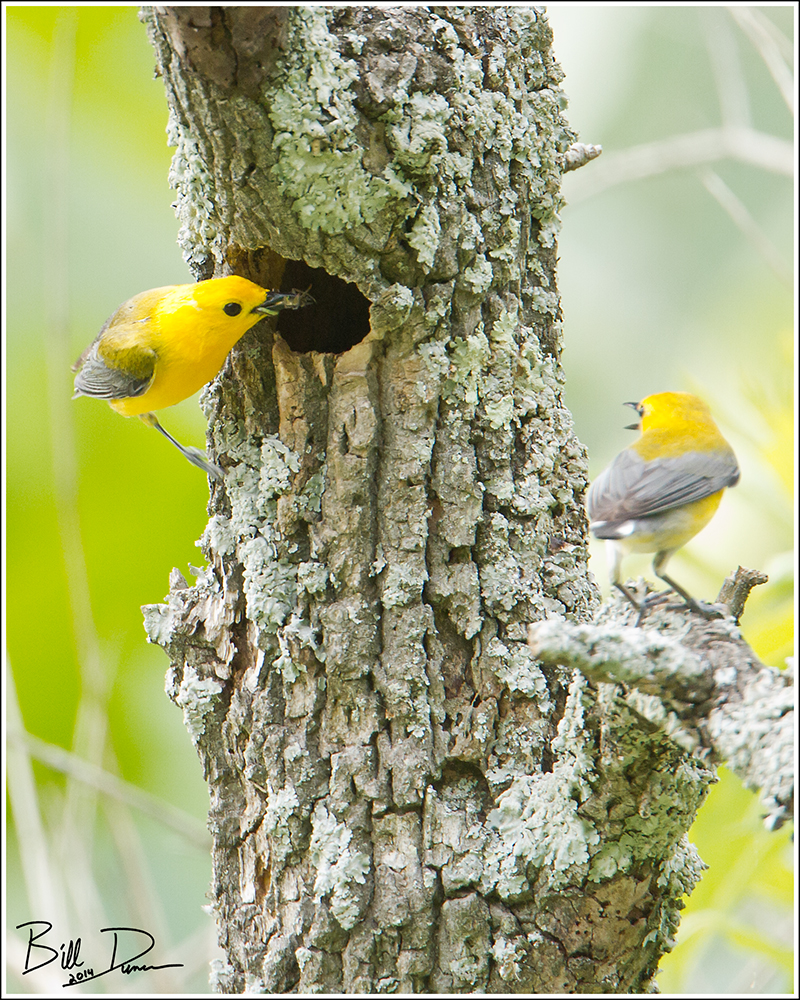
Prothonotary Warblers nest in shallow cavities in trees, often old Downy Woodpecker nest holes.  Below, one of the parents can be seen removing a fecal sac from the nest.

Prothonotary Warbler Removing Fecal Sac.
Prothonotary Warbler Removing Fecal Sac

The next photo shows what I am assuming to be mom instructing dad to find an even bigger insect next time.  😉

Parents
Parents

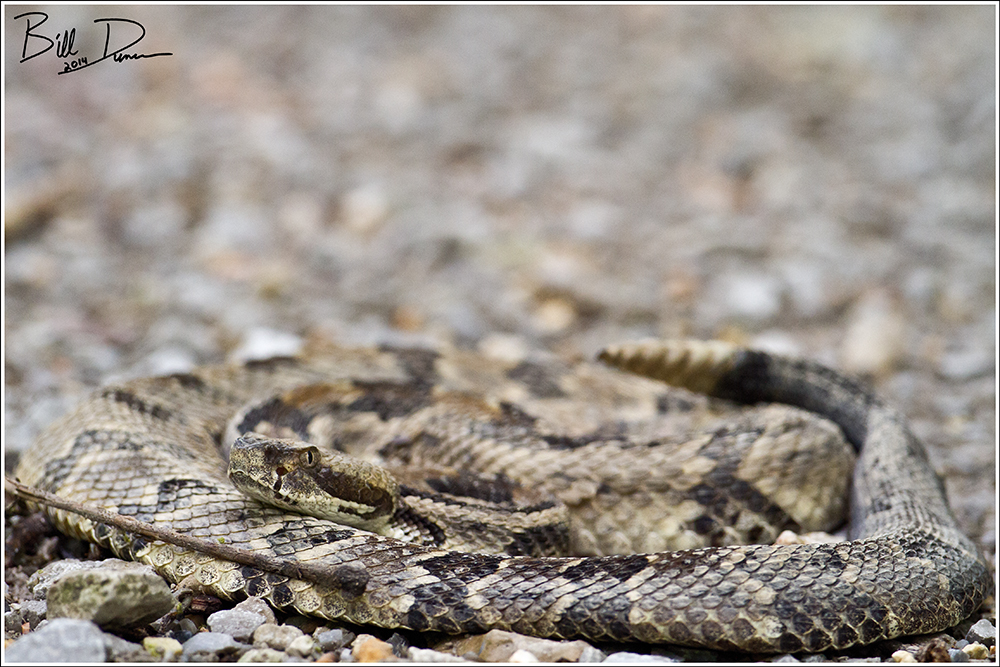
Remember when I said we were not expecting to find much of anything besides the birds on our trip down “Snake Road”?  There, in the middle of the road, we discovered the guy you see in the next image, and I discovered I made another huge mistake.  On more than two occasions now I have been in a circumstance of not being able to make a photograph, or the photograph I had envisioned, because I did not bring the necessary equipment.  On this day, my only equipment was a 500mm lens on a 1.6 crop body and my iPhone.  After contemplating throwing myself on the viper to end my pathetic existence once and for all, I decided to give a shot at shooting a snake with an equivalent focal length of 800mm!  On a partly cloudy day with lots of tree cover, I knew that lighting the subject would be difficult.  Of course, I had no artificial light source either.  Shooting wide open, depth of field was nearly nonexistent.  This was the result of my first attempt.
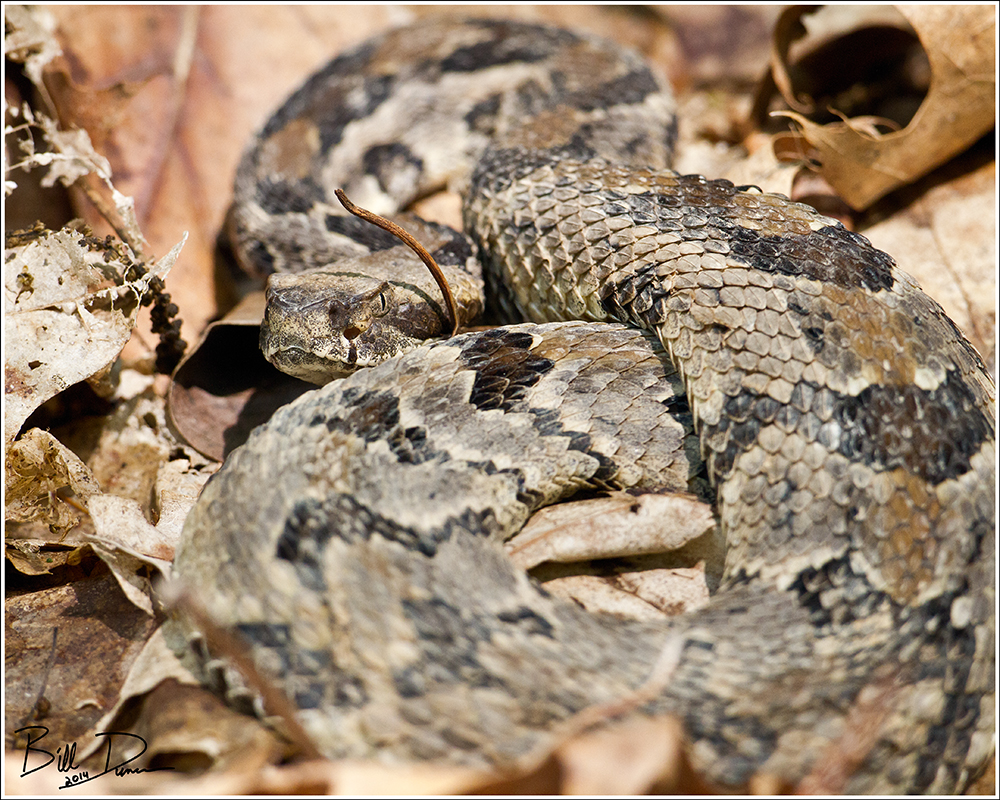
Timber Rattlesnake
Timber Rattlesnake

So, not a complete disaster, but something like a 70-200mm would have been more desirable.  We then decided to get him in a little more natural setting with hopefully a bit more light.  We gently moved the snake just off the road and I remembered a trick I could use to get a little closer than the lens’ close focusing distance of 15 ft.  I put an extension tube between the lens and the body.  Although I still had pathetically little DoF (as long as I get the eye in focus, right?), I was able to get somewhere in the range of 10-12 feet from the subject, allowing it to look a little more prominent in the composition.  I must apologize for the oh-so-distracting leaf petiole in this image.  I asked Steve to please remove it gently with his fingers, but he replied with some of his medical jargon, going on about rhabdomyolysis, hypotension, necrosis; whatever, it sounded like cop-out to me.

Timber Rattlesnake
Timber Rattlesnake