Did you know…?
The breeding range of the Common Yellowthroat is the most widespread of the American Wood Warblers.
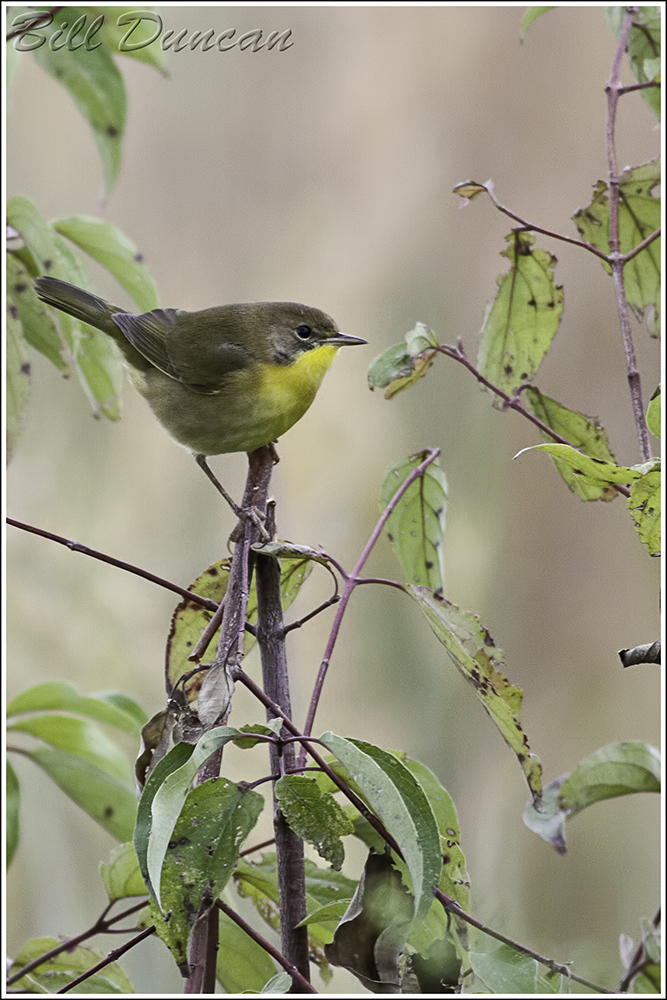
“Common Yellowthroat, Autumn 2012”
"What a thousand acres of Silphiums looked like when they tickled the bellies of the buffalo is a question never again to be answered, and perhaps not even asked." -Aldo Leopold
Did you know…?
The breeding range of the Common Yellowthroat is the most widespread of the American Wood Warblers.
“Common Yellowthroat, Autumn 2012”

“Song Sparrow, Autumn 2012”
Marshland Elegy
by
Aldo Leopold
“A dawn wind stirs on the great marsh. With almost imperceptible slowness it rolls a bank of fog across the wide morass. Like the white ghost of a glacier the mists advance, riding over phalanxes of tamarack, sliding across bog-meadows heavy with dew. A single silence hangs from horizon to horizon.
Out of some far recess of the sky a tinkling of little bells falls soft upon the listening land. Then again silence. Now comes a baying of some sweet-throated hound, soon the clamor of a responding pack. Then a far clear blast of hunting horns, out of the sky into the fog.
High horns, low horns, silence, and finally a pandemonium of trumpets, rattles, croaks, and cries that almost shakes the bog with its nearness, but without yet disclosing whence it comes. At last a glint of sun reveals the approach of a great echelon of birds. On motionless wings they emerge from the lifting mists, sweep a final arc of sky, and settle in clangorous descending spirals to their feeding grounds. A new day has begun on the crane marsh.”
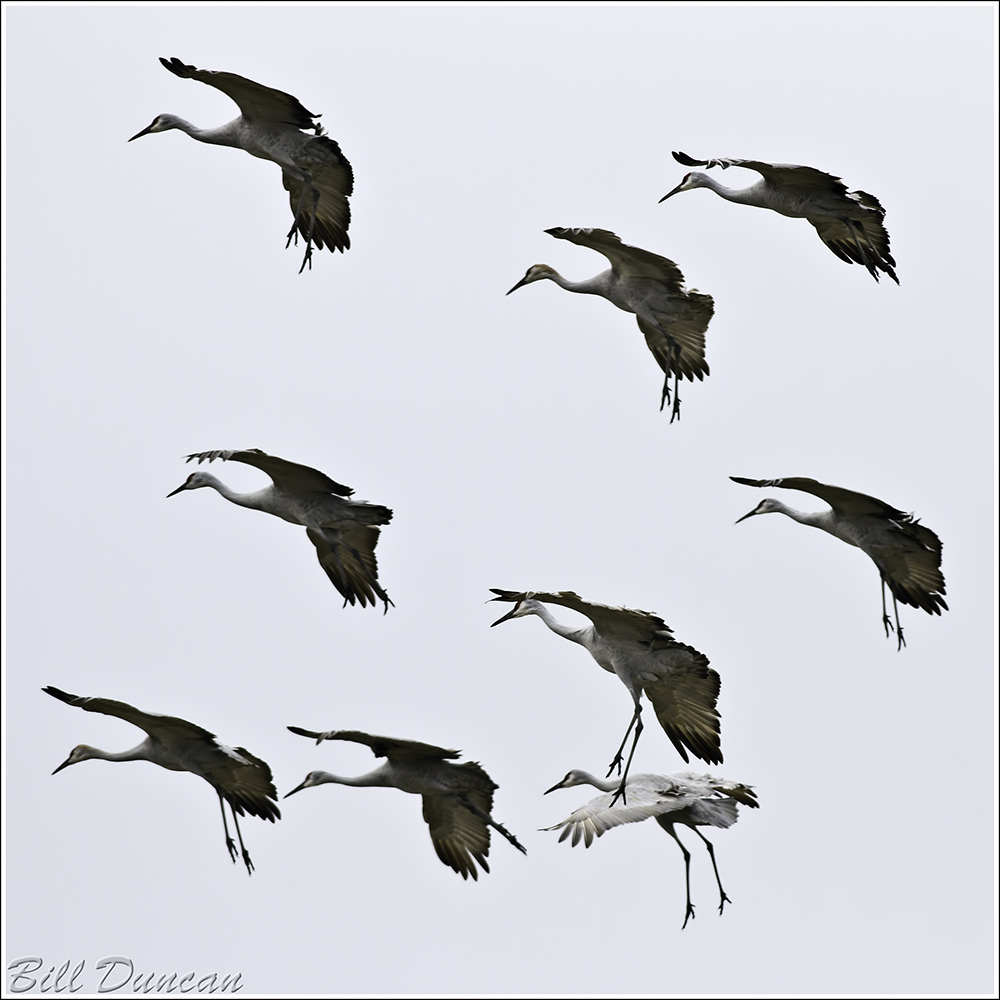
“A Great Echelon of Birds”
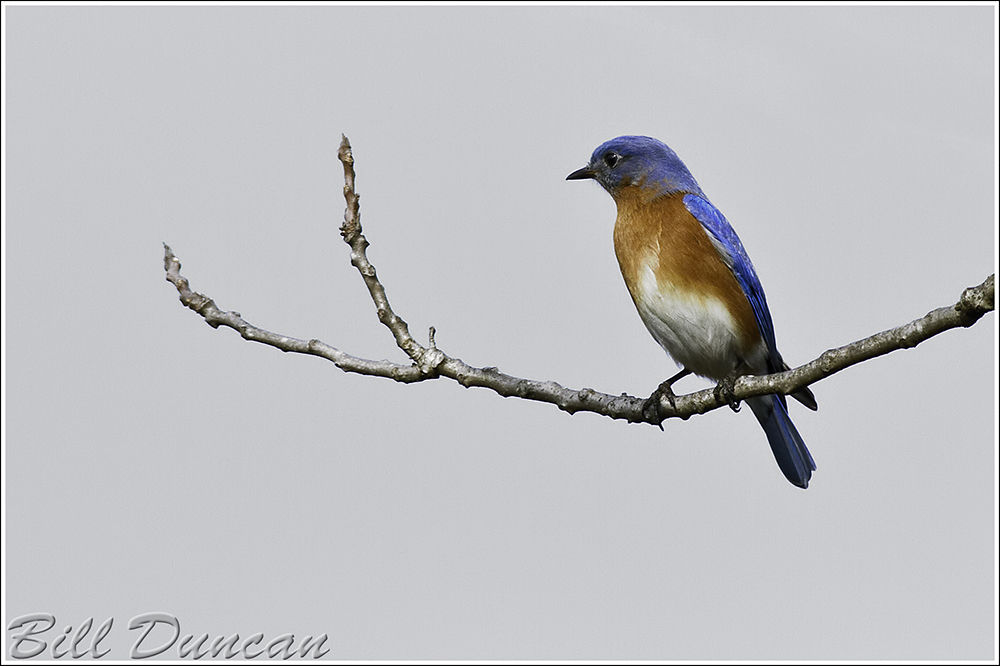
“Eastern Bluebird, SNR, Autumn 2012”
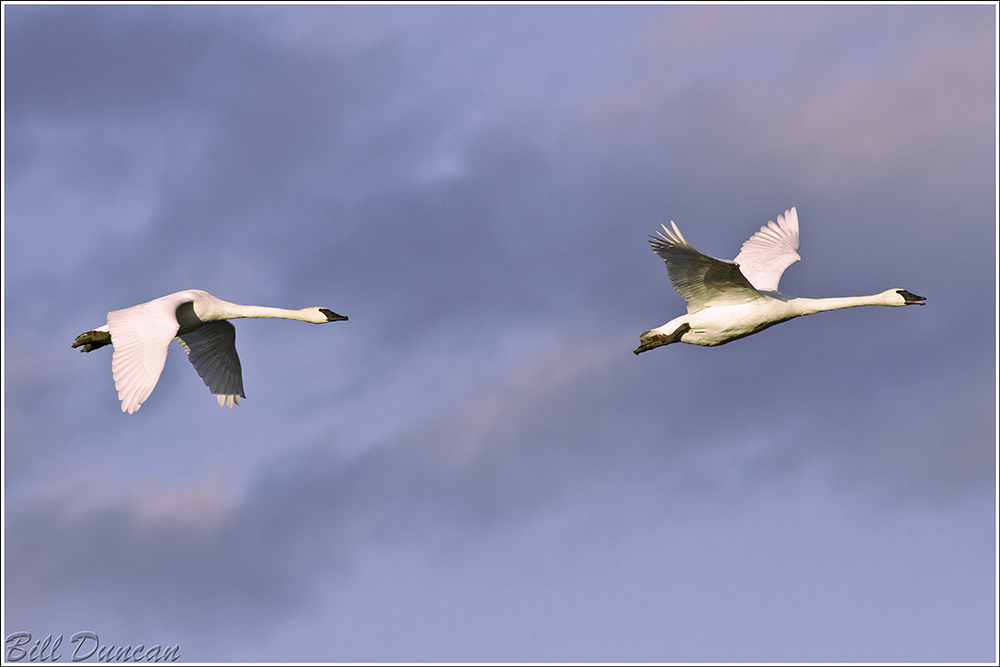
“Changing Skies”
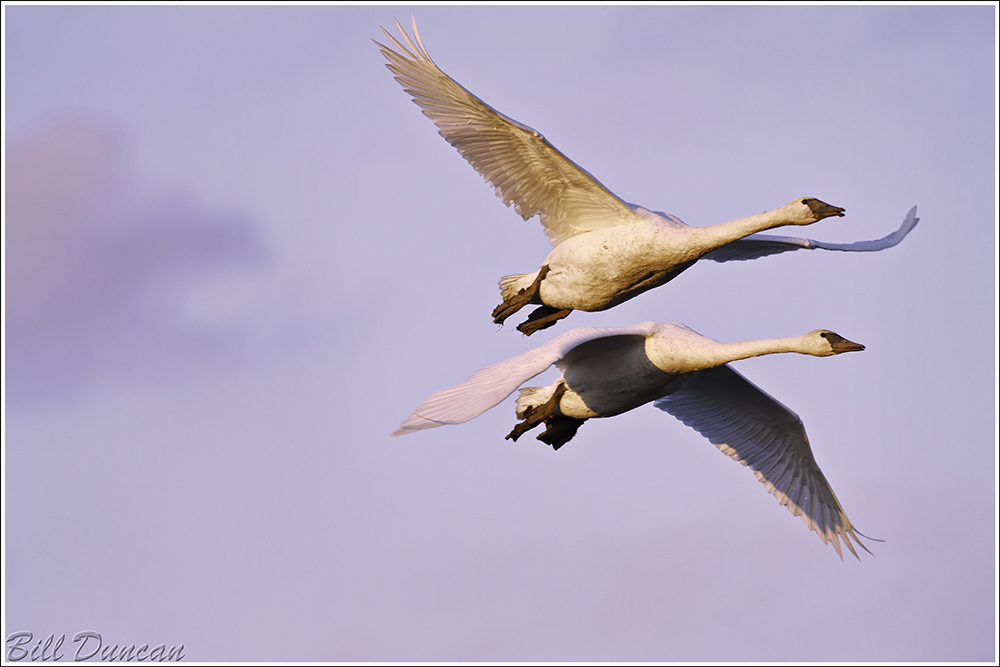
“I Never Dreamed Today Would Come, When Love Was Young”
“A sense of history should be the most precious gift of science and of the arts, but I suspect that the grebe, who has neither, knows more history than we do. His dim primordial brain knows nothing of who won the Battle of Hastings, but it seems to sense who won the battle of time. If the race of men were as old as the race of grebes, we might better grasp the import of his call. Think what traditions, prides, disdains, and wisdoms even a few self-conscious generations bring to us! What pride of continuity, then, impels this bird, who was a grebe eons before there was a man.”
-Aldo Leopold-
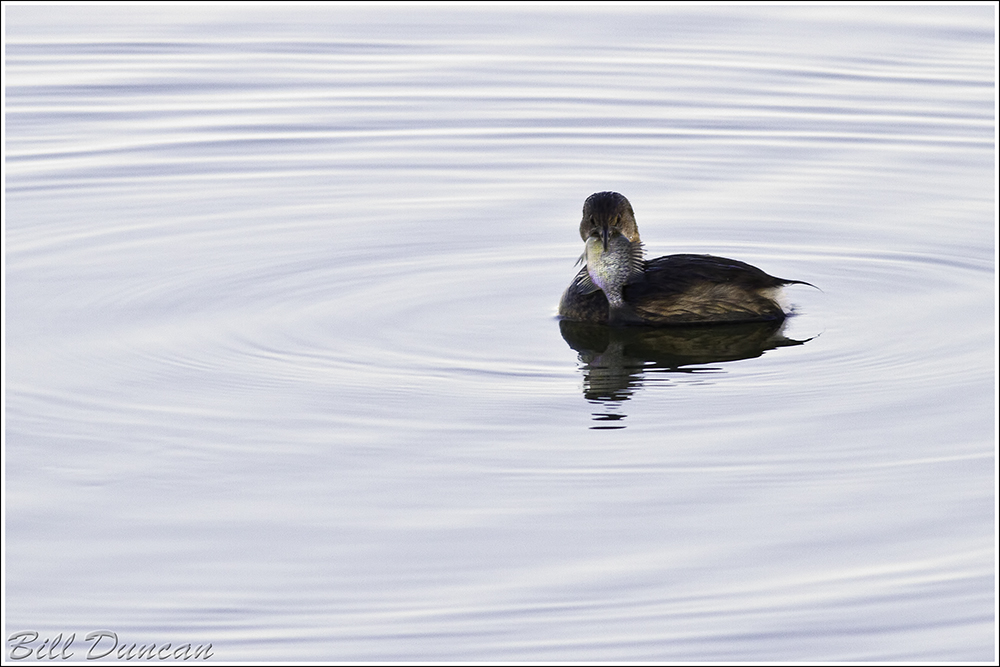
“Peid-billed Grebe with Fish”
“The outstanding characteristic of perception is that it entails no consumption and no dilution of any resources. The swoop of a hawk, for example, is perceived by one as the drama of evolution. To another it is only a threat to the full frying-pan. The drama may thrill a hundred successive witnesses; the threat only one – for he responds with a shotgun.”
-Aldo Leopold-
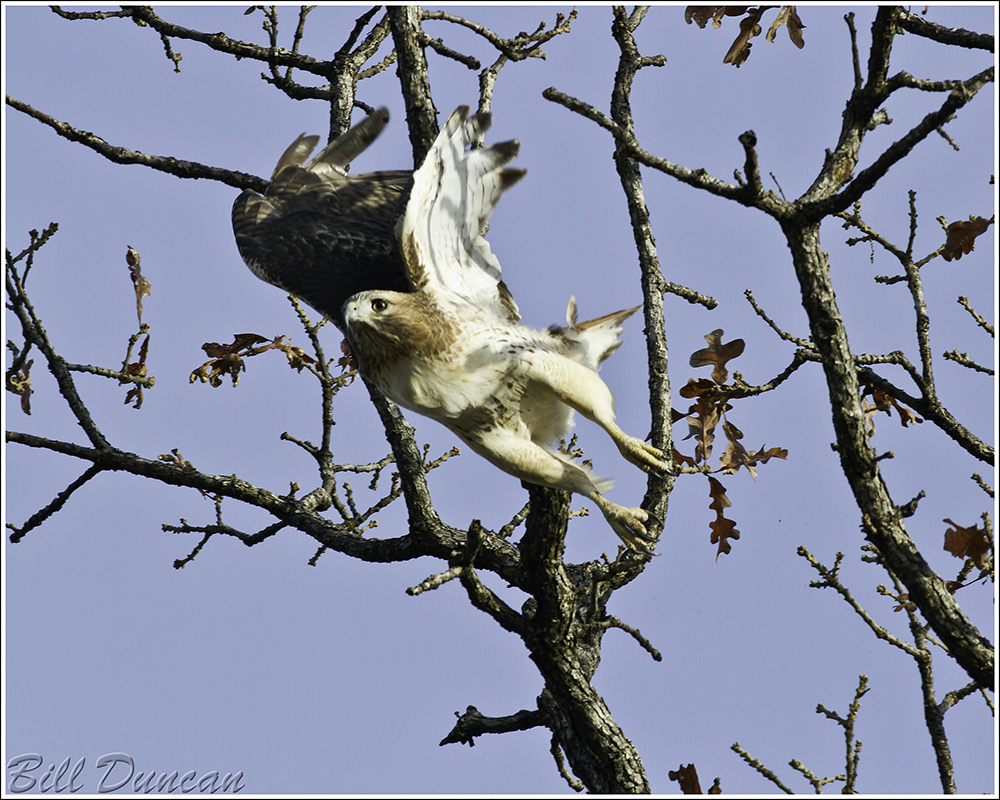
“Red-tailed Hawk”
“That thing called ‘nature study’, despite the shiver it brings to the spine of the elect, constitutes the first embryonic groping of the mass-mind toward perception.”
-Aldo Leopold-

“Tennessee Warbler – Autumn Migration 2012”
“It is fortunate, perhaps, that no matter how intently one studies the hundred little dramas of the woods and meadows, one can never learn all of the salient facts about any one of them.”
-Aldo Leopold-
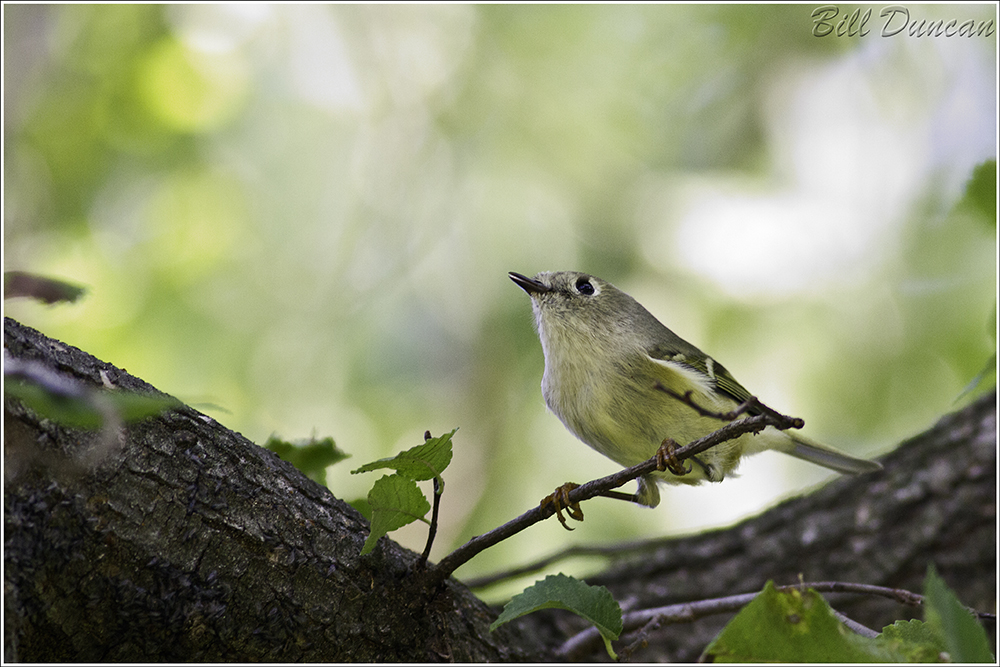
“Ruby-crowned Kinglet”
No, I’m not talking Yankees or those pesky French-Canadians. The invaders I’m speaking about are rare northern birds that are moving further south than usual, including the Ozarks. I’ve been having some fun trying to find these rarities, and some of these we can’t even call rare this winter. During the past month Missouri has had multiple reports of sightings of at least these birds: Common Redpoll, Pine Siskin, Red-breasted Nuthatch, Red Crossbill, White-winged Crossbill and Northern Shrike. I have been able to photograph all these with the exception of the WWCB and CORE, but it looks as though I may have ample time to find these species yet.
In the five or six years I have been bird watching I can count on one hand how many times I’ve been able to see a Red-breasted Nuthatch. In the past month or two I’ve literally been able to spot more than 100 of these birds. It has been fun training my ear to discern the differences between the nasal call notes of the WBNH and the more nasal notes of the RBNH. From what I’ve heard and read the irruption southward of this species happens periodically every few years or so.
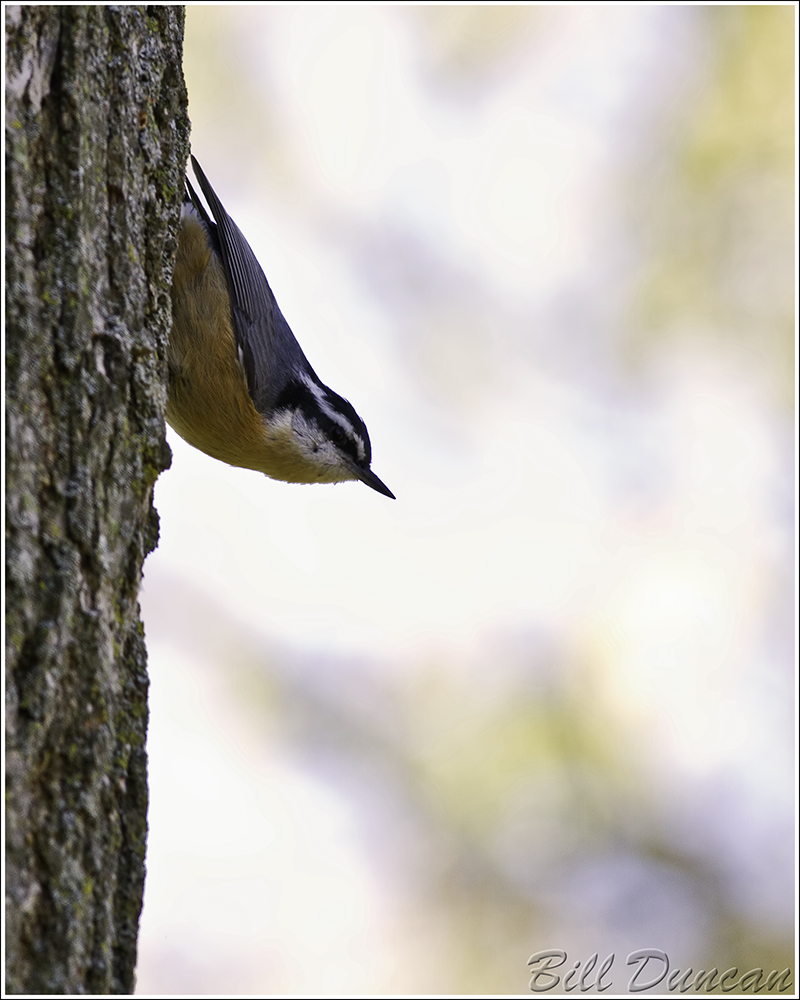
“Red-breasted Nuthatch”
Pine Siskins can also be found over most of Missouri right now. Almost always found in flocks ranging from six to thirty or more birds, these guys typically prefer to forage at the top of branches of seed-bearing trees, like this hemlock. Similar to the RBNH, this species is well known to have irruption years where they plunge southward in great numbers.
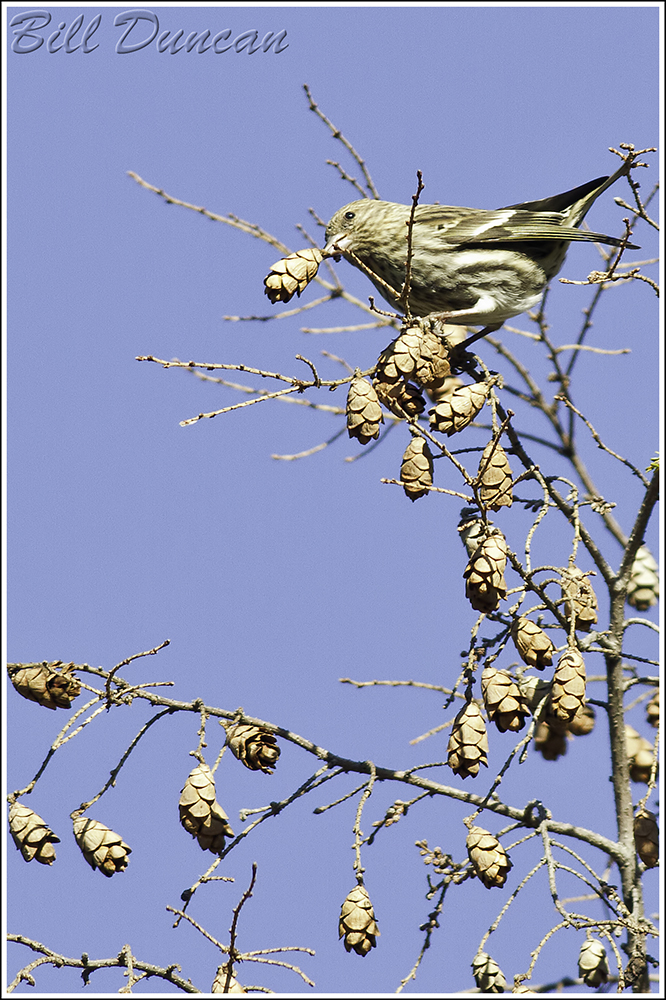
“Pine Siskin”
Not only was this the first photograph of a Red Crossbill I was able to get, but it was a lifer for me as well. This was definitely an unexpected and exciting development in the StL area this year. These guys are feeding mainly on Hemlocks and Sweetgums in selected parks where these trees are found around the metropolitan area. You can just make out the characteristic crossed-bills in this photo, apparent adaptations for better removing seeds from the cones of tree species like hemlocks. Like I mentioned earlier, I have yet to photograph the WWCR, but I did get to see one lone individual briefly.
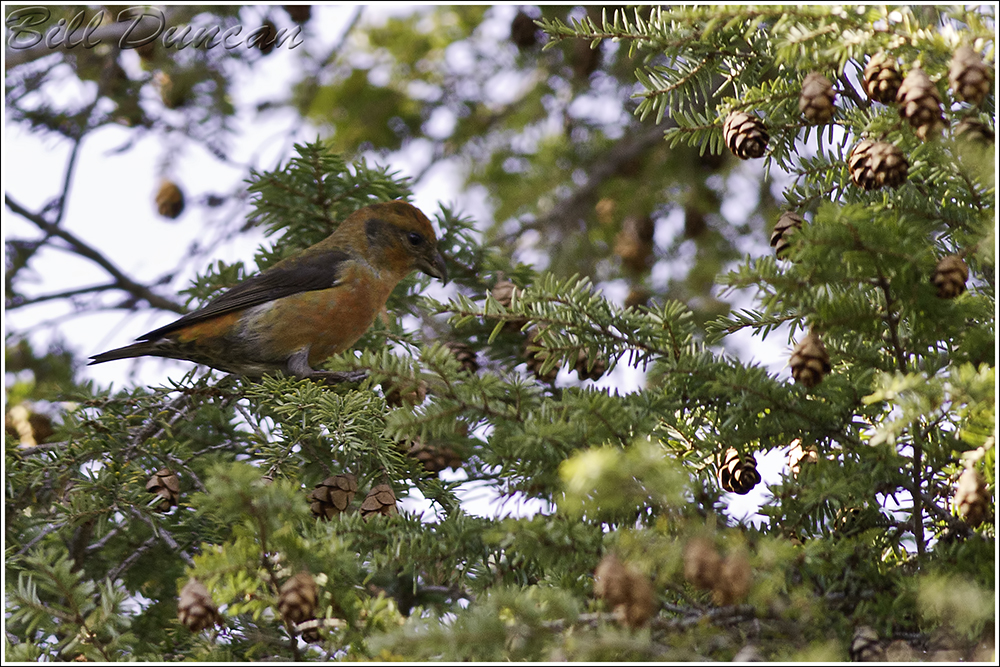
“Red Crossbill”
The next and final bird in this post is one of those special and unusual species for my tenure as a birder. The Northern Shrike is apparently much more uncommon in Missouri than the Loggerhead Shrike. I believe this is the forth NOSH I have seen and I have yet to see a LOSH. It seems that the NOSH might find something it likes around the StL area, where they seem to have been spotted more frequently. For any “non-birder” reading this, if you do not know about the Shrikes, look them up now. These birds are too cool for school and I love watching them. Check out this interesting link for more information.
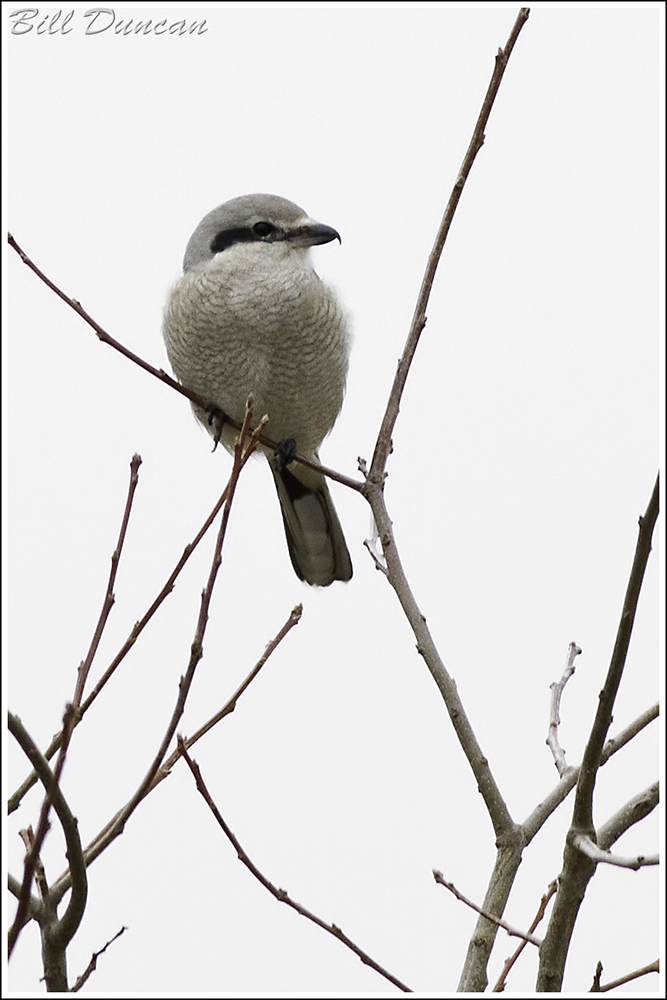
“Northern Shrike”
During my hunt through the fields of this nice little park, located in the western outskirts of the StL metro area, I was stoked to be able to find three short honey-locust trees that this bird was using as food caches. There are several reasons proposed for the uses of these caches, including use as a food reserve, territory marking and attracting mates. All three of these ideas sound like they could be plausible. These birds will use barbed-wire to do this as well, and sometimes small vertebrates such as lizards, small rodents and even smaller song birds can be found stuck on thornes. Not only was I pleased to find these cache’s, but I am really excited about bringing my love for all things Lionel Ritchie, by using this photo’s title… ;=)
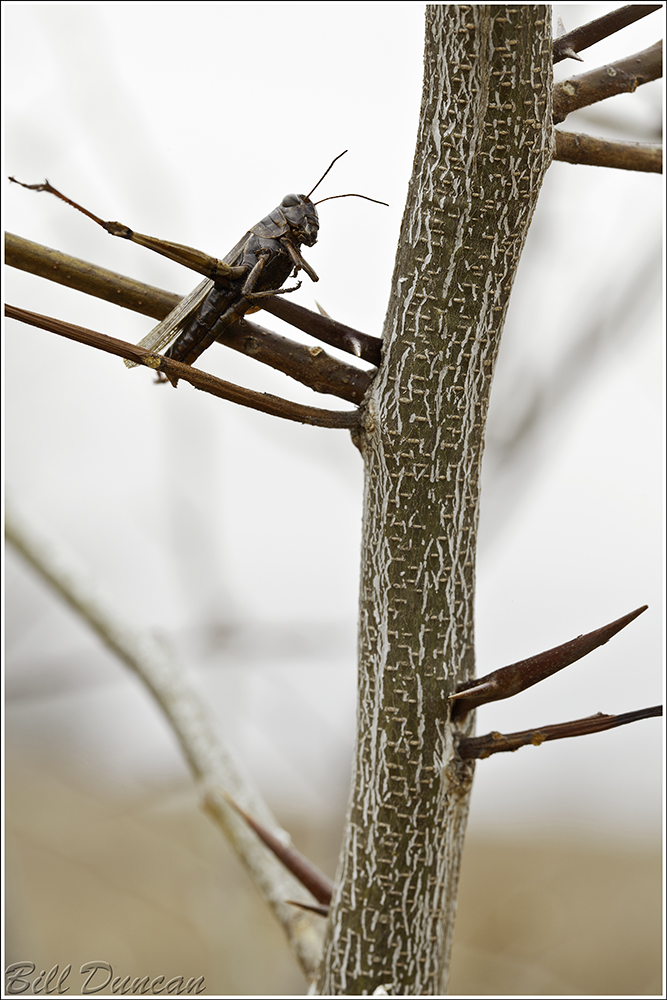
“…Yes I’m on my way, I’m mighty glad you stayed…”
Did you know…?
The YBSS can be identified from other woodpeckers by their drumming? Sapsuckers have a stuttering, Morse-code like cadence to their drumming. Listen for this the next time you are in the woods.

“Yellow-bellied Sapsucker”
 A Thousand Acres of Silphiums