WGNSS Nature Photo Group Outing – Swans of RMBS

ƒ/8, 1/1250 sec, ISO-320, 1120 mm focal length equivalent

In December, 2018 the WGNSS Nature Photography Group met at Riverlands Migratory Bird Sanctuary with hopes of making some memorable images of our giant white residents that spend their winters here. Trumpeter and Tundra Swans will spend their evenings at roost in the bodies of water at RMBS and will then typically leave to forage in surrounding agricultural fields, picking up the wasted grain from harvest.

A good strategy for placing yourself in the most appropriate position for making photographs of these birds is to pay attention to the direction of the sun. If the birds are found in Ellis Bay during the golden hours of morning light (during winter in St. Louis, this can be up to three hours after sunrise), then getting close to the shore with the sun behind you can produce some satisfactory results. Try getting closer to the ground and shooting the birds from a low angle. This will give your photographs an eye-to-eye perspective that is a much more intimate view into the birds’ world. Shooting at low angles will also tend to provide a more pleasing, out-of-focus background to your subject that will cause the bird to appear to be larger than life. We photographed both species of swan as they lounged in Ellis Bay for the first couple hours of the morning. Can you pick which is the Tundra and which is the Trumpeter Swan in these first two images?

ƒ/8, 1/800 sec, ISO-250, 1120 mm focal length equivalent

We then moved on to another place within the refuge that the Swans can often be found on winter mornings. At Heron Pond, these birds are typically too far away from the observation areas to get closeup photographs while roosting. However, the patient photographer on the ready can often be rewarded by standing and waiting around. During this morning, the Swans were a tad tardy in lifting out of Heron Pond, so our group was in the right place at the right time. Getting proper positioning with the angle of the sun is a bit more difficult here in the morning but is still critical. We placed ourselves in the best places available on this busy morning and took advantage of the swans as they left the pond, which often flew right over our heads.

Photographing these mostly bright-white birds on a bright sunny day is not necessarily simple. While on the ground or the waters of the bay, it is common to have the camera’s light meter expose for the darker and more prominent background. This will often lead to the white feathers of the birds being overexposed. Remember to check the histogram of your camera and use the “blinkies” while reviewing your images to ensure you are not clipping your whites. If this is the case, make the proper adjustments to your exposure. Saving your whites may result in your blacks and shadows being bunched up at the other end of the histogram. Since the big white bird is your subject of concern, this should be nothing to worry about.

ƒ/5.6, 1/1600 sec, ISO-160, 594 mm focal length equivalent

Changing directions and the angle of sunlight are challenging for proper exposure. Get as close as you can in the field – much can be recovered in post-processing.

Shooting these large birds in flight presents a different set of challenges. Although these birds move relatively slower than most other birds during flight, the photographer will still want a relatively fast shutter speed. This is particularly true the closer you are to your subject. I recommend no slower than 1/1000 of a second. Start at this setting and increase shutter speed if you notice blurring or softness to your image due to subject movement. As these birds get closer during flight, they will naturally fill more of your frame, thereby increasing the number of pixels seeing the bright white values. This can often lead to a case of the camera’s meter overcompensating, thereby causing an underexposed image. In this case, the birds may come out looking grey instead of white and the black colorations of their feet and faces will be much too dark and lack sufficient details.
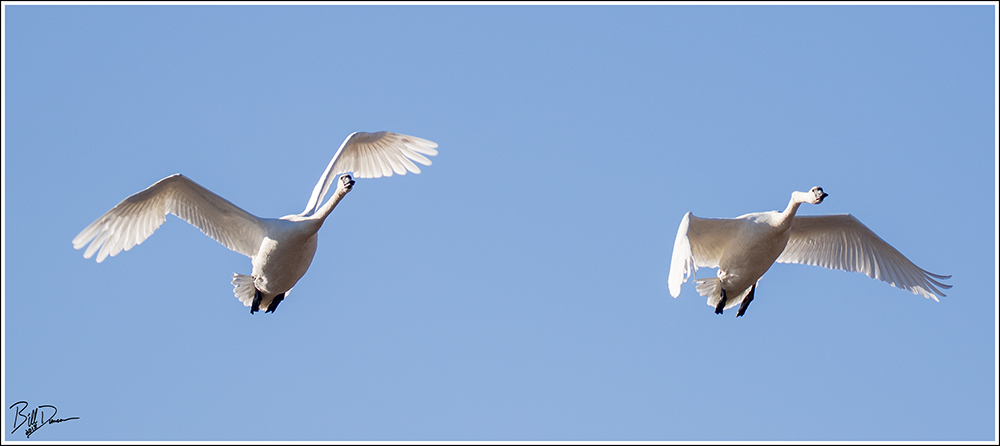
ƒ/5, 1600 sec, ISO-200, 272 mm focal length equivalent

In the above image, a swan can be seen with a significantly crooked neck. I typically see one or two birds with this condition every season. I do not know how it affects the birds or what their ultimate fates may be.

In the case of constant sunny skies, fully manual exposure settings are most called for. Here I will present a good starting point for setting the exposure for capturing swans in flight. Shutter speed – As I mentioned earlier, start with a minimum of 1/1000 sec. This may likely be too slow to capture a sharp image, depending on what position the bird’s wings were captured. Often, shutter speeds of up to 1/2500 sec or higher might be necessary. Aperture – This will depend on how close you are to the swan. Remember, these are large birds and when shooting at a profile there is a lot of distance from wingtip to wingtip. If the bird is significantly close, or if you have multiple birds in the frame, you will be unlikely to capture the entire subject(s) in critical focus if shooting wide open. I recommend no wider than ƒ/5.6 – you may need to stop down significantly smaller. However, always remember that getting the animal’s eye in sharp focus is critical. Many images will work fine if other parts of the bird are not in critical focus. ISO – Remembering that photography is a compromise, shooting at a fast shutter speed and smaller apertures might require that a higher ISO value be needed to obtain the proper exposure. Several latest digital camera models have a useful “auto ISO” setting. I know, technically this is not fully manual, but ISO does not necessarily have the input it once did. Know the highest ISO setting for your camera that you are comfortable with and don’t be afraid to shoot there. This will vary by camera model and by the photographer’s taste.

Here is a photo of “crooked neck” as it flew directly over my head. In cases like this a telephoto-zoom lens is really beneficial for capturing birds in flight.

ƒ/5, 1/1600 sec, ISO-400, 216 mm focal length equivalent

The majority of this material was originally published in Nature Notes (The Journal of the Webster Groves Nature Study Society) February 2019, Vol. 91, No. 2.

-OZB

Backyard Birding – Missouri Winter Songbirds. – 01/12/2019

An excellent post by Miguel Acosta using photos he captured at my backyard feeders.

fotografiabymíguel's avatarFotografia by Miguel - Nature Photographer.

A big thanks to the Duncan’s for inviting me to their home, to photography winter songbirds at their bird feeder.

A cold winter day is perfect for curling up by your living room or you can stock your bird feeder, get your camera, a turkey chair and check out the activity at the feeder.

Here’s a quick rundown of the most common backyard birds, I saw while spending an afternoon at my friend’s bird feeder.

House Finch (Haemorhous mexicanus)

House finch – love Nyjer seed, often mistakenly called thistle seed. Offer it in tube feeders or net bags, and watch these colorful birds swoop in for a visit.

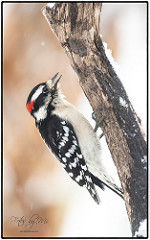
Downy Woodpecker (Picoides pubescens)

Woodpeckers – In the winter, beef suet is an energy-rich substitute for the insect fare that downy, hairy, and red-bellied woodpeckers feed on during the summer. Other bird species such as jays will also eat suet, but it’s…

View original post 225 more words

WGNSS Natural History Photo Group Field Trip – January, 2019

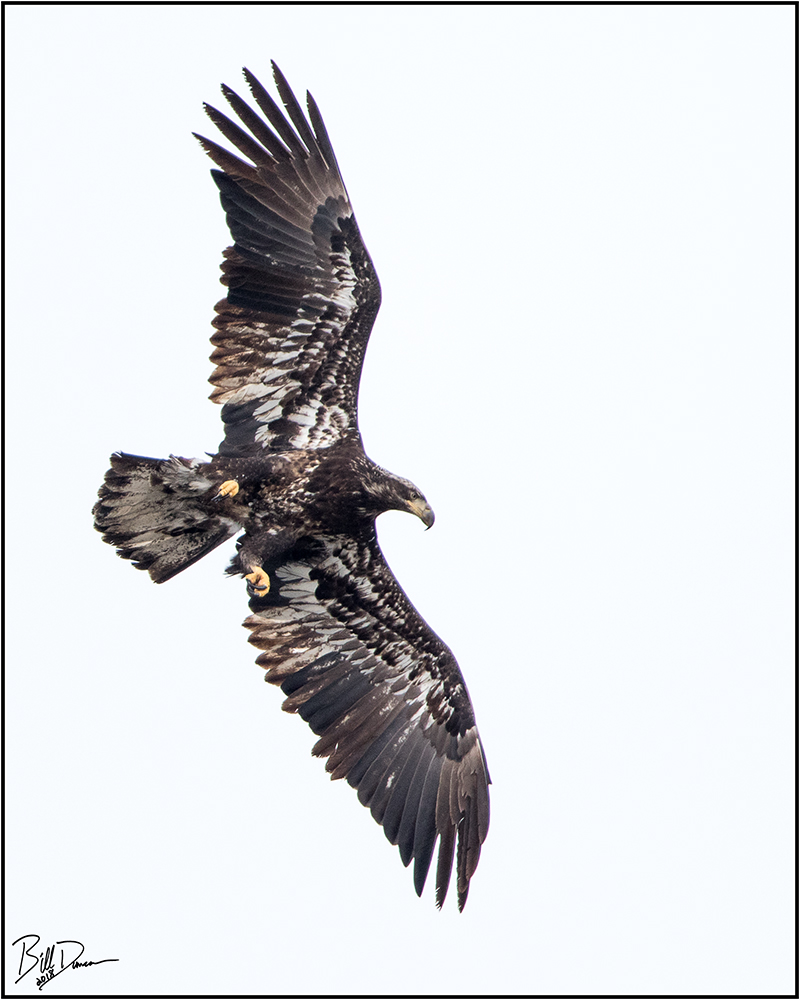
Bald Eagle subadult “3rd year”

The WGNSS Natural History Photo Group had a fun field trip in January, when we headed north up the Mississippi to the riverside town of Clarksville. Here at lock and dam #24, we were fortunate to be alongside ~75 eagles of various ages that took turns in catching the stunned shad that is their primary winter food source along the great river. We arrived early in the morning and made a day of it, experiencing wide shifts in weather from grey and snowy to partly sunny skies. I’m not an expert in aging these eagles, but I believe the bird picture above is a subadult II, which means it is 2.5 – 3 years old. In this photo you can see several retained juvenile secondaries on each wing.

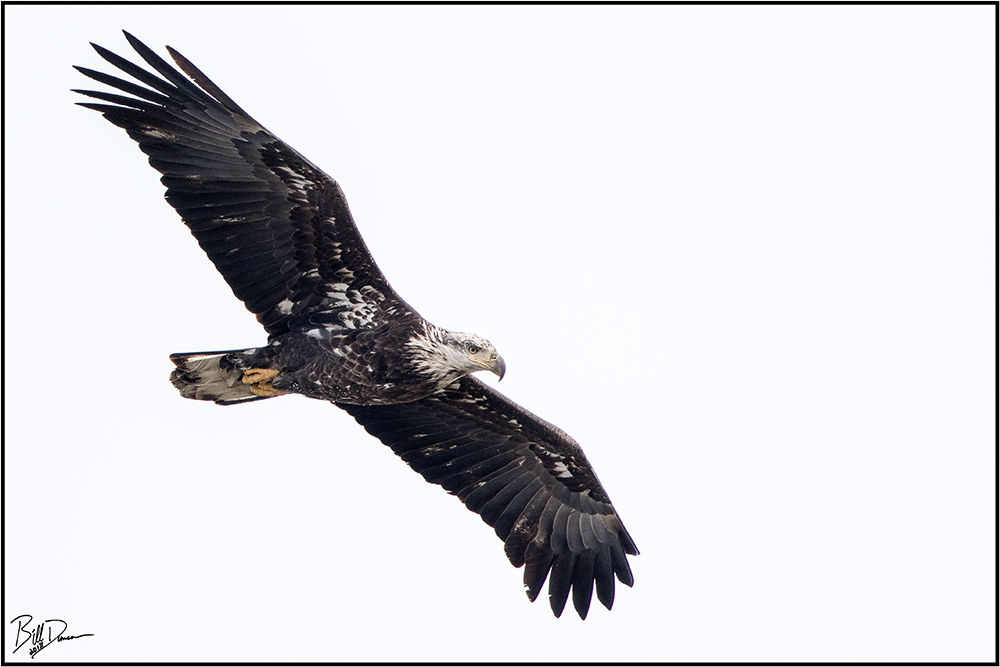
Bald Eagle subadult “2nd year”

The long and pointed secondaries make me think this bird is probably a year younger than the bird in the previous photo. I would guess this bird is 1.5 – 2 years old. The temperatures on this day were cold, but not too severe. We arrived with the car’s thermometer reading 16°F. There was a light wind most of the day, but not nearly as bad as there could have been.

Bald Eagle Adult

With patience, there were some opportunities to capture a bird’s profile as it came to pick up a poor stunned fish.

The successful fisher

The majority of prey captured in this way is small enough to be eaten immediately on the wing in a single “bite”. Sometimes, however, the bird is forced to retreat with its groceries and eat in seclusion.

Bald Eagle subadult “4th year”

The bird pictured above is much closer to looking like an adult bird, showing the mostly white head and tail. I estimate this bird as being 3.5 to 4 years old.

Bald Eagle – juvenile fishing

I noticed this in previous years, that it seems like the juveniles spend more time fishing than the adults. In the photo above, you can see a juvenile with an already full crop is pulling another fish from the river.

This is just a few I have processed so far. We have something in the works that may produce something much more in terms of eagle photography. Until next time.

-OZB


Having some success with SEOW

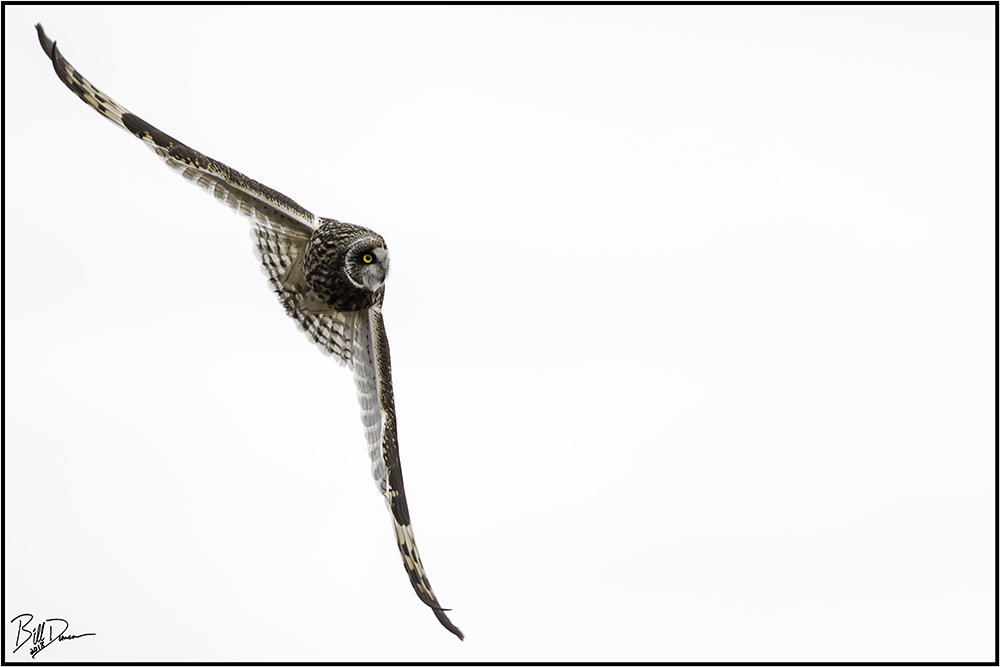
Short-eared Owl

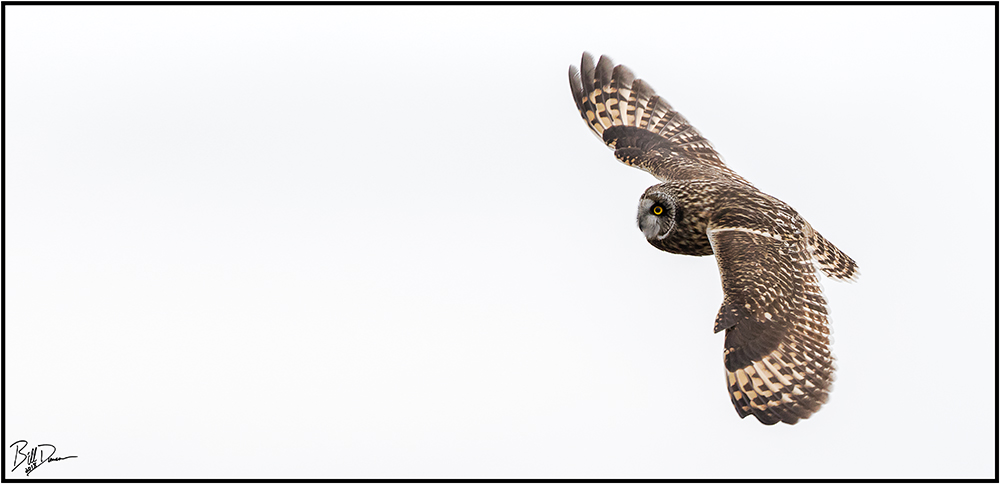
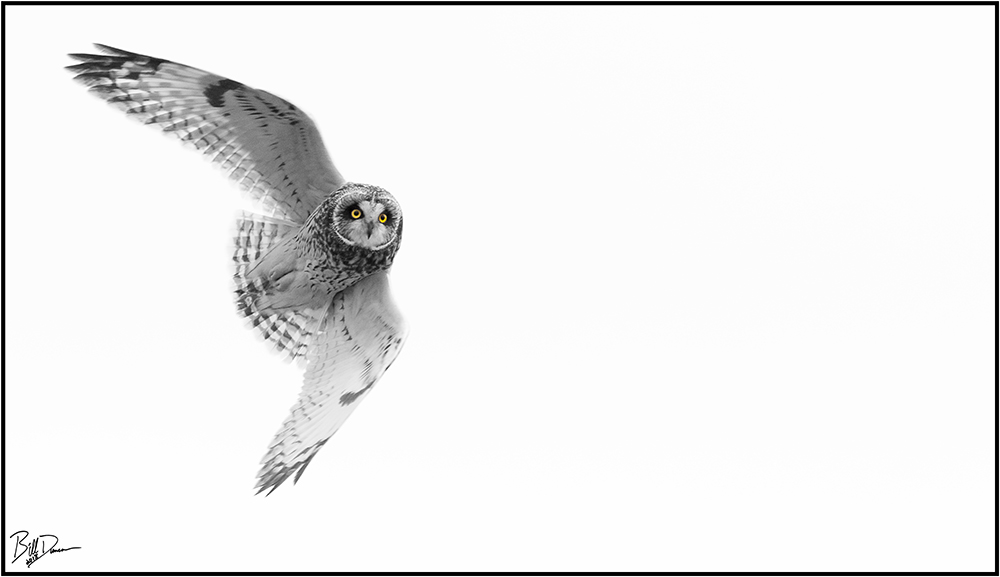
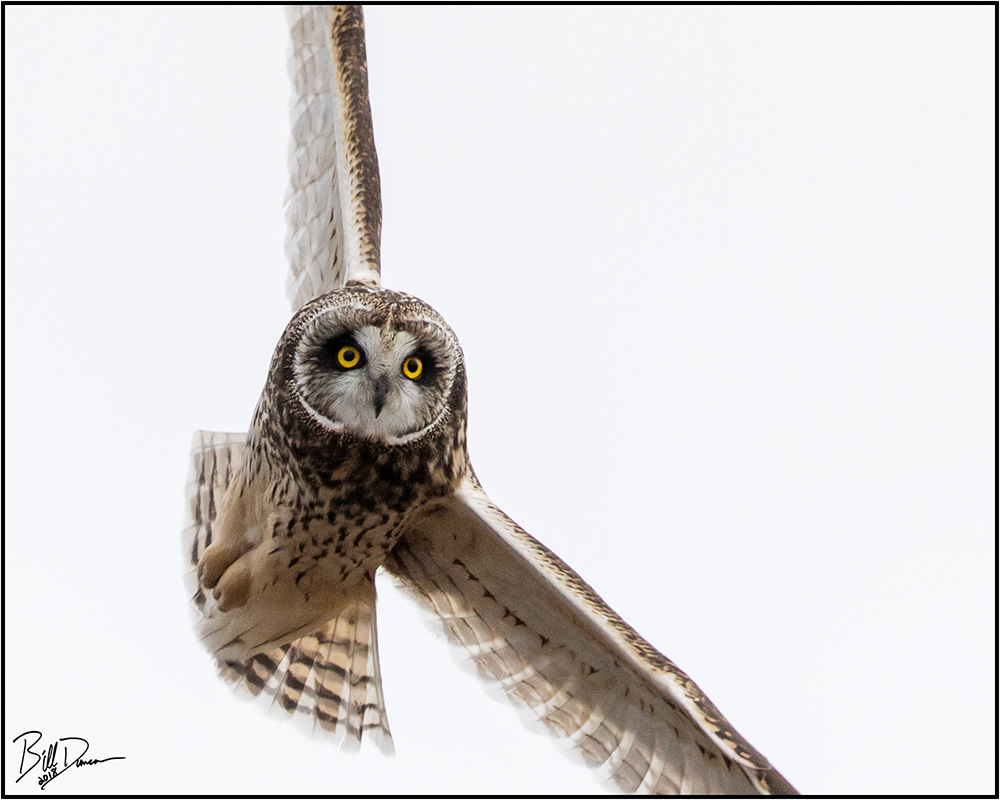
Miguel and I have been trying to get some better in-flight shots of the Short-eared Owls that use the wet prairies at BK Leach CA for their winter homes. Tonight, preparations and fortune came together and we wound up with a few that we can be satisfied with. The lighting wasn’t great, as the nice sunlight was blocked by heavier and heavier clouds as soon as the action began, but sometimes you take what you can get.

Short-eared Owl


Short-eared Owl


Short-eared Owl

-OZB

Birding the not-so-windy city

Piping Plover – Captive bird held at the Lincoln Park Zoo

A few of us headed up to Montrose Harbor on the north side of Chicago yesterday in search of a rare and late shorebird visitor. There has been a Piping Plover that has intermittently been using the beaches here since October. We visited following approximately four straight days that the bird was sighted and the weather forecast was great for this time of year. Unfortunately, the bird was a no-show for us on this day. Since the Lincoln Park Zoo was almost directly across the street, we checked to see if they had a Piping Plover in their collection. This is the female bird in winter plumage pictured above.

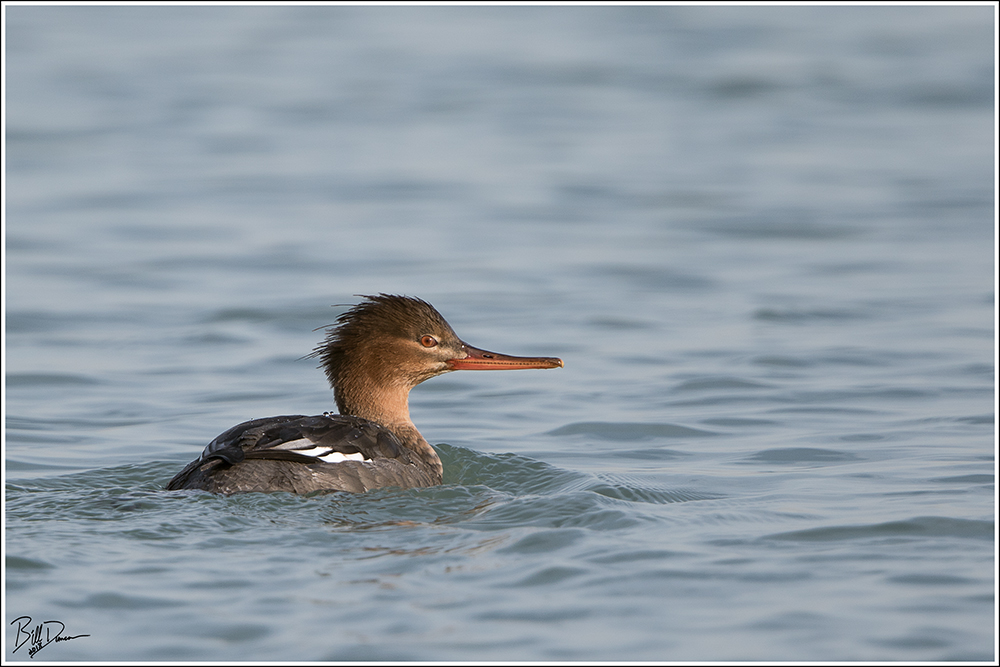
The harbor held a decent number of waterfowl that we were able to get close enough for some shots. See below.

Common Goldeneye


Red-breasted Merganser


Red-breasted Merganser

-OZB


WGNSS Nature Photography Group Visits Loess Bluff NWR – November 2018

Snow drops

Seven of us made the long drive to our destination on the morning of the 23rd . The week of
Thanksgiving can be an excellent choice for visiting Loess Bluff NWR, but always depends on the
weather. We were a bit concerned with the early cold snap our region experienced this autumn.
However, in the week or so preceding the trip, the weather warmed so we were not hampered by ice
that can completely cover the shallow waters of the wetlands. Having open water affords very close
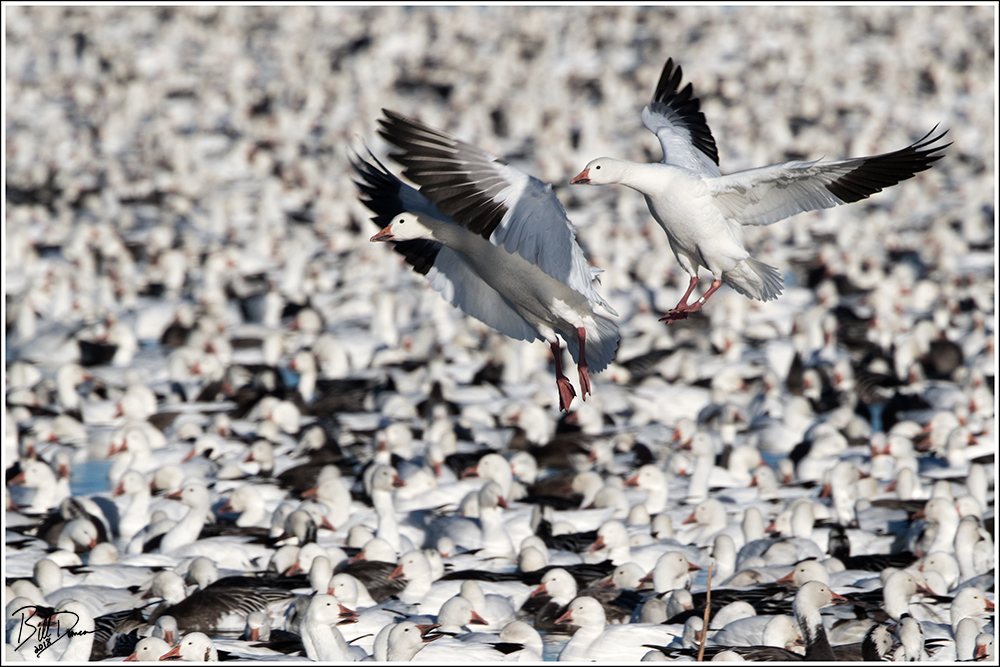
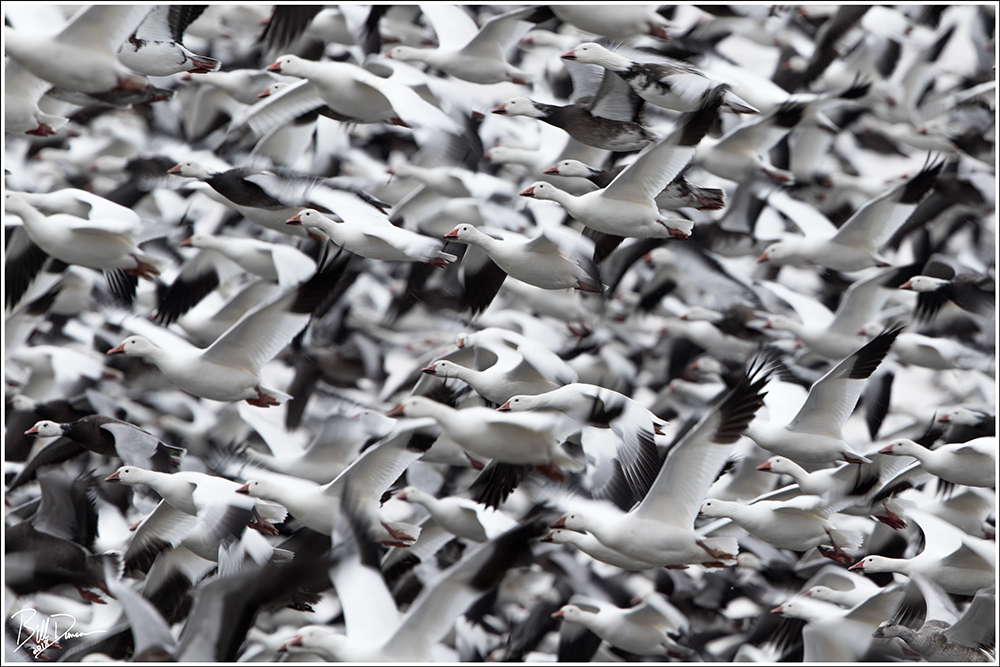
views of our photographic subjects and the primary reason we drove such a distance – the blizzard.

The blizzard

Typically, one million to two million Snow Geese will make this location a stop over during spring
and autumn migration and numbers of over 500,000 birds on a single count are not uncommon.
During our visit, the official counts were slightly over 100,000 birds, but the feeling with the group
was that this was grossly underestimated.

Rising snow

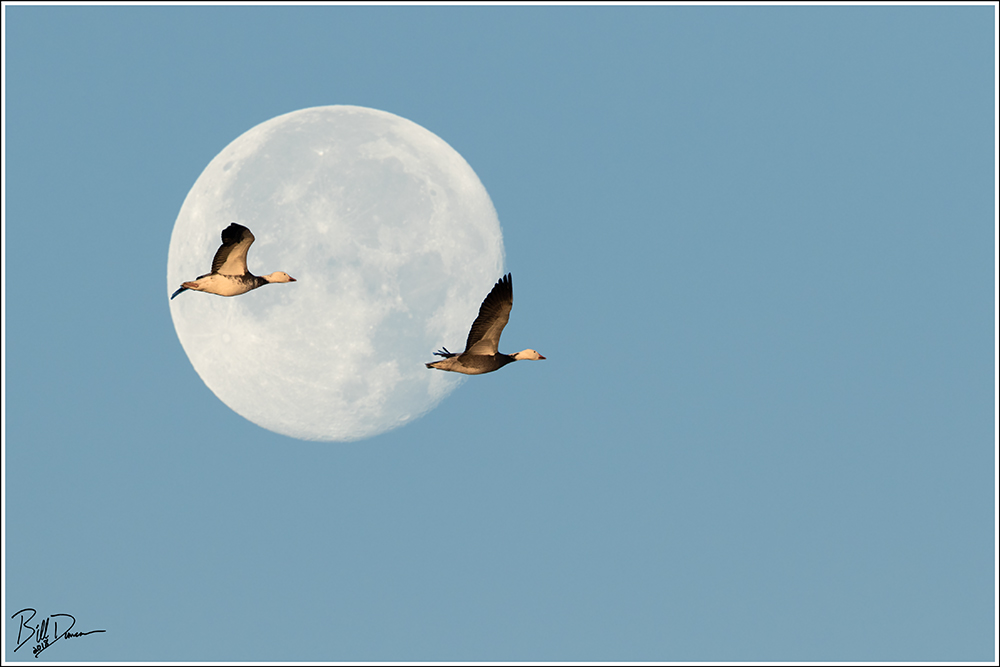
If conditions allow, getting the moon behind the Snow Geese can make a nice composition.

Rising snow against setting moon


Lunar Liberty

On our first day of the trip we were faced with mostly cloudy weather. As I told the group, this provides an opportunity to more easily try panning motion shots like the one pictured below. This is not my most successful attempt at such an image, but I wanted to share it here to demonstrate the multitude of opportunities for a diversity of photos to be made.

Panning with the action

Snow Geese are not the only subjects that make this trip worthwhile. The refuge also provides
important habitat for birds such as Bald Eagles, sparrows, a variety of ducks and wading birds, as
well as mammals like white-tailed deer and muskrats. On our initial entry to the park, Dave and Bill
found a Merlin on a relatively good perch above the road. We spent some time photographing the
bird, but regretted that the rest off our party were on the other side of the refuge and would not
likely be able to get the looks we did. Fortunately, a Merlin – likely the same bird, was spotted on
our second day and was viewable by all.

Merlin

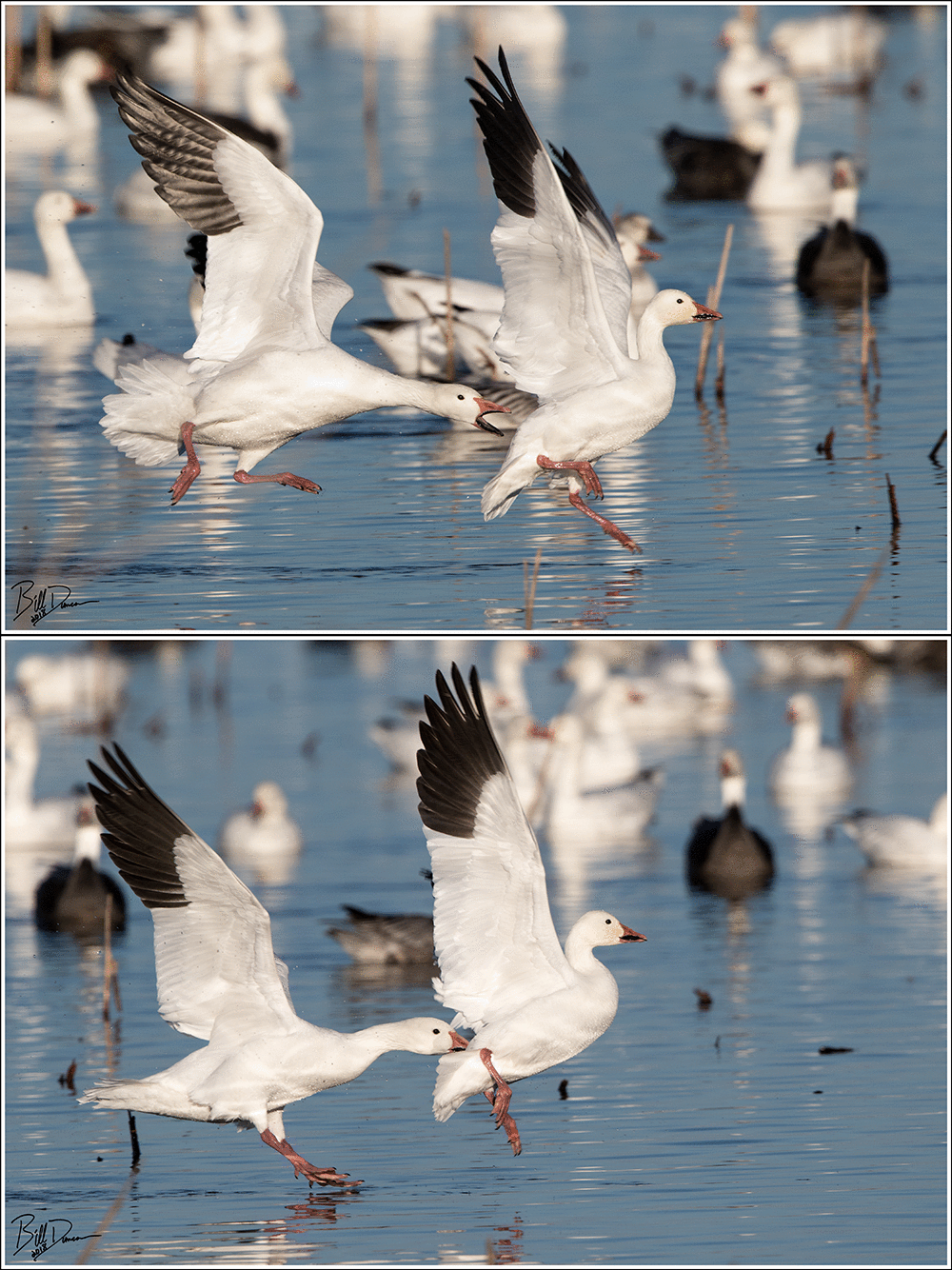
With subjects in the hundreds of thousands to the millions, making a purposeful image can be challenging. It is quite natural to want to shoot at everything that moves, but try and focus. Finding smaller action scenes is one way the photographer can focus on the individuals and their stories that make up the grander scheme.

Goosing a goose

Although we experienced skies with periods of heavy overcast, we were presented with fantastic
sunsets on both days. Being able to make the birds part of the story made these images all the more special.

Sun setting on snowy waters


A beautiful end

The WGNSS Photo Group is committed to an overnight trip to this and similar locations within the Midwest on Thanksgiving week. If you’d like to join us next year, please let me know!

-OZB

A Backyard First!

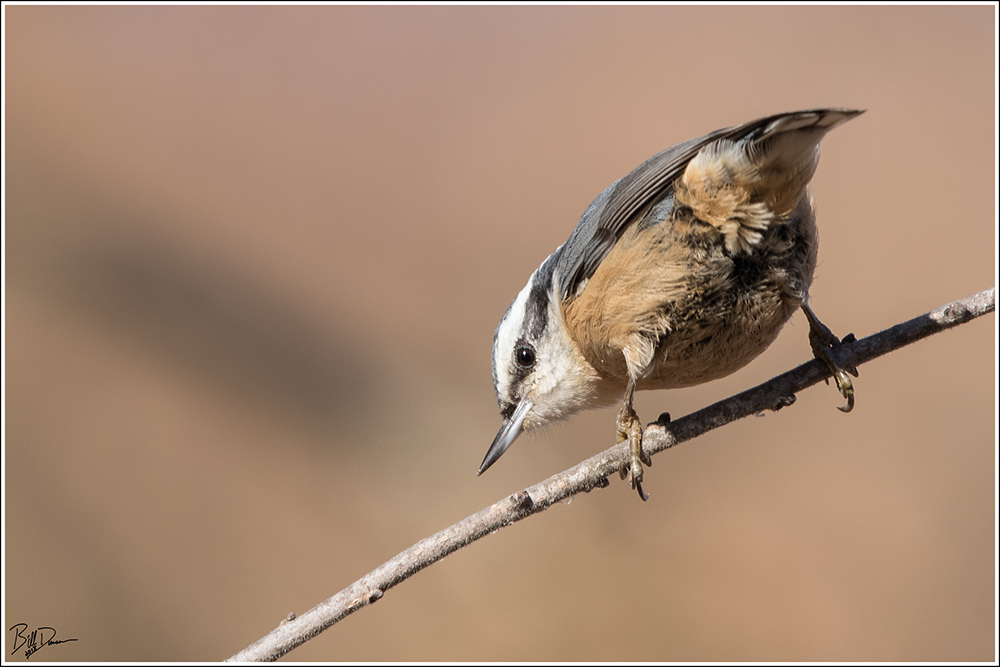
Red-breasted Nuthatch

I’m so glad I spent some time at home this afternoon. This gave me the opportunity to find the first Red-breasted Nuthatch that I have found visiting our backyard feeders. I so wanted to some how tell this little one that I would have seed available all winter long as it consistently went back and forth from the big oak to the feeder, each time carrying a sunflower seed to hide in the bark. I am pretty certain that this bird visited the feeder more than 50 times in the couple hours I watched.

Red-breasted Nuthatch

Making the Birds Earn their Supper

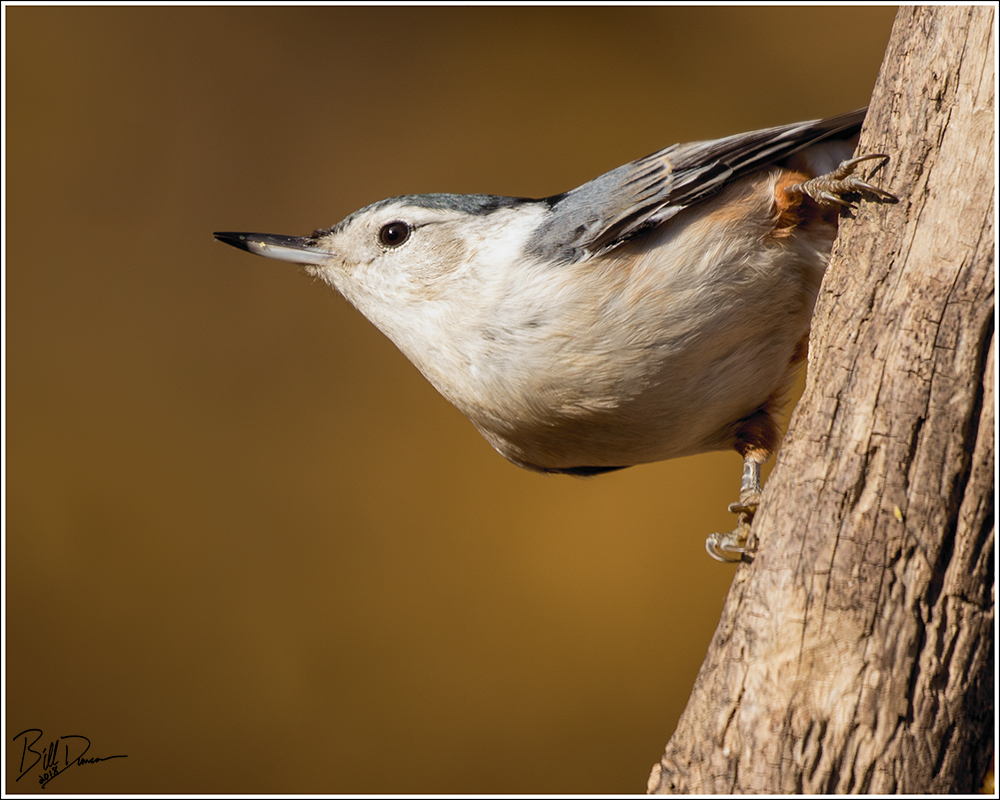
White-breasted Nuthatch

I have been given a lot inspiration lately by a number of Facebook friends to photograph the great birds that visit our feeders, or to put it another way, make these models work for their supper. On a recent birding trip, Sarah and I collected some great drift wood that I turned into horizontal and vertical branches in the backyard, not too far from the feeders and our sun-porch.

Dark-eyed Junco

I drilled a few extra holes towards the rear of some of these to act as unseen cavities to place my homemade bark butter. It only took the Juncos a couple of hours to find their favorite food. These guys go crazy trying to figure out how to get to this stuff. I made sure to place a few feeding spots near horizontal perches that they could access without too much difficulty as they cannot grasp vertical perches very well. These guys are so tame that they were my primary subjects, other species being a little more timid to visit the close perches and seed deposits that I sat close to.

Dark-eyed Junco

For a first attempt, I’m pretty pleased. These were shot hand-held in mixed lighting with my 100-400 mm lens and I shot through the not-so clean windows of the sun-porch. I tried sitting behind the open windows, but this must have made me much more conspicuous. I sat for an hour or more with few birds coming in to feed. Within seconds of me closing the windows, the Juncos came to the feeding stations.

Downy Woodpecker

I’m a little concerned that my resident Downy Woodpeckers might have a little too much of the rich food I am providing. They now have access to the peanut and tree nuts in the no-mess mix I provide, beef tallow suet blocks, and now the bark butter. But, I suppose it would take a lot for a wild bird to over indulge.

Anyone who feeds their wild birds and has an interest and access to photography should give this a try. I’m looking forward to more cold mornings spent outside trying my hand at this.

-OZB