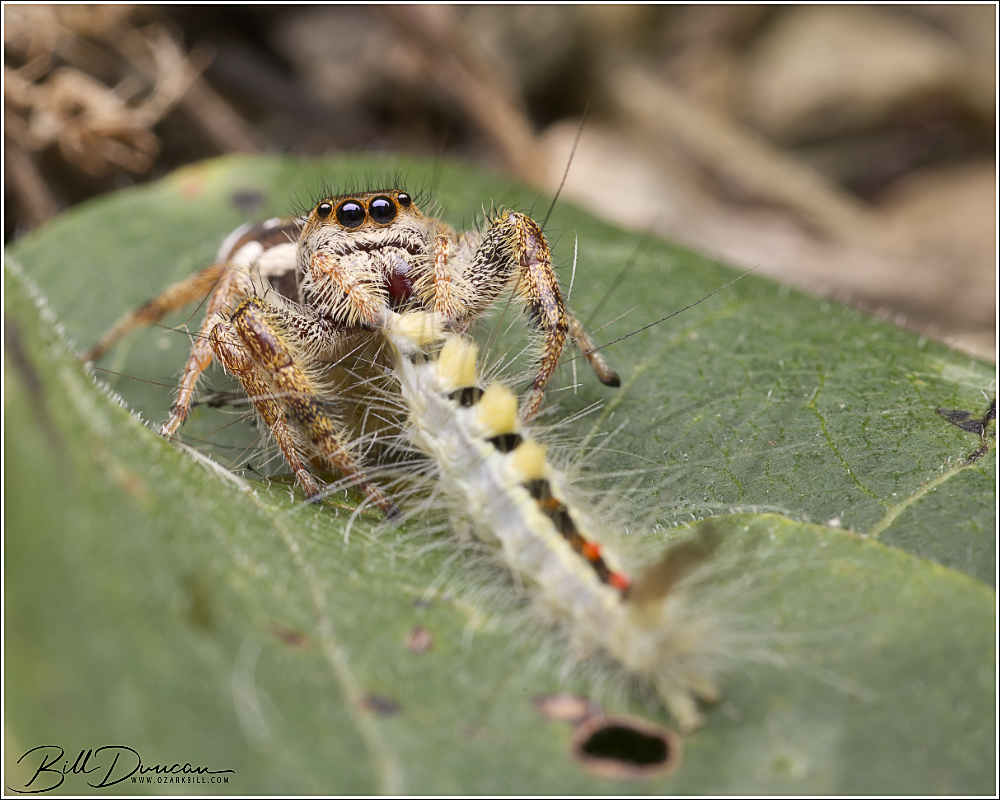
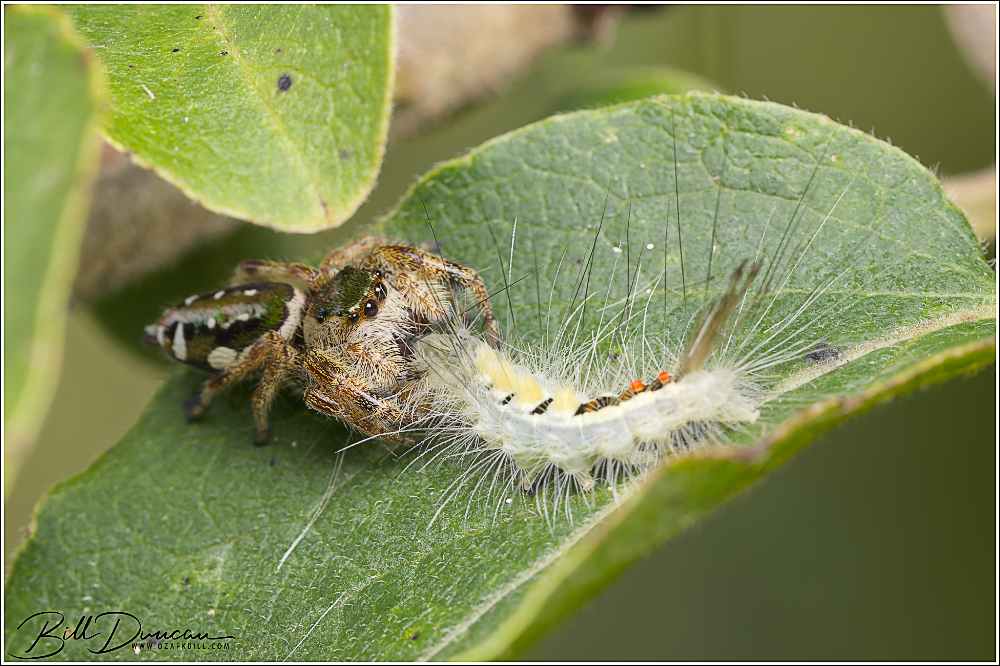
From 2024. I came across this female salticid (Paraphidippus aurantius) that had made a meal from a caterpillar of this white-marked tussock moth (Orgyia leucostigma).
"What a thousand acres of Silphiums looked like when they tickled the bellies of the buffalo is a question never again to be answered, and perhaps not even asked." -Aldo Leopold
From 2024. I came across this female salticid (Paraphidippus aurantius) that had made a meal from a caterpillar of this white-marked tussock moth (Orgyia leucostigma).
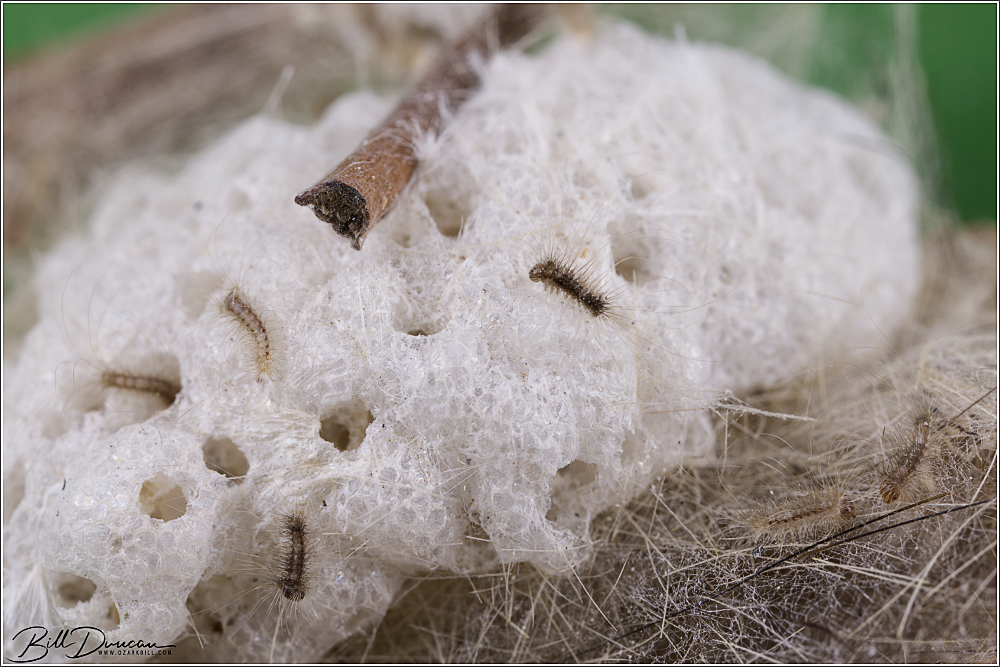
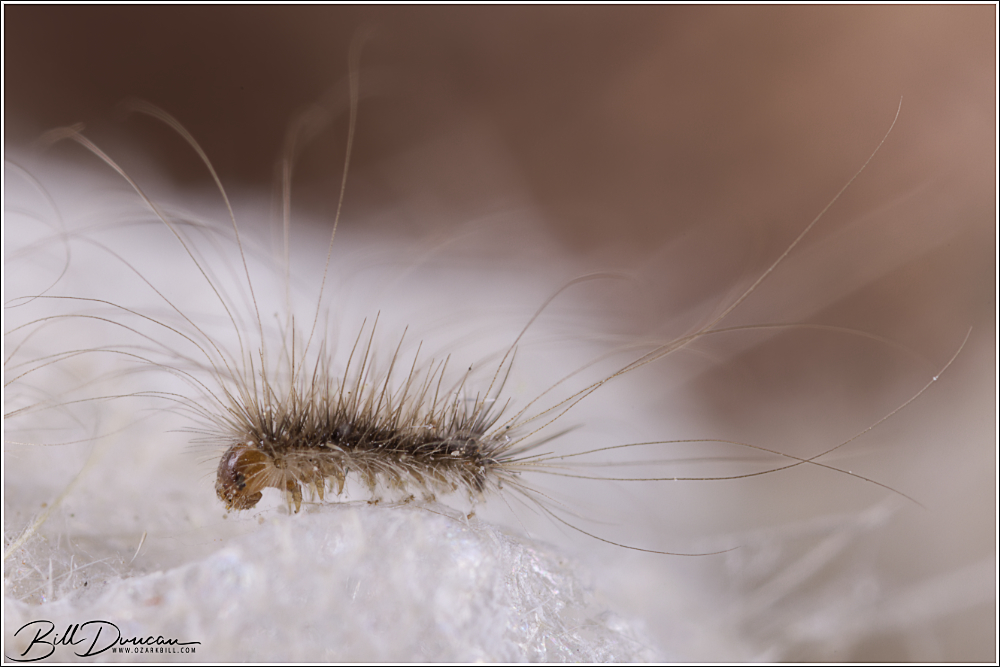
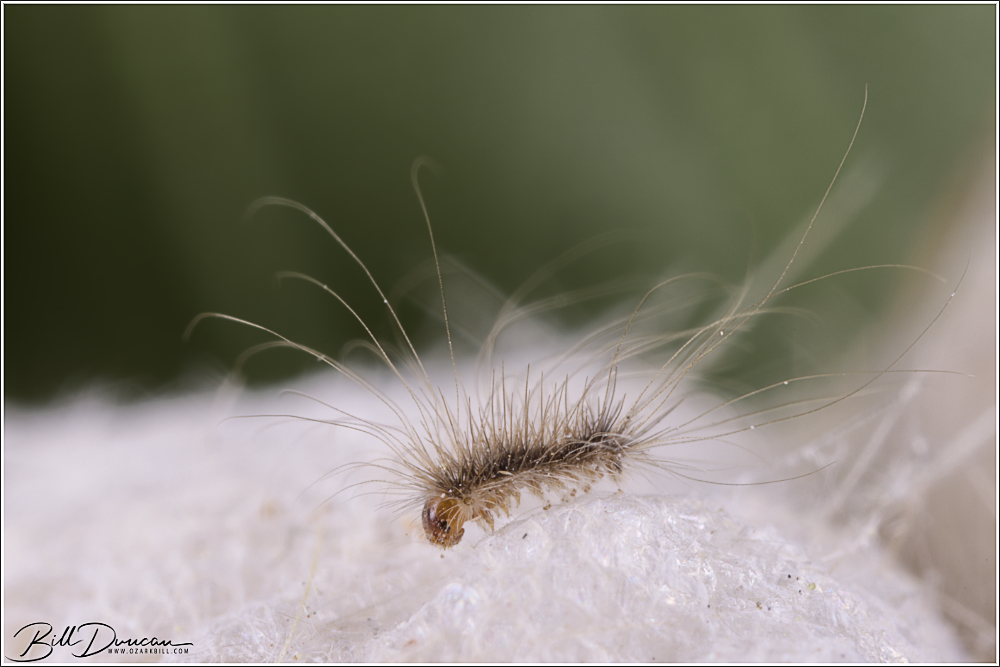
I posted about the Orgyia leucostigma (white-marked tussock moths) that I reared last year to adulthood and documented their breeding and oviposting on my back porch. In mid-April, the young had emerged from their egg case after overwintering on the porch. Here are some photos of these extremely tiny little ones. It was a pretty difficult task as these guys were not much larger than an average grain of sand. Additionally, shortly after emerging they just wanted to spin a thread and balloon away on the wind, which is their primary method of dispersing. I used a small paintbrush to try and gently move them to some leaves, but their threads would quickly get wrapped around their long setae. After getting some photos, I left most of them to disperse in the backyard.
I believe this is the last I have to share from this year’s caterpillar season. Overall, I think this was a successful season and I had a lot of fun finding some cool species. I still have tons to learn and species to find. I’m hoping to continue this next year and hopefully get going on early season hunting. This is quite difficult because the spring and early summer are great for things like birds and plants as well. I need more Saturdays!
I’ll finish up with this fantastic late season walnut sphinx caterpillar (Amorpha juglandis) that I found at Onondaga Cave State Park in late September. I finally noticed that this genus name, Amorpha, is shared with one of my favorite groups of plants, the false indigos, like Amorpha fruticosa. I looked this up and Amorpha comes from Greek for “shapeless” or “deformed.” This genus of plants received this name due to their having only one petal on their flowers, unlike the rest of the Fabaceae.
Amorpha juglandis has been in a few other genera and now is placed in it’s own monotypic genus. I have not been able to find out which particular characteristic provides the “deformed” nature for the Amorpha epithet. If you know this, I’d be grateful to learn this.

Red-crossed Button Slug
Tortricidia pallida fam. Limacodidae
Host plant: red oak member (Quercus sp.)
Dates found: 14, Sep, 2024
Locations Found: Kaintuck Hollow, Phelps County, MO
Notes: Although we supposedly have two other button slug species in Missouri, this is the only one I’ve been able to identify. Very common.

Silvery Checkerspot
Chlosyne nycteis fam. Nymphalidae
Host plant: yellow wingstem (Verbesina alternifolia)
Dates found: 30, Jun, 2024
Locations Found: Young Conservation Area, Franklin County, MO
Notes: This species overwinters as third instar caterpillars.

With books, apps and internet sources, I think I did a fair job of identifying most of the caterpillars that came my way this year. There are still a few that I have not been able to identify, however. I placed the following on iNaturalist and Bugguide months ago, but so far no experts have given their opinions. If you have any ideas that could help, I’d appreciate to hear them.
This first cute little one I found at Englemann Woods N.A. in Franklin County, MO in late June. I wish I had taken more photos. I think this could be one of the punkies (fam. Nolidae), but it might also belong to one of the other spiney families.

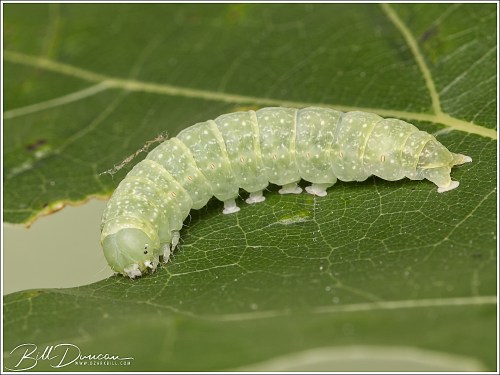
This next one is part of a group I really loath to try to identify – nondescript green cats. I’ve gone through the guides numerous times but simply couldn’t find a perfect match. It most likely belongs to the Noctuidae family, but that doesn’t narrow it down very far. This was also found at Englemann Woods N.A. in late June and found on white oak (Quercus alba).
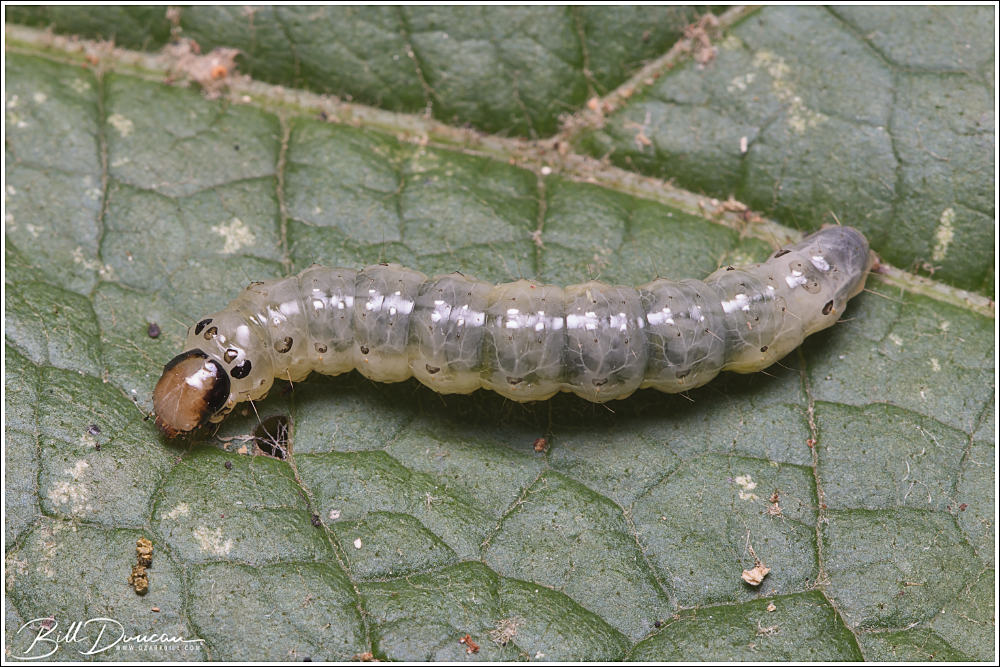
Next up is also a group that I haven’t gotten the hang of yet. This is likely a tiger moth (subfam. Arctiinae), but I’m not sure where to begin there. Found at Prairie Garden Trust on July 6th. Host plant not recorded.

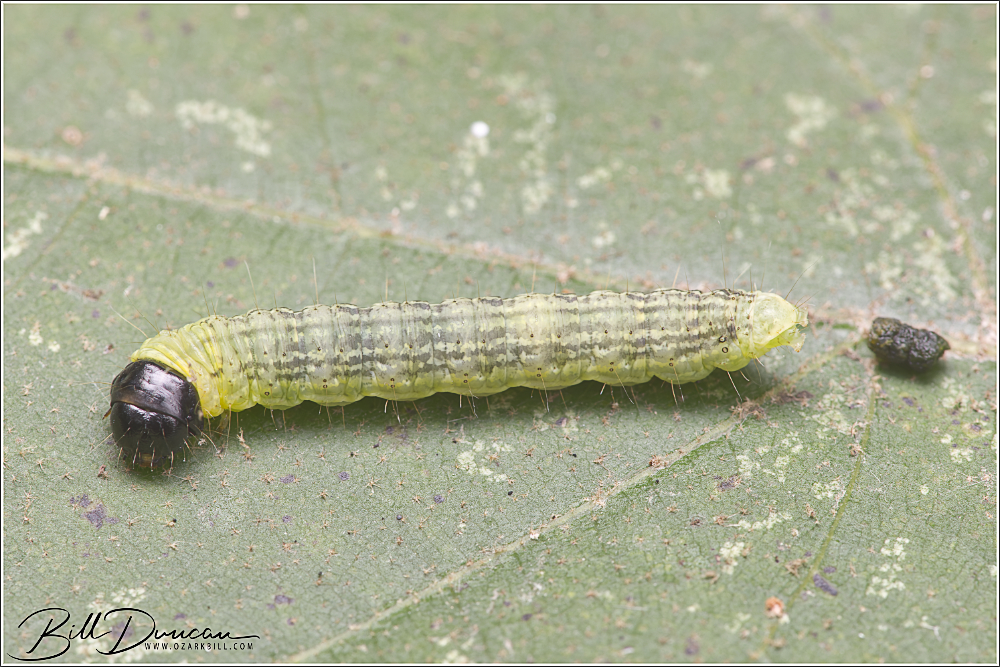
Finally, a cat that I found in a leaf shelter of Vitis aestivalis at Kaintuck Hollow in Phelps County on July 13th. I believe this might be Herpetogramma aeglealis (fam. Carambidae) but it’s not close enough for me to be certain.
Locust Leafroller Moth
Sciota subcaesiella fam. Pyralidae
Host plant: honey locust (Gleditsia triacanthos)
Dates found: 14, Sep, 2024
Locations Found: Kaintuck Hollow, Phelps County, MO
Notes: Often wraps itself inside leaf nests much like skippers.
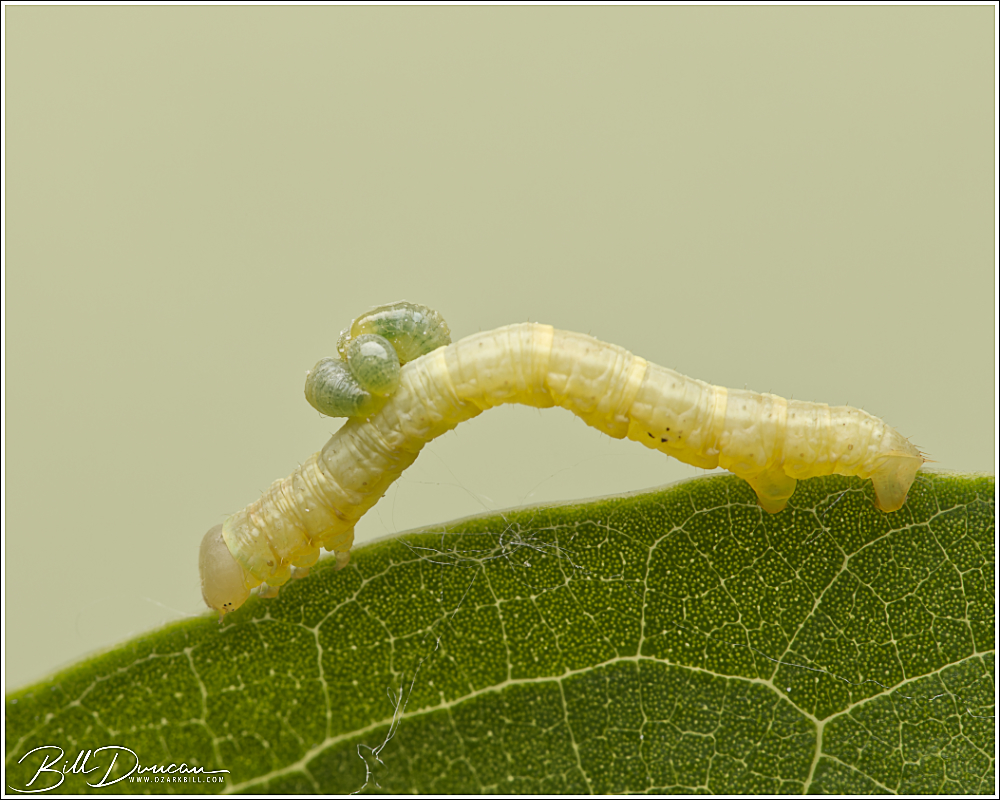
I found this unfortunate little geometrid caterpillar during a hunting session at work back in July. In these photos it is serving as host to some ectoparasitoid wasps in the Eulophidae family. I attempted to rear these but everyone succumbed in quick order.

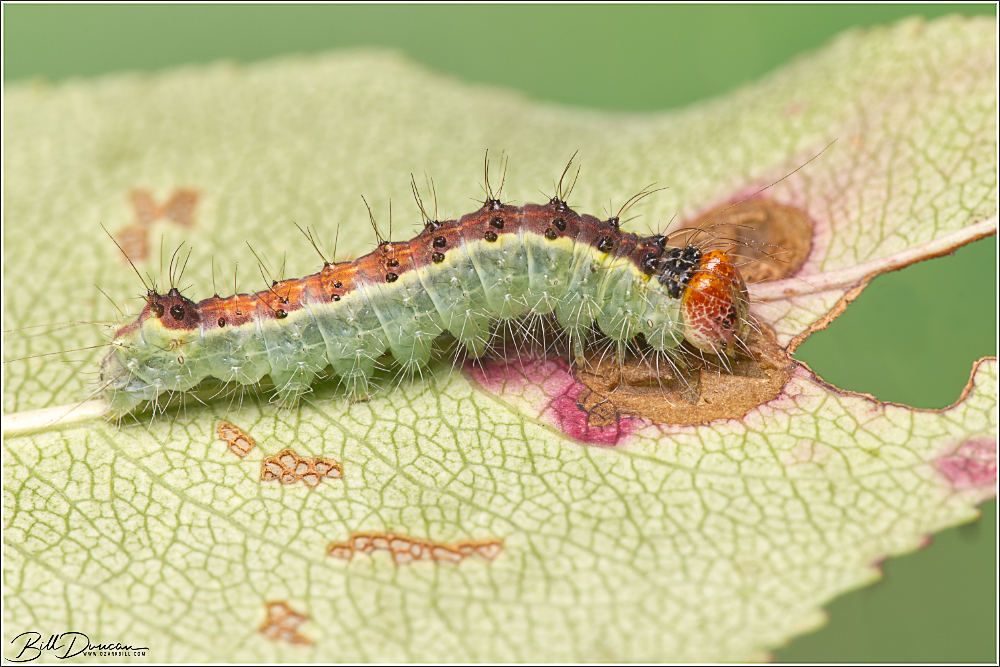
Splendid Dagger Radcliffe’s Dagger
Acronicta superans raddcliffei fam. Noctuidae
Host plant: Not recorded
Dates found: 17, Aug, 2024
Locations Found: Schoolcraft Prairie, Washington County, MO
Notes: Edit – 2/Jan/2026. Science is learning and correcting our mistakes when possible. There have been no confirmed collections of A. superans in MO per Heitzman’s catalogue. The larva of A. superans looks quite similar to the penultimate instar of A. radcliffei, which I now believe this larvae should be labeled as. The primary differences are that A. superans will have black snowflaking on the head, whereas A. radcliffei will have this patterning in red. Another potential option is A. hasta, but I think less likely. All three are cherry/rose specialists. That said, it would not be out of the question for A. superans to be found in Missouri. If any who may have found this post has reason to disagree with my determination, I’d appreciate hearing from you.
Ailanthus Webworm
Atteva aurea fam. Attevidae
Host plant: Leitneria floridana (corkwood)
Dates found: 14, Jul, 2024
Locations Found: Shaw Nature Reserve, St. Louis County, MO
Notes: Originally native to southern Florida and other neotropical countries where it hosted on members of the Simaroubaceae. It has expanded its range following the introduction and escape of the invasive Chinese tree-of-heaven, Ailanthus altissima, which is the most common host for this species in Missouri.


 A Thousand Acres of Silphiums