"What a thousand acres of Silphiums looked like when they tickled the bellies of the buffalo is a question never again to be answered, and perhaps not even asked." -Aldo Leopold
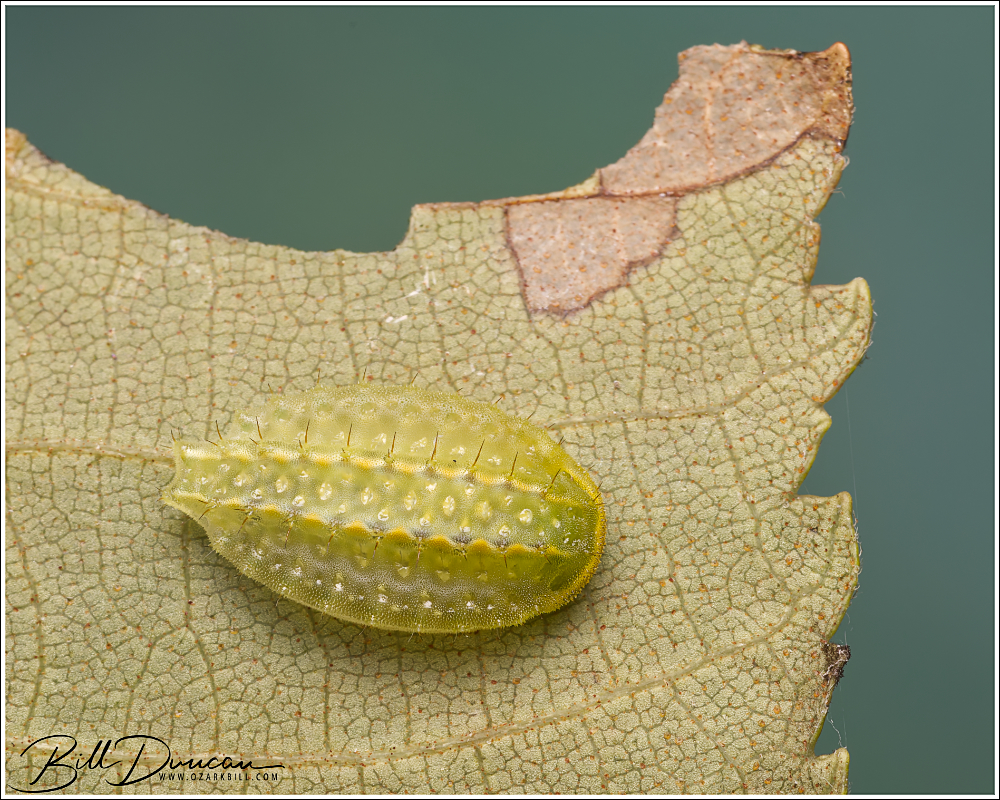
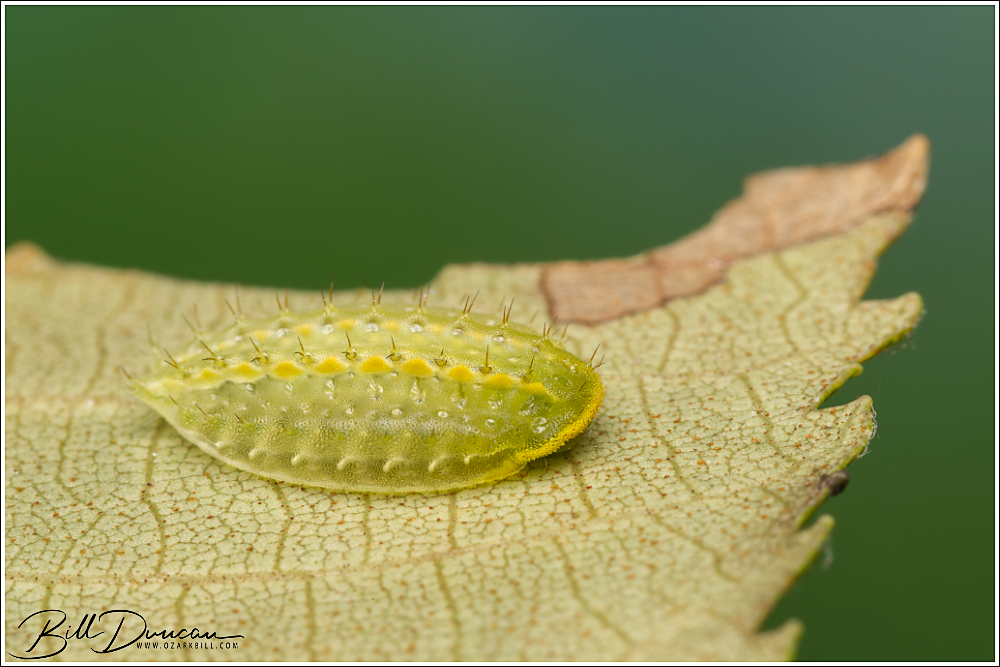
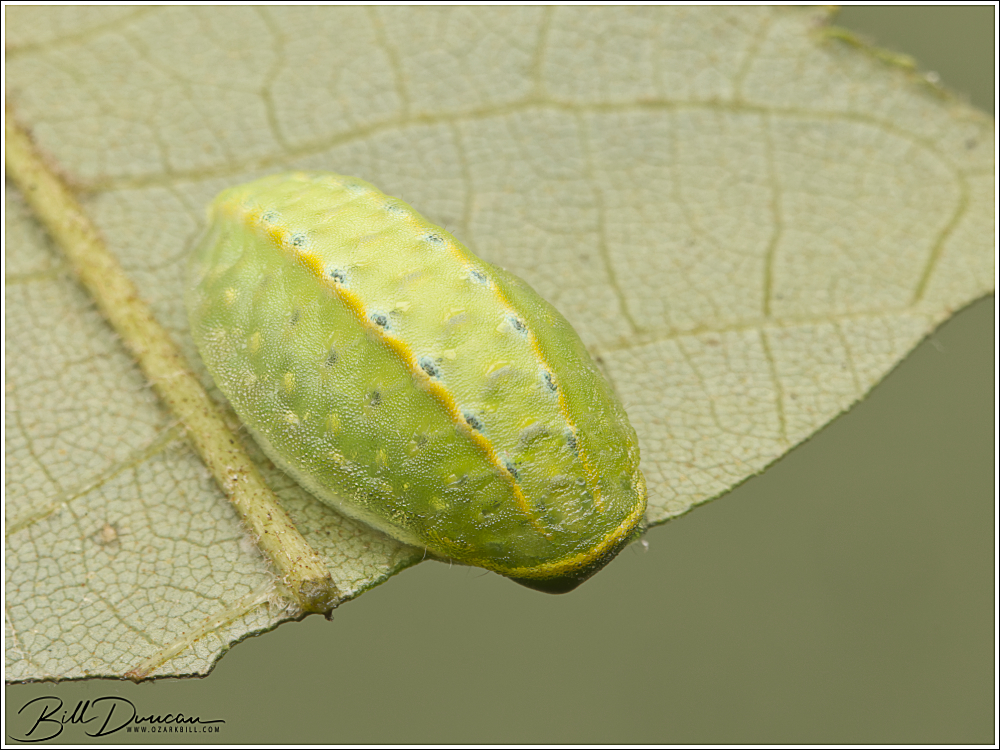
Yellow-collared Slug Moth Apoda y-inversum fam. Limacodidae (Hodges#4667) Host plant: Found on black walnut (Juglans nigra) Date found: 31 August, 2025 Location found: Tyson Research Center, St. Louis County, MO Notes: These photos show a mid-instar caterpillar with stinging setae that are absent in final instars.
I got out early this morning and visited one of my favorite caterpillar hunting grounds – Cuivre River State Park in Lincoln County, MO. The pecker gnats were bad around sunrise but they would get to unbearable by lunch time, along with some nice heat and humidity. It was a typical mid-summer outing – rather slow. However, I always seem to find enough to keep me interested.
Apoda y-inversum
Along with a couple of new species, I was pleased to find two specimens of the yellow-collared slug (Apoda y-inversum #4667). A member of my favorite Family – the Limacodidae, the adult moth of this species is known by the name of the inverted-Y slug moth. Both of these cats were found on different leaves of the same hickory sapling. I don’t find these guys every season, so this was a nice find indeed.
Two cats on the same tree!
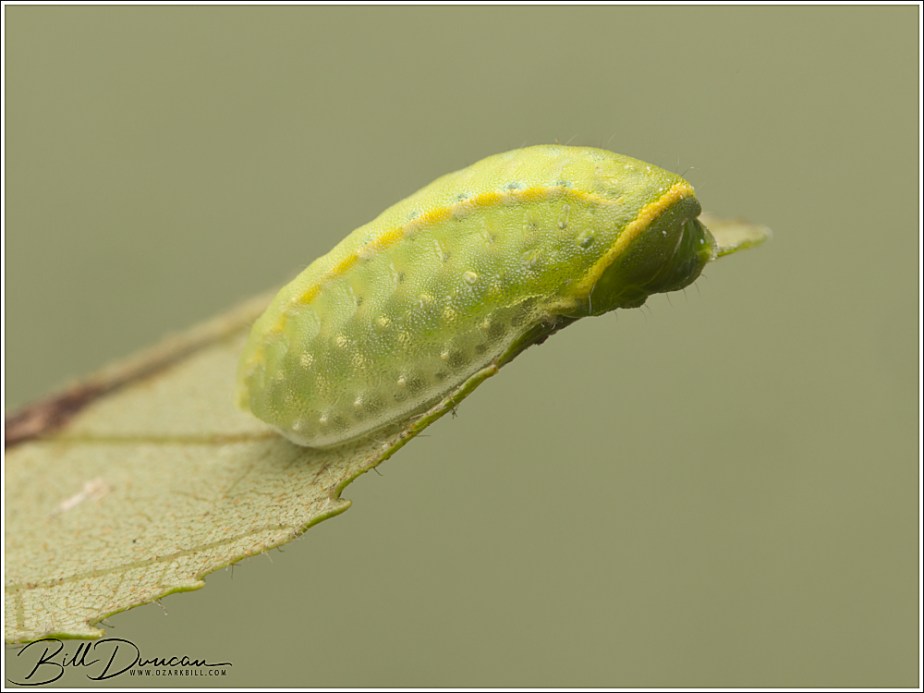
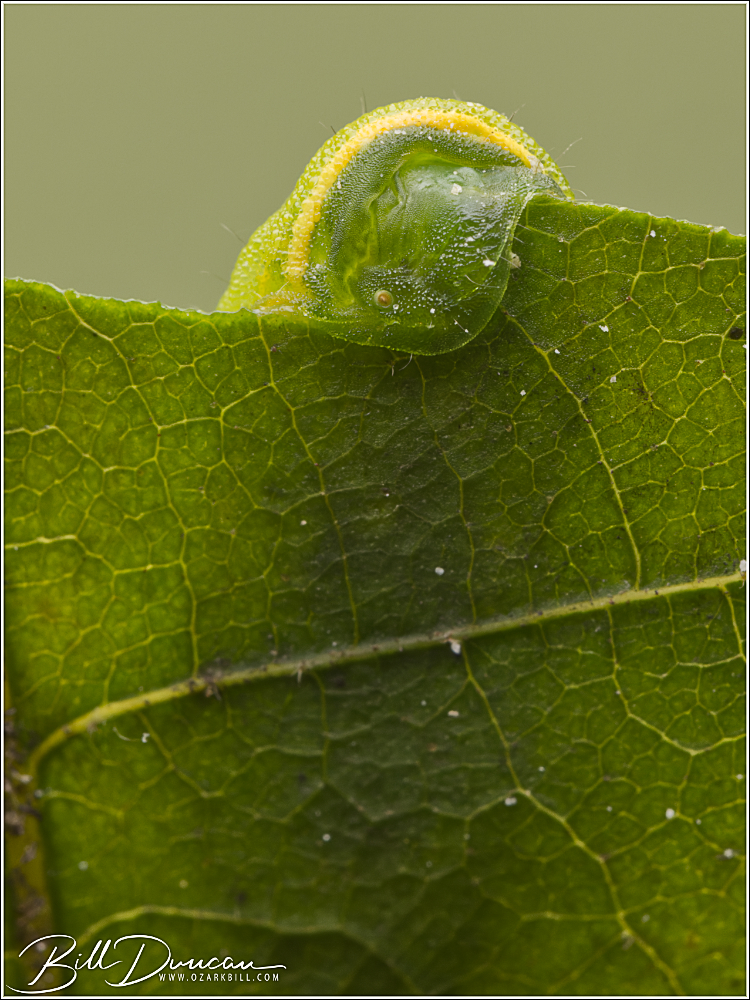
Slug moth caterpillars are standouts in the lepidopteran world in more ways than one. In these photos I hoped to showcase their peculiar way of shielding their heads by keeping it retracted in their thorax. Even during feeding, they keep their head covered by a fleshy extension of the first thoracic segment. Seeing their true heads extended, especially in this species is quite a rare sight. I guess the one who briefly did show its face for me today was getting a little curious about what I was doing to the leaf it was feeding on as I manipulated the leaf in the clamp to get the angles I was looking for.
A look at the fleshy thoracic segment that covers the caterpillar’s head. It will drape this covering over the leaf margin, allowing it to eat without exposing its head.
A closer look of a feeding Apoda y-inversum. Notice the typical straight-edge feeding pattern that the Limacodidae are known for.
A partial look at the exposed head capsule of Apoda y-inversum.



 A Thousand Acres of Silphiums