Red-crossed Button Slug
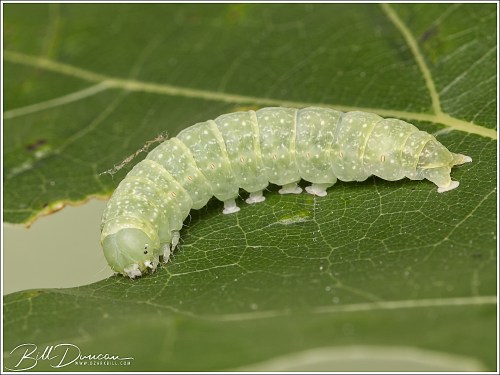
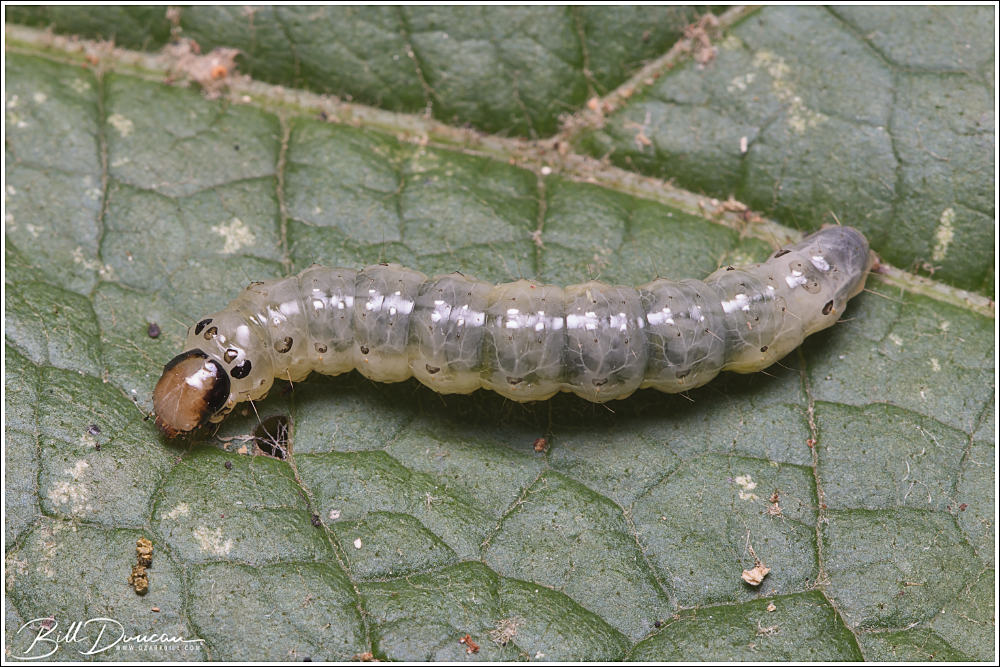
Tortricidia pallida fam. Limacodidae
Host plant: red oak member (Quercus sp.)
Dates found: 14, Sep, 2024
Locations Found: Kaintuck Hollow, Phelps County, MO
Notes: Although we supposedly have two other button slug species in Missouri, this is the only one I’ve been able to identify. Very common.
Tag: wildlife
2024 Caterpillar Season – Silvery Checkerspot
2024 Caterpillar Season – The Unidentified
With books, apps and internet sources, I think I did a fair job of identifying most of the caterpillars that came my way this year. There are still a few that I have not been able to identify, however. I placed the following on iNaturalist and Bugguide months ago, but so far no experts have given their opinions. If you have any ideas that could help, I’d appreciate to hear them.
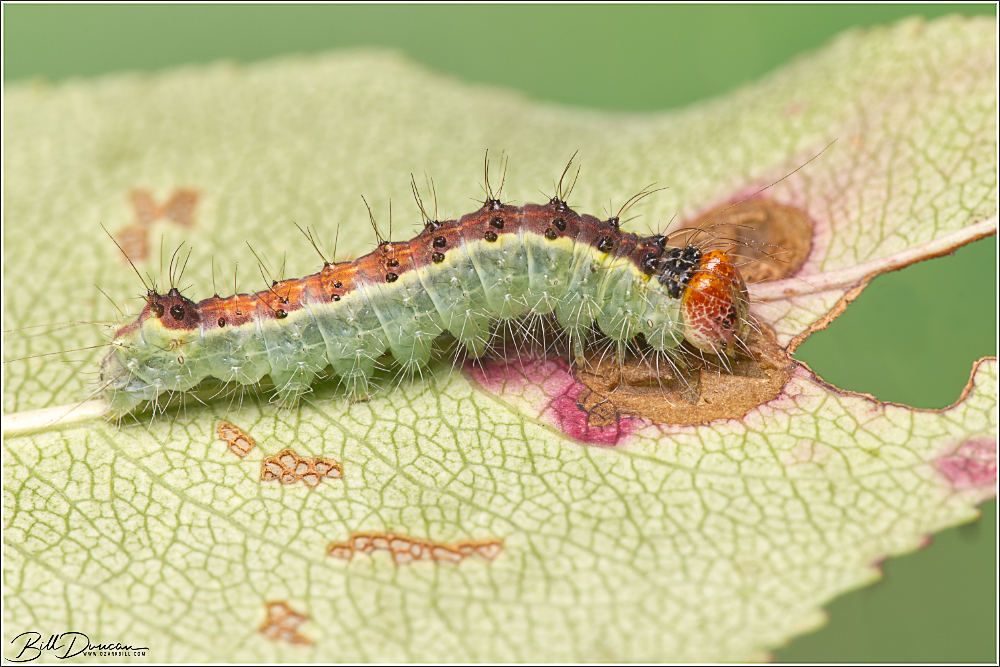
This first cute little one I found at Englemann Woods N.A. in Franklin County, MO in late June. I wish I had taken more photos. I think this could be one of the punkies (fam. Nolidae), but it might also belong to one of the other spiney families.
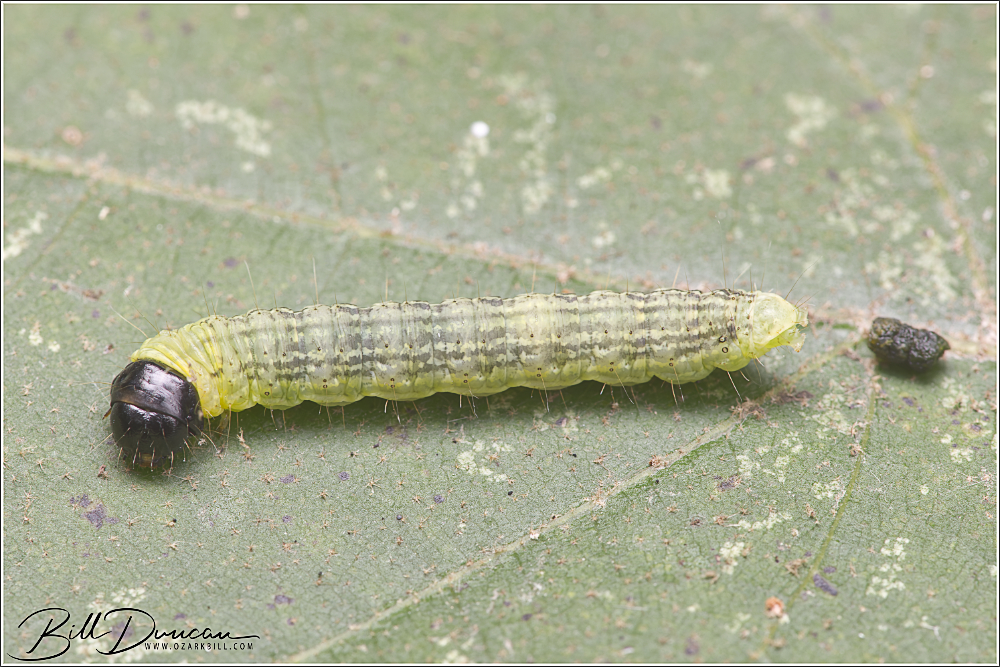
This next one is part of a group I really loath to try to identify – nondescript green cats. I’ve gone through the guides numerous times but simply couldn’t find a perfect match. It most likely belongs to the Noctuidae family, but that doesn’t narrow it down very far. This was also found at Englemann Woods N.A. in late June and found on white oak (Quercus alba).

Next up is also a group that I haven’t gotten the hang of yet. This is likely a tiger moth (subfam. Arctiinae), but I’m not sure where to begin there. Found at Prairie Garden Trust on July 6th. Host plant not recorded.
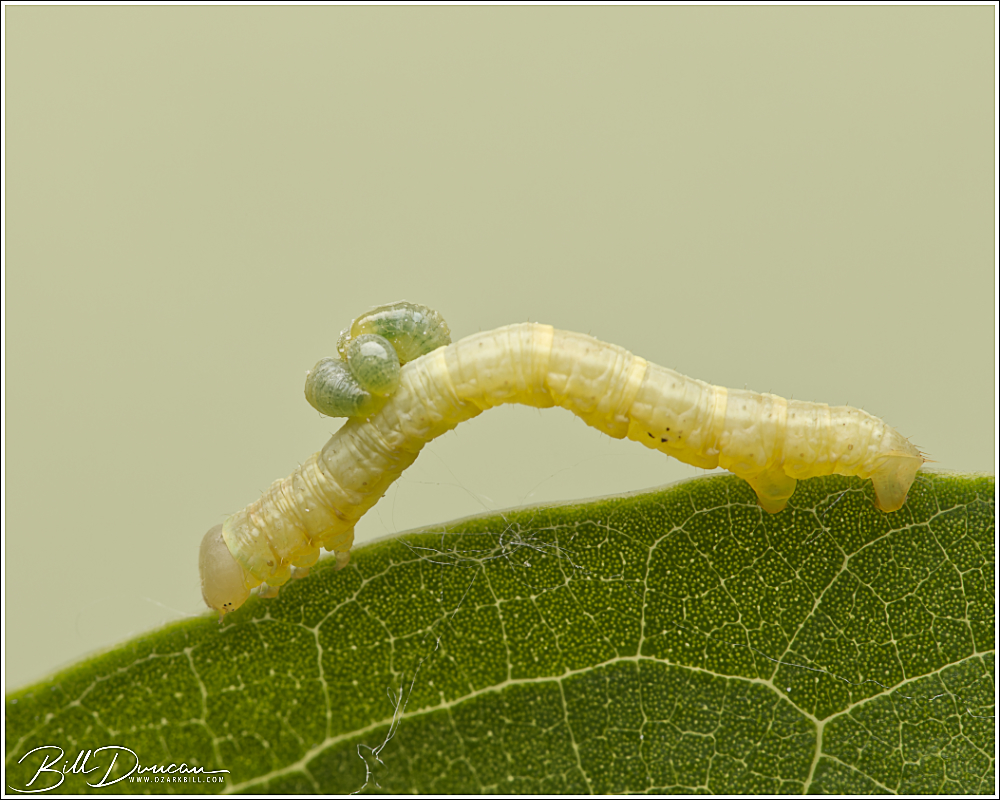
Finally, a cat that I found in a leaf shelter of Vitis aestivalis at Kaintuck Hollow in Phelps County on July 13th. I believe this might be Herpetogramma aeglealis (fam. Carambidae) but it’s not close enough for me to be certain.
Clubbed Mydas Fly
I missed getting photos of Mydas clavatus (fam. Mydidae) on group photo outings, I believe, for three straight years. I seemed to be somewhere else and my “friends” failed to let me know… 😉 Well, back in July, I finally got lucky and found this one nectaring on some Pycnanthemum at Prairie Garden Trust in Callaway County, MO on a WGNSS Photo Group trip.
These are downright fascinating insects. The larvae of mydas flies feed on beetle larvae that reside in soil or rotting wood. The adults, who are Batesian mimics of spider wasps (Pompilidae), apparently feed solely on nectar and can be found in the heat of the day skimming across the prairies to find their favorite flowers.
2024 Caterpillar Season – Locust Leafroller Moth
2024 Caterpillar Season – Parasitized Inchworm
2024 Caterpillar Season – Radcliffe’s Dagger
Splendid Dagger Radcliffe’s Dagger
Acronicta superans raddcliffei fam. Noctuidae
Host plant: Not recorded
Dates found: 17, Aug, 2024
Locations Found: Schoolcraft Prairie, Washington County, MO
Notes: Edit – 2/Jan/2026. Science is learning and correcting our mistakes when possible. There have been no confirmed collections of A. superans in MO per Heitzman’s catalogue. The larva of A. superans looks quite similar to the penultimate instar of A. radcliffei, which I now believe this larvae should be labeled as. The primary differences are that A. superans will have black snowflaking on the head, whereas A. radcliffei will have this patterning in red. Another potential option is A. hasta, but I think less likely. All three are cherry/rose specialists. That said, it would not be out of the question for A. superans to be found in Missouri. If any who may have found this post has reason to disagree with my determination, I’d appreciate hearing from you.
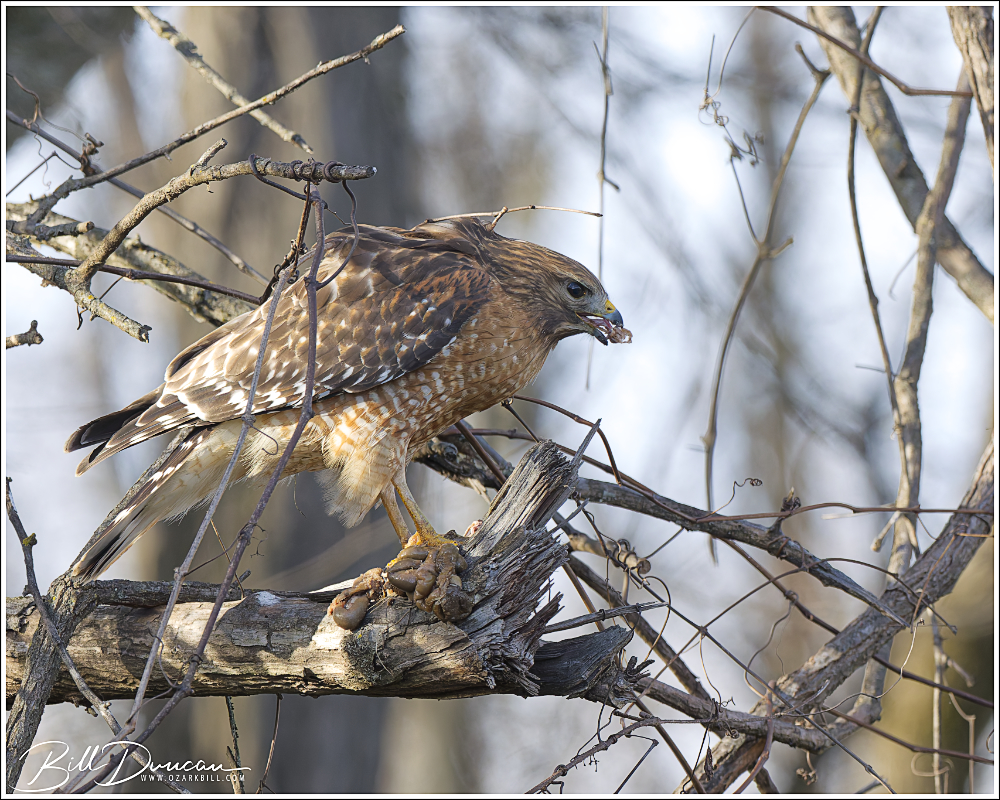
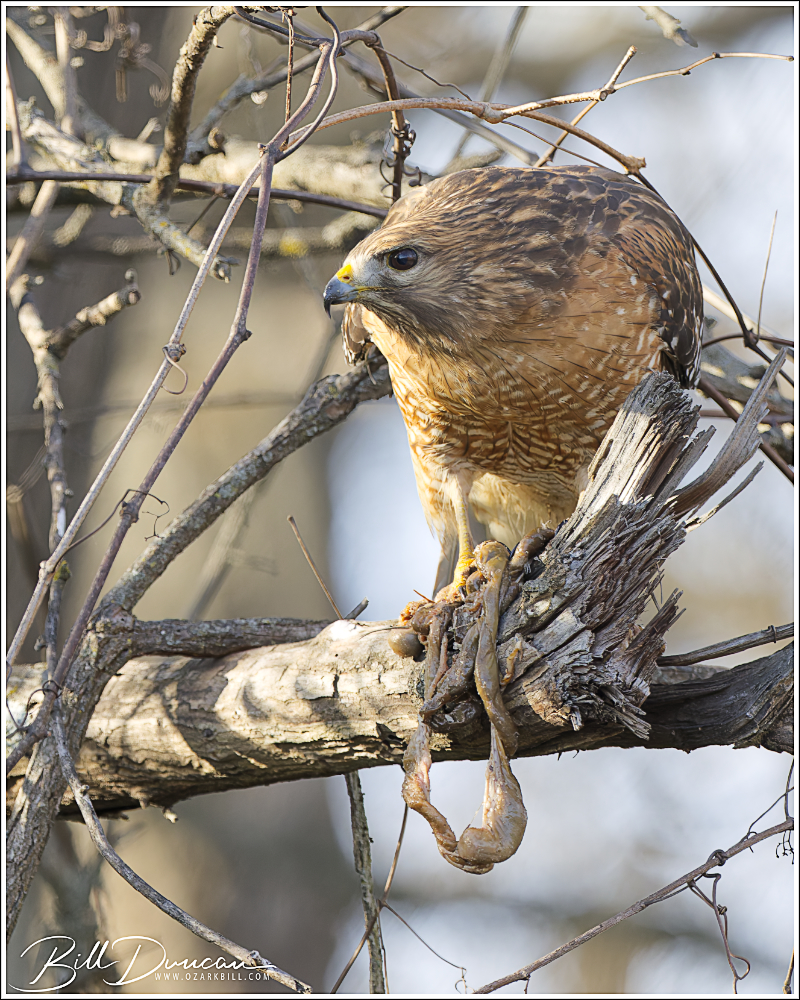
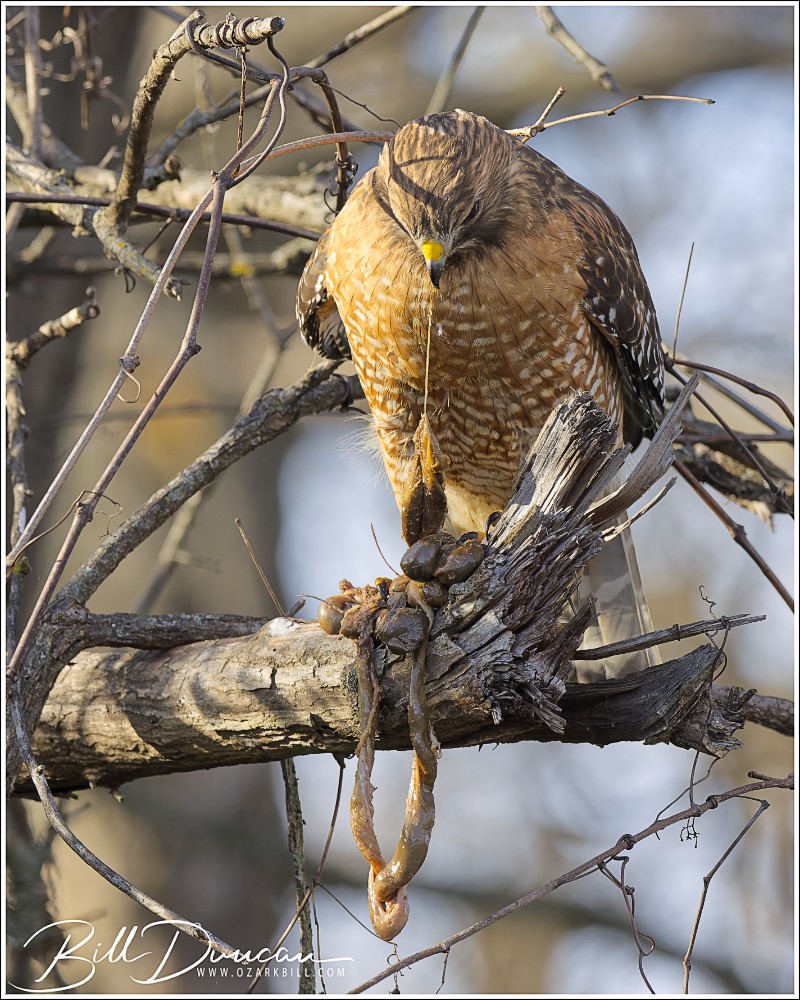
Red-shouldered Hawk and Offal
I found this Red-shouldered Hawk a couple of weeks ago finishing off a squirrel carcass at Bush Wildlife CA.


2024 Caterpillar Season – Ailanthus Webworm
Ailanthus Webworm
Atteva aurea fam. Attevidae
Host plant: Leitneria floridana (corkwood)
Dates found: 14, Jul, 2024
Locations Found: Shaw Nature Reserve, St. Louis County, MO
Notes: Originally native to southern Florida and other neotropical countries where it hosted on members of the Simaroubaceae. It has expanded its range following the introduction and escape of the invasive Chinese tree-of-heaven, Ailanthus altissima, which is the most common host for this species in Missouri.
Long-tailed Giant Ichneumonid
Here’s another set from the bowels of Facebook that I neglected to put on the blog for some reason. These were taken in 2018 at Pickle Springs Natural Area where Casey and I found this fantastic insect.
The long-tailed giant ichneumonid (Megarhyssa macrurus) is our region’s largest ichneumonid wasp. This species is a parasitoid and its sole host is the pigeon horntail (Tremex columba, fam. Symphyta) that bores tunnels into decaying hardwood species. The long-tailed giant ichneumonid uses its keen senses to find the host and then uses its long ovipositor to drill into the tunnel where it lays an egg and injects venom to paralyze the horntail. This species does not sting.