"What a thousand acres of Silphiums looked like when they tickled the bellies of the buffalo is a question never again to be answered, and perhaps not even asked." -Aldo Leopold
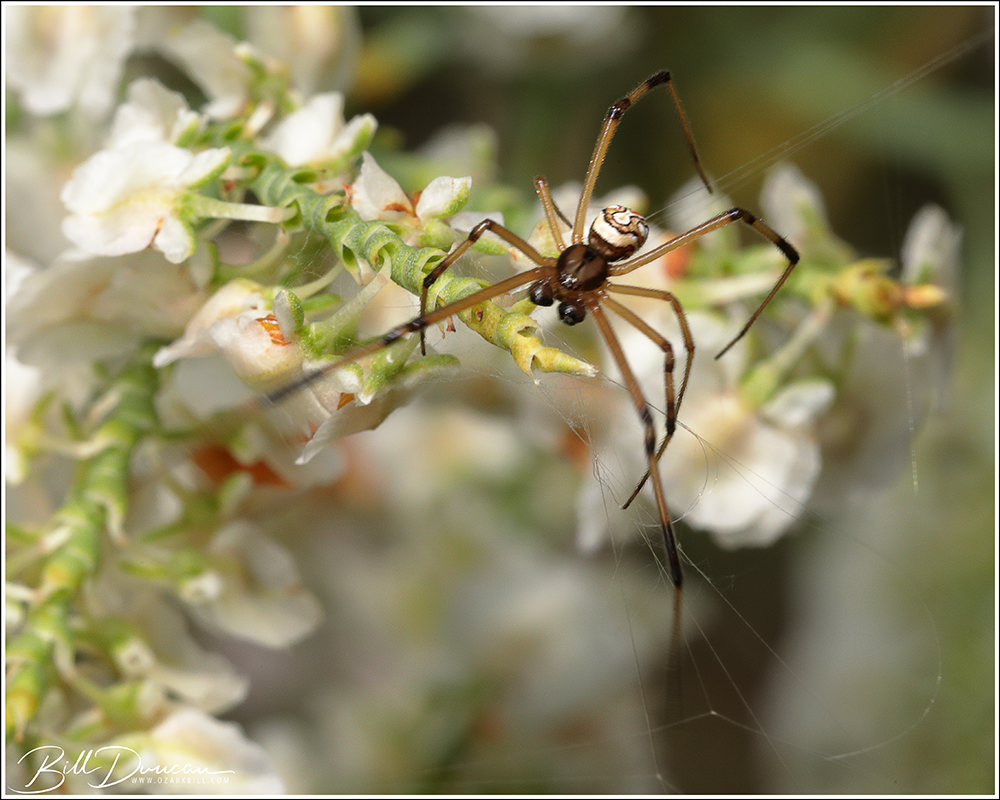
This southern black widow was found at Sand Prairie Conservation Area in Scott County MO. Quite unusually, she had built a web in the open within the tallest branches of a Polygonum americanum (American jointweed), where she had just dispatched a Dielis plumipes (Feather-legged Scoliid Wasp).
This southern black widow female was found wrapping up her prey, a feather-legged scoliid wasp at Sand Prairie C. A.
My shadow cast as I took photos caused her to head for cover.
I also found a male southern black widow moving about the boundaries of the female’s web.
For the past few years I have noticed a good number of native bee nest holes along exposed sections of bare soil at one of my favorite hiking and nature observation sites – August G. Beckemeier Conservation Area in St. Louis Co., MO. This past spring I finally decided to make this a project and set about a quest to make some images of these gals provisioning their nests. As usual, I wound up learning along the way.
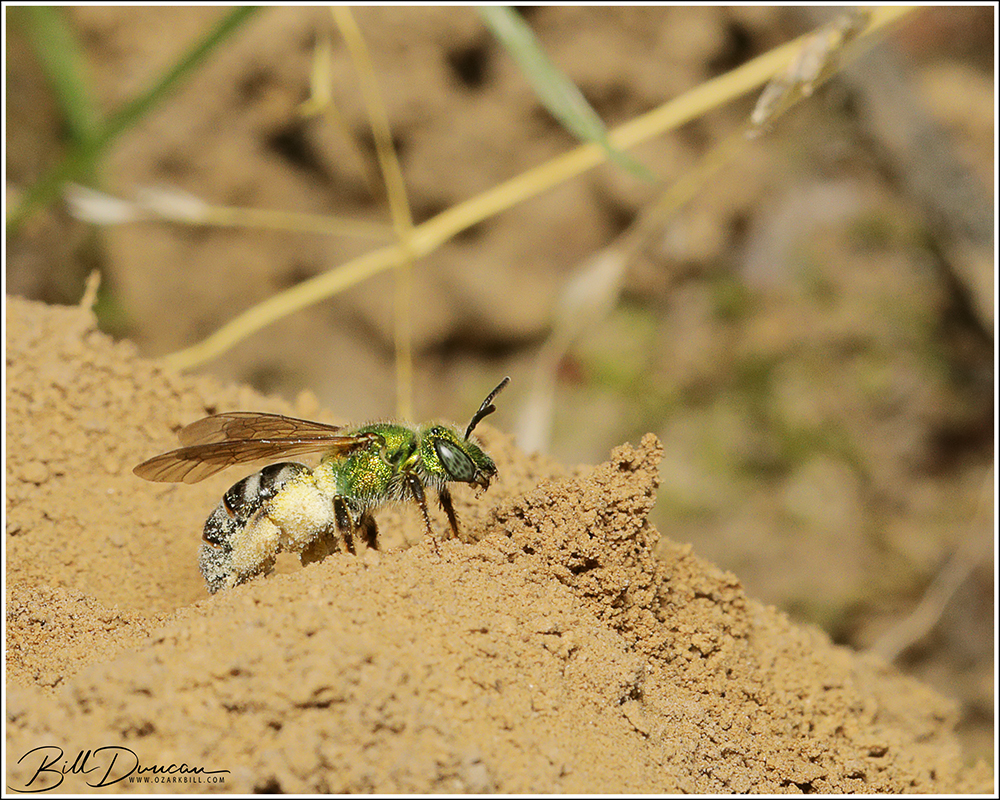
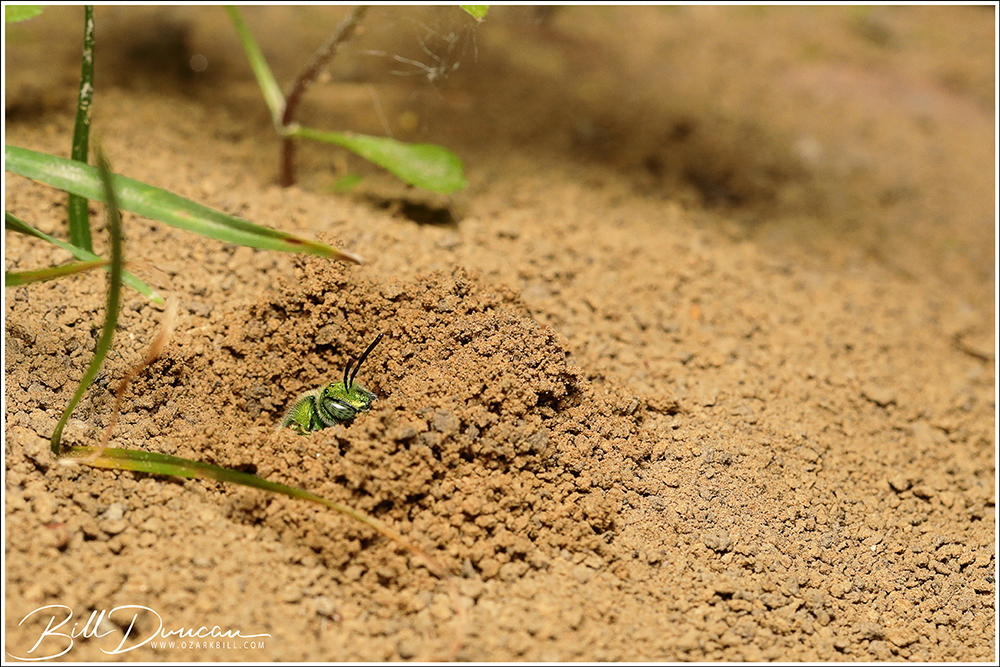
An Agapostemon virescens pauses at the entrance of the largest of the communal nest entrances I observed. It is impossible for me to accurately count the number of females using this ~ 10 cm tall conical entrance, but I observed six individuals at one time on or hovering above the entrance.
As is commonly known, many of our native bees are solitary and nest without close contact or cooperation in regards to conspecifics. At the opposite side of this spectrum of sociality in the Hymenoptera are most species of bumble bees and the honeybee. These bees are considered truly social, or, eusocial. The characteristics necessary to be considered a eusocial species are 1) cooperative care of offspring of others within the colony, 2) overlapping generations within a colony of adults, and 3) a division of labor into reproductive and non-reproductive groups. Many of our bee species lie somewhere between these two extremes. The bee of focus here, Agapostemon virescens, lies early in the area we call being presocial, aka parasocial.
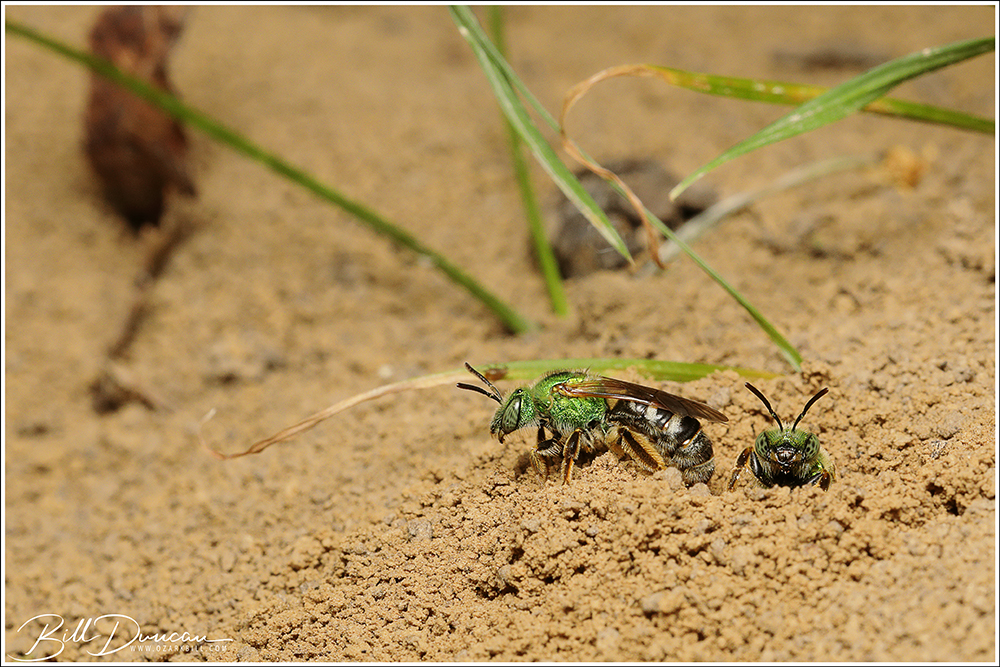
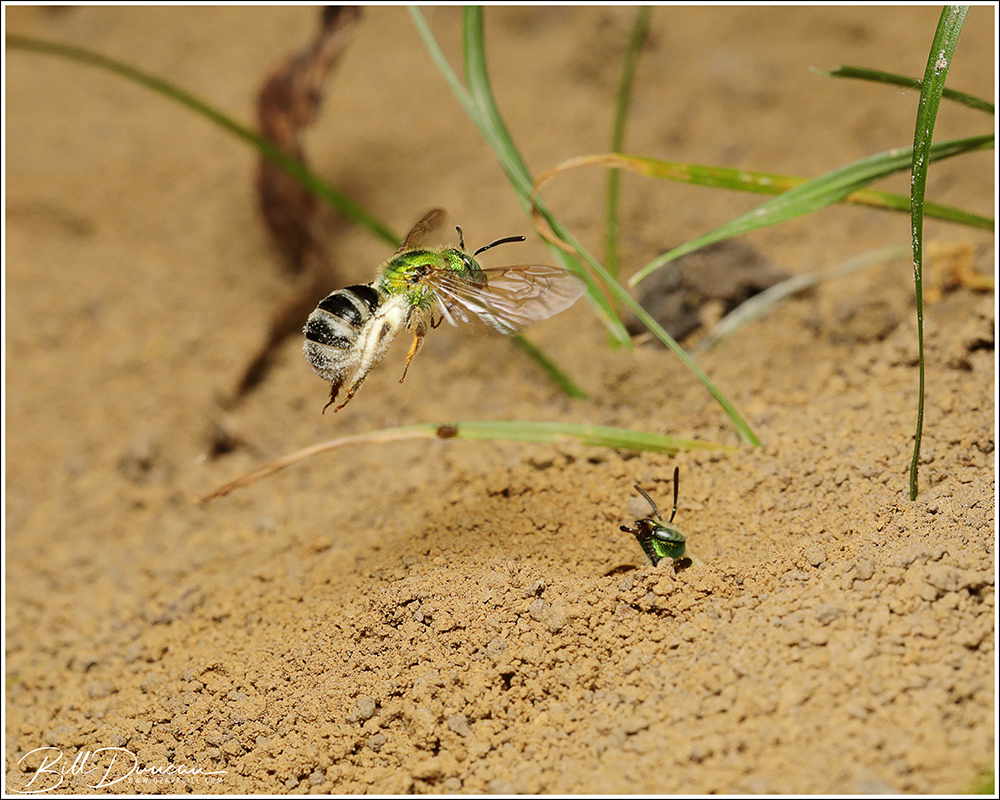
Two Agapostemon virescens females exiting a communal nest entrance having dropped off their loads into their individual cells.
Let’s clarify the differences between a presocial species such as A. virescens and the eusocial honeybee. The honeybee shows all three necessary characteristics of a eusocial species. The individual workers obviously care for brood that are not their own – they don’t even have offspring of their own, instead spending much of their lives caring for the offspring of their queen (sisters). They have multiple overlapping generations within the hive in a particular season, as well as across multiple seasons and as just mentioned, there is a division of labor into reproductive and non-reproductive castes.A. virescens on the other hand, is not nearly as cooperative. Individuals of this species share basically just a front door to their brood chambers and nothing more. After entering the communal nest, each female builds their own brood sub-chamber cells and each provisions their own by processing pollen into cakes and leaving them in their respective brood chambers. There is no brood care after the egg is deposited and the sub-chamber sealed. The offspring then emerges later in the summer.
So, what are the pre-conditions necessary for the eventual development of more complicated forms of sociality, i.e. eusociality? Or more directly, what advantages are there in adopting more of a social lifestyle if we assume the starting point was a solitary existence? Scientists consider two important pre-conditions need be met for the evolution of eusociality. First, the species offspring must be altricial, or require a great amount of parental care in order to reach maturity. Second, there need be low reproductive success rates of solitary pairs that attempt to reproduce. Here is what is believed to be the primary driver that pushed A. virescens into this presocial condition.
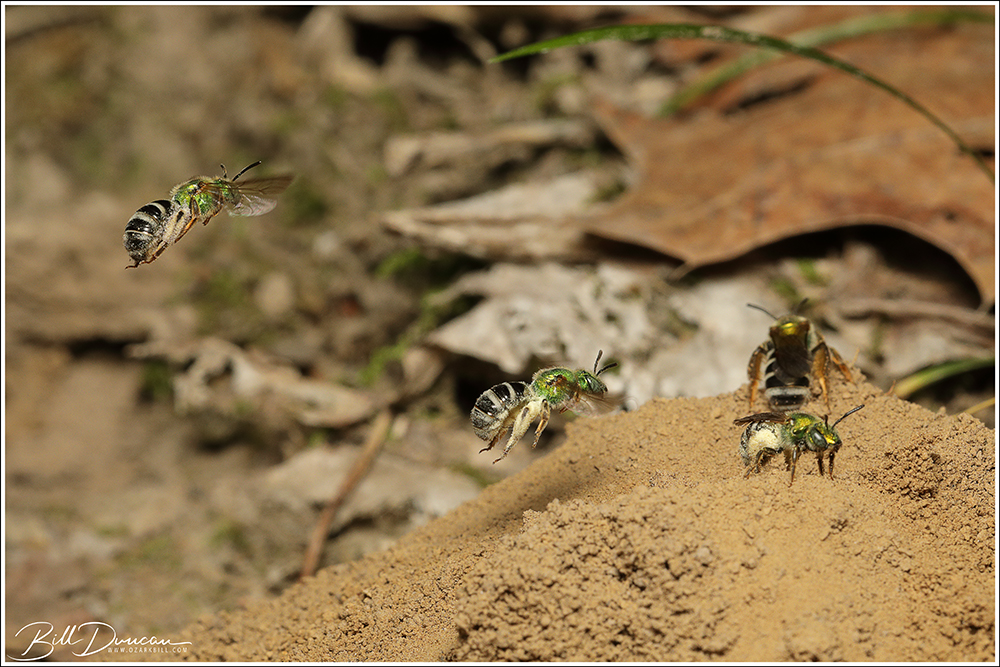
A sentry Agapostemon virescens stands guard at the communal nest entrance allowing only conspecifics to enter. This guarding of potential kleptoparastism is regarded as the primary benefit that led to communal nesting in this species.
This sentry Agapostemon virescens closely inspects an incoming conspecific. How it is determined who stands watch while its neighbors forage is not known.
Kleptoparasitism is where one animal takes advantage of the hard work of another by taking their prey or collected foods. In this case, we are primarily concerned with the large group of bees known as cuckoo bees. Kleptoparasitism has evolved numerous times in the Hymenoptera and cuckoo bees lay their egg on or near the host’s provisions. The parasite will hatch first and eat the host’s pollen and will often kill and eat the host’s larvae as well. With such an obviously successful reproductive strategy, it should come as no surprise that there would be a strong selective advantage of finding ways to thwart these parasites. In the case of A. virescens, evidence suggests that by communal living as described here, the rate of kleptoparasitism is much lower when compared to related species that have the completely solitary reproductive strategy.
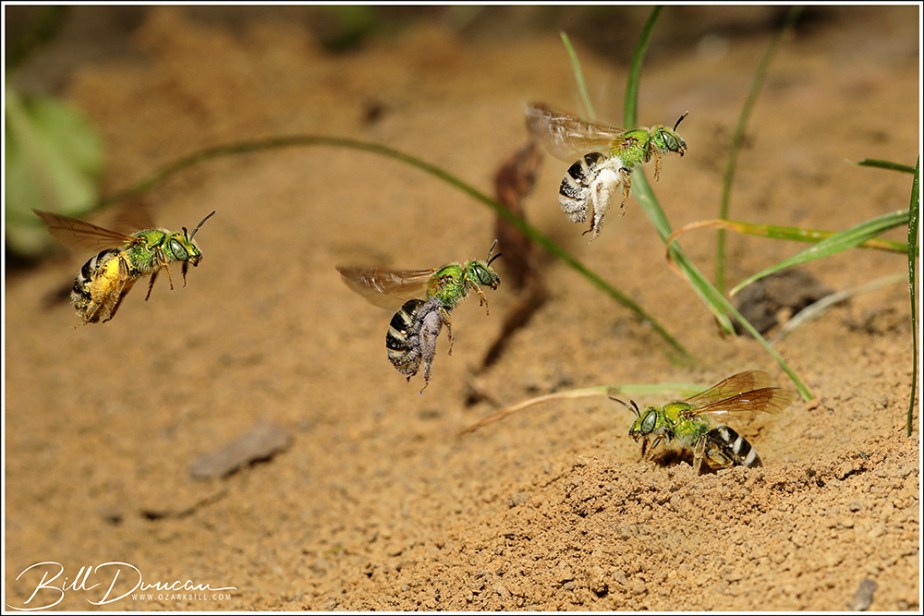
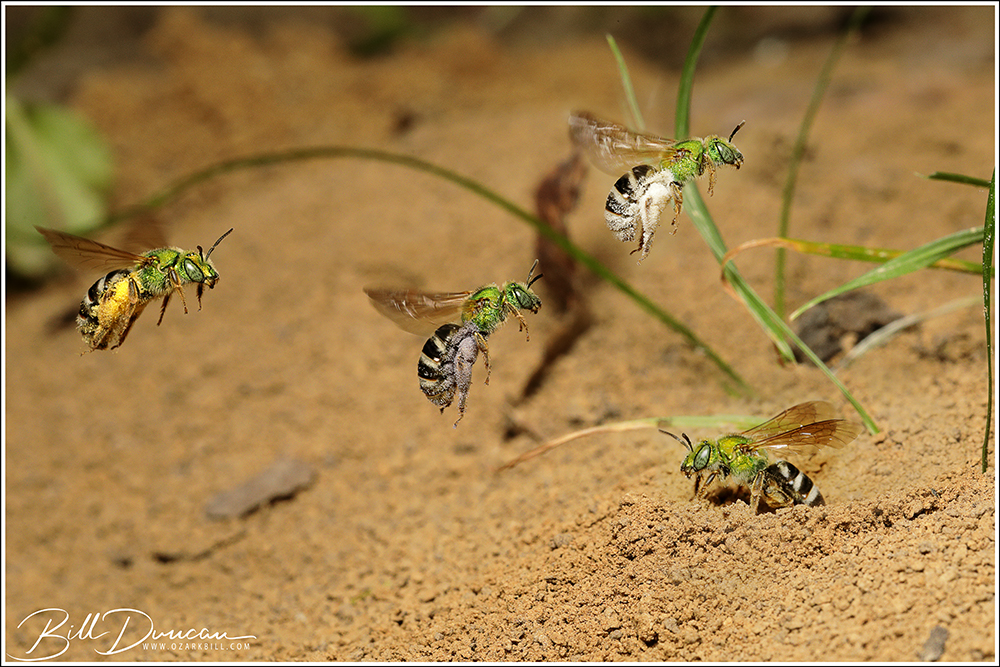
A busy day of bringing in pollen provisions for these Agapostemon virescens sweat bees.
I guess the obvious next question is how in the world could eusociality evolve from this state? This is a fascinating story that involves terms like kin selection, altruism and haplodiploidy. It also involves a good deal of math and explanation from some of the greatest evolutionary thinkers since the time of Darwin (read anything by William D. Hamilton for example). It is also well out of the scope of this piece. But, I hope it is clear that before getting near the high rung of eusociality on this ladder, that a small first step like seen in this example would be necessary.
Although Agapostemon virescens sweat bees are communal nesters, this photo gives a clue that they are not cooperative foragers like the honeybee. Each of the three returning females is carrying different colored pollen, indicating different pollen source plants for each.
I hope I got most of this correct enough. It’s been a long time since I took Zuleyma Tang-Martinez’s Evolution of Animal Sociality class at University, which I thoroughly enjoyed. Please feel free to leave a comment to correct or clarify or ask a question.
Much of what I covered here and a lot more can be found in Malte Andersson’s The evolution of eusociality (Ann. Rev. Ecol. Syst. 1984. 15:165-89
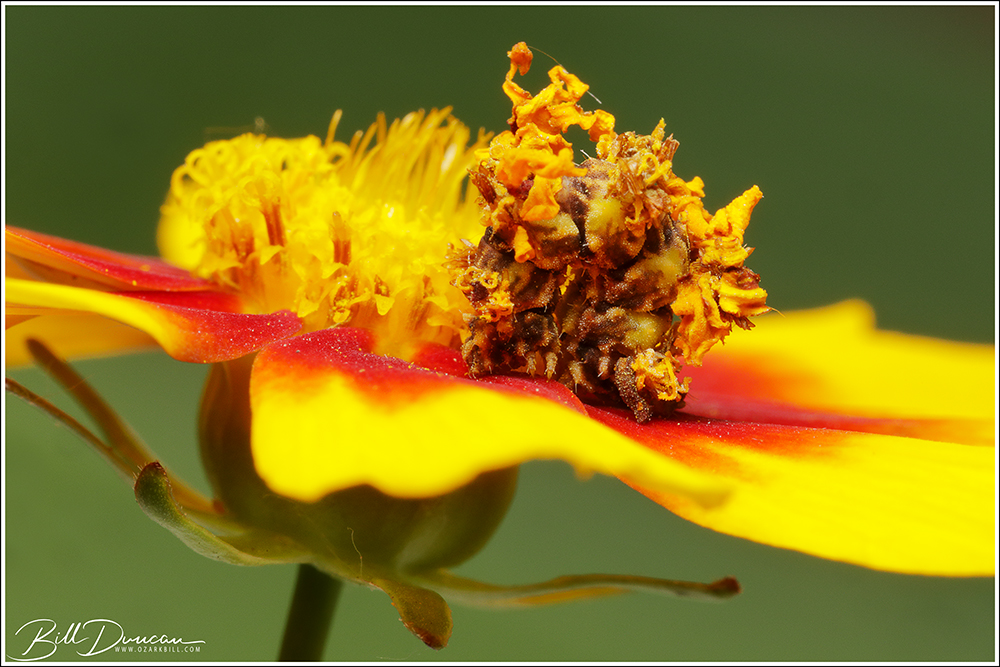
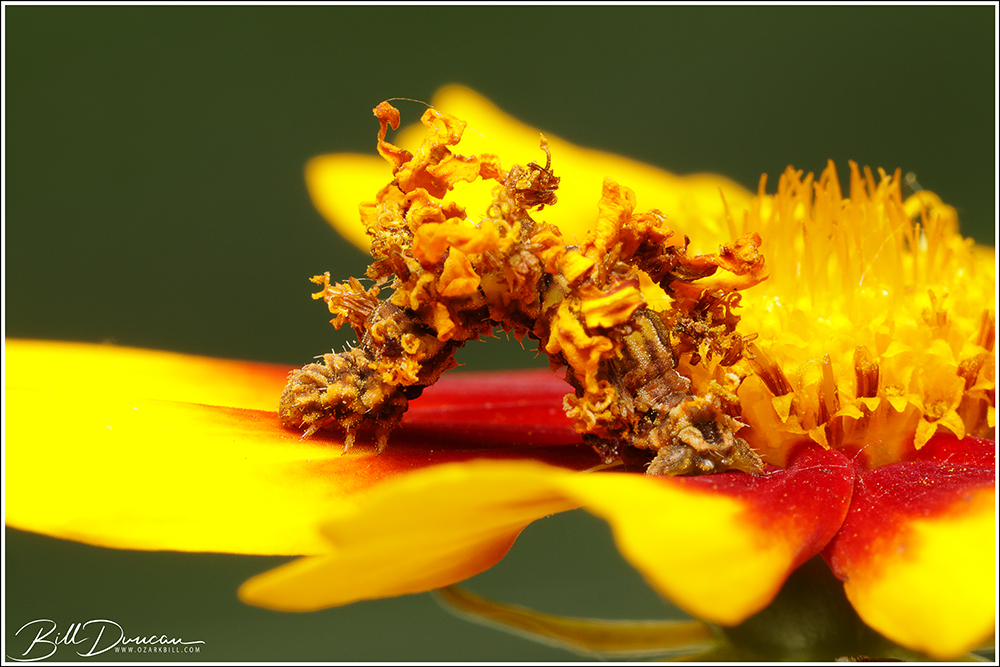
Back in mid-June I discovered a number of Synchlora aerata (camouflaged looper, wavy-lined emerald moth) that were using our coreopsis as host. Not only are these spectacular adult moths in the family Geometridae, but they are obviously special while in the larval phase as well. These caterpillars are known for attaching bits and pieces of the plant tissues they feed on (often flower petals) to their backs as means of camouflaging against their predators.
The Synchlora aerata, on Coreopsis sp. in a suburban wildflower garden in St. Louis County, MO, USA
I often find these guys with their camouflage dull, dry and not very attractive. You can change this pretty easily by placing them in a container with a fresh native flower of your choice. Hopefully within a day or two the caterpillar will have adorned itself with a fresh and colorful coat!
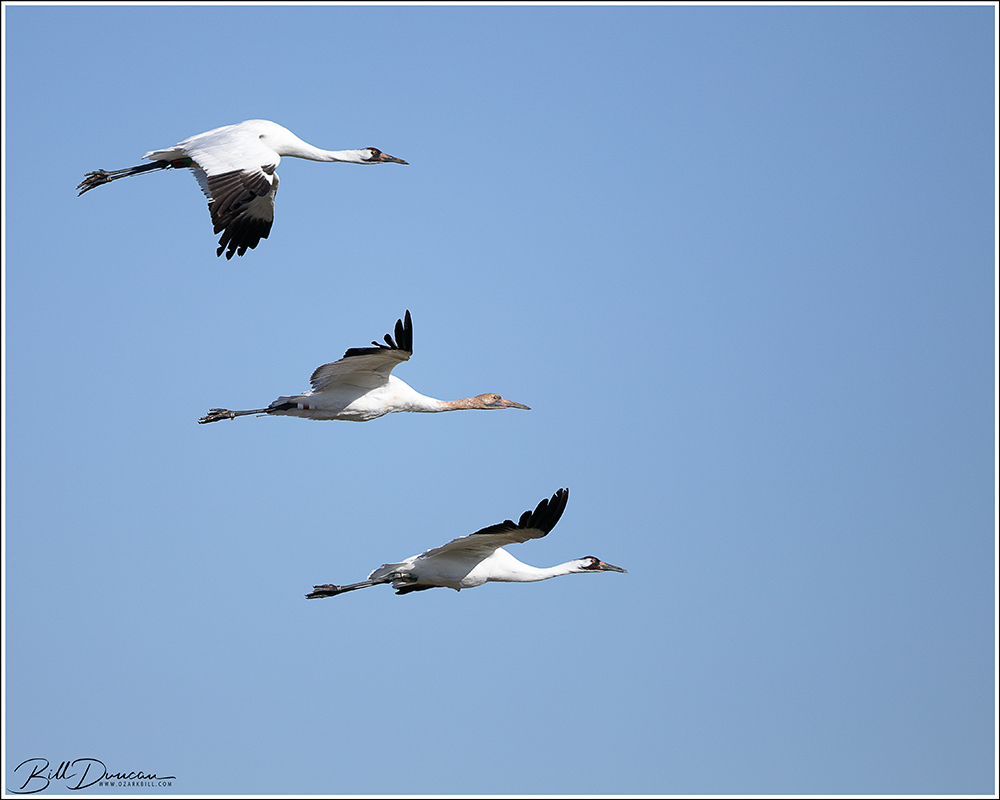
From February – Pete and I took a trip to Kaskaskia Island to see if we could find the Whooping Cranes. We had great looks of these two adults and a juvenile.
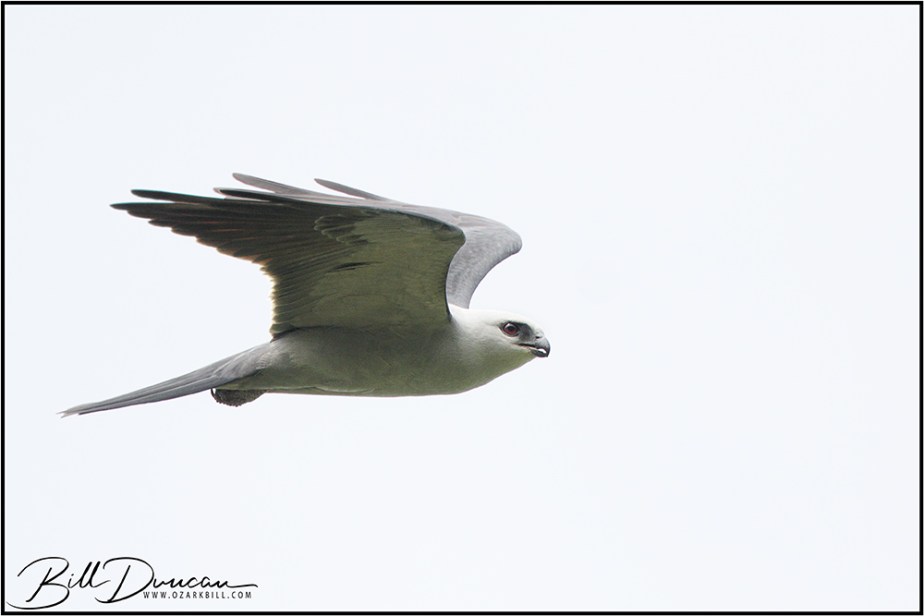
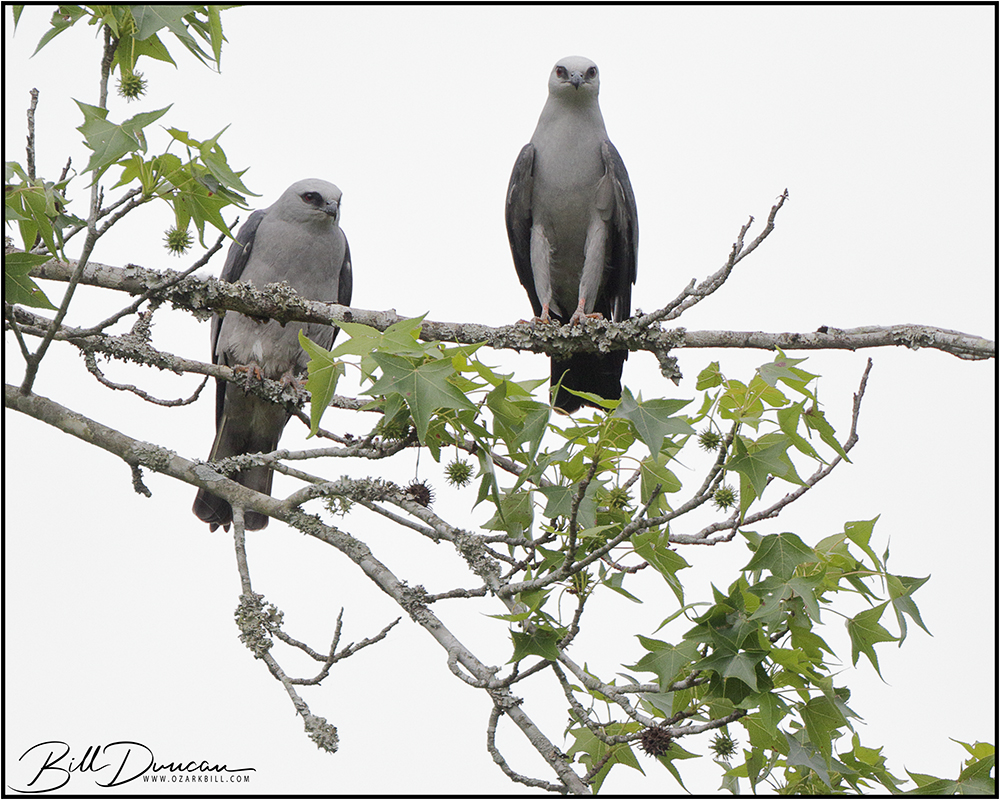
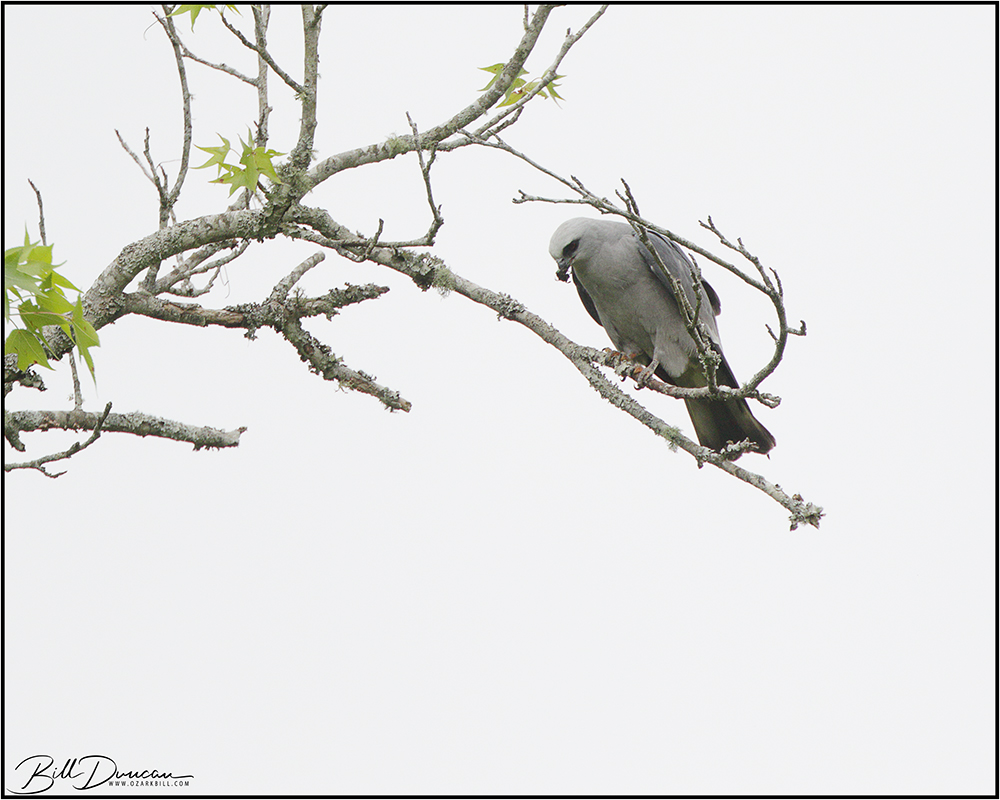
It is always nice finding your targets on a big photography trip but the icing on the cake is finding the unexpected. That is what happened here when Casey and spent some time at Moro Bay State Park in southern Arkansas. When speaking to a very friendly park ranger, he let us on to where a pair of these birds setup territory and were virtually oblivious to humans. These birds completely ignored us as they flew to and from their favorite perches, often flying mere feet over our heads. We watched the male handoff their insect prey a number of times and even witnessed a copulation, but those photos were ruined by branches.
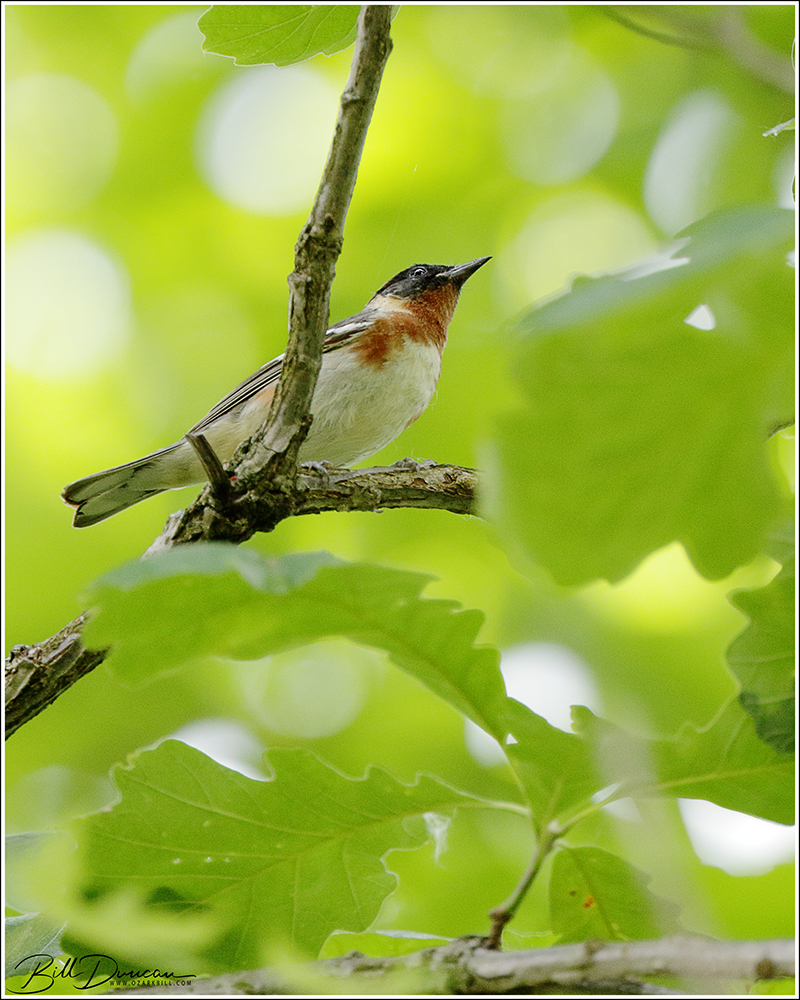
Dave and I found this Bay-breasted Warbler on May 20th this year at Creve Coeur Lake in St. Louis County. Always a pleasure to find a singing Bay-breasted.
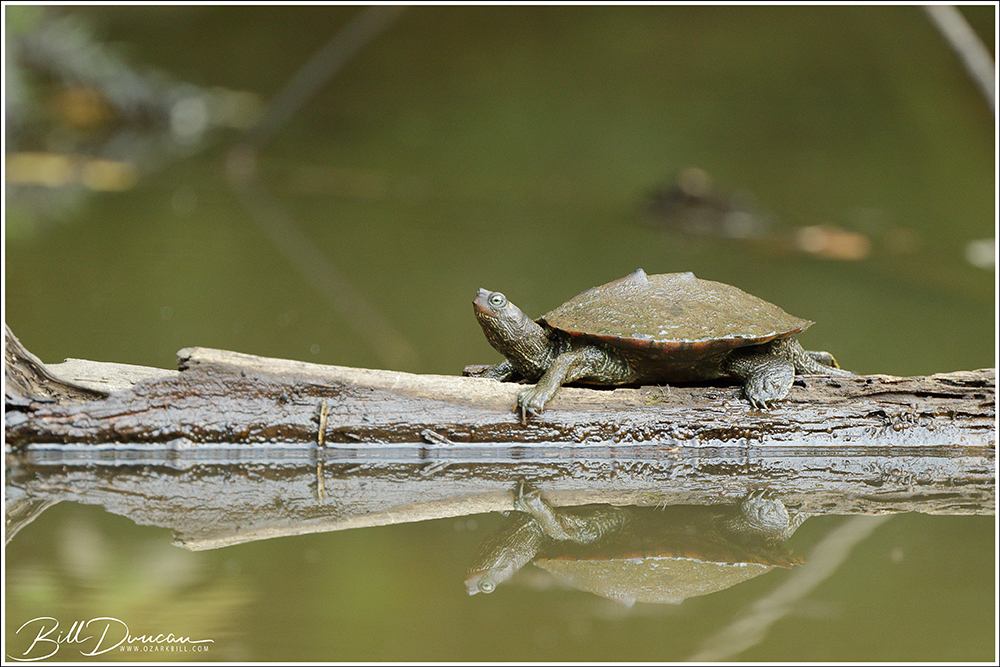
Two subspecies of the false map turtle are found in Missouri. Minor differences in the color and pattern near the eyes are used to distinguish between the two. Unfortunately, I did not get the shots that would allow this determination.This photo was taken in St. Louis County.