From the Garden – The Planthoppers and Leafhoppers

Two-lined Spittlebug

Planthoppers and Leafhoppers are groups of insects collectively found within the insect Order Hemiptera.  Both groups have piercing and sucking mouth parts and feed primarily on plant saps and tissues.   These groups are highly diverse.  I have been able to capture a few of these fascinating creatures with the camera in the backyard, but these are generally the more common species.  The insect pictured above is known as a Spittlebug – named for the behavior of encasing themselves as nymphs in a spittle-like mucous for protection.

The Stormtrooper
The Stormtrooper

I’ve said before that there is no such thing as an original idea in fantasy or sci fi.  I’ve found that almost every creature or effect you can find to celebrate in these films or books has been taken (consciously or not) from nature, most often from invertebrates or the deep sea.
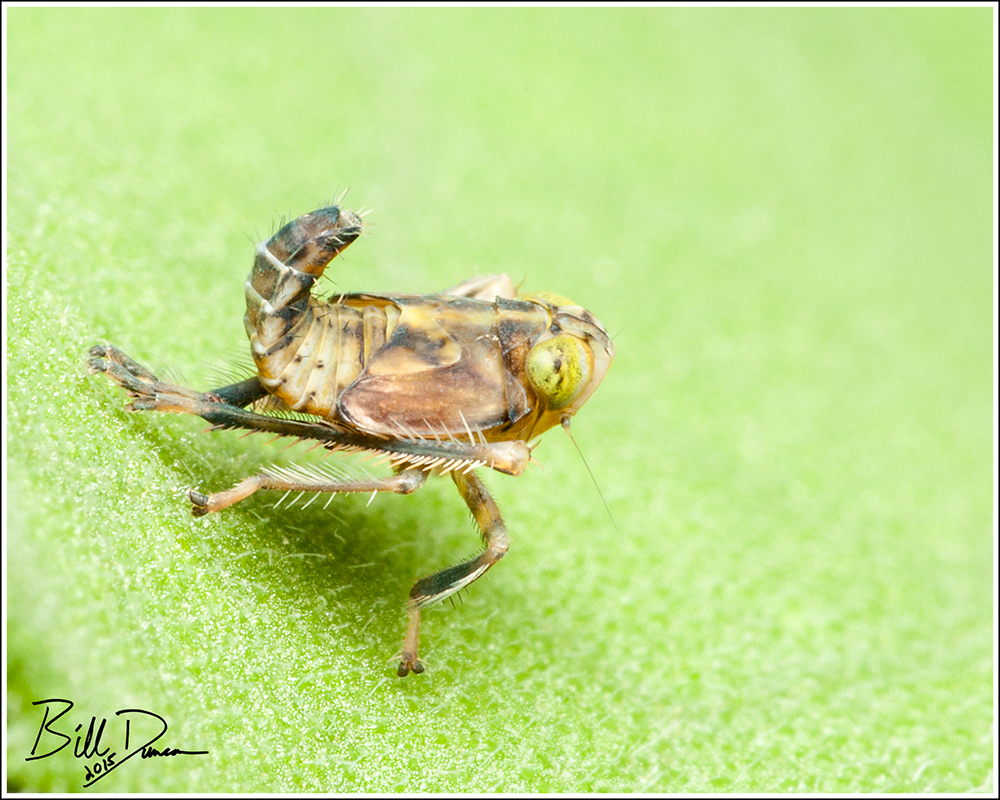
Planthopper Nymph
Planthopper Nymph

This ultra-tiny guy posted above is a planthopper nymph.  Often members of this group will have long, colorful waxy lengths of fibers extruding from their tail ends that are used for multiple purposes, including predator avoidance.

Candy Stripers
Candy Stripers

Many folks who have spent any time in the backyard have surely seen the Candy-striped Leafhoppers, one of the most abundant species in this group.  Gorgeously colored and quick to disappear, the two pictured above are busy making more.

I look forward to sharing more photos of members of these groups in the near future.

OZB
email: handsomeozarkbillyboy@gmail.com
From the Garden – Nectar Robbers Clash

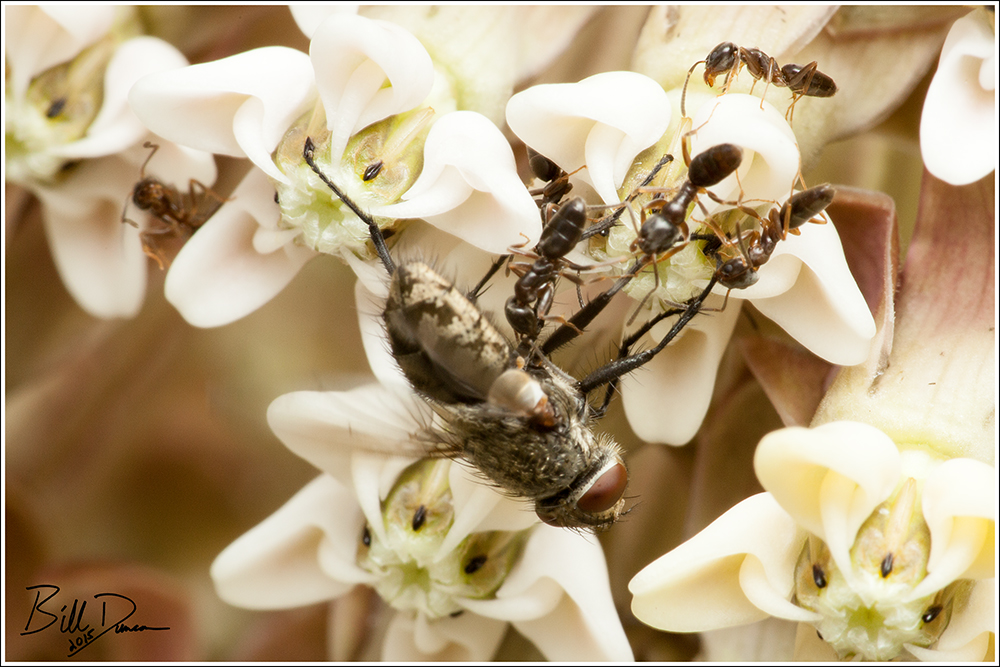
a bit of protein
A Bit of Protein

Ants and most flies that are abundant around my milkweed are nectar robbers – providing no pollination services for the plant.  I do see flies from time to time that might carry a pollinia, and sometimes a lightweight like the housefly pictured above will get a leg or two stuck and be unable to free itself.  That’s what these ants are waiting for.  Here we see the ants beginning to dissect their prey while it struggles to free itself.

Those Sexy Syrphids

Time Flies Like an Arrow... Hover Flies Like a Flower
Time Flies Like an Arrow…
Hover Flies Like a Flower

Anyone who has spent any amount of time studying flowers in the backyard garden has at some point noticed Syrphid flies.  Known as hover flies, flower flies, bee flies and other names, this group is most well known for mimicking bees and wasps (Batesian mimicry).  This small guy was captured feeding on my Ohio Spiderwort this spring.

Bee Fly
Bee Fly

This is quite the important group of insects.  The Syrphids are major pollinators for numerous flowering plants, potentially as important as native bees in this service.  Larvae in this group may feed on rotting vegetation and many species will feed on aphids and other plant pests.  The rather large bee fly pictured above was found feeding on a Common Milkweed in the backyard.

Syrphid Sensuality
Syrphid Sensuality

Eating and making baby Syrphids…  If it isn’t already on a T-shirt, it should be.  I often find these guys doing the Diptera 12-step in my backyard.  If we did that, we’d be thrown in jail!

Thanks for stopping by…

OZB
email: handsomeozarkbillyboy@gmail.com

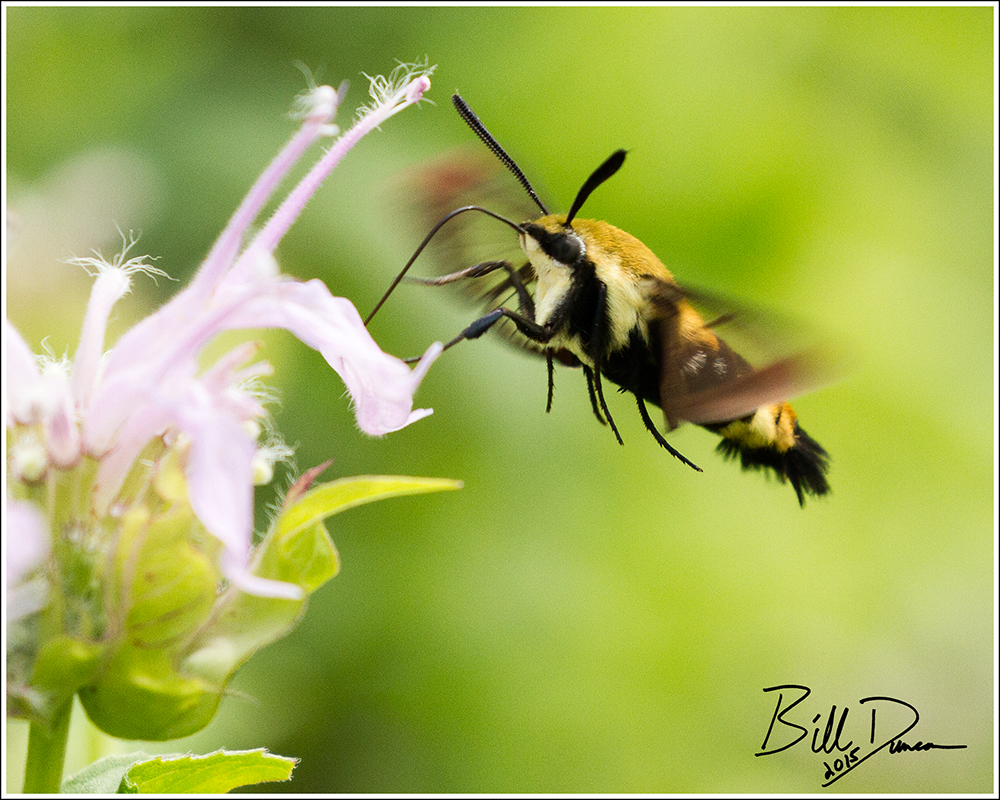
Snowberry Clearwing Moth

Snowberry Clearwing
Snowberry Clearwing

The Snowberry Clearwing is a member of the Sphinx Moths (AKA Hawk Moths).  Its name comes from the fact that one of this species important larval foods is the Snowberry plant.  Sphinx moths are important pollinators and are often mistakenly identified as Hummingbirds or Bumble Bees due to their size and their habits of visiting flowers.  Most Sphinx Moths are active nocturnally or at dawn and dusk, but the Snowberry Clearwing is diurnal.  One Missouri favorite, the Missouri Evening Primrose of glade habitats, shares an obligate pollination mutualism with a species of Hawk Moth, meaning that no other animal can provide pollination services for this plant.  This is a photography project someday in the future!

A Sphinx Moth
Not a Humingbird…


The caterpillars of these moths are known as “hornworms”, and they are just as fascinating as the adults.  Included in this group is the Tobacco Hornworm, which is a notorious pest on tomato plants.  A useful natural controller of hornworms are the parasitoid braconid wasps that lay their eggs on the developing moth and whose larvae then eat the caterpillar from the inside out.

Not a Hummingbird...
A Sphinx Moth

Next time you are in the garden, take a closer look at that bumblebee or hummingbird.  It might not be what you assume it to be!

Thanks for visiting…

OZB
email: handsomeozarkbillyboy@gmail.com

The Flies

Carrion Fly
Carrion Fly

The beetles (order Coleoptera) are famous for being the most diverse group of animals on the planet.  The flies, however, are not too far behind and many people are surprised to hear how many forms and places flies can be found.  I have been able to find and photograph a few of these forms in my own backyard and will share them here.  I photographed this carrion fly (Calliphoridae) hanging out on my rosinweed.

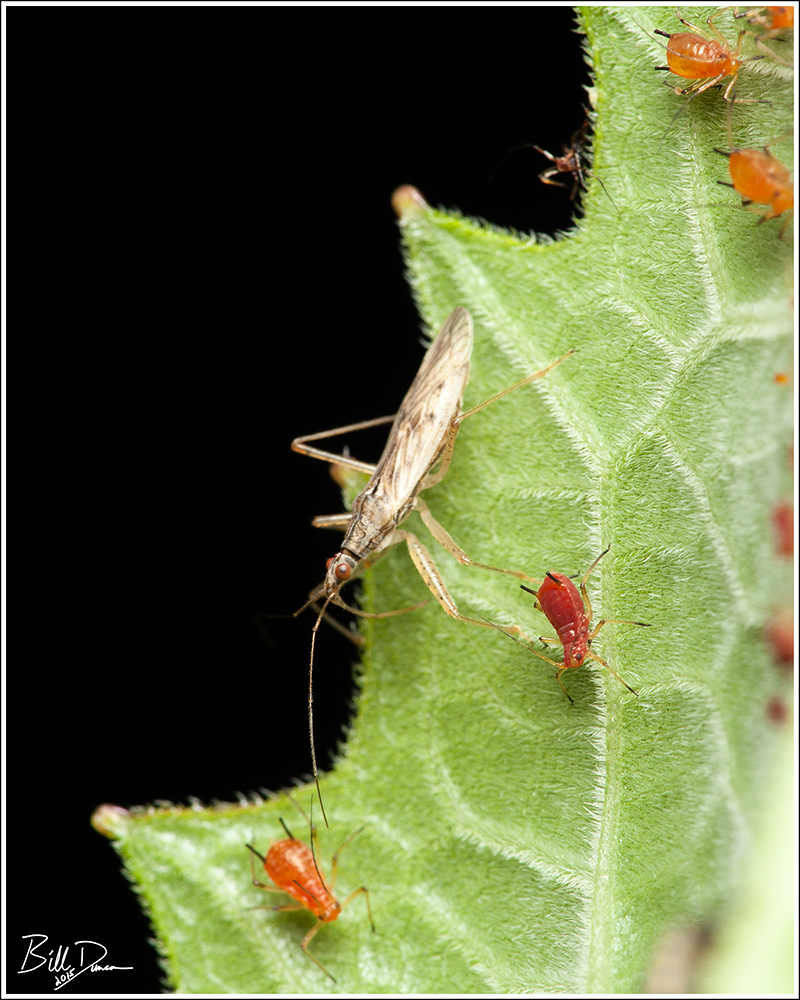
“Damsel” by Name Only…

Damsel Bug
Common Damsel Bug

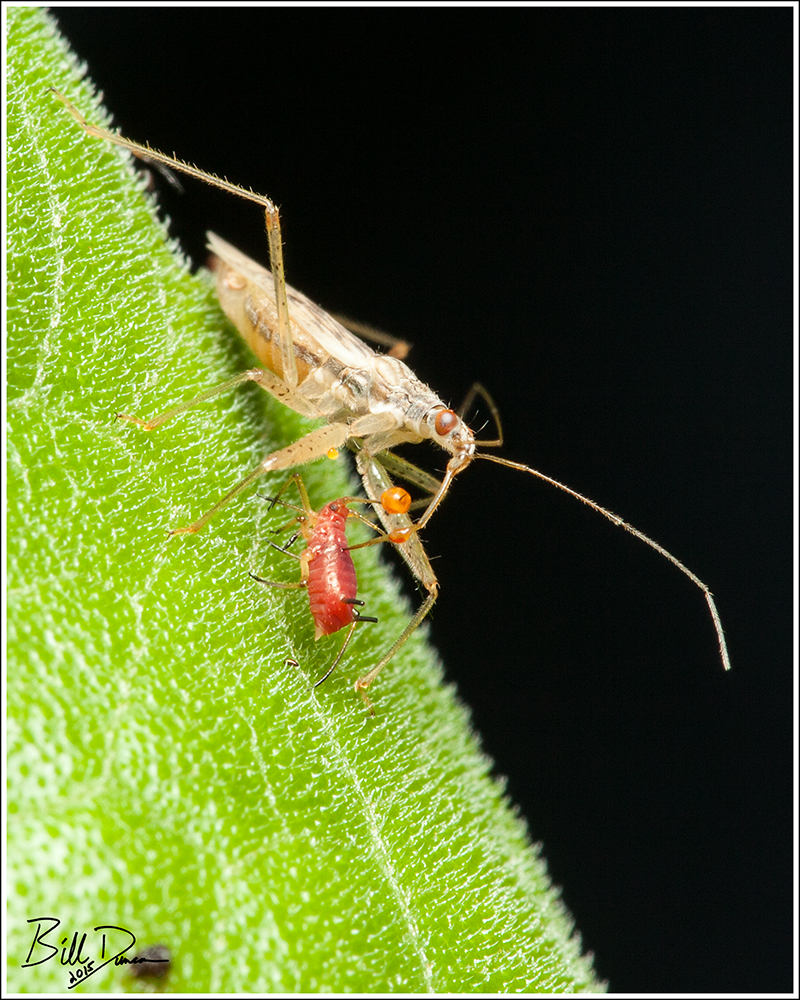
I imagine the conversation may have went something like this…

Aphid (with a cockney accent, of course): “Oh, hello, who are you then?”
Damsel: “Name’s Damsel…”
“Oh, that’s a lovely name.  My name is Aphid.”
“No, I think I’ll call you ‘Sugar Bag.’ “
“Sugar Bag? Now that doesn’t sound Aghhh!…”

😉

IMG_3114
Sugar Bag

I caught a glimpse of this guy early one morning patrolling around the surfaces of my rosinweed and decided to watch.  I didn’t wait long to observe the hunt.  This bug is definitely in the family Nabidae, and I am going to call this one the common damsel bug, Nabis americoferus, due to it matching a few photos and the fact that this is considered to be the one of the most common hemipterans in the United States.

Nabis
Nabis

I have read that these guys overwinter as adults and have a wide selection in the prey they choose.  It seems that if it is smaller than they are, or close in size at least, they will poke it and suck out their hemolymph.  Like I said, “damsel” in name only…

Thanks for visiting!

OZB

email: handsomeozarkbillyboy@gmail.com

Three Random Birds

Before we get to a few birds from this spring… Why do people like Adobe Lightroom so much?  I know it definitely helps in cataloging my images and I am better off than what I was before, but the hassle and bugs I have to deal with…  Just yesterday, we lost power during the storms and then next time I was able to load up LR, all my settings went back to default!  I guess I should be thankful that all of my images appear to be in the right spot. Computers…

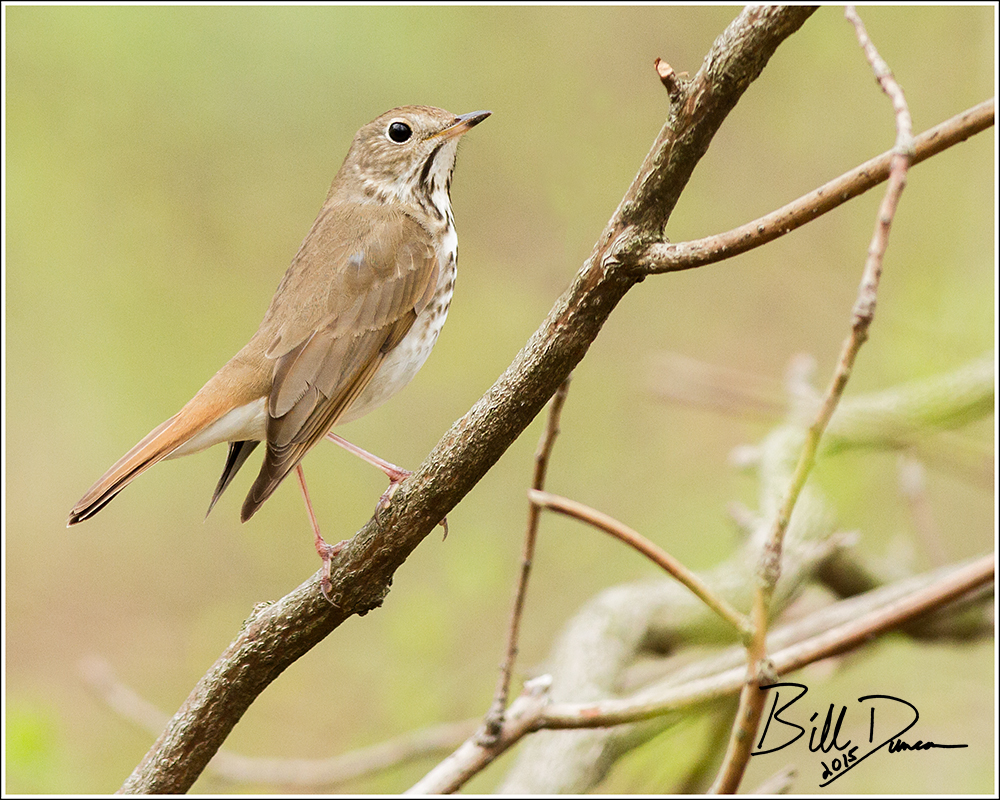
Hermit Thrush

Such a silent bird.  Whenever I am lucky enough to cross its path, it is almost always found by eyesight.  This guy patiently hung out with me for a bit.

Hermit Thrush
Hermit Thrush

Mallard Drake

Pretty much a staple in the pond at my working location.  Sometimes I don’t seem to bother them, while others I cause them to flush.

Mallard Drake in Repose


Brown Creeper

I have seen these guys all over the place this spring.  Always one of my favorites, it has been a real treat to seem them so regularly the past two weeks.

The Creeper
The Creeper