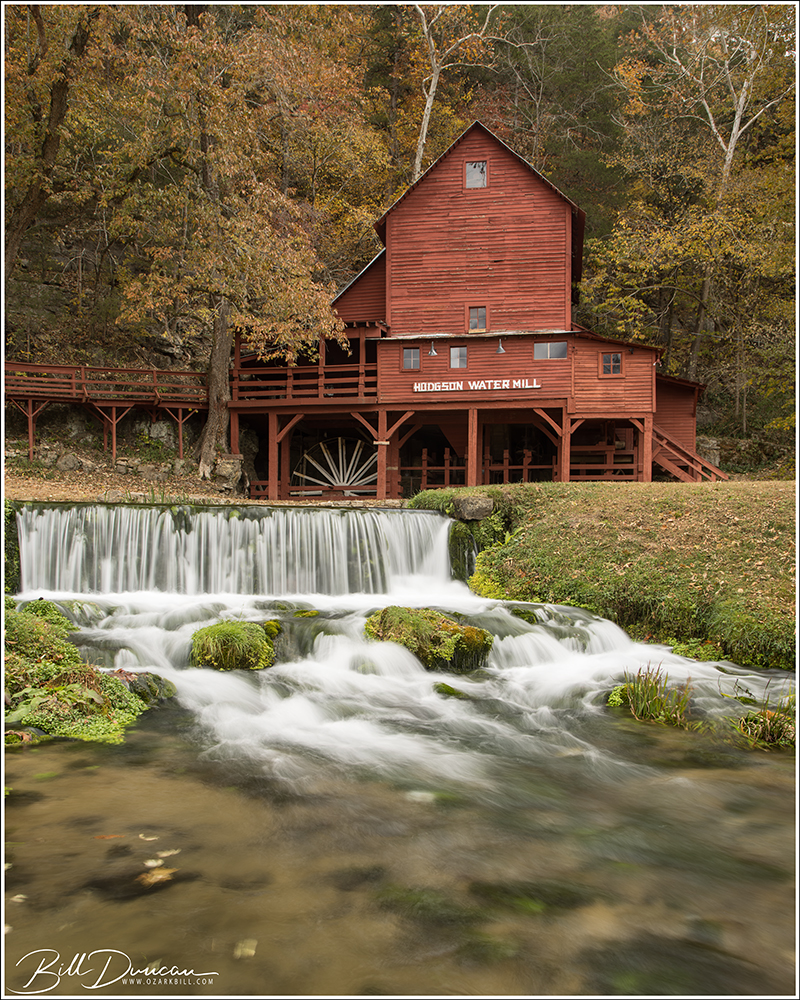
A few pics from a trip Sarah and I took in late October to see some of the big springs in southern Missouri.


"What a thousand acres of Silphiums looked like when they tickled the bellies of the buffalo is a question never again to be answered, and perhaps not even asked." -Aldo Leopold
A few pics from a trip Sarah and I took in late October to see some of the big springs in southern Missouri.
I know I posted some similar pics last year, but I can’t get enough of these flowers. Although we literally had thousands of these flowers blooming in the yard this year from seed I collected last fall, I didn’t get around to photographing them until on a WGNSS Nature Photo Group trip to Don Robinson State Park in early September.
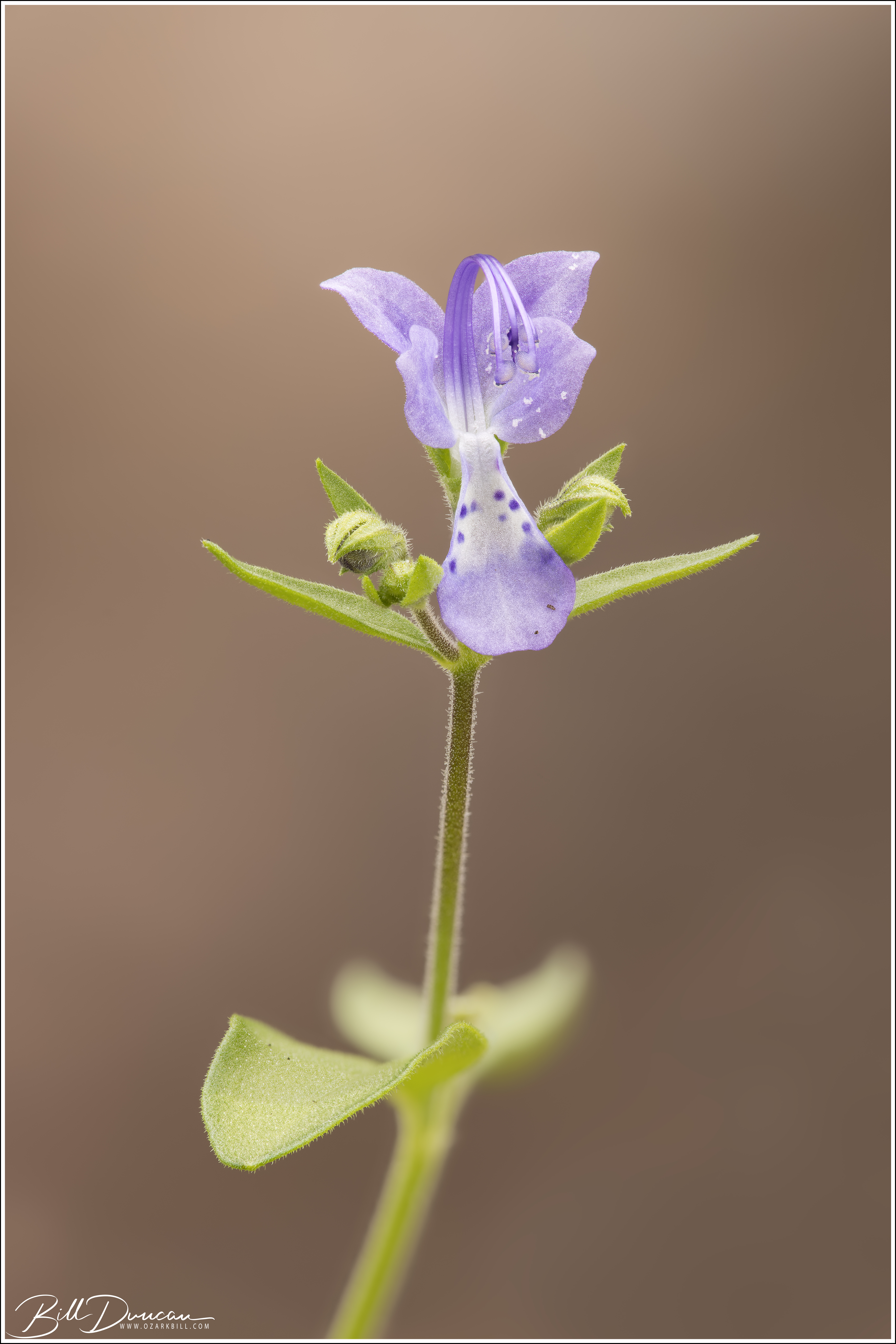
These flowers are both tiny and deep in multidimensions. Because of this, a narrow aperture is typically required to photograph with enough depth of field to get all parts of the flower in reasonably sharp focus. However, stopping down the aperture needed for this greater DOF comes with a couple of problems. First, adjusting the aperture too much above f/14 or so begins to dramatically lower sharpness due to the diffraction of the incoming light. Second, and probably more importantly, a small aperture will also bring more of your background into focus. Depending on the closeness and business of the background, this can simply ruin a nice composition.
So, what’s another alternative to stopping down? This flower is a perfect example of when it is a good idea to use focus stacking. In focus stacking, the photographer takes several images at a lower aperture to get “slices” of the subject in focus. Depending on the size of the subject, the focal length of the lens you are using and the magnification you are shooting it at will determine how many of these slices are required to get the entire subject covered. Then, you combine the individual images, or slices, in the computer to hopefully get a perfectly sharp subject with the creamy out-of-focus background that makes a nice image.

For my macro focus stacking, I typically use a 180mm macro lens and shoot at f/8. Depending on the criteria mentioned above, I will typically need 10-50 images to cover a subject. There are a few ways you can go about taking the images needed for a focus stack. You can shoot them manually, typically taken on a tripod and moving the focus ring a little at a time, or by using a macro focusing rail, which you move your rig closer to the subject for each image. If you are using an autofocusing lens, there are also automated ways to collect the images needed for a focus stack. The one I use is a specialized extension tube that has a computer chip inside. I let the extension tube know what the focal length is of the lens and the aperture I have the camera set to, make sure my focus is just before the first part of the subject I want to focus on and then hit the shutter release. The camera will then take image after image, changing to a deeper focus with each one until either I feel I have covered the entire subject or the lens hits infinity. Finally, newer cameras allow you to focus stack using controls built into the camera’s software. These typically provide a wide range of options for the photographer to control. I imagine using this has somewhat of a learning curve. I have not used this in my Canon R5, partly because I like the simplicity of what I use and partly because you cannot use flash when using this feature in Canon cameras to date.
If you’re having troubles getting the types of images you want of small subjects under high magnification, give focus stacking a try. But, remember, your subjects need to be stationary!
-OZB
I can’t help but to marvel at this grand post oak every time I visit Victoria Glades in Jefferson County, MO. I’m always hoping to be there in good light and skies to take a worthy photograph of it. On a morning of a WGNSS Nature Photo Group field trip, I arrived a little early with this in mind. Not an interesting sky, but I used the bright sun to my advantage to create a starburst.

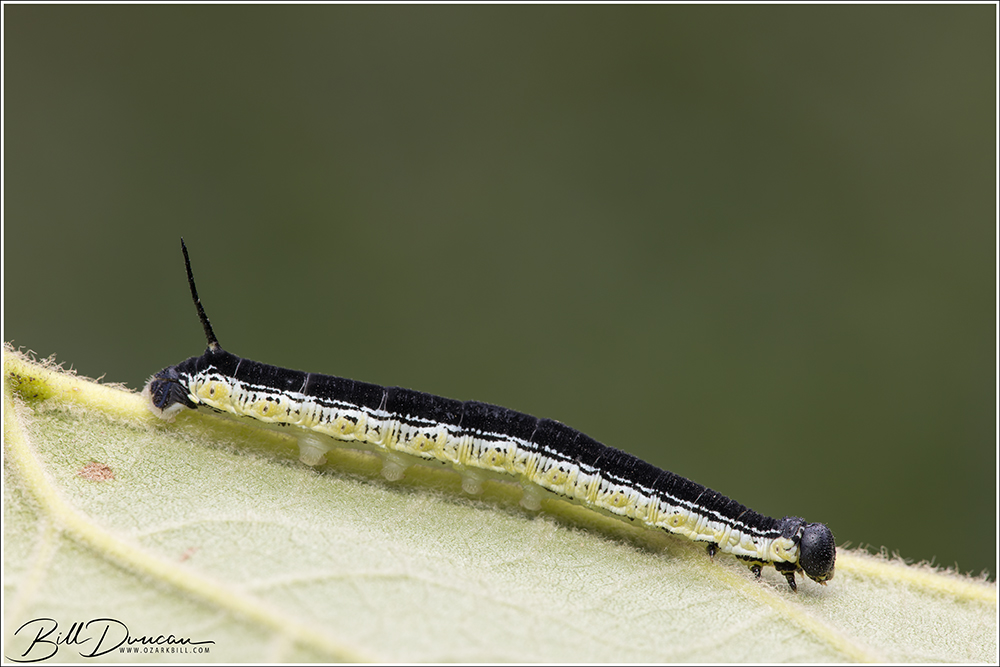
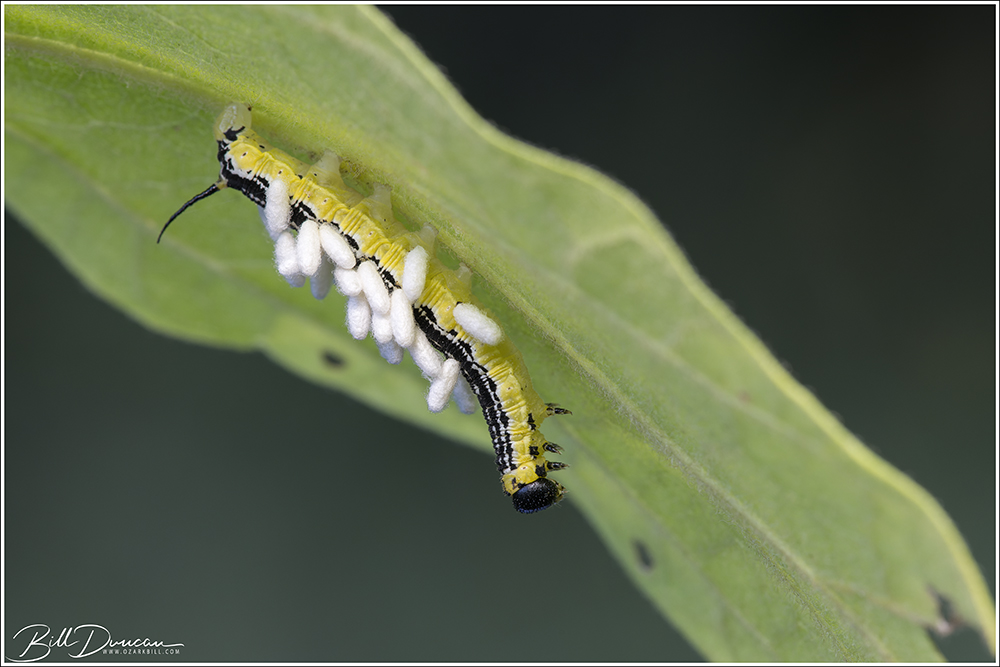
Miguel and I found an aggregation of the catalpa sphinx moth caterpillars on a caterpillar hunt in early September. I have been looking for this species for a while so this was a nice find. Of the ten or so we found, one was infested with the parasitoid braconid wasp cocoons. See photos below.

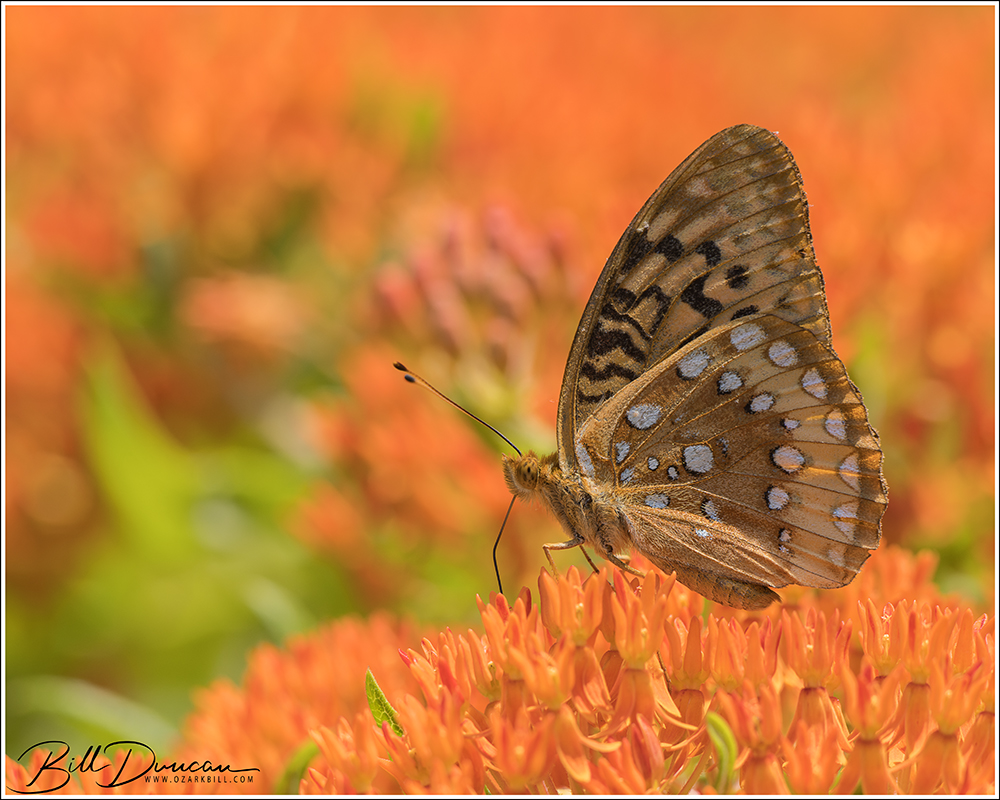
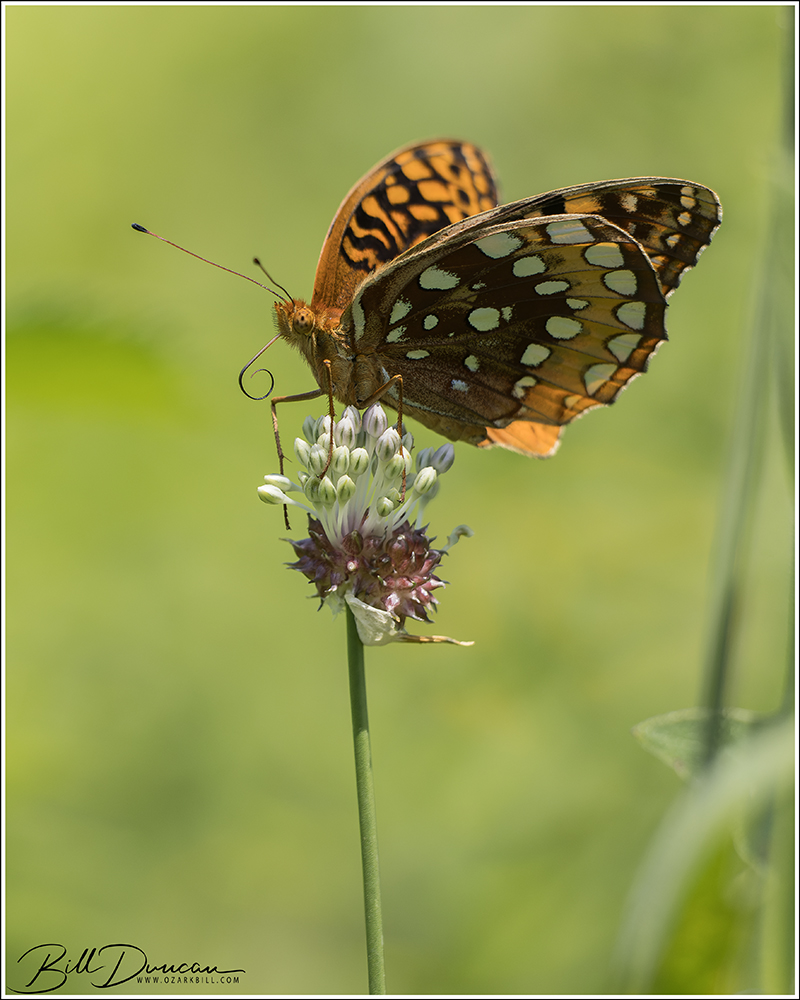
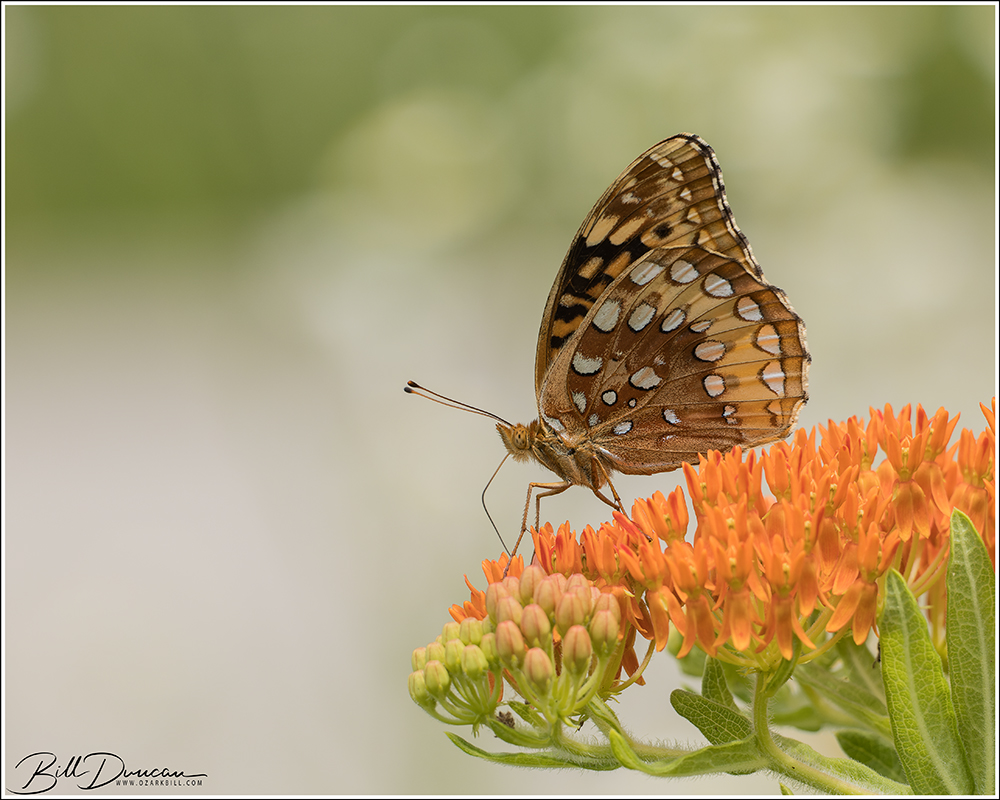
A few photos of great spangled fritillary taken at Prairie Garden Trust in Calloway County, MO.





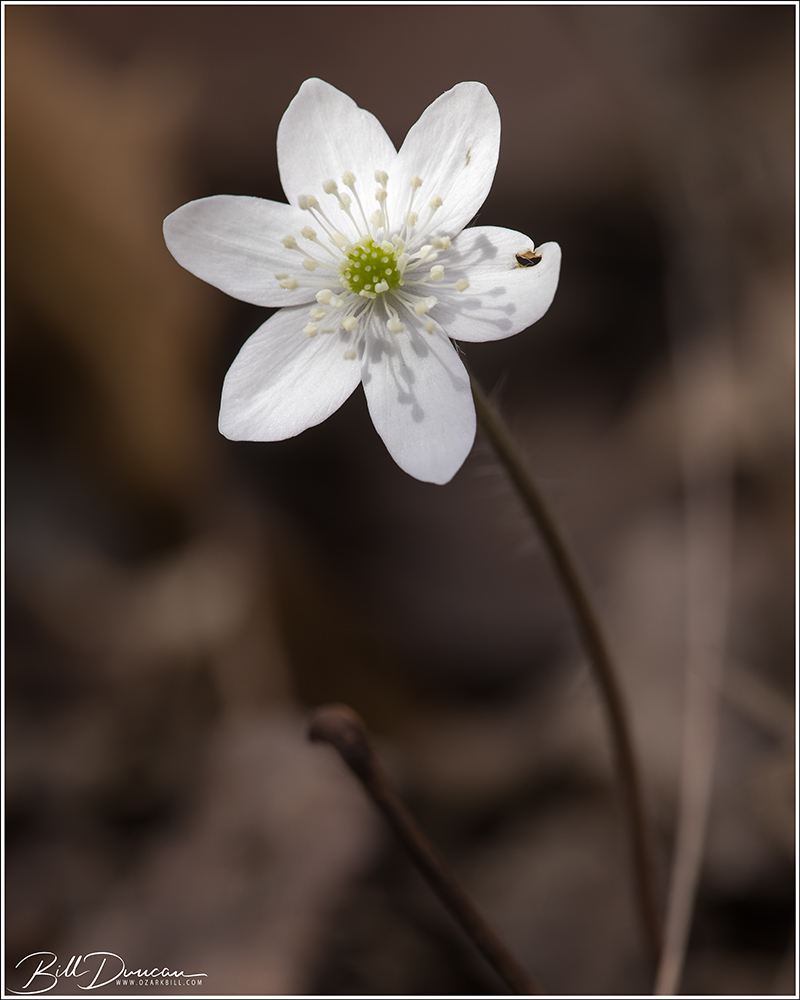


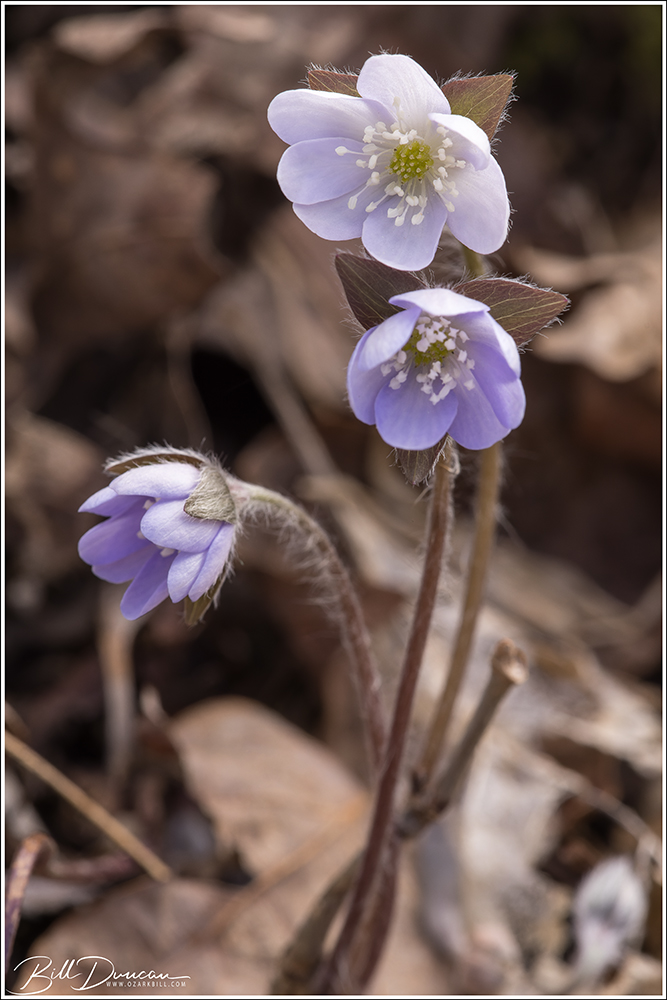
The upcoming rut season brings mixed feelings. I’m definitely looking forward to shooting the brutes in a couple months or so, but I also know they’ll be trying their best to rub on my establishing trees and bushes in the yard. I have most everything protected but still have some trunks that I need to cover before the first of September when they’ll begin rubbing the velvet off of their antlers. We lost a flowering dogwood to one of them last year and hope not to have that repeated.
Here are some photos that I took on an outing with Miguel last autumn. All images were taken with a 500 mm lens.
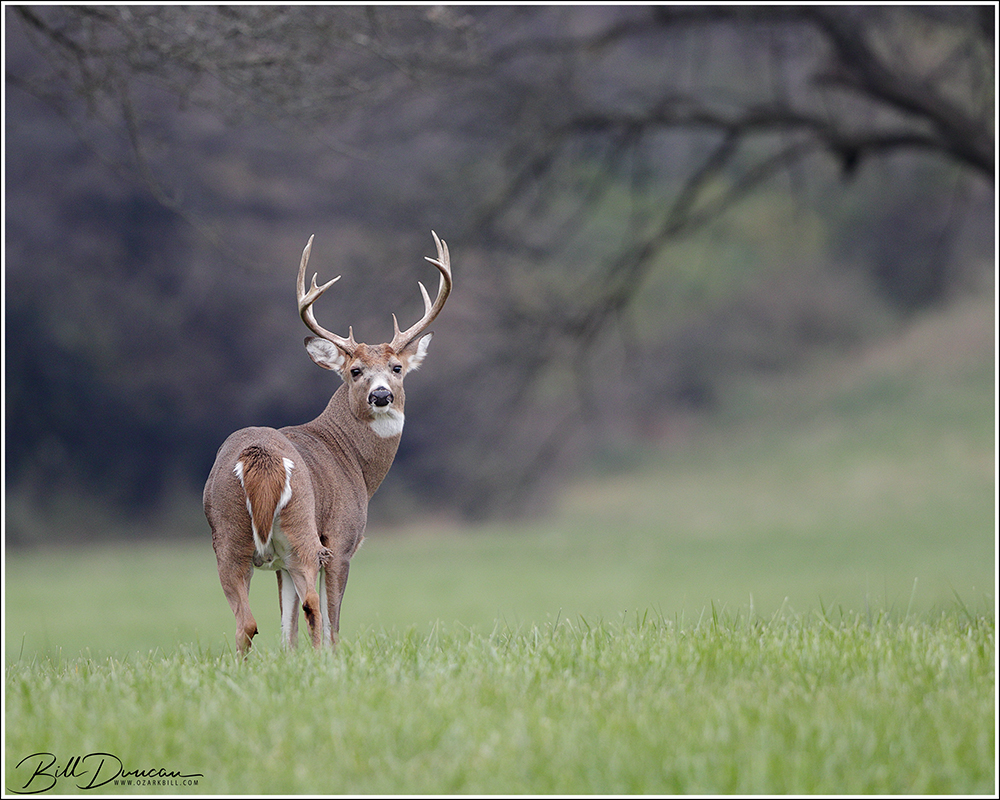


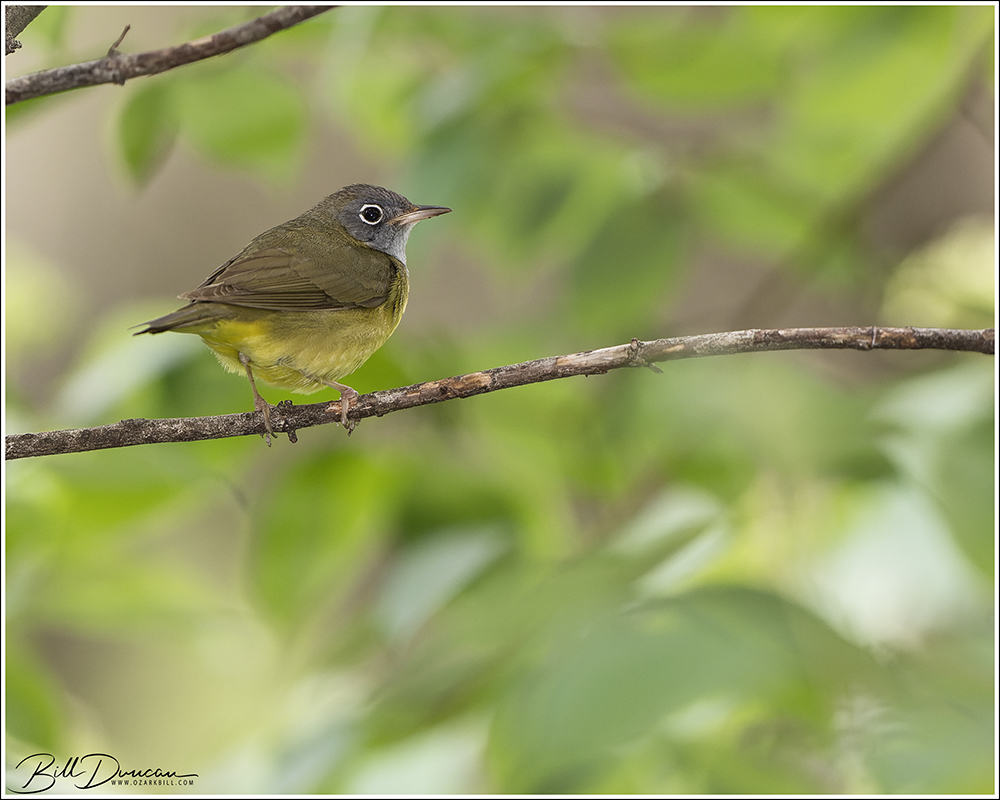
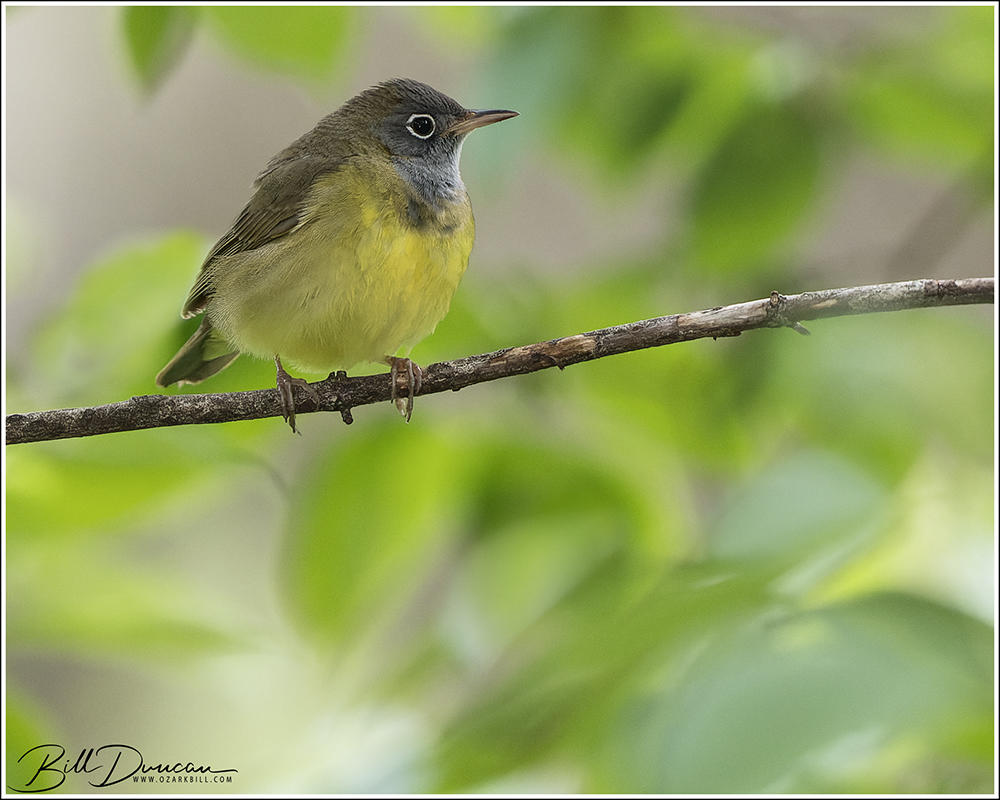
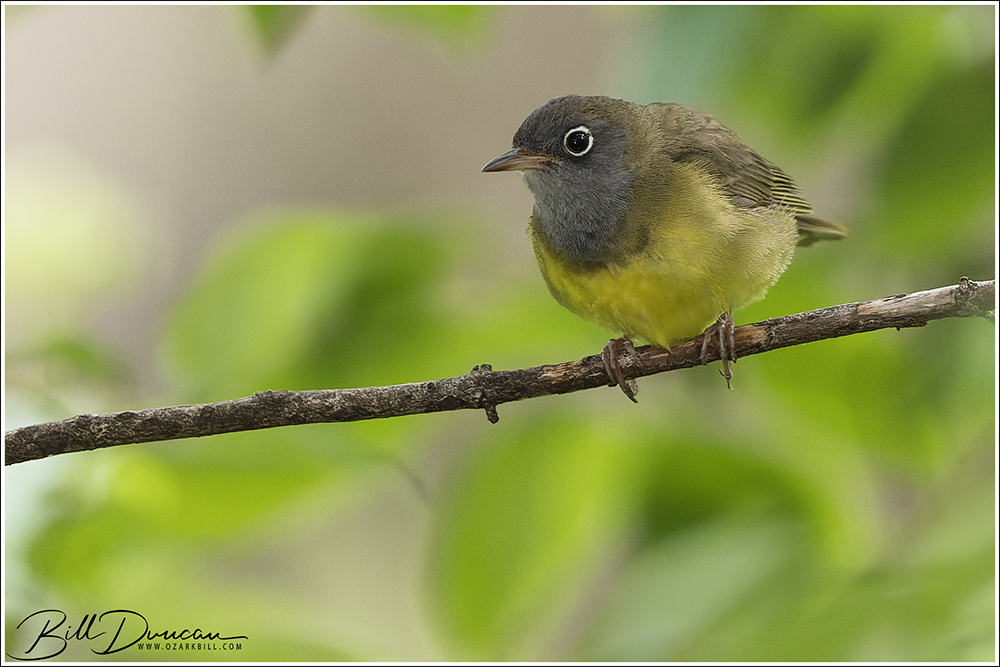

A lot of folks don’t seem to like attempting to identify plants in the Asteraceae family, more commonly known as the asters. This is a very large family of plants and there are definitely many difficult cases out there in terms of identifying. However, with a good dichotomous key, a hand lens and some patience, I think most anyone can have success in learning some of these interesting plants. The key is learning what characteristics are “key.” The group I am featuring here are three members of the Symphyotrichum genus, often referred to as the “new world asters.” Following recent taxonomic revisions, the genus now holds more than 100 species, of which about 25 can be found in Missouri. Most ray flowers are light blue to violet but some can be white or pink as well.
Photographs can be useful when attempting to identify the new world asters. These can be referred to when attempting identification on your own or sending to someone with more expertise on the group. Knowing what to photograph is important.

First, both sides of the flower, referred to as the capitulum (composite inflorescence) in the asters, is important in making an identification. Photograph the ray and disk florets along with the involucre from the underside should be photographed. The involucre is a protective structure composed of a group of phyllaries (bracts) that can be beneficial in discerning between species. Asters in this group can be distinguished from one another by the number of ray florets per capitulum and the size of the flowerheads

Two other photographs you will want to take when attempting to ID the Symphyotrichum are of the plant’s growth habit and the leaves – particularly details of how the leaves are attached to the stems. There are usually key differences here that will be useful when making an identification. Unfortunately, I neglected to take closeups of the leaves while working with these three plants in the front yard this past autumn.
The next species I would like to feature is the spectacular Symphyotrichum oblongifolium, or “aromatic aster.” These plants are quite impressive. Pinch them back once sometime in the month of June and they will bush out, forming impressive globes of violet blooms. The accompanying habit photos are from our front bed and is only three plants! Although these plants create enormous amounts of blooms, I find that it is almost too late in the year. Most of the blooms don’t open until well into October. During this time, most of the pollinators that visited these blooms were honey bees, at least in my yard. I think most of the native pollinators had finished their season by this point.
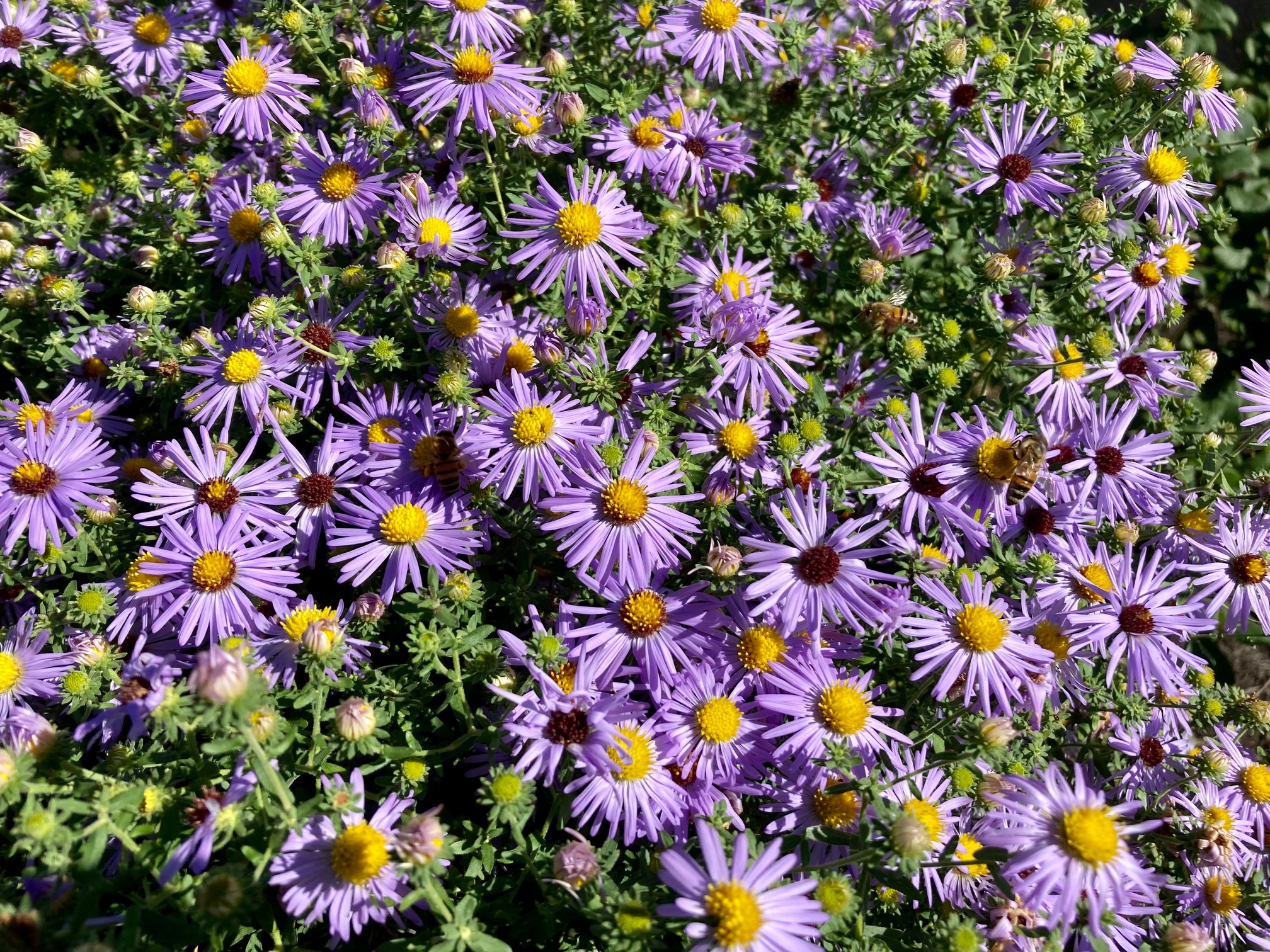
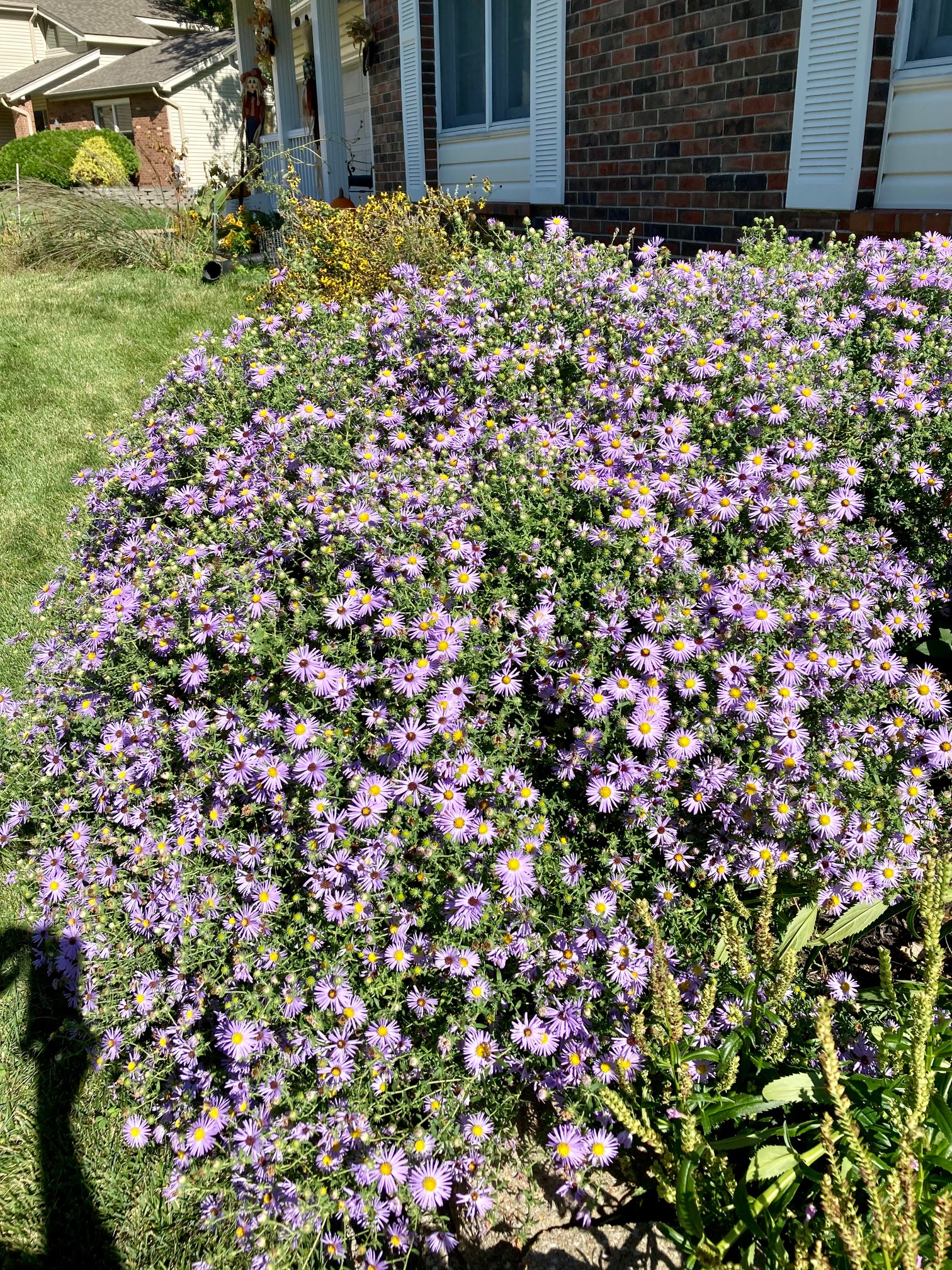
The above images show the growth habit at flowering of Symphyotrichum oblongifolium.
I hope the next couple of images exemplifies how the phyllaries are important diagnostically for identifying these plants whose flowers look very similar when viewed head-on.
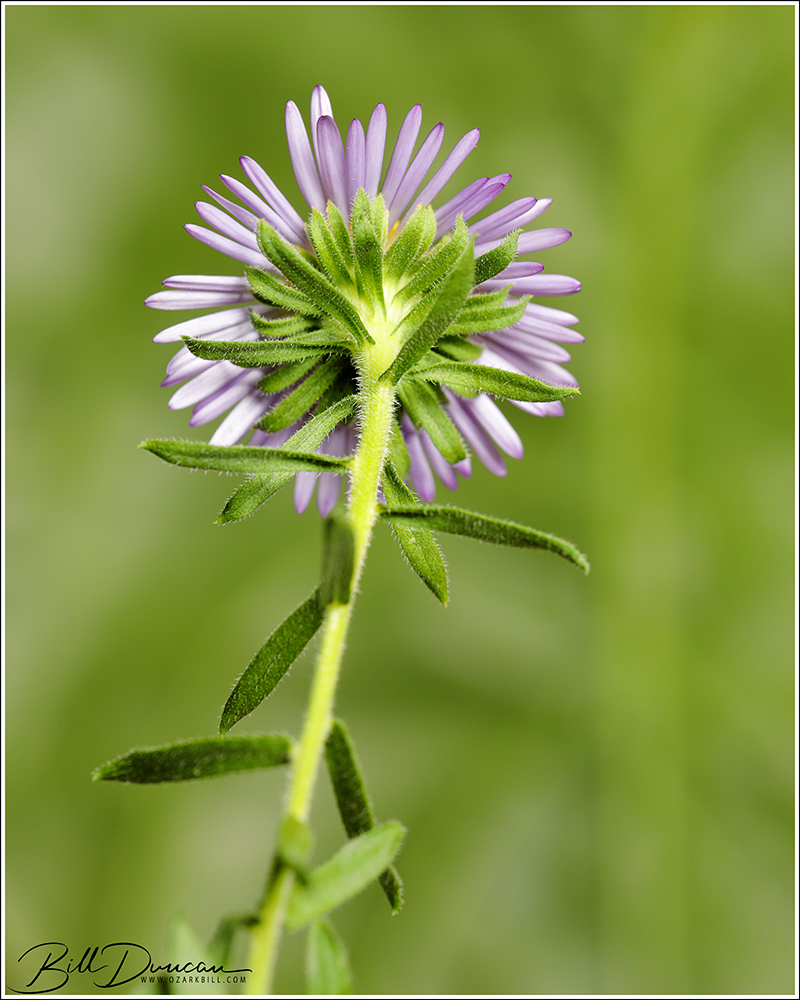

The capitulum of Symphyotrichum oblongifolium. Notice how strikingly different the involucre is compared to S. pattens.
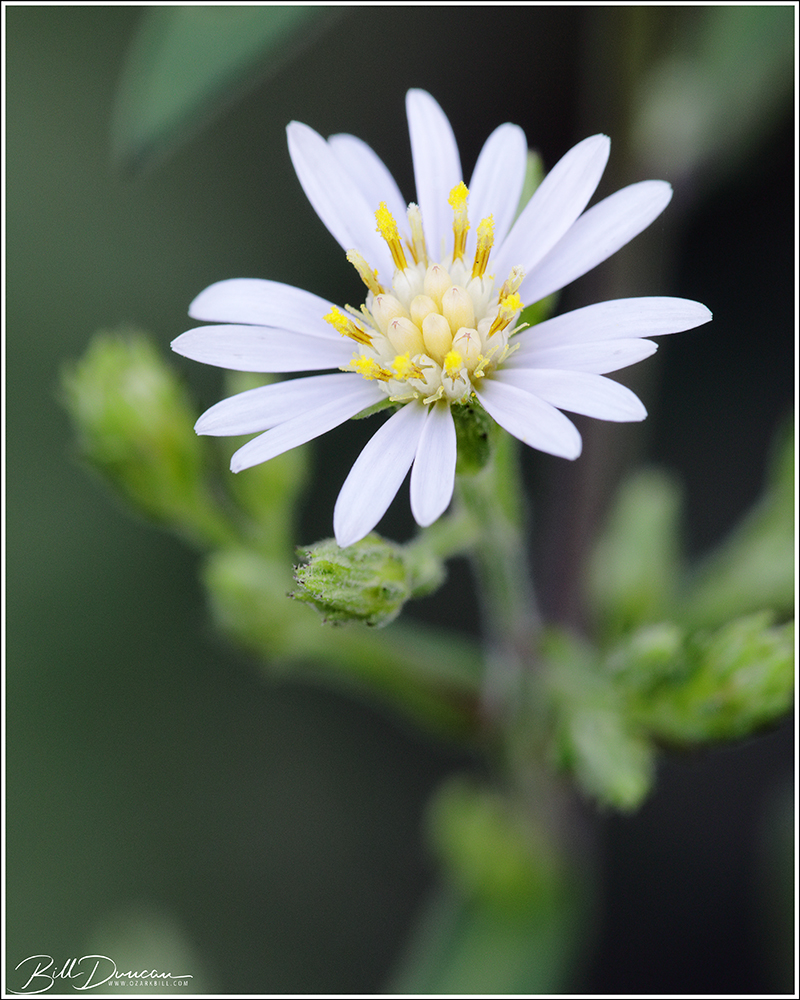
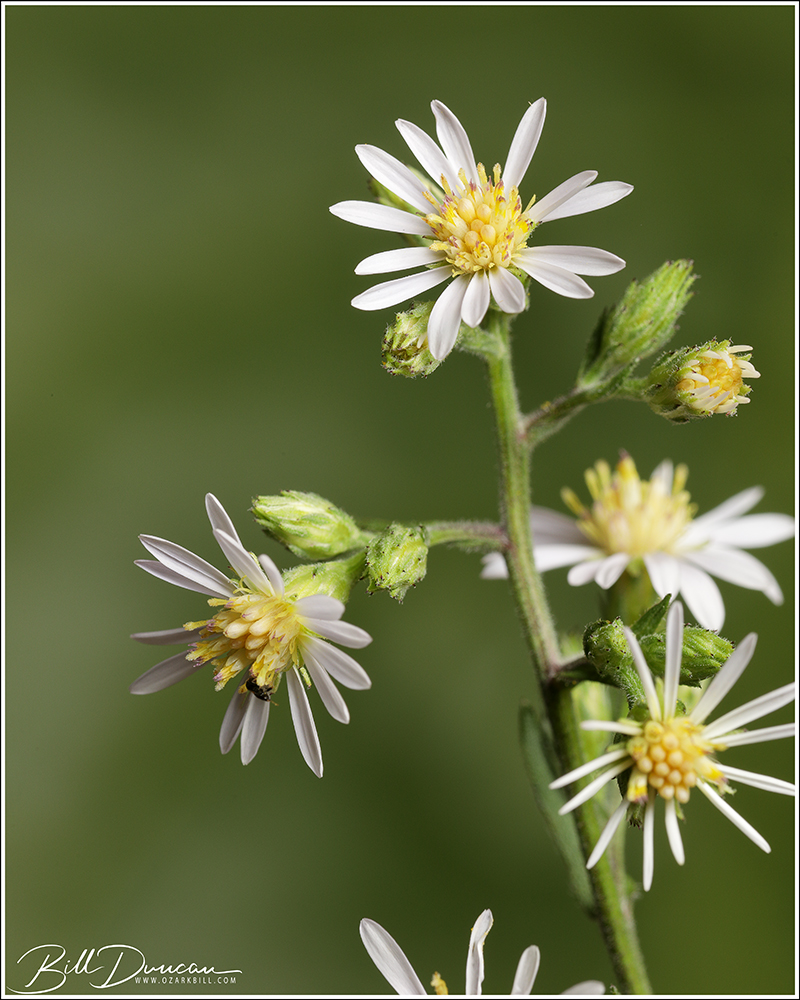
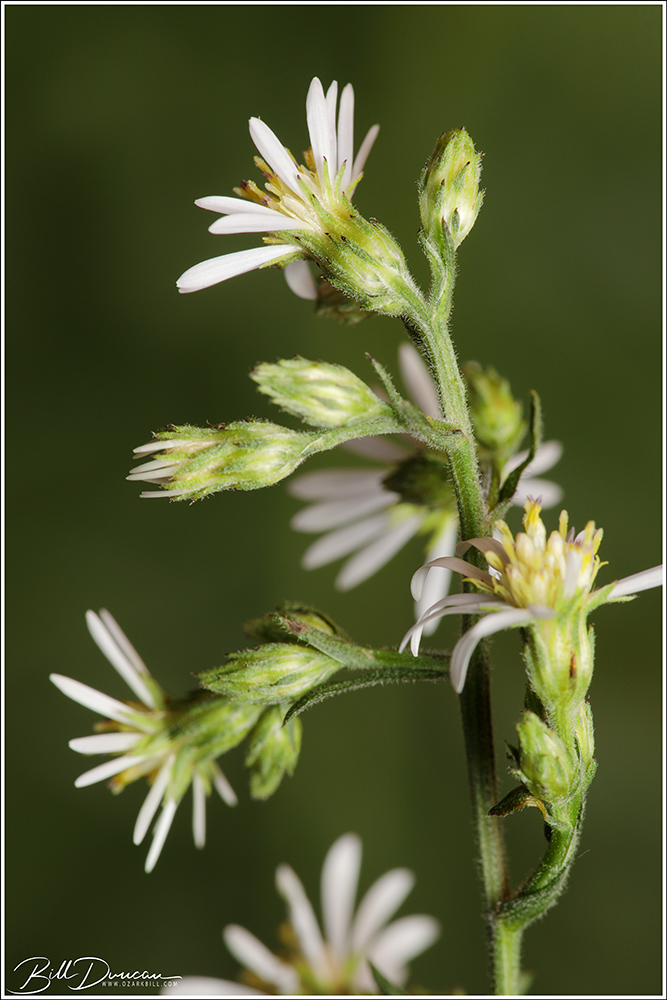
Finally, the third member of this genus I have tried in the front yard beds is Symphyotrichum drummondii (Drummond’s aster). This one looks a lot different from the other two, not only in the characteristics of the capitulum, but in its growth habit as well. This is much more of a small, dainty plant that is found in open woodlands and savannahs in the northern sections of Missouri.
Anyone who has hung around biologists and naturalists long enough has surely heard the complaints of how taxonomists are going too far in their evil over-splitting ways. Their notion being that phylogenies painstakingly developed via decades of phenotypic comparisons should not be overturned by a few afternoons of running gels in a lab. I’m sure most of us can point to a convincing example of over-splitting amongst our favorite groups of organisms, but I hope that the subject that I am featuring tonight will give you pause before reaching for that familiar defense and realize there are circumstances where a group benefits from a fine dissection when the appropriate tools are available.
A great example of a group that has benefited from a well-executed genetic taxonomic treatment is the Spiranthes cernua species complex of the “ladies tresses” orchids. This species complex has long been known for cryptic species with curious cases of plants being plants – exhibiting hybridism, polyploidy (having more than two sets of chromosomes) and apomixis (reproduction without fertilization). The species, Spiranthes cernua, which is found in Missouri, has been problematic and considered as a polyphyletic taxa (derived from two or more distinct ancestral taxa). In attempting to shed light on the phylogenetics of this species complex, Mathew Pace and Kenneth Cameron have published a fantastic treatment in which they attempt at “Untangling the Gordian Knot”. Most of what I write here is paraphrased from their paper cited at the end of this post.

A common method of speciation in plants is interspecific hybridization. Pace and Cameron identified three instances of ancient hybrid speciation involving S. cernua. One of these circumstances that has now been given specific status is Spiranthes niklasii. This species is near-endemic to the Ouachita Mountains of Arkansas and is likely a result of a proposed ancient hybridization event between Spiranthes cernua and Spiranthes ovalis.
Pace and Cameron describe S. niklasii as being quite similar in appearance to S. cernua, but can be distinguished by “a central ridge of small papillae on the adaxial surface of the labellum, more strongly campanulate flowers, and usual preference for a more xeric habitat.” When I read this and found out we had an opportunity to see this species, I knew I wanted to try and capture those papillae in a photograph. We found this species in bloom in Saline and Pulaski Counties in Arkansas on 10, October, 2021. While my photos cannot do justice to the excellent figures found in the above mentioned work, I was still thrilled to be able to capture these minute structures while on a camping trip in the Ouachitas.

By the way, one of the other cases of hybrid speciation involving S. cernua that was identified by Pace and Cameron has further implications on my work. Spiranthes incurva is a newly described species that is hypothesized to be the result of an ancient hybridization between Spiranthes cernua and Spiranthes magnicamporum. In Missouri, the result of this split is that S. incurva now lies roughly above the Missouri River while S. cernua is found south of the river. This means that I now have added another species to my orchids of Missouri. A new orchid for me to photograph!
I would like to thank Casey Galvin and Eric Hunt for helping me find these plants.
Literature Cited
Pace, Mathew C., and Cameron, Kenneth M. 2017. The systematics of Spiranthes cernua species complex (Orchidaceae): Untangling the Gordian Knot. Systematic Botany. 42(4): pp. 1-30
Until next time,
-Ozark Bill

