I realize I missed the focus on this one, but the little guy was posed so nicely. I figured this was a species that would take a lot of time and patience to capture, and I was very surprised to get this much.

“Wilson’s Warbler, Autumn 2012”
"What a thousand acres of Silphiums looked like when they tickled the bellies of the buffalo is a question never again to be answered, and perhaps not even asked." -Aldo Leopold
I realize I missed the focus on this one, but the little guy was posed so nicely. I figured this was a species that would take a lot of time and patience to capture, and I was very surprised to get this much.
“Wilson’s Warbler, Autumn 2012”
A few images taken of the Trumpeter Swans at RMBS, near the town of Alton.

“Marsh wrens made trip after trip to a knot in the bulrushes, whence came the clamor of nestlings”
-Aldo Leopold-

“Marsh Wren, Autumn 2012”
I know it’s not Monday, but it is the first day back after a nice holiday break. Same thing, or even worse…
This GBBG was spotted this past September during the local Audubon Society’s pelagic seabird trip to Carlyle Lake. The species is the largest gull found on the North American continent. They will eat any protein source they can find, including carrion and prey upon anything they can overpower, including smaller birds. This striking guy is a first-year bird and this species will not breed until their forth year. Interesting is the differences in behavior among these often difficult to distinguish gulls. This guy almost always flew solo and higher than the flocks of Ring-billed that constantly followed the boats.

“Great-Black-backed Gull, Autumn 2012”
The forecast suggested the day in which I had been waiting for years might finally be here. Finally, the combination of snow in the big-spring country of south-eastern Missouri Ozark region, a vehicle that can move through these hilly, un-plowed roads and a day off to enjoy myself in them. I was also fortunate to have a friend who was just as excited about it as I was! I told Steve I’d pick him up from his place and we would visit Big Spring and whatever other places we desired and had the daylight to enjoy. This is the second winter season I have owned my current 4WD vehicle, but considering our winter last year, this was really the first time I’ve gotten to drive it under snow and icy conditions. It definitely lived up to my expectations. Remembering one must still drive slow and anticipate braking (as the three 4WD vehicles in the ditch that I passed demonstrated) we took our time and arrived at Big Spring State Park with a minimum of butt-clenching. It was definitely worth the drive! My photos do not begin to capture the beauty and peacefulness of our surroundings.
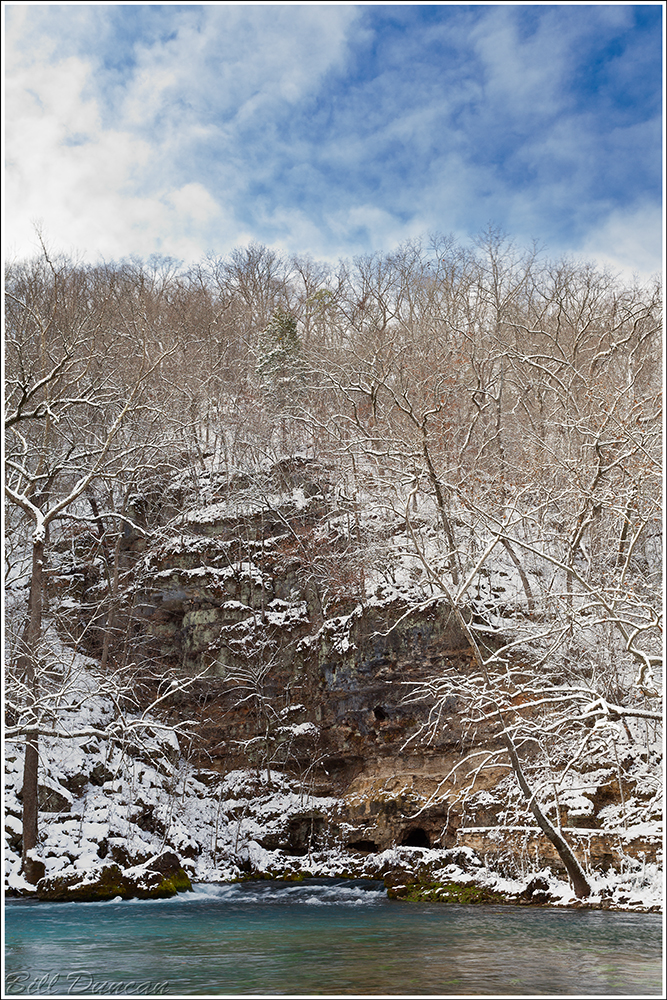
Nothing can beat a day spent during or after a snow at a place such as this. Although definitely slower and quieter during this “blue season”, life was still obvious in surrounding us. Mosses and lichen were wet and vibrant, and the bright green watercress contrasted nicely with the deep blues and sharp turquoise of the spring effluent. A first for my eyes was the conspicuous in-this-season mistletoe bunches that are evergreen and apparently still robbing their Sycamore hosts even during the “dead of winter”. I imagine I have observed these plants in the past, but assumed they were dead leaves potentially put together by a squirrel. And the birds! The birds were very abundant immediately surrounding the spring. Nothing beats being able to observe a Bald Eagle and a Belted Kingfisher simultaneously without having to turn your head. The photo below shows the geology that is not as visible in the green months.
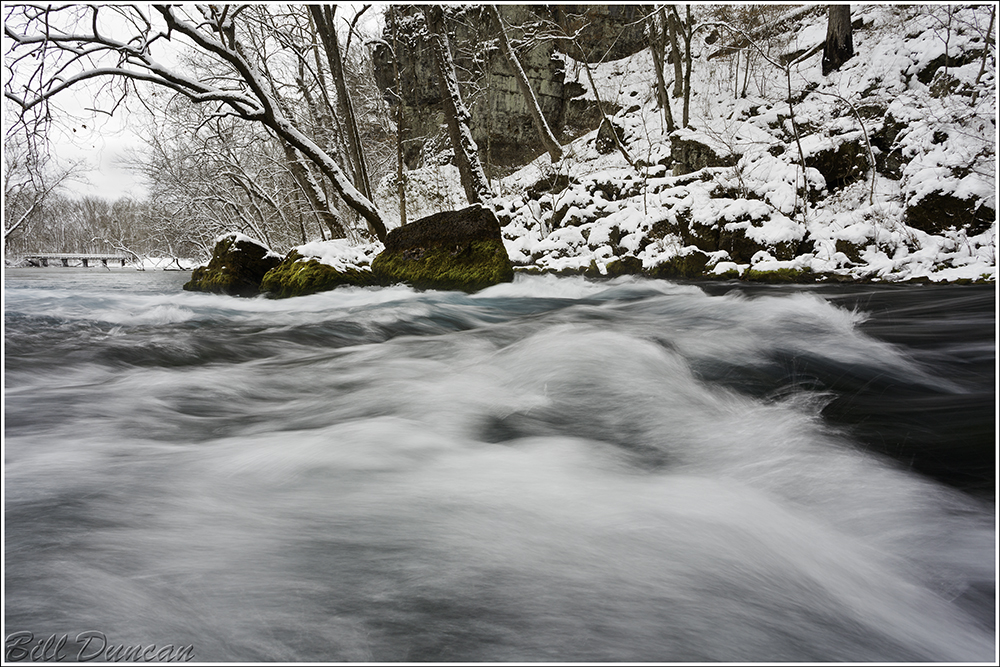
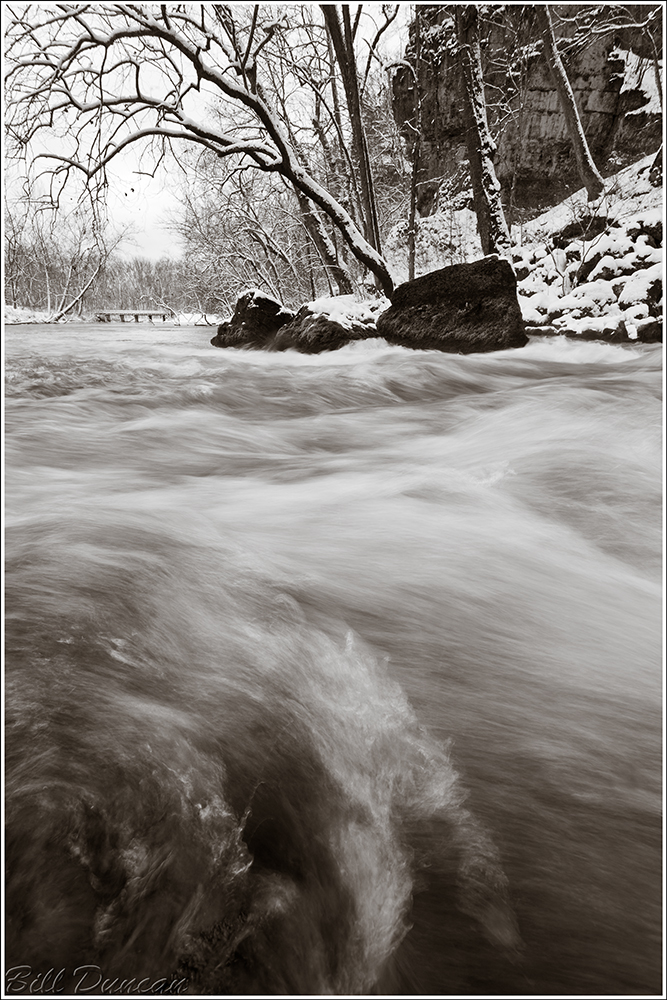
Every slight change in viewing angle resulted in noticeable changes in color of different sections of the spring’s effluent. I don’t believe I have ever seen so many shades of blue in one place at one time. I converted the image below to black and white, then toned as a “duotone” by bringing a selenium tone to the shadows. I hoped to focus attention on the textures in the water and the heights these waves reached.
After getting a satisfactory but still much too short experience at Big Spring, we left what unmarred snow was remaining and headed to the next spot I was eager to see with a cap of snow, Falling Spring.
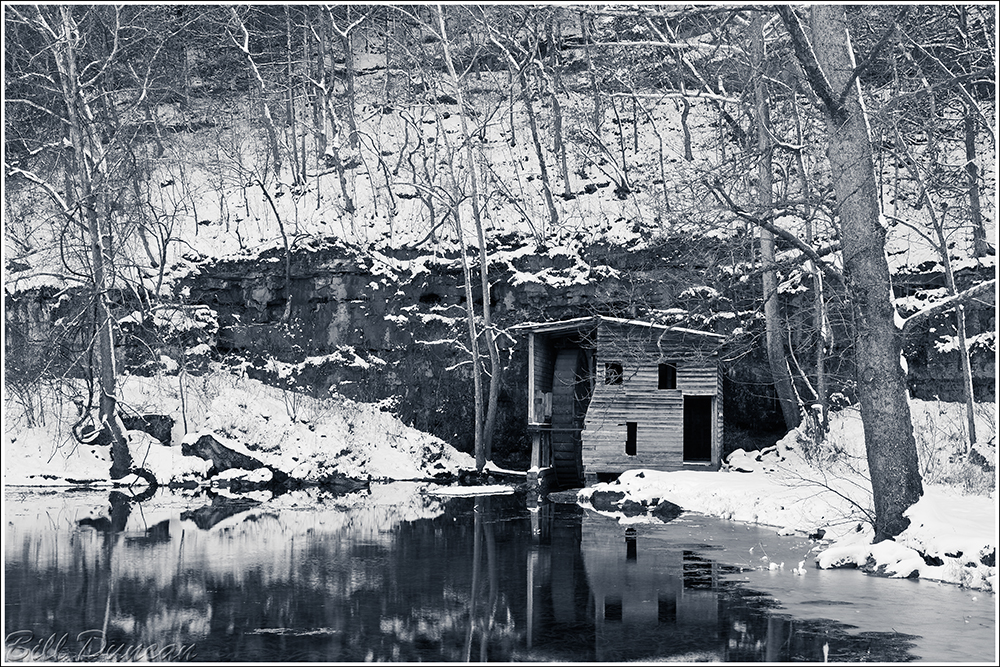
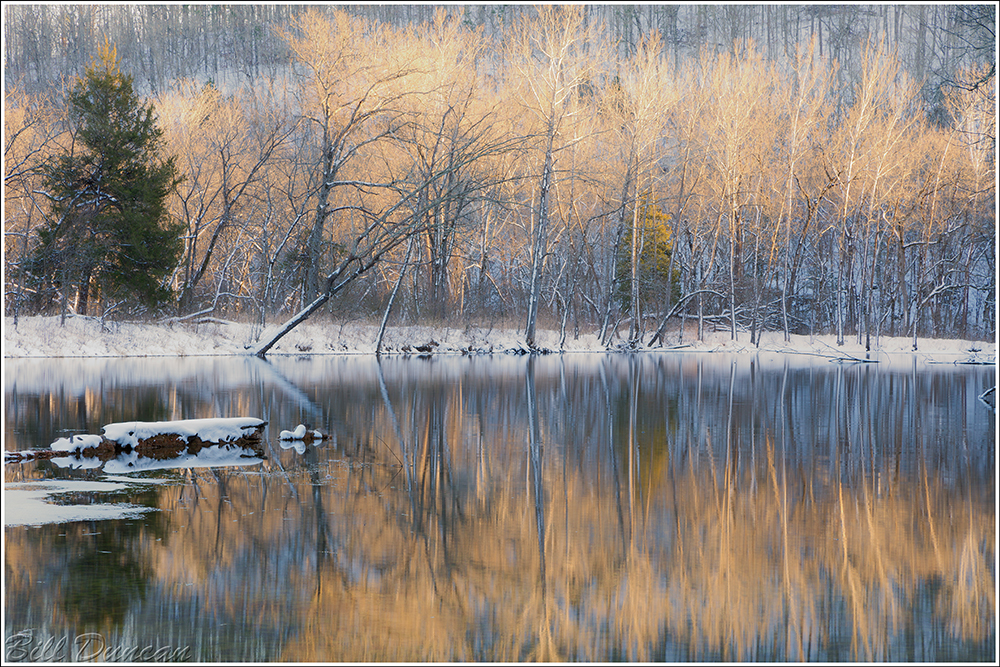
It always brightens my spirit to see that this delicate structure still stands and in relatively little disabuse. The spring’s discharge was light on this day, but the noise of the water falling the ~20 feet to the pool below was enough to drown almost every other sound. A nice point of visiting in the winter was being able to trek around the beaver pond a bit. Steve discovered the beaver den with obvious “trails” moving outward from it in the water. The picture below was taken facing away from the spring and shows the fiery warmth of the late-day sun that was cut by the height of the hill. I love the contrasts provided by the bare Sycamore branches and the reflections from the beaver pond. A stunning view indeed!
Seeing what can be found on a day like this and how few people were out to make these experiences ensures that I will definitely be down here to capture more scenes like these.
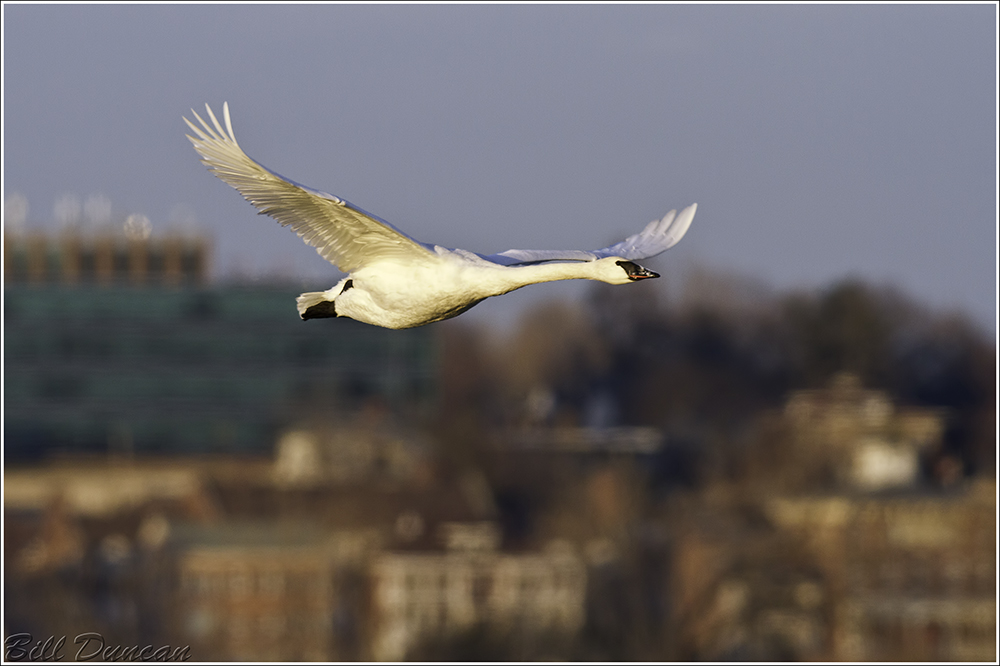
Thanks so much to everyone who contacted me with pointers to solve my problems with inconsistent colors between applications. Converting to sRGB profile immediately before saving as a JPEG did the trick. Now I have another thing to add to my workflow, but it’s definitely worth the extra step. This problem has hounded me for a couple of months. Thanks! I am posting a corrected version of the previous posts’ image. Of course, I forgot to save a final TIFF of the original, so they are not technically identical. I had to start from the original CR2 file, but they are very close. It should be a good learning experience to view both versions in multiple web browsers. I am using a very old version of IE, however, and maybe the latest versions won’t have this difference?
Happy New Year, my friends.

“Warm Flight (revisited)”
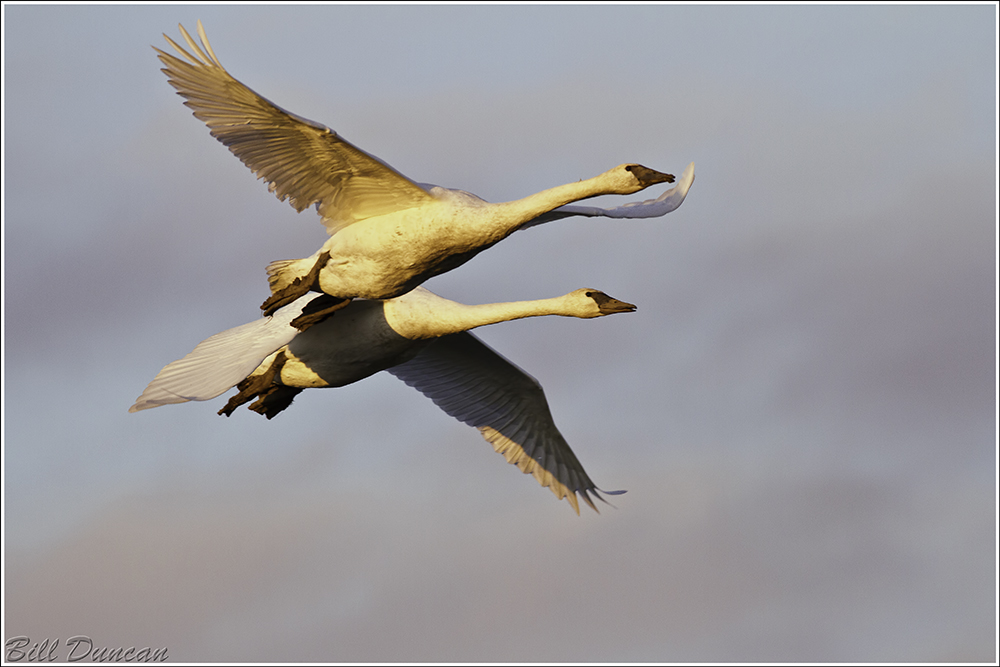
I have recently become aware of a concerning issue with presenting my photographs in the digital medium and I am begging for someone to help me. I have noticed that there are dramatic differences in color temperatures and overall contrasts depending on what web browser or photo viewing software is used to view my images. Take this one for instance. I primarily use Firefox for my web browser and using it the image looks exactly as I finished it in Photoshop, nice and warm with contrasts that make it pop a bit (trust me, that day was anything but warm with temps in the high teens). If you have the means, view this image in Firefox and Internet Explorer. Can you see the differences? In IE, the temps are much cooler and the image is overall muddy with low contrasts. I have also seen differences in software used to view JPEGS. In “Windows Photo Viewer” the image is exactly as I processed, but in “Quick Time” it is just as I described in IE. Most disturbingly, every mobile device (ipod, smartphone, etc…) in which I have viewed my images has also displayed them in this cooler, mushy form.
I am very much a novice in terms of working with file formats, image modes, color profiles and everything related. I am hoping someone out there can help me with this as you can see this looks to be a major problem. If you can give me some incite, I will be eternally grateful. I will even offer up your choice of one of my daughters. Well, I don’t have any real daughters, but we do have four cats, and they are quite cute I assure you. 😉
Here is some info about my settings and workflow in case it might help: Convert from RAW in LR3 (ProPhoto RGB, 16-bit), move to PS CS6, work in TIFF (RGB, 16-bit), save as JPEG. I am reasonably comfortable that I am working on a well-calibrated, acceptable quality monitor on a Windows platform.
Thanks for anything you can provide!

“Warm Flight”
Fire and Ice
by Robert Frost
Some say the world will end in fire,
Some say in ice.
From what I’ve tasted of desire
I hold with those who favor fire.
But if it had to perish twice,
I think I know enough of hate
To say that for destruction ice
Is also great
And would suffice.
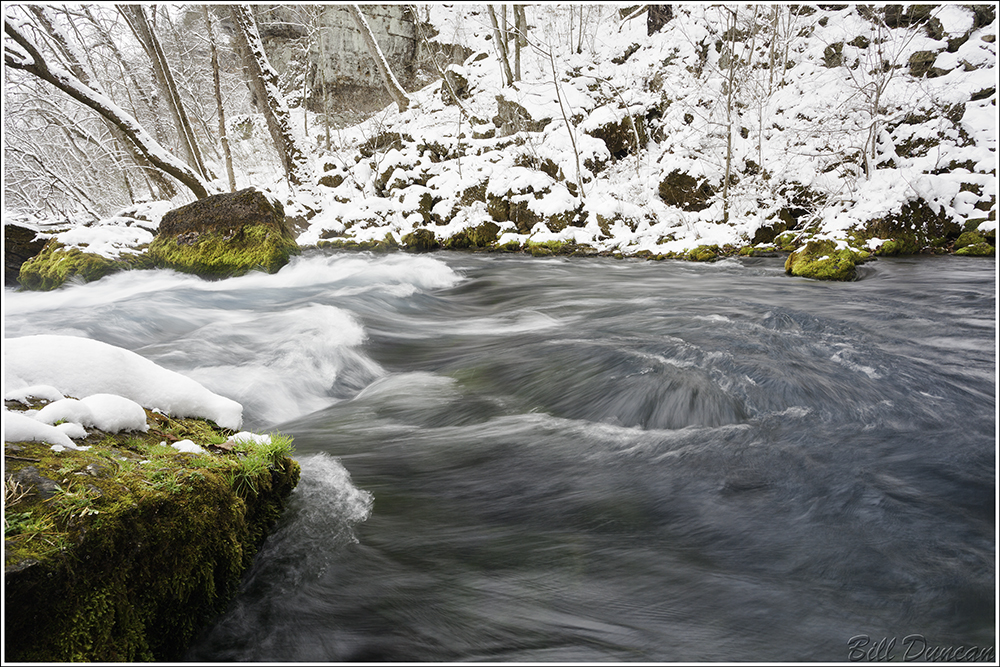
Will the world ultimately end in fire or ice, desire or hate? I don’t know, but a multitude of fascinating theories exist for the origin of life on earth. I’ve recently read an interesting theory that suggests ice-cold conditions were more conducive for the origin of the first complicated molecules. Although cold temperatures are a detriment to most life on earth, several potential problems are alleviated by this as well. An interesting read if you like. Pictured below is the main boil of water that is released from Big Spring located in the Missouri Ozarks
No worries. Although the biology, terminology and classification behind the fungi is a course of study that is as beautiful as any human language, I will not try to fill this post with all that specialized nomenclature, especially since I am a novice at it myself! This particular group of fungi are polyphyletic (similar or convergent in nature, but no recent common ancestor) and have been grouped together based on their habit of passive spore dispersal. While most other fungi have mechanisms that forcibly discharge their spores, in this collection of orders the spores are passively dropped and released by rain drops, wind, insects and other animals. These fungi go by the names of earth stars, puffballs, and earth balls. The palate-pleasing truffles and the oh-so fascinating bird’s-nest fungi are also included in this grouping. The phallic (order Phallales) stinkhorns spores are spread by flies and other insects that are attracted to the rotten smells they exude. The bizarre jelly and “ear” fungi are also placed in this group. Finally, the economically important rusts (Uredinales) and smuts (Ustilaginales) also fall in this category, often finding conditions in our modern monocultures perfect and in little time can cause severe declines in yields of cereals and legumes.
The photo here shows the “Acorn Puffball” (Disciseda sp.). In nature, the spores are forced through the ostiole (opening) when struck by rain drops or falling leaves or other matter. Often they may separate from their base and roll across the landscape ejecting spores as they move along. In this photo I used a small twig to push on the side of one of the fruiting bodies that discharged the cloud of spores I hope is apparent. This took some time and patience to get just right. I did not have any artificial light source, so reflectors and trial and error with exposure settings had to suffice. These guys are most often found in dry habitats like desserts, dry grasslands, pastures and dry woodlands.

“At 3:40 this morning (sun rose at 4:09) a wood pewee sang over and over with perfect regularity a song of five drawling notes – pee-a-wee, pee-wee – both phrases ending on a rising inflection. The syllables and the pauses between them were so regular that I could time by my breathing. Pee-a-wee corresponded exactly with an inspiration, then, with a short pause the pee-wee finished at the end of expiration. Then a longer pause – just as long as the rests between breaths – and after this he repeated his song with my next breath. I was breathing, I suppose, about 16 times a minute, and the bird slowly fell behind, but he fell behind not from any irregularity, but because his rate was slightly lower than mine.”
-Arthur Clevland Bent
“Life Histories of North American Flycatchers, Larks, Swallows, and their Allies”
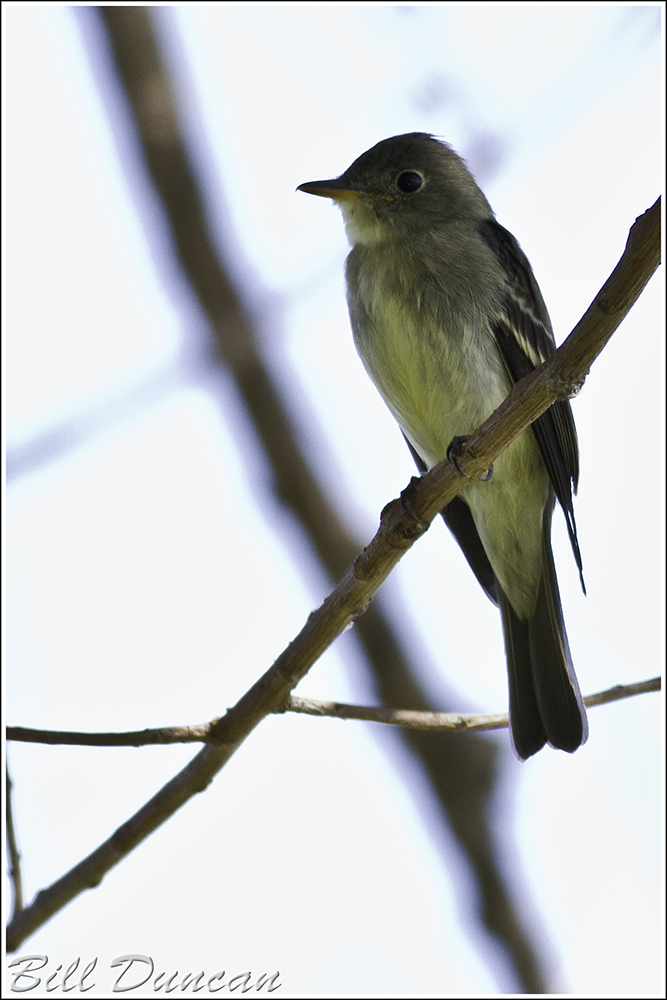
“Eastern Wood Pewee”
 A Thousand Acres of Silphiums