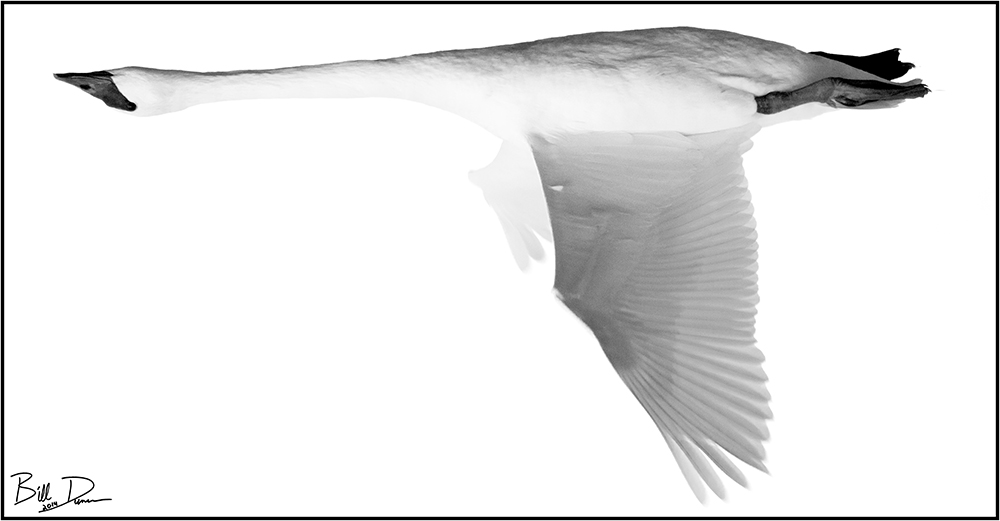
Trumpeter, Upside Down
"What a thousand acres of Silphiums looked like when they tickled the bellies of the buffalo is a question never again to be answered, and perhaps not even asked." -Aldo Leopold
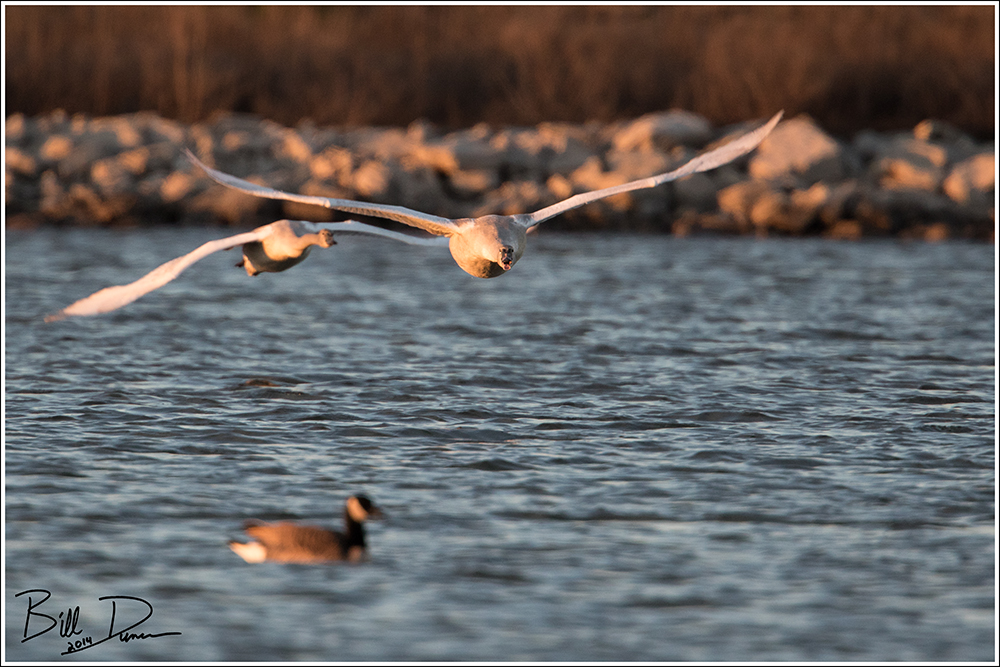
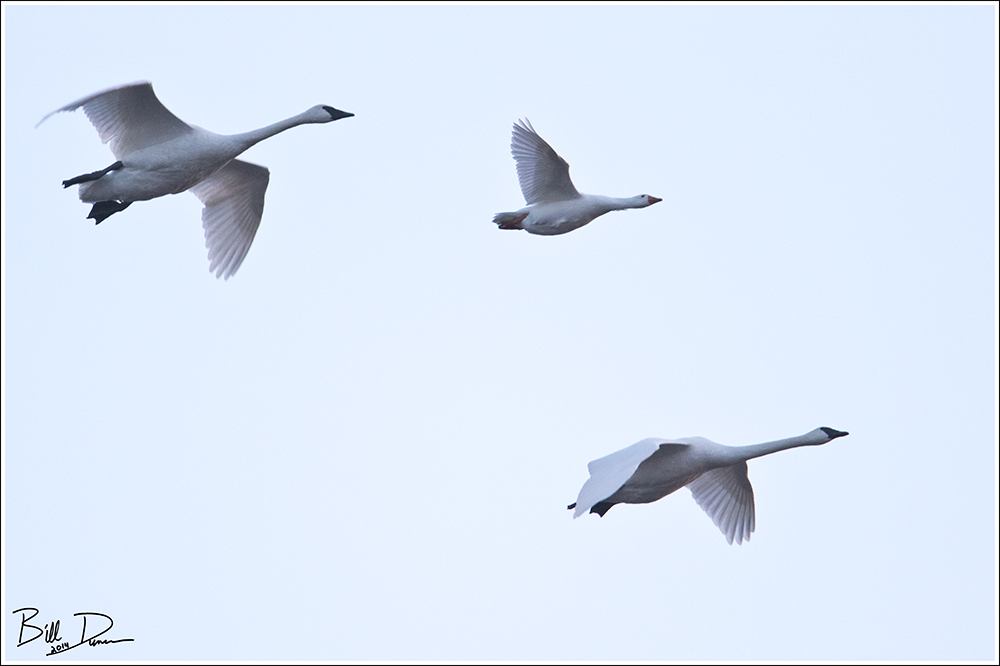
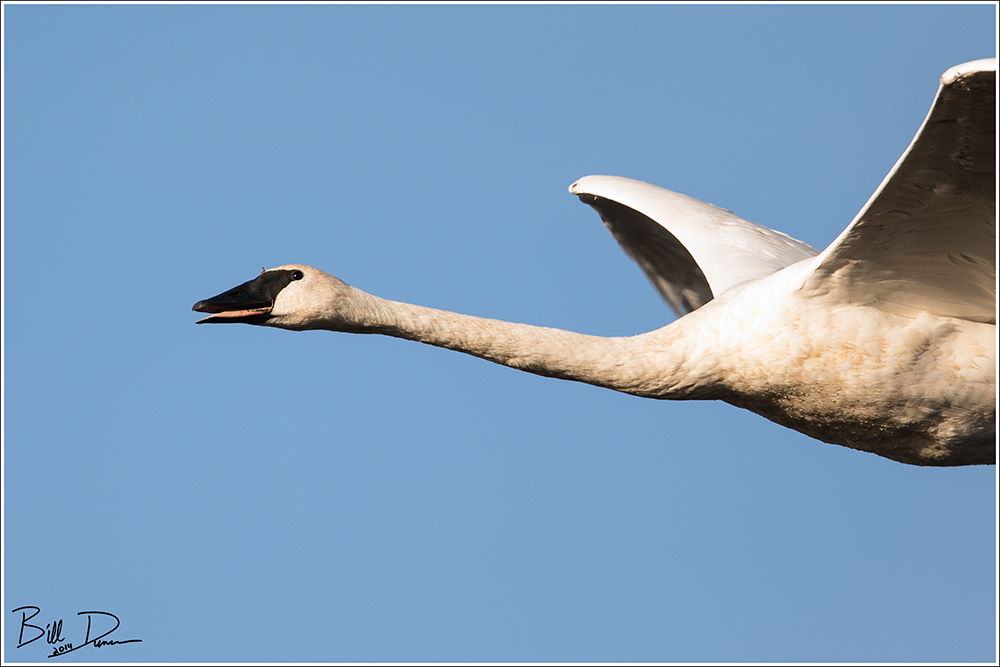
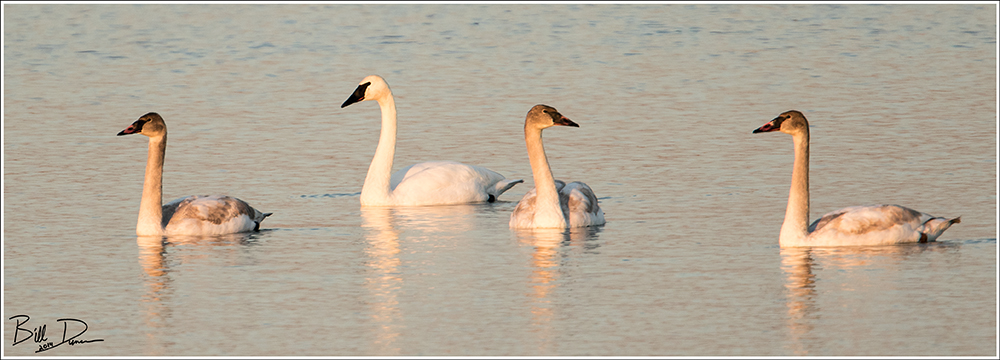
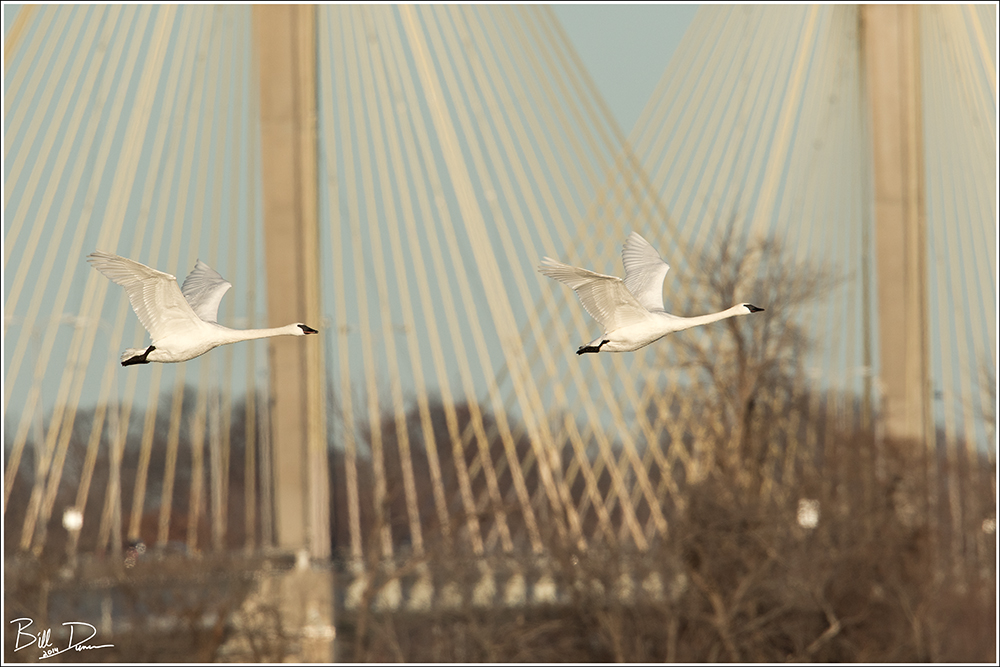
A few random shots of Trumpeter Swans taken at RMBS this winter…
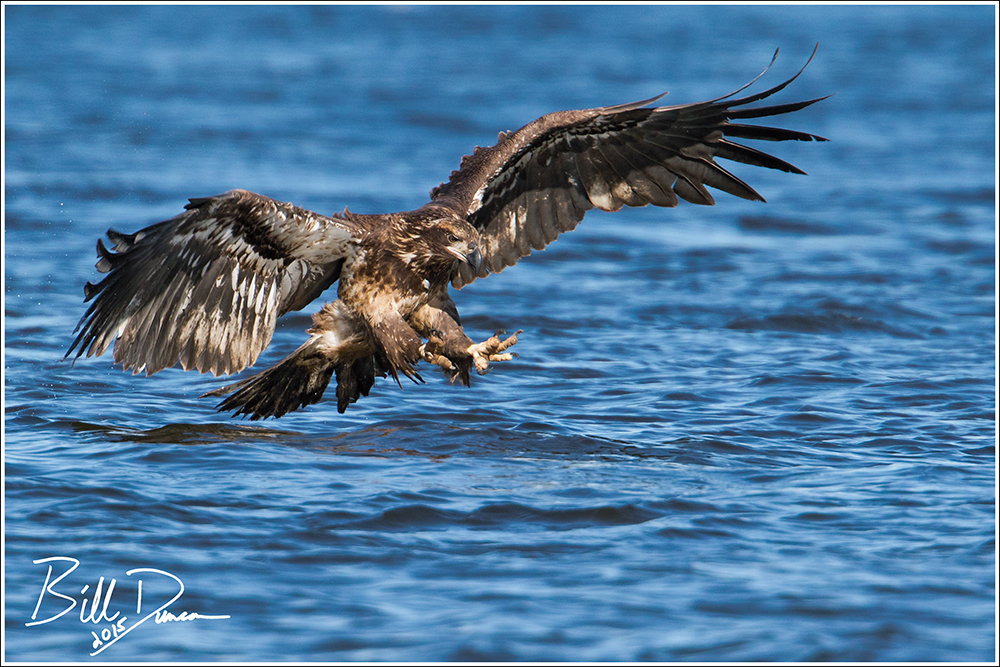
During the past week were were fortunate enough to have sub-freezing temperatures across the region, signifying the beginning of one of my favorite parts of the season – the congregation of much of the mid-western population of Bald Eagles at the lock and dams along the Mississippi River. Although we will still need to wait a couple or few more weeks for the large numbers, hoping for the cold in order to freeze the river completely, I was still able to make a few photos of fishing birds at Clarksville’s Lock and Dam #24 yesterday. The image below, showing what I believe to be a late-second year bird just before impact, is an early favorite.
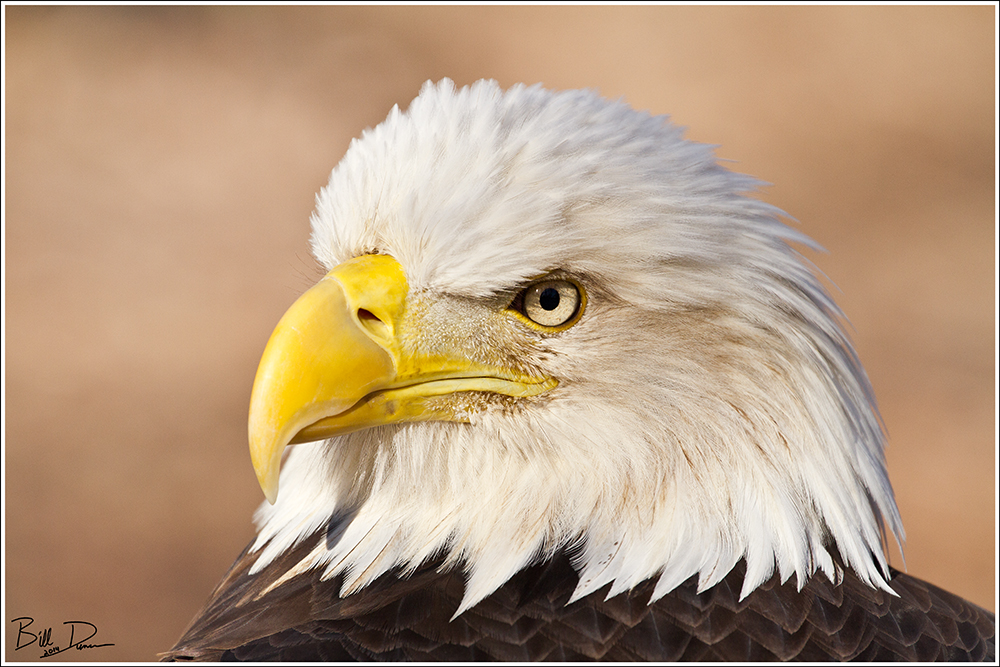
The next image is a head-shot of an adult bird from a nice walk-through of the World Bird Sanctuary that Sarah and I took over the holiday break.

Finally, my first successful photos of a Glaucous Gull. This 1st winter bird was photographed yesterday as I tried to make some eagle fishing photos at Lock and Dam #24 at Clarksville MO. In an interesting coincidence, I ran into Brenda Hente, from Great-Horned Owls Will and Kate fame, and Danny Brown, from MDC Photography fame.

Earlier in the day I joined Josh Uffman, from uber birder fame, and the hoard of birders from across the country at Lock and Dam #21 at Quincy, looking for what is likely the most famous bird in the nation – the Ivory Gull. Unfortunately, this was to turn out to be the first day the bird was not successfully found since its discovery on or about 2-January. I am so glad Steve and I headed there last weekend to get a look and a few pics (yet to be posted).
Back in October, Steve and I had the pleasure of spending a couple days doing our favorite things in the Missouri Ozarks. We made our base at our usual, the cabins at Big Spring SP, our last stay here for at least three years as the cabins will be closed for construction. For our first day, we decided to take care of something that had been on my list for a number of years, to hike the largest official Wilderness Area in the state – the Irish. Named after the Irish immigrants who settled in this area in the mid nineteenth century, the Irish was visited and pushed for protection by Aldo Leopold himself. The Irish was finally designated by law as an official wilderness area in 1984 after close to two decades of work by a number of caring people. This area was virtually cleared of its timber by the early years of the 1900s, but was replanted with its current deciduous hardwood mix by the CCC in the 1930s.
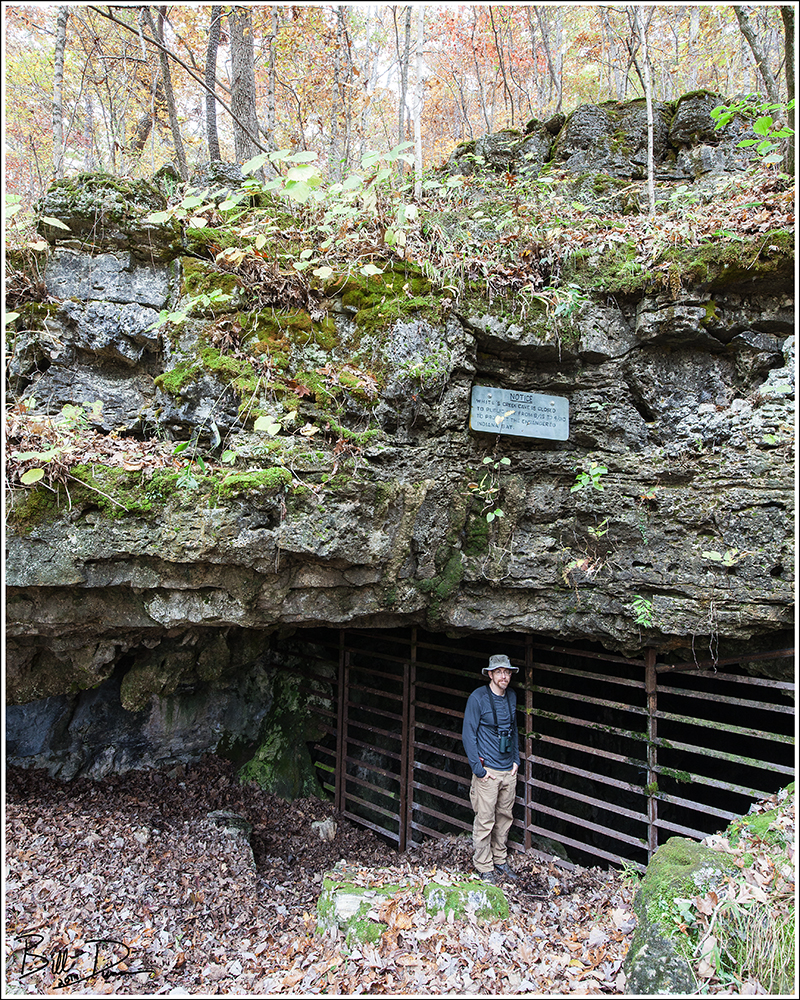
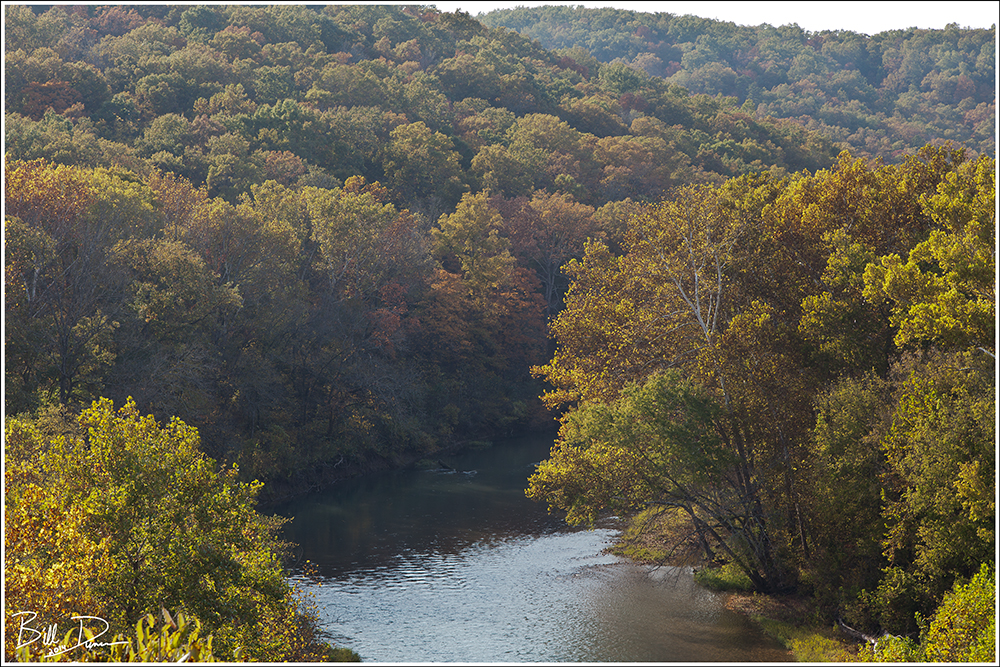
Officially listed as 18.4 miles, the Irish Wilderness loop trail is typically tackled with a night or two of backpacking. Being the athletic super-freaks that we are, Steve and I put down an estimated 22 miles, with some back tracking and assisting a lost backpacker (a GPS unit with topographic map display is quite the asset here), in about 16 hours. It would have been more enjoyable with a night or two sleeping in the woods and spending more time, but we had other plans in store as well. The image below is from an overlook of the Eleven Point River at close to the halfway point of the hike. I will never forget standing here in the late afternoon light with hundreds of ladybird beetles covered the rocks and filled the air.
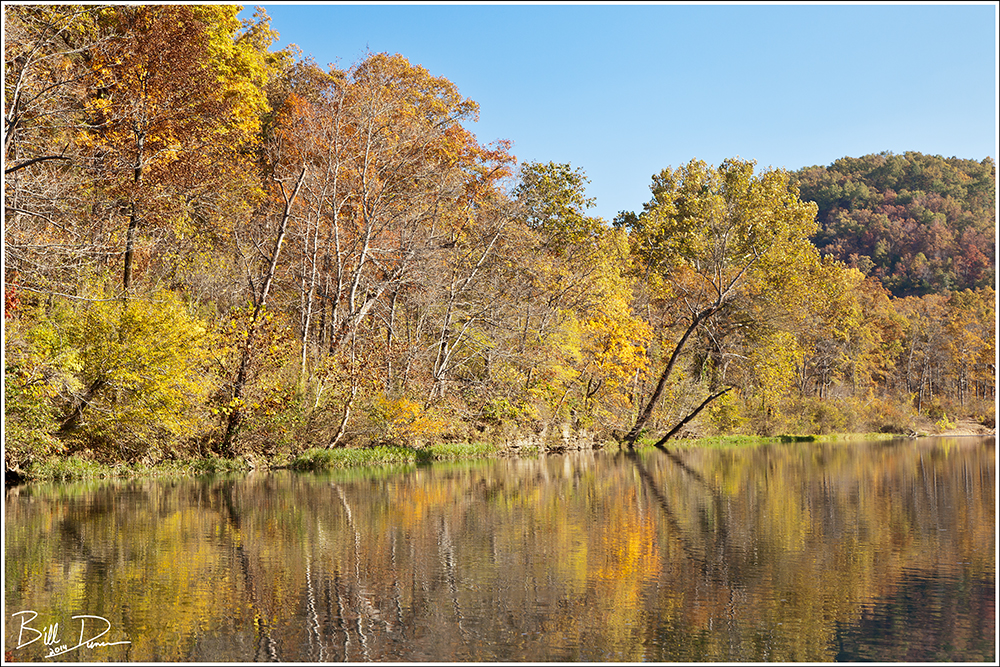
Covering 20 miles in a single day does not leave much time for taking photos. After getting some much appreciated sleep back at the cabin, we arose early to arrive at Richard’s Canoes to be in the water by ~07:30. We put in at Greer Spring Access (mile 16.6) and had the day to move the ~12 miles to our take out at Whiten Access (mile 27.6). The Eleven Point offers a perfect mix of slower moving stretches and deep pools mixed with just enough class 2 rapids to keep things interesting. Make sure to bring along some wet bags if carrying delicate camera or other electronic equipment. We were offered autumn views like this around nearly every bend.
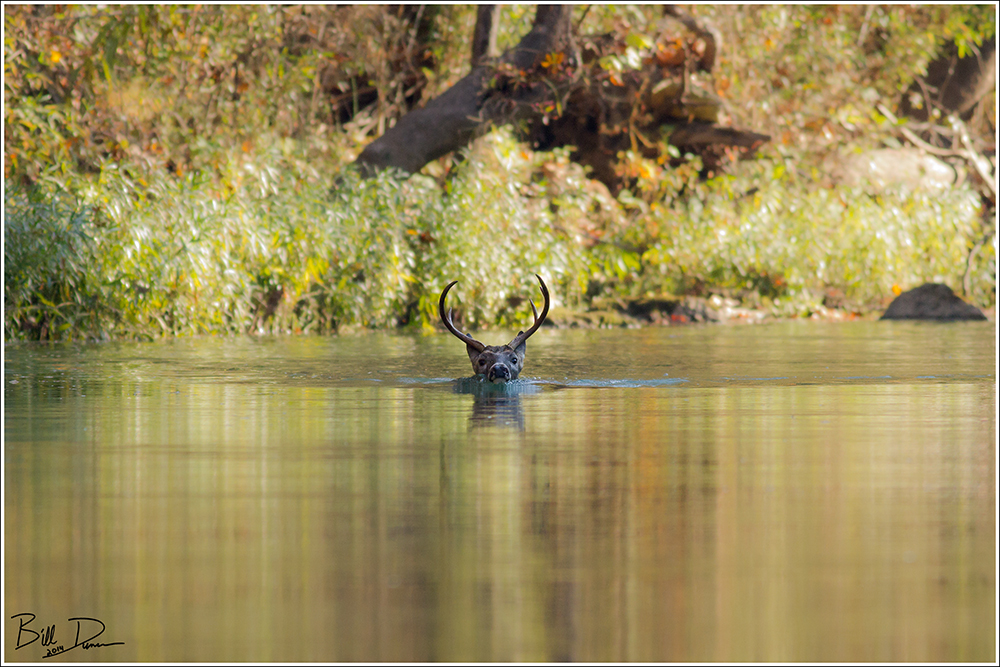
As if the landscape and feelings of being on the river were not enough, the wildlife opportunity are surely the highlights for a float trip like this, assuming you are quite and keep your eyes open. This White-tailed buck was moving upstream when Steve spotted him.
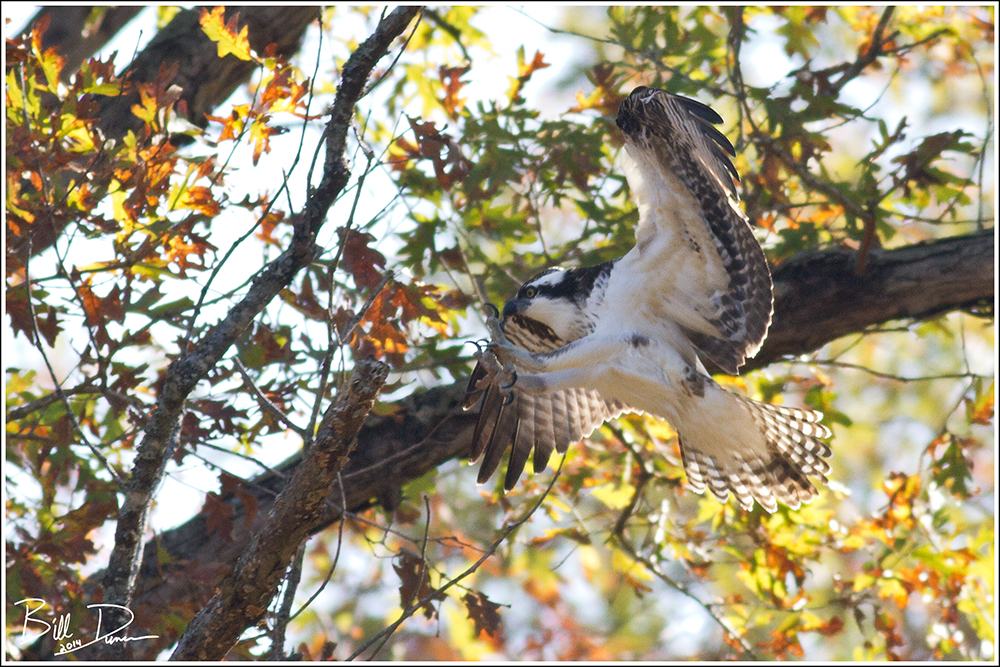
Of course the birds will be abundant along any Missouri Ozark stream at any time of year. We were thrilled to see this Osprey come in to perch nearby as we floated.
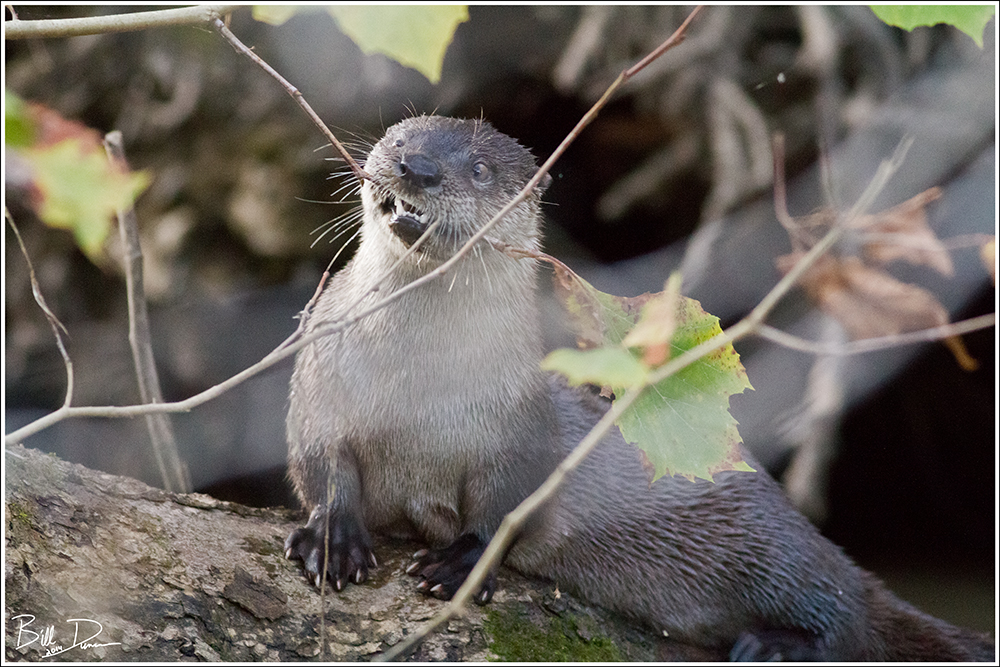
Within a couple of miles from our take-out point, we were presented with our pièce de résistance for the float, two groups of River Otters! The images below are the first group, a mom and four pups. These animals were venturing out of their den to play in the day’s last light.
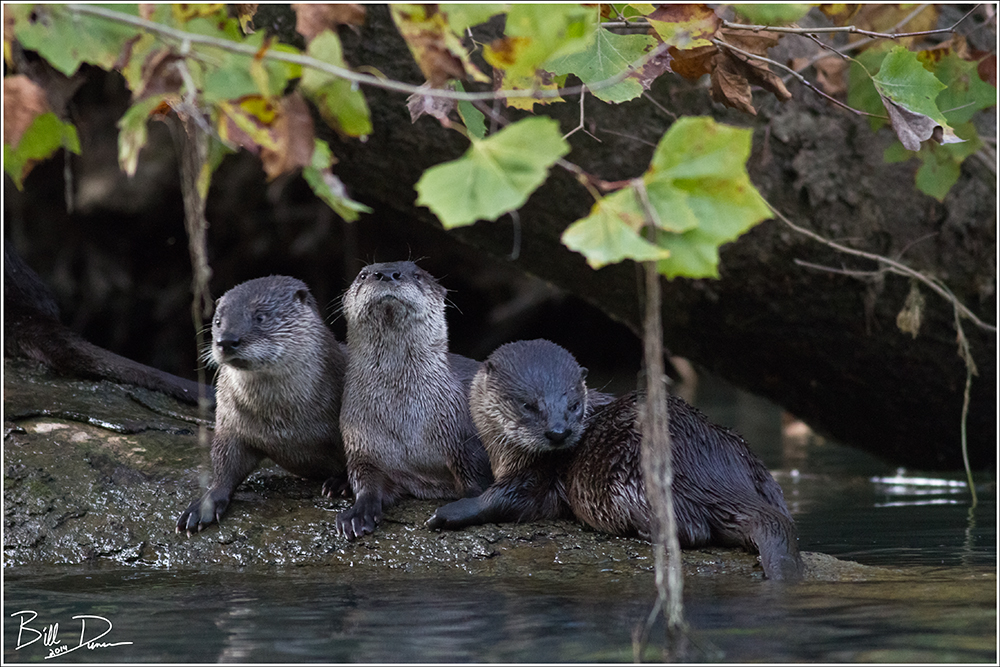
The pups seemed not too concerned, but mom kept a close eye on the floating log with ugly heads.
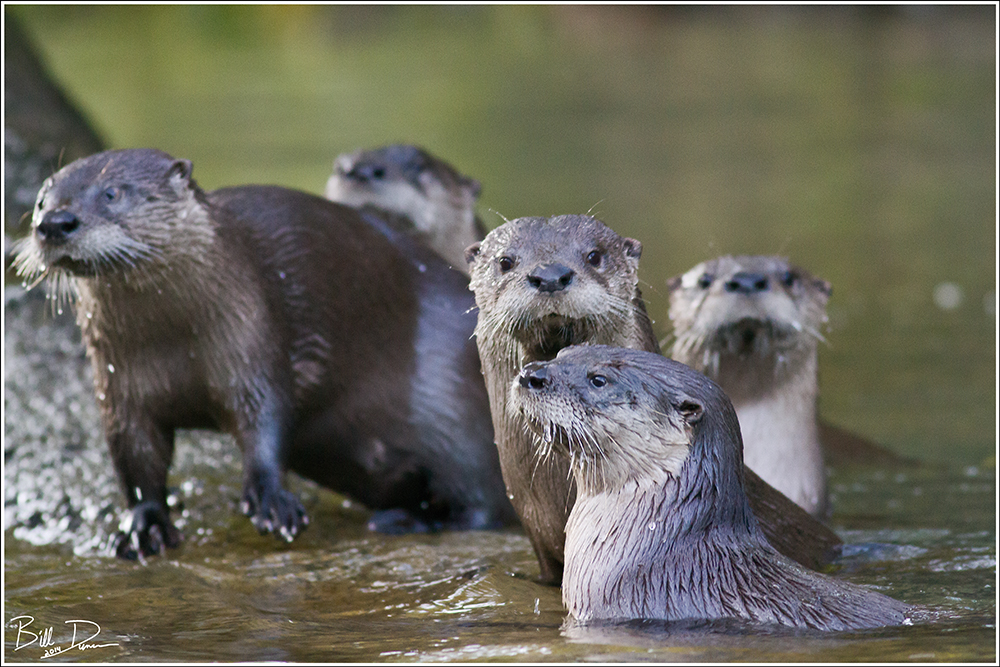
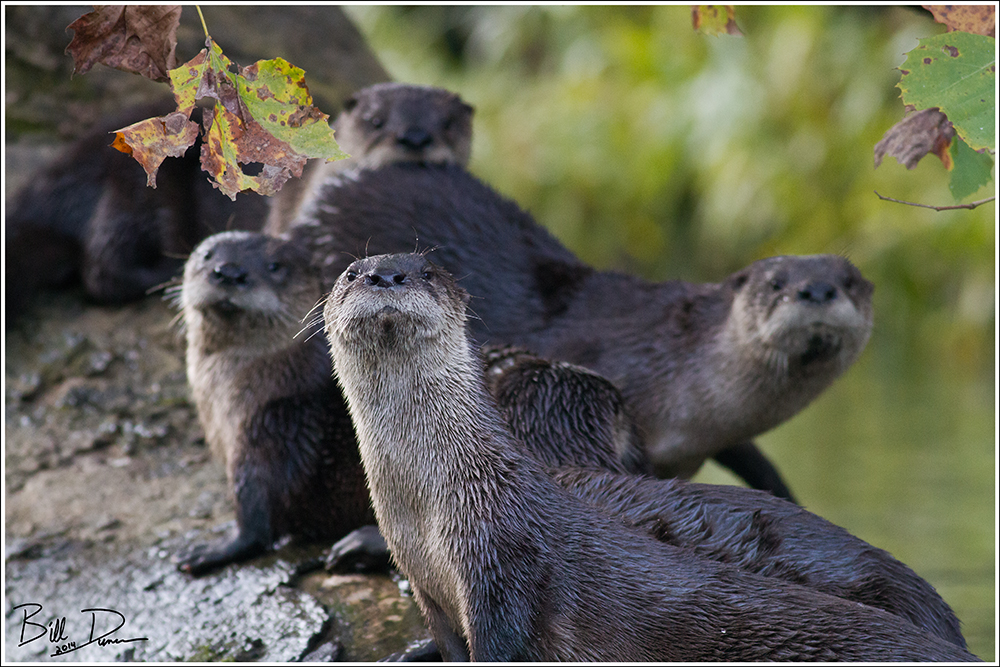
These guys will turn anything into a toy… 😉
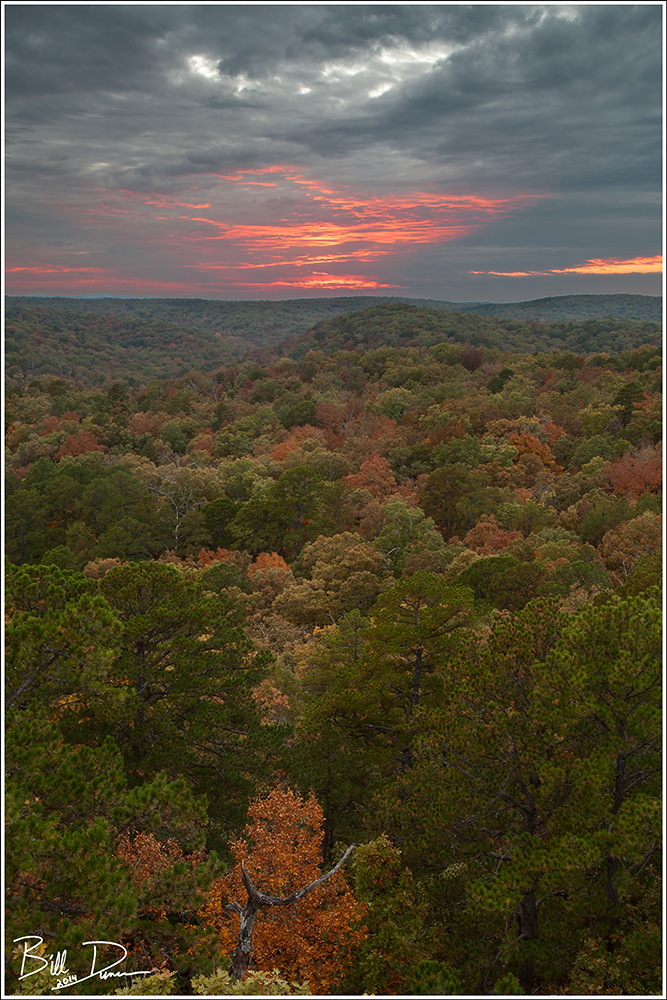
I leave you with a sunset from the nearby Big Spring State Park and eternal thanks to those who worked so hard against heavy opposite forces so that, at a minimum, we have what we have today.
The day is almost upon us when canoe travel will consist in paddling up the noisy wake of a motor launch and portaging through the back yard of a summer cottage. When that day comes canoe travel will be dead, and dead too will be a part of our Americanism…
-Aldo Leopold-
Hello again and happy holidays.
These five were all taken at the confluence, either at RMBS or CBCA.
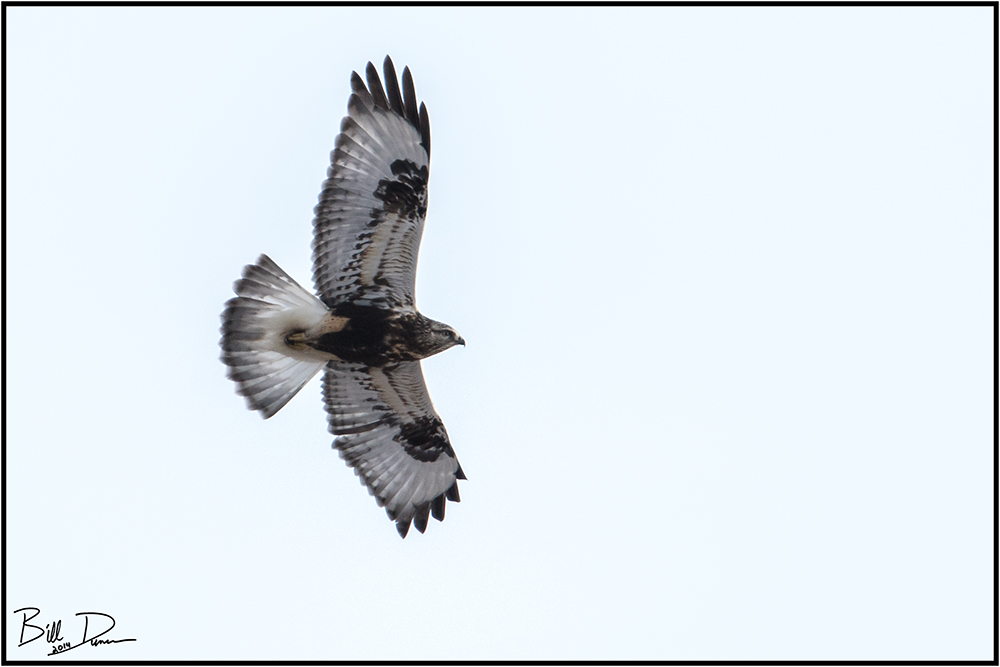
This gorgeous juvenile light-phase Rough-legged Hawk spent nearly a week at the confluence recently. These infrequent winter residents nest up north, far north, like arctic circle north. One of my favorite birds, it is always a pleasure to find one of these guys. Sarah and I very much enjoyed this bird, nearly the size of a Red-tailed Hawk, as it hover-hunted much like what is seen by the American Kestrel.
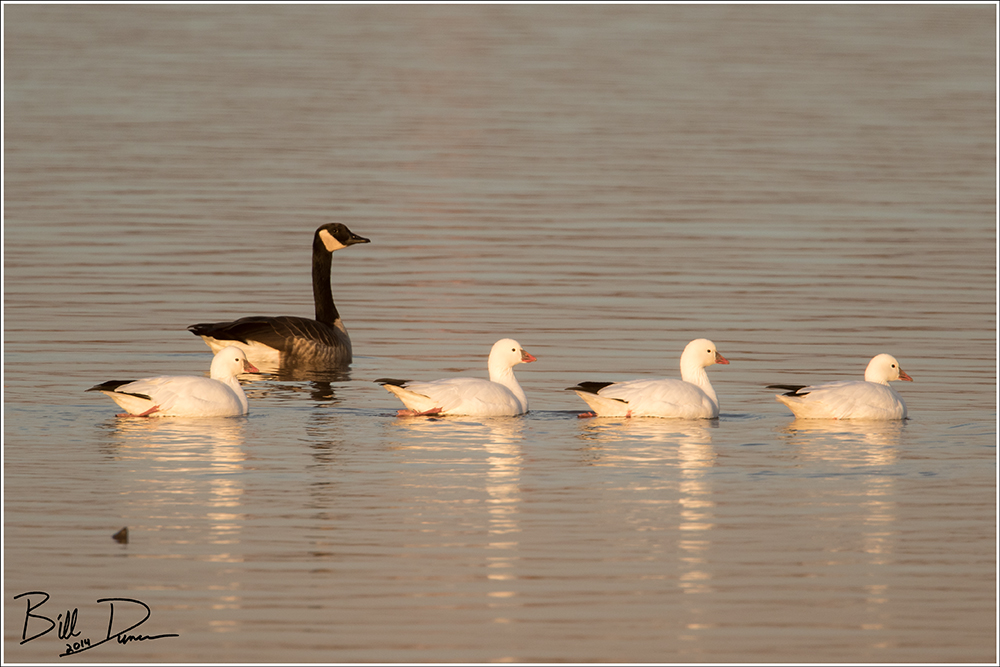
Steve and I were tipped off to these Ross’s Geese at Teal Pond by a kind birder. I can’t imagine a cuter bird. Well, maybe a few.
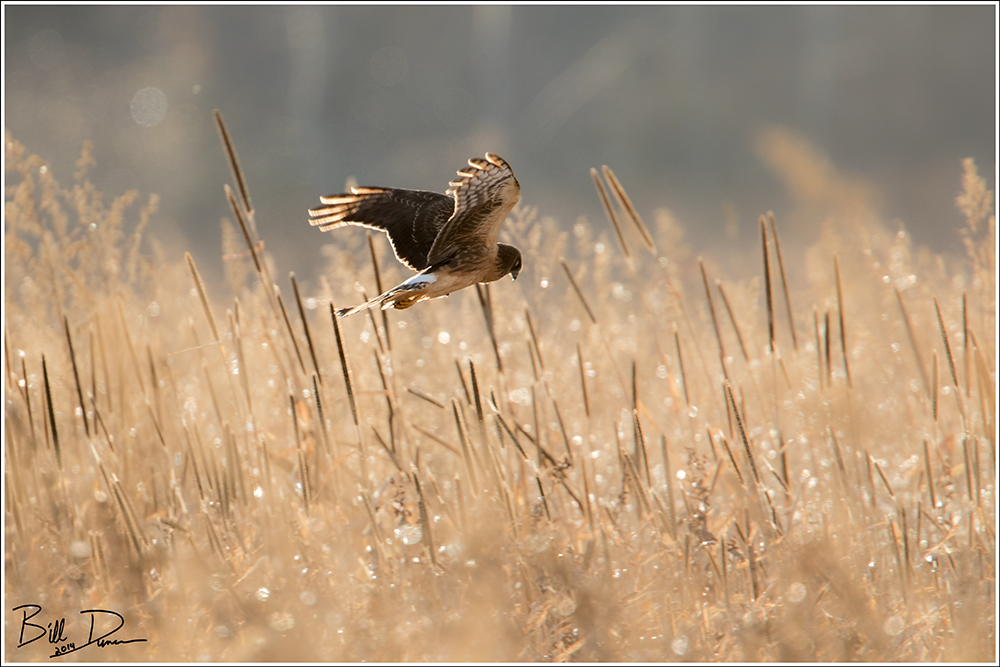
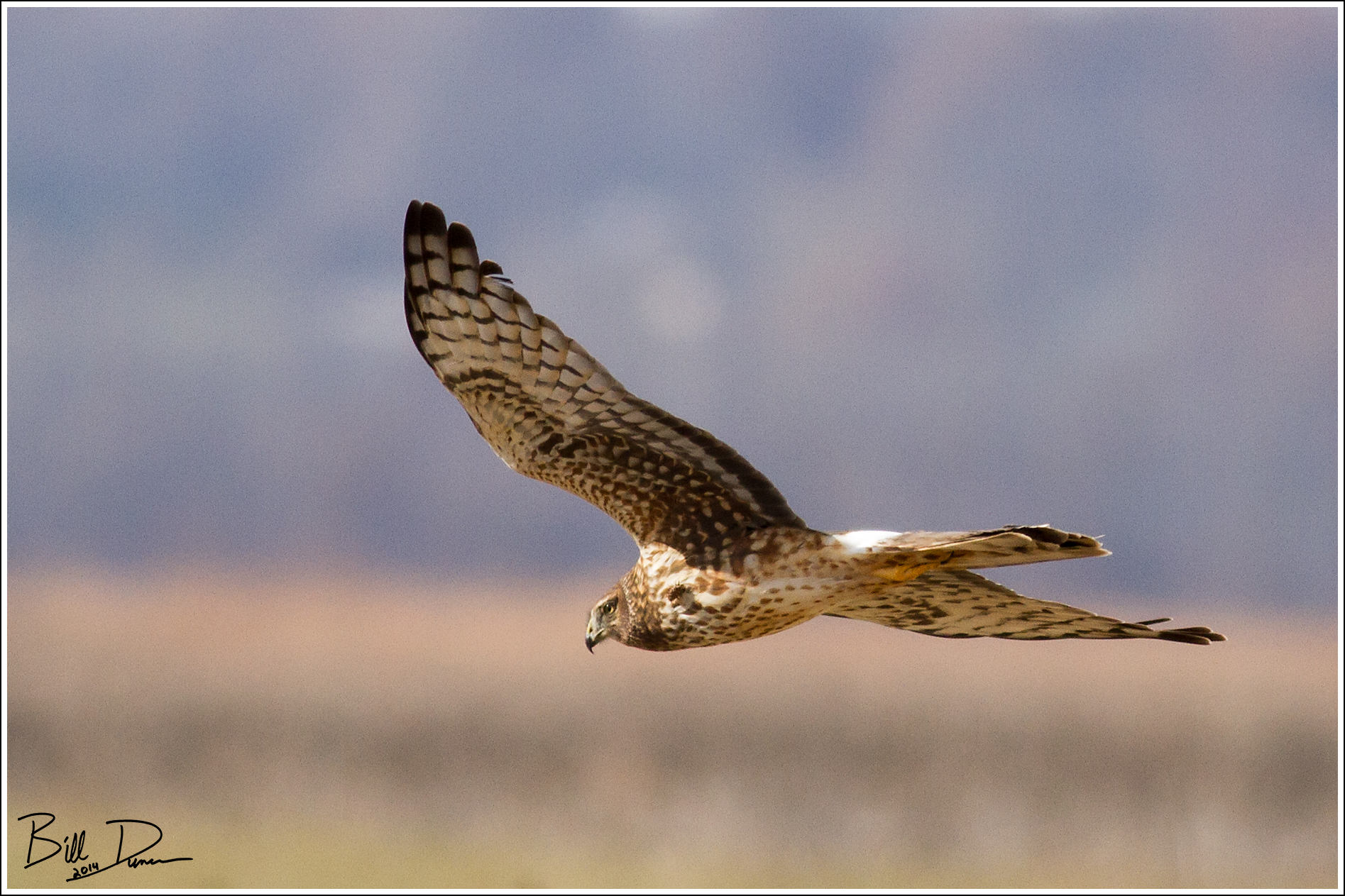
This has really been my year with the Harriers. I don’t know if it is luck, patience, or what. This one drifted by closely yo me at CBCA recently.
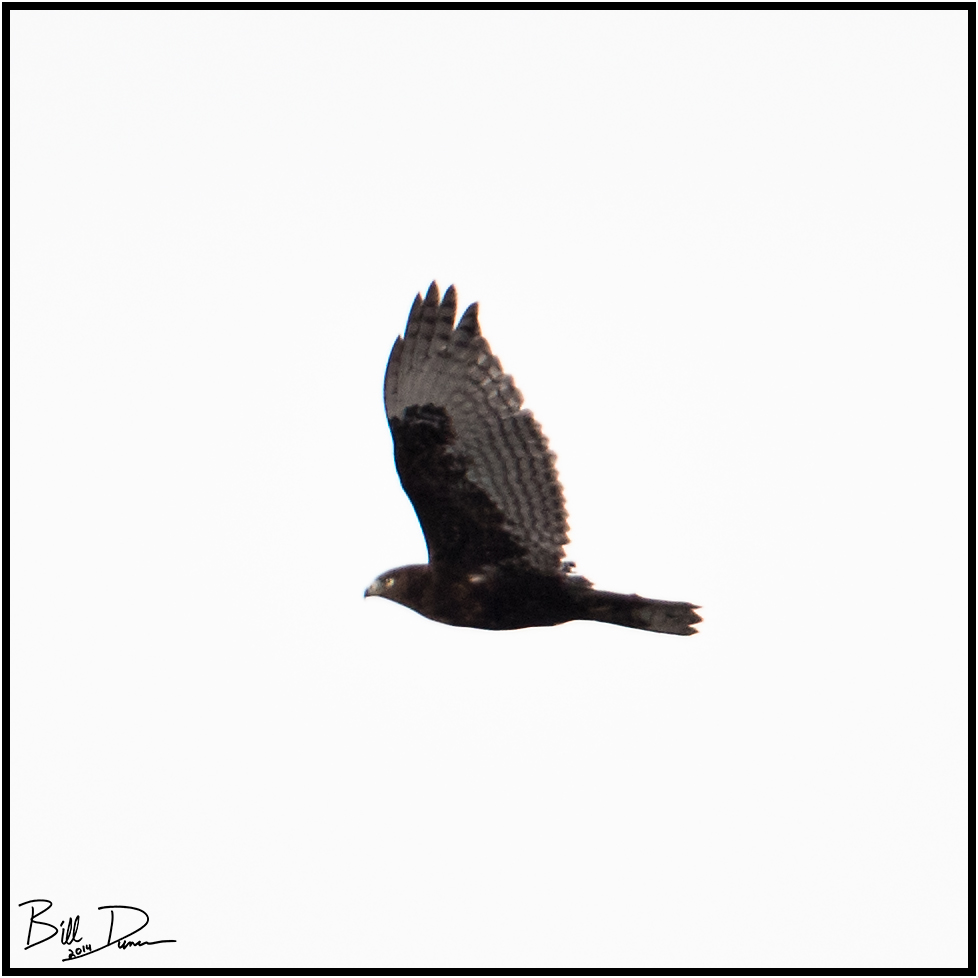
Over the Thanksgiving holiday, the dark-phase Red-taileds invaded the confluence area. I do not believe I have ever seen such a dark RTHA on the eastern side of Missouri before this one.
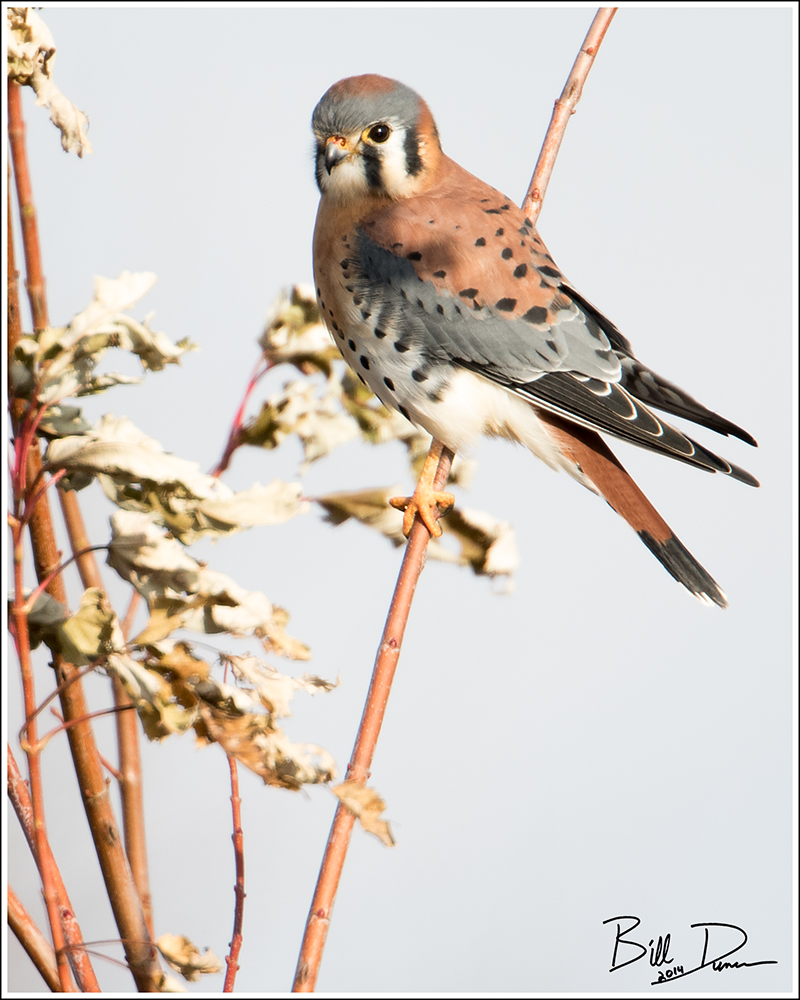
This handsome young Kestrel was quite cooperative in posing for me recently at RMBS.
Hello, and thanks for paying a visit. This final post from our September 2014 trip to the west will focus on a few highlights from a couple of spots in central Kansas, Quivera NWR and Cheyenne Bottoms, or what I like to call the birding Mecca of the central plains. I apologize for the grey shots, but during the far too few hours we spent here, we were given mostly heavy overcast skies.

These two locations and their combined 60,00+ acres are incredibly important for nearly 400 species of birds. The vast wetlands of Cheyenne Bottoms and the salt marsh and sand prairie habitats of Quivera NWR provide habitat for breading birds such as the endangered interior populations of the Least Tern, pictured above. Other nesting birds, which utilize these habitats, include Swainson’s Hawks, Mississippi Kites, Snowy Plover, American Avocet and White-faced Ibis.

With most of my birding experiences restricted to the southern half of the Show-me State, some of what I observed simply shocked me. Observing hundreds of the American Avocet was something I could not have imagined previously.

Also found in the hundreds, White-faced Ibis were as common as gulls!

Referred to by someone as an inverse sunflower, I found the YHBB to be stunning, even if they were in their off-season plumage.
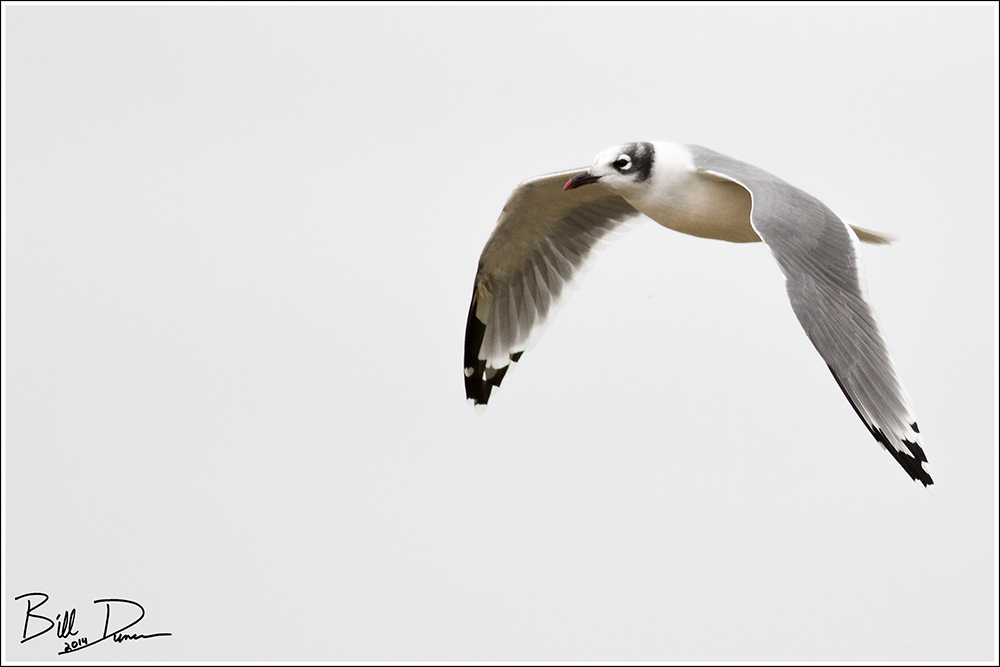
Numerous Franklin’s Gulls were a nice surprise. Oh, how a trip in every season is critical at these locations!

Just to show we were interested in more than just birds… I am sure the coyotes make quite a living on these habitats.

What an unexpected treat. My first non-winter Merlin.

Wilson’s Phaleropes were found in the dozens among the big and little marshes of Quivera NWR.

As cute as any terrier that ever was, a lone Willet patiently posed for me. And finally, a Ring-neck Pheasant hen showed me her backside during the our evening visit to Cheyenne Bottoms. Until next time…

Greetings
I have a goodly number of images backing up to share, so here are a few chosen at random, more or less.
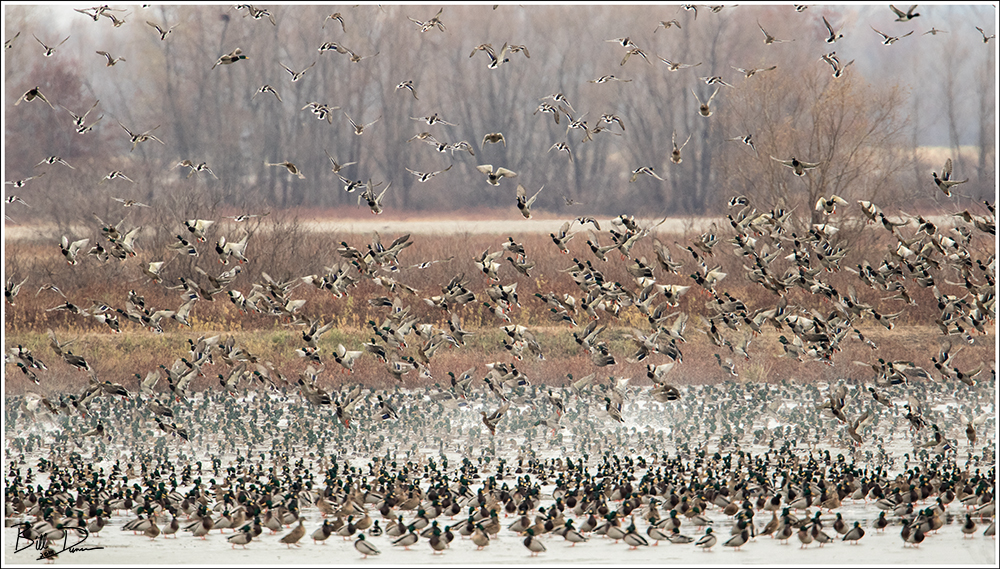
The first image was from a month or so back, when Steve and I traveled up to Clarence Cannon NWR. The highlight was the extraordinary number of Mallards we found. Not too much in the way of diversity of waterfowl during this visit, but the mallards were using the refuge in the peak of the hunting season. We tried our best to keep them in peace, as they were obviously trepidatious to anything with two legs.
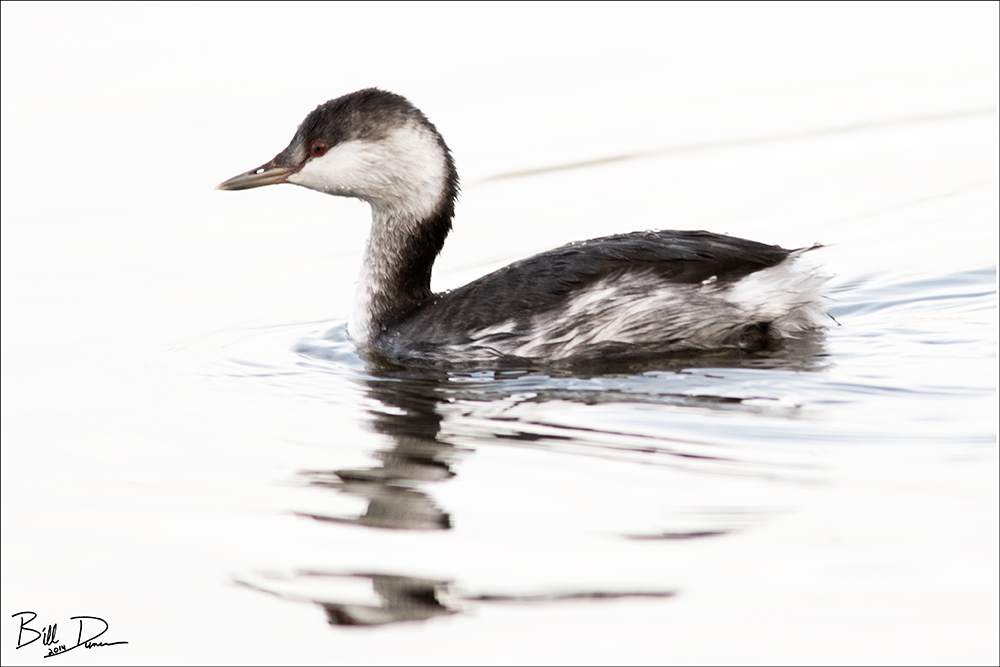
The next pair showcase a couple of birds that exemplify the great winter season we have been having in this region so far. The first is a Horned-Grebe that we were able to get quite nice views of during a very cold morning at Creve Coeur Lake in November.
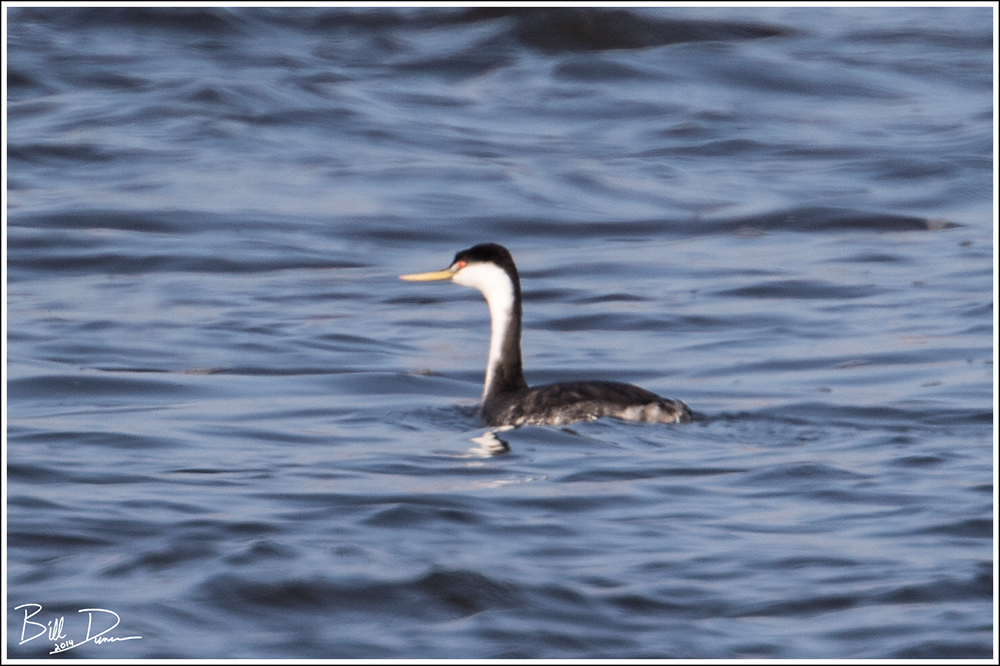
The next photo is of a Western Grebe and is the first photo of this species I was able to acquire. I found this guy near the Clark Bridge near RMBS, where he may still be found.
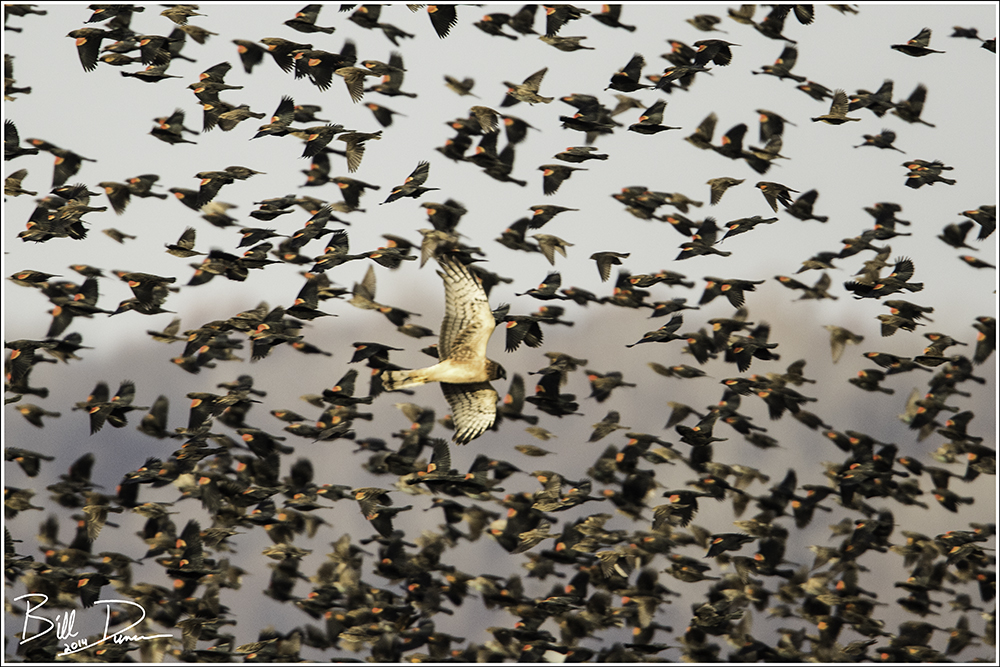
The final pair of images are of a couple Northern Harriers, a species I have been finally able to achieve some success with lately. The first, taken at CBCA, was fortunately timed while the bird was back-dropped by a flock of Blackbirds.
I have provided this last photo, also a Harrier taken at CBCA, in a larger size so you can see the cockle-bur that is stuck on the underside of this poor creature. I know these things can be a nuisance for me in this habitat, and I guess it is for the birds as well.
Green greetings everyone.
I have had quite a productive vacation day (trying to burn some vacation days before the end of the year) so far: exercise, running errands, a bit of Christmas shopping/preparations, a Trader Joe’s run, as well as picking up another round of trashcans worth of leaves. To have the time and gumption to put together another spotty blog post is another plus. So hear we go, five of my favorite wildlife image examples from our Yellowstone trip in September 2014.
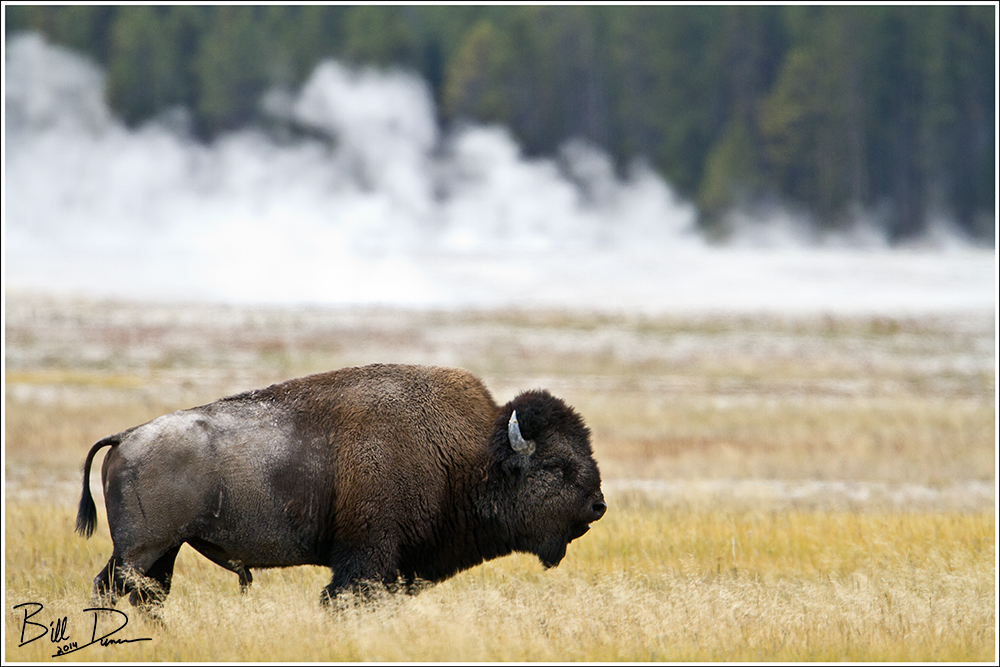
1) Hayden Valley Bison
Sarah and I feel we mostly struck out in the wildlife department during our trip. We did see some great animals of the west, but we struck out a few times on our quest to view and photograph moose, missed being in the right place at the right time for bears, and wouldn’t even allow myself to say the word “wolf” aloud. Watching and photographing wild, free-roaming bison, REAL Bison (notice how I didn’t say Buffalo?), was a great pleasure. The fact that our Lake Yellowstone hotel room was set to a constant broil, forcing us to sleep with the window open in sub-freezing temperatures, afforded an unexpected pleasure during our final night. A mature bison cow decided to spend the night right under our open window, constantly ripping and munching the turf as we dozed. Anyway, this image was taken on the northern end of the Hayden valley.
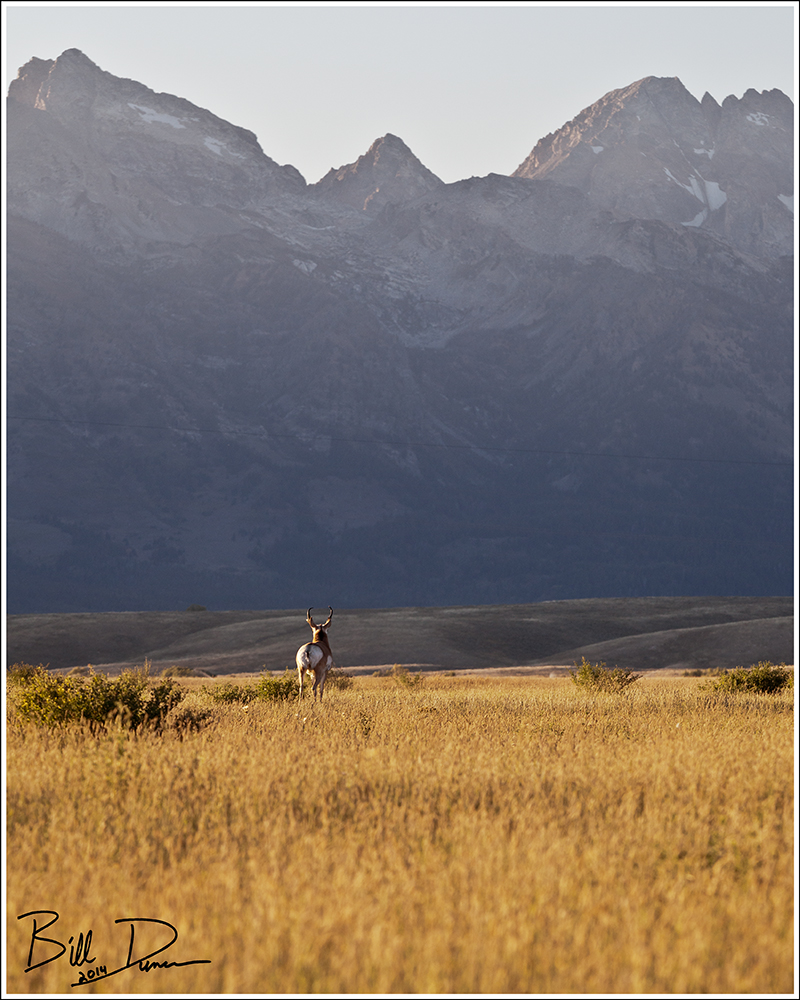
2) There Are No Fences Facin’
I loved watching the pronghorn. There are so many fascinating tidbits about their biology, such as the fact that they are the only animals with horns that shed them, or that they are considered the fastest land animal in the western hemisphere. This one was photographed at the National Elk Refuge, as it seemed to take in the sites.
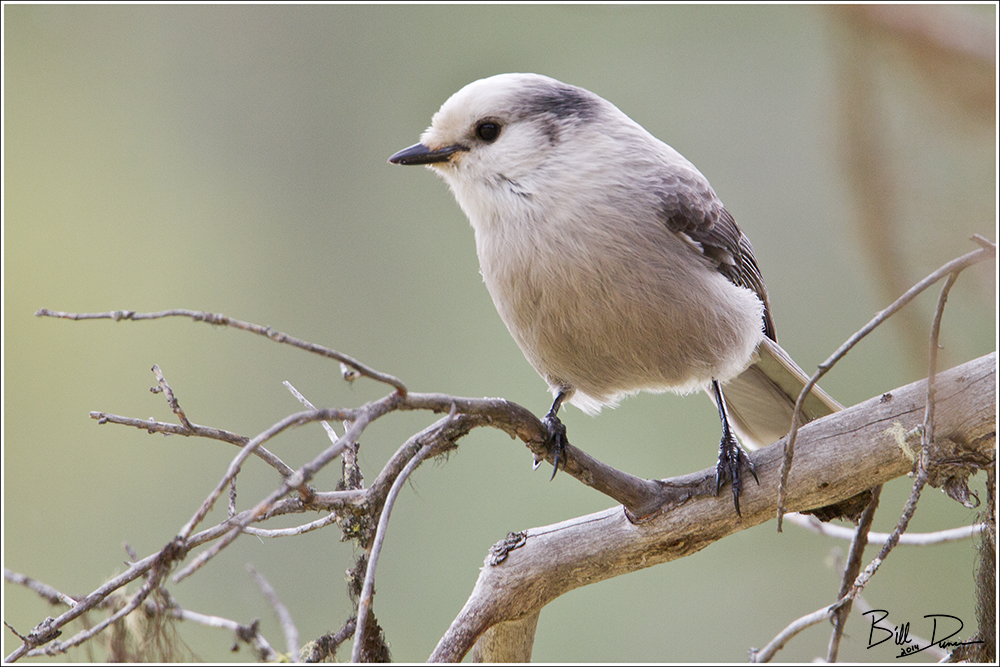
3) The Gray Jay
Even though I added a number of bird species to the life list, it seemed circumstances rarely allowed the opportunity to attempt photographs. This rare exception shows one of a number of Gray Jays that were found foraging along the road in an out of the way stretch of the north-east entrance road, just north of the Lamar Valley.
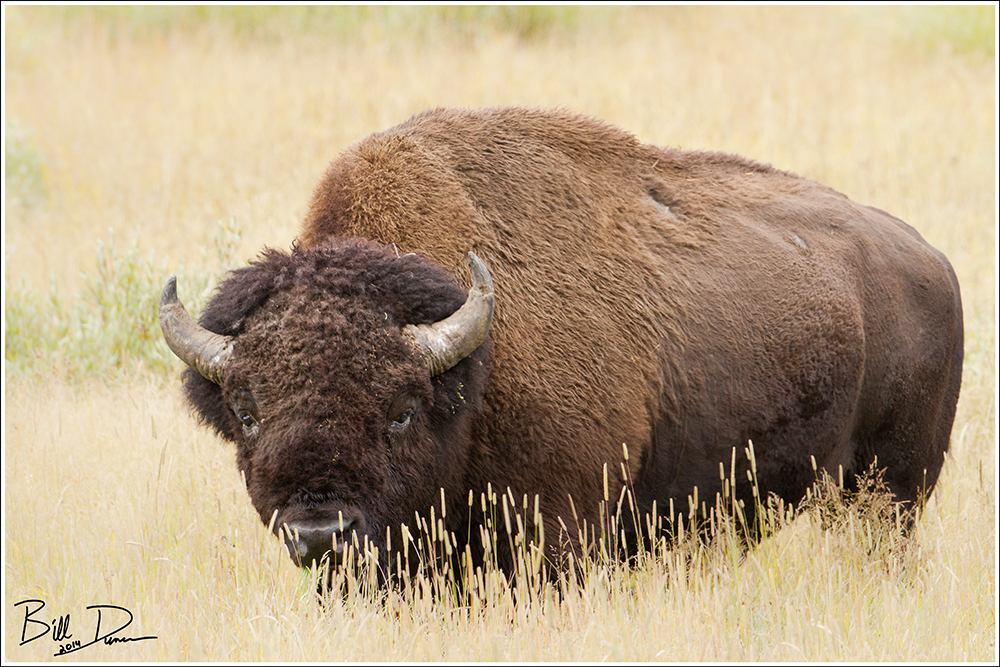
4) Bull!
We found this guy near the road on the same north-east stretch. Such a massive, healthy animal! Looking at him it comes as no surprise how they manage to survive a Yellowstone winter.
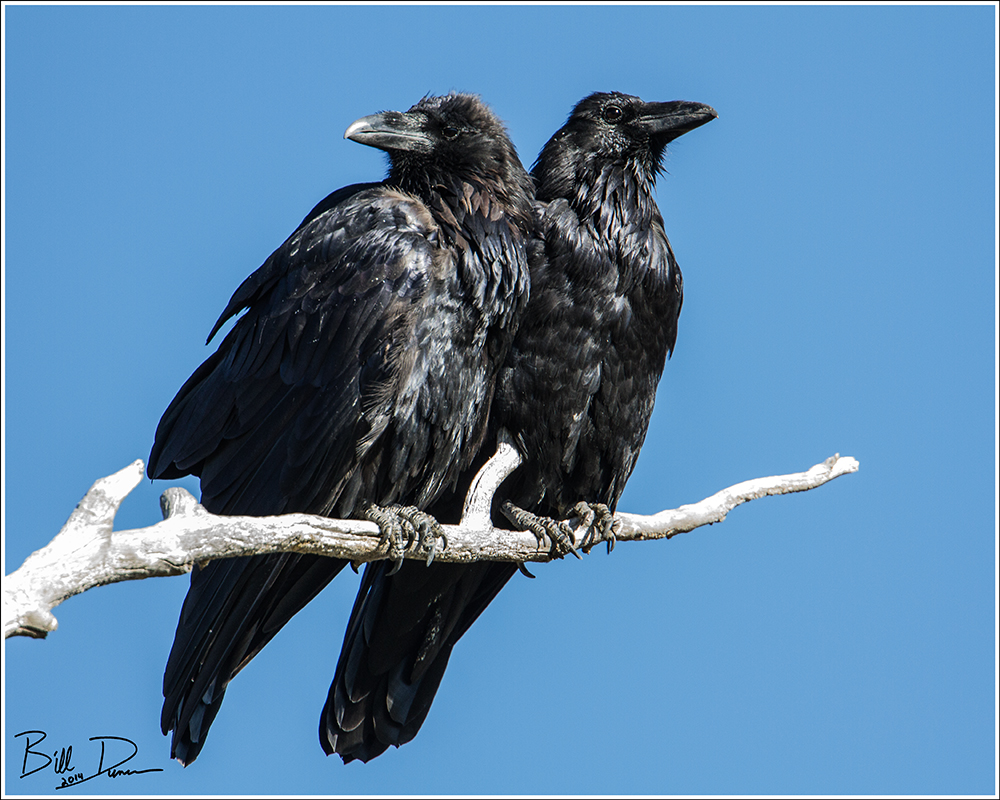
5) Huginn and Muninn
Ravens! This was a target species for me. Soon after finding my first Yellow-headed Blackbird of the trip (a lifer as well), we came upon this pair, who were content to let me photograph as they picked up some morning sun. Photographing black birds is always a challenge. I think I handled the situation as well as possible.
Hi everyone. Here we go with part two. We spent three nights in YNP and two in the Grand Tetons and National Elk Refuge. This was a sufficient amount of time to get a nice overview of these three places. Now, we just need a month at each location to really get to know them… 😉
To keep the post size down, I have picked five landscapes to showcase and discuss a little. I will be posting more on Flickr over time.
1) Dawn’s Progression
We’ll start with this one taken along the Yellowstone River on the final and coldest morning of our stay in Yellowstone. Giving Sarah a morning to sleep in a little at the Yellowstone Lake Hotel, I hit the road before sunrise with the aim of heading down Uncle Tom’s Trail to get that famous view of lower falls. Unfortunately, it soon became apparent that the cold night (~15 F in September!), brought with it very thick fog. Even if I would have made it down the stairs that lead to the falls, I and my camera would have little to view. While walking around the parking lot, wondering where I should head to instead for my last few hours in the park, I saw from the corner of my eye what looked like a small thermal feature. This turned out to be hot air escaping from the side-wall of one of my tires. Destroyed. I knew I had about three hours before checkout, so I replaced the tire with the doughnut-spare and headed directly to the nearest service station inside the park. Along the road, I spotted this scene developing and I had to capture the fight between the fading overcast, fog and the rising sun. I dared not take the time to setup the tripod and consequently there is some lack of depth of field. But, I think things are sharp enough where they need be and it turned out to be a worthy memory of my last day in Yellowstone.

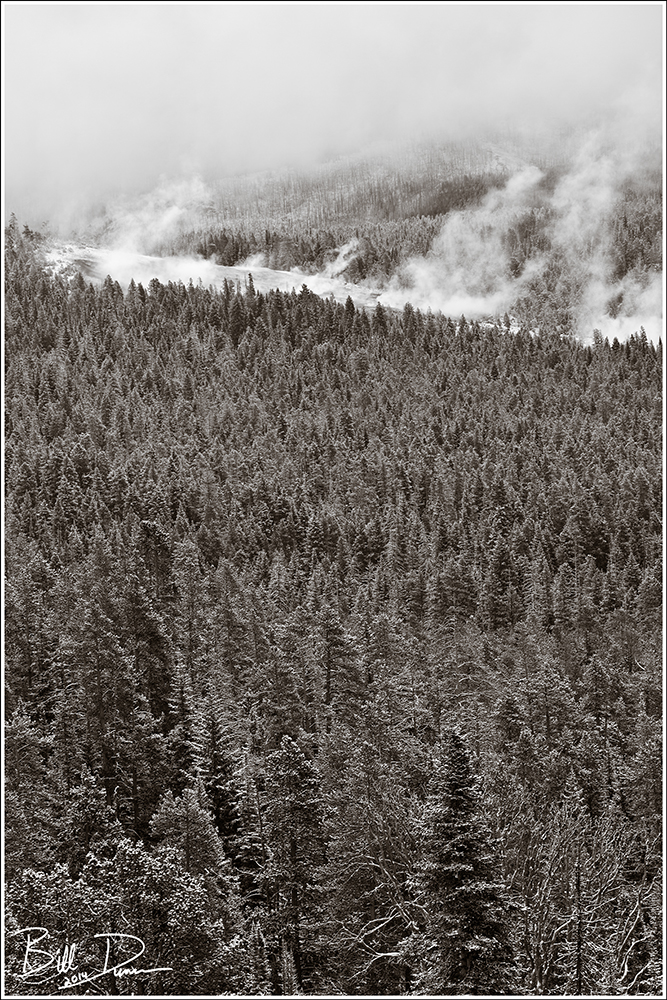
2) Battle of Ice and Fire
Weather in Yellowtone changes quickly and frequently. We experienced almost every possible weather scenario during our few days in September. The next image was taken shortly after a small snowstorm. I enjoyed the texture of the snow-covered conifer forest and the steam coming off the thermal feature in the background, merging with low cloud cover.
3) Moulton’s Ghosts
Described as the most often photographed barn on the planet, the T.A. Moulton Barn lies along “Mormon Row” just east of the Grand Tetons. Of course in the short time we were visiting there were no clouds for that interesting sky, but I made my best attempt at an “original” photograph.

4) Star Trails at Jenny Lake
During our stay at GTNP, we received word of a prediction of excellent views of the Northern Lights as far south as the great plains states. Combined with predictions of clear skies during the same evening, I was definitely excited. We hadn’t done enough scouting to pick the best place for setting up for astrophotography, but I did have Jenny Lake in the GPS. This would have to do. The Northern Lights never did materialize where we were located, but I made a number of shots that were later stacked in the computer for this star trails image.

Before moving on to the final image in this post, I wanted to plug a great sandwich and coffee shop we found in the village of Kelly, not far from both the Tetons and the National Elk Refuge. Kelly on the Grose Ventre makes as good a cup of coffee as anywhere I’ve had. The owner/barista is a pleasure to talk with and he is truly concerned that you enjoy your drinks and food. It would be a crime to miss visiting this spot if you are in the area.
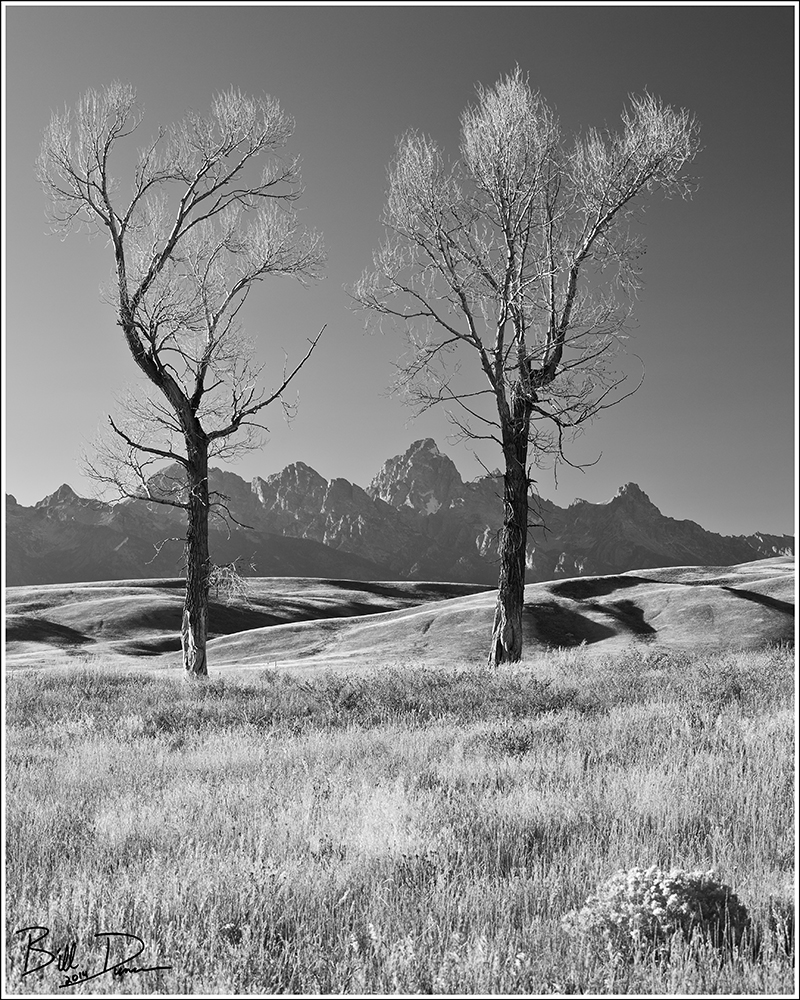
5) Twin Cottonwoods on Tetons
This final photograph was taken near the golden hour inside National Elk Refuge. The sun, about to drop below the Tetons, performed magic by creating nice shadows on the foothills and back-lighting the leafless pair of Cottonwoods. The National Elk Refuge has some wonderful wilderness characteristics, and I would love some more time travelling the roads and trails of this dry western landscape.
 A Thousand Acres of Silphiums