"What a thousand acres of Silphiums looked like when they tickled the bellies of the buffalo is a question never again to be answered, and perhaps not even asked." -Aldo Leopold
On a couple of successive Saturdays in mid-February, I had the pleasure to find myself at an old favorite spot to practice my high-speed action photography on some of the cutest little predators that I can imagine. In a spot more popular with fisher folk, I setup immediately behind the spillway of the Carlyle Lake damn with high hopes of shooting the Bonaparte’s Gulls that winter in this area.
Faster than greased lightingLooking for shadBonnies everywhere!Adjusting for an easier swallow
On my first Saturday visit, these cute little “Bonnies” represented at least 75% of the gull species taking advantage of the stunned gizzard and threadfin shad that come pouring through the spillway. This was great! Although photographing Ring-billed Gulls is always good for practice, they don’t excite me very much at all. What wasn’t great on this first day was the light, which I would describe as something like the sloppy end of a morning’s constitutional. Thank goodness for modern cameras with much improved high ISO performance and autofocus systems!
Photographing Bonnies while hunting like this is a real test of a photographer’s skills and their photographic gear. These guys are faster than a prairie fire with a tailwind. They have to be with the ever present Ring-billed Gulls nearby waiting to steal an easy meal.
A Ring-Billed Gull attempting to take the Bonaparte’s Gull’s fish. Typically the Ring-billed are much too slow once the Bonnie has their catch.
The photos I’ve shared so far all showed adult winter-plumaged Bonaparte’s Gulls. First-year winter birds are east to distinguish from the adults with their black tail bands and “M”-shaped black markings on their wing tops. These first year birds are every bit the skilled fishers that the adults are as you can see below.
On my next visit a week later, the skies were clear and I was now challenged with a pretty strong mid-day light coming into the spillway. I felt that this still should afford more speed and a bit better image quality than I had on my previous visit. Unfortunately, the Bonnies must have moved elsewhere. Most of the gulls present were Ring-billed and I only counted four Bonnies during the hour or so I was there.
Wildlife photographers looking for a fun and fast-paced challenge that has no chance of interfering with their photographic subjects should really consider visiting this location.
The WGNSS Nature Photography Group, led by the man with the great ideas, Casey Galvin, headed to Elephant Rocks State Park in Iron County, MO, for the group’s February field trip. Our primary target for the evening was to utilize the full moon to light our scene after sundown – images often referred to as “moonscapes.” This was my first real attempt at taking moonscapes; usually I am focused on low to no-moon nights in order to focus on stars and deep sky objects.
Reflections on Quarry Lake ISO-50, f/11, 3.2 sec. exposure, 140 mm focal length
We arrived in time to have a walk around prior to sunset and the park’s official closing time. In order to be in the park after 5:00 pm, special permission must be made ahead of time. During our stroll, we made our way to the backside of the quarry lake – somewhere I had not been in many years. This turned out to be a serendipitous experience. There we encountered some very nice golden light and excellent reflections coming from the lake’s surface. Unfortunately, the winds were just strong enough to create some obnoxious ripples on the water, ruining the mirror effect I was going for. No worries, however; I added a CPL and a pretty strong neutral density filter (in order to increase shutter speed) to my mid-telephoto lens and the ripples magically disappeared.
Several abstract-like faces appeared in tight-compositions with the rock wall mirrored off the lake’s surface ISO-100, f/9, 2.5 sec. exposure, 84 mm focal length
I find capturing enough saturation in lighter colors a challenge with digital cameras. I am finally learning how to recover this in post-processing. The pretty light helped showcase the pink granites that the St. Francois Mountains are known for. ISO-50, f/11, 5 sec. exposure, 118 mm focal length
This one was too good to pass up the opportunity to make the face more obvious by orienting it vertically. ISO-100, f/9, 4 sec. exposure, 73 mm focal length
Shortly before sunset, we headed to the other side of the park to hang out with the rocks that give the park its famous identity. The remaining images were all taken after the sun had set and were exposed using only the light of the February full “snow moon.”
Moon rising over Elephant Rocks ISO-640, f/5.6, 10 sec. exposure, 20 mm focal length
Somewhat surprisingly, care had to be taken when shooting with the full moon at our backs as the shadows were very noticeable! ISO-3200, f/4, 6 sec. exposure, 20 mm focal length
Newer cameras shooting at longer exposures can pick up more stars than can be seen by the naked eye. I was happy to see the Pleiades and the Andromeda Galaxy in several of my moonscape images. ISO-320, f/4, 6 sec. exposure, 19 mm focal length
Can you spot the Pleiades star cluster in this moonscape? ISO-640, f/4.5, 8 sec. exposure, 15 mm focal length
This was certainly a special trip spent with friends. Temperatures and sky conditions were near perfect for photographing moonscapes. I was a bit surprised we did not have more WGNSS members take advantage of this special access. I won’t complain about that too much as I think having too many photographers would have made things more challenging with fighting shadows and finding access to good compositions.
Many years ago, I picked up my first gimbal head to use for wildlife photography. Most bird and wildlife photographers, who often use long and heavy lenses in their pursuits, consider the gimbal head as a mainstay for supporting heavy gear packages that enable easy and rapid movement while tracking fast-moving quarry. While I sometimes go hand-held in my photographic chases, I quickly discovered that a gimbal head was a necessity for much of what I was doing.
After discovering the potential for and my desire to get into wildlife videography, it soon became apparent that the camera support I was using for still photography was not going to be the most appropriate for shooting video of quickly moving subjects. Gimbals are perfect for fast-action still photography, but they fall short of providing the smooth panning one needs for capturing high-quality video.
After investigating my options, most signs pointed to a video fluid head, designed specifically for videography. Additionally, it had to be functional with the relative heavy load of camera, super telephoto lens and accessories. At the time I was looking into this, there were very few quality options in video fluid heads that would handle the kind of weight I needed at an affordable price point. Also, I was hesitant to try a dedicated video heard because of the prevailing opinion that they are not well designed for still photography.
At nearly the exact timing of doing my research on this, Gitzo announced they were going to release the GHFG1, a fluid gimbal head! Could this really be true? A fluid gimbal head that delivered what Gitzo promised would be the perfect support for a hybrid still and video wildlife photographer like myself. Additionally, it was going to be launched at a respectable price point (I believe I paid close to $475 for mine in 2017), especially for Gitzo. Gitzo is considered among the best of the best when it comes to camera support systems, and their tripods and heads reflect this in their purchase price. At the time, the cost of the GHFG1 was competitive with the other leading models of regular gimbal heads and was actually lower than several competitor’s models.
The Gitzo GHFG1 Fluid Gimbal Head. The perfect support for the hybrid wildlife photographer?
For the rest of this post, I will provide an overview of what is different about a fluid gimbal head compared to a regular gimbal and give my review on different aspects of the GHFG1.
Gimbal vs. fluid video vs. fluid gimbal heads A gimbal head is a camera support that allows for smooth and stable movement of a camera and lens. It consists of a tripod mount and a gimbal mechanism that allows the camera to move via panning (horizontal rotation) and tilting (vertical rotation). These different axis of rotation combine to allow movement in nearly any direction while maintaining balance and stability. Both pan and tilt movements can be adjusted with knobs that are designed to increase or decrease the amount of friction, or drag, that can be applied to each movement. For still photography, most are not concerned with drag and prefer to have quick action in the tilt and pan movements. For videography, being able to control the amount of drag and the capability to provide smooth movement in both orientations is critical for getting smooth video without jerky stops and starts. While possible for some to get acceptable quality movements in their video by using a typical gimbal head, most photographers would agree that in the majority of video applications, this is not a feasible option.
A typical gimbal uses metal on metal connection points for adjusting drag during panning and tilting movements. Even among the top quality gimbal supports, the amount of drag across the entire range of movement in both panning and tilting directions will vary, creating uneven movement speeds as you track the subject. Additionally, to break the drag when force is first applied to your movement, there will be a tendency for the mount to stick, creating unwanted rapid movement before you are able to get the rig under control for the smooth motion desired.
A fluid video head solves the problems I mentioned above with the use of “fluid cartridges” to control drag. Instead of metal on metal friction, a fluid cartridge allows the photographer to control drag by adjusting pressures applied to a hydraulic fluid, like grease. This fluid creates the desired amount of precise drag force, slowing the camera’s movements, thus resulting in smooth, controlled motion that is free of jitters, vibrations, and varying speed.
There are other fundamental differences in how gimbal heads and fluid video heads are designed and function, and there are pros and cons to each type. However, it is not my goal in this post to fully define a video head, other than describe the benefits in function when referring specifically to videography.
It is probably obvious that a fluid gimbal head is designed as a typical gimbal, but with the exception of replacing the metal on metal friction adjustments with fluid cartridges. I had very high hopes that the GHFG1 from Gitzo would be the perfect combination I was looking for – something that would be perfect for tracking both for still wildlife photography as well as giving exceptional panning and tilting for videography. Would this head meet my demands, or would I be forced to find another solution? Read on to find out.
The GitzoGHFG1 As I mentioned above, I have been using the GHFG1 as my primary support for wildlife photography since 2017, so I have had plenty of experience using this unit. Here I will provide my opinion of the GHFG1 in the areas of build quality, materials, design, hands-on use in still wildlife photography and my experience with using it for videography, and finally price and value.
Build quality, materials, and design At first glance, you can immediately recognize the GHFG1 as a Gitzo product, due to the mottled grey paint job flecked with silver and black that perfectly matches the fit and finish of their tripods and other heads. It is a bit more bulky looking than comparable models, but the use of aluminum and magnesium keeps the weight down. At about three pounds, it weighs about the same as competitor products in the same payload capacity and price points.
I consider the overall quality of materials and design good but not great. The cradle clamp that is used to mount the lens foot to the head is kind of funky, but appears to be replaceable if desired. The cradle-clamp is Arca-Swiss compatible, but not exactly standard. It opens much wider than most clamps I have encountered on other gimbal heads and I suppose this allows for a variety of widths of plates to be incorporated, including the giant plate that comes in the box with the GHFG1. My main complaint of the GHFG1’s cradle/clamp is the cheaper feel when compared to similar knob-controlled clamps from competitors like RRS, Kirk and Wimberly. I’ve never had a problem with it, but it does not give me the same amount of confidence when I have it tightened down as do the heavy duty options from the above mentioned competitors. I do really like how the cradle can be adjusted up and down via the use of a small locking lever. Most gimbal heads allow for the cradle to be adjusted in this direction, but many require the use of an Allen/hex key to do so.
A close up look at the cradle clamp of the Gitzo GHFG1. Notice the lever lock that allows for quick and easy adjustment of the cradle in the vertical direction. Just below this lever is the port to insert the panning handle.
I found the panning handle, which can be attached on a port located on one side of the cradle, to be pretty much useless because of how short it is. With a 500mm or 600mm prime lens attached, it barely sticks out past the back of my camera. I solved this problem by purchasing a handle that can be clamped to my camera’s L-bracket. Having the panning handle attached on the camera probably does not work as well as having it attached to the cradle assembly, near the center of gravity, but it is something useable. Another problem that I faced with the panning handle is that because the handle is so close to the cradle clamp, there are some instances, like when using a pro camera body or a body with a battery grip is connected to a shorter lens. In this type of setup the camera will interfere with installing the panning handle. With the gimbal design, I doubt there are better placement options the designers could have gone with that allows for the handle to be near the center of gravity, so I do not fault the designers too heavily for this.
The panning handle that comes with the Gitzo GHFG1 is too short for use with longer rig setups.When using the Gitzo GHFG1 with a larger camera body in combination with a shorter lens, there is no way to install the panning handle.
My solution to the panning handle issue – A handle from Manfrotto that can be attached to an Arca-Swiss plate like that of the L-bracket on my Canon R5.
The tilt knob is quite large and covered in ribbed rubber, making it easy to use even when wearing heavy gloves. I did have a quality control issue with this knob. The cradle arm developed significant side-to-side play shortly after I began using it. After I figured out how to remove the Gitzo-branded plate on the outside of the knob, I was able to tighten the anchoring screw and have had no problems with it since.
The panning knob is smaller, but large enough to use in winter gloves and is covered in the same ribbed rubber. The action of this knob is disappointing, however. There is an obvious wobble as it is adjusted, and there is no real negative-resistance stop. All resistance is gone after about a half of turn and then it is able to be turned for quite a few rotations afterwards, providing zero change in the panning resistance.
The knob size and placement for the tilt (top) and pan (bottom) movements are perfect.
Many gimbal head manufacturers are now installing bubble levels on the plate immediately above the tripod mount. Unfortunately, Gitzo did not include this. I find this to be a rather glaring omission in a product that is partially designed for videography, where leveling your base is critical. This would have been an easy value-added addition.
Use in still photography I believe there is a good deal of copy to copy variation in the GHFG1, or, Gitzo has significantly changed something in the design of the GHFG1over time. I have read a few reviews where the writers do not recommend this unit for still photography due to the minimal amount of resistance in the pan and/or tilt being too high, thus not providing enough speed to track fast-moving subjects. With my copy, this is not the case at all. I actually prefer a bit of resistance in panning for still photography and often wish for a slower and smoother action while tracking subjects. When both pan and tilt knobs are fully loosened, there is no resistance at all when using the GHFG1. My copy seems to perform just as well for still photography as the other gimbals I have used. I would give the GHFG1 top marks for use as a traditional high-end gimbal head for use in still photography for the fastest moving subjects.
Use in videography For videography, I find using the GHFG1 to be disappointing. This is due to the lack of precision in controlling the resistance in the panning direction and the uselessly short control handle provided. I’ll start first with the tilting resistance and control knob. I found the tilt mechanism on my copy to be very smooth and the resistance control to be precise. I was easily able to make the resistance adjustments to my liking and was quite pleased at the ability to make smooth movements in the vertical direction.
As is probably obvious, when tracking wildlife, the photographer is going to mostly rely on panning movement. In my copy, the panning knob has little-to-no precision in controlling resistance. There may be a half-turn or less in controlling the resistance from completely locked down to no resistance at all. When I try to modify resistance with the panning knob, I find that the motion is quite variable, not smooth, and no better than a typical gimbal head. Additionally, on the rare occasion that I do find a sweet spot in resistance, this will usually fall off in short order, changing to very low or even no resistance within seconds of beginning movement.
In combined panning and tilting movements, the lack of usable resistance in the pan combined with the desired resistance in tilt combines to form an unpleasant user experience.
Price and value Gitzo tripods are expensive; however, I find them to be competitively priced when compared to other leading competitors like Really Right Stuff. I do find what they charge for most of their accessory products, like heads, bags, replacement feet, etc., to be completely ridiculous. This is why I was surprised at the price point they chose for the GHFG1. It is now much more expensive than when I purchased it – B&H now lists it for $639. I really expected a unit like this from Gitzo to be much more expensive than it was. Perhaps they should have considered a roughly 50% price increase, if this would have given them the ability to make a true all-in-one fluid gimbal head that they claim the GHFG1 to be.
Conclusion As I said, the performance of the GHFG1 in still photography use with the heaviest of rigs is comparable to any leading gimbal on the market. However, in just the past few years, the number of great gimbal head options has increased dramatically. Without doing a lot of research, I would argue that there are plenty of other gimbal heads currently on the market that are just as good or likely better than the GHFG1 and at better price points.
With my copy at least, the performance of the GHFG1 for wildlife videography does not rise to the claims that Gitzo has made. The importance of the smoothness of pans in videography is somewhat subjective. I know of several photographers who are completely happy with the results they get from handholding their video footage. But most serious videographers would claim that having smooth camera movements in video footage is one of the most important aspects in their applications. In recent years I have had several video projects that I have yet to work on or share because I am not happy with the panning movements I made. Sure, there are definitely aspects of technique that come into play. But even with practice and refinement, I do not see myself being able to create the kind of footage I desire using the GHFG1 for video applications that require any movement of the camera.
It should be apparent that I do not recommend the Gitzo GHFG1 fluid gimbal head as the solution for hybrid wildlife photographers who want exceptional results from their support during both still and video applications. Is there such a head that would make the top wildlife still and videographers happy? Probably not. I think there will always be some tradeoff in one direction or the other depending on whether one is using a traditional gimbal or a fluid video head. However, as a hybrid wildlife photographer who desires to get the best possible results for both types of photography in a single support system, I feel there must be better options.
Next steps What is my plan to get the most appropriate support head for the type of hybrid still and videography work I am interested in? Something I probably should have done from the start. I have recently acquired a leveling base and fluid video head that, on paper at least, should serve my needs. I really don’t like the idea of hauling two relatively heavy heads into the field and swapping them on the fly for the two different applications. My hope is that this new setup will work well enough for both still and video. Several top wildlife photographers are using fluid video heads and seem satisfied with their performance for high speed still photography. Hopefully this will be the case for me as well. If this does turn out to be the hybrid solution I am hoping for, I will be happy to sell the GHFG1. When I have had ample opportunity to get the hang of my new support system, I will be sure to review this setup here in the future.
Here are a few handsome Orthopterans from the 2023 season.
Syrbula admirabilis, is known by the common name – admirable grasshopper. Photographed at Horn Prairie Grove LWR.
Orchelimum nigripes, the black-legged meadow katydid prefers wetland habitats. This individual was found at Marais Temps Clair C.A. in St. Charles County, MO.
This American bird grasshopper (Schistocerca americana) was also photographed at Marais Temps Clair C.A. in St. Charles County, MO.
These are not the photos I envisioned getting when going after the falcate orangetip (Anthocharis midea). Casey and I must have spent more than a couple of hours running around Hugh’s Mountain Natural Area, waiting for one of these gorgeous males to land at a flower to nectar. Unfortunately, this rarely happened, and when they did finally set they were up again within seconds.
A female falcate orangetip perched with abdomen raised, presumably to better release pheromones that announce her readiness to mate.
These guys were definitely not interested in feeding while we were there, instead they incessantly roamed the glades and woodland edges hunting for females. This is where I finally got a little bit of luck by finding a stationary female. She had drawn the attention of several males who were fighting for a chance to breed.
Members of the Pieridae family, the falcate orangetip’s host are members of the mustard family (Brassicaceae). The caterpillars feed mostly at night on the flower tissues of these plants.
I was happy to final start working on getting some butterfly and skipper photos in 2023. I joined the local North American Butterfly Association and really enjoyed getting out on a few of their counts. I’m still learning the diurnal moths (butterflies) and have a ways to go before I can call myself competent. Here are a few photos from the Nymphalidae family to share from 2023.
Gemmed Satyr (Cyllopsis gemma)
This gemmed satyr was an unexpected find while visiting St. Francois State Park in September. Not long ago this species was restricted to extreme southern Missouri. They now seem to be continuing a northern expansion in their range. Quite a few butterflies have eyespots that are found on different locations of their wings, presumably to make them look like much larger organisms as well as to persuade would-be predators to attack something beside the vulnerable true heads. I have recently read that some have hypothesized the spot on this species wings developed to mimic certain jumping spiders. In my photo I think this looks to be highly plausible – with the two primary eyes centered around a grey backdrop that looks very much like a jumping spider to me.
Viceroy (Limenitis archippus)
Once believed to be a pure example of Batesian mimicry in a complex with the monarch and queen butterflies, some evidence now suggests that the viceroy may be distasteful to predators, providing evidence that this is instead should be considered a case of Müllerian mimicry. This is turning out to be quite the complex case to understand, with some reports suggesting that the host plant that a particular individual viceroy was raised on determines whether or not it is distasteful. Other work has suggested that gene complexes that may differ between populations of viceroys determines distastefulness. More work is needed to determine what exactly is going on here. This photo was taken on a NABA walk ate Marais Temps Clair C.A. in September.
Red Admiral (Vanessa atalanta)
Photographed at Marais Temps Clair C.A. in early October, the red admiral is a lover of nettles, feeding solely on members of the Urticaceae family.
Painted Lady (Vanessa cardui)
Famous for its migration, the painted lady hosts on numerous species of Asteraceae.
American Lady (Vanessa virginiensis)
Being strictly found in the new-world, the American lady can be distinguished from the painted lady by the number of spots on the ventral sides of the hindwings. As seen in the photo above, the American lady has two large eyespots whereas its cousin, the painted lady, has four. Photographed at Horn’s Prairie Grove LWR in July.
The WGNSS Nature Photography Group headed to the St. Louis Zoo during a frigid winter spell this past weekend. Light could have been better and we struck out on a few things we were targeting, but I am pleased with a few images I was able to make. Everyone was well bundled for the conditions and I think had a nice time.
The takin, one of my favorite animals, is a large ungulate classified as vulnerable to extinction. It can be found in the eastern Himalayas.
The closest living relative of the giant panda and equipped with false thumbs used for grasping bamboo stalks, the red panda can also be found in the eastern Himalayas. Its conservation status is currently endangered.
Listed as vulnerable to extinction, the Red-naped crane can be found in eastern Asian countries of Mongolia, China, Russia, Korea among others.
With a current population in the wild of around 100 individuals, the Amur leopard is critically endangered.
Classified by the IUCN as endangered, the Swan Goose can also be found in feral and domesticated populations outside its original north and east Asian distributions.
The St. Louis Zoo also contains a number of species native to Missouri, most of which are rescued animals that have poor chances of survival in the wild. Some, like the eastern grey squirrel and eastern cottontail, along with some waterfowl and wading birds are wild species that stick to the zoo grounds looking for easy meals.
Bald Eagle
Trumpeter Swan cygnet Trumpeter Swan adultAmerican White PelicanAmerican White Pelicaneastern cottontaileastern grey squirrel
Despite being a pretty disappointing season for winter birds so far, due to not being much of a winter season, one saving grace has been the unprecedented appearance of a number of Short-eared Owls that have set up shop in the grasslands at Riverlands Migratory Bird Sanctuary near the confluence of the Mississippi and Missouri Rivers. It seems as though every birder and photographer in the bi-state area has heard about this and show up regularly to view the spectacle.
Finding the opportunity to be there in good light with the birds cooperative has been a challenge for me over the past month or so they have been here. But, I did have some luck under less than optimal skies. Despite poor lighting and the birds being a little further away than I would like, I was able to manage a few images I can live with. I’m hoping to have a few more opportunities before the season is over.
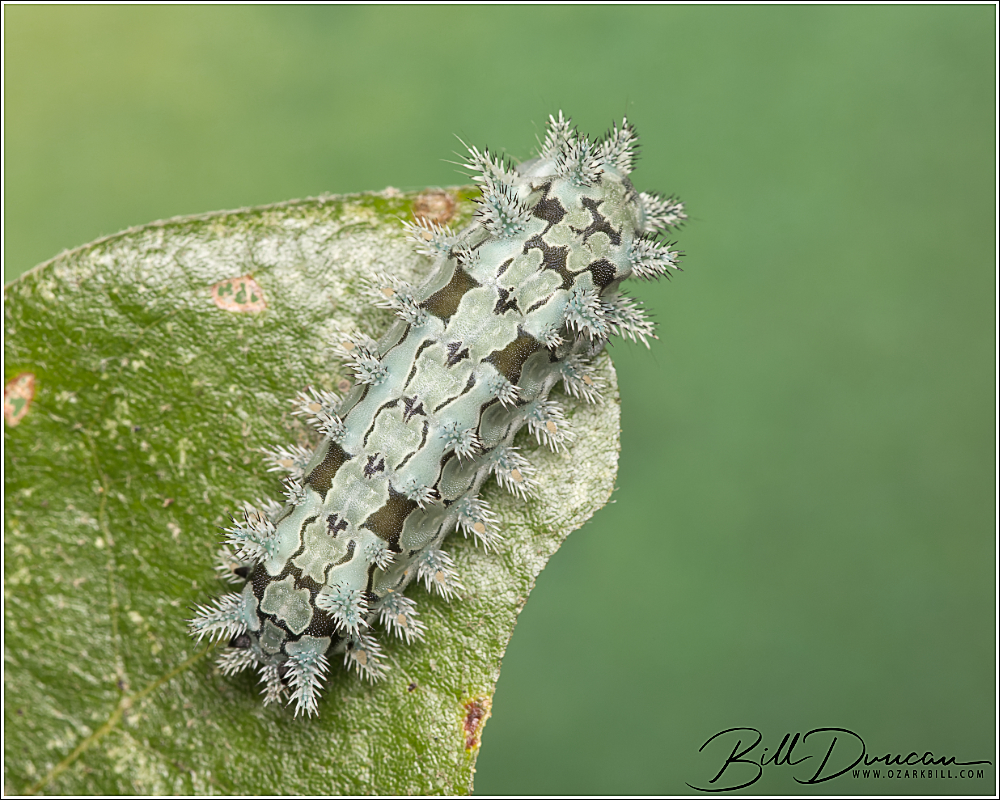
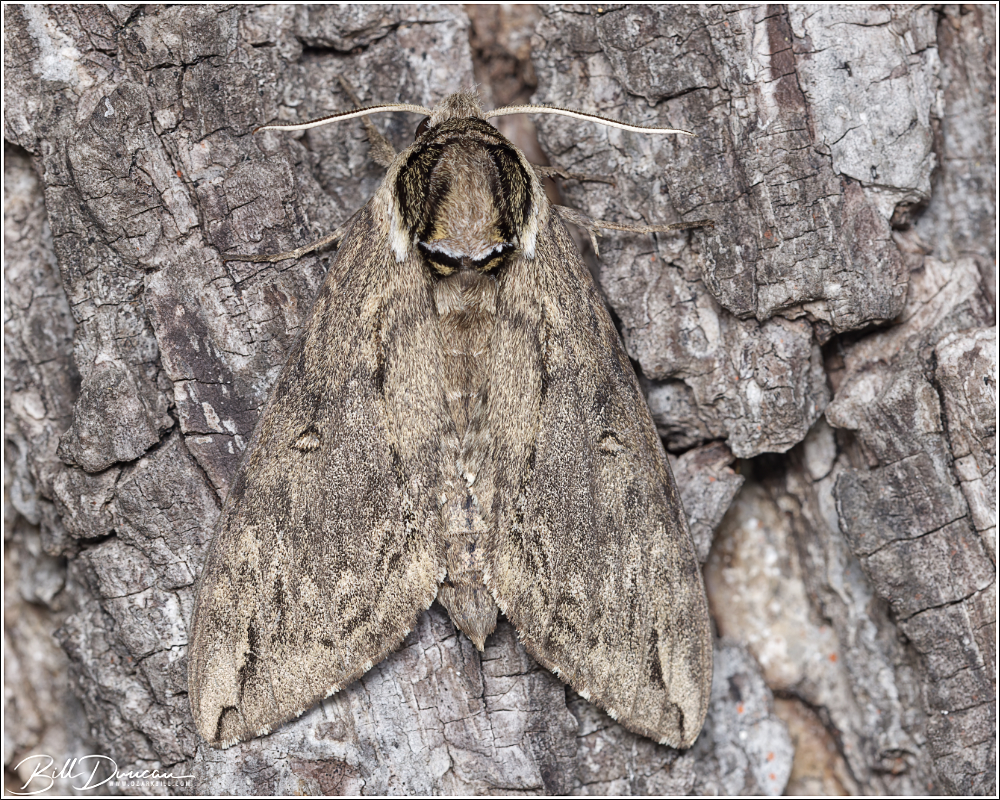
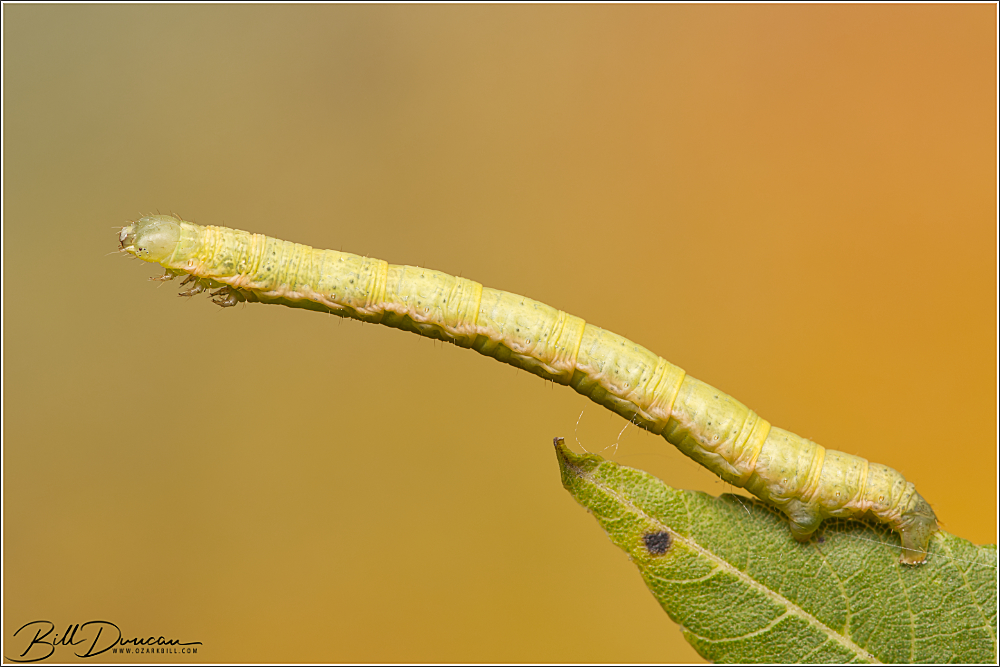
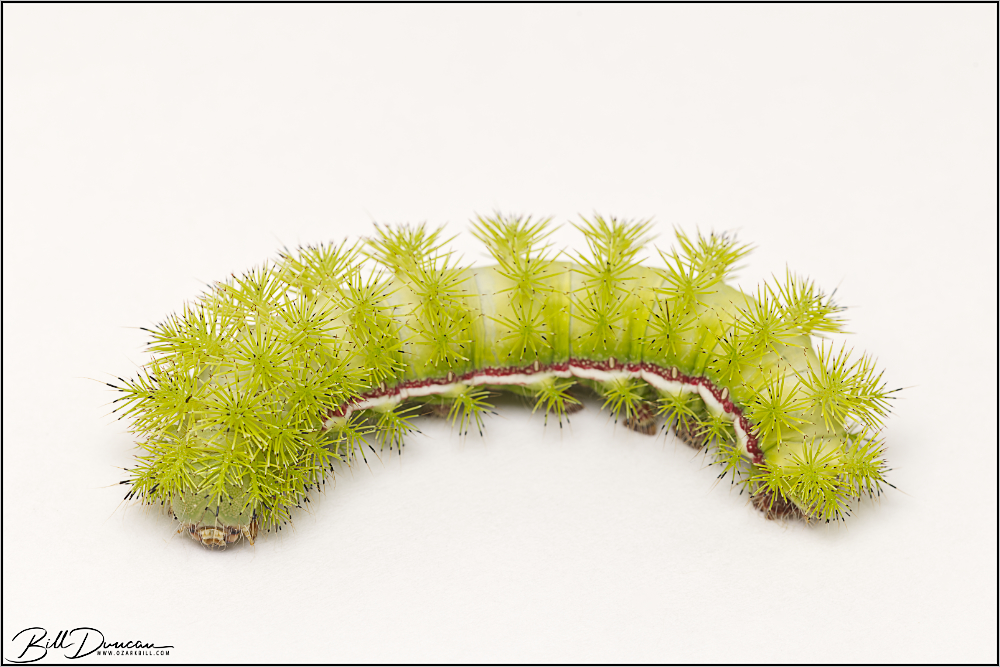
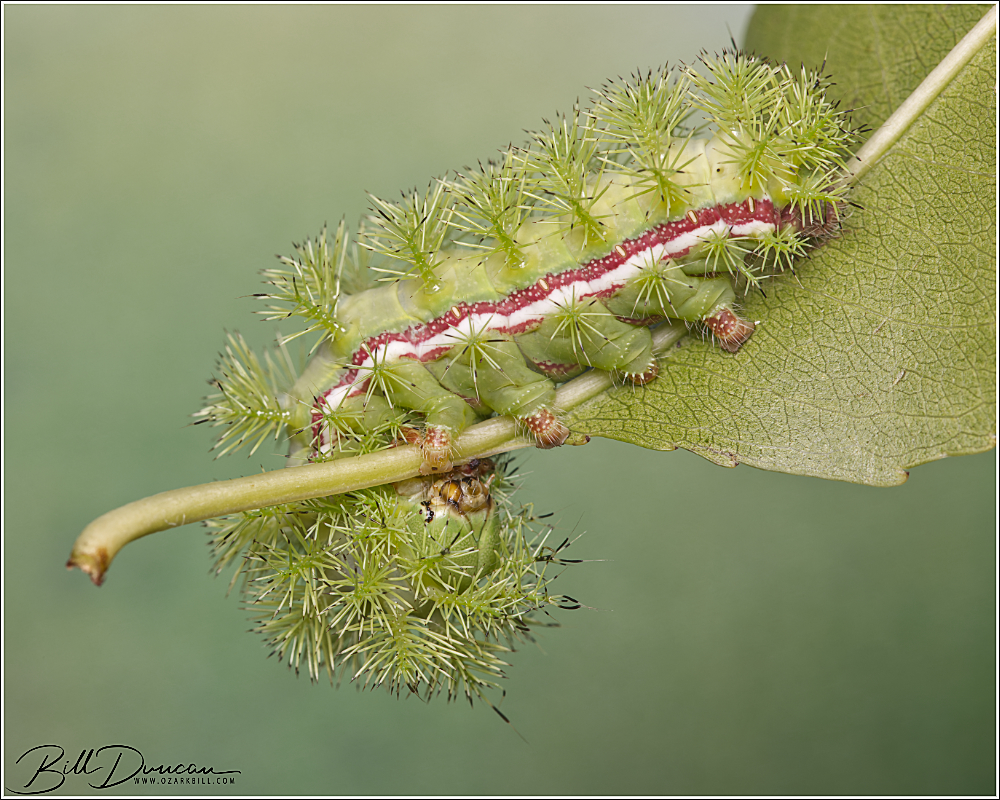
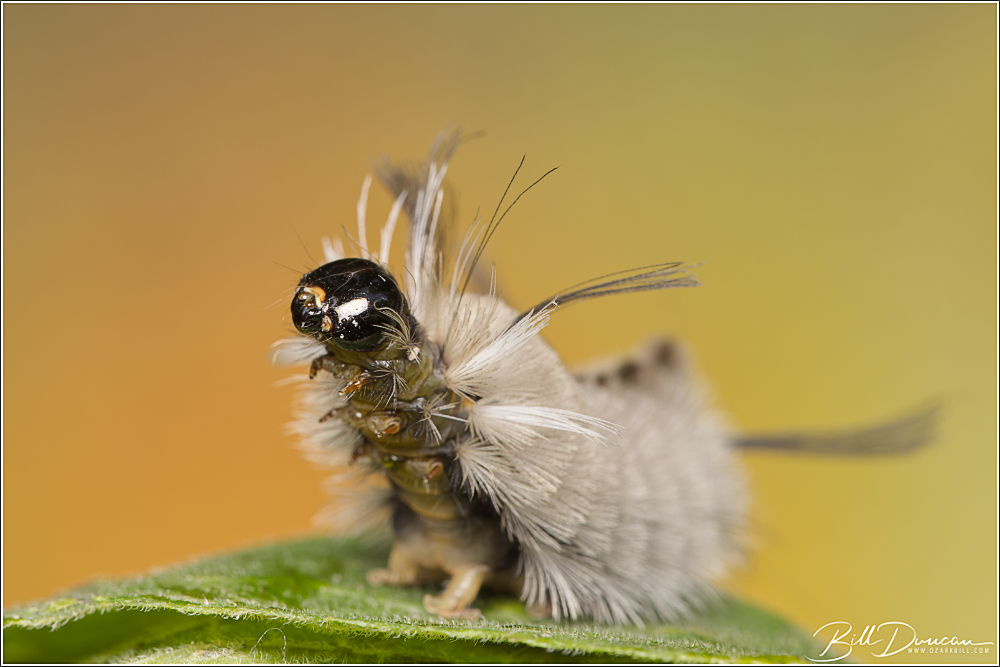
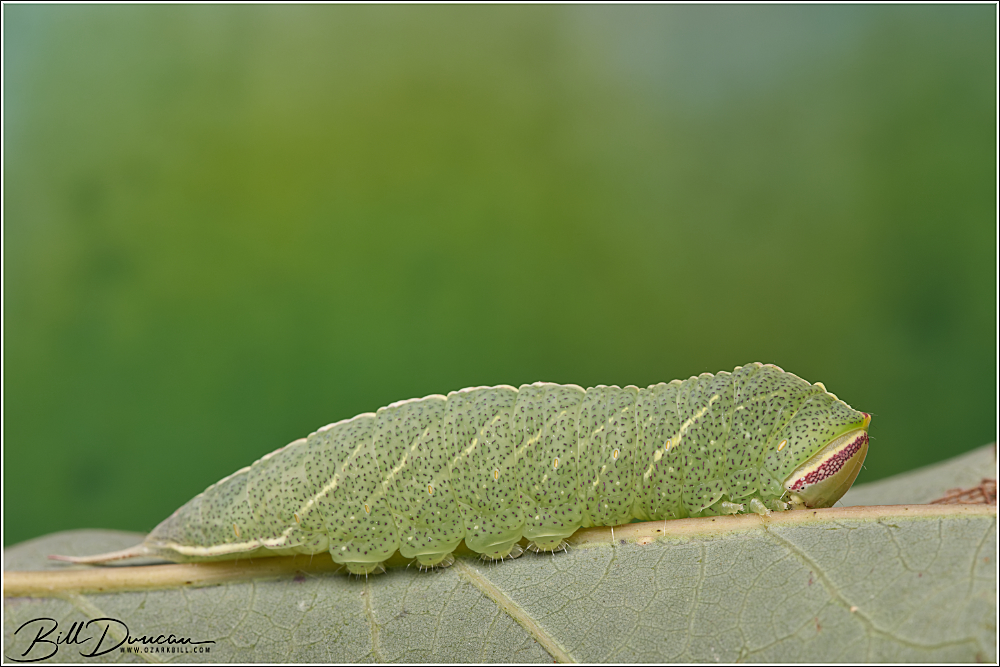
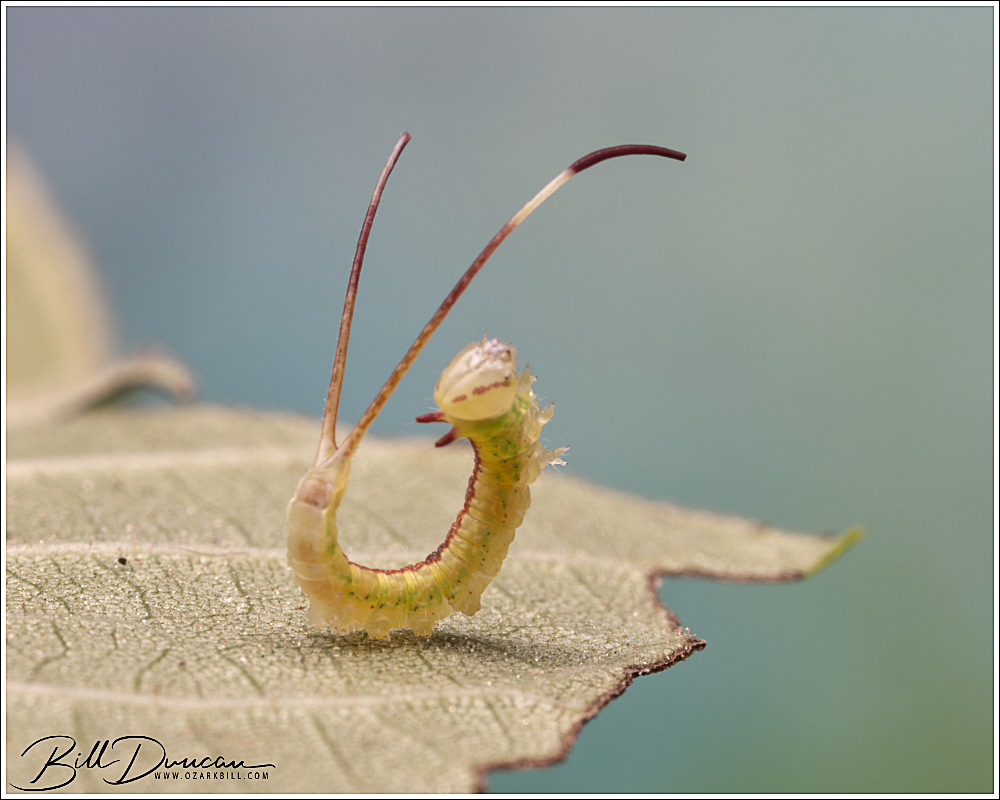
Today I’m finishing up with the remaining cats of late summer and autumn hunting trips of 2023 from an assortment of families.
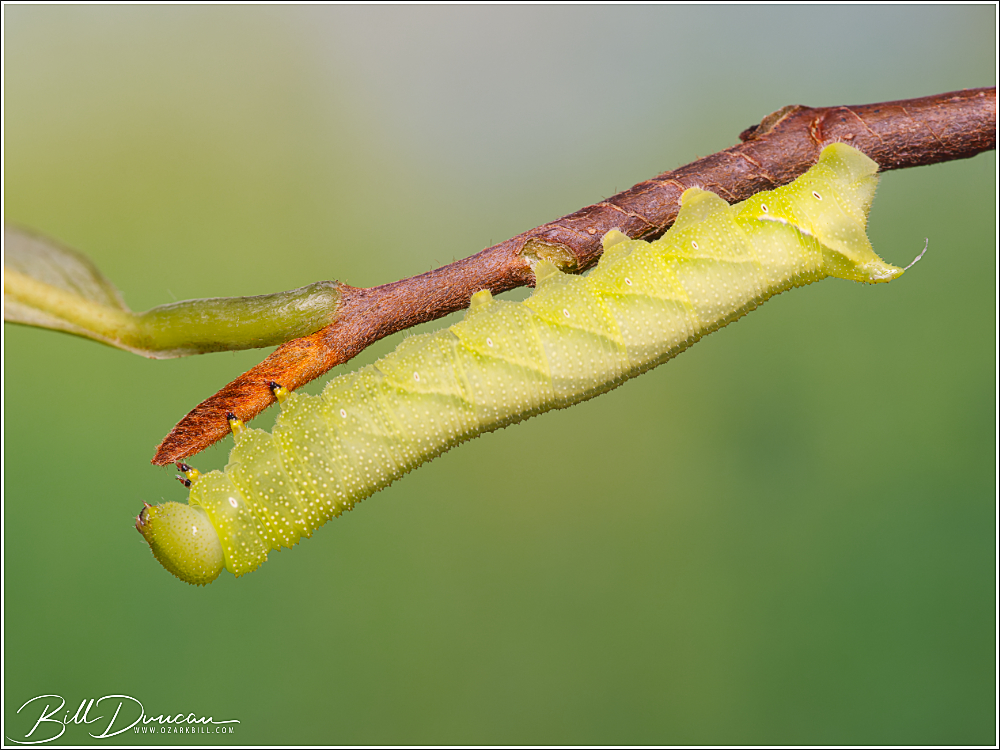
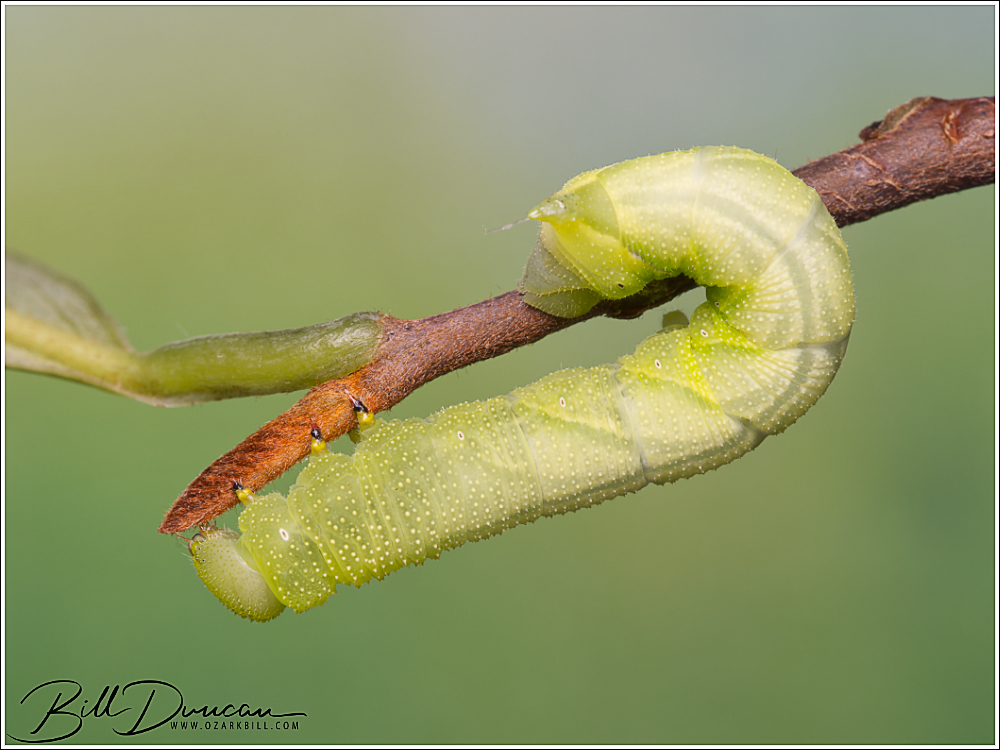
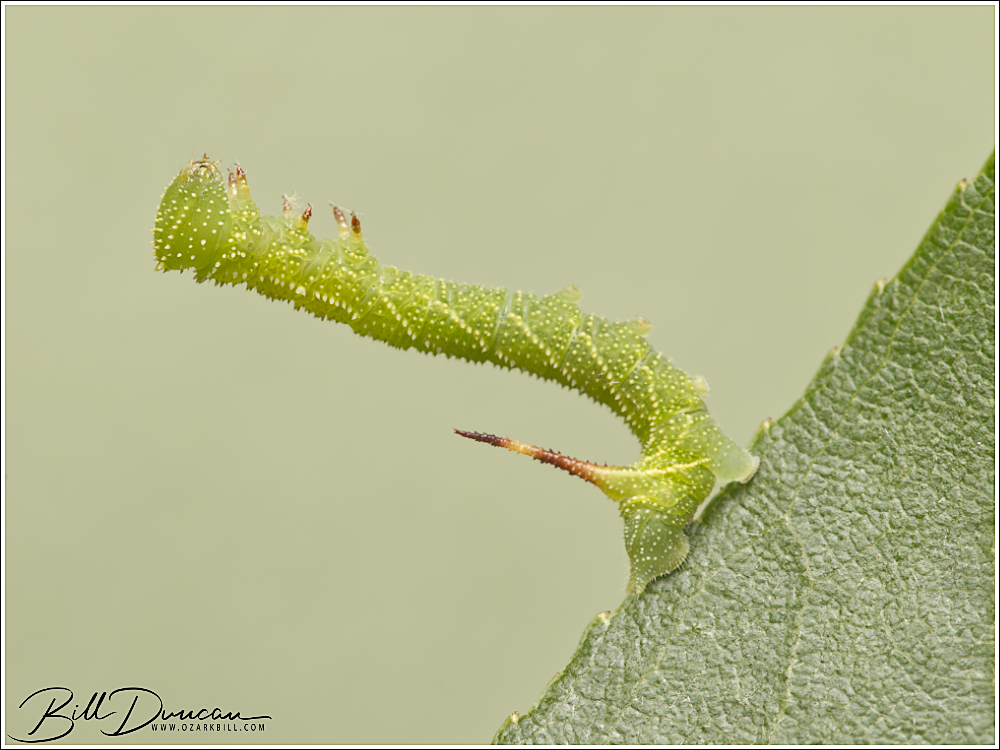
Walnut Sphinx Moth (Amorpha juglandis) Sphingidae, Hodges#7287 These are among my favorites. Not only are they quite handsome when viewed up close, but they are one of the few caterpillars with a voice! Be prepared if you handle or otherwise disturb them; they will let out a surprising squeak when they feel threatened.
Walnut Sphinx Moth (Amorpha juglandis)
Curve-lined Angle (Diagrammia continuata) Geometridae, Hodges#6362 Casey and I observed that the juniper hairstreaks (Callophrys gryneus) had a bumper year this year while hiking in glades early in the season. We thought this might be the year to finally find the fantastic larvae of this species. We spent several hours beat-sheeting the red cedars in these areas in late summer and early fall. No luck in finding that species, but we did find another inconspicuous cat that uses this plant as its host. You can probably see that, like the hairstreak, the caterpillars of this moth species would be next to impossible to find without the use of a beat-sheet.
Curve-lined Angle (Diagrammia continuata)
Undescribed Flower Moth (Schinia nr-jaguarina) Noctuidae, Hodges#11132.01 I shared photos of this yet to be described species before. These are photos of the cats we found at a new location, Horn’s Prairie Grove LWR, in central Illinois.
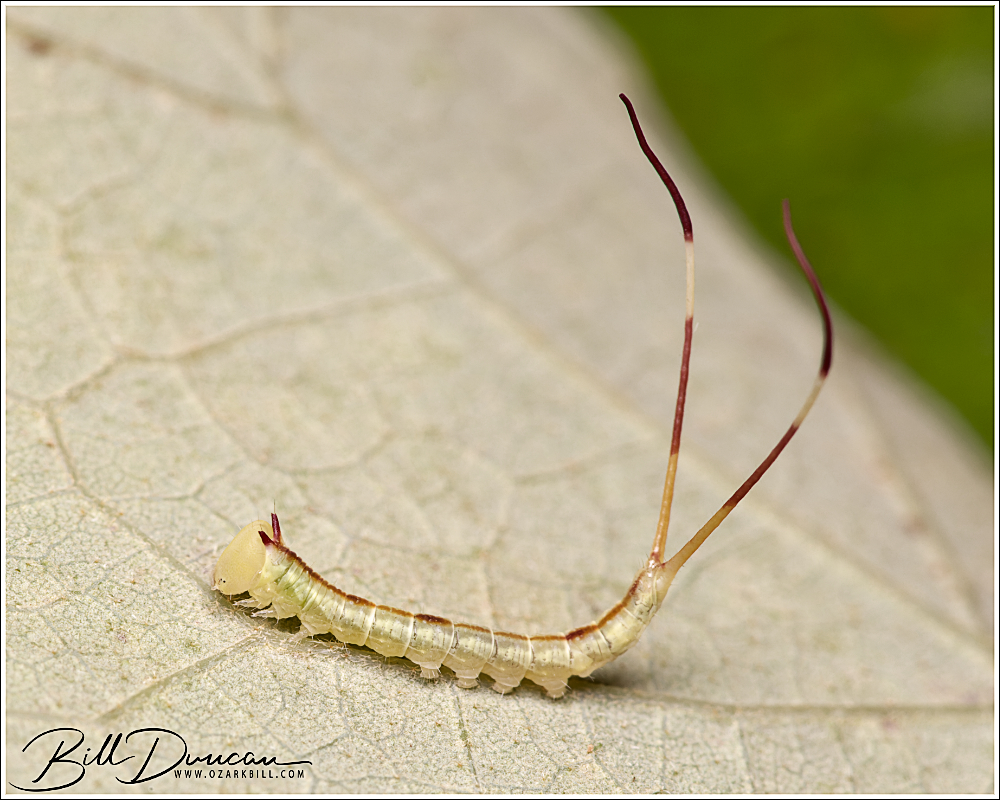
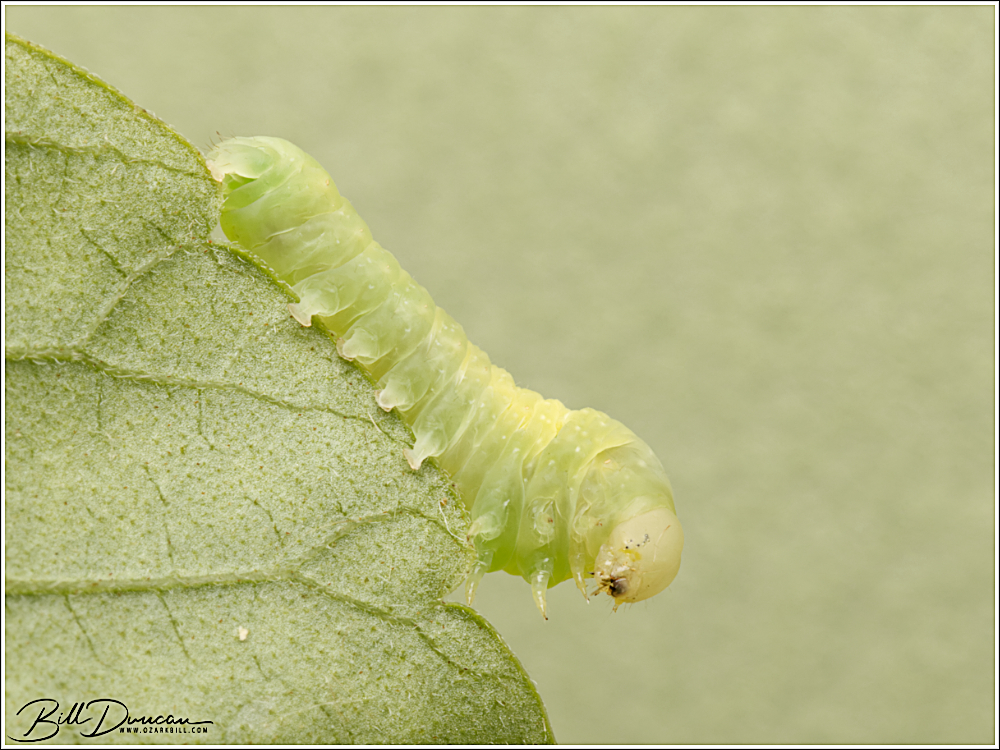
Red-lined Panopoda(Panopoda rufimargo)Erebidae, Hodges#8587 An interesting cat we found while beet-sheeting a hickory thicket on a friend’s property in St. Francois County.
Red-lined Panopoda (Panopoda rufimargo)
Pipevine Swallowtail (Battus philenor) Papilionoidea Conspicuous and distasteful due to the absorbed secondary chemicals of their pipevine host, it seems like we always find these guys in low-light situations, making the use of supplemental light a necessity.
Pipevine Swallowtail (Battus philenor)
Giant Swallowtail (Papilio cresphontes)Papilionoidea My favorite swallowtail species. It was a real treat finding this final instar cat back in September.