"What a thousand acres of Silphiums looked like when they tickled the bellies of the buffalo is a question never again to be answered, and perhaps not even asked." -Aldo Leopold
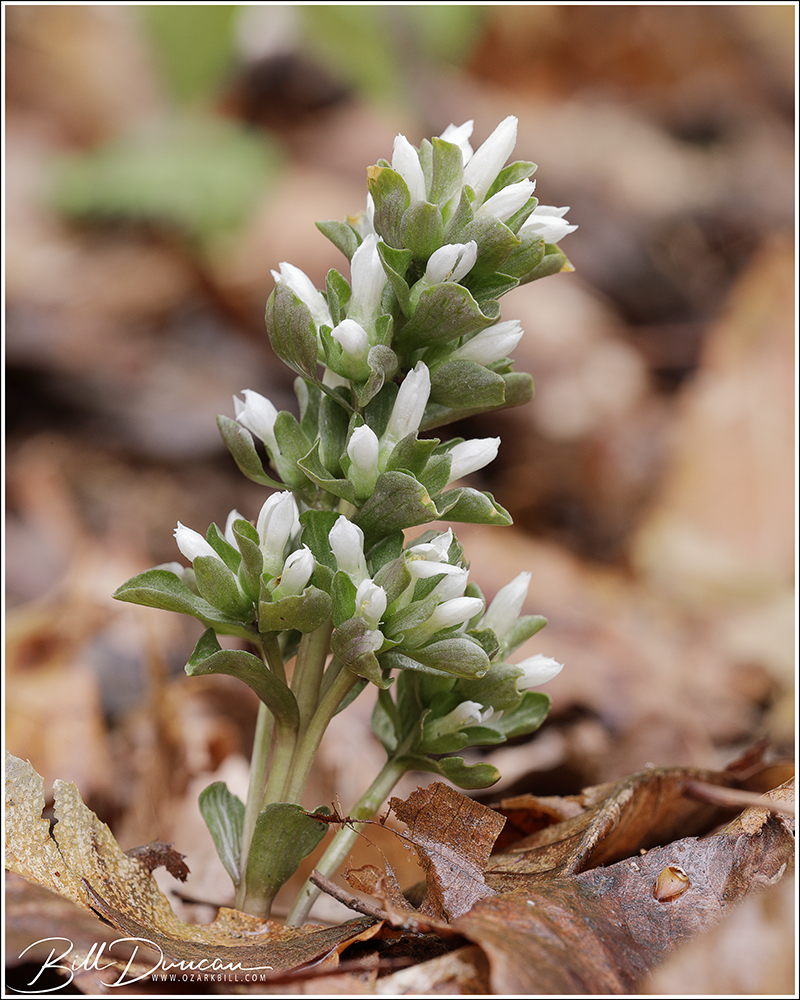
It’s not only orchids that I have had the pleasure getting to know during the past few years. Having new botanically-minded friends, I have been able to find and get to know a number of other interesting and sometimes quite rare plants found in other families. Obolaria virginica, known as Virginia pennywort or pennywort gentian, is indeed in the Gentianaceae family (gentians). It is ranked as S2 (imperiled) in Missouri, likely due to the small number of populations found here. This plant emerges very early and is much like a typical spring ephemeral. Like the coralroot orchids (Corallorhiza sp.), this plant is mycoheterotrophic, getting at least some of its nutrients by parasitizing microrrhizal fungi.
The diminutive Obolaria virginica (Virginia Pennywort) has been reported from only three Missouri counties in the southeastern portion of the state.
The conservation status of Cypripedium candidum, the small white lady’s slipper, is currently ranked as S1 (critically imperiled) by the Missouri Natural Heritage Program.
I have one more lady’s slipper we found in May to share. Cypripedium candidum or small white lady’s slipper requires moist and full-sun exposures, such as may be found in wet prairies, meadows, fens and forest edges. The reason for its rare status (likely found on fewer than five locations in the state) is due to habitat disturbance and orchid poachers digging them up for horticultural uses.
A small bunch of small white lady’s slippers
This species can hybridize with C. parviflorum (yellow lady’s slipper) when found in close proximity. This can potentially be a conservation concern in some states, but to my knowledge, there are no close associations between these two species in Missouri.
The habitat where these slippers where found in Shannon County, MO. You will not be able to see them, but I assure you, there are slippers in this photo.
It was wonderful finding this and the other lady’s slippers in the state this year. I’m hoping this one can still be found here far into the future.
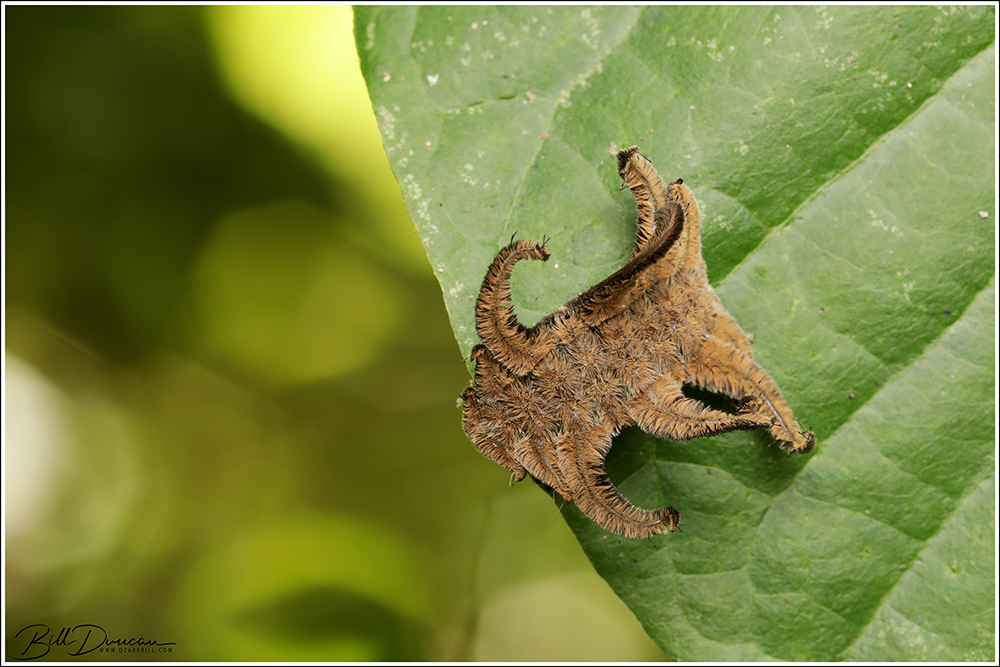
This hag moth, or monkey slug caterpillar (Phobetron pithecium) was found on a pawpaw along the Meramec River at Shaw Nature Reserve in early September.
As it seems I say every year, I did not find the time to go out looking for insects as much as I had hoped for in 2020. Here are a few of my favorites from this past season. As always, please correct any inaccurate species identifications if you are in the know. I try my best, but can always be wrong. Thanks.
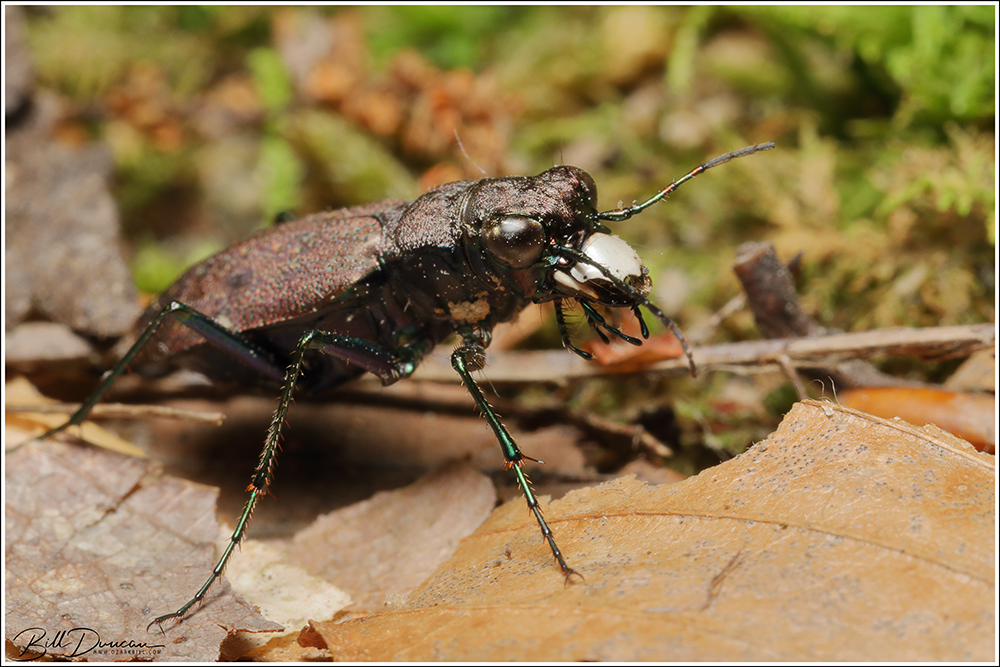
This punctured tiger beetle (Cicindelidia punctulata) provided quite a lighting challenge for Casey and me.
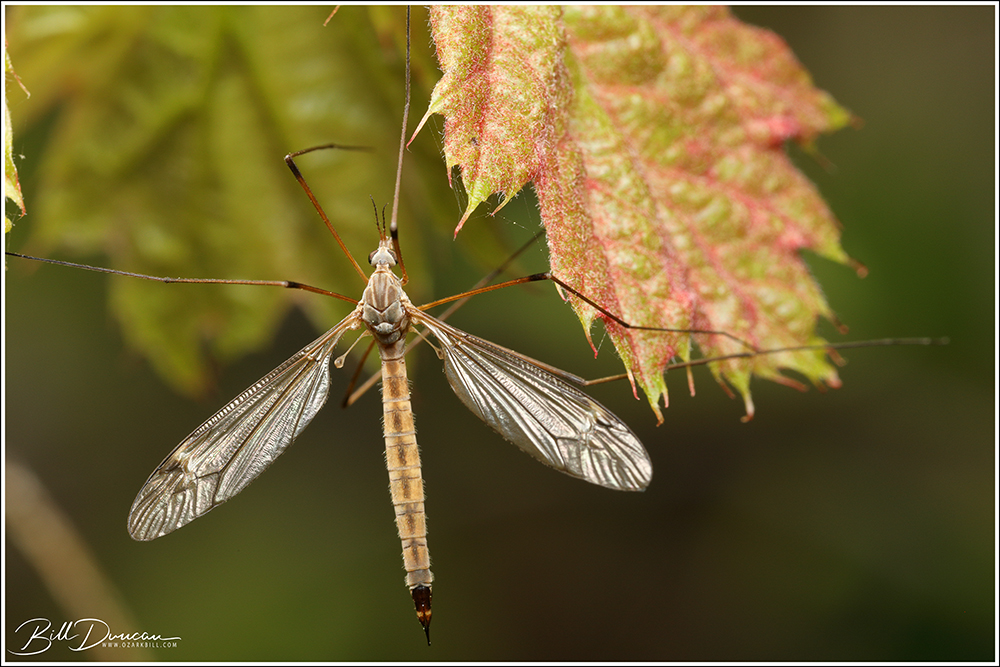
We found this crane fly in late April. It makes a nice compliment to the early oak leaf.
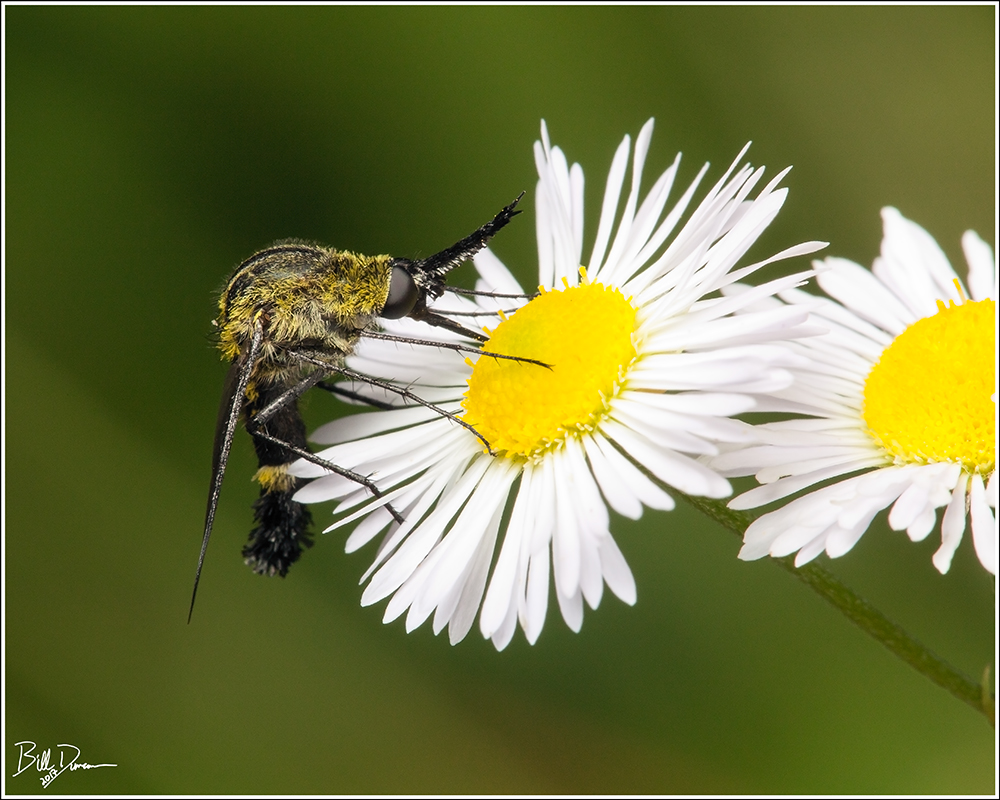
I tried capturing this greater bee fly (Bombylius major) in mid-air, but failed in that attempt. A portrait shot would have to suffice.
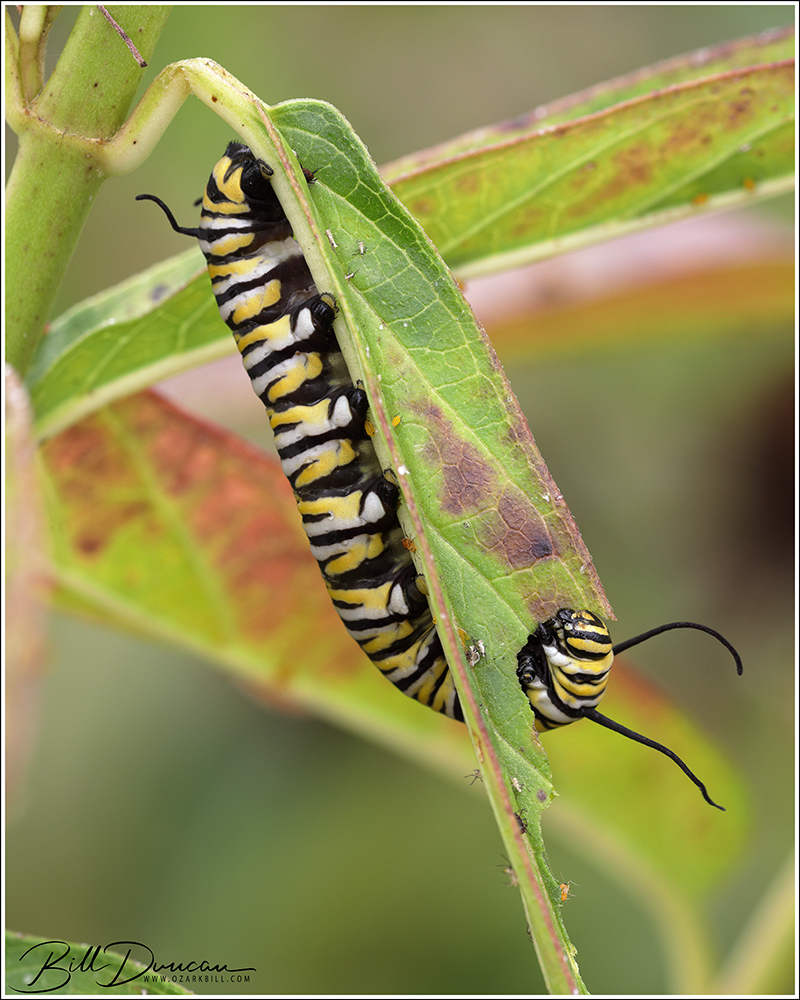
This monarch caterpillar was found feasting on the leaves of swamp milkweed that was in a planter near the SNR visitor’s center.
Sarah and I found this hanging thief robberfly (Diogmites sp.) feeding on a German wasp (Vespula germanica) on the side of our house in July.
While looking for cats at Weldon Spring CA one evening, I was thrilled to find this saddled prominent (Heterocampa guttivitta) that had been parasitized by braconid wasps. This particular species of parasitoid changes the chemistry of the host’s brain so that after the was larvae emerge the caterpillar spins its own silk around the developing pupae and stands guard over them. When touched, the caterpillar thrashes and hisses, guarding them until it starves.
One of my favorite cats to find is Apatelodes torrefacta (spotted apatelodes). They can be found in yellow, or this white form. One day I’ll have to track down an adult to photograph.
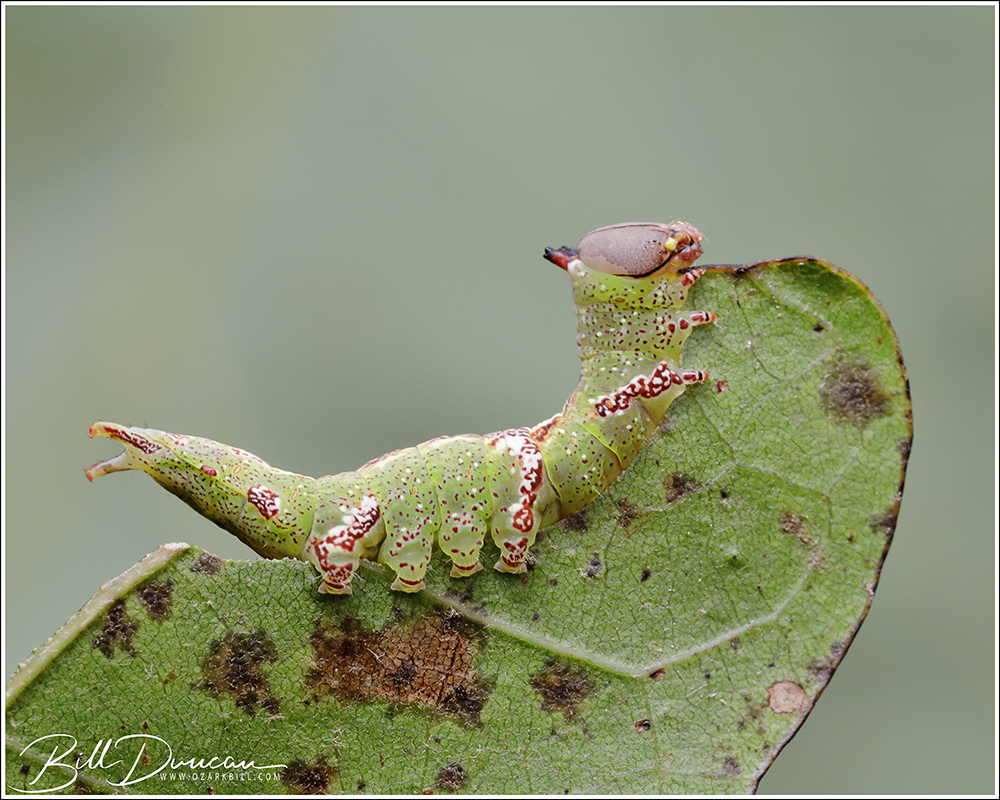
A White-blotched Heterocampa (Heterocampa umbrata) shows off its incredible camouflage that allows it to eat as it becomes one with the leaf.
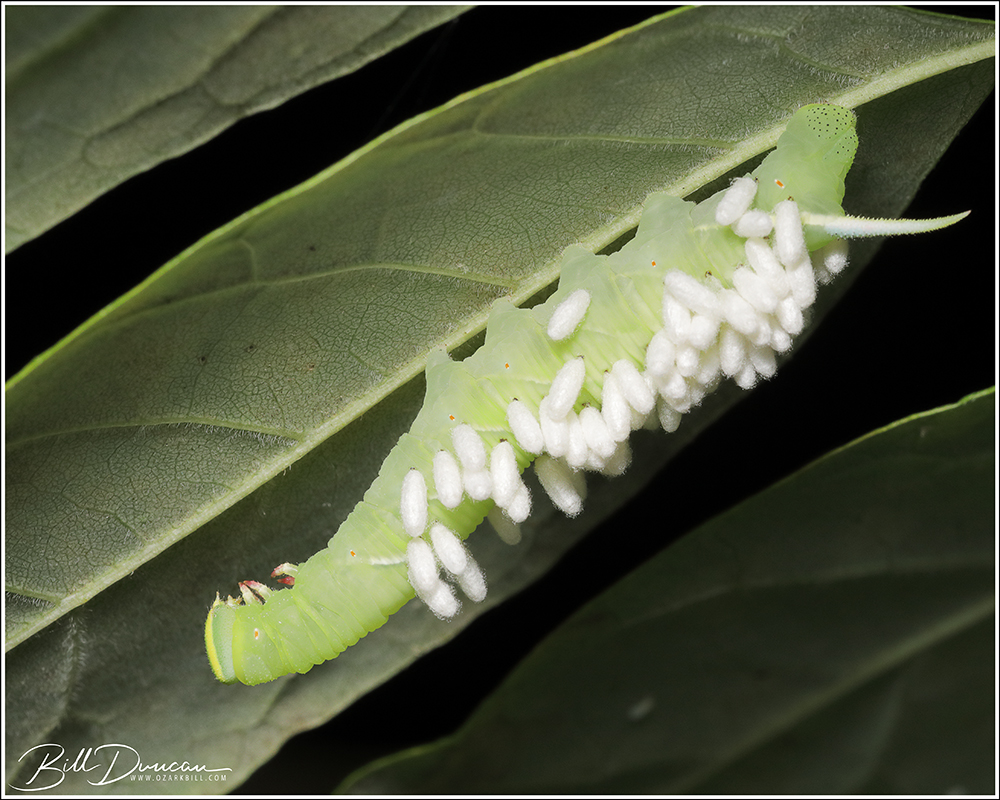
A waved sphinx (Ceratomia undulosa) that has been parasitized by numerous braconid wasps.
In September, I found this nice specimen of a fungus in the Cordycipitaceae family that had attacked a spider. This is most likely Gibelulla leiopus, an obligate parasitic fungus that preys on spiders with an almost worldwide distribution.
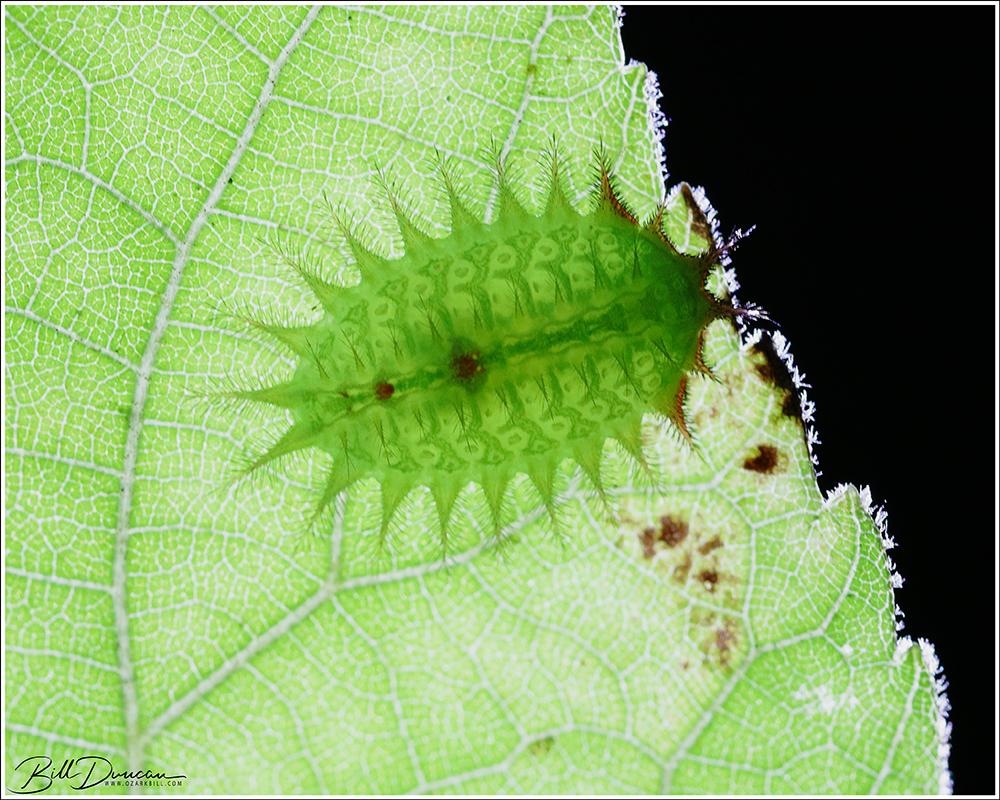
Of course I did a little slug moth caterpillar hunting this season. Here I photographed this crowned-slug (Isa textula) catterpillar by using the flash behind the leaf, showing the delicate patterns of the insect.
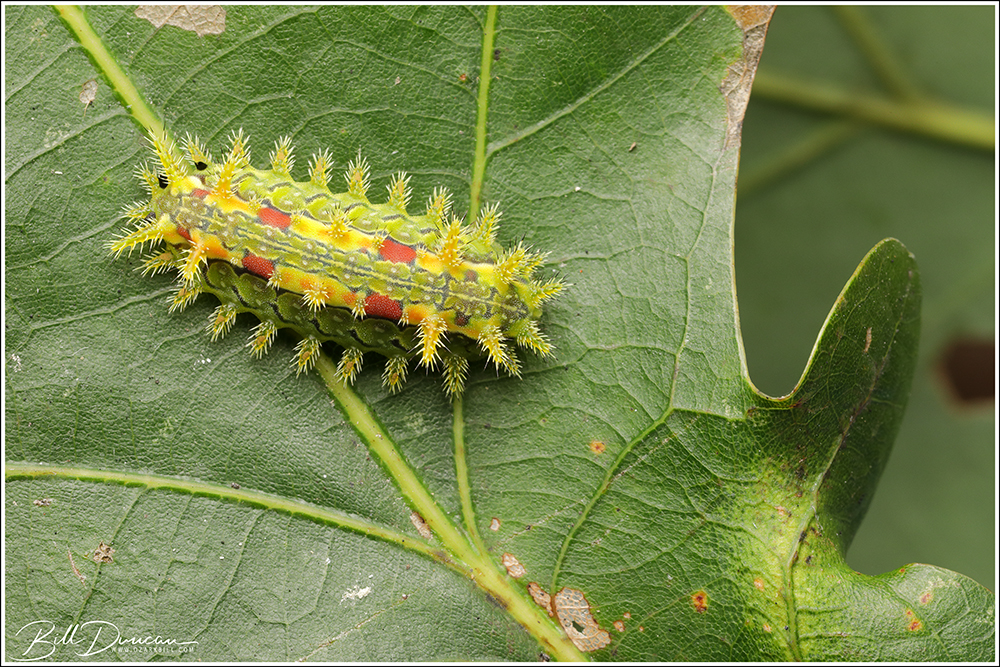
The highly variable stinging rose slug (Parasa indetermina) is always a welcome find.
The same species pictured above, here showing its bright red underbelly.
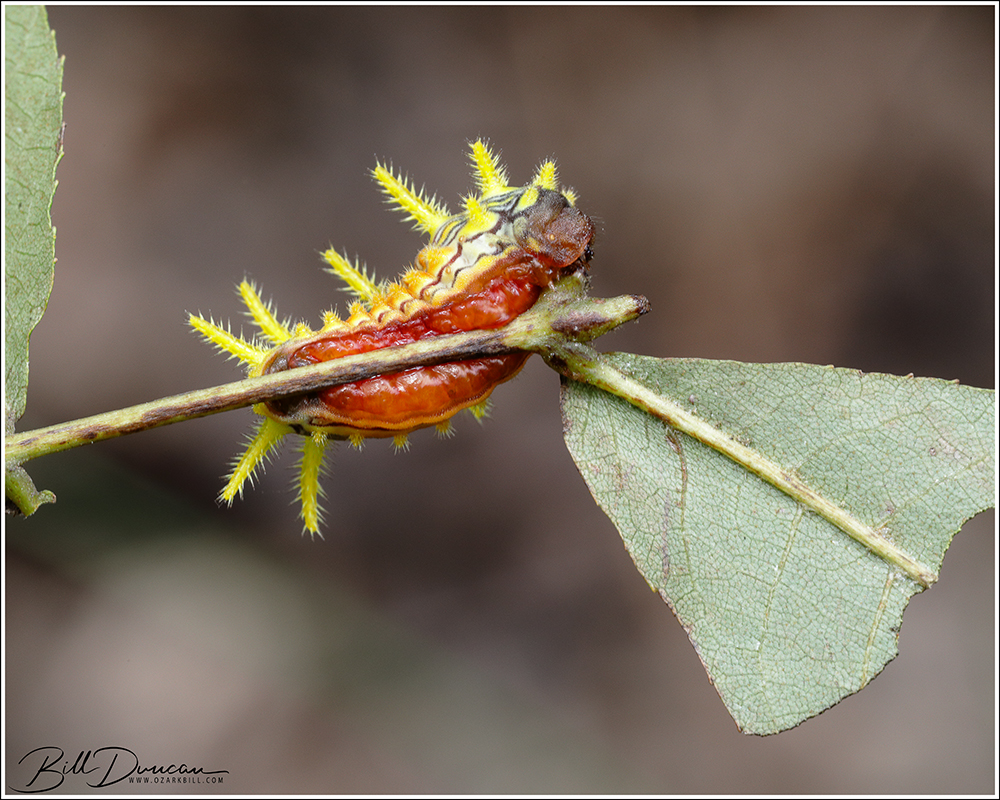
I found this spiney oak slug (Euclea delphinii) by searching the undersides of oak leaves at Babler State Park in mid-September.
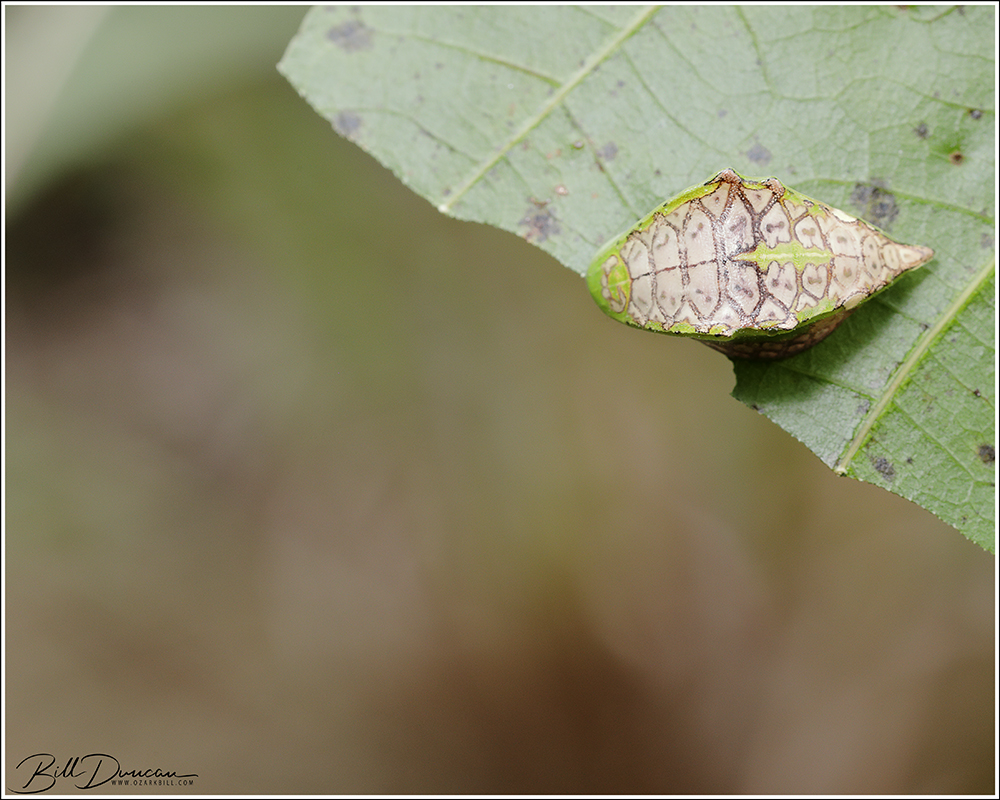
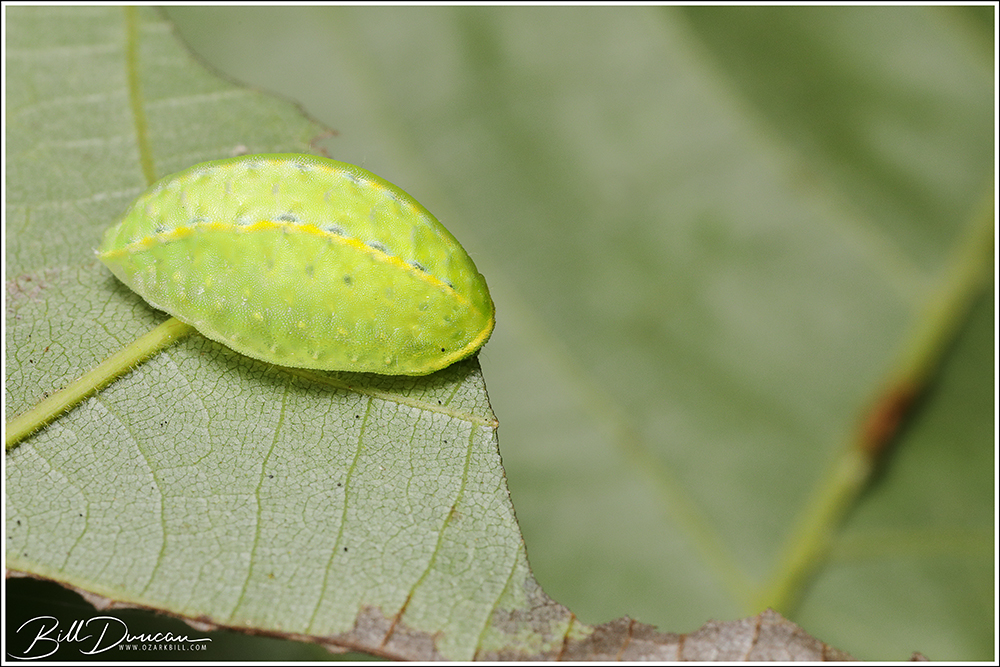
The skiff moth (Prolimacodes badia) cats are highly variable, ranging from nearly a complete uniform green to being more decorated like this individual.
Here is the same individual as above, showing more of its interesting “senescent leaf” patterning.
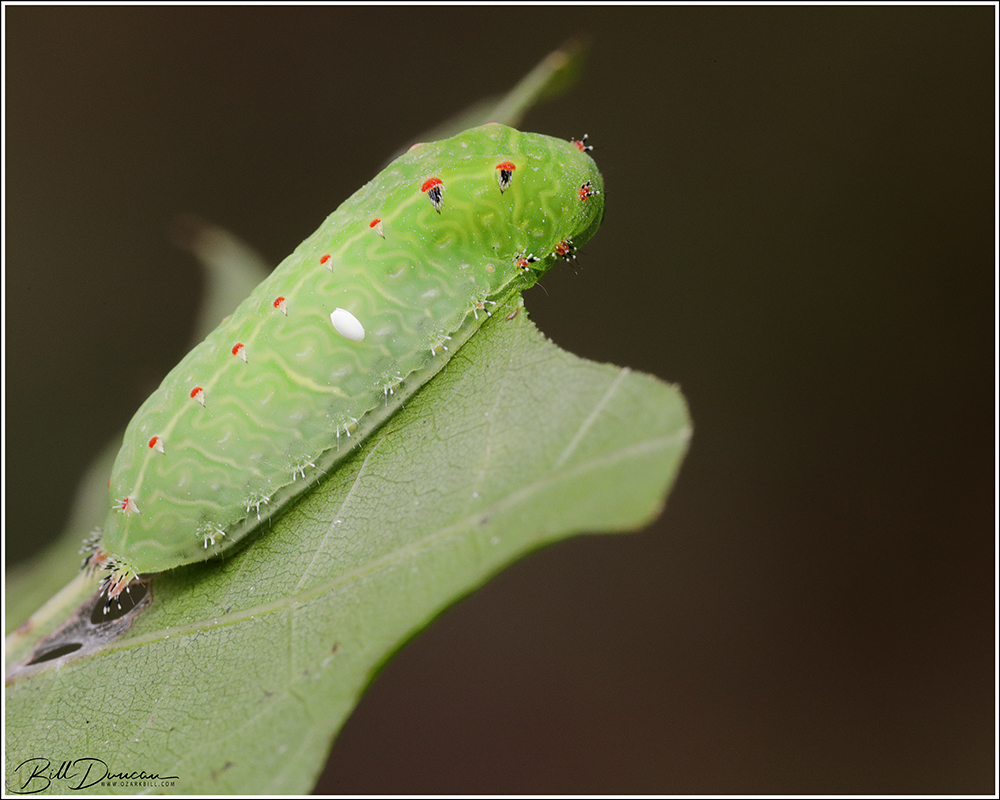
A very common site while looking for slug moth cats, this Nasan’s slug moth (Natada nasoni) caterpillar has the egg of a tachinid fly on it. Most likely a death sentence for the caterpillar if the egg does hatch and the parasitoid larvae invades its host.
Only my second find of this species, this inverted-y slug (Apoda y-inversum) was found at Weldon Spring CA in mid-September.
Thanks for the visit and wishing you a great 2021 filled with more insects! -OZB
Spiranthes cernua (nodding ladies tresses) found in Jefferson County, MO
I finished 2020 having found all but one species of Spiranthes orchid expected to be found in Missouri. Many thanks to John Oliver for giving me a bit of education and help in making correct identifications; however, any errors found here are my own and no one else should be blamed. I also want to thank John and Casey Galvin for giving me the clues as to where each species could be found. Identifying these was not as difficult as I originally expected, minus the exception pictured above.
Spiranthes cernua belongs to a species complex that is still being worked out. In addition, I have read that there may be up to 20 or more “races” within this particular species. Not that all of these races are found in Missouri, but generally, this species blooms with leaves. I had a hard time coming to the correct ID because the plants I had found had no leaves at bloom. It took me some time to find out that there is a race in Missouri that does indeed bloom without leaves being present. I will stop here as I cannot speak in more educated terms about this plant other than to say I that I found it stunning.
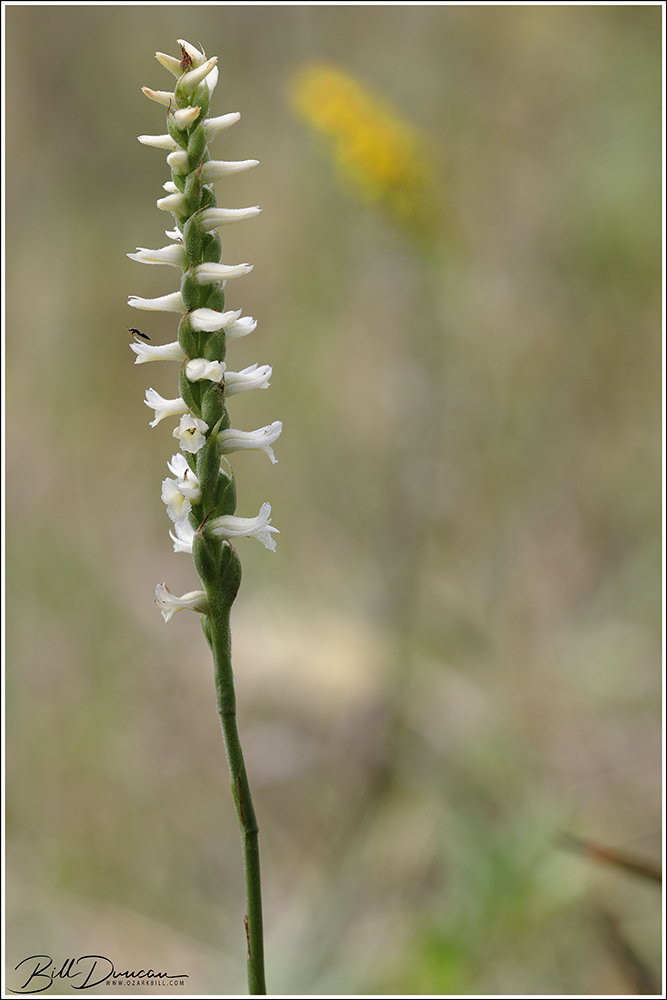
Spiranthes magnicamporum (Great Plains ladies tresses) photographed in Franklin County, MO
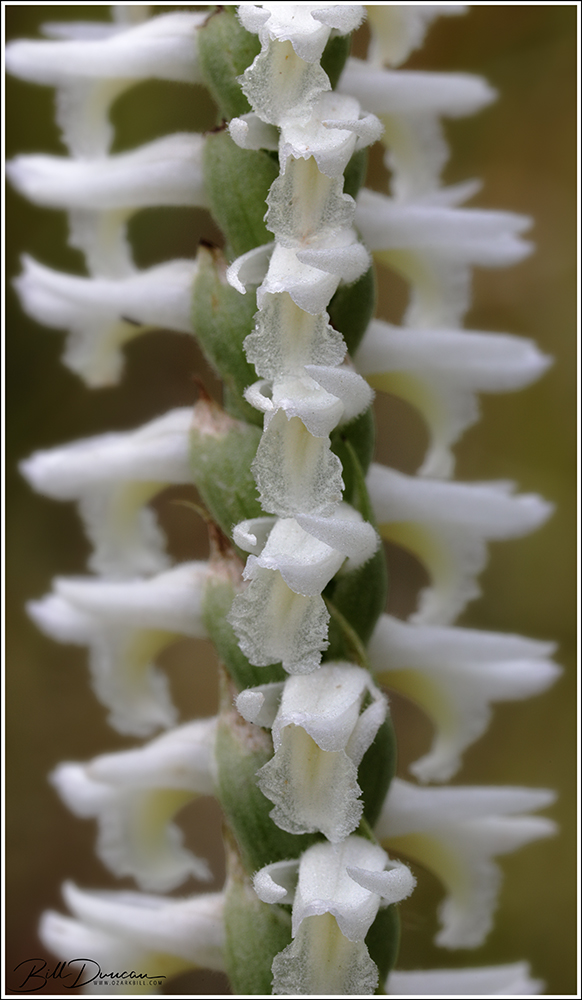
Found across much of northern and southwestern Missouri on limestone glades and other calcareous substrates, Spiranthes magnicamporum, or the Great Plains ladies tresses was only just recently separated from S. cernua. It is distinguished from S. cernua not only by a few morphological floral characteristics, but also by its fragrance. S. cernua is either fragrance free, or with only a hint of olfactory cues, while S. magnicamporum typically exudes a lot of fragrance. On just the right day one may be able to find it by nose before finding it by sight. I found it to have strong vanilla and coumarin hints.
Spiranthes magnicamporum (Great Plains ladies tresses) photographed in Franklin County, MO
Spiranthes magnicamporum (Great Plains ladies tresses) photographed in Jefferson County, MO
Spiranthes magnicamporum (Great Plains ladies tresses) photographed in Jefferson County, MO
Spiranthes magnicamporum (Great Plains ladies tresses) photographed in Jefferson County, MO. Note the widely spreading lateral sepals that arch above most of the flowers, a floral trait that is distinctive to the species.
The flowers of the next Spiranthes, little ladies tresses (Spiranthes tuberosa) were described perfectly by Homoya as “jewelaceous”. Here he was referring to the jewel-like look that a magnified view of the flowers have. Many orchid flowers have this look, with each of the “jewels” being composed of individual cells. This is one of the daintiest of orchids found in the state. In Missouri, they are found in dry, sandstone habitats away from competition. Although quite small, when in bloom they should be easy to find as they stand virtually alone in brutal xeric habitat.
Spiranthes tuberosa (little ladies tresses) found on private sandstone glades in Jefferson County, MO.
Spiranthes tuberosa (little ladies tresses) being visited by an halctid bee, one of its primary pollinators.
Spiranthes tuberosa (little ladies tresses) with a crab spider, lying in wait for a solitary bee to visit.
Great Blue Skimmer (Libellula vibrans) found at Sand Pond Conservation Area in Ripley County, MO.
A few weeks ago Ev, Yvonne, Dave and I traveled south to try and find the first state record of the Brown Booby that was on the Current River just outside of Doniphan. Unfortunately, we were a day late and missed the bird. However, through the patient and educated eyes of Yvonne, we found several insects that made the trip worthwhile.
A head-on look at a Great Blue Skimmer (Libellula vibrans)
One of these that I was able to get some photos of was this striking great blue skimmer (Libellula vibrans). This is one of the largest of the skimmers and while not necessarily rare, it isn’t one you’ll come across very often in the St. Louis area.
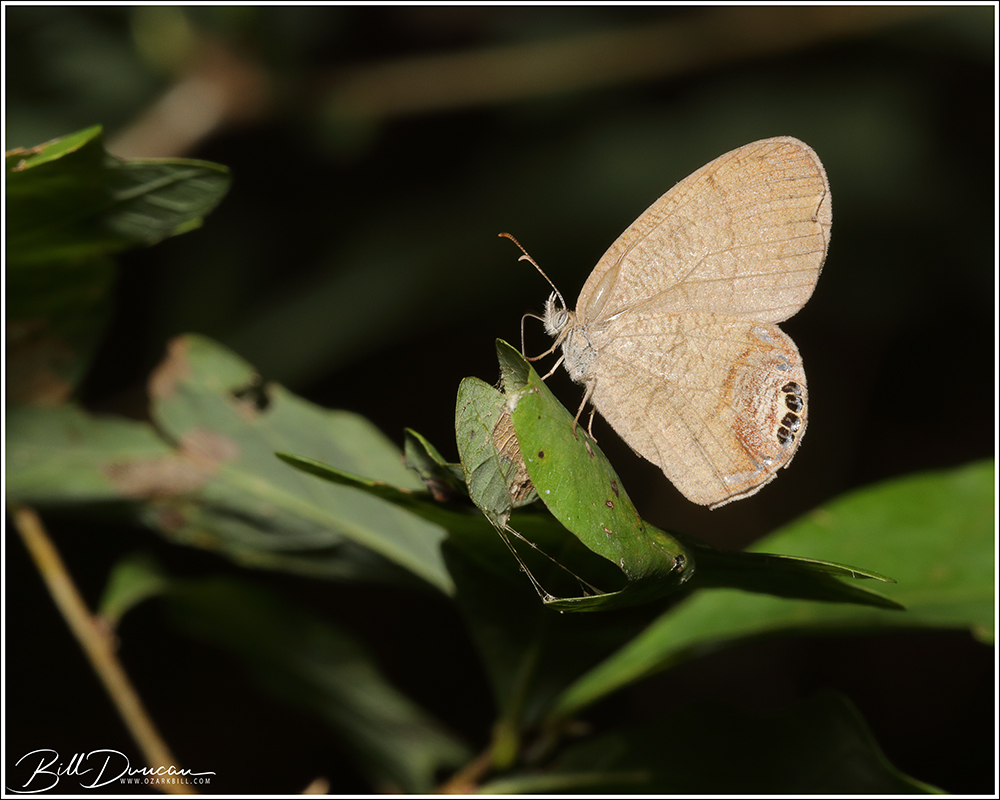
The Gemmed Satyr (Cyllopsis gemma)
We made a stop in Carter County before heading home to look for orchids. The orchids were a no-show, but Yvonne found her target species of the day – this gemmed satyr (Cyllopsis gemma) that we all had nice looks and photo opportunities with.
Although we missed out on our prized Booby, I’d say the Booby Prizes were well worth our time.
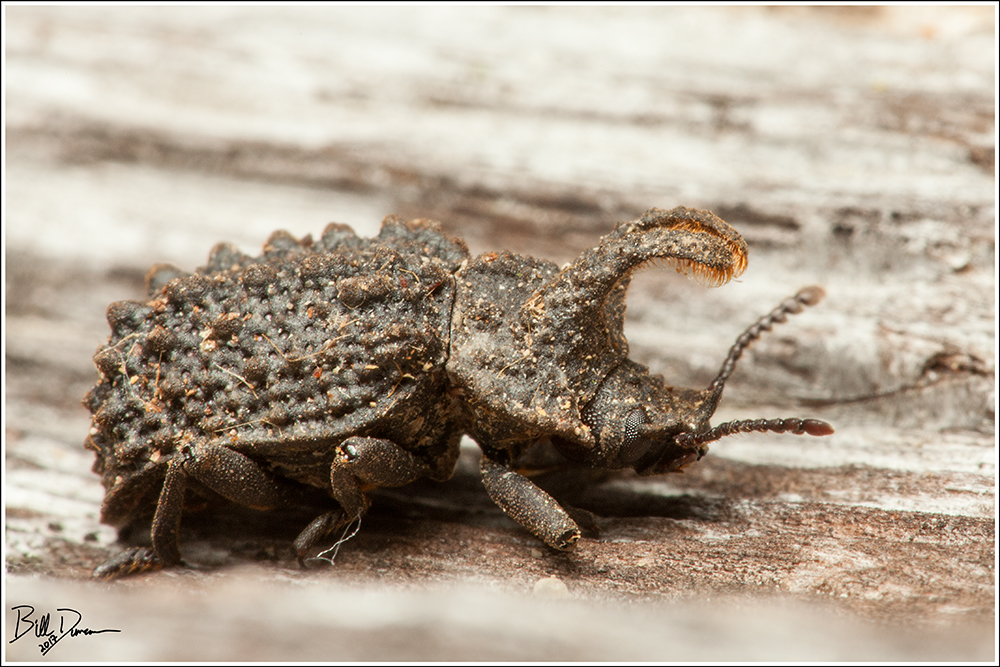
Here is one of the interesting visitors I had to my black lights at Hawn State Park this summer. Bolitotherus cornutus, or horned fungus beetle is in the darkling beetle family, Tenebrionidae. I wish I knew of their preference for polypore fungi as larvae and adults so that I could have photographed them on more suitable substrate.
Members of WGNSS Entomology and Nature Photography Groups met on June 24th, 2017 to see what interesting insects could be found. In this post I am sharing a few of the more interesting that I was able to get photographs of during the day. The find of the day had to be the Cerambycid pictured above that was, by no surprise, found by Ted MacRae.
Delta Flower Scarab
We found that blooms were a great way to find beetles. It is easy to see how the delta flower scarab (Trigonopeltastes delta) got its name.
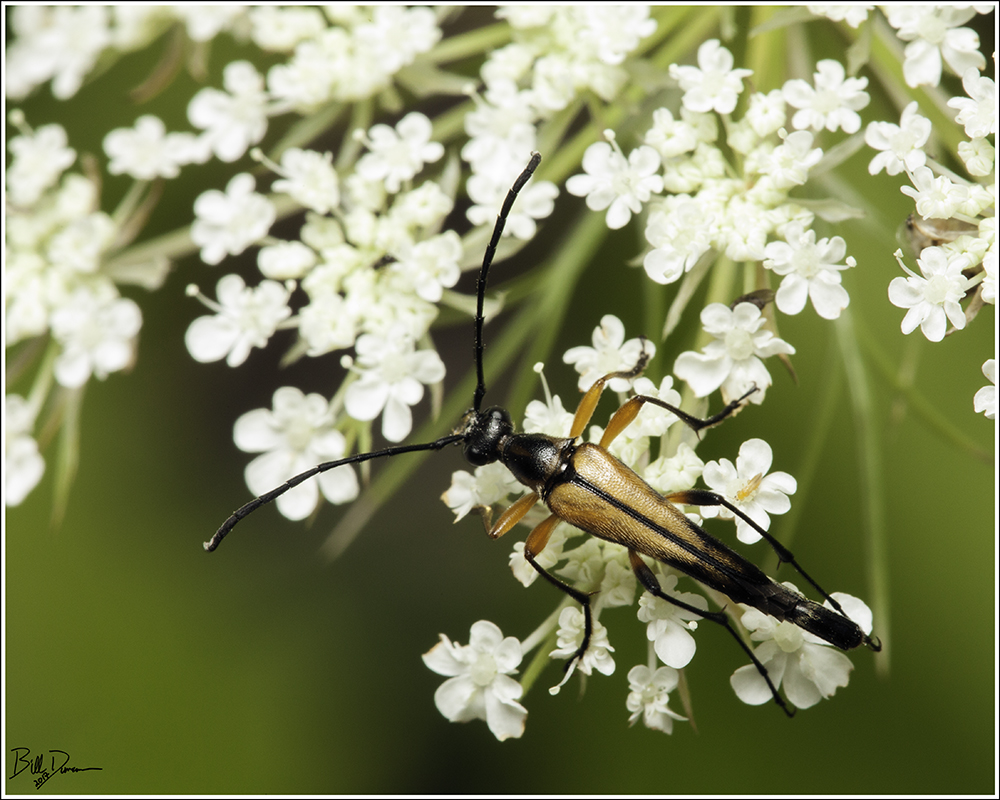
Flower Longhorn
Cerambicids like this flower longhorn can readily be found on blooms.
Banded Netwing
The banded netwing beetle (Calopteron reticulatum) are easy to find, often located in the open atop vegetation. They rely on aposematic coloration to advertise that they carry aboard chemical compounds that make them a distasteful meal.
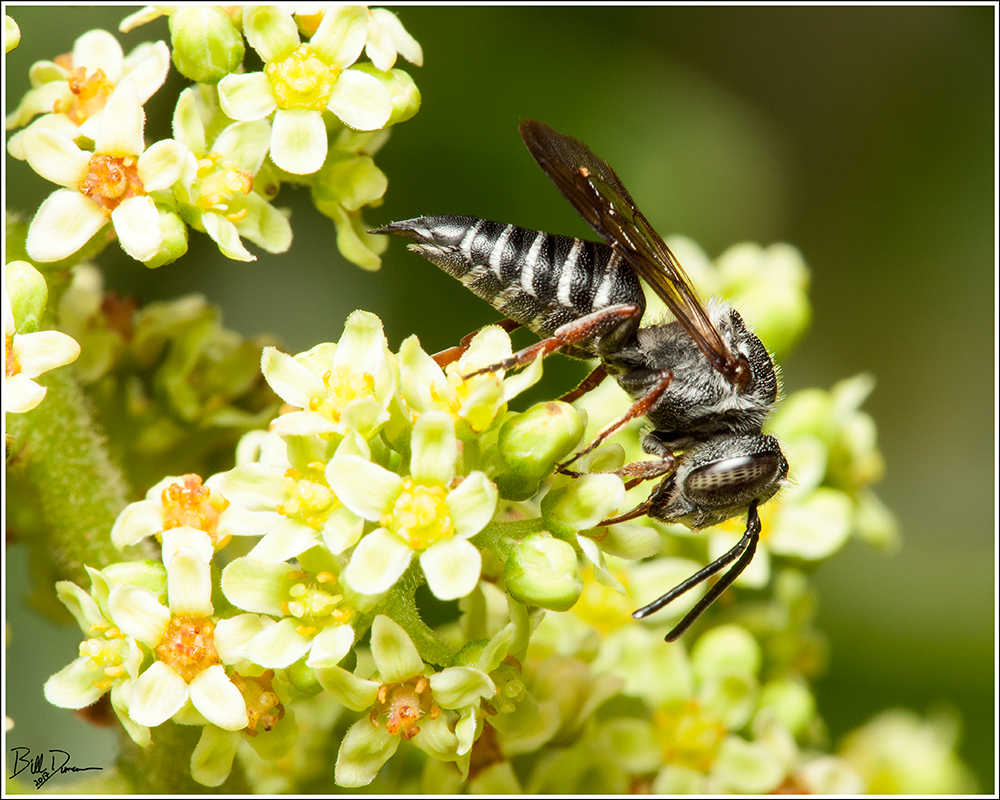
Agapostemon sp
The Hymenoptera were well represented on blooms of wild hydrangea (Hydrangea arborescens), Queen Ann’s lace (Daucus carota) and as pictured above, fragrant sumac (Rhus aromatica). I find the native bees to be tricky to identify by photographs, but I believe this can be placed in the genus Agopostemon. These bees nest in the ground and to promote them, leave patches of soil exposed somewhere in your yard.
Not to leave out the Leps, this double-toothed prominent moth larvae was found. These guys have developed very effective camouflage that allows them to blend in and resemble the toothed, wavy margins of their elm (Ulmus) host plants.
Black Carpenter Ants Feasting On Ring-necked Snake
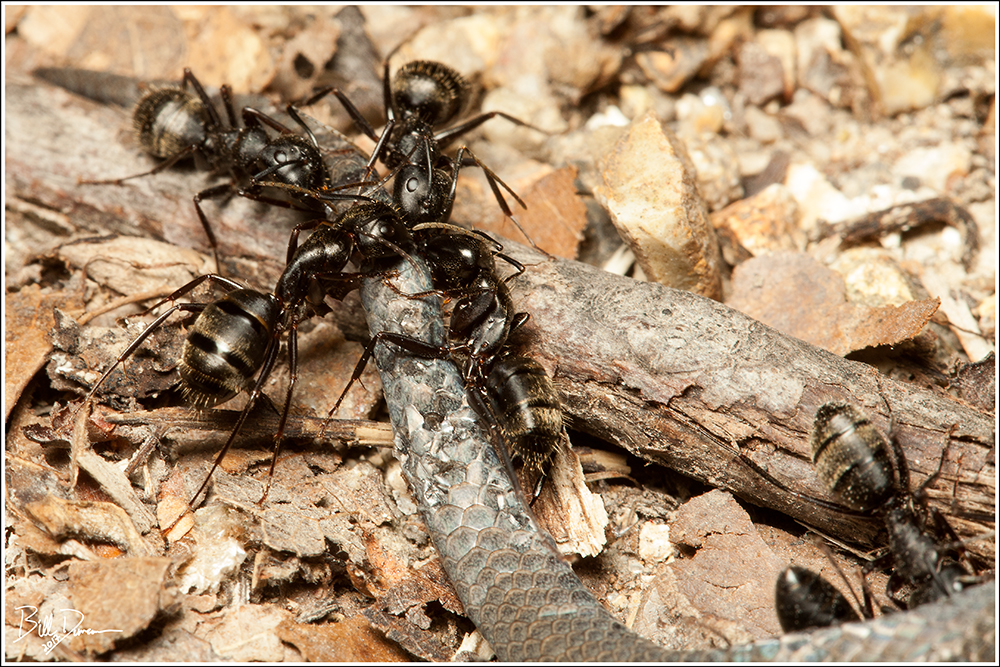
This series was taken on the joint outing of the WGNSS Entomology and Nature Photography Groups at Council Bluff Lake. Here we have eastern black carpenter ants (Camponotus pennsylvanicus) feeding on a freshly dead ring-necked snake (Diadophis punctatus).
Black Carpenter Ants Feasting On Ring-necked Snake
Black Carpenter Ants Feasting On Ring-necked Snake
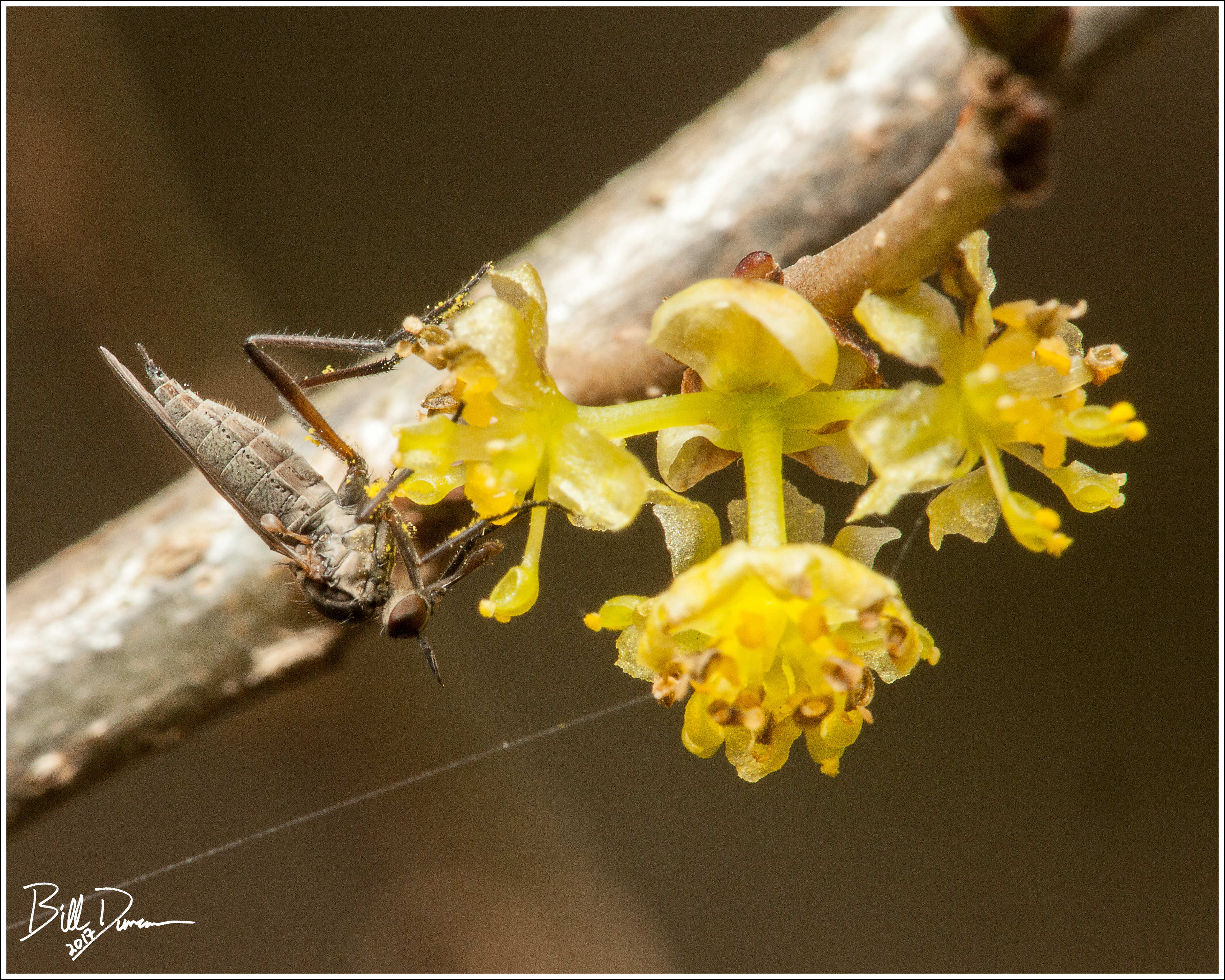
With some extra nature time last week, I hit the trails at Shaw Nature Reserve hoping to get some shots of Claytonia virginica (spring beauty) being visited by its pollinators – particularly the small solitary Halactid bees. The problem I had on this day is that these bees don’t typically like to be very active on cloudy, grey days. There were a few flies visiting the spring ephemerals, but they were much to flighty to bother with. So, I decided to give some attention to the Linderabenzoin (spicebush) that were blooming in abundance along the river bottom trails. My goal then became to document the pollinators that visit this early-blooming bush.
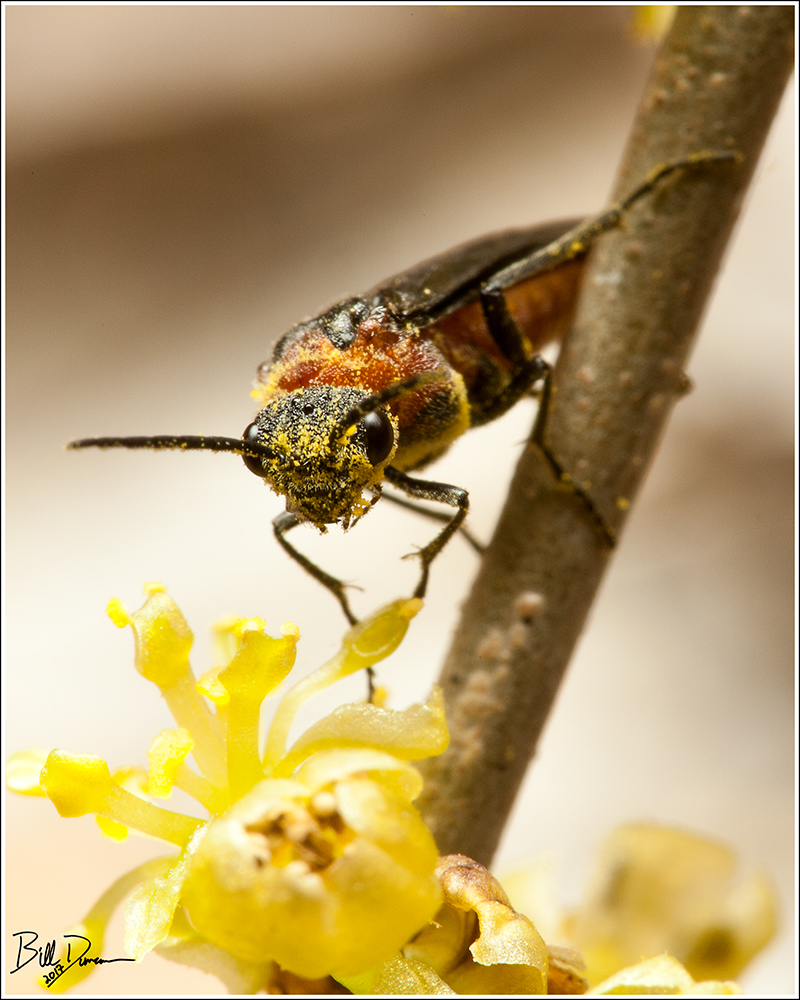
Sawfly – Tenthredinidae – Dolerus neoagcistus
One of the more obvious of these pollinators that I found was this sawfly. This is my best guess on identification. This sawfly was quite small and by the looks of it, is quite an efficient pollinator.
Sawfly – Tenthredinidae – Dolerus neoagcistus
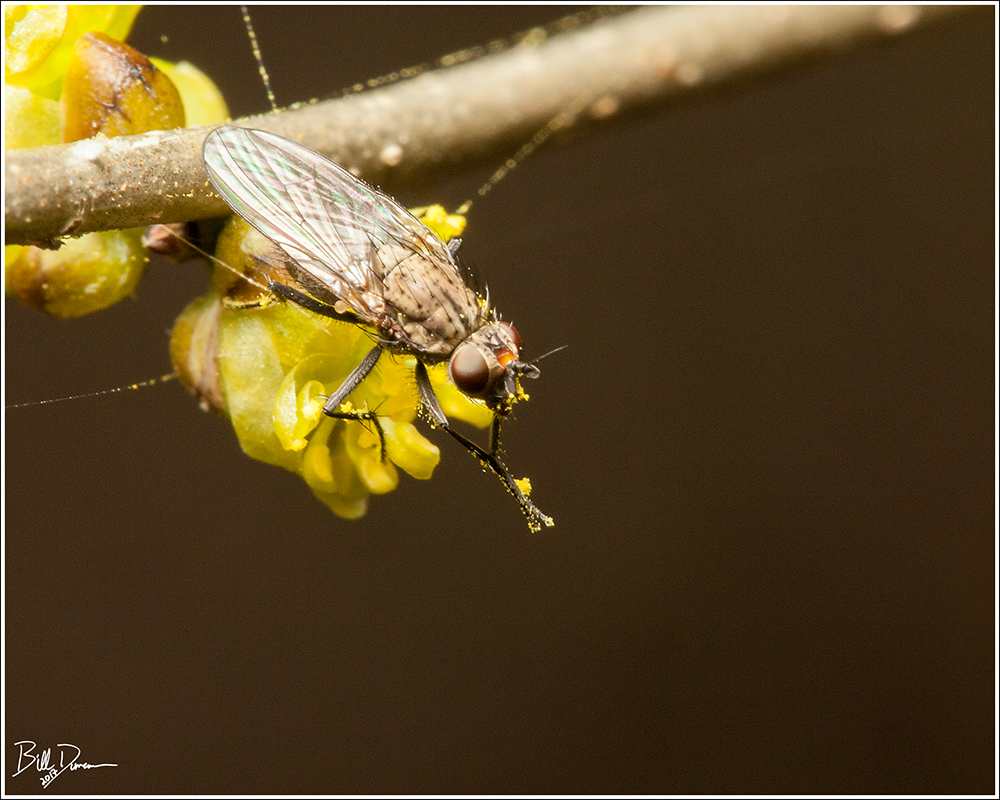
Probably the most abundant pollinator I came across were these Tachinid flies (again, flies are difficult and I could be wrong).
Tachinid Fly?
The hair-like setae that probably serve to aid the fly in responding to changing air pressures also serve as nice holders to move pollen from flower to flower.
Tachinid Fly?
I also found a number of multicolored asian lady beetles (Harmonia axyridis). Typically predators of aphids, these beetles are also known to feed on pollen. This is what I figure was going on in the image below. Since there are probably few aphids to be found during the early spring, with few leaves being available, pollen is the next best protein source. I suppose there could be aphids to be found hiding within the flowers, but did not inspect closely enough.
Multicolored Asian Lady Beetle – Coccinellidae – Harmonia axyridis
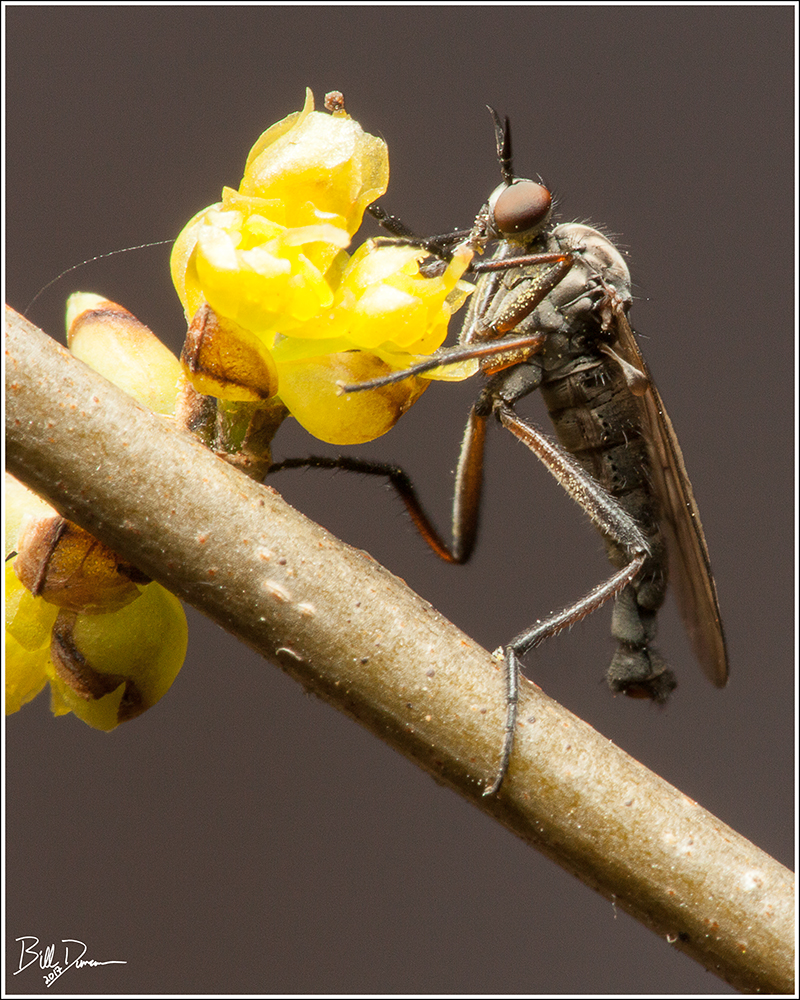
Probably my favorite find of the day were several flies of the family Empididae. These are fascinating flies that are primarily predatory, but a few taxa will visit flowers to feed on nectar or pollen.
Dagger fly – Empididae – Empis or Hilara genus
Within this family are at least a few where the females will not hunt themselves, instead relying on a “nuptial gift” of a prey item from a male. Males of some species will wrap their gift in a silk wrapper. In these taxa the sex roles will often be reversed – the females courting the males to get these gifts and the opportunity to mate. In at least one species, the females will inflate themselves grossly with air to give herself the appearance of being bound with eggs and fecund, to trick the male into thinking she is a prime candidate to provide his gift and have the opportunity to mate with.
Dagger fly – Empididae – Empis or Hilara genus
At least one species has taken this system a step further. The males no longer provide a prey wrapped in its decorative covering, but simply provide the silken covering, or balloon, giving them the name “balloon flies”. The photo below provides a good look at the dagger-like moth parts that give these guys another of their common names. Another overlooked beneficial fly. Not only do these guys prey on mosquitoes and other potential pest insect species, but their larvae are also predatory, feeding on insects in the soil and leaf litter.
Dagger fly – Empididae – Empis or Hilara genus
I’ll leave you with one final image. This one isn’t a pollinator of the spicebush, but potentially feeds on its leaves in summer. What I believe this to be is a (Camptonotus carolinensis) Carolina leaf roller that was parasitized by one of the “zombie fungi”, potentially Cordyceps sometime last summer or early fall. This poor cricket was infected with this fungi that took control of its “mind”, forcing it it to climb high up on a branch of the spicebush. Once there, the fungi used the cricket’s resources to fruit and spread its spores from this higher location in order to reinfect others.