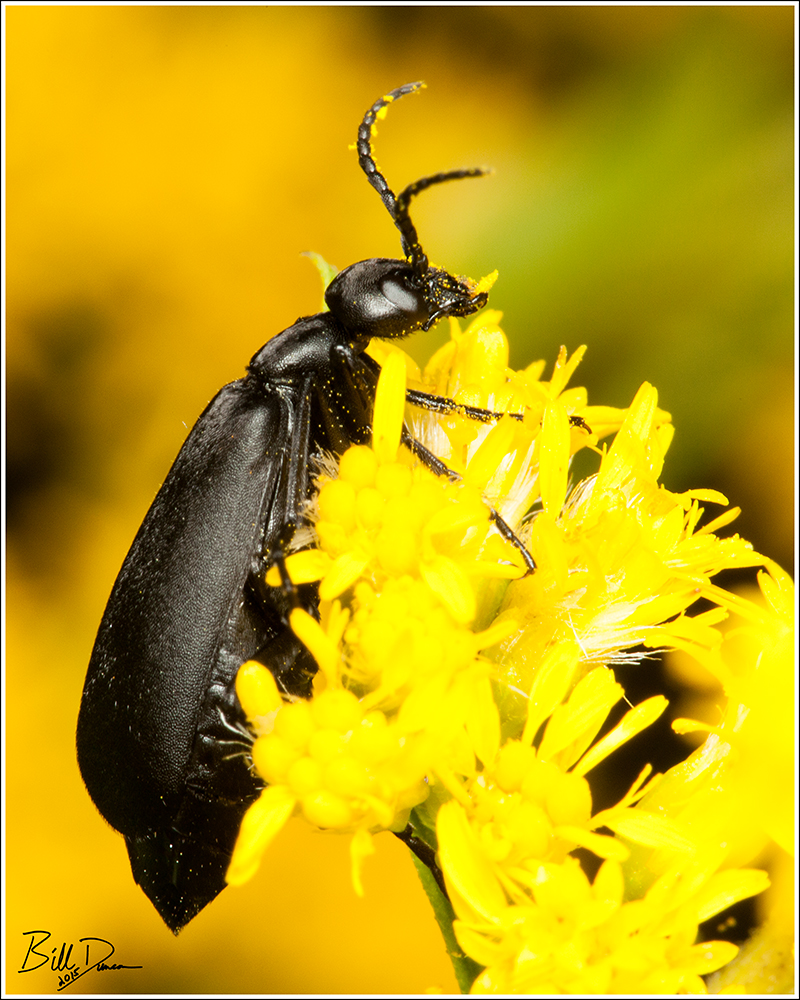
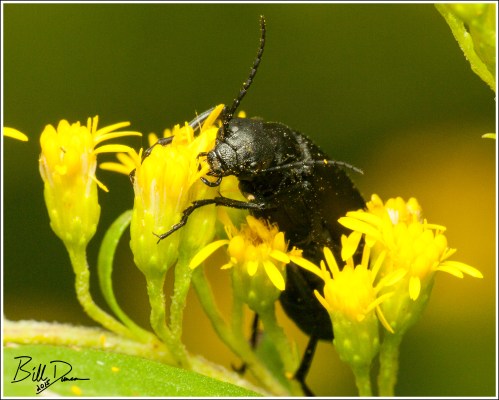

"What a thousand acres of Silphiums looked like when they tickled the bellies of the buffalo is a question never again to be answered, and perhaps not even asked." -Aldo Leopold
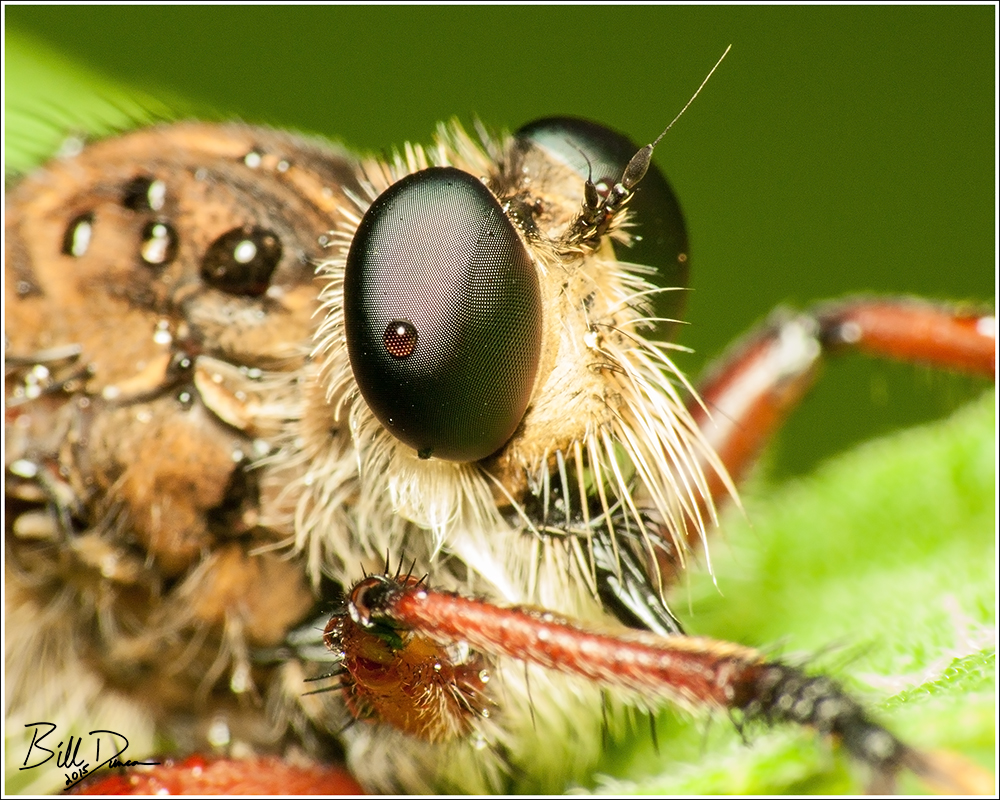
I find the flies to be one of the more interesting groups of insects and I was constantly on the lookout for new species to photograph this summer. There is such diversity in the flies, from size to form and function. There is still so much to learn about some flies, including some rather common species that researchers have still not described where or on what the larval forms live. To start, here is a closeup of a true giant of the flies, a Robber Fly (Family Asilidae). The Robberflies are true predators, with an intimidating beak that they use to inject neurotoxic and protein-dissolving cocktails.

The photograph above showcases a fly that should be a favorite of gardeners and farmers. Flies in this family (Tachinidae) parasitize a number of different insects and this species specializes in many of the plant-feeding true bugs like Stink Bugs and Leaf-footed Bugs. The generic name can be translated from Greek to mean “hairy foot” and the specific name “pennipes” means feather. This namesake feature can be seen on the rear legs of this fly in the photograph above.

The Thick-headed Flies are extremely interesting and a joy to watch. These guys not only mimic bees and wasps, but they also parasitize the hymenoptera by depositing their eggs on the stinging insect, sometimes attacking the host to place their egg. The eggs hatch and the larvae become internal parasites of their host.
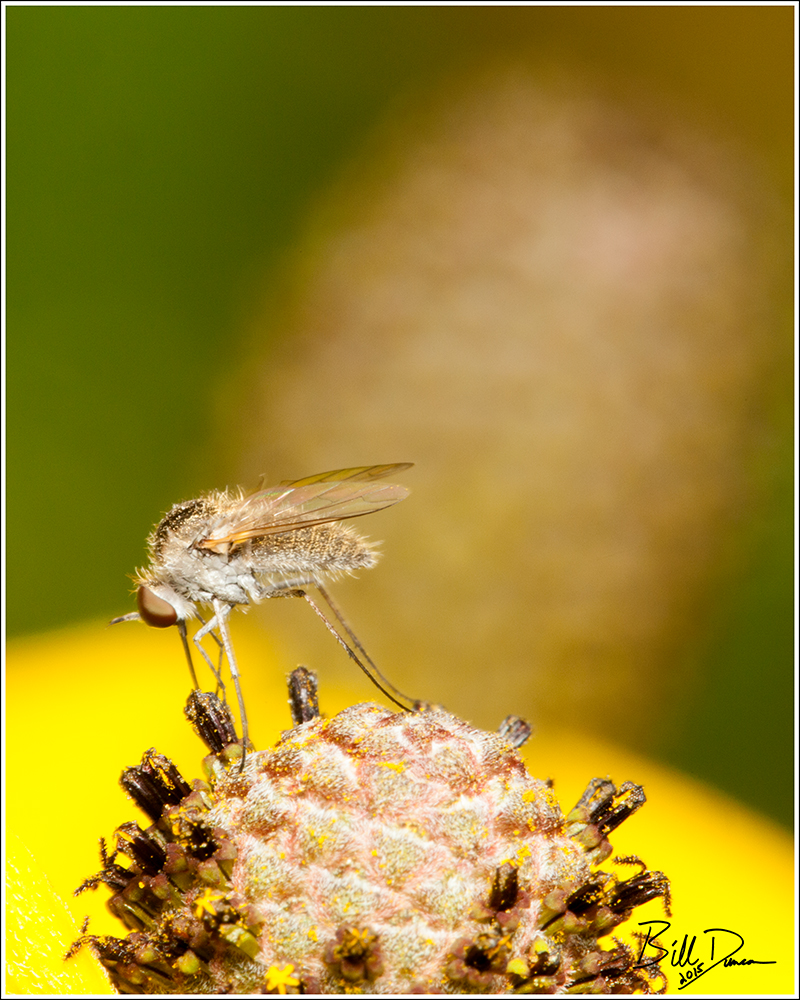
The minuscule Bee Flies in the genus Geron parasitize moth caterpillars. The adults of these flies feed almost exclusively on yellow-flowered Asteraceae.
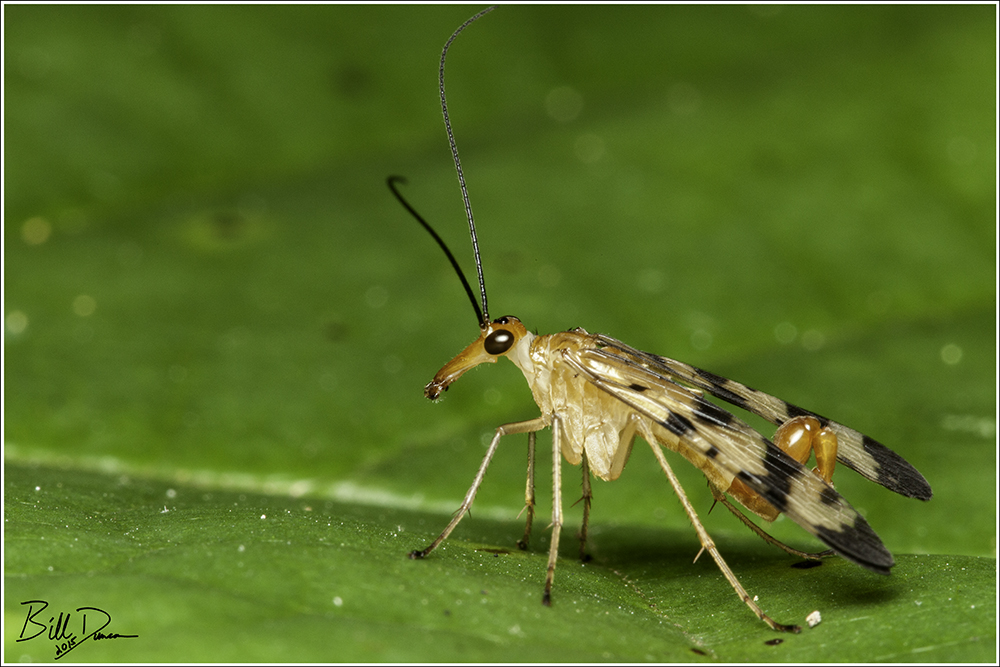
Don’t be threatened by the sting-like structure that this Scorpionfly (Family Panorpidae) has arched over its back. This is simply the male genitalia and is quite harmless. Scorpionflies primarily make a living by scavenging on dead insects, and like many flies, exhibit elaborate behaviors to attract mates. These flies will perform various dances in front of females and will often provide a ripe insect carcass as a prenuptial gift.
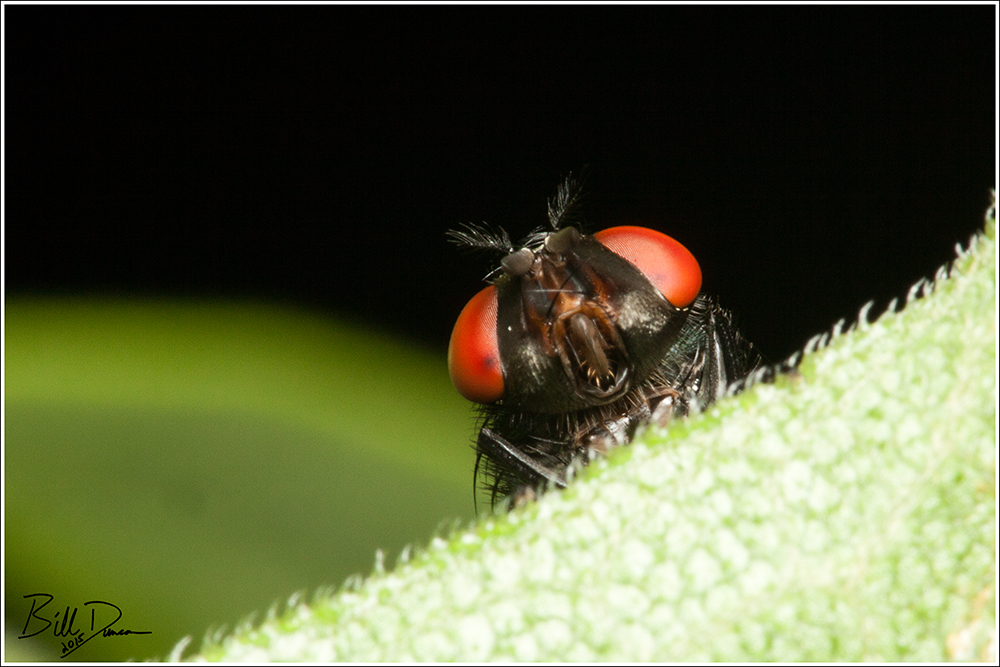
Finally, here is a rather different view of a Greenbottle Fly. I hope this helps to describe some of the fascinating diversity in form, function and behavior that can be found within the Diptera. These are but just a few of the easier to find and photograph! I hope to continue my exploration of these fascinating insects next year.
-OZB
I finally found a monarch caterpillar on one of my plants after a 3-4 year absence. Knowing the poor success rate when I had them in the yard in previous years, I decided to try my hand at rearing this one inside. I read a little on proper practices online and had received some advice from someone I work with (thanks Tim!) and watched as the little one put on the weight at the expense of my common milkweed I harvested from the garden. Unfortunately the idea for a time lapse project came too late and . I wasn’t prepared and wasn’t knowledgeable enough about the metamorphosis process. I tried my best. I made several mistakes and will hopefully remember these next time. I also had a couple of equipment failures that caused me to miss a couple of gaps many hours in length. Tim and his family have successfully reared and released a good number of monarchs this year and tag them for hopeful data points on the migratory routes (just like in birds). He had an extra tag and I tagged the little female prior to her release. Hopefully she will make it the ~1800 miles from central Missouri to central Mexico where she will overwinter before heading back north again next spring.
Even with the problems, I kind of like the outcome. I can’t wait to try again… 😉

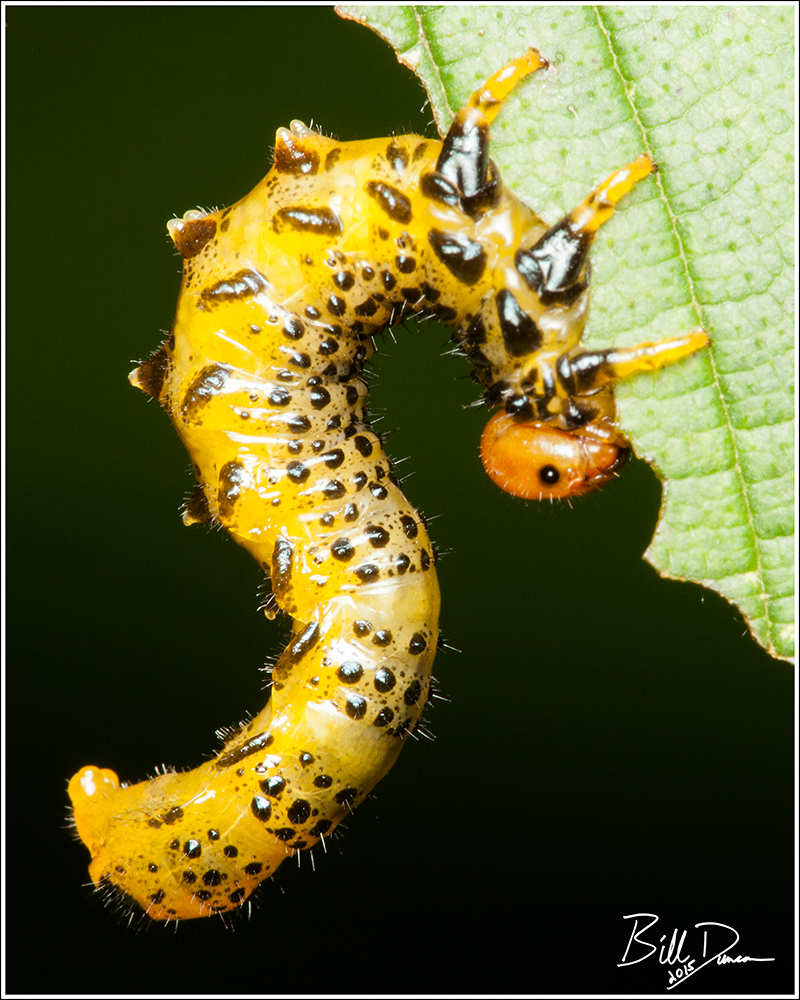
When it’s a Sawfly.
Did you know that there is a primitive group of the hymenoptera with free-living larvae that look very much like the caterpillars of the lepidoptera? Known as the Sawfly, there are morphological distinctions between them and the caterpillars and they can also be distinguished by this defensive posture adapted by the Sawfly larvae (Arge sp.) pictured here.
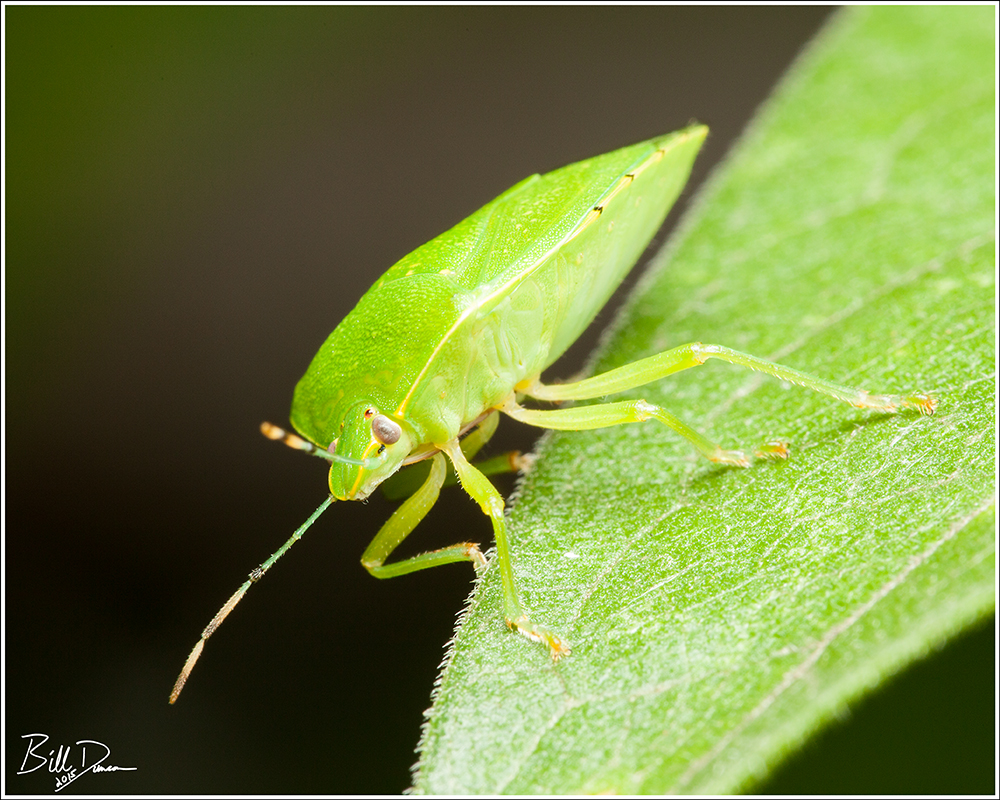
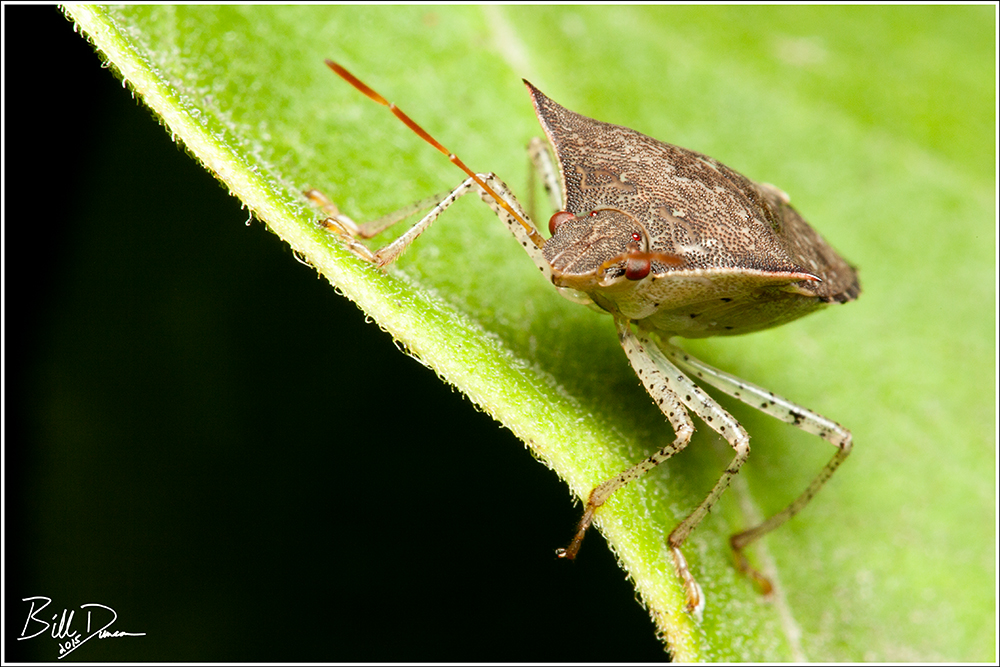

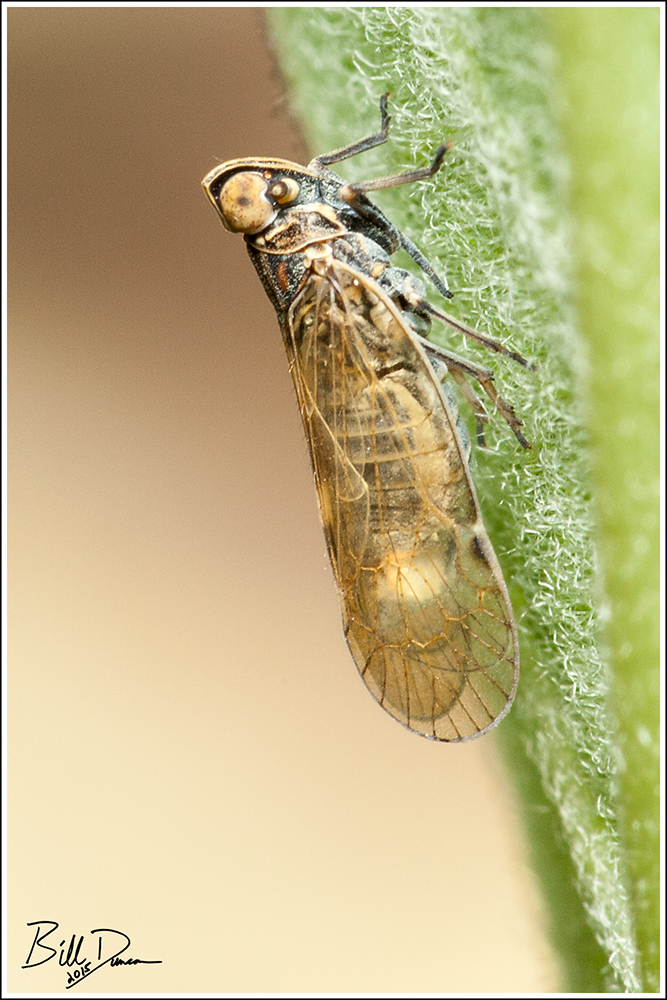
Just a few planthoppers/leafhoppers to share.


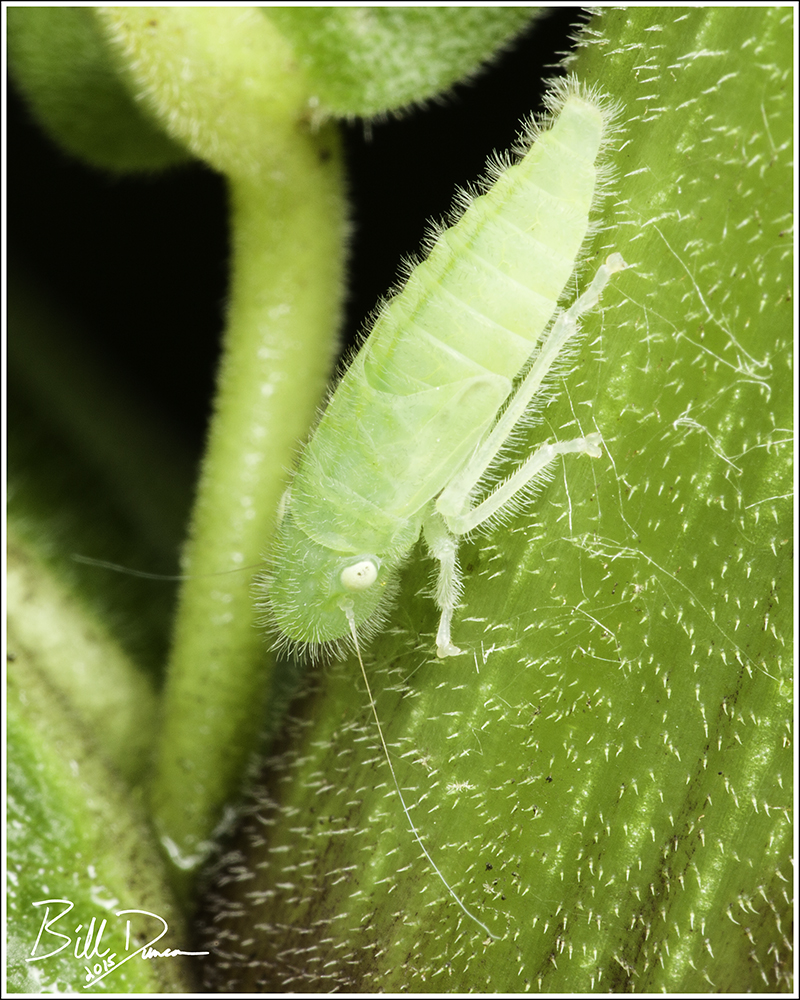
-OZB

The mimicry that insects exhibit can be astounding. Walking around Shaw Nature Reserve this summer, I noticed quite a fresh and disgusting looking bird dropping on a small bush near the trail. Something made me take a closer glance and I discovered it wasn’t a poop at all, but a caterpillar. The caterpillar was an early instar of the Giant Swallowtail Butterfly (Family Papilionidae). These caterpillars feed on member of the citrus family, the Rutacea, and this individual was found on a small hop bush. Youngsters like this one will most often be found directly on the surface of a leaf (as poops are most likely to be found), while older stages are likely to be found on leaf petioles or slender branches. In citrus production areas of the south, these guys have the nickname “Orange Dogs” due to their dietary needs. They can be considered a pest in such situations. Unfortunately, I forgot that, if harassed these guys will evert a pair of bright red structures called osmeterium. The function of these organs appears to be defensive in multiple ways. Often brightly colored, they can look quite like the forked tongue of a snake, and go along with other morphological adaptations in some members of the swallowtails in making them appear like a snake. In addition, numerous chemical compounds can be released with the osmeterium that have been shown to repel ants and other potential insect predators.

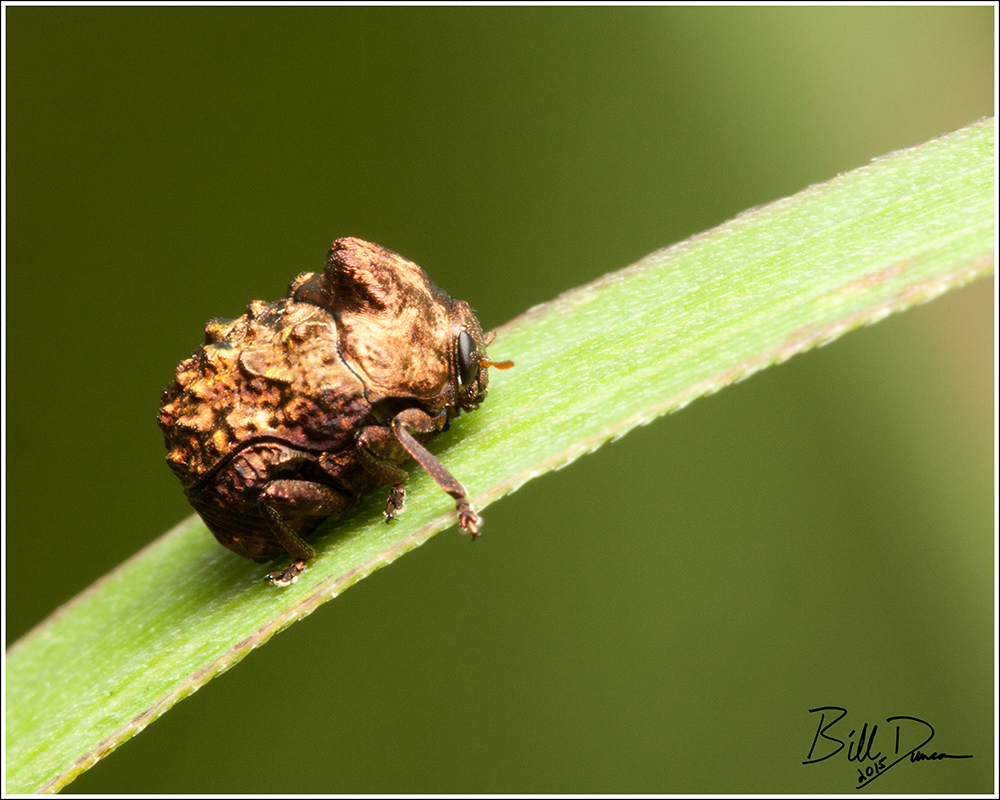
Moving from bird droppings to the droppings of a caterpillar we come to this fascinating creature that is most often found on raspberry bushes. A member of the diverse family of beetles – the Chrysomelidae, this Warty Leaf Beetle (Pacybrachis nigricornis), will tuck in its appendages and drop, looking exactly like a caterpillar’s droppings, or “frass” (anyone remember the action figures from the 80s, the Rock Lords?).
-OZB
References
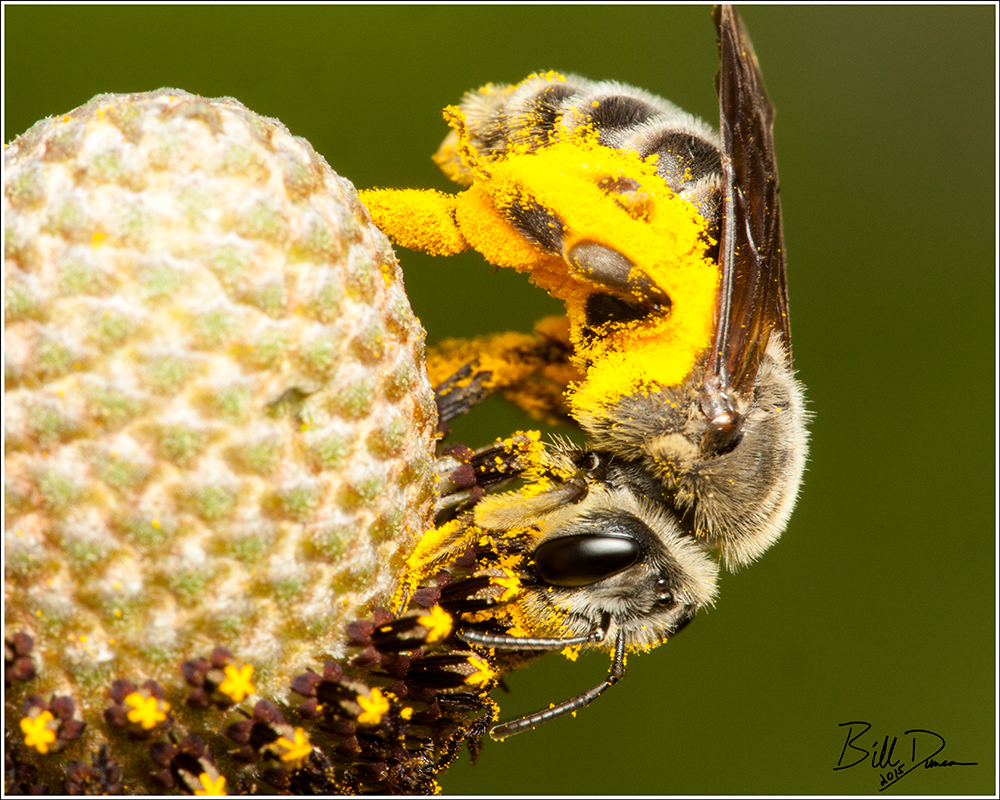
Tonight we have a couple of native bees photographed this summer at Shaw’s Nature Reserve. I may very well be incorrect, but I believe the bee pictured above is a Mining bee in the family Andrenidae. I would love to know how much pollen is taken away in a season by these guys.

The final two photos show a sweat bee (Halactidae). These are quite challenging to photograph, but worth the effort.

-OZB

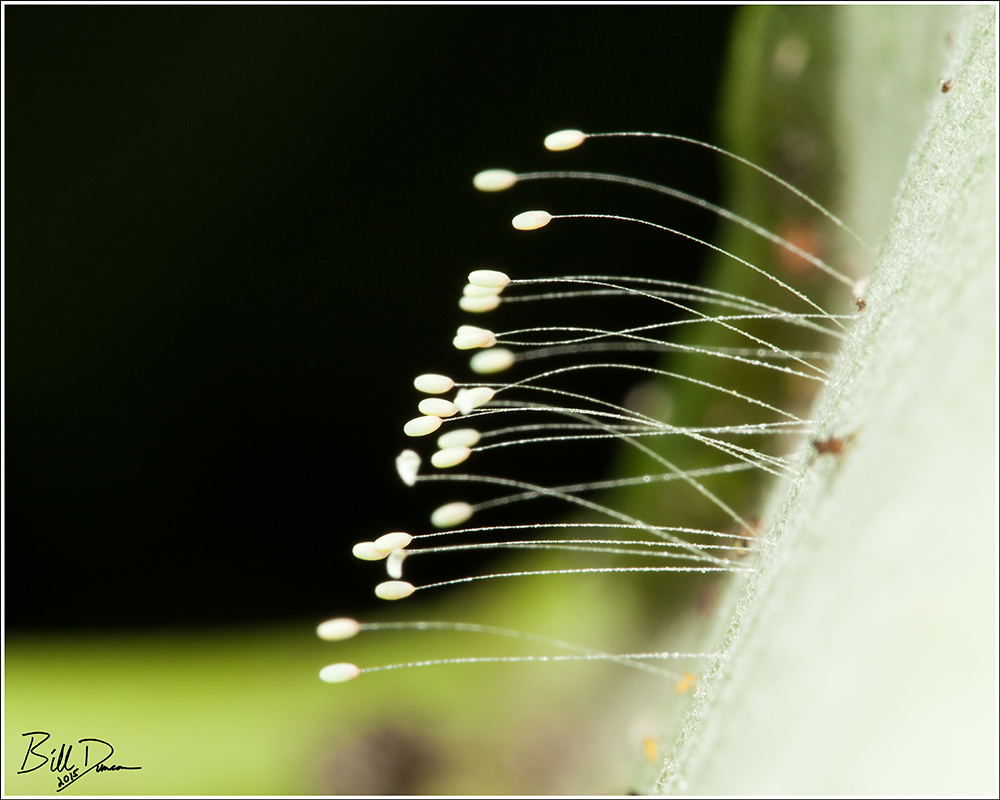
The Lacewing (order Neuroptera, roughly translated to “nerve-wings”) insects are important predators of economic pests. Lacewing larvae are voracious predators that prey upon soft-bodied arthropods such as aphids, scale and whitefly. I have not yet been able to photograph one of these killer larvae yet, and that may be due to their tendency to cover themselves in pieces of trash (including parts of their victims) they find in their environment as camouflage. Another interesting bit of information about these insects is how their eggs are deposited. The photograph below shows the eggs deposited on long thread-like stalks, which have been hypothesized to be deterrents to not only predation, but cannibalism as the larvae hatch and immediately begin to look for something to eat.
OZB
 A Thousand Acres of Silphiums