"What a thousand acres of Silphiums looked like when they tickled the bellies of the buffalo is a question never again to be answered, and perhaps not even asked." -Aldo Leopold
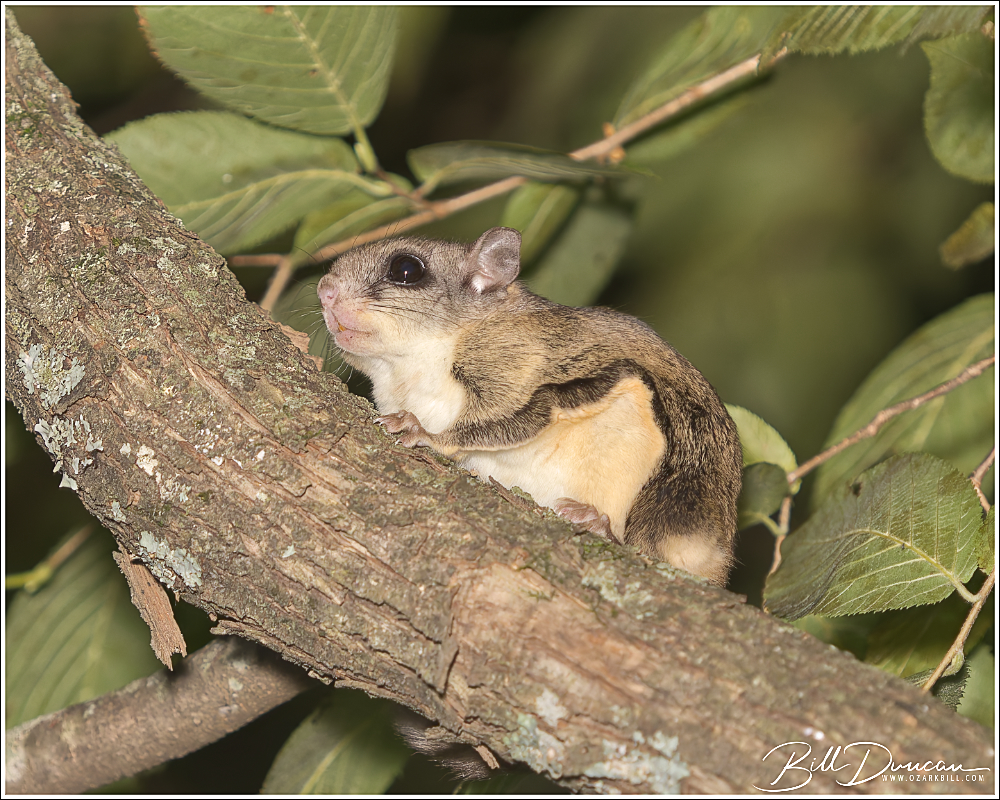
I can’t believe I forgot to include a photo of this wonderful flying squirrel that visited us during a blacklighting night at Engelmann Woods N.A. back in July of this year. I assume it may have been attracted to all of the moths and insects that were being drawn to our lights
southern flying squirrel
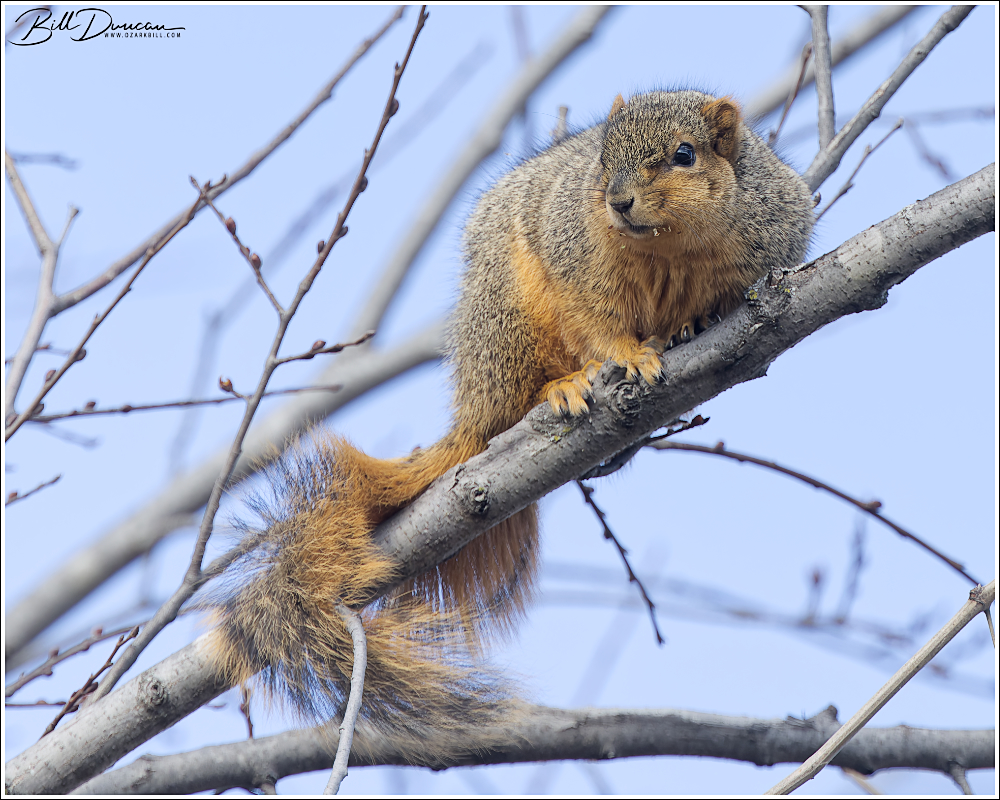
Next up is a photo of a fox squirrel we encountered during the Confluence Area Christmas Bird Count on New Year’s Day. I wish we had these guys in the suburbs rather than the destructive gray bastards.
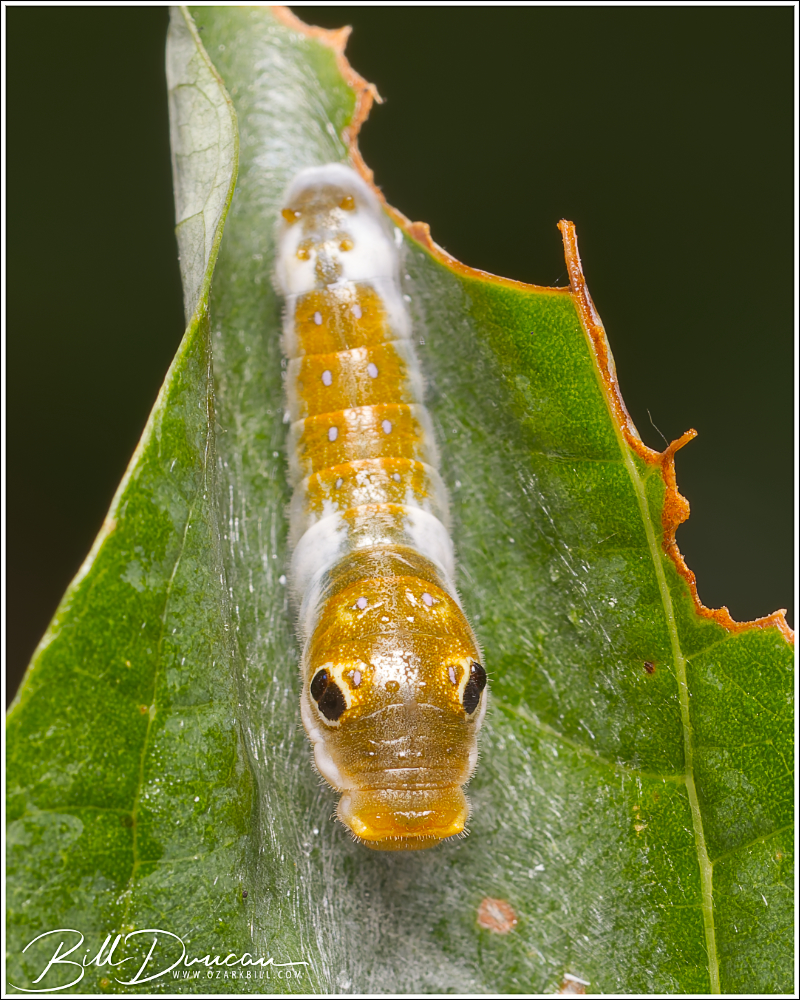
Spicebush Swallowtail Papilio troilus fam. Papilinoidae (Hodges#4181) Host plant(s): Found on sassafras (Sassafras albidum) and spicebush (Lindera benzoin) Date(s) and location(s): 26 July, 2024 – Engelmann Woods Natural Area, Franklin County, MO; Tyson Research Center, St. Louis County, MO Notes: This species and other, more rare species of swallowtails may be facing problems in the future with the introduction of laurel wilt, caused by the fungus Raffaelea lauricola, which is vectored by the redbay ambrosia beetle (RAB), Xyleborus glabratus. These nonnative species were first discovered in the southeastern U.S. in 2002. Since then this disease and its vectoring insect have been documented in 11 southeastern states and have killed millions of plants in the laurel family, which include sassafras and spicebush. Laurel wilt has not yet been reported in Missouri, but has been confirmed in the neighboring states of Tennessee, Kentucky, and Arkansas. Winter temperatures could perhaps keep this disease from spreading north into Missouri, but warmer winters associated with climate change are not promising.
In late July, Chris Brown and I enjoyed a night of blacklighting at Engelmann Woods Natural Area in Franklin County, MO. Coincidentally, this was exactly one year to the day from a blacklighting session I had here in 2024. I have also done this during July in previous years at this same location. It is interesting seeing the patterns of the same moth species as well as others that might not have shown up to the sheet on previous occasions.
Here are a few insects that I thought I would share here.
Eudryas gata (beautiful wood nymph)
We found at least four Eudryas gata (beautiful wood nymph) resting on vegetation nearby the lighted sheet. I feel this species is perfectly named. Although the adult form is technically a bird-dropping mimic, it is still beautiful along with the caterpillar.
Marathyssa inficita (dark marathyssa). This is a bizarre little moth that is often attracted to our lights. This species caterpillar hosts on sumac (Rhus sp.) and poison ivy (Toxicodendron radicans).
Tarache aprica (exposed bird dropping moth)
Tarache aprica (exposed bird dropping moth) is a small but striking member of the Noctuidae family. The caterpillar, which I have yet to find, is also a bird dropping mimic.
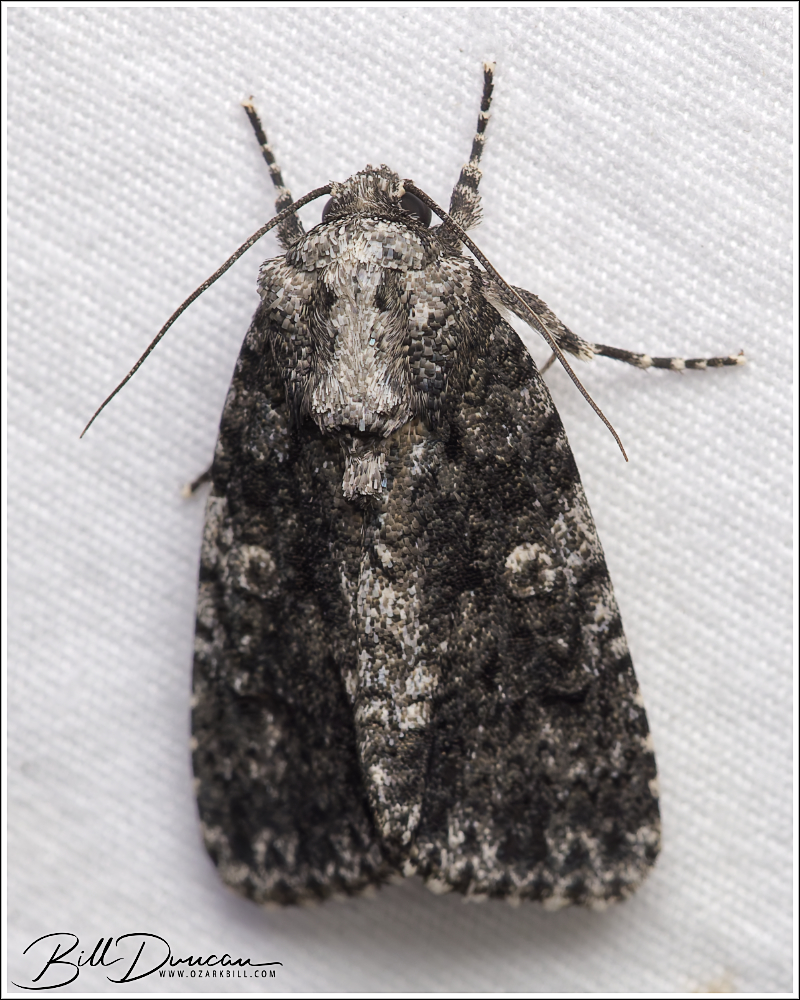
Acronicta afflicta (afflicted dagger moth) fam. Noctuidae, hosts on oaks
It’s always a pleasure to find a fresh Dryocampa rubicunda (rosy maple moth)
Nadata gibbosa (white-dotted prominent)
Nadata gibbosa, the white-dotted prominent is a common Notodontid. We frequently find their caterpillars during our hunts on oak trees.
Plagodis alcoolaria (Hollow-spotted Plagodis)
Datana sp.
I have discovered that members of the Datana genus can be difficult to narrow down to species in both adult and larval forms. This moth pictured above exhibits patterns that could match D. contracta, major, and drexelii. Perhaps having this specimen collected and in-hand, the species could be determined, but not with this single photo.
Harrisimemna trisignata (Harris’s three-spot)
The find of the night for me was two beautiful Harrisimemna trisignata (Harris’s three-spot) moths. I have seen the adults before but never managed to get a good photograph. This is probably number one on my caterpillar list to find one day.
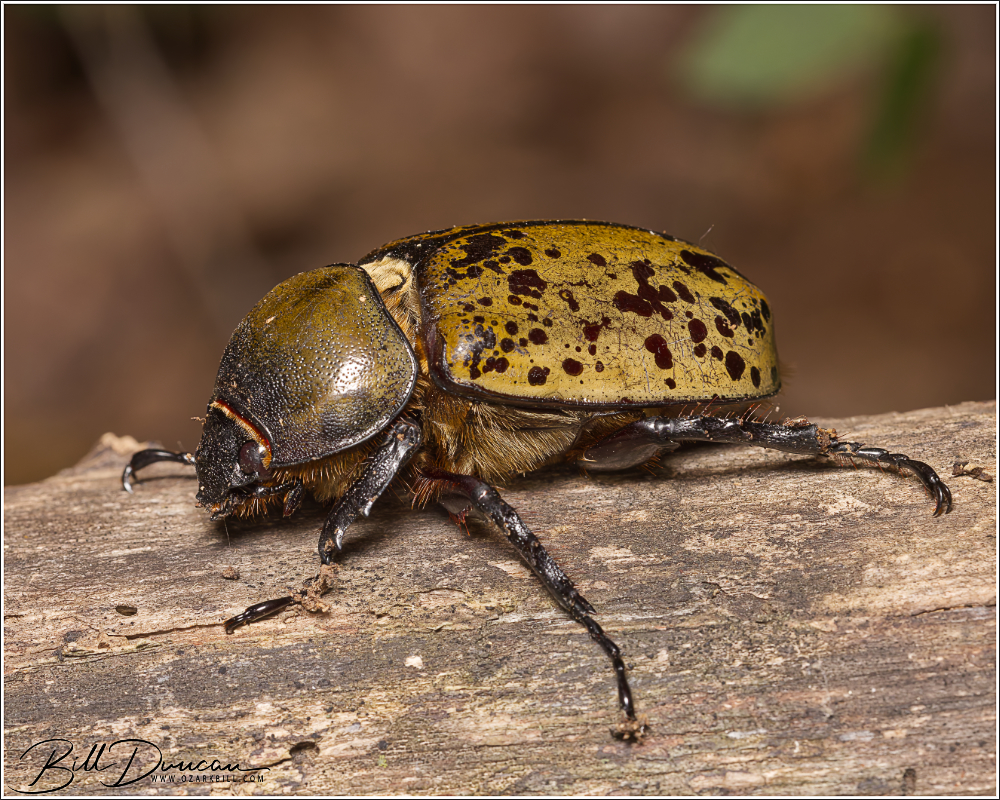
Dynastes tityus (eastern Hercules beetle)
I believe this is the forth Dynastes tityus I’ve come across and they have all been females. Maybe next time, I hold on to a female in a cage to see if she can attract a male for me.
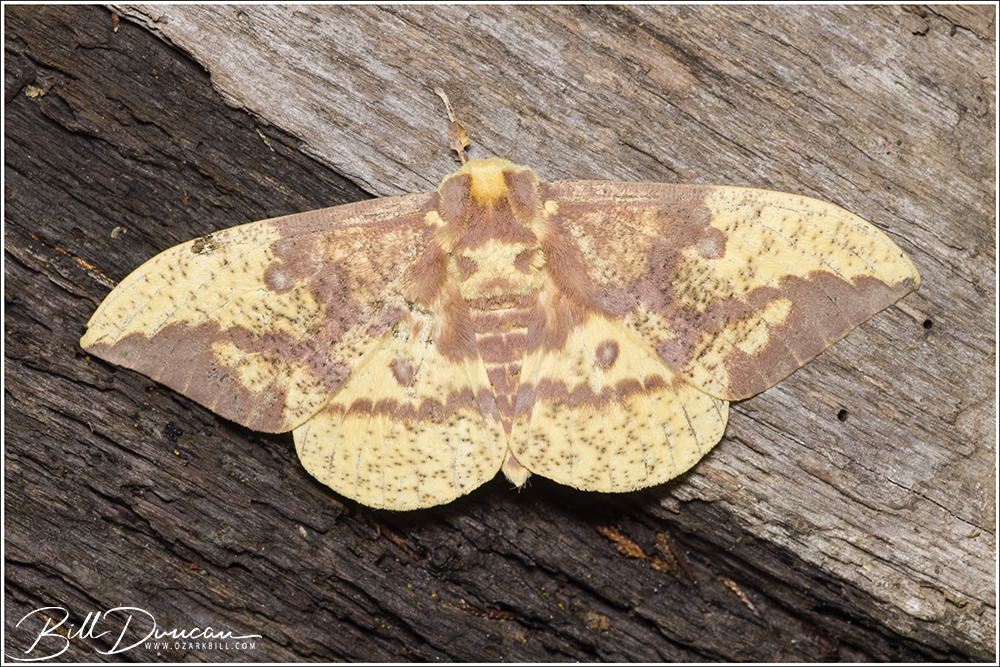
Eacles imperialis (imperial moth)
It seems that Eacles imperialis are now a sure thing at a blacklighting event at Engelmann Woods. Usually around midnight, you can expect at least a couple to visit.
That’s all from this night. I’m looking forward to a blacklighting session with the WGNSS group this coming weekend. It should be great and I will plan on sharing what we find here.
I forgot to post the following adult imperial moth from our black-lighting night this year in the previous post. As you can see, it was a worthwhile night! I photographed this species once before and they do commonly show up on black-lighting occasions, but I never get tired of them showing up! All of these images were taken at Engelmann Natural Area in Franklin County, MO.
Imperial Moth (Eacles imperialis)
Imperial Moth (Eacles imperialis)
This imperial moth caterpillar was found on a night cat hunt in late September.










 A Thousand Acres of Silphiums