My Country ‘Tis of Thee

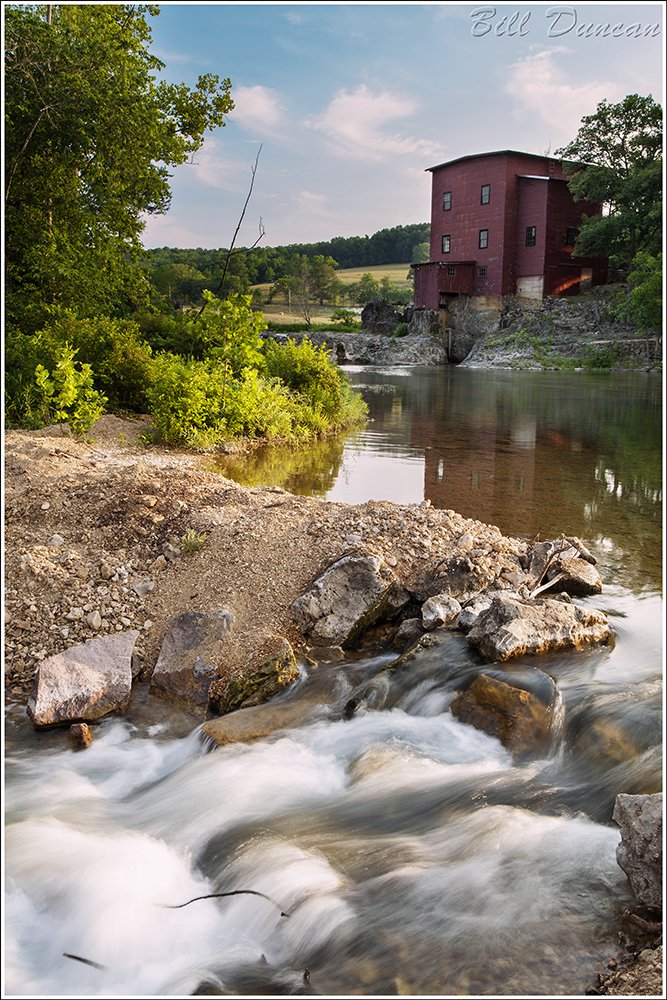
Part of my Missouri Ozarks grist mill series, this image shows the Dillard Mill in late afternoon light, watching over the Huzzah Creek as the small river works it’s way through a series of man-made impoundments.  There has been a mill structure on this location since 1853, the current building was completed in 1908.  This was the last stop of the day in a day trip Sarah and I took this spring.  Although warm, the setting was perfect.  The quaint, old, warm structure set against last years hay bales in the field immediately behind, the contrasts in water as it rushed down rocky barricades, stopping in motionless, clear ponds, and the chatter of birds like the Belted Kingfisher made us hate to get back into the car and take the drive back to the city.

Technical details: Canon EOS 5D Mark II camera, EF24-105mm f/4L IS USM lens @ 32mm, ISO 100,  f/14, manual blend of three exposures

Summer at the Confluence

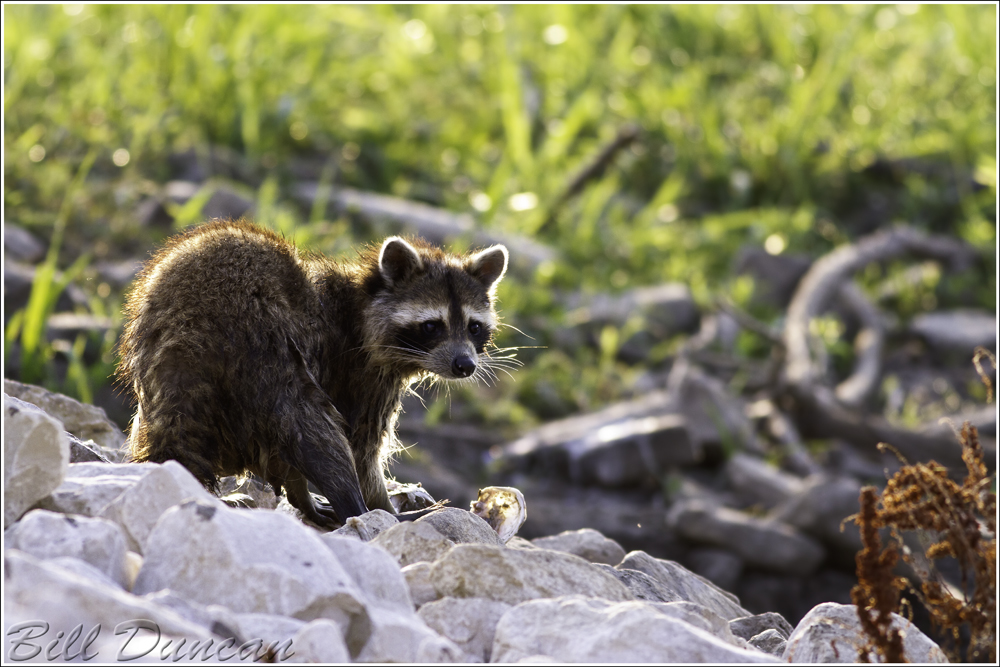
This weekend I spent both mornings at Riverlands Migratory Bird Sanctuary, arriving near dawn and walking around the trails for a few hours before the extreme heat of the day took over.  Sarah got up early and came with me this morning. Saturday morning I was fortunate to spot this guy feasting on carcases of fish that succumbed to the poorly oxygenated waters of the shrinking, heated pools of the wetlands.  This was my first opportunity at shooting a raccoon.  Even at such an early morning hour, the back-light serves to give a sense of the heat and humidity that were already noticeable.

Technical details: Canon EOS 7D camera,  EF400mm f/5.6L USM lens, ISO 640,  f/5.6, 1/400 sec

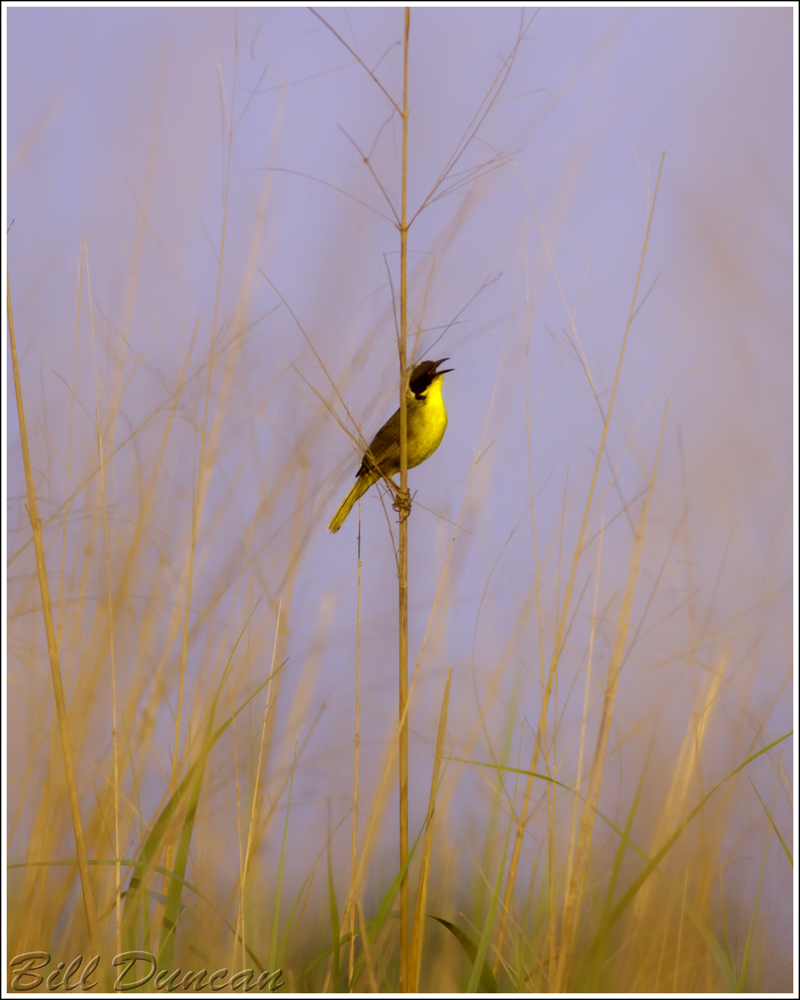
One of the photographic challenges of this location is trying to get shots of the song birds that live among the tall grasses.  They usually stay pretty far from the trails and are usually hidden low in the vegetation.  This Common Yellowthroat Warbler was close enough and partially obscured by the grasses.

Technical details: Canon EOS 7D camera,  EF400mm f/5.6L USM lens, ISO 640,  f/5.6, 1/1250 sec

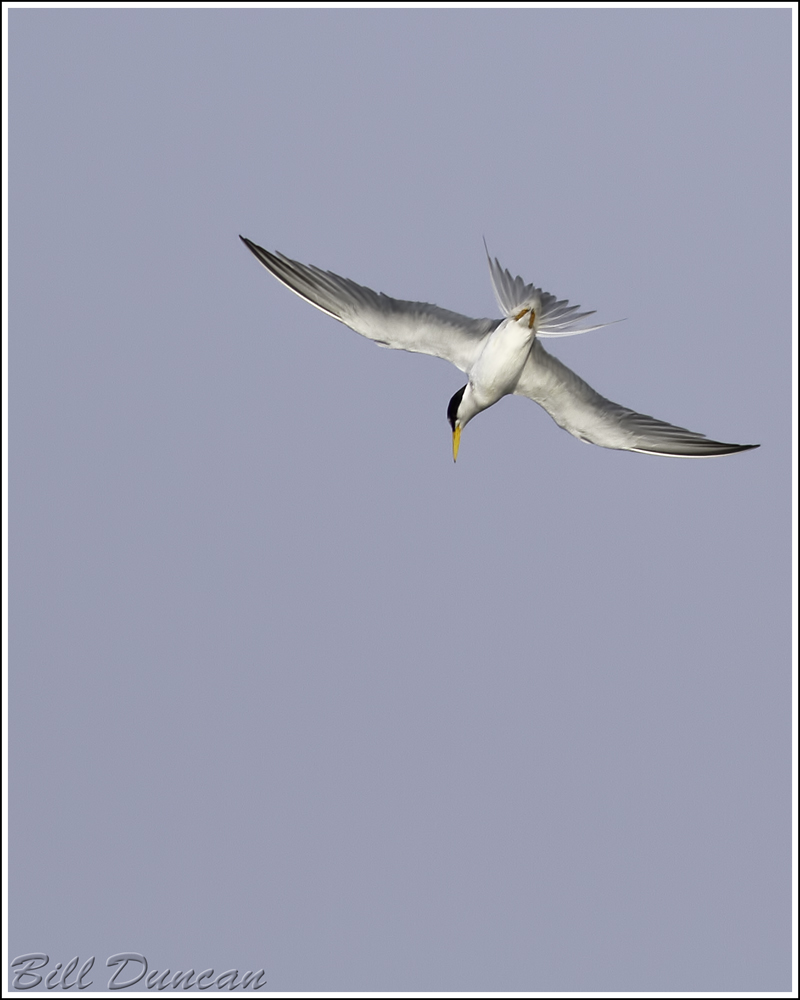
One of the pleasure one can get from a summertime visit to RMBS is watching the Least Tern.  I love watching these guys fish.  This one is beginning the plunge into the water off of Ellis Island to grab a little fish.

Technical details: Canon EOS 7D camera,  EF400mm f/5.6L USM lens, ISO 250,  f/5.6, 1/1600 sec

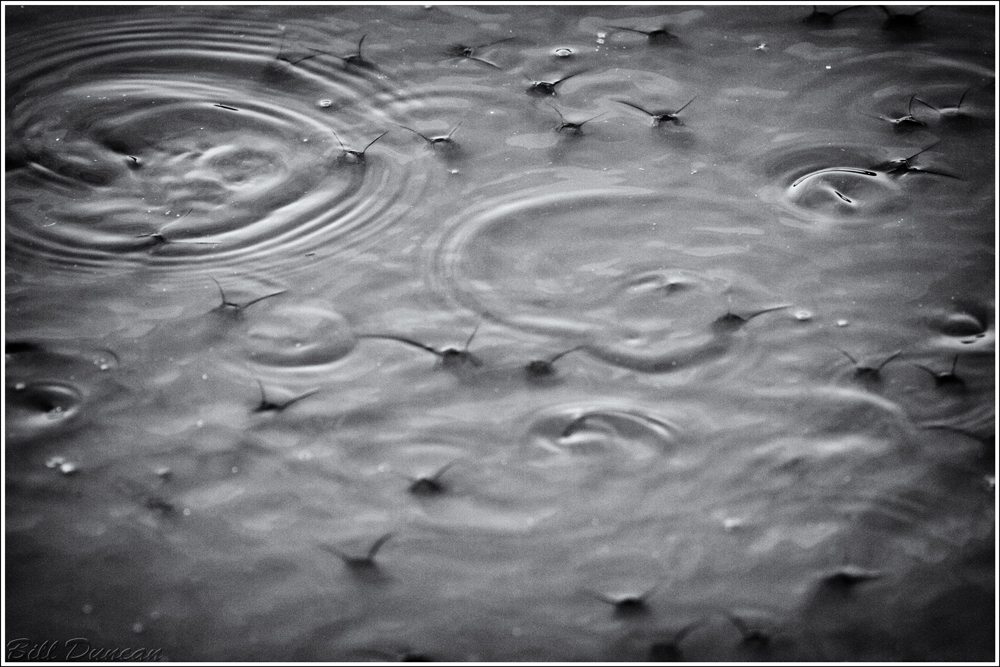
Kudos to Sarah, who took a closer look at these guys.  What looked like a bunch of tadpoles gulping at the surface of one of these rapidly vanishing pools was actually a nice-sized school of small catfish.  If rains do not come soon, these guys have no chance.

Technical details: Canon EOS 7D camera,  EF400mm f/5.6L USM lens, ISO 800,  f/5.6, 1/400 sec

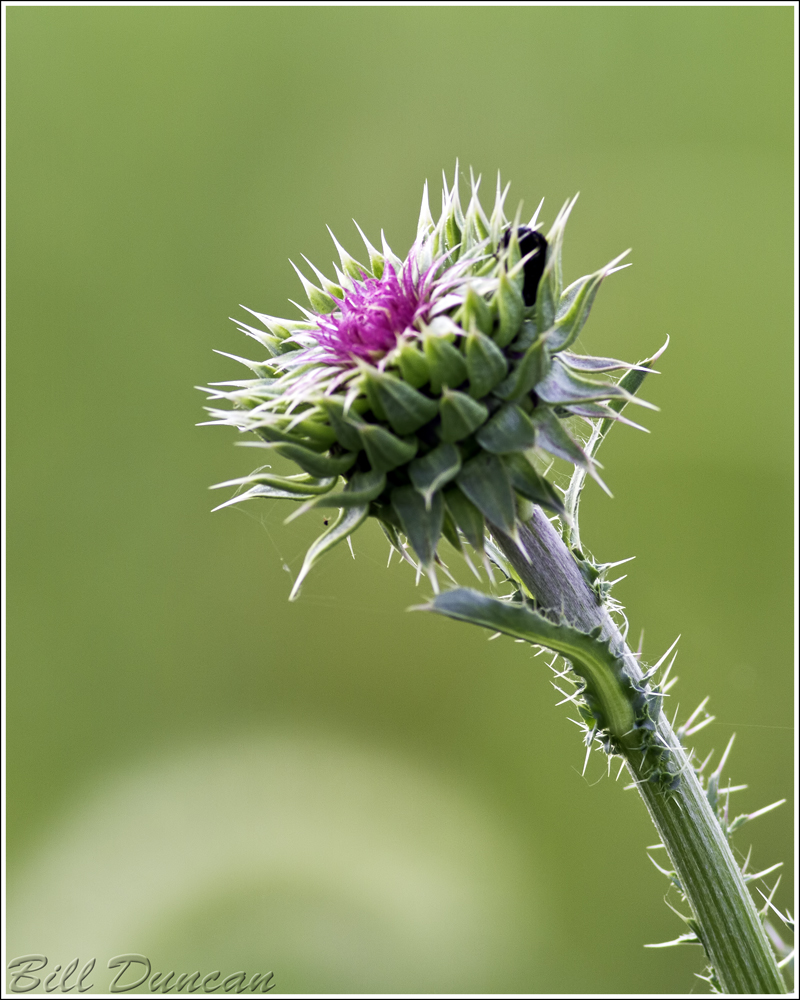
Sarah also spotted this thistle in early bloom and asked that I take its picture.  I haven’t done a lot of macro style shooting with the 400mm, but I know that using the super tele’s to do this can work magic.  The focus isn’t perfect, but I was actually fighting the minimum focus distance.  I need to try this with dragonflies and other large insects.

Technical details: Canon EOS 7D camera,  EF400mm f/5.6L USM lens, ISO 800,  f/5.6, 1/400 sec

This morning there was actually a bit of cloud cover over the sun.  I decided to try a little panning blur and thought this was an apt image to go along with the record breaking heat we’ve been experiencing.  Stay cool everyone.  I am sure looking forward to all the time I’ll have to spend in the greenhouse this week.  ;=)

Technical details: Canon EOS 7D camera,  EF400mm f/5.6L USM lens, ISO 100,  f/14, 1/125 sec

Location Spotlight: The Canyon-land of Ferns and Waters – Hickory Canyons Natural Area

Today’s post spotlights a few images I took recently at the least well-known, but perhaps my favorite, of the Ste. Genevieve trio gem locations found in south-eastern Missouri, Hickory Canyons Natural Area.  The other two nearby locations are Hawn State Park and Pickle Springs Natural Area.  Much of the exposed rock in this area is known as LaMotte sandstone and was deposited around 500 million years ago under the Paleozoic sea, which covered this region except the igneous knobs of what are now called the St. Francois Mountains.  Unlike the other sedimentary rocks – like dolomite and limestone that compose much of the Ozarks, sandstones are generally much more resistant to erosion.  This results in rock features that are often quite spectacular to the eye and the canyons, bluffs and other exposed sandstone bedrock have become favorites for hikers, rock climbers and other travelers to this region.
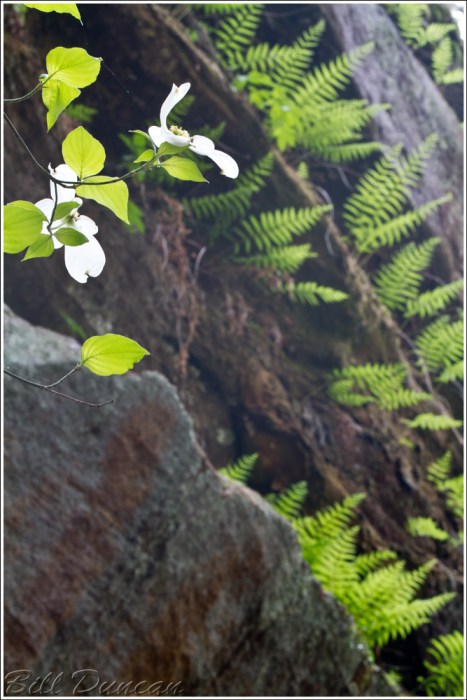
“Addressing the Optimates”

Technical details: Canon EOS 7D camera, EF70-200mm f/4L IS USM lens @ 89mm, ISO 320,  f/20,  0.4 sec

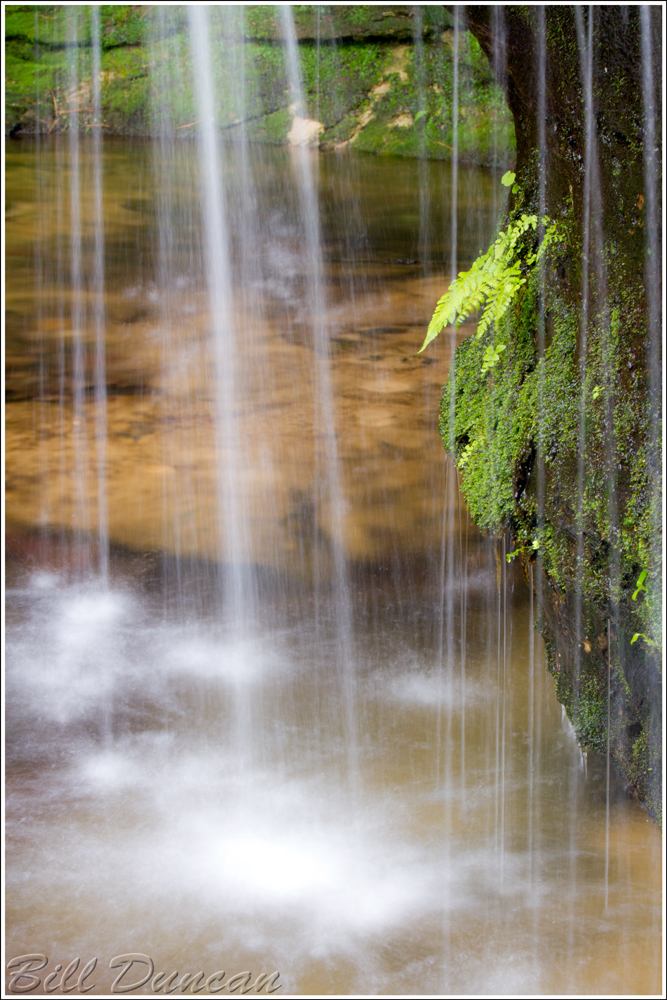
Two short hikes are available at Hickory Canyons N.A.  Both offer great views of the rock formations, including wet-weather waterfalls like the one shown below.
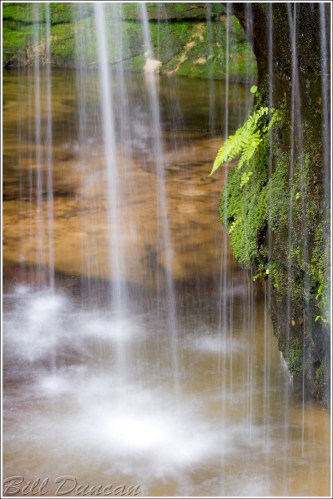
“The Bath House”

Technical details: Canon EOS 7D camera, EF70-200mm f/4L IS USM lens @ 70mm, ISO 320,  f/16,  1.3 sec

The overhangs and cracks created in these box canyons, gorges and cascades provide opportunities for ferns, mosses and lichens.  In fact, these three spots mentioned above in Ste Genevieve Co are the only place the fern enthusiast need travel to in Missouri.  The well-draining, sandy and acidic soils found here are perfect for species like wild-rose azalea, hay fern and rattlesnake orchid.  White oak, hickories, sugar maples, short-leaf pine and flowering dogwood are the primary tree species found at this location.  A few trips during spring time are definitely worth it to find some of these fantastic plants in bloom set against these dripping canyons and ephemeral cascades and waterfalls.  The wild-rose azaleas bloomed about six weeks early this spring and I missed them.  Oh well, something to look forward to next year.
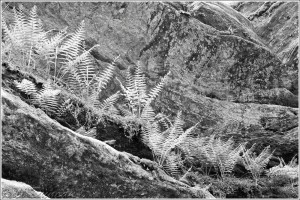
“The Senate”

Technical details: Canon EOS 7D camera, EF24-105mm f/4L IS USM lens @ 28mm, ISO 160,  f/16,  2.5 sec
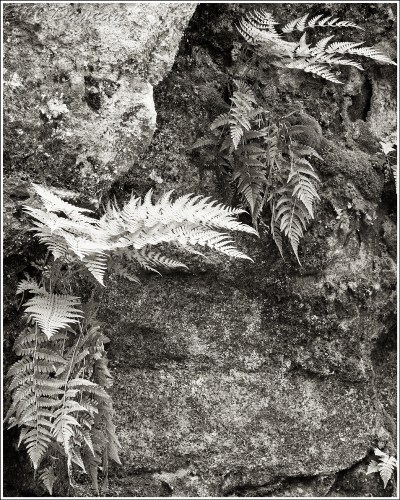
“Floralia”

Technical details: Canon EOS 7D camera, EF70-200mm f/4L IS USM lens @ 93mm, ISO 250,  f/16,  1 sec
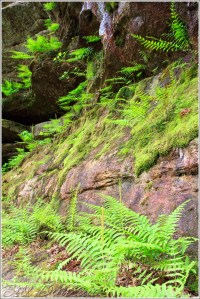
Virere Candere

Technical details: Canon EOS 7D camera, EF24-105mm f/4L IS USM lens @ 24mm, ISO 160,  f/16,  1.6 sec
Arboris Relictus

Technical details: Canon EOS 7D camera, EF100mm f/2.8L Macro IS USM lens, ISO 160,  f/16,  0.5 sec

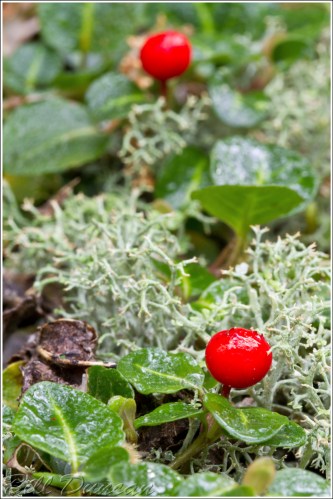
As the glaciers of the last major ice age retreated, species that required lower temps and had higher water requirements moved back north as well.  These canyons provide cooler and wetter environments for relict species like the one pictured above, the partridge berry.  This evergreen vine-like tiny shrub can be found throughout the canyon and hollow floors along with lichens and mosses.
It’s Spring Again. Everybody Know it’s Spring Again.

“Renewal”

Technical details: Canon EOS 7D camera, EF100mm f/2.8L Macro IS USM lens. ISO 250,  f/11, 1/13 sec

“To the girls and boys and people above, This is the time to fall in love”

Sorry, I always turn on the Biz Markie this time of year.  It wouldn’t be spring without him.

This image and post is dedicated to my stepfather, Wally, who bought me my first camera about 20 years ago.  Wally has a birthday this month.  Happy Birthday!  It was a Pentax K-1000, a manual-only film camera in which I learned the basics of exposure.  In my opinion, this body is one of the best values of this class and generation of camera available and still underrated.  It’s too bad they don’t make a digital version of this camera today.  Having a manual-only digital body would something else.  I use manual mode about 95% of the time anyway, so I guess it wouldn’t be a big difference.

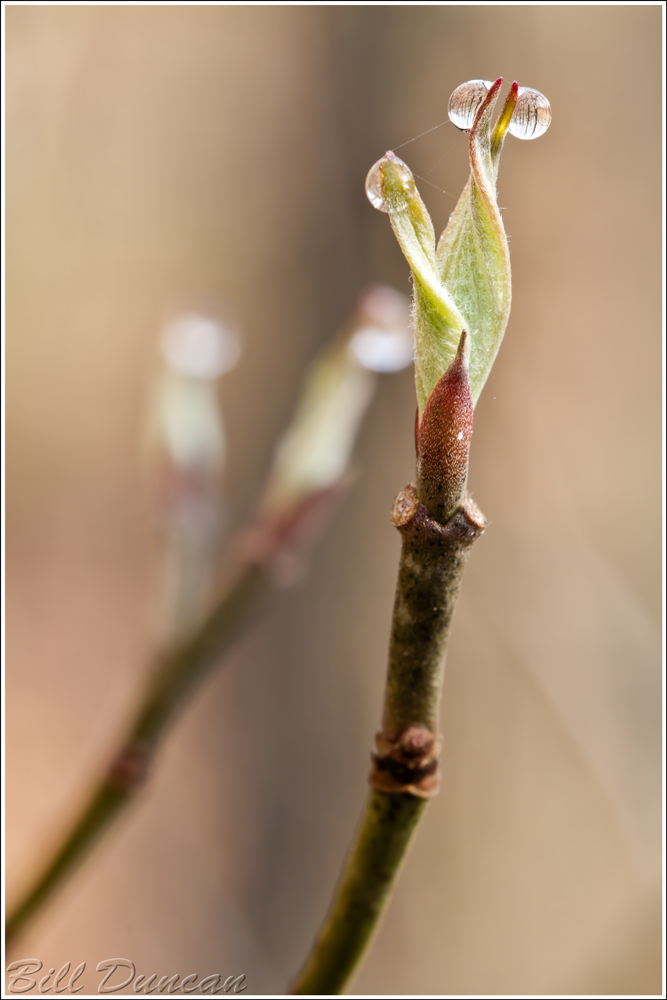
I took this photo on a recent hike in the Missouri Ozarks.  This bush must have had two dozen of these emerging leaf buds, each with a drop or two from gutation.  This phenomenon is seen when plants are growing in high humidity or in very saturated soils, like many parts of our region have been experiencing lately.  Between the low light and the high macro magnification getting a sharp image of the foreground subject was tricky.  I pulled out the reflectors to bring a little more light to the situation, but this only helped a little.

Seven Days of Mina Sauk Falls – Day Two

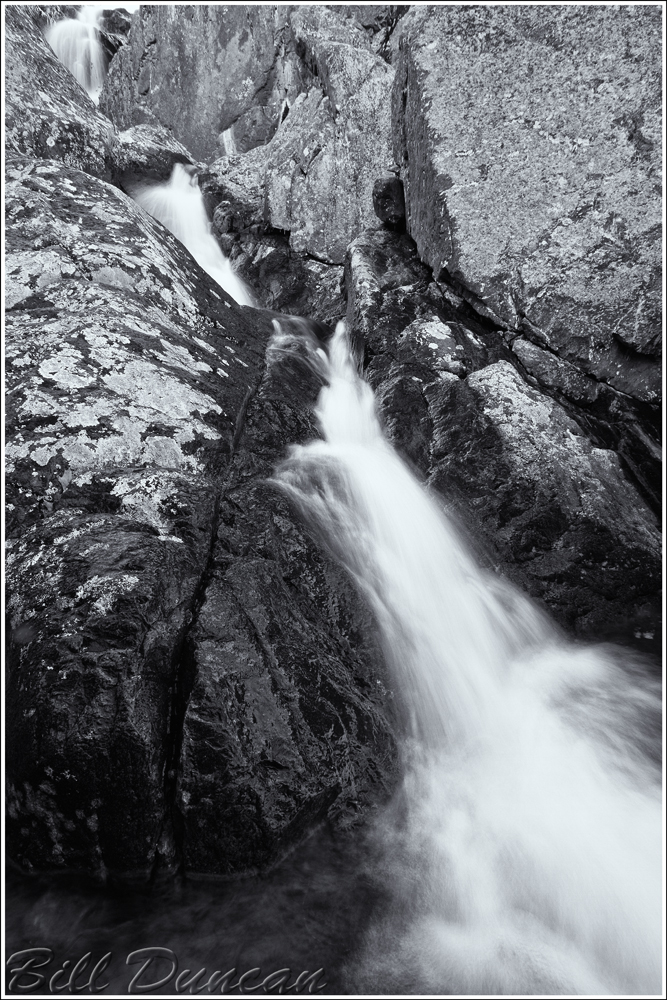
Technical details: Canon EOS 7D camera, EF-S10-22mm f/3.5-4.5 USM lens @ 10mm, ISO 160,  f/14, 0.6 sec

I estimate the vertical distance in this image in the neighborhood of 60-80 feet or more.  The ultra wide angle utilized in this image takes out a lot of that scale for the viewer.  I should have placed a kitten or something in the near foreground to capture that scale, I know.

The cascades and falls begin much higher up the mountain than this particular section.  Here is where the falls begin their more vertical descent.  This is a good example of the fractures (joints) that form in this super hard and dense rhyolite and granite.  The water slowly works its way in between the cracks and given enough time, water wins.