"What a thousand acres of Silphiums looked like when they tickled the bellies of the buffalo is a question never again to be answered, and perhaps not even asked." -Aldo Leopold
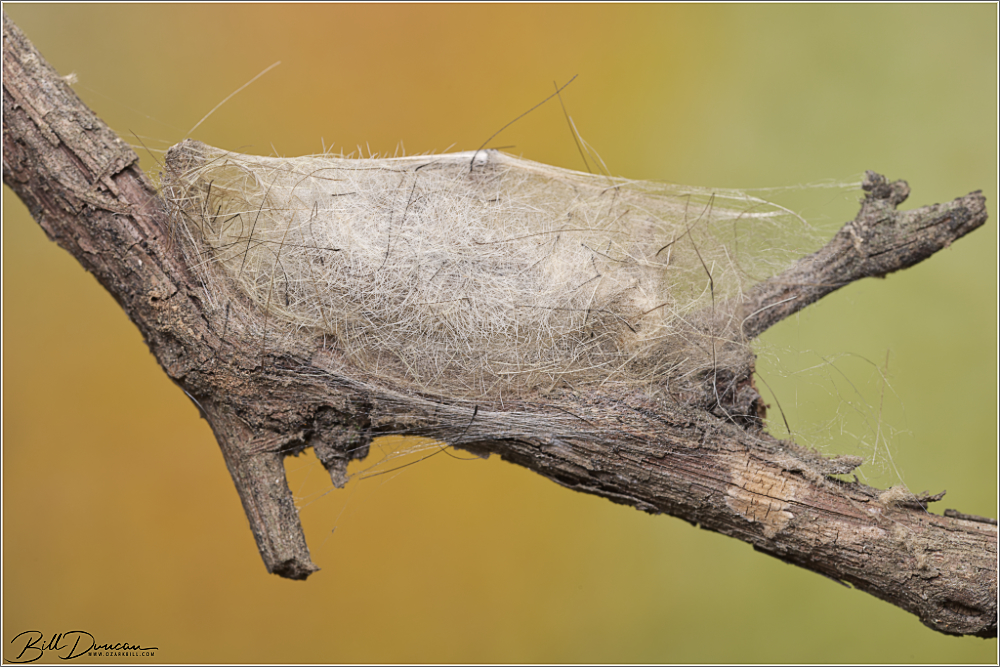
This post is related to the rearing work I shared previously of the Orgyia leucostigma (white-marked tussock moth). During a caterpillar hunting outing with Sarah, I found what was obviously a cocoon of a tussock moth. I can’t say for certain it belonged to O. leucostigma, but it is likely. So, I photographed it in the field and brought it home, keeping it separate from the O. leucostigma cocoons that I was rearing that were collected from my yard. As time went on and the other cocoons I was rearing began producing moths, I figured something was going to be different with the one pictured below.
A tussock moth (Orgyia sp.) cocoon collected on 21, Sep, 2024 at Onondaga Cave State Park. Note the long setae from the tussock moth caterpillar that are incorporated into their cocoons
Checking the container on 6-October, I found this beautiful Orgichneumon calcatorius, an Ichneumonid wasp with a Holarctic range that is a parasitoid of moths in the Orgyia and Dasychira genera. After taking a few photos, I let it go in the backyard. After emerging, females of the species mate and then overwinter as adults utilizing crevices in tree bark. In the spring and summer of the following year, they look for new caterpillars to insert their eggs.
A newly emerged Orgichneumon calcatorius with the pupa and cocoon that hosted it in the background.
A closeup look of the brilliantly patterned Orgichneumon calcatorius
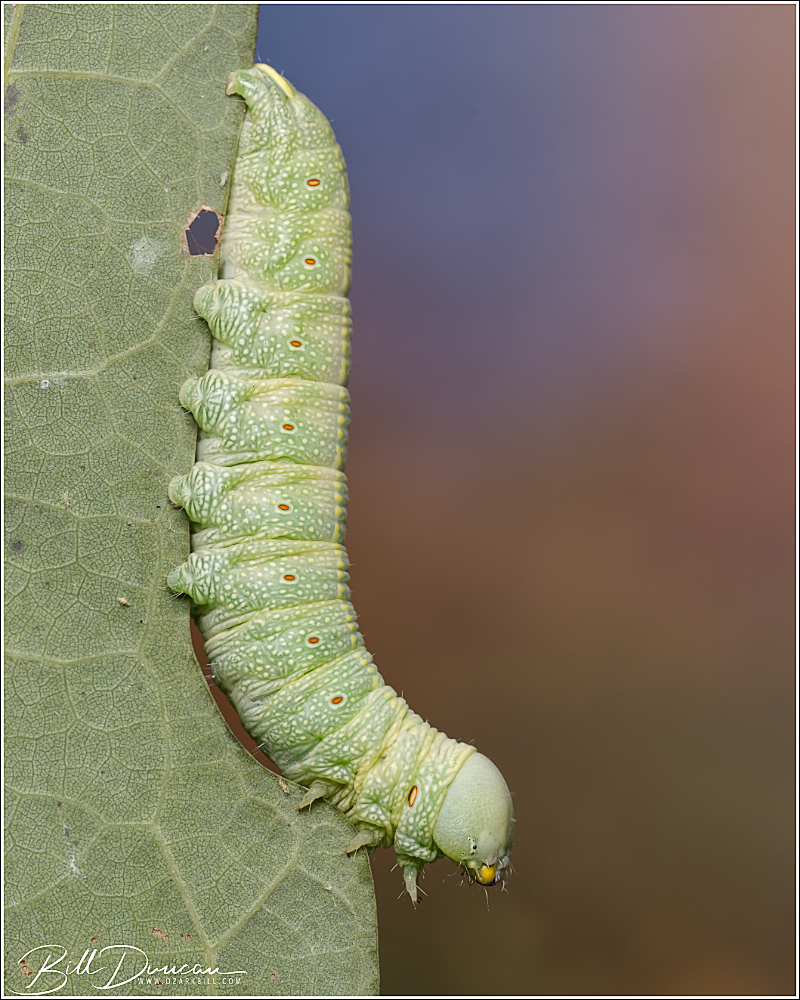
White-dotted Prominent Nadata gibbosa fam. Notodontidae Host plant: Found on white oak (Quercus alba) Date found: 02, Sep, 2024 Location Found: Hawn State Park, Ste. Genevieve County, MO Notes: One of the most common finds while searching oak trees.
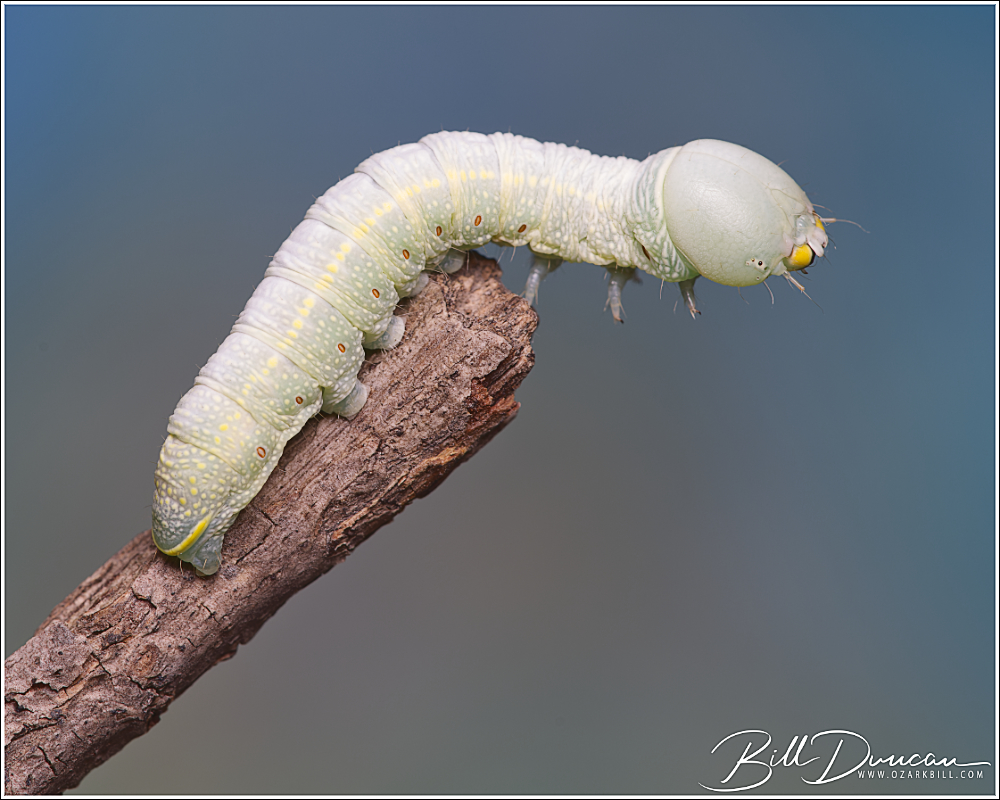
Spotted Apatelodes Apatelodes torrefacta fam. Apatelodidae Host plant: Found on white oak (Quercus alba) Date found: 02, Sep, 2024 Location Found: Hawn State Park, Ste. Genevieve County, MO Notes: Adults of this species are as unique and fantastic as the larvae.
This autumn I was fortunate to have this really interesting experience with a common but fascinating moth species. I invite you to read about it and see the photography.
New documented host plant (Nymphaeaceae) and life history documentation for the highly polyphagous moth, Orgyia leucostigma (Lepidoptera: Erebidae), in eastern Missouri.
Orgyia leucostigma Smith, 1797 is a moth species in the family Erebidae that is found throughout eastern North America and is known to be extremely polyphagous. Commonly known as the white-marked tussock moth, O. leucostigma has been recorded using 166 plant species in 55 families as hosts, mostly consisting of deciduous plants, but coniferous and herbaceous plants have also been recorded (Robinson et al. 2023).
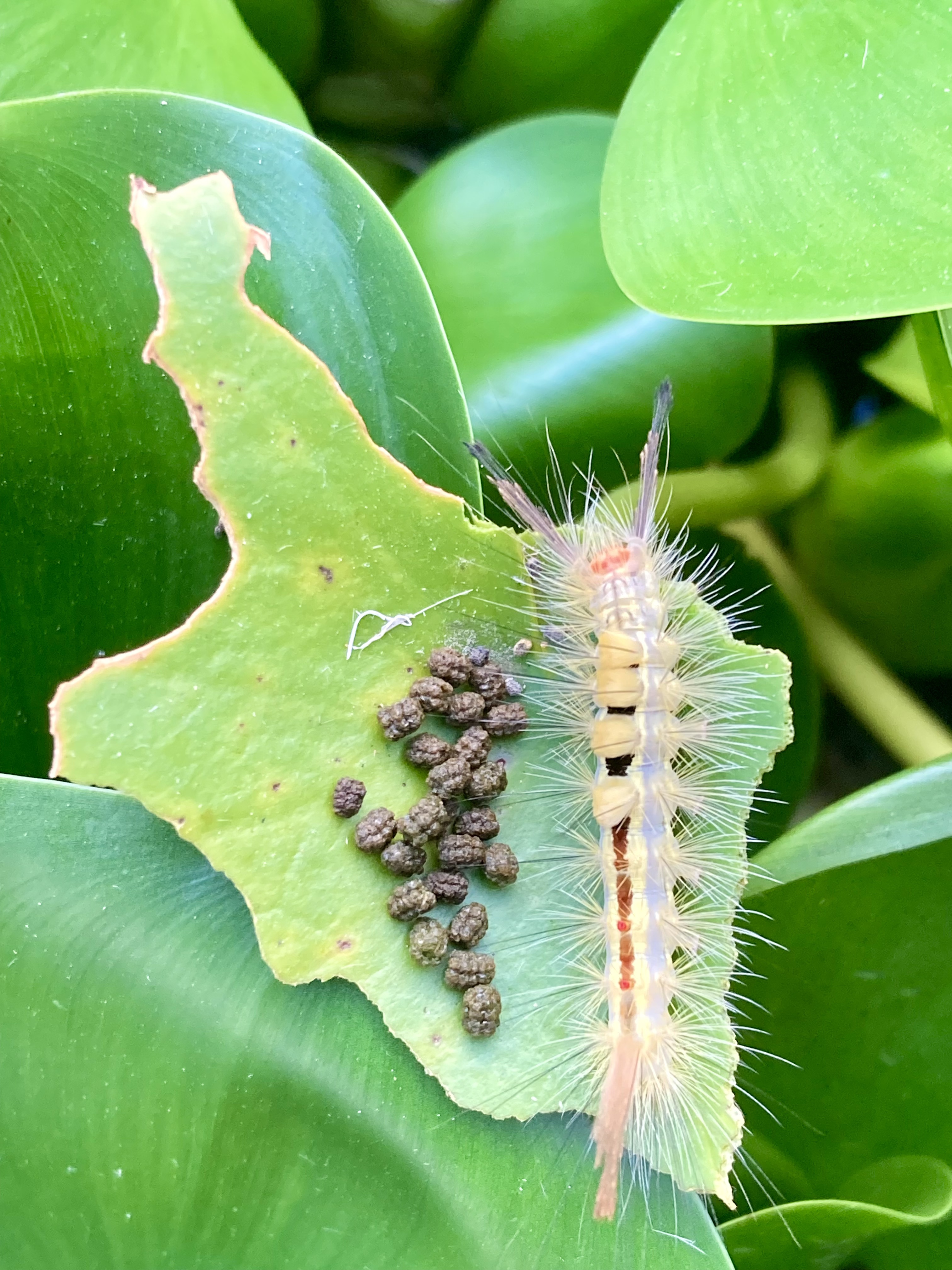
Larvae of Orgyia leucostigma feeding on Nymphaea odorata.
In early September 2024, I observed six mid- to late-instar larvae of O. leucostigma, each feeding on the leaves of Nymphaea odorata (Nymphaeaceae) that were growing in a small artificial “pond” in my St. Louis County, MO suburban yard. Unfortunately, these insects consumed every available leaf of N. odorata in the pond before they could pupate. The only other species in the pond available to them was the exotic Pontederia crassipes (water hyacinth), which they did not readily consume. I was able to locate and remove five final-instar larvae from the remnants of the original host leaves and placed them in an outdoor cage where they successfully switched to feeding on leaves of Quercus muehlenbergii and Q. imbricaria (both Fagaceae). Within seven days, all five larvae built cocoons to pupate within.
Larvae of Orgyia leucostigma running out of leaf. Leaves of exotic Pontederia crassipes (water hyacinth) seen surrounding hostplant leaf.
To my knowledge, this is the first documentation of a nymphaeaceous host plant for O. leucostigma, which expands the host range of this already highly polyphagous species by another family. Unfortunately, the caterpillars did not reach pupation feeding on N. odorata alone, so the ability of O. leucostigma to reach adulthood on this host cannot be confirmed yet. However, the fact that five larvae of O. leucostigma were able to reach the final larval instar feeding solely on N. odorata makes this highly likely.
Larvae of Orgyia leucostigma finishing its larval stage on leaves of Quercus imbricaria (shingle oak).
Life history of Orgyia leucostigma The lifecycle of O. leucostigma begins as an egg, typically laid in masses by the adult female. Eggs are laid in late summer or early fall on tree bark, branches, or other surfaces. A single female can lay anywhere between 100 to 600 eggs. These eggs are small, round, and white to pale yellow in color, and are coated in a protective frothy substance produced by the female to safeguard them from predators and environmental factors.
Two of five cocoons of Orgyia leucostigma that were raised primarily on the leaves of Nymphaea odorata.
Lepidopterans use a variety of strategies in overwintering. In the case of O. leucostigma, the eggs remain dormant over the winter, entering a state of diapause, a period of suspended development that allows them to withstand harsh winter conditions. They hatch in the spring when the weather warms, typically around late April or early May, coinciding with the budding of trees that will serve as food for the larvae.
One of five Orgyia leucostigma females that eclosed in late September and early October.
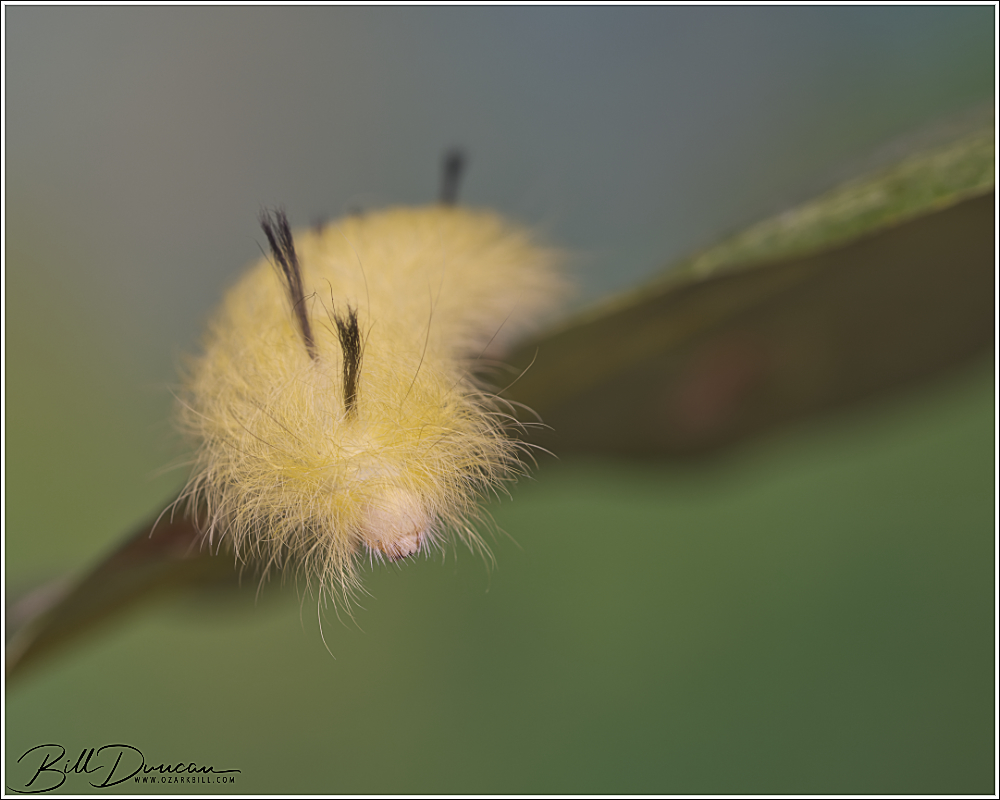
After hatching, the larvae emerge as small, hairy caterpillars. This larval stage is perhaps the most recognizable and distinctive phase of O. leucostigma. The caterpillars are known for their colorful and tufted appearance, with a series of tufts (or tussocks) of hair along their backs and two long black “pencils” of hair protruding from both the front and back ends. The body is primarily yellow or cream-colored, with a pattern of red and black markings.
One of approximately two-dozen male Orgyia leucostigma that were attracted to our screen porch, presumably by the pheromones released by the females.
As discussed above, the larvae feed on a wide variety of trees and shrubs, including both deciduous and coniferous species. In our area, oak, maple, and willow, are among the most common hosts. The larvae are voracious feeders and can cause significant defoliation when present in large numbers, which can lead to tree stress, although healthy trees typically recover without long-term damage.
The males found the stationary Orgyia leucostigma females once placed in their enclosure.
Once the larva has reached its final instar, it will spin a cocoon in a sheltered location, often on the trunk or branches of trees, beneath loose bark, or on the sides of buildings. The cocoon is made from silk and incorporates most of the caterpillar’s own urticating body hairs, offering added protection from predators.
Inside the cocoon, the caterpillar transforms into a pupa, a resting stage during which the most dramatic metamorphosis occurs. The pupal stage typically lasts 10-14 days, during which time the organism undergoes a complete transformation from a larva into an adult moth.
Upon completion of the pupal stage, the adult moth emerges. The adult form of O. leucostigma exhibits strong sexual dimorphism. The males are small, grayish-brown moths with a wingspan of about 25-35 mm. They have feathered antennae that they use to detect pheromones released by females from a considerable distance.
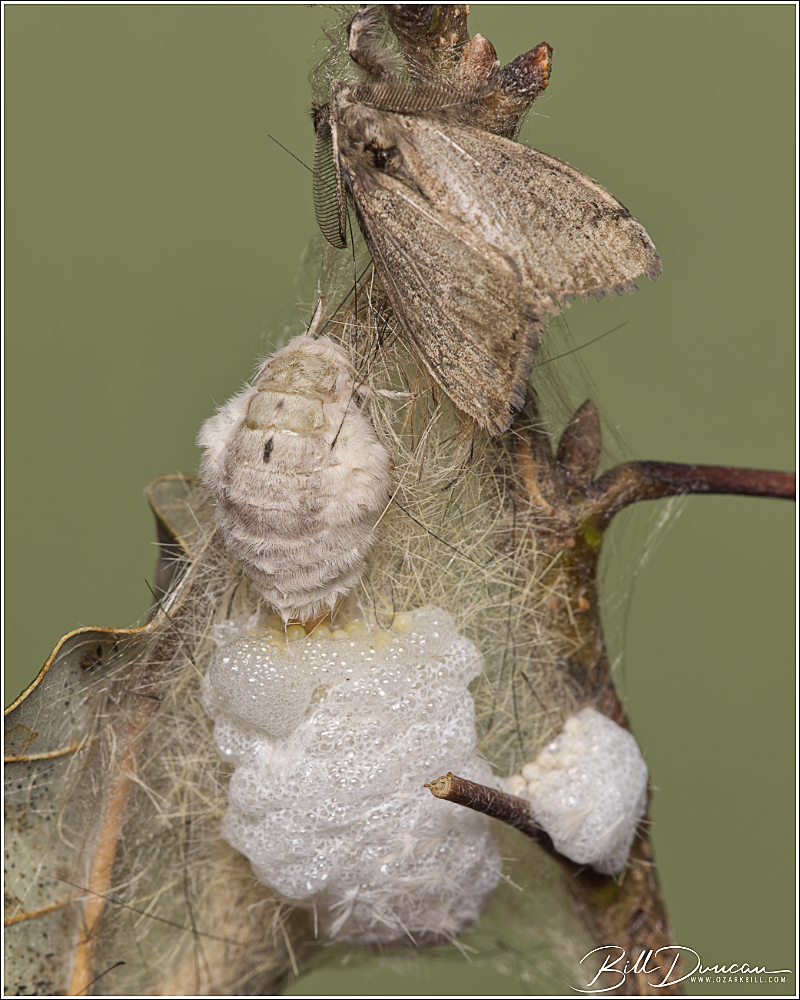
Within minutes of a presumed successful copulation, a female Orgyia leucostigma begins oviposition, forming a large foam-encapsulated egg mass.
In contrast, the females are wingless and remain on or near their cocoons after emerging. They are larger than the males and have a plump, cylindrical body covered with dense hairs. Since they are flightless, females rely on releasing pheromones to attract males for mating. After mating, the female lays eggs near the cocoon, starting the cycle again. The female typically dies shortly after laying her eggs, while the male lives a few days longer in search of other mates.
Due to the stationary habit of the females, it is fascinating that all dispersal is dependent on the larvae in this species. To do this efficiently, early-instar larvae will often “balloon,” letting out an amount of silk to catch the wind, thus allowing them to move to new areas much quicker than by crawling. This dispersal mechanism is also practiced by many spiders.
A worn male Orgyia leucostigma rests nearby as the female continues to oviposition.
In this specific case, all five of the pupa that I reared produced female adults and each of these eclosed exactly 10 days after cocoons/pupa were formed. At dawn of each morning following the females emergence, I walked the outside perimeter of our screened porch wherein the screened moth enclosure was contained. Each morning I found up to six male adult O. leucostigma that I captured and placed in the enclosure containing the females.
The extent of the egg masses of Orgyia leucostigma was astounding. The females were mostly eggs!
Mating appeared to be very brief and within minutes of contact by a male, each female began ovipositing. It was quite shocking observing the differences in size of the females before and after their egg masses where completed. See photos below that I attempted to document these changes.
A nearly completed Orgyia leucostigma egg mass along with her larger and older sister and a potential mate.
While observing and photographing these activities, I happened to notice that a jumping spider (F. Salticidae) was attacking one of the females prior to her ovipositing. The spider must have come from the oak branches that I placed in the enclosure to finish rearing the caterpillars. I took enough time to take a few photos of this and then removed the spider with a pair of forceps. I noticed a drop of hemolymph on the back of the female after removing the spider. However, the female did not seem too bothered by this and created her egg mass within a couple of hours of this incident.
A female Orgyia leucostigma that was attacked by a jumping spider (fam. Salticidae) that must have been hiding within the oak branches. The spider was removed and although it is likely the moth received a wound, she later completed ovipositioning.
Caterpillars of this species are often found during my caterpillar hunts. Sometimes they are so plentiful as to be annoying when hoping for rarer quarry. I had read about the stationary eggbound females of this species but had little hope of ever actually seeing one in person. I very much enjoyed documenting these activities and I will try my best at overwintering these egg masses to fruition.
Literature Cited
Robinson, G. S., P. R. Ackery, I. Kitching, G. W Beccaloni and L. M. Hernández (2023). HOSTS (from HOSTS – a Database of the World’s Lepidopteran Hostplants) [Data set resource]. Natural History Museum. Available from https://data.nhm.ac.uk/dataset/hosts/resource/877f387a-36a3-486c-a0c1-b8d5fb69f85a (last accessed 16 Sep 2024).
I posted about the hackberry emperor (Asterocampa celtis) caterpillar last month. Today’s cat is also found on hackberry (Celtis sp.) trees, but are far less common. Here is the tawny emperor (A. clyton) photographed at Shaw Nature Reserve in July.
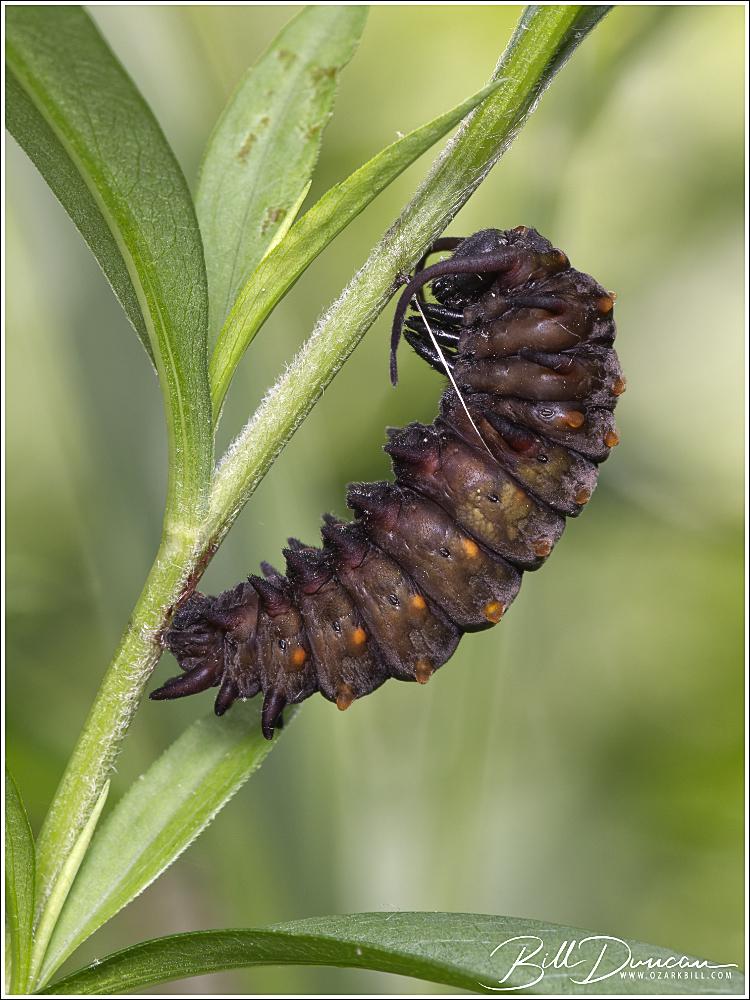
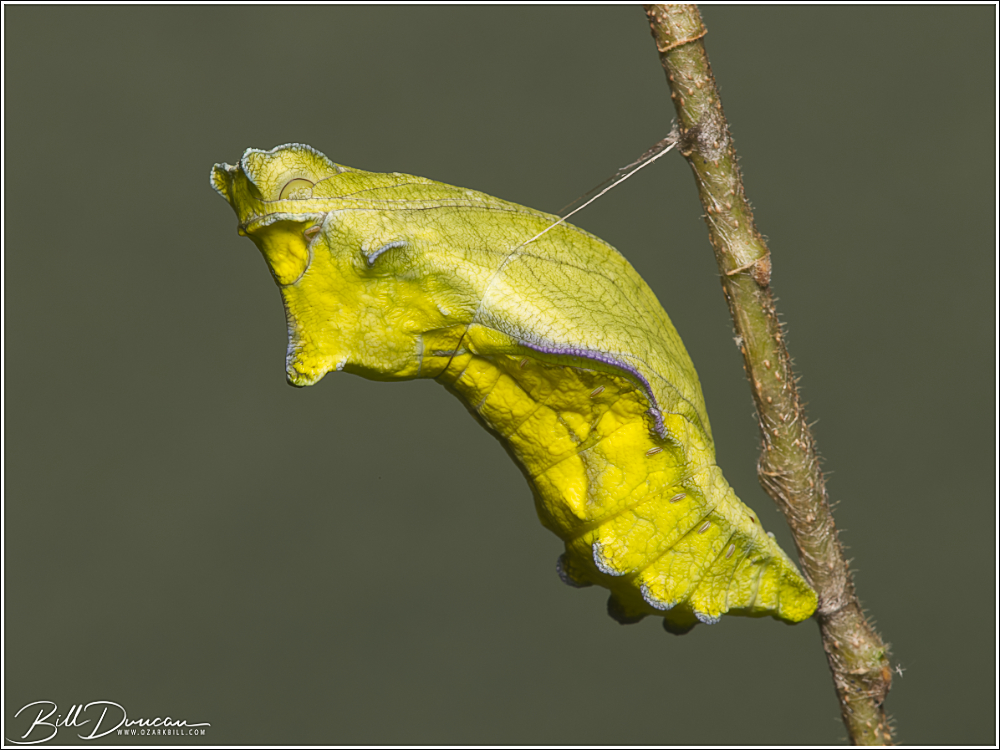
In late June I went out for an evening caterpillar hunt at Young Conservation Area. I was in for a real treat. The pipevine swallowtail (Battus philenor) caterpillars were on the move! Along with several dozen smaller instars munching away on the pipevine draped above my head along the trail, I also encountered close to two dozen final instar cats that were in various states. I found quite a few crossing the trails, some that were prepupal and also a few chrysalises that were attached to various plant species ranging from one to a few feet above the ground.
A pipevine swallowtail (Battus philenor) caterpillar setting up to pupate on a stem of Chasmanthium latifolium.
Sometimes it seemed they picked poor locations to pupate, like this one that chose the dangling petiole of a dehisced leaf.
A prepupal cat that has anchored to support itself in its upcoming metamorphosis.
And finally, a recently finished chrysalis of the pipevine swallowtail (Battus philenor). In 10 – 20 days the adult butterfly will emerge.
Today’s cat is the tephra tussock moth (Dasychira tephra) in the Family Erebidae. This one was found feeding on hickory (Carya sp.) in July at Meramec State Park in Franklin County, MO. This guys has somehow lost the long dorsal lash on the eighth abdominal segment – a feature that is key in identification. All other characteristics seem to match. This species seems to prefer oaks but can be found on a variety of deciduous woody species. Members of Dasychira exhibit variable patterns and coloration and seem to vary geographically.
I got out early this morning and visited one of my favorite caterpillar hunting grounds – Cuivre River State Park in Lincoln County, MO. The pecker gnats were bad around sunrise but they would get to unbearable by lunch time, along with some nice heat and humidity. It was a typical mid-summer outing – rather slow. However, I always seem to find enough to keep me interested.
Apoda y-inversum
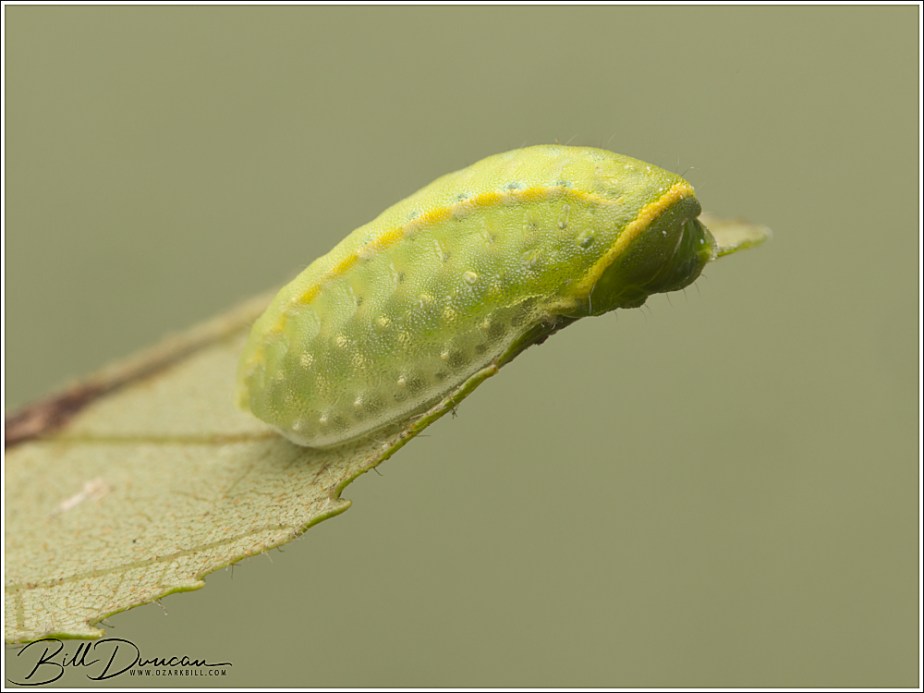
Along with a couple of new species, I was pleased to find two specimens of the yellow-collared slug (Apoda y-inversum #4667). A member of my favorite Family – the Limacodidae, the adult moth of this species is known by the name of the inverted-Y slug moth. Both of these cats were found on different leaves of the same hickory sapling. I don’t find these guys every season, so this was a nice find indeed.
Two cats on the same tree!
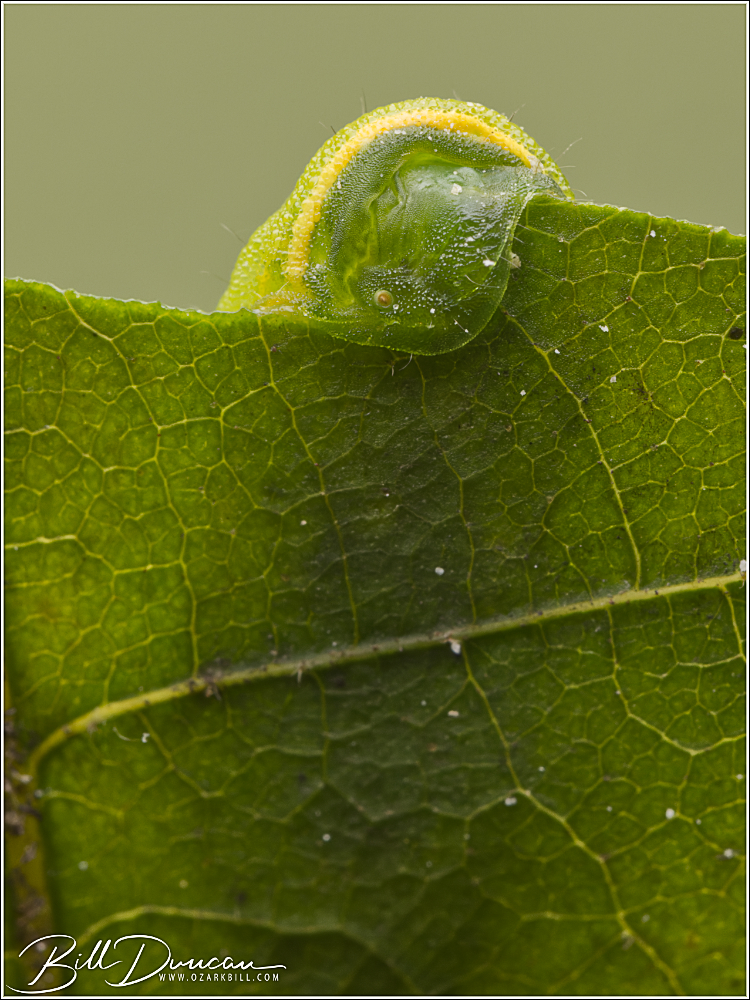
Slug moth caterpillars are standouts in the lepidopteran world in more ways than one. In these photos I hoped to showcase their peculiar way of shielding their heads by keeping it retracted in their thorax. Even during feeding, they keep their head covered by a fleshy extension of the first thoracic segment. Seeing their true heads extended, especially in this species is quite a rare sight. I guess the one who briefly did show its face for me today was getting a little curious about what I was doing to the leaf it was feeding on as I manipulated the leaf in the clamp to get the angles I was looking for.
A look at the fleshy thoracic segment that covers the caterpillar’s head. It will drape this covering over the leaf margin, allowing it to eat without exposing its head.
A closer look of a feeding Apoda y-inversum. Notice the typical straight-edge feeding pattern that the Limacodidae are known for.
A partial look at the exposed head capsule of Apoda y-inversum.
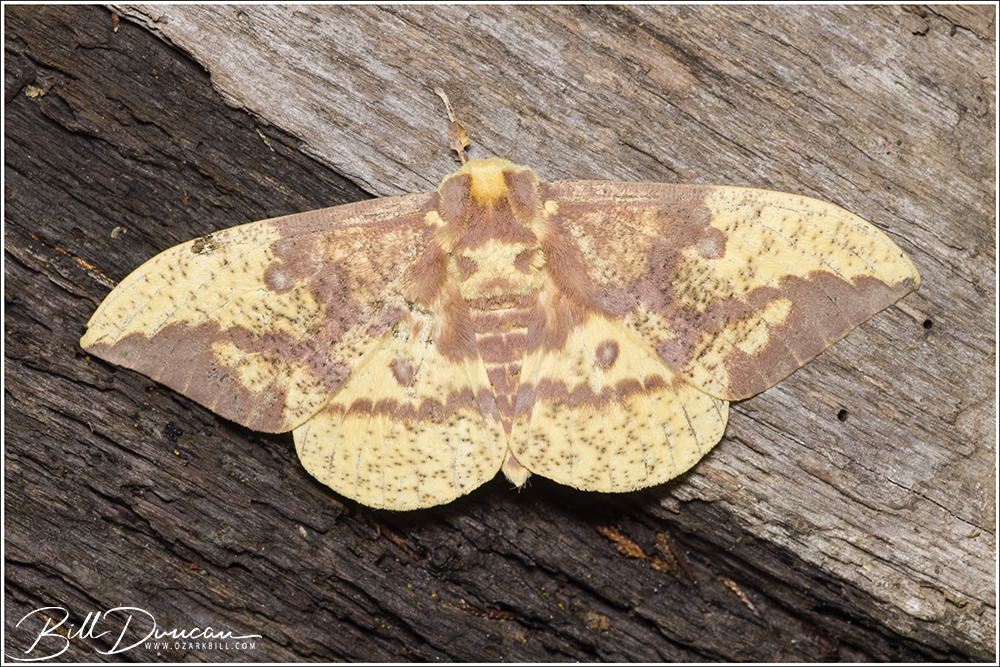
I forgot to post the following adult imperial moth from our black-lighting night this year in the previous post. As you can see, it was a worthwhile night! I photographed this species once before and they do commonly show up on black-lighting occasions, but I never get tired of them showing up! All of these images were taken at Engelmann Natural Area in Franklin County, MO.
Imperial Moth (Eacles imperialis)
Imperial Moth (Eacles imperialis)
This imperial moth caterpillar was found on a night cat hunt in late September.




















 A Thousand Acres of Silphiums