"What a thousand acres of Silphiums looked like when they tickled the bellies of the buffalo is a question never again to be answered, and perhaps not even asked." -Aldo Leopold
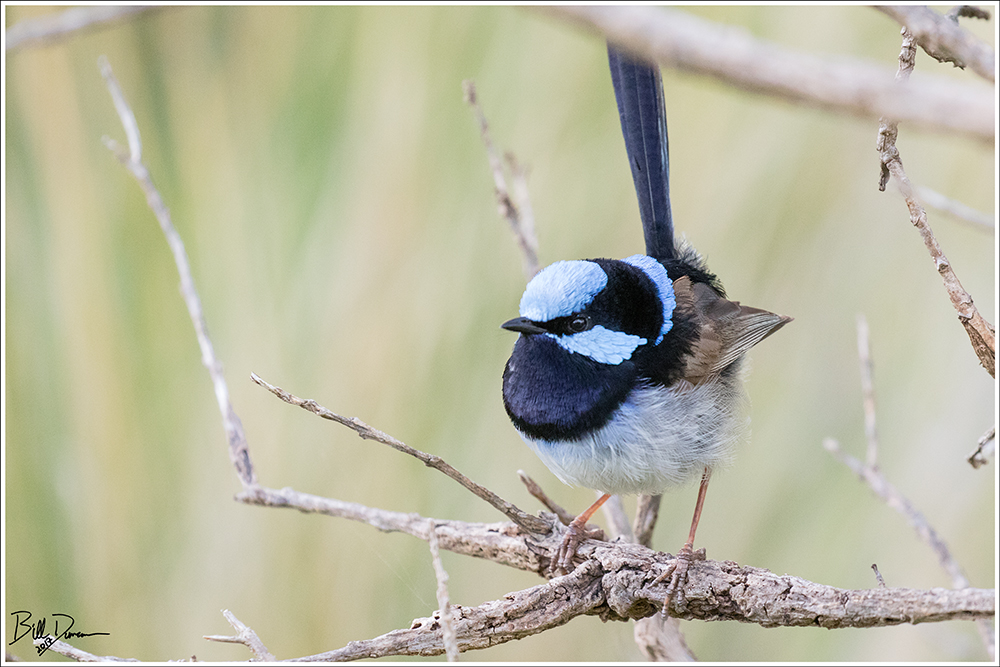
Among the most well known and sought after of Australia’s passerines are the Fairy Wrens and probably none is more popular than the Superb Fairy Wren that is found in New South Wales and Victoria in southeast Australia.
Superb Fairy Wren
Confident and brash, these guys have the personality of a chickadee on a mood-altering substance. On a couple of occasions, Collin and I found ourselves face to face with these guys at an arm’s length, being the apparent subjects of their songs and scoldings.
Superb Fairy Wren
The Fairy Wrens are sexually dimorphic, with males having an eclipse phase in the off-season where they molt to an appearance similar to the females. These birds tend to be found in family groups of 5 – 10 birds.
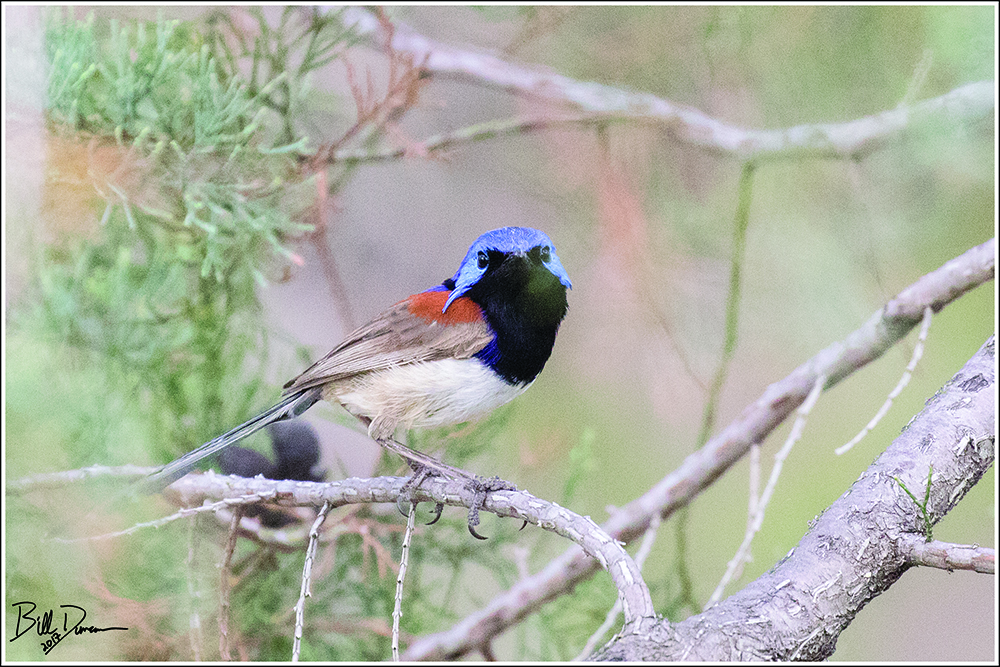
Variegated Fairy Wren
I found this Variegated Fairy Wren foraging among some low trees in a parking lot for Sawn Rocks at Mount Kaputar, NSW.
Wilson’s Promontory National Park. The hills in the Prom peak at about 550 meters (~1640 feet).
The Australia trip is over and I’m finally getting back to a normal sleep schedule. Our flight miles added up to nearly 21,500 miles and Collin and I drove approximately 3,400 miles in country. I have been spending lots of hours during the past few days going over the nearly 6,000 photos I took during the trip and have roughly finalized my bird list – 89 species, with a couple yet to ID from photos. Not nearly enough to match my dreams, but getting to see a bit over 10% of the continent’s birds (~850 species) while on a work trip is nothing to complain about, I guess.
Here is a good look at tea tree scrub and heath habitats that cover much of the Prom.
On our last day in country we visited Wilson’s Promontory National Park. What an impact this place had on me. Take something like our Yosemite NP and surround it by ocean on three sides, fill it with unique habitats, exotic birds and marsupials and you have an idea of what the ‘Prom’ is like. Of course, one day was only enough to wet my appetite. Two weeks would have been better.
This is looking upstream of Tidal River, the largest river in the park. Birds and wombats were plentiful.
Entry fees for national parks in Australia vary by state. In Victoria, all NP’s are free to enter and all other states charge a very affordable rate. This makes me wonder why the cost of our parks are going through the roof and why so many state parks (not in MO) charge an entry fee. Priorities, I guess.
A higher elevation look at Tidal River. On this short hike we we chorused by Laughing Kookaburra and saw a number of parrots.
Here are a few of my favorite landscapes from the Prom that should give an idea of the diversity of habitats this place offers. All of these were taken less than three miles from the few roads that lie within the park.
A pano showing the meanderings of Tidal River.
The coastlines of the Prom were magnificent. If it weren’t for the 40-50 mph steady winds, coming in from the ocean, Collin and I would have loved to explore these areas more. Silver Gulls were the predominant bird species along these western-facing beaches.
Another look at the coastline. The interesting plant in the foreground is Euphorbia paralias (sea spurge). I found out later that, unfortunately, this is an exotic invasive from Europe that is causing problems along the coast of southern Australia and Tasmania. I wish I’d have known. I would have spent a few minutes pulling.
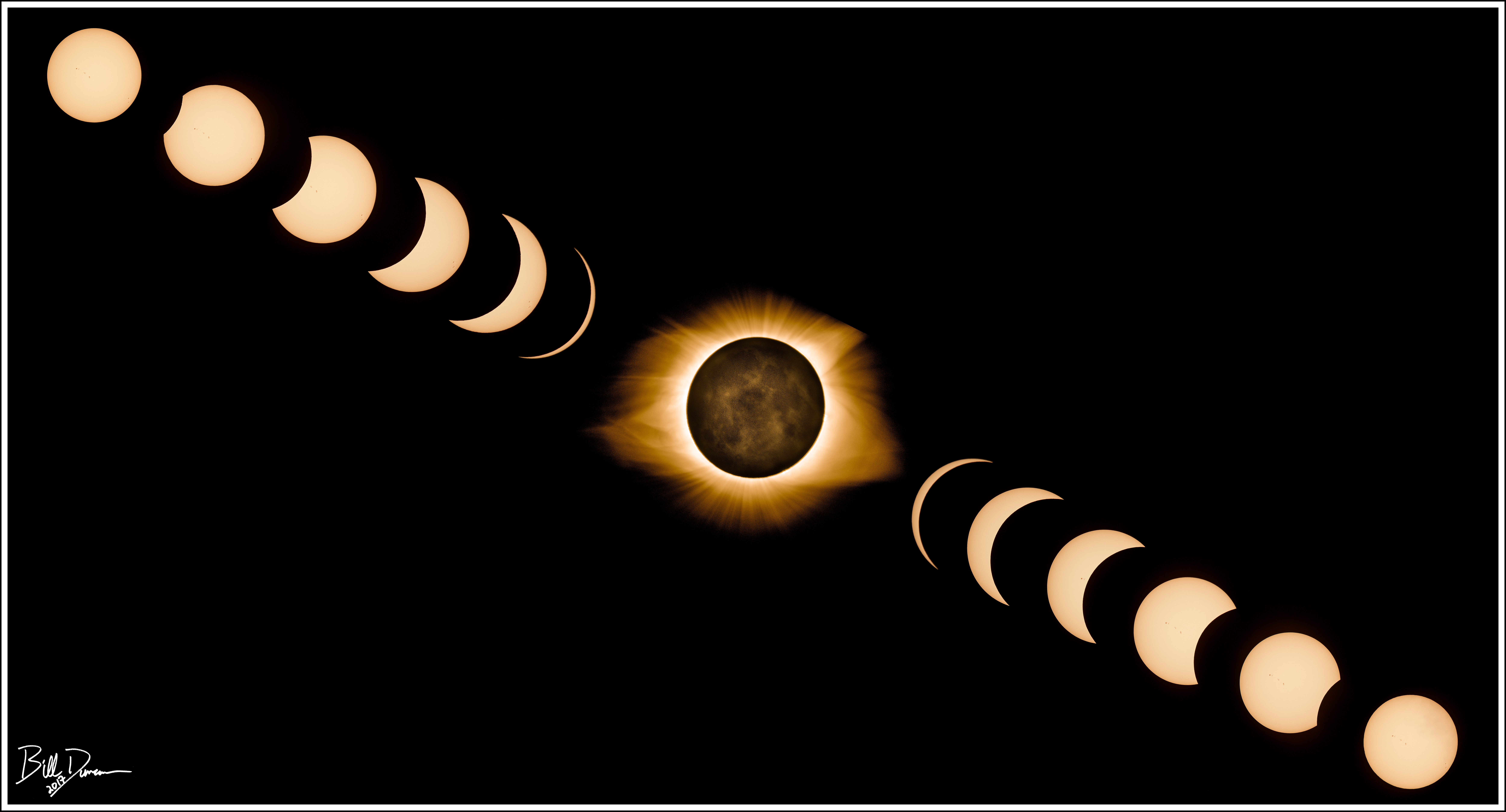
Well, it was definitely worth the hype. I sure didn’t perform perfectly in capturing the photographs that I wanted, but the experience along with what I did capture still had me coming away with feeling I had a great experience. Some of my conclusions I definitely want to remember for the next time:
1) Focus. My lens was consistently needing to be refocused. This is something I heard from other photographers as well. I assume this must be due to the changing temperatures from sitting in the sun, but the problem didn’t seem to go away. This was really a problem when I removed the solar filter for totality. In the heat of the moment I failed to think about focus until it was really too late. This had a negative effect on getting critical sharp images during Bailey’s beads and the diamond ring. Next time I will check as often as I can.
2) Bracketing during totality. My 7D mkii is equipped to take serious bracketed shots. Unfortunately, I failed to review how to do this automatically prior to the eclipse. I could have taken ~14 tightly bracketed shots in no time during totality. Instead, I barely pulled off three or so that were probably too widely spaced to create the final composite I was hoping for. It wasn’t a complete wash, but it could have been so much better.
3) Importance of aperture. I wasn’t thinking much of totality when I chose the aperture that I did. During totality, it is much more important to pick a smaller aperture that will get you those nice starbursts and critical focus then to worry about letting in more light to avoid digital noise. This will also help with focusing in general and getting sharp focus of the solar flares.
I’m sure there are other improvements I could make. With about 7 years to prepare, I won’t make the same mistakes again.
August 8, 2017. Total Solar Eclipse Time Lapse Composite. Ste. Genevieve Co, Missouri
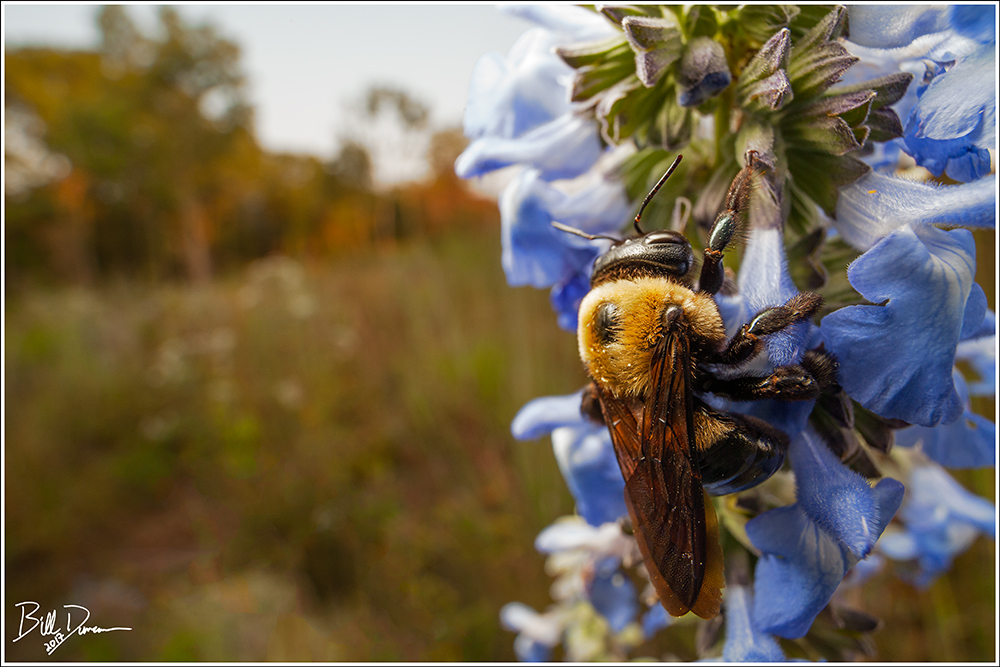
Eastern Carpenter Bee (Xylocopa virginica) on Blue Sage (Salvia azurea)
The WGNSS Photography Nature Group met at Cuivre River State Park on Saturday the 2nd in hopes to find members of Limacodidae (slug moths). Perplexing to me, we struck out in the same time and place I found them in numbers and diversity a year ago.
It was still a good time. We found a number of other macro subjects and explored a couple of new places. I also got to give a first spin to my new lens. A wide-angle macro – the Laowa 15mm f/4 Wide Angle Macro. A rather new lens design and one with a pretty steep learning curve, these photos are really just practice. With time and strategy, I think I can get better at this.
Two areas to focus on in improving with this lens:
1) Getting a better handle on exposing for the environment (background) while getting the right amount of light from the flash to properly expose the foreground macro subject. I think this should be easier to predict with practice. I’m not at all sure that I can ever get it on a first try.
2) Figuring out how much dof is just right. Sometimes getting more detail in the background will be desirable. Other times, it is best to blur it out to bring focus on the primary subject.
This is a funnel web or grass spider (Agelenopsis spp.) that we found protecting her egg sack on the leaf of poison ivy (Toxicodendron radicans). She will likely guard the eggs here until the winter takes her.
Grass Spider – Agelenopsis spp.
One of the nice finds of the day was this Black-waved Flannel Moth (Megalopygidae – Lagoa crispata (4644)). One of the key features of this lens is being able to focus close enough to the primary subject for macro-level detail while capturing so much more in the subject’s environment. In this case, I tried to give the perspective of what it may be like for the bug when being discovered by entomologists or nature photographers. Pictured left to right are WGNSS members Rich Thoma, Dave Seidensticker and Casey Galvin.
After the group disbanded at Cuivre River SP, Miguel Acosta and I decided to visit and explore Little Lost Creek Conservation Area near Warrenton. We hiked about 6 miles and I camped there the following evening. I took a quick photo hike in the morning and found these two Brown Stink Bugs (Pentatomidae – Euschistus servus) in copulation. They didn’t like that lens being so close and kept moving to the opposite side of the boneset (Eupatorium) blooms.
Brown Stink Bug – Pentatomidae – Euschistus servus
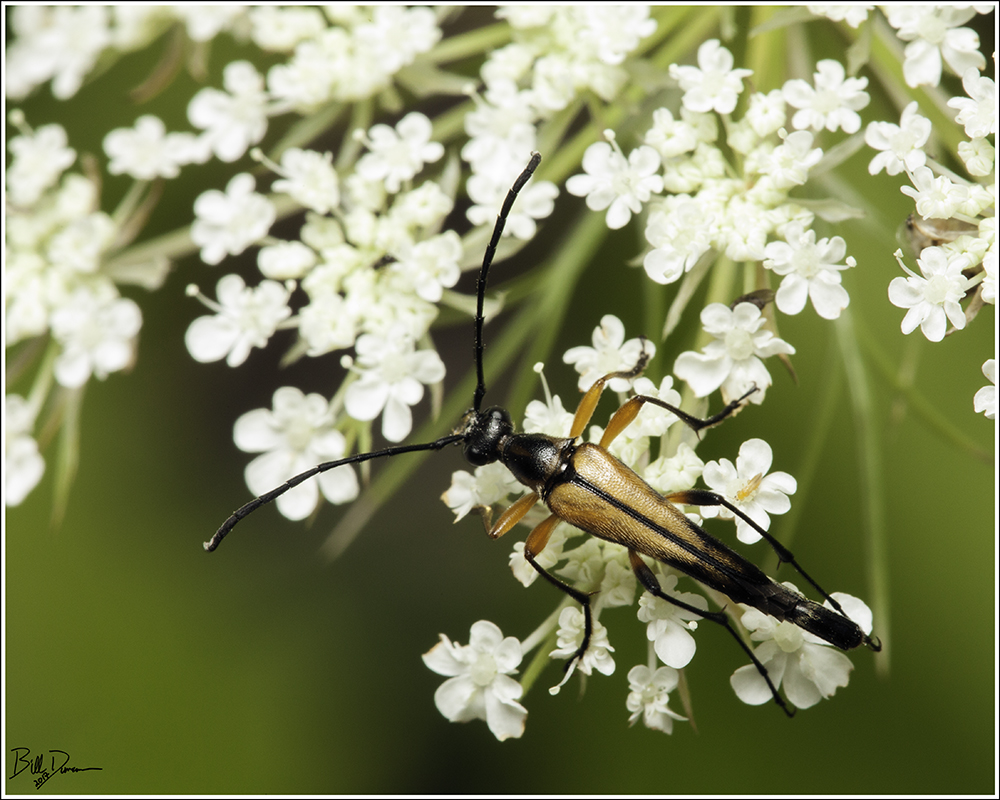
Members of WGNSS Entomology and Nature Photography Groups met on June 24th, 2017 to see what interesting insects could be found. In this post I am sharing a few of the more interesting that I was able to get photographs of during the day. The find of the day had to be the Cerambycid pictured above that was, by no surprise, found by Ted MacRae.
Delta Flower Scarab
We found that blooms were a great way to find beetles. It is easy to see how the delta flower scarab (Trigonopeltastes delta) got its name.
Flower Longhorn
Cerambicids like this flower longhorn can readily be found on blooms.
Banded Netwing
The banded netwing beetle (Calopteron reticulatum) are easy to find, often located in the open atop vegetation. They rely on aposematic coloration to advertise that they carry aboard chemical compounds that make them a distasteful meal.
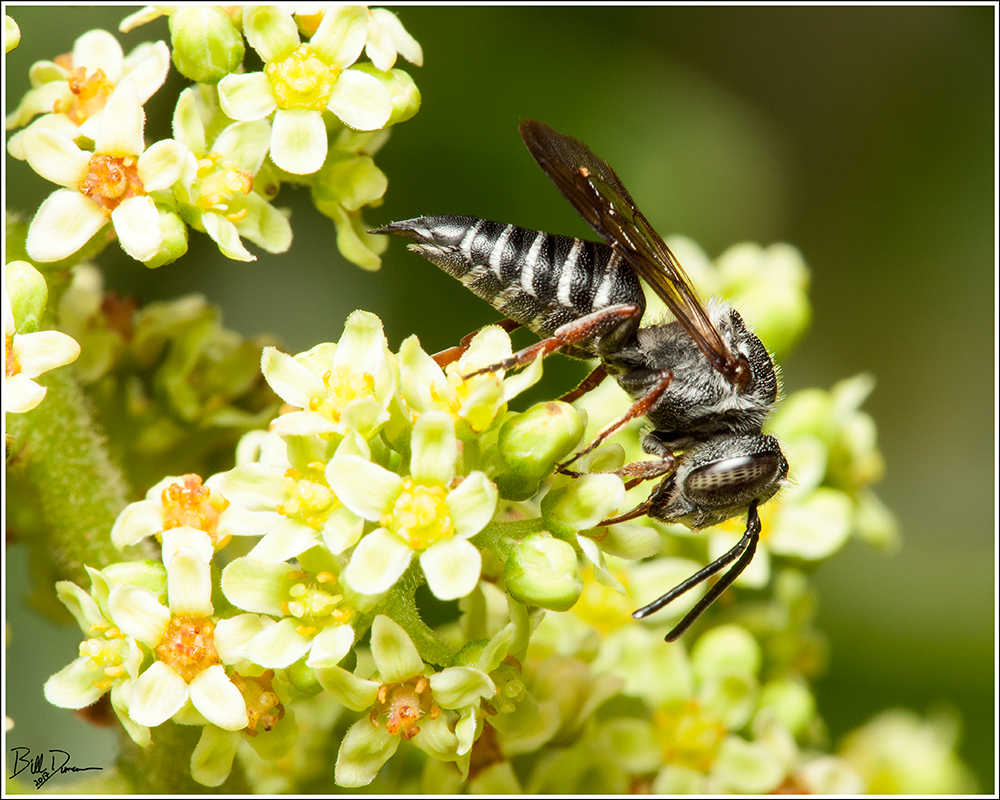
Agapostemon sp
The Hymenoptera were well represented on blooms of wild hydrangea (Hydrangea arborescens), Queen Ann’s lace (Daucus carota) and as pictured above, fragrant sumac (Rhus aromatica). I find the native bees to be tricky to identify by photographs, but I believe this can be placed in the genus Agopostemon. These bees nest in the ground and to promote them, leave patches of soil exposed somewhere in your yard.
Not to leave out the Leps, this double-toothed prominent moth larvae was found. These guys have developed very effective camouflage that allows them to blend in and resemble the toothed, wavy margins of their elm (Ulmus) host plants.
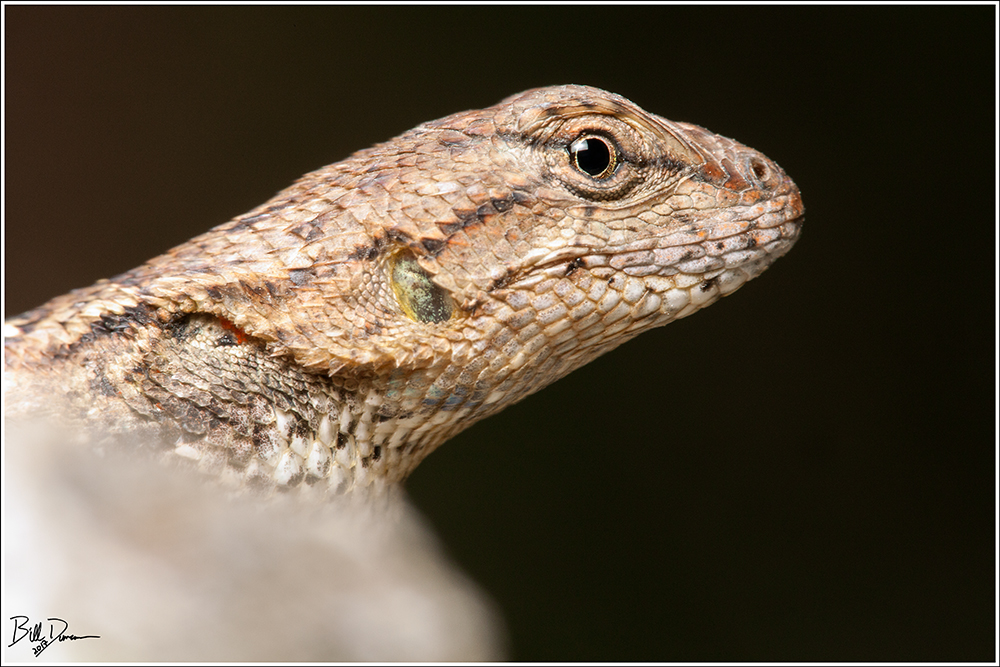
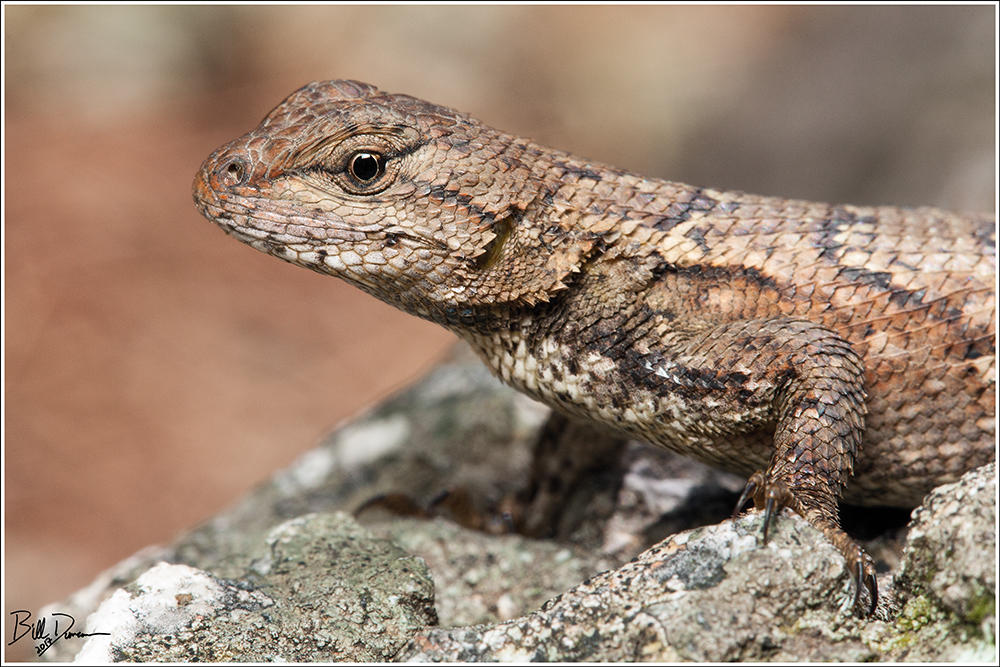
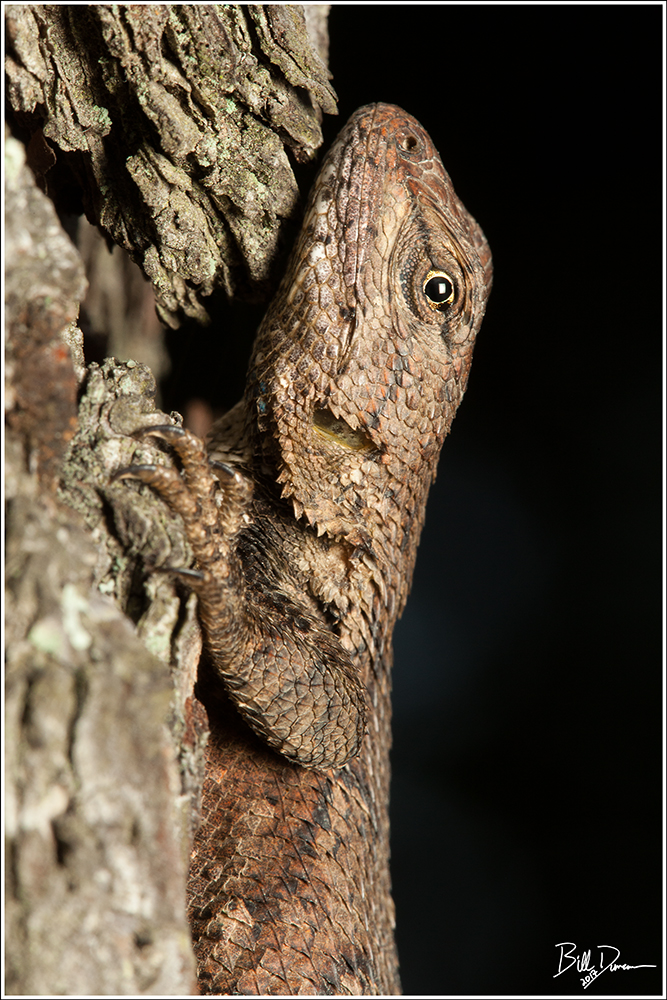
During our search for insects at Council Bluff Lake, the WGNSS Nature Photography Group stumbled upon this cooperative and gravid female northern fence lizard (Sceloporus undulatus hyacinthus). She allowed our close inspection as she attempted to bask and warm herself on a rock.
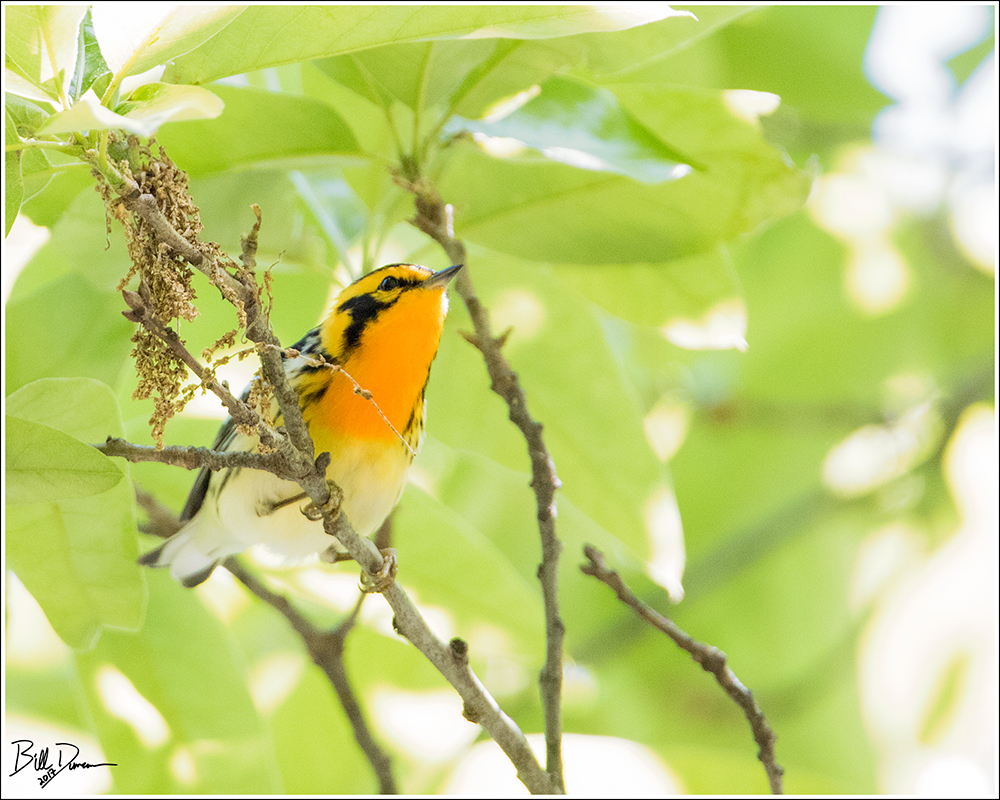
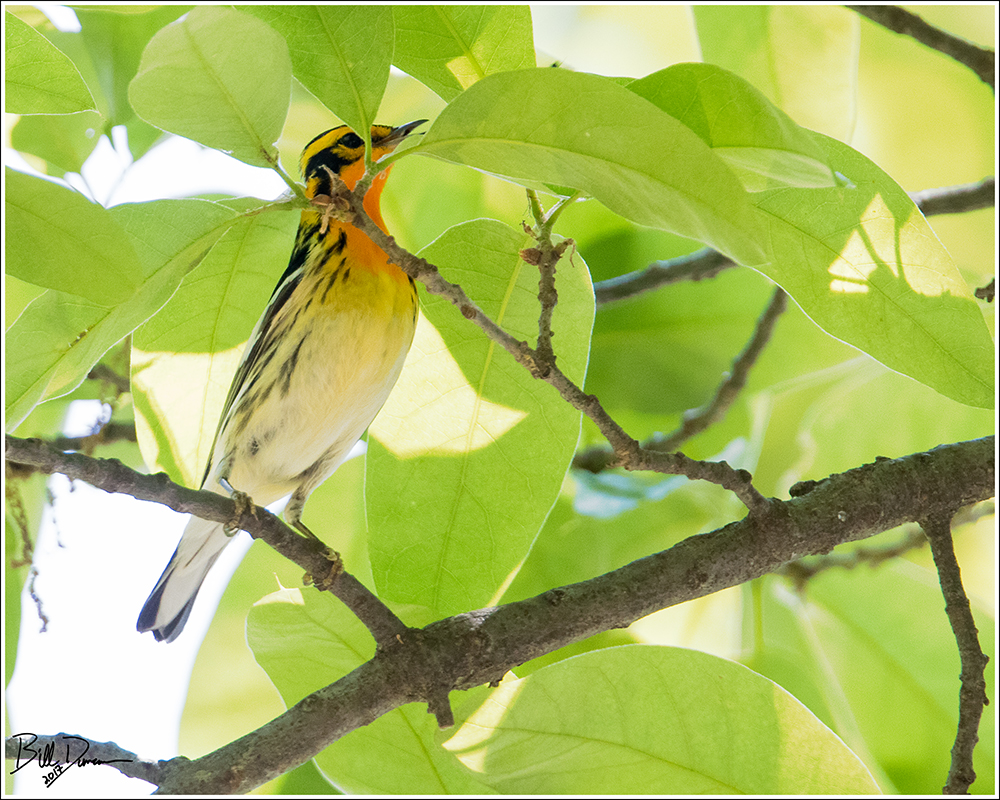
Along with finding the typical rarities that everyone looks for during spring migration, I will not count spring as arriving until I lay eyes on a male Blackburnian Warbler. This past Saturday, not only did Miguel and I find my prize at Carondelet Park, but I got my best photos to date of this tree-top dwelling, piece of greased lighting.
Blackburnian Warbler, Carondelet Park, May 2017
With a throat this bright and luminous, a song that is so high-pitch that dogs aren’t safe for blocks and a never resting habit, more than one birder has assumed these guys must be powered by a battery. Seriously, there’s a reason these guys eat all day long. They have to!
Blackburnian Warbler, Carondelet Park, May 2017
Well, hopefully I might have another before the season has completed springing. If not, I’ll always have something to look forward to next year.
Miguel Acosta and I decided, along with many other birders and bird photographers, to head to Tower Grove Park to check out the latest migrant action. Although the migrant songbirds were overall pretty disappointing, the morning was surely not a bust for me as I was able to photograph my 282nd species in Missouri and contiguous states – the Veery.
Veer!
This guy’s polyphonic vocalizations have been among my favorite of bird songs for a long time. On the rare occasion these guys sound off during migration, the songs come from a deep thicket and I rarely get to lay eyes on the songster. The beauty of migrant traps like Tower Grove and Carondelet Park in the heart of the city is being able to get great looks at these northern nesters.
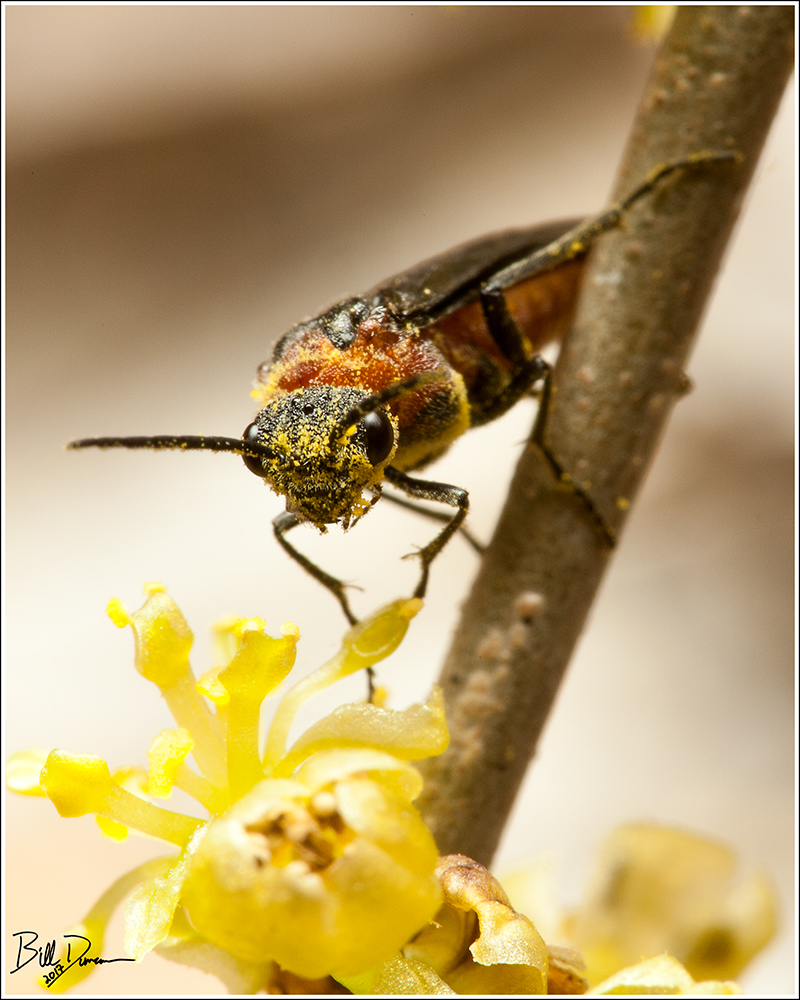
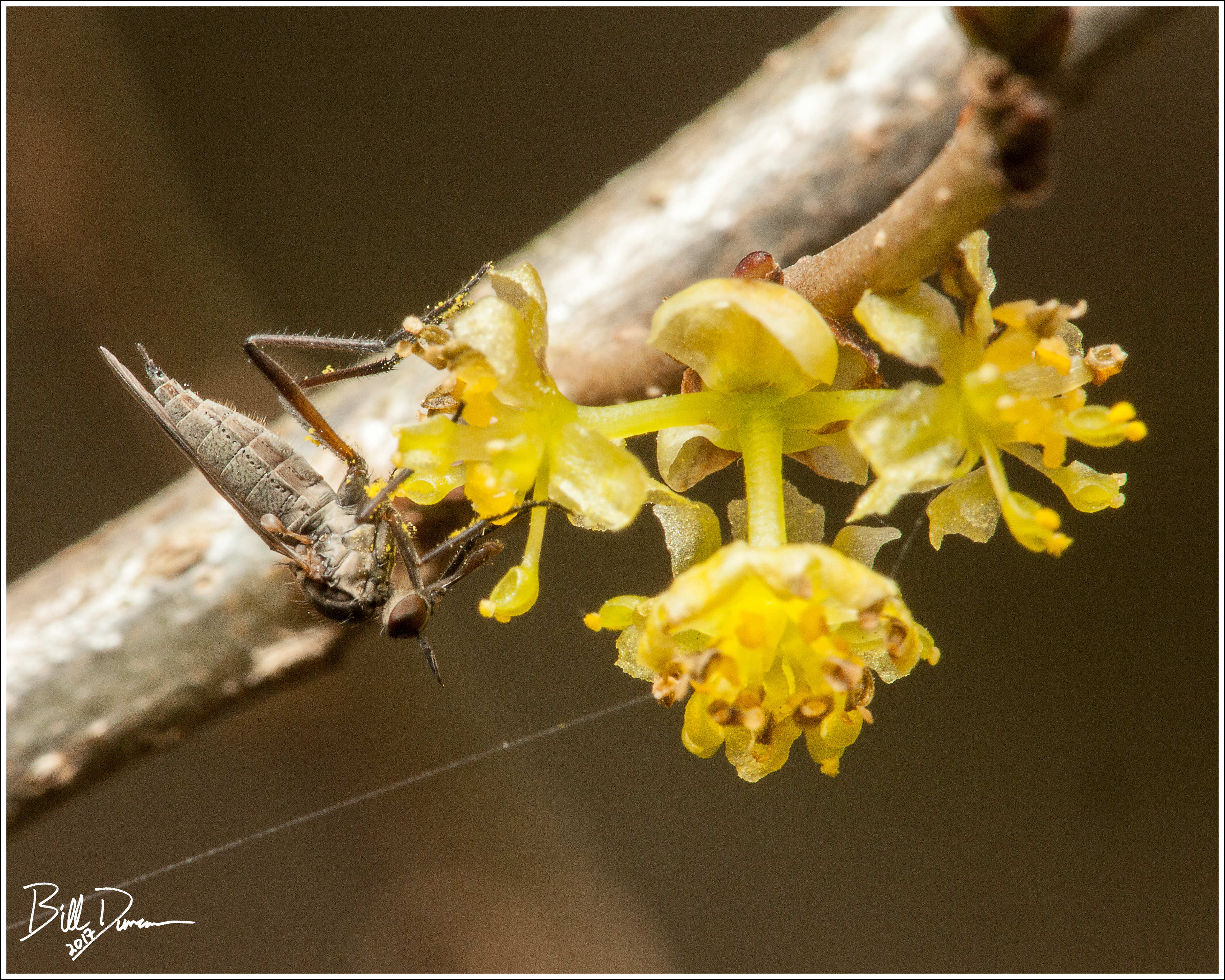
With some extra nature time last week, I hit the trails at Shaw Nature Reserve hoping to get some shots of Claytonia virginica (spring beauty) being visited by its pollinators – particularly the small solitary Halactid bees. The problem I had on this day is that these bees don’t typically like to be very active on cloudy, grey days. There were a few flies visiting the spring ephemerals, but they were much to flighty to bother with. So, I decided to give some attention to the Linderabenzoin (spicebush) that were blooming in abundance along the river bottom trails. My goal then became to document the pollinators that visit this early-blooming bush.
Sawfly – Tenthredinidae – Dolerus neoagcistus
One of the more obvious of these pollinators that I found was this sawfly. This is my best guess on identification. This sawfly was quite small and by the looks of it, is quite an efficient pollinator.
Sawfly – Tenthredinidae – Dolerus neoagcistus
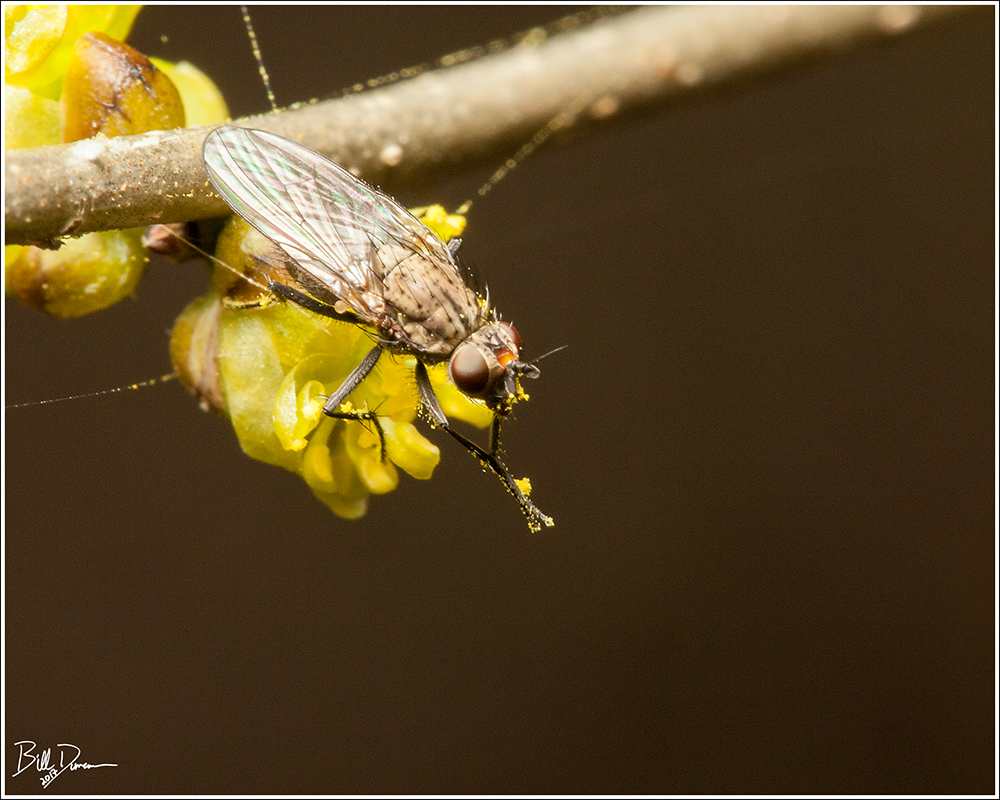
Probably the most abundant pollinator I came across were these Tachinid flies (again, flies are difficult and I could be wrong).
Tachinid Fly?
The hair-like setae that probably serve to aid the fly in responding to changing air pressures also serve as nice holders to move pollen from flower to flower.
Tachinid Fly?
I also found a number of multicolored asian lady beetles (Harmonia axyridis). Typically predators of aphids, these beetles are also known to feed on pollen. This is what I figure was going on in the image below. Since there are probably few aphids to be found during the early spring, with few leaves being available, pollen is the next best protein source. I suppose there could be aphids to be found hiding within the flowers, but did not inspect closely enough.
Multicolored Asian Lady Beetle – Coccinellidae – Harmonia axyridis
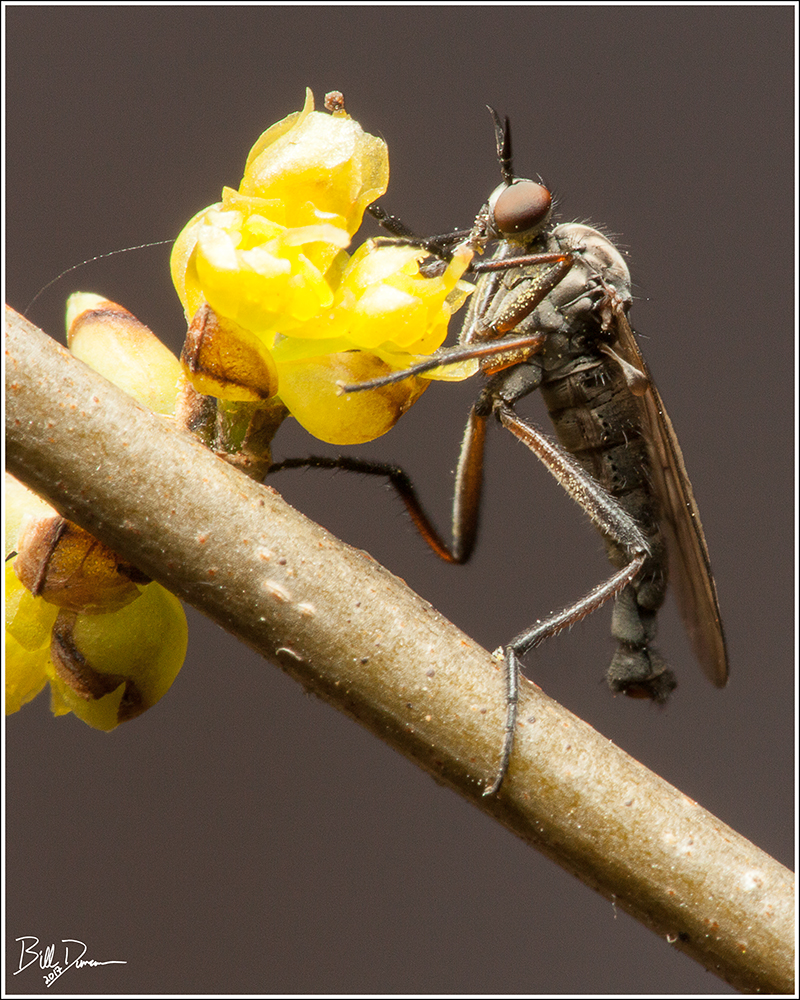
Probably my favorite find of the day were several flies of the family Empididae. These are fascinating flies that are primarily predatory, but a few taxa will visit flowers to feed on nectar or pollen.
Dagger fly – Empididae – Empis or Hilara genus
Within this family are at least a few where the females will not hunt themselves, instead relying on a “nuptial gift” of a prey item from a male. Males of some species will wrap their gift in a silk wrapper. In these taxa the sex roles will often be reversed – the females courting the males to get these gifts and the opportunity to mate. In at least one species, the females will inflate themselves grossly with air to give herself the appearance of being bound with eggs and fecund, to trick the male into thinking she is a prime candidate to provide his gift and have the opportunity to mate with.
Dagger fly – Empididae – Empis or Hilara genus
At least one species has taken this system a step further. The males no longer provide a prey wrapped in its decorative covering, but simply provide the silken covering, or balloon, giving them the name “balloon flies”. The photo below provides a good look at the dagger-like moth parts that give these guys another of their common names. Another overlooked beneficial fly. Not only do these guys prey on mosquitoes and other potential pest insect species, but their larvae are also predatory, feeding on insects in the soil and leaf litter.
Dagger fly – Empididae – Empis or Hilara genus
I’ll leave you with one final image. This one isn’t a pollinator of the spicebush, but potentially feeds on its leaves in summer. What I believe this to be is a (Camptonotus carolinensis) Carolina leaf roller that was parasitized by one of the “zombie fungi”, potentially Cordyceps sometime last summer or early fall. This poor cricket was infected with this fungi that took control of its “mind”, forcing it it to climb high up on a branch of the spicebush. Once there, the fungi used the cricket’s resources to fruit and spread its spores from this higher location in order to reinfect others.