On a rare Saturday off from work Sarah decided she wanted to join me in a birding trip up the Mississippi flyway following Highway 79. Lately, we have not done as many of these trips together as we once did, so this was a rare treat and I expected she would bring her typical luck and skills at finding the interesting birds. I was not mistaken. We hit the road early and made our leisurely way up north following a breakfast at Cracker Barrel. Our goals were to ultimately hit Lock and Dam 24 in Clarksville to see if there was enough ice over the river to bring the Eagles in significant numbers. What makes this trip so nice is that you rarely drive more than ten miles without having a nice place along the river to stop and look for birds and other wildlife.
Our first stop was the Winfield Dam where we looked for the American Avocet that apparently is happy to overwinter here. We did not find this bird, but were happy to watch the Northern Shoveler and American Pelican that were quite active in the nearby slough. Also unseen were the dozens of Common Snipe that were there a few weeks prior during my last trip up this way. Leaving the dam we headed back north and made mostly unproductive stops at BK Leach C.A., Clarence Cannon NWR and a few other locations. With most shallow waters frozen, not many waterfowl or marsh birds were apparent, but raptors, particularly Red-Tailed Hawk, American Kestral and Northern Harrier were abundant. We were able to watch as a coyote crossed across this “frozen waste”, amazed at the sight of him running full-speed over frozen water while not loosing a bit of speed. He was a healthy looking animal, which we love seeing on our excursions.
Arriving at Clarksville we were rather alarmed to discover that we had arrived at “Eagle Days”, meaning that finding parking and ample real estate to set up for photography near the river would not be easy. We were able to see that the eagles were not present in great numbers around the dam, so this made our decision easy to continue heading north. The drive between Clarksville and Louisiana is scenic. If you are in the area stop at the Village of the Blue Rose as a bed and breakfast or a one-stop restaurant. You will not be disappointed.
For the past several years highway 79 has ended just north of Louisiana, major rerouting/new bridge? have kept the direct route to Ted Shanks C.A. closed. We decided to give it a try and were pleased to see the road was now open. Although mostly frozen, it was nevertheless nice to finally drive through this large wetland/forest area. Other than several Bald Eagle, no birds of note were observed. I was finally able to photograph a lovely Fox Squirrel. She was satisfied sitting out in the open collecting some sun-rays on this nice winter day. However, as the shadow of an eagle literally passed on top of her, she quickly scurried into his knot-home and cautiously peaked out to see if the coast was clear.
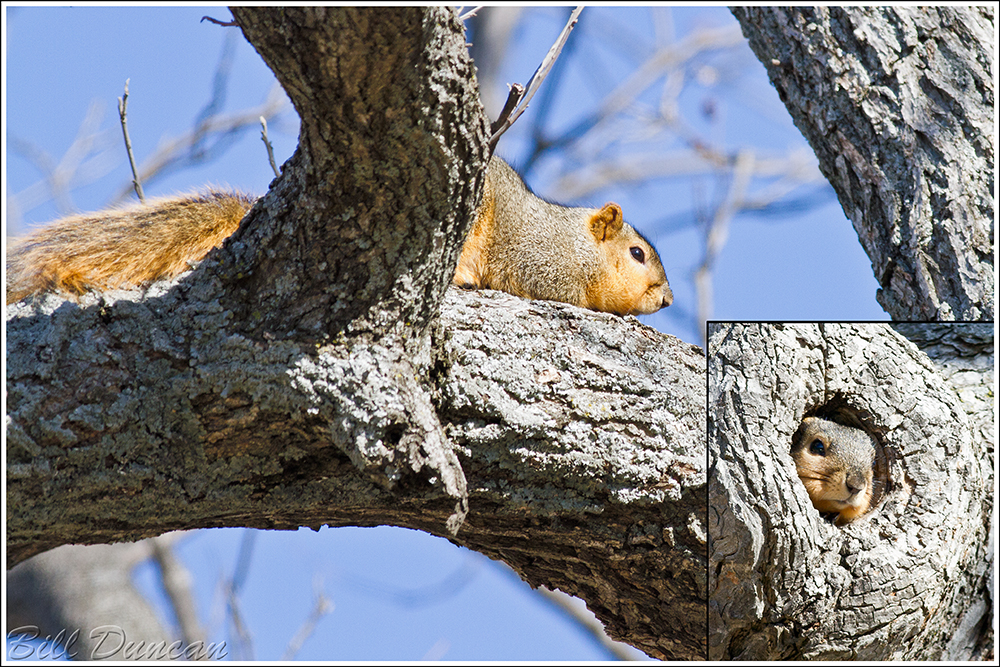 Technical details: Canon EOS 7D camera, EF500mm f/4.5L USM lens, ISO 640, f/7.1, 1/1250 sec
Leaving Ted Shanks we headed a few miles further north and turned around in the city of Hannibal. Going back towards home and snacking in the car we made similar stops. I had planned to spend the last couple hours of daylight at BK Leach C.A. and hopefully spot the Short-eared Owl that I have heard were really working the area. The problem was that BK Leach covers a lot of ground and we were not sure where the greatest likelihood for success might be for spotting them. Ultimately we decided to drive slowly through areas where the habitat seemed most to their liking: area of shrub and grass, agricultural fields – especially those that were recently left to fallow. So this is what we did and this is when the fun started. As usual I was driving a bit too fast for our situation (I’m always afraid we are missing something down the road) when Sarah yelled, “stop, what the hell is that?”. Looking out the windshield of my side I looked down and watched as a pair of Ring-necked Pheasant stared curiously back up at us. This was my first view of this exotic, naturalized species. Unfortunately, I could not get a photograph of the female, but she was every bit as beautiful as the brightly colored male, although quite different in appearance.
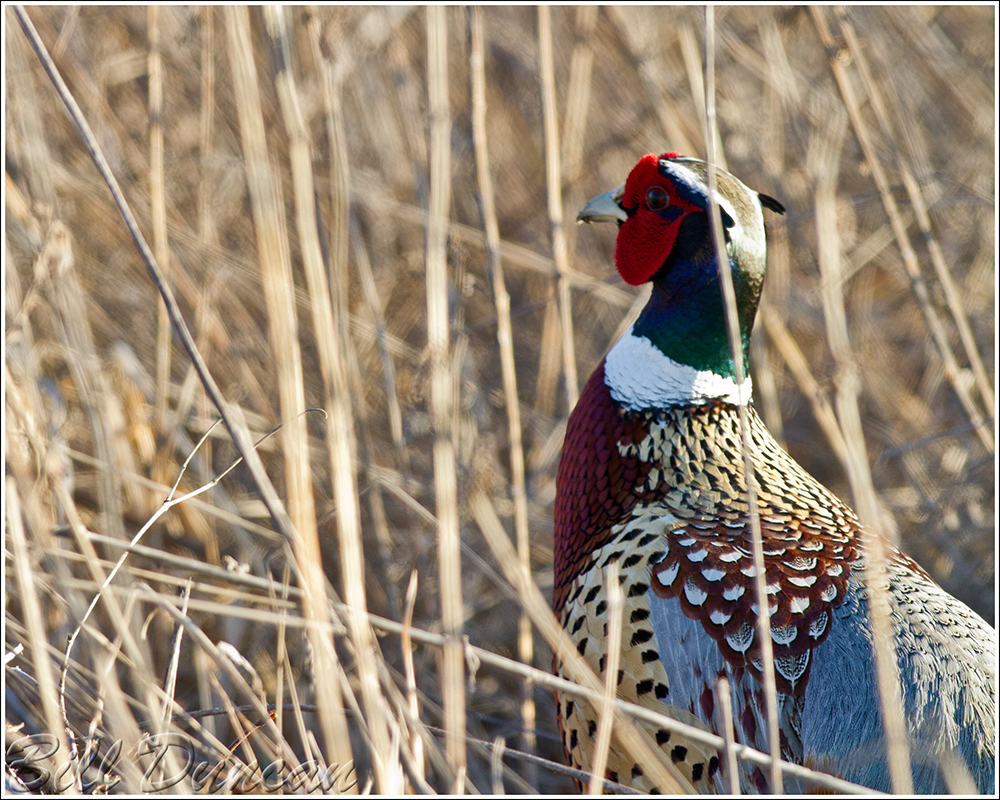
Technical details: Canon EOS 7D camera, EF500mm f/4.5L USM lens, ISO 640, f/7.1, 1/500 sec
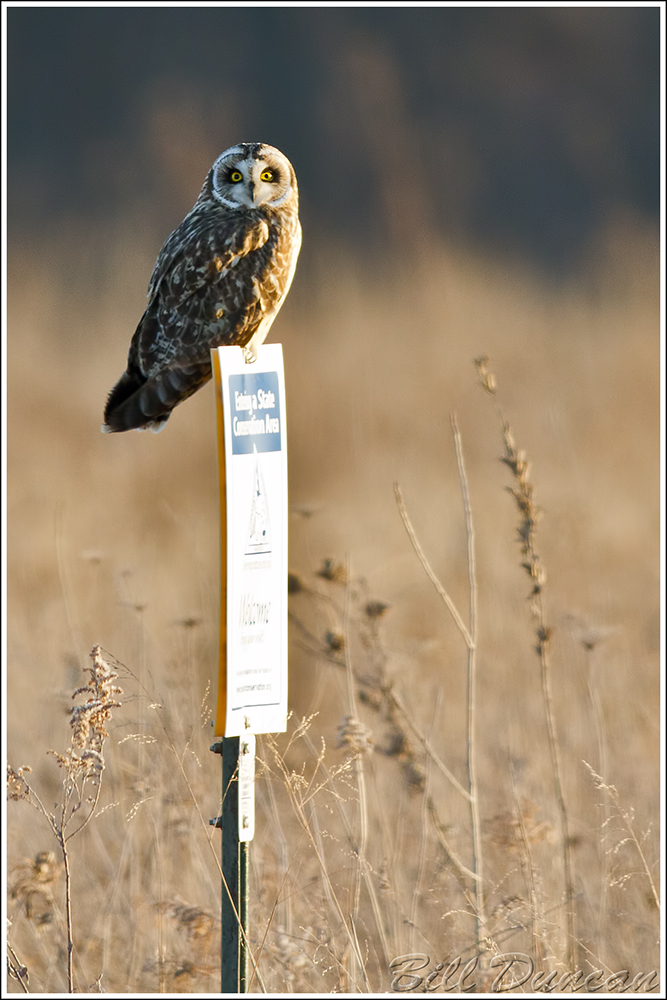
After a few seconds in the relative open these two moved deeper into the grass until they were just barely out of sight. We could hear them clucking and vocalizing back and forth, but we decided to move on and look for the owls, knowing we could likely spot them later. Just mere minutes following our decision to move forward once again Sarah pointed down the road on the driver’s side and asked is that a bird? With unaided vision it appeared to be a jumble of dried leaves suspended a foot or two above the thick grass. As I got the binoculars on it, it turned into a SEOW! How easy was that!? We made our way slowly down the road, stopping now and then to make sure we at least got documentary photographs. This photo shows the first bird in the same position in which we found it, bathed in the glorious warm light from the late-day, winter’s sun just a few inches above the tops of the Lincoln Hills.
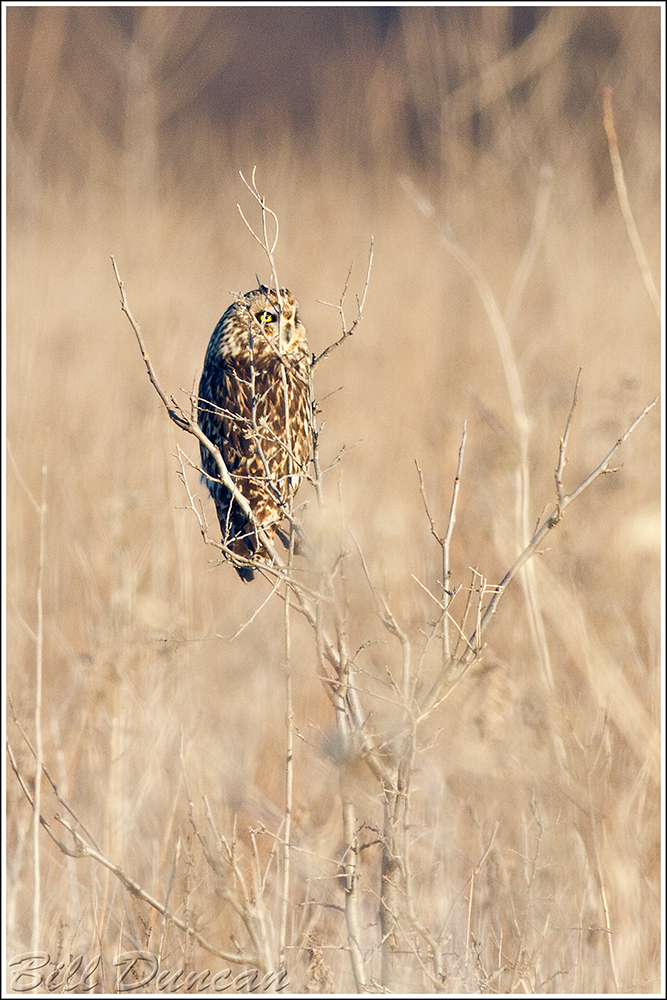
Technical details: Canon EOS 7D camera, EF500mm f/4.5L USM lens, ISO 640, f/6.3, 1/1000 sec
SEOW are reportedly the most diurnal/crepuscular species of owl to be found in Missouri. They can often be spotted hunted during the day and are usually easily observed at dawn and dusk. Shortly after this image was taken the sun was mostly covered by what little cloud cover existed. Typical. This meant that ISO would have to go up while shutter speed went down. This created the challenge of keeping the new lens steady in order to come at all close to a reasonably sharp image. It also meant trying to get closer and that auto-focus on birds in flight would be problematic at best. I also came to the conclusion that a much more stable and professional bean-bag support will be needed to shoot from the vehicle’s window.
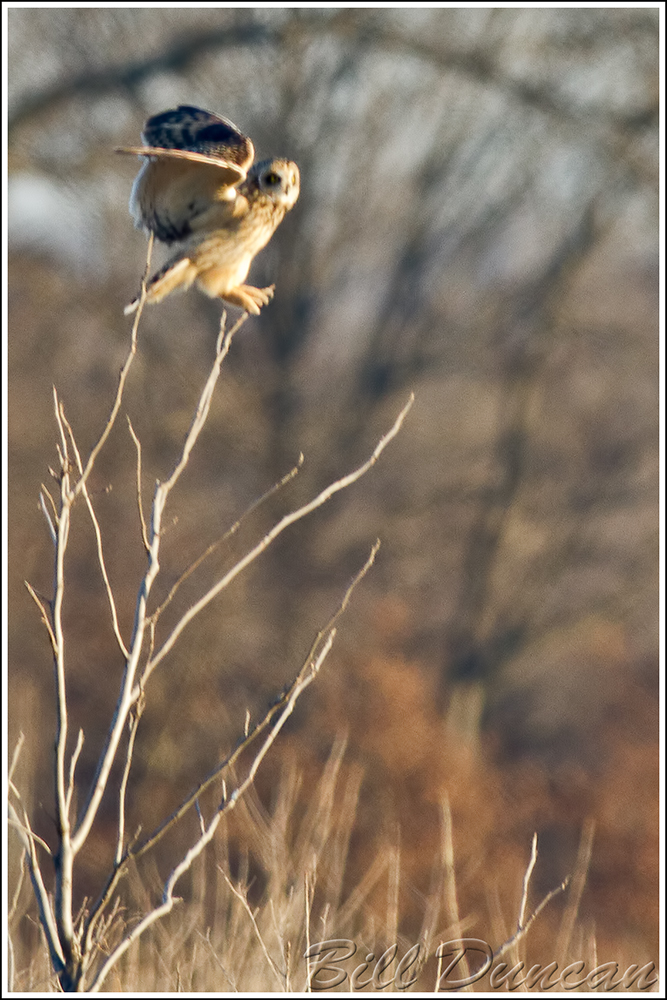
Technical details: Canon EOS 7D camera, EF500mm f/4.5L USM lens, ISO 640, f/6.3, 1/500 sec
The photo above shows the characteristic feather-covered legs and feet of these birds. SEOW are also well known for their style of flight; they slowly and methodically beat their wings in a rhythm and pattern quite reminiscent of moths. Previous to this day, my one experience with this species was watching a far-off silhouette flying in this manner as the last light of the day ended. This day was definitely more satisfying.
Technical details: Canon EOS 7D camera, EF500mm f/4.5L USM lens, ISO 800, f/6.3, 1/500 sec
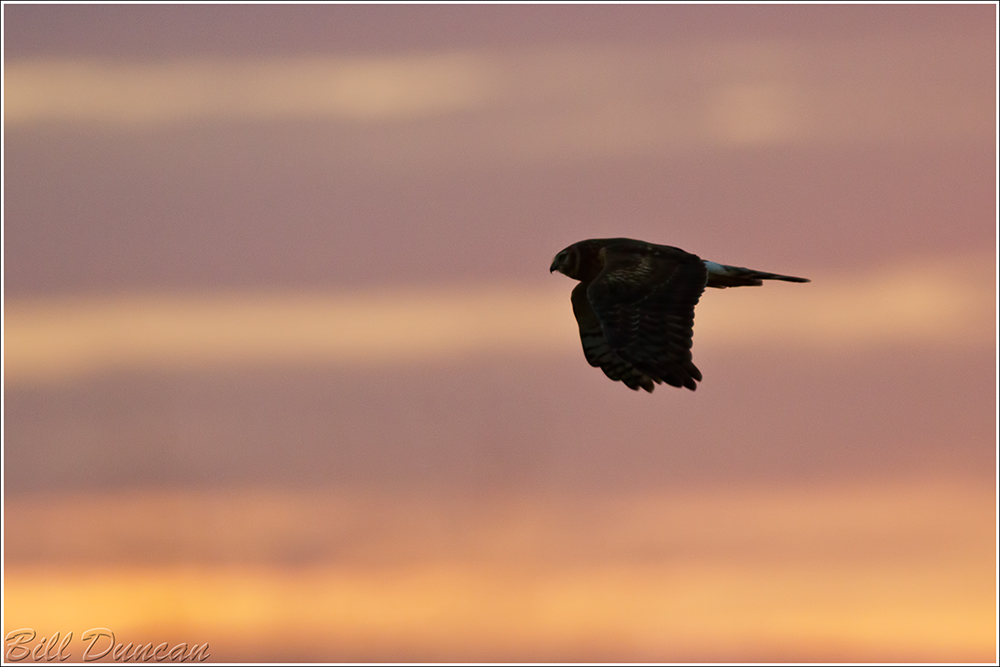
Not long after seeing the first owl we began to see giant moths silently gliding across the landscape. They would land for several minutes on a perch, often signs placed along the road, and then take to wing. Once Sarah and I watched as one tried for a pray item, but came up empty-taloned. They were not the only predators in the area. Northern Harrier, aka “Marsh Hawk” are the daytime counterpart of the SEOW. They both fill the same basic niche, gliding low and silent over the terrain, listening for the sounds of rustling rodents. In fact, because they so often come into contact with one another, squabbles and violence sometimes occurs. NOHA are known for stealing food from the owls and sometimes even killing and eating them. The image below shows a Harrier in flight. These guys are one of my nemesis birds. Keenly aware of their surroundings, they have a knack for staying far enough away to avoid being able to get the perfect photograph.
Technical details: Canon EOS 7D camera, EF500mm f/4.5L USM lens, ISO 1600, f/5, 1/640 sec
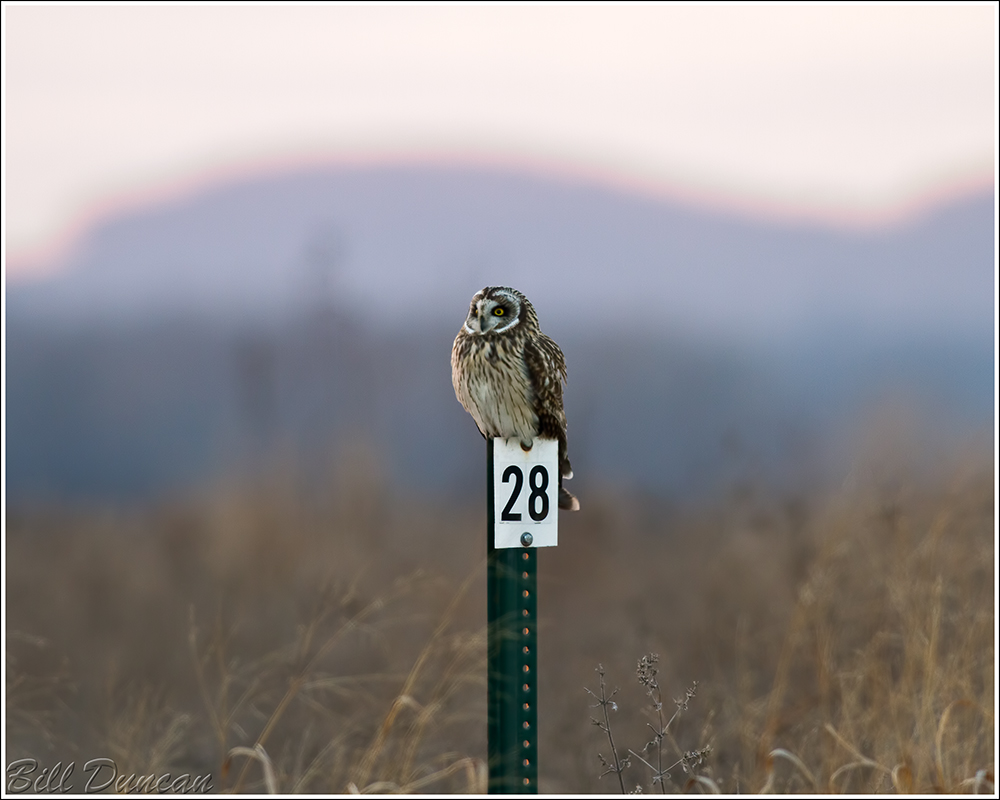
I could not believe how active these birds were. How dynamic the scene presented. Oh, if the last hour of the sun were allow to shine and not be covered by the clouds and hills! We counted at least six SEOW and probably as many NOHA within sight of our vehicle. The SEOW not only have to keep an eye out for the Marsh Hawk, but each other. We saw constant apparent aggressive behavior among up to three birds in flight at a time. For several minutes, we watched and photographed the bird pictured below against the Lincoln Hills. The bird’s head rarely stopped moving as it scanned and watched all the flying raptors surrounding it. No wonder they were using anything as a possible perch!
Technical details: Canon EOS 7D camera, EF500mm f/4.5L USM lens, ISO 1000, f/5, 1/160 sec
A question of ethics. Wildlife photographers have a reputation, often deservedly, of using questionable practices in getting their images. This has been a growing concern of mine lately. I by no means consider myself perfect in this regard, and I realize that some of my activities could be seen as unethical by others. I do, however, feel there is a line of continuum in certain practices used by photographers, or other nature observers. For instance, using flash photography on owls is seen by the majority of wildlife photographers to be off limits, but some will use fill-flash to capture images of diurnal birds. I have dabbled with this in the past and in my opinion the use of flash has a definite effect on their behavior a significant amount of time. Therefore, I will not use artificial lighting to capture wildlife. Similarly, most, but unfortunately, not all photographers consider the use of live bait to attract raptors as taboo. But, we will use fruit and seed to attract species that feed on such.
I bring this up because of something Sarah and I observed last night. I am somewhat embarrassed that I had never heard or read about this technique. When Sarah and I stopped to watch and shoot the first couple of owls, we saw that ~0.5 miles or so down the road was a car that appeared to be on an owl that was on a perch no more than 30″ from the car! We were jealous, but being very eager not to disturb the bird or the photographer we made sure to stay far away. Twenty minutes later we realize the bird had not moved once off its perch. What luck we thought! Even with sometimes two other owls buzzing by it time and again, the owl stayed put. We finally inched close enough to realize the owl was indeed a pretty well done decoy and the photographer was outside the car sitting against it shooting the owls as they strafed by the perched fake.
I had to do some internet searching to finally figure out what was going on. Now I do feel guilty about sometimes causing a perched bird to flush as I inch closer, but this bird was perched inches from a road. These roads do have traffic from hunters and general wildlife watchers and are constantly being exposed to vehicles when they perch near the road like this. I will also use some voice playback, as minimal as possible, and phishing to attract birds closer for a picture. I am not quite certain about this practice of decoys, but it does taste of going past that invisible ethical line to me. Is it as bad as using live bait to attract an owl or other raptor, or getting within 10 feet of a Barn Owl and using flash to get a photo? Probably not. I plan on asking some veteran and respected birders and photographers what they think. Please let me know your opinion. On a further note, when driving by this guy who was using the decoy, for some reason he gave us the stink-eye. I’m not sure what that was about, maybe he thought we were taking advantage of his hard work?
Technical details: Canon EOS 7D camera, EF500mm f/4.5L USM lens, ISO 1000, f/5, 1/250 sec
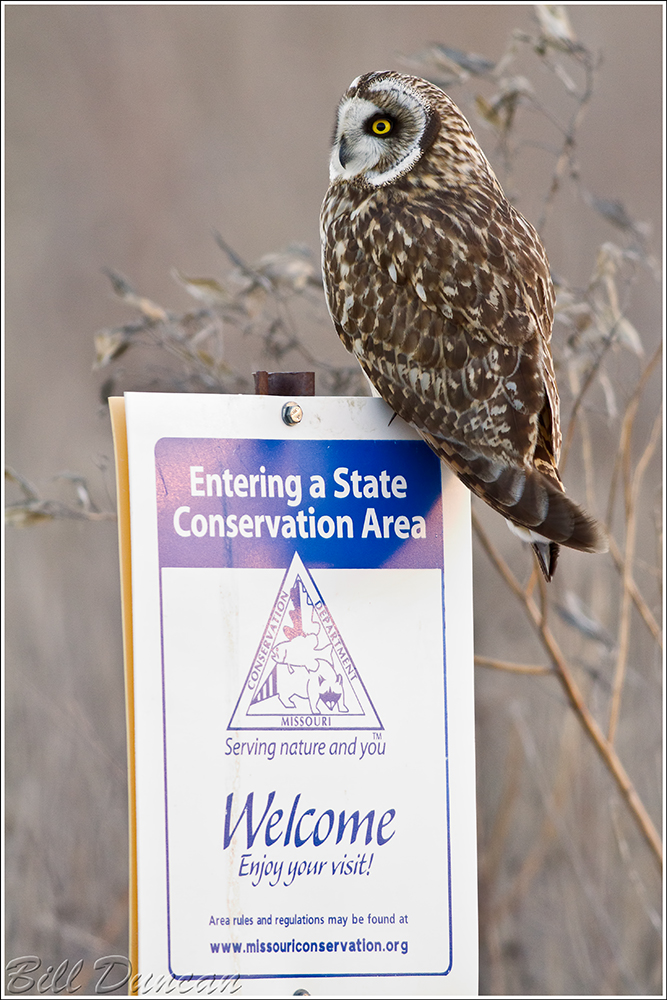
In my humble opinion the photo of a SEOW perched on a sign or post has become a bit cliche’, but this is still probably my favorite image from the day. Any time you can watch a bird like this so close, to see that detail and be able to capture it with your camera is very special. I think this photo depicts how special these Conservation Areas are for providing the necessary habitat that these species needs.
This photo will also always remind me of a particularly memorable moment. This image was taken at near 5:00, well past lunch and damn-near dinner time. Now, I am perfectly used to eating fruits and nuts for most of the day, you know, “hippie food”, and then having a hearty dinner. Well Sarah’s stomach was definitely not made aware of this and just when we were closer to one of these owls than at any other time, her stomach decided to stage a vocal protest. It was loud and it was continuous! I was becoming legitimately concerned it might disturb this beautiful animal! So she and I of course started chuckling. The more we tried to stop, the worse it came. Thankfully, I don’t think the bird took any more notice than before.
So ended a fantastic day. The sun setting behind the Lincoln Hills lit up the clouds in a dramatic, fiery sky. We did not try to find a spot to make a sunset shot, but preferred to watch as we slowly drove away from the owls and harriers as they went about their living in the Mississippi flood plain.
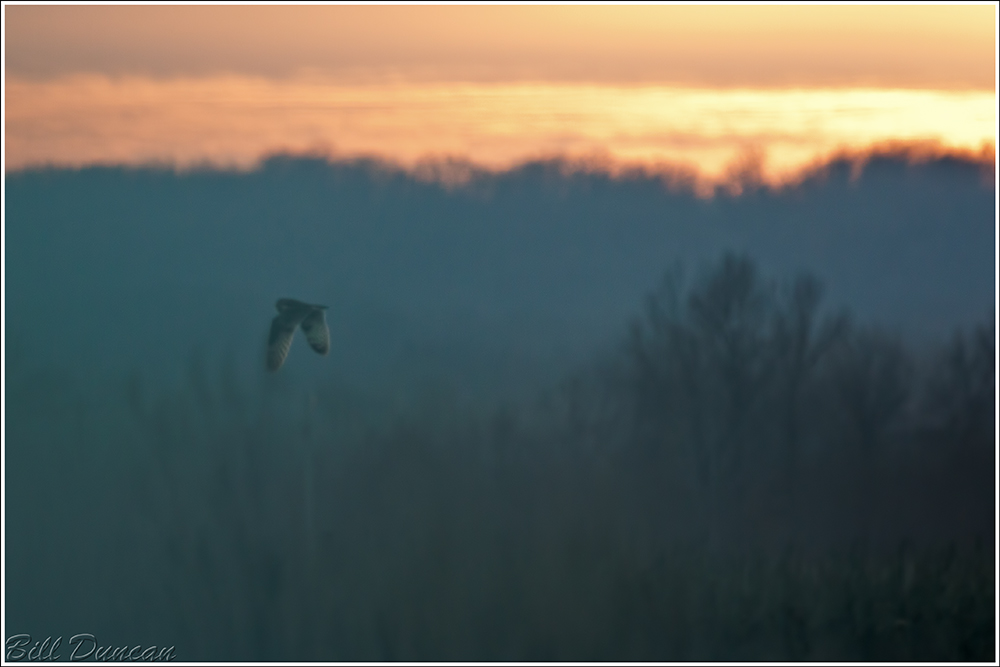
Technical details: Canon EOS 7D camera, EF500mm f/4.5L USM lens, ISO 1000, f/5, 1/640 sec







 A Thousand Acres of Silphiums